Jump to content
Twins Daily
  • Create Account
  • Twins News & Analysis

    Billy Wagner Proves That Joe Nathan Deserved a Longer Look For the Hall of Fame


    Cody Christie

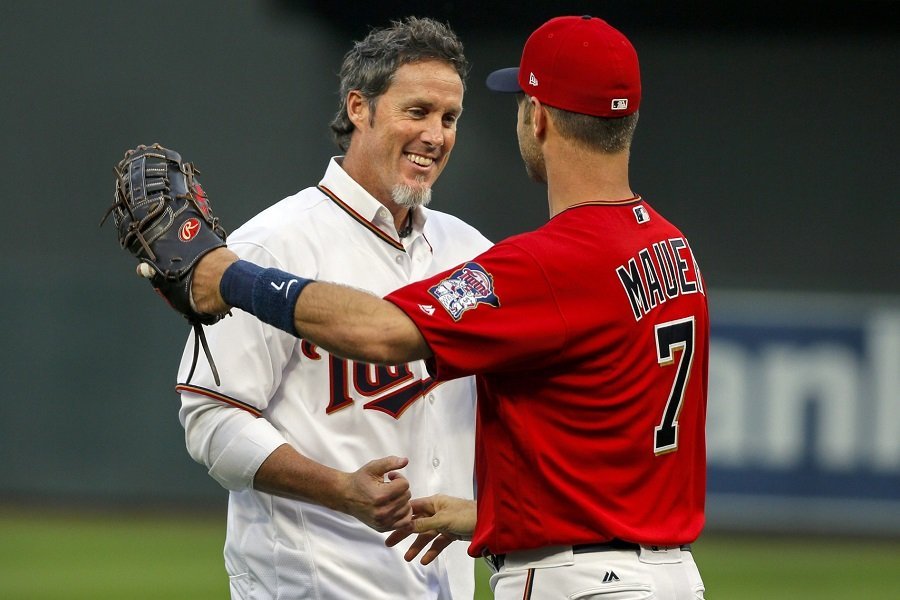
    Joe Nathan was one of baseball's best relievers for over a decade. His chances at being elected to Cooperstown improved this week with Billy Wagner falling just short of election, but as Wagner shows, his path won’t be easy.

    Image courtesy of Bruce Kluckhohn-USA TODAY Sports

    Twins Video

    Professional baseball’s history stretches back about 150 years, and on that scale, the concept of a relief pitcher is relatively new. Bullpen usage has continued to increase in recent years, with varying levels of effectiveness. Elite relievers should stand out even more than their peers. However, relief pitchers continue to be one of the most underrepresented groups in the Hall of Fame, with only eight enshrined players entering the current voting cycle. 

    Billy Wagner's Hall of Fame candidacy will be at the forefront of debate over the next year, since he fell five votes short of election in 2024. He has slowly gained support in recent years, moving from 10% of the vote in 2016 to 68% last year. During the current voting cycle, Wagner was tracking around 80%, so there was still some question about whether or not he’d clear the 75% threshold needed for induction. No player has reached this high a percentage and not been inducted in the next voting cycle. 

    So, why does Wagner deserve to be elected? He is one of the most dominant relievers of all time. Wagner has the highest strikeout rate for any pitcher with at least 900 innings. Using that same innings threshold, Wagner has the lowest opponent batting average (.187 BA) in MLB history. Mariano Rivera is the lone pitcher with a lower ERA and ERA+ since 1920. He also has the sixth-most saves all-time (422), but will likely drop on that list with Kenley Jansen (420) and Craig Kimbrel (417) set to pass him next season. His career was limited in innings, but he was one of the game’s best pitchers and deserves to be in the Hall.

    Former Twins closer Joe Nathan compares well to Wagner in multiple ways, but his Hall of Fame candidacy was short-lived. In 2022, he first appeared on the ballot and received 17 of 394 votes (4.3%). He fell three votes shy of staying on the ballot and received the most votes of any player who fell off the ballot that voting cycle. It was a crowded year to be on the ballot, because Barry Bonds, Roger Clemens, and Curt Schilling were in their final year of eligibility. Some tough choices needed to be made, with writers being limited to 10 votes per ballot.

    JAWS is a metric created by Jay Jaffe that attempts to rank players based on their worthiness for the Hall. It takes a player’s career WAR and averages it with their seven-year peak WAR to create a weighted score, designed to help balance the desire we all feel for a Hall of Famer to have been truly great at their best but also demonstrate longevity. For relievers, Jaffe has started including a hybrid version of JAWS, which includes Win Probability Added, because relievers pitch in high-leverage situations for most of their appearances. The top five relievers, according to R-JAWS, had all been inducted into the Hall entering the current voting cycle. Wagner ranked sixth, and Nathan is seventh all-time, with the two players only separated by 0.5 points. 

    JAWS isn’t the only statistic that helps Nathan’s cause, as he ranks well in many other areas. Even though he was 29 when he became a full-time closer, he pitched into his early 40s. Along the way, he was elected to six All-Star teams, finished in the top five of Cy Young voting twice, struck out more than a batter per inning, and finished in the top 5 in saves five times. Nathan also ranks sixth all-time in win probability added among relief pitchers. Overall, he’s eighth in career saves, and he had five seasons with a 1.88 ERA or lower.

    Some writers have plainly stated that they didn’t vote for Wagner and Nathan because of their poor playoff performance. They justify their decision through the lens that closers should thrive in pressure-packed environments like the postseason, and both pitchers failed to meet those expectations. Wagner made 14 playoff appearances and posted a 10.03 ERA with a 1.97 WHIP in 11 2/3 innings. Nathan compiled an 8.10 ERA with a 2.20 WHIP in 10 innings. It’s such a small sample size that it seems difficult to hold this against the relievers, but it was one of the reasons Wagner fell short on this year’s ballot.

    Nathan is one of the game’s all-time great relievers, a significantly underrepresented group in the Hall. Had his ballot not been so crowded, Nathan could have received more initial support, then slowly gained supporters in later years, like Wagner. Now, Nathan will need to wait for the Eras Committee to review his name in the coming years, hoping his résumé meets their criteria. The next scheduled review of players from the Contemporary Era is December of 2025, for inclusion in the Class of 2026. 

    Do you think Nathan can be elected through the Eras Committee? Should he have lasted longer on the ballot? Leave a COMMENT and start the discussion.

    Follow Twins Daily For Minnesota Twins News & Analysis

    Recent Twins Articles

    Recent Twins Videos

    Twins Top Prospects

    Marek Houston

    Cedar Rapids Kernels - A+, SS
    The 22-year-old went 2-for-5 on Friday night, his fourth straight multi-hit game. Heading into the week, he was hitting .246/.328/.404 (.732). Four games later, he is hitting .303/.361/.447 (.808).

    User Feedback

    Recommended Comments

    Featured Comments

    It's the other way around. Joe Nathan proves that Billy Wagner doesn't deserve to be elected to the Hall of Fame. It is a sick joke that Johan Santana, a much better pitcher, was summarily dismissed while Wagner is on the precipice of election.

    No.  I just have a difficult time putting in RPs just like I have difficulty with DH.  I do not resent their election, but I would not be promoting them.  Of course recent articles on MLB.com and ESPN make me wonder if we know how to value modern pitchers of any kind for HOF inclusion.  

    I am neither a “big hall” or “small hall” person. But I do feel that the one and done on the ballot is a bit restrictive. I would like to see a two year window to be on the ballot, as some commentators on MLB network have suggested.

    I think allowing this would help with years of “crowded ballets” and allow for a little bit longer look before passing over a candidate. Some will argue it should be pretty clear from the onset of voting if a candidate is worthy. But perspectives can be skewed a bit sometimes especially if voters are not as familiar with a players career due to geography and access to watching that player regularly.
    Perhaps even years having a unanimous first ballot HOF’er on the ticket sucks all the oxygen out of the conversation for those second level guys. Again skewing voters perspectives and forcing some nominees to be judged a little harsher than they would be in a subsequent year. Honestly anyone on a ticket having to face of against Jeter or Rivera would have a tough time seeming worthy when many likely are.

    Nathan aside, all I am saying is perhaps a second chance on the ballot isn’t a bad idea.

    Nathan has a great case for the Hall, and it's a shame that the very crowded ballot and limited number of votes each writer got caused him to get eliminated so quickly, before his case could really be evaluated and discussed.

    I tend to value peak performance over longevity, but some voters I'm sure want to see more length from Nathan; he had a 10 year run where he was a great reliever from 2003-2013 with really only one blip (wasn't quite recovered from surgery/injury in 2011); every other year he was one of the 3 best relievers in baseball, and there just aren't very many guys who are that consistently good let alone great.

    Nathan really only has 2 deficits: playoffs (which is such a small sample size that it's hard to know if it really was an issue, but also how about blaming Gardy for asking Nathan to throw a 3rd freakin' inning against the Yankees? After getting the save the night before?) and the fact that some voters really aren't interested in voting for relievers. Some folks don't seem to look at it as much of a position, so unless you're holding down a record it makes it harder to get in.

    I suspect his career would be held in higher esteem if he didn't overlap his entire career as a dominant reliever with Mariano Rivera, who was literally the best of all time. Rivera's consistency, longevity, and dominance meant that Nathan was never the best reliever in baseball, but being #2 behind a sure-fire hall of famer should be looked at a little closer. It's a bit like Tim Raines, who was one of the great leadoff hitters of all time, but people missed just how great he was for a long time because he overlapped with Rickey Henderson, who was the best leadoff man of all time. Raines got the ballot time to have a better look at his career outside of Rickey; would have been nice for Nathan to get the same look away from Rivera.

    If we're hell bent on putting relievers in the Hall instead of starting pitchers (which is just upside-down bizzaro world if you ask me) and Joe Nathan deserves to be in then so do these guys

    John Franco, Tom Gordon, Roberto Hernandez, Tom Henke, John Hiller, Kent Tekulve, Ellis Kinder, John Wetteland, Sparky Lyle, Dan Quisenberry, Francisco Rodriguez, Jesse Orosco, Jonathan Papelbon, Troy Percival, Mike Marshall, Roy Face and Jeff Reardon.

    That level of performance is not as rare as most people think it is.

    42 minutes ago, RedLeg44 said:

    I am neither a “big hall” or “small hall” person. But I do feel that the one and done on the ballot is a bit restrictive. I would like to see a two year window to be on the ballot, as some commentators on MLB network have suggested.

    I think allowing this would help with years of “crowded ballets” and allow for a little bit longer look before passing over a candidate. Some will argue it should be pretty clear from the onset of voting if a candidate is worthy. But perspectives can be skewed a bit sometimes especially if voters are not as familiar with a players career due to geography and access to watching that player regularly.
    Perhaps even years having a unanimous first ballot HOF’er on the ticket sucks all the oxygen out of the conversation for those second level guys. Again skewing voters perspectives and forcing some nominees to be judged a little harsher than they would be in a subsequent year. Honestly anyone on a ticket having to face of against Jeter or Rivera would have a tough time seeming worthy when many likely are.

    Nathan aside, all I am saying is perhaps a second chance on the ballot isn’t a bad idea.

    Since voters get 10 votes a ballot (year) who else is on the ballot when a player 1st goes on the ballot shouldnt really effect that players vote total.  If a voter thinks that player is HOF worthy they have 10 chances to say so.

    Dont get me started on voters who return a blank ballot and have to let the world know about it.  

    2 hours ago, DJL44 said:

    If we're hell bent on putting relievers in the Hall instead of starting pitchers (which is just upside-down bizzaro world if you ask me) and Joe Nathan deserves to be in then so do these guys

    John Franco, Tom Gordon, Roberto Hernandez, Tom Henke, John Hiller, Kent Tekulve, Ellis Kinder, John Wetteland, Sparky Lyle, Dan Quisenberry, Francisco Rodriguez, Jesse Orosco, Jonathan Papelbon, Troy Percival, Mike Marshall, Roy Face and Jeff Reardon.

    That level of performance is not as rare as most people think it is.

    Exactly. John Hiller was the 1st guy I thought of. Not only survived a heart issue. But guys like him and Marshall pitched multiple innings nearly every appearance.  And on top of that they could start if asked. And when they started,they could and did pitch CG. Several of those names pitched more innings out of the pen than today's starters do. The HOF should be difficult to enter. There's a lot of Joe Nathan types. Really good players. Not quite HOFers 

    I think there's really 2 arguments here:

    1] No matter how dominant in ERA, K%, and other statistics, a reliever/closer, even the very best, would have a hard time reaching 600-700 IP in 10 yeara, where a SP would more than double that in the same 10 years. A closer faces 1-5 batters per game usually, depending on circumstances. And they don't necessary face the heart of an order either.

    2] On the other hand...the game had changed. The use of pens has changed. I remember when saving 20 games was considered really good. So our view of pens and closers must also change, just as they need to for SP. How hard is it going to be for a SP to get 300 Wins any longer? The way the game is played today, the role of a highly productive closer with a dominate career over a decade has to be placed in a different context than how it was viewed 20 years ago. And if you are going to add in Rivera, and then strongly consider Wagner, then you HAVE to give more weight to Nathan and his 10 year success and awards.

    Not saying one way or another closers should or should not be included. I'm simply saying there are 2 very different perspectives to view on the subject.

    Yes to Nathan IF you like the idea of adding closers to the HOF.

    Yes to having more than 1 and done on a ballot.

    Yes, Santana should still be on that ballot today.

    I go back and forth on Billy Wagner.

    Baseball's a game for romantics.  And the Hall of Fame is a hall of FAME.  For me, the Hall can both recognize, and confer, fame as conditions dictate.  In other words, I'm completely comfortable in throwing away some analytics, and indeed being downright inconsistent in who I want to call famous and deserving of fame, and who I don't.

    The post-season is one factor, helpful but not strictly necessary, that helps establish the fame needed for induction.

    Most players and most pitchers establish their greatness across a very large body of work.  Relievers are a special breed: almost always failed starters, they establish their value in inherently small samples of work. If they do great in the regular season but then let their team down when the chips are down in the playoffs, that (for me) is a much bigger detraction to their HoF case than for other players.

    To the argument that the playoffs are different and the competition is just better, go look at Mariano Rivera's post-season stats.  His makes for an easy Hall of Fame case.  Few humans can rise to that level.  But I'm not willing to give anyone a pass for not doing the job - they prepare their entire careers for those few moments, and they need to come through, again and again, to be considered the best of the best.

    There's no question Billy Wagner came through over and over and over again in the regular season.  Still, the reduced workload of a closer makes me unwilling to complain if he never makes it in.  Lots of players in the mythical Hall of Very Good have that kind of description.

    And Nathan's case is just a smidgen less strong than Wagner's, and then a few other relievers have cases just a smidgen less than than Nathan's.  There starts to be a Harold Baines type of slippery slope.

    I go back and forth.

    1 hour ago, DocBauer said:

    I think there's really 2 arguments here:

    1] No matter how dominant in ERA, K%, and other statistics, a reliever/closer, even the very best, would have a hard time reaching 600-700 IP in 10 yeara, where a SP would more than double that in the same 10 years. A closer faces 1-5 batters per game usually, depending on circumstances. And they don't necessary face the heart of an order either.

    2] On the other hand...the game had changed. The use of pens has changed. I remember when saving 20 games was considered really good. So our view of pens and closers must also change, just as they need to for SP. How hard is it going to be for a SP to get 300 Wins any longer? The way the game is played today, the role of a highly productive closer with a dominate career over a decade has to be placed in a different context than how it was viewed 20 years ago. And if you are going to add in Rivera, and then strongly consider Wagner, then you HAVE to give more weight to Nathan and his 10 year success and awards.

    Not saying one way or another closers should or should not be included. I'm simply saying there are 2 very different perspectives to view on the subject.

    Yes to Nathan IF you like the idea of adding closers to the HOF.

    Yes to having more than 1 and done on a ballot.

    Yes, Santana should still be on that ballot today.

    Johan Santana should be in the HOF as the only Met to throw a no hitter.

    7 minutes ago, Parfigliano said:

    Johan Santana should be in the HOF as the only Met to throw a no hitter.

    Do you want Ubaldo Jimenez in, too? He's the only pitcher to throw one for the Rockies.

    Santana should be in the Hall of Fame because he was the best pitcher in baseball for a 5-year stretch and put up 4 additional good seasons. Being the only Met to throw a no-hitter (and he isn't anymore) is a trivia answer.

    2 hours ago, DJL44 said:

    Do you want Ubaldo Jimenez in, too? He's the only pitcher to throw one for the Rockies.

    Santana should be in the Hall of Fame because he was the best pitcher in baseball for a 5-year stretch and put up 4 additional good seasons. Being the only Met to throw a no-hitter (and he isn't anymore) is a trivia answer.

    Only complete game no hitter.  Other Met no hitter was a combo of 5 or 6 pitchers.

    2 hours ago, Parfigliano said:

    Johan Santana should be in the HOF as the only Met to throw a no hitter.

    And somewhere, he's probably listed as being the only Met to do so. Which is quite crazy when you reflect  back on some of the amazing arms they had decades ago in the 60/70's era, and throughout the 80's and early 90's.

    My own personal opinion about the HOF is dominance at what you do for an extended period of time, and not just longevity or final total numbers. The Twins own Puckett and now Mauer are examples. Johan was basically dominate for 8 seasons, and e en still good in his 9th. In his time frame he was amongst the very best in all of MLB. 

    I send no shade, but let's use someone like Sutton, for example. Now, he was very good and had a long career and won 300 games. But part of his career is due to being good to very good for a very long time. But he came up and threw in a very different era than Johan. But for almost a decade, Santana was amongst the best arms in MLB, in a very different era than Sutton.

    Now, I'm not saying Johan should be in the HOF. And, unfortunately, his career was cut short due to injury. But what I AM saying is that when he hit the ballot, it was a divisive time when many voters were still placing steroid players on their ballot, which had to dilute the field somewhat, especially when some ballots...to this day I might add...don't even fill out 10 names. IN, or not, his career deserved much more consideration than a 1 and done format. So I do like the idea of a minimum 2yr addition to consideration for the ballot for additional reflection and consideration. And again, IN, or not, if Wagner is still getting consideration but the nearly identical Nathan got washed out  immediately.

    The 5yr wait is a good thing for reflection on a career and achievements. But I do think there is a flaw with a 1 and done format.


    I like the idea of using win probably added to assess the value of a RP. I do not like comparing saves because I don't believe the save actually records the true value of a relief pitcher. Think about it, a guy comes in to pitch the bottom of the ninth with a three run lead and gives up two runs on four hits and a walk but preserves the lead and gets a save. Is that really a good performance?

    On the other hand, if you have a dominant reliever, why not use him in the 7th or 8th inning of a tie game when the other team has loaded the bases? That is where you want your best guy on the mound to shut the other team down. He isn't going to get a save out of the deal but he may actually be the one the preserves the victory by not allowing any runs to score.

    13 hours ago, DocBauer said:

    Santana should still be on that ballot today.

    He debuted the same year as Andruw Jones, and Jones got 7.3% to Johan’s 2.4%.  I think if Santana had managed to survive the ballot until 2019, he could have mirrored Jones’ climb—Jones is now in the 60’s.

    Santana was hurt by Colon stealing his third consecutive Cy Young. He was the best pitcher in the game for an extended stretch.  Way better than Nathan OR Wagner. 

    I have to admit that I never thought that Wagner was Hall of Fame material, but all of these advanced stats are making me re-think my mindset. Joe Nathan was a great pitcher for the Twins for many years, but I'm still not sold on the idea that he is truly deserving of the HOF. But it's surely unfair that he was removed from the ballot after only 1 year. He definitely deserves some reevaluation. 

    17 hours ago, h2oface said:

    Playoffs matter. A Hall of Famer needs to come through and perform when the pressure and stakes are the highest. 

    Whether or not a player participates in the playoffs depends so much on the team they are on, much more than their individual athletic ability.  Would we be talking so much about Mariano Rivera if he had pitched on the Pittsburgh Pirates and rarely sniffed the post-season lik Wagner and Nathan?  No, he played on some Yankee teams that were absolutely loaded that allowed him to be put in the position to pitch in the playoffs.  Very rarely does an actor win an Oscar when the cast around them stinks.

    23 hours ago, DJL44 said:

    If we're hell bent on putting relievers in the Hall instead of starting pitchers (which is just upside-down bizzaro world if you ask me) and Joe Nathan deserves to be in then so do these guys

    John Franco, Tom Gordon, Roberto Hernandez, Tom Henke, John Hiller, Kent Tekulve, Ellis Kinder, John Wetteland, Sparky Lyle, Dan Quisenberry, Francisco Rodriguez, Jesse Orosco, Jonathan Papelbon, Troy Percival, Mike Marshall, Roy Face and Jeff Reardon.

    That level of performance is not as rare as most people think it is.

    Well, you had to stretch across a lot of years to come up with 17 names, so maybe it is a little more rare? Let's look at these guys in comparison to Nathan.

    Franco: pitched forever, but never as dominant as Nathan. Despite Franco throwing for 5 more season, he comes up short in WAR and WPA. 50 additional saves in 5 more seasons doesn't impress.

    Gordon: An average starter who had several good years in the bullpen, but was inconsistent there. Gordon's best season as a closer/reliever he dropped an ERA+ of 204; Nathan averaged that in 9 seasons with MN and Texas.

    Hernandez: Not sure why he's even on the list? He's nowhere near Nathan on WAR, WPA, ERA+, or WHIP. Only 2 all-star appearances. 

    Henke: ok, now we're getting interesting. Pretty dominant, great WHIP, ERA+, but only 2 all-star appearances, and the WPA doesn't measure up. He's below Nathan, but is interesting.

    Hiller: interesting pitcher, but a different role. Threw a lot more innings, but falls down on the dominance scale. And while saves are flawed stat, but it does say some things about who was pitching in close & late situations. The WPA isn't there either.

    Tekulve: more similar to Hiller than to Nathan. Well below on metrics like ERA+, WHIP, WPA, and saves. The comparable WAR comes from all the extra innings, but when that's the only equal metric? Only 1 all-star? Relievers got picked for the all-star game in that era. Sorry, not impressed.

    Kinder: hard to comp pitchers from this era to modern baseball, but Kinder only spent 6 seasons as a reliever, so we're basically comparing apples to a bushel of wheat or something.

    Wetteland: I'd argue he's proof of how hard it is to have sustained excellence. He was dominant in a 9th inning role, but only did it effectively for 8 years (his last season wasn't really that great) and then was done at 33. Nathan tops him in saves, bWAR, WPA, all-star appearances, longevity...

    Lyle: effective pitcher for quite a long time, but Nathan was certainly more dominant and the ERA+ and WHIP show it. Had a nice advantage in that he got moved into the 'pen early, but still fall short on the WPA metric too. Nathan had more big seasons.

    Quisenberry: a fascinating case that deserves more consideration. truly dominant for about 8 years, his peak value is awesome. but the last 3 seasons weren't so great (and the first was just ok). Nathan's got him on WPA and longevity...again showing how hard it is to do this at the top levels for 10 years or longer; Quiz got his shot in the 'pen sooner than Nathan and still couldn't hold it as long, and that was without the big injury.

    F.Rodriguez: worthy of consideration. A lot of comps to Nathan and a worthy candidate. He was truly one of the best closers in the last 30 years.

    Orosco: pitched forever, but only a handful of dominant seasons, and falls down on ERA+, WPA (massively), saves, and even with a lot more seasons still falls short on bWAR. Only 2 all-star nods...why is he on this list?

    Papelbon: An interesting candidate as well; truly dominant in his early years with Boston even if his later seasons slid fairly quickly. I'd have him a bit behind Nathan, but they're not that far off. 

    Percival: very very good closer for nearly a decade, but is hurt by being in such a limited role. Only topped 60 innings as a reliever 3 times. He's well behind Nathan on a number of metrics, including WPA which he would really need to show he's in the same league as closer. He's certainly behind Quiz and Papelbon and F-Rod

    Marshall: interesting pitcher, but had a pretty short peak (5 seasons or so) even if he pitched a lot of years. Not enough dominance in those peak years to carry him, falls way short on almost every metric even with the Cy.

    Face: a nice pitcher, but not sure why he's on this list. Maybe it's just an era thing, but he's well short on bWAR, WPA, ERA+, WHIP, and certainly on saves.

    Reardon: a quality closer for a decade, but never as dominant as Nathan. Comes up well short on ERA+, saves, bWAR, WPA. He's not just below Nathan, but well below guys like Quiz, Papelbon, and F-Rod.

    So out of the 17 candidates you're suggesting need to go in if Nathan gets the nod, it sure looks like most of them aren't really that comparable. And if 3 more relievers (plus Nathan) over 60-70 years of baseball history get tapped for the Hall we're hardly throwing the gates wide.


    Santana and Nathan deserved more consideration. Makes a ton of sense that Jaffe is using a hybrid form of JAWS for relievers. The notion that WAR does an accurate job of communicating their career value is absurd...having a dominant weapon at the back of the bullpen has been a critical commodity for decades and is only becoming more so. If you look at Nathan, Wagner, or other comparable relievers who are not enshrined, another important stat to consider is career ERA+. Newsflash: it's insanely high for those guys, like, higher than any predominantly-starting pitcher in the history of the game. To have that kind of long-term success, playing in ~30-40% of your team's games, using max effort during the highest leverage situation, is simply remarkable. In fact, I'd argue that long-term dominance as a reliever is harder to accomplish than as a starter. When you're using max effort or nearly max effort, there aren't too many variables in play to make reasonable adjustments when you falter. So your max effort better be damn good.

    Unfortunately, the biggest reason neither Nathan or Santana have garnered much discussion is that their dominance happened almost entirely for the Twins. That being said, I anticipate that Santana will be elected by a veteran's committee within the next 20 years. His peak was so remarkably dominant, having deserved three consecutive Cy Young awards and posting an excellent 7-year peak WAR. That's before even mentioning that he was woefully mismanaged on both ends of his career, which partially explains his lower counting stats, including WAR (Gardenhire was far too hesitant to move him into the rotation, using the best pitcher in the league during 2002-03 as mostly a middle-reliever...and Terry Collins tolerated far too much injury risk by letting him throw 134 pitches in his no-hitter in just his third start back from a major shoulder surgery). 

    3 hours ago, alexlegge said:

    Santana and Nathan deserved more consideration. Makes a ton of sense that Jaffe is using a hybrid form of JAWS for relievers. The notion that WAR does an accurate job of communicating their career value is absurd

    Actually, WAR overrates relievers by giving them credit for leverage.

    WPA is a completely useless garbage stat. Think back to last year in the playoffs when Carlos Correa made the outstanding pickoff play at SS WPA says "Great Job, Sonny Gray!" When Correa threw out Bichette at home WPA says "Fantastic Work, Pablo Lopez!" Any stat that ignores defense completely and assigns all run prevention to the pitchers is a junk stat.

    18 hours ago, nclahammer said:

    Whether or not a player participates in the playoffs depends so much on the team they are on, much more than their individual athletic ability.  Would we be talking so much about Mariano Rivera if he had pitched on the Pittsburgh Pirates and rarely sniffed the post-season lik Wagner and Nathan?  No, he played on some Yankee teams that were absolutely loaded that allowed him to be put in the position to pitch in the playoffs.  Very rarely does an actor win an Oscar when the cast around them stinks.

    I don’t need a player to ever play in the post season for them to get in. But IF THEY DO, it means their greatness can’t lay an egg, but their star should shine at least as bright as their regular season record. To tank when it means the most is not helpful. 

    During the regular season, Billy Wagner was dominant.  That a guy his size could throw so hard was hard to believe...until you looked at his legs.  THAT'S where he generated his power.  He could have done better in the post season, but Ernie Banks never played a single game in the post season and nobody would argue he wasn't a HOF.

    Bullpens and relief pitchers have always been a little misunderstood.  Some teams, like the New York Giants, figured out a guy like Hoyt Wilhelm could be better as a reliever than a starter way back in the 1950's.  In almost every case, a relief pitcher has failed as a starter to begin with.

    There were a few blips in the 1960's when guys like Ron Perranoski went 16-3 in 1963 for the Dodgers and then Phil Regan went 14-1 for them in 1966, and of course Dick Raddatz was absolutely dominant in the A.L. for Boston in 1962-1964.  But it wasn't until the 1970's that "closers" really began to proliferate.  

    Nathan was clearly one of the best during his run with the Twins and I hope he gets another chance.  I liken Johan Santana to Sandy Koufax.  Injuries ended a career that could have put up more "counting stats" but for the 5 years or so that Koufax dominated the NL (1962-1966) Santana was quite comparable with the Twins and his first season with the Mets.  And there is NO doubt that Colon stealing that 3rd Cy Young impacted Santana.  I predict a veterans committee will put Santana in eventually.  He belongs in the Hall.

    Jmlease:  I appreciate your excellent rundown of all those relief pitchers.  Very insightful.  I agree with your assessments. 

    1 hour ago, TopGunn#22 said:

    Jmlease:  I appreciate your excellent rundown of all those relief pitchers.  Very insightful.  I agree with your assessments. 

    Thanks! I think one of the things we see is that only the really great relievers are able to be consistently dominant over an extended period of time. You'll see closers who are in the role for a decade or longer, but the reality is they're just pitching the last inning for a fair number of years and getting a fairly empty "save" rather than be consistently dominant. the smaller samples also have some relievers putting up big seasons scattered over 6-8 years, but rarely every season in a row. It is one of the things that makes it hard to differentiate who the truly great ones are without really digging in and looking at a lot of different metrics.

    the evolution of the best reliever becoming a "closer" rather than a "fireman" and only being used in the last inning save situation was an unfortunate development by managers (aided by players and their agents, when they saw how big save numbers translated to bigger paychecks). It feels like that's shifting away again?


    Create an account or sign in to comment

    You need to be a member in order to leave a comment

    Create an account

    Sign up for a new account in our community. It's easy!

    Register a new account

    Sign in

    Already have an account? Sign in here.

    Sign In Now

×
×
  • Create New...