


Twins Video
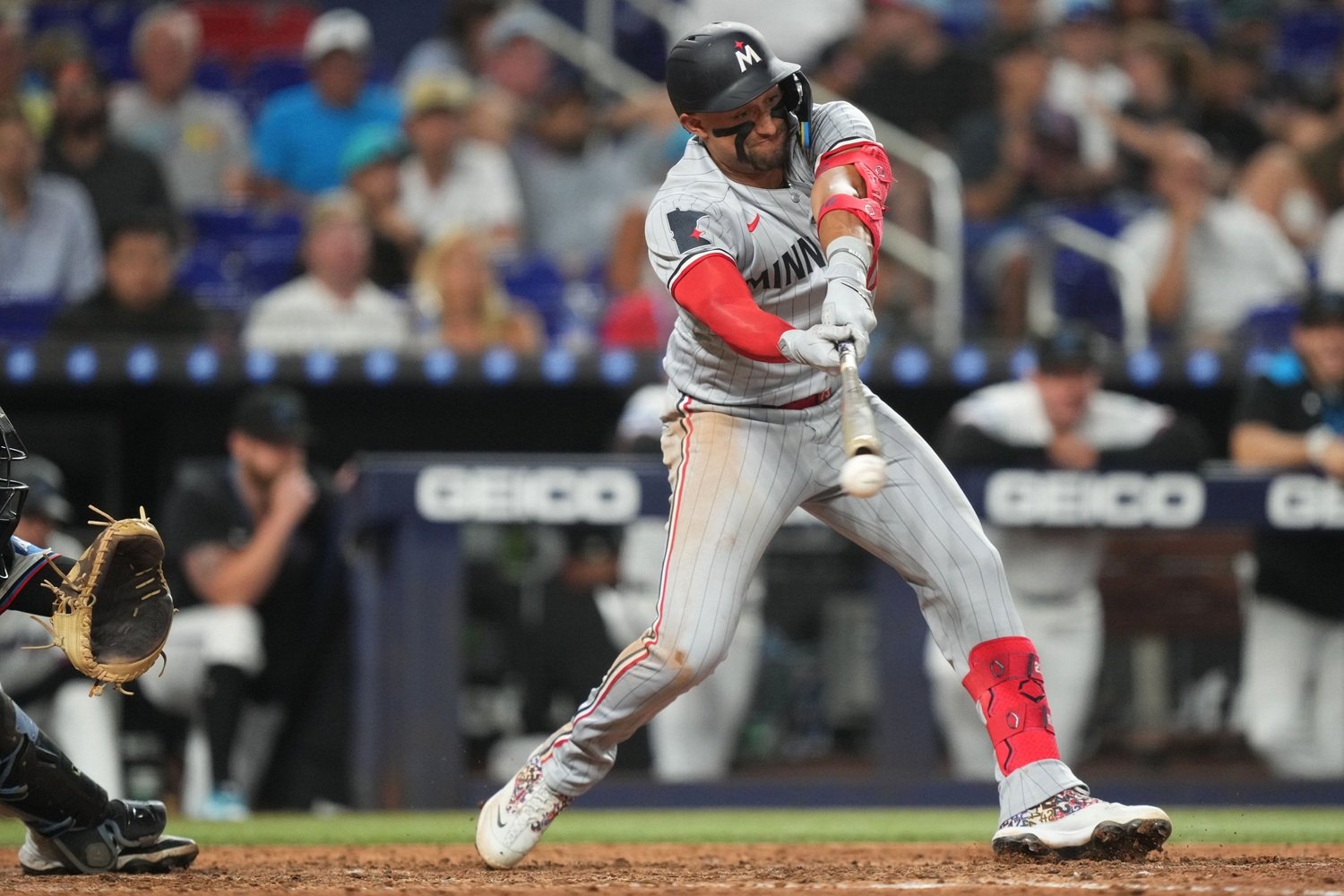
Royce Lewis was supposed to be one of the central figures of the Twins' season. Even after years of injuries and interrupted development, the organization still believed the former first overall pick was ready to take another step toward stardom. Throughout the winter, the Twins made that confidence public. Derek Shelton and multiple members of the front office openly discussed their expectations for Lewis entering 2026, presenting him as a foundational piece of the lineup and one of the players capable of carrying the offense.
Instead, the season has turned into something far more uncomfortable. Lewis opened the year by engendering a bit of optimism, but the production disappeared almost immediately. The struggles became severe enough that the Twins dropped him to the ninth spot in the order, and more concerningly, he has regularly found himself losing playing time to Tristan Gray, a waiver claim who was never supposed to be part of this conversation.
Since returning from the injured list on April 21, Lewis is hitting .130/.186/.204, with 19 strikeouts in 59 plate appearances. The numbers themselves are alarming, but the larger concern is how lost he has looked against velocity.
“It can be really hard when you feel like your career is going in a different direction,” Lewis said. “It’s been tougher because obviously we know there’s always someone on your tail. There’s always someone ready to take your next job. Every day I’m here fighting and working as hard as I can to show that I’m giving it my all to keep my job because I love what I do. I’ve been smiling. I feel fine leaving the game. But I think what scares me most is like, ‘Oh, they might try to get me out of here.’ When I leave the field, that thought does creep into my head.”
The Twins are attempting to slow things down for him. Derek Shelton recently described Lewis’s absence from the lineup similarly to the brief reset Matt Wallner received earlier this season. The organization wants Lewis to work on his swing mechanics without the pressure of immediate game results, while also allowing him a chance to mentally regroup.
From the outside, the biggest issue is becoming impossible to ignore. Fastballs are beating Lewis consistently, especially in the upper part of the zone.
During his electric rookie season, Lewis demolished four-seam fastballs to the tune of an .842 slugging percentage. Last season, that number cratered to .332, while his whiff rate against four-seamers climbed to 25.5%. The decline produced a -8 Run Value against fastballs and forced pitchers to attack him differently.
The problem has continued into 2026. Lewis currently owns just a .349 slugging percentage against four seamers, with a 30.5% whiff rate. Perhaps even more concerning, his pulled air percentage has dropped from 31.4% during his rookie campaign to 24.1% this season. The explosive damage on pitches he once turned around with authority has largely vanished.
When Lewis first arrived, his combination of bat speed and aggressiveness allowed him to punish velocity before pitchers could exploit weaknesses. Now the timing looks inconsistent, the swing decisions appear hesitant, and pitchers know they can challenge him in ways they could not just a few years ago.
The Twins still believe the talent is there.
“His work every day has been really consistent,” new Twins hitting coach Keith Beauregard said. “He’s focused with everything that he does. From a swing standpoint, as an athlete, we’re always trying to focus on getting guys into athletic positions and to feel flowy as a hitter. That’s always been the work with him.”
The difficult reality is that patience becomes harder to maintain when the struggles continue for this long. Lewis has battled injuries throughout nearly every stage of his professional career, which have complicated his development timeline. At some point, though, the Twins need production instead of projection.
Lewis understands that pressure better than anyone.
“It feels like people around here sometimes are waiting for me to struggle so that they can write me off officially or get me out of here,” Lewis said. “It’s the first time in my career where it’s become a business instead of playing the game that I love.”
That quote probably says more about Lewis's current state than any statistic can. For years, he was viewed almost entirely through the lens of potential. The injuries created sympathy and patience because everyone could still picture the superstar version of Lewis waiting on the other side.
Now the conversation is changing. The Twins are trying to win games in the middle of a season that already feels fragile, and Lewis is no longer being judged on what he might become someday. He is being evaluated on whether he can help a major league lineup right now.
The encouraging part is that fastball issues can sometimes be corrected quickly once timing and mechanics return. A small adjustment in posture, bat path, or swing decision-making can dramatically change how a hitter handles velocity. The discouraging part is that pitchers have clearly identified the weakness and will continue attacking it until Lewis proves he can beat it again.
The Twins have invested years of belief in Lewis because the upside remains undeniable. But belief alone eventually stops mattering. This season was supposed to be about Lewis cementing himself as one of the faces of the franchise. Instead, he is fighting to hold onto everyday playing time. For both Lewis and the Twins, the clock is starting to feel much louder.
Can the Twins fix Lewis’ swing? Leave a comment and start the discussion.








Recommended Comments
Create an account or sign in to comment
You need to be a member in order to leave a comment
Create an account
Sign up for a new account in our community. It's easy!
Register a new accountSign in
Already have an account? Sign in here.
Sign In Now