


Jump to content
Twins Daily
  • Create Account
  • Twins Minor League Coverage

    Twins’ New Pitching Plan May Revolutionize MLB Player Development

    Pitching is always evolving, and the line between starter and reliever continues to blur. As they blaze a new trail, the Twins front office may have stumbled across an idea that could revolutionize player development.

    Cody Christie
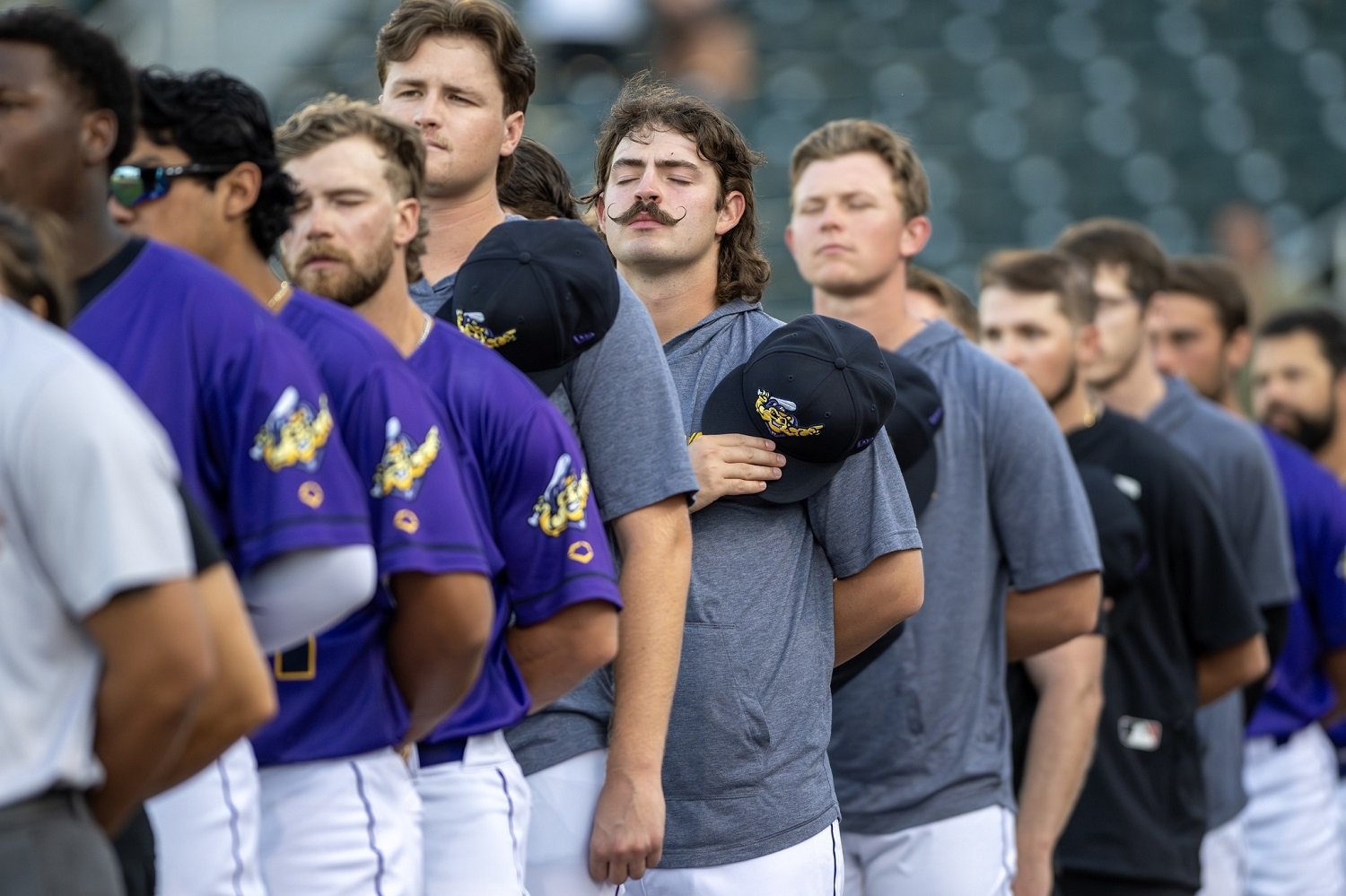
    Image courtesy of William Parmeter (Photo of Jakob Hall)

    Twins Video

    The Minnesota Twins have quietly been making adjustments behind the scenes that could reshape the way pitchers are developed—not just in their system, but possibly across baseball. While major-league teams tinker with openers and bulk guys to squeeze every ounce of value from their arms, the Twins have taken a bolder step at the minor-league level, experimenting with a revolutionary four-day pitching plan.

    On this week’s episode of Inside Twins, Director of Player Development Drew MacPhail shed light on the plan that’s been gaining traction throughout the organization this season.

    “We have to give a ton of credit to our director of pitching Tommy Bergjans, our performance science group, one of our general managers Josh Kalk, and ultimately Jeremy Zoll for giving the green light here,” MacPhail shared. 

    “The basic idea," he continued, "is that normal rotation cadence in [the] major leagues, there’s some good research behind maybe a quicker kind of four-day rotation and then throwing a little less pitches is actually a better work from a volume cadence and helps players recover a little bit more.”

    Traditionally, professional pitchers work on a five-day rotation, throwing between 80 and 100 pitches per start and building toward handling the grind of the big-league season. The Twins are tossing aside this orthodoxy for select minor-league arms, particularly those who may not yet fit into a strict starter role but possess the raw tools to impact games regularly.

    “The minor leagues are ultimately a testing ground for these things,” MacPhail said. “With a select number of pitchers that were maybe on the outside looking in of a starting rotation spot but we felt like had a lot of talent and potential, we sort of brought them this idea of almost being like a quasi-starter/long reliever and pitching every day on a four-day cadence—not going through the order multiple times, but pitching three to four innings.”

    In other words, these pitchers don’t face lineups three times, the way a typical starter would. Instead, they face them once, maybe twice, stay fresh, and then hand things over to the next bullpen arm. So far, the results are turning heads in Fort Myers, Cedar Rapids, and beyond.

    “A lot of those guys on our four-day [plan] have pitched the most innings in any of our affiliates,” MacPhail noted. “We have all seen their numbers really tick up. Their strikeout rate numbers have gone up, they are performing really well, and this is something we are incredibly excited about.”

    The Twins have seen a handful of pitchers at each level rank near the top of their team in innings pitched despite rarely (or never) being used as a starter. Travis Adams gets a lot of focus because he is on the 40-man roster and has been pitching well at Triple-A. Besides Adams, here are some of the players to keep an eye on at each level. 

    Player

    IP/G

    K%

    BB%

    FIP

    Travis Adams, St. Paul

    3.23

    21.3

    5.7

    3.29

    John Klein, Wichita

    2.93

    28.1

    7.7

    3.61

    Mike Paredes, Wichita

    2.89

    20.8

    9.6

    3.38

    Pierson Ohl, Wichita

    2.69

    30.2

    3.9

    1.58

    Spencer Bengard, Cedar Rapids

    2.91

    22.7

    8.7

    4.42

    Zander Sechrist, Fort Myers

    2.38

    20.3

    5.7

    3.57

    Jakob Hall, Fort Myers

    3.00

    18.2

    7.5

    4.42

    The concept isn’t totally foreign to the major leagues, either. Tampa Bay popularized the “opener” strategy years ago, and teams like the Giants, Rays, and Yankees have toyed with creative bulk-inning usage. The Rockies made a switch to a four-man rotation featuring shorter starts in the second half of 2012, and way back in 1993, then-Oakland manager Tony La Russa briefly test-drove a system whereby trios of pitchers worked together in three-inning stints every third day. But the Twins appear to be laying the groundwork for a more systemic change, one that develops pitchers to handle high-leverage situations without the outdated expectation of laboring through six or seven innings every fifth day.

    One of the fascinating layers of this approach is its potential impact on individual player development. For pitchers who might have otherwise been stuck in bullpen purgatory (too raw for full-time starting roles, too valuable to waste on low-leverage relief), this system offers meaningful reps in real game action, all while preserving arm health.

    If the results in 2025 are any indication, the strategy is working. Strikeout numbers are up. Pitch counts are manageable. Players are recovering faster. Most importantly, arms that once seemed ticketed for organizational filler roles are suddenly building real innings and value.

    Could this be the future of pitching, not just in the minors but in the majors as well?

    “Maybe it’s something you’re seeing in the major leagues at some point,” MacPhail hinted.

    It’s too early to predict how this experiment will play out over the next few seasons or whether it will translate smoothly to Target Field, but the Twins deserve credit for thinking creatively. Rather than sticking to the traditional mold that often leads to overuse injuries and stalled development, Minnesota is carving a new path: one grounded in research, science, and open-mindedness.

    For now, the focus remains on the farm system. But if this blueprint continues to produce healthier, more effective arms, it wouldn’t be a surprise to see this philosophy make its way to the big-league dugout. After all, innovation rarely stays hidden for long.


    Will this new system work for the Twins? Will pitchers be successful in this role at the big-league level? Leave a comment and start the discussion.


    Interested in learning more about the Minnesota Twins' top prospects? Check out our comprehensive top prospects list that includes up-to-date stats, articles and videos about every prospect, scouting reports, and more!

    View Twins Top Prospects

    Follow Twins Daily For Minnesota Twins News & Analysis

    Recent Twins Articles

    Recent Twins Videos


    User Feedback

    Recommended Comments

    Featured Comments

    I’ve often wondered how an 8 man rotation might look.  Double piggyback for 4 innings and a couple closer types.  Three more arms for variations but everyone goes hard for 4 innings max.  Never a third time through the order.  

    Probably pretty far fetched for the bigs but I like it a lot as a way to equalize lower minor league innings and maximize opportunities for development.  


    The idea of a 4-man rotation has some merit. That's one fewer starting pitcher you need to have on the depth chart. Workloads on starting pitchers have been drastically reduced compared to where we were in the 1980s when the 5-man rotation was created. Nobody is throwing 120-130 pitches in a game in 2025. If someone only throws 75-80 pitches, do they need 4 days to recover? Is it better to use a Game/OFF/Practice/OFF schedule?

    The tricky part is you lose a starter but only gain one reliever back. Piggy-back of starters doesn't help - that trades a 5-man rotation for an 8-man rotation when the whole point is to maximize your top 4 pitchers. Even a 9-man bullpen is going to be gassed trying to cover 5 innings every night.

    Some team is going to be brave and go back to a 4-man rotation but still try to get 90 pitches out of the starters.

    I've always thought of pitching staffs as finding out how many outs each guy can get most of the time and then piecing it all together. It sounds like the Twins are adding another option to the list. How they'd implement it in the majors would be interesting.

    This doesn't have to be a change in the definition of a starter. At least it shouldn't be. It could (I'd argue should) be a forced "long reliever." You'd never want to force a Pablo, Ryan, or Ober to be a once through the order/3 or 4 inning pitcher. Or a Skubal if you want to talk about the best of the best types. That'd be a complete waste and take away that team's advantage. It'd be interesting to see what they'd do when this type of pitcher's 4th day lands on Skubal's day. Skubal goes 7 or 8. Do you still use this guy or do you push him back a day? I have no idea, just asking the question.

    I like this idea. I think it's smart. I think having somebody who automatically gives the rest of the pen an off day every 4th day would be huge. But it comes with challenges when they have a blowup day and can't get through 1. But you adjust and figure it out and everybody picks each other up.

    It'll be interesting to see how they implement this at the major league level. Is a manager willing to let their starter go 5 and then 1 guy go the rest of the game and not turn to multiple guys throwing 100? I'd think so, but 1 or 2 losses and they may start getting itchy trigger fingers.

    IMO, so many things could go wrong with this approach, Number one and probably the most important is could this turn fans off, causing less viewership on TV and stadiums, Before I (and most of my friends that actually go to games) check the starting lineup to see if it worth the price of admission, I am not paying full price to see this approach.

    Second, are agents going to push teams not to draft or try to force trades away from franchises using the approach, players and their agents always think highly of themselves (as they should) to be more than a bullpen type pitcher.

    I can see teams doing this to pitchers in the minors that have proven they can't handle the load of a "real" starting pitcher or are often injured, but what about guys that are drafted high and paid handsomely, are they really going to limit there potential?

    Lastly how is the union going to handle this, are they really going to just let teams slash earning potential of their members without a fight? 

    and this in on top of things @chpettit19 mentioned above, but to his last point I don't see managers changing they way manager the last 2-4 innings, they are still going to use the guys at the end of the game they have the most trust with like they do now. 

    With the current 13 man staff, we can all rank pitchers 1 - 13 (maybe not the exact same, but pretty close) and see how they are used, With this new way you are basically saying all pitchers are repetitively equal and interchangeable, and we know that isn't true. 

    With that said I do like the idea of taking a little older guys with good stuff and seeing if there is a path to helping the major league team out and getting them to the majors. 

    I think it's just a smarter, more deliberate approach to developing bulk/middle relievers. In the past, those roles were often filled by someone who just "took one for the team" to eat innings and then sit for days, or even get sent down and swapped out.

    If you can develop a guy who's not good enough to be a traditional SP, but can be really good for 3 and occasionally 4 innings, then you can more easily bridge a 4th and 5th starter type that might only be good for 5 innings. Maybe that's all he can handle, or maybe he's a rookie being broke in. So now you save all your 1 inning guys with a solid bridge guy who can go 2-4 every 4th day. Sort of his own specialist. I can see this working. Not sure most teams could have more than 1 of that type of arm though.

    I've been all for this for a long time. I thought we were going to see some sort of this in '22 but was shut down quickly to the detriment to that rotation. It'll be very interesting to see how they incorporate this plan into the MLB level going forward. IMO it's revolutionary & could be very beneficial if they have the guts to go through with it. They are currently far from that plan on the MLB level.

     Innings/pitch counts down....spin rates jumping with corresponding rash of arm problems jumping something needs to be tried. 

    Part im most curious about is the statement about recovery being quicker. I want to know the parameters they use in recovery and how they track that over the course of a season. I would need concrete data to get behind this. I hope they do cause like any fan a season can hinge on the health of starting pitching.

    As soon as we had 3 rookies SP last year, I knew the season was lost...

    2 hours ago, Doc Lenz said:

    How about preparing 5 good pitchers that can pitch 6-8 innings when they start? Novel idea for the local nine.

    This kind of reminds me of that old saying in football…”if you have two quarterbacks, you really have none”. Guys that don’t have good enough stuff to see batters 3 times, are they really good enough at any point in the game?
     
    Baseball at all levels, in general, needs to go back to placing emphasis on starting pitchers expecting to throw deeper in to games. But of course that won’t jive with max effort on all pitches, injury numbers be damned! Much better to tinker with openers and half and half outings. That’s what the fans really want.

    4 hours ago, Doc Lenz said:

    How about preparing 5 good pitchers that can pitch 6-8 innings when they start? Novel idea for the local nine.

    Are there even 5 guys like that in the entire league? Skenes and Skubal are leading the league in IP and they're about 6.4 innings per game.

    Individual arms respond completely differently to pitching. Very few pitchers have what old timers called rubber arms, capable of throwing 20-30 pitches 3 out of every 5 days if needed. Michael Tonkin at his best approximates this player. Most relievers can go 10-20 pitches for 2-3 days but then need to be shut down fo acouple of days. . Some athletes never can transition to shorter periods between throwing. These guys can go up to 120+ pitches but need 3-4 days between starts. The 4 pitcher rotation was probably a fair system but when pitchers began to make big money management wanted to protect their investments. Turns out that 5 man rotations and max effort doesn't really keep the elbows and shoulders immune from injury even with the exaggerated pitch counts. So we see a continual dance and experimentation for what will work. It's complicated.

    AAA and AA have 28 man active rosters with no restrictions. They are both carrying 16 pitchers right now. This probably wouldn’t work unless there were changes made, but maybe this can be something that is explored with the CBA expiring.

    Thanks @Cody Christie

    I am very intrigued. I wrote about this Monday but it didn’t get much notice. Reposting here.

    On this week’s episode of Inside Twins Drew MacPhail spoke about a pitching plan in the minors that looks to a scheduled four day rotation. They chose pitchers that were not in a starting rotation spot and are giving them a scheduled 4 day cadence in a quasi-starter role pitching 3-4 innings. Travis Adams game log in AAA fits this cadence. The claim is that they are getting more innings than some of their starters and they have seen the strikeout numbers tick up.

    I went searching for these pitchers on this 4 day cadence other than Adams. Looking at the game logs the group in Wichita was the easiest to identify. Wichita has probably had less interruption in their schedule due to rain helping to keep the cadence at four days. The four quasi starters at Wichita have been John Klein, Mike Paredes, Justin Whorff and Pierson Ohl. There is evidence of others on the same schedule but Wichita had the most clear group.

    The first claim was that they were matching or surpassing innings of the starters.

    • Not quite. Klein and Paredes have near the same amount of innings as Baker and Rozek who are a 6 day starter schedule.

    The second claim is that the numbers are improved. 

    • Klein has improved in all areas. Strikeout rate is up from 20% to 28%. Walks have dropped 1%. His ERA,  xFIP and FIP are clearly better. Last year he threw 100 innings in a starter role. He is on pace to match or better that with his 44 this year.
    • Paredes has gone the opposite direction with his strike out and walk rates. His ERA is better though at 2.49. He is on pace to significantly increase his innings pitched. He is already at 43. Last year he threw 65 innings in a relief role.
    • Whorff was moved to AAA but spent most of this year in AA. In AA his strike out rate went from 24 to 30 and walk rates dropped from 9 to 5.5. His ERA, xFIP and FIP are all improved. He has 34.2 innings this year. Last year he had 71.
    • Ohl started the season late due to injury and joined Wichita on April 25. His strike out rate has gone from 24 to 30 while his walk rate remains below 4%. ERA, xFIP and FIP are much improved over 2024. His innings (32.2) may not match last year’s (102) due to the later start. 

    MacPhail said that the  hope is that pitchers will see improved success and be able to build back really well with this 4 day quasi-starter cadence. He ended with that maybe it something we will see in the major leagues with the Minnesota Twins.

    So far the cadence for the starters in the minors has not changed. They pitch about every 6 days. I think we would see some changes with that starter cadence before we see it in the major leagues. What might that look like?

    Do they use 8 pitchers in a 4 day cadence planning to get into the 7th or 8th before handing it off to the 5 man bullpen? Is it one group of 4 starters on that cadence with a 9 man pen? Can they afford to have the typical 5 man starting staff and 4 pitchers in the pen scheduled every 4th day leaving 4 unscheduled pitchers in the pen?

    All teams need to be seeking ways to keep their pitchers healthy while improving their performance. I am glad the Twins are looking for ways to accomplish those goals with their minor league staffs.

    1 hour ago, jorgenswest said:

    The four quasi starters at Wichita have been John Klein, Mike Paredes, Justin Whorff and Pierson Ohl.

    All 4 of those pitchers profile as relievers if they ever make the majors. This cadence gets them more innings than they would if they were strictly 1-inning relievers. Not a bad way to develop future bullpen arms.

    Old enough to remember four man rotations from 1960's and early to mid 1970's.  Worked great then.  But of course the four starters were capable of throwing 260 to 300 plus innings in a season.  Most teams then also had a fill-in starter/long relief pitcher.  Jim Perry filled the role for the Twins in mid 1960's.  Twins are already down two starters this year and maybe three if Ober has an injury.  If they could find the arms to try it might not be a bad season to try it.  If they don't start beating the good teams soon it may not matter.

    On 6/12/2025 at 12:43 PM, TwinsDr2021 said:

    IMO, so many things could go wrong with this approach, Number one and probably the most important is could this turn fans off, causing less viewership on TV and stadiums, Before I (and most of my friends that actually go to games) check the starting lineup to see if it worth the price of admission, I am not paying full price to see this approach.

    Second, are agents going to push teams not to draft or try to force trades away from franchises using the approach, players and their agents always think highly of themselves (as they should) to be more than a bullpen type pitcher.

    I can see teams doing this to pitchers in the minors that have proven they can't handle the load of a "real" starting pitcher or are often injured, but what about guys that are drafted high and paid handsomely, are they really going to limit there potential?

    Lastly how is the union going to handle this, are they really going to just let teams slash earning potential of their members without a fight? 

    and this in on top of things @chpettit19 mentioned above, but to his last point I don't see managers changing they way manager the last 2-4 innings, they are still going to use the guys at the end of the game they have the most trust with like they do now. 

    With the current 13 man staff, we can all rank pitchers 1 - 13 (maybe not the exact same, but pretty close) and see how they are used, With this new way you are basically saying all pitchers are repetitively equal and interchangeable, and we know that isn't true. 

    With that said I do like the idea of taking a little older guys with good stuff and seeing if there is a path to helping the major league team out and getting them to the majors. 

    As a season package holder, I do not wait until day-of to purchase tickets. As far as I understand it, something like half of MLB tickets are sold before the season starts. Yes, star-power sells tickets, but winning sells more tickets (unless you’re the Rays).

    The article was a systematic development approach to get more out of marginal minor-league pitchers. Clearly no team would construct an entire pitching staff out of 3 inning pitchers, it would waste potential of some, and stretch capability of others.

    on the other hand, every team has a Simeon Woods-Richardson or two in their rotation. Wouldn’t it be great if every 5th time through the rotation wasn’t effectively a bullpen game? Or if it were a bullpen game, you had a scheduled game upcoming you were confident of only using two pitchers, and not an automatic loss?

    This was actually my idea.  I wrote to the Twins manager and the pitching coach every year for 3 years saying the Twins should go to a 3-day rotation where every pitcher pitches about 60 pitches per start and you have two planned "starters" in each game, each pitching about 3 innings, and then the bullpen takes over the last 3 innings or so.  So you have basically a 6-man rotation.  Your best 6 pitchers will get more innings that way and be more effective.

    When athletes train, they do not go all out every 5th day and then take 4 easy days.  They work out every other day or alternate hard days and easy days.  It should be the same with pitchers.  Pitch about 3 innings every third day or about two innings every other day. 


    Create an account or sign in to comment

    You need to be a member in order to leave a comment

    Create an account

    Sign up for a new account in our community. It's easy!

    Register a new account

    Sign in

    Already have an account? Sign in here.

    Sign In Now

×
×
  • Create New...
