


Twins Video
The MLB Draft is an intricate combination of talent evaluation with high stakes that are only magnified when a team has the number one overall pick. In 2017, the Minnesota Twins transitioned to a new front office and were tasked with identifying the best player at the top of the draft. Their choice? Royce Lewis, a dynamic shortstop from JSerra Catholic High School in San Juan Capistrano, California. Three years into his big-league career, it's time to dissect the Twins' decision and assess whether they made the right call amidst the talented pool of prospects available.
Lewis wasn’t the consensus pick at the top of the 2017 MLB Draft. MLB.com’s experts, Jonathan Mayo and Jim Callis thought the Twins would select Louisville two-way phenom Brendan McKay with the top pick. John Manuel from Baseball America projected the Twins to pick Kyle Wright, the top college pitching prospect from Vanderbilt. ESPN’s Keith Law also had the Twins leaning toward Wright with a caveat that the team was looking at four players, including McKay, and high school pitchers MacKenzie Gore and Hunter Greene. There was a talented group of players for the Twins to pick from, but Lewis wasn’t projected to be the first pick.
Lewis became the top pick because he possessed a compelling blend of tools and intangibles that scouts drool over. His athleticism was evident, with blazing speed, smooth fielding, and a compact swing that pointed to future power potential. Moreover, his makeup and work ethic were lauded, suggesting a player with the drive to maximize his abilities. His positive attitude has been front-and-center throughout his time with the Twins, even when facing setbacks. Lewis was projected as a five-tool player, a rare commodity in baseball, and a potential franchise cornerstone.
Fast-forward to the present, Lewis progressed steadily through the Twins' minor league system while ranking as a consensus top-100 prospect. The top three national prospect rankings all had Lewis in their top 10 overall prospects entering the 2019 season. He fluctuated from there but was a top-50 prospect as he entered his rookie season. However, it's important to acknowledge his hurdles, including injuries and periods of inconsistency, which have tempered some of the initial hype.
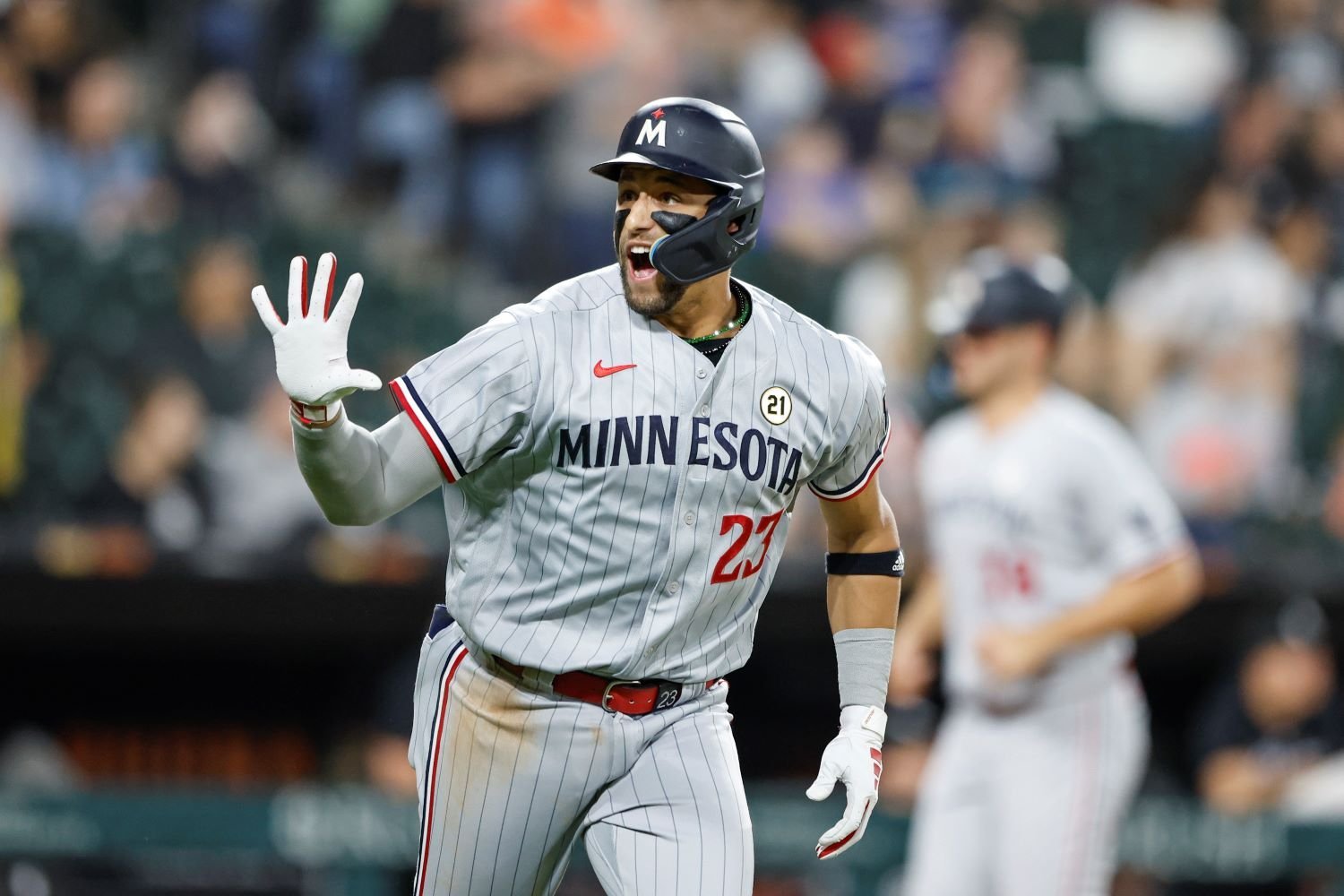
Lewis has been electric in his time at the big-league level while impacting the game on both sides of the ball. Unfortunately, he tore his ACL twice over the last three seasons, significantly hampering his ability to impact the lineup. In 79 career games, he has hit .314/.367/.589 (.956) with a 162 OPS+, 13 doubles, and 22 home runs. His 22 home runs are two more than any other player in Twins/Senators history in his first 80 games. He set the Twins' single-season record with four grand slams in 2023 and helped the club win their first playoff series in two decades. More and more Lewis jerseys are popping up at Target Field as he quickly becomes the face of the franchise.
However, the Twins' decision is accurately measured not just by Lewis's performance but also by the other players the club passed over. Looking at the players selected after Lewis in the first round offers a comparative lens through which to evaluate their choice.
One notable name drafted immediately after Lewis was Greene, a right-handed pitcher selected by the Cincinnati Reds. Greene dazzled scouts with his electric fastball that touched triple digits and polished secondary offerings. However, injuries have hampered his development, underscoring the inherent risk in investing in high school pitchers. Greene has collected the second most rWAR (5.2) among 2017 first-round picks, trailing only Boston’s Tanner Houck (8.7 rWAR), who was never considered for the top pick. While Greene's potential remains tantalizing, his path has been fraught with uncertainty, a reminder of the pitfalls of the draft.
Another intriguing prospect in the first round was McKay, a two-way player drafted by the Tampa Bay Rays. McKay boasted exceptional skills on the mound and at the plate, a rarity in modern baseball outside Shohei Ohtani. Like Greene, McKay's journey has been hindered by injuries, raising questions about the feasibility of excelling in both roles at the highest level. He has been limited to just 13 career major league appearances and is currently on the injured list in the minor leagues with a flexor/pronator strain and an accompanying UCL sprain. He’s already had Tommy John surgery and surgery for thoracic outlet syndrome. Clearly, the Twins were correct in passing over McKay.
Among other notable selections were Gore (San Diego Padres), a left-handed pitcher heralded for his advanced repertoire and polish, and Wright (Atlanta Braves), another promising arm with a potent fastball and promising secondary offerings. Both players have been traded from the team that drafted them. Gore has made 56 big-league appearances with the Padres and Nationals while posting a 4.20 ERA with a 1.41 WHIP and a 25.7 K%. Wright led all of baseball with 21 wins in 2022 and finished in the top-10 for the NL Cy Young. Outside of that season, his big-league time has been limited, including missing the entire 2024 season due to shoulder surgery.
In hindsight, the Twins' decision to draft Lewis appears more than justified, especially if he can overcome his lengthy injury history. While Lewis hasn't fully reached the lofty heights envisioned for a number one overall pick, his potential remains tantalizing. The challenges he's faced are not uncommon for young prospects navigating the development pathway associated with big-league players. Moreover, the risks associated with drafting pitchers, as exemplified by the experiences outlined above, underscore the reasons why teams prefer to select a position player with Lewis's skill set.
However, it's essential to acknowledge that the true verdict on the Twins' decision is still pending. Baseball is a game of patience and uncertainty, and the journey from draft day to stardom is fraught with twists and turns. As Royce Lewis continues his development and the players drafted alongside him carve out their paths, only time will tell whether the Twins made the correct pick. But for now, Lewis's promise and potential offer hope to a franchise and fanbase.
Was Lewis the correct choice? Should the Twins have drafted one of the top available pitchers? Leave a COMMENT and start the discussion.








Recommended Comments
Create an account or sign in to comment
You need to be a member in order to leave a comment
Create an account
Sign up for a new account in our community. It's easy!
Register a new accountSign in
Already have an account? Sign in here.
Sign In Now