


Twins Video
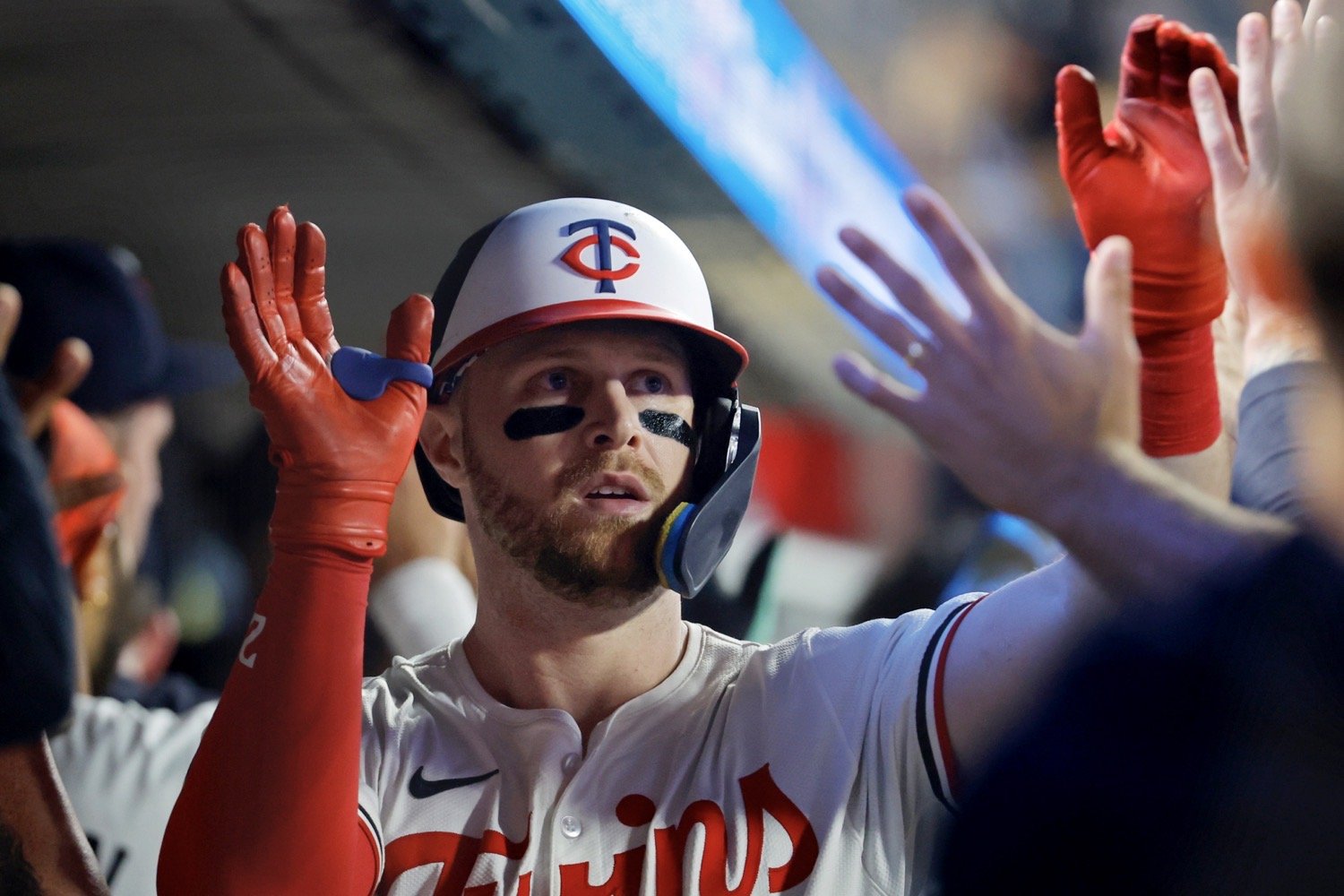
A second round pick in 2018, Jeffers was quietly one the highest regarded catchers in all of Major League Baseball ahead of his debut in 2020. Since then he is one of 20 catchers to surpass 1300 plate appearances and of that group he is 10th in wRC+ and fWAR. MLBTR has projected that Ryan Jeffers will earn $4.7 million via arbitration in 2024, which is roughly a quarter of what FanGraphs value metrics say he was worth in 2024. With that laid out, should the Twins tender or move on from Jeffers? Let's look into both sides of the argument.
Why He Should Be Tendered
I’ve already started to lay out this argument above. Even despite the roller coaster season, Jeffers finished with a 107 wRC+ meaning that he produced 7% better than the average Major League hitter in a position where offense is often considered an added bonus. Additionally, adjustments at the plate led to a career low 20.2% strikeout rate and a career high 78.2% contact rate. He set career highs in nearly every counting stat in part due to playing in 26 more games and earning 130 more plate appearances in 2024 than he previously had in any one season. What’s more is that ZiPS thinks the approach is sustainable and views him as a plus hitter for at least the next two seasons.
Defensively, a career low pop time of 1.93 seconds resulted in an estimated two additional baserunners being gunned down on the base path, per Baseball Savant’s “Catcher’s CS Above Average” metric.
From a roster construction perspective, the Twins like having two starting-caliber catchers on the roster. Heck, at times they were carrying three catchers this season due to Jeffers’ ability to contribute as a designated hitter when he wasn’t behind the plate. From a purely offensive standpoint, $4.7 million is a really good price for a hitter of Jeffers’ caliber, and even more so when he’s doing it as a catcher. While the Twins have other options at catcher, they don’t have anyone else to replace his bat.
Why He Shouldn’t Be Tendered
Almost every positive mentioned above can be tied to something that would give you pause. While Jeffers was setting a career-low strikeout rate, he was also setting a career-low walk rate. While it’s great that he’s making better contact with the ball, he’s doing so by sacrificing power as he saw a dip in his hard-hit metrics nearly across the board. We’d hope that he’d set career highs in home runs, runs, runs batted in, etc. when he had a 39% increase in plate appearances, but unfortunately those counting stats didn’t increase proportionally (not that we’d totally expect them to). When we break down his production by pitch type, it’s clear that he struggles with horizontal movement which isn’t good in a league where the sweeper is king.
Defensively, he’s easily one of the worst catchers in baseball despite the Twins bringing in Christian Vázquez to help mentor him into a better catcher. In fact, we’ve generally seen no improvement in his blocking and framing metrics over the past two seasons, according to Baseball Savant.
From a roster construction standpoint, $4.7 million is a lot of money to dole out to a guy with this many red flags on both sides of the ball, and the Twins are locked into Vázquez for $10 million as it sits right now. While they value having two catchers that can split time 50-50, you have to wonder if spending more than 10% of your salary “cap” on backstops is the most valuable way to spend that money.
What I Would Do
I’ve gone back and forth on this one quite a bit. If it weren’t for the salary constraints, this is a no-brainer move for the Twins. At only 27 years old and with one more year of team control after 2025, there is still time for Jeffers to continue developing as a hitter and a catcher. While I don’t anticipate significant improvement at the plate, I think a middle ground could be found between the hard hitter he was in 2023 versus the contact hitter he was in 2024. And let’s not forget, that “contact” hitter approach still led to 21 home runs and the eighth-best slugging percentage of catchers who had 400 or more plate appearances, so I feel like I’m selling him short a bit there. Given that we’re two years into the Vázquez mentorship, I tend to think his defense is what it is at this point.
I don’t see value in spending nearly $15 million on backstops in 2025, but the decision here really isn’t whether they should or should not tender Jeffers. The decision here is to figure out how much salary they need to cover and or what level of prospect they need to include to ship Vázquez elsewhere. With Jeffers showing to be a 1.7 fWAR player over 122 games, I think it’s realistic to go into 2025 with Jair Camargo as the team's backup and utilizing a ⅔ / ⅓ split between the vet and prospect.
What do you think? How should the Twins handle the catching position in the 2025 season?







Recommended Comments
Create an account or sign in to comment
You need to be a member in order to leave a comment
Create an account
Sign up for a new account in our community. It's easy!
Register a new accountSign in
Already have an account? Sign in here.
Sign In Now