


Twins Video
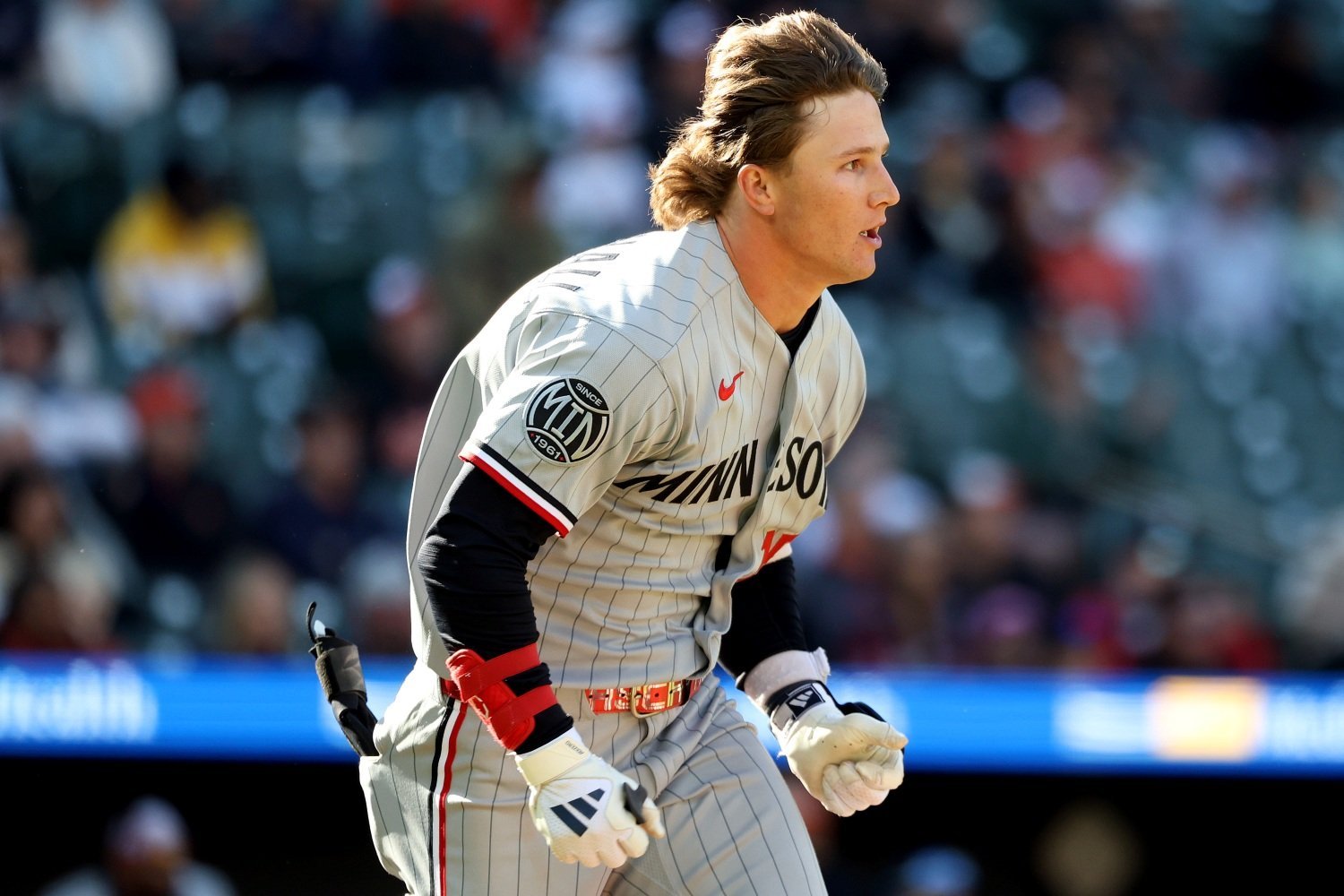
When Luke Keaschall arrived in Fort Myers this spring, expectations bordered on unreasonable. After an impressive debut and years of strong minor-league production, many believed Keaschall was ready to become a foundational piece of Minnesota's lineup. There were legitimate arguments that he should open the season as the Twins' leadoff hitter. Some even projected him as the club's second-best offensive player, behind Byron Buxton.
Instead, the first month of the season was a reminder that development is rarely linear. Keaschall struggled out of the gate, his defense remained a work in progress, and questions started to emerge about whether he was ready for an everyday role. A few months later, however, the conversation shifted dramatically. He still isn't producing the power numbers many hoped to see, but he is beginning to look like something else.
Maybe Luke Keaschall isn't becoming the next star slugger. Maybe he's becoming the next Luis Arraez. And that might be perfectly fine.
Early Season Sophomore Slump
Keaschall's April numbers painted an ugly picture. In 90 plate appearances, he hit .217/.267/.275 with four doubles and one home run. Perhaps even more concerning was his approach. He struck out 21 times while drawing only eight walks, a significant departure from the disciplined offensive profile that had made him such an intriguing prospect.
The struggles became impossible to ignore. At the plate, Keaschall looked caught between being aggressive and trying to work counts. He increased his bat speed this year, but that initially caused more problems than it solved. In the field, his below-average defense at second base continued to create questions about his long-term fit. When a player isn't providing defensive value and isn't producing offensively, roster spot discussions naturally follow.
There were legitimate reasons to wonder if a reset at Triple-A might be necessary. Instead, the Twins stuck with him. That patience is beginning to pay off.
Keaschall is Officially Fixed
Since May 1, Keaschall has looked like an entirely different hitter. Across 164 plate appearances, he owns a .288/.390/.381 slash line, with eight doubles, one triple, and one home run. More importantly, the underlying plate discipline metrics have returned to the levels that made him successful throughout his climb through the minors.
During that stretch, he has drawn 20 walks while striking out only 23 times. The trend has become even more noticeable recently. Over his last 11 games, Keaschall owns a .930 OPS, fueled by an outstanding .457 on-base percentage. He's walked seven times while striking out only six times during that span.
The Twins' offense has finally started to find consistency over the last couple of weeks, and Keaschall has become an important part of that resurgence. Every lineup benefits from hitters who can extend innings, force opposing pitchers to throw extra pitches, and consistently find ways to reach base. Keaschall is doing all of those things right now.
Keaschall Won't Hit for Power
As encouraging as the recent turnaround has been, it has also clarified exactly what kind of hitter Keaschall is likely to become. Power probably won't be a major part of the equation. His average exit velocity of 84.7 mph ranks in the 4th percentile league-wide. He also sits in the 18th percentile or lower in xSLG, Barrel%, and Hard-Hit%.
Those numbers aren't flukes. Much of the issue stems from his 69.2 mph bat speed. Even when Keaschall makes quality contact, he simply doesn't generate the same raw force as many of the league's premier power hitters. He squares the ball up fairly well, but his hardest contact comes when he's hitting to the center of the diamond on a line, rather than when he pulls and/or backspins the ball.
The result is a unique offensive profile. Instead of launching balls into the seats, Keaschall produces line drives and hard-hit singles. With a 28.7 feet-per-second sprint speed, he has enough athleticism to turn some of those balls into doubles and create pressure on opposing defenses. It may not be flashy, but it can still be productive.
The Luis Arraez Connection
The comparison to Arraez becomes increasingly difficult to ignore. Throughout his career, Arraez has built value almost entirely through elite contact skills, good plate discipline, and an ability to reach base. Home runs were never a significant part of his game, but his offensive profile worked because he consistently put the baseball in play and rarely gave away at-bats.
Keaschall appears to be following a similar blueprint. The encouraging part is that many of the foundational skills are already present. His chase, whiff and strikeout rates all rank in the 83rd percentile or better this season. Those numbers suggest that the early-season swing-and-miss issues were more of a temporary slump than a permanent concern, and that he will find ways to draw walks even though pitchers don't fear him.
Like Arraez, Keaschall's success will depend on maintaining elite bat control and strike-zone awareness. If he starts chasing pitches or allowing strikeouts to creep back into his game, the lack of power becomes a much bigger problem. But if he continues controlling the strike zone the way he has since May, there is a path to becoming an extremely valuable offensive contributor.
Keaschall is unlikely to replicate Arraez's batting titles. Arraez routinely posted strikeout rates below 10% and possessed perhaps the most advanced contact skills in baseball. Keaschall's game includes more walks, more athleticism, and more speed on the bases. The comparison is less about identical production and more about the path to offensive value.
Arraez showed that players do not need 25-home run power to contribute to wins. They need to get on base, create scoring opportunities, and consistently put pressure on opposing pitchers and defenses. Keaschall is beginning to demonstrate that he can do exactly that.
The version of Keaschall many envisioned this spring may never fully materialize. He may not become a middle-of-the-order force. He may never produce the type of exit velocities that light up Statcast leaderboards. The home run totals will likely remain modest.
That doesn't mean he can't be an impact player. Minnesota's lineup already features hitters capable of changing a game with one swing. What it has often lacked is a player who consistently reaches base and keeps the line moving. Keaschall's recent surge suggests he can fill that role.
The comparison to Arraez should not be viewed as a disappointment. Twins fans spent years appreciating one of baseball's most unique offensive talents. If Keaschall develops into a player who reaches base at an elite clip, controls the strike zone, and frustrates opposing pitchers every night, Minnesota will gladly take those results.
The path may not look exactly like what many expected in March, but it is becoming increasingly clear that Keaschall has found a formula that works. And if that formula resembles the one Arraez used to become a batting champion, the Twins should have no complaints.
Are there other similarities between Keaschall and Arraez? Leave a comment and start the discussion.
Do you approve of the job Derek Shelton is doing as Twins manager?

Follow Twins Daily For Minnesota Twins News & Analysis



- Mia Bednar, Dman, nclahammer and 2 others
-
 5
5



Recommended Comments
Create an account or sign in to comment
You need to be a member in order to leave a comment
Create an account
Sign up for a new account in our community. It's easy!
Register a new accountSign in
Already have an account? Sign in here.
Sign In Now