


Twins Video
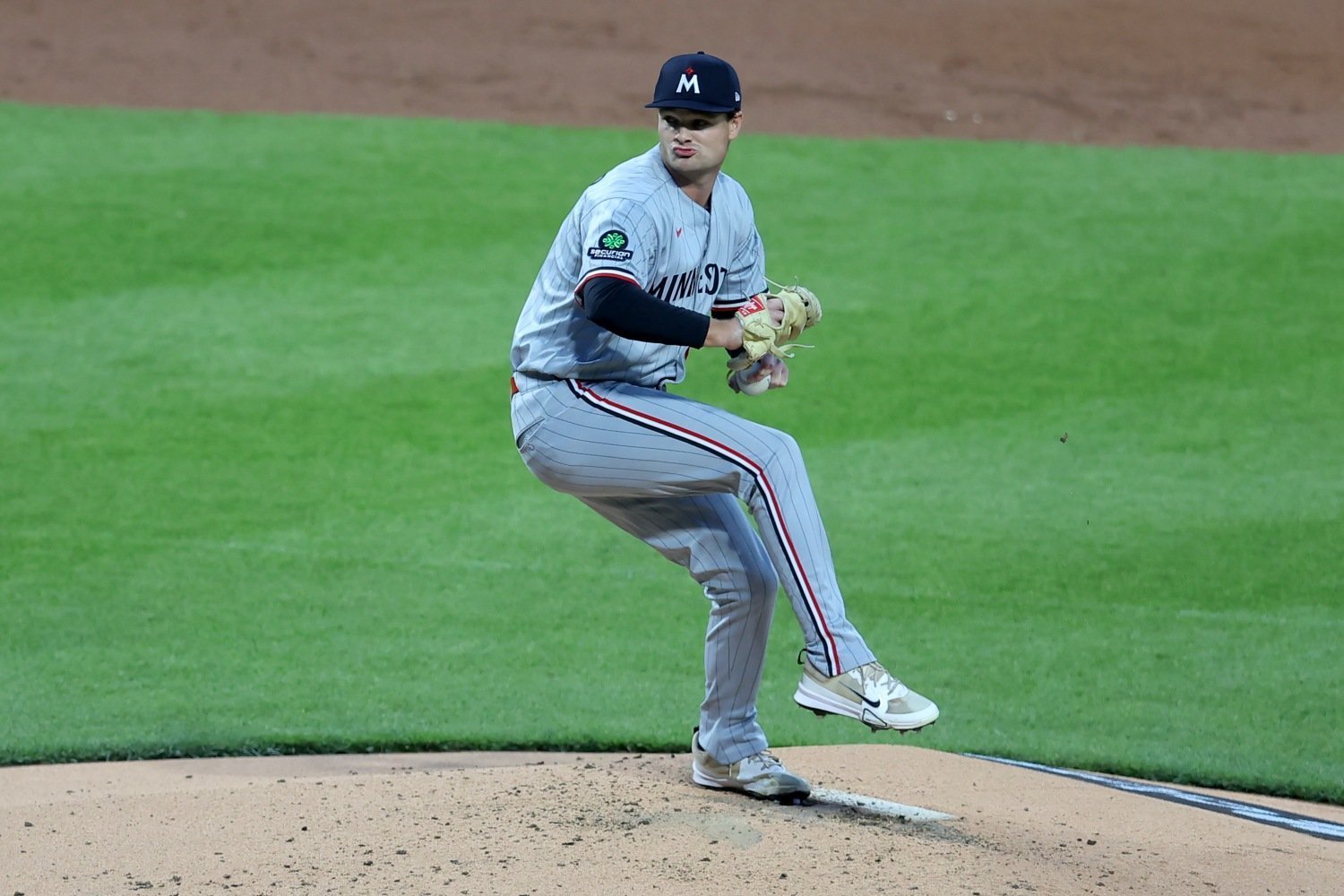
When Connor Prielipp arrived in the big leagues this season, the conversation was never going to be solely about results. The former second-round pick has long possessed some of the best pure stuff in the Twins organization, but his development path has been defined as much by innings restrictions and injuries as strikeouts and prospect rankings.
Now, as Minnesota pushes toward the postseason, the Twins face a challenging question: How do they maximize Prielipp's value while protecting a pitcher who has rarely handled a full professional workload? The answer could have a significant impact on both Prielipp's long-term future and the Twins' chances of playing deep into October.
The Workload Challenge Is Real
Prielipp is currently on the 15-day injured list with a blister on his left middle finger, an issue that has surfaced before during his professional career.
Before landing on the IL, Prielipp started against Cleveland and allowed three runs on four hits and two walks while striking out six over five innings. Through his first 13 major-league starts, he has posted a 5.00 ERA and 1.37 WHIP with 71 strikeouts in 66 2/3 innings. While the ERA may not jump off the page, his 3.90 FIP and underlying metrics suggest he has pitched better than the surface numbers indicate.
The blister issue provides a temporary pause, but it also gives Minnesota something valuable: time. Prielipp has already thrown 82 1/3 innings between Triple-A and the major leagues in 2026. That's essentially matching the career-high 82 2/3 innings he logged across the minors last season. Even more remarkable is the fact that from 2020 through 2024, dating back to his senior year of high school, he threw only 58 total innings because of injuries and surgeries.
That's why the Twins have approached every outing with caution.
“I think any chance that we can give him a day or two, we’ll do that,” Twins manager Derek Shelton said. “There’s a big difference between monitoring a guy when he comes to the big leagues to be cautious, and then there’s the difference [with] this guy, who has 150 innings since he was a 17-year-old in high school. We have to be very thoughtful of that.”
Letting Him Reach 120 Innings Is the Simple Solution
The most straightforward path would be allowing Prielipp to remain in the rotation until he reaches roughly 120 innings before shutting him down. From a developmental standpoint, that makes sense. It would represent a significant increase from last year's workload while still keeping him within a manageable range.
The Twins have already shown they are willing to carefully monitor his usage. Extra rest days, shorter outings, and strategic scheduling decisions could help stretch those innings further into September.
As Shelton explained, there is no universal formula for managing pitchers with limited workloads.
“I know there’s no perfect science to it, because if somebody had that figured out, you would always see getting an extra day, always getting two extra days, or you would see shortened starts,” said Shelton. “I don’t think there’s a perfect science. I think it’s kind of monitoring the situation day-to-day. It’s also monitoring where our bullpen’s at going into an off-day. If we’re not, if at the start of our series, so I think there’s a lot of factors.”
The problem with the innings-limit approach is timing. If Prielipp continues averaging five to six innings per start after returning from the injured list, he could reach that threshold before the regular season ends. For a rebuilding club, that might be acceptable. For a team chasing a playoff spot, voluntarily removing one of its most talented arms from the roster becomes much harder to justify.
The Bullpen Could Offer the Best Compromise
That's why a move to the bullpen may ultimately be the most practical solution. With Bailey Ober returning from the IL, Minnesota could shift Prielipp into a multi-inning relief role. This could also allow Mike Paredes to stay in the rotation as the fifth starter. For Prielipp, he could work one to three innings at a time while maintaining a regular workload schedule instead of throwing five or six innings every fifth day.
The benefits are significant. First, it would allow the Twins to better control his innings total. A pitcher who might accumulate 30-40 innings over the final two months as a starter could potentially throw half that amount in relief. Second, it would keep him available for the entire season instead of forcing a September shutdown. Third, his stuff could play up even more in shorter outings.
Prielipp's secondary pitches have already proven capable of missing bats at the highest level. The curveball he added during the offseason has generated whiffs on 36.3 Whiff%, while his slider continues to be a legitimate weapon (27.7 Whiff%) against both right-handed and left-handed hitters.
The next step remains finding more consistency with his fastball. Working in shorter bursts could allow him to attack hitters more aggressively and potentially add a little extra velocity. A bullpen role would also provide valuable postseason experience should Minnesota qualify for October baseball.
The Twins Haven't Made a Decision Yet
For now, the organization remains in evaluation mode. Prielipp's current IL stint delays the decision and gives the club additional time to assess its pitching depth. The Twins know they must manage his volume carefully, but they haven't yet determined exactly what that will look like over the season's final months.
“I wish I had the answer to that,” said Shelton last month. “We will definitely have to monitor the volume regardless of if it’s within starts or throughout the year. I don’t think we’re at the point in the year where we will determine, or we have determined where we’re at with that yet.”
The uncertainty is understandable, but the season timeline might force the Twins to make a decision sooner rather than later. Prielipp's health history makes every inning important, but so does his value to a team with postseason aspirations.
Finding the Right Balance
The Twins always envisioned Prielipp becoming a difference-maker. The challenge has never been talent. It has been availability.
This season has finally provided a glimpse of what he can be when healthy. Even with some growing pains, he has missed bats, shown the ability to navigate major-league lineups, and demonstrated why he remains one of the organization's most important young pitchers.
Shutting him down entirely once he reaches an innings threshold would certainly be the safest option. It would also remove a potentially impactful arm from the roster during the most important part of the season.
A move to the bullpen feels like the better compromise. It allows Minnesota to continue protecting his health while keeping him available for meaningful games down the stretch and, potentially, into October.
The Twins don't need to decide today. But as Prielipp inches closer to his workload limit, that decision is coming. And it could become one of the organization's most important roster choices of the second half.
What is the best option with Prielipp? Should he continue to start and hit an innings limit or move to the bullpen? Leave a comment and start the discussion.









Recommended Comments
Create an account or sign in to comment
You need to be a member in order to leave a comment
Create an account
Sign up for a new account in our community. It's easy!
Register a new accountSign in
Already have an account? Sign in here.
Sign In Now