


Twins Video
On Thursday, in the wake of the Giants being outbid for their umpteenth straight elite free agent, the team put out the word that they feel like players are afraid of San Francisco, or uncomfortable playing there. At best, that's a smokescreen. At worst, it's a cynical lie.
"The Giants' problem... from everything we've heard, and everything Buster Posey told Andy Baggarly of The Athletic last night, they've got a geography problem, or a city problem, I guess I would say," said Ken Rosenthal (also of The Athletic) on the web show Foul Territory Thursday. "Players, for whatever reason, have a negative perception of San Francisco right now."
"They have a city problem"@Ken_Rosenthal says that perceptions about San Francisco are affecting their ability to recruit star free agents.
— Foul Territory (@FoulTerritoryTV) December 13, 2023
▶️ https://t.co/36XRKc5l3T pic.twitter.com/CyStHukRkY
Rosenthal went on to say (as, earlier in the day, Baggarly had written, with Posey's quotes as his evidence) that players were put off by the state of downtown San Francisco in the post-pandemic world, including vague allusions to crime as a concern.
On its face, that argument is shaky and problematic. San Francisco is just one of several cities throughout the United States which have recently become the targets of misleading, exaggerated, and subtly bigoted critiques by people who have something to gain by implying that cities and the demographic groups who tend to populate them are inherently inferior to smaller communities. It's a false narrative driven, as often as not, by politics, which makes repeating it and lending it greater credibility a higher-stakes transgression than most bad choices in the usually low-stakes world of baseball reportage.
The most important refutation for what Posey said, Baggarly wrote, and Rosenthal disseminated to a wider audience is this: it's blatantly false, and easily disproved. No one knows that better than Twins fans. Carlos Correa is a Twin for the long haul, now, but one year ago right now, we all thought he was heading to San Francisco. He agreed to a massive deal to play there, and the deal didn't fall apart because Correa or his family balked during a visit. Remember, a jersey was made up for his introductory press conference. He was ready to be a San Franciscan. It was the Giants who walked away.
That's just one notable counterexample, and while it's a fitting one (since it's really a failure to sign elite free agents, not free agents in general, that Posey said was the city's fault), it's nowhere near the only or best one. Last winter, spreading around the money they elected not to give to Correa, the Giants signed Joc Pederson, Ross Stripling, Sean Manaea, Taylor Rogers, Mitch Haniger, and Michael Conforto. That's just the notable players who signed deals worth eight figures annually. They also brought in a fistful of minor leaguers and fringe guys, including some who knew they would spend much of the season rehabbing from an injury. The evidence is much closer to telling us that free agents love San Francisco and can't wait to get there than that they shy away.
Those who found this narrative plausible (despite the contrary facts at hand) pointed to the fact that many baseball players are White men raised in areas friendly to the aforementioned broad-strokes criticisms of city life, and that many of those might therefore buy into those criticisms and prefer teams (like the Braves, Rangers, and Angels) who play further from supposedly dangerous city centers than ones like the Giants--or, hey, the Twins.
That, though, is just as faulty a story as the notion that free agents hate the Giants at all. Like America itself, baseball is getting less White and less rural all the time. Many of the megastars who have snubbed the Giants recently (Shohei Ohtani, whose choice to sign with the Dodgers prompted this round of finger-pointing by the team, but also Aaron Judge and others) don't fit that mold at all. Some of the players they have signed do fit it, but chose the Giants, anyway. Then, there's Correa, and now Jung Hoo Lee, who agreed to a six-year deal just one day before these excuses about Ohtani began spilling forth.
After both the Giants and the Mets reneged on Correa, he came to the Twins, instead. He was happy to circle back to a team who plays right in the middle of a city that has been slandered with the same nonsense many outsiders have hung on San Francisco and Chicago, among others. One could choose to call Correa the exception who proves the rule, and maybe that would be right, but it underscores a truth that gives the lie to this whole line of argument: All of these decisions, on both sides, are made by individuals, and their idiosyncrasies tend to outweigh sociological tropes.
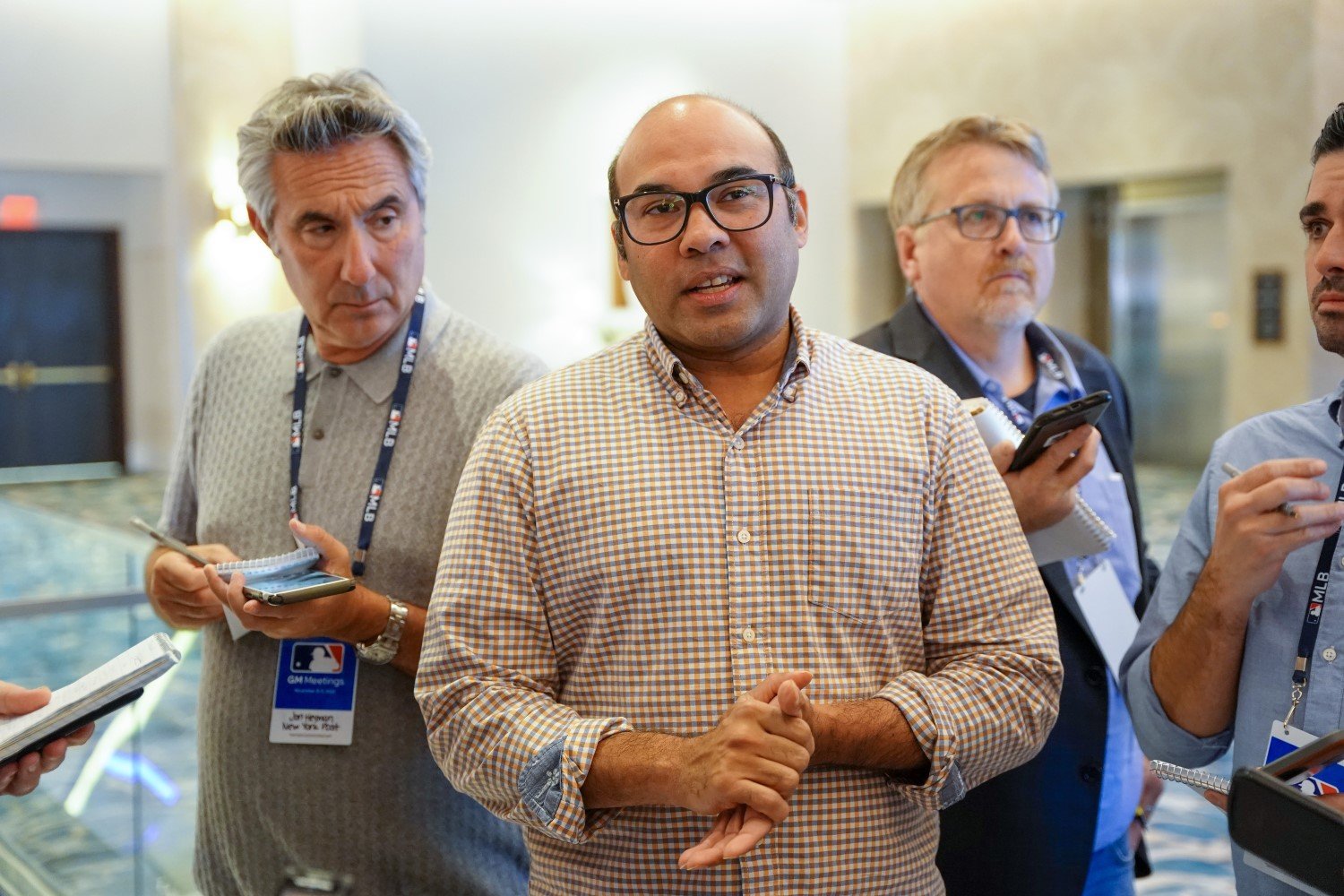
Maybe Correa is a special guy--the kind of person who can get comfortable more easily than others, and who will bloom wherever he's planted. Giants president of baseball operations Farhan Zaidi, though? He's from the Andrew Friedman Dodgers, but he's not a true Friedman disciple. He's always been the rational, conservative decision-maker to Friedman's big splash-maker. Whereas Friedman famously embraces irrationality when he gets a chance to do something rare and special, Zaidi has always been most in his element when doing arbitrage. He loves the marginal win at the lowest cost in marginal dollars. He doesn't win bidding wars at the very top end of the market very often, because he doesn't want to do so. If he's letting anyone suggest that San Francisco itself is to blame for the fact that only free agents willing to sign short-term deals have come to the Giants recently, he ought to be ashamed of that. It's not the city; it's the man.
Whether Zaidi sent Posey out with this message to give the team cover after Friedman reeled in the biggest fish to hit free-agent waters in a generation, or whether Posey genuinely believes it, it's wrong. That leaves us with the question: why are people saying it? Why, even once Posey said this to Baggarly, did Baggarly deem it newsworthy? And why did Rosenthal literally broadcast it?
One possibility is that they share the sentiment Posey expressed, and that him saying it just gave them the cover they needed to start stating it as a fact. That, too, can vary from one individual to another. Some reporters might be saying this out of a mistrust for some of the players in question--a rather sad but not wholly unearned suspicion. Others might want to amplify the message because they honestly believe in the decrepitude of San Francisco and some other large American cities. That isn't completely baseless, either. We don't have to pretend Minneapolis is a utopia. We just need to corral the pernicious oversimplification that calls it a dangerous, dirty, or depraved place, because that oversimplification isn't an accident. It's being pushed by people with ulterior motives.
The other broad possibility as to why reporters have repeated and built out this explanation for one team's failure to sign a superstar free agent is more innocent, maybe, but somehow still worse. It's that, with the value of their access for insider reporting purposes dwindling, some high-profile reporters are more eagerly parroting whatever substantial tidbits sources share with them, without interrogating the information they get or filtering it as much as they should.
Be it out of layered latent bigotry or an honest but not necessarily excusable dearth of journalistic rigor, the national media is allowing a false narrative with real and far-reaching consequences in the lives of people far beyond the sphere of baseball to spread and strengthen. That's an important failure, regardless of the basis for it.
"The Giants' problem... from everything we've heard, and everything Buster Posey told Andy Baggarly of The Athletic last night, they've got a geography problem, or a city problem, I guess I would say." Maybe you would, Ken. But you shouldn't.







Recommended Comments