


Twins Video
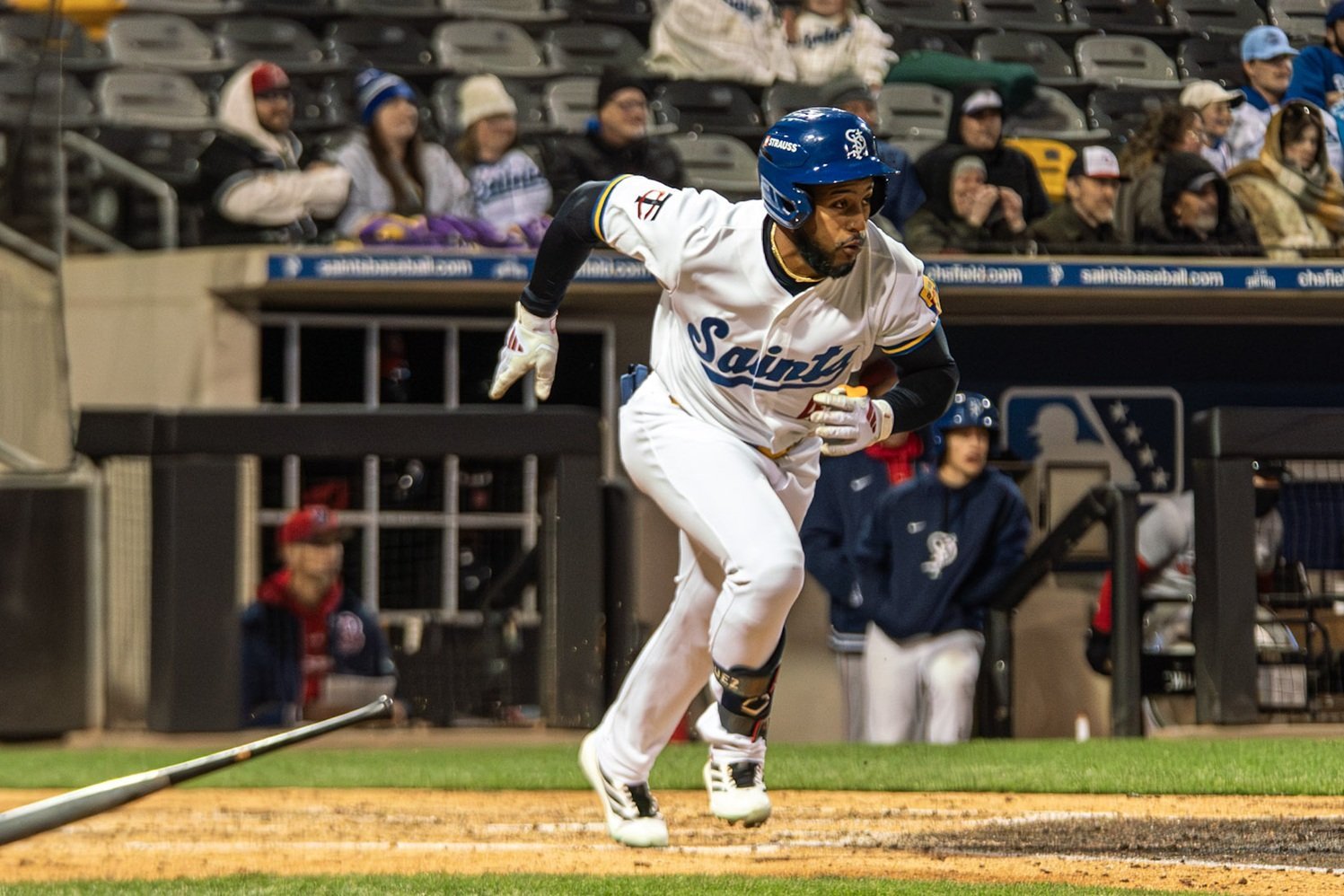
For years, Emmanuel Rodriguez has occupied a fascinating space in prospect circles. Few players in baseball have generated as much excitement, and as much frustration, as the talented Twins outfielder. Since signing with Minnesota for $2.5 million during the 2019 international signing period, Rodriguez has consistently flashed the type of tools that make evaluators dream about an impact major leaguer. He combines power, patience, athleticism, and an advanced understanding of the strike zone that few young hitters possess.
The problem, of course, is that those flashes have rarely come uninterrupted. Now 23 years old, Rodriguez has already reached Triple-A and did so at just 21 years old during the 2024 season. That accomplishment alone speaks to the level of talent involved. Yet injuries and developmental hurdles have prevented him from taking the final step toward becoming a cornerstone of Minnesota's future.
Recently, FanGraphs released its top-50 Twins prospects list. While Rodriguez remains highly regarded nationally and still carries top-100 prospect recognition in many circles, FanGraphs ranked him eighth in the organization. That placement isn't necessarily unreasonable given the depth of Minnesota's system, but it does reflect a growing trend among national outlets that seem increasingly hesitant to buy into Rodriguez's long-term outlook.
Some of that skepticism is understandable. Some of it may simply be prospect fatigue. Players who sign as teenagers often spend years on prospect lists. Eventually, evaluators begin focusing more on what hasn't happened than what has. Rodriguez may be reaching that stage of his prospect journey.
Here are three reasons why national outlets may be cooling on one of the Twins' most talented young players.
Reason 1: Injuries
The most obvious explanation is also the most significant. Rodriguez has never appeared in 100 games during a professional season, and 2026 will almost certainly continue that trend. His latest setback, a torn UCL in his left thumb that required surgery, pushed him to the IL after only 25 games with Triple-A St. Paul. The injury was particularly frustrating because it came just one year after surgery on his opposite thumb.
Unfortunately, thumb injuries are only the latest additions to a growing medical file. Previous seasons have included time lost to issues involving his hip, oblique, abdomen, and knee. Every time Rodriguez appears ready to build momentum, another injury seems to interrupt his progress.
At some point, evaluators stop viewing injuries as isolated incidents and begin factoring durability into the overall projection. That's a difficult reality for Rodriguez. Availability is a skill, and his inability to stay on the field consistently has become a defining aspect of his prospect profile. The talent remains undeniable. The track record of staying healthy does not.
Reason 2: Unique Offensive Approach
Even when healthy, Rodriguez has never been a universally loved prospect. His offensive profile is unlike almost anyone else in professional baseball. For a player listed at 5-foot-11 and 210 pounds, he resembles a speedy table setter from bygone generations. Instead, he has the offensive profile of a middle-of-the-order slugger.
Across his minor-league career, Rodriguez owns a .253/.423/.490 slash line while walking in more than 20 percent of his plate appearances and striking out over 30 percent of the time. Those numbers tell the story of an extremely patient hitter who generates power and reaches base at elite rates. They also reveal a player whose approach leaves very little margin for error.
Some evaluators love the elite on-base skills. Others worry that his passive tendencies let too many hittable pitches go by. Entering 2026, there was a growing belief that Rodriguez needed to become more aggressive earlier in counts and attack pitches he could drive rather than constantly working deep counts.
Unfortunately, his injury occurred before anyone could determine whether those adjustments would stick. Early returns suggested he was attempting to make changes, but they also came with increased chase rates and declining contact numbers. The development process was essentially frozen before meaningful conclusions could be reached. For prospect evaluators who already had concerns about his unconventional offensive style, the lack of answers only adds to the uncertainty.
Reason 3: Trouble With Fastballs
The biggest on-field concern remains Rodriguez's ability to handle velocity. His swing mechanics are unique, featuring a pronounced bottom-hand dominant path and a frequent one-handed finish. The setup helps generate impressive bat speed and power, but it also creates vulnerabilities that upper-level pitchers have increasingly exploited.
Triple-A pitchers have found success attacking Rodriguez with fastballs, particularly at the top of the strike zone. Elevated velocity has consistently generated swings and misses, exposing a weakness that scouts have discussed for years. The concern isn't simply that he struggles against certain pitches. It's that major-league pitchers are likely to attack the same weakness even more aggressively.
Big-league organizations spend enormous resources identifying hitter vulnerabilities, and Rodriguez's issues against elevated fastballs are well documented. Unless he finds a way to improve his coverage in that area, opposing pitchers will have little reason to challenge him differently.
That doesn't mean he can't become a productive major leaguer. Plenty of successful hitters have built careers while carrying specific weaknesses. However, it does create another layer of risk that evaluators must weigh when projecting his future value.
The Clock Is Starting to Matter
While injuries, strikeouts, and concerns about the fastball all contribute to the growing skepticism, the biggest issue may be timing. Prospect rankings are ultimately forward-looking exercises. Evaluators aren't simply asking whether a player is talented; they're asking how likely that player is to become a productive major leaguer and when that might happen.
Rodriguez's injury history has dramatically complicated that timeline. Where the setbacks have truly begun to hurt is in roster management. Rodriguez will be out of minor league options next spring, putting significant pressure on him and the organization. The Twins will soon need to determine whether he deserves a permanent major-league roster spot, despite having limited Triple-A experience over the past two seasons.
That's an uncomfortable position for any organization. The talent that made Rodriguez one of baseball's most exciting prospects hasn't disappeared. He still possesses elite plate discipline, legitimate power, and the upside of an impact everyday player. But after years of interrupted development, national evaluators appear increasingly focused on the risks rather than the ceiling.
Maybe that's fair. Maybe it's prospect fatigue. The Twins would gladly settle for Rodriguez proving everyone wrong by finally staying healthy long enough to show what he's capable of becoming.
Does Rodriguez have prospect fatigue? Leave a comment and start the discussion.
Do you approve of Twins ownership?

Interested in learning more about the Minnesota Twins' top prospects? Check out our comprehensive top prospects list that includes up-to-date stats, articles and videos about every prospect, scouting reports, and more!
View Twins Top ProspectsFollow Twins Daily For Minnesota Twins News & Analysis



- nclahammer, mikelink45, Wizard11 and 1 other
-
 4
4


Recommended Comments
Create an account or sign in to comment
You need to be a member in order to leave a comment
Create an account
Sign up for a new account in our community. It's easy!
Register a new accountSign in
Already have an account? Sign in here.
Sign In Now