


Twins Video
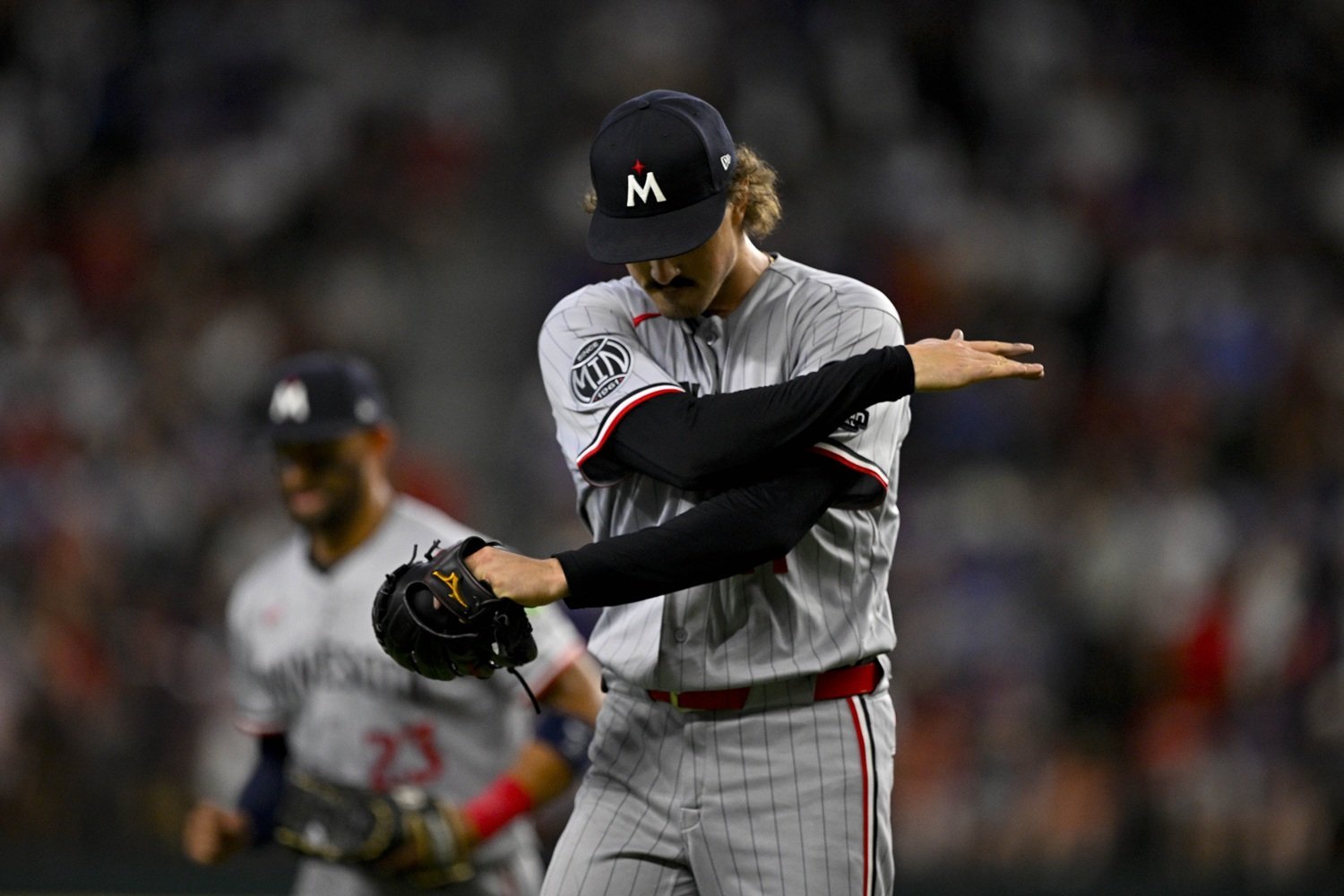
Joe Ryan has become one of the Minnesota Twins' most important starting pitchers, but his latest season repeated a troubling pattern. He dominated early, earned another All-Star selection, then struggled to stay healthy and effective down the stretch.
The Twins face an important decision this offseason, as Ryan enters the final year of team control in 2027. Trading him could make sense if Minnesota falls out of contention, but keeping him would give the club an established starter capable of anchoring its rotation.
Assuming they keep him at least through the winter, the Twins need a better plan for getting Ryan through an entire season. His late-season struggles have become too consistent to ignore, and hoping for a different outcome in 2027 is not a strategy.
Ryan's 2026 Season Was a Tale of Two Halves
Ryan looked like a frontline starter during the first half of 2026. He posted a 2.85 ERA, struck out 28.4% of opposing batters, and gave Minnesota a reliable presence at the top of its rotation.
Everything changed after the break. In his first post-All-Star start against Cleveland, Ryan surrendered a career-high six home runs. He then allowed four earned runs in each of his next two outings, before landing on the injured list with a left glute strain. Ryan returned in September, but he struggled to regain his previous form. In seven second-half starts, he recorded a 6.82 ERA in 34⅓ innings, allowing 26 earned runs.
His overall numbers were respectable, with a 3.79 ERA, 159 strikeouts, and a 1.16 WHIP in 144⅔ innings. Still, the dramatic split between his first and second halves left the Twins with plenty of questions heading into the offseason.
A Recurring Problem for Ryan
Ryan's struggles are not limited to 2026. Since becoming a regular major-league starter, he's consistently been less effective after the break. In 2022, Ryan's ERA increased from 2.99 in the first half to 4.14 afterward. The following season, it climbed from 3.70 to 6.09. In 2024, he posted a 3.53 first-half ERA before recording a 3.98 ERA in four second-half starts, with a shoulder strain ending his season early. The pattern continued in 2025, when Ryan went from a 2.72 first-half ERA to a 4.67 mark after the break. Then came the dramatic decline in 2026.
Injuries have played a role, including groin, shoulder, and glute problems. However, health has not been the only concern. Ryan has also endured stretches when opposing hitters have punished some uncharacteristic mistakes. Whether the problem stems from fatigue, mechanical adjustments, or opponents becoming more familiar with his approach, Minnesota needs to investigate the underlying causes. Five seasons of similar results suggest the organization should do more than wait for things to improve.
How the Twins Can Manage Ryan Differently
Minnesota should begin the 2027 season with an individualized plan for monitoring Ryan's workload, mechanics, and recovery. That means establishing his normal velocity and delivery patterns during spring training, then tracking changes throughout the year. If his command, fastball velocity, or mechanics begin to deteriorate, the coaching and medical staffs should investigate before allowing the problem to carry into multiple starts.
The Twins should also be more willing to provide extra rest during the summer. If their rotation depth allows it, they could use a six-man rotation for stretches around the break. A planned additional day of rest could be more useful than waiting until an injury forces him onto the injured list. Ryan made five of his first eight and seven of his first 14 starts in 2026 on four days' rest. That's still considered regular rest, but in reality, the league made 48% more starts on five days' rest than on four in 2026. With a league schedule that includes more off days than in the past, even without running a true six-man rotation, it's often possible to give a starter five days between outings. The Twins should put Ryan on a strict five-day schedule, to see if it allows him to hold up better late in the campaign.
Just as importantly, Minnesota should establish clear guidelines for responding to physical warning signs. If Ryan reports discomfort or the staff detects a meaningful change in his delivery, they should consider skipping a start instead of automatically sending him back out after five days. The goal would not be to impose an arbitrary innings limit, but to prevent manageable problems from becoming month-long absences or strings of blowup starts.
The Twins should also avoid overworking Ryan simply because he's one of their best starters. A deeper rotation would allow them to distribute innings more evenly, keeping Ryan fresher for the final two months. That approach requires the organization to prioritize September effectiveness over maximizing every regular-season start.
Ryan's contract situation adds another layer to the discussion. MLB Trade Rumors projects his final arbitration salary at $9.6 million, and his remaining team control could make him attractive to other clubs. If Minnesota is not positioned to contend, the front office will have to weigh his trade value against the benefits of retaining an established starter. If they want to move him in July, they need to give suitors a reason to believe he'll remain viable in August and September.
The Breaking Point in 2027
Ryan remains capable of being a major asset for Minnesota. His first half in 2026 demonstrated that, but the repeated second-half decline has become a legitimate concern—a source of both frustration and real damage to the franchise.
There is also the looming cloud of a potential MLB lockout that could impact the season’s start. If negotiations carry into the spring, the start of the season could be pushed back. For Ryan, that might be helpful, because it could limit his innings load and put him in a better position to finish the season on a high note. On the other hand, a shortened season would also be a condensed one, and fewer off days would mean less opportunity to give the hurler five days between appearances.
With his final season of team control approaching, Ryan's future in Minnesota remains uncertain. Whatever the organization decides, it shouldn't allow another season to follow the same, familiar script. A healthier, more effective Ryan down the stretch could make a significant difference in the Twins' 2027 season.
What else could the Twins do with Ryan to impact his second-half performance? Leave a comment and start the discussion.








Recommended Comments
Create an account or sign in to comment
You need to be a member in order to leave a comment
Create an account
Sign up for a new account in our community. It's easy!
Register a new accountSign in
Already have an account? Sign in here.
Sign In Now