


Twins Video
* On Friday, I wrote about the adjustments Jose Berrios had been making in Triple-A, and wondered if they would translate to the majors.
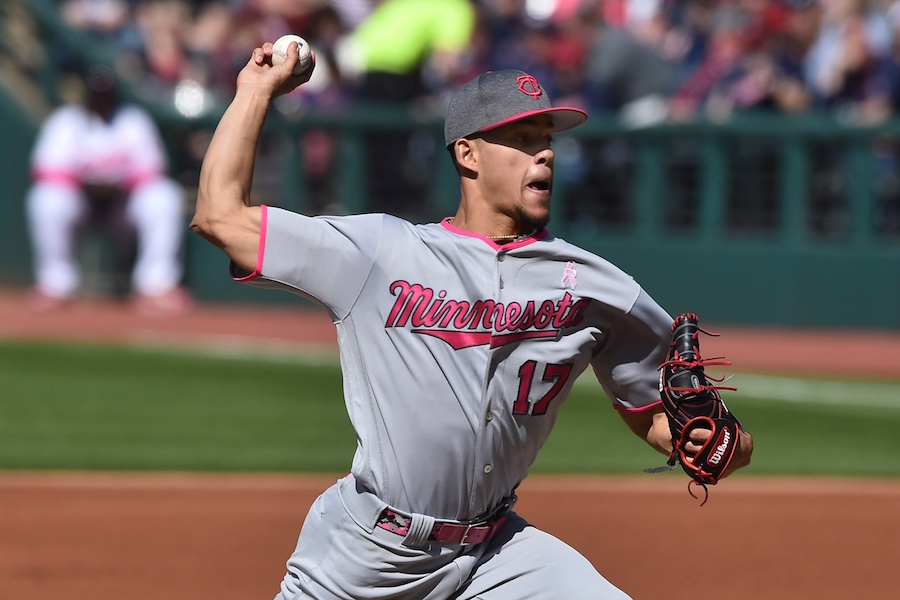
Specifically, his latest starts in Rochester suggested Berrios was effectively adhering to a blueprint of attacking the zone relentlessly rather than trying to throw past hitters or maximize the gas. In essence, the Twins were asking him to pitch to contact. And while that's a term that probably makes a number of local fans shudder, it's sage guidance for the young righty, and might have helped him put forth easily his best big-league outing in Saturday's return.
The blowback against Minnesota's "pitch to contact" mantra, which to my recollection reached a high point as Rick Anderson futilely attempted to rein in a wayward Francisco Liriano in 2012, was always overblown. It is understandable enough that the phrase would induce a visceral reaction given the chronic and crippling inability of Twins staffs to miss bats over the years, but to take the words at face value is to misunderstand the nature of the concept.
Asking a guy to pitch to contact is not a literal instruction to throw over the middle of the plate and let 'em nail it. It is instead about instilling a mentality wherein the pitcher trusts his stuff and stops worrying about actively trying to blow everyone away.
And here's the thing with Berrios: he doesn't need a huge strikeout rate. He has proven extremely tough to square up at every level, with the exception of his rookie stints in the majors where he was so often behind the in the count he was forced to pitch to contact in the bad way.
In 591 minor-league innings he has allowed only 472 hits and 35 homers. His K-rate in Triple-A dropped from 28.9 percent in 2016 to 25.7 percent in six starts this year, yet his opponents' average dropped from .188 to .167.
If he's getting ahead in counts the whiffs will come naturally, but much like his new mentor Ervin Santana, Berrios doesn't need to strike out a batter per inning to be successful at this level. Saturday's start, in which he allowed one run on two hits in 7 2/3 innings despite only four strikeouts, reinforces this.
Go ahead and keep on pitching to contact, Jose.
* At the end of a sluggish April that registered as one of the least productive months in his career, Joe Mauer expressed minimal concern.
“I feel like I’m striking the ball pretty well,” he told Mike Berardino of the Pioneer Press. “You’ve got to try to stick with the process, and hopefully those results change.”
Guess the grizzled vet knew what he was talking about after all.
Since the start of May, Mauer's results have taken a turn. In 41 plate appearances this month, he is slashing .324/.390/.514. His batting average on balls in play, which sat at an uncharacteristically low .243 at the end of April, has swung to .385 over the past two weeks.
Mauer still has a long way to go before he's even at an average level of output (his OPS ranks second-to-last among qualified AL first basemen) but at least he's moving in the right direction.
* The penchant for Minnesota's lineup to hit the ball over the fence has been a major topic during the first leg of the season. Miguel Sano has himself on pace to approach 50 bombs, and Jorge Polanco's long ball on Sunday marked the 15th consecutive game where a Twin has homered, one short of a franchise record.
But it's been the pitching staff's ability to keep it in the yard that has been more essential to the team's success. Last year the Twins allowed 221 home runs, most in the American League. This year, they entered Sunday's finale in Cleveland with 40 allowed – fewer than all but six AL teams. Of course, Hector Santiago then went out and gave up three, with Adam Wilk adding another for good measure. But the Twins remain on pace to finish short of last year's total despite homers trending dramatically upward across the league.
Is this containment sustainable? It's certainly worth tracking, and there's fair reason for skepticism. Ervin Santana has historically been susceptible to the long ball but he's mostly kept them in check. Ditto Phil Hughes despite lackluster velocity. Berrios, who can't generate much downward plane from a 6'0" frame, gave up 12 in 58 innings with the Twins as a rookie. And the rotation's best ground ball pitcher, Kyle Gibson, is presently in Triple-A.
Clearly the pitchers have benefitted tremendously from the exceptional defensive outfielder alignment, but if more balls start traveling beyond the wall it's a different story. As we saw on Sunday.





Recommended Comments
Create an account or sign in to comment
You need to be a member in order to leave a comment
Create an account
Sign up for a new account in our community. It's easy!
Register a new accountSign in
Already have an account? Sign in here.
Sign In Now