


Twins Video
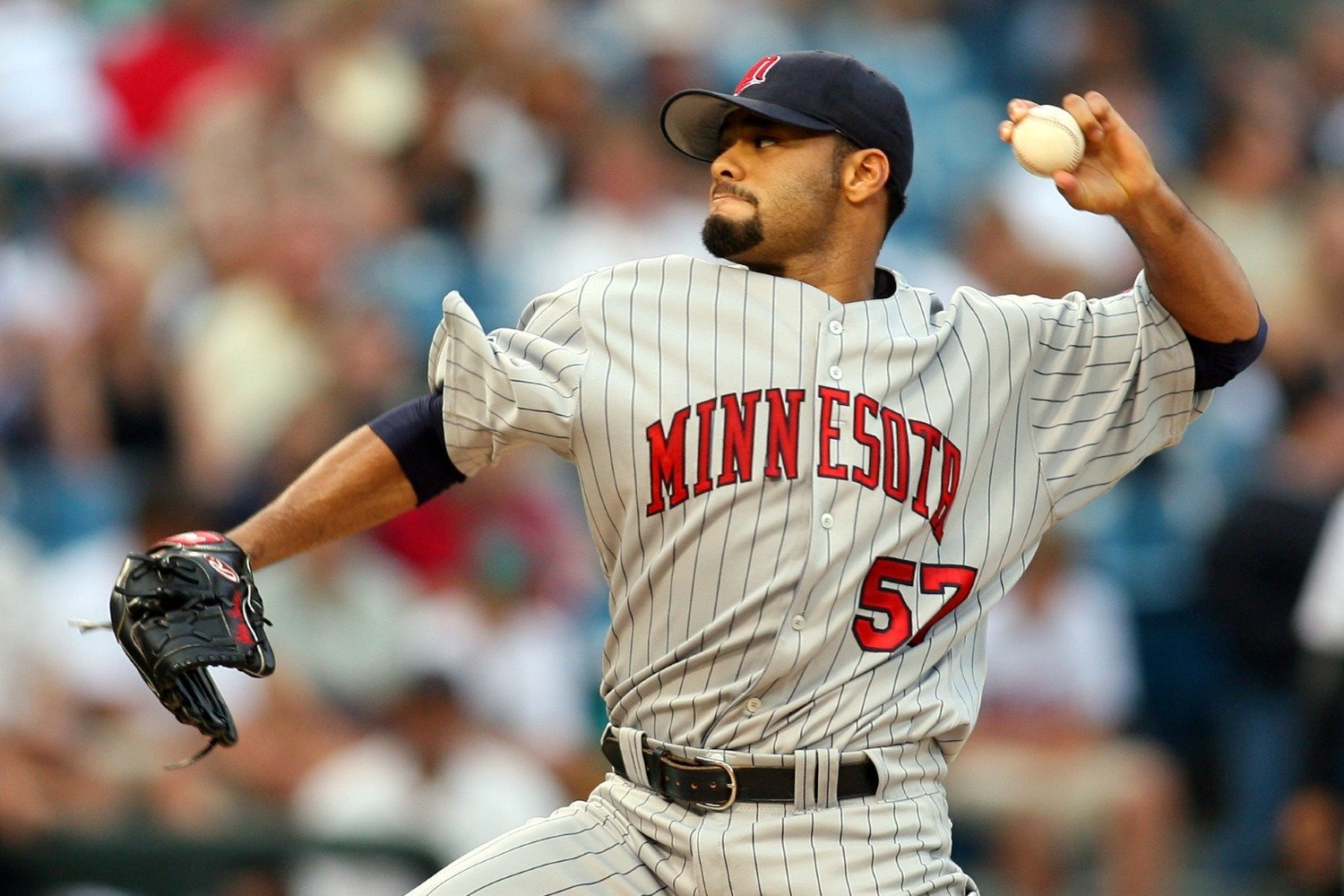
On a late summer day under the Metrodome’s Teflon covering, fans watched a master at work. Johan Santana dominated the Texas Rangers over eight shutout innings. He set a Twins team record with 17 strikeouts and allowed only two hits. For the over 36,000 fans in attendance, it was Mozart’s greatest symphony or Michelangelo’s Sistine Chapel. It was the music of a man on the way to a Hall of Fame career.
Baseball is a game that continually evolves, and the starting pitcher position has undergone the most glaring changes in the modern game. Long gone are the pitchers who throw 250 innings in a season, or accumulate 300 wins for their career. No pitchers are likely to reach those feats again, unless and until that evolution takes off in a new direction. That makes evaluating their careers more challenging, when comparing them to other players already enshrined in Cooperstown. Starting pitchers have already had a tough time being elected through the regular BBWAA voting, with only 38 out of 75 (50.7%) current HOF starters elected through this method. Voters need to reconsider the qualifications for a Hall of Fame starting pitcher, or there will be multiple generations with few or no starters elected, and the well-qualified snubs will pile up.
Santana provides a prime example of a starting pitcher whom the BBWAA ignored when he appeared on the ballot. His first and only opportunity to be on the BBWAA Hall of Fame ballot came in 2018. It was a stacked ballot that saw four players elected (Chipper Jones, Vladimir Guerrero, Jim Thome, and Trevor Hoffman) and four future inductees also earning votes (Edgar Martinez, Mike Mussina, Larry Walker, and Fred McGriff). Other polarizing players like Roger Clemens, Barry Bonds, and Curt Schilling were dealing with the ramifications of the Steroid Era and would never earn enough votes to be elected by the writers, but they, too, soaked up significant ballot shares. Santana received 10 votes (2.4%) and finished well short of the 5% minimum to stay on the ballot.
In a perfect world, Santana would have pitched into his late 30s or early 40s, while continuing to be one of the best in the game. That ideal world didn’t play out, and he didn't pitch in a big-league game after age 33. Other players, like Sandy Koufax and Kirby Puckett, were first-ballot electees to the Hall of Fame when their careers were cut short by injury. At the height of his career, there is no doubt that Santana was the best pitcher on the planet, as Koufax had been. His career just didn't end as dramatically or neatly.
From 2003-2009, few pitchers matched Santana’s dominance on the mound. He was a four-time All-Star, won the pitching Triple Crown, and accumulated three ERA titles. Santana won two Cy Young awards and had a third one stolen from him by Bartolo Colón, because the voters valued wins more than other stats (ERA, WHIP, strikeouts, WAR). Every pitcher with three Cy Youngs has been elected to the Hall, or is expected to be elected when they retire. According to fWAR, Roy Holladay was the lone pitcher to provide more value in the seven years mentioned above than Santana did. However, Santana pitched more innings, had a higher strikeout rate, and posted a lower ERA.
Santana’s name can’t magically reappear on the BBWAA ballot in future years, so now, he has to wait for the Era Committee (formerly the Veterans Committee) ballot that will include him. There are three ballots a player can be eligible for in this format, including the Contemporary Baseball Era (1980-present), Classic Baseball Era (Before 1980), and Contemporary Baseball Era (non-players since 1980). The next Contemporary Baseball Era Player Ballot is scheduled for December 2025, for inclusion in the Class of 2026. This committee is Santana’s next opportunity to be immortalized in Cooperstown, but getting onto the ballot for that committee's consideration can be as tough a hurdle to clear as getting the votes once there.
So, how can the Twins help Santana over the next 22 months? Players seemed to be helped by having more visibility during spring training or the regular season. Santana has joined the team at spring training in previous years to work with younger players, especially pitchers. He threw out a ceremonial first pitch during last season’s playoffs, which got his name out there on the national stage.
There are also opportunities for Santana to have more television and radio broadcast opportunities for the team or nationally. He has appeared on broadcasts in recent years when he has been in town for the team’s Hall of Fame ceremonies. There is no guarantee that Santana wants more visibility, but it might help his candidacy for the baseball world to see how he has impacted the game since he retired. Santana deserves to be in the Hall of Fame, and the Twins might be able to find subtle ways to increase his chances. They ought to try, anyway.
Will Santana be enshrined in Cooperstown? How can the Twins help him with his candidacy? Leave a COMMENT and start the discussion.
Do you approve of the job Derek Shelton is doing as Twins manager?

Follow Twins Daily For Minnesota Twins News & Analysis



- Dennesey55347, Karbo, Doctor Gast and 3 others
-
 6
6


Recommended Comments
Create an account or sign in to comment
You need to be a member in order to leave a comment
Create an account
Sign up for a new account in our community. It's easy!
Register a new accountSign in
Already have an account? Sign in here.
Sign In Now