


Twins Video
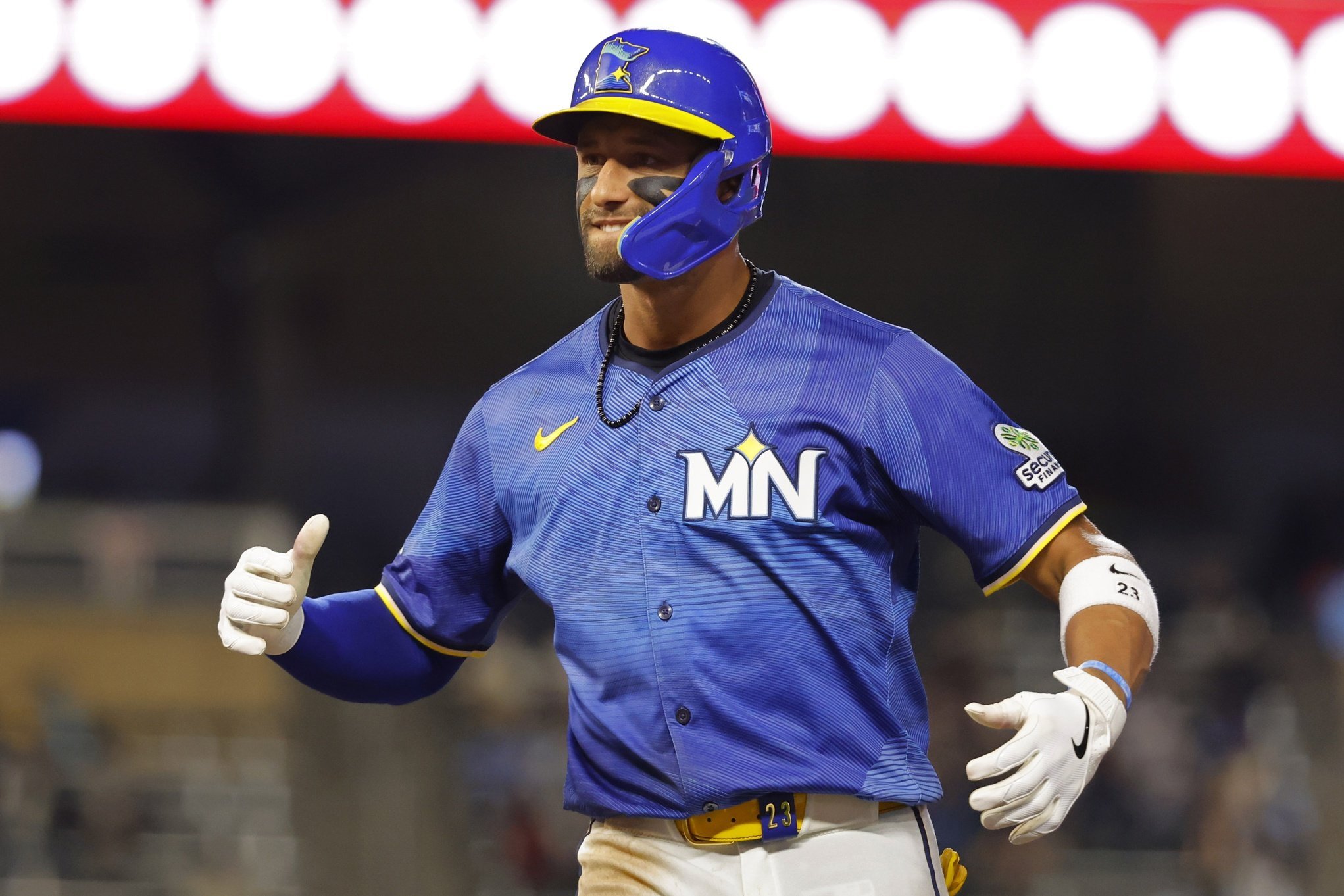
The Minnesota Twins entered the 2026 season hoping Royce Lewis could finally put together the kind of consistent campaign that his talent has always suggested was possible. Instead, the former No. 1 overall pick enters the offseason facing perhaps the biggest question of his career: Does he still fit into the organization's plans?
There is plenty of history tying Lewis to the Twins. Minnesota selected him first overall in the 2017 MLB Draft, and the organization has continued to invest opportunities in him despite injuries and inconsistent stretches at the plate. When Derek Shelton took over as manager last October, Lewis was the first player he visited for a one-on-one meeting.
Now, the relationship has reached a crossroads. Lewis stayed healthier in 2026, spending only 10 days on the injured list, but his offensive performance remained a significant concern. He finished the season hitting .227/.287/.380 with 15 home runs, 24 doubles and an 86 OPS+.
Twins general manager Jeremy Zoll acknowledged the progress in Lewis' availability but made it clear that the next step has to come at the plate.
“His performance on the field, obviously, had ups and downs,” Zoll said in the organization’s end-of-season press conference. “For Royce that success just comes down to being more consistent over longer stretches. We’d love to find a way to figure that out and to have him become the impact player that he’s shown at various points along the way.”
That leaves Minnesota with another major offseason decision.
The Pros of Keeping Lewis
The easiest argument for keeping Lewis is that the Twins have already seen what he can become. His 2023 season provided a glimpse of the player Minnesota envisioned when it selected him first overall. Lewis hit .309/.372/.548 with 15 home runs in only 58 games that season. He followed that up with a memorable postseason in which he hit four home runs in six playoff games.
Those flashes haven't completely disappeared. The problem has been finding them consistently enough. Lewis also stayed relatively healthy in 2026 compared to previous seasons. He appeared in 125 games, easily surpassing his previous career high of 106 games. That matters for a player whose availability has been one of the biggest concerns throughout his career.
There is also some potential defensive value in moving him around the diamond. Lewis has experience at third base, shortstop, second base and first base. Minnesota used him periodically at second base during the season, where he showed some positive defensive metrics in a relatively small sample. If the Twins believe the offensive player they saw in 2023 is still in there, keeping Lewis gives them another opportunity to find that version of him.
There is also a financial element. Lewis remains under team control through 2028, although he is entering his third offseason of arbitration eligibility. MLB Trade Rumors estimates he'll make about $5.1 million in arbitration next year. The Twins don't have to make a long-term commitment to find out whether he can rebound. They can simply give him another opportunity.
The Cons of Keeping Lewis
The biggest problem is that the evidence is becoming increasingly difficult to ignore. Lewis' recent offensive production has been well below what the Twins need from a player who was once viewed as a foundational piece. Since the 2024 All-Star break, he has hit .226/.282/.376 with an 82 wRC+, which places him well below league average over a substantial sample.
That creates a difficult roster-building question. If Lewis is going to remain in Minnesota, the Twins could move him into more of a platoon role at second base. That would allow the organization to pursue a better offensive player at first base, where the offensive expectations are considerably higher.
That could be an important distinction. First base is one of the easiest positions on the diamond to upgrade offensively through free agency or a trade. If the Twins believe Lewis can provide adequate defense and enough offense at second, they can use their resources to find a legitimate run producer at first.
But if Lewis can't hit enough to hold down second base, the entire plan becomes much more complicated. The Twins have already spent several seasons waiting for Lewis' bat to stabilize. At some point, the organization has to determine whether another opportunity is development or simply repetition.
What Would the Timeline Look Like?
The first major deadline comes in November. Lewis was arbitration eligible for the first time last winter and earned $2.85 million. Minnesota must decide whether to tender him a contract for 2027 by the league's tender deadline, which typically falls on the Friday before Thanksgiving. A non-tender would make Lewis a free agent.
A trade could happen before that deadline, although the Twins don't have to rush into a decision. Minnesota can continue evaluating Lewis' market while also exploring other options at second base and first base. But if they do offer arbitration and can't find a trade partner, they're on the hook for roughly a $5M salary in 2027.
If the Twins tender Lewis, they could negotiate a one-year arbitration contract or potentially explore a longer-term arrangement. The organization has used both approaches with arbitration-eligible players, although it has generally preferred to settle before arbitration hearings.
The timing of a potential trade could be particularly interesting. Minnesota could attempt to move Lewis before the tender deadline, when another team would be acquiring a player with multiple years of control remaining. Or the Twins could keep him through the winter, determine how their roster comes together and make a decision later. The biggest question is what they believe Lewis' trade value looks like compared to his potential value in Minnesota.
There isn't an easy answer with Lewis. The Twins have legitimate reasons to keep him. He's still relatively young, has multiple years of team control remaining and has demonstrated the ability to be an impact player at the major-league level. His improved availability in 2026 also removes one of the biggest concerns surrounding his future.
But the offensive decline cannot be ignored. Minnesota needs to build a more productive offense, and Lewis has now produced below-average offensive numbers for a significant stretch. If the Twins keep him, they need a clear plan rather than simply hoping another season produces a different result.
That could mean moving him to second base, giving him a defined role and using first base as an opportunity to add offense elsewhere. Or it could mean deciding that the best way forward for both sides is a trade and a change of scenery for Lewis.
The Twins don't have to give up on Lewis this offseason. But they do have to decide what they believe he can become, where he fits, and how much longer they are willing to wait for that player to emerge.
Will the Twins keep Lewis this winter? What could his role look like on the 2027 Twins? Leave a comment and start the discussion.





Recommended Comments
Create an account or sign in to comment
You need to be a member in order to leave a comment
Create an account
Sign up for a new account in our community. It's easy!
Register a new accountSign in
Already have an account? Sign in here.
Sign In Now