

Twins Video
The 2026 Minnesota Twins were not supposed to be contenders. Heading into the season, expectations were low, and few people expected them to spend most of the year hanging around the American League playoff picture. Yet that is exactly what happened.
The Twins were surprisingly in the playoff mix for roughly 80% of the season, were buyers at the trade deadline and even occupied a playoff spot midway through August. They were not mathematically eliminated until the middle of September. A big reason they remained relevant for so long was the weakness of the American League, but that should not take away from the fact that they had an opportunity in front of them. The Twins were playing meaningful baseball deep into the season, and the playoff spot was there for the taking.
Unfortunately, the Twins could not take advantage of it. Despite becoming buyers at the trade deadline, Minnesota went on to become one of the worst teams in baseball over the final stretch of the season. The frustrating part is that this was not a roster that was completely incapable of competing. The Twins will likely finish the season with the second-most runs scored in the American League. Their starting rotation, despite its flaws, was not among the worst in baseball. The starters will finish 18th in MLB in fWAR and 14th in xERA. The defense was certainly a problem, but when looking at what ultimately kept the Twins from taking advantage of such a wide-open playing field, the bullpen stands out.
The Twins bullpen was one of the worst in baseball for much of the season and will finish 26th in MLB in ERA. It also had the second-highest walk rate in baseball. Those numbers actually include the improvements Minnesota made at the trade deadline by acquiring A.J. Minter and Jeff Hoffman, meaning the full-season numbers make the bullpen look better than it was for much of the first half.
Before the deadline, the Twins had the second-worst bullpen ERA in baseball. It took the front office most of the season to figure out what it wanted its bullpen to look like, from acquiring Yoendrys Gomez early in the season to turning Andrew Morris into a one-inning reliever in May and eventually adding Hoffman and Minter at the deadline. By the end, the Twins had finally put together some legitimate pieces, but all of that work still resulted in a bullpen that ranked near the bottom of the league in ERA, and well below average in metrics like FIP, WAR and WPA.
That makes it difficult not to think about two star relievers who could have been in that bullpen all along.
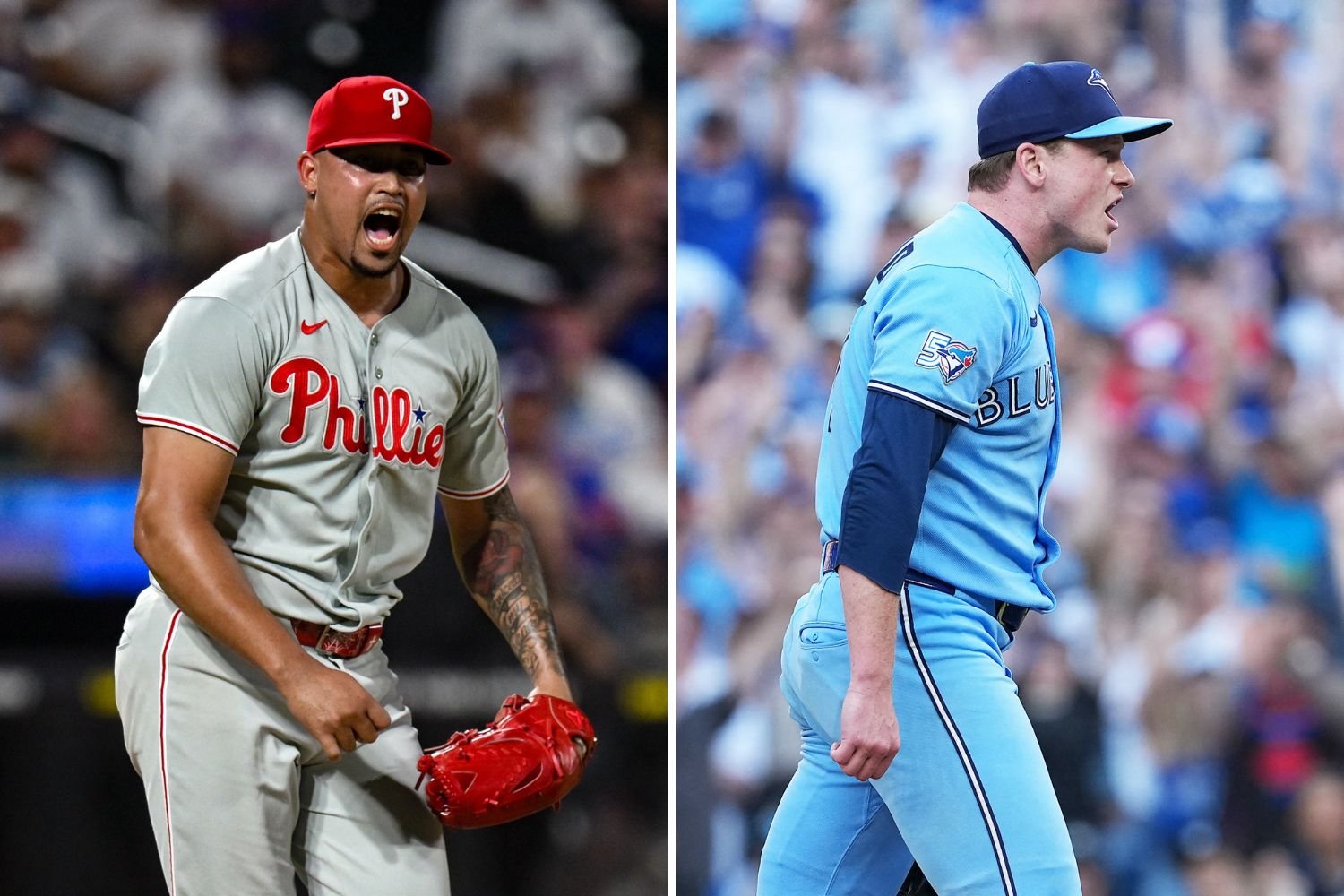
At last year's trade deadline, the Twins traded away their three best relievers in Jhoan Duran, Griffin Jax and Louis Varland. Jax has since transitioned into a starting role, so his situation is a little different. Duran and Varland, however, continued in the roles they had with Minnesota and turned in two of the best relief seasons in baseball. Duran was spectacular for the Phillies, posting Win Probability Added. He became exactly the type of high-leverage weapon Philadelphia hoped it was acquiring when it traded for him.
Varland was even better. After showing flashes with the Twins, primarily in the bullpen, Varland took his career to another level after settling into a full-time relief role with Toronto. He posted a 1.29 ERA, trailing only Mason Miller for the best mark among MLB relievers. He was worth 3.1 fWAR and posted a 3.57 WPA, making him one of the most valuable relievers in baseball. Put the two seasons together and Duran and Varland were worth nearly six fWAR in 2026.
That is an especially significant number when looking at the Twins' bullpen because Minnesota spent a large portion of the season relying on replacement-level players to fill innings. This bullpen needed significant help, while those two departed relievers combined to provide nearly six fWAR for other teams. Simply replacing some of the innings Minnesota gave to replacement-level relievers with Duran and Varland would have dramatically changed the quality of the bullpen.
There is also a much bigger domino effect to consider. If Duran and Varland had been in Minnesota from the beginning of the season, the Twins certainly would not have blown as many games early in the year. A better bullpen would have meant a better record, which would have meant higher playoff odds at the trade deadline. Higher playoff odds could have led the front office to be more aggressive in July, potentially resulting in an even stronger roster for the final two months of the season.
Instead of spending much of the year trying to figure out the bullpen, Minnesota could have spent those resources addressing other weaknesses. There is no way to know exactly how those alternate decisions would have played out, but the point is that the impact of keeping Duran and Varland would not have been limited to the innings they personally pitched.
The other side of the equation is what the Twins actually received for the two relievers. Mick Abel, acquired in the Duran trade, barely had an opportunity to contribute before an injury ended his season. Alan Roden and Kendry Rojas, acquired in the Varland trade, also did not make a meaningful impact on the Twins' 2026 season.
That does not mean those players cannot become important pieces for Minnesota in the future, and it would obviously be unfair to evaluate prospects solely on what they did in the first year after the trade. But it does make the opportunity cost of the trades much easier to see. The Twins gave up two relievers who became two of the best in baseball, and the players they received did not help them win games during a season in which the team was surprisingly close to the playoffs.
That is the important distinction here. Trading Duran and Varland was much easier to justify if the Twins were convinced they were heading into a lost season and needed to prioritize the future. Both players were relatively inexpensive, had multiple years of team control remaining and had significant trade value. If the Twins had spent 2026 buried in the standings, nobody would be looking at these trades and wondering how many games they cost the team. Trading established relievers for promising prospects makes sense when a team is rebuilding.
But the Twins insisted they were not rebuilding, and the 2026 season more or less proved that out. They were in the playoff race. They were buyers at the trade deadline. They were sitting in a playoff spot in August. They remained alive until September, despite having one of the worst bullpens in baseball. That is what makes the decision so much harder to swallow in hindsight.
There is obviously no way to say that Duran and Varland would have guaranteed a playoff spot. Baseball does not work that cleanly, and there are too many variables involved to simply add their WAR to the Twins' win total and declare an alternate result. But it is difficult to look at the season the Twins just had and argue that those two players would not have made a significant difference.
The offense was good enough. The starting pitching was good enough to keep the team competitive. The American League was vulnerable all season. The Twins remained in contention despite their bullpen being one of the biggest weaknesses on the roster.
Maybe the Twins still would have fallen short with Duran and Varland. Maybe other weaknesses would have caught up with them. But considering how long they remained in the playoff race with a terrible bullpen, it is difficult not to wonder what would have happened if two of the best relievers in baseball had still been wearing Minnesota uniforms.
So, what do you think? If the Twins had kept Jhoan Duran and Louis Varland instead of trading them last season, would Minnesota have made the playoffs in 2026? Leave a comment below and start the conversation!
Do you approve of the job Derek Shelton is doing as Twins manager?

Follow Twins Daily For Minnesota Twins News & Analysis



- glunn, mikelink45 and Andy MacPhail
-
 3
3


Recommended Comments
Create an account or sign in to comment
You need to be a member in order to leave a comment
Create an account
Sign up for a new account in our community. It's easy!
Register a new accountSign in
Already have an account? Sign in here.
Sign In Now