


Twins Video
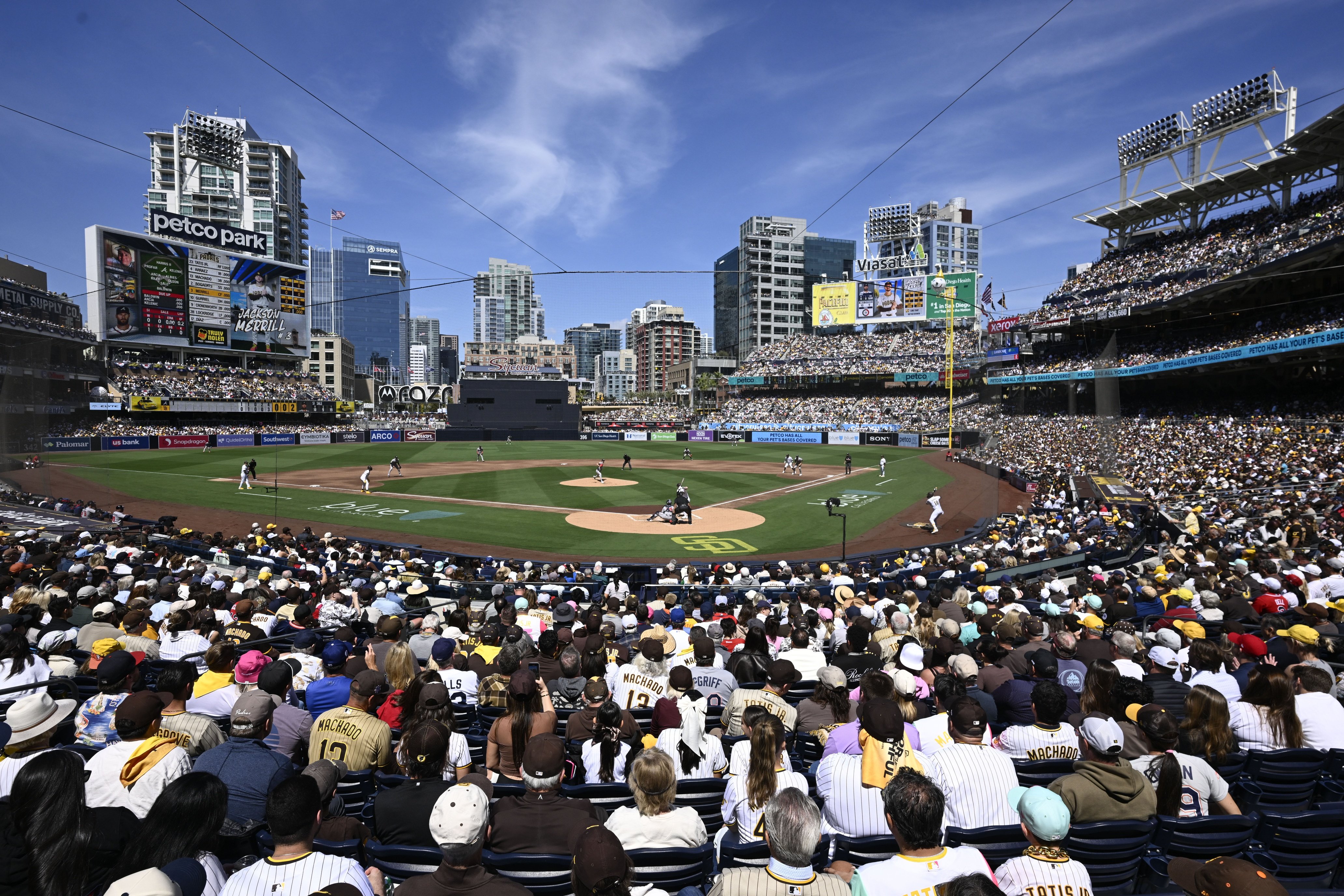
The sale of the San Diego Padres just reset the ceiling for Major League Baseball franchise valuations, and it should send a very clear message back to the Pohlad family.
According to Jared Diamond of the Wall Street Journal, the Padres were sold to private-equity billionaire José E. Feliciano and his wife Kwanza Jones for a record $3.9 billion. That number doesn’t just stand out on its own. It becomes even more eye-opening when placed next to what the Pohlad family was seeking when they explored selling the Minnesota Twins.
Back in October of 2024, the Pohlads made it known they were open to selling the franchise. Reports from The Athletic at the time indicated they were looking for at least $1.7 billion, a number that already exceeded Forbes’ valuation of the team at $1.46 billion. Offers reportedly reached around $1.5 billion, but those weren’t entertained. Part of the justification for holding firm was tied to roughly $425 million in debt attached to the franchise.
Fast forward to now, and the gap between what the Twins were hoping to get and what the Padres actually received is massive. San Diego sold for more than double Minnesota’s reported asking price. Even more notably, the Padres entered the sale with a Forbes valuation of $3.1 billion, meaning they sold for roughly $800 million above that estimate. The Twins, on the other hand, struggled to draw offers that even matched their valuation.
At first glance, market size might seem like an easy explanation, but it doesn’t hold up under scrutiny. Minneapolis-St. Paul ranks as the 16th-largest media market in the United States, while San Diego comes in at 18th. The Padres generating significantly more value than the Twins, despite being in a slightly smaller market, challenges the idea that market size alone dictates franchise worth.
This gap becomes even more interesting when looking back less than a decade. In 2017, Forbes valued the Padres at $1.13 billion, ranking 21st in MLB. Right behind them were the Twins at $1.03 billion. At that point, the two franchises were essentially peers in terms of valuation and on-field results, both coming off seasons with more than 90 losses.
From there, the paths diverged in a major way.
The Padres chose aggression. Their payroll rankings since 2017 tell the story: 28th, then climbing to 25th, 24th, 10th, 6th, 5th, 3rd, dipping briefly, and now back up near the top of the league in 2026. This is a team that consistently spent beyond what traditional market logic would suggest. In multiple seasons, their payroll pushed well past 60 or 70 percent of team revenue. There were likely years where profitability took a back seat entirely.
The Twins, on the other hand, have followed a much flatter trajectory. In 2017, their payroll ranked 21st in baseball, actually ahead of the Padres at the time. But since then, the Twins have never exceeded 16th in payroll ranking, and in 2026 they sit 22nd in the league, below even that 2017 starting point. While one organization accelerated its investment, the other largely maintained or even pulled back relative to the rest of the sport.
That divergence in spending philosophy shows up everywhere.
Former Padres owner John Seidler approached the franchise with a long-term vision. Rather than managing the team purely as a year-to-year business, he treated it as an investment in relevance, fan engagement, and contention. The Padres committed massive contracts to players like Manny Machado, traded for stars like Juan Soto, and made a point to stay in the national conversation.
That strategy paid off. Not necessarily in annual profit margins, but in franchise value. The Padres transformed from a $1.13 billion team in 2017 into a $3.9 billion sale in 2026, completing the largest transaction in MLB history.
The Twins took a different route. While their valuation did rise over time, it didn’t come close to keeping pace. From $1.03 billion in 2017 to struggling to surpass $1.5 billion in actual offers during their sale process, the growth has been comparatively modest. Over the last few seasons in particular, the Twins have operated with a more conservative approach, limiting payroll expansion and largely avoiding major splash moves that generate widespread attention.
There are other contributing factors, of course. San Diego offers an attractive lifestyle and has a concentrated base of wealth. The Padres also benefit from being the only “Big 4” professional sports team in the city, allowing them to capture a larger share of local attention. But those elements alone don’t explain a multi-billion dollar gap.
Fan engagement is another key piece. The Padres drew nearly 3.5 million fans in 2025, setting a franchise attendance record. The Twins, meanwhile, dropped to around 1.77 million, their lowest full-season mark since the Metrodome era. One franchise created urgency and excitement. The other failed to maintain it.
The Padres provide a clear example of what can happen when an organization prioritizes investment in the on-field product, even at the expense of short-term returns. Their rise in valuation wasn’t accidental. It was built through sustained spending, star power, and a commitment to relevance.
For the Twins, this moment serves as a comparison point that’s difficult to ignore. The idea that small or mid-sized markets can’t support aggressive spending looks less convincing when a team like San Diego not only spends, but turns that spending into long-term franchise growth.
There’s a lesson here about how value is created in modern baseball. It’s not just about controlling costs or maximizing yearly profit. It’s about building a product that people care about, one that draws fans, commands attention, and ultimately becomes more valuable when it hits the open market.
The Padres leaned into that approach and were rewarded in a historic way. The Twins now face a choice in how they want to be viewed moving forward.
What do you think? Should the Twins take a more aggressive approach to spending and team-building, or is there another path to closing that valuation gap?
Which team do you dislike the most in the AL Central?
Follow Twins Daily For Minnesota Twins News & Analysis



- Mia Bednar, DocBauer, nclahammer and 8 others
-
 10
10
-
 1
1


Recommended Comments
Create an account or sign in to comment
You need to be a member in order to leave a comment
Create an account
Sign up for a new account in our community. It's easy!
Register a new accountSign in
Already have an account? Sign in here.
Sign In Now