Jump to content
Twins Daily
  • Create Account

Recommended Posts

Posted
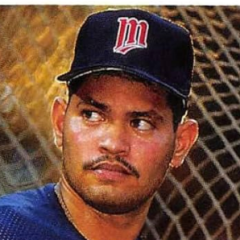
Image courtesy of © Kamil Krzaczynski-Imagn Images

For over 50 years, Major League Baseball teams operated with a four-man starting rotation. From roughly the 1890s through the early 1970s, that model was the standard across the sport. Pitchers would take the ball every fourth day (sometimes, early in that window, every third); work deep into games; and then be ready to go again after three days of rest. For a long time, it worked. But baseball eventually changed.

Once MLB expanded to the now-standard 162-game schedule in the early 1960s, teams started realizing that relying on just four starters for an entire season was increasingly difficult. Arm injuries became harder to ignore, workloads became more demanding, and organizations slowly shifted toward a five-man rotation—not just because of the extra eight games, but because the league added eight teams in the 1960s.

Expansion brought a bunch of new pitchers into the majors, which meant adding more guys who weren't good enough to start (or maybe even to pitch) in the smaller leagues previously. It might sound like going to more starters in response to that diffusion of talent would be counterproductive, but with that diffusion came democratization. Because everyone was suddenly (and, as it's turned out, permanently) short on pitchers, spreading the workload more to protect the arms of your best hurlers made sense. It didn't cost you much, in a relative sense, and after all, baseball is a zero-sum game.

Not coincidentally, it was also in the early and mid-1970s that the players became much more powerful and much better-paid, via the advent of the MLB Players Association and free agency. Pitchers were better protected from losing their jobs due to injuries, at least without compensation, and teams stood to lose more cash by going through pitchers' arms as fast as they used to. For all those reasons, five replaced four. That eventually became the norm across the league, and it’s the structure baseball has operated with for the last several decades. Now, though, things appear to be evolving once again.

More and more teams around baseball have started experimenting with six-man starting rotations, essentially allowing their starters to pitch just once a week. And recently, the Twins have joined that growing trend. The timing made sense. The Twins’ last off day came on May 21, and they won’t have another until June 8. That meant their rotation was staring down roughly two-and-a-half weeks without any built-in additional rest.

That’s a dangerous game to play with any pitching staff, especially one that has already dealt with several injury concerns throughout the year. So instead of overworking their starters, the Twins adjusted. Over the last couple weeks, Minnesota has toyed with a six-man rotation consisting of Joe Ryan, Taj Bradley, Bailey Ober, Connor Prielipp, Zebby Matthews, and Kendry Rojas or Simeon Woods Richardson. Now, Rojas and Ober are hurt and Woods Richardson is back in the Blue Jays organization, but those don't seem to be related to this cautious usage. If anything, the balky elbows of Ober and Rojas demonstrate why this measure was needed—and why, even as they now navigate having too few reliable starters even to fill out a five-man stable, they're adding sixth days here and there via bullpen games like Thursday night's.

For at least a couple of these guys, that extra day of rest appears to be making a real difference. Joe Ryan threw harder in his last start and cited some work between starts as the reason that was possible. Prielipp and Bradley are working deeper into games than they've ever consistently done, at any level of baseball.

More importantly, it’s also helped keep this group on the field. Rojas landing on the 15-day injured list with triceps inflammation is obviously concerning, but beyond that, the six-man setup has eased the workload on a rotation that has already battled its fair share of health issues this season. Rojas is already throwing again, and on his way back via what the team expects to be a short ramp-up.

Bradley has already had an IL stint. Ryan was pulled from a start after just nine pitches last month. Mick Abel is currently injured as well, and Prielipp’s injury history is extensive, dating back to college. This is not a pitching staff overflowing with durable, 200-inning workhorses. It’s a talented group, but it’s also one that probably benefits greatly from additional rest and workload management. Which raises an interesting question: should the Twins continue using a six-man rotation for the rest of the season?

I’m going to say yes, and there are a couple of reasons why. The first is simple: the current setup is producing results. The pitching staff has looked significantly better recently. Starters are getting deeper into games, the overall group appears healthier, and the extra rest seems to be maximizing the effectiveness of the rotation. Even once the schedule begins including more off days later in the summer, protecting this pitching staff should remain the organization’s top priority. Manager Derek Shelton said that very thing in reference to the team's insistence on sliding back Prielipp's starts at times, to avoid ratcheting up his workload too quickly.

The Twins are going to go as far as their pitching takes them this year. That’s just the reality of the roster construction. Keeping those arms healthy matters more than anything else. But there’s another reason why this setup makes sense, too, and it has to do with the bullpen. Because while the rotation has stabilized recently, the bullpen really hasn’t. Inconsistency has plagued that unit for much of the season, and asking relievers to constantly cover four or five innings every night simply hasn’t been sustainable. Having six starters alleviates some of that pressure.

Right niw, of course, that formula isn't one they can put into action. They don't even have five healthy starters. Ryan, Prielipp, Matthews and Bradley are taking their turns, and the team is just trying to get to the next off day as they await the returns of both Abel and Rojas. Once those two come back, a six-man group becomes more feasible, but as the loss of Ober (even if it's only for a few weeks, as the team hopes) reminds us, there's no guarantee that other injuries will hold off while these heal.

The Twins have something a lot of organizations don’t: legitimate pitching depth. And because of that depth, they’re uniquely positioned to make this kind of setup work long-term.

Not every team can realistically survive with six starters. Some organizations barely have four reliable options. But the Twins have enough young arms, enough flexibility, and enough interchangeable pieces to consistently rotate guys in and out without completely disrupting the staff. That’s an advantage. And frankly, it’s one they should probably lean into as much as possible. Modern baseball is constantly evolving when it comes to pitcher usage. Teams are searching for ways to maximize performance while minimizing injuries, and the traditional five-man rotation no longer feels quite as safe as it once did.

For the Twins specifically, a six-man rotation might simply make the most sense. The results have been encouraging, the staff looks fresher, and the workload distribution feels more manageable. With so many talented but injury-prone arms on the roster, giving everyone an extra day of rest could pay massive dividends over the course of a long season.

At this point, there’s very little reason to abandon it. They just have to ride out the storm, hoping that they soon have enough healthy hurlers to enact it again.


View full article

Posted

I wouldn’t say they have experimented with a six-man rotation.

Look at Ryan. He started game 1. Then because of two off days, he started game 5, followed by games 10/15/20/25/30/35/40/45/50/55 and then 61.

So only once (the last time, in the middle of their current long consecutive-day streak), has Ryan been out of a five-man rotation rhythm. That there have been more than five guys getting starts is more of a reflection on the rotation shifting to compensate for injuries (or suckage, in the case of SWR’s demise).

On one occasion, they used a rotation shift to get Prielipp a couple extra days once, but again, other this current time of injecting an extra starter, the rest of his starts have come five games after his previous start. He’s thrown in games 24, 29, 34, 39, extra rest 46, 56 and then the insertion to 62.

Separately, a reason not to go to a six-man rotation is the same as the reason to not piggy-back long-term. It leaves you with a seven-man bullpen.  

Posted

Just need another BP arm to cover for "starter" who will be even less likely to provide any length. 

Poor 5th starters almost cost one reliever to cover them.  Add a full reliever needed to piggyback an even worse guy.  And now you're looking at almost 2 full BP spots because you have NO length for a third of your rotation.  Have one of your 4 "front of the rotation" guys go 3+ and you need to look for "arm fatigue" or other nebulous "injury" to reset your bullpen and roster.

Unless you want more roster moves based solely on available options, just forget this roster destroying "idea".

Posted
4 hours ago, IndianaTwin said:

I wouldn’t say they have experimented with a six-man rotation.

Look at Ryan. He started game 1. Then because of two off days, he started game 5, followed by games 10/15/20/25/30/35/40/45/50/55 and then 61.

So only once (the last time, in the middle of their current long consecutive-day streak), has Ryan been out of a five-man rotation rhythm. That there have been more than five guys getting starts is more of a reflection on the rotation shifting to compensate for injuries (or suckage, in the case of SWR’s demise).

On one occasion, they used a rotation shift to get Prielipp a couple extra days once, but again, other this current time of injecting an extra starter, the rest of his starts have come five games after his previous start. He’s thrown in games 24, 29, 34, 39, extra rest 46, 56 and then the insertion to 62.

Separately, a reason not to go to a six-man rotation is the same as the reason to not piggy-back long-term. It leaves you with a seven-man bullpen.  

Fully agree with everything but the last paragraph. I don't get this notion that having a seven man bullpen is some doomsday scenario if you go with a 6 man rotation or, especially, piggyback bulk relievers. 

The Dodgers run a real 6 man rotation. The difference is the names in the rotation. An extra day rest should mean starters can go deeper, thus the 7 man bullpen needs to cover fewer innings. But that only works when you have a rotation with names like Snell, Glasnow, Ohtani, and Yamamoto. The Twins rotation is not at all built to go 6 deep and save the bullpen.

But the piggyback argument seems to fly in the face of pretty simple math. For 1, its not a 7 man bullpen, its an 8 man bullpen. But 1 of those 8 (or 2 or 3 or all 8 if you want to get crazy) throws more than 1 inning. And if that guy throws more than 1 inning it actually means the other 7 have to cover FEWER innings, not more. 

162 games of 9 innings is 1458 innings the staff needs to cover. Modern baseball is not built on starters who go 7, 8, or 9 innings regularly. For ease of numbers we'll say the average start is 6 innings. 5 guys starting 162 games means each starter gets 32.4 starts. We'll round down to 32 to make it easy. That means the average starter throws 192 innings (that is much higher than reality, but it'll serve the purpose of this exercise). That is 960 innings covered by your 5 starters. That leaves 498 to be covered by the 8 man pen. 62.25 innings each. If 1 of them is a bulk, piggyback reliever who averages 2 innings (not even the preferred 3 or 4, just 2) every 4th game, they are making 40.25 appearances. We'll even round this down to 40. So that pitcher throwing fewer games than reality says they could and fewer innings per game than reality says they could, is covering 80 innings instead of 62. That leaves 418 innings for the other 7 relievers. That's 59 innings a piece instead of 62. The real goal of the bulk reliever role is to get that guy 100 to 120+ innings (40 appearances at 3 innings a piece is 120 innings). If you get that you then leave only 378 innings for the other 7 guys. Now we're down to 54 innings for each of those spots. If you have 2 bulk spots getting 200 innings combined? 298 innings for 6 1 inning guys. 49 innings a piece. I am so very confused how people think having 1 guy throw more innings means more work for the other guys on the staff. That is a wild stance to me because it flies in the face of logic and simple math. A 6 man rotation doesn't work the same unless the extra days of rest lead to longer starts. But a bulk reliever creates LESS work for the other bullpen guys. Its really simple math.

Posted

The Twins BP game might not have been such an aberration if Morris had done well.  He has been a starter and could have gone more than two if he had been effective.  I do agree that Parades could have gone another inning or two since he has mostly been a starter too.

It is not the number of RP but the quality that counts and Rogers no longer has it.  Lawrence is an interesting pick up but he has not passed the test.  We have no shut down arm in the pen.  Gomez has been the best arm so far. 

Posted
8 hours ago, chpettit19 said:

Fully agree with everything but the last paragraph. I don't get this notion that having a seven man bullpen is some doomsday scenario if you go with a 6 man rotation or, especially, piggyback bulk relievers. 

The Dodgers run a real 6 man rotation. The difference is the names in the rotation. An extra day rest should mean starters can go deeper, thus the 7 man bullpen needs to cover fewer innings. But that only works when you have a rotation with names like Snell, Glasnow, Ohtani, and Yamamoto. The Twins rotation is not at all built to go 6 deep and save the bullpen.

But the piggyback argument seems to fly in the face of pretty simple math. For 1, its not a 7 man bullpen, its an 8 man bullpen. But 1 of those 8 (or 2 or 3 or all 8 if you want to get crazy) throws more than 1 inning. And if that guy throws more than 1 inning it actually means the other 7 have to cover FEWER innings, not more. 

162 games of 9 innings is 1458 innings the staff needs to cover. Modern baseball is not built on starters who go 7, 8, or 9 innings regularly. For ease of numbers we'll say the average start is 6 innings. 5 guys starting 162 games means each starter gets 32.4 starts. We'll round down to 32 to make it easy. That means the average starter throws 192 innings (that is much higher than reality, but it'll serve the purpose of this exercise). That is 960 innings covered by your 5 starters. That leaves 498 to be covered by the 8 man pen. 62.25 innings each. If 1 of them is a bulk, piggyback reliever who averages 2 innings (not even the preferred 3 or 4, just 2) every 4th game, they are making 40.25 appearances. We'll even round this down to 40. So that pitcher throwing fewer games than reality says they could and fewer innings per game than reality says they could, is covering 80 innings instead of 62. That leaves 418 innings for the other 7 relievers. That's 59 innings a piece instead of 62. The real goal of the bulk reliever role is to get that guy 100 to 120+ innings (40 appearances at 3 innings a piece is 120 innings). If you get that you then leave only 378 innings for the other 7 guys. Now we're down to 54 innings for each of those spots. If you have 2 bulk spots getting 200 innings combined? 298 innings for 6 1 inning guys. 49 innings a piece. I am so very confused how people think having 1 guy throw more innings means more work for the other guys on the staff. That is a wild stance to me because it flies in the face of logic and simple math. A 6 man rotation doesn't work the same unless the extra days of rest lead to longer starts. But a bulk reliever creates LESS work for the other bullpen guys. Its really simple math.

My son gave me a "Relax, I have a spreadsheet for that" fridge magnet that I have by my computer at work, so I love a good set of numbers. 

Some of these ideas work well on screen, but they don't work well in practice. First, though you used an average start of 6 innings for ease of numbers, that's not reality. So far, the league average is 5.1 innings per start. For context, the Twins are right at league average with 5.1. That's skewed a bit because of some Openers, so let's give the benefit of the doubt to having starters that average 5.33 innings (or 5 1/3). Average 5.33 for the season over 162 games means the starters have only covered 864 innings, so your bullpen has to cover essentially 100 more innings than you've allotted.

The actual number of innings a team typically needs is a bit lower than 1458, since road game losses (with 8 pitched innings) tend to exceed extra innings. More typical is around 1440. So if your starters cover 864, you're needing 576 from the bullpen, which works out to 72 innings per spot, about 10 innings more than you've assumed.

But the bigger issue is that having a piggy back reliever has usually meant tying a given reliever to a given starter. In a best-case scenario, that starter gives 5 innings and the piggy back 4 to fill a game, leaving the other seven relievers to cover the remaining four starters. But the piggy back is pretty much by definition the weakest starter, so he's likely not going to average 5 innings (160 innings for the year). And the piggy back guy is probably your sixth-best starter. It's possible, but not necessarily likely, that he could average 4 innings (about 130 for the season).

But there's a problem here on several levels. Big picture, an injury is going to happen (quickly), so that piggy back reliever is likely going to get pressed into the rotation somewhere and now you need a different guy to start throwing up to 4 innings per game as a piggy back reliever. Medium-sized picture, the reality is that pitchers aren't so mechanical that you can guarantee getting even eight innings combined from the two guys. More times than not, you are going to need at least one of your bullpen guys to finish out the piggy back game. Often, whether because of game situations, including extra inning possibilities, you're going to use two other relievers, which makes it even harder to cover the other games. Now you don't have the full use of seven guys to cover the other four starters. And unless he gets shelled immediately, your piggy back reliever is going to throw enough pitches that they aren't available for any of the other games either. And even if he was available, you'd be reluctant to use him, because you want to save him for the piggy back starter.

And then smaller picture, using the piggy back approach ties the manager's hands into not being able to adapt to game situations. There's just too many times the flow of the game doesn't lend itself to staying on pattern. Say the piggy back starter is throwing great, so you run him out for the sixth, but then he runs into trouble and you need to use your fireman to get out of the inning. But because the fireman gets the last hitter on three pitches, it makes sense to run him out for the seventh and get four outs. Now there's just two innings for the piggy back reliever. But then the tight game calls for using the closer, so you only use the piggy back for the eighth inning (and even then, there may be another reliever best suited for the job). Now your piggy back reliever is he's either sitting idle (while very rested) for four days until the next piggy back day or you use him on one of the ensuing days to bail out a starter that's gotten hit, which makes him unavailable for his intended piggy back day, etc. While piggy backing looks good on paper (or screen), it just doesn't work in practicality.

Now what you're describing as a "bulk reliever" getting 40 longer appearances is more realistic, but by definition, with 40 appearances, he's not tied to a given starter as a piggy backer. In practical terms, I think it's going to be hard to have a bulk reliever go through a season with 40 appearances of 3 innings each to get 120 innings, primarily because injuries are going to happen and that guy is likely going to get pushed into the rotation, but also because he'll get hit a few times to go less than 3 innings and probably won't go 4 innings enough times to make up for that. There's also the reality that game situations won't conveniently line up with his availability. If he's available, but a couple starters have great games on back-to-back days, he's not going to get to 40 games, etc.

So while I don't think there will be a long-term "bulk reliever," I do like that Shelton seems to be more willing to use guys for multiple innings that previous managers have (and I'm not limiting this to Rocco, it feels like he's doing it more than Molitor did, though I'm not digging into it to check). If there was a single reliever that got to even 90 innings, that would be a huge boost to the rest of the pen,

Right now, there's not anybody on pace to get to 90 innings, however. Orze has the most innings and is on pace for about 75. Morris is a little harder to calculate. He's not been on the roster the full season. If you took the innings he's thrown in the time he's been up and extrapolated to the entire year, it works out to about 86, but that's driven by a few longer outings when he came up, Last night not withstanding, his role has morphed into one that is being used at a rate that would him to about 65 innings over 162.

I think it will be interesting to see how the season wraps up. Rojas hasn't been a full-time starter or reliever, but has pitched multiple innings. Depending on how quickly he's back, I could see him being used at a pace that would give him around 100-120 innings for the year. Even if he stays healthy, I could see them either shutting Prielipp down or moving him to the pen so he ends up around 120-130. Ryan is the only guy on pace to go more than 162 innings. Technically, Ober is, but he's on the IL. After Sunday, he won't be. Bradley is a little under that pace, so if the recent missed starts are the only ones he has, he could get there. No one else is close.  

Posted
19 minutes ago, IndianaTwin said:

My son gave me a "Relax, I have a spreadsheet for that" fridge magnet that I have by my computer at work, so I love a good set of numbers. 

Some of these ideas work well on screen, but they don't work well in practice. First, though you used an average start of 6 innings for ease of numbers, that's not reality. So far, the league average is 5.1 innings per start. For context, the Twins are right at league average with 5.1. That's skewed a bit because of some Openers, so let's give the benefit of the doubt to having starters that average 5.33 innings (or 5 1/3). Average 5.33 for the season over 162 games means the starters have only covered 864 innings, so your bullpen has to cover essentially 100 more innings than you've allotted.

The actual number of innings a team typically needs is a bit lower than 1458, since road game losses (with 8 pitched innings) tend to exceed extra innings. More typical is around 1440. So if your starters cover 864, you're needing 576 from the bullpen, which works out to 72 innings per spot, about 10 innings more than you've assumed.

But the bigger issue is that having a piggy back reliever has usually meant tying a given reliever to a given starter. In a best-case scenario, that starter gives 5 innings and the piggy back 4 to fill a game, leaving the other seven relievers to cover the remaining four starters. But the piggy back is pretty much by definition the weakest starter, so he's likely not going to average 5 innings (160 innings for the year). And the piggy back guy is probably your sixth-best starter. It's possible, but not necessarily likely, that he could average 4 innings (about 130 for the season).

But there's a problem here on several levels. Big picture, an injury is going to happen (quickly), so that piggy back reliever is likely going to get pressed into the rotation somewhere and now you need a different guy to start throwing up to 4 innings per game as a piggy back reliever. Medium-sized picture, the reality is that pitchers aren't so mechanical that you can guarantee getting even eight innings combined from the two guys. More times than not, you are going to need at least one of your bullpen guys to finish out the piggy back game. Often, whether because of game situations, including extra inning possibilities, you're going to use two other relievers, which makes it even harder to cover the other games. Now you don't have the full use of seven guys to cover the other four starters. And unless he gets shelled immediately, your piggy back reliever is going to throw enough pitches that they aren't available for any of the other games either. And even if he was available, you'd be reluctant to use him, because you want to save him for the piggy back starter.

And then smaller picture, using the piggy back approach ties the manager's hands into not being able to adapt to game situations. There's just too many times the flow of the game doesn't lend itself to staying on pattern. Say the piggy back starter is throwing great, so you run him out for the sixth, but then he runs into trouble and you need to use your fireman to get out of the inning. But because the fireman gets the last hitter on three pitches, it makes sense to run him out for the seventh and get four outs. Now there's just two innings for the piggy back reliever. But then the tight game calls for using the closer, so you only use the piggy back for the eighth inning (and even then, there may be another reliever best suited for the job). Now your piggy back reliever is he's either sitting idle (while very rested) for four days until the next piggy back day or you use him on one of the ensuing days to bail out a starter that's gotten hit, which makes him unavailable for his intended piggy back day, etc. While piggy backing looks good on paper (or screen), it just doesn't work in practicality.

Now what you're describing as a "bulk reliever" getting 40 longer appearances is more realistic, but by definition, with 40 appearances, he's not tied to a given starter as a piggy backer. In practical terms, I think it's going to be hard to have a bulk reliever go through a season with 40 appearances of 3 innings each to get 120 innings, primarily because injuries are going to happen and that guy is likely going to get pushed into the rotation, but also because he'll get hit a few times to go less than 3 innings and probably won't go 4 innings enough times to make up for that. There's also the reality that game situations won't conveniently line up with his availability. If he's available, but a couple starters have great games on back-to-back days, he's not going to get to 40 games, etc.

So while I don't think there will be a long-term "bulk reliever," I do like that Shelton seems to be more willing to use guys for multiple innings that previous managers have (and I'm not limiting this to Rocco, it feels like he's doing it more than Molitor did, though I'm not digging into it to check). If there was a single reliever that got to even 90 innings, that would be a huge boost to the rest of the pen,

Right now, there's not anybody on pace to get to 90 innings, however. Orze has the most innings and is on pace for about 75. Morris is a little harder to calculate. He's not been on the roster the full season. If you took the innings he's thrown in the time he's been up and extrapolated to the entire year, it works out to about 86, but that's driven by a few longer outings when he came up, Last night not withstanding, his role has morphed into one that is being used at a rate that would him to about 65 innings over 162.

I think it will be interesting to see how the season wraps up. Rojas hasn't been a full-time starter or reliever, but has pitched multiple innings. Depending on how quickly he's back, I could see him being used at a pace that would give him around 100-120 innings for the year. Even if he stays healthy, I could see them either shutting Prielipp down or moving him to the pen so he ends up around 120-130. Ryan is the only guy on pace to go more than 162 innings. Technically, Ober is, but he's on the IL. After Sunday, he won't be. Bradley is a little under that pace, so if the recent missed starts are the only ones he has, he could get there. No one else is close.  

Me going higher on the starter innings is even MORE reason to use bulk guys, not less. The exact numbers weren't the point, the idea that having an 8 man pen full of all 1 inning guys is not better for covering mass innings than a bullpen that includes multi-inning relievers. 

The Twins have not used the piggyback that way recently. They use bulk relievers every 4 days. They aren't tied to any starter, they're just on a rotation. And they pitch as many innings as they can on that 4th day. Maybe it's 1 because Ryan went 7 and they wanted to use the closer. Maybe it's 5 because SWR was awful that day. 

And, yes, injuries will 100% happen. But, no, you don't need another bulk reliever. There's nothing that says you can't replace a bulk guy with a 1 inning guy if that's your best option. Then your bulk guy would've covered more innings than a 1 inning guy would have and the rest of the pen is more rested to then cover for having to go back to an 8 man, one inning each pen.

Using a bulk reliever doesn't tie the managers hands unless the front office forces it to. There is no rule that says you can't have Ryan go 8 or 9 or 10 or 15 innings on the day the bulk reliever was scheduled. You can even completely skip that bulk reliever that day and give him an extra day rest if Ryan or Lopez or Ober or Taj or Abel or anyone goes 7, 8, or 9 and it makes more sense to use 1 inning guys. 

The idea that there's no role between 5+ inning starter and 1 inning reliever doesn't make any sense. Louie Varland is the guy I really started touting this approach for. He could cruise through a lineup 1 time but was trash after that. He never seems to wear down. He could've been a 3 innings every 4 days guy. Some of those outings would've been 1. Some could've been 4 or 5. But he didn't need to be used for just 1 inning. He could be effective for 3. And he was one of their 10 best pitchers. Griffin Jax is now starting for Tampa. He could clearly be effective for more than 1 inning. He was one of their 10 best pitchers. But instead of using those guys for multiple innings, they used them for 1 inning at a time and limited them to 70ish innings a year which lead to their 13th through 20th best arms getting more innings than they had to pitch. If you had each of those guys getting 100 to 120ish innings you're covering 60 to 100 more innings with your best arms and limiting your 13th to 20th best arms to fewer innings. 

This article is based off a false premise of this team using a 6-man rotation. They weren't. What they have been doing is using bulk/piggyback relievers. They've been giving guys like Rojas who was one of their 10 best arms more than 1 inning even though he wasn't in the 5 man rotation. If your 9 best arms are all starter types, why would you send 4 of them to the minors or limit them to 1 inning each when they have the ability to do more? The reason this article mistakenly called this a 6-man rotation is because starters got pushed back a day. That happens with every team throughout the season. A guy gets an extra day here and there. You can do it with the bulk guys to. There's nothing that says you have to be as rigid as you're making it out. 

Figure out how good your guys are and how long they can go in a major league game. Maybe that's based on times through the order. Maybe it's based on health concerns (Duran and Miller being 1 inning guys, for example). Maybe it's pitch count. Maybe it's innings. Who knows. Each guy needs to be judged on his own. But once you know a guy can go through the order 3 plus times (Ryan or Lopez types) then that's what you should be letting them do. Varland types who can do it once? Why limit them to less than that? Let Varland go 3 innings. And as they're dominating at whatever role they have, you can test the boundary (assuming it isn't a health thing like Duran). Varland or Jax crush the 3 inning role for 2 months? Give them a time and a half through the order. Doesn't work? Back to once through. Still crushing it? Now let's try twice through. Get your best arms as many innings as they can effectively handle instead of forcing yourself into using your 13th through 20th best arms for a bunch of important innings.

The reason you don't think this works beyond paper is because you have it on the paper wrong.

Posted
17 minutes ago, chpettit19 said:

<clip>

This article is based off a false premise of this team using a 6-man rotation. They weren't. What they have been doing is using bulk/piggyback relievers. They've been giving guys like Rojas who was one of their 10 best arms more than 1 inning even though he wasn't in the 5 man rotation. If your 9 best arms are all starter types, why would you send 4 of them to the minors or limit them to 1 inning each when they have the ability to do more? The reason this article mistakenly called this a 6-man rotation is because starters got pushed back a day. That happens with every team throughout the season. A guy gets an extra day here and there. You can do it with the bulk guys to. There's nothing that says you have to be as rigid as you're making it out. 

<clip>

I think we're in complete agreement that the OP was based on a false premise, which was the bulk of my first comment.

I think we're also in complete agreement on the value of having at least some of the relievers a) be able to throw multiple innings and b) be used that way. Maybe I misinterpreted how you were describing it. My larger rejection of the "piggy back" or "bulk" premise is that it's not really feasible to do it in an overly structured way, the rigidity you reference. Because of how some others on TD have talked about it in the past, I may have read an implied rigidity into your comments that wasn't intended on your part. Sorry about that.

Posted
21 minutes ago, IndianaTwin said:

I think we're in complete agreement that the OP was based on a false premise, which was the bulk of my first comment.

I think we're also in complete agreement on the value of having at least some of the relievers a) be able to throw multiple innings and b) be used that way. Maybe I misinterpreted how you were describing it. My larger rejection of the "piggy back" or "bulk" premise is that it's not really feasible to do it in an overly structured way, the rigidity you reference. Because of how some others on TD have talked about it in the past, I may have read an implied rigidity into your comments that wasn't intended on your part. Sorry about that.

All good. I probably didn't read your previous statement as clearly as I could have either. Fully agree that having people throw multiple innings in a fluid way is a very useful tool.

Posted
1 hour ago, chpettit19 said:

...

The reason you don't think this works beyond paper is because you have it on the paper wrong.

I do think it would be fun to be a fly on the wall in the offseason (and in-season) planning meetings as they are talking about things like pitching staff makeup. We tend to oversimplify it and say things like "5 starters x 160 innings means 800 innings, so 8 relievers x , but they are working with so much more data. 

I imagine they are sitting there with statements like: 

  • Best case scenario is Lopez and Ryan at 170 innings (or whatever). Based on history, we know that "top-level" starters average about 85 percent (or whatever) because of injuries.
  • Best case scenario on Ober and SWR is 150 (or whatever). Based on history, we know pitchers of their ilk average about 80 percent (or whatever) of that total because of injuries and (in)effectiveness level. 
  • Then we've got Bradley, Abel, Festa. Based on their talent and development levels, best case is 135 (or whatever).
    • We know that one of them will need to be in the Opening Day roster. Based on history, it's reasonably likely two will.
    • On average, we need a sixth starter by April 15 (or whatever) because of injury and our seventh by May 1 (or whatever).
  • We've got Prielipp, Rojas, etc. Developmentally, the ideal is to keep them in St. Paul until at least May 1. Developmentally the best case scenario is 120 innings (or whatever) on the season. Based on when we think we'll need them, it's best to start them with just 4 innings on a seven-day schedule in St. Paul so we don't use their bullets. 
  • But if the best case scenario on Lopez turns into the worst case of a TJS, here's the most likely adjustment...
  • And so on and so forth, knowing they need an plan for some combination of pitchers to pitch approximately 830 innings in "starter" roles over the course of the season. 

And then the same thing with the bullpen:

  • We'd like a bullpen that generally includes:
    • Someone in a closer "role." Historically the person in the starter role pitches 65 innings (or whatever).
    • An "8th inning guy."
    • A "7th inning guy." 
    • A "mid-inning, come in with runners on base guy"
    • A "flexible guy"
    • Another "flexible guy"
    • A "long guy" (capable of up to 100 innings, see upcoming comment)
    • A "developmental guy" (see upcoming comment)
      • Obligatory "(or whatever)" comments as these roles are defined.
  • And each of those "roles" has a typical number of innings. We know that very few guys pitch the entire season in the same role (other than perhaps the closer if you've got a Duran still around), but we are going at the roles.
  • We also know that there's no such thing as a "low-leverage reliever," but we also know that some guys aren't ready for consistent high-leverage innings. Developmentally, the guy in that "developmental" role is either going to pitch himself up the ladder or down (or be forced up or down by some guy getting hurt or coming off the IL), at which point he's replaced by a new guy. A few times, he'll be forced into higher-leverage innings than we really desire.
  • And then you're figuring out combinations.
    • We don't have an established closer and we don't see a rookie immediately ready to step in. Let's invite x number of veterans to camp and let them sort themselves out, hopefully buying time until....
    • Injuries and ineffectiveness happens, so we know that that on average, the eight guys who start the season in the bullpen end up getting about 65, 65, 60, 50, 30, 25, 15 and 10 (or whatever) innings. On average, we know that it takes about seven guys with the ability to throw 60+ innings to end up with three that actually do. Do we have those seven guys?
    • We want to always have a "long guy," even if it's not always the same guy. Let's start the season with (whomever) in that role. When he pitches his way into higher-level innings, or is needed in the rotation, or sucks, or gets hurt, etc., a new guy is going to be in this role for a time. So while it won't be a single guy in that role all season, there will be a combination of guys who total that number of innings during the windows of time they are in that role. 

That also sounds way, way, way, way, way more rigid than I'm intending. Thus the constant "or whatevers" I included.

I'm just thinking that there has to be a process that they start from and that constantly needs to be adjusted as stuff happens. It's essentially an ongoing asset allocation question not unlike what businesses go through. That's a conversation I'd love to listen in on, just to hear how they work at it. 

Create an account or sign in to comment

You need to be a member in order to leave a comment

Create an account

Sign up for a new account in our community. It's easy!

Register a new account

Sign in

Already have an account? Sign in here.

Sign In Now
The Twins Daily Caretaker Fund

You all care about this site. The next step is caring for it. We’re asking you to caretake this site so it can remain the premier Twins community on the internet.

×
×
  • Create New...