Jump to content
Twins Daily
  • Create Account

Recommended Posts

Posted
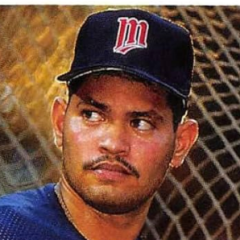
Image courtesy of © Brad Rempel-Imagn Images

You wouldn't guess it at a glance, but the Twins starter with his feet planted deepest in the beloved soil of the game's history—sometimes, even digging in his heels against the sweeping influence of data and technology as it overtakes the art of pitching—might just be Simeon Woods Richardson. Despite Chris Paddack's sheriff persona and Joe Ryan's laconic tenacity, they'll each switch smoothly into talking about themselves in terms of key movement markers, spin rates, or sequences informed by analytically derived game plans. For Pablo López, no switch is even required; that's his default form of self-description. 

Woods Richardson could speak that language, too, to some extent, but he's not especially interested in trying to. For instance, if you ask him why he adds and subtracts on his fastball within a start more than most pitchers do, the answer will only bounce off the notion of analytics once—and then, more like a wall to push off of, rather than a door to plunge through.

"It's just old-school baseball; I call it being a pitcher," Woods Richardson said Sunday. "I know we get lost in modern-day baseball, with numbers, analytics and everything else, [but] the human eye still can't differentiate speed."

In other words, as Warren Spahn knew, hitting is timing, and pitching is upsetting that timing. As Greg Maddux knew, hitters can spot differences in trajectory and spin, but not in speeds. Woods Richardson is special, in part, for the way he approaches his own job as a student of its history. Few players in the modern game consider the greats of the previous century to be relevant touchstones, but Woods Richardson does.

"That's something that's been going on for 100 years, you know what I mean?" he said. "People have been doing it since way back when. I guess I modeled my game after Nolan Ryan—you know, he had the changeup, but he'd also actually add and subtract. Bob Gibson, with the slider: add and subtract. Satchel Paige: add and subtract."

Though it was hardly his most successful outing (it was a tough assignment he drew), Woods Richardson's last start is as good an example as any of his willingness to reach back for a little extra at one moment, but then throttle back into the low 90s at others.

image.jpeg

Notice the error bars around each point, denoting average velocity for that pitch type within that game. Those error bars are set at one standard deviation from their average for that appearance. In the Dodgers game, there were roughly 3.5 miles per hour separating the ends of that range for Woods Richardson; he's often around 3 mph. Ryan, to choose a teammate at random, has never had that wide a practical range within a start.

For some pitchers, that might indicate a mere tendency to misfire occasionally, failing in an honest effort to throw it as hard as they can. For others, it could (at least in abstract theory; it's not something most teams actively implement or recommend) be an analytics-informed, premeditated way to mess with certain hitters based on their swing path or contact point. For Woods Richardson, it's a matter of watching, sensing, and responding, based on feel and varying from pitch to pitch.

"Oh, for sure. It's always been that way," he said. "And depending on who is up, game situation, count leverage, all that kind of determines what goes into that."

He's sensitive to the situation, and tries to manipulate it in a way that makes rational sense, but it can't all be rational. As a former hitter himself, Woods Richardson can't turn off the part of his brain that used to fight to read pitches—and he doesn't really want to.

"Some guys are a little different, but I played two-way, so it was kind of easy for me," he said. "As I'm pitching, I'm kind of multi-tasking. That's just how I operate. Some guys can, some guys can't. Some guys are completely different. But the way I attack it is, I'm analyzing the swing, reading the swing—reading everything that I could have seen in that 15 seconds, to kind of gauge for that next pitch."

Making use of what he sees in a hitter's swing (or take, or body language, or anything else) requires Woods Richardson to be adaptable within his own mind and his game plan, and to have great (usually non-verbal) communication with his catcher. That's a challenge he savors.

"That's the beauty part about pitching. I believe, for so long, it was a feel thing," he said. "We didn't have computers and numbers to tell us what we were doing; we had to use our eyes. So use your eyes. Trust your eyes."

Some of this might make him sound cranky, himself, like one averse to the tools of the modern trade. It's not like that, though. He knows how to use those tools, and listens to his coaches when they make suggestions. It's just not that aspect of the game that fills him with joy and passion. When he talks about being on the mound and making infinitesimal adjustments based on what he sees and senses, it's not defiance in his tone; it's the vociferous joy of a craftsman. He doesn't disdain the way others do it, but he feels an instantly visible conviction in his own methods, perhaps because they run back through the generations.

One of the ostensible dangers of not embracing analytics lies in a pitcher missing opportunities to improve and evolve. The craftsman mindset leads one to the same eagerness to improve, though; a great cabinetmaker doesn't make the same, slightly flawed cabinet over and over. Thus, Woods Richardson has switched from a straight changeup to a splitter this season, and lo, even the numbers say the new way to change speeds is now his best pitch.

image.png

Being a student of the game and a lover of the feel for it means both learning from the masters and experimenting with ways to emulate them. Woods Richardson believes he's found a better way to do so via his change in offspeed offerings.

"I think it just goes down to pitching. I think really good pitchers are able to throw every single one of their pitches for strikes—any count, any situation," he said. "So I just work to model my game after that. It's just being able to pound the strike zone consistently with each one of my pitches. That's what all of us are trying to do in the big leagues; that's the main goal. So I guess we'll just keep chopping that tree down."


View full article

Posted

I still like SWR quite a bit as a pitcher, and I like how he's constantly working to evolve. He might never become a guy who is considered a frontline starter, but he can also be more than just back of the rotation filler too. He's still unfinished as a product and his mindset suggests a player than won't be satisfied  or stop trying to improve.

If he can induce more chase with his breaking stuff and the new split, I think he can be very successful. When he's finishing off hitters efficiently, he can really get rolling.

Plus, I just like the dude.

Posted

I've liked Sims since his interview with Seth. I enjoyed his competitiveness & the way he approaches the game. He's a cerebral pitcher, that'll keep him in the MLB when others more talented may fail.

Posted

I think one of the factors that is missed by the maximum velocity approach to pitching is that when every pitcher has the same mechanics, a 96-97 mph fastball becomes much more hittable. 

Create an account or sign in to comment

You need to be a member in order to leave a comment

Create an account

Sign up for a new account in our community. It's easy!

Register a new account

Sign in

Already have an account? Sign in here.

Sign In Now
The Twins Daily Caretaker Fund

You all care about this site. The next step is caring for it. We’re asking you to caretake this site so it can remain the premier Twins community on the internet.

×
×
  • Create New...