



Greggory Masterson
-
Posts
819 -
Joined
-
Last visited
-
Days Won
2
Content Type
Profiles
News
Minnesota Twins Videos
2026 Minnesota Twins Top Prospects Ranking
2022 Minnesota Twins Draft Picks
Minnesota Twins Free Agent & Trade Rumors, Notes, & Tidbits
Guides & Resources
2023 Minnesota Twins Draft Picks
The Minnesota Twins Players Project
2024 Minnesota Twins Draft Picks
2025 Minnesota Twins Draft Pick Tracker
2026 Minnesota Twins Draft Tracker: Picks & Bonuses
Forums
Blogs
Events
Store
Downloads
Gallery
Everything posted by Greggory Masterson
-
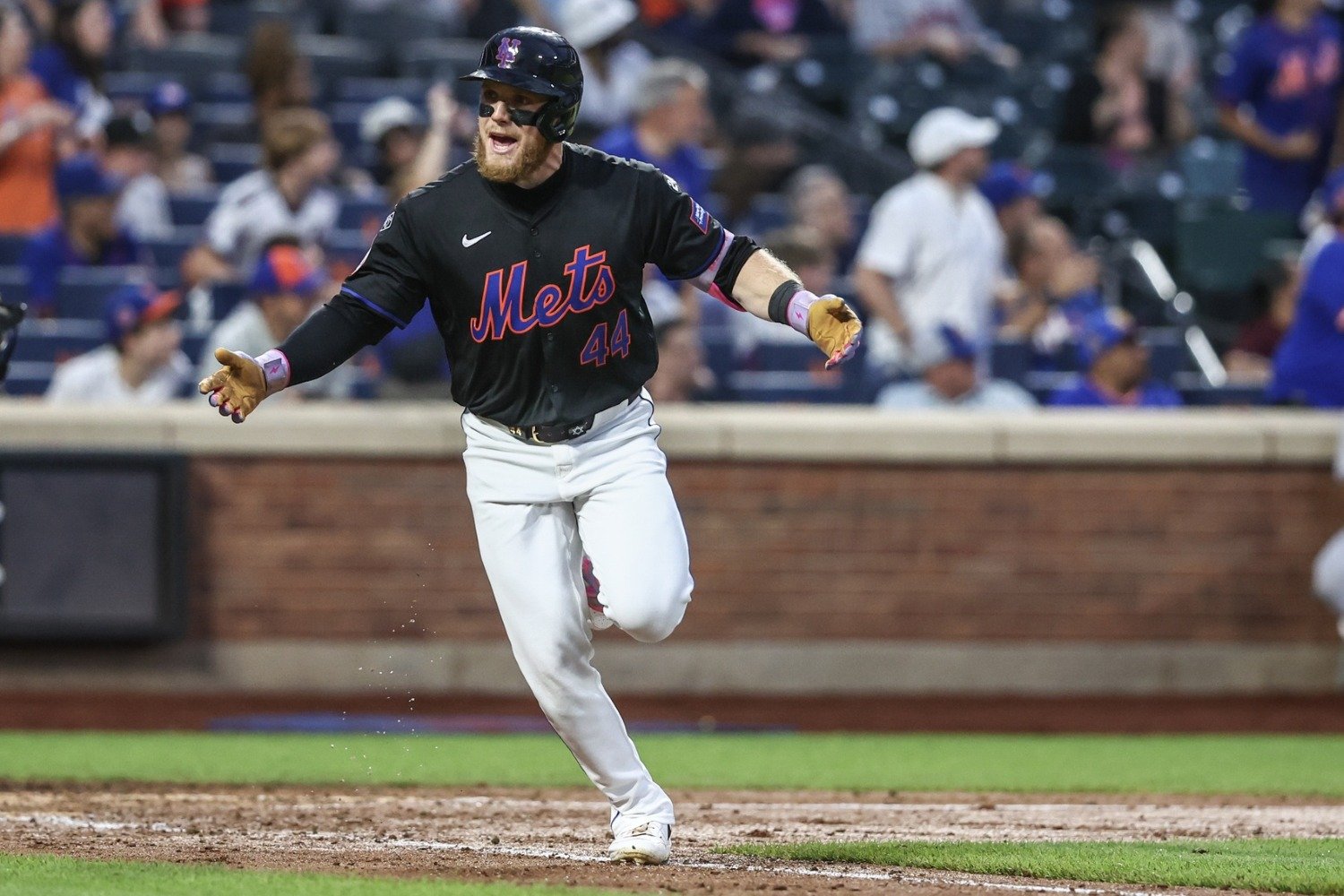 Every offseason, fans have somewhere between opined for and expected the Twins to add a platoon corner outfielder. A platoon left fielder complements their collection of lefty corner outfielders well, and they generally don’t cost much. But there’s another complementary player type that the Twins have preferred: a Byron Buxton backup. Harrison Bader joins a short but growing list of high-end defensive center fielders to back up Buxton, standing beside Manuel Margot and Michael A. Taylor. It’s a sensible approach, given Buxton’s frequent trips to the injured list. If the team expects to have (at minimum) 50 games a year without Buxton roaming center field, there may as well be someone good there in his place. They needed to make a choice. It’s probably the same choice they had to make the previous two offseasons: Backup for Buxton, or corner platoon hitter? It can be difficult to justify having both player types on a four-man big-league bench, unless the team is really confident about their infield (imagine if Brooks Lee, Royce Lewis and Carlos Correa had much better health histories), or one of those two bench outfielders can play a bit on the dirt (imagine if Willi Castro was a better outfield defender). The Twins have tried to thread the needle, finding a competent (an adjective that may be underselling it) center fielder who can also hit lefties enough to stick him in the corner once or twice a week. The outcomes of those decisions varied wildly in both context and results over the past two seasons. In 2022, the Twins traded for Taylor to fill the role, and he played the entire 2023 season as the team’s starting center fielder, as Buxton was never healthy enough to play the field. Taylor, who was initially pegged for a backup role in center and expected to see time in the corners against lefties, had a solid enough season and logged 388 plate appearances. Margot, the 2024 solution to the same problem, played out entirely differently in his 336 trips to the plate. Buxton returned and played most of the team’s games in center field, which moved Margot to a more prominent role in the corners. Margot’s depleted fielding prowess might have pushed him there even if Buxton had been less healthy. He made a name (and tens of millions of dollars) based on his high-end outfield defense, but he couldn’t sustain it into his late 20s. Neither Taylor nor Margot has been lauded for his offensive prowess; nor has Bader. They're more akin to the types of bats that Cleveland has had patrolling their outfield in the 2020s. However, given that all three are righties, there’s (at minimum) an assumption that they can be useful against left-handed pitchers in addition to the value they provide on defense. Taylor did crush lefties in 2023, hitting about 40% better than the league average against them. Margot held his own against them, about league-average, despite his inability to get a hit as a pinch-hitter. Bader has the worst career track record of the three against lefties, and he’s been inconsistent year-to-year, but he’s still been about 10% better than the league average against southpaws. That’s probably all it takes. I mean, Bader had a down year against lefties last year, and he still hit better against them than Trevor Larnach did. His was very close to Matt Wallner's line, too. There’s a legitimate argument to be made that the best version of this team has Bader taking 400 plate appearances, with a third or more of those coming against lefties. That's the role he played with the Mets last year, but it was the first time in his career that he'd done so. He's often fallen between 350 and 450 plate appearances, but in the past, it was always because he got hurt, not because he was deployed strategically to maximize good matchups. For his career, Bader has faced lefties in just 26.6% of his plate appearances, and he's often been under 20%—the sign of a righty batter not being used for strategic offensive reasons at all, but rather, to keep his glove in the lineup. Ramón Laureano's career share of plate appearances with the platoon advantage is 29.9%. Randal Grichuk's is 32.8%; he even qualified for the batting title (538 PA) with the 2022 Rockies while facing lefties 33.5% of the time. Bader finally got that treatment in 2024, facing lefties 35% of the time, but maybe we shouldn't be shocked that such a radical change of role threw him for a loop—and maybe he'll bounce back with a big 2025 in the same role, as he becomes more familiar with it. There will be time for him, both in the corners and in center. Obviously, Buxton will require days or weeks off (hopefully not months). Bader will get his time in center field. His sprint speed has decreased a bit (as happens to most 30-year-olds), and Sports Info Solutions's Defensive Runs Saved (DRS) saw him as below-average in center last season, but Outs Above Average (OAA) graded him well. He shouldn't hurt them out there, anyway. But he can also play the corners. He hasn’t played anywhere but center field since 2018, but when you’re on Byron Buxton’s team, you’re probably expected to defer to him. And he should. He should play over Wallner and/or Larnach whenever a lefty takes the mound. Throw in Emmanuel Rodriguez, if he’s on the roster, too, I want Bader over him. I’m brave enough to say it. Both Wallner and Larnach are good hitters. I like them. But they’ve struggled against lefties, like most lefties do. They’ll probably get slightly better with time. But that doesn’t mean the Twins should run both of them out against every lefty. Have them alternate in left while Bader plays right. That is totally fine with me. Both big guys need days off. And Bader, even at just 10% above league average, has been a far better hitter against lefties than either of them. But beyond that, let’s revisit the beginning of this discussion. Bader is an asset defensively. Even if he might not be the big thumper you want in that spot, he should be a very good defender in right or left field. And if he’s even a mildly better hitter and a much better fielder than the other two, then play him. It’s not that hard. As sabermetrician and former President Ben Franklin once said, a run saved is a run earned. Bader's going to do that better than the other options. He's a better defender than Austin Martin, even if you grant the assumption that Martin will hit better (and Martin is still in line for a big-league role, right now). You might argue that DaShawn Keirsey Jr. is a better defender, but we haven't seen that yet, and he's left-handed. We have no clue what Rodriguez is ready for right now. Sure, there are some qualifiers. It’s probably not the best idea to go full Manny Magoo and pinch-hit Harrison Bader for Matt Wallner in the fourth inning (Bader was 0-10 last season as a pinch-hitter, by the way). I’m okay scaling that back. Pull him when a righty reliever comes in, too. He should also get some pinch-running opportunities, so maybe save him for later in the game. Also, if he’s no longer the fielder he was, a lot of this goes out the window. Or if he’s now at the decrepit age of 30 and can’t hit at all, change course. But Bader is in line for a real role. The Twins surprised a lot of people by offering him a contract that could surpass $8 million if he hits his incentives. He’s going to get run, and he should. Maybe the real platoon bat is the runs we prevent along the way.
- 51 comments
-
- 7
-

-

-
- harrison bader
- manuel margot
- (and 5 more)
-
This offseason marks the third year in a row that the Twins have pursued a glove-first backup center fielder, eschewing a more prototypical corner platoon bat on their bench. But that doesn’t mean Harrison Bader shouldn’t be used like one. Every offseason, fans have somewhere between opined for and expected the Twins to add a platoon corner outfielder. A platoon left fielder complements their surplus of lefty corner outfielders well, and they generally don’t cost much. But there’s another complementary player type that the Twins have preferred: a Byron Buxton backup. Harrison Bader joins a short but growing list of high-end defensive center fielders to back up Buxton, standing beside Manuel Margot and Michael A. Taylor. It’s a sensible approach, given Buxton’s frequent trips to the injured list; if the team expects to have at minimum 50 games a year without Buxton roaming center field, there may as well be someone good there in his place. They needed to make a choice. It’s probably the same choice they had to make the previous two seasons. Backup for Buxton, or corner platoon hitter? It can be difficult to justify having both player types on a big league bench unless the team is really confident about their infield, or one of those two bench outfielders can play a bit on the dirt. So the Twins have tried to thread the needle, finding a competent (an adjective that may be underselling it) center fielder who can also hit lefties enough to stick him in the corner once or twice a week. The outcomes of those decisions varied wildly in both context and results over the past two seasons. In 2022, the Twins traded for Taylor to fill the role, and he played the entire season as the team’s starting center fielder as Buxton was never healthy enough to play the field. Taylor, who was initially pegged for a backup role in center and expected to see time in the corners against lefties, had a solid enough season and logged 388 plate appearances. Margot, the 2023 solution to the same problem, played out entirely differently in his 336. Buxton returned and played most of the team’s games in center field, which moved Margot to a more prominent role in the corners. Margot’s depleted fielding prowess did as well. Margot made a name (and tens of millions of dollars) based on his high-end outfield defense, but he couldn’t sustain it into his late 20s. Neither has been lauded for his offensive prowess, nor has Bader. They're more akin to the types of bats that Cleveland has had patrolling their outfields out in the 2020s. However, given that all three are righties, there’s, at minimum, an assumption that they can be useful against left-handed pitchers in addition to the value they provide on defense. Taylor did crush lefties in 2022, hitting about 40% better than the league average against them. Margot held his own against them, about league-average, despite his inability to get a hit as a pinch hitter. Bader has the worst career track record of the three against lefties, and he’s been inconsistent year-to-year, but he’s still been about 10% better than the league average against southpaws. And that’s probably all it takes. I mean, Bader had a down year against lefties last year, and he still hit better against them than Trevor Larnach did and was very close to Matt Wallner's. There’s a legitimate argument to be made that the best version of this team has Bader taking 400 plate appearances. He’s generally been somewhere between 350 and 450 plate appearances a year in his career, so it’s not a role he’s unaccustomed to. It's not unreasonable to have him in the lineup 60% of the time. There will be time for him, both in the corners and in center. Obviously, Buxton will require days or weeks off (hopefully not months). Bader will get his time in center field. His sprint speed has decreased a bit (as happens to most 30-year-olds), and Fielding Bible saw him as average in center last season, but Outs Above Average (OAA) graded him well last season. He’ll at least hopefully be at minimum solid, unless he experiences a Margot-like falloff. But he can also play the corners. He hasn’t played anywhere but center field since 2018, but when you’re on Byron Buxton’s team, you’re probably expected to defer to him. And he should. He should play over Matt Wallner and/or Trevor Larnach. Throw in Emmanuel Rodriguez if he’s on the roster, too, I want Bader over him. I’m brave enough to say it. Both Wallner and Larnach are good hitters. I like them. But they’ve struggled against lefties, like most lefties do. They’ll probably get slightly better with time. But that doesn’t mean the Twins should run both of them out against every lefty. Have them alternate in left while Bader plays right. That is totally fine with me! Both big guys need days off. And Bader, even at just 10% above league average, has been a far better hitter against lefties than either of them. But beyond that, let’s revisit the beginning of this discussion. Bader is an asset defensively. Even if he might not be the big thumper you want in that spot, he should be a very good defender in right or left field. And if he’s a much better hitter and a much better fielder than the other two, then play him. It’s not that hard. As sabermetrician and former President Ben Franklin once said, a run saved is a run earned. And he's going to do that better than the other options. He's a better defender than Austin Martin, even if you are granted the assumption that Martin will hit better (and Martin is still in line for a big league role right now). You might argue that DaShawn Keirsey Jr. is a better defender, but we haven't seen that yet, and he's left-handed. We have no clue what Rodriguez is ready for right now. Sure, there are some qualifiers. It’s probably not the best idea to go full Manny Magoo and pinch-hit Harrison Bader for Matt Wallner in the fourth inning (Bader was 0-10 last season as a pinch hitter, by the way). I’m okay scaling that back. Pull him when a righty reliever comes in, too. He should also get some pinch-running opportunities, so maybe save him for later in the game. Also, if he’s no longer the fielder he was, a lot of this goes out the window. Or if he’s now at the decrepit age of 30 and can’t hit at all, change course. But Bader is in line for a real role. The Twins surprised a lot of people by offering him a contract that could surpass $8 million if he hits his incentives. He’s going to get run, and he should. Maybe the real platoon bat is the runs we prevent along the way. View full article
-
Oh yes because it rhymes with Vader! Very clever, well done.
-
I for one am disgusted at not one but two Bark at the Park nights. Leave Fido home; there’s nothing crueler than taking a dog to a park where people are throwing balls around and then telling him he can’t fetch them.
-
The title wasn’t meant to be taken literally. Sorry if that wasn’t clear. Of course there’s room for Coloumbe. This article highlights some of the potential roster implications of his signing, given the current personnel and roster rules. It’s going to necessitate tough decisions, or a series of unfortunate events will make it easy. You’ve correctly brought up concerns like injury and performance that were also mentioned in the writeup.
-
The Twins’ Bullpen is Already Full. How Does Danny Coulombe Fit?
Greggory Masterson posted an article in Twins
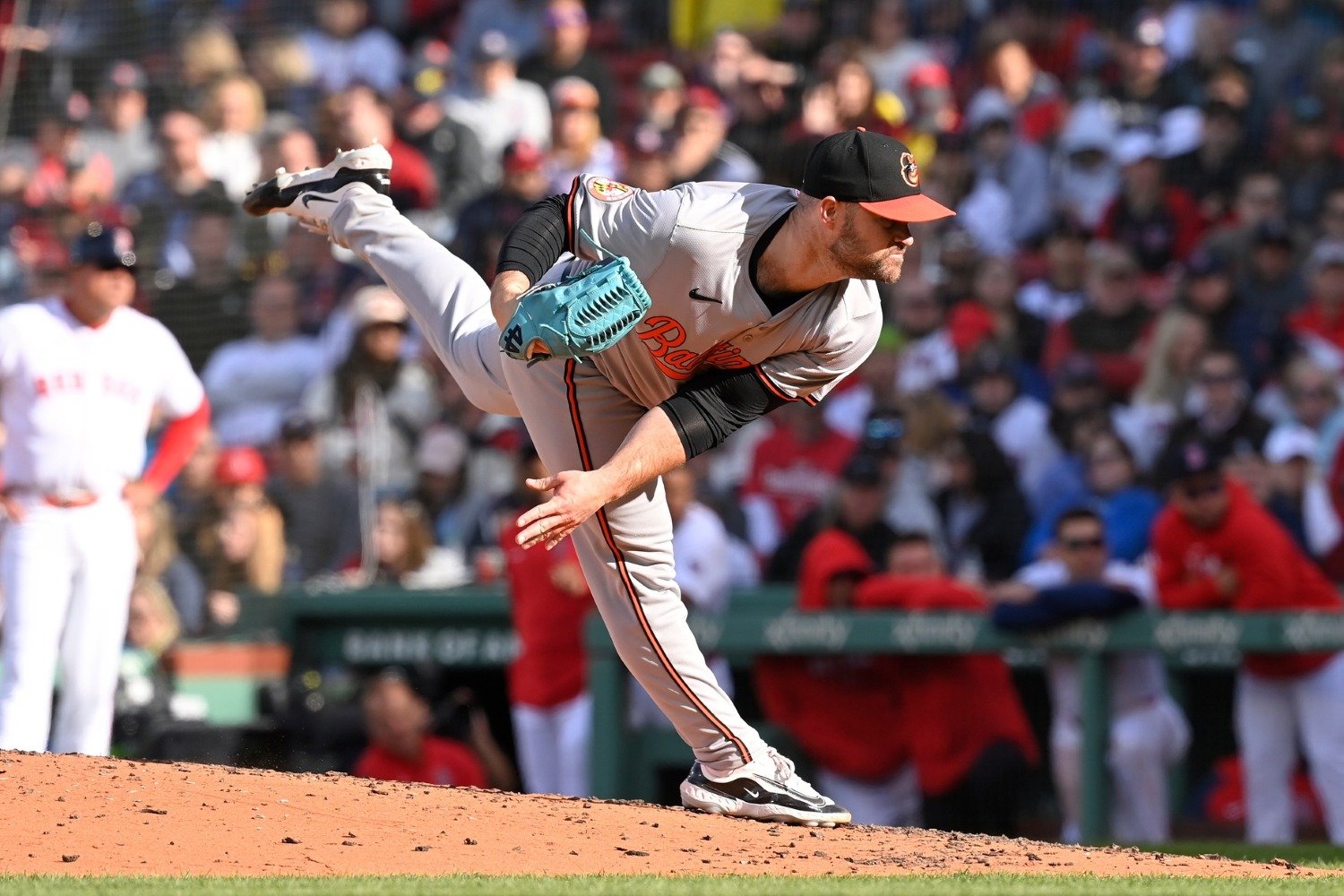 On Tuesday morning, the Twins made their first major-league signing of the offseason. It only took three months, but by gum, they’ve done it. Danny Coulombe, the prodigal son, has finally returned to Minnesota. But in the numbers game that is a modern bullpen, there is no room at the inn, no seat at the feast, too many figs on the tree... something like that. Too many bulls! Before Coulombe’s signing, there were already questions about the number of arms in the Twins bullpen. Given that he has an MLB deal and a guaranteed contract, his name must be written in pen. But what does that mean for everyone else? Coulombe joins a list of names who cannot be sent down without first being waived—exposed to the other 29 teams for free. Those players will either make the Opening Day roster, start the year on the injured list, or be cut after spring training. That group also includes Brock Stewart, Michael Tonkin, and Ronny Henriquez. For those of you keeping score at home, that’s four hurlers who cannot be sent down. They make it, or they’re probably cut. There’s also Rule 5 pick Eiberson Castellano. If the Twins want to retain his services, he has to stay on the big-league roster or injured list all year (and even if he spends time on the IL, he needs to be on the active roster for at least 90 days). So, there’s five. After that, we need to add in Jhoan Durán, Griffin Jax, Cole Sands, Justin Topa, Jorge Alcalá, and Louie Varland. Varland probably goes to Triple-A by default at this point, but keeping the five guys locked into a spot would probably also necessitate sending both Topa and Alcalá to St. Paul. If the Twins want to have Topa and Alcalá on the Opening Day roster, the obvious moves would probably be to waive Henriquez and return Castellano to Philadelphia (or arrange a trade for him and then send him down). They could also waive Tonkin, whom they're paying $1 million. But those each kind of seem like a waste of resources. (Besides, it was waiving a recent signee on a cheap deal that lost the Twins Coulombe before!) There are other names—like Kody Funderburk, Brent Headrick, Matt Canterino, Huascar Ynoa, Scott Blewett, Connor Prielipp, and Anthony Misiewicz—who might play a role in the bullpen this season, but we’ve already got our hands full with those top 11. It’s totally possible that the Twins front office—who, mind you, have been watching the same teams we all have been—are prepping for inevitable injury concerns. Stewart missed most of the past two seasons despite dominating when healthy. Topa threw 2 1/3 innings last season. And relievers tend to get dinged up from time to time. It’s not the worst plan in the world to have more MLB arms than you can carry, but they’d seem to be banking on that being the case as soon as the doors open. At least one arm will need to be in the medical tent in order for the organization not to need to part with talent when you have 11 potential bullpen arms. Of course, returning a Rule 5 guy to his original team happens more often than not. There’s reason to be excited about Henriquez, but he’s by no means established and could prove tricky to carry on the active roster for a full season. Even Tonkin has been passed around the league before, and it can happen again. But all of those do require serious thought; none of them can be taken back. Beyond those concerns, or perhaps conversely, having five unoptionable guys in your bullpen can prevent a team from having their best bullpens, because if you dump them, you lose talent. Right now, there’s no semblance of a St. Paul shuttle for their relievers. They have five guys who can’t be sent down and five guys they probably don’t want to send down (especially Durán, Jax, and Sands). The Twins have been criticized in recent years for being a bit too reluctant to part with struggling veterans who can't be optioned. A move like this certainly sets them up for similar practices and similar criticisms. It's just a little crowded right now, and it's not clear how they'll release the pressure. Then there's the 40-man spot, given that the Twins' 40-man roster is full. Dropping Tonkin, Henriquez, or Castellano would clear a spot there, but the Twins might also try to keep all of their current pitchers. In that case, Michael Helman, Mickey Gasper, Matt Canterino, Jair Camargo, and Diego Cartaya might all be candidates. But if Tonkin, Henriquez, or Castellano were to eventually be cut for an active roster spot, that would effectively mean that two players were lost to make room for a lefty middle reliever. There's probably an outside chance that this move could be the precursor to a trade, but who knows. They don't pay me enough to soothsay. And also what does this mean for Chris Paddack? We have to ask that question whenever a pitcher moves, right?
 -
It's getting late fast. Sweet Lou, Condescending Cody, and Ol Gregg are joined by the snake Jamie Cameron to talk prospects. They talk international signings, big dudes who ding dongs, prospects lists. They finish with a blind lineup, and Gregg has some questionable takes on the British. Listen using Apple Podcasts: https://podcasts.apple.com/us/podcast/the-twins-off-daily-podcast/id1741266056 Listen using Spotify: https://open.spotify.com/show/4tb78XlurcPTYYSsARdbD7 Listen using iHeartRadio: https://www.iheart.com/podcast/263-the-twins-off-daily-podcas-167548600/ Listen using Pocket Casts: https://pca.st/nvclbt0w Watch on YouTube: https://www.youtube.com/@twinsdaily View full article
-
Episode 29: What do Twins Fans have to Look Forward To?
Greggory Masterson posted an article in Podcasts
 Sweet Lou, Condescending Cody, and Ol Gregg are joined by the snake Jamie Cameron to talk prospects. They talk international signings, big dudes who ding dongs, prospects lists. They finish with a blind lineup, and Gregg has some questionable takes on the British. Listen using Apple Podcasts: https://podcasts.apple.com/us/podcast/the-twins-off-daily-podcast/id1741266056 Listen using Spotify: https://open.spotify.com/show/4tb78XlurcPTYYSsARdbD7 Listen using iHeartRadio: https://www.iheart.com/podcast/263-the-twins-off-daily-podcas-167548600/ Listen using Pocket Casts: https://pca.st/nvclbt0w Watch on YouTube: https://www.youtube.com/@twinsdaily
 -
I’m not good at math, but I know how to count to eight. We’re gonna see some movement, right? Image courtesy of © Eric Canha-Imagn Images On Tuesday morning, the Twins made their first major-league signing of the offseason. It only took three months, but by gum, they’ve done it. Danny Coulombe, the prodigal son, has finally returned to Minnesota. But in the numbers game that is a modern bullpen, there is no room at the inn, no seat at the feast, too many figs on the tree... something like that. Too many bulls! Before Coulombe’s signing, there were already questions about the number of arms in the Twins bullpen. Given that he has an MLB deal and a guaranteed contract, his name must be written in pen. But what does that mean for everyone else? Coulombe joins a list of names who cannot be sent down without first being waived—exposed to the other 29 teams for free. Those players will either make the Opening Day roster, start the year on the injured list, or be cut after spring training. That group also includes Brock Stewart, Michael Tonkin, and Ronny Henriquez. For those of you keeping score at home, that’s four hurlers who cannot be sent down. They make it, or they’re probably cut. There’s also Rule 5 pick Eiberson Castellano. If the Twins want to retain his services, he has to stay on the big-league roster or injured list all year (and even if he spends time on the IL, he needs to be on the active roster for at least 90 days). So, there’s five. After that, we need to add in Jhoan Durán, Griffin Jax, Cole Sands, Justin Topa, Jorge Alcalá, and Louie Varland. Varland probably goes to Triple-A by default at this point, but keeping the five guys locked into a spot would probably also necessitate sending both Topa and Alcalá to St. Paul. If the Twins want to have Topa and Alcalá on the Opening Day roster, the obvious moves would probably be to waive Henriquez and return Castellano to Philadelphia (or arrange a trade for him and then send him down). They could also waive Tonkin, whom they're paying $1 million. But those each kind of seem like a waste of resources. (Besides, it was waiving a recent signee on a cheap deal that lost the Twins Coulombe before!) There are other names—like Kody Funderburk, Brent Headrick, Matt Canterino, Huascar Ynoa, Scott Blewett, Connor Prielipp, and Anthony Misiewicz—who might play a role in the bullpen this season, but we’ve already got our hands full with those top 11. It’s totally possible that the Twins front office—who, mind you, have been watching the same teams we all have been—are prepping for inevitable injury concerns. Stewart missed most of the past two seasons despite dominating when healthy. Topa threw 2 1/3 innings last season. And relievers tend to get dinged up from time to time. It’s not the worst plan in the world to have more MLB arms than you can carry, but they’d seem to be banking on that being the case as soon as the doors open. At least one arm will need to be in the medical tent in order for the organization not to need to part with talent when you have 11 potential bullpen arms. Of course, returning a Rule 5 guy to his original team happens more often than not. There’s reason to be excited about Henriquez, but he’s by no means established and could prove tricky to carry on the active roster for a full season. Even Tonkin has been passed around the league before, and it can happen again. But all of those do require serious thought; none of them can be taken back. Beyond those concerns, or perhaps conversely, having five unoptionable guys in your bullpen can prevent a team from having their best bullpens, because if you dump them, you lose talent. Right now, there’s no semblance of a St. Paul shuttle for their relievers. They have five guys who can’t be sent down and five guys they probably don’t want to send down (especially Durán, Jax, and Sands). The Twins have been criticized in recent years for being a bit too reluctant to part with struggling veterans who can't be optioned. A move like this certainly sets them up for similar practices and similar criticisms. It's just a little crowded right now, and it's not clear how they'll release the pressure. Then there's the 40-man spot, given that the Twins' 40-man roster is full. Dropping Tonkin, Henriquez, or Castellano would clear a spot there, but the Twins might also try to keep all of their current pitchers. In that case, Michael Helman, Mickey Gasper, Matt Canterino, Jair Camargo, and Diego Cartaya might all be candidates. But if Tonkin, Henriquez, or Castellano were to eventually be cut for an active roster spot, that would effectively mean that two players were lost to make room for a lefty middle reliever. There's probably an outside chance that this move could be the precursor to a trade, but who knows. They don't pay me enough to soothsay. And also what does this mean for Chris Paddack? We have to ask that question whenever a pitcher moves, right? View full article
-
In the eight offseasons since Derek Falvey took the helm in Minnesota, the Twins have averaged three major-league signings or trades after Feb. 1. All signs point to a similar late charge in 2025, but is it a good strategy? Image courtesy of © Kim Klement-Imagn Images There are a few reasons why waiting until late in the offseason to make moves can be seen as doing smart business. Some big names may fall through the cracks and have to settle for less money after their other (often more spendy) suiters have already run through their budgets. Suddenly, those big names have to decide whether they want to play for less money than expected or not play at all. But even if the names aren’t big, the same idea applies. Say 10 teams started the offseason looking for a back-end starter, and in February, eight of the fifteen free back-end starter agents had already signed. Those last seven players are trying to get jobs with the last two teams. Those two teams now get to grab their favorite at the right price. The same happens with trades. Your veteran might be worth a little more when the free-agent pool gets thin. Conversely, a team desperate to shed salary might be more willing to give you their guy at a bargain. It’s all a push and pull, and being patient can open the door to deals that weren’t possible in December. But there is a downside. If you’ve had the privilege of picking over the last seven back-end starters in free agency, you might need to ask yourself why these seven, specifically, fell to you. Sure, you can pick the best of them, but even at a discount, are they actually a better deal than going out and getting your guy before Christmas? Let’s review the 24 February and March acquisitions that Falvey and Co. have made since 2017. 2017: The Matt Belisle Year (slight success) I almost left this year off because the pattern truly didn’t start until the following offseason. It was Falvey’s first season, and they signed Belisle as a setup-ish pitcher for $2.05 million. He had a solid year, so it was a success, but probably only in spirit. 2018: The Messy Year (failure with one bright spot) This is the year that could have scared a lot of GMs off this strategy. The headliners everyone thinks of when 2018 comes up are Lance Lynn and Logan Morrison. Lynn signed a one-year, $12-million deal on Mar. 10. Morrison signed a one-year, $6.5-million contract two weeks earlier, on Feb. 25. Lynn was one of the top pitchers on the market, but because of a historically bad year for free agents, he needed Minnesota’s paltry offer. Morrison was coming off a breakout 2017 campaign, but he still didn’t get the market he expected. Both players were described as disgruntled, and their on-field performance matched those rumors. Lynn had his worst year as a pro before being traded at midseason, and Morrison basically played his way out of baseball in 2018. The strategy did work to some extent, as they signed starting pitcher Anibal Sánchez a week before Morrison on Feb. 17, and he had two very good years in 2018 and 2019—just not for the Twins. Compounding the error of signing Lynn, the Twins cut Sánchez a month after signing him to clear roster space for Lynn. The true bright spot was their trade for Jake Odorizzi. The Twins had been going back and forth with the Rays, negotiating a deal to acquire a starting pitcher for much of the offseason. When the Twins truly had a need arise (an Ervin Santana injury), they pulled the trigger, sending Jermaine Palacios to Tampa Bay in what was largely a salary dump for their trading partners. Odorizzi was a consistent force in the rotation through 2019, and the Feb. 18 trade is one of the crown jewels of Falvey’s tenure. Sometimes, being patient and getting the right deal for a guy you want does pay off. Beyond that, still having resources to add when needs arise late in the offseason (both prospect and monetary capital) is beneficial. Also, they traded Luis Gil for Jake Cave on Mar. 16, another opportunistic failure—the Yankees needed to clear 40-man roster space and Cave was on the chopping block. We all know how this one turned out. 2019: The Marwin González Year (success) González was still sitting around after spring training had started. On Feb. 22, he signed a two-year, $21-million deal. There were question marks around Miguel Sanó following a miserable year and an offseason injury that would keep him out of the lineup for the season's first two months. In reflecting on the disastrous 2018 season, Falvey and Levine had specifically mentioned feeling they were overbalanced with players on one-year deals, particularly because Lynn and Morrison came in somewhat unhappy. Between those two and Brian Dozier, the front office felt they had allowed a "mercenary" mentality to overtake the clubhouse. Many assumed that would be the end of the Twins backstopping the market for high-profile free agents, but instead, they plunged right back into the same waters one year later. The difference was that they gave their quarry a multi-year deal this time. González made some money, likely less than he’d hoped, but filled a role. This one probably wasn’t as intentional as others on the list, because it was spurred by a late need arising, but they probably couldn’t have gotten González for that price any earlier than they did. It's somewhat similar to the Odorizzi trade. 2020: The Maeda-Betts-Graterol Debacle (slight success) A team preferring opportunism doesn’t preclude them from getting a little fixated on their guy. Initially, a deal that sent Mookie Betts and David Price to Los Angeles, Kenta Maeda to Minnesota, and Brusdar Graterol and Dodger prospects to Boston broke down over the Red Sox's concerns about Graterol. The three teams then arranged their moves separately. Instead of Boston, Graterol was sent to Los Angeles on Feb. 9, along with Luke Raley and a competitive balance pick, for Maeda, Jair Camargo and $10 million. Maeda had a solid run in Minnesota, including a Cy Young runner-up abbreviated season in 2020, but he also lost significant time to injury. Graterol has been a very good reliever when healthy, but you generally take a good starter over a great reliever. 2021: The Freakin’ Offseason (failure with one bright spot) Sometimes, even the most low-risk purchases can be devastating. On Feb. 3 and 15, the Twins signed Alex Colomé and Matt Shoemaker, respectively, for a combined $8.5 million. Similar to Lynn and Morrison, it’s not entirely unfounded to point at these two as a significant reason that the Twins had the season that they did. At times, picking over the leftovers only returns leftovers. Nelson Cruz also came back for his third year in Minnesota, signing Feb. 3. He put together a good first half, well worth the $13 million investment, and he was the centerpiece in the trade that brought Joe Ryan to Minnesota at the trade deadline. In this case, gambling and waiting worked, as Cruz had limited suiters despite a terrific 2019 and 2020. Also, they traded LaMonte Wade Jr. for Shaun Anderson on Feb. 5. This might have been a case of waiting too long to decide on a trade that the team knew it “needed” to make (after choosing Cave over Wade as their fourth outfielder). However, I'm not sure if it counts. 2022: The Lockout Year (definitely doesn’t count) It’d be a little disingenuous to include these moves in their “wait it out” plans, because everyone was waiting it out. The league had a months-long freeze on any transactions over a labor dispute, so every team made a flurry of moves in March. In order, the Twins traded Mitch Garver for Isiah Kiner-Falefa and Ronny Henriquez; traded Chase Petty for Sonny Gray and Francis Peguero; traded Kiner-Falefa, Josh Donaldson, and Ben Rortvedt for Gary Sánchez and Gio Urshela; signed Carlos Correa; signed Joe Smith; and signed Chris Archer in a span of 16 days in March. If we remove the seven trades and signings this year, the team has still averaged 2.4 February-or-later moves per offseason, or 2.7 if you also throw out 2017. I will isolate one trade that shows just how long Falvey is willing to wait for a “good deal.” On Opening Day, Apr. 7, he completed a trade, sending Taylor Rogers, Brent Rooker, and $6 million to San Diego for Chris Paddack and Emilio Pagán. By that point, Falvey had been shopping Rogers for something close to eight months, and he finally got a deal he saw as good on the first day of the season. We don’t need to get into all the details, but this one is mixed, to say the least, with ardent critics and defenders on both sides. I'm sure some will show up in these very comments. 2023: The Donnie Barrels Year (success) Honestly, Donovan Solano is probably the best bang-for-your-buck player on this 31-player list. At just $2 million, the Feb. 22 signing was brought in as infield depth and a bench righty. He ended up with the third-most plate appearances on the team, was one of the most consistent bats in the lineup for the full year, and really excelled as a pinch-hitter. If the Twins could hit on another one like this in 2025, it’d go a long way. 2024: Ballin’ on a Budget (failure, with one success) Days after dumping Jorge Polanco’s contract to Seattle (which happened in late January, so it didn’t make the cut here), the Twins reallocated his money to Carlos Santana on Feb. 3 ($5.25 million) and Jay Jackson on Feb. 4 ($1.5 million). Santana worked, effectively a step up from Solano with a slightly greater payday. Jackson didn’t. But that’s what happens when you’re constrained to filling holes with the $6 million cleared from your starting second baseman’s trade. They essentially did a salary swap with Miami, flipping Nick Gordon for Steven Okert, a trade that had no winners. Then they spent the last $4 million earmarked for outfield help on a trade for Manuel Margot, prospect Rayne Doncon, and cash, sending Noah Miller to Los Angeles. I sure hope Doncon pans out. This is the new way of the MLB offseason. The Twins aren't alone in taking this approach; they just stretch the strategy toward an extreme other teams are more reluctant to reach. The results are often decent; that's why waiting things out has become such a popular paradigm. The crime of which they're guilty isn't being dumb; it's being uninspiring and underwhelming. Top free agents will always sign early, and blockbuster trades nearly always happen in November and December. Confining themselves to February means voluntarily losing the winter in an effort to win the summer and fall. Again, all 30 teams are increasingly comfortable with that. The Falvey front office is just more patient (and more willing to underwhelm you, if it comes to that) than most. View full article
-
.png.4d37d32d1e1c482de5b3fed253090333.png) There are a few reasons why waiting until late in the offseason to make moves can be seen as doing smart business. Some big names may fall through the cracks and have to settle for less money after their other (often more spendy) suiters have already run through their budgets. Suddenly, those big names have to decide whether they want to play for less money than expected or not play at all. But even if the names aren’t big, the same idea applies. Say 10 teams started the offseason looking for a back-end starter, and in February, eight of the fifteen free back-end starter agents had already signed. Those last seven players are trying to get jobs with the last two teams. Those two teams now get to grab their favorite at the right price. The same happens with trades. Your veteran might be worth a little more when the free-agent pool gets thin. Conversely, a team desperate to shed salary might be more willing to give you their guy at a bargain. It’s all a push and pull, and being patient can open the door to deals that weren’t possible in December. But there is a downside. If you’ve had the privilege of picking over the last seven back-end starters in free agency, you might need to ask yourself why these seven, specifically, fell to you. Sure, you can pick the best of them, but even at a discount, are they actually a better deal than going out and getting your guy before Christmas? Let’s review the 24 February and March acquisitions that Falvey and Co. have made since 2017. 2017: The Matt Belisle Year (slight success) I almost left this year off because the pattern truly didn’t start until the following offseason. It was Falvey’s first season, and they signed Belisle as a setup-ish pitcher for $2.05 million. He had a solid year, so it was a success, but probably only in spirit. 2018: The Messy Year (failure with one bright spot) This is the year that could have scared a lot of GMs off this strategy. The headliners everyone thinks of when 2018 comes up are Lance Lynn and Logan Morrison. Lynn signed a one-year, $12-million deal on Mar. 10. Morrison signed a one-year, $6.5-million contract two weeks earlier, on Feb. 25. Lynn was one of the top pitchers on the market, but because of a historically bad year for free agents, he needed Minnesota’s paltry offer. Morrison was coming off a breakout 2017 campaign, but he still didn’t get the market he expected. Both players were described as disgruntled, and their on-field performance matched those rumors. Lynn had his worst year as a pro before being traded at midseason, and Morrison basically played his way out of baseball in 2018. The strategy did work to some extent, as they signed starting pitcher Anibal Sánchez a week before Morrison on Feb. 17, and he had two very good years in 2018 and 2019—just not for the Twins. Compounding the error of signing Lynn, the Twins cut Sánchez a month after signing him to clear roster space for Lynn. The true bright spot was their trade for Jake Odorizzi. The Twins had been going back and forth with the Rays, negotiating a deal to acquire a starting pitcher for much of the offseason. When the Twins truly had a need arise (an Ervin Santana injury), they pulled the trigger, sending Jermaine Palacios to Tampa Bay in what was largely a salary dump for their trading partners. Odorizzi was a consistent force in the rotation through 2019, and the Feb. 18 trade is one of the crown jewels of Falvey’s tenure. Sometimes, being patient and getting the right deal for a guy you want does pay off. Beyond that, still having resources to add when needs arise late in the offseason (both prospect and monetary capital) is beneficial. Also, they traded Luis Gil for Jake Cave on Mar. 16, another opportunistic failure—the Yankees needed to clear 40-man roster space and Cave was on the chopping block. We all know how this one turned out. 2019: The Marwin González Year (success) González was still sitting around after spring training had started. On Feb. 22, he signed a two-year, $21-million deal. There were question marks around Miguel Sanó following a miserable year and an offseason injury that would keep him out of the lineup for the season's first two months. In reflecting on the disastrous 2018 season, Falvey and Levine had specifically mentioned feeling they were overbalanced with players on one-year deals, particularly because Lynn and Morrison came in somewhat unhappy. Between those two and Brian Dozier, the front office felt they had allowed a "mercenary" mentality to overtake the clubhouse. Many assumed that would be the end of the Twins backstopping the market for high-profile free agents, but instead, they plunged right back into the same waters one year later. The difference was that they gave their quarry a multi-year deal this time. González made some money, likely less than he’d hoped, but filled a role. This one probably wasn’t as intentional as others on the list, because it was spurred by a late need arising, but they probably couldn’t have gotten González for that price any earlier than they did. It's somewhat similar to the Odorizzi trade. 2020: The Maeda-Betts-Graterol Debacle (slight success) A team preferring opportunism doesn’t preclude them from getting a little fixated on their guy. Initially, a deal that sent Mookie Betts and David Price to Los Angeles, Kenta Maeda to Minnesota, and Brusdar Graterol and Dodger prospects to Boston broke down over the Red Sox's concerns about Graterol. The three teams then arranged their moves separately. Instead of Boston, Graterol was sent to Los Angeles on Feb. 9, along with Luke Raley and a competitive balance pick, for Maeda, Jair Camargo and $10 million. Maeda had a solid run in Minnesota, including a Cy Young runner-up abbreviated season in 2020, but he also lost significant time to injury. Graterol has been a very good reliever when healthy, but you generally take a good starter over a great reliever. 2021: The Freakin’ Offseason (failure with one bright spot) Sometimes, even the most low-risk purchases can be devastating. On Feb. 3 and 15, the Twins signed Alex Colomé and Matt Shoemaker, respectively, for a combined $8.5 million. Similar to Lynn and Morrison, it’s not entirely unfounded to point at these two as a significant reason that the Twins had the season that they did. At times, picking over the leftovers only returns leftovers. Nelson Cruz also came back for his third year in Minnesota, signing Feb. 3. He put together a good first half, well worth the $13 million investment, and he was the centerpiece in the trade that brought Joe Ryan to Minnesota at the trade deadline. In this case, gambling and waiting worked, as Cruz had limited suiters despite a terrific 2019 and 2020. Also, they traded LaMonte Wade Jr. for Shaun Anderson on Feb. 5. This might have been a case of waiting too long to decide on a trade that the team knew it “needed” to make (after choosing Cave over Wade as their fourth outfielder). However, I'm not sure if it counts. 2022: The Lockout Year (definitely doesn’t count) It’d be a little disingenuous to include these moves in their “wait it out” plans, because everyone was waiting it out. The league had a months-long freeze on any transactions over a labor dispute, so every team made a flurry of moves in March. In order, the Twins traded Mitch Garver for Isiah Kiner-Falefa and Ronny Henriquez; traded Chase Petty for Sonny Gray and Francis Peguero; traded Kiner-Falefa, Josh Donaldson, and Ben Rortvedt for Gary Sánchez and Gio Urshela; signed Carlos Correa; signed Joe Smith; and signed Chris Archer in a span of 16 days in March. If we remove the seven trades and signings this year, the team has still averaged 2.4 February-or-later moves per offseason, or 2.7 if you also throw out 2017. I will isolate one trade that shows just how long Falvey is willing to wait for a “good deal.” On Opening Day, Apr. 7, he completed a trade, sending Taylor Rogers, Brent Rooker, and $6 million to San Diego for Chris Paddack and Emilio Pagán. By that point, Falvey had been shopping Rogers for something close to eight months, and he finally got a deal he saw as good on the first day of the season. We don’t need to get into all the details, but this one is mixed, to say the least, with ardent critics and defenders on both sides. I'm sure some will show up in these very comments. 2023: The Donnie Barrels Year (success) Honestly, Donovan Solano is probably the best bang-for-your-buck player on this 31-player list. At just $2 million, the Feb. 22 signing was brought in as infield depth and a bench righty. He ended up with the third-most plate appearances on the team, was one of the most consistent bats in the lineup for the full year, and really excelled as a pinch-hitter. If the Twins could hit on another one like this in 2025, it’d go a long way. 2024: Ballin’ on a Budget (failure, with one success) Days after dumping Jorge Polanco’s contract to Seattle (which happened in late January, so it didn’t make the cut here), the Twins reallocated his money to Carlos Santana on Feb. 3 ($5.25 million) and Jay Jackson on Feb. 4 ($1.5 million). Santana worked, effectively a step up from Solano with a slightly greater payday. Jackson didn’t. But that’s what happens when you’re constrained to filling holes with the $6 million cleared from your starting second baseman’s trade. They essentially did a salary swap with Miami, flipping Nick Gordon for Steven Okert, a trade that had no winners. Then they spent the last $4 million earmarked for outfield help on a trade for Manuel Margot, prospect Rayne Doncon, and cash, sending Noah Miller to Los Angeles. I sure hope Doncon pans out. This is the new way of the MLB offseason. The Twins aren't alone in taking this approach; they just stretch the strategy toward an extreme other teams are more reluctant to reach. The results are often decent; that's why waiting things out has become such a popular paradigm. The crime of which they're guilty isn't being dumb; it's being uninspiring and underwhelming. Top free agents will always sign early, and blockbuster trades nearly always happen in November and December. Confining themselves to February means voluntarily losing the winter in an effort to win the summer and fall. Again, all 30 teams are increasingly comfortable with that. The Falvey front office is just more patient (and more willing to underwhelm you, if it comes to that) than most.
There are a few reasons why waiting until late in the offseason to make moves can be seen as doing smart business. Some big names may fall through the cracks and have to settle for less money after their other (often more spendy) suiters have already run through their budgets. Suddenly, those big names have to decide whether they want to play for less money than expected or not play at all. But even if the names aren’t big, the same idea applies. Say 10 teams started the offseason looking for a back-end starter, and in February, eight of the fifteen free back-end starter agents had already signed. Those last seven players are trying to get jobs with the last two teams. Those two teams now get to grab their favorite at the right price. The same happens with trades. Your veteran might be worth a little more when the free-agent pool gets thin. Conversely, a team desperate to shed salary might be more willing to give you their guy at a bargain. It’s all a push and pull, and being patient can open the door to deals that weren’t possible in December. But there is a downside. If you’ve had the privilege of picking over the last seven back-end starters in free agency, you might need to ask yourself why these seven, specifically, fell to you. Sure, you can pick the best of them, but even at a discount, are they actually a better deal than going out and getting your guy before Christmas? Let’s review the 24 February and March acquisitions that Falvey and Co. have made since 2017. 2017: The Matt Belisle Year (slight success) I almost left this year off because the pattern truly didn’t start until the following offseason. It was Falvey’s first season, and they signed Belisle as a setup-ish pitcher for $2.05 million. He had a solid year, so it was a success, but probably only in spirit. 2018: The Messy Year (failure with one bright spot) This is the year that could have scared a lot of GMs off this strategy. The headliners everyone thinks of when 2018 comes up are Lance Lynn and Logan Morrison. Lynn signed a one-year, $12-million deal on Mar. 10. Morrison signed a one-year, $6.5-million contract two weeks earlier, on Feb. 25. Lynn was one of the top pitchers on the market, but because of a historically bad year for free agents, he needed Minnesota’s paltry offer. Morrison was coming off a breakout 2017 campaign, but he still didn’t get the market he expected. Both players were described as disgruntled, and their on-field performance matched those rumors. Lynn had his worst year as a pro before being traded at midseason, and Morrison basically played his way out of baseball in 2018. The strategy did work to some extent, as they signed starting pitcher Anibal Sánchez a week before Morrison on Feb. 17, and he had two very good years in 2018 and 2019—just not for the Twins. Compounding the error of signing Lynn, the Twins cut Sánchez a month after signing him to clear roster space for Lynn. The true bright spot was their trade for Jake Odorizzi. The Twins had been going back and forth with the Rays, negotiating a deal to acquire a starting pitcher for much of the offseason. When the Twins truly had a need arise (an Ervin Santana injury), they pulled the trigger, sending Jermaine Palacios to Tampa Bay in what was largely a salary dump for their trading partners. Odorizzi was a consistent force in the rotation through 2019, and the Feb. 18 trade is one of the crown jewels of Falvey’s tenure. Sometimes, being patient and getting the right deal for a guy you want does pay off. Beyond that, still having resources to add when needs arise late in the offseason (both prospect and monetary capital) is beneficial. Also, they traded Luis Gil for Jake Cave on Mar. 16, another opportunistic failure—the Yankees needed to clear 40-man roster space and Cave was on the chopping block. We all know how this one turned out. 2019: The Marwin González Year (success) González was still sitting around after spring training had started. On Feb. 22, he signed a two-year, $21-million deal. There were question marks around Miguel Sanó following a miserable year and an offseason injury that would keep him out of the lineup for the season's first two months. In reflecting on the disastrous 2018 season, Falvey and Levine had specifically mentioned feeling they were overbalanced with players on one-year deals, particularly because Lynn and Morrison came in somewhat unhappy. Between those two and Brian Dozier, the front office felt they had allowed a "mercenary" mentality to overtake the clubhouse. Many assumed that would be the end of the Twins backstopping the market for high-profile free agents, but instead, they plunged right back into the same waters one year later. The difference was that they gave their quarry a multi-year deal this time. González made some money, likely less than he’d hoped, but filled a role. This one probably wasn’t as intentional as others on the list, because it was spurred by a late need arising, but they probably couldn’t have gotten González for that price any earlier than they did. It's somewhat similar to the Odorizzi trade. 2020: The Maeda-Betts-Graterol Debacle (slight success) A team preferring opportunism doesn’t preclude them from getting a little fixated on their guy. Initially, a deal that sent Mookie Betts and David Price to Los Angeles, Kenta Maeda to Minnesota, and Brusdar Graterol and Dodger prospects to Boston broke down over the Red Sox's concerns about Graterol. The three teams then arranged their moves separately. Instead of Boston, Graterol was sent to Los Angeles on Feb. 9, along with Luke Raley and a competitive balance pick, for Maeda, Jair Camargo and $10 million. Maeda had a solid run in Minnesota, including a Cy Young runner-up abbreviated season in 2020, but he also lost significant time to injury. Graterol has been a very good reliever when healthy, but you generally take a good starter over a great reliever. 2021: The Freakin’ Offseason (failure with one bright spot) Sometimes, even the most low-risk purchases can be devastating. On Feb. 3 and 15, the Twins signed Alex Colomé and Matt Shoemaker, respectively, for a combined $8.5 million. Similar to Lynn and Morrison, it’s not entirely unfounded to point at these two as a significant reason that the Twins had the season that they did. At times, picking over the leftovers only returns leftovers. Nelson Cruz also came back for his third year in Minnesota, signing Feb. 3. He put together a good first half, well worth the $13 million investment, and he was the centerpiece in the trade that brought Joe Ryan to Minnesota at the trade deadline. In this case, gambling and waiting worked, as Cruz had limited suiters despite a terrific 2019 and 2020. Also, they traded LaMonte Wade Jr. for Shaun Anderson on Feb. 5. This might have been a case of waiting too long to decide on a trade that the team knew it “needed” to make (after choosing Cave over Wade as their fourth outfielder). However, I'm not sure if it counts. 2022: The Lockout Year (definitely doesn’t count) It’d be a little disingenuous to include these moves in their “wait it out” plans, because everyone was waiting it out. The league had a months-long freeze on any transactions over a labor dispute, so every team made a flurry of moves in March. In order, the Twins traded Mitch Garver for Isiah Kiner-Falefa and Ronny Henriquez; traded Chase Petty for Sonny Gray and Francis Peguero; traded Kiner-Falefa, Josh Donaldson, and Ben Rortvedt for Gary Sánchez and Gio Urshela; signed Carlos Correa; signed Joe Smith; and signed Chris Archer in a span of 16 days in March. If we remove the seven trades and signings this year, the team has still averaged 2.4 February-or-later moves per offseason, or 2.7 if you also throw out 2017. I will isolate one trade that shows just how long Falvey is willing to wait for a “good deal.” On Opening Day, Apr. 7, he completed a trade, sending Taylor Rogers, Brent Rooker, and $6 million to San Diego for Chris Paddack and Emilio Pagán. By that point, Falvey had been shopping Rogers for something close to eight months, and he finally got a deal he saw as good on the first day of the season. We don’t need to get into all the details, but this one is mixed, to say the least, with ardent critics and defenders on both sides. I'm sure some will show up in these very comments. 2023: The Donnie Barrels Year (success) Honestly, Donovan Solano is probably the best bang-for-your-buck player on this 31-player list. At just $2 million, the Feb. 22 signing was brought in as infield depth and a bench righty. He ended up with the third-most plate appearances on the team, was one of the most consistent bats in the lineup for the full year, and really excelled as a pinch-hitter. If the Twins could hit on another one like this in 2025, it’d go a long way. 2024: Ballin’ on a Budget (failure, with one success) Days after dumping Jorge Polanco’s contract to Seattle (which happened in late January, so it didn’t make the cut here), the Twins reallocated his money to Carlos Santana on Feb. 3 ($5.25 million) and Jay Jackson on Feb. 4 ($1.5 million). Santana worked, effectively a step up from Solano with a slightly greater payday. Jackson didn’t. But that’s what happens when you’re constrained to filling holes with the $6 million cleared from your starting second baseman’s trade. They essentially did a salary swap with Miami, flipping Nick Gordon for Steven Okert, a trade that had no winners. Then they spent the last $4 million earmarked for outfield help on a trade for Manuel Margot, prospect Rayne Doncon, and cash, sending Noah Miller to Los Angeles. I sure hope Doncon pans out. This is the new way of the MLB offseason. The Twins aren't alone in taking this approach; they just stretch the strategy toward an extreme other teams are more reluctant to reach. The results are often decent; that's why waiting things out has become such a popular paradigm. The crime of which they're guilty isn't being dumb; it's being uninspiring and underwhelming. Top free agents will always sign early, and blockbuster trades nearly always happen in November and December. Confining themselves to February means voluntarily losing the winter in an effort to win the summer and fall. Again, all 30 teams are increasingly comfortable with that. The Falvey front office is just more patient (and more willing to underwhelm you, if it comes to that) than most.- 65 comments
-
- 12
-
-
- kenta maeda
- carlos santana
- (and 5 more)
-
He did; the “for some reason” pointed more toward choosing 13 rather than dropping 24
-
Yeah, we’re in that part of the offseason. But hear me out—there’s a notable pattern forming. Image courtesy of © Jay Biggerstaff-Imagn Images The number 13 is widely regarded as unlucky, at least in the United States. The various reasons for that reputation lie beyond the scope of this write-up. All that matters is that people hold it to be unlucky. Some hotels don’t have a 13th floor, skipping from 12 to 14. The Indianapolis 500 and Formula One both banned the number. The Motion Picture Association of America recommends not watching the 2009 comedy Year One until 13 years of age. Baseball, never an institution to buck superstition, also believes in the unluckiness of the number 13—or at least, they used to. There was a pretty consistent number scheme in the earliest days of players donning numbers on their uniforms. Numbers one through eight went to the starting lineup with one being the leadoff hitter and eight going to the eight hitter. Nine was for the backup catcher, and 10 through 14 went to pitchers. Except 13. They sometimes skipped 13. In the 95 years that the Twins and Senators have worn numbered jerseys, there have only been 24 seasons in which a player has worn 13. Prior to the 1990s, the number was worn sparingly. John Roseboro was an All-Star in 1969 wearing it. Milo Candini and Sid Hudson shared the number in 1947. Dick Woodson rocked it from 1972 through 1974. A few others wore it, but there’s not much to write about. In 1991, though, Mike Pagliarulo wore the number as a member of the Twins’ most recent World Series team. He was a solid piece at third base who flourished (if you’re a certain type of fan, you might want to close your eyes and randomly scroll down a little) in a platoon role. He wore the number until his trade to Baltimore in August 1993. Basically every player to wear 13 from Pags to today has become something of a legend in the Twin Cities—but often for the wrong reasons. Todd Walker (1996) Walker donned number 13 for 25 games as a rookie. As the eighth overall pick two years prior and the seventh overall prospect in baseball per Baseball America, his debut was highly anticipated. Walker had a solid career, but failed to meet his lofty expectations. He famously did not get along with Tom Kelly, who allegedly was his ticket out of town. That’s a bit of legend in itself. Walker had worn 12 in college and probably wanted that, but took 13 in deference to veteran bench piece Chip Hale, before taking over his preferred number in 1997. The lessons here: never piss off the manager, and never defer to Chip Hale. Jason Kubel (2014) It was nearly 20 years until someone wore 13 again. Kubel, like Walker, was a highly-touted prospect before obliterating his knee in the Arizona Fall League in 2004. For a few years, he carved out a nice niche as Minnesota’s designated hitter and occasional outfielder. He spent a couple of years in Arizona and Cleveland before returning to Minnesota in 2014, as a 32-year-old coming off of a tough 2013. When he returned to the Twins, his 16 jersey had been given to Josh Willingham, so Kubel took 13. He lasted 45 games, hitting an empty .224 and playing bad left-field defense, totaling -1.3 bWAR before his June release. He never played in MLB again. Never defer to Josh Willingham, either. Ehire Adrianza (2019-2020) Adrianza probably got off the best of anyone on this list. The utility infielder, like Kubel, also wore 16 for the Twins before surrendering it to Jonathan Schoop in 2019. Not much ill came of Adrianza during his time wearing 16. In fact, he got better—just not actually good. He was just a standard utility infielder who had a nice 2019 and left the team after 2020. But he did develop something of a cult following. He was your mother’s favorite Twin, etc. You know, standard middle infield stuff. Glad he’s back in the organization. Good for him. Travis Blankenhorn (2021) Bad for him. Just reading this name probably sends shivers down your spine. If you’ve repressed what happened on Apr. 21, 2021, let me remind you: the Twins' season died. Blankenhorn got his first action of the year pinch-running for Josh Donaldson as the Manfred Man in the top of the 10th inning at Oakland, in an episode of overmanaging by Rocco Baldelli. Byron Buxton homered, driving in Blankenhorn from second base, which required a light jog that even Donaldson would have been able to do just fine. In the bottom of the inning, Blankenhorn stayed in the game at second base and Luis Arraez moved to third. Alex Colomé loaded the bases on a couple of two-out walks, and back-to-back errors by Blankenhorn and Arraez allowed the A’s to win it in a walkoff. Blankenhorn never got into another game as a Twin. His name sounds like a confused dad trying to self-censor while cursing out rush-hour traffic, and his brief stint with the team left us all with that same tangle of emotions and ejaculations. Trevor Larnach (2022) For some reason, Larnach decided to switch from number 24 to 13 ahead of the 2022 season. Apparently, one year was enough, because he switched to 9 the following season. He battled through groin and core injuries all year, and wasn’t the best at communicating about it. He was also alleged to be a bad tipper. Joey Gallo (2023) If Adrianza was your mother’s favorite player, Gallo was your father's, uncle's, and grandfather’s least favorite player. Gallo signed quickly after the Twins (and the rest of the league) believed that they had lost out on bringing Carlos Correa back. Some consolation prize. The club was hoping that the three-true-outcome slugger would have a bounce-back year after struggling under the New York City lights, but those hopes went for naught. Strikeout after strikeout after strikeout. After strikeout. Gallo was cursed and a fan favorite, if only because the absurdity of his game did nothing, if not make you feel things. Good things, bad things, they’re all things. Manuel Margot (2024) It’s hard to find a more frustrating sequel to Gallo, but Margot might have done it. Once an elite defender in center field and a competent bat against lefties, Margot completely lost his ability even to play left field reliably and set the all-time record for pinch-hitting at-bats in a season without a single hit. I mean, my gosh, what more do you want? The Twins have had a number 13 every year since 2019. I’m hoping and praying they assign it again this year, because I can’t wait to see what they do to top Margot. View full article
-
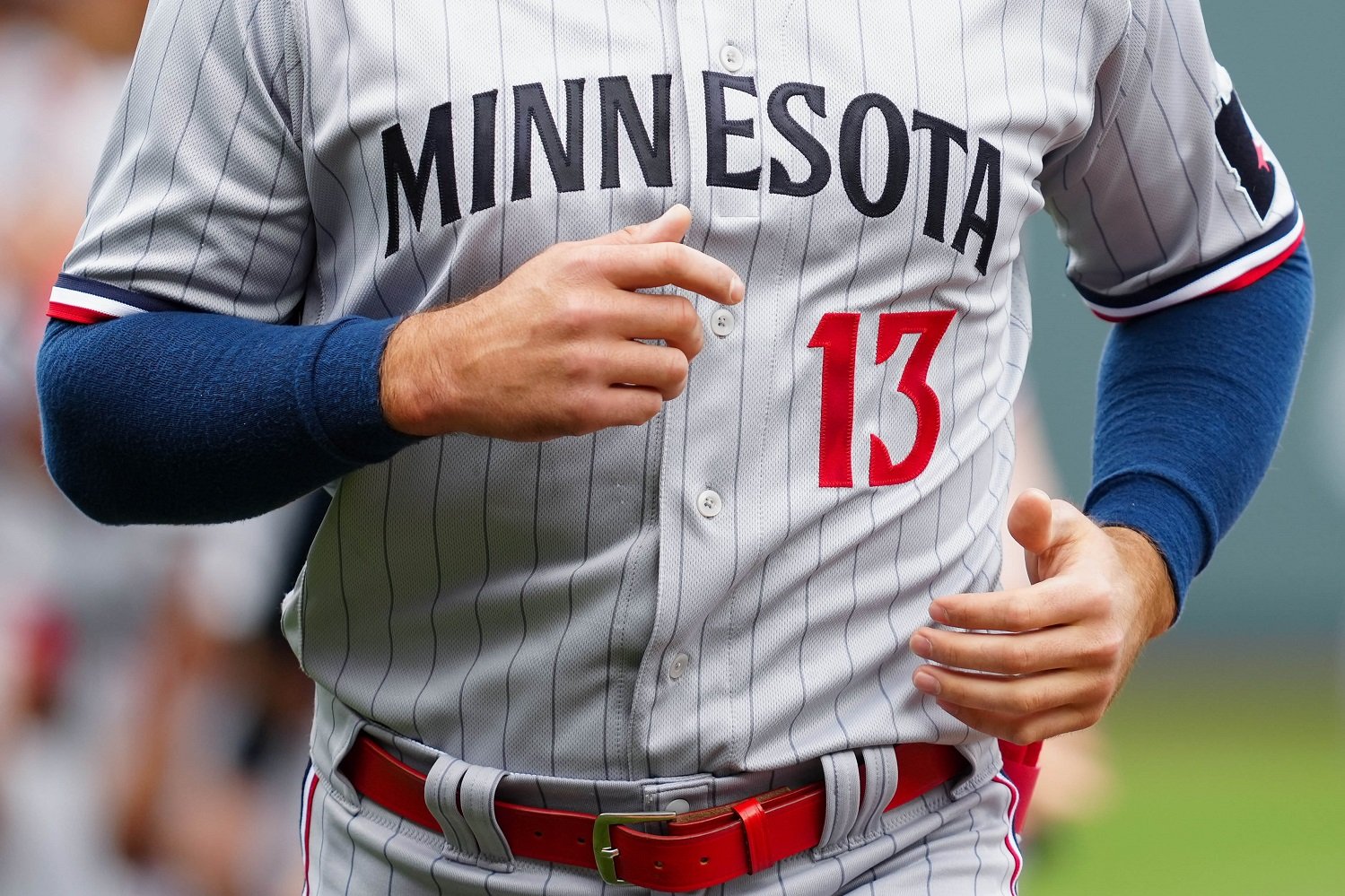 The number 13 is widely regarded as unlucky, at least in the United States. The various reasons for that reputation lie beyond the scope of this write-up. All that matters is that people hold it to be unlucky. Some hotels don’t have a 13th floor, skipping from 12 to 14. The Indianapolis 500 and Formula One both banned the number. The Motion Picture Association of America recommends not watching the 2009 comedy Year One until 13 years of age. Baseball, never an institution to buck superstition, also believes in the unluckiness of the number 13—or at least, they used to. There was a pretty consistent number scheme in the earliest days of players donning numbers on their uniforms. Numbers one through eight went to the starting lineup with one being the leadoff hitter and eight going to the eight hitter. Nine was for the backup catcher, and 10 through 14 went to pitchers. Except 13. They sometimes skipped 13. In the 95 years that the Twins and Senators have worn numbered jerseys, there have only been 24 seasons in which a player has worn 13. Prior to the 1990s, the number was worn sparingly. John Roseboro was an All-Star in 1969 wearing it. Milo Candini and Sid Hudson shared the number in 1947. Dick Woodson rocked it from 1972 through 1974. A few others wore it, but there’s not much to write about. In 1991, though, Mike Pagliarulo wore the number as a member of the Twins’ most recent World Series team. He was a solid piece at third base who flourished (if you’re a certain type of fan, you might want to close your eyes and randomly scroll down a little) in a platoon role. He wore the number until his trade to Baltimore in August 1993. Basically every player to wear 13 from Pags to today has become something of a legend in the Twin Cities—but often for the wrong reasons. Todd Walker (1996) Walker donned number 13 for 25 games as a rookie. As the eighth overall pick two years prior and the seventh overall prospect in baseball per Baseball America, his debut was highly anticipated. Walker had a solid career, but failed to meet his lofty expectations. He famously did not get along with Tom Kelly, who allegedly was his ticket out of town. That’s a bit of legend in itself. Walker had worn 12 in college and probably wanted that, but took 13 in deference to veteran bench piece Chip Hale, before taking over his preferred number in 1997. The lessons here: never piss off the manager, and never defer to Chip Hale. Jason Kubel (2014) It was nearly 20 years until someone wore 13 again. Kubel, like Walker, was a highly-touted prospect before obliterating his knee in the Arizona Fall League in 2004. For a few years, he carved out a nice niche as Minnesota’s designated hitter and occasional outfielder. He spent a couple of years in Arizona and Cleveland before returning to Minnesota in 2014, as a 32-year-old coming off of a tough 2013. When he returned to the Twins, his 16 jersey had been given to Josh Willingham, so Kubel took 13. He lasted 45 games, hitting an empty .224 and playing bad left-field defense, totaling -1.3 bWAR before his June release. He never played in MLB again. Never defer to Josh Willingham, either. Ehire Adrianza (2019-2020) Adrianza probably got off the best of anyone on this list. The utility infielder, like Kubel, also wore 16 for the Twins before surrendering it to Jonathan Schoop in 2019. Not much ill came of Adrianza during his time wearing 16. In fact, he got better—just not actually good. He was just a standard utility infielder who had a nice 2019 and left the team after 2020. But he did develop something of a cult following. He was your mother’s favorite Twin, etc. You know, standard middle infield stuff. Glad he’s back in the organization. Good for him. Travis Blankenhorn (2021) Bad for him. Just reading this name probably sends shivers down your spine. If you’ve repressed what happened on Apr. 21, 2021, let me remind you: the Twins' season died. Blankenhorn got his first action of the year pinch-running for Josh Donaldson as the Manfred Man in the top of the 10th inning at Oakland, in an episode of overmanaging by Rocco Baldelli. Byron Buxton homered, driving in Blankenhorn from second base, which required a light jog that even Donaldson would have been able to do just fine. In the bottom of the inning, Blankenhorn stayed in the game at second base and Luis Arraez moved to third. Alex Colomé loaded the bases on a couple of two-out walks, and back-to-back errors by Blankenhorn and Arraez allowed the A’s to win it in a walkoff. Blankenhorn never got into another game as a Twin. His name sounds like a confused dad trying to self-censor while cursing out rush-hour traffic, and his brief stint with the team left us all with that same tangle of emotions and ejaculations. Trevor Larnach (2022) For some reason, Larnach decided to switch from number 24 to 13 ahead of the 2022 season. Apparently, one year was enough, because he switched to 9 the following season. He battled through groin and core injuries all year, and wasn’t the best at communicating about it. He was also alleged to be a bad tipper. Joey Gallo (2023) If Adrianza was your mother’s favorite player, Gallo was your father's, uncle's, and grandfather’s least favorite player. Gallo signed quickly after the Twins (and the rest of the league) believed that they had lost out on bringing Carlos Correa back. Some consolation prize. The club was hoping that the three-true-outcome slugger would have a bounce-back year after struggling under the New York City lights, but those hopes went for naught. Strikeout after strikeout after strikeout. After strikeout. Gallo was cursed and a fan favorite, if only because the absurdity of his game did nothing, if not make you feel things. Good things, bad things, they’re all things. Manuel Margot (2024) It’s hard to find a more frustrating sequel to Gallo, but Margot might have done it. Once an elite defender in center field and a competent bat against lefties, Margot completely lost his ability even to play left field reliably and set the all-time record for pinch-hitting at-bats in a season without a single hit. I mean, my gosh, what more do you want? The Twins have had a number 13 every year since 2019. I’m hoping and praying they assign it again this year, because I can’t wait to see what they do to top Margot.
- 15 comments
-
- 8
-
-
-
- manuel margot
- joey gallo
- (and 5 more)
-
I fought for this country
-
I feel like that Correa kid will get most of his time at shortstop. He's got a real chance to make a name for himself this year, and I like the cut of his jib.
- 72 replies
-
- 16
-
-
-
- brooks lee
- edouard julien
- (and 5 more)
-
You know what they say: When you have five second basemen, you don’t have one. Image courtesy of © Brad Penner-Imagn Images If one asked 100 fans what the Twins' positions of need are ahead of 2025, the most common answers would probably include first base, right-handed outfielder, lefty reliever, any big bat, and maybe a backup center fielder. There are questions and a lack of depth at each of those positions, both at the MLB level and in the high minors. Few have placed second base high on their list of concerns. That's understandable, but we may be overlooking the position to some degree. Although the position may not lack the depth of the other spots further up the list, it features as many—if not more—questions. At present, there’s a long list of guys in this organization who could play second base, and some of them could play it pretty well, at least in theory. But each of them comes with their own concerns. FanGraphs projects the group to be middle-of-the-pack but doesn’t project any one player to man the position for even half the season. Brooks Lee Lee appears to be the frontrunner for the Opening Day job. He’s a recent first-round pick who was touted as a near-MLB-ready infielder on draft day. He smacked around minor-league competition and debuted less than two years after being drafted. It’s almost a foregone conclusion that the former top-35 consensus prospect will get the job. But he was bad last year. Rookies often go through it, and he certainly did. His OPS+ nearly matched Christian Vázquez's, and although he looked good with the glove (especially at second and third base), you can’t get by with backup catcher offense from an everyday player. It might be a little presumptuous to expect Lee to figure it out and be at least average at bat. He did start his career strong, with a .947 OPS through his first eight games, but he slid down to a .585 OPS by the end of the season, in just 50 total games. Back problems plagued the beginning of his season, and he was briefly shut down with biceps tendonitis in August. It’s hard to know what we’ll see from Lee. Edouard Julien Last offseason, Julien was in far better standing than what Lee is now. Coming off a season in which he had a .381 on-base percentage and hit 15 homers in 109 games, Julien was slated to bat first and play second every day, at least against righties. His defense was mediocre, but he showed big improvements on that score in 2023. He seemed to have a chance at being a long-term asset. But then 2024 happened. Seemingly incapable of pulling the trigger on pitches he didn’t love, Julien was 16th in baseball in taking called third strikes (47), despite only having 301 plate appearances. His batting average started with a 1, and his on-base percentage started with a 2. Add in his unimpressive glovework, and you’ve got a mess of a season. There’s definitely a future wherein Julien recaptures some of the promise from his rookie year, but it’s hard to count on it happening. Even if it does, he might also be needed at first base. Willi Castro Castro has been one of Minnesota’s most dependable players over the last couple of years, though he’s not without warts. The 2024 All-Star didn’t finish the season well, but overall, he was solidly above-average as a hitter and became the first player ever to log 25 appearances at five different positions—shortstop, center field, third base, second base, and left field. If push comes to shove and Castro maintains his average-ish offensive output (which is no guarantee), he could certainly be a fine starting second baseman. But that takes some of his value away. Having a player like Castro who can plug a hole almost anywhere on the diamond is very useful. He’s been a fill-in for Carlos Correa, Byron Buxton, and Royce Lewis in the wake of injuries. Suppose he needs to temporarily take over a position that way again in 2025; history tells us he will. In that case, the Twins land right back where they started with Lee or Julien at second base—which is an issue, especially if they’ve played badly enough that Castro has already taken their job. Austin Martin and Michael Helman I’m gonna make this quick, because there’s not a ton to talk about here. Both Helman and Martin are guys who could feasibly carve out a niche in MLB in the very near future. For now, at least, that’s probably as a bench player who can bounce around the diamond and provide a little speed. But if we hit the point in the season where Castro is already the primary second baseman and there’s an injury, we might be seeing a lot of these guys at second. Not great. They’re fine—but if there are justifiable questions about both Lee and Julien and the team can’t count on Castro to fill in for months at a time, these aren’t names that put you at much more ease. BONUS: Royce Lewis The Twins have toyed with moving Lewis to second base, perhaps to stay there for years. There’s merit to that move, as Lewis’s arm is probably the weakest part of his profile, and it seems like Lee is a better long-term candidate to stick at third base defensively. So, there might be a switch here. But that just shifts the question over to third base. Now you’ve still got questions about Lee, and the next guy is José Miranda (who will not be playing second base; I do not care what his Baseball Reference page said he did at Wichita in 2021), who has his own questions and creates a void at first base. Sure, it works out if Lee works out, but you can say the same thing with the original configuration. BONUS: Luke Keaschall I guess this is the X-factor, if you’re looking for one. Keaschall is a consensus top-50 prospect who has played first base, second base, third base, and center field since being drafted in 2023. He’s 21, but he looked great at both Double-A and High-A last year and has received a good bit of attention as a potential target for other teams in trade talks. He might be able to slide in this season and become a productive second baseman. But that probably won’t happen until the second half, if it happens at all. Keaschall is also recovering from a torn UCL that required Tommy John surgery last season. He might be restricted to first base or DH next season. It’s hard to count on him being the savior of a broken positional group, but I guess we can throw him on the pile. BONUS: Payton Eeles Eeles went from Indy ball to Triple-A last season, and I'm pulling for him. I haven't seen enough of this kid to feel anything amounting to confidence that he's the answer at second base. For everyone's sake, I hope we don't reach that point. BONUS: Christian Vázquez Just kidding. After reviewing these names, I’m not sure how much recognizing the problems or questions actually matters. It’s doubtful that the Twins are going to bring in a starting-caliber second base-only guy, with a picture as crowded as this one. But maybe it’s a consideration as they try to scour what’s left on the tree this offseason. There are more pressing needs, but it just seems like we’ve glossed over a position that probably has more questions than first base or righty outfielder. It could be an ongoing storyline this season, and I hope for the team’s sake that second base produces at least an answer or two. View full article
-
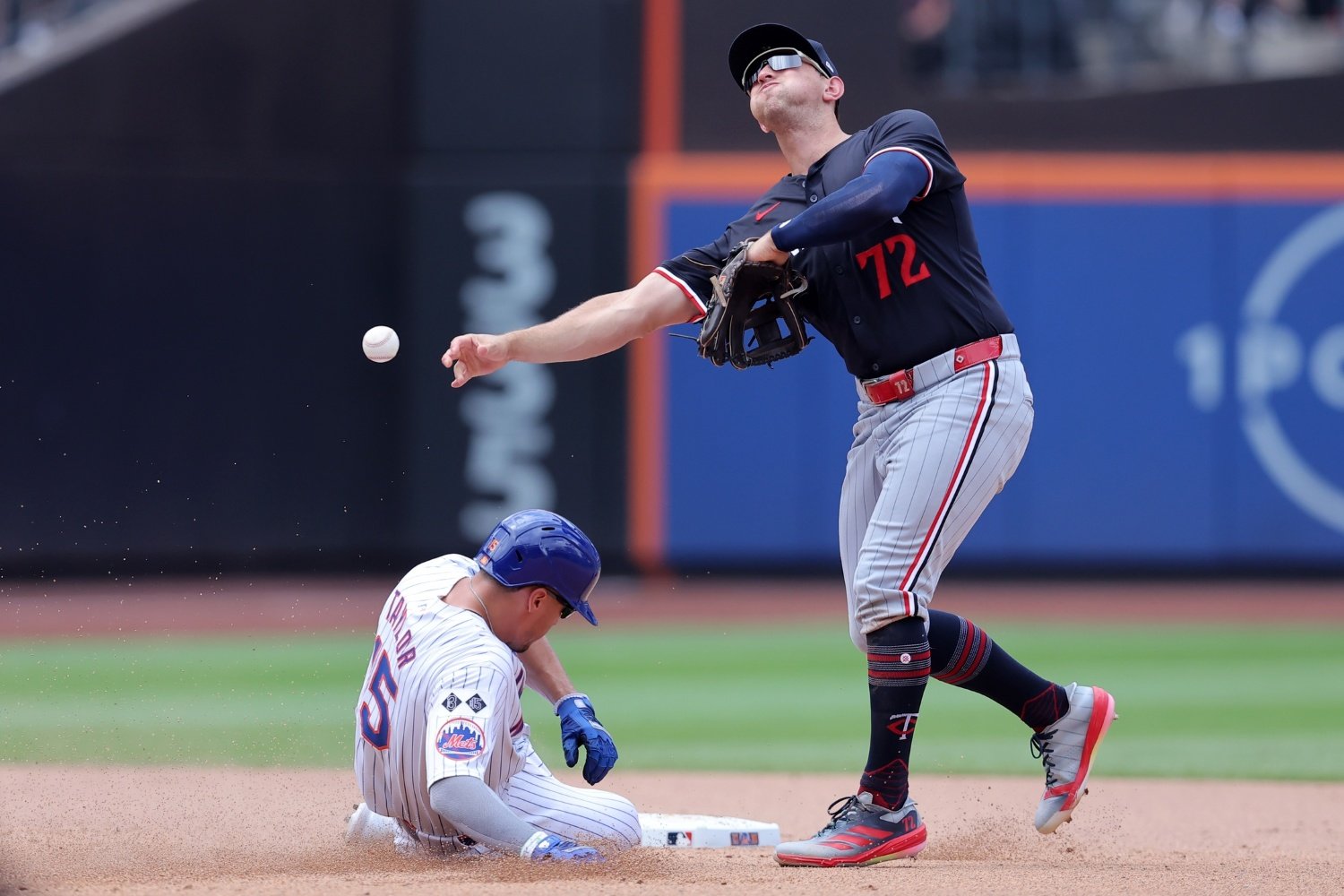 If one asked 100 fans what the Twins' positions of need are ahead of 2025, the most common answers would probably include first base, right-handed outfielder, lefty reliever, any big bat, and maybe a backup center fielder. There are questions and a lack of depth at each of those positions, both at the MLB level and in the high minors. Few have placed second base high on their list of concerns. That's understandable, but we may be overlooking the position to some degree. Although the position may not lack the depth of the other spots further up the list, it features as many—if not more—questions. At present, there’s a long list of guys in this organization who could play second base, and some of them could play it pretty well, at least in theory. But each of them comes with their own concerns. FanGraphs projects the group to be middle-of-the-pack but doesn’t project any one player to man the position for even half the season. Brooks Lee Lee appears to be the frontrunner for the Opening Day job. He’s a recent first-round pick who was touted as a near-MLB-ready infielder on draft day. He smacked around minor-league competition and debuted less than two years after being drafted. It’s almost a foregone conclusion that the former top-35 consensus prospect will get the job. But he was bad last year. Rookies often go through it, and he certainly did. His OPS+ nearly matched Christian Vázquez's, and although he looked good with the glove (especially at second and third base), you can’t get by with backup catcher offense from an everyday player. It might be a little presumptuous to expect Lee to figure it out and be at least average at bat. He did start his career strong, with a .947 OPS through his first eight games, but he slid down to a .585 OPS by the end of the season, in just 50 total games. Back problems plagued the beginning of his season, and he was briefly shut down with biceps tendonitis in August. It’s hard to know what we’ll see from Lee. Edouard Julien Last offseason, Julien was in far better standing than what Lee is now. Coming off a season in which he had a .381 on-base percentage and hit 15 homers in 109 games, Julien was slated to bat first and play second every day, at least against righties. His defense was mediocre, but he showed big improvements on that score in 2023. He seemed to have a chance at being a long-term asset. But then 2024 happened. Seemingly incapable of pulling the trigger on pitches he didn’t love, Julien was 16th in baseball in taking called third strikes (47), despite only having 301 plate appearances. His batting average started with a 1, and his on-base percentage started with a 2. Add in his unimpressive glovework, and you’ve got a mess of a season. There’s definitely a future wherein Julien recaptures some of the promise from his rookie year, but it’s hard to count on it happening. Even if it does, he might also be needed at first base. Willi Castro Castro has been one of Minnesota’s most dependable players over the last couple of years, though he’s not without warts. The 2024 All-Star didn’t finish the season well, but overall, he was solidly above-average as a hitter and became the first player ever to log 25 appearances at five different positions—shortstop, center field, third base, second base, and left field. If push comes to shove and Castro maintains his average-ish offensive output (which is no guarantee), he could certainly be a fine starting second baseman. But that takes some of his value away. Having a player like Castro who can plug a hole almost anywhere on the diamond is very useful. He’s been a fill-in for Carlos Correa, Byron Buxton, and Royce Lewis in the wake of injuries. Suppose he needs to temporarily take over a position that way again in 2025; history tells us he will. In that case, the Twins land right back where they started with Lee or Julien at second base—which is an issue, especially if they’ve played badly enough that Castro has already taken their job. Austin Martin and Michael Helman I’m gonna make this quick, because there’s not a ton to talk about here. Both Helman and Martin are guys who could feasibly carve out a niche in MLB in the very near future. For now, at least, that’s probably as a bench player who can bounce around the diamond and provide a little speed. But if we hit the point in the season where Castro is already the primary second baseman and there’s an injury, we might be seeing a lot of these guys at second. Not great. They’re fine—but if there are justifiable questions about both Lee and Julien and the team can’t count on Castro to fill in for months at a time, these aren’t names that put you at much more ease. BONUS: Royce Lewis The Twins have toyed with moving Lewis to second base, perhaps to stay there for years. There’s merit to that move, as Lewis’s arm is probably the weakest part of his profile, and it seems like Lee is a better long-term candidate to stick at third base defensively. So, there might be a switch here. But that just shifts the question over to third base. Now you’ve still got questions about Lee, and the next guy is José Miranda (who will not be playing second base; I do not care what his Baseball Reference page said he did at Wichita in 2021), who has his own questions and creates a void at first base. Sure, it works out if Lee works out, but you can say the same thing with the original configuration. BONUS: Luke Keaschall I guess this is the X-factor, if you’re looking for one. Keaschall is a consensus top-50 prospect who has played first base, second base, third base, and center field since being drafted in 2023. He’s 21, but he looked great at both Double-A and High-A last year and has received a good bit of attention as a potential target for other teams in trade talks. He might be able to slide in this season and become a productive second baseman. But that probably won’t happen until the second half, if it happens at all. Keaschall is also recovering from a torn UCL that required Tommy John surgery last season. He might be restricted to first base or DH next season. It’s hard to count on him being the savior of a broken positional group, but I guess we can throw him on the pile. BONUS: Payton Eeles Eeles went from Indy ball to Triple-A last season, and I'm pulling for him. I haven't seen enough of this kid to feel anything amounting to confidence that he's the answer at second base. For everyone's sake, I hope we don't reach that point. BONUS: Christian Vázquez Just kidding. After reviewing these names, I’m not sure how much recognizing the problems or questions actually matters. It’s doubtful that the Twins are going to bring in a starting-caliber second base-only guy, with a picture as crowded as this one. But maybe it’s a consideration as they try to scour what’s left on the tree this offseason. There are more pressing needs, but it just seems like we’ve glossed over a position that probably has more questions than first base or righty outfielder. It could be an ongoing storyline this season, and I hope for the team’s sake that second base produces at least an answer or two.
- 72 comments
-
- 9
-
-

-
- brooks lee
- edouard julien
- (and 5 more)
-
Are the Twins better off if they just run it back? Sweet Lou, Cody the Malcontent, and Ol Gregg go over RosterResource's projected 26-man roster, discuss where the Twins sit after 3 months of no major moves, and answer mailbag questions. They also discuss potential areas of weakness, position battles, and tough decisions the Twins will have to make regardless of any upcoming moves. Cody also doxes himself, Gregg confuses national holidays, and Lou has somewhere else to be. All that and more on Twins Off-Daily! Listen using Apple Podcasts: https://podcasts.apple.com/us/podcast/the-twins-off-daily-podcast/id1741266056 Listen using Spotify: https://open.spotify.com/show/4tb78XlurcPTYYSsARdbD7 Listen using iHeartRadio: https://www.iheart.com/podcast/263-the-twins-off-daily-podcas-167548600/ Listen using Pocket Casts: https://pca.st/nvclbt0w Watch on YouTube: https://www.youtube.com/@twinsdaily View full article
-
 Sweet Lou, Cody the Malcontent, and Ol Gregg go over RosterResource's projected 26-man roster, discuss where the Twins sit after 3 months of no major moves, and answer mailbag questions. They also discuss potential areas of weakness, position battles, and tough decisions the Twins will have to make regardless of any upcoming moves. Cody also doxes himself, Gregg confuses national holidays, and Lou has somewhere else to be. All that and more on Twins Off-Daily! Listen using Apple Podcasts: https://podcasts.apple.com/us/podcast/the-twins-off-daily-podcast/id1741266056 Listen using Spotify: https://open.spotify.com/show/4tb78XlurcPTYYSsARdbD7 Listen using iHeartRadio: https://www.iheart.com/podcast/263-the-twins-off-daily-podcas-167548600/ Listen using Pocket Casts: https://pca.st/nvclbt0w Watch on YouTube: https://www.youtube.com/@twinsdaily
 -
I would be shocked if the Canterino starting efforts weren't over
-
You'll generally see an arm like Prielipp move pretty quickly, but we're talking about about a college arm that was pushing #1 in the draft before injury. For instance, Fangraphs already had his slider as a 70-grade offering before he was drafted. Not all prospects are like that, even high-end college arms. Second, part of the reason that starters are held in the minors is to build up their arms to handle a full-season workload and pitching every 5 days, which they often don't in college. For a guy like Prielipp who might max out at 60 innings on a normal recovery plan next year, given that he hasn't thrown 60 in the previous 4 years combined, it makes a little more sense. It worked with Crochet, but again that's in part because he's one of the guys who immediately had the stuff to make it work. During that draft evaluators had him pegged as the one guy most people were confident could actually move to the majors for a playoff run.
-
It’s been on many fans’ shopping lists, but it really doesn’t seem like the Twins will be bringing in a left-handed reliever. Maybe one reason is that they already have a candidate with a higher ceiling than most potential targets. Image courtesy of © Gary Cosby Jr. via Imagn Content Services, LLC Even if you knew the name Connor Prielipp a couple years ago, you may have forgotten about him since. The Twins used the 48th overall pick of the 2022 MLB Draft on the southpaw out of Alabama. The Twins were ecstatic to take a chance on Prielipp, who entered the season as a candidate to be the No. 1 overall pick but fell to the Twins in the second round due to an elbow injury. I’ll give you 10 seconds to get your jokes off about the Twins acquiring another guy with bad medicals for a discount. Yes, yes, I know. I remember Tyler Mahle. You don’t forget Tyler Mahle. You know what, I’ll name some myself. Carlos Correa, Byron Buxton, Kenta Maeda, Chris Paddack. Now, let’s get back to business. Prielipp, despite the questions, still had one of the highest ceilings for a pitcher in the draft, and after selecting a low-risk guy like Brooks Lee in the first round, the team probably felt a little more comfortable taking a gamble. Picks flop all the time, so why not take a chance on a potential frontline starter? Well, after throwing two innings in 2023, Prielipp went under the knife again. There were more concerns about his elbow. This time they inserted an internal brace. The internal brace is a newer procedure that addresses the same issues as Tommy John surgery. Now, obviously, Prielipp has missed a lot of time. He threw 13 and two-thirds innings between 2021 and 2023. He’s been labeled with the injury-prone red flag. But it’s worth considering how warranted that label is right now. Prielipp has effectively had one injury that has kept him sidelined for most of the last four years. He had a UCL tear. The surgery didn’t do its job. That’s not really the same as having a string of injuries or chronic soft-tissue issues. It’s one injury that’s taken a long time to recover from, and we’ve gotten pretty good at treating elbows. That’s not to say that the injury isn’t a bad thing. It definitely is. You’d prefer he’d have had one elbow surgery, or—even better—none. But it’s worth reserving a little judgment until he’s actually recovered from his one injury. Prielipp did make his triumphant return to pro ball last summer, and it looked good. We’re limited in what information we can gather from games in the low minors. Here’s some stuff that we do know. He started nine games. He never went over three innings pitched. He never reached 50 pitches. He dominated. He allowed one baserunner across two innings in each of his starts in Rookie ball and Low-A Ft. Myers, striking out nine in four innings. He struck out 32 hitters in 19 1/3 innings (41.6 K%) at High-A Cedar Rapids, with a WHIP under 1.00 and a 3.26 ERA, though he walked 10% of the batters he faced. His DRA- (a stat that controls for factors including defense, park, and opponent quality) was a 58, with 100 being league-average in his seven high-A starts. I know, I'm really scraping the bottom of the barrel for this information, but that's all we've got. He embarrassed low-minors hitters. But that doesn’t mean he is ready for the bigs, of course. Unfortunately, we also have limited data on how his pitches looked. We know that in his one start with Ft. Myers, he threw about half fastballs and his slider and changeup about a quarter of the time each. His slider is his calling card, and for the only game we have metrics on, he was throwing it 86 MPH with three inches of glove-side movement and negative two inches of induced vertical break. It’s already MLB-ready, with public evaluations grading it out as a 60- or 70-grade pitch on the 20-80 scale, better known as plus-plus, bordering on elite. Scouts noticed it wasn’t quite as lively in his return, but it was still a great offering, and it might take a little time to get it back, anyway. His four-seam fastball is also nice, and he was throwing it 94-96 MPH in the game we have access to. Scouts have generally said it’s already MLB-ready, but it will never be on the same level as his slider, though it might already be a plus pitch. The changeup was a work in progress in college and will likely continue to be, but it’s already at least usable and sits around 86-87 MPH with an intriguing 16 inches of arm-side break. And here’s the beautiful thing about pitchers: if the stuff plays, it plays. If healthy, Prielipp might not need much time to prove himself. Like many recovering from elbow surgery, his biggest hurdle is probably his control, which was already the weakest part of his profile. But it’s not unreasonable to think that after six weeks or so of minor-league ball in 2025, he could be knocking on the door to the big leagues. There’s some optimism that he could still eventually be a frontend rotation piece. That optimism doubles as an apprehensiveness to move a 24-year-old to the bullpen, even temporarily. However, given that Prielipp has thrown 58 total innings since high school in 2019, spending a year in the bullpen might not be the worst thing for his development. He’s not going to be throwing beaucoup innings, even if he’s healthy and in a rotation. There’s a clear argument to not waste any of those bullets in Double A. That phrase often gets thrown around, used to mean “burn him out before his arm falls off,” but that’s not necessarily the case here. If he’s going to be getting used to throwing again, and the stuff plays in the bigs, why not is the question. Many worry that good arms sent to the pen never come out. But Prielipp is a special case, and we don’t have to look far to find a player who made it work. Garrett Crochet went straight from the draft to the 2020 White Sox bullpen because he was ready for it. He spent all of 2021 in the pen, mainly as a lefty short relief guy. He missed 2022 due to elbow injury, before returning to the pen in 2023. There were questions, as recently as nine months ago, about whether he’d ever start. Now we know how that turned out, as he was a deserving All-Star in 2024 and made 32 starts. Why not give Prielipp a similar chance if he is healthy? He might be destined for the pen, anyway. But he’s also got the ability to be substantially better than internal options Brent Headrick and Kody Funderburk today. There's maybe one remaining free agent I’d prefer as the lefty in the pen over Prielipp, if he’s healthy. I guess that I need to keep adding that disclaimer because it’s the key here. But why not? Even if the Twins make a trade for a lefty option, it’s almost assuredly going to be someone in the Steven Okert mold. Just turn Prielipp loose and see what happens. View full article
-
 Even if you knew the name Connor Prielipp a couple years ago, you may have forgotten about him since. The Twins used the 48th overall pick of the 2022 MLB Draft on the southpaw out of Alabama. The Twins were ecstatic to take a chance on Prielipp, who entered the season as a candidate to be the No. 1 overall pick but fell to the Twins in the second round due to an elbow injury. I’ll give you 10 seconds to get your jokes off about the Twins acquiring another guy with bad medicals for a discount. Yes, yes, I know. I remember Tyler Mahle. You don’t forget Tyler Mahle. You know what, I’ll name some myself. Carlos Correa, Byron Buxton, Kenta Maeda, Chris Paddack. Now, let’s get back to business. Prielipp, despite the questions, still had one of the highest ceilings for a pitcher in the draft, and after selecting a low-risk guy like Brooks Lee in the first round, the team probably felt a little more comfortable taking a gamble. Picks flop all the time, so why not take a chance on a potential frontline starter? Well, after throwing two innings in 2023, Prielipp went under the knife again. There were more concerns about his elbow. This time they inserted an internal brace. The internal brace is a newer procedure that addresses the same issues as Tommy John surgery. Now, obviously, Prielipp has missed a lot of time. He threw 13 and two-thirds innings between 2021 and 2023. He’s been labeled with the injury-prone red flag. But it’s worth considering how warranted that label is right now. Prielipp has effectively had one injury that has kept him sidelined for most of the last four years. He had a UCL tear. The surgery didn’t do its job. That’s not really the same as having a string of injuries or chronic soft-tissue issues. It’s one injury that’s taken a long time to recover from, and we’ve gotten pretty good at treating elbows. That’s not to say that the injury isn’t a bad thing. It definitely is. You’d prefer he’d have had one elbow surgery, or—even better—none. But it’s worth reserving a little judgment until he’s actually recovered from his one injury. Prielipp did make his triumphant return to pro ball last summer, and it looked good. We’re limited in what information we can gather from games in the low minors. Here’s some stuff that we do know. He started nine games. He never went over three innings pitched. He never reached 50 pitches. He dominated. He allowed one baserunner across two innings in each of his starts in Rookie ball and Low-A Ft. Myers, striking out nine in four innings. He struck out 32 hitters in 19 1/3 innings (41.6 K%) at High-A Cedar Rapids, with a WHIP under 1.00 and a 3.26 ERA, though he walked 10% of the batters he faced. His DRA- (a stat that controls for factors including defense, park, and opponent quality) was a 58, with 100 being league-average in his seven high-A starts. I know, I'm really scraping the bottom of the barrel for this information, but that's all we've got. He embarrassed low-minors hitters. But that doesn’t mean he is ready for the bigs, of course. Unfortunately, we also have limited data on how his pitches looked. We know that in his one start with Ft. Myers, he threw about half fastballs and his slider and changeup about a quarter of the time each. His slider is his calling card, and for the only game we have metrics on, he was throwing it 86 MPH with three inches of glove-side movement and negative two inches of induced vertical break. It’s already MLB-ready, with public evaluations grading it out as a 60- or 70-grade pitch on the 20-80 scale, better known as plus-plus, bordering on elite. Scouts noticed it wasn’t quite as lively in his return, but it was still a great offering, and it might take a little time to get it back, anyway. His four-seam fastball is also nice, and he was throwing it 94-96 MPH in the game we have access to. Scouts have generally said it’s already MLB-ready, but it will never be on the same level as his slider, though it might already be a plus pitch. The changeup was a work in progress in college and will likely continue to be, but it’s already at least usable and sits around 86-87 MPH with an intriguing 16 inches of arm-side break. And here’s the beautiful thing about pitchers: if the stuff plays, it plays. If healthy, Prielipp might not need much time to prove himself. Like many recovering from elbow surgery, his biggest hurdle is probably his control, which was already the weakest part of his profile. But it’s not unreasonable to think that after six weeks or so of minor-league ball in 2025, he could be knocking on the door to the big leagues. There’s some optimism that he could still eventually be a frontend rotation piece. That optimism doubles as an apprehensiveness to move a 24-year-old to the bullpen, even temporarily. However, given that Prielipp has thrown 58 total innings since high school in 2019, spending a year in the bullpen might not be the worst thing for his development. He’s not going to be throwing beaucoup innings, even if he’s healthy and in a rotation. There’s a clear argument to not waste any of those bullets in Double A. That phrase often gets thrown around, used to mean “burn him out before his arm falls off,” but that’s not necessarily the case here. If he’s going to be getting used to throwing again, and the stuff plays in the bigs, why not is the question. Many worry that good arms sent to the pen never come out. But Prielipp is a special case, and we don’t have to look far to find a player who made it work. Garrett Crochet went straight from the draft to the 2020 White Sox bullpen because he was ready for it. He spent all of 2021 in the pen, mainly as a lefty short relief guy. He missed 2022 due to elbow injury, before returning to the pen in 2023. There were questions, as recently as nine months ago, about whether he’d ever start. Now we know how that turned out, as he was a deserving All-Star in 2024 and made 32 starts. Why not give Prielipp a similar chance if he is healthy? He might be destined for the pen, anyway. But he’s also got the ability to be substantially better than internal options Brent Headrick and Kody Funderburk today. There's maybe one remaining free agent I’d prefer as the lefty in the pen over Prielipp, if he’s healthy. I guess that I need to keep adding that disclaimer because it’s the key here. But why not? Even if the Twins make a trade for a lefty option, it’s almost assuredly going to be someone in the Steven Okert mold. Just turn Prielipp loose and see what happens.
 -
I’m almost in agreement here, though Correa’s contract should be 1.33M lower, López, should be 250k lower, and Buxton should be 142857 lower. Those figures include signing bonuses, which have already been paid out but are denoted as evenly spread across the books (8M/6 for Correa, 1M/1 for López, 1M/7 for Buxton). I would assume those aren’t actually counted by the team as a payroll expenditure after the sum has already been paid (the most recent payment was the second half of Correa’s bonus ahead of the 2024 season, and now all are paid off)
.png.4d37d32d1e1c482de5b3fed253090333.png)
