Greggory Masterson
-
Posts
819 -
Joined
-
Last visited
-
Days Won
2
Content Type
Profiles
News
Minnesota Twins Videos
2026 Minnesota Twins Top Prospects Ranking
2022 Minnesota Twins Draft Picks
Minnesota Twins Free Agent & Trade Rumors, Notes, & Tidbits
Guides & Resources
2023 Minnesota Twins Draft Picks
The Minnesota Twins Players Project
2024 Minnesota Twins Draft Picks
2025 Minnesota Twins Draft Pick Tracker
2026 Minnesota Twins Draft Tracker: Picks & Bonuses
Forums
Blogs
Events
Store
Downloads
Gallery
Everything posted by Greggory Masterson
-
 Sweet Lou, Comrade Cody and Ol' Gregg catch up on the latest happenings with the Twins, they gripe about Bark In The Park Night and try to nail a couple rounds of Random Twin 20 Questions. Come for the Twins talk, stay for the Bert Blyleven shade! Listen using Apple Podcasts: https://podcasts.apple.com/us/podcast/the-twins-off-daily-podcast/id1741266056 Listen using Spotify: https://open.spotify.com/show/4tb78XlurcPTYYSsARdbD7 Listen using iHeartRadio: https://www.iheart.com/podcast/263-the-twins-off-daily-podcas-167548600/ Listen using Pocket Casts: https://pca.st/nvclbt0w Watch on YouTube: https://www.youtube.com/@twinsdaily
 -
 Quite honestly, I was disappointed by my hero when I was 8, so I just stopped having heroes.
 -
I’m going to mostly stay out of the comments because I’ve said my piece, but I want to make sure people know that Rose gambled on baseball games that he played in. We don’t get to use that escape hatch. He violated Baseball’s Golden Rule as a player. https://www.espn.com/espn/otl/story/_/id/13114874/notebook-obtained-lines-shows-pete-rose-bet-baseball-player-1986
-
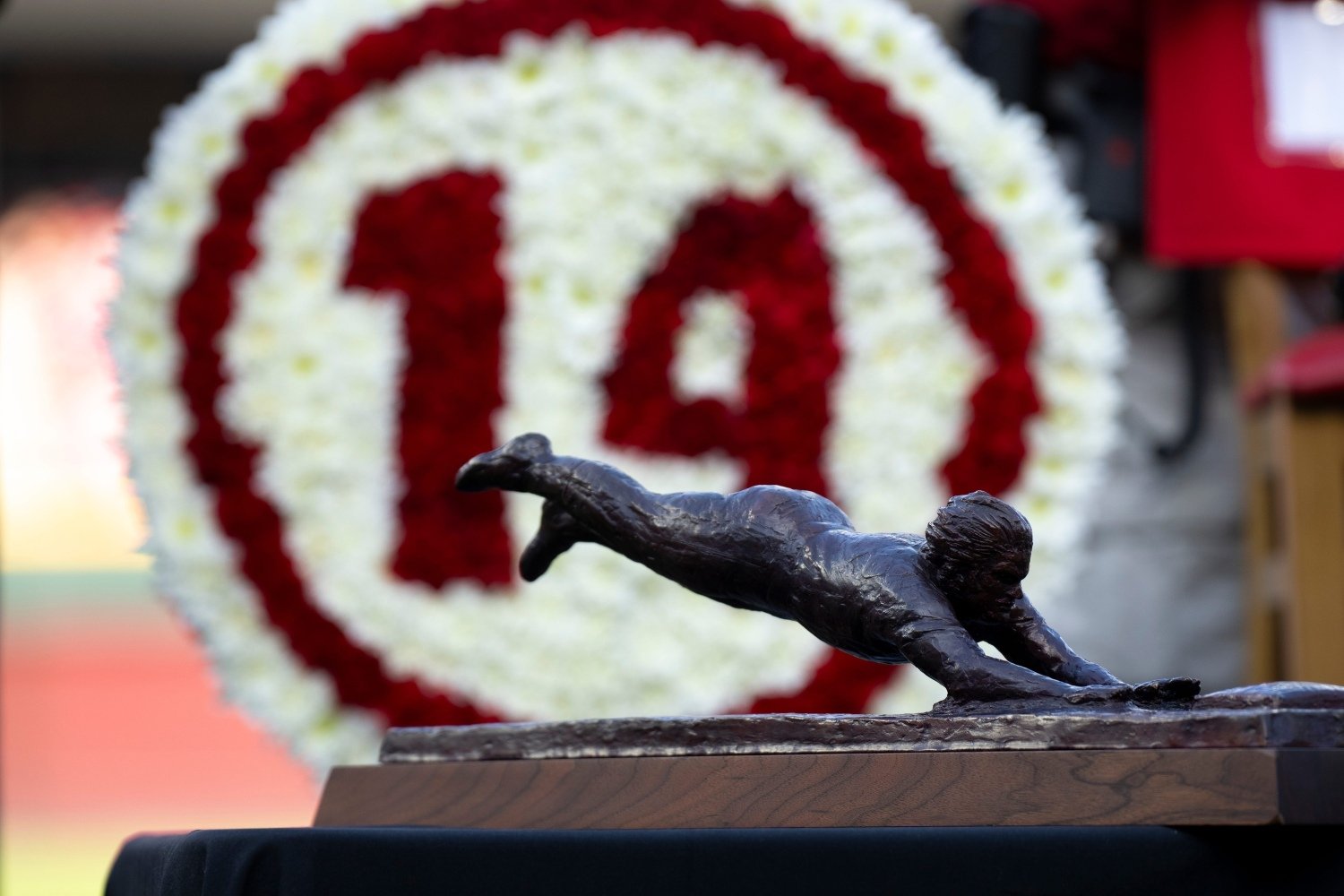 Pete Rose should not be in the Hall of Fame. He should not be celebrated. As a player and a manager, he committed a cardinal sin against Baseball. He broke the game's Golden Rule. It's obvious, but lately, it seems to have become almost a secondary talking point. We should fix that. I’m not here to talk about Rose’s off-field foibles. Between you, me, and the wall, I fall more on the side of ignoring those things in reference to Hall of Fame candidacy. What Rose did as a player and as a manager (i.e., on-field), however, requires Baseball to permanently excise him. It shouldn't be any more complicated than that—and the stain of his sins hasn't faded with time. I’m not breaking new ground here. I don’t have any secret insight. But I want to talk about gambling—the one thing Baseball has ever put its foot down on. When people talk about Rose’s great sin against Baseball, it’s often framed around his moral character. We borrow the Golden Rule label from world religion and philosophy as a euphemism for gambling on baseball. We use words like “the integrity of the game.” But the “integrity of the game” isn’t some moral standard; it’s a pragmatic one. When we say integrity, it’s not about doing the right thing; it’s using the original definition—the structural foundation of the sport. The day that gambling seeps onto the field of play is the day Baseball dies. This isn’t about right and wrong. It’s about the game continuing to exist. Intrinsic to our love of baseball—and sports in general—is a basic assumption: anything can happen. Two groups square off in a battle of wits, talent, effort, strength, and guile. May the best man win. Any given Sunday. Whatever the coach in Miracle said. And we have the pleasure to watch it play out. That’s why we buy tickets. It’s why we pay for an entire yearlong cable package subscription just to watch our hometown nine play all summer. We get to watch the best athletes in the world do what they’ve trained for decades to perfect—and we don’t know how it will end. It’s sweet. It's heartwarming, even, to watch our favorite boys win. And it’s agonizing—heart-wrenching even—to watch them lose. Much of that emotion is learning our favorite team’s fate in real time. We ride the roller coaster along with them. They go up, and so do we. They plummet down, and so do we. But what if it was all preordained? What if there were no feats of strength or clever tricks or mental games? We would, instead, be watching WWE, or a low-budget movie. Now, there’s nothing entirely wrong with WWE or cheap films as a form of entertainment, but that’s not baseball. It’s not Baseball. Don’t get me wrong; one single person gambling on the games that they play or manage, whether they’re only betting on their team to win or not, isn’t enough to transform MLB into professional wrestling. But the true structure isn’t the only thing that matters, either. As soon as the people stop believing that the game in front of them is real, it’s as good as dead. That’s what Baseball is fighting against. It's why the game needs to take these sins seriously. It doesn’t just make you feel icky; it threatens the institution. Those who threaten that game need to be banished. They’re damned. There’s no purgatory for those who break the one rule. It’s nothing personal; just business. You cannot be associated with the sport after doing something that threatens to ruin it. It does not matter how many hits you had or how hard you hustled or how much children loved you. You voluntarily chose to separate yourself from Baseball. You committed a mortal sin. And yes, that sin against Baseball is far worse than other popular sins against Baseball. Steroids don’t hold a candle to the dangers associated with gambling. The winners being the baseball players who take the most drugs is a time-honored tradition, and the games are still decided on who is the best, strongest, and most focused. That’s far preferable to the winners being the players the gamblers choose to win that day. Wanting to win so badly that you cut corners is a crime; being willing to trade the drive to win for profit or the satiation of some darker urge is a worse one. The league aligning itself with gambling services as advertisers is also a separate topic, my own thoughts on which aren’t relevant here, but it’s brought up as a strawman in this discussion so we might as well address it. Put simply, the league encouraging fans to gamble has no bearing on the game on the field. If there’s ever evidence that the league is influencing games for any gambling-associated purpose, I want all involved parties burned at the stake, as well. But until that happens, MLB partnering with those services is irrelevant. There is no coming back from what Rose did as a player and as a coach. Gambling on the game (specifically) does not make him a bad person. But it does make him a sinner against the sacred game. Baseball, with a capital B, cannot afford to welcome Rose back into the fold. That’s why it’s Baseball’s Golden Rule. Not petty morality, but an existential guard against ruin. Rose's faults of character away from the park are between him and eternity, now. His gambling is very much between him and the game—and it needs to stay there, holding the two separate.
 -
Pete Rose should not be in the Hall of Fame. He should not be celebrated. As a player and a manager, he committed a cardinal sin against Baseball. He broke the Golden Rule. And somehow, that seems to be brushed past when discussing the most famous player to ever break Baseball’s Golden Rule. I’m not here to talk about Rose’s off-field foibles. Between you, me, and the wall, I fall more on the side of ignoring those things in reference to Hall of Fame candidacy. What Rose did as a player and as a manager requires Baseball to permanently excise him. And too often, that goes overlooked. I’m not breaking new ground here. I don’t have any secret insight. But I want to talk about gambling—the one thing Baseball has ever put its foot down on. When people talk about Rose’s great sin against Baseball, it’s often framed around his moral character. We borrow the Golden Rule terminology from world religion and philosophy as a euphemism for gambling on baseball. We use words like “the integrity of the game.” But the “integrity of the game” isn’t some moral standard; it’s a pragmatic one. When we say integrity, it’s not about doing the right thing; it’s using the original definition—the structural foundation of the sport. The day that gambling seeps onto the field of play is the day Baseball dies. This isn’t about right and wrong. It’s about the game continuing to exist. Intrinsic to our love of baseball—and sports in general—is a basic assumption: anything can happen. Two groups square off against each other in a battle of wits, talent, effort, strength, and guile. May the best man win. Any given Sunday. Whatever the coach in Miracle said. And we have the pleasure to watch it play out. That’s why we buy tickets. It’s why we pay for an entire yearlong cable package subscription just to watch our hometown nine play all summer. We get to watch the best athletes in the world do what they’ve trained for decades to perfect. And we don’t know how it will end. It’s sweet, heartwarming even, to watch our favorite boys win. And it’s agonizing, heart-wrenching even, to watch them lose. And so much of that emotion is learning our favorite team’s fate in real-time. We ride the roller coaster along with them. They go up, and so do we. They plummet down, and so do we. But what if it was all preordained? What if there were no feats of strength or clever tricks or mental games? We would instead be watching WWE or a low-budget movie. Now there’s nothing entirely wrong with WWE or cheap films as a form of entertainment, but that’s not baseball. It’s not Baseball. Don’t get me wrong; one single person gambling on the games that they play or manager, whether they’re only betting on their team to win or not, isn’t enough to transform MLB into professional wrestling. But the true structure isn’t the only thing that matters, either. As soon as the people stop believing that the game in front of them is real, it’s as good as dead. And that’s what Baseball is fighting against. That is why the game needs to take these sins seriously. It doesn’t just make you feel icky—it threatens the institution. And so those who threaten that game need to be banished. They’re damned. There’s no purgatory for those who break the one rule. It’s nothing personal, just business. You cannot be associated with the sport after doing something that threatens to ruin it. It does not matter how many hits you had or how hard you hustled or how much children loved you. You voluntarily chose to separate yourself from Baseball. You committed a mortal sin. And yes, that sin against Baseball is far worse than other popular sins against Baseball. Steroids don’t hold a candle to the dangers associated with gambling. The winners being the baseball players who take the most drugs is a time-honored tradition, and the games are still decided on who is the best, strongest, and most focused. That’s far preferrable to the winners being the players the gamblers choose to win that day. And the league aligning itself with gambling services as advertisers is also a separate topic my own thoughts on which aren’t relevant here, but it’s brought up as a strawman in this discussion so we might as well address it. Put simply, the league encouraging fans to gamble has no bearing on the game on the field. If there’s ever evidence that the league is influencing games for any gambling-associated purpose, I want all involved parties burned at the stake as well. But until that happens, MLB partnering with those services is irrelevant. There is no coming back from what Rose did as a player and as a coach. Gambling on the game (specifically) does not make him a bad person. But it does make him a sinner against the sacred game. Baseball, with a capital B, cannot afford to welcome Rose back into the fold. That’s why it’s Baseball’s Golden Rule. Not petty morality, but an existential guard against ruin. View full article
-
Please don’t tell my wife
-
The fellas are joined by Theo Tollefson to celebrate a 6-0 week, saying nothing negative about the team. Cody questions whether the Pope has any opinions on Josh Donaldson, and then Lou and Theo attempt to Stump him. Gregg got punched in the throat so he held himself to only monologuing through half the runtime. Listen using Apple Podcasts: https://podcasts.apple.com/us/podcast/the-twins-off-daily-podcast/id1741266056 Listen using Spotify: https://open.spotify.com/show/4tb78XlurcPTYYSsARdbD7 Listen using iHeartRadio: https://www.iheart.com/podcast/263-the-twins-off-daily-podcas-167548600/ Listen using Pocket Casts: https://pca.st/nvclbt0w Watch on YouTube: https://www.youtube.com/@twinsdaily View full article
-
 The fellas are joined by Theo Tollefson to celebrate a 6-0 week, saying nothing negative about the team. Cody questions whether the Pope has any opinions on Josh Donaldson, and then Lou and Theo attempt to Stump him. Gregg got punched in the throat so he held himself to only monologuing through half the runtime. Listen using Apple Podcasts: https://podcasts.apple.com/us/podcast/the-twins-off-daily-podcast/id1741266056 Listen using Spotify: https://open.spotify.com/show/4tb78XlurcPTYYSsARdbD7 Listen using iHeartRadio: https://www.iheart.com/podcast/263-the-twins-off-daily-podcas-167548600/ Listen using Pocket Casts: https://pca.st/nvclbt0w Watch on YouTube: https://www.youtube.com/@twinsdaily
 -
 With Gregg stuck in flight limbo on his way out of Boston, Sweet Lou and Comrade Cody chat about a Twins team that is still treading water after going 3-4 on their road trip. Cody gets a Gripe session of his own and gets another shot at 20 Questions. No Gregg? No problem. Listen using Apple Podcasts: https://podcasts.apple.com/us/podcast/the-twins-off-daily-podcast/id1741266056 Listen using Spotify: https://open.spotify.com/show/4tb78XlurcPTYYSsARdbD7 Listen using iHeartRadio: https://www.iheart.com/podcast/263-the-twins-off-daily-podcas-167548600/ Listen using Pocket Casts: https://pca.st/nvclbt0w Watch on YouTube: https://www.youtube.com/@twinsdaily
 -
With Gregg stuck in flight limbo on his way out of Boston, Sweet Lou and Comrade Cody chat about a Twins team that is still treading water after going 3-4 on their road trip. Cody gets a Gripe session of his own and gets another shot at 20 Questions. No Gregg? No problem. Listen using Apple Podcasts: https://podcasts.apple.com/us/podcast/the-twins-off-daily-podcast/id1741266056 Listen using Spotify: https://open.spotify.com/show/4tb78XlurcPTYYSsARdbD7 Listen using iHeartRadio: https://www.iheart.com/podcast/263-the-twins-off-daily-podcas-167548600/ Listen using Pocket Casts: https://pca.st/nvclbt0w Watch on YouTube: https://www.youtube.com/@twinsdaily View full article
-
Sweet Lou, Comrade Cody, and Ol Gregg try livestreaming for a change as the Guardians feign a rain delay to give their pitchers more recovery time. They discuss the Twins' 6-1 stretch, answer listener questions, all three agree that's Gregg's newest gripe is valid, and they finish with a game of Stump the Schoen. We hope to mix in some more live streams as the season goes on! Listen using Apple Podcasts: https://podcasts.apple.com/us/podcast/the-twins-off-daily-podcast/id1741266056 Listen using Spotify: https://open.spotify.com/show/4tb78XlurcPTYYSsARdbD7 Listen using iHeartRadio: https://www.iheart.com/podcast/263-the-twins-off-daily-podcas-167548600/ Listen using Pocket Casts: https://pca.st/nvclbt0w Watch on YouTube: https://www.youtube.com/@twinsdaily View full article
-
 They discuss the Twins' 6-1 stretch, answer listener questions, all three agree that's Gregg's newest gripe is valid, and they finish with a game of Stump the Schoen. We hope to mix in some more live streams as the season goes on! Listen using Apple Podcasts: https://podcasts.apple.com/us/podcast/the-twins-off-daily-podcast/id1741266056 Listen using Spotify: https://open.spotify.com/show/4tb78XlurcPTYYSsARdbD7 Listen using iHeartRadio: https://www.iheart.com/podcast/263-the-twins-off-daily-podcas-167548600/ Listen using Pocket Casts: https://pca.st/nvclbt0w Watch on YouTube: https://www.youtube.com/@twinsdaily
 -
Enough is enough. The bear will pay.
-
Sweet Lou and Ol' Gregg meet up for an on-daily episode to make up for not recording on Easter. Topics include Luke Keaschall's debut, the starting rotation doing their jobs, Mickey Gasper's scorching 4 days in St. Paul, giving away tickets with cans of corn, Lou's instant replay gripe, and so much more. Listen using Apple Podcasts: https://podcasts.apple.com/us/podcast/the-twins-off-daily-podcast/id1741266056 Listen using Spotify: https://open.spotify.com/show/4tb78XlurcPTYYSsARdbD7 Listen using iHeartRadio: https://www.iheart.com/podcast/263-the-twins-off-daily-podcas-167548600/ Listen using Pocket Casts: https://pca.st/nvclbt0w Watch on YouTube: https://www.youtube.com/@twinsdaily View full article
-
Episode 40: The Twins Left This Podcast's Title On Base, Too
Greggory Masterson posted an article in Podcasts
 Topics include Luke Keaschall's debut, the starting rotation doing their jobs, Mickey Gasper's scorching 4 days in St. Paul, giving away tickets with cans of corn, Lou's instant replay gripe, and so much more. Listen using Apple Podcasts: https://podcasts.apple.com/us/podcast/the-twins-off-daily-podcast/id1741266056 Listen using Spotify: https://open.spotify.com/show/4tb78XlurcPTYYSsARdbD7 Listen using iHeartRadio: https://www.iheart.com/podcast/263-the-twins-off-daily-podcas-167548600/ Listen using Pocket Casts: https://pca.st/nvclbt0w Watch on YouTube: https://www.youtube.com/@twinsdaily
 -
Please consult your doctor if your agreement with anything Gregg says lasts more than 4 hours
-
Haven't we done this before? Sweet Lou, Absentee Cody, and Ol Gregg are feeling the angst and so are you, so we read and reacted to YOUR gripes about the Twins, players wearing hoodies, and the term "DFA'd." They also recap the last 2 weeks of Twins baseball, trying to look for the bright spots, and speculate whether Big Dude Who Dings Dongs, Carson McCusker will get a shot soon. Listen using Apple Podcasts: https://podcasts.apple.com/us/podcast/the-twins-off-daily-podcast/id1741266056 Listen using Spotify: https://open.spotify.com/show/4tb78XlurcPTYYSsARdbD7 Listen using iHeartRadio: https://www.iheart.com/podcast/263-the-twins-off-daily-podcas-167548600/ Listen using Pocket Casts: https://pca.st/nvclbt0w Watch on YouTube: https://www.youtube.com/@twinsdaily View full article
-
 Sweet Lou, Absentee Cody, and Ol Gregg are feeling the angst and so are you, so we read and reacted to YOUR gripes about the Twins, players wearing hoodies, and the term "DFA'd." They also recap the last 2 weeks of Twins baseball, trying to look for the bright spots, and speculate whether Big Dude Who Dings Dongs, Carson McCusker will get a shot soon. Listen using Apple Podcasts: https://podcasts.apple.com/us/podcast/the-twins-off-daily-podcast/id1741266056 Listen using Spotify: https://open.spotify.com/show/4tb78XlurcPTYYSsARdbD7 Listen using iHeartRadio: https://www.iheart.com/podcast/263-the-twins-off-daily-podcas-167548600/ Listen using Pocket Casts: https://pca.st/nvclbt0w Watch on YouTube: https://www.youtube.com/@twinsdaily
 -
Because of this silly question I did some digging, and I believe that Baldelli has multiple options remaining but he reached five years of service time as a player so the discussion isn't worth having
-
A Tale of Two Infielders: Making the Most of Your Opportunities
Greggory Masterson posted an article in Twins
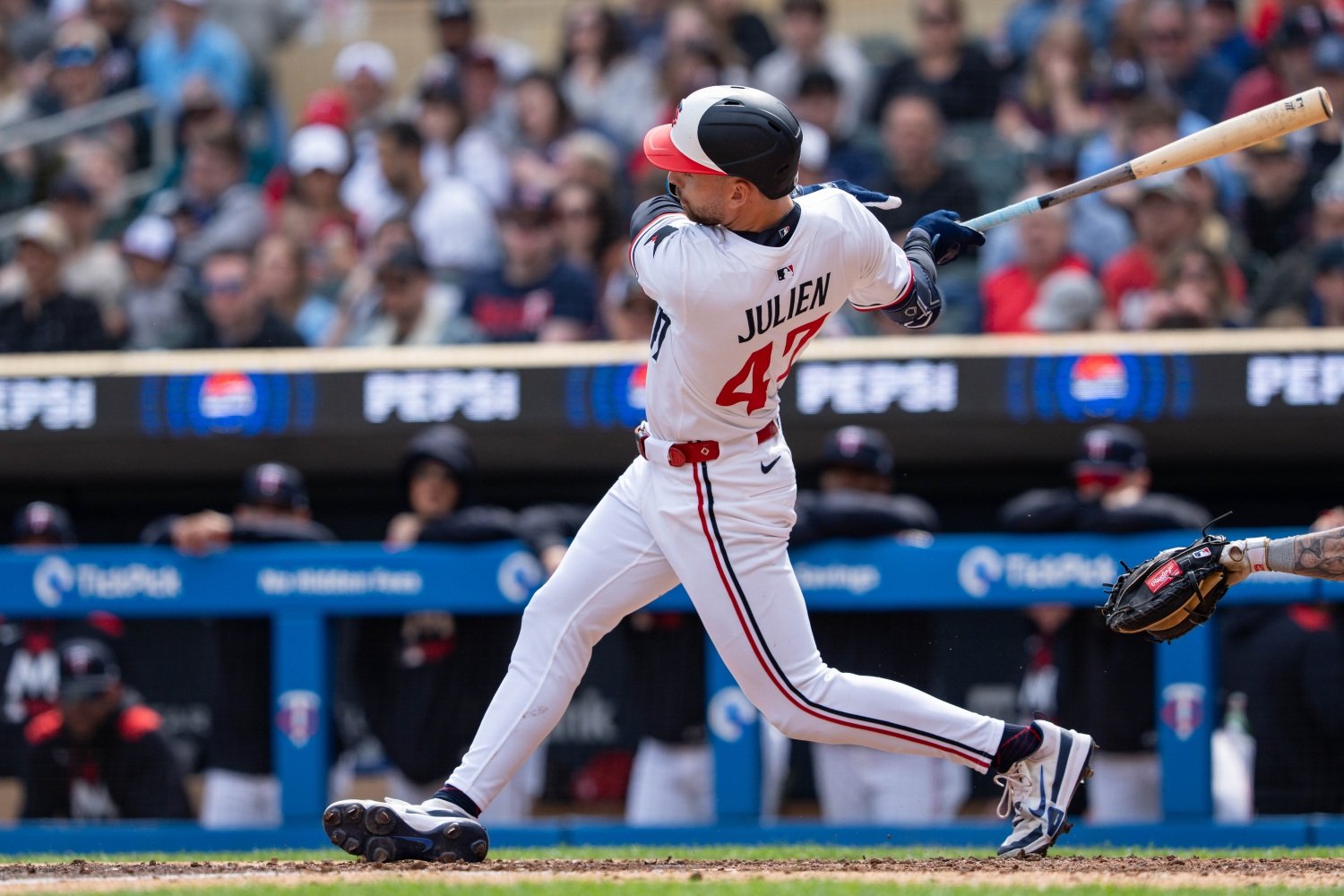 It’s still far too early in the season to start talking definitively, and the Twins have a ton going on right now, but I think this is a notable enough development to write about. Edouard Julien and Jose Miranda came into 2025 with shockingly similar stories, and they’ve quickly embarked on diverging paths. Let’s actually start with where they differ. Although they both have a significant offensive shortcoming, they’re almost the complete opposite—to boil it down to its most basic form, Miranda needs to stop swinging so much, and Julien needs to swing more. "When an aggressive hitter gets even more aggressive, then there’s probably overaggressiveness," Rocco Baldelli said of Miranda on Sunday. "But he’s always gonna be a guy who’s gonna be looking to swing the bat. That’s just by nature, who he is and who he’s always been. It’s part of the good version of Jose Miranda, too. It’s a guy that when he gets a good pitch, he hammers it right away. He’s not gonna be up there waiting around, taking pitches in the zone that he thinks that he can barrel up. So I think finding a level of patience at the plate—that’s a relative term, when it comes to hitters. But no matter who you are, everyone has a point of passivity, and also overaggressiveness. So I think he just wants to do something so badly that he’s wanting to swing the bat before he knows what he’s swinging at." The only other big difference is that Julien has settled in at second base and Miranda is a third baseman, but even their defensive profiles share similarities: they’re both below average. Julien is at second base because his arm doesn't work anywhere else, and Miranda is at third because his range doesn't work anywhere else. Both could be said to profile long-term at first base, though the Twins seem squeamish to move either there. I mean, they signed Ty France for $1 million to move both off of the position. Both have also played a game at shortstop during blowouts in the last year, even. Both have had short stretches looking like significantly above-average big-league hitters, but both have had stretches where they’re unplayable. Both face uncertainty as to what sort of role they will fill this year, and the Twins face uncertainty over which version of each will be available to them this year. And both need to be the good versions of themselves, because they’re at risk of being pushed out of the infield picture entirely, with Royce Lewis, Brooks Lee, Carlos Correa, and Luke Keaschall all looking like potential mainstays on the dirt. They both made the Opening Day roster in reduced roles. Miranda was given the third base job only due to an injury to Lewis. Before that, the plan seemed to be that he would play some third, some first, and some DH, but instead, he got everyday consistency. Julien only got a spot on the roster at all because Lee began the year on the injured list. There was something of a position battle at second base this spring, and until his injury, most assumed Lee would get the job. I think that pretty well sets the scene. Julien didn’t play the first three games of the season, and although Miranda started those games at the hot corner, he batted eighth in all three games, slotting ahead of only Harrison Bader and Christian Vázquez. Admittedly, Julien was ill for those games, so it’s unclear what his usage would have looked like under better circumstances. But both have played quasi-regularly to this point in the season, forming a three-spots-for-two-men rotation with Bader (who starts in left when Trevor Larnach is the DH). Through the first 14 games of the season, they had received nearly identical playing time. Miranda had started eight games and played in 11, registering 35 plate appearances, compared to Julien’s 36 plate appearances, starting nine games and playing in 12. Miranda had a miserable .143 batting average and an OPS of .371 (over 80% lower than average). Julien had a more respectable, but not great, .273 average and .697 OPS—right around the league average. But then Saturday’s game happened. Julien started the 15th game of the season and registered a hit in two plate appearances, but he was lifted in the eighth inning for Miranda to face a lefty reliever. Miranda also got a hit, but he was then tagged out in one of the more boneheaded baserunning gaffes the Twins will have this season (I pray). On Sunday, Julien started at DH and homered, pushing his season OPS up to .769. Miranda was demoted to St. Paul after Saturday’s game to make room for Lee, who also started Sunday. "I had a pretty thorough conversation with Jose Miranda when we sent him out—when we optioned him," Baldelli said. "Obviously, I’m not gonna dive into the details of that conversation, but I had a couple of different messages for him, and it’s time for him to go down, play well, and get his season rolling." There’s no telling what the rest of the season holds, but Julien is taking advantage of the opportunities he has. It’s not a unique story, but it is one that defines a ton of players’ careers. Wally Pipp has gotten the bad break of living in historical infamy for it, but this happens all the time. Two players get a shot. One seizes it. If you just read that and think I said “Edouard Julien and Lou Gehrig are comparable,” please let me stop you. It’s just the quickest example. A player only gets so many opportunities to show a team, or the league, that he’s worthy of playing time—or even instructional time. There are only so many plate appearances—or hours in a coach’s day— to go around. And when there’s a looming infield crunch, every opportunity matters. Miranda now seems to be somewhere around eighth on the infield depth chart, ranking behind Julien, Correa, Lewis, Lee, France, Willi Castro, and maybe even Keaschall (if he proves he’s healthy). I mean, Mickey Gasper is also still on the roster (but destined for a much smaller role, so we can probably ignore him for this conversation). Fifteen games to start a season is a small sample. Matt Wallner opened the season dreadfully in 2024, but by rate stats, he ended up being the second-best batter on the team. Sometimes in baseball, though, that second (or third) chance never comes. You can get passed by by guys who do take advantage. In 2019, Luis Arraez leapfrogged Nick Gordon due to Gordon’s injury—and then proceeded to hit .400 for two months, preventing the Twins from ever sending him down again. Rob Refsnyder parlayed about 20 games of very good play for the Twins in 2021 into a decent little four-year career with the Red Sox as a role player. These small samples have a huge effect on guys’ careers. Julien has taken advantage of the small opening on the Twins roster. He might even settle into the regular leadoff spot, like he did Sunday, if he keeps hitting. "Eddy looks really good right now. I think he's very comfortable at the plate," Baldelli said after Sunday's win. "I think he's seeing the ball very well, I think he's looking for pitches in different parts of the zone. He's on heaters; he's on offspeed pitches. He drives the ball really well to the opposite field, and when you see him doing that, you know he's feeling it." Of course, again, I’m not crowning Julien, and I’m not calling for the banishment of Miranda. Who knows? Miranda might show back up in July and lead the team in batting average for the rest of the year, and Julien might fizzle out in May and spend the rest of the year in St. Paul. But right now, one has done what he needs to, and one hasn’t. I think the dichotomy is worth recognizing.
- 39 comments
-
- 13
-

-
Jose Miranda and Edouard Julien both started the season on the periphery of the Twins lineup. One of them has taken advantage of the opportunity early this season, retelling one of the oldest stories in the game. Image courtesy of © Jordan Johnson-Imagn Images It’s still far too early in the season to start talking definitively, and the Twins have a ton going on right now, but I think this is a notable enough development to write about. Edouard Julien and Jose Miranda came into 2025 with shockingly similar stories, and they’ve quickly embarked on diverging paths. Let’s actually start with where they differ. Although they both have a significant offensive shortcoming, they’re almost the complete opposite—to boil it down to its most basic form, Miranda needs to stop swinging so much, and Julien needs to swing more. "When an aggressive hitter gets even more aggressive, then there’s probably overaggressiveness," Rocco Baldelli said of Miranda on Sunday. "But he’s always gonna be a guy who’s gonna be looking to swing the bat. That’s just by nature, who he is and who he’s always been. It’s part of the good version of Jose Miranda, too. It’s a guy that when he gets a good pitch, he hammers it right away. He’s not gonna be up there waiting around, taking pitches in the zone that he thinks that he can barrel up. So I think finding a level of patience at the plate—that’s a relative term, when it comes to hitters. But no matter who you are, everyone has a point of passivity, and also overaggressiveness. So I think he just wants to do something so badly that he’s wanting to swing the bat before he knows what he’s swinging at." The only other big difference is that Julien has settled in at second base and Miranda is a third baseman, but even their defensive profiles share similarities: they’re both below average. Julien is at second base because his arm doesn't work anywhere else, and Miranda is at third because his range doesn't work anywhere else. Both could be said to profile long-term at first base, though the Twins seem squeamish to move either there. I mean, they signed Ty France for $1 million to move both off of the position. Both have also played a game at shortstop during blowouts in the last year, even. Both have had short stretches looking like significantly above-average big-league hitters, but both have had stretches where they’re unplayable. Both face uncertainty as to what sort of role they will fill this year, and the Twins face uncertainty over which version of each will be available to them this year. And both need to be the good versions of themselves, because they’re at risk of being pushed out of the infield picture entirely, with Royce Lewis, Brooks Lee, Carlos Correa, and Luke Keaschall all looking like potential mainstays on the dirt. They both made the Opening Day roster in reduced roles. Miranda was given the third base job only due to an injury to Lewis. Before that, the plan seemed to be that he would play some third, some first, and some DH, but instead, he got everyday consistency. Julien only got a spot on the roster at all because Lee began the year on the injured list. There was something of a position battle at second base this spring, and until his injury, most assumed Lee would get the job. I think that pretty well sets the scene. Julien didn’t play the first three games of the season, and although Miranda started those games at the hot corner, he batted eighth in all three games, slotting ahead of only Harrison Bader and Christian Vázquez. Admittedly, Julien was ill for those games, so it’s unclear what his usage would have looked like under better circumstances. But both have played quasi-regularly to this point in the season, forming a three-spots-for-two-men rotation with Bader (who starts in left when Trevor Larnach is the DH). Through the first 14 games of the season, they had received nearly identical playing time. Miranda had started eight games and played in 11, registering 35 plate appearances, compared to Julien’s 36 plate appearances, starting nine games and playing in 12. Miranda had a miserable .143 batting average and an OPS of .371 (over 80% lower than average). Julien had a more respectable, but not great, .273 average and .697 OPS—right around the league average. But then Saturday’s game happened. Julien started the 15th game of the season and registered a hit in two plate appearances, but he was lifted in the eighth inning for Miranda to face a lefty reliever. Miranda also got a hit, but he was then tagged out in one of the more boneheaded baserunning gaffes the Twins will have this season (I pray). On Sunday, Julien started at DH and homered, pushing his season OPS up to .769. Miranda was demoted to St. Paul after Saturday’s game to make room for Lee, who also started Sunday. "I had a pretty thorough conversation with Jose Miranda when we sent him out—when we optioned him," Baldelli said. "Obviously, I’m not gonna dive into the details of that conversation, but I had a couple of different messages for him, and it’s time for him to go down, play well, and get his season rolling." There’s no telling what the rest of the season holds, but Julien is taking advantage of the opportunities he has. It’s not a unique story, but it is one that defines a ton of players’ careers. Wally Pipp has gotten the bad break of living in historical infamy for it, but this happens all the time. Two players get a shot. One seizes it. If you just read that and think I said “Edouard Julien and Lou Gehrig are comparable,” please let me stop you. It’s just the quickest example. A player only gets so many opportunities to show a team, or the league, that he’s worthy of playing time—or even instructional time. There are only so many plate appearances—or hours in a coach’s day— to go around. And when there’s a looming infield crunch, every opportunity matters. Miranda now seems to be somewhere around eighth on the infield depth chart, ranking behind Julien, Correa, Lewis, Lee, France, Willi Castro, and maybe even Keaschall (if he proves he’s healthy). I mean, Mickey Gasper is also still on the roster (but destined for a much smaller role, so we can probably ignore him for this conversation). Fifteen games to start a season is a small sample. Matt Wallner opened the season dreadfully in 2024, but by rate stats, he ended up being the second-best batter on the team. Sometimes in baseball, though, that second (or third) chance never comes. You can get passed by by guys who do take advantage. In 2019, Luis Arraez leapfrogged Nick Gordon due to Gordon’s injury—and then proceeded to hit .400 for two months, preventing the Twins from ever sending him down again. Rob Refsnyder parlayed about 20 games of very good play for the Twins in 2021 into a decent little four-year career with the Red Sox as a role player. These small samples have a huge effect on guys’ careers. Julien has taken advantage of the small opening on the Twins roster. He might even settle into the regular leadoff spot, like he did Sunday, if he keeps hitting. "Eddy looks really good right now. I think he's very comfortable at the plate," Baldelli said after Sunday's win. "I think he's seeing the ball very well, I think he's looking for pitches in different parts of the zone. He's on heaters; he's on offspeed pitches. He drives the ball really well to the opposite field, and when you see him doing that, you know he's feeling it." Of course, again, I’m not crowning Julien, and I’m not calling for the banishment of Miranda. Who knows? Miranda might show back up in July and lead the team in batting average for the rest of the year, and Julien might fizzle out in May and spend the rest of the year in St. Paul. But right now, one has done what he needs to, and one hasn’t. I think the dichotomy is worth recognizing. View full article
-
Why can't the Twins send Chris Paddack to Wichita? Here's your answer. Image courtesy of © Kim Klement Neitzel-Imagn Images It’s been less than two weeks, and the Twins have already started digging into their minor league depth, so it’s probably good for a discerning fan to know which players have minor league options. Head-scratching decisions often make more sense when considering the option information, so let’s overview the system. First, let’s touch on some rules. They’re a bit complicated but graspable with some patience. If you already know the rules, skip to the player lists. Minor League Options Defined To be eligible for an MLB active (26-man) roster, a player must be on that team’s expanded 40-man roster. A player on the 40-man roster can be in the majors or minors, but only players on the 40-man can be on the MLB active roster. Therefore, any player not on the 40-man roster must be added to both the 40-man and active rosters to be eligible to play. If there is no room on the 40-man, a current member needs to be removed, generally by exposing him to outright waivers or by transferring them to the 60-day injured list. If exposed to outright waivers, any other team in the league willing to take on the player’s salary and place him on their active roster (or expose him to waivers again) can claim him. Naturally, a player would need to be injured for the 60-day option to be available. To send a player to the minors while also on the team’s 40-man roster, they need to have option years remaining. If the player has no option years remaining, they must be exposed to waivers before being sent down. Number of Options When a player is added to a 40-man roster for the first time in his career, he has three option years. Option years are used when the player spends time in the minor leagues, whether it’s a full season or a few weeks spread over months. A player can be sent down once or several times in that year, and it will still count as a single option year, assuming that he meets the 20 day threshold. Players who do not play in the minor leagues in a given year retain their option years. If a player uses an option year in 2025, he will have two remaining. If he then spends all of 2026 on an MLB roster, he still has two. If he then gets sent down in 2027, he will have one. If he’s sent down again in 2028, he will have no options left, and if the team wants to send him to the minors in 2029, he would need to be waived first. Nuances There are some nuances to these rules to be aware of. First, if a player is in the minor leagues but is not on the 40-man roster, the team is not using one of his options. However, if he is called up to the major league team, and thus added to the 40-man roster, the team can only send him back down by using one of his options (if he has any) or exposing him to waivers. As of 2022, a player can only be sent to the minor leagues five times in one season, which includes starting the season in the minors. After the fifth time, the subsequent demotion requires the player to be waived. They will still have any future option years, though. Occasionally the years are malleable, and additional option years for a player may be added by the league. More specifically, the player must fit the criteria of having used all three options before getting 5 years of professional service (full season baseball). For example, Lewis Thorpe had four option years for this reason. In fact, a few Twins have. Gilberto Celestino had one option remaining in 2022 and was demoted mid-season. However, he was recalled within days after an injury to an active roster player, and because his demotion was so short, he did not use an option year. It needs to be over 20 days to count as an option year. Players with at least five years of service time (time on an MLB active roster) can refuse a demotion, even if they still have options remaining. You will rarely see a 35-year-old sent to AAA, even if he has an option remaining, because he can simply say no, forcing the team to either release him or send someone else down. <-> The Twins Roster Let’s look at the Twins players’ situations with all that out of the way. It should be noted that even if a player is listed with options remaining, that doesn’t mean we think they will be sent down or are even likely to. (Things would have to go really bad for Jhoan Duran to be sent to St. Paul). This information is from FanGraphs’s Roster Resource. MLB Players who can Refuse Demotion As discussed, these players have enough service time to refuse demotion. In rare cases, if the player and team agree that some time in the minor leagues would be beneficial, and he still has at least one option year remaining, it could happen. However, it’s rare enough that you shouldn’t hope that Chris Paddack agrees to spend time in St. Paul this season. Jorge Alcalá (as of this week), Harrison Bader, Byron Buxton, Willi Castro, Carlos Correa, Danny Coulombe, Ty France, Christian Vázquez MLB Players Out of Options These players can be sent down, but they would need to be exposed to waivers first. [author's note: Blewett is currently on waivers]. Scott Blewett, Brock Stewart, Michael Tonkin MLB Players with One Option Remaining These players are currently on the active roster (or injured list) and can still be sent down this year. However, if they are sent down and use an option year, they will have no options in 2026. The team could be a little more hesitant to use that final year than they would otherwise. Jhoan Durán, Edouard Julien, Trevor Larnach, Cole Sands, Louis Varland, Matt Wallner 40-Man Players with Multiple Option Years Remaining If necessary, any of these players can be sent back and forth with little concern. Travis Adams, Jair Camargo, David Festa, Kody Funderburk, Mickey Gasper, Griffin Jax, Ryan Jeffers, DaShawn Keirsey Jr., Brooks Lee, Royce Lewis, Austin Martin, Zebby Matthews, Marco Raya, Emmanuel Rodriguez, Justin Topa 40-Man Players in the Minor Leagues with One Option Remaining These players are currently in the minors (as of 4/12), and if they hit the 20-day threshold then it’s their last year. Come 2026, they would have no options remaining. Matt Canterino, Diego Cartaya, Jose Miranda Notable Minor League Veterans without Options and/or Sufficient Service Time There are a handful of minor league veterans that are not on the MLB roster. If these veterans are called up, they either have no options remaining (*) or can refuse the demotion due to service time (®), so sending them back down would be complicated. Prepare to lose them if you see them (as has already happened with Darren McCaughan). Mike Ford*, Richard Lovelady*, Darren McCaughan*, Anthony Misiewicz*, Erasmo Ramírez®, Huascar Ynoa* Notable Minor League Veterans with One Option Remaining If these veterans are called up, they still have one option remaining, so they can be kept in the system and demoted, but this would be the last year, without exposing them to waivers. Daniel Duarte, Alex Speas Notable Minor League Veterans with Multiple Options Remaining With this group, if they’re called up, they can be demoted with very little option year consideration. Any prospects you have in mind that hasn’t been listed in this document probably has no MLB services time and thus has three options remaining. Armando Alvarez, Jacob Bosiokovic, Allan Cerda, Randy Dobnak (seriously; his time at AAA has mostly been off of the 40-man roster, including right now), Brady Feigl, Ryan Jensen <-> Thanks for input from John Bonnes, Jeremy Nygaard, and Jack Goin over the last couple of years on this writeup, correcting many of the errors that I made. View full article
-
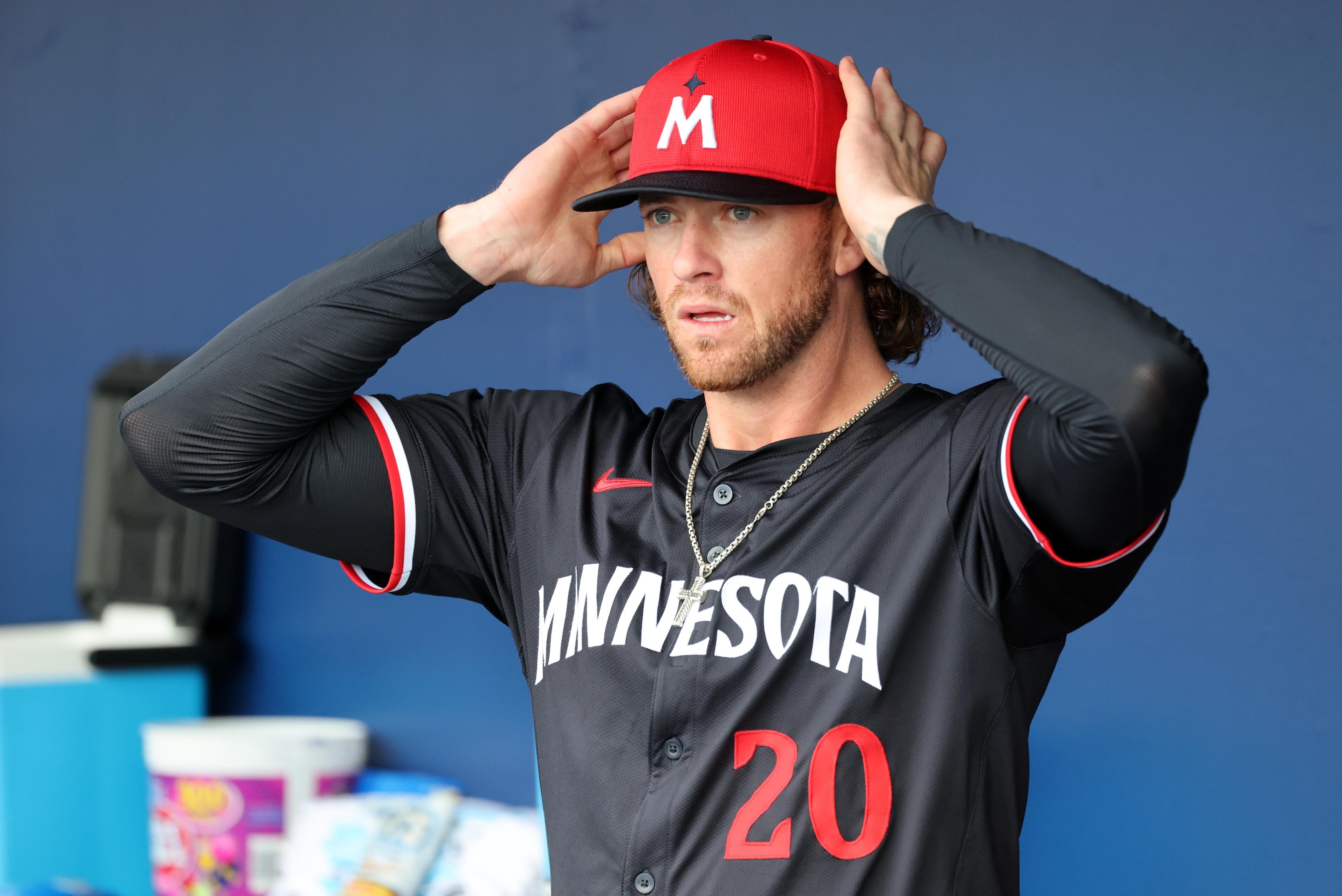 It’s been less than two weeks, and the Twins have already started digging into their minor league depth, so it’s probably good for a discerning fan to know which players have minor league options. Head-scratching decisions often make more sense when considering the option information, so let’s overview the system. First, let’s touch on some rules. They’re a bit complicated but graspable with some patience. If you already know the rules, skip to the player lists. Minor League Options Defined To be eligible for an MLB active (26-man) roster, a player must be on that team’s expanded 40-man roster. A player on the 40-man roster can be in the majors or minors, but only players on the 40-man can be on the MLB active roster. Therefore, any player not on the 40-man roster must be added to both the 40-man and active rosters to be eligible to play. If there is no room on the 40-man, a current member needs to be removed, generally by exposing him to outright waivers or by transferring them to the 60-day injured list. If exposed to outright waivers, any other team in the league willing to take on the player’s salary and place him on their active roster (or expose him to waivers again) can claim him. Naturally, a player would need to be injured for the 60-day option to be available. To send a player to the minors while also on the team’s 40-man roster, they need to have option years remaining. If the player has no option years remaining, they must be exposed to waivers before being sent down. Number of Options When a player is added to a 40-man roster for the first time in his career, he has three option years. Option years are used when the player spends time in the minor leagues, whether it’s a full season or a few weeks spread over months. A player can be sent down once or several times in that year, and it will still count as a single option year, assuming that he meets the 20 day threshold. Players who do not play in the minor leagues in a given year retain their option years. If a player uses an option year in 2025, he will have two remaining. If he then spends all of 2026 on an MLB roster, he still has two. If he then gets sent down in 2027, he will have one. If he’s sent down again in 2028, he will have no options left, and if the team wants to send him to the minors in 2029, he would need to be waived first. Nuances There are some nuances to these rules to be aware of. First, if a player is in the minor leagues but is not on the 40-man roster, the team is not using one of his options. However, if he is called up to the major league team, and thus added to the 40-man roster, the team can only send him back down by using one of his options (if he has any) or exposing him to waivers. As of 2022, a player can only be sent to the minor leagues five times in one season, which includes starting the season in the minors. After the fifth time, the subsequent demotion requires the player to be waived. They will still have any future option years, though. Occasionally the years are malleable, and additional option years for a player may be added by the league. More specifically, the player must fit the criteria of having used all three options before getting 5 years of professional service (full season baseball). For example, Lewis Thorpe had four option years for this reason. In fact, a few Twins have. Gilberto Celestino had one option remaining in 2022 and was demoted mid-season. However, he was recalled within days after an injury to an active roster player, and because his demotion was so short, he did not use an option year. It needs to be over 20 days to count as an option year. Players with at least five years of service time (time on an MLB active roster) can refuse a demotion, even if they still have options remaining. You will rarely see a 35-year-old sent to AAA, even if he has an option remaining, because he can simply say no, forcing the team to either release him or send someone else down. <-> The Twins Roster Let’s look at the Twins players’ situations with all that out of the way. It should be noted that even if a player is listed with options remaining, that doesn’t mean we think they will be sent down or are even likely to. (Things would have to go really bad for Jhoan Duran to be sent to St. Paul). This information is from FanGraphs’s Roster Resource. MLB Players who can Refuse Demotion As discussed, these players have enough service time to refuse demotion. In rare cases, if the player and team agree that some time in the minor leagues would be beneficial, and he still has at least one option year remaining, it could happen. However, it’s rare enough that you shouldn’t hope that Chris Paddack agrees to spend time in St. Paul this season. Jorge Alcalá (as of this week), Harrison Bader, Byron Buxton, Willi Castro, Carlos Correa, Danny Coulombe, Ty France, Christian Vázquez MLB Players Out of Options These players can be sent down, but they would need to be exposed to waivers first. [author's note: Blewett is currently on waivers]. Scott Blewett, Brock Stewart, Michael Tonkin MLB Players with One Option Remaining These players are currently on the active roster (or injured list) and can still be sent down this year. However, if they are sent down and use an option year, they will have no options in 2026. The team could be a little more hesitant to use that final year than they would otherwise. Jhoan Durán, Edouard Julien, Trevor Larnach, Cole Sands, Louis Varland, Matt Wallner 40-Man Players with Multiple Option Years Remaining If necessary, any of these players can be sent back and forth with little concern. Travis Adams, Jair Camargo, David Festa, Kody Funderburk, Mickey Gasper, Griffin Jax, Ryan Jeffers, DaShawn Keirsey Jr., Brooks Lee, Royce Lewis, Austin Martin, Zebby Matthews, Marco Raya, Emmanuel Rodriguez, Justin Topa 40-Man Players in the Minor Leagues with One Option Remaining These players are currently in the minors (as of 4/12), and if they hit the 20-day threshold then it’s their last year. Come 2026, they would have no options remaining. Matt Canterino, Diego Cartaya, Jose Miranda Notable Minor League Veterans without Options and/or Sufficient Service Time There are a handful of minor league veterans that are not on the MLB roster. If these veterans are called up, they either have no options remaining (*) or can refuse the demotion due to service time (®), so sending them back down would be complicated. Prepare to lose them if you see them (as has already happened with Darren McCaughan). Mike Ford*, Richard Lovelady*, Darren McCaughan*, Anthony Misiewicz*, Erasmo Ramírez®, Huascar Ynoa* Notable Minor League Veterans with One Option Remaining If these veterans are called up, they still have one option remaining, so they can be kept in the system and demoted, but this would be the last year, without exposing them to waivers. Daniel Duarte, Alex Speas Notable Minor League Veterans with Multiple Options Remaining With this group, if they’re called up, they can be demoted with very little option year consideration. Any prospects you have in mind that hasn’t been listed in this document probably has no MLB services time and thus has three options remaining. Armando Alvarez, Jacob Bosiokovic, Allan Cerda, Randy Dobnak (seriously; his time at AAA has mostly been off of the 40-man roster, including right now), Brady Feigl, Ryan Jensen <-> Thanks for input from John Bonnes, Jeremy Nygaard, and Jack Goin over the last couple of years on this writeup, correcting many of the errors that I made.
 -
We live to serve
-
 Sweet Lou and Ol Gregg have a cathartic discussion for the first ever Twins On-Daily episode. After an episode of Gripes about pitchers' inability to throw to first base, luck not being the answer for everything, and the hopeless state of the fanbase, they finish on a Sweet Nothing. It was quite touching, if I do say so myself. Listen using Apple Podcasts: https://podcasts.apple.com/us/podcast/the-twins-off-daily-podcast/id1741266056 Listen using Spotify: https://open.spotify.com/show/4tb78XlurcPTYYSsARdbD7 Listen using iHeartRadio: https://www.iheart.com/podcast/263-the-twins-off-daily-podcas-167548600/ Listen using Pocket Casts: https://pca.st/nvclbt0w Watch on YouTube: https://www.youtube.com/@twinsdaily