



Greggory Masterson
-
Posts
819 -
Joined
-
Last visited
-
Days Won
2
Content Type
Profiles
News
Minnesota Twins Videos
2026 Minnesota Twins Top Prospects Ranking
2022 Minnesota Twins Draft Picks
Minnesota Twins Free Agent & Trade Rumors, Notes, & Tidbits
Guides & Resources
2023 Minnesota Twins Draft Picks
The Minnesota Twins Players Project
2024 Minnesota Twins Draft Picks
2025 Minnesota Twins Draft Pick Tracker
2026 Minnesota Twins Draft Tracker: Picks & Bonuses
Forums
Blogs
Events
Store
Downloads
Gallery
Everything posted by Greggory Masterson
-
Why the Twins Didn't Sign Luis Arraez
Greggory Masterson replied to Greggory Masterson's topic in Twins Daily Front Page News
Absolutely. I went back and forth on whether to write a pro or con for Arraez because of that fact. *If* a team can help him make better decisions at the plate, like he did in Minnesota, he could be a steal on a one year pillow contract. I’m a massive Arraez fan; it’s just gotten painful to watch him the last couple years. -
Why the Twins Didn't Sign Luis Arraez
Greggory Masterson replied to Greggory Masterson's topic in Twins Daily Front Page News
Before analytics, no one believed in the wacko idea you should swing at strikes and take balls. Curse you Jonah Hill. -
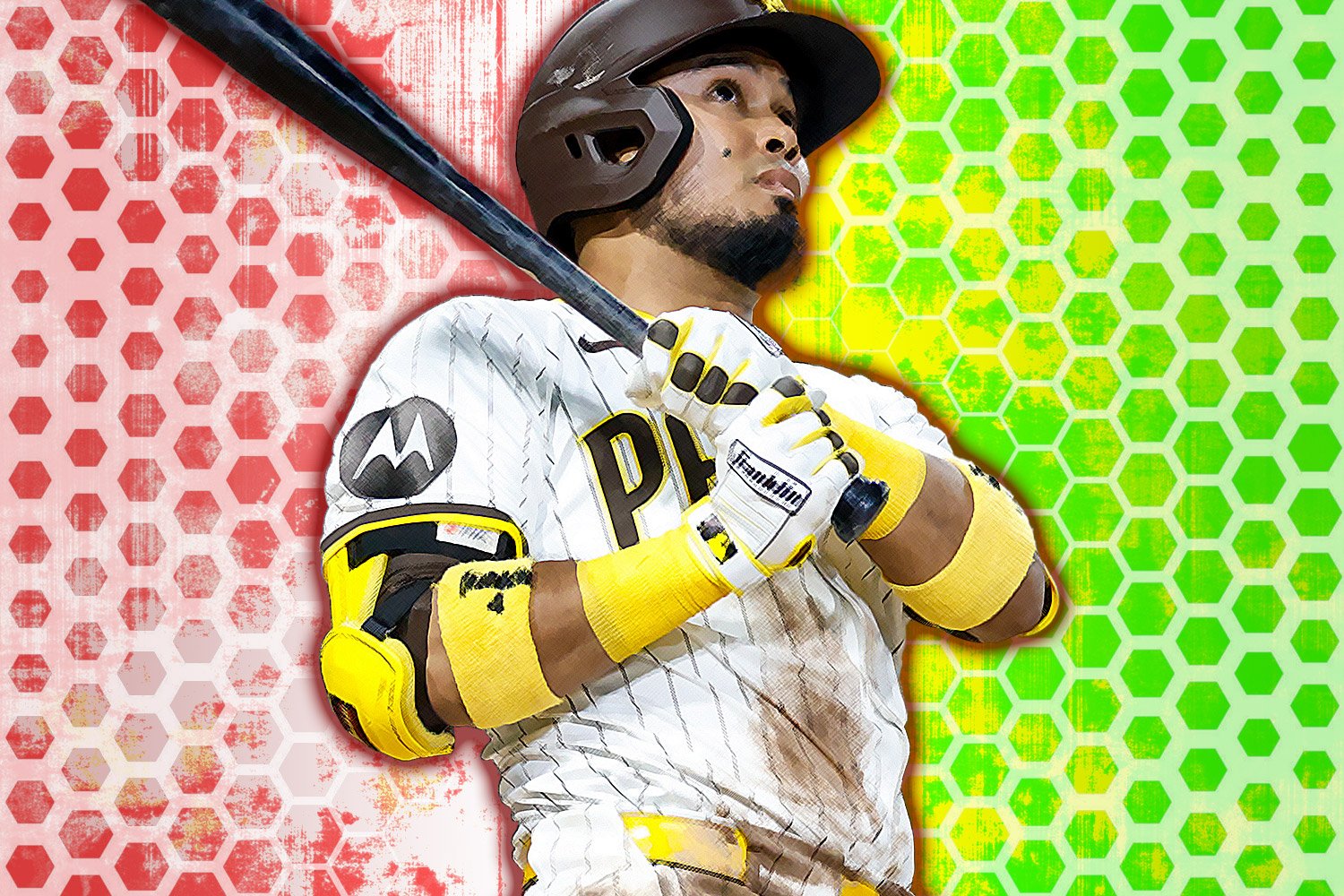 Luis Arraez has the highest batting average among active MLB players. His .317 is 14 points higher than the next highest, Jose Altuve’s .303 average. There isn’t another player over .300. Arraez also registered the lowest strikeout rate since Tony Gwynn in 1995, retired on strikes in just 21 of his 620 at-bats (3.1%). And he might have been in the Twins’ range before the Josh Bell signing. Jon Becker of FanGraphs compiles public estimates for free agents, and Arraez’s mean contract is $10.25 million annually. Estimates are split between Arraez getting a one- or two-year contract, ranging from $8.5 million to $15 million per year, which could fit into the Twins’ budget for upgrading first base. But this isn’t about why the Twins could sign Arraez. It’s about why they didn't. And it’s not because batting average doesn’t matter. Put succinctly, it’s because he hasn’t played like the player the Twins traded away in years. Between 2019 and 2023 (his first year in Miami following the trade that brought Pablo López to Minnesota), Arraez slashed .326/.379/.427, and his .806 OPS was 22% above league-average. This season, he was just league-average, slashing .292/.327/.392. If you’ve been following Arraez at all, you probably know that his batting average dipped this season. But there’s more going on here than bad luck. There’s bad process. Yes, even with one of the highest batting averages in baseball, and one of the best strikeout rates in the past 50 years, Arraez’s plate appearances are not good. It almost seems as if he’s focused all of his energy into not striking out, ignoring all other aspects of a good approach. Some of this regression can be seen in his ability to draw a walk. Arraez has never hunted walks, but he sat around league-average as a Twin between 2019 and 2022, walking 8.7% of the time. When combined with his .314 batting average in Minnesota, Arraez got to flirt with a .400 OBP. That went out the window in Miami in 2023, but his .354 average made up for that loss in walks, as he still got on base 39.3% of the time. Since then, though, he’s had a .337 OBP between 2024 and 2025, which is about 8% above the league average during that time. A slightly above average OBP is good, but paired with a roughly league-average .392 slugging percentage (35 points lower than it was during the first five years of his career), the overall production doesn’t match the sexy batting average. Within and beyond his ability to draw a walk lies another issue: his swing decisions. Yes, Arraez isn’t striking out. But that doesn’t mean he’s taking good plate appearances. In Minnesota, he chased pitches outside the strike zone about 23% of the time, far better than league-average. Since leaving, he’s swung at about 34% of pitches outside the zone, nearly 50% more often and much worse than league-average. Put another way, for every two balls he swung at outside the zone in Minnesota, he’s swung at three since. He has a remarkable ability to make contact with pitches, even outside of the strike zone, and he’s gotten better at it with age, going from about making contact with balls outside of the zone 86% of the time in Minnesota to 91% in Miami and San Diego. He’s also making more contact with strikes, going from 95% in Minnesota to setting a career-high 97.3% this year. But also, he just set his career low for swings on strikes, at 60%. So he swung at a career-high percent of pitches outside of the zone, but he also swung at a career-low number of pitches inside the zone. That’s not supposed to happen. As he has been making more contact, his batting average has gone down. And pitchers are throwing him more strikes in the process. In Minnesota, 50% of the pitches he saw were strikes, whereas it’s been 55% since 2023. I just threw a bunch of numbers at you, so here’s something else. Remember Willians Astudillo? La Tortuga? Well, Arraez seems to have a bit of the La Tortuga disease, where because he’s a guy who can put wood on anything, he’s putting a lot of pitches he probably shouldn’t be swinging at in play, and poorly. But then you add into that equation that he’s also swinging at fewer strikes than he ever has. It’s perplexing. And it bears out in the quality of his contact. Arraez has the slowest swing speed in the league, and he’s consistently at the bottom of the league in hitting the ball hard, but over the past two years, he’s almost become a caricature of himself. You don’t need to hit the ball hard to get hits. Arraez has mastered the art of dropping one into the shallow outfield. But you need to get at least a little speed off the bat to have good contact. It won’t surprise you to learn, after reading all of that above, that Arraez just hit line drives at the lowest rate of his career and grounders at the second-highest rate of his career. He made much more soft contact in the last couple of seasons than he did in the first five, and he made much less hard contact (naturally). Arraez’s batting average on balls in play has dropped quite remarkably, too. It was .343 through his first five years, and it’s been .307 since. Some of that is luck, but BABIP can be sticky, especially for a player like Arraez who specializes in putting the ball exactly where it needs to go to get a hit. And the ball hasn’t. Arraez’s swing decisions are getting worse. His quality of contact is getting worse. And his back of the baseball card stats are getting worse because of that. Add to that the fact that Arraez is, at this point, a first baseman or DH, with the ability to fill in at second if absolutely needed (he started three times the number of games as a DH as he did as a second baseman last year, ceding those opportunities to a roughly average defender in Jake Cronenworth). And he’s a poor defensive first baseman by most metrics. And he’s an average runner at best. I’ll make one concession, one sed contra to the title of this article. He made better decisions in Minnesota. He made better contact. He had a higher batting average. If they know what’s wrong with him and how to fix it, and if everyone else in the league knows what you now know, if they’re all scared off by his slipping performance, then sure. Maybe they could have made him a lowball offer and try to fix him. Even in his current form, he would have outperformed most of the internal options at first base and DH. But he’s not someone to get in a bidding war over, chasing that .320 average dragon. There are other options.
 -
Luis Arraez has the highest batting average among active MLB players. His .317 is 14 points higher than the next highest, Jose Altuve’s .303 average. There isn’t another player over .300. Arraez also registered the lowest strikeout rate since Tony Gwynn in 1995, retired on strikes in just 21 of his 620 at-bats (3.1%). And he might have been in the Twins’ range before the Josh Bell signing. Jon Becker of FanGraphs compiles public estimates for free agents, and Arraez’s mean contract is $10.25 million annually. Estimates are split between Arraez getting a one- or two-year contract, ranging from $8.5 million to $15 million per year, which could fit into the Twins’ budget for upgrading first base. But this isn’t about why the Twins could sign Arraez. It’s about why they didn't. And it’s not because batting average doesn’t matter. Put succinctly, it’s because he hasn’t played like the player the Twins traded away in years. Between 2019 and 2023 (his first year in Miami following the trade that brought Pablo López to Minnesota), Arraez slashed .326/.379/.427, and his .806 OPS was 22% above league-average. This season, he was just league-average, slashing .292/.327/.392. If you’ve been following Arraez at all, you probably know that his batting average dipped this season. But there’s more going on here than bad luck. There’s bad process. Yes, even with one of the highest batting averages in baseball, and one of the best strikeout rates in the past 50 years, Arraez’s plate appearances are not good. It almost seems as if he’s focused all of his energy into not striking out, ignoring all other aspects of a good approach. Some of this regression can be seen in his ability to draw a walk. Arraez has never hunted walks, but he sat around league-average as a Twin between 2019 and 2022, walking 8.7% of the time. When combined with his .314 batting average in Minnesota, Arraez got to flirt with a .400 OBP. That went out the window in Miami in 2023, but his .354 average made up for that loss in walks, as he still got on base 39.3% of the time. Since then, though, he’s had a .337 OBP between 2024 and 2025, which is about 8% above the league average during that time. A slightly above average OBP is good, but paired with a roughly league-average .392 slugging percentage (35 points lower than it was during the first five years of his career), the overall production doesn’t match the sexy batting average. Within and beyond his ability to draw a walk lies another issue: his swing decisions. Yes, Arraez isn’t striking out. But that doesn’t mean he’s taking good plate appearances. In Minnesota, he chased pitches outside the strike zone about 23% of the time, far better than league-average. Since leaving, he’s swung at about 34% of pitches outside the zone, nearly 50% more often and much worse than league-average. Put another way, for every two balls he swung at outside the zone in Minnesota, he’s swung at three since. He has a remarkable ability to make contact with pitches, even outside of the strike zone, and he’s gotten better at it with age, going from about making contact with balls outside of the zone 86% of the time in Minnesota to 91% in Miami and San Diego. He’s also making more contact with strikes, going from 95% in Minnesota to setting a career-high 97.3% this year. But also, he just set his career low for swings on strikes, at 60%. So he swung at a career-high percent of pitches outside of the zone, but he also swung at a career-low number of pitches inside the zone. That’s not supposed to happen. As he has been making more contact, his batting average has gone down. And pitchers are throwing him more strikes in the process. In Minnesota, 50% of the pitches he saw were strikes, whereas it’s been 55% since 2023. I just threw a bunch of numbers at you, so here’s something else. Remember Willians Astudillo? La Tortuga? Well, Arraez seems to have a bit of the La Tortuga disease, where because he’s a guy who can put wood on anything, he’s putting a lot of pitches he probably shouldn’t be swinging at in play, and poorly. But then you add into that equation that he’s also swinging at fewer strikes than he ever has. It’s perplexing. And it bears out in the quality of his contact. Arraez has the slowest swing speed in the league, and he’s consistently at the bottom of the league in hitting the ball hard, but over the past two years, he’s almost become a caricature of himself. You don’t need to hit the ball hard to get hits. Arraez has mastered the art of dropping one into the shallow outfield. But you need to get at least a little speed off the bat to have good contact. It won’t surprise you to learn, after reading all of that above, that Arraez just hit line drives at the lowest rate of his career and grounders at the second-highest rate of his career. He made much more soft contact in the last couple of seasons than he did in the first five, and he made much less hard contact (naturally). Arraez’s batting average on balls in play has dropped quite remarkably, too. It was .343 through his first five years, and it’s been .307 since. Some of that is luck, but BABIP can be sticky, especially for a player like Arraez who specializes in putting the ball exactly where it needs to go to get a hit. And the ball hasn’t. Arraez’s swing decisions are getting worse. His quality of contact is getting worse. And his back of the baseball card stats are getting worse because of that. Add to that the fact that Arraez is, at this point, a first baseman or DH, with the ability to fill in at second if absolutely needed (he started three times the number of games as a DH as he did as a second baseman last year, ceding those opportunities to a roughly average defender in Jake Cronenworth). And he’s a poor defensive first baseman by most metrics. And he’s an average runner at best. I’ll make one concession, one sed contra to the title of this article. He made better decisions in Minnesota. He made better contact. He had a higher batting average. If they know what’s wrong with him and how to fix it, and if everyone else in the league knows what you now know, if they’re all scared off by his slipping performance, then sure. Maybe they could have made him a lowball offer and try to fix him. Even in his current form, he would have outperformed most of the internal options at first base and DH. But he’s not someone to get in a bidding war over, chasing that .320 average dragon. There are other options. View full article
-
If the Twins Want to Add Thump, Here are 15 Names to Consider
Greggory Masterson posted an article in Twins
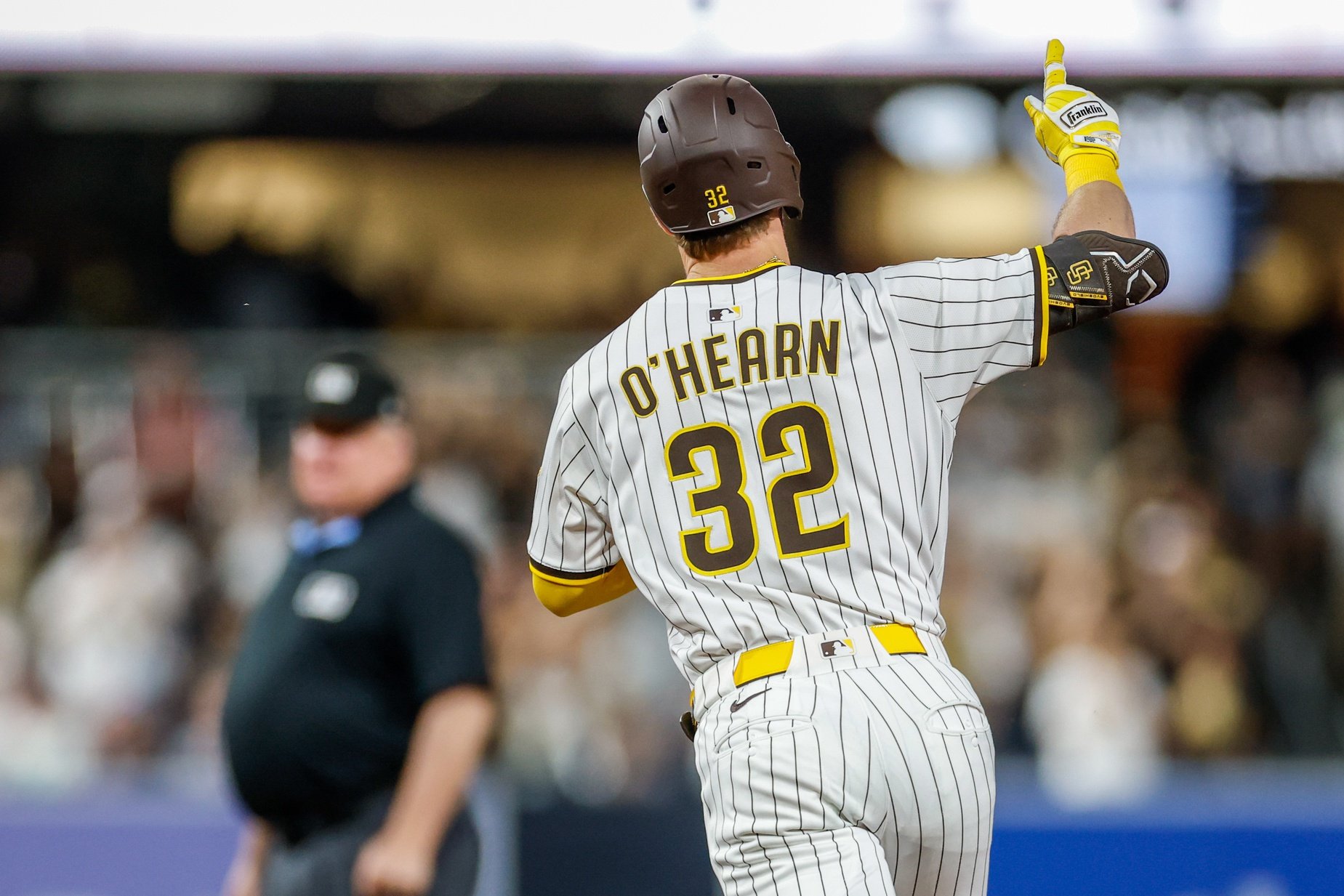 At baseball’s winter meetings this week, there has been much ballyhoo about the Twins’ search to add a little power to their lineup. General manager Jeremy Zoll was quoted as saying that the club hopes to add “another bat or two with a little thump, with some impact,” and Dan Hayes reported in the Athletic that the group has shown specific interest in free agents Ryan O’Hearn, Josh Bell, and Rhys Hoskins. Let’s take a look at the case for each of those three hitters, and a few more free agents who qualify as “thump” (skipping over lighter-hitting names like Luis Arraez), using the perceived market for O’Hearn, Bell, and Hoskins as a cap for the type of free agent the Twins could be interested in. Ryan O’Hearn O’Hearn is probably the top remaining free agent at first base after Pete Alonso and Josh Naylor signed. At 32, he was a late bloomer, floundering for years in Kansas City before blossoming into a quality hitter with a .788 OPS (20% above league average) over the last three seasons. He’s left-handed and can play a bit of corner outfield—neither of which is a need for the Twins—and he doesn’t boast huge power numbers (46 home runs over the past three years), but he’s a very dependable bat and plays good first base defense. He’s likely to be paid more than anyone else on this list, so it’s questionable that the Twins will have the spending room to play in his market, but it’s definitely worth exploring. Okay, let’s do some rapid-fire, lower-cost options. Carlos Santana Santana’s 2024 with the Twins was just what they needed, but he’ll be 40 next season. Still, he’s a good defender, and although his offense continues to slip, he’s better against lefties than Kody Clemens (damning with faint praise). He’s viewed as a leader and could have just a little more gas in the tank. Rowdy Tellez If you want homers and only homers, Rowdy is your guy. He’s built like a first baseman of yesteryear, and he’s like Walmart-brand Josh Bell, a first baseman for hire. He’s a league-average bat who doesn’t play good defense and needs a platoon partner against lefties, but he has 25- to 30-homer power. It’s thump. Dominic Smith He’s Tellez with less power but more OBP, but he had a better 2025 with the Giants, and he can pop 15 homers over a full season. In both players’ cases, they would need to be platooned, but if you have seven dollars to find a little hitting, sure. Go for it. Michael Toglia The Rockies thought they had a breakout season in 2024 from Toglia, if you call a breakout being a league-average hitter in Coors with 25 homers, but he was bad in 2025 (and 2023 and 2022). He’s got neutral splits, but he could platoon with Clemens, potentially. Mitch Garver He can’t really catch much anymore, and isn’t more than an emergency option at first base, and also he’s had some questionable comments about the Twins’ decision to choose Ryan Jeffers over him, but with Alex Jackson’s limitations, it wouldn’t be the worst thing to carry a third catcher, and Garver can still hit lefties fine with 15-20 homer power over a full season despite his poor overall numbers last year. Gary Sánchez Same thought process as with Garver, Sánchez doesn’t catch well and is only an emergency first baseman, but he could be a low-cost platoon option, even with his with his neutral career platoon splits.
 -
Okay, let’s do some rapid-fire, lower-cost options. Carlos Santana Santana’s 2024 with the Twins was just what they needed, but he’ll be 40 next season. Still, he’s a good defender, and although his offense continues to slip, he’s better against lefties than Kody Clemens (damning with faint praise). He’s viewed as a leader and could have just a little more gas in the tank. Rowdy Tellez If you want homers and only homers, Rowdy is your guy. He’s built like a first baseman of yesteryear, and he’s like Walmart-brand Josh Bell, a first baseman for hire. He’s a league-average bat who doesn’t play good defense and needs a platoon partner against lefties, but he has 25- to 30-homer power. It’s thump. Dominic Smith He’s Tellez with less power but more OBP, but he had a better 2025 with the Giants, and he can pop 15 homers over a full season. In both players’ cases, they would need to be platooned, but if you have seven dollars to find a little hitting, sure. Go for it. Michael Toglia The Rockies thought they had a breakout season in 2024 from Toglia, if you call a breakout being a league-average hitter in Coors with 25 homers, but he was bad in 2025 (and 2023 and 2022). He’s got neutral splits, but he could platoon with Clemens, potentially. Mitch Garver He can’t really catch much anymore, and isn’t more than an emergency option at first base, and also he’s had some questionable comments about the Twins’ decision to choose Ryan Jeffers over him, but with Alex Jackson’s limitations, it wouldn’t be the worst thing to carry a third catcher, and Garver can still hit lefties fine with 15-20 homer power over a full season despite his poor overall numbers last year. Gary Sánchez Same thought process as with Garver, Sánchez doesn’t catch well and is only an emergency first baseman, but he could be a low-cost platoon option, even with his with his neutral career platoon splits. View full article
-
I’ll amend my statement. It’s much rarer to find someone of that size with the fine motor control to hit a baseball than to dunk or make a 3
-
Shoutout Michael Jordan
-
You get to have articles about some interesting stories written by handsome bloggers.
-
It is so much easier to dunk or shoot a three pointer than it is to hit a baseball.
-
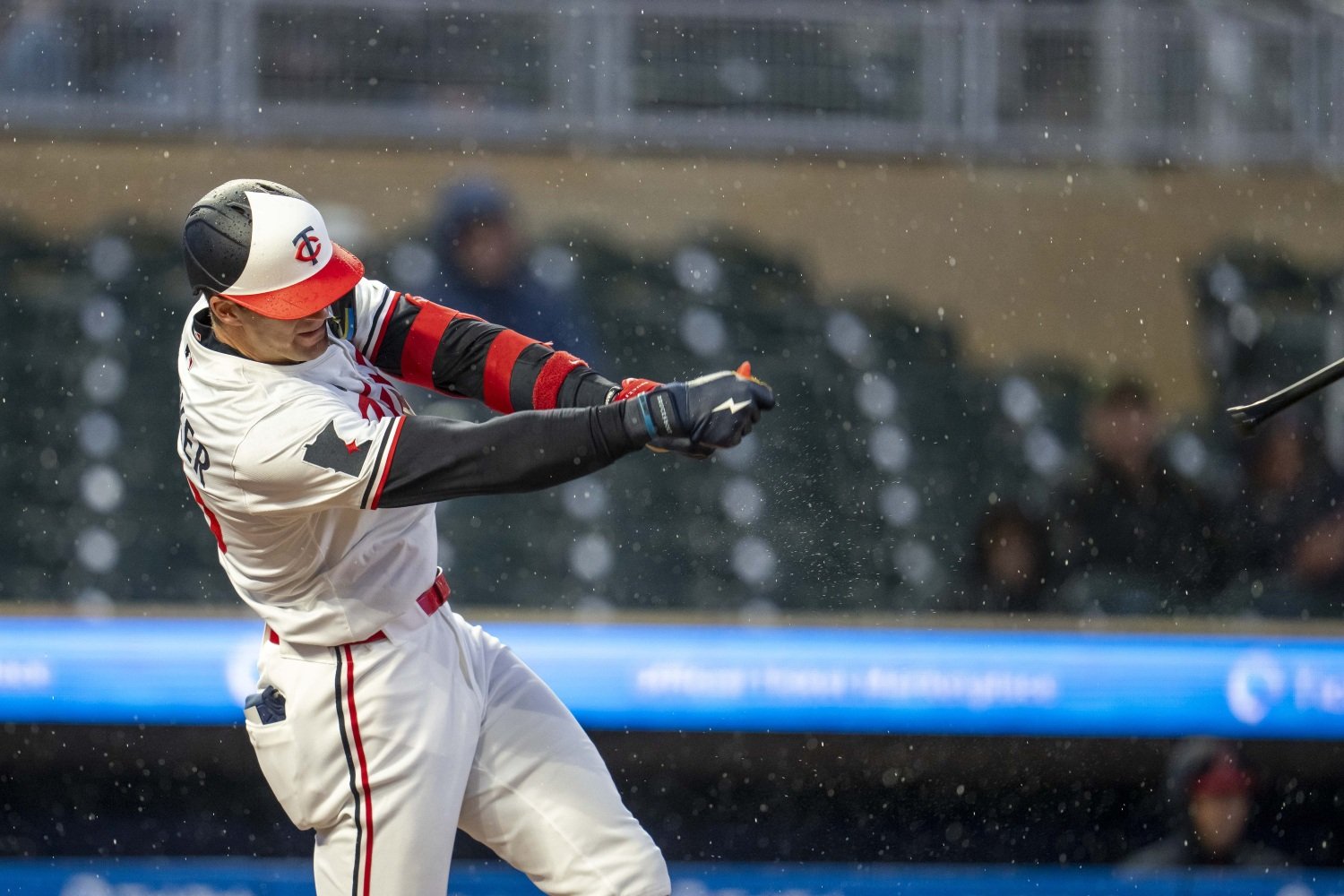 Carson McCusker is a man who is defined by his height—80 inches, to be exact, but who’s counting? If someone knows the name Carson McCusker, they know it because he’s 6-foot-8. He’s tied for the tallest hitter in MLB history, and only eight pitchers have ever been taller. For an exceptionally tall person, it’s hard to have the fine motor control needed to succeed in baseball. That McCusker ever made the big leagues is an accomplishment in itself, even if it was brief, and with his intentions to play baseball in Asia after his release from Minnesota, it’s unclear that he will ever don an MLB uniform again. But even if that doesn’t happen, it did happen. He had 30 big-league plate appearances. He was no Moonlight Graham, no 2021 Drew Maggi. He got his moment in the sun, regardless of how short that moment was. And he earned it. He did it the hard way. McCusker went undrafted in 2021 and signed with the Tri-City Valleycats of the independent Frontier League. Thousands of men choose to try to keep the dream alive with a couple of years playing in front of a couple of thousand fans every couple of nights, somewhere in rural America. Really, McCusker’s story is a piece of Americana legend. He was a larger-than-life, Paul Bunyan-like character who did one thing well—hitting the ball a country mile—hoping he could hit it just far enough to get a chance. He left his arid town out west—Sparks, Nevada—to enroll at a community college in Folsom, California (yes, where the county prison of Johnny Cash fame lies), before transferring to Oklahoma State. After his draft disappointment, he found himself in Upstate New York, playing indy ball, trying to put one over the Adirondacks to get his shot. McCusker’s dream was eventually realized. Each year, several players are purchased out of independent baseball by some MLB team, and stashed away in some low-level affiliate. McCusker joined the Single-A Fort Myers Mighty Mussels in 2023 as a 25-year-old, nearly four years older than the average player at the level, both he and the Twins hoping that he could hit just enough moonshots off opponents who couldn’t legally drink to justify moving him up the ladder. And Baseball’s Paul Bunyan kept marching, hitting enough tape-measure shots to go from Folsom to Stillwater, from Troy to Fort Myers, from Cedar Rapids to Wichita before finally arriving in the Twin Cities by the end of 2024. It’s remarkable, really, that the mountain of a man was able to scale four levels of minor-league baseball in just over a calendar year, two years after every team passed on drafting him at least 20 times. But once you’re in St. Paul, you’re almost in Minneapolis. Blast after blast, the big dude dinged enough dongs to put himself on the radar for a call-up. But even the best stories need a little luck. He got his call in May 2025, because of a rash of injuries to Minnesota’s outfield, less than two years after he was first plucked out of the Frontier League. He had his shot. It was a narrow one—perhaps too narrow a shot for a man of his frame. In his first stint with Minnesota, he received six plate appearances across nine games, finally achieving his first hit. It didn’t land in the parking lot, merely a blooper into right field, minutes before being demoted back to Triple A. But the lid was off. He’d seen one fall in a big-league stadium. Maybe, next time, the towering home runs would come. Few opportunities to hit those bombs materialized for the man whose future relied so heavily on them. In mid-September, after much of the Twins’ talent had been sent off to teams with playoff dreams that Minnesota no longer had, McCusker was given the green light on a 3-0 count, and he uncorked that long swing of his. With men on first and second, the ball flew off the bat to dead center at 102 miles per hour, soaring through a windy Minnesota night sky—and fell to the earth 402 feet later, directly in front of the 403 sign on the outfield fence. Just inches from becoming one of just a few thousand players to hit an MLB home run, the Kid Who Only Hit Homers’ fly ball was knocked down and died on the track, marked F-8 like any other. Close only counts in horseshoes and hand grenades, and there’s no fanfare for almost leaving the yard. But that’s as close as he ever got. The man who is nearly ubiquitously defined by his height came up inches short of doing what every little boy dreams of doing someday. It’s heartbreaking. And it’s beautiful.
 -
Image courtesy of © Jesse Johnson-Imagn Images Carson McCusker is a man who is defined by his height—80 inches, to be exact, but who’s counting? If someone knows the name Carson McCusker, they know it because he’s 6-foot-8. He’s tied for the tallest hitter in MLB history, and only eight pitchers have ever been taller. For an exceptionally tall person, it’s hard to have the fine motor control needed to succeed in baseball. That McCusker ever made the big leagues is an accomplishment in itself, even if it was brief, and with his intentions to play baseball in Asia after his release from Minnesota, it’s unclear that he will ever don an MLB uniform again. But even if that doesn’t happen, it did happen. He had 30 big-league plate appearances. He was no Moonlight Graham, no 2021 Drew Maggi. He got his moment in the sun, regardless of how short that moment was. And he earned it. He did it the hard way. McCusker went undrafted in 2021 and signed with the Tri-City Valleycats of the independent Frontier League. Thousands of men choose to try to keep the dream alive with a couple of years playing in front of a couple of thousand fans every couple of nights, somewhere in rural America. Really, McCusker’s story is a piece of Americana legend. He was a larger-than-life, Paul Bunyan-like character who did one thing well—hitting the ball a country mile—hoping he could hit it just far enough to get a chance. He left his arid town out west—Sparks, Nevada—to enroll at a community college in Folsom, California (yes, where the county prison of Johnny Cash fame lies), before transferring to Oklahoma State. After his draft disappointment, he found himself in Upstate New York, playing indy ball, trying to put one over the Adirondacks to get his shot. McCusker’s dream was eventually realized. Each year, several players are purchased out of independent baseball by some MLB team, and stashed away in some low-level affiliate. McCusker joined the Single-A Fort Myers Mighty Mussels in 2023 as a 25-year-old, nearly four years older than the average player at the level, both he and the Twins hoping that he could hit just enough moonshots off opponents who couldn’t legally drink to justify moving him up the ladder. And Baseball’s Paul Bunyan kept marching, hitting enough tape-measure shots to go from Folsom to Stillwater, from Troy to Fort Myers, from Cedar Rapids to Wichita before finally arriving in the Twin Cities by the end of 2024. It’s remarkable, really, that the mountain of a man was able to scale four levels of minor-league baseball in just over a calendar year, two years after every team passed on drafting him at least 20 times. But once you’re in St. Paul, you’re almost in Minneapolis. Blast after blast, the big dude dinged enough dongs to put himself on the radar for a call-up. But even the best stories need a little luck. He got his call in May 2025, because of a rash of injuries to Minnesota’s outfield, less than two years after he was first plucked out of the Frontier League. He had his shot. It was a narrow one—perhaps too narrow a shot for a man of his frame. In his first stint with Minnesota, he received six plate appearances across nine games, finally achieving his first hit. It didn’t land in the parking lot, merely a blooper into right field, minutes before being demoted back to Triple A. But the lid was off. He’d seen one fall in a big-league stadium. Maybe, next time, the towering home runs would come. Few opportunities to hit those bombs materialized for the man whose future relied so heavily on them. In mid-September, after much of the Twins’ talent had been sent off to teams with playoff dreams that Minnesota no longer had, McCusker was given the green light on a 3-0 count, and he uncorked that long swing of his. With men on first and second, the ball flew off the bat to dead center at 102 miles per hour, soaring through a windy Minnesota night sky—and fell to the earth 402 feet later, directly in front of the 403 sign on the outfield fence. Just inches from becoming one of just a few thousand players to hit an MLB home run, the Kid Who Only Hit Homers’ fly ball was knocked down and died on the track, marked F-8 like any other. Close only counts in horseshoes and hand grenades, and there’s no fanfare for almost leaving the yard. But that’s as close as he ever got. The man who is nearly ubiquitously defined by his height came up inches short of doing what every little boy dreams of doing someday. It’s heartbreaking. And it’s beautiful. View full article
-
Image courtesy of © Jesse Johnson-Imagn Images For the past few years, the Twins have focused on accumulating starting pitching depth. The earliest form of this pattern probably dates back to 2021, when they had a full rotation of Kenta Maeda, José Berríos, Michael Pineda, JA Happ, and newly-extended Randy Dobnak, but still elected to sign journeyman Matt Shoemaker to a deal that bumped Dobnak to a long-relief, swingman role to begin the season. Lewis Thorpe and Devin Smeltzer, two lefty swingmen who had parts of two years of MLB experience, were also in the system as high-minors depth. If you were watching the Twins at all at that time, you know how it ended. But the intention seemed clear: the club did not want to be caught without enough rotation depth, and Shoemaker was another buffer against that eventuality. The following season, the club opened the year with six starting pitchers on the Opening Day roster: Sonny Gray, Joe Ryan, Chris Paddack, Dylan Bundy, Chris Archer, and Bailey Ober. Smeltzer, Josh Winder, and Cole Sands were also in the system, though Winder and Sands were not really seen as MLB-ready starters, and neither had debuted. In 2023, the team made the controversial decision to start Ober at Triple-A St. Paul, deferring to Gray, Ryan, Maeda, Tyler Mahle, and newcomer Pablo López to form the rotation. Exemplifying the value of starting pitcher depth, Ober was promoted in April to take Mahle’s place. Behind him on the depth chart, though, was Louis Varland, who had five promising big-league starts the year prior and was seen as one of the more exciting pitching prospects in the system. That campaign served as the sign that the Twins were truly all-in on this strategy. They had six pitchers who looked like quality big-league starters, one more prospect seen as ready, and they even had Paddack as a potential late-season wild card if his recovery from Tommy John surgery was successful. Even so, they had to rely on a short run of starts from 35-year-old Dallas Keuchel. They attempted to do the same in 2024, though the cupboard was a bit more bare. López, Ryan, Ober, and Paddack returned to the rotation, and Anthony DeSclafani was slated to round out a rotation filled with established starters. Varland assumed the 2023 Ober role, as a starter with major-league experience sent down to keep warm in St. Paul until the need arose—and boy did it arise quickly, as the injured DeSclafani never pitched for the Twins, and Varland made the Opening Day rotation. Behind Varland was Simeon Woods Richardson, who had two appearances across two years, but he had impressed in spring training, and he looked ready to get some run. He got that chance after Varland struggled enough to be demoted in April. Behind Woods Richardson was David Festa, who had no big-league experience, but he did look likely to be ready at some point in 2024. Sure enough, he was called up in June. Finally, this season, the Twins took a similar tack, beginning the season with López, Ryan, Ober, Paddack, and Woods Richardson in the rotation, leaving Festa and Zebby Matthews—two top prospects with their debuts out of the way—waiting in the wings. In each of the past three seasons, the Twins have started the season with at least two young pitchers with MLB experience at Triple A: Ober and Varland in 2023; Varland and Woods Richardson in 2024; and Festa and Matthews in 2025. Did you need this history lesson? Maybe. It’s relevant to the 2026 rotation picture. Assuming no trades—which may be a big assumption, depending on your view on the status of López and Ryan, even after Ken Rosenthal's recent report—the Twins will have eight different rotation options with experience in the bigs. López, Ryan, Ober, Woods Richardson, Festa, Matthews, Taj Bradley, and Mick Abel each started at least eight games at the highest level last season. López, Ryan, and Ober seem like locks to be in the rotation (if they’re still in the organization), and Woods Richardson is out of options, seemingly locking him into the big-league roster in some role. That leaves Festa, Matthews, Bradley, and Abel in some limbo; each has at least one minor-league option year remaining. Will the Twins once again start the season with at least two pieces of depth at Triple A? It seems likely, given previous years. Perhaps Bradley will get the nod for the fifth rotation spot, leaving Matthews and Festa (both of whom have 25 games of big-league experience) as the first and second lines of defense against injury and ineffectiveness. This would push Abel, the secondary piece of the Jhoan Durán trade, to the third reserve spot. That spot has generally received about five starts per season over the past five years of Twins baseball. That’s probably fewer than anyone who has any level of belief in Abel as a starter would want him to get in his age-24 season. The eighth spot has been set aside for players like Thorpe or Sands in many seasons, not a recently graduated fringe top-100 prospect. So what do the Twins do? Do one of those eight get moved to the bullpen? Woods Richardson doesn’t profile as a bullpen candidate, and it might be hard to justify moving Bradley—acquired in a one-for-one swap for Griffin Jax—to the bullpen after three seasons in MLB rotations. Matthews and Festa are both names that could be considered bullpen fodder, as each has shown bright flashes but struggled—which is also an argument for Bradley, I suppose. And Abel probably has the brightest flashing "RELIEVER RISK" light of them all. But will the Twins make such a decision? Further complicating things are Connor Prielipp and Kendry Rojas, two Triple-A pitchers added to the 40-man roster last month to protect them from the Rule 5 Draft. Both seem poised to debut in the next season or two, and have upsides as high as any of the other fringe arms listed. This crowding may further push the Twins to make reliever decisions—or perhaps even trade decisions—on the 10 internal names who are on the radar at this point. How would you handle this, though? As the offseason goes on, there will be a ton of discussion as to what the team should do with all these golldang pitchers. There's one more lesson they should have gleaned from the last few years: Letting a logjam slowly unclog itself through accident and injury risks stunting the development of some of the arms making up that jam. Proactivity matters. View full article
-
How Many Starting Pitchers Do the 2026 Minnesota Twins Need?
Greggory Masterson posted an article in Twins
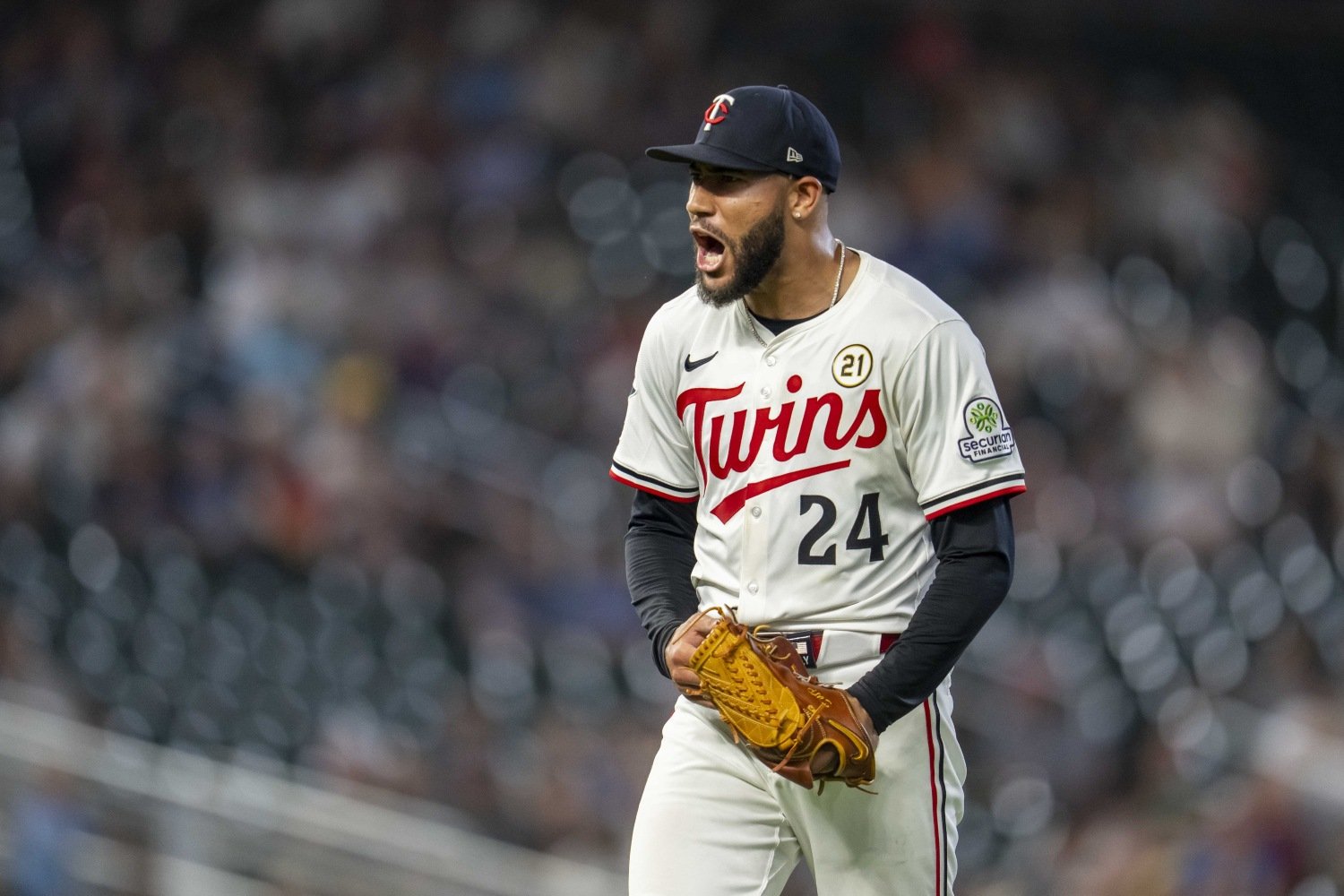 For the past few years, the Twins have focused on accumulating starting pitching depth. The earliest form of this pattern probably dates back to 2021, when they had a full rotation of Kenta Maeda, José Berríos, Michael Pineda, JA Happ, and newly-extended Randy Dobnak, but still elected to sign journeyman Matt Shoemaker to a deal that bumped Dobnak to a long-relief, swingman role to begin the season. Lewis Thorpe and Devin Smeltzer, two lefty swingmen who had parts of two years of MLB experience, were also in the system as high-minors depth. If you were watching the Twins at all at that time, you know how it ended. But the intention seemed clear: the club did not want to be caught without enough rotation depth, and Shoemaker was another buffer against that eventuality. The following season, the club opened the year with six starting pitchers on the Opening Day roster: Sonny Gray, Joe Ryan, Chris Paddack, Dylan Bundy, Chris Archer, and Bailey Ober. Smeltzer, Josh Winder, and Cole Sands were also in the system, though Winder and Sands were not really seen as MLB-ready starters, and neither had debuted. In 2023, the team made the controversial decision to start Ober at Triple-A St. Paul, deferring to Gray, Ryan, Maeda, Tyler Mahle, and newcomer Pablo López to form the rotation. Exemplifying the value of starting pitcher depth, Ober was promoted in April to take Mahle’s place. Behind him on the depth chart, though, was Louis Varland, who had five promising big-league starts the year prior and was seen as one of the more exciting pitching prospects in the system. That campaign served as the sign that the Twins were truly all-in on this strategy. They had six pitchers who looked like quality big-league starters, one more prospect seen as ready, and they even had Paddack as a potential late-season wild card if his recovery from Tommy John surgery was successful. Even so, they had to rely on a short run of starts from 35-year-old Dallas Keuchel. They attempted to do the same in 2024, though the cupboard was a bit more bare. López, Ryan, Ober, and Paddack returned to the rotation, and Anthony DeSclafani was slated to round out a rotation filled with established starters. Varland assumed the 2023 Ober role, as a starter with major-league experience sent down to keep warm in St. Paul until the need arose—and boy did it arise quickly, as the injured DeSclafani never pitched for the Twins, and Varland made the Opening Day rotation. Behind Varland was Simeon Woods Richardson, who had two appearances across two years, but he had impressed in spring training, and he looked ready to get some run. He got that chance after Varland struggled enough to be demoted in April. Behind Woods Richardson was David Festa, who had no big-league experience, but he did look likely to be ready at some point in 2024. Sure enough, he was called up in June. Finally, this season, the Twins took a similar tack, beginning the season with López, Ryan, Ober, Paddack, and Woods Richardson in the rotation, leaving Festa and Zebby Matthews—two top prospects with their debuts out of the way—waiting in the wings. In each of the past three seasons, the Twins have started the season with at least two young pitchers with MLB experience at Triple A: Ober and Varland in 2023; Varland and Woods Richardson in 2024; and Festa and Matthews in 2025. Did you need this history lesson? Maybe. It’s relevant to the 2026 rotation picture. Assuming no trades—which may be a big assumption, depending on your view on the status of López and Ryan, even after Ken Rosenthal's recent report—the Twins will have eight different rotation options with experience in the bigs. López, Ryan, Ober, Woods Richardson, Festa, Matthews, Taj Bradley, and Mick Abel each started at least eight games at the highest level last season. López, Ryan, and Ober seem like locks to be in the rotation (if they’re still in the organization), and Woods Richardson is out of options, seemingly locking him into the big-league roster in some role. That leaves Festa, Matthews, Bradley, and Abel in some limbo; each has at least one minor-league option year remaining. Will the Twins once again start the season with at least two pieces of depth at Triple A? It seems likely, given previous years. Perhaps Bradley will get the nod for the fifth rotation spot, leaving Matthews and Festa (both of whom have 25 games of big-league experience) as the first and second lines of defense against injury and ineffectiveness. This would push Abel, the secondary piece of the Jhoan Durán trade, to the third reserve spot. That spot has generally received about five starts per season over the past five years of Twins baseball. That’s probably fewer than anyone who has any level of belief in Abel as a starter would want him to get in his age-24 season. The eighth spot has been set aside for players like Thorpe or Sands in many seasons, not a recently graduated fringe top-100 prospect. So what do the Twins do? Do one of those eight get moved to the bullpen? Woods Richardson doesn’t profile as a bullpen candidate, and it might be hard to justify moving Bradley—acquired in a one-for-one swap for Griffin Jax—to the bullpen after three seasons in MLB rotations. Matthews and Festa are both names that could be considered bullpen fodder, as each has shown bright flashes but struggled—which is also an argument for Bradley, I suppose. And Abel probably has the brightest flashing "RELIEVER RISK" light of them all. But will the Twins make such a decision? Further complicating things are Connor Prielipp and Kendry Rojas, two Triple-A pitchers added to the 40-man roster last month to protect them from the Rule 5 Draft. Both seem poised to debut in the next season or two, and have upsides as high as any of the other fringe arms listed. This crowding may further push the Twins to make reliever decisions—or perhaps even trade decisions—on the 10 internal names who are on the radar at this point. How would you handle this, though? As the offseason goes on, there will be a ton of discussion as to what the team should do with all these golldang pitchers. There's one more lesson they should have gleaned from the last few years: Letting a logjam slowly unclog itself through accident and injury risks stunting the development of some of the arms making up that jam. Proactivity matters.
- 23 comments
-
- 2
-

-
- zebby matthews
- david festa
- (and 6 more)
-
How does Shelter Skelter sound???
-
Of course I know Greggory said that. I’m Greggory. At no point did I say Martin can’t be a productive player. I said with his skillset he has a narrow lane to productivity as a left fielder. He has to get on base a ton.
- 32 replies
-
- 1
-
-
- byron buxton
- matt wallner
- (and 8 more)
-
Of course, the last couple were foisted in after yesterday’s moves, but how many names on this list do you think have no realistic chance to play in the outfield for the Twins this season? It’s not that Martin doesn’t have the power needed—it’s that his lack of power means he really, really needs to get on base a lot, pushing .380 like he did down the stretch this season.
- 32 replies
-
- 1
-
-
- byron buxton
- matt wallner
- (and 8 more)
-
I should note, this list isn’t intended to be in the order of most to least likely to contribute, or the level to which they’ll contribute. As I went through it, it was more who was front-of-mind for me personally. In retrospect I probably should have sorted it in some specified order.
- 32 replies
-
- 2
-
-
- byron buxton
- matt wallner
- (and 8 more)
-
Image courtesy of © Raymond Carlin III-Imagn Images Let’s just cut to the chase, because there's a lot to discuss. The Twins already have a ton of outfielders. When I asked Twitter this week about how many internal options the Twins have in the outfield, the smallest estimate I received was 12. For reference, the Twins had 12 players play outfield for them all of last season, which included two who were traded away at midseason, three who were acquired midseason, and one Mickey Gasper for an inning in March. How would you handle all these names, even those who you’re going to comment “It’s not even worth discussing ______!” in the replies about? 1. Byron Buxton Not much to discuss here. Very good player. Should be the Opening Day center fielder. I suppose they might have to trade him if they upset him enough to waive his no-trade clause, and he might be moved to a corner if one of the guys further down covers center field better than he does at 32. 2. Matt Wallner More than likely, he’s the Opening Day right fielder. However, he’s coming off his worst MLB season, with a just barely-above league-average .776 OPS (.202/.311/.464 110 OPS+), and his already shaky defense has taken a step back, despite his rocket arm. He seems to be a valuable asset in a lineup that lacks power, but he’s also on the wrong side of 27 and is best suited as a DH. His DH days might be closer than he’d prefer, given other exciting names further down the list. 3. Trevor Larnach If Larnach is still on the team in March, he’s probably the primary left fielder or DH, but it’s become canonized across the Twins’ fanbase that he’s likely taken his last swings as a Twin. He has a pedestrian career slash line around league average with a .727 career OPS, but spotted against righties, he’s an above-average hitter with no speed or defense to add to his profile. With an estimated $4.7 million due in arbitration for next year, odds seem high that he will either be traded, but the Twins have a history of holding on to lefty corner outfielders even when fans believe they’ll be traded any day now. 4. Alan Roden Roden was acquired as part of the Louis Varland trade and would be far more exciting on many other teams. Instead, he’s one of 10 current Twins on the 40-man roster who have played left field and are left-handed. He profiles as a solid glove and solid hitter with more on-base potential than power, but he’s struggled in his 55 games as an MLB player. The Twins have a combination of MLB depth in the corner outfield position and high-upside players behind him (whom he has had only 153 more plate appearances than). So, his path to playing time in the medium- and long-term may be at first base, where he played some in college. 5. Austin Martin The once-top-prospect seems to be settling into a big-league role finally, if the last two months of 2025 are any indication. Martin seems resigned to left field, where his lack of power is a weakness, but if his .374 OBP from 2025 holds up, he can at least be a platoon option, whether that be with Roden, Larnach, or any of the names below. He can also play center field or second base in a pinch, and he’s fast enough to pinch run in games he didn’t start. 6. James Outman Outman was probably the biggest head-scratcher of an acquisition from the Twins’ 2025 trade deadline. The return for reliever Brock Stewart. Outman placed third in Rookie of the Year voting in 2023, but his .529 OPS since is 50% below league average. He also did not impress in center field for the Twins, despite his positive reputation as a defender. The fourth lefty on this list (thus far), he needs to improve his fielding, hitting, or both to carve out a role. He also may be moved—traded or released—if the Twins decide that his replacement outweighs sunk cost. 7. Kody Clemens Clemens is currently penciled in as the Twins’ starting first baseman by most, but (should they bring in some other names to cover the position) he may be an option in a corner. He’s looked fine defensively in limited action in right and left field, so it’s not the worst solution—especially early in the season or if the team catches the injury bug. But names further down the list could probably make his outfield skillset obsolete, even if he is platooning with Martin in left field come March. 8. Walker Jenkins Okay, finally, one of those names further down the list. Jenkins is one of the top prospects in the sport, and even with significant time lost to injury, the 2023 number five pick has made it to Triple-A, holding his own as a 20-year-old for a month in St. Paul. He’s preferably a fixture in the Twins outfield for the next decade. He should be able to play center field enough to at least be Buxton’s backup, which may squeeze Outman out of a job. His hit tool has shone, and if it translates to the majors—especially if he can add some power—he’d be in position to take starting reps away from corner guys like Larnach and Roden and situational reps from Martin and Clemens. It might even happen early in the season, but it’s good not to count chickens before they hatch. 9. Emmanuel Rodriguez Rodriguez’s situation bears similarity to Jenkins—he’s a left-handed top prospect who could play center and hit enough to man a corner but has been slowed by injury. But the way he’s gotten there is different, as he’s a three-true-outcomes hitter with power, plate discipline, and a lot of strikeouts, which contrasts with Jenkins’ more pure hitting approach. He’s also been more plagued by injury, playing just 295 games across five minor league seasons, though the 22-year-old has raked at every level. It’s not hard to see both Jenkins and Rodriguez covering the corners by midseason, health permitting, reframing the roles of whoever is still in the organization between Wallner, Larnach, Roden, Martin, and Outman. Clemens, too. Sure. Wallner could slide to more DHing, playing right field when any of the other three need a day off, and Martin could continue to platoon, but there are a lot of question marks. 10. Carson McCusker and DaShawn Keirsey Jr Before you run off to comment that you stopped reading here, let me draw your attention to the fact that it took me nine starting-caliber outfielders to reach the end of the bench major leaguers. Also, more interesting names are coming. Keep reading. McCusker, is reasonable bench options as a one-trick pony. He can slug as a righty. Technically, he could be a 26th man, but there’s a solid chance he will be designated for assignment this offseason, like DaShawn Keirsey Jr, who originally shared this spot in the article with McCusker before his release. 11-12. Utility Players with Outfield Chops: Ryan Fitzgerald, Ryan Kreidler, and Payton Eeles Both of these guys are currently fighting over the utility infield position, but each has played some outfield to expand their utility. They likely won’t ever be primary guys out there, but they could factor into the picture. Payton Eeles was originally list here as well, but he was traded Friday morning. I'm being thorough. Okay, on to the minor leaguers. 13. Gabriel Gonzalez One of the most recent additions to the 40-man roster, Gonzalez had one of the better turnarounds among Twins minor leaguers last season. Acquired in the Jorge Polanco trade, Gonzalez struggled at High-A in 2024, but he hit his way to Triple-A late in the season, hitting .329 across three levels. A righty, he provides the Twins a platoon option, provided that he continues to hit at St. Paul in 2026. He likely factors more into the second half, but he could fill a needed role, should the Twins have roster room to carry a platoon partner (alongside Martin; or in place of Martin) for their bevy of lefty hitters in the corner outfield. 14-16. Gonzalez-Adjacent Prospects: Kala’i Rosario, Ricardo Olivar, Kyler Fedko These guys’ paths to the Twins’ plans are the least clear, but each righty outfielder could fill the same platoon role that Gonzalez would, should they hit well. The odds are low, but between injuries and underperformance, there’s a world in which any of them play into the Twins’ plans and will spend much of the year at Triple-A, one string of fortune from the majors. Rosario and Fedko each had unexpected 25-25 seasons, and Olivar can catch some. Fedko also saw some time at first base in 2025, adding utility. 17. Hendry Mendez Mendez was the return for Harrison Bader, and he might be the farthest name on this list from the major league outfield, but the 22-year-old was just added to the 40-man roster, which raises his odds of major-league action just out of necessity. Gilberto Celestino played 23 games in 2021 simply because he was a warm body on the 40-man. Mendez had a great year at Double-A, like the three names above, but he’s also left-handed and might be more in the plans at first base than in the outfield. 18. Luke Keaschall You didn’t expect to see Keaschall on this list, did you? He is an interesting case in this discussion, because in many organizations, he’d already be classified as an outfielder. He played 141 innings in center in 2024 but ceased doing so due to a torn UCL. The Twins have committed to him at second base, where his offense is more valuable, but his future may be in left or center. Given the myriad other options, he’s likely to stay on the dirt—at least for now. But I told myself if a player had at least a 5% chance of being in the Twins outfield, I’d list them, and there's a world in which Keaschall does end up spending some time in the outfield, even just in platoon lineups. 19. Mickey Gasper He played an inning there last year. Listen, some things had to change when Eeles was traded and Keirsey was released. This is my fault for dragging my feet on this article. 20. Royce Lewis Maybe Derek Shelton sees part of recapturing the old Royce Lewis is doing some exposure therapy and having him run around in the outfield a bit. Exorcise those center field demons. It could happen. So how would you handle all these names? Who starts, who sits, who is headed to St. Paul (where there might be an outfield logjam made of these names, too)? Who would you trade? Who would you cut? Is there a single righty in your picture? Did I somehow miss your favorite option? View full article
-
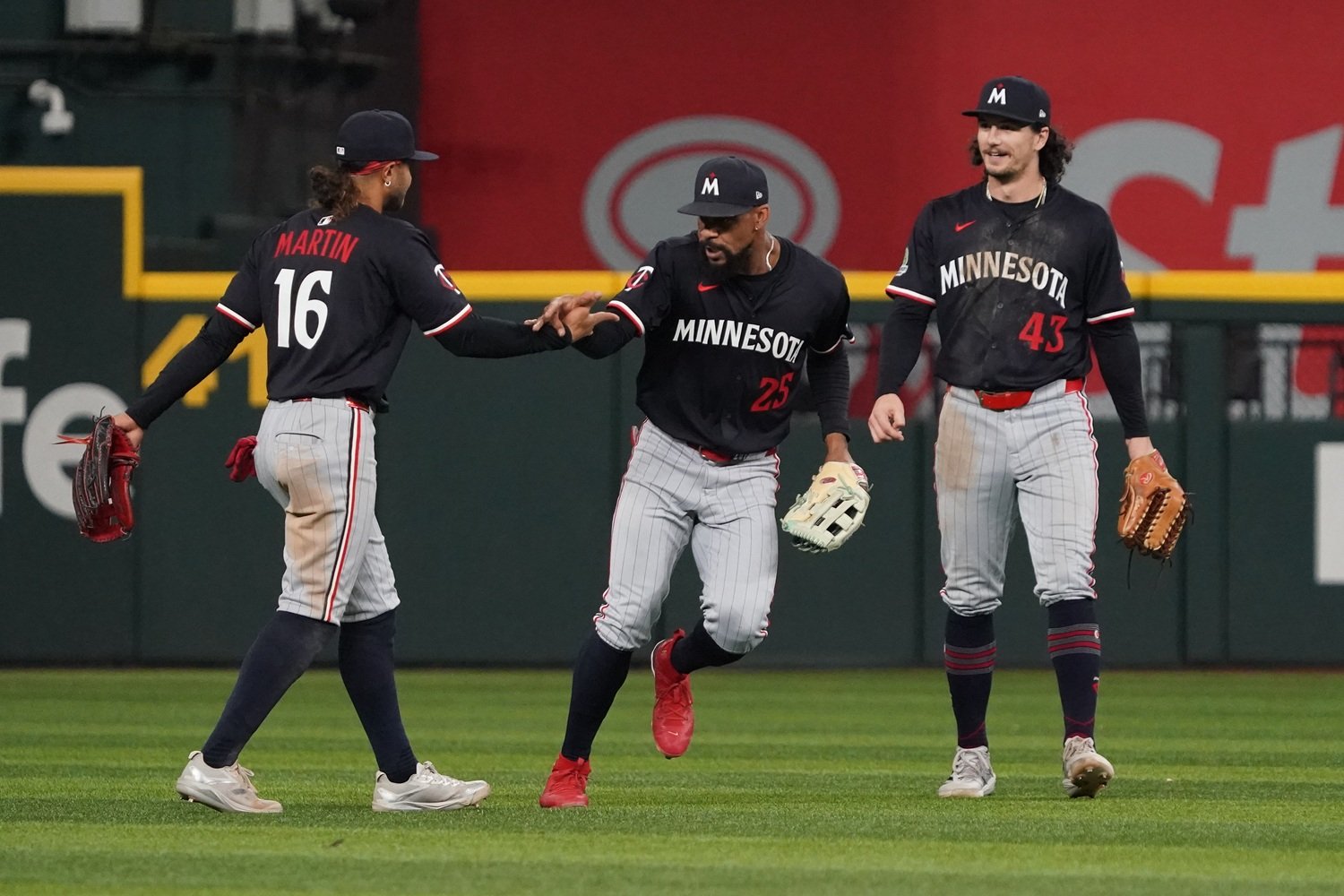 Let’s just cut to the chase, because there's a lot to discuss. The Twins already have a ton of outfielders. When I asked Twitter this week about how many internal options the Twins have in the outfield, the smallest estimate I received was 12. For reference, the Twins had 12 players play outfield for them all of last season, which included two who were traded away at midseason, three who were acquired midseason, and one Mickey Gasper for an inning in March. How would you handle all these names, even those who you’re going to comment “It’s not even worth discussing ______!” in the replies about? 1. Byron Buxton Not much to discuss here. Very good player. Should be the Opening Day center fielder. I suppose they might have to trade him if they upset him enough to waive his no-trade clause, and he might be moved to a corner if one of the guys further down covers center field better than he does at 32. 2. Matt Wallner More than likely, he’s the Opening Day right fielder. However, he’s coming off his worst MLB season, with a just barely-above league-average .776 OPS (.202/.311/.464 110 OPS+), and his already shaky defense has taken a step back, despite his rocket arm. He seems to be a valuable asset in a lineup that lacks power, but he’s also on the wrong side of 27 and is best suited as a DH. His DH days might be closer than he’d prefer, given other exciting names further down the list. 3. Trevor Larnach If Larnach is still on the team in March, he’s probably the primary left fielder or DH, but it’s become canonized across the Twins’ fanbase that he’s likely taken his last swings as a Twin. He has a pedestrian career slash line around league average with a .727 career OPS, but spotted against righties, he’s an above-average hitter with no speed or defense to add to his profile. With an estimated $4.7 million due in arbitration for next year, odds seem high that he will either be traded, but the Twins have a history of holding on to lefty corner outfielders even when fans believe they’ll be traded any day now. 4. Alan Roden Roden was acquired as part of the Louis Varland trade and would be far more exciting on many other teams. Instead, he’s one of 10 current Twins on the 40-man roster who have played left field and are left-handed. He profiles as a solid glove and solid hitter with more on-base potential than power, but he’s struggled in his 55 games as an MLB player. The Twins have a combination of MLB depth in the corner outfield position and high-upside players behind him (whom he has had only 153 more plate appearances than). So, his path to playing time in the medium- and long-term may be at first base, where he played some in college. 5. Austin Martin The once-top-prospect seems to be settling into a big-league role finally, if the last two months of 2025 are any indication. Martin seems resigned to left field, where his lack of power is a weakness, but if his .374 OBP from 2025 holds up, he can at least be a platoon option, whether that be with Roden, Larnach, or any of the names below. He can also play center field or second base in a pinch, and he’s fast enough to pinch run in games he didn’t start. 6. James Outman Outman was probably the biggest head-scratcher of an acquisition from the Twins’ 2025 trade deadline. The return for reliever Brock Stewart. Outman placed third in Rookie of the Year voting in 2023, but his .529 OPS since is 50% below league average. He also did not impress in center field for the Twins, despite his positive reputation as a defender. The fourth lefty on this list (thus far), he needs to improve his fielding, hitting, or both to carve out a role. He also may be moved—traded or released—if the Twins decide that his replacement outweighs sunk cost. 7. Kody Clemens Clemens is currently penciled in as the Twins’ starting first baseman by most, but (should they bring in some other names to cover the position) he may be an option in a corner. He’s looked fine defensively in limited action in right and left field, so it’s not the worst solution—especially early in the season or if the team catches the injury bug. But names further down the list could probably make his outfield skillset obsolete, even if he is platooning with Martin in left field come March. 8. Walker Jenkins Okay, finally, one of those names further down the list. Jenkins is one of the top prospects in the sport, and even with significant time lost to injury, the 2023 number five pick has made it to Triple-A, holding his own as a 20-year-old for a month in St. Paul. He’s preferably a fixture in the Twins outfield for the next decade. He should be able to play center field enough to at least be Buxton’s backup, which may squeeze Outman out of a job. His hit tool has shone, and if it translates to the majors—especially if he can add some power—he’d be in position to take starting reps away from corner guys like Larnach and Roden and situational reps from Martin and Clemens. It might even happen early in the season, but it’s good not to count chickens before they hatch. 9. Emmanuel Rodriguez Rodriguez’s situation bears similarity to Jenkins—he’s a left-handed top prospect who could play center and hit enough to man a corner but has been slowed by injury. But the way he’s gotten there is different, as he’s a three-true-outcomes hitter with power, plate discipline, and a lot of strikeouts, which contrasts with Jenkins’ more pure hitting approach. He’s also been more plagued by injury, playing just 295 games across five minor league seasons, though the 22-year-old has raked at every level. It’s not hard to see both Jenkins and Rodriguez covering the corners by midseason, health permitting, reframing the roles of whoever is still in the organization between Wallner, Larnach, Roden, Martin, and Outman. Clemens, too. Sure. Wallner could slide to more DHing, playing right field when any of the other three need a day off, and Martin could continue to platoon, but there are a lot of question marks. 10. Carson McCusker and DaShawn Keirsey Jr Before you run off to comment that you stopped reading here, let me draw your attention to the fact that it took me nine starting-caliber outfielders to reach the end of the bench major leaguers. Also, more interesting names are coming. Keep reading. McCusker, is reasonable bench options as a one-trick pony. He can slug as a righty. Technically, he could be a 26th man, but there’s a solid chance he will be designated for assignment this offseason, like DaShawn Keirsey Jr, who originally shared this spot in the article with McCusker before his release. 11-12. Utility Players with Outfield Chops: Ryan Fitzgerald, Ryan Kreidler, and Payton Eeles Both of these guys are currently fighting over the utility infield position, but each has played some outfield to expand their utility. They likely won’t ever be primary guys out there, but they could factor into the picture. Payton Eeles was originally list here as well, but he was traded Friday morning. I'm being thorough. Okay, on to the minor leaguers. 13. Gabriel Gonzalez One of the most recent additions to the 40-man roster, Gonzalez had one of the better turnarounds among Twins minor leaguers last season. Acquired in the Jorge Polanco trade, Gonzalez struggled at High-A in 2024, but he hit his way to Triple-A late in the season, hitting .329 across three levels. A righty, he provides the Twins a platoon option, provided that he continues to hit at St. Paul in 2026. He likely factors more into the second half, but he could fill a needed role, should the Twins have roster room to carry a platoon partner (alongside Martin; or in place of Martin) for their bevy of lefty hitters in the corner outfield. 14-16. Gonzalez-Adjacent Prospects: Kala’i Rosario, Ricardo Olivar, Kyler Fedko These guys’ paths to the Twins’ plans are the least clear, but each righty outfielder could fill the same platoon role that Gonzalez would, should they hit well. The odds are low, but between injuries and underperformance, there’s a world in which any of them play into the Twins’ plans and will spend much of the year at Triple-A, one string of fortune from the majors. Rosario and Fedko each had unexpected 25-25 seasons, and Olivar can catch some. Fedko also saw some time at first base in 2025, adding utility. 17. Hendry Mendez Mendez was the return for Harrison Bader, and he might be the farthest name on this list from the major league outfield, but the 22-year-old was just added to the 40-man roster, which raises his odds of major-league action just out of necessity. Gilberto Celestino played 23 games in 2021 simply because he was a warm body on the 40-man. Mendez had a great year at Double-A, like the three names above, but he’s also left-handed and might be more in the plans at first base than in the outfield. 18. Luke Keaschall You didn’t expect to see Keaschall on this list, did you? He is an interesting case in this discussion, because in many organizations, he’d already be classified as an outfielder. He played 141 innings in center in 2024 but ceased doing so due to a torn UCL. The Twins have committed to him at second base, where his offense is more valuable, but his future may be in left or center. Given the myriad other options, he’s likely to stay on the dirt—at least for now. But I told myself if a player had at least a 5% chance of being in the Twins outfield, I’d list them, and there's a world in which Keaschall does end up spending some time in the outfield, even just in platoon lineups. 19. Mickey Gasper He played an inning there last year. Listen, some things had to change when Eeles was traded and Keirsey was released. This is my fault for dragging my feet on this article. 20. Royce Lewis Maybe Derek Shelton sees part of recapturing the old Royce Lewis is doing some exposure therapy and having him run around in the outfield a bit. Exorcise those center field demons. It could happen. So how would you handle all these names? Who starts, who sits, who is headed to St. Paul (where there might be an outfield logjam made of these names, too)? Who would you trade? Who would you cut? Is there a single righty in your picture? Did I somehow miss your favorite option?
- 32 comments
-
- 9
-
-

-

-
- byron buxton
- matt wallner
- (and 8 more)
-
Well obviously yes, they traded Andrew Vasquez at the deadline in 2019. Who could forget that?
-
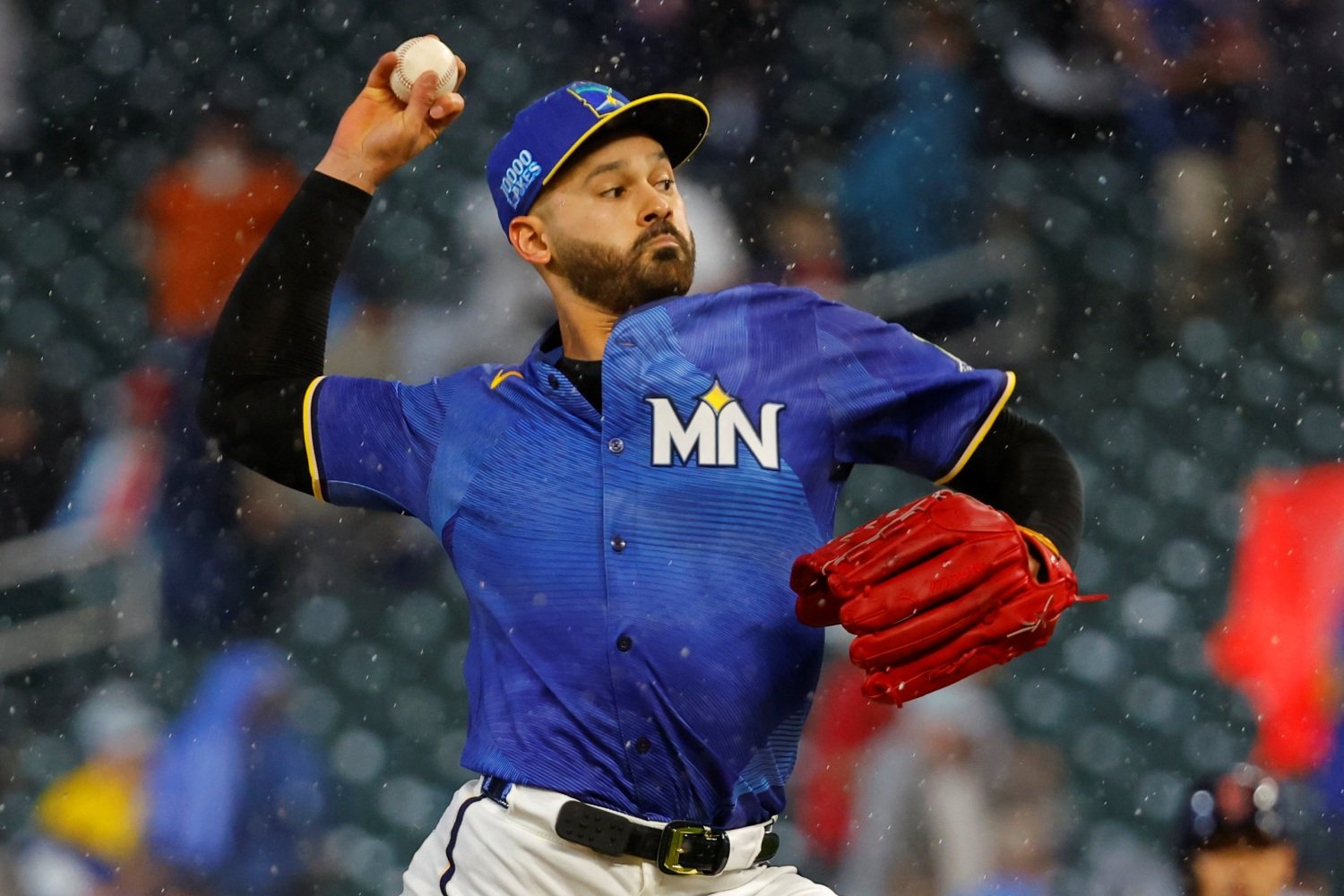 There has been one instance of Derek Falvey trading a veteran for prospect(s) over the offseason. Just one. Can you think of it? It was Gio Urshela, after 2022. Urshela was traded to the Angels for 19-year-old pitcher Alejandro Hidalgo, just hours before the non-tender deadline. This move suggests a high likelihood that Urshela would have been released, rather than the Twins paying him an estimated $8 million via arbitration. The trade was more about finding value than about getting worse in the present for future rewards. Falvey’s avoidance of selling present value for future value communicates an intention not to spend any year in a state of non-competitiveness. Sure, the team has gone through periods of non-competitiveness, but it’s never seemed to be part of an intentional plan. There hasn’t been a single offseason that has seemed like throwing in the towel on the following year. There have been trades of established players. But—except Urshela—they have all brought back big-league talent. There have been minor moves, like 2024’s trade of Nick Gordon for Steven Okert or 2021’s much-ballyhooed LaMonte Wade Jr.-for-Shaun Anderson swap, but most of the Twins’ most significant offseason moves have been these challenge trades, trading MLB talent for MLB talent. The Twins wanted to sell Josh Donaldson ahead of 2022, but instead of prospects, they received Urshela and Gary Sánchez, and they included Isiah Kiner-Falefa and Ben Rortvedt to facilitate the trade. Jorge Polanco was traded for prospects Gabriel Gonzalez and Darren Bowen, but the Twins also received Justin Topa and Anthony DeSclafani in the deal, filling holes on the big-league roster—you know, in theory. In both the Donaldson and Polanco trades, the primary motivation was to move salary, but the Twins used the trades to solve existing problems with their plans to contend immediately. Urshela took Donaldson’s spot, and Sánchez filled a backup catcher role after Mitch Garver was traded for Kiner-Falefa and prospect Ronny Henríquez, for example. The money was quickly reinvested. Carlos Correa signed shortly after the Donaldson trade, and within a week, the money saved in the Polanco trade was allocated to Carlos Santana and Jay Jackson. Even if Urshela was seen as a worse third baseman than Donaldson, the moves served a purpose: to build the team in the short-term and (often) in the long term. As a perfect example of this, the trade that sent Luis Arraez to Miami netted Pablo López, Jose Salas, and Byron Chourio. The Twins dealt from a perceived surplus of lefty corner bats for a badly-needed frontline starter, and they stocked the farm a bit in the process. Ahead of 2022, it was clear that they were ready to move on from Taylor Rogers, but instead of prospects, they brought in two experienced pitchers with more team control, in Emilio Pagán and Chris Paddack. Perceptions of the quality of these trades run the gamut, but it’s clear that the intent has never been to outright cut back on talent in the hopes that the trade would bear fruit three years later. Beyond trades, the Twins have tried to shop each offseason in free agency, sometimes getting creative (like ahead of 2024), sometimes biding their time and hoping talent falls through the cracks (like ahead of 2018, 2021, or 2025). The late signings of Addison Reed, Logan Morrison, and Lance Lynn before 2018 didn’t work, but they still trudged on, adding Nelson Cruz, Jonathan Schoop, C.J. Cron, and (late in the offseason), Marwin Gonzalez ahead of 2019. Even after a disastrous 2021, in an offseason in which they dumped the biggest free-agent contract the organization had ever signed, they still added Correa, because they weren’t throwing in the towel on 2022. I’m not sure that it’s the right tactic. At some point, a team has to cut its losses and stop taking half-measures. The reluctance to sell a player without getting commensurate MLB talent may have kept players around longer than they should have been with the Twins (Max Kepler, maybe?). But the Central has been open for the entirety of Falvey’s tenure—at least to win enough games to catch a Wild Card berth. If nothing else, it’s a noble pursuit. And if, as fans worry, the next step of the process begun on July 31, 2025 is to further hack away at this roster, Falvey will be in uncharted territory. We’ve never seen this team jpack it in ahead of the season. There’s no history to base it on or use as speculation. Falvey has been insistent that he still does not intend to rebuild, and that he does not intend to continue to sell. He's told the media that he wants to add to his group, not subtract, which is in line with his behavior in previous offseasons. Whether you believe him is up to you.
- 146 comments
-
- 7
-
-
- gio urshela
- pablo lopez
- (and 2 more)
-
Image courtesy of © Bruce Kluckhohn-Imagn Images There has been one instance of Derek Falvey trading a veteran for prospect(s) over the offseason. Just one. Can you think of it? It was Gio Urshela, after 2022. Urshela was traded to the Angels for 19-year-old pitcher Alejandro Hidalgo, just hours before the non-tender deadline. This move suggests a high likelihood that Urshela would have been released, rather than the Twins paying him an estimated $8 million via arbitration. The trade was more about finding value than about getting worse in the present for future rewards. Falvey’s avoidance of selling present value for future value communicates an intention not to spend any year in a state of non-competitiveness. Sure, the team has gone through periods of non-competitiveness, but it’s never seemed to be part of an intentional plan. There hasn’t been a single offseason that has seemed like throwing in the towel on the following year. There have been trades of established players. But—except Urshela—they have all brought back big-league talent. There have been minor moves, like 2024’s trade of Nick Gordon for Steven Okert or 2021’s much-ballyhooed LaMonte Wade Jr.-for-Shaun Anderson swap, but most of the Twins’ most significant offseason moves have been these challenge trades, trading MLB talent for MLB talent. The Twins wanted to sell Josh Donaldson ahead of 2022, but instead of prospects, they received Urshela and Gary Sánchez, and they included Isiah Kiner-Falefa and Ben Rortvedt to facilitate the trade. Jorge Polanco was traded for prospects Gabriel Gonzalez and Darren Bowen, but the Twins also received Justin Topa and Anthony DeSclafani in the deal, filling holes on the big-league roster—you know, in theory. In both the Donaldson and Polanco trades, the primary motivation was to move salary, but the Twins used the trades to solve existing problems with their plans to contend immediately. Urshela took Donaldson’s spot, and Sánchez filled a backup catcher role after Mitch Garver was traded for Kiner-Falefa and prospect Ronny Henríquez, for example. The money was quickly reinvested. Carlos Correa signed shortly after the Donaldson trade, and within a week, the money saved in the Polanco trade was allocated to Carlos Santana and Jay Jackson. Even if Urshela was seen as a worse third baseman than Donaldson, the moves served a purpose: to build the team in the short-term and (often) in the long term. As a perfect example of this, the trade that sent Luis Arraez to Miami netted Pablo López, Jose Salas, and Byron Chourio. The Twins dealt from a perceived surplus of lefty corner bats for a badly-needed frontline starter, and they stocked the farm a bit in the process. Ahead of 2022, it was clear that they were ready to move on from Taylor Rogers, but instead of prospects, they brought in two experienced pitchers with more team control, in Emilio Pagán and Chris Paddack. Perceptions of the quality of these trades run the gamut, but it’s clear that the intent has never been to outright cut back on talent in the hopes that the trade would bear fruit three years later. Beyond trades, the Twins have tried to shop each offseason in free agency, sometimes getting creative (like ahead of 2024), sometimes biding their time and hoping talent falls through the cracks (like ahead of 2018, 2021, or 2025). The late signings of Addison Reed, Logan Morrison, and Lance Lynn before 2018 didn’t work, but they still trudged on, adding Nelson Cruz, Jonathan Schoop, C.J. Cron, and (late in the offseason), Marwin Gonzalez ahead of 2019. Even after a disastrous 2021, in an offseason in which they dumped the biggest free-agent contract the organization had ever signed, they still added Correa, because they weren’t throwing in the towel on 2022. I’m not sure that it’s the right tactic. At some point, a team has to cut its losses and stop taking half-measures. The reluctance to sell a player without getting commensurate MLB talent may have kept players around longer than they should have been with the Twins (Max Kepler, maybe?). But the Central has been open for the entirety of Falvey’s tenure—at least to win enough games to catch a Wild Card berth. If nothing else, it’s a noble pursuit. And if, as fans worry, the next step of the process begun on July 31, 2025 is to further hack away at this roster, Falvey will be in uncharted territory. We’ve never seen this team jpack it in ahead of the season. There’s no history to base it on or use as speculation. Falvey has been insistent that he still does not intend to rebuild, and that he does not intend to continue to sell. He's told the media that he wants to add to his group, not subtract, which is in line with his behavior in previous offseasons. Whether you believe him is up to you. View full article
- 146 replies
-
- 1
-
-
- gio urshela
- pablo lopez
- (and 2 more)
-
Image courtesy of © John E. Sokolowski-Imagn Images The Twins are (pardon the pun) short at the shortstop position. Brooks Lee is, frankly, the only player in the organization who has shown any indication that he may be a viable MLB shortstop in 2026, and even he has played at replacement level across 712 plate appearances in two seasons, slashing .232/.279/.357, with middling-at-best shortstop defense (-3 OAA across 803 innings, about 90 games’ worth). Behind him are a slew of semi-viable backup shortstops who have proved even less. Ryan Fitzgerald made his big-league debut late in 2025, posting an OPS 10% above league average (at .758) in 52 plate appearances. He plays shortstop, but he’s not great defensively. The Twins recently claimed Ryan Kreidler, a 28-year-old with a good glove but no bat, who has 211 plate appearances across four big-league seasons. Those 211 plate appearances are 211 more than Twins fans’ folk hero Payton Eeles has, and although many are clamoring for him to take a utility role in 2026, scouts are mixed on him at shortstop. There’s always Kaelen Culpepper, who rose quickly through the Twins’ farm system and is poised to open the 2026 season in Triple A, or at least reach that level early. Scouts see him as able to stick at shortstop, at least early in his career. His bat was impressive, with an .844 OPS across High A and Double A. He may be the Twins’ shortstop before long, but he doesn’t appear ready now. His late-season struggles could carry over into 2026, and he shouldn’t be counted on as depth yet. Thus, even in a year like this—when payroll room seems tight once again—the Twins would benefit from bringing in a veteran shortstop as a utility infielder, since there’s a reasonable chance that none of the four aforementioned names are even on the 40-man roster on Opening Day. Beyond that, though, are the questions about Lee. The Twins might not just need a utility infielder; they might need someone to play more like every day. If they have any genuine interest in competing in 2026, it would behoove the team to have someone else who wouldn’t be an outright disaster as a starting shortstop, even if they aren’t above average. Unfortunately, starting shortstops aren’t easily obtained in free agency. A player like Bo Bichette or even Ha-Seong Kim is priced out of the Twins’ market. And speaking of Bichette, many viable MLB players age out of shortstop viability by the time they hit free agency in their late 20s or early 30s. Free agents like Willi Castro, Luis Rengifo, Chris Taylor, Amed Rosario, or Kyle Farmer have their shortstop days in the rearview mirror. Those who can still play shortstop often don’t hit much. Did you know Farmer played more at first base than shortstop this season—and that he was the designated hitter twice as often as he was the shortstop? I learned that doing this research. Father Time comes for everyone. Here are the two names that fit in the happy medium space the Twins might be trawling. If it’s not one of these two guys, or someone acquired via trade, they’re going to have to roll with what they’ve got. Isiah Kiner-Falefa It’s the return of the king! The Twin-for-a-Day is probably the most reasonable candidate for this role. He’s getting older, but his performance really hasn’t changed much since the Twins originally acquired him ahead of 2022 to act as their placeholder shortstop. He was approximately the same caliber of fielder at shortstop as Lee in 2025, and both were roughly 25% worse than league-average hitters—though Lee’s profile was more dependent on slugging, while Kiner-Falefa’s was fueled by on-base ability. That Lee compares so closely to Kiner-Falefa is probably an indictment of Lee’s play early in his career, but it also puts into perspective the shallowness of the organization’s shortstop ranks. Kiner-Falefa is a known commodity whom the Twins have shown interest in before. He’s spent much of his career in a utility role and has played every position except first base in the majors. However, he’s going into his age-31 season, and his once dependable (if slightly below-average) defense at shortstop may be slipping. On the bright side, he’s looked fine at second and third. His ceiling has never been high, and once the floor is gone, it’s gone. Still, at the price the Twins would be willing to spend, he might be the best line of defense they can afford. Miguel Rojas No, seriously, that’s how thin this market is. After this point, the Twins will be sifting through a collection of sub-replacement-level players who appeared in fewer than 60 games this season, such as Jorge Mateo, Paul DeJong, Zack Short, or Orlando Arcia. MLB Trade Rumors lists 10 free-agent shortstops heading into 2026, and one of them is Tim Anderson. Tim Anderson had 17 hits this season and started 11 games at shortstop. Rojas was a Game 7 hero, and will be written into Dodgers lore forever. He was a part-time player this season. He managed to play a solid shortstop in limited action, but was an excellent second baseman. Depending on who you talk to, he’s either a great leader and beloved in the clubhouse or the worst teammate imaginable, but he could be a veteran presence. He intends to play in 2026 and then retire. Alas, he has made it clear he wants that 2026 season to be in Los Angeles. Jumping into a clubhouse of strangers on a team that might be rebuilding isn’t how most players envision their final year. So, yeah, even if the Twins wanted to, it seems like a long shot. So maybe it’s truly Kiner-Falefa or bust, if the Twins decide they need infield depth. But how many other teams are in the same position and don’t want to spend big on Bichette or Kim? Could Kiner-Falefa see a fairly robust market? I don’t know. This seemed like a more interesting topic when I signed up for it. I suppose it’s more “interesting” in the Minnesota vernacular. The trade market could be more interesting, but as Derek Falvey noted at last week's press event introducing Derek Shelton, trades for role players like these can be tricky, too. View full article
-
 The Twins are (pardon the pun) short at the shortstop position. Brooks Lee is, frankly, the only player in the organization who has shown any indication that he may be a viable MLB shortstop in 2026, and even he has played at replacement level across 712 plate appearances in two seasons, slashing .232/.279/.357, with middling-at-best shortstop defense (-3 OAA across 803 innings, about 90 games’ worth). Behind him are a slew of semi-viable backup shortstops who have proved even less. Ryan Fitzgerald made his big-league debut late in 2025, posting an OPS 10% above league average (at .758) in 52 plate appearances. He plays shortstop, but he’s not great defensively. The Twins recently claimed Ryan Kreidler, a 28-year-old with a good glove but no bat, who has 211 plate appearances across four big-league seasons. Those 211 plate appearances are 211 more than Twins fans’ folk hero Payton Eeles has, and although many are clamoring for him to take a utility role in 2026, scouts are mixed on him at shortstop. There’s always Kaelen Culpepper, who rose quickly through the Twins’ farm system and is poised to open the 2026 season in Triple A, or at least reach that level early. Scouts see him as able to stick at shortstop, at least early in his career. His bat was impressive, with an .844 OPS across High A and Double A. He may be the Twins’ shortstop before long, but he doesn’t appear ready now. His late-season struggles could carry over into 2026, and he shouldn’t be counted on as depth yet. Thus, even in a year like this—when payroll room seems tight once again—the Twins would benefit from bringing in a veteran shortstop as a utility infielder, since there’s a reasonable chance that none of the four aforementioned names are even on the 40-man roster on Opening Day. Beyond that, though, are the questions about Lee. The Twins might not just need a utility infielder; they might need someone to play more like every day. If they have any genuine interest in competing in 2026, it would behoove the team to have someone else who wouldn’t be an outright disaster as a starting shortstop, even if they aren’t above average. Unfortunately, starting shortstops aren’t easily obtained in free agency. A player like Bo Bichette or even Ha-Seong Kim is priced out of the Twins’ market. And speaking of Bichette, many viable MLB players age out of shortstop viability by the time they hit free agency in their late 20s or early 30s. Free agents like Willi Castro, Luis Rengifo, Chris Taylor, Amed Rosario, or Kyle Farmer have their shortstop days in the rearview mirror. Those who can still play shortstop often don’t hit much. Did you know Farmer played more at first base than shortstop this season—and that he was the designated hitter twice as often as he was the shortstop? I learned that doing this research. Father Time comes for everyone. Here are the two names that fit in the happy medium space the Twins might be trawling. If it’s not one of these two guys, or someone acquired via trade, they’re going to have to roll with what they’ve got. Isiah Kiner-Falefa It’s the return of the king! The Twin-for-a-Day is probably the most reasonable candidate for this role. He’s getting older, but his performance really hasn’t changed much since the Twins originally acquired him ahead of 2022 to act as their placeholder shortstop. He was approximately the same caliber of fielder at shortstop as Lee in 2025, and both were roughly 25% worse than league-average hitters—though Lee’s profile was more dependent on slugging, while Kiner-Falefa’s was fueled by on-base ability. That Lee compares so closely to Kiner-Falefa is probably an indictment of Lee’s play early in his career, but it also puts into perspective the shallowness of the organization’s shortstop ranks. Kiner-Falefa is a known commodity whom the Twins have shown interest in before. He’s spent much of his career in a utility role and has played every position except first base in the majors. However, he’s going into his age-31 season, and his once dependable (if slightly below-average) defense at shortstop may be slipping. On the bright side, he’s looked fine at second and third. His ceiling has never been high, and once the floor is gone, it’s gone. Still, at the price the Twins would be willing to spend, he might be the best line of defense they can afford. Miguel Rojas No, seriously, that’s how thin this market is. After this point, the Twins will be sifting through a collection of sub-replacement-level players who appeared in fewer than 60 games this season, such as Jorge Mateo, Paul DeJong, Zack Short, or Orlando Arcia. MLB Trade Rumors lists 10 free-agent shortstops heading into 2026, and one of them is Tim Anderson. Tim Anderson had 17 hits this season and started 11 games at shortstop. Rojas was a Game 7 hero, and will be written into Dodgers lore forever. He was a part-time player this season. He managed to play a solid shortstop in limited action, but was an excellent second baseman. Depending on who you talk to, he’s either a great leader and beloved in the clubhouse or the worst teammate imaginable, but he could be a veteran presence. He intends to play in 2026 and then retire. Alas, he has made it clear he wants that 2026 season to be in Los Angeles. Jumping into a clubhouse of strangers on a team that might be rebuilding isn’t how most players envision their final year. So, yeah, even if the Twins wanted to, it seems like a long shot. So maybe it’s truly Kiner-Falefa or bust, if the Twins decide they need infield depth. But how many other teams are in the same position and don’t want to spend big on Bichette or Kim? Could Kiner-Falefa see a fairly robust market? I don’t know. This seemed like a more interesting topic when I signed up for it. I suppose it’s more “interesting” in the Minnesota vernacular. The trade market could be more interesting, but as Derek Falvey noted at last week's press event introducing Derek Shelton, trades for role players like these can be tricky, too.
- 93 comments
-
- 9
-

-
-
- miguel rojas
- isiah kiner falefa
- (and 3 more)

