



Greggory Masterson
-
Posts
819 -
Joined
-
Last visited
-
Days Won
2
Content Type
Profiles
News
Minnesota Twins Videos
2026 Minnesota Twins Top Prospects Ranking
2022 Minnesota Twins Draft Picks
Minnesota Twins Free Agent & Trade Rumors, Notes, & Tidbits
Guides & Resources
2023 Minnesota Twins Draft Picks
The Minnesota Twins Players Project
2024 Minnesota Twins Draft Picks
2025 Minnesota Twins Draft Pick Tracker
2026 Minnesota Twins Draft Tracker: Picks & Bonuses
Forums
Blogs
Events
Store
Downloads
Gallery
Everything posted by Greggory Masterson
-
 Image courtesy of © Jesse Johnson-Imagn Images Put even more concisely, it's his job. It’s a common question posed by fans and commentators this trade deadline: Should Derek Falvey be trusted with potential franchise-altering trades? Our own Matthew Taylor asked that same question this weekend. He laid out the general points: Falvey’s job status beyond this season isn’t guaranteed, given the looming sale of the franchise and the team likely missing the playoffs in four of the past five seasons. There's a potential misalignment of goals (given that Falvey’s position may lead him to focus more on the short term than long-term organizational health), and many have questions about his trade record in the past. You can read Matthew’s piece for a more fleshed-out version of these factors (and my history of Falvey’s deadline deals, while you're looking for more light reading). But I’m here to tell you that answer: like it or not, he has to make those decisions at this deadline. Or at least, he has to be left alone to be open to them. To be clear, no one is arguing about whether he should be allowed to dump the expiring contracts; we’re talking about guys like Joe Ryan, Griffin Jax, or Jhoan Durán, or who knows, maybe Brock Stewart, Ryan Jeffers, or Trevor Larnach—players with at least a year remaining of team control after 2025. We just saw him deal Chris Paddack, but the real stakes lie with the longer-term moves. There, too, lie the real questions. But, again, the answer to this question is very simple. If he has the job, he has to do the job. Although it may seem like the organization is shooting itself in the foot, allowing a decision-maker to make potentially franchise-altering decisions on the way out the door, there are a few things to keep in mind here. First, the obvious: there’s no indication Falvey will not return in 2026 and beyond in a baseball decision-making position. There’s no indication he will, either, but such is the nature of a team that’s currently up for sale with no concrete news as to when a new owner will start calling shots—or what that owner’s preferences are. Given the assumption that no one knows the answer to that question (and at least publicly, that’s true, though it may be a different story behind closed doors), it’s incumbent on the organization to act as if there will not be changes to the decision-making roles. They need to act as if they will continue to be making those decisions for years to come. I mean, what’s the alternative? They take their ball and go home? Say, “I don’t know if I’ll be here next year, so I won’t do anything now?” Good luck explaining that to your new boss. Second, related to the first: making a silly, shortsighted trade of a valuable piece like Duran for some short-term gain is also not a good way to endear oneself to ownership. Doing something reckless to try to win in 2025 or sell out for 2026, like the recklessness by omission of doing nothing, isn’t good for a career, either. Third, are we all talking about the same Derek Falvey? As an executive, his public reputation is that of a notoriously hard bargainer. Making a deal on a controllable asset just to make a deal seems out of character—as an outsider, at least—which should give Twins fans comfort. By all accounts, and from watching him for eight seasons, it would be surprising to see him complete a deal that he didn’t think he won. It would, frankly, be confusing. Of course, you may have reached the end of this and maintained the opinion that you simply don’t trust him to make decisions, because you think he’s not good at his job. I’m not here to stop you from believing that. But too bad, I guess. That’s not an argument against him making these specific deals; it’s an argument that he shouldn’t have this job anymore, which, again, I won’t stop you from making. But it’s a different discussion. At that point, your stance should be that he shouldn’t be allowed to try to find deals for Harrison Bader and Willi Castro, and that a new decision-maker should replace him before we reach the deadline. But that’s not what we’re discussing. We’re talking about an executive doing the job that he’s paid to do. And if a team comes knocking, willing to overpay for one of the Twins' pricier pieces, it's incumbent on this organization to pull the trigger, regardless of the cloudy picture in 2026 and beyond. View full article
 -
Image courtesy of © Denny Medley-Imagn Images There’s no real reason to believe that the Twins won’t sell, at least a little bit. You’ve read enough stories here detailing why, who is available, what the Twins could expect in return, yadda yadda. If you’ve been reading Twins Daily for a while, you’ll also probably know how these articles work—this is the eighth I’ve written in the last 25 months. Below, I’ve listed the 14 times the Twins have sold at the deadline since 2017, Derek Falvey’s first year controlling the team. I’ve roughly ordered them from highest quality to lowest quality, preferring trades that bring back big-league players, even if the Twins didn’t get their money’s worth. You can argue over it if you want. After getting feedback on these, I’ve slightly altered the format of the information given. I’ve listed player stats: innings pitched or plate appearances, ERA+ or OPS+, and Baseball Reference WAR. For Minnesota’s return (e.g., Joe Ryan). I listed their performance as a Twin first. For the other team’s return (e.g., Nelson Cruz), I listed their performance through whatever team control Minnesota had at that time first. I want to compare what the Twins got out of the deal against the overall value they sent out. For Twins players, mostly prospects, this excludes value they accumulated elsewhere (e.g., Zack Littell in Tampa), even if they were still on the contract they had with the Twins. For other teams’ players (e.g., Ryan Pressly), I have highlighted what they did on the contract they were on with the Twins, even if they finished the contract with another team, to note the value given up. However, I do not count anything after the player signs an extension. Complain in the comments if you don’t think it’s fair. I also attempted to add as much context as concisely possible, because stats don’t tell the whole story. 1. 7/22/21: Minnesota acquires Joe Ryan* (587 IP, 114 ERA+, 11.0 bWAR), Drew Strotman (did not reach Minnesota) from Tampa Bay for Nelson Cruz (238 PA, 101 OPS+, 0.4 bWAR), Calvin Faucher (138.2 IP, 94 ERA+, 0.3 bWAR under team control; 47 IP, 64 ERA+, -0.8 bWAR for the Rays), +10.3 bWAR for Minnesota. This one hurt, as Cruz was a fan favorite and the leader of the greatest power offense in baseball history, but it’s turned out better than most could imagine. Although Strotman washed out of the organization in 2022, Ryan has emerged as a frontline starter who continues to improve. To get Ryan, the Twins gave up two months of Cruz, who was merely league-average for the Rays, and Faucher, who struggled in Tampa but is a nice piece in Miami’s pen after being traded there ahead of the 2024 season. 2. 7/27/18: Minnesota acquires Jhoan Duran* (230.2 IP, 170 ERA+, 7.2 bWAR), Ernie De La Trinidad (did not reach Minnesota), Gabriel Maciel (did not reach Minnesota) from Arizona for Eduardo Escobar (223 PA, 102 OPS+, 0.6 bWAR under team control; 1,544 PA, 102 OPS+, 6.2 bWAR for Arizona), 6.6 bWAR for Minnesota. Escobar was a solid regular and fan favorite for the Twins on an expiring contract, and he signed a three-year extension with Arizona after the trade, continuing to be a contributor at multiple positions. De La Trinidad and Maciel are out of affiliated ball and on Oakland’s High-A team, respectively. Jhoan Duran debuted in 2022 and has been one of the more dominant closers in baseball ever since. 3. 7/30/21: Minnesota acquires Simeon Woods Richardson* (219.1 IP, 99 ERA+, 3.2 bWAR), Austin Martin* (257 PA, 89 OPS+, -1.0 bWAR) from Toronto for José Berríos* (242.1 IP, 85 ERA+, 0.9 bWAR under team control; 745.1 IP, 103 ERA+, 7.4 bWAR for the Blue Jays), +1.3 bWAR for Minnesota. We’re years away from knowing for sure who won this trade, and it could get much better or much worse, hence its middling position in this ranking. José Berríos quickly signed a seven-year, $131-million extension with Toronto, but struggled mightily in 2022 before his extension kicked in. He’s been a solid No. 2 or 3 starter from 2023 to 2025, but the Twins had no intention of extending him. Woods Richardson had a bumpy ride in the majors, but has provided meaningful innings for two years. Martin, once a top prospect in baseball, stumbled in his first year of big-league action in 2024 and has not made it back to the show in 2025. There was an opportunity cost to this trade, as it netted two top-100 prospects but meant starting over a bit in the rotation. 4. 7/30/17: Minnesota acquires Zack Littell (63.2 IP, 99 ERA+, 0.2 bWAR for Minnesota; 538.1 IP, 108 ERA+, 7.2 bWAR under team control), Dietrich Enns (4.0 IP, 71 ERA+, -0.1 bWAR for Minnesota, 42.1 IP, 116 ERA+, 0.2 bWAR under team control) from New York (AL) for Jaime Garcia (37.1 IP, 94 ERA+, -0.1 bWAR), +0.0 bWAR for Minnesota. After deciding that maybe they shouldn’t go for it, the Twins traded Jaime Garcia to New York and retained his salary. In return for 37 1/3 mediocre innings from Garcia, who retired the following year, Minnesota received Zack Littell and Dietrich Enns. Littell was a solid enough reliever for three years, until being designated for assignment after 2020, and he’s reinvented himself as a starter in Tampa. Enns has been unremarkable, pitching in 2017, 2021, and 2025 for three organizations. 5. 7/31/18: Minnesota acquires Logan Forsythe (205 PA, 81 OPS+, 0.2 bWAR), Luke Raley (did not reach Minnesota, 1,175 PA, 115 OPS+, 6.0 bWAR under team control), Devin Smeltzer (140 IP, 106 ERA+, 1.6 bWAR for the Twins; 162.1 IP, 74 ERA+, 1.4 bWAR under team control) from Los Angeles (NL) for Brian Dozier (170 PA, 77 OPS+, 0.1 bWAR), +1.7 bWAR for Minnesota. Brian Dozier was on the wrong side of 30 and in the middle of a pedestrian year, after the Twins passed on better opportunities to cash in on his talents. Forsythe was acquired to finish the year in Dozier’s spot at second base, and Luke Raley was later traded back to LA in the Kenta Maeda trade. He’s since emerged as a solid bat for a few different teams. Devin Smeltzer was a feel-good story who filled a swingman role on some good Twins teams over four years. 6. 7/30/21: Minnesota acquires John Gant (33.2 IP, 76 ERA+, -0.3 bWAR), Evan Sisk (did not reach Minnesota; 5.1 IP, 259 ERA+, 0.1 bWAR under team control) from Cincinnati for J.A. Happ (54 IP, 98 ERA+, 0.5 bWAR), -0.8 bWAR for Minnesota. This trade was a salary dump to salvage some money from Happ. Gant came over to offset some of the salary and fill a rotation slot, and he was not offered arbitration after the season. Evan Sisk was part of the trade that brought Michael A. Taylor to Minnesota for 2023. It was impressive to get anything of value in the trade, given Happ's struggles in Minnesota. 7. 7/28/18: Minnesota acquires Gilberto Celestino (409 PA, 70 OPS+, 0.2 bWAR), Jorge Alcala* (187.2 IP, 99 ERA+, 1.1 bWAR, 200.2 IP, 105 ERA+, 0.2 bWAR under team control) from Houston for Ryan Pressly* (77.2 IP, 243 ERA+, 3.0 bWAR under team control; 333 IP, 151 ERA+, 6.4 bWAR for the Astros), -1.7 bWAR for Minnesota. One that got away, Pressly has made two All-Star Games in Houston since the trade, and the Astros extended him—though it was clear the Twins had no intention of doing the same. Alcala has shown flashes as a late-inning arm, but he has failed to provide any level of consistency and was traded earlier this year. Celestino was rushed to the majors in 2021 and has not seen success in MLB; he's now in the Mets system. 8. 7/30/18: Minnesota acquires Tyler Austin (141 PA, 110 OPS+, 0.3 bWAR), Luis Rijo (did not reach Minnesota) from New York (AL) for Lance Lynn (54.1 IP, 102 ERA+, 0.3 bWAR), +0.0 bWAR for Minnesota. It was time for Lynn to go. The surly man did not perform in Minnesota, but he has been a quality, reliable pitcher outside of his four months in a Twins uniform. He just retired this spring. Rijo washed out of Minnesota's system after 2022, and Austin spent time at first base and designated hitter but was again traded in 2019, after C.J. Cron emerged as a better first baseman. It was good to get any big-league asset out of this trade. 9. 7/30/21: Minnesota acquires Alex Scherff (did not reach Minnesota) from Boston for Hansel Robles (25.0 IP, 131 ERA+, 0.5 bWAR under team control; 49.2 IP, 95 ERA+, -0.3 bWAR for Boston), -0.5 bWAR for Minnesota. Robles had a rocky half-season in Minnesota as a setup man in a poor bullpen, so the team was never likely to get much of anything in return. Scherff is currently at Wichita, but his performance has not been anything to be excited about from a minor-league reliever. 10. 7/26/23: Minnesota acquires Dylan Floro (17.0 IP, 84 ERA+, 0.0 bWAR), from Miami for Jorge López (20.2 IP, 85 ERA+, 0.3 bWAR under team control; 11.2 IP, 52 ERA+, -0.5 bWAR for Miami), -0.3 bWAR for Minnesota. After being acquired at the 2022 deadline to pair with Duran in the back of the Twins’ bullpen, López’s tenure started shaky and only got worse. By July the following year, the Twins sent him to Miami for Floro, who ate a few innings out of the pen and was cut late in the season. López was a functional reliever in 2024, but the Twins weren’t going to wait for that player to reappear. They seemed relieved to get anything for him in the first place. 11. 7/30/18: Minnesota acquires Chase De Jong (18.2 IP, 84 ERA+, 0.0 bWAR for the Twins; 181.0 IP, 78 ERA+, -0.1 bWAR under team control), Ryan Costello (did not reach Minnesota) from Seattle for Zach Duke (14.2 IP, 75 ERA+, 0.0 bWAR), +0.0 bWAR for Minnesota. Duke was having a decent year as a middle reliever. For the last two months of 2018 Duke, the Twins got 18.2 innings of Chase De Jong, who had a good 2022 in Pittsburgh but has otherwise been unremarkable. 12. 7/31/17: Minnesota acquires Tyler Watson (did not reach Minnesota) from Washington for Brandon Kintzler (26.0 IP, 131 ERA+, 0.5 bWAR under team control; 68.2 IP, 123 ERA+, 1.2 bWAR for the Nationals), -0.5 bWAR for Minnesota. Brandon Kintzler was a great story for the Twins, improbably rising to become an All-Star closer in 2017. The Twins traded him and his expiring contract for Watson, who never made the majors. Washington extended Kintzler on a two-year deal, but he was traded to the Cubs in 2018 for future Twin Jhon Romero. 13. 8/9/18: Minnesota acquires Dakota Chalmers (did not reach Minnesota), from Oakland for Fernando Rodney (20.2 IP, 108 ERA+, 0.2 bWAR under team control; 35.0 IP, 70 ERA+, -0.3 bWAR for Oakland), -0.2 bWAR for Minnesota. Stop me if you’ve heard this before: the Twins traded their closer at the deadline. Pulling an Oakland on Oakland, they got back righty Dakota Chalmers, a lottery ticket who struggled with command and is now in independent ball. 14. 7/30/21: Minnesota acquires Stevie Berman (did not reach Minnesota) from Los Angeles (NL) for Andrew Vasquez (63.2 IP, 104 ERA+, 0.6 bWAR under team control; 1.2 IP, 999 ERA+, 0.1 bWAR for the Dodgers), -0.6 bWAR for Minnesota. Despite the excitement surrounding Andrew Vasquez as a prospect, he was never able to stick with Minnesota and was flipped for a depth catcher who was waived and is now in Toronto’s system. There you have it. How do you feel about the Twins’ prospects of gaining assets in trades this season? How much confidence do you have that this front office will bring in beneficial pieces? History is one of our best guides; listen closely to what it's telling us. View full article
-
What's the Verdict on Previous Twins Trade Deadline Sell-Offs?
Greggory Masterson posted an article in Twins
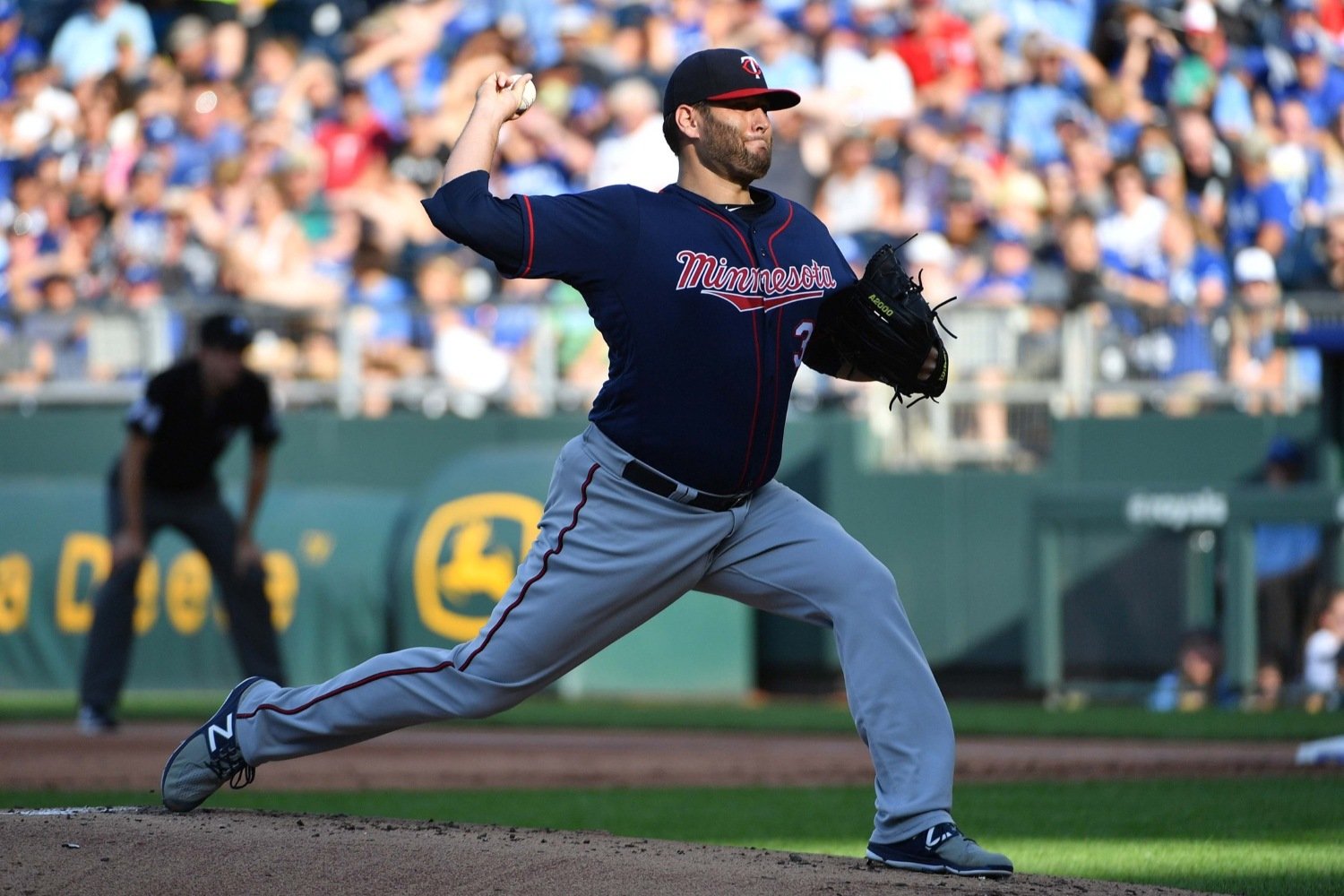 There’s no real reason to believe that the Twins won’t sell, at least a little bit. You’ve read enough stories here detailing why, who is available, what the Twins could expect in return, yadda yadda. If you’ve been reading Twins Daily for a while, you’ll also probably know how these articles work—this is the eighth I’ve written in the last 25 months. Below, I’ve listed the 14 times the Twins have sold at the deadline since 2017, Derek Falvey’s first year controlling the team. I’ve roughly ordered them from highest quality to lowest quality, preferring trades that bring back big-league players, even if the Twins didn’t get their money’s worth. You can argue over it if you want. After getting feedback on these, I’ve slightly altered the format of the information given. I’ve listed player stats: innings pitched or plate appearances, ERA+ or OPS+, and Baseball Reference WAR. For Minnesota’s return (e.g., Joe Ryan). I listed their performance as a Twin first. For the other team’s return (e.g., Nelson Cruz), I listed their performance through whatever team control Minnesota had at that time first. I want to compare what the Twins got out of the deal against the overall value they sent out. For Twins players, mostly prospects, this excludes value they accumulated elsewhere (e.g., Zack Littell in Tampa), even if they were still on the contract they had with the Twins. For other teams’ players (e.g., Ryan Pressly), I have highlighted what they did on the contract they were on with the Twins, even if they finished the contract with another team, to note the value given up. However, I do not count anything after the player signs an extension. Complain in the comments if you don’t think it’s fair. I also attempted to add as much context as concisely possible, because stats don’t tell the whole story. 1. 7/22/21: Minnesota acquires Joe Ryan* (587 IP, 114 ERA+, 11.0 bWAR), Drew Strotman (did not reach Minnesota) from Tampa Bay for Nelson Cruz (238 PA, 101 OPS+, 0.4 bWAR), Calvin Faucher (138.2 IP, 94 ERA+, 0.3 bWAR under team control; 47 IP, 64 ERA+, -0.8 bWAR for the Rays), +10.3 bWAR for Minnesota. This one hurt, as Cruz was a fan favorite and the leader of the greatest power offense in baseball history, but it’s turned out better than most could imagine. Although Strotman washed out of the organization in 2022, Ryan has emerged as a frontline starter who continues to improve. To get Ryan, the Twins gave up two months of Cruz, who was merely league-average for the Rays, and Faucher, who struggled in Tampa but is a nice piece in Miami’s pen after being traded there ahead of the 2024 season. 2. 7/27/18: Minnesota acquires Jhoan Duran* (230.2 IP, 170 ERA+, 7.2 bWAR), Ernie De La Trinidad (did not reach Minnesota), Gabriel Maciel (did not reach Minnesota) from Arizona for Eduardo Escobar (223 PA, 102 OPS+, 0.6 bWAR under team control; 1,544 PA, 102 OPS+, 6.2 bWAR for Arizona), 6.6 bWAR for Minnesota. Escobar was a solid regular and fan favorite for the Twins on an expiring contract, and he signed a three-year extension with Arizona after the trade, continuing to be a contributor at multiple positions. De La Trinidad and Maciel are out of affiliated ball and on Oakland’s High-A team, respectively. Jhoan Duran debuted in 2022 and has been one of the more dominant closers in baseball ever since. 3. 7/30/21: Minnesota acquires Simeon Woods Richardson* (219.1 IP, 99 ERA+, 3.2 bWAR), Austin Martin* (257 PA, 89 OPS+, -1.0 bWAR) from Toronto for José Berríos* (242.1 IP, 85 ERA+, 0.9 bWAR under team control; 745.1 IP, 103 ERA+, 7.4 bWAR for the Blue Jays), +1.3 bWAR for Minnesota. We’re years away from knowing for sure who won this trade, and it could get much better or much worse, hence its middling position in this ranking. José Berríos quickly signed a seven-year, $131-million extension with Toronto, but struggled mightily in 2022 before his extension kicked in. He’s been a solid No. 2 or 3 starter from 2023 to 2025, but the Twins had no intention of extending him. Woods Richardson had a bumpy ride in the majors, but has provided meaningful innings for two years. Martin, once a top prospect in baseball, stumbled in his first year of big-league action in 2024 and has not made it back to the show in 2025. There was an opportunity cost to this trade, as it netted two top-100 prospects but meant starting over a bit in the rotation. 4. 7/30/17: Minnesota acquires Zack Littell (63.2 IP, 99 ERA+, 0.2 bWAR for Minnesota; 538.1 IP, 108 ERA+, 7.2 bWAR under team control), Dietrich Enns (4.0 IP, 71 ERA+, -0.1 bWAR for Minnesota, 42.1 IP, 116 ERA+, 0.2 bWAR under team control) from New York (AL) for Jaime Garcia (37.1 IP, 94 ERA+, -0.1 bWAR), +0.0 bWAR for Minnesota. After deciding that maybe they shouldn’t go for it, the Twins traded Jaime Garcia to New York and retained his salary. In return for 37 1/3 mediocre innings from Garcia, who retired the following year, Minnesota received Zack Littell and Dietrich Enns. Littell was a solid enough reliever for three years, until being designated for assignment after 2020, and he’s reinvented himself as a starter in Tampa. Enns has been unremarkable, pitching in 2017, 2021, and 2025 for three organizations. 5. 7/31/18: Minnesota acquires Logan Forsythe (205 PA, 81 OPS+, 0.2 bWAR), Luke Raley (did not reach Minnesota, 1,175 PA, 115 OPS+, 6.0 bWAR under team control), Devin Smeltzer (140 IP, 106 ERA+, 1.6 bWAR for the Twins; 162.1 IP, 74 ERA+, 1.4 bWAR under team control) from Los Angeles (NL) for Brian Dozier (170 PA, 77 OPS+, 0.1 bWAR), +1.7 bWAR for Minnesota. Brian Dozier was on the wrong side of 30 and in the middle of a pedestrian year, after the Twins passed on better opportunities to cash in on his talents. Forsythe was acquired to finish the year in Dozier’s spot at second base, and Luke Raley was later traded back to LA in the Kenta Maeda trade. He’s since emerged as a solid bat for a few different teams. Devin Smeltzer was a feel-good story who filled a swingman role on some good Twins teams over four years. 6. 7/30/21: Minnesota acquires John Gant (33.2 IP, 76 ERA+, -0.3 bWAR), Evan Sisk (did not reach Minnesota; 5.1 IP, 259 ERA+, 0.1 bWAR under team control) from Cincinnati for J.A. Happ (54 IP, 98 ERA+, 0.5 bWAR), -0.8 bWAR for Minnesota. This trade was a salary dump to salvage some money from Happ. Gant came over to offset some of the salary and fill a rotation slot, and he was not offered arbitration after the season. Evan Sisk was part of the trade that brought Michael A. Taylor to Minnesota for 2023. It was impressive to get anything of value in the trade, given Happ's struggles in Minnesota. 7. 7/28/18: Minnesota acquires Gilberto Celestino (409 PA, 70 OPS+, 0.2 bWAR), Jorge Alcala* (187.2 IP, 99 ERA+, 1.1 bWAR, 200.2 IP, 105 ERA+, 0.2 bWAR under team control) from Houston for Ryan Pressly* (77.2 IP, 243 ERA+, 3.0 bWAR under team control; 333 IP, 151 ERA+, 6.4 bWAR for the Astros), -1.7 bWAR for Minnesota. One that got away, Pressly has made two All-Star Games in Houston since the trade, and the Astros extended him—though it was clear the Twins had no intention of doing the same. Alcala has shown flashes as a late-inning arm, but he has failed to provide any level of consistency and was traded earlier this year. Celestino was rushed to the majors in 2021 and has not seen success in MLB; he's now in the Mets system. 8. 7/30/18: Minnesota acquires Tyler Austin (141 PA, 110 OPS+, 0.3 bWAR), Luis Rijo (did not reach Minnesota) from New York (AL) for Lance Lynn (54.1 IP, 102 ERA+, 0.3 bWAR), +0.0 bWAR for Minnesota. It was time for Lynn to go. The surly man did not perform in Minnesota, but he has been a quality, reliable pitcher outside of his four months in a Twins uniform. He just retired this spring. Rijo washed out of Minnesota's system after 2022, and Austin spent time at first base and designated hitter but was again traded in 2019, after C.J. Cron emerged as a better first baseman. It was good to get any big-league asset out of this trade. 9. 7/30/21: Minnesota acquires Alex Scherff (did not reach Minnesota) from Boston for Hansel Robles (25.0 IP, 131 ERA+, 0.5 bWAR under team control; 49.2 IP, 95 ERA+, -0.3 bWAR for Boston), -0.5 bWAR for Minnesota. Robles had a rocky half-season in Minnesota as a setup man in a poor bullpen, so the team was never likely to get much of anything in return. Scherff is currently at Wichita, but his performance has not been anything to be excited about from a minor-league reliever. 10. 7/26/23: Minnesota acquires Dylan Floro (17.0 IP, 84 ERA+, 0.0 bWAR), from Miami for Jorge López (20.2 IP, 85 ERA+, 0.3 bWAR under team control; 11.2 IP, 52 ERA+, -0.5 bWAR for Miami), -0.3 bWAR for Minnesota. After being acquired at the 2022 deadline to pair with Duran in the back of the Twins’ bullpen, López’s tenure started shaky and only got worse. By July the following year, the Twins sent him to Miami for Floro, who ate a few innings out of the pen and was cut late in the season. López was a functional reliever in 2024, but the Twins weren’t going to wait for that player to reappear. They seemed relieved to get anything for him in the first place. 11. 7/30/18: Minnesota acquires Chase De Jong (18.2 IP, 84 ERA+, 0.0 bWAR for the Twins; 181.0 IP, 78 ERA+, -0.1 bWAR under team control), Ryan Costello (did not reach Minnesota) from Seattle for Zach Duke (14.2 IP, 75 ERA+, 0.0 bWAR), +0.0 bWAR for Minnesota. Duke was having a decent year as a middle reliever. For the last two months of 2018 Duke, the Twins got 18.2 innings of Chase De Jong, who had a good 2022 in Pittsburgh but has otherwise been unremarkable. 12. 7/31/17: Minnesota acquires Tyler Watson (did not reach Minnesota) from Washington for Brandon Kintzler (26.0 IP, 131 ERA+, 0.5 bWAR under team control; 68.2 IP, 123 ERA+, 1.2 bWAR for the Nationals), -0.5 bWAR for Minnesota. Brandon Kintzler was a great story for the Twins, improbably rising to become an All-Star closer in 2017. The Twins traded him and his expiring contract for Watson, who never made the majors. Washington extended Kintzler on a two-year deal, but he was traded to the Cubs in 2018 for future Twin Jhon Romero. 13. 8/9/18: Minnesota acquires Dakota Chalmers (did not reach Minnesota), from Oakland for Fernando Rodney (20.2 IP, 108 ERA+, 0.2 bWAR under team control; 35.0 IP, 70 ERA+, -0.3 bWAR for Oakland), -0.2 bWAR for Minnesota. Stop me if you’ve heard this before: the Twins traded their closer at the deadline. Pulling an Oakland on Oakland, they got back righty Dakota Chalmers, a lottery ticket who struggled with command and is now in independent ball. 14. 7/30/21: Minnesota acquires Stevie Berman (did not reach Minnesota) from Los Angeles (NL) for Andrew Vasquez (63.2 IP, 104 ERA+, 0.6 bWAR under team control; 1.2 IP, 999 ERA+, 0.1 bWAR for the Dodgers), -0.6 bWAR for Minnesota. Despite the excitement surrounding Andrew Vasquez as a prospect, he was never able to stick with Minnesota and was flipped for a depth catcher who was waived and is now in Toronto’s system. There you have it. How do you feel about the Twins’ prospects of gaining assets in trades this season? How much confidence do you have that this front office will bring in beneficial pieces? History is one of our best guides; listen closely to what it's telling us.
- 26 comments
-
- 4
-

-
- lance lynn
- 2025 trade deadline
- (and 5 more)
-
Sweet Lou and Ol' Gregg are joined by friend of the pod Theo Tollefson for the second annual Gripesgiving. They gripe about everything from their co-hosts, to the team's branding, to adult autograph hawks and much, much more. Listeners supply their own gripes, and we finally get a barrage of gripes from Gregg's lovely wife. Live. Laugh. Gripe. Listen using Apple Podcasts: https://podcasts.apple.com/us/podcast/the-twins-off-daily-podcast/id1741266056 Listen using Spotify: https://open.spotify.com/show/4tb78XlurcPTYYSsARdbD7 Listen using iHeartRadio: https://www.iheart.com/podcast/263-the-twins-off-daily-podcas-167548600/ Listen using Pocket Casts: https://pca.st/nvclbt0w Watch on YouTube: https://www.youtube.com/@twinsdaily View full article
-
 Sweet Lou and Ol' Gregg are joined by friend of the pod Theo Tollefson for the second annual Gripesgiving. They gripe about everything from their co-hosts, to the team's branding, to adult autograph hawks and much, much more. Listeners supply their own gripes, and we finally get a barrage of gripes from Gregg's lovely wife. Live. Laugh. Gripe. Listen using Apple Podcasts: https://podcasts.apple.com/us/podcast/the-twins-off-daily-podcast/id1741266056 Listen using Spotify: https://open.spotify.com/show/4tb78XlurcPTYYSsARdbD7 Listen using iHeartRadio: https://www.iheart.com/podcast/263-the-twins-off-daily-podcas-167548600/ Listen using Pocket Casts: https://pca.st/nvclbt0w Watch on YouTube: https://www.youtube.com/@twinsdaily
 -
@Kevhenwanted to give you a shoutout I missed your name because my methodology was just looking through mailbags. Thanks for your likes on Twins Daily
-
Sweet Lou, Comrade Cody, and Ol Gregg spend Day 3 of the All-Star Podnanza looking ahead to the second half, identifying X-factors and Greggs-factors, predicting the trade deadline, and trying to decide if the Twins are viable. Can you name the 9 40+ year-olds to play for the Twins since 2000? Listen using Apple Podcasts: https://podcasts.apple.com/us/podcast/the-twins-off-daily-podcast/id1741266056 Listen using Spotify: https://open.spotify.com/show/4tb78XlurcPTYYSsARdbD7 Listen using iHeartRadio: https://www.iheart.com/podcast/263-the-twins-off-daily-podcas-167548600/ Listen using Pocket Casts: https://pca.st/nvclbt0w Watch on YouTube: https://www.youtube.com/@twinsdaily View full article
-
 Sweet Lou, Comrade Cody, and Ol Gregg spend Day 3 of the All-Star Podnanza looking ahead to the second half, identifying X-factors and Greggs-factors, predicting the trade deadline, and trying to decide if the Twins are viable. Can you name the 9 40+ year-olds to play for the Twins since 2000? Listen using Apple Podcasts: https://podcasts.apple.com/us/podcast/the-twins-off-daily-podcast/id1741266056 Listen using Spotify: https://open.spotify.com/show/4tb78XlurcPTYYSsARdbD7 Listen using iHeartRadio: https://www.iheart.com/podcast/263-the-twins-off-daily-podcas-167548600/ Listen using Pocket Casts: https://pca.st/nvclbt0w Watch on YouTube: https://www.youtube.com/@twinsdaily
 -
Episode 51: Unsung Heroes and Unsung Villains of the First Half
Greggory Masterson posted an article in Podcasts
 Sweet Lou, Comrade Cody, and Ol Gregg spend Day 2 of the All-Star Podnanza reviewing the first half, identifying top and bottom performers. They also discuss the Nelly concert and Lou has a lefty reliever in mind. Can you guess him? Listen using Apple Podcasts: https://podcasts.apple.com/us/podcast/the-twins-off-daily-podcast/id1741266056 Listen using Spotify: https://open.spotify.com/show/4tb78XlurcPTYYSsARdbD7 Listen using iHeartRadio: https://www.iheart.com/podcast/263-the-twins-off-daily-podcas-167548600/ Listen using Pocket Casts: https://pca.st/nvclbt0w Watch on YouTube: https://www.youtube.com/@twinsdaily
 -
Sweet Lou, Comrade Cody, and Ol Gregg spend Day 2 of the All-Star Podnanza reviewing the first half, identifying top and bottom performers. They also discuss the Nelly concert and Lou has a lefty reliever in mind. Can you guess him? Listen using Apple Podcasts: https://podcasts.apple.com/us/podcast/the-twins-off-daily-podcast/id1741266056 Listen using Spotify: https://open.spotify.com/show/4tb78XlurcPTYYSsARdbD7 Listen using iHeartRadio: https://www.iheart.com/podcast/263-the-twins-off-daily-podcas-167548600/ Listen using Pocket Casts: https://pca.st/nvclbt0w Watch on YouTube: https://www.youtube.com/@twinsdaily View full article
-
 Twins Off-Daily celebrates its first 50 episodes by revisiting some of the best moments of the podcast. There's thank-yous laughs, gripes, awkward silence, and a never-before-seen clip from an episode buried to the sands of time. Listen using Apple Podcasts: https://podcasts.apple.com/us/podcast/the-twins-off-daily-podcast/id1741266056 Listen using Spotify: https://open.spotify.com/show/4tb78XlurcPTYYSsARdbD7 Listen using iHeartRadio: https://www.iheart.com/podcast/263-the-twins-off-daily-podcas-167548600/ Listen using Pocket Casts: https://pca.st/nvclbt0w Watch on YouTube: https://www.youtube.com/@twinsdaily
 -
Twins Off-Daily celebrates its first 50 episodes by revisiting some of the best moments of the podcast. There's thank-yous laughs, gripes, awkward silence, and a never-before-seen clip from an episode buried to the sands of time. Listen using Apple Podcasts: https://podcasts.apple.com/us/podcast/the-twins-off-daily-podcast/id1741266056 Listen using Spotify: https://open.spotify.com/show/4tb78XlurcPTYYSsARdbD7 Listen using iHeartRadio: https://www.iheart.com/podcast/263-the-twins-off-daily-podcas-167548600/ Listen using Pocket Casts: https://pca.st/nvclbt0w Watch on YouTube: https://www.youtube.com/@twinsdaily View full article
-
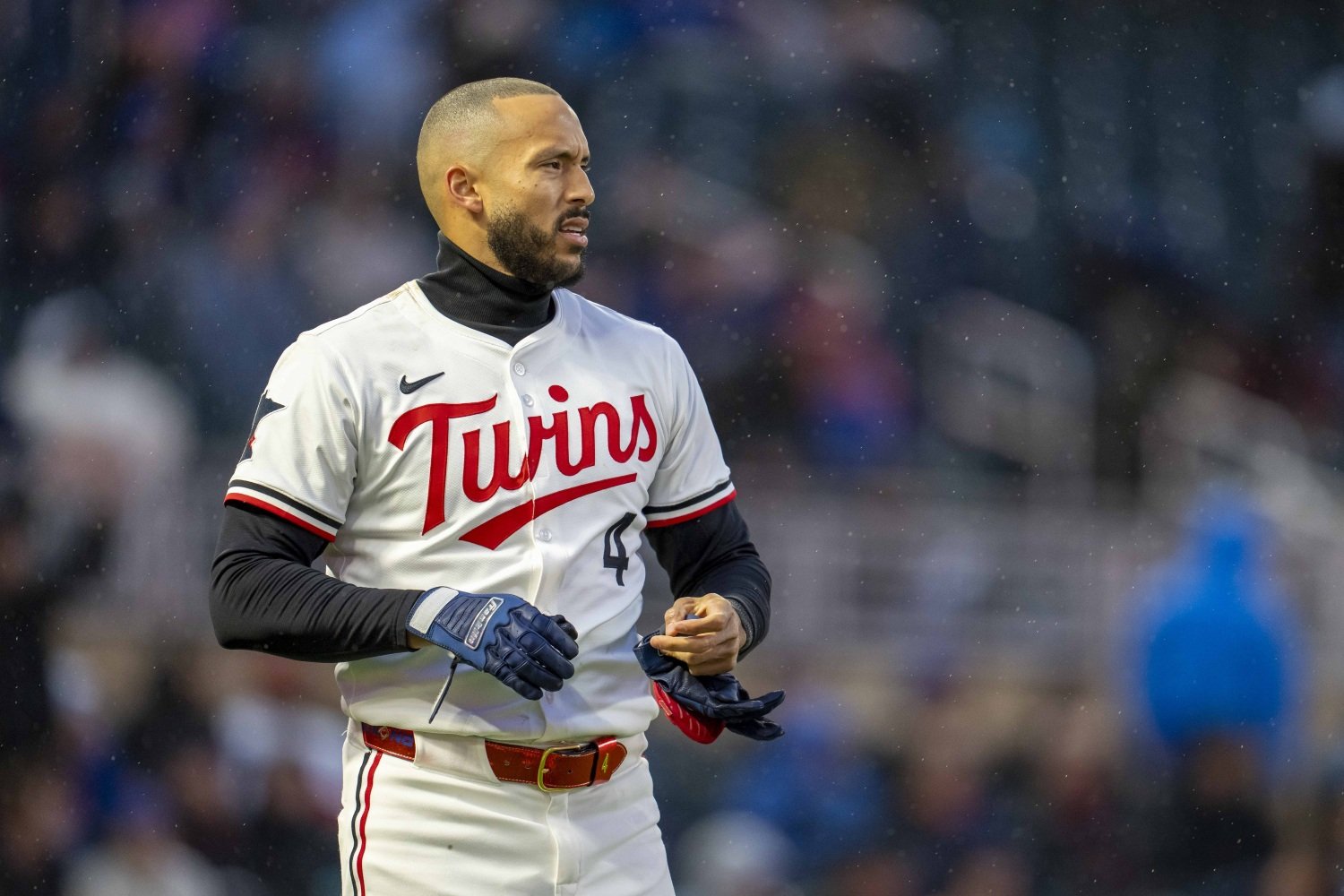
Image courtesy of © Jesse Johnson-Imagn Images Twins hitting has not been good in 2025. As a team, they’re slashing .240/.309/.397, ranking 22nd in batting average, 21st in on-base percentage, and 17th in slugging. That's landed them 20th in baseball in runs per game. That the Twins could be one of the top offensive teams in MLB ahead of the season was wishful thinking, but there was some hope and belief that the Twins could rank in the top half of the league, at least. The plan seemed to be to have high-end pitching (which was going according to plan, until June) supplemented by enough hitting to win games consistently. But that hitting has not manifested. The path toward competent hitting was reasonably clear. There were a handful of high-performing bats in a top-heavy lineup that needed to perform well, and the rest of the team needed to be functional, hovering around league average. The top bats—the bell cows—were to be Carlos Correa, Byron Buxton, and Matt Wallner. The next couple hitters were probably a step down, but many anticipated a bounceback year from Royce Lewis would be necessary, and Trevor Larnach would need to repeat his quiet but solidly above-average production from 2024. If those five could carry the lineup, and the bottom four spots could find ways to contribute on a day-to-day basis, the Twins could have an acceptable offense. Unfortunately, though, the “bottom-half” bats have been carrying the offensive load for most of the year. To put into perspective how the roles have flipped, let’s thumb through the primary 12 bats in the Twins’ lineup and compare their 2025 performance to their expected role, 2024 performance, and 2025 preseason projections via FanGraphs’s ZiPS, an imperfect but useful tool for comparison to how each player was expected to perform this season. The selected hitting statistic here will be wRC+. 100 is exactly average—90 is 10% below average and 115 is 15% above average, for instance. To me, anything between 92 and 108 is average, but who cares what I think? I’ll also include OPS in case wRC+ makes you mad. They're sorted by the difference from their projected performance. Royce Lewis, wRC+: 64 (.583 OPS), projected wRC+: 113 (-49% difference), 2024 wRC+: 107 (-43% difference) Likely the hitter with the most questions ahead of 2025, Lewis finished his 2024 season about as poorly as any hitter can, especially in comparison to the first 100 or so games of his career between 2022 and the first half of 2024. The player whom the Twins most needed to have a bounceback year has spent much of the season on the injured list and has floundered—only ahead of one other regular Twins hitter in stats like wRC+ and OPS (I’m sure you can guess who, but don’t spoil the surprise for anyone else). He’s failed to come close to even his mediocre 2024 or the slightly above-average projection ZiPS had him at, let alone the hitter the team needed. Carlos Correa, wRC+: 93 (.693 OPS), projected wRC+: 127 (-34% difference), 2024 wRC+: 154 (-61% difference) Correa was an All-Star in 2024, but missed most of the second half due to plantar fasciitis that held him to only 86 (extremely productive) games. However, he was tied for the Twins’ most productive hitter on a rate basis and expected to have another very good offensive year, even if he didn’t reach the heights of 2024 again. Instead, he’s been below-average, far from the number-two hitter he was expected to be, and he’s headed toward a consistent spot in the bottom third of the lineup, which is especially disappointing given his contract situation. Ty France, wRC+: 89 (.666 OPS), projected wRC+: 113 (-24% difference), 2024 wRC+: 93 (-4% difference) Here we have the first disappointment who was in the middle range of hitters by projection. Acquired for just $1 million on a non-guaranteed contract, France has effectively replicated his paltry 2024 numbers and spent most of the year as a league-average hitter who produced mostly in clutch situations. He’s been a usable but not terribly productive bat that belongs in the back end of a lineup, but he plays first base, and many were hoping for something of a bounceback. Matt Wallner, wRC+: 107 (.748 OPS), projected wRC+: 127 (-20% difference), 2024 wRC+: 154 (-47% difference) The third of the top bats to sputter in 2025, Wallner hit well before an April hamstring strain caused him to miss a month and a half. He’s currently battling through the first prolonged slump of his career. Unlike Correa and Lewis, Wallner is still hovering around league-average, but if this cold stretch continues, he’s not far from dropping into the 90s. It’s a disappointing development for the Opening Day leadoff hitter. Trevor Larnach, wRC+: 102 (.726 OPS), projected wRC+: 111 (-9% difference), 2024 wRC+: 120 (-18% difference) Larnach is slightly underperforming his projections and 2024 performance, but a lot of that is due to his increased usage against lefties. He’s been awful versus southpaws, but has otherwise performed in line with his 2024 numbers, if not slightly better. Especially compared to the other three names from the big five we’ve looked at, it’s relieving to know he’s been at least close to expectations. Brooks Lee, wRC+: 85 (.669 OPS), projected wRC+: 92 (-7% difference), 2024 wRC+: 61 (+24% difference) Lee has been given the time to develop into a viable hitter in a utility infield role, and he’s come along well from his 2024 as he gets more time in the majors. He’s been basically what the Twins needed from him, and what ZiPS expected, though his approach is disappointingly ragged. Ryan Jeffers, wRC+: 111 (.742 OPS), projected wRC+: 111 (0% difference), 2024 wRC+: 106 (+5% difference) Jeffers has been more or less what as-expected. He can catch, and he’s been on the higher end of average, especially now that the hits have begun to fall. He’s not been the hitter he was in 2023, but he’s been useful and consistent. Byron Buxton, wRC+: 152 (.925 OPS), projected wRC+: 130 (+22% difference), 2024 wRC+: 141 (+11% difference) The only player in the top five who has lived up to his expectations, Buxton is heading for the All-Star game for the second time in his career after replicating his 2024 performance and outperforming the high expectations ZiPS had for him. He’s the only one of the big five who has clearly done what’s expected and needed from the team. I give them a 1.5/5 success rate (I’m sympathetic to Larnach). Buxton has been a treat. Harrison Bader, wRC+: 115 (.767 OPS), projected wRC+: 95 (+20% difference), 2024 wRC+: 86 (+29% difference) The three remaining overperformers on this list are guys who were expected to bat consistently in the bottom four, and their performance would be awesome complements to a robust top of the order. Instead, they’ve disproportionally carried the load. Bader has been tremendous this season, having one of his better overall seasons and performing in clutch moments, too. Not a ton of notes, other than asking where the Twins would be without Harrison Bader. Will Castro, wRC+: 124 (.791 OPS), projected wRC+: 104 (+20% difference), 2024 wRC+: 107 (+17% difference) Castro struggled out of the gate and is mostly restricted to second and third base or the corner outfield, but he’s earned his everyday designation and is hitting similarly to his first half of 2024, in which he was an All-Star. Great work from him all-around at the plate this season. Kody Clemens, wRC+: 118 (.796 OPS), projected wRC+: 92 (+26% difference), 2024 wRC+: 90 (+28% difference) Clemens has widely been held as the biggest revelation for the Twins, and comparing his performance to his past and projected numbers bears that idea out. After being acquired for cash considerations, Clemens has carried the Twins for stretches, including their 13-game win streak earlier this year. It’s unclear if he will continue to produce like he has, and his performance has dipped over the last month, but it’s important, and almost fitting to draw attention to this at the end. Mediocre hitters (as Clemens may very well be) are going to fluctuate. They can and do hit very well for stretches, and when that complements a cadre of very effective hitters, teams can reap the benefits. But if they are instead covering for those higher-ceiling, more established players, the team is in trouble. You can’t bank on players like Bader and Clemens providing offense. They need to be complementary players. Christian Vázquez, wRC+: 39 (.493 OPS), projected wRC+: 72 (-33% difference), 2024 wRC+: 59 (-20% difference I don’t care. Please don't put it in the internet that I care. View full article
- 58 replies
-
- 1
-
-
- carlos correa
- byron buxton
- (and 5 more)
-
 Twins hitting has not been good in 2025. As a team, they’re slashing .240/.309/.397, ranking 22nd in batting average, 21st in on-base percentage, and 17th in slugging. That's landed them 20th in baseball in runs per game. That the Twins could be one of the top offensive teams in MLB ahead of the season was wishful thinking, but there was some hope and belief that the Twins could rank in the top half of the league, at least. The plan seemed to be to have high-end pitching (which was going according to plan, until June) supplemented by enough hitting to win games consistently. But that hitting has not manifested. The path toward competent hitting was reasonably clear. There were a handful of high-performing bats in a top-heavy lineup that needed to perform well, and the rest of the team needed to be functional, hovering around league average. The top bats—the bell cows—were to be Carlos Correa, Byron Buxton, and Matt Wallner. The next couple hitters were probably a step down, but many anticipated a bounceback year from Royce Lewis would be necessary, and Trevor Larnach would need to repeat his quiet but solidly above-average production from 2024. If those five could carry the lineup, and the bottom four spots could find ways to contribute on a day-to-day basis, the Twins could have an acceptable offense. Unfortunately, though, the “bottom-half” bats have been carrying the offensive load for most of the year. To put into perspective how the roles have flipped, let’s thumb through the primary 12 bats in the Twins’ lineup and compare their 2025 performance to their expected role, 2024 performance, and 2025 preseason projections via FanGraphs’s ZiPS, an imperfect but useful tool for comparison to how each player was expected to perform this season. The selected hitting statistic here will be wRC+. 100 is exactly average—90 is 10% below average and 115 is 15% above average, for instance. To me, anything between 92 and 108 is average, but who cares what I think? I’ll also include OPS in case wRC+ makes you mad. They're sorted by the difference from their projected performance. Royce Lewis, wRC+: 64 (.583 OPS), projected wRC+: 113 (-49% difference), 2024 wRC+: 107 (-43% difference) Likely the hitter with the most questions ahead of 2025, Lewis finished his 2024 season about as poorly as any hitter can, especially in comparison to the first 100 or so games of his career between 2022 and the first half of 2024. The player whom the Twins most needed to have a bounceback year has spent much of the season on the injured list and has floundered—only ahead of one other regular Twins hitter in stats like wRC+ and OPS (I’m sure you can guess who, but don’t spoil the surprise for anyone else). He’s failed to come close to even his mediocre 2024 or the slightly above-average projection ZiPS had him at, let alone the hitter the team needed. Carlos Correa, wRC+: 93 (.693 OPS), projected wRC+: 127 (-34% difference), 2024 wRC+: 154 (-61% difference) Correa was an All-Star in 2024, but missed most of the second half due to plantar fasciitis that held him to only 86 (extremely productive) games. However, he was tied for the Twins’ most productive hitter on a rate basis and expected to have another very good offensive year, even if he didn’t reach the heights of 2024 again. Instead, he’s been below-average, far from the number-two hitter he was expected to be, and he’s headed toward a consistent spot in the bottom third of the lineup, which is especially disappointing given his contract situation. Ty France, wRC+: 89 (.666 OPS), projected wRC+: 113 (-24% difference), 2024 wRC+: 93 (-4% difference) Here we have the first disappointment who was in the middle range of hitters by projection. Acquired for just $1 million on a non-guaranteed contract, France has effectively replicated his paltry 2024 numbers and spent most of the year as a league-average hitter who produced mostly in clutch situations. He’s been a usable but not terribly productive bat that belongs in the back end of a lineup, but he plays first base, and many were hoping for something of a bounceback. Matt Wallner, wRC+: 107 (.748 OPS), projected wRC+: 127 (-20% difference), 2024 wRC+: 154 (-47% difference) The third of the top bats to sputter in 2025, Wallner hit well before an April hamstring strain caused him to miss a month and a half. He’s currently battling through the first prolonged slump of his career. Unlike Correa and Lewis, Wallner is still hovering around league-average, but if this cold stretch continues, he’s not far from dropping into the 90s. It’s a disappointing development for the Opening Day leadoff hitter. Trevor Larnach, wRC+: 102 (.726 OPS), projected wRC+: 111 (-9% difference), 2024 wRC+: 120 (-18% difference) Larnach is slightly underperforming his projections and 2024 performance, but a lot of that is due to his increased usage against lefties. He’s been awful versus southpaws, but has otherwise performed in line with his 2024 numbers, if not slightly better. Especially compared to the other three names from the big five we’ve looked at, it’s relieving to know he’s been at least close to expectations. Brooks Lee, wRC+: 85 (.669 OPS), projected wRC+: 92 (-7% difference), 2024 wRC+: 61 (+24% difference) Lee has been given the time to develop into a viable hitter in a utility infield role, and he’s come along well from his 2024 as he gets more time in the majors. He’s been basically what the Twins needed from him, and what ZiPS expected, though his approach is disappointingly ragged. Ryan Jeffers, wRC+: 111 (.742 OPS), projected wRC+: 111 (0% difference), 2024 wRC+: 106 (+5% difference) Jeffers has been more or less what as-expected. He can catch, and he’s been on the higher end of average, especially now that the hits have begun to fall. He’s not been the hitter he was in 2023, but he’s been useful and consistent. Byron Buxton, wRC+: 152 (.925 OPS), projected wRC+: 130 (+22% difference), 2024 wRC+: 141 (+11% difference) The only player in the top five who has lived up to his expectations, Buxton is heading for the All-Star game for the second time in his career after replicating his 2024 performance and outperforming the high expectations ZiPS had for him. He’s the only one of the big five who has clearly done what’s expected and needed from the team. I give them a 1.5/5 success rate (I’m sympathetic to Larnach). Buxton has been a treat. Harrison Bader, wRC+: 115 (.767 OPS), projected wRC+: 95 (+20% difference), 2024 wRC+: 86 (+29% difference) The three remaining overperformers on this list are guys who were expected to bat consistently in the bottom four, and their performance would be awesome complements to a robust top of the order. Instead, they’ve disproportionally carried the load. Bader has been tremendous this season, having one of his better overall seasons and performing in clutch moments, too. Not a ton of notes, other than asking where the Twins would be without Harrison Bader. Will Castro, wRC+: 124 (.791 OPS), projected wRC+: 104 (+20% difference), 2024 wRC+: 107 (+17% difference) Castro struggled out of the gate and is mostly restricted to second and third base or the corner outfield, but he’s earned his everyday designation and is hitting similarly to his first half of 2024, in which he was an All-Star. Great work from him all-around at the plate this season. Kody Clemens, wRC+: 118 (.796 OPS), projected wRC+: 92 (+26% difference), 2024 wRC+: 90 (+28% difference) Clemens has widely been held as the biggest revelation for the Twins, and comparing his performance to his past and projected numbers bears that idea out. After being acquired for cash considerations, Clemens has carried the Twins for stretches, including their 13-game win streak earlier this year. It’s unclear if he will continue to produce like he has, and his performance has dipped over the last month, but it’s important, and almost fitting to draw attention to this at the end. Mediocre hitters (as Clemens may very well be) are going to fluctuate. They can and do hit very well for stretches, and when that complements a cadre of very effective hitters, teams can reap the benefits. But if they are instead covering for those higher-ceiling, more established players, the team is in trouble. You can’t bank on players like Bader and Clemens providing offense. They need to be complementary players. Christian Vázquez, wRC+: 39 (.493 OPS), projected wRC+: 72 (-33% difference), 2024 wRC+: 59 (-20% difference I don’t care. Please don't put it in the internet that I care.
- 58 comments
-
- 7
-
-
- carlos correa
- byron buxton
- (and 5 more)
-
Personally I would be looking to improve at a position not filled by the team’s 3rd best hitter against righties, 30% above league average. If you want to improve that spot, it’s much easier to just find him a platoon partner.
-
I'm gonna push back against this a little. Larnach against righties is first on the team in batting average, second in OBP, and third in slugging. His wRC+ against righties is 127 per FanGraphs. That's good performance at the plate. Yes, he's not good defensively, but he's still a fine player. I think it's possible to see him as an average player and a good, valuable bat simultaneously. He's not someone they should be actively looking to replace. He's more of a solid player for now, hopefully someone takes his place at some point, but they're not in any danger starting him 70% of games in a corner or at DH. He doesn't need to be a core player to be valuable.
-
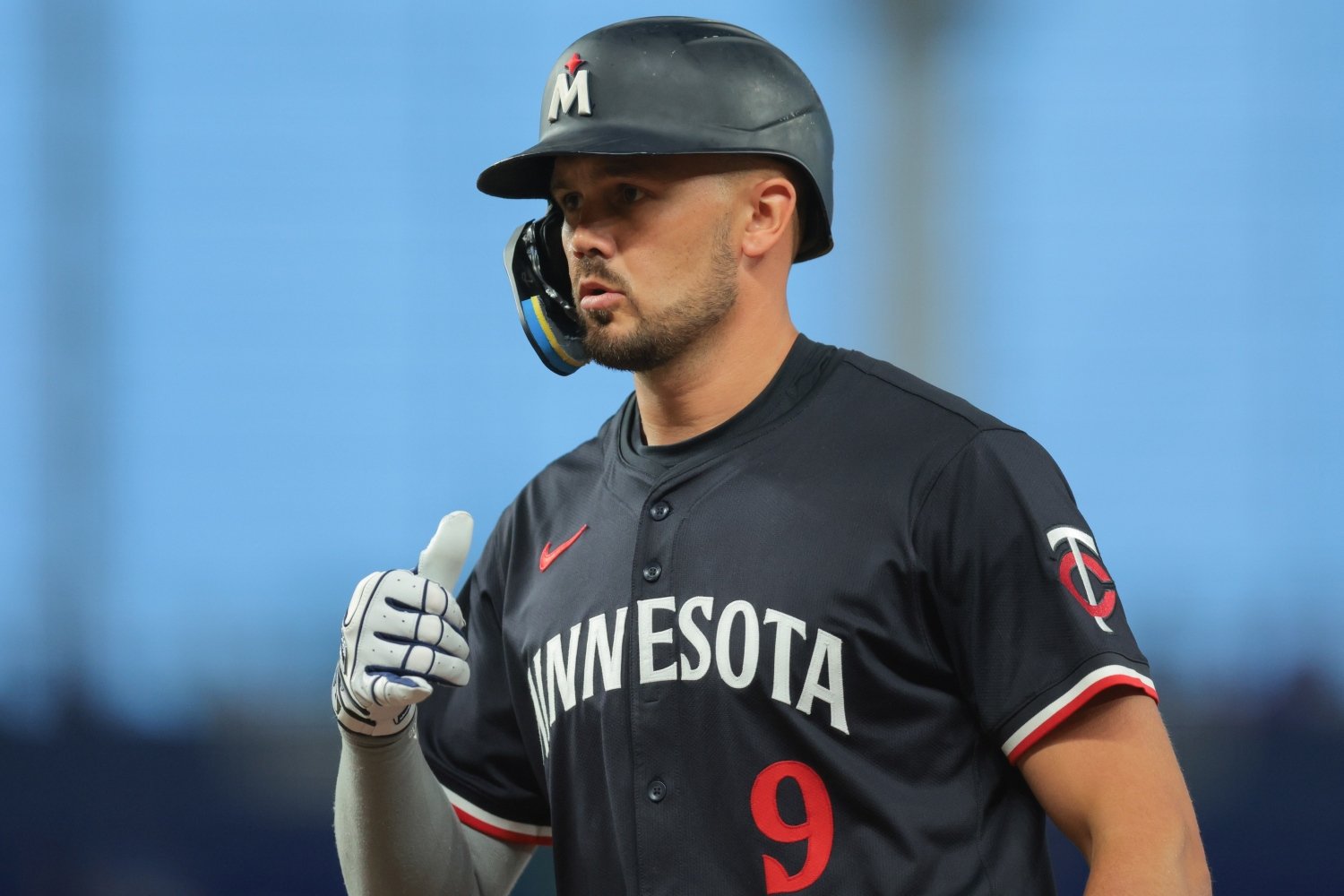
Image courtesy of © Sam Navarro-Imagn Images I’m going to be honest: a few weeks ago, I had a thought. Why are people down on Trevor Larnach? It felt like he was having a productive year. He had just hit his 10th home run, on pace to crack 20 homers for the first time in his career, and he was driving the ball well, sitting at 10 doubles just 69 games into the year, as well. But I looked up his OPS, and it was just a bit over league average, at .736 (105 OPS+). At that point, I shrugged and just assumed I was overrating him in my head. That’s fine, acceptable production from a mediocre glove in the corner outfield. It’s not good, by any means, but it keeps the line moving. In the weeks since, he’s continued producing (by the eye test), hitting for power and a decent average, and taking a few walks. But still, the numbers on the season weren’t there. He’s sitting at a 103 OPS+, in line with his career averages—but markedly lower than the 116 OPS+ he had last season, when he was one of the more quietly productive bats in the Twins lineup. So I went poking around, and figured it out. It’s his performance against lefties. Larnach is actually hitting better against righties this season than he did last year. Against righties, he was 20% above average last season and is 24% above average thus far this season. Against lefties, he was bad last year—37% below average—but this season he’s been unplayable at 63% below average. It’s not only that his performance has slipped; it’s that he’s also getting considerably more run against lefties. Last season, 5.7% of his total plate appearances were against lefties, but this season he’s at 19.4%, meaning nearly one in every five plate appearances has come against southpaws. Personally, I take performance against lefties as noise, for a left-handed batter. I just assume any left-on-left plate appearance is an out, and any hit is a fun bonus. That’s probably why I didn’t understand the slippage in his performance. I didn’t realize how many more of his plate appearances were against lefties. I’d say it’s not even slippage, but more like overexposure. To put it into perspective, if instead of only 81% of his plate appearance coming against righties this season he hit against them 94% of the time, like last season, his OPS would raise from .744 to about .791, which would put him around the same level as Willi Castro, about 20% above league average. He’s got one of the worst slash lines against lefties on the team, being trailed only by Christian Vázquez among semi-regulars. And yet, he has the seventh-most plate appearances against lefties this season, leading all other lefties, too. At the beginning of the season, manager Rocco Baldelli commented that Larnach had requested seeing more lefties, staying in against lefty relievers, and the chance to be a true everyday player. The organization also didn’t field many consistent lefty platoon bats. Much of the season has featured both Jonah Bride and DaShawn Keirsey Jr. as roster pieces, neither of whom the manager seems eager to play against lefties (even though Bride bats righty), leaving Larnach with the opportunity to hit them and stay in the game when a lefty comes up. This is a departure from previous seasons, as players like Manuel Margot, Donovan Solano, Kyle Farmer, Jordan Luplow, and Kyle Garlick have been rostered specifically to hit lefties—with varying degrees of success. This season, there has been no reason not to let Larnach—or other lefties like Matt Wallner and switch-hitters who struggle from the right side of the plate, like Brooks Lee—get opportunities to hit lefties. But it hasn’t worked for Larnach. Wallner, Lee, Castro, and Kody Clemens have all had more success. Admittedly, Larnach has gotten less run against southpaws in recent weeks. He’s started fewer games, ceding time to other lefty hitters (or Bride) in starting lineups against lefties, and he's been pulled in three straight games (for Lee, Lee, and Harrison Bader) over the weekend after a lefty reliever entered. It’s just not working out now, and the Twins don’t have a clean swap to keep him out of the lineup when they roster Larnach, Wallner, Clemens, and Keirsey, unless they start both catchers—which isn’t the end of the world, but man, would it be nice if they had someone to consistently fill that spot. As it is, Larnach has become the de facto Max Kepler: the lefty batter who gets to face some lefties, but probably shouldn't, in the interest of both his own numbers and the team's success. View full article
-
 I’m going to be honest: a few weeks ago, I had a thought. Why are people down on Trevor Larnach? It felt like he was having a productive year. He had just hit his 10th home run, on pace to crack 20 homers for the first time in his career, and he was driving the ball well, sitting at 10 doubles just 69 games into the year, as well. But I looked up his OPS, and it was just a bit over league average, at .736 (105 OPS+). At that point, I shrugged and just assumed I was overrating him in my head. That’s fine, acceptable production from a mediocre glove in the corner outfield. It’s not good, by any means, but it keeps the line moving. In the weeks since, he’s continued producing (by the eye test), hitting for power and a decent average, and taking a few walks. But still, the numbers on the season weren’t there. He’s sitting at a 103 OPS+, in line with his career averages—but markedly lower than the 116 OPS+ he had last season, when he was one of the more quietly productive bats in the Twins lineup. So I went poking around, and figured it out. It’s his performance against lefties. Larnach is actually hitting better against righties this season than he did last year. Against righties, he was 20% above average last season and is 24% above average thus far this season. Against lefties, he was bad last year—37% below average—but this season he’s been unplayable at 63% below average. It’s not only that his performance has slipped; it’s that he’s also getting considerably more run against lefties. Last season, 5.7% of his total plate appearances were against lefties, but this season he’s at 19.4%, meaning nearly one in every five plate appearances has come against southpaws. Personally, I take performance against lefties as noise, for a left-handed batter. I just assume any left-on-left plate appearance is an out, and any hit is a fun bonus. That’s probably why I didn’t understand the slippage in his performance. I didn’t realize how many more of his plate appearances were against lefties. I’d say it’s not even slippage, but more like overexposure. To put it into perspective, if instead of only 81% of his plate appearance coming against righties this season he hit against them 94% of the time, like last season, his OPS would raise from .744 to about .791, which would put him around the same level as Willi Castro, about 20% above league average. He’s got one of the worst slash lines against lefties on the team, being trailed only by Christian Vázquez among semi-regulars. And yet, he has the seventh-most plate appearances against lefties this season, leading all other lefties, too. At the beginning of the season, manager Rocco Baldelli commented that Larnach had requested seeing more lefties, staying in against lefty relievers, and the chance to be a true everyday player. The organization also didn’t field many consistent lefty platoon bats. Much of the season has featured both Jonah Bride and DaShawn Keirsey Jr. as roster pieces, neither of whom the manager seems eager to play against lefties (even though Bride bats righty), leaving Larnach with the opportunity to hit them and stay in the game when a lefty comes up. This is a departure from previous seasons, as players like Manuel Margot, Donovan Solano, Kyle Farmer, Jordan Luplow, and Kyle Garlick have been rostered specifically to hit lefties—with varying degrees of success. This season, there has been no reason not to let Larnach—or other lefties like Matt Wallner and switch-hitters who struggle from the right side of the plate, like Brooks Lee—get opportunities to hit lefties. But it hasn’t worked for Larnach. Wallner, Lee, Castro, and Kody Clemens have all had more success. Admittedly, Larnach has gotten less run against southpaws in recent weeks. He’s started fewer games, ceding time to other lefty hitters (or Bride) in starting lineups against lefties, and he's been pulled in three straight games (for Lee, Lee, and Harrison Bader) over the weekend after a lefty reliever entered. It’s just not working out now, and the Twins don’t have a clean swap to keep him out of the lineup when they roster Larnach, Wallner, Clemens, and Keirsey, unless they start both catchers—which isn’t the end of the world, but man, would it be nice if they had someone to consistently fill that spot. As it is, Larnach has become the de facto Max Kepler: the lefty batter who gets to face some lefties, but probably shouldn't, in the interest of both his own numbers and the team's success.
 -
 Sweet Lou returns to host the show, tries to make some trade deadline predictions, and gets everyone out at a reasonable time. Comrade Cody and Ol Gregg recount attending the 4th of July game together, including being on the jumbotron and Harrison Bader almost hitting Gregg's wife with a ball. Livestreamed on Monday night! Listen using Apple Podcasts: https://podcasts.apple.com/us/podcast/the-twins-off-daily-podcast/id1741266056 Listen using Spotify: https://open.spotify.com/show/4tb78XlurcPTYYSsARdbD7 Listen using iHeartRadio: https://www.iheart.com/podcast/263-the-twins-off-daily-podcas-167548600/ Listen using Pocket Casts: https://pca.st/nvclbt0w Watch on YouTube: https://www.youtube.com/@twinsdaily
 -
Sweet Lou returns to host the show, tries to make some trade deadline predictions, and gets everyone out at a reasonable time. Comrade Cody and Ol Gregg recount attending the 4th of July game together, including being on the jumbotron and Harrison Bader almost hitting Gregg's wife with a ball. Livestreamed on Monday night! Listen using Apple Podcasts: https://podcasts.apple.com/us/podcast/the-twins-off-daily-podcast/id1741266056 Listen using Spotify: https://open.spotify.com/show/4tb78XlurcPTYYSsARdbD7 Listen using iHeartRadio: https://www.iheart.com/podcast/263-the-twins-off-daily-podcas-167548600/ Listen using Pocket Casts: https://pca.st/nvclbt0w Watch on YouTube: https://www.youtube.com/@twinsdaily View full article
-
I regret using the word "serviceable," because it's a bit value as to what I mean. You can be a valuable player while being an average or slightly below-average MLB shortstop (like 50th/40th percentile). Most teams don't have two "good" shortstops on their roster (and what I meant by "good" is being in the top third of MLB shortstops defensively. I also wish that I spent a little more time on the topic to say that he's made some really impressive plays, because of his good hands and arm, that help him overcome his limited range, and plenty of big leaguers have been good infielders even with limited range.
- 26 replies
-
- 1
-
-
- brooks lee
- jose miranda
- (and 1 more)
-
Image courtesy of © Lon Horwedel-Imagn Images Entering Sunday night’s game, Brooks Lee had a hit in 25 of his last 27 games, and one of those 27 was a game in which he didn’t have a plate appearance. He slashed .346/.370/.510 from May 28 to June 28. His .880 OPS was enough to bring his season OPS all the way to… .733, from .622. His OPS even dipped down to .613 early during this streak of games; going 1 for 6 with a single technically extends a hitting streak, but it doesn’t do much for an OPS. Before that May 28 game, Lee had played in 39 games, and his OPS+ was about 30% below average. We’ve seen plenty of Twins prospects take the Green Line back to St. Paul for performances like that, including fellow infielder Edouard Julien (.607 OPS) this very year. Jose Miranda performed worse, but was only given 36 plate appearances before he was demoted to Triple-A. So why was Lee’s case different? There are some obvious answers. He was once briefly the Twins’ top prospect by some lists; he was a top-10 pick in a recent draft. He’s more aesthetically pleasing at the plate, even when he struggles, than Julien or Miranda can be. He’s got a big role in this team’s future. Those undoubtedly play some role. But there’s one huge factor that has allowed him to work through his growing pains as a big-leaguer, when those two (or names like Mickey Gasper and Jonah Bride) got far less time to figure things out. It’s defense. Sometimes, it really is so simple. Teams need a reserve infielder. And even when Lee’s bat wasn’t productive early in the season, his glove was useful, especially given Willi Castro’s missed time due to injury and his declining performance in the field. There are few baseball players in the world who can play a passable big-league shortstop. It’s the reason why a player like Kyle Farmer has seven years of MLB service time, despite being a below-average hitter his entire career. Lee is one of those guys. That counts for something. Even when a player is hitting a hollow .230 after a quarter of a season, he can remain useful. The Twins have shallow shortstop depth. Castro and Lee both have MLB experience at short behind Carlos Correa, but after that, the next men up are 30-year-old Ryan Fitzgerald (who made his MLB debut this season) or Payton Eeles, who has yet to play a major-league game. It’s almost imperative that Lee sticks on the roster, whether he’s hitting or not. That plays into his benefit. His career is far more stable because he can defend. He’s not a great shortstop—probably not even a good one—but he’s serviceable. His lack of range limits his ceiling as a defender at second and third base, but he’s sure-handed and has a good arm. Like many sure-handed, good-armed infielders with limited range, the eye test likes him more than the advanced metrics: he grades out about average at second and third and slightly below average at shortstop. But he’s no liability out there. Contrast that to his closest counterparts, Miranda and Julien. Neither infielder plays shortstop, and they’re mostly constrained to third and second base, respectively. Both can play first base if necessary, but the Twins have avoided doing so. And at their natural positions, although both have made strides defensively, the best anyone can hope for is an average performance. Even Austin Martin, an athletic infielder drafted higher than Lee, is a fringe roster player because he’s now mostly limited to the outfield and isn’t a trustworthy center fielder. When you don’t contribute to winning defensively, you have to hit. It should be noted that most players aren’t expected to excel on both sides of the ball. The biggest reason that Lee was drafted in the top 10 of the 2022 Draft is that he had both an advanced hit tool and could defend adequately at multiple positions. There are better defenders and better hitters, but when a player can potentially excel at both (or merely be average-plus), it’s a huge benefit to the organization. Some players have to hit because of their poor defense. Others have to defend because their offense will never be enough. And some are given the time to figure it out because one side of their profile can do enough, at least for now. Many had hoped Lee would hit enough to be the everyday second baseman in 2025. He didn’t show enough for that to happen, and he was kind of Wally Pipped by Kody Clemens, but he did prove valuable enough as a defender to fill an (almost-)everyday role as a utility infielder. That bought him the time that other, poorer defenders can’t have. Lee didn’t need to hit to have a role on the team. Now that he is hitting, he’s played himself into a more prominent role. Hopefully, things continue to trend up for the former top prospect, but it’s always nice for the player and valuable for the organization to have a skill that doesn’t fluctuate nearly so much. Hitting comes and goes, but professional play in the field is far more reliable. View full article
-
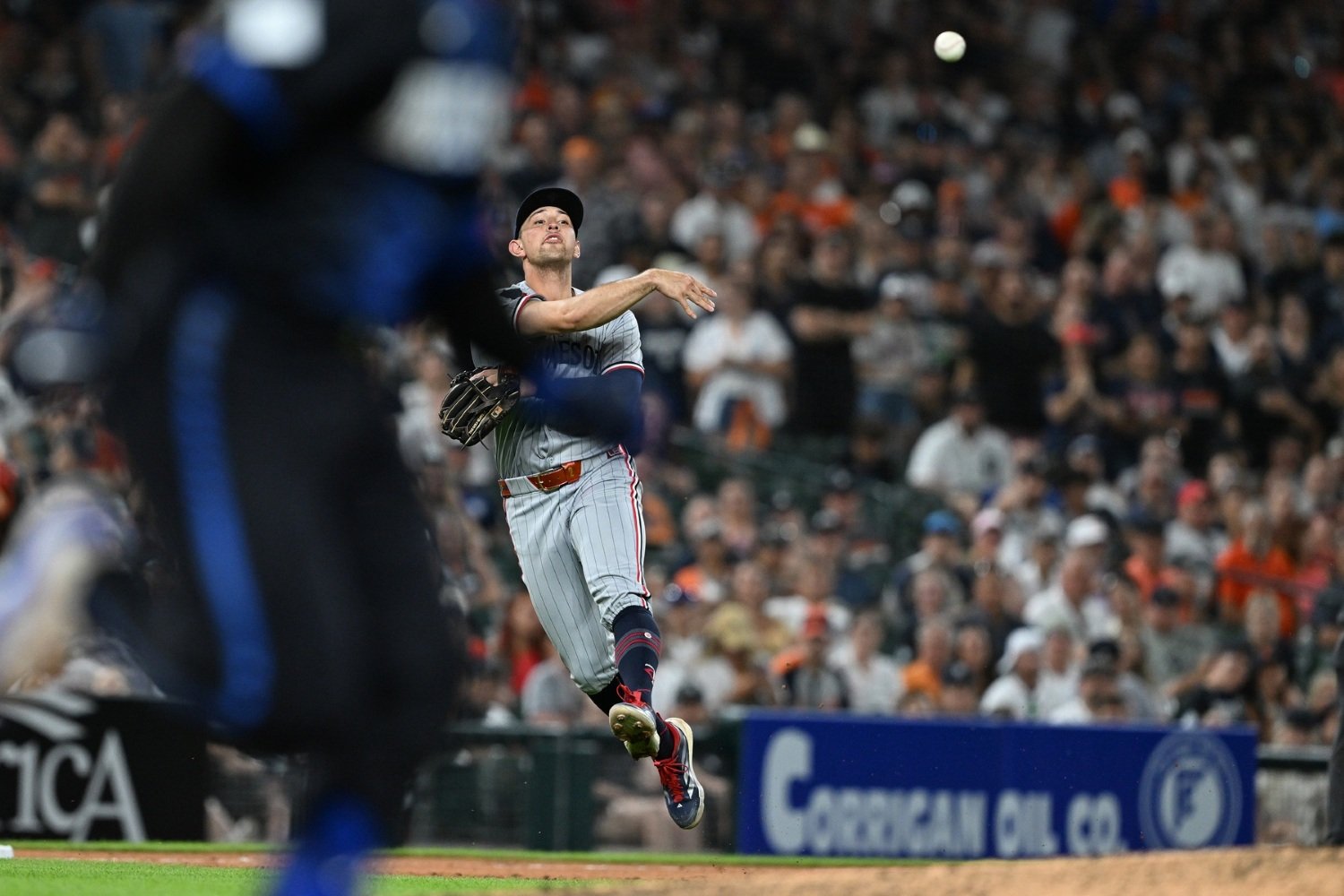 Entering Sunday night’s game, Brooks Lee had a hit in 25 of his last 27 games, and one of those 27 was a game in which he didn’t have a plate appearance. He slashed .346/.370/.510 from May 28 to June 28. His .880 OPS was enough to bring his season OPS all the way to… .733, from .622. His OPS even dipped down to .613 early during this streak of games; going 1 for 6 with a single technically extends a hitting streak, but it doesn’t do much for an OPS. Before that May 28 game, Lee had played in 39 games, and his OPS+ was about 30% below average. We’ve seen plenty of Twins prospects take the Green Line back to St. Paul for performances like that, including fellow infielder Edouard Julien (.607 OPS) this very year. Jose Miranda performed worse, but was only given 36 plate appearances before he was demoted to Triple-A. So why was Lee’s case different? There are some obvious answers. He was once briefly the Twins’ top prospect by some lists; he was a top-10 pick in a recent draft. He’s more aesthetically pleasing at the plate, even when he struggles, than Julien or Miranda can be. He’s got a big role in this team’s future. Those undoubtedly play some role. But there’s one huge factor that has allowed him to work through his growing pains as a big-leaguer, when those two (or names like Mickey Gasper and Jonah Bride) got far less time to figure things out. It’s defense. Sometimes, it really is so simple. Teams need a reserve infielder. And even when Lee’s bat wasn’t productive early in the season, his glove was useful, especially given Willi Castro’s missed time due to injury and his declining performance in the field. There are few baseball players in the world who can play a passable big-league shortstop. It’s the reason why a player like Kyle Farmer has seven years of MLB service time, despite being a below-average hitter his entire career. Lee is one of those guys. That counts for something. Even when a player is hitting a hollow .230 after a quarter of a season, he can remain useful. The Twins have shallow shortstop depth. Castro and Lee both have MLB experience at short behind Carlos Correa, but after that, the next men up are 30-year-old Ryan Fitzgerald (who made his MLB debut this season) or Payton Eeles, who has yet to play a major-league game. It’s almost imperative that Lee sticks on the roster, whether he’s hitting or not. That plays into his benefit. His career is far more stable because he can defend. He’s not a great shortstop—probably not even a good one—but he’s serviceable. His lack of range limits his ceiling as a defender at second and third base, but he’s sure-handed and has a good arm. Like many sure-handed, good-armed infielders with limited range, the eye test likes him more than the advanced metrics: he grades out about average at second and third and slightly below average at shortstop. But he’s no liability out there. Contrast that to his closest counterparts, Miranda and Julien. Neither infielder plays shortstop, and they’re mostly constrained to third and second base, respectively. Both can play first base if necessary, but the Twins have avoided doing so. And at their natural positions, although both have made strides defensively, the best anyone can hope for is an average performance. Even Austin Martin, an athletic infielder drafted higher than Lee, is a fringe roster player because he’s now mostly limited to the outfield and isn’t a trustworthy center fielder. When you don’t contribute to winning defensively, you have to hit. It should be noted that most players aren’t expected to excel on both sides of the ball. The biggest reason that Lee was drafted in the top 10 of the 2022 Draft is that he had both an advanced hit tool and could defend adequately at multiple positions. There are better defenders and better hitters, but when a player can potentially excel at both (or merely be average-plus), it’s a huge benefit to the organization. Some players have to hit because of their poor defense. Others have to defend because their offense will never be enough. And some are given the time to figure it out because one side of their profile can do enough, at least for now. Many had hoped Lee would hit enough to be the everyday second baseman in 2025. He didn’t show enough for that to happen, and he was kind of Wally Pipped by Kody Clemens, but he did prove valuable enough as a defender to fill an (almost-)everyday role as a utility infielder. That bought him the time that other, poorer defenders can’t have. Lee didn’t need to hit to have a role on the team. Now that he is hitting, he’s played himself into a more prominent role. Hopefully, things continue to trend up for the former top prospect, but it’s always nice for the player and valuable for the organization to have a skill that doesn’t fluctuate nearly so much. Hitting comes and goes, but professional play in the field is far more reliable.
- 26 comments
-
- 14
-
-

-
- brooks lee
- jose miranda
- (and 1 more)
-
Ol Gregg explains to Sweet Lou what's happened in the month since he's last appeared on the show, then he digs into gripes, dooming, and hot takes from Twins fans. Recorded live in front of a podcasting audience. Listen using Apple Podcasts: https://podcasts.apple.com/us/podcast/the-twins-off-daily-podcast/id1741266056 Listen using Spotify: https://open.spotify.com/show/4tb78XlurcPTYYSsARdbD7 Listen using iHeartRadio: https://www.iheart.com/podcast/263-the-twins-off-daily-podcas-167548600/ Listen using Pocket Casts: https://pca.st/nvclbt0w Watch on YouTube: https://www.youtube.com/@twinsdaily View full article
-
Episode 48: Greggory Gripes and Gripes and Gripes LIVE
Greggory Masterson posted an article in Podcasts
 Ol Gregg explains to Sweet Lou what's happened in the month since he's last appeared on the show, then he digs into gripes, dooming, and hot takes from Twins fans. Recorded live in front of a podcasting audience. Listen using Apple Podcasts: https://podcasts.apple.com/us/podcast/the-twins-off-daily-podcast/id1741266056 Listen using Spotify: https://open.spotify.com/show/4tb78XlurcPTYYSsARdbD7 Listen using iHeartRadio: https://www.iheart.com/podcast/263-the-twins-off-daily-podcas-167548600/ Listen using Pocket Casts: https://pca.st/nvclbt0w Watch on YouTube: https://www.youtube.com/@twinsdaily

