


Greggory Masterson
-
Posts
819 -
Joined
-
Last visited
-
Days Won
2
Content Type
Profiles
News
Minnesota Twins Videos
2026 Minnesota Twins Top Prospects Ranking
2022 Minnesota Twins Draft Picks
Minnesota Twins Free Agent & Trade Rumors, Notes, & Tidbits
Guides & Resources
2023 Minnesota Twins Draft Picks
The Minnesota Twins Players Project
2024 Minnesota Twins Draft Picks
2025 Minnesota Twins Draft Pick Tracker
2026 Minnesota Twins Draft Tracker: Picks & Bonuses
Forums
Blogs
Events
Store
Downloads
Gallery
Everything posted by Greggory Masterson
-
Byron Buxton Playing Centerfield will not Fix this Twins Offense
Greggory Masterson posted an article in Twins
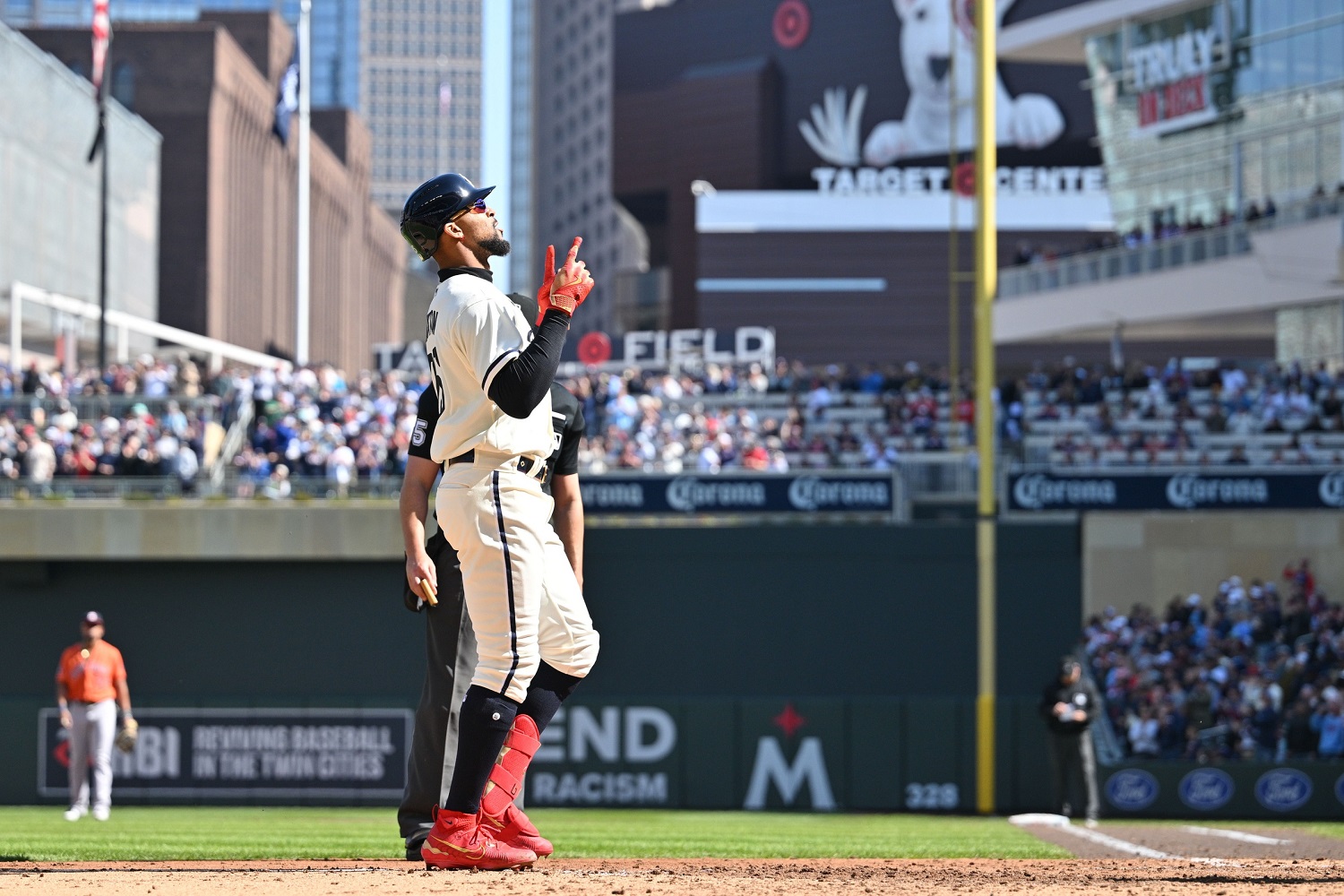 The Twins’ offense has been bad. There are no two ways about it. Per Baseball Reference, they rank 25th in team OPS and 24th in offensive WAR. They need to hit. Many fans are clamoring for Byron Buxton to be moved out of the DH slot and into centerfield so that another bat can be added to the order to replace Michael A. Taylor. However, this line of thinking doesn’t hold up practically or in theory. At the onset, I want to acknowledge that the best lineup for these Twins features a healthy Buxton hitting in the middle of the order and patrolling centerfield. I hope to see it soon. However, it’s the least of the team’s offensive problems right now. First, let’s dig into the practical reason—Taylor is hitting better than the alternatives. Nick Gordon, Matt Wallner, Willi Castro, Jose Miranda, Max Kepler, Carlos Correa, Kyle Farmer, Kyle Garlick, and Buxton all have a lower OPS+ than Taylor. Replacing him in the lineup with any of those options worsens the offense. Of course, this issue shouldn’t be expected to continue. Talyor is hitting roughly how he did last year, about 15% better than his career average. Even if he maintains that level, the other bats should heat up and pass him by—right? Please tell me I’m right. Therein lies the problem—the other bats. From a theoretical perspective, that’s the biggest issue with the offense. The players in bat-first positions have largely been disappointing. The beauty of a player like Buxton is that he occupies a glove-first position in centerfield and an elite glove to boot, but he also has a big bat. The bat is so big that he can play the hitting-only position at DH and have the potential to be one of the best in the league at it. Correa is in the same boat—great glove at a fielding-heavy position and a great bat. Even the tandem of Christian Vázquez and Ryan Jeffers brings solid bats to a position where the bar is quite low. Centerfielders, shortstops, and catchers are paid to field. Hitting is gravy. The Twins are in a great position with good-to-elite fielders at all three positions with average-to-elite bats. It provides them an immense advantage in roster construction. If the weakest offensive positions have some of their best hitters, filling in the rest of the lineup with good bats, an easier task, can make the lineup elite. But it’s not mandatory for success. Since the 80s, Twins fans have watched the likes of Kirby Puckett, Torii Hunter, Buxton, and even Denard Span roam centerfield. They were each good defenders who could handle the bat well enough to hit in the top half of the order. Not every centerfielder needs to do that, though. A great lineup can have a Taylor at the bottom, so long as he’s an elite fielder—which Taylor is. The 2022 World Series champion Astros had catcher Martín Maldonado, a far worse hitter than Taylor. The 2021 Braves had catcher Travis d’Arnaud. It wasn’t their job to hit—they provided value in the field. Taylor can do that. However, with a player like Taylor in the field, it’s imperative that the positions lower on the defensive spectrum—namely the corners: first base, left field, right field, and third base—produce. It’s easier to find competent bats at those positions, which are much less fielding-intensive. C.J. Cron, for example, was picked up off waivers in 2019, was paid a painless $4.8 million, played well until a thumb injury, and then was released. So far, the Twins have yet to get much help from their bat-first positions. Buxton himself hasn’t hit well, but he is streaky, and no one expects this funk to last forever. In contrast, everyone asked to fill a corner spot has some question mark attached to them, and production has been low. Joey Gallo and Kepler need bounce-back years. Alex Kirilloff and Trevor Larnach must return from two years of injury and solidify themselves. Miranda looked good in 2022—but had a shaky start and end—and sophomore slumps are always valid concerns. Gordon had a breakout year in 2022, but he needs to prove it’s legit. Donovan Solano is 35. Wallner and Edouard Julien are unproven rookies. Thus far, there have been few positive answers to those question marks. As a team, the Twins have had solid production from their first basemen (Solano, Gallo, Miranda), ranking 6th in OPS at .943. The other three bat-first positions have been markedly poorer. Third basemen (Miranda, Castro) rank 27th at .495, left fielders (Larnach, Gordon, Castro, Garlick) rank 28th at .517, and right fielders (Larnach, Kepler, Wallner, Garlick, Gallo) rank 21st at .655. It’s abysmal. Individually, there are some bright spots. Gallo has been otherworldly, though injured. Julien is off to a hot start. Solano has been a welcome addition, though it’s difficult to count on him consistently providing first-base-production against righties. Larnach got off to a hot start but has cooled down a bit. The other corner options have been below-average, at very best, at positions that cannot be below average. This problem may eventually work itself out. With such a large pool of potential bats, it may take time to identify which players can round out the roster built around Buxton and Correa. However, until then, the team isn’t hurting itself, keeping Buxton out of centerfield. When the alternative to Buxton as a DH and Taylor as a centerfielder is Buxton in center and Nick Gordon (-33 OPS+) at DH, there’s no rush to get Buxton into the field.
- 49 comments
-
- 7
-

-

-
- byron buxton
- michael a taylor
- (and 3 more)
-
Twins fans have been spoiled with centerfielders who can both field and hit. The same is true this year. The problems lie elsewhere. Image courtesy of © Jeffrey Becker-USA TODAY Sports The Twins’ offense has been bad. There are no two ways about it. Per Baseball Reference, they rank 25th in team OPS and 24th in offensive WAR. They need to hit. Many fans are clamoring for Byron Buxton to be moved out of the DH slot and into centerfield so that another bat can be added to the order to replace Michael A. Taylor. However, this line of thinking doesn’t hold up practically or in theory. At the onset, I want to acknowledge that the best lineup for these Twins features a healthy Buxton hitting in the middle of the order and patrolling centerfield. I hope to see it soon. However, it’s the least of the team’s offensive problems right now. First, let’s dig into the practical reason—Taylor is hitting better than the alternatives. Nick Gordon, Matt Wallner, Willi Castro, Jose Miranda, Max Kepler, Carlos Correa, Kyle Farmer, Kyle Garlick, and Buxton all have a lower OPS+ than Taylor. Replacing him in the lineup with any of those options worsens the offense. Of course, this issue shouldn’t be expected to continue. Talyor is hitting roughly how he did last year, about 15% better than his career average. Even if he maintains that level, the other bats should heat up and pass him by—right? Please tell me I’m right. Therein lies the problem—the other bats. From a theoretical perspective, that’s the biggest issue with the offense. The players in bat-first positions have largely been disappointing. The beauty of a player like Buxton is that he occupies a glove-first position in centerfield and an elite glove to boot, but he also has a big bat. The bat is so big that he can play the hitting-only position at DH and have the potential to be one of the best in the league at it. Correa is in the same boat—great glove at a fielding-heavy position and a great bat. Even the tandem of Christian Vázquez and Ryan Jeffers brings solid bats to a position where the bar is quite low. Centerfielders, shortstops, and catchers are paid to field. Hitting is gravy. The Twins are in a great position with good-to-elite fielders at all three positions with average-to-elite bats. It provides them an immense advantage in roster construction. If the weakest offensive positions have some of their best hitters, filling in the rest of the lineup with good bats, an easier task, can make the lineup elite. But it’s not mandatory for success. Since the 80s, Twins fans have watched the likes of Kirby Puckett, Torii Hunter, Buxton, and even Denard Span roam centerfield. They were each good defenders who could handle the bat well enough to hit in the top half of the order. Not every centerfielder needs to do that, though. A great lineup can have a Taylor at the bottom, so long as he’s an elite fielder—which Taylor is. The 2022 World Series champion Astros had catcher Martín Maldonado, a far worse hitter than Taylor. The 2021 Braves had catcher Travis d’Arnaud. It wasn’t their job to hit—they provided value in the field. Taylor can do that. However, with a player like Taylor in the field, it’s imperative that the positions lower on the defensive spectrum—namely the corners: first base, left field, right field, and third base—produce. It’s easier to find competent bats at those positions, which are much less fielding-intensive. C.J. Cron, for example, was picked up off waivers in 2019, was paid a painless $4.8 million, played well until a thumb injury, and then was released. So far, the Twins have yet to get much help from their bat-first positions. Buxton himself hasn’t hit well, but he is streaky, and no one expects this funk to last forever. In contrast, everyone asked to fill a corner spot has some question mark attached to them, and production has been low. Joey Gallo and Kepler need bounce-back years. Alex Kirilloff and Trevor Larnach must return from two years of injury and solidify themselves. Miranda looked good in 2022—but had a shaky start and end—and sophomore slumps are always valid concerns. Gordon had a breakout year in 2022, but he needs to prove it’s legit. Donovan Solano is 35. Wallner and Edouard Julien are unproven rookies. Thus far, there have been few positive answers to those question marks. As a team, the Twins have had solid production from their first basemen (Solano, Gallo, Miranda), ranking 6th in OPS at .943. The other three bat-first positions have been markedly poorer. Third basemen (Miranda, Castro) rank 27th at .495, left fielders (Larnach, Gordon, Castro, Garlick) rank 28th at .517, and right fielders (Larnach, Kepler, Wallner, Garlick, Gallo) rank 21st at .655. It’s abysmal. Individually, there are some bright spots. Gallo has been otherworldly, though injured. Julien is off to a hot start. Solano has been a welcome addition, though it’s difficult to count on him consistently providing first-base-production against righties. Larnach got off to a hot start but has cooled down a bit. The other corner options have been below-average, at very best, at positions that cannot be below average. This problem may eventually work itself out. With such a large pool of potential bats, it may take time to identify which players can round out the roster built around Buxton and Correa. However, until then, the team isn’t hurting itself, keeping Buxton out of centerfield. When the alternative to Buxton as a DH and Taylor as a centerfielder is Buxton in center and Nick Gordon (-33 OPS+) at DH, there’s no rush to get Buxton into the field. View full article
- 49 replies
-
- 1
-
-
- byron buxton
- michael a taylor
- (and 3 more)
-
Your Minnesota Twins' Options Primer
Greggory Masterson replied to Greggory Masterson's topic in Twins Daily Front Page News
Thanks for these clarifications, Jack. They absolutely help. I love learning about those intricacies. With the one quoted here on reread, I definitely missed a couple of sentences I thought were in there, and the rest help fill in some gaps. -
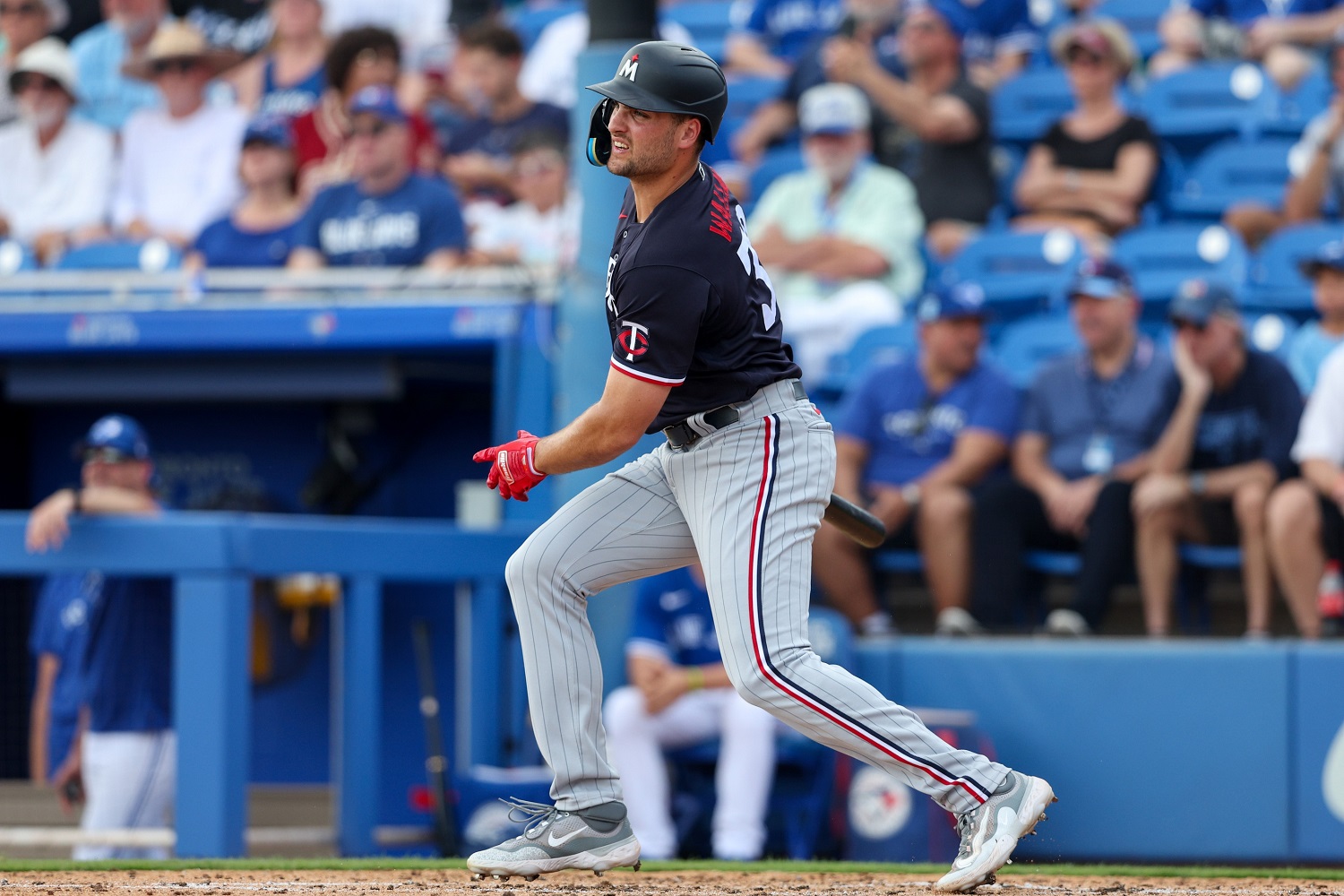 It’s only been two weeks, and the Twins have already started digging into their minor league depth, so it’s probably good for a discerning fan to know which players have minor league options. Head-scratching decisions often make more sense when considering the option information, so let’s overview the system. First, let’s touch on some rules. They’re a bit complicated but graspable with some patience. If you already know the rules, skip to the player lists. Minor League Options Defined To be eligible for an MLB active roster, a player must be on that team’s expanded 40-man roster. A player on the 40-man roster can be in the majors or minors, but only players on the 40-man can be on the MLB active roster. If a player is sent to the minors while also on the team’s 40-man roster, they need to have option years remaining. If the player has no option years remaining, they must be exposed to waivers to be sent down. When a player is exposed to waivers, any team willing to pay their salary can acquire their services without the player or their original team’s ability to stop the move. Number of Options When a player is added to a 40-man roster for the first time in his career, he has three option years. Option years are used when the player spends time in the minor leagues, an entire season or only a few weeks. A player can be sent down once or several times in that year, and it will still count as a single option year. Players who do not play in the minor leagues in a given year retain their option years. If a player uses an option year in 2023, he will have two remaining. If he then spends all of 2024 on an MLB roster, he still has two. If he then gets sent down in 2025, he will have one. If he’s sent down again in 2026, he will have no options left, and if the team wants to send him to the minors in 2027, he would need to be waived first. Nuances There are some nuances to these rules to be aware of. First, if a player is in the minor leagues but is not on the 40-man roster, the team is not using one of his options. However, if he is called up to the major league team, and thus added to the 40-man roster, the team can only send him back down by exposing him to waivers. As of 2022, a player can only be sent to the minor leagues five times in one season, which includes starting the season in the minors. After the fifth time, the subsequent demotion requires the player to be waived. They will still have any future option years, though. Occasionally the years are malleable. A team can request an additional option year in particular circumstances, such as long-term injury to a minor leaguer on their 40-man. More specifically, the player must fit the criteria of having used all three options before getting 5 years of professional service (full season baseball). For example, Lewis Thorpe had four option years for this reason. In fact, a few Twins have. Gilberto Celestino had one option remaining in 2022 and was demoted mid-season. However, he was recalled within days after an injury to an active roster player, and because his demotion was so short, he did not use an option year. It needs to be over 20 days. Players with at least five years of service time (time on an MLB active roster) can refuse a demotion, even if they still have options remaining. You will rarely see a 35-year-old sent to AAA, even if he has an option remaining, because he can simply say no, forcing the team to either release him or send someone else down. The Twins Roster Let’s look at the Twins players’ situations with all that out of the way. It should be noted that even if a player is listed with options remaining, that doesn’t mean we think they will be sent down or are even likely to. (Things would have to go really bad for Jhoan Duran to be sent to St. Paul). This information is from FanGraphs’s Roster Resource. MLB Players who can Refuse Demotion As discussed, these players have enough service time to refuse to demotion. Yes, that means Emilio Pagán will not be sent to St. Paul, no matter how hard you try. Byron Buxton, Carlos Correa, Joey Gallo, Sonny Gray, Max Kepler, Kenta Maeda, Tyler Mahle, Emilio Pagán, Jorge Polanco, Donovan Solano, Michael A. Taylor, Christian Vázquez MLB Players Out of Options These players can be sent down, but they would need to be exposed to waivers first. Nick Gordon, Jorge López 40-Man Players in their Last Option Year These players have used an option this year, and it’s their last. Come 2024, they will have no options remaining. Jordan Balazovic MLB Players with One Option Remaining These players are currently on the active roster (or injured list) and can still be sent down this year. However, if they are, they will have no options in 2024. The team could be a little more hesitant to use that final year than they would otherwise. Willi Castro, Gilberto Celestino, Jhoan Duran, Kyle Farmer, Kyle Garlick, Alex Kirilloff, Caleb Thielbar 40-Man Players with Multiple Option Years Remaining If necessary, any of these players can be sent back and forth with little concern. Jorge Alcala, Matt Canterino, Brent Headrick, Ronny Henriquez, Griffin Jax, Ryan Jeffers, Edouard Julien, Trevor Larnach, Pablo López, Trevor Megill, Jose Miranda, Royce Lewis, Jovani Moran, Bailey Ober, Chris Paddack, Joe Ryan, Cole Sands, Louie Varland, Matt Wallner, Josh Winder, Simeon Woods Richardson Notable Minor League Veterans without Options and/or Sufficient Service Time There are a handful of minor league veterans that are not on the MLB roster. If these veterans are called up, they either have no options remaining (*) or can refuse the demotion due to service time (®), so sending them back down would be complicated. Prepare to lose them if you see them. José De León*, Ryan LaMarre*, Patrick Murphy*, Sean Nolin*, Hernán Pérez®, Connor Sadzeck*, Aaron Sanchez®, Brock Stewart*, Tyler White*, Tony Wolters® Notable Minor League Veterans with One Option Remaining If these veterans are called up, they still have one option remaining, so they can be kept in the system and demoted, but this would be the last year, without exposing them to waivers. Dereck Rodríguez Notable Minor League Veterans with Multiple Options Remaining With this group, if they’re called up, they can be demoted with very little option year consideration. Mark Contreras, Randy Dobnak, Oliver Ortega, Elliot Soto
- 20 comments
-
- 20
-
-
- matt wallner
- kyle garlick
- (and 3 more)
-
That frustrating roster move might make more sense than you think. Image courtesy of © Nathan Ray Seebeck-USA TODAY Sports It’s only been two weeks, and the Twins have already started digging into their minor league depth, so it’s probably good for a discerning fan to know which players have minor league options. Head-scratching decisions often make more sense when considering the option information, so let’s overview the system. First, let’s touch on some rules. They’re a bit complicated but graspable with some patience. If you already know the rules, skip to the player lists. Minor League Options Defined To be eligible for an MLB active roster, a player must be on that team’s expanded 40-man roster. A player on the 40-man roster can be in the majors or minors, but only players on the 40-man can be on the MLB active roster. If a player is sent to the minors while also on the team’s 40-man roster, they need to have option years remaining. If the player has no option years remaining, they must be exposed to waivers to be sent down. When a player is exposed to waivers, any team willing to pay their salary can acquire their services without the player or their original team’s ability to stop the move. Number of Options When a player is added to a 40-man roster for the first time in his career, he has three option years. Option years are used when the player spends time in the minor leagues, an entire season or only a few weeks. A player can be sent down once or several times in that year, and it will still count as a single option year. Players who do not play in the minor leagues in a given year retain their option years. If a player uses an option year in 2023, he will have two remaining. If he then spends all of 2024 on an MLB roster, he still has two. If he then gets sent down in 2025, he will have one. If he’s sent down again in 2026, he will have no options left, and if the team wants to send him to the minors in 2027, he would need to be waived first. Nuances There are some nuances to these rules to be aware of. First, if a player is in the minor leagues but is not on the 40-man roster, the team is not using one of his options. However, if he is called up to the major league team, and thus added to the 40-man roster, the team can only send him back down by exposing him to waivers. As of 2022, a player can only be sent to the minor leagues five times in one season, which includes starting the season in the minors. After the fifth time, the subsequent demotion requires the player to be waived. They will still have any future option years, though. Occasionally the years are malleable. A team can request an additional option year in particular circumstances, such as long-term injury to a minor leaguer on their 40-man. More specifically, the player must fit the criteria of having used all three options before getting 5 years of professional service (full season baseball). For example, Lewis Thorpe had four option years for this reason. In fact, a few Twins have. Gilberto Celestino had one option remaining in 2022 and was demoted mid-season. However, he was recalled within days after an injury to an active roster player, and because his demotion was so short, he did not use an option year. It needs to be over 20 days. Players with at least five years of service time (time on an MLB active roster) can refuse a demotion, even if they still have options remaining. You will rarely see a 35-year-old sent to AAA, even if he has an option remaining, because he can simply say no, forcing the team to either release him or send someone else down. The Twins Roster Let’s look at the Twins players’ situations with all that out of the way. It should be noted that even if a player is listed with options remaining, that doesn’t mean we think they will be sent down or are even likely to. (Things would have to go really bad for Jhoan Duran to be sent to St. Paul). This information is from FanGraphs’s Roster Resource. MLB Players who can Refuse Demotion As discussed, these players have enough service time to refuse to demotion. Yes, that means Emilio Pagán will not be sent to St. Paul, no matter how hard you try. Byron Buxton, Carlos Correa, Joey Gallo, Sonny Gray, Max Kepler, Kenta Maeda, Tyler Mahle, Emilio Pagán, Jorge Polanco, Donovan Solano, Michael A. Taylor, Christian Vázquez MLB Players Out of Options These players can be sent down, but they would need to be exposed to waivers first. Nick Gordon, Jorge López 40-Man Players in their Last Option Year These players have used an option this year, and it’s their last. Come 2024, they will have no options remaining. Jordan Balazovic MLB Players with One Option Remaining These players are currently on the active roster (or injured list) and can still be sent down this year. However, if they are, they will have no options in 2024. The team could be a little more hesitant to use that final year than they would otherwise. Willi Castro, Gilberto Celestino, Jhoan Duran, Kyle Farmer, Kyle Garlick, Alex Kirilloff, Caleb Thielbar 40-Man Players with Multiple Option Years Remaining If necessary, any of these players can be sent back and forth with little concern. Jorge Alcala, Matt Canterino, Brent Headrick, Ronny Henriquez, Griffin Jax, Ryan Jeffers, Edouard Julien, Trevor Larnach, Pablo López, Trevor Megill, Jose Miranda, Royce Lewis, Jovani Moran, Bailey Ober, Chris Paddack, Joe Ryan, Cole Sands, Louie Varland, Matt Wallner, Josh Winder, Simeon Woods Richardson Notable Minor League Veterans without Options and/or Sufficient Service Time There are a handful of minor league veterans that are not on the MLB roster. If these veterans are called up, they either have no options remaining (*) or can refuse the demotion due to service time (®), so sending them back down would be complicated. Prepare to lose them if you see them. José De León*, Ryan LaMarre*, Patrick Murphy*, Sean Nolin*, Hernán Pérez®, Connor Sadzeck*, Aaron Sanchez®, Brock Stewart*, Tyler White*, Tony Wolters® Notable Minor League Veterans with One Option Remaining If these veterans are called up, they still have one option remaining, so they can be kept in the system and demoted, but this would be the last year, without exposing them to waivers. Dereck Rodríguez Notable Minor League Veterans with Multiple Options Remaining With this group, if they’re called up, they can be demoted with very little option year consideration. Mark Contreras, Randy Dobnak, Oliver Ortega, Elliot Soto View full article
- 20 replies
-
- 2
-
-
- matt wallner
- kyle garlick
- (and 3 more)
-
I’m also blanking on the exact timing, but it’s about 3 weeks. I’m not sure it’s a consideration with a prospect at Julien’s age, though
-
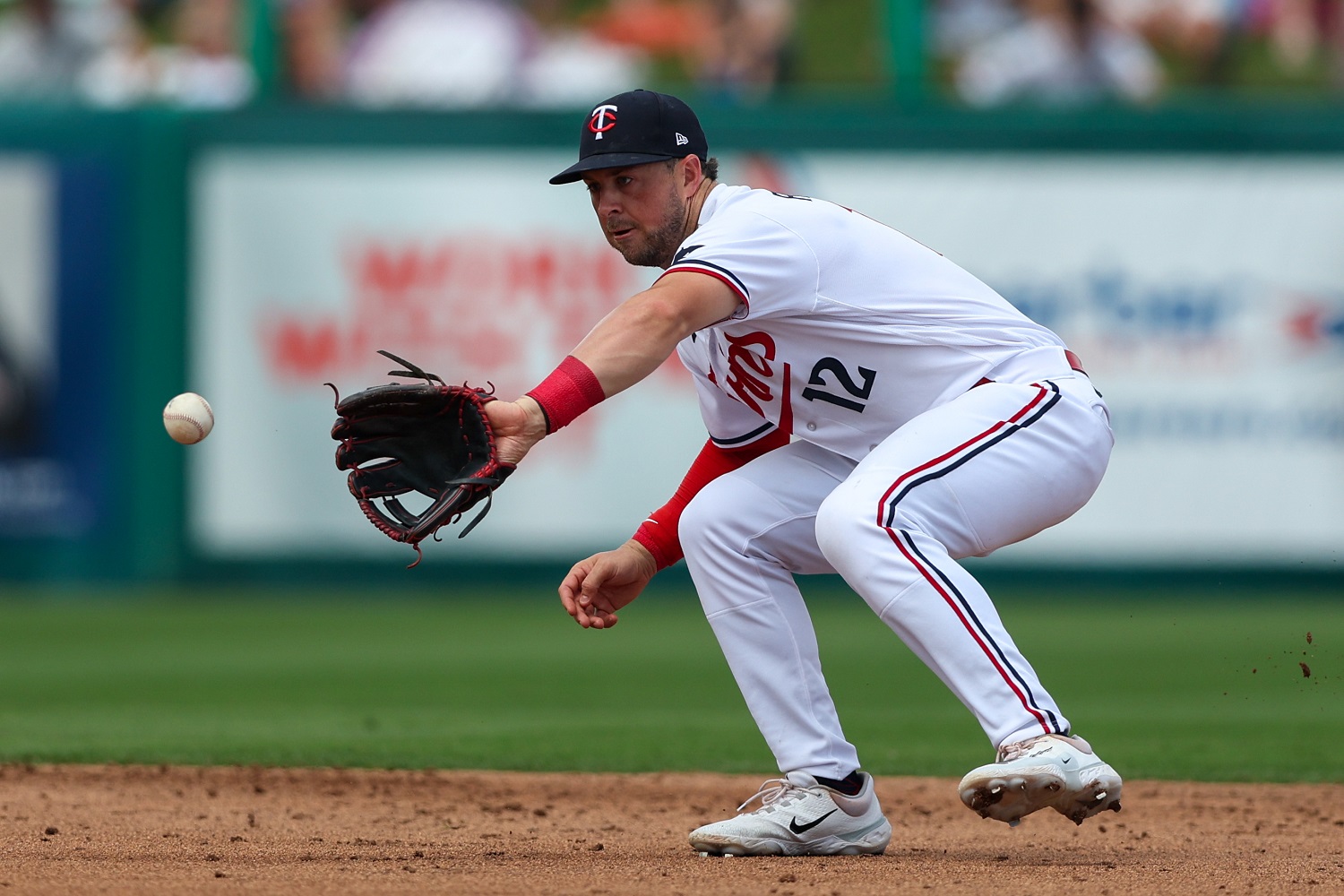 Rocco Baldelli has earned a reputation for mixing and matching his lineups. In 2022, there were no two back-to-back games in which the same lineup started. Through four games in 2023, the only lineup move made was swapping the catchers, Christian Vazquez and Ryan Jeffers —a routine move to give the starter at the most demanding position a day off. In truth, when he can, Baldelli often begins altering the lineup early in the season. In 2022, by the fourth game against a right-handed starting pitcher Nick Gordon, Gilberto Celestino, Trevor Larnach, Luis Arraez, and Gary Sanchez had all been rotated in. In 2020, Jake Cave and Marwin Gonzalez were in the lineup by the second game. In contrast, in years like 2023—years where the top reserve has been thrust into the starting lineup (this year Gordon, in 2019 Gonzalez, in 2021 Arraez), he has been relatively consistent. However, there have been in-game moves, so let’s look at Baldelli’s bench usage through four games. Kyle Farmer Farmer was the first of the three starting-caliber players acquired over the offseason who will occupy reserve roles in 2023. When Farmer was traded for, he was penciled in as the starting shortstop, though those plans ended when Correa signed his 200 million dollar deal. Farmer is now anticipated to serve as the utility infielder, having experience at all four infield spots. In the first three games, Farmer was brought in in the middle innings to replace Gordon at second base after a left-handed reliever entered the game. Given the difference in their splits against lefties (Gordon’s OPS in 2022 was .542; Farmer’s was .948), Baldelli seems keen on swapping them for each other when the pitcher’s handedness changes. We will likely see the inverse when Farmer starts against lefties, like what we saw on Wednesday. In all cases, Farmer will be expected to be locked into the game, whether he starts or begins the game on the bench. Max Kepler ’s injury may lead to Farmer seeing more starts against righties, with Gordon being shifted to the outfield, though that was not the case Tuesday, the first game without Kepler, who is day-to-day. He will also see spot starts around the infield to give the starters a day off, but he himself will likely never see an actual put-up-your-feet day off, even though he didn’t make it into Tuesday’s game, his first of the year despite no starts. Donovan Solano Solano, the other lefty killer on the bench, has seen two pinch-hitting appearances and a start at designated hitter, giving Byron Buxton a day off. Following Farmer’s pinch hit for Gordon on Opening Day, Solano hit for lefty Joey Gallo, driving in a run on a line-drive single. Given that the starting lineup currently contains four left-handed starters (Kepler, Larnach, Gordon, Gallo), even as the second option behind Farmer, he will also be called upon to pinch hit versus lefties and then stay in the game at first base, with a potential Gallo move into the outfield. In addition to his pinch-hitting duties, he will also probably start every game against a southpaw while potentially getting spot starts on the infield or at designated hitter against righties. No matter what, though, he’s in the same spot as Farmer, as Baldelli could call his number any game, even in the middle innings like on Opening Day. That’s especially true if Farmer starts that game, as Solano would be the top righty pinch-hitter. Ryan Jeffers The second two members of the bench are less noteworthy in their early usage. The acquisition of Vazquez has moved Jeffers into a backup catcher role, as opposed to his starting role in 2022 or the timeshare he had in 2021. As such, he’s one of the top backup catchers in the league. Given that he’s only started one game thus far, there’s evidence that he will be a proper backup, though he will likely get more play against a left-handed starter, given his .790 OPS against them for his career and his .909 last season. If things go right, he may even see time as the designated hitter. For now, though, he has been relegated to a backup role behind one of the best defensive catchers in MLB. Keep an eye on his usage in the near future to get a better idea of his role, especially if he shows that he can hit enough to get time at designated hitter. Willi Castro Castro finally got into a game Monday, and drew a start in left field in place of Kepler Tuesday. As a 2023 non-roster invite to spring training, he was added to the Opening Day roster to provide additional depth at every outfield and infield position. However, he seems to be a late-tenure Willians Astudillo -type—a break-glass-in-case-of-emergency option, and Kepler’s injury probably qualifies as an emergency, in the short-term. He provides positional flexibility to make any lineup work—if needed. However, he doesn’t have a stand-out skill and will likely be the first player on the chopping block when players get called up or return from injury. He still has an option remaining, so he can return to AAA without being exposed to waivers. He’s the quintessential 26th man who provides a warm body, and thus far, he’s been treated as such, only seeing action in a blowout to get the big boppers off their feet and as an extra outfielder covering for a day-to-day injury.. How do you feel about the early roster management? Are my assessments correct? Would you like to see any changes so far?
- 24 comments
-
- 2
-
-
- kyle farmer
- willi castro
- (and 2 more)
-
If you’re into old-school lineup management with consistent lineups and no true off-days, the Twins’ early-season lineups should give you hope Image courtesy of Nathan Ray Seebeck-USA TODAY Sports Rocco Baldelli has earned a reputation for mixing and matching his lineups. In 2022, there were no two back-to-back games in which the same lineup started. Through four games in 2023, the only lineup move made was swapping the catchers, Christian Vazquez and Ryan Jeffers —a routine move to give the starter at the most demanding position a day off. In truth, when he can, Baldelli often begins altering the lineup early in the season. In 2022, by the fourth game against a right-handed starting pitcher Nick Gordon, Gilberto Celestino, Trevor Larnach, Luis Arraez, and Gary Sanchez had all been rotated in. In 2020, Jake Cave and Marwin Gonzalez were in the lineup by the second game. In contrast, in years like 2023—years where the top reserve has been thrust into the starting lineup (this year Gordon, in 2019 Gonzalez, in 2021 Arraez), he has been relatively consistent. However, there have been in-game moves, so let’s look at Baldelli’s bench usage through four games. Kyle Farmer Farmer was the first of the three starting-caliber players acquired over the offseason who will occupy reserve roles in 2023. When Farmer was traded for, he was penciled in as the starting shortstop, though those plans ended when Correa signed his 200 million dollar deal. Farmer is now anticipated to serve as the utility infielder, having experience at all four infield spots. In the first three games, Farmer was brought in in the middle innings to replace Gordon at second base after a left-handed reliever entered the game. Given the difference in their splits against lefties (Gordon’s OPS in 2022 was .542; Farmer’s was .948), Baldelli seems keen on swapping them for each other when the pitcher’s handedness changes. We will likely see the inverse when Farmer starts against lefties, like what we saw on Wednesday. In all cases, Farmer will be expected to be locked into the game, whether he starts or begins the game on the bench. Max Kepler ’s injury may lead to Farmer seeing more starts against righties, with Gordon being shifted to the outfield, though that was not the case Tuesday, the first game without Kepler, who is day-to-day. He will also see spot starts around the infield to give the starters a day off, but he himself will likely never see an actual put-up-your-feet day off, even though he didn’t make it into Tuesday’s game, his first of the year despite no starts. Donovan Solano Solano, the other lefty killer on the bench, has seen two pinch-hitting appearances and a start at designated hitter, giving Byron Buxton a day off. Following Farmer’s pinch hit for Gordon on Opening Day, Solano hit for lefty Joey Gallo, driving in a run on a line-drive single. Given that the starting lineup currently contains four left-handed starters (Kepler, Larnach, Gordon, Gallo), even as the second option behind Farmer, he will also be called upon to pinch hit versus lefties and then stay in the game at first base, with a potential Gallo move into the outfield. In addition to his pinch-hitting duties, he will also probably start every game against a southpaw while potentially getting spot starts on the infield or at designated hitter against righties. No matter what, though, he’s in the same spot as Farmer, as Baldelli could call his number any game, even in the middle innings like on Opening Day. That’s especially true if Farmer starts that game, as Solano would be the top righty pinch-hitter. Ryan Jeffers The second two members of the bench are less noteworthy in their early usage. The acquisition of Vazquez has moved Jeffers into a backup catcher role, as opposed to his starting role in 2022 or the timeshare he had in 2021. As such, he’s one of the top backup catchers in the league. Given that he’s only started one game thus far, there’s evidence that he will be a proper backup, though he will likely get more play against a left-handed starter, given his .790 OPS against them for his career and his .909 last season. If things go right, he may even see time as the designated hitter. For now, though, he has been relegated to a backup role behind one of the best defensive catchers in MLB. Keep an eye on his usage in the near future to get a better idea of his role, especially if he shows that he can hit enough to get time at designated hitter. Willi Castro Castro finally got into a game Monday, and drew a start in left field in place of Kepler Tuesday. As a 2023 non-roster invite to spring training, he was added to the Opening Day roster to provide additional depth at every outfield and infield position. However, he seems to be a late-tenure Willians Astudillo -type—a break-glass-in-case-of-emergency option, and Kepler’s injury probably qualifies as an emergency, in the short-term. He provides positional flexibility to make any lineup work—if needed. However, he doesn’t have a stand-out skill and will likely be the first player on the chopping block when players get called up or return from injury. He still has an option remaining, so he can return to AAA without being exposed to waivers. He’s the quintessential 26th man who provides a warm body, and thus far, he’s been treated as such, only seeing action in a blowout to get the big boppers off their feet and as an extra outfielder covering for a day-to-day injury.. How do you feel about the early roster management? Are my assessments correct? Would you like to see any changes so far? View full article
-
Please don’t misunderstand this as me presuming to assign actual value; the charts were just examples as to how the three leadership types could exist, using references most people would get. As for whether that’s analytics, it’s actually kind of complicated. Real quantitative psychological studies went into developing the theory, and the theory has been the basis for future quantitative psychological studies. With the social sciences, data analysis provides more of a guide than a blueprint, pointing out patterns. Those findings can be applied when making decisions within a team. Is that analytics? I’m not sure; I can see both sides. Either way, it still has some utility, even if it’s on the margins.
-
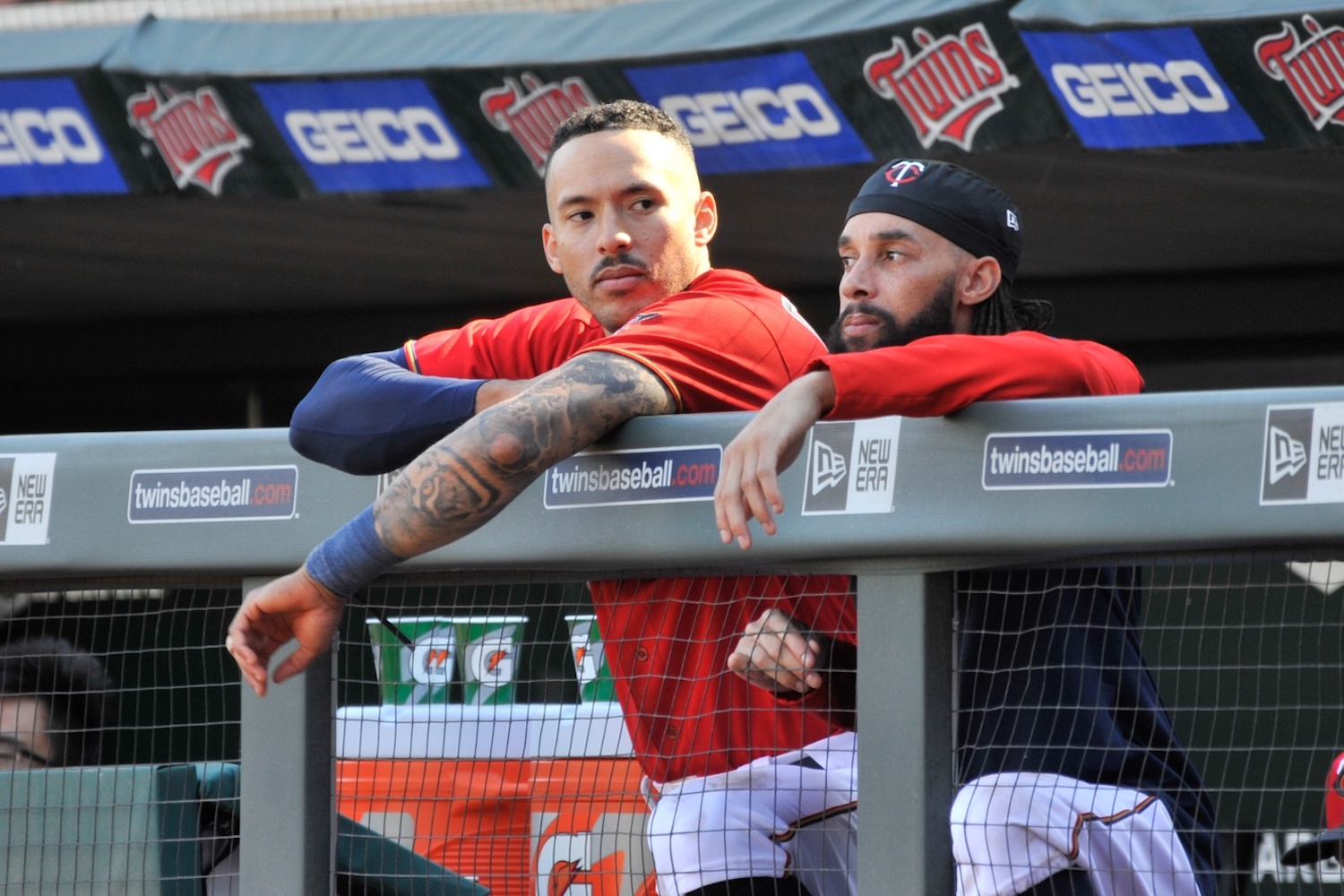 As previously discussed, there are many different ways people think about leaders. Some like to identify personal traits, while others look more into behaviors. In truth, leadership isn’t a blanket idea. Instead, it’s pretty contextual—in the biz, we call it a contingency leadership theory. Some people are good leaders in one situation but not in others. A drill sergeant may be a good leader in basic training, but that doesn’t mean they would have a leadership style that works as the dean of a school of arts. Sports fans often like to differentiate between leaders based on whether they’re vocal leaders or leaders by example. However, the difference in leadership styles between a good leader in basic training and an art school dean can’t be boiled down to vocal versus example. In truth, there’s no perfect way to conceptualize any leader or measure their inherent leaderiness (yes, I made that word up). However, there is a straightforward way that I have in mind to capture leadership styles with some nuance. Michael Mumford of the University of Oklahoma published a book in 2006, culminating almost a century of leadership research. He posited that there are three broad forms of leadership, each with its own strengths and weaknesses: charismatic, ideological, and pragmatic. Although these leadership styles are often applied to leaders of organizations and periods of change, the styles can also appear in more base-level leaders. I promise we’re returning to Carlos Correa (and some pretty pictures) soon. First, I want to explain what the three leadership styles mean. Charismatic leaders are compelling, and they lead others to rally behind them. Typically they inspire more energy and effort, raising everyone’s spirit—the rah-rah guys. The focus on today’s game is just one step toward the championship down the road. Ideological leaders harken back to shared beliefs and sometimes a return to how things used to be. In baseball, that could mean playing the game the right way (take that however you will) or getting back to fundamentals. If the leader’s vision of the right way aligns with others on the team, they might become obedient to the leader and follow their example—but the visions have to match. Pragmatic leaders focus more on problem-solving than any emotional work and more on the here and now than transformational charismatic leaders or backward-looking ideological leaders. A pragmatic baseball leader would be focused on driving improvement—things like working on swing mechanics or helping get teammates focused on the task at hand. Now, let’s look at how this theory of leadership can and has manifested within the Twins. I will briefly describe four players who were, to one degree or another, seen as leaders over the last few years: Byron Buxton, Nelson Cruz, Josh Donaldson, and Correa. Please note that, as an outsider, I don’t have access to how these players genuinely behave in the clubhouse; I’m just going off public perception to illustrate my point. Buxton appears to be very high on the charismatic style, providing excitement and energy, and is often seen as the team’s heartbeat. He doesn’t seem to be very high on the ideological style, and he likely has some pragmatism to him, but first and foremost, he’s an energy guy wanting to drive the team emotionally. In contrast, someone like Cruz is more of a pragmatic leader, providing a lot of mentorship to younger players and helping the team improve, take care of themselves, and stay on-task daily. He also never struck me as much of an ideological leader, and he had some charismatic tendencies, attracting a crowd that followed his lead, but he wasn’t much of a high-energy guy. Then we get to Donaldson, who was probably seen as more of a leader by the organization than by his teammates. He certainly worked with his teammates who were seeking help and gave them advice, which suggests some pragmatism. He is the most ideological of the four, wanting his teammates to play the right way. However, he didn’t do much to be a leader that players rallied around (sometimes the opposite). Finally, we have Correa, who is at least moderately high in all facets. First, he’s pragmatic, spending a lot of time helping teammates improve. Second, he’s the face of the clubhouse, and he brings energy. Probably not as much as Buxton, but he’s at least the number two guy in that regard, always with an eye on being a champion. He’s probably also somewhat ideological, as evidenced by his “You can party when you’re 40” speech at the beginning of spring training this year. Here’s a visual for these four players, by my outsider’s estimation: Don’t come away from this thinking I’m calling one player a better leader than another. Leaders aren’t good or bad in a vacuum. These are just an estimation of what styles specific players might use, and their usefulness depends on the context. This thought exercise was to demonstrate that Carlos Correa is quite prepared to fill a leadership role in almost any situation. He can help right the ship, provide energy, work with teammates, hold others to high standards, rally teammates, and even contribute to decision-making. Whatever the context, Correa can fill a leadership role, at least through this breakdown of styles. Combining these two articles, we can see that Correa—through his skills on the field and position on the diamond—is a prime candidate to be seen as a leader, and he possesses a versatile set of leadership tendencies that allow him to provide leadership in several domains. Please, leave comments or questions below, even if you think this is all a bunch of hullabaloo (if you do think it’s hullabaloo, and you’re still reading this, I really appreciate it). I’d love to continue this series, and your input is valuable. I’d love to go into topics that the community is interested in. Mumford, M. D. (2006). Pathways to outstanding leadership: A comparative analysis of charismatic, ideological, and pragmatic Leaders. Mahwah, NJ: Lawrence Erlbaum.
 -
In part one, we discussed why a player like Carlos Correa is in a prime position to be looked to as a leader. In part two, we’ll look at the traits that solidify his leadership position on his team. Image courtesy of Jeffrey Becker-USA TODAY Sports As previously discussed, there are many different ways people think about leaders. Some like to identify personal traits, while others look more into behaviors. In truth, leadership isn’t a blanket idea. Instead, it’s pretty contextual—in the biz, we call it a contingency leadership theory. Some people are good leaders in one situation but not in others. A drill sergeant may be a good leader in basic training, but that doesn’t mean they would have a leadership style that works as the dean of a school of arts. Sports fans often like to differentiate between leaders based on whether they’re vocal leaders or leaders by example. However, the difference in leadership styles between a good leader in basic training and an art school dean can’t be boiled down to vocal versus example. In truth, there’s no perfect way to conceptualize any leader or measure their inherent leaderiness (yes, I made that word up). However, there is a straightforward way that I have in mind to capture leadership styles with some nuance. Michael Mumford of the University of Oklahoma published a book in 2006, culminating almost a century of leadership research. He posited that there are three broad forms of leadership, each with its own strengths and weaknesses: charismatic, ideological, and pragmatic. Although these leadership styles are often applied to leaders of organizations and periods of change, the styles can also appear in more base-level leaders. I promise we’re returning to Carlos Correa (and some pretty pictures) soon. First, I want to explain what the three leadership styles mean. Charismatic leaders are compelling, and they lead others to rally behind them. Typically they inspire more energy and effort, raising everyone’s spirit—the rah-rah guys. The focus on today’s game is just one step toward the championship down the road. Ideological leaders harken back to shared beliefs and sometimes a return to how things used to be. In baseball, that could mean playing the game the right way (take that however you will) or getting back to fundamentals. If the leader’s vision of the right way aligns with others on the team, they might become obedient to the leader and follow their example—but the visions have to match. Pragmatic leaders focus more on problem-solving than any emotional work and more on the here and now than transformational charismatic leaders or backward-looking ideological leaders. A pragmatic baseball leader would be focused on driving improvement—things like working on swing mechanics or helping get teammates focused on the task at hand. Now, let’s look at how this theory of leadership can and has manifested within the Twins. I will briefly describe four players who were, to one degree or another, seen as leaders over the last few years: Byron Buxton, Nelson Cruz, Josh Donaldson, and Correa. Please note that, as an outsider, I don’t have access to how these players genuinely behave in the clubhouse; I’m just going off public perception to illustrate my point. Buxton appears to be very high on the charismatic style, providing excitement and energy, and is often seen as the team’s heartbeat. He doesn’t seem to be very high on the ideological style, and he likely has some pragmatism to him, but first and foremost, he’s an energy guy wanting to drive the team emotionally. In contrast, someone like Cruz is more of a pragmatic leader, providing a lot of mentorship to younger players and helping the team improve, take care of themselves, and stay on-task daily. He also never struck me as much of an ideological leader, and he had some charismatic tendencies, attracting a crowd that followed his lead, but he wasn’t much of a high-energy guy. Then we get to Donaldson, who was probably seen as more of a leader by the organization than by his teammates. He certainly worked with his teammates who were seeking help and gave them advice, which suggests some pragmatism. He is the most ideological of the four, wanting his teammates to play the right way. However, he didn’t do much to be a leader that players rallied around (sometimes the opposite). Finally, we have Correa, who is at least moderately high in all facets. First, he’s pragmatic, spending a lot of time helping teammates improve. Second, he’s the face of the clubhouse, and he brings energy. Probably not as much as Buxton, but he’s at least the number two guy in that regard, always with an eye on being a champion. He’s probably also somewhat ideological, as evidenced by his “You can party when you’re 40” speech at the beginning of spring training this year. Here’s a visual for these four players, by my outsider’s estimation: Don’t come away from this thinking I’m calling one player a better leader than another. Leaders aren’t good or bad in a vacuum. These are just an estimation of what styles specific players might use, and their usefulness depends on the context. This thought exercise was to demonstrate that Carlos Correa is quite prepared to fill a leadership role in almost any situation. He can help right the ship, provide energy, work with teammates, hold others to high standards, rally teammates, and even contribute to decision-making. Whatever the context, Correa can fill a leadership role, at least through this breakdown of styles. Combining these two articles, we can see that Correa—through his skills on the field and position on the diamond—is a prime candidate to be seen as a leader, and he possesses a versatile set of leadership tendencies that allow him to provide leadership in several domains. Please, leave comments or questions below, even if you think this is all a bunch of hullabaloo (if you do think it’s hullabaloo, and you’re still reading this, I really appreciate it). I’d love to continue this series, and your input is valuable. I’d love to go into topics that the community is interested in. Mumford, M. D. (2006). Pathways to outstanding leadership: A comparative analysis of charismatic, ideological, and pragmatic Leaders. Mahwah, NJ: Lawrence Erlbaum. View full article
-
Listen, I’m one of the last hangers on for Miguel, too. I think he has value still, no matter what my lying eyes tell me. I just couldn’t think of another word to use in its place
-
I'll probably write on this topic down the line--probably closer to the offseason when it's more relevant--but if you accept the idea that things that come up in other types of organizations (i.e., the business world) can be applied to some degree to sports teams, then, to some extent, non-monetary incentives can fill in monetary gaps. It's rarely the difference between 10 million and 20 million, but it's never a nonfactor.
-
I'll say what I've said before on this topic: Josh Donaldson can be a healthy, functioning part of a team. His energy and whatnot can be beneficial. However, if he's on a team that doesn't respond well to his shenanigans, his antics don't work. Beyond that, he probably isn't suited to be the primary leader on a team. If there was someone who could have been slotted in ahead of him on a hypothetical "leadership hierarchy," like there is in New York, it would have shaken out differently. Nelson Cruz might have been that person, but that's a maybe. Maybe a future installment of this series will include the concept of shared leadership and how leaders can coexist.
-
I totally get where you're coming from, though I'll push back a bit. There's more than one way to be a leader (part 2 goes into this, so look out for it in a few days). If you're right, and Correa can't be looked to as a moral leader, he can still lead in other ways, such as lighting a fire under someone or the team as a whole or working with someone on their mechanics.
-
They say that war never changes. WAR does change, as it’s a context-dependent stat, but baseball itself doesn’t, either. Year in and year out, the same storylines surface in every spring training as sunburnt media members struggle to produce material. Welcome, welcome, everyone to the first annual Golden Grapefruit Awards show. We’ve finally made it through another spring training, so let’s take a moment to look back at some memorable moments and hand out some spring training awards. Every year, the same storylines tend to pop up, and fans consume them like animals every year. We had a great showing this year. Every predicted cliché had at least one qualifier, and many award winners shone magnificently, going above and beyond what the academy (Greggory and his cats) was looking for. Let’s get started! Miguel Sanó Memorial "Best Shape of his Life" Award: José Miranda We start our awards with a classic. Each year, someone in every camp shows up in what they or someone else can describe as “the best shape of his life.” Sometimes several people show up in such a state. Some people show up in such a state several times. With the departure of perennial "Best Shape of his Life" candidate Sanó, this award had no clear frontrunner and big shoes to fill. Miranda certainly filled those shoes, hiring a nutritionist over the offseason and weighing in 12 pounds lighter than he did at the end of 2022 in an effort to slim down and hold up better over the season. Take Carlos Correa’s word for it: “He looks sexy. You see that body?” Congratulations on your first Golden Grapefruit, José. "Newest Pitch" Award: Griffin Jax and Joe Ryan (tie) There was a crowded field for this award, with at least six players showing up to camp with what could be called a “new pitch.” None of these pitchers may still be throwing their new pitches come September, but spring training is built on hope and optimism. Emilio Pagán emerged as the early favorite, adding a new pitch down the stretch in 2022—a curveball with which he saw moderate success. Then, early in camp, it was revealed that Griffin Jax, Tyler Mahle, Caleb Thielbar, and Joe Ryan all spent time at Driveline this winter to revamp their arsenals. Jax added a cutter to pair with his slider. Mahle both changed his slider and split changeup. Thielbar fine-tuned his mix, and Ryan changed his slider to a sweeper while also adding a split change. After camp started, Aaron Gleeman and Jeremy Maschino noticed that Pablo López and Jovani Morán, respectively, both made adjustments to their curveball and slider, respectively, to throw a sweeper. I’m here to make the executive decision that changing a breaking pitch to a sweeper doesn’t count as throwing a new pitch, nor does tinkering with an existing pitch. As such, edging out Pagán by a few weeks, we have Jax and Ryan as our co-winners of the "Newest Pitch" Award for their new cutter and split-change developed at the same time. We only have one trophy, so they’ll need to settle it between themselves. "Most Revamped Swing" Award: Max Kepler Most years, this award would go to the player who spent the offseason working with a guru to fix a glaring hole in their swing, refine their mechanics, or build consistent timing. Joey Gallo was a prime candidate for the award, and he did reportedly spend time this offseason fixing holes in his swing. Even the value-brand Gallo, Matt Wallner, was reported to have done the same. However, this year, the award goes to Kepler, who took the unorthodox path toward fixing his swing—getting his mind right while sipping wine in Paris. Kepler, who went through a significant emotional struggle over the past year, stated that he needed to clear his mind for a month to work through it. Hey, if it works, who cares how he got there? Best of luck in a shift-free 2023, Mr. Kepler. "Weirdest Injury" Award: Jordan Balazovic Although not a cliché, it seems that every year there is an inexplicable injury that can only be chalked up to spring training. Recall 2021, when Byron Buxton missed a few weeks due to a root canal after chipping his tooth while eating steak. Balazovic, a pitching prospect, spent spring training 2023 with his mouth wired shut after a couple of sucker punches broke his jaw the night before spring training started. In this case, the award was won before a game or even practice took place. "Honey, Grab my Program" Award: Andrew Bechtold Spring training, especially early in the year and late in games, features a rotating cast of characters more extensive than The Simpsons. Non-roster invites, prospects, and career minor leaguers are each given their turn in the Florida sun. Every year, a few prospects get their number called more than others, consistently sending fans scrambling to look up who #89 is. Only players who have never appeared in MLB and are not on the 40-man roster qualify for this award. Bechtold was the winner, leading qualified players in both games (15) and plate appearances (27) and showing off his defensive versatility. Unfortunately, he has a .305 OPS this spring. But it’s the times you get up that counts, or whatever Rocky Balboa said. "First Cliché Statement" Award: Carlos Correa It’s not every day that Buxton is the second fastest to get somewhere, but Correa beat him to the first spring training cliché uttered in 2023. Players often repeat some cliché line to the media early in camp about having a good group of guys, a mix of veterans and rookies, or championship aspirations, like in Buxton’s case this year. Correa narrowly edged out Buxton in making a clichéd comment to the media. He hit it out of the park by lecturing his teammates about needing to stay healthy, challenging them to wait until they retire to retire go partying. When the 200 million dollar man speaks, I’m guessing they listen. Congratulations Carlos! I’m sure you’ll be in the running for earliest cliché for the better part of the next decade, so we’ll see you here next year to defend your title. "Grainiest Video" Award: Do-Hyoung Park Finally, my favorite award—the media can’t help themselves, and we, as fans, will eat up whatever they give us. When baseball’s back, we need proof. Grainy videos taken through a fence at the beginning of camp are a spring training staple. There were many great candidates, but Do hit a grand slam with this video. First, it appeared even before pitchers and catchers reported. Next, it was filmed through not only one fence but two. Finally, Alex Kirilloff’s bat, shorts, and shirt blend in so well with the backdrop that all you can see are his lightning-fast appendages and what I assume are dashing good looks (I couldn’t tell through the fence). Congratulations Do! You might not have won Jeopardy, but you did win a Golden Grapefruit. View full article
-
The Golden Grapefruit Awards: Our Favorite Spring Training Clichés
Greggory Masterson posted an article in Twins
 Welcome, welcome, everyone to the first annual Golden Grapefruit Awards show. We’ve finally made it through another spring training, so let’s take a moment to look back at some memorable moments and hand out some spring training awards. Every year, the same storylines tend to pop up, and fans consume them like animals every year. We had a great showing this year. Every predicted cliché had at least one qualifier, and many award winners shone magnificently, going above and beyond what the academy (Greggory and his cats) was looking for. Let’s get started! Miguel Sanó Memorial "Best Shape of his Life" Award: José Miranda We start our awards with a classic. Each year, someone in every camp shows up in what they or someone else can describe as “the best shape of his life.” Sometimes several people show up in such a state. Some people show up in such a state several times. With the departure of perennial "Best Shape of his Life" candidate Sanó, this award had no clear frontrunner and big shoes to fill. Miranda certainly filled those shoes, hiring a nutritionist over the offseason and weighing in 12 pounds lighter than he did at the end of 2022 in an effort to slim down and hold up better over the season. Take Carlos Correa’s word for it: “He looks sexy. You see that body?” Congratulations on your first Golden Grapefruit, José. "Newest Pitch" Award: Griffin Jax and Joe Ryan (tie) There was a crowded field for this award, with at least six players showing up to camp with what could be called a “new pitch.” None of these pitchers may still be throwing their new pitches come September, but spring training is built on hope and optimism. Emilio Pagán emerged as the early favorite, adding a new pitch down the stretch in 2022—a curveball with which he saw moderate success. Then, early in camp, it was revealed that Griffin Jax, Tyler Mahle, Caleb Thielbar, and Joe Ryan all spent time at Driveline this winter to revamp their arsenals. Jax added a cutter to pair with his slider. Mahle both changed his slider and split changeup. Thielbar fine-tuned his mix, and Ryan changed his slider to a sweeper while also adding a split change. After camp started, Aaron Gleeman and Jeremy Maschino noticed that Pablo López and Jovani Morán, respectively, both made adjustments to their curveball and slider, respectively, to throw a sweeper. I’m here to make the executive decision that changing a breaking pitch to a sweeper doesn’t count as throwing a new pitch, nor does tinkering with an existing pitch. As such, edging out Pagán by a few weeks, we have Jax and Ryan as our co-winners of the "Newest Pitch" Award for their new cutter and split-change developed at the same time. We only have one trophy, so they’ll need to settle it between themselves. "Most Revamped Swing" Award: Max Kepler Most years, this award would go to the player who spent the offseason working with a guru to fix a glaring hole in their swing, refine their mechanics, or build consistent timing. Joey Gallo was a prime candidate for the award, and he did reportedly spend time this offseason fixing holes in his swing. Even the value-brand Gallo, Matt Wallner, was reported to have done the same. However, this year, the award goes to Kepler, who took the unorthodox path toward fixing his swing—getting his mind right while sipping wine in Paris. Kepler, who went through a significant emotional struggle over the past year, stated that he needed to clear his mind for a month to work through it. Hey, if it works, who cares how he got there? Best of luck in a shift-free 2023, Mr. Kepler. "Weirdest Injury" Award: Jordan Balazovic Although not a cliché, it seems that every year there is an inexplicable injury that can only be chalked up to spring training. Recall 2021, when Byron Buxton missed a few weeks due to a root canal after chipping his tooth while eating steak. Balazovic, a pitching prospect, spent spring training 2023 with his mouth wired shut after a couple of sucker punches broke his jaw the night before spring training started. In this case, the award was won before a game or even practice took place. "Honey, Grab my Program" Award: Andrew Bechtold Spring training, especially early in the year and late in games, features a rotating cast of characters more extensive than The Simpsons. Non-roster invites, prospects, and career minor leaguers are each given their turn in the Florida sun. Every year, a few prospects get their number called more than others, consistently sending fans scrambling to look up who #89 is. Only players who have never appeared in MLB and are not on the 40-man roster qualify for this award. Bechtold was the winner, leading qualified players in both games (15) and plate appearances (27) and showing off his defensive versatility. Unfortunately, he has a .305 OPS this spring. But it’s the times you get up that counts, or whatever Rocky Balboa said. "First Cliché Statement" Award: Carlos Correa It’s not every day that Buxton is the second fastest to get somewhere, but Correa beat him to the first spring training cliché uttered in 2023. Players often repeat some cliché line to the media early in camp about having a good group of guys, a mix of veterans and rookies, or championship aspirations, like in Buxton’s case this year. Correa narrowly edged out Buxton in making a clichéd comment to the media. He hit it out of the park by lecturing his teammates about needing to stay healthy, challenging them to wait until they retire to retire go partying. When the 200 million dollar man speaks, I’m guessing they listen. Congratulations Carlos! I’m sure you’ll be in the running for earliest cliché for the better part of the next decade, so we’ll see you here next year to defend your title. "Grainiest Video" Award: Do-Hyoung Park Finally, my favorite award—the media can’t help themselves, and we, as fans, will eat up whatever they give us. When baseball’s back, we need proof. Grainy videos taken through a fence at the beginning of camp are a spring training staple. There were many great candidates, but Do hit a grand slam with this video. First, it appeared even before pitchers and catchers reported. Next, it was filmed through not only one fence but two. Finally, Alex Kirilloff’s bat, shorts, and shirt blend in so well with the backdrop that all you can see are his lightning-fast appendages and what I assume are dashing good looks (I couldn’t tell through the fence). Congratulations Do! You might not have won Jeopardy, but you did win a Golden Grapefruit.
 -
Both of you should be on the lookout for Part 2, where JD makes a cameo
-
Awesome! My background isn’t in organizational leadership, but I do have a history in other organizational disciplines. Part 2 will be released soon, and then Part 3 and on will be somewhat dependent on the feedback I get from the first two parts. If there are topics in the comments that people indicate interest in, I’ll work them into the series!
-
To paraphrase Justice Potter Stewart, 'Leadership—I know it when I see it.' We can all agree that leaders exist, but unpacking what makes a leader is more complicated. Image courtesy of Rick Osentoski-USA TODAY Sports Teammates, media, and fans laud Carlos Correa for his leadership ability. Shoot, players on other teams compliment Correa for being a leader: On Tuesday, Correa was caught putting his arm around Carson Williams, a 19-year old Rays prospect, after the youngster committed an error in a spring training game. When it comes to identifying what exactly he does as a leader, though, we can struggle to quantify it. Today, we’re starting an ol’ Gregg deep dive into leadership, its observable outcomes or benefits, and why Correa gets explicitly highlighted as a leader. You can take this series as a continuation of this blog post looking at what “clubhouse presence” might generally mean for a player like Correa. I’ll reference papers discussed there, so if you’re interested, check out that blog. Leadership Defined Let’s start at the top with a definition of leadership. Many will cite traits or behaviors like empowering others, providing support, giving guidance, or something like that. However, at its most basic level, leadership is influence. Leaders influence those who follow them into certain behaviors. Leaders can come in all forms. One easy way to think about them is informal or formal leaders who can be from inside or outside of a team. A player like Correa would be an informal leader inside the team. Under our definition of leadership, an excellent informal leader can change others’ behavior. Now, it’s possible to influence behavior positively or negatively, so it’s crucial to have the right type of leader. A bloviating blowhard can walk into a clubhouse and certainly influence their teammates, but if that influence isn’t beneficial for the team, then what’s the point? Even worse, a front office could bring a leader into the clubhouse, but the team could still reject that person as a leader. Clearly, this was not the case in Minnesota last year, at least from outsiders’ perspectives. So let’s move on to how players become leaders. Leader Emergence As mentioned in my previous blog post, players can have informal roles like leader that are not officially bestowed on them by the powers that be (as opposed to first baseman or leadoff hitter). Instead, their teammates agree that that person fills the role. In a study led by Jeemin Kim of Wilfred Laurier University, teams tended to be most satisfied with their play when verbal leaders made up 10-15% of the team. On a baseball team, that would be between two and four players, and Correa certainly fits that bill on this Twins team. Long ago, a psychologist named Robert F. Bales put forward a theory suggesting that three things mattered for a person to fill an informal role: being noticed, skills, and likeability. These three factors matter for all roles—not just leadership. For example, the role of clubhouse cancer would require a person to be very good at disrupting the clubhouse. Let’s stick, though, to the role of informal leader. That player needs to have influence, be likable (to some extent), and be noticed for his traits. Correa has the on-field ability of one of the top players in the sport. That helps, but plenty of talented players aren’t seen as leaders. Instead, he must also help guide teammates, provide an example for them, and be there for them—all of the things people think about when they think of a leader. He doesn’t need to be all of them, just enough of them to be noticed by his teammates. From a social scientist’s perspective, he has an increased potential to be noticed simply by his position in the field. Teams have what are called social networks—complex relationships between players. These networks can be mapped out and measured. Networks can come in all types, such as friendship or time spent playing together. Players with more friends on the team can have a wider friendship network, and teammates who have played longer can have stronger familiarity bonds with each other. A team is a series of different types of networks that can become somewhat confusing. For the visual of you out there, see the network I approximated based on coordination. Thicker lines indicate more substantial levels of coordination needed for the players at each position on the field. They’re also color-coded, with purple being the strongest, yellow being medium, and red being the weakest. This map isn’t exact, but it gets the point across. If you look closely, shortstops and catchers appear to require the most coordination with their teammates. Catchers specifically work incredibly closely with their pitchers and then everyone else to some extent. Shortstops have, at minimum, a moderate level of coordination with everyone else on the team, save the pitcher (though even that could be higher if you consider the amount of coordination necessary for shifting and pitch selection). This diagram isn’t just me making things up to support my thoughts. As far back as the 1960s, social scientists observed this very thing. Having more ties and stronger ties makes a player more centralized in their network, and Oscar Grusky of UCLA discovered that the more central a player’s position was, the more likely they were to become a manager. This finding isn’t a new discovery in the baseball world, either. Many reading this already know that catchers and middle infielders are more likely to become managers than pitchers or outfielders. However, it’s worth noting that psychology has been on the same wavelength as conventional wisdom in this regard. All this is to say that a player like Carlos Correa is in a prime position to be identified as a leader by his teammates. In the next installment, I will look at what sort of leadership Correa exhibits that solidifies him as a leader. Bales, R. F. 1966. “Task roles and social roles in problem solving groups”. In Role theory: Concepts and research, Edited by: Biddle, B. J. and Thomas, E. J. 254–262. New York: John Wiley. Grusky, O. (1963). The effects of formal structure on managerial recruitment: A study of baseball organization. Sociometry, 26, 345–353. doi:10.2307/2786074 https://www.jstor.org/stable/2786074 Kim, J., Godfrey, M., & Eys, M. (2020). The antecedents and outcomes of informal roles in interdependent sport teams. Sport, Exercise, and Performance Psychology, 9(3), 277–291. https://doi.org/10.1037/spy0000179 View full article
-
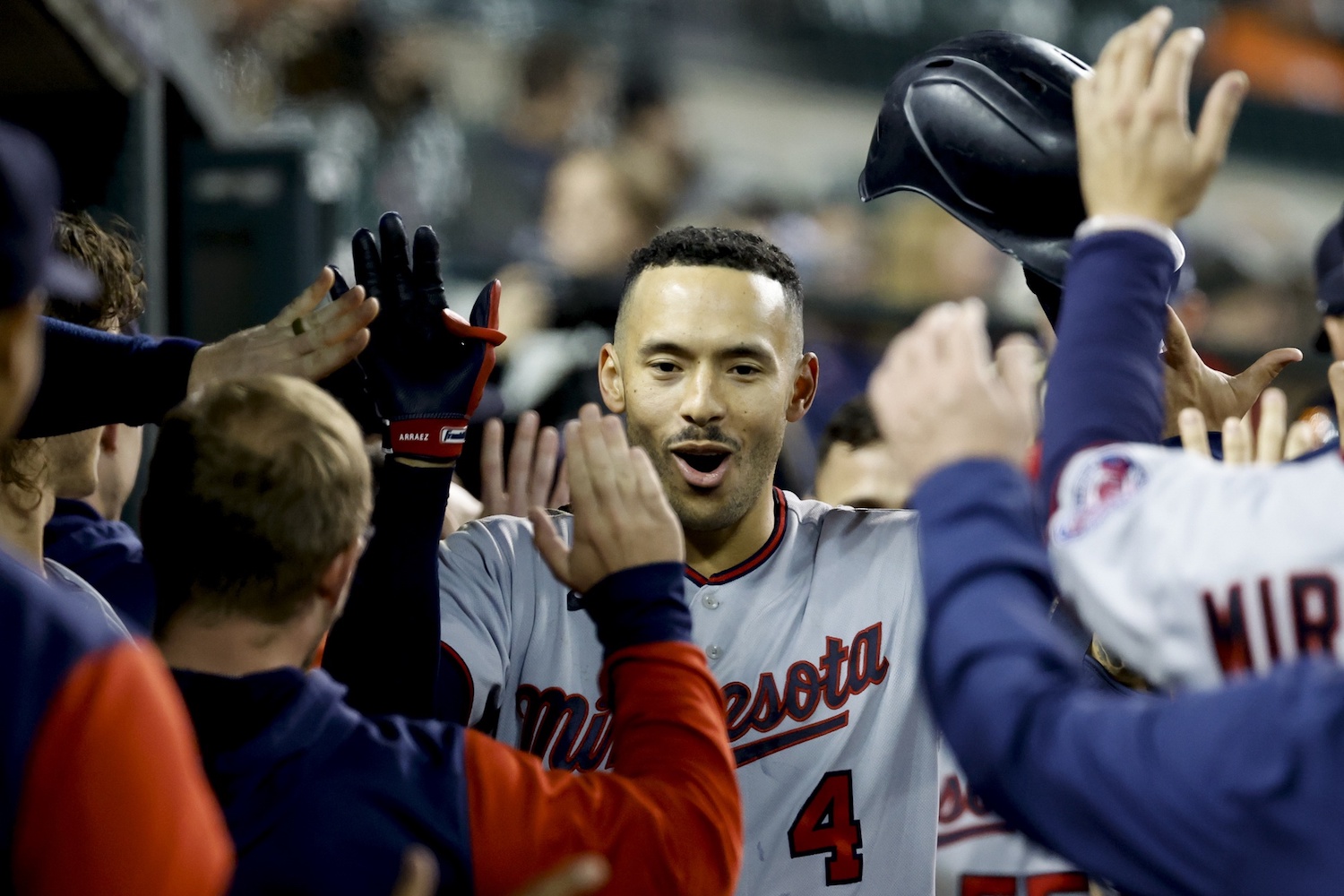 Teammates, media, and fans laud Carlos Correa for his leadership ability. Shoot, players on other teams compliment Correa for being a leader: On Tuesday, Correa was caught putting his arm around Carson Williams, a 19-year old Rays prospect, after the youngster committed an error in a spring training game. When it comes to identifying what exactly he does as a leader, though, we can struggle to quantify it. Today, we’re starting an ol’ Gregg deep dive into leadership, its observable outcomes or benefits, and why Correa gets explicitly highlighted as a leader. You can take this series as a continuation of this blog post looking at what “clubhouse presence” might generally mean for a player like Correa. I’ll reference papers discussed there, so if you’re interested, check out that blog. Leadership Defined Let’s start at the top with a definition of leadership. Many will cite traits or behaviors like empowering others, providing support, giving guidance, or something like that. However, at its most basic level, leadership is influence. Leaders influence those who follow them into certain behaviors. Leaders can come in all forms. One easy way to think about them is informal or formal leaders who can be from inside or outside of a team. A player like Correa would be an informal leader inside the team. Under our definition of leadership, an excellent informal leader can change others’ behavior. Now, it’s possible to influence behavior positively or negatively, so it’s crucial to have the right type of leader. A bloviating blowhard can walk into a clubhouse and certainly influence their teammates, but if that influence isn’t beneficial for the team, then what’s the point? Even worse, a front office could bring a leader into the clubhouse, but the team could still reject that person as a leader. Clearly, this was not the case in Minnesota last year, at least from outsiders’ perspectives. So let’s move on to how players become leaders. Leader Emergence As mentioned in my previous blog post, players can have informal roles like leader that are not officially bestowed on them by the powers that be (as opposed to first baseman or leadoff hitter). Instead, their teammates agree that that person fills the role. In a study led by Jeemin Kim of Wilfred Laurier University, teams tended to be most satisfied with their play when verbal leaders made up 10-15% of the team. On a baseball team, that would be between two and four players, and Correa certainly fits that bill on this Twins team. Long ago, a psychologist named Robert F. Bales put forward a theory suggesting that three things mattered for a person to fill an informal role: being noticed, skills, and likeability. These three factors matter for all roles—not just leadership. For example, the role of clubhouse cancer would require a person to be very good at disrupting the clubhouse. Let’s stick, though, to the role of informal leader. That player needs to have influence, be likable (to some extent), and be noticed for his traits. Correa has the on-field ability of one of the top players in the sport. That helps, but plenty of talented players aren’t seen as leaders. Instead, he must also help guide teammates, provide an example for them, and be there for them—all of the things people think about when they think of a leader. He doesn’t need to be all of them, just enough of them to be noticed by his teammates. From a social scientist’s perspective, he has an increased potential to be noticed simply by his position in the field. Teams have what are called social networks—complex relationships between players. These networks can be mapped out and measured. Networks can come in all types, such as friendship or time spent playing together. Players with more friends on the team can have a wider friendship network, and teammates who have played longer can have stronger familiarity bonds with each other. A team is a series of different types of networks that can become somewhat confusing. For the visual of you out there, see the network I approximated based on coordination. Thicker lines indicate more substantial levels of coordination needed for the players at each position on the field. They’re also color-coded, with purple being the strongest, yellow being medium, and red being the weakest. This map isn’t exact, but it gets the point across. If you look closely, shortstops and catchers appear to require the most coordination with their teammates. Catchers specifically work incredibly closely with their pitchers and then everyone else to some extent. Shortstops have, at minimum, a moderate level of coordination with everyone else on the team, save the pitcher (though even that could be higher if you consider the amount of coordination necessary for shifting and pitch selection). This diagram isn’t just me making things up to support my thoughts. As far back as the 1960s, social scientists observed this very thing. Having more ties and stronger ties makes a player more centralized in their network, and Oscar Grusky of UCLA discovered that the more central a player’s position was, the more likely they were to become a manager. This finding isn’t a new discovery in the baseball world, either. Many reading this already know that catchers and middle infielders are more likely to become managers than pitchers or outfielders. However, it’s worth noting that psychology has been on the same wavelength as conventional wisdom in this regard. All this is to say that a player like Carlos Correa is in a prime position to be identified as a leader by his teammates. In the next installment, I will look at what sort of leadership Correa exhibits that solidifies him as a leader. Bales, R. F. 1966. “Task roles and social roles in problem solving groups”. In Role theory: Concepts and research, Edited by: Biddle, B. J. and Thomas, E. J. 254–262. New York: John Wiley. Grusky, O. (1963). The effects of formal structure on managerial recruitment: A study of baseball organization. Sociometry, 26, 345–353. doi:10.2307/2786074 https://www.jstor.org/stable/2786074 Kim, J., Godfrey, M., & Eys, M. (2020). The antecedents and outcomes of informal roles in interdependent sport teams. Sport, Exercise, and Performance Psychology, 9(3), 277–291. https://doi.org/10.1037/spy0000179
 -
Has anyone actually ever seen Terry and Seth in the same room?
-
If you’re looking for an obscure storyline to follow in 2023, pay attention to the seasons of four key impending free agents. Image courtesy of Brad Penner-USA TODAY Sports The rules governing MLB are nothing, if not labyrinthine. The draft rules are no different. Between qualifying offers, competitive balance picks, and the standard first-round pick, the Twins have the potential to fill their draft boards. MLB teams can offer their impending free agents a Qualifying Offer (QO) at the end of the season. If the player rejects it, teams can receive an additional draft pick. The rules are complicated, but if the Twins are still a revenue-sharing recipient and the player signs a contract north of $50 million, they will gain a draft pick between the first and second rounds. The pick would be between the second and third rounds if the player signs for less than $50 million. Have you got it? Super simple. The bottom line is that if the Twins give the QO to an impending free agent, and he rejects it, they essentially get an extra first-round pick. Do the Twins have any players who could receive the QO? Yes, several. To give a player the QO, the team has two criteria. First, the player must not have received a QO from their current team or any other team. Second, the player has to have spent the entire season on the team’s roster. The Twins have seven players projected to be eligible for the QO. However, the QO is a one-year deal equal to the average of MLB’s top 125 player salaries, likely around $20 million. Something has to go horribly right for three players—Donovan Solano, Michael A. Taylor, and Emilio Pagán—to sniff the QO. Depending on how they play, a solid case can be made for each of the other four to receive the QO. It’s something of a win-win for the team. If the player accepts the offer, the team pays them a hefty salary for only one year—no strings attached. The team gets a draft pick for their troubles if they reject it. So, who are these four players, and what are the odds they will receive a QO? Kenta Maeda Maeda is likely the longest shot in this camp, but it’s not unfeasible. It’s hard to predict how he will play this season, coming off of Tommy John surgery at almost 35, but if he pitches anywhere close to how he did in 2020, it’s reasonable. He would also be the most likely of the group to accept the offer. At his age, his chances of securing a multi-year deal are lower, so if he doesn’t think he could get a deal in free agency around $50 million over two years (Justin Verlander’s 2022 deal coming off of Tommy John, for reference), a $20 million payday would be good for him. It would also be an affordable veteran arm for the younger 2024 team. Sonny Gray 2023 will be Gray’s 11th year in the big leagues, but he signed an extension early in his career that kept him from testing free agency (and kept him underpaid). Now he’s 33 and an established #2 starter heading into free agency after the season. A comparable (albeit more durable) player who signed a deal in free agency this year is Chris Bassitt. Bassitt signed a three-year, $63 million contract with the QO attached to him. If Gray has another season like 2022, with better health and more innings, he could be in line for more than Bassitt got. The Twins would gladly bring him back for $20 million or get a draft pick. Tyler Mahle Mahle is the highest-upside pitcher in this group and, not coincidentally, the youngest. If his shoulder proves healthy and he keeps his home runs down in pitcher-friendly Target Field, he could put together a season solidifying himself as an upper-level number-2 starter. In 2022, similar starters in age and ability Eduardo Rodriquez and Marcus Stroman fetched contracts over $70 million guaranteed. Rodriguez had the QO attached, and Stroman accepted his QO the year prior. If Mahle and his representation saw $70 million as feasible, they would likely pursue free agency. Given his age, he may sign a contract for five-plus years, taking him into his mid-30s and even push $100 million. Again, the Twins would gladly accept either outcome from him. Joey Gallo Here’s the wildcard. Gallo is a two-time All-Star and Gold Glove winner. He also hit .160 last year. If he had been a free agent last offseason, he would have netted over $100 million on his next contract, even with his struggles down the stretch. Instead, he’s on a make-good, one-year deal with Minnesota. If he rediscovers his form, playing elite defense in the outfield, getting on base at a .335 clip, and hits 35 home runs, he will assuredly receive the QO and reject it. Even if he plays at 80% of that pace, there’s a case to be made. (Andrew Benintendi signed a five-year, $75 million deal this offseason). What are the odds that all four players play well enough to justify a QO? Probably low. The Twins current front office has only ever offered one player the QO—Jake Odorizzi in 2019—and he accepted it. I would be shocked, though, if none of them received it, and I think there’s a better chance for all four to get one than for none of them to get one. Combined with their standard first-rounder and a potential competitive balance pick, which they have been receiving lately due to market size and revenue, the Twins could have as many as six draft picks before the second round. I’m not saying it’s likely, but as JP from Angels in the Outfield would say, “It could happen.” I’m sure Twins scouting director Sean Johnson is licking his chops. View full article
-
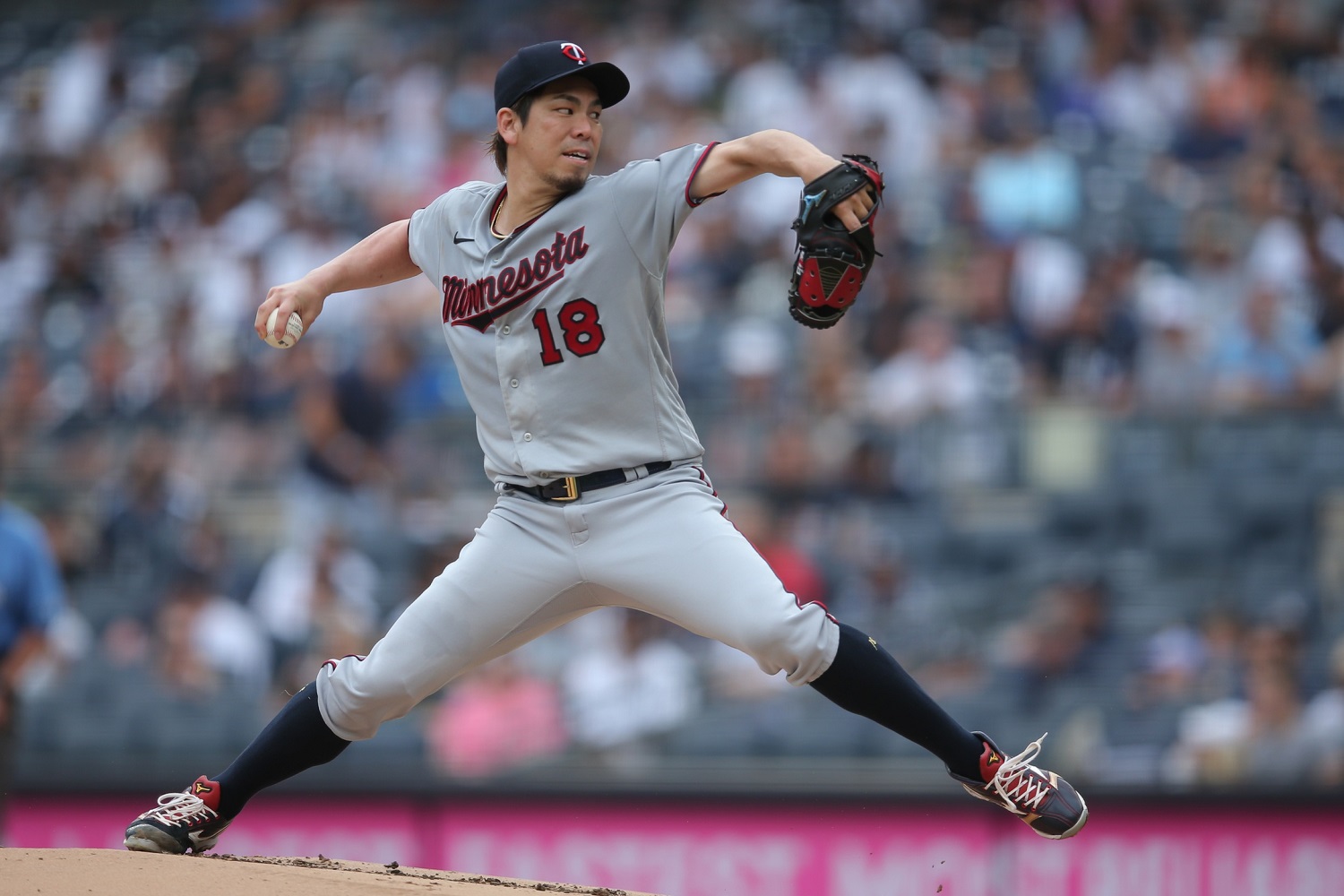 The rules governing MLB are nothing, if not labyrinthine. The draft rules are no different. Between qualifying offers, competitive balance picks, and the standard first-round pick, the Twins have the potential to fill their draft boards. MLB teams can offer their impending free agents a Qualifying Offer (QO) at the end of the season. If the player rejects it, teams can receive an additional draft pick. The rules are complicated, but if the Twins are still a revenue-sharing recipient and the player signs a contract north of $50 million, they will gain a draft pick between the first and second rounds. The pick would be between the second and third rounds if the player signs for less than $50 million. Have you got it? Super simple. The bottom line is that if the Twins give the QO to an impending free agent, and he rejects it, they essentially get an extra first-round pick. Do the Twins have any players who could receive the QO? Yes, several. To give a player the QO, the team has two criteria. First, the player must not have received a QO from their current team or any other team. Second, the player has to have spent the entire season on the team’s roster. The Twins have seven players projected to be eligible for the QO. However, the QO is a one-year deal equal to the average of MLB’s top 125 player salaries, likely around $20 million. Something has to go horribly right for three players—Donovan Solano, Michael A. Taylor, and Emilio Pagán—to sniff the QO. Depending on how they play, a solid case can be made for each of the other four to receive the QO. It’s something of a win-win for the team. If the player accepts the offer, the team pays them a hefty salary for only one year—no strings attached. The team gets a draft pick for their troubles if they reject it. So, who are these four players, and what are the odds they will receive a QO? Kenta Maeda Maeda is likely the longest shot in this camp, but it’s not unfeasible. It’s hard to predict how he will play this season, coming off of Tommy John surgery at almost 35, but if he pitches anywhere close to how he did in 2020, it’s reasonable. He would also be the most likely of the group to accept the offer. At his age, his chances of securing a multi-year deal are lower, so if he doesn’t think he could get a deal in free agency around $50 million over two years (Justin Verlander’s 2022 deal coming off of Tommy John, for reference), a $20 million payday would be good for him. It would also be an affordable veteran arm for the younger 2024 team. Sonny Gray 2023 will be Gray’s 11th year in the big leagues, but he signed an extension early in his career that kept him from testing free agency (and kept him underpaid). Now he’s 33 and an established #2 starter heading into free agency after the season. A comparable (albeit more durable) player who signed a deal in free agency this year is Chris Bassitt. Bassitt signed a three-year, $63 million contract with the QO attached to him. If Gray has another season like 2022, with better health and more innings, he could be in line for more than Bassitt got. The Twins would gladly bring him back for $20 million or get a draft pick. Tyler Mahle Mahle is the highest-upside pitcher in this group and, not coincidentally, the youngest. If his shoulder proves healthy and he keeps his home runs down in pitcher-friendly Target Field, he could put together a season solidifying himself as an upper-level number-2 starter. In 2022, similar starters in age and ability Eduardo Rodriquez and Marcus Stroman fetched contracts over $70 million guaranteed. Rodriguez had the QO attached, and Stroman accepted his QO the year prior. If Mahle and his representation saw $70 million as feasible, they would likely pursue free agency. Given his age, he may sign a contract for five-plus years, taking him into his mid-30s and even push $100 million. Again, the Twins would gladly accept either outcome from him. Joey Gallo Here’s the wildcard. Gallo is a two-time All-Star and Gold Glove winner. He also hit .160 last year. If he had been a free agent last offseason, he would have netted over $100 million on his next contract, even with his struggles down the stretch. Instead, he’s on a make-good, one-year deal with Minnesota. If he rediscovers his form, playing elite defense in the outfield, getting on base at a .335 clip, and hits 35 home runs, he will assuredly receive the QO and reject it. Even if he plays at 80% of that pace, there’s a case to be made. (Andrew Benintendi signed a five-year, $75 million deal this offseason). What are the odds that all four players play well enough to justify a QO? Probably low. The Twins current front office has only ever offered one player the QO—Jake Odorizzi in 2019—and he accepted it. I would be shocked, though, if none of them received it, and I think there’s a better chance for all four to get one than for none of them to get one. Combined with their standard first-rounder and a potential competitive balance pick, which they have been receiving lately due to market size and revenue, the Twins could have as many as six draft picks before the second round. I’m not saying it’s likely, but as JP from Angels in the Outfield would say, “It could happen.” I’m sure Twins scouting director Sean Johnson is licking his chops.
- 30 comments
-
- 10
-
-
-
- kenta maeda
- sonny gray
- (and 2 more)
-
I refuse to do so