



Greggory Masterson
-
Posts
819 -
Joined
-
Last visited
-
Days Won
2
Content Type
Profiles
News
Minnesota Twins Videos
2026 Minnesota Twins Top Prospects Ranking
2022 Minnesota Twins Draft Picks
Minnesota Twins Free Agent & Trade Rumors, Notes, & Tidbits
Guides & Resources
2023 Minnesota Twins Draft Picks
The Minnesota Twins Players Project
2024 Minnesota Twins Draft Picks
2025 Minnesota Twins Draft Pick Tracker
2026 Minnesota Twins Draft Tracker: Picks & Bonuses
Forums
Blogs
Events
Store
Downloads
Gallery
Everything posted by Greggory Masterson
-
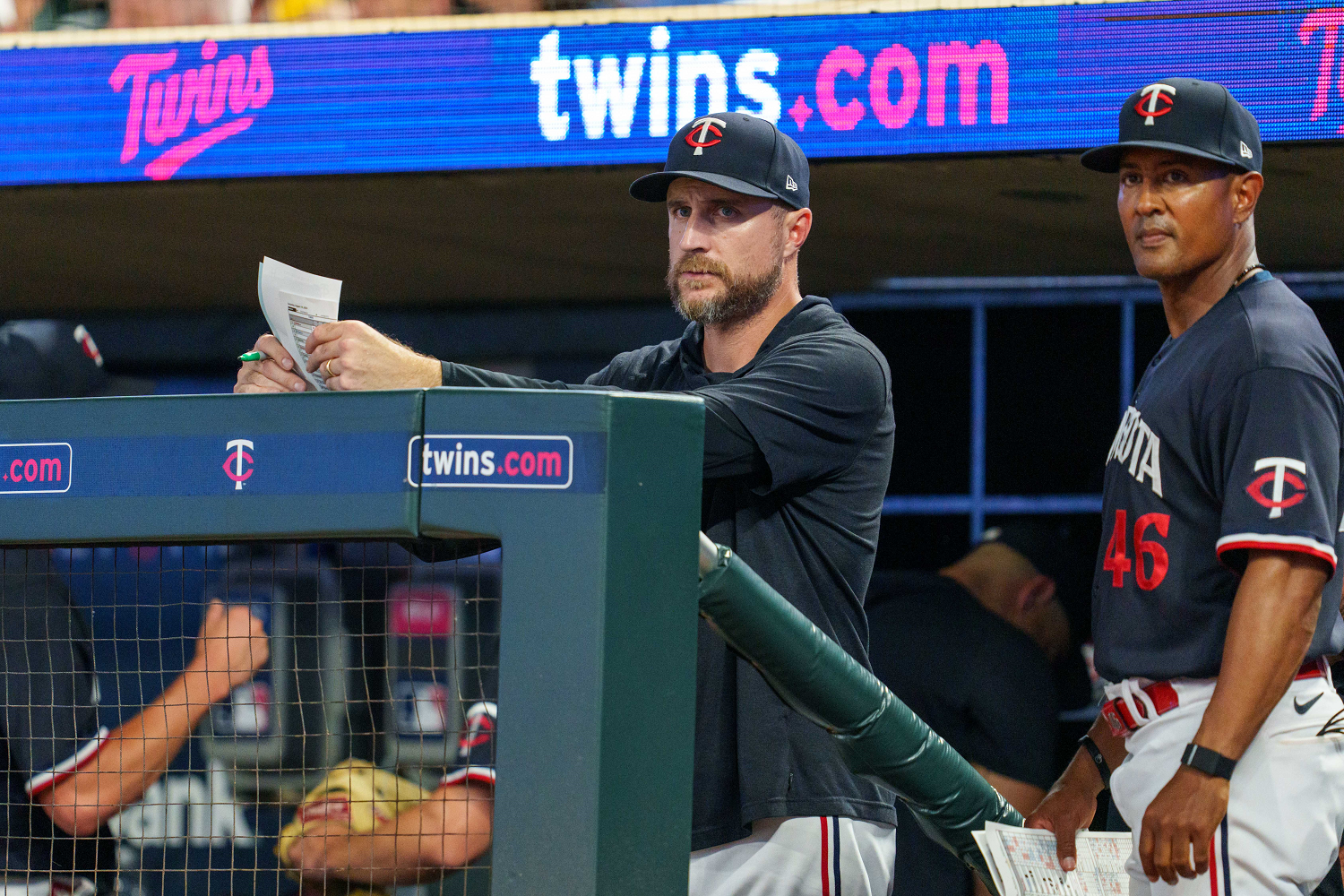 If you ask a Twins fan, “What does Rocco Baldelli love more than anything else?” you’ll probably hear some form of “make substitutions” as a response. Depending on the fan, that response could have any level of emotion to it. Love it or hate it, Rocco loves himself some substitutions. His strategy of trying to win right now—with less concern about what will happen later in the game—has led to the Twins pinch-hitting the third most times in the league in 2023 (and the tenth most pinch-running). He especially likes platoon swaps in-game, sometimes rolling out total line changes when the opponent brings in a left-handed reliever with as many as four pinch hitters. The rationale is straightforward. Left-handed hitters struggle against left-handed pitchers. The lefty greats are usable against same-handed pitchers, but none can do nearly the same amount of damage that they can against righties. Even an average righty hitter could be the better choice in that case. Those average righties can start against left-handed pitchers, too. After the opposing lefty leaves, a manager can bring in all of the left-handed hitters and maintain a strong lineup. Baldelli has undoubtedly bought into that idea. As early as Opening Day, the play was on. In the sixth inning, Kyle Farmer hit for Nick Gordon against lefty Amir Garrett and walked. Donovan Solano then hit for Joey Gallo and singled, driving in Trevor Larnach for the season’s first run. They finished the last four innings at second and first base, respectively. The strategy was off to a good start. After Opening Day, though: yeesh. In a June 30th mailbag, Athletic writer Aaron Gleeman reported that although the Twins had used the second-most pinch hitters in MLB to that point in the season (91 in 82 games), they ranked 26th in OPS at a paltry .496. That’s a pretty abysmal performance. For reference, Alex Kirilloff and Edouard Julien—players who have essentially been banned from hitting against lefties this season—have a .470 and .452 OPS against left-handed pitchers, respectively. They were only marginally worse than all pinch hitters to that point in the season. Against lefties specifically, Minnesota had the 28th-highest OPS from pinch hitters: .490. At that point, fans and team personnel had to question whether the lineup jumbling and complicated role structure on the team was worth the effort. Why not just let the young lefties play the whole game? Did they need to go through all this effort just to get a different version of a bad result? Fast-forward to mid-September. It’s been two and a half months since that low point. The Twins currently have a .723 OPS from their pinch hitters on the season, just a hair under the MLB average for all hitters. That’s good for eighth in the league. Somehow, after all that struggle and consternation, the Twins have cracked the top ten. From the beginning of July through September 15th, Twins pinch hitters had 80 plate appearances (third in MLB) with a .997 OPS (second in MLB) and a 170 wRC+ (best in MLB). Their pinch hitters have been on an absolute tear. That includes a .785 OPS (sixth in MLB) against lefties from their pinch hitters. Now, 80 plate appearances is little to go off. It’s a month’s worth of plate appearances for a full-time player. However, it does provide hope that the big-bench, pinch-hitting approach can work in the playoffs. 11 different players had pinch-hit since the beginning of July, and only Solano, Matt Wallner, and Christian Vazquez had an OPS below .750 during that time. Admittedly, fans can count on one hand the number of times many of the names at the top of the list have pinch-hit—two for Jorge Polanco, three for Ryan Jeffers, and so on. However, other than Donovan Solano (11 plate appearances), who has otherwise been the paragon of consistency on this team, the guys the Twins will look to as pinch hitters have performed well. Jordan Luplow (11 PA) and Kyle Farmer (10 PA) will be looked to mid-game against lefties, and they have a 1.260 and .800 OPS, respectively, as pinch hitters. Edouard Julien (11 PA) would be considered a substitution if he sits against a lefty starter, and he’s had a .909 OPS as a pinch hitter since the beginning of July. Of course, these are small samples, and dividing it amongst individual hitters isn’t an entirely meaningful analytical exercise. However, the practice of pinch-hitting has helped the team throughout the year, especially in the second half. There is reason to feel trepidation about Baldelli opening up his bench during playoff games. An early move that doesn’t work out can kneecap a team later in the game. There is a general pinch-hitter penalty for batters, as coming in cold off the bench isn’t an ideal way to prepare for a plate appearance. However, it’s been working lately. Some have suggested that players have adapted to the unorthodox style, and there’s something to be said for a learning curve. No one truly has a day off on these Twins teams. If it’s a system that a player is unfamiliar with, it might take a while to adjust. In this small sample, they have adjusted. Or it’s just noise. I won’t sit here and declare it fixed or a brilliant strategy. It’s just worth remembering that the practice hasn’t been as comically bad as it initially seemed. In the Wild Card, there might be a total of five such pinch hits. Who knows if it will actually work, but recent performance has me hopeful that it will.
- 7 comments
-
- 3
-

-
- edouard julien
- donovan solano
- (and 3 more)
-
 You’re absolutely right; on reread that part came off more flippant than I’d intended. Vazquez is an awesome piece to have, and I wouldn’t be surprised at all if he catches all of López or Ryan’s games. One of the top reserve catchers in the game.
- 22 replies
-
- 5
-
-
- willi castro
- donovan solano
- (and 3 more)
-
I considered adding Gordon or Miranda, or even Larnach, but I had them in the Celestino bucket. If we haven't heard from them in months, I don't think they have much of a chance on the roster, especially if their skillsets are redundant. Gordon is another Castro, and probably a worse one. Miranda and Larnach don't bring anything that benefits a team situationally. Celestino only makes the list because he's right-handed. I think if there's a surprise, non-40 man guy called up for the playoffs it will be Martin. Similar rationale to Stevenson/Celestino: second pinch runner, good defensive left fielder if needed. He'd also bring an emergency infielder and would probably rank between Castro and Solano at second base there.
- 22 replies
-
- 5
-
-
- willi castro
- donovan solano
- (and 3 more)
-
"I understand you don't want to hear about his exit velocity and launch angle. What if I told you his Hitting the Snot Outta the Ball is in the 67th percentile?"
- 26 replies
-
- 2
-

-
- carlos correa
- harmon killebrew
- (and 1 more)
-
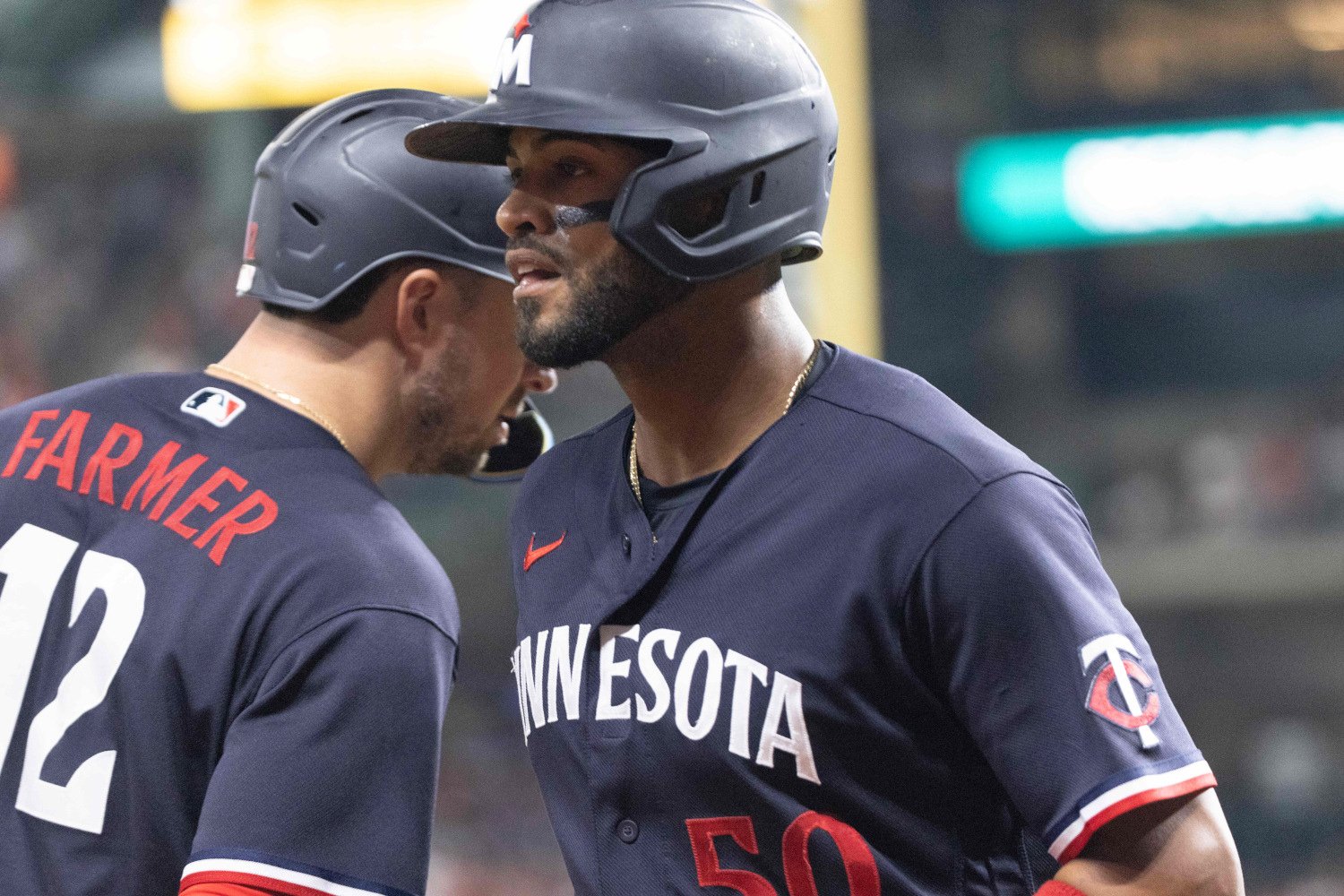 Now, I won’t go so far as to say that the Twins’ bench is Built for October™. However, postseason depth is much, much different than regular season depth. Come October, teams with a talented bench don’t necessarily have a useful bench. Consider 2019-2020 super-utility man Marwin Gonzalez for a recent Twins example. In his prime, Gonzalez was a manager’s dream in the regular season. He could be penciled in almost everywhere, almost every night, and provide a competent bat and glove for 130 games a year. He might even be a mainstay at one spot due to injury—as he was in the opening months of 2019 filling in for the injured Miguel Sano. Competent bats and fielders—high-end backups—see little time in the playoffs. They’re regular-season depth. Without injuries, Rocco Baldelli would have had little use for those skills. The likes of Jarrod Dyson, Billy Hamilton, and Terrance Gore, blazing-fast base-stealers with little else in the way of value, are where the money is at. In 2019, the Twins ALDS bench consisted of Jason Castro, Jonathan Schoop, Ehire Adrianza, and Jake Cave. Of course, every team will carry a backup catcher, justifying Castro’s presence. Schoop was the best bat of the group, but he only played second base and could have been a pinch-hitting option. However, few players could be justifiably lifted from the starting lineup, even against lefty pitching, which Schoop had a .908 OPS against. Subbing him in in Game 2 required Luis Arraez to move to third base, Sano to first, and Gonzalez to left field. Adrianza and Cave were competent backups in the infield and outfield, respectively. However, without an injury, there was little use for them other than Adrianza as a defensive replacement or Cave as a pinch runner (and not a top-tier one). In 2020, the Twins had a larger bench, though an arguably less useful one—Alex Avila, a hobbled Mitch Garver, Willians Astudillo, Adrianza, Cave, and Alex Kirilloff. Three catchers. Ironically, they all played in Game 1, as Ryan Jeffers started and was pinch hit for by Garver, who was replaced by Avila to actually catch until Astudillo pinch hit and grounded into the most predictable game-ending ground play this side of 2023 Carlos Correa. Astudillo was the most helpful piece on that bench, as he could perform a precise role: putting the ball in play. Adrianza, Cave, and Kirilloff (who had no MLB plate appearances then) could each be relied on as an injury (or Eddie Rosario ejection) replacement. Hopefully, the point is evident here. The Twins didn’t have situationally functional pieces on their bench. They arguably had a better lineup in those years than they have this year, but a functional bench is an advantage for any playoff team. Enough about the past. What could a playoff bench look like in 2023? Depending on how many pitchers the team chooses to carry in the Wild Card round, they could have up to an eight-man bench (three starting pitchers, six relief pitchers, nine in the starting lineup, and eight on the bench). More realistically, they might carry five or six for the Wild Card round. Here are the options: Christian Vazquez As the backup catcher, Vazquez is a lock for the roster. Every team needs at least two catchers. Beyond that (I’m warning everyone reading this), Ryan Jeffers probably won’t start three games in a row, whenever or wherever that happens. Vazquez is the inferior catcher, but he will probably start at least one game. Michael A. Taylor Taylor has been the primary center fielder due to Byron Buxton’s injuries, and a betting man would lean toward him still being in that role in the postseason. I’m listing him here on the off chance Buxton returns. Taylor will be a quality pinch runner, and he could be subbed in to play left field alongside Buxton and Max Kepler as a late-game, elite defensive replacement in left field. Willi Castro Castro is the third of five seeming locks to be on the roster. He’s enabled of manager Rocco Baldelli’s shenanigans all year, and his ability to pinch run could be crucial, as he’s a great runner with more than 30 stolen bases. He’s also a competent fielder, so if the defense needs to be jumbled up for any reason, he can patch it up. Kyle Farmer Farmer could fall into the Adrianza bucket—a good glove in the infield. However, he also has a history of hammering left-handed pitching and is on a tear recently. Many don’t want to hear this, but he’ll probably start against a lefty over Edouard Julien, pinch hit for him against a lefty reliever, or finish the game at second base (if, for some reason, Julien needs to start there instead of as the designated hitter). Joey Gallo Kidding. Foot injury or something. Donovan Solano Thus far, there hasn’t been a bona fide pinch hitter discussed, but Donnie Barrels is the man for the job. The fifth lock to make the roster, he’s as trusted a pinch-hitter as a team can ask for against a righty or lefty. Beyond that, he’ll likely start at first base if the Twins face a lefty starter. Jordan Luplow We’re getting into the more questionable choices, but don’t be surprised in the least if Luplow makes the roster as a right-handed outfield option. If he is on the roster, he’ll probably start in left field against lefties and bat in the top half. You can kick and scream about it, but please don’t take your anger out on me; I’m just the messenger. I also think it’s reasonable, but I’m still just the messenger. Andrew Stevenson Stevenson is probably the least likely to make the roster among those who still have a chance. If Taylor indeed starts in center field, Stevenson might be given a spot in a similar role. He could be a second pinch-running option behind Castro and a late-game defensive replacement in left. Gilberto Celestino Celestino was called up to Minnesota for the first time in 2023 on Sunday. He originally wasn’t on this list, but if he’s up now, he may be a right-handed alternative to Stevenson. I’d give him minimal odds unless additional injuries force him into said role. Now, I won’t sit here and say that having a bunch of useful tools makes a team a World Series contender. Nonetheless, any one of these players could reasonably be used in a position that decides whether or not the Twins win or lose a game. There’s depth at each position, but there are also pinch runners, platoon hitters, and defensive replacements that can give a slight edge to a team that they would otherwise lack. Every edge matters in October. Let’s see some moves, Rocco.
- 22 comments
-
- 4
-
-
- willi castro
- donovan solano
- (and 3 more)
-
As we start looking ahead to the postseason, the Twins have a strength that they lacked in recent playoff appearances: a functional bench. Any one of their many role players may be why they finally win in the playoffs. Image courtesy of Thomas Shea-USA TODAY Sports Now, I won’t go so far as to say that the Twins’ bench is Built for October™. However, postseason depth is much, much different than regular season depth. Come October, teams with a talented bench don’t necessarily have a useful bench. Consider 2019-2020 super-utility man Marwin Gonzalez for a recent Twins example. In his prime, Gonzalez was a manager’s dream in the regular season. He could be penciled in almost everywhere, almost every night, and provide a competent bat and glove for 130 games a year. He might even be a mainstay at one spot due to injury—as he was in the opening months of 2019 filling in for the injured Miguel Sano. Competent bats and fielders—high-end backups—see little time in the playoffs. They’re regular-season depth. Without injuries, Rocco Baldelli would have had little use for those skills. The likes of Jarrod Dyson, Billy Hamilton, and Terrance Gore, blazing-fast base-stealers with little else in the way of value, are where the money is at. In 2019, the Twins ALDS bench consisted of Jason Castro, Jonathan Schoop, Ehire Adrianza, and Jake Cave. Of course, every team will carry a backup catcher, justifying Castro’s presence. Schoop was the best bat of the group, but he only played second base and could have been a pinch-hitting option. However, few players could be justifiably lifted from the starting lineup, even against lefty pitching, which Schoop had a .908 OPS against. Subbing him in in Game 2 required Luis Arraez to move to third base, Sano to first, and Gonzalez to left field. Adrianza and Cave were competent backups in the infield and outfield, respectively. However, without an injury, there was little use for them other than Adrianza as a defensive replacement or Cave as a pinch runner (and not a top-tier one). In 2020, the Twins had a larger bench, though an arguably less useful one—Alex Avila, a hobbled Mitch Garver, Willians Astudillo, Adrianza, Cave, and Alex Kirilloff. Three catchers. Ironically, they all played in Game 1, as Ryan Jeffers started and was pinch hit for by Garver, who was replaced by Avila to actually catch until Astudillo pinch hit and grounded into the most predictable game-ending ground play this side of 2023 Carlos Correa. Astudillo was the most helpful piece on that bench, as he could perform a precise role: putting the ball in play. Adrianza, Cave, and Kirilloff (who had no MLB plate appearances then) could each be relied on as an injury (or Eddie Rosario ejection) replacement. Hopefully, the point is evident here. The Twins didn’t have situationally functional pieces on their bench. They arguably had a better lineup in those years than they have this year, but a functional bench is an advantage for any playoff team. Enough about the past. What could a playoff bench look like in 2023? Depending on how many pitchers the team chooses to carry in the Wild Card round, they could have up to an eight-man bench (three starting pitchers, six relief pitchers, nine in the starting lineup, and eight on the bench). More realistically, they might carry five or six for the Wild Card round. Here are the options: Christian Vazquez As the backup catcher, Vazquez is a lock for the roster. Every team needs at least two catchers. Beyond that (I’m warning everyone reading this), Ryan Jeffers probably won’t start three games in a row, whenever or wherever that happens. Vazquez is the inferior catcher, but he will probably start at least one game. Michael A. Taylor Taylor has been the primary center fielder due to Byron Buxton’s injuries, and a betting man would lean toward him still being in that role in the postseason. I’m listing him here on the off chance Buxton returns. Taylor will be a quality pinch runner, and he could be subbed in to play left field alongside Buxton and Max Kepler as a late-game, elite defensive replacement in left field. Willi Castro Castro is the third of five seeming locks to be on the roster. He’s enabled of manager Rocco Baldelli’s shenanigans all year, and his ability to pinch run could be crucial, as he’s a great runner with more than 30 stolen bases. He’s also a competent fielder, so if the defense needs to be jumbled up for any reason, he can patch it up. Kyle Farmer Farmer could fall into the Adrianza bucket—a good glove in the infield. However, he also has a history of hammering left-handed pitching and is on a tear recently. Many don’t want to hear this, but he’ll probably start against a lefty over Edouard Julien, pinch hit for him against a lefty reliever, or finish the game at second base (if, for some reason, Julien needs to start there instead of as the designated hitter). Joey Gallo Kidding. Foot injury or something. Donovan Solano Thus far, there hasn’t been a bona fide pinch hitter discussed, but Donnie Barrels is the man for the job. The fifth lock to make the roster, he’s as trusted a pinch-hitter as a team can ask for against a righty or lefty. Beyond that, he’ll likely start at first base if the Twins face a lefty starter. Jordan Luplow We’re getting into the more questionable choices, but don’t be surprised in the least if Luplow makes the roster as a right-handed outfield option. If he is on the roster, he’ll probably start in left field against lefties and bat in the top half. You can kick and scream about it, but please don’t take your anger out on me; I’m just the messenger. I also think it’s reasonable, but I’m still just the messenger. Andrew Stevenson Stevenson is probably the least likely to make the roster among those who still have a chance. If Taylor indeed starts in center field, Stevenson might be given a spot in a similar role. He could be a second pinch-running option behind Castro and a late-game defensive replacement in left. Gilberto Celestino Celestino was called up to Minnesota for the first time in 2023 on Sunday. He originally wasn’t on this list, but if he’s up now, he may be a right-handed alternative to Stevenson. I’d give him minimal odds unless additional injuries force him into said role. Now, I won’t sit here and say that having a bunch of useful tools makes a team a World Series contender. Nonetheless, any one of these players could reasonably be used in a position that decides whether or not the Twins win or lose a game. There’s depth at each position, but there are also pinch runners, platoon hitters, and defensive replacements that can give a slight edge to a team that they would otherwise lack. Every edge matters in October. Let’s see some moves, Rocco. View full article
- 22 replies
-
- 1
-
-
- willi castro
- donovan solano
- (and 3 more)
-
I didn't spend much time discussing Correa's elite defense because that wasn't what I was writing about. I could have also written about his reported leadership skills or how he's hitting .400 in September, but that wasn't my goal. It's worth appreciating just how historically absurd his GIDP numbers are this year. At no point did I disparage him in this. Simmons is actually a great comp for Correa at this point in his career. They both make up (made up, in Simmons's case) for suboptimal lateral quickness as a shortstop with elite arms by playing further back in the infield to give them more time to make the play. Simmons spent 5 years as the best defensive shortstop in baseball and received Ozzie Smith comparisons for his ability to prevent runs. Comparing Correa to Simmons defensively is not a knock on Correa.
- 26 replies
-
- 3
-
-
- carlos correa
- harmon killebrew
- (and 1 more)
-
Just one year into the largest contract ever given out by the Minnesota Twins, Carlos Correa is chasing history. His performance over the next few weeks can etch his name into the record books. Image courtesy of Tim Heitman-USA TODAY Sports Carlos Correa has a double-play problem. He's addicted to them. Not only can his cannon of an arm turn some impressive double plays on defense (he's sitting at 47 turned thus far in the season), but he's also on pace to ground into more than 30 of them. If you're unaware of how monumental that number is, only 18 times in MLB history has a player hit into 30 double plays in a season. Correa sits at 29, tied at 19th all-time with 13 others. He already sits atop the Twins all-time single-season record book, having passed Trevor Plouffe and Harmon Killebrew last week. There are 22 games left in the season. He's on pace to hit into 34 double plays, which would land him in sole possession of third place on the all-time list. The record is 36, held by 1978 American League MVP Jim Rice, who set it in 1984 and followed it with a season that landed him at second all-time with 35 in 1985. Rice was an All-Star in both those years and those preceding and following—1983 and 1986. He won a Silver Slugger in 1984, hitting .280 with 28 home runs and 102 RBI. Some of that was likely due to his reputation, but he still graded out 12% above a league-average hitter by OPS+. Grounding into a lot of double plays isn't necessarily an indictment of a player's talent. Rice was an MVP and occupies the top two spots. Cal Ripken Jr. (1985) and Miguel Tejada (2008) are among those tied for third at 32, though they're tied with the likes of Billy Butler (2010) and Ben Grieve (2000), players for whom no one is anticipating a trip to Cooperstown. The all-time career record book for double plays hit into is adorned with some of the greatest of all time. It takes a long career to hit into 426 double plays as Albert Pujols did. Among the top five are Miguel Cabrera and Hank Aaron, two of the greatest righthanded hitters of all time; Ivan Rodriguez; and Ripken. In six years, all five of those players will be enshrined in Cooperstown. In addition to their long careers, the four share a few commonalities: they were slow, right-handed hitters who hit the living snot out of the ball. Carlos Correa shares those same traits. He's a righty (meaning he starts a few feet farther from first base than a lefty does) who is in the top third of the league in hitting the snot out of the ball (which makes it easier to turn double plays when the ball is fielded in the infield) and in the bottom third of the league in speed. Correa hasn't always had a double-play problem, though. The most he'd ever hit into in a season was 18 in 2022. He's on pace to almost double that figure this year. So, what's changed? Correa hasn't necessarily been fast since around the 2016 season, according to Statcast. From 2017 to 2019, he was consistently ranked in the top third of the league, though right on the edge around the 67th percentile in sprint speed. As he's aged, he's gotten slower, having been right around league average for the past couple of years. The wheels have come off this year, though, no pun intended. Correa has dropped into the bottom third of the league in sprint speed, in no small part due to his season-long battle with plantar fasciitis—an injury to a ligament in the bottom of his foot that is quite painful. However, it's not like he's walking to first base. Being slower than 67% of the league can only explain some things. If it could, there would be 100 other players alongside him. Ty France of the Mariners has the second most this year—24. He's hitting the ball hard, as well. His average exit velocity (90.3) and hard-hit percentage (45.9%) rank in the league's top third. The exit velocity is on par with his career norms, though the hard-hit percentage—meaning balls hit over 95 miles per hour—is the highest of his career and over 3% higher than his career average. He's hitting the ball about as hard as usual, if not harder. Other aspects of his batted ball profile have mostly stayed the same. His average launch angle is lower than in recent years (10.4) but right on track with his career averages (10.3). There's a lot of noise in average launch angle because it's averaging a bunch of different types of hits, but he's also hitting groundballs, the type that turns into double plays, at a similar rate to his career norms (46.7% vs. 45.6%). Correa's spray charts largely look similar as well, as the rate at which he's pulled the ball, hits it up the middle, or goes to the opposite field is within 1% of his career averages. It's difficult to pinpoint why he's grounded into a comical number of double plays. But maybe that's what this is—a comedy. Of course, the year Correa signs the biggest deal in team history, he develops an injury that hobbles his already diminished speed. Of course, he's hitting the ball like usual, and middle infielders are catching them. Of course, it's happening with guys on base. Who would have written it any other way? There's a lot of luck in setting any record. Don't let anyone tell you otherwise. They're abnormalities. Sometimes, that luck is bad. Sometimes, that bad luck accompanies plantar fasciitis, hitching a trailer to the sports car tumbling down a bad luck road. Me? I'm here for the ride: next stop, 36, Chuck. AUTHOR EDIT: A couple of early comments noted that I left out situational performance in this piece. Thank you to @PDX Twin and @Brandon. I did a quick dig and found some interesting information. Correa is not hitting with runners on and less than two outs any less than he normally does. However, he's hitting groundballs in those situations at an uncharacteristic 62.2%, which is a 50% increase over his career average in those situations: 43.5%. It really could just come down to hitting more grounders in those situations. Great catch, and thank you to both of you who asked for more data. View full article
-
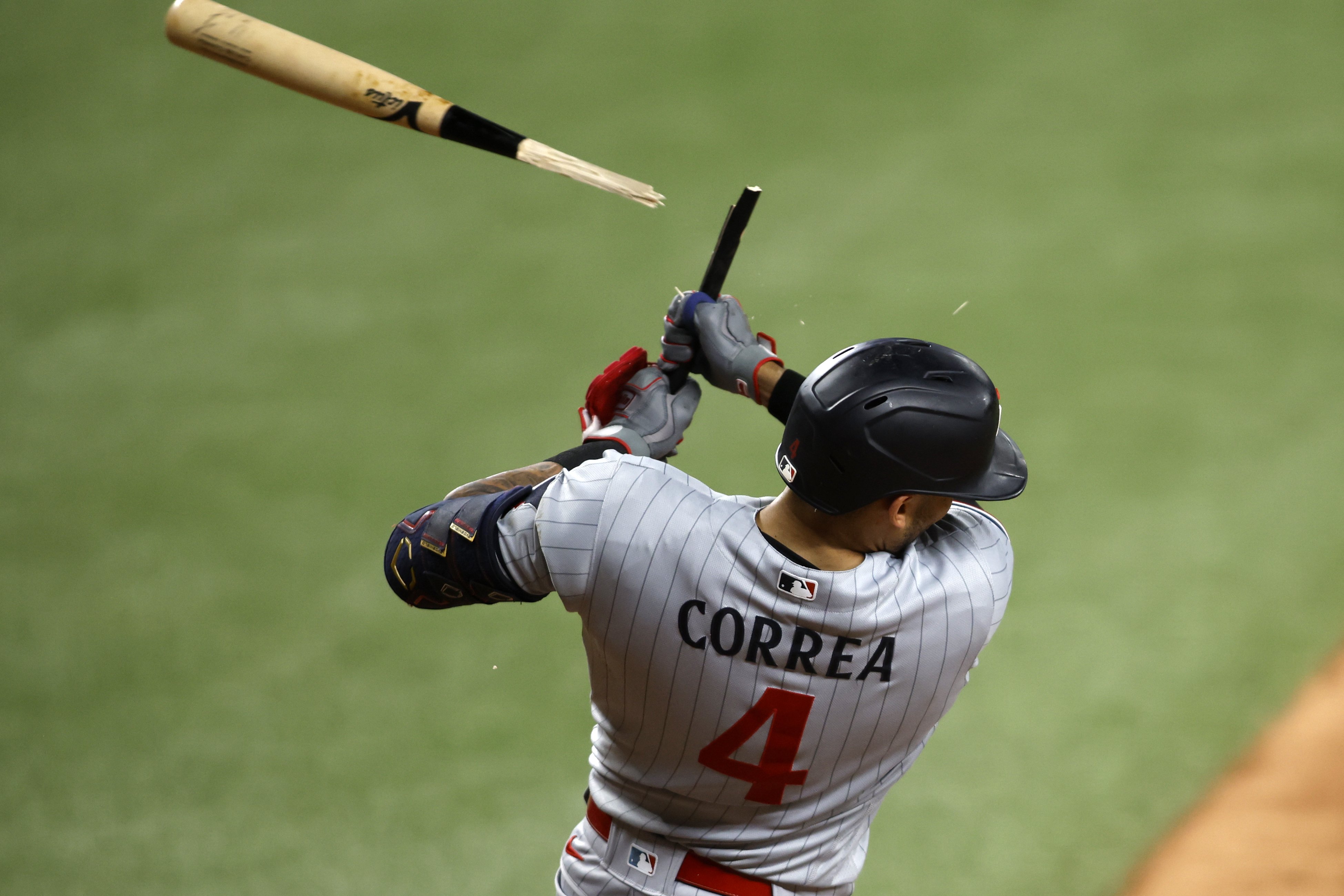 Carlos Correa has a double-play problem. He's addicted to them. Not only can his cannon of an arm turn some impressive double plays on defense (he's sitting at 47 turned thus far in the season), but he's also on pace to ground into more than 30 of them. If you're unaware of how monumental that number is, only 18 times in MLB history has a player hit into 30 double plays in a season. Correa sits at 29, tied at 19th all-time with 13 others. He already sits atop the Twins all-time single-season record book, having passed Trevor Plouffe and Harmon Killebrew last week. There are 22 games left in the season. He's on pace to hit into 34 double plays, which would land him in sole possession of third place on the all-time list. The record is 36, held by 1978 American League MVP Jim Rice, who set it in 1984 and followed it with a season that landed him at second all-time with 35 in 1985. Rice was an All-Star in both those years and those preceding and following—1983 and 1986. He won a Silver Slugger in 1984, hitting .280 with 28 home runs and 102 RBI. Some of that was likely due to his reputation, but he still graded out 12% above a league-average hitter by OPS+. Grounding into a lot of double plays isn't necessarily an indictment of a player's talent. Rice was an MVP and occupies the top two spots. Cal Ripken Jr. (1985) and Miguel Tejada (2008) are among those tied for third at 32, though they're tied with the likes of Billy Butler (2010) and Ben Grieve (2000), players for whom no one is anticipating a trip to Cooperstown. The all-time career record book for double plays hit into is adorned with some of the greatest of all time. It takes a long career to hit into 426 double plays as Albert Pujols did. Among the top five are Miguel Cabrera and Hank Aaron, two of the greatest righthanded hitters of all time; Ivan Rodriguez; and Ripken. In six years, all five of those players will be enshrined in Cooperstown. In addition to their long careers, the four share a few commonalities: they were slow, right-handed hitters who hit the living snot out of the ball. Carlos Correa shares those same traits. He's a righty (meaning he starts a few feet farther from first base than a lefty does) who is in the top third of the league in hitting the snot out of the ball (which makes it easier to turn double plays when the ball is fielded in the infield) and in the bottom third of the league in speed. Correa hasn't always had a double-play problem, though. The most he'd ever hit into in a season was 18 in 2022. He's on pace to almost double that figure this year. So, what's changed? Correa hasn't necessarily been fast since around the 2016 season, according to Statcast. From 2017 to 2019, he was consistently ranked in the top third of the league, though right on the edge around the 67th percentile in sprint speed. As he's aged, he's gotten slower, having been right around league average for the past couple of years. The wheels have come off this year, though, no pun intended. Correa has dropped into the bottom third of the league in sprint speed, in no small part due to his season-long battle with plantar fasciitis—an injury to a ligament in the bottom of his foot that is quite painful. However, it's not like he's walking to first base. Being slower than 67% of the league can only explain some things. If it could, there would be 100 other players alongside him. Ty France of the Mariners has the second most this year—24. He's hitting the ball hard, as well. His average exit velocity (90.3) and hard-hit percentage (45.9%) rank in the league's top third. The exit velocity is on par with his career norms, though the hard-hit percentage—meaning balls hit over 95 miles per hour—is the highest of his career and over 3% higher than his career average. He's hitting the ball about as hard as usual, if not harder. Other aspects of his batted ball profile have mostly stayed the same. His average launch angle is lower than in recent years (10.4) but right on track with his career averages (10.3). There's a lot of noise in average launch angle because it's averaging a bunch of different types of hits, but he's also hitting groundballs, the type that turns into double plays, at a similar rate to his career norms (46.7% vs. 45.6%). Correa's spray charts largely look similar as well, as the rate at which he's pulled the ball, hits it up the middle, or goes to the opposite field is within 1% of his career averages. It's difficult to pinpoint why he's grounded into a comical number of double plays. But maybe that's what this is—a comedy. Of course, the year Correa signs the biggest deal in team history, he develops an injury that hobbles his already diminished speed. Of course, he's hitting the ball like usual, and middle infielders are catching them. Of course, it's happening with guys on base. Who would have written it any other way? There's a lot of luck in setting any record. Don't let anyone tell you otherwise. They're abnormalities. Sometimes, that luck is bad. Sometimes, that bad luck accompanies plantar fasciitis, hitching a trailer to the sports car tumbling down a bad luck road. Me? I'm here for the ride: next stop, 36, Chuck. AUTHOR EDIT: A couple of early comments noted that I left out situational performance in this piece. Thank you to @PDX Twin and @Brandon. I did a quick dig and found some interesting information. Correa is not hitting with runners on and less than two outs any less than he normally does. However, he's hitting groundballs in those situations at an uncharacteristic 62.2%, which is a 50% increase over his career average in those situations: 43.5%. It really could just come down to hitting more grounders in those situations. Great catch, and thank you to both of you who asked for more data.
- 26 comments
-
- 4
-
-

-
- carlos correa
- harmon killebrew
- (and 1 more)
-
Willi Castro has spent a year enabling all of Rocco Baldelli’s in-game shenanigans, and losing him—even temporarily—will send ripples down the roster. Image courtesy of Darren Yamashita-USA TODAY Sports “Willi’s is the key to all this.” – Rocco Baldelli, probably. On Monday, the Twins announced that Royce Lewis would be making his return from an oblique injury that had him sidelined since July 1st. The bad news was that Willi Castro would hit the injured list with an oblique injury of his own—through a lesser strain than the one that sidelined Lewis for six weeks. Castro was a mere afterthought at the season’s onset—a non-roster invitee on a minor-league contract. However, the Twins saw something in the then-25-year-old, as the contract was worth $1.8 million. Castro wasn’t a standard minor league signing, as he still had three full years of team control after spending parts of four seasons in Detroit. If the toolsy, versatile player could carve out a role on the MLB team, he would be quite the asset. He carved out a role he has, but it wasn’t apparent that he would. Originally added to the active roster ahead of Opening Day as a placeholder for injured players Jorge Polanco and Alex Kirilloff, Castro didn’t see any action until the end of the fourth game of the year, replacing Carlos Correa in an 11-1 blowout against the Marlins. Through 10 games, he had played in four—starting only three. On some teams, that usage would be expected of the last guy on the bench, but it’s undoubtedly not Baldelli’s style. It probably indicated that the team saw him as a non-factor, break-glass-in-case-of-emergency option with his switch-hitting and ability to play anywhere. He played more as the season went along, generally used as a late-game replacement. Through May 11th (37 games), he had appeared in 26 games, starting only 12, and entered the game in the seventh inning or later 12 times. He also struggled, posting a .186/.300/.302 (.602) slash line with one home run in 50 plate appearances. His name was often thrown around by commentators as a candidate for demotion whenever another player returned from the injured list. Somehow—mainly as a result of other players on the active roster getting hurt before he headed to the chopping block—he kept his spot with the big league team. He also got hot at the right time. From April 30th to June 1st, he was one of the few bright spots on a team struggling offensively, slashing .329/.358/.500 (.858), stealing 10 bases in 11 attempts and playing six positions. Through that stretch, he managed to carve out a niche and, since, has rarely had his role questioned. Baldelli has also grown attached to utilizing his skillset. One might even say that Castro is the key to all of Baldelli’s chicanery this season. He has become infamous—or famous, depending on your stance—for tinkering in-game and playing matchups. Castro brings several skills that can help in these endeavors. First, he can play everywhere. In 2023, he has appeared at third base, second base, shortstop, all three outfield positions, and even pitcher on two occasions, drawing starts at all those positions other than shortstop and pitcher. If there’s a hole in the lineup card, Castro can fill it. He’s also a switch-hitter, which allows him to start games in the outfield against left-handed starters, giving one of the left-handed Twins corner outfielders a break. He’s posted a meager .670 OPS against left-handed starters, but he fills the role that Baldelli seeks. Those bits are good, but he mainly enables Baldelli’s deepest, darkest impulses after the first pitch has been thrown. Castro is the Band-Aid to any move Baldelli wants to make. If Baldelli wants to pinch-hit Donovan Solano for Max Kepler against a tough lefty reliever, he can move Castro from third base to right field. If he wants to hit Edouard Julien for Michael A. Taylor, Castro can move from second base to center field to make it happen. Are Kepler, Kirilloff, Joey Gallo, Trevor Larnach, and Matt Wallner suddenly all in the lineup together? No worries, just sub Castro in for one of them and put him wherever the open spot in the defense is. Sure, Castro has had his share of pinch-hitting himself, as he’s pinch-hit 11 times, but he’s more likely to solve problems caused by other substitutions. He’s also pinch-run nine times, and his 29 stolen bases in 33 tries have also been a valuable asset. He’s been put to use whether he starts or enters later in the game. In fact, between May 10th and July 16th, he played in 54 of 56 games, starting only 41 of them. There have only been 22 games, as of August 18th, that Castro hasn’t played at all. Five of those games have been since his injury. He’s played 101 of 123 games but only started 71 of them. He has entered the game late or switched positions in the field 59 times this season. He’s also thrived in the role, relatively. The bar will always be lower for a role player like Castro. Still, he’s stolen bases at a remarkable clip and has a respectable (for a utility player) 94 wRC+ (six percent below an average hitter). He’s provided solid defense at each position he’s played (OAA and DRS both have him at a -2 in center field, his lowest ratings, but he only had 121 MLB innings before 2023 and hasn’t been bad there). He’s certainly been worth the $1.8 million paycheck. Baseball-Reference and FanGraphs project him to finish with a WAR around 2, about a league-average starter, though his injury may offset that. For comparison, consider a player like Marwin Gonzalez, tabbed as a high-end super-utility player in 2019 and 2020. Gonzalez played a crucial role in the 2019 season, putting up an OPS+ of 94, right on par with Castro this year. Castro beats Gonzalez out in defensive versatility and base running, though. The Twins gladly paid Gonzalez $12 million that year, seven times what Castro was paid for 2023. Pound-for-pound Castro’s signing probably resulted in the best value that the team got this offseason. Competent Swiss Army knives are difficult to find (look no further than the extended look that Willians Astudillo got), and Castro has filled that role better than almost anyone would have expected. No one would say he’s a top-15 player on the team, but he’s done his job. At no point during the offseason would anyone have expected Willi Castro’s presence to be so valuable, but Baldelli will be hamstrung in the coming weeks without his Get Out Of Lineup Jail Free card. If you believe his moving and shaking is more than it’s worth, maybe the injury will relieve you, but Baldelli will need to think a little harder for now. View full article
-
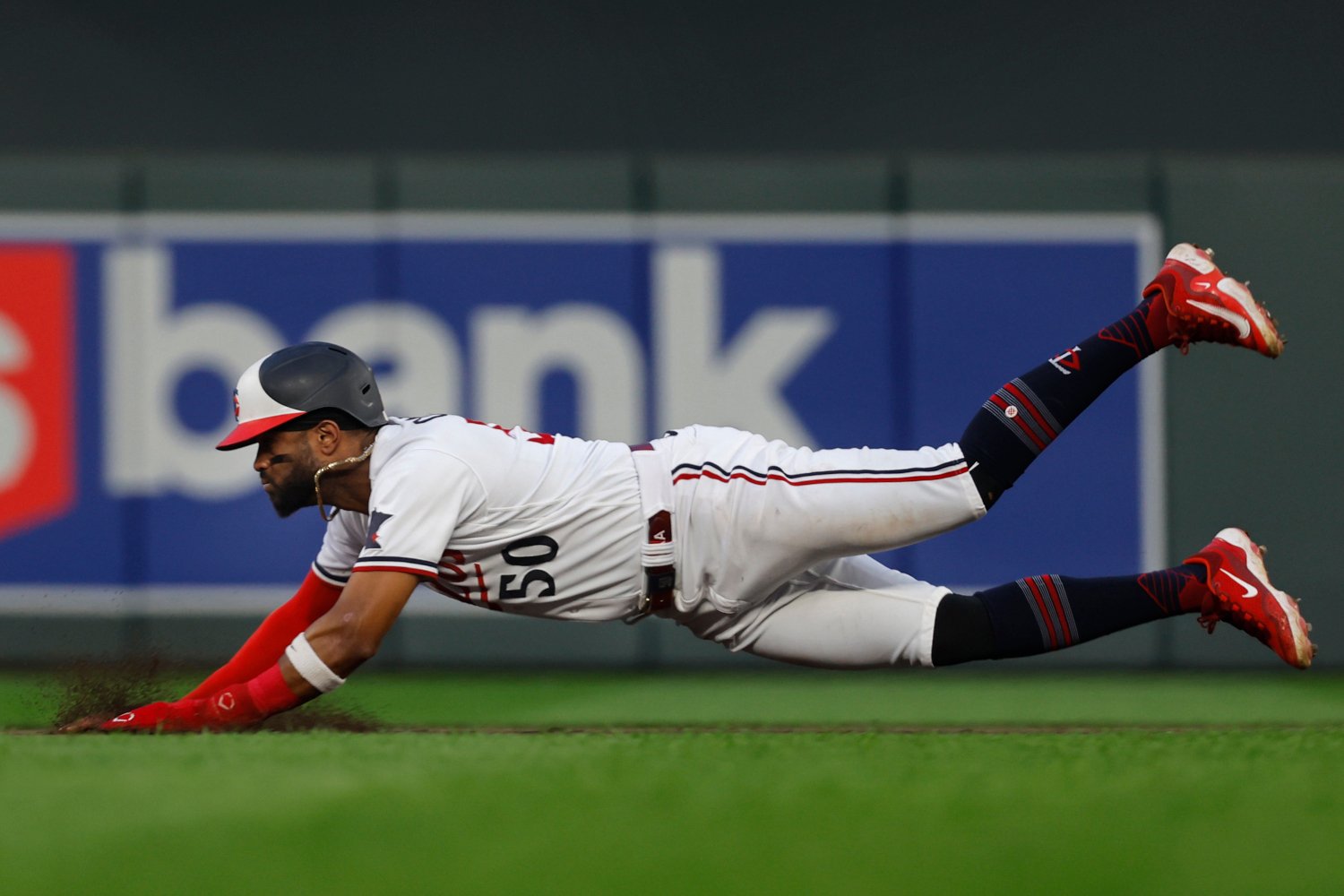 “Willi’s is the key to all this.” – Rocco Baldelli, probably. On Monday, the Twins announced that Royce Lewis would be making his return from an oblique injury that had him sidelined since July 1st. The bad news was that Willi Castro would hit the injured list with an oblique injury of his own—through a lesser strain than the one that sidelined Lewis for six weeks. Castro was a mere afterthought at the season’s onset—a non-roster invitee on a minor-league contract. However, the Twins saw something in the then-25-year-old, as the contract was worth $1.8 million. Castro wasn’t a standard minor league signing, as he still had three full years of team control after spending parts of four seasons in Detroit. If the toolsy, versatile player could carve out a role on the MLB team, he would be quite the asset. He carved out a role he has, but it wasn’t apparent that he would. Originally added to the active roster ahead of Opening Day as a placeholder for injured players Jorge Polanco and Alex Kirilloff, Castro didn’t see any action until the end of the fourth game of the year, replacing Carlos Correa in an 11-1 blowout against the Marlins. Through 10 games, he had played in four—starting only three. On some teams, that usage would be expected of the last guy on the bench, but it’s undoubtedly not Baldelli’s style. It probably indicated that the team saw him as a non-factor, break-glass-in-case-of-emergency option with his switch-hitting and ability to play anywhere. He played more as the season went along, generally used as a late-game replacement. Through May 11th (37 games), he had appeared in 26 games, starting only 12, and entered the game in the seventh inning or later 12 times. He also struggled, posting a .186/.300/.302 (.602) slash line with one home run in 50 plate appearances. His name was often thrown around by commentators as a candidate for demotion whenever another player returned from the injured list. Somehow—mainly as a result of other players on the active roster getting hurt before he headed to the chopping block—he kept his spot with the big league team. He also got hot at the right time. From April 30th to June 1st, he was one of the few bright spots on a team struggling offensively, slashing .329/.358/.500 (.858), stealing 10 bases in 11 attempts and playing six positions. Through that stretch, he managed to carve out a niche and, since, has rarely had his role questioned. Baldelli has also grown attached to utilizing his skillset. One might even say that Castro is the key to all of Baldelli’s chicanery this season. He has become infamous—or famous, depending on your stance—for tinkering in-game and playing matchups. Castro brings several skills that can help in these endeavors. First, he can play everywhere. In 2023, he has appeared at third base, second base, shortstop, all three outfield positions, and even pitcher on two occasions, drawing starts at all those positions other than shortstop and pitcher. If there’s a hole in the lineup card, Castro can fill it. He’s also a switch-hitter, which allows him to start games in the outfield against left-handed starters, giving one of the left-handed Twins corner outfielders a break. He’s posted a meager .670 OPS against left-handed starters, but he fills the role that Baldelli seeks. Those bits are good, but he mainly enables Baldelli’s deepest, darkest impulses after the first pitch has been thrown. Castro is the Band-Aid to any move Baldelli wants to make. If Baldelli wants to pinch-hit Donovan Solano for Max Kepler against a tough lefty reliever, he can move Castro from third base to right field. If he wants to hit Edouard Julien for Michael A. Taylor, Castro can move from second base to center field to make it happen. Are Kepler, Kirilloff, Joey Gallo, Trevor Larnach, and Matt Wallner suddenly all in the lineup together? No worries, just sub Castro in for one of them and put him wherever the open spot in the defense is. Sure, Castro has had his share of pinch-hitting himself, as he’s pinch-hit 11 times, but he’s more likely to solve problems caused by other substitutions. He’s also pinch-run nine times, and his 29 stolen bases in 33 tries have also been a valuable asset. He’s been put to use whether he starts or enters later in the game. In fact, between May 10th and July 16th, he played in 54 of 56 games, starting only 41 of them. There have only been 22 games, as of August 18th, that Castro hasn’t played at all. Five of those games have been since his injury. He’s played 101 of 123 games but only started 71 of them. He has entered the game late or switched positions in the field 59 times this season. He’s also thrived in the role, relatively. The bar will always be lower for a role player like Castro. Still, he’s stolen bases at a remarkable clip and has a respectable (for a utility player) 94 wRC+ (six percent below an average hitter). He’s provided solid defense at each position he’s played (OAA and DRS both have him at a -2 in center field, his lowest ratings, but he only had 121 MLB innings before 2023 and hasn’t been bad there). He’s certainly been worth the $1.8 million paycheck. Baseball-Reference and FanGraphs project him to finish with a WAR around 2, about a league-average starter, though his injury may offset that. For comparison, consider a player like Marwin Gonzalez, tabbed as a high-end super-utility player in 2019 and 2020. Gonzalez played a crucial role in the 2019 season, putting up an OPS+ of 94, right on par with Castro this year. Castro beats Gonzalez out in defensive versatility and base running, though. The Twins gladly paid Gonzalez $12 million that year, seven times what Castro was paid for 2023. Pound-for-pound Castro’s signing probably resulted in the best value that the team got this offseason. Competent Swiss Army knives are difficult to find (look no further than the extended look that Willians Astudillo got), and Castro has filled that role better than almost anyone would have expected. No one would say he’s a top-15 player on the team, but he’s done his job. At no point during the offseason would anyone have expected Willi Castro’s presence to be so valuable, but Baldelli will be hamstrung in the coming weeks without his Get Out Of Lineup Jail Free card. If you believe his moving and shaking is more than it’s worth, maybe the injury will relieve you, but Baldelli will need to think a little harder for now.
- 17 comments
-
- 5
-
-
- willi castro
- rocco baldelli
- (and 1 more)
-
Gloves Need Not Apply
Greggory Masterson replied to Greggory Masterson's topic in Twins Daily Front Page News
I just re-read this, and I disagree that there were any positive statements made about Gallo, other than that he's seen as a better offensive player than the guys they have had in center. I'd go so far as to say there were negative comments snuck in about him We'll see how much longer Gallo is around. I'm sure by August 2nd we'll have some clarity I hope they appear soon, but that's what it seems like they're looking for in these lineups.- 12 replies
-
- 1
-
-
- joey gallo
- jorge polanco
- (and 3 more)
-
“(Defensive) WAR, what is it good for?” seems to be the question on the Twins’ minds as they roll out lineups with big bats and questionable gloves. Image courtesy of Bruce Kluckhohn-USA TODAY Sports At long last, Joey Gallo has been starting in center field for the Twins. It solves, at least for now, the problem that fans have been wondering about for most of the season—how can the Twins fit all these corner outfielders into the lineup? On Monday and Tuesday, the Twins starting lineup featured Alex Kirilloff, Max Kepler, Matt Wallner, Trevor Larnach, and Gallo—five left-handed corner outfielders. Trying to fit each of them into the lineup consistently has been a problem for the Twins, and this week they finally bit the bullet and sacrificed offense for defense. Now, there’s an argument to be made that Joey Gallo’s offense isn’t better than Michael A. Taylor’s at this point (or even Kyle Farmer’s at third, where Willi Castro started both of those days). Still, it’s clear what the Twins are trying to do: add beef to a lineup that ranks 16th in OPS+ (and, specifically, 27th among centerfielders). Building off of that, Jorge Polanco is returned to the team Friday night after a stint on the injured list, and he’s been playing third base so that the Twins can keep both his bat and second baseman Edouard Julien’s in the lineup. Since Royce Lewis’s oblique injury, the team has trotted out Farmer, Castro, and Donovan Solano at the hot corner, which has produced subpar offensive results. A lineup with Gallo in centerfield (for however long that lasts), Wallner in left, Julien at second, and Polanco at third will provide questionable defense at best, but that seems like a risk that the Twins are willing to take to get offense from this lineup. Before the All-Star Break, the Twins averaged 4.18 runs per game, but after the break, through July 26th, they averaged 5.92 runs per game. They also boast one of the best pitching staffs in the league, who lead the league in strikeouts and are third in ERA. Batters always have an outsized ability to provide value offensively over defensively. It’s why players like Gary Sheffield, complete butchers in the field, were able to have long and borderline Hall of Fame careers. For the Twins, a team whose pitchers lead the league in strikeouts, defensive value is further diminished because fewer balls are in play each game. Even with Gold Glovers in Carlos Correa, Gallo, and Taylor, the Twins have been middling to below average defensively this year (-10 OAA, 27 DRS, for the nerds out there) while sitting in the bottom half of the league offensively. Thus, the team would be willing at least to entertain offense-heavy lineups at the cost of defense. However, we don’t need to expect a cobbled-together, slapdash, Swiss cheese defense all game. Rocco Baldelli has become notorious for using in-game moves—mostly pinch-hitting for platoon purposes. However, he’s also willing to bring in defensive replacements late in the game. He’s primarily been comfortable bringing Julien out of the game and getting Taylor into centerfield to shore up the defense, sometimes in the same move. As a strategy, there’s merit. They can open the game with the best offensive lineup possible and try to score runs early. As the game goes into the final innings, they can pull players like Julien and Wallner for better defenders in Kyler Farmer and Taylor to secure the win. Players like Donovan Solano are still available to pinch hit during the game and take over a position in the field that fits with the rest of the team. There’s a limit to this strategy, though. If the bullpen blows a late lead, exciting bats like Wallner and Julien would have been removed from the game, and Taylor or Farmer, far worse offensive players, might be counted on for big plate appearances in close games, as Farmer was on Friday night. However, when the alternative is Julien playing second base and Wallner finishing a game in left field, where his monster arm is less valuable, it’s difficult not to pull the trigger on a defensive sub. It’s the risk run with a reliance on poor defenders to provide offense. Even Ryan Jeffers, who is seen as a lesser defender than Christian Vazquez but a vastly superior offensive player, has been getting more playing time lately. With trade targets like Lane Thomas, Tommy Pham, or Mark Canha, who are not outstanding defenders in the corners but could technically play center field (each has had a handful of starts there over the last few years but is getting older), this strategy could continue. There would inevitably be a negative effect on runs allowed per game, but the team might stomach that, given how well the pitchers have performed thus far. Dropping a few slots in ERA might be worth improving the offense to a top-10 unit. Of course, that’s still incumbent on the offensive players hitting well enough to make up for their shoddy defense (read: Joey Gallo or trade acquisitions in center), but if the team is desperate enough for offense, we might see this plan played out in more than a few games down the stretch. View full article
-
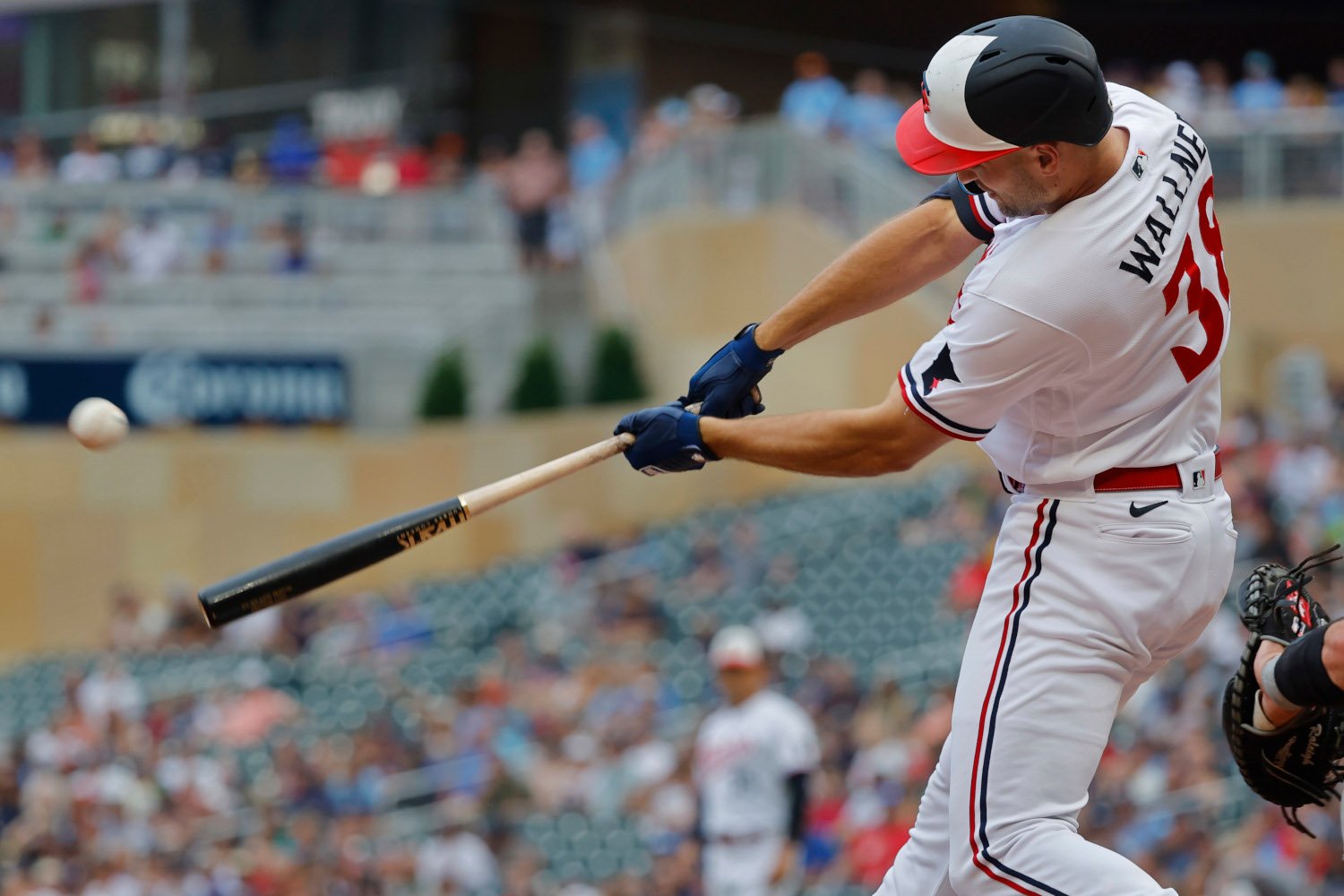 At long last, Joey Gallo has been starting in center field for the Twins. It solves, at least for now, the problem that fans have been wondering about for most of the season—how can the Twins fit all these corner outfielders into the lineup? On Monday and Tuesday, the Twins starting lineup featured Alex Kirilloff, Max Kepler, Matt Wallner, Trevor Larnach, and Gallo—five left-handed corner outfielders. Trying to fit each of them into the lineup consistently has been a problem for the Twins, and this week they finally bit the bullet and sacrificed offense for defense. Now, there’s an argument to be made that Joey Gallo’s offense isn’t better than Michael A. Taylor’s at this point (or even Kyle Farmer’s at third, where Willi Castro started both of those days). Still, it’s clear what the Twins are trying to do: add beef to a lineup that ranks 16th in OPS+ (and, specifically, 27th among centerfielders). Building off of that, Jorge Polanco is returned to the team Friday night after a stint on the injured list, and he’s been playing third base so that the Twins can keep both his bat and second baseman Edouard Julien’s in the lineup. Since Royce Lewis’s oblique injury, the team has trotted out Farmer, Castro, and Donovan Solano at the hot corner, which has produced subpar offensive results. A lineup with Gallo in centerfield (for however long that lasts), Wallner in left, Julien at second, and Polanco at third will provide questionable defense at best, but that seems like a risk that the Twins are willing to take to get offense from this lineup. Before the All-Star Break, the Twins averaged 4.18 runs per game, but after the break, through July 26th, they averaged 5.92 runs per game. They also boast one of the best pitching staffs in the league, who lead the league in strikeouts and are third in ERA. Batters always have an outsized ability to provide value offensively over defensively. It’s why players like Gary Sheffield, complete butchers in the field, were able to have long and borderline Hall of Fame careers. For the Twins, a team whose pitchers lead the league in strikeouts, defensive value is further diminished because fewer balls are in play each game. Even with Gold Glovers in Carlos Correa, Gallo, and Taylor, the Twins have been middling to below average defensively this year (-10 OAA, 27 DRS, for the nerds out there) while sitting in the bottom half of the league offensively. Thus, the team would be willing at least to entertain offense-heavy lineups at the cost of defense. However, we don’t need to expect a cobbled-together, slapdash, Swiss cheese defense all game. Rocco Baldelli has become notorious for using in-game moves—mostly pinch-hitting for platoon purposes. However, he’s also willing to bring in defensive replacements late in the game. He’s primarily been comfortable bringing Julien out of the game and getting Taylor into centerfield to shore up the defense, sometimes in the same move. As a strategy, there’s merit. They can open the game with the best offensive lineup possible and try to score runs early. As the game goes into the final innings, they can pull players like Julien and Wallner for better defenders in Kyler Farmer and Taylor to secure the win. Players like Donovan Solano are still available to pinch hit during the game and take over a position in the field that fits with the rest of the team. There’s a limit to this strategy, though. If the bullpen blows a late lead, exciting bats like Wallner and Julien would have been removed from the game, and Taylor or Farmer, far worse offensive players, might be counted on for big plate appearances in close games, as Farmer was on Friday night. However, when the alternative is Julien playing second base and Wallner finishing a game in left field, where his monster arm is less valuable, it’s difficult not to pull the trigger on a defensive sub. It’s the risk run with a reliance on poor defenders to provide offense. Even Ryan Jeffers, who is seen as a lesser defender than Christian Vazquez but a vastly superior offensive player, has been getting more playing time lately. With trade targets like Lane Thomas, Tommy Pham, or Mark Canha, who are not outstanding defenders in the corners but could technically play center field (each has had a handful of starts there over the last few years but is getting older), this strategy could continue. There would inevitably be a negative effect on runs allowed per game, but the team might stomach that, given how well the pitchers have performed thus far. Dropping a few slots in ERA might be worth improving the offense to a top-10 unit. Of course, that’s still incumbent on the offensive players hitting well enough to make up for their shoddy defense (read: Joey Gallo or trade acquisitions in center), but if the team is desperate enough for offense, we might see this plan played out in more than a few games down the stretch.
- 12 comments
-
- 2
-
-
- joey gallo
- jorge polanco
- (and 3 more)
-
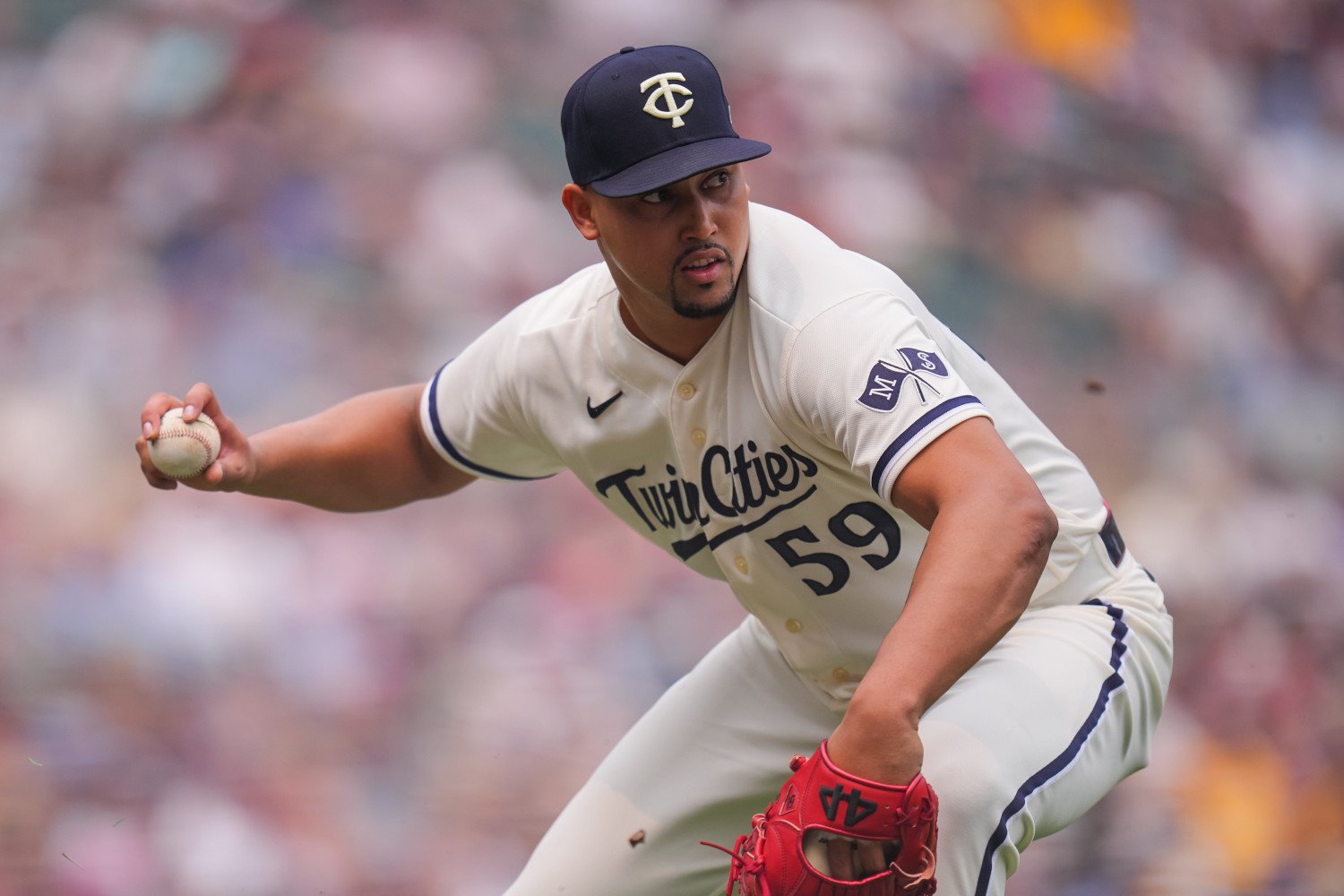 The Twins are in a weird position. They lead a poor AL Central but are projected to have a record that rarely gets a team into the playoffs. Because of this, many fans are interested in trading away veterans on expiring contracts for prospect capital. Many teams will swap their veterans for prospects to ensure they don’t walk for free; the Rays are notorious for that, for instance. It’s an understandable instinct. However, teams competing for a playoff spot rarely do it at the trade deadline. Current value is sometimes forgotten in the quest to retain as much value as possible on a player with one foot out the door. To draw a name out of a hat for no particular reason, as an example, Sonny Gray is valuable as a playoff starter, and he’ll make valuable starts down the stretch in the pennant race, even if he pitches elsewhere next year. Beyond that value, we tend to view swaps for prospects with outsized optimism. When Jose Berrios was traded, the hope was that Simeon Woods Richardson could become another Berrios. However, that doesn’t always turn out. It’s good to have an eye on the future, but the value of the trade needs to outweigh the value of having the veteran during the most important games of the year. The teams without playoff aspirations don’t have to worry about that. Playoff-bound teams do. With that in mind, it’s worth discussing the value that can come back in trade. Let’s take a look at the returns that the Twins have gotten from shipping players off at the deadline during the Falvey-Levine era. They've been moderately successful in selling at the deadline, but would that support an effort to cut loose some veterans before the stretch run? Before we begin, some housekeeping. I provided stats for each player with their new team. Performance isn’t considered if they were again traded or signed elsewhere as free agents after the trade being discussed. Obviously, this analysis doesn’t include future performance, either. This information was gathered as a snapshot on July 17, 2023. Those with an * indicate that the player is still in the organization they were traded to, so the complete picture isn’t available. I will also be providing some context for each trade. Comparing statistics does not necessarily indicate which team won the trade, so I have done my best to provide some information about the outcome and context. For an example of why comparing statistics isn’t ideal, let’s skip to the 2018 Ryan Pressly trade. Statistically, the Twins lost the trade. However, Pressly would not have been extended in Minnesota, and he brought his game to a new level after the trade—a level he probably wouldn’t have in Minnesota. He’s also been in Houston racking up value for six years. That level of performance wasn’t expected out of him, and getting back two Major League contributors in Jorge Alcala and Gilberto Celestino—even if they aren’t stars—is a favorable return for a relief pitcher, regardless of how good he is. There’s a gray area. Without further ado, here’s my order, from most valuable return (with consideration for the quality of the player traded away) to least valuable. 1. 7/22/21: Minnesota acquires Joe Ryan* (286 IP, 112 ERA+, 4.3 bWAR), Drew Strotman (did not reach Minnesota) from Tampa Bay for Nelson Cruz (238 PA, 101 OPS+, 0.4 bWAR), Calvin Faucher* (40.1 IP, 74 ERA+, -0.5 bWAR), +4.4 bWAR for Minnesota. This one hurt, as Cruz was a fan favorite and the leader of the greatest power offense in baseball history, but it’s turned out better than most could imagine. Although Strotman washed out of the organization in 2022, Ryan has emerged as a mid-rotation starter who continues to improve. To get Ryan, the Twins gave up two months of Cruz, who was merely league-average for the Rays, and Faucher has struggled during his two years of MLB experience. 2. 7/27/18: Minnesota acquires Jhoan Duran* (105 IP, 207 ERA+, 4.3 bWAR), Ernie De La Trinidad (did not reach Minnesota), Gabriel Maciel (did not reach Minnesota) from Arizona for Eduardo Escobar (1544 PA, 102 OPS+, 5.6 bWAR), -1.3 bWAR for Minnesota. Escobar was a solid regular and fan favorite for the Twins on an expiring contract, and he signed a three-year extension with Arizona after the trade, continuing to be a contributor at multiple positions. De La Trinidad and Maciel are in independent ball and Oakland’s High-A team, respectively. Jhoan Duran has been an electric late-inning reliever since his debut in 2022, and he appears to be a fixture in the organization for the better part of the next decade. 3. 7/31/18: Minnesota acquires Logan Forsythe (205 PA, 81 OPS+, 0.3 bWAR), Luke Raley (did not reach Minnesota), Devin Smeltzer (140 IP, 106 ERA+, 1.5 bWAR) from Los Angeles (NL) for Brian Dozier (170 PA, 77 OPS+, 0.1 bWAR), +1.7 bWAR for Minnesota. Brian Dozier was sadly on the wrong side of 30 and in the middle of a pedestrian year, and many saw that the end was near. Forsythe was acquired to finish the year in Dozier’s spot at second base, and Luke Raley was later traded back to LA in the Kenta Maeda trade. Devin Smeltzer was a feel-good story who filled a swingman role on some good Twins teams over four years. 4. 7/28/18: Minnesota acquires Gilberto Celestino* (409 PA, 70 OPS+, -0.3 bWAR), Jorge Alcala* (103 IP, 113 ERA+, 0.6 bWAR) from Houston for Ryan Pressly* (252.1 IP, 174 ERA+, 6.3 bWAR), -6 bWAR for Minnesota. One that got away, Pressly has made two All-Star Games in Houston since the trade and the Astros extended him. Alcala has shown flashes as a late-inning arm, but his future is uncertain following season-ending elbow surgery in 2022. Celestino was rushed to the majors in 2021 and is now getting some much-needed time in AAA, though some believe he can still be a fourth outfielder. 5. 7/30/17: Minnesota acquires Zack Littell (63.2 IP, 99 ERA+, 0.2 bWAR), Dietrich Enns (4.0 IP, 71 ERA+, -0.1 bWAR) from New York (AL) for Jaime Garcia (37.1 IP, 94 ERA+, -0.1 bWAR), +0.1 bWAR for Minnesota. After deciding that maybe they shouldn’t go for it, the Twins traded Jaime Garcia to New York and retained his salary. In return for 37 1/3 mediocre innings from Garcia, who retired the following year, Minnesota received Zack Littell and Dietrich Enns. Littell was a solid enough reliever for three years until being designated for assignment after 2020, and Enns has been unremarkable outside of a pop-up year in 2021 for Tampa Bay. 6. 7/30/21: Minnesota acquires Simeon Woods Richardson * (9.2 IP, 67 ERA+, -0.2 bWAR), Austin Martin* (has not reached Minnesota) from Toronto for Jose Berrios* (355.2 IP, 94 ERA+, 2.6 bWAR), -0.9 bWAR for Minnesota. We’re years away from knowing who won this trade, and it could get much better or much worse, hence its middling position in this ranking. Jose Berrios quickly signed a seven-year, $131 million extension with Toronto, but has struggled mightily in 2022 before his extension kicked in, and he’s returned to form in 2023. Woods Richardson has brief experience as a spot starter and long reliever, and Martin is currently on rehabbing a UCL injury following a disappointing 2022 in AA. 7. 7/30/21: Minnesota acquires John Gant (33.2 IP, 76 ERA+, -0.3 bWAR), Evan Sisk (did not reach Minnesota) from Cincinnati for J.A. Happ (54 IP, 98 ERA+, 0.7 bWAR), -1.0 bWAR for Minnesota. This trade was a salary dump to salvage some money from Happ. Gant came over to offset some of the salary and fill a rotation slot, and he was not offered arbitration after the season. Evan Sisk was part of the trade that brought Michael A. Taylor to Minnesota prior to 2023. It was impressive to get anything of value in the trade, given Happ's struggles in Minnesota. 8. 7/30/18: Minnesota acquires Tyler Austin (141 PA, 110 OPS+, 0.3 bWAR), Luis Rijo (did not reach Minnesota) from New York (AL) for Lance Lynn (54.1 IP, 102 ERA+, 0.3 bWAR), +0.0 bWAR for Minnesota. It was time for Lynn to go. The surly man did not perform in Minnesota, but he has been a quality, reliable pitcher outside of his four months in a Twins uniform. Rijo washed out of Minnesota's system after 2022, and Austin spent time at first base and designated hitter but was again traded in 2019 after C.J. Cron emerged as a better first baseman. It was good to get any big league asset out of this trade. 9. 7/30/21: Minnesota acquires Alex Scherff (has not reached Minnesota) from Boston for Hansel Robles (49.2 IP, 95 ERA+, -0.3 bWAR), +0.3 bWAR for Minnesota. Robles had a rocky half-season in Minnesota as a setup man in a poor bullpen, so the team was likely to get much of anything in return. Scherff is currently at Wichita, but his performance has not been anything to be excited about from a minor league reliever. 10. 7/30/18: Minnesota acquires Chase De Jong (18.2 IP, 84 ERA+, 0.0 bWAR), Ryan Costello (did not reach Minnesota) from Seattle for Zach Duke (14.2 IP, 75 ERA+, 0.0 bWAR), +0.0 bWAR for Minnesota. Duke was having a decent-ish year as a middle reliever. For the last two months of 2018 Duke, the Twins got 18.2 innings of Chase De Jong, who had a good 2022 in Pittsburgh but has otherwise been unremarkable. 11. 7/31/17: Minnesota acquires Tyler Watson (did not reach Minnesota) from Washington for Brandon Kintzler (68.2 IP, 123 ERA+, 1.2 bWAR), -1.2 bWAR for Minnesota. Brandon Kintzler was a great story for the Twins, improbably rising to become an All-Star closer in 2017. The Twins traded him and his expiring contract for Watson, who never made the majors. Washington extended Kintzler on a two-year deal, but he was traded to the Cubs in 2018 for future Twin Jhon Romero. 12. 8/9/18: Minnesota acquires Dakota Chalmers (did not reach Minnesota), from Oakland for Fernando Rodney (35.0 IP, 70 ERA+, -0.3 bWAR), +0.3 bWAR for Minnesota. Stop me if you’ve heard this before: the Twins traded their closer at the deadline. Pulling an Oakland on Oakland, they got back righty Dakota Chalmers , a lottery ticket who struggled with command and is now in independent ball. 13. 7/30/21: Minnesota acquires Stevie Berman (did not reach Minnesota) from Los Angeles (NL) for Andrew Vasquez (1.2 IP, 999 ERA+, 0.1 bWAR), -0.1 bWAR for Minnesota. Despite the excitement surrounding Andrew Vasquez as a prospect, he was never able to stick with Minnesota and was flipped for a depth catcher who was waived and is now in Toronto’s system. How do you feel about the Twins' ability to recoup value on expiring or soon-to-expire contracts? Do you feel these names should be in a different order?
- 13 comments
-
- 2
-
-
- joe ryan
- jhoan duran
- (and 3 more)
-
As we approach the deadline and the Minnesota Twins lead the AL Central despite only being a handful of games over .500, some fans are considering the value of selling high on some players. What can trade history tell us about that? Image courtesy of Brad Rempel-USA TODAY Sports The Twins are in a weird position. They lead a poor AL Central but are projected to have a record that rarely gets a team into the playoffs. Because of this, many fans are interested in trading away veterans on expiring contracts for prospect capital. Many teams will swap their veterans for prospects to ensure they don’t walk for free; the Rays are notorious for that, for instance. It’s an understandable instinct. However, teams competing for a playoff spot rarely do it at the trade deadline. Current value is sometimes forgotten in the quest to retain as much value as possible on a player with one foot out the door. To draw a name out of a hat for no particular reason, as an example, Sonny Gray is valuable as a playoff starter, and he’ll make valuable starts down the stretch in the pennant race, even if he pitches elsewhere next year. Beyond that value, we tend to view swaps for prospects with outsized optimism. When Jose Berrios was traded, the hope was that Simeon Woods Richardson could become another Berrios. However, that doesn’t always turn out. It’s good to have an eye on the future, but the value of the trade needs to outweigh the value of having the veteran during the most important games of the year. The teams without playoff aspirations don’t have to worry about that. Playoff-bound teams do. With that in mind, it’s worth discussing the value that can come back in trade. Let’s take a look at the returns that the Twins have gotten from shipping players off at the deadline during the Falvey-Levine era. They've been moderately successful in selling at the deadline, but would that support an effort to cut loose some veterans before the stretch run? Before we begin, some housekeeping. I provided stats for each player with their new team. Performance isn’t considered if they were again traded or signed elsewhere as free agents after the trade being discussed. Obviously, this analysis doesn’t include future performance, either. This information was gathered as a snapshot on July 17, 2023. Those with an * indicate that the player is still in the organization they were traded to, so the complete picture isn’t available. I will also be providing some context for each trade. Comparing statistics does not necessarily indicate which team won the trade, so I have done my best to provide some information about the outcome and context. For an example of why comparing statistics isn’t ideal, let’s skip to the 2018 Ryan Pressly trade. Statistically, the Twins lost the trade. However, Pressly would not have been extended in Minnesota, and he brought his game to a new level after the trade—a level he probably wouldn’t have in Minnesota. He’s also been in Houston racking up value for six years. That level of performance wasn’t expected out of him, and getting back two Major League contributors in Jorge Alcala and Gilberto Celestino—even if they aren’t stars—is a favorable return for a relief pitcher, regardless of how good he is. There’s a gray area. Without further ado, here’s my order, from most valuable return (with consideration for the quality of the player traded away) to least valuable. 1. 7/22/21: Minnesota acquires Joe Ryan* (286 IP, 112 ERA+, 4.3 bWAR), Drew Strotman (did not reach Minnesota) from Tampa Bay for Nelson Cruz (238 PA, 101 OPS+, 0.4 bWAR), Calvin Faucher* (40.1 IP, 74 ERA+, -0.5 bWAR), +4.4 bWAR for Minnesota. This one hurt, as Cruz was a fan favorite and the leader of the greatest power offense in baseball history, but it’s turned out better than most could imagine. Although Strotman washed out of the organization in 2022, Ryan has emerged as a mid-rotation starter who continues to improve. To get Ryan, the Twins gave up two months of Cruz, who was merely league-average for the Rays, and Faucher has struggled during his two years of MLB experience. 2. 7/27/18: Minnesota acquires Jhoan Duran* (105 IP, 207 ERA+, 4.3 bWAR), Ernie De La Trinidad (did not reach Minnesota), Gabriel Maciel (did not reach Minnesota) from Arizona for Eduardo Escobar (1544 PA, 102 OPS+, 5.6 bWAR), -1.3 bWAR for Minnesota. Escobar was a solid regular and fan favorite for the Twins on an expiring contract, and he signed a three-year extension with Arizona after the trade, continuing to be a contributor at multiple positions. De La Trinidad and Maciel are in independent ball and Oakland’s High-A team, respectively. Jhoan Duran has been an electric late-inning reliever since his debut in 2022, and he appears to be a fixture in the organization for the better part of the next decade. 3. 7/31/18: Minnesota acquires Logan Forsythe (205 PA, 81 OPS+, 0.3 bWAR), Luke Raley (did not reach Minnesota), Devin Smeltzer (140 IP, 106 ERA+, 1.5 bWAR) from Los Angeles (NL) for Brian Dozier (170 PA, 77 OPS+, 0.1 bWAR), +1.7 bWAR for Minnesota. Brian Dozier was sadly on the wrong side of 30 and in the middle of a pedestrian year, and many saw that the end was near. Forsythe was acquired to finish the year in Dozier’s spot at second base, and Luke Raley was later traded back to LA in the Kenta Maeda trade. Devin Smeltzer was a feel-good story who filled a swingman role on some good Twins teams over four years. 4. 7/28/18: Minnesota acquires Gilberto Celestino* (409 PA, 70 OPS+, -0.3 bWAR), Jorge Alcala* (103 IP, 113 ERA+, 0.6 bWAR) from Houston for Ryan Pressly* (252.1 IP, 174 ERA+, 6.3 bWAR), -6 bWAR for Minnesota. One that got away, Pressly has made two All-Star Games in Houston since the trade and the Astros extended him. Alcala has shown flashes as a late-inning arm, but his future is uncertain following season-ending elbow surgery in 2022. Celestino was rushed to the majors in 2021 and is now getting some much-needed time in AAA, though some believe he can still be a fourth outfielder. 5. 7/30/17: Minnesota acquires Zack Littell (63.2 IP, 99 ERA+, 0.2 bWAR), Dietrich Enns (4.0 IP, 71 ERA+, -0.1 bWAR) from New York (AL) for Jaime Garcia (37.1 IP, 94 ERA+, -0.1 bWAR), +0.1 bWAR for Minnesota. After deciding that maybe they shouldn’t go for it, the Twins traded Jaime Garcia to New York and retained his salary. In return for 37 1/3 mediocre innings from Garcia, who retired the following year, Minnesota received Zack Littell and Dietrich Enns. Littell was a solid enough reliever for three years until being designated for assignment after 2020, and Enns has been unremarkable outside of a pop-up year in 2021 for Tampa Bay. 6. 7/30/21: Minnesota acquires Simeon Woods Richardson * (9.2 IP, 67 ERA+, -0.2 bWAR), Austin Martin* (has not reached Minnesota) from Toronto for Jose Berrios* (355.2 IP, 94 ERA+, 2.6 bWAR), -0.9 bWAR for Minnesota. We’re years away from knowing who won this trade, and it could get much better or much worse, hence its middling position in this ranking. Jose Berrios quickly signed a seven-year, $131 million extension with Toronto, but has struggled mightily in 2022 before his extension kicked in, and he’s returned to form in 2023. Woods Richardson has brief experience as a spot starter and long reliever, and Martin is currently on rehabbing a UCL injury following a disappointing 2022 in AA. 7. 7/30/21: Minnesota acquires John Gant (33.2 IP, 76 ERA+, -0.3 bWAR), Evan Sisk (did not reach Minnesota) from Cincinnati for J.A. Happ (54 IP, 98 ERA+, 0.7 bWAR), -1.0 bWAR for Minnesota. This trade was a salary dump to salvage some money from Happ. Gant came over to offset some of the salary and fill a rotation slot, and he was not offered arbitration after the season. Evan Sisk was part of the trade that brought Michael A. Taylor to Minnesota prior to 2023. It was impressive to get anything of value in the trade, given Happ's struggles in Minnesota. 8. 7/30/18: Minnesota acquires Tyler Austin (141 PA, 110 OPS+, 0.3 bWAR), Luis Rijo (did not reach Minnesota) from New York (AL) for Lance Lynn (54.1 IP, 102 ERA+, 0.3 bWAR), +0.0 bWAR for Minnesota. It was time for Lynn to go. The surly man did not perform in Minnesota, but he has been a quality, reliable pitcher outside of his four months in a Twins uniform. Rijo washed out of Minnesota's system after 2022, and Austin spent time at first base and designated hitter but was again traded in 2019 after C.J. Cron emerged as a better first baseman. It was good to get any big league asset out of this trade. 9. 7/30/21: Minnesota acquires Alex Scherff (has not reached Minnesota) from Boston for Hansel Robles (49.2 IP, 95 ERA+, -0.3 bWAR), +0.3 bWAR for Minnesota. Robles had a rocky half-season in Minnesota as a setup man in a poor bullpen, so the team was likely to get much of anything in return. Scherff is currently at Wichita, but his performance has not been anything to be excited about from a minor league reliever. 10. 7/30/18: Minnesota acquires Chase De Jong (18.2 IP, 84 ERA+, 0.0 bWAR), Ryan Costello (did not reach Minnesota) from Seattle for Zach Duke (14.2 IP, 75 ERA+, 0.0 bWAR), +0.0 bWAR for Minnesota. Duke was having a decent-ish year as a middle reliever. For the last two months of 2018 Duke, the Twins got 18.2 innings of Chase De Jong, who had a good 2022 in Pittsburgh but has otherwise been unremarkable. 11. 7/31/17: Minnesota acquires Tyler Watson (did not reach Minnesota) from Washington for Brandon Kintzler (68.2 IP, 123 ERA+, 1.2 bWAR), -1.2 bWAR for Minnesota. Brandon Kintzler was a great story for the Twins, improbably rising to become an All-Star closer in 2017. The Twins traded him and his expiring contract for Watson, who never made the majors. Washington extended Kintzler on a two-year deal, but he was traded to the Cubs in 2018 for future Twin Jhon Romero. 12. 8/9/18: Minnesota acquires Dakota Chalmers (did not reach Minnesota), from Oakland for Fernando Rodney (35.0 IP, 70 ERA+, -0.3 bWAR), +0.3 bWAR for Minnesota. Stop me if you’ve heard this before: the Twins traded their closer at the deadline. Pulling an Oakland on Oakland, they got back righty Dakota Chalmers , a lottery ticket who struggled with command and is now in independent ball. 13. 7/30/21: Minnesota acquires Stevie Berman (did not reach Minnesota) from Los Angeles (NL) for Andrew Vasquez (1.2 IP, 999 ERA+, 0.1 bWAR), -0.1 bWAR for Minnesota. Despite the excitement surrounding Andrew Vasquez as a prospect, he was never able to stick with Minnesota and was flipped for a depth catcher who was waived and is now in Toronto’s system. How do you feel about the Twins' ability to recoup value on expiring or soon-to-expire contracts? Do you feel these names should be in a different order? View full article
-
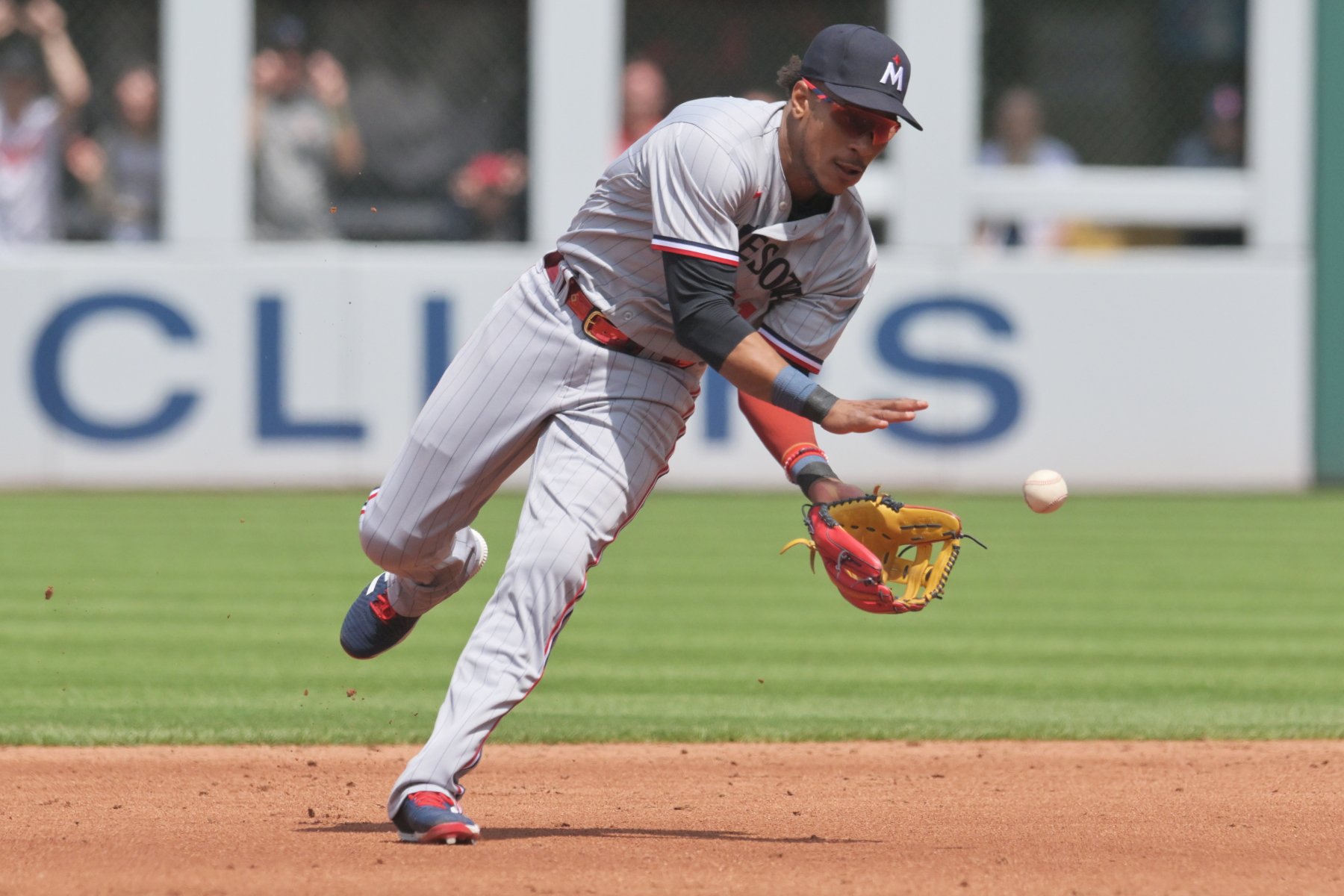 Jorge Polanco, one of the Twins' best hitters over the past decade, is due to return from a hamstring injury after his upcoming rehab assignment. It'll be a welcome addition to a lineup that has struggled to score runs in 2023. There's just one minor issue—the incumbent second baseman has been their best hitter this season. Among Twins with at least 150 plate appearances, Edouard Julien leads the team in OPS, and he has been filling in at second base in Polanco's absence. For much of the season, Julien and Polanco have been sharing the position, in a way, as Julien has been with the MLB team during Polanco's numerous stints on the injured list, only to be demoted to AAA upon his return. That charade should be at its end. There needs to be room on this roster for Polanco and Julien, who represent two of the top five bats in this lineup. The issue is figuring out how the two can coexist. Polanco has been the team's primary second baseman since 2021 after holding down shortstop for half of a decade. His shortstop days are behind him, and Carlos Correa is a fixture there anyway. Julien has been playing second base exclusively since the beginning of the 2022 season. He's frankly not been good defensively, but the organization has been committed to keeping him there, for better or worse. The Miami Marlins have played four second basemen simultaneously this season; it's doable. A few ways to handle this situation stand out, but none appear as a clear choice. Demote Julien This decision would be tough to justify, but it's the solution if the team refuses to move either off of second base, even temporarily. Polanco has had half a dozen lower body injuries in the last year, so it might not be long until Julien would have another free run at second base. Of note, the Twins' have demoted Julien three times this season, and the next would be his fourth. Players can only be demoted five times per season before being exposed to waivers. Polanco and/or Julien DH This option is almost not worth discussing until there are firm signs of Byron Buxton returning to the outfield—to me, that will require seeing him out there in-game. So long as Buxton is active and the everyday designated hitter, there won't be regular opportunities to DH either of the second basemen. Polanco or Julien Play Third Base There is a current vacancy at third base. Royce Lewis suffered an intercostal injury and will likely be out until late August or September, leaving an opening at third base. The Twins recalled Jose Miranda to fill the gap, but he seemed to be on borrowed time with his current production prior to being placed on the injured list July 15th. Moving one of the two infielders to the left side of the infield may be a solution. Polanco has some experience at third base, having played 77 innings there in 2016 and 86 more back during 2011 in Rookie ball. It's not much experience, but it's reasonable to ask for someone who was a big league shortstop for five years. However, it has been seven years since he's played third base in-game, and his body has been consistently beaten up for years, even before his trips to the injured list, which could make the team less comfortable asking the move of him. On the other hand, Julien has more recent experience at the hot corner. He played 189 innings in Class A during the 2021 season and 65 games there in college at Auburn as a junior in 2019. The team has preferred to keep him at second, partly due to his arm strength after his 2019 Tommy John surgery. It would be helpful if one of the two could fill in semi-regularly in Lewis's absence. It would also lead to a pretty subpar infield defense for the team, but that may be outweighed by the value of both bats being in the lineup. Julien Plays First Base and/or Left Field Julien does have additional experience outside of second and third base. He has 181 innings at first base and 119 innings in left field in the minors, all of which came in 2021 between the two Class A levels. He also played seven games in right field at Auburn. It's not much at all, but at least some experience. If the team was more comfortable with Julien at first base, Alex Kirilloff could play in the outfield the days Julien plays first, or vice versa. It does add another left-handed corner outfielder to the Twins' pile, which is becoming absurdly large as-is, but it's an option. Julien could also bounce around all of those positions, similar to early-career Luis Arraez, but with lesser defensive chops than Arraez, who won't be winning any Gold Gloves. Trade One I don't see this happening, but it's worth noting. Given Polanco's recent health issues, his value is unclear, so there's no guarantee they get anything of worth for him. Julien would fetch a good return, but he still has six years of team control after this year, and it's difficult to justify sending off your top hitter to make room for a 30-year-old with questionable health in a year that the team's hitting has been in the gutter. We may never even get to the point where anything needs to happen. If there's one thing that Twins fans have learned in recent years, it's that injuries create solutions to these problems in ways we can't expect. How would you handle this situation?
 -
In basketball, a saying goes, “There’s only one ball,” meaning that only one player can shoot at a time. In baseball, there’s only one second base. Image courtesy of © Ken Blaze-USA TODAY Sports Jorge Polanco, one of the Twins' best hitters over the past decade, is due to return from a hamstring injury after his upcoming rehab assignment. It'll be a welcome addition to a lineup that has struggled to score runs in 2023. There's just one minor issue—the incumbent second baseman has been their best hitter this season. Among Twins with at least 150 plate appearances, Edouard Julien leads the team in OPS, and he has been filling in at second base in Polanco's absence. For much of the season, Julien and Polanco have been sharing the position, in a way, as Julien has been with the MLB team during Polanco's numerous stints on the injured list, only to be demoted to AAA upon his return. That charade should be at its end. There needs to be room on this roster for Polanco and Julien, who represent two of the top five bats in this lineup. The issue is figuring out how the two can coexist. Polanco has been the team's primary second baseman since 2021 after holding down shortstop for half of a decade. His shortstop days are behind him, and Carlos Correa is a fixture there anyway. Julien has been playing second base exclusively since the beginning of the 2022 season. He's frankly not been good defensively, but the organization has been committed to keeping him there, for better or worse. The Miami Marlins have played four second basemen simultaneously this season; it's doable. A few ways to handle this situation stand out, but none appear as a clear choice. Demote Julien This decision would be tough to justify, but it's the solution if the team refuses to move either off of second base, even temporarily. Polanco has had half a dozen lower body injuries in the last year, so it might not be long until Julien would have another free run at second base. Of note, the Twins' have demoted Julien three times this season, and the next would be his fourth. Players can only be demoted five times per season before being exposed to waivers. Polanco and/or Julien DH This option is almost not worth discussing until there are firm signs of Byron Buxton returning to the outfield—to me, that will require seeing him out there in-game. So long as Buxton is active and the everyday designated hitter, there won't be regular opportunities to DH either of the second basemen. Polanco or Julien Play Third Base There is a current vacancy at third base. Royce Lewis suffered an intercostal injury and will likely be out until late August or September, leaving an opening at third base. The Twins recalled Jose Miranda to fill the gap, but he seemed to be on borrowed time with his current production prior to being placed on the injured list July 15th. Moving one of the two infielders to the left side of the infield may be a solution. Polanco has some experience at third base, having played 77 innings there in 2016 and 86 more back during 2011 in Rookie ball. It's not much experience, but it's reasonable to ask for someone who was a big league shortstop for five years. However, it has been seven years since he's played third base in-game, and his body has been consistently beaten up for years, even before his trips to the injured list, which could make the team less comfortable asking the move of him. On the other hand, Julien has more recent experience at the hot corner. He played 189 innings in Class A during the 2021 season and 65 games there in college at Auburn as a junior in 2019. The team has preferred to keep him at second, partly due to his arm strength after his 2019 Tommy John surgery. It would be helpful if one of the two could fill in semi-regularly in Lewis's absence. It would also lead to a pretty subpar infield defense for the team, but that may be outweighed by the value of both bats being in the lineup. Julien Plays First Base and/or Left Field Julien does have additional experience outside of second and third base. He has 181 innings at first base and 119 innings in left field in the minors, all of which came in 2021 between the two Class A levels. He also played seven games in right field at Auburn. It's not much at all, but at least some experience. If the team was more comfortable with Julien at first base, Alex Kirilloff could play in the outfield the days Julien plays first, or vice versa. It does add another left-handed corner outfielder to the Twins' pile, which is becoming absurdly large as-is, but it's an option. Julien could also bounce around all of those positions, similar to early-career Luis Arraez, but with lesser defensive chops than Arraez, who won't be winning any Gold Gloves. Trade One I don't see this happening, but it's worth noting. Given Polanco's recent health issues, his value is unclear, so there's no guarantee they get anything of worth for him. Julien would fetch a good return, but he still has six years of team control after this year, and it's difficult to justify sending off your top hitter to make room for a 30-year-old with questionable health in a year that the team's hitting has been in the gutter. We may never even get to the point where anything needs to happen. If there's one thing that Twins fans have learned in recent years, it's that injuries create solutions to these problems in ways we can't expect. How would you handle this situation? View full article
-
Rereading that part, I see how it might be unclear. First, though, I tried to communicate that that is the position easiest to make a move, given that Taylor can just be moved to a reserve role where he’s better suited. What I meant by backlog is in the outfield overall. If Taylor is a bench player, that means that at minimum one of the current corner guys will need to be the corresponding move, and then you still need to deal with the Wallner/Larnach logjam.
- 113 replies
-
- 1
-
-
- alex kirilloff
- max kepler
- (and 3 more)
-
You may be understanding what I mean by straightforward, so I apologize if I wasn’t clear enough. You’re not the only one who did so, so forgive me picking on you specifically, but in your original comment, I noticed that you said that the answer isn’t straightforward before listing off a number of moves needed to justify adding Goldschmidt. Because there are a ton of considerations with a move like that. A straightforward move would be “Luke Voit is our first baseman and not good. We have no high minors prospects at first base. We’ll trade for Goldschmidt and DFA Voit, or trade him for a MiLB reliever.” Adding Goldschmidt requires more permanent decisions than those two. You relocate Kirilloff. You make permanent decisions on both Gallo and Kepler. You assess Wallner and Larnach to decide whether you’ll continue to block them or give them a lane. Heck, it probably even plays into the decision as to where Julien goes when Polanco gets back, because two of this options are left and first. The point of this article was to lay out the complicated decisions that go into improving at each position, because there are things at play beyond the actual hypothetical trades. Yes, I’d like to see meaningful moves, and this article isn’t excusing them not happening or saying that they shouldn’t happen.
- 113 replies
-
- 2
-
-
- alex kirilloff
- max kepler
- (and 3 more)
-
As we approach the 2023 trade deadline, the Twins’ offense has left much to be desired. The deadline presents an opportunity to add thump to the lineup, but the path to acquiring those boosts is unclear. Image courtesy of Bruce Kluckhohn-USA TODAY Sports Entering play on Saturday, the Twins had the 20th-best OPS in MLB, but they’ve managed to stay around a .500 record because of their excellent pitching. It’s easy to see how pumping the offense up to even a bit better than average could lead to a good team down the stretch. However, getting those additional bats is difficult, given the players currently on the roster. Now, I am not saying that the current players deserve to remain on the roster; the only two Twins positions that rank as a top-10 OPS by position are second base (9th) and designated hitter (3rd) in the league. The issue is that bringing in an additional bat generally necessitates either the displacement of a veteran or the further blocking of a prospect—or both. I wrote last month about how the team has yet to make an active, no-takebacks roster move. Furthermore, the only bat the team has bought at the deadline was backup catcher Sandy Leon, so we don’t have much precedent to go off of. Below is a position-by-position breakdown of the difficulty in bringing in a new hitter, starting with the worst-performing offensive position and working down. Centerfield—28th (and DH—3rd) Michael A. Taylor has done an admirable job holding down centerfield defensively, but if the team wants to bolster the offense, center is the most glaring weakness. Obviously, the answer could be as simple as moving Byron Buxton from DH to center, but we have yet to get any indication that the Twins are willing to do so, given Buxton’s health. Specifically, the team could sacrifice defense for offense if they wanted to and shift Taylor to a reserve role. A move for a right-handed centerfielder like Adam Duvall, who has hit lefties well, could be a natural fit. Duvall is neither a star nor a good defensive outfielder, but he will at least stand in center, as opposed to Max Kepler. We'll discuss Kepler and his cronies later on, but it's worth mentioning now that the Twins have a significant backlog in the outfield, and bringing in a new centerfielder will add to that. If, somehow, Buxton returns to the outfield, the question would be about filling a DH spot, but I’m not getting my hopes up. As it stands, a Duvall-like move seems to be the most promising, though not exciting. Third Base—24th Jose Miranda entered the year as the top third baseman in the organization, but he currently has more plate appearances in AAA St. Paul than in Minnesota. Since his recent call-up to replace Royce Lewis, who will miss more than a month with an oblique injury, he has not impressed, nor has he been an everyday player. A motley crew of Kyle Farmer, Willi Castro, and Donovan Solano will play the days he doesn’t start. There would be an opportunity at third base to add a bat. That is, there would be an opportunity to add a bat if Royce Lewis wasn’t expected back this year. It’s a complex argument to add at the spot where your recently-graduated #1 prospect is supposed to reside, especially because the outfield seems off-limits to him this year. Corner Outfield—26th (LF) & 19th (RF) The corners have been the subject of much consternation, hemming, and hawing this year. Joey Gallo and Max Kepler have held their spots in left and right, respectively, and given their veteran status, they have been treated like stalwarts. The situation could be aided by someone like Duvall as a right-handed bat to take the load off against lefties (I promise—last time that I’ll mention Duvall), but that doesn’t completely solve the problem. Further complicating matters are young corner outfield bats Alex Kirilloff, Trevor Larnach, and Matt Wallner. Even if one of Kepler or Gallo were jettisoned to make room for the new bat, the prospects in their mid-20s would continue to be blocked, much to many fans’ dismay. The team could always just let go of one or both of the veterans, but there’s no great assurance that the young bats will be any better, compared to the prospect of bringing in an established veteran. It’s a difficult situation to navigate, but that’s why Derek Falvey gets paid the big bucks. Catcher—20th There are few ways to improve the offense with a bigger bat catcher. First, ignoring the incumbents, bringing in a catcher with a big bat isn’t a reliable strategy. Catchers, for the most part, don’t hit, and bringing in someone who can hit well and play catcher is going to cost an arm and a leg. Personnel-wise, it’s also tricky. The current duo—Christian Vazquez and Ryan Jeffers—have handled the pitching staff well. Vazquez just signed a three-year, $30M contract, and it’d be difficult to move on from him so early, even with his struggles at the plate. Jeffers looks like the future catcher, with an improved arm, solid framing, and a respectable .792 OPS for a catcher. It’d be surprising to see another catcher brought in. Shortstop—15th The only reason to include shortstop on this list is for consistency. Carlos Correa isn’t getting replaced. The only feasible way that a shortstop is brought in is as a Kyle Farmer replacement—hits lefties (hopefully better than Farmer) and is a legit shortstop. Farmer may get lost in roster churn around this time, but Lewis can also backup short, so it’s really not worth considering anyone unless a deal hits them in the face. First Base—12th First base has been primarily handled by Kirilloff, Solano, and Gallo this season, and it’s been alright. As much as fans would love a Paul Goldschmidt trade—or any other big bat, first-base-only player—it would lead to a conundrum like the moves in the corner outfield. Kirilloff was the organization’s top prospect a couple of years ago, so they would hypothetically want to keep him in the lineup, likely in the outfield if a new plod was traded for. That would further jam the corners and require additional moves and prospect blocking. One wrinkle here is the health of Kirilloff’s wrist. In recent weeks, he has shown less ability to drive the ball, despite his continued excellence in putting the bat to the ball. If his wrist isn’t healthy again, playing time at first base would open up, and the team would want to bring in someone who can produce in the power position. Second Base—9th The Twins already have too many second basemen. If and when Jorge Polanco returns from injury, they’ll be in a position where two of their top hitters—the other being Edouard Julien —will have only played second base this year. They need to sort that out before they add someone else to the mix. The Twins would be well-suited to bring in a bat or two somewhere. The issue is that there’s no simple way to do so. “Established” veterans will be removed or moved to reduced roles, and there are young players who deserve full-time work. It's going to be the type of difficult decision that we have yet to see this season. As of yet, there’s no indication of how new hitters would fit, but hopefully, we’ll find out soon. View full article
-
Improving This Lineup Is Not as Straightforward as You Think
Greggory Masterson posted an article in Twins
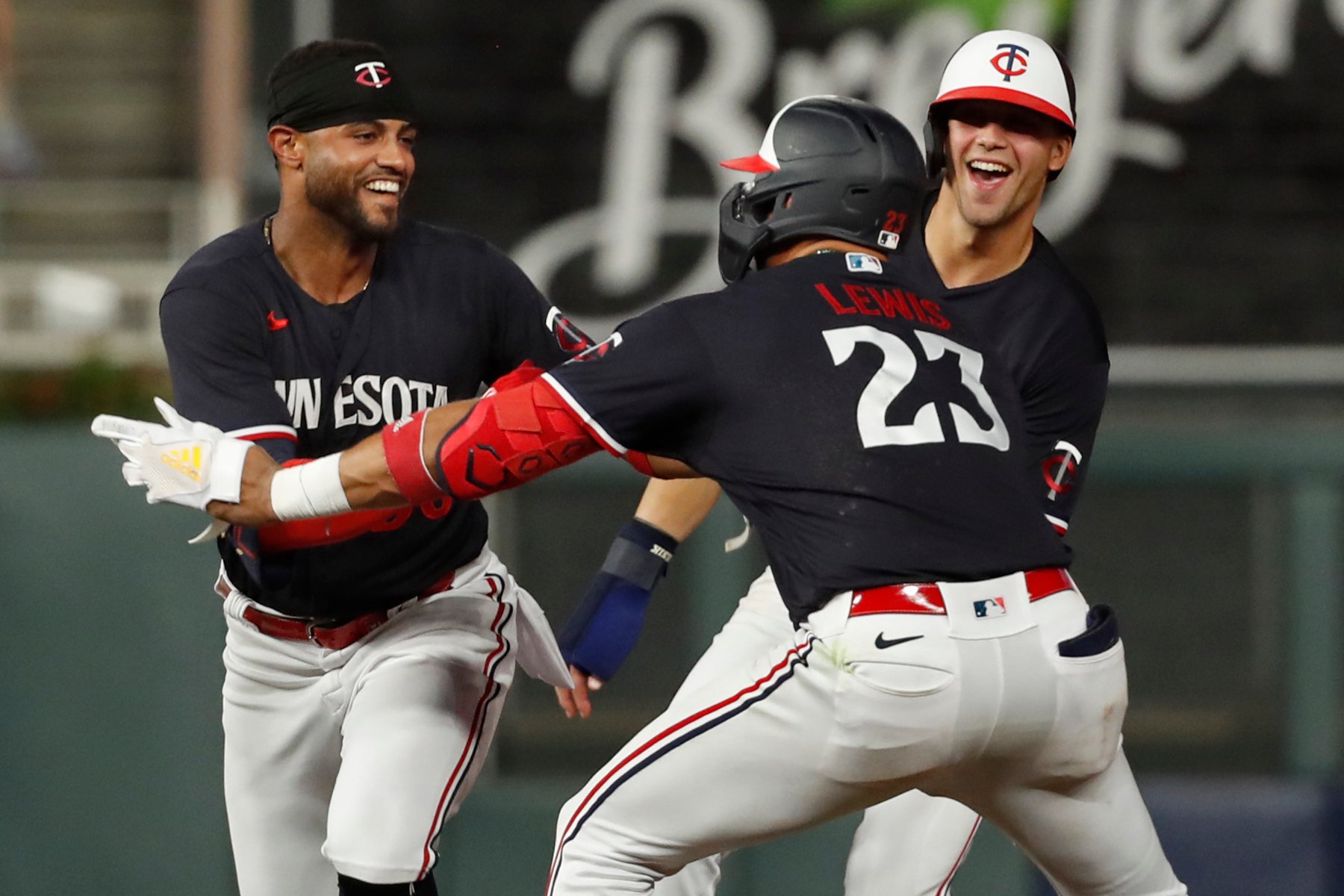 Entering play on Saturday, the Twins had the 20th-best OPS in MLB, but they’ve managed to stay around a .500 record because of their excellent pitching. It’s easy to see how pumping the offense up to even a bit better than average could lead to a good team down the stretch. However, getting those additional bats is difficult, given the players currently on the roster. Now, I am not saying that the current players deserve to remain on the roster; the only two Twins positions that rank as a top-10 OPS by position are second base (9th) and designated hitter (3rd) in the league. The issue is that bringing in an additional bat generally necessitates either the displacement of a veteran or the further blocking of a prospect—or both. I wrote last month about how the team has yet to make an active, no-takebacks roster move. Furthermore, the only bat the team has bought at the deadline was backup catcher Sandy Leon, so we don’t have much precedent to go off of. Below is a position-by-position breakdown of the difficulty in bringing in a new hitter, starting with the worst-performing offensive position and working down. Centerfield—28th (and DH—3rd) Michael A. Taylor has done an admirable job holding down centerfield defensively, but if the team wants to bolster the offense, center is the most glaring weakness. Obviously, the answer could be as simple as moving Byron Buxton from DH to center, but we have yet to get any indication that the Twins are willing to do so, given Buxton’s health. Specifically, the team could sacrifice defense for offense if they wanted to and shift Taylor to a reserve role. A move for a right-handed centerfielder like Adam Duvall, who has hit lefties well, could be a natural fit. Duvall is neither a star nor a good defensive outfielder, but he will at least stand in center, as opposed to Max Kepler. We'll discuss Kepler and his cronies later on, but it's worth mentioning now that the Twins have a significant backlog in the outfield, and bringing in a new centerfielder will add to that. If, somehow, Buxton returns to the outfield, the question would be about filling a DH spot, but I’m not getting my hopes up. As it stands, a Duvall-like move seems to be the most promising, though not exciting. Third Base—24th Jose Miranda entered the year as the top third baseman in the organization, but he currently has more plate appearances in AAA St. Paul than in Minnesota. Since his recent call-up to replace Royce Lewis, who will miss more than a month with an oblique injury, he has not impressed, nor has he been an everyday player. A motley crew of Kyle Farmer, Willi Castro, and Donovan Solano will play the days he doesn’t start. There would be an opportunity at third base to add a bat. That is, there would be an opportunity to add a bat if Royce Lewis wasn’t expected back this year. It’s a complex argument to add at the spot where your recently-graduated #1 prospect is supposed to reside, especially because the outfield seems off-limits to him this year. Corner Outfield—26th (LF) & 19th (RF) The corners have been the subject of much consternation, hemming, and hawing this year. Joey Gallo and Max Kepler have held their spots in left and right, respectively, and given their veteran status, they have been treated like stalwarts. The situation could be aided by someone like Duvall as a right-handed bat to take the load off against lefties (I promise—last time that I’ll mention Duvall), but that doesn’t completely solve the problem. Further complicating matters are young corner outfield bats Alex Kirilloff, Trevor Larnach, and Matt Wallner. Even if one of Kepler or Gallo were jettisoned to make room for the new bat, the prospects in their mid-20s would continue to be blocked, much to many fans’ dismay. The team could always just let go of one or both of the veterans, but there’s no great assurance that the young bats will be any better, compared to the prospect of bringing in an established veteran. It’s a difficult situation to navigate, but that’s why Derek Falvey gets paid the big bucks. Catcher—20th There are few ways to improve the offense with a bigger bat catcher. First, ignoring the incumbents, bringing in a catcher with a big bat isn’t a reliable strategy. Catchers, for the most part, don’t hit, and bringing in someone who can hit well and play catcher is going to cost an arm and a leg. Personnel-wise, it’s also tricky. The current duo—Christian Vazquez and Ryan Jeffers—have handled the pitching staff well. Vazquez just signed a three-year, $30M contract, and it’d be difficult to move on from him so early, even with his struggles at the plate. Jeffers looks like the future catcher, with an improved arm, solid framing, and a respectable .792 OPS for a catcher. It’d be surprising to see another catcher brought in. Shortstop—15th The only reason to include shortstop on this list is for consistency. Carlos Correa isn’t getting replaced. The only feasible way that a shortstop is brought in is as a Kyle Farmer replacement—hits lefties (hopefully better than Farmer) and is a legit shortstop. Farmer may get lost in roster churn around this time, but Lewis can also backup short, so it’s really not worth considering anyone unless a deal hits them in the face. First Base—12th First base has been primarily handled by Kirilloff, Solano, and Gallo this season, and it’s been alright. As much as fans would love a Paul Goldschmidt trade—or any other big bat, first-base-only player—it would lead to a conundrum like the moves in the corner outfield. Kirilloff was the organization’s top prospect a couple of years ago, so they would hypothetically want to keep him in the lineup, likely in the outfield if a new plod was traded for. That would further jam the corners and require additional moves and prospect blocking. One wrinkle here is the health of Kirilloff’s wrist. In recent weeks, he has shown less ability to drive the ball, despite his continued excellence in putting the bat to the ball. If his wrist isn’t healthy again, playing time at first base would open up, and the team would want to bring in someone who can produce in the power position. Second Base—9th The Twins already have too many second basemen. If and when Jorge Polanco returns from injury, they’ll be in a position where two of their top hitters—the other being Edouard Julien —will have only played second base this year. They need to sort that out before they add someone else to the mix. The Twins would be well-suited to bring in a bat or two somewhere. The issue is that there’s no simple way to do so. “Established” veterans will be removed or moved to reduced roles, and there are young players who deserve full-time work. It's going to be the type of difficult decision that we have yet to see this season. As of yet, there’s no indication of how new hitters would fit, but hopefully, we’ll find out soon.
- 113 comments
-
- 4
-
-

-
- alex kirilloff
- max kepler
- (and 3 more)
-
Thanks for this--I had notes on De Leon and everything, but it looks like I just skipped over them as I was compiling this analysis.
-
The Twins had a fairly active offseason, by their standards. Now that we’ve reached the midway point, let’s check how their additions are faring. Image courtesy of Rick Osentoski-USA TODAY Sports The Twins traded for three MLB players, signed four MLB deals, and brought on an additional three players on minor league deals that have contributed to this year’s team. When evaluating this team, it’s worth taking stock of how the offseason moves are looking. I’ve listed the ten acquisitions below, from most expensive (total salary committed) to least expensive. Relevant statistics include plate appearances or innings pitched, OPS+ or ERA+ (less than 100 is worse than league average; above is better), and wins above replacement as calculated for both Baseball-Reference and FanGraphs. Carlos Correa – Signed for $200M over six years 303 PA, 90 OPS+, 0.8 bWAR, 0.6 fWAR The $200 million man has yet to impress. He’s on pace to have the worst offensive year of his career. His defense at shortstop has been good, but it hasn’t been Gold Glove-worthy, so getting too excited about what the rest of this contract holds is hard. There’s still a lot of time to turn it around, but the first eight percent has not been promising. Christian Vazquez – Signed for $30M over three years 180 PA, 68 OPS+, 0.2 bWAR, 0.7 fWAR Speaking of multi-year deals that could be more promising, Vazquez has not impressed as the primary catcher. He’s also in the midst of his worst offensive year since 2018. However, the pitchers seem to like him, and his defense is still above average. Still, it’s getting more difficult by the day to justify his black hold in this putrid lineup starting over a superior hitter in Ryan Jeffers. Joey Gallo – Signed for $11M over one year 207 PA, 113 OPS+, 0.4 bWAR, 0.5 fWAR Gallo got a torrid start but has regressed heavily in the last two months. It’s difficult to be too upset over a one-year flyer signing, and Gallo has filled in at multiple positions when needed. Still, the signing has also restricted Trevor Larnach and Matt Wallner’s path to big league playing time. Maybe Gallo will get hot again soon and make the signing worth it, but it’s not looking good right now. Kyle Farmer – Traded for Casey Legumina, making $5.59M, final year of arbitration in 2024 167 PA, 87 OPS+, 0.8 bWAR, 0.7 fWAR Farmer has performed as expected. He’s competently played all four infield positions and stood in left field several times. The salary and prospect traded for him make this acquisition an even value. Of note, he’s been a plus hitter against lefties, as was expected. Pablo Lopez – Traded for Luis Arraez, making $5.45M, extended for $74M over four years 96 IP, 96 ERA+, 0.8 bWAR, 2.2 fWAR The Twins traded from a perceived position of strength—left-handed corner bats—for pitching, and it’s difficult to separate how Lopez is performing from Arraez’s chase for .400 in Miami. To his credit, Lopez has been a solid-to-great pitcher, depending on your belief in his underlying metrics. The acquisition hasn’t been a win, but Lopez is certainly doing his part. Michael A. Taylor – Traded for Evan Sisk, Steven Cruz. Making $4.5M 221 PA, 83 OPS+, 0.6 bWAR, 0.6 fWAR Taylor has been thrust into an everyday job, and unless someone else comes along—Byron Buxton included—he’ll be the first option in center field each day. He’s hit around his career average, which isn’t good, and his defense has been slipping a bit, which is unsurprising for the 32-year-old. If the expectation was that he was merely a backup, the trade looks much better than if he was expected to start 120 games in center field. Donovan Solano – Signed for $2M over one year 220 PA, 115 ERA+, 0.8 bWAR, 0.6 fWAR Where would this team be without Donnie Barrels? Solano was signed during spring training as an additional platoon bat against lefties as a first baseman or DH. He’s been one of the team’s most consistent hitters thus far and has held his own against both righties and lefties, playing second and third base when needed. It’s a great use of $2M as a bench player, which is what he should currently be—but isn’t. Willi Castro – Signed for $1.8M (MiLB deal) 191 PA, 92 OPS+, 1.7 bWAR, 1.1 fWAR Where would this team be without Willi Rafael Castro? Signed to a minor league deal, Castro broke camp with the team as a break-glass-in-case-of-emergency with the ability to play every position. He’s been a slightly below-average hitter but is 12-for-12 stealing bases, almost carried the team offensively for a few weeks, and provides excellent roster utility. He’s a great asset as a 13th man but, like Solano, is playing more than he should. Brock Stewart – Signed MiLB deal 25.2 IP, 610 ERA+, 1.5 bWAR, 0.7 fWAR Where would this team be without Beef Stew? The minor league signee has been the best reliever on the team statistically, and he’s been number two in the bullpen hierarchy behind Jhoan Duran. His emergence has been terrific and has rewarded the team for taking an albeit low-risk chance on him. Oliver Ortega – Claimed off waivers, MiLB deal 4 IP, 102 ERA+, 0.0 bWAR, 0.0 fWAR Where would this—never mind. I included Ortega because he is the only other player who has played for the Twins this year added in the offseason. He was claimed off waivers and now has a chance to get work in an injury-riddled bullpen. Will he stick as a low-mid leverage arm? Who knows. EDIT: Jose De Leon – MiLB deal 17.1 IP, 93 ERA+, 0.0 bWAR, 0.2 fWAR De Leon, like Stewart and Ortega, signed a minor league deal in the offseason, but he had emerged as a potential competent middle or long relief option. He fit the team as the seventh or eighth guy out of the pen with some flexibility in use, but he will be undergoing Tommy John Surgery and will miss the remainder of 2023. He was an adequate find that will need to be replaced, likely by high minors pitching prospects. In review, there’s a bit of a pattern here—if you can call ten players’ results a pattern. The three most expensive free agent veterans (Correa, Vazquez, Gallo) have not carried their weight thus far. The three lowest-paid free agents (Solano, Castro, Stewart) have been outperforming expectations and have emerged as vital parts of this team—which may be damning with faint praise. The three players traded for (Farmer, Lopez, Taylor) have performed about as expected, though, in Lopez’s case, the cost of Luis Arraez clouds that, and Taylor has been playing more than expected. Do you disagree with any of these assessments? How do you feel about the job that the front office did? View full article
-
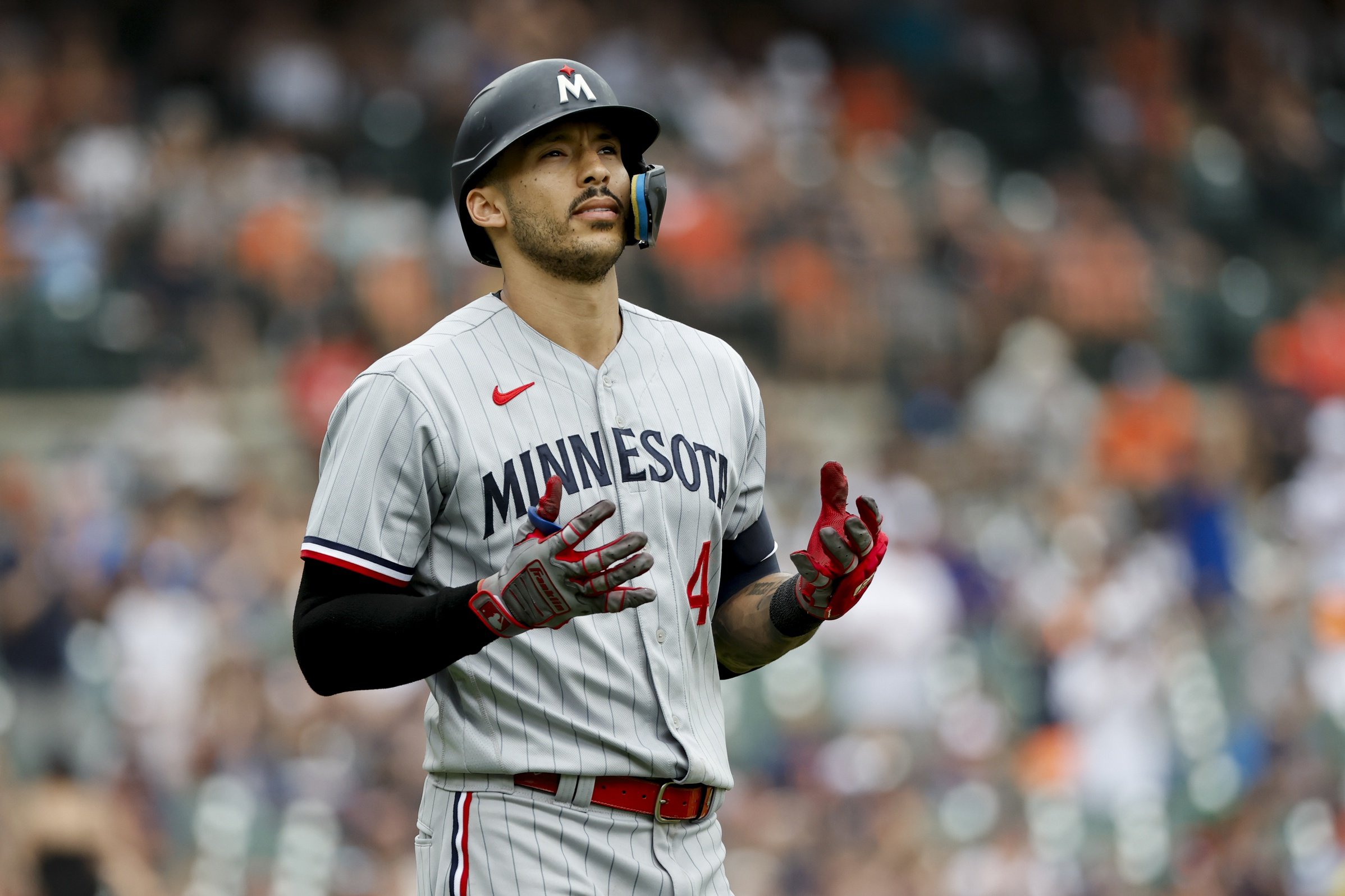 The Twins traded for three MLB players, signed four MLB deals, and brought on an additional three players on minor league deals that have contributed to this year’s team. When evaluating this team, it’s worth taking stock of how the offseason moves are looking. I’ve listed the ten acquisitions below, from most expensive (total salary committed) to least expensive. Relevant statistics include plate appearances or innings pitched, OPS+ or ERA+ (less than 100 is worse than league average; above is better), and wins above replacement as calculated for both Baseball-Reference and FanGraphs. Carlos Correa – Signed for $200M over six years 303 PA, 90 OPS+, 0.8 bWAR, 0.6 fWAR The $200 million man has yet to impress. He’s on pace to have the worst offensive year of his career. His defense at shortstop has been good, but it hasn’t been Gold Glove-worthy, so getting too excited about what the rest of this contract holds is hard. There’s still a lot of time to turn it around, but the first eight percent has not been promising. Christian Vazquez – Signed for $30M over three years 180 PA, 68 OPS+, 0.2 bWAR, 0.7 fWAR Speaking of multi-year deals that could be more promising, Vazquez has not impressed as the primary catcher. He’s also in the midst of his worst offensive year since 2018. However, the pitchers seem to like him, and his defense is still above average. Still, it’s getting more difficult by the day to justify his black hold in this putrid lineup starting over a superior hitter in Ryan Jeffers. Joey Gallo – Signed for $11M over one year 207 PA, 113 OPS+, 0.4 bWAR, 0.5 fWAR Gallo got a torrid start but has regressed heavily in the last two months. It’s difficult to be too upset over a one-year flyer signing, and Gallo has filled in at multiple positions when needed. Still, the signing has also restricted Trevor Larnach and Matt Wallner’s path to big league playing time. Maybe Gallo will get hot again soon and make the signing worth it, but it’s not looking good right now. Kyle Farmer – Traded for Casey Legumina, making $5.59M, final year of arbitration in 2024 167 PA, 87 OPS+, 0.8 bWAR, 0.7 fWAR Farmer has performed as expected. He’s competently played all four infield positions and stood in left field several times. The salary and prospect traded for him make this acquisition an even value. Of note, he’s been a plus hitter against lefties, as was expected. Pablo Lopez – Traded for Luis Arraez, making $5.45M, extended for $74M over four years 96 IP, 96 ERA+, 0.8 bWAR, 2.2 fWAR The Twins traded from a perceived position of strength—left-handed corner bats—for pitching, and it’s difficult to separate how Lopez is performing from Arraez’s chase for .400 in Miami. To his credit, Lopez has been a solid-to-great pitcher, depending on your belief in his underlying metrics. The acquisition hasn’t been a win, but Lopez is certainly doing his part. Michael A. Taylor – Traded for Evan Sisk, Steven Cruz. Making $4.5M 221 PA, 83 OPS+, 0.6 bWAR, 0.6 fWAR Taylor has been thrust into an everyday job, and unless someone else comes along—Byron Buxton included—he’ll be the first option in center field each day. He’s hit around his career average, which isn’t good, and his defense has been slipping a bit, which is unsurprising for the 32-year-old. If the expectation was that he was merely a backup, the trade looks much better than if he was expected to start 120 games in center field. Donovan Solano – Signed for $2M over one year 220 PA, 115 ERA+, 0.8 bWAR, 0.6 fWAR Where would this team be without Donnie Barrels? Solano was signed during spring training as an additional platoon bat against lefties as a first baseman or DH. He’s been one of the team’s most consistent hitters thus far and has held his own against both righties and lefties, playing second and third base when needed. It’s a great use of $2M as a bench player, which is what he should currently be—but isn’t. Willi Castro – Signed for $1.8M (MiLB deal) 191 PA, 92 OPS+, 1.7 bWAR, 1.1 fWAR Where would this team be without Willi Rafael Castro? Signed to a minor league deal, Castro broke camp with the team as a break-glass-in-case-of-emergency with the ability to play every position. He’s been a slightly below-average hitter but is 12-for-12 stealing bases, almost carried the team offensively for a few weeks, and provides excellent roster utility. He’s a great asset as a 13th man but, like Solano, is playing more than he should. Brock Stewart – Signed MiLB deal 25.2 IP, 610 ERA+, 1.5 bWAR, 0.7 fWAR Where would this team be without Beef Stew? The minor league signee has been the best reliever on the team statistically, and he’s been number two in the bullpen hierarchy behind Jhoan Duran. His emergence has been terrific and has rewarded the team for taking an albeit low-risk chance on him. Oliver Ortega – Claimed off waivers, MiLB deal 4 IP, 102 ERA+, 0.0 bWAR, 0.0 fWAR Where would this—never mind. I included Ortega because he is the only other player who has played for the Twins this year added in the offseason. He was claimed off waivers and now has a chance to get work in an injury-riddled bullpen. Will he stick as a low-mid leverage arm? Who knows. EDIT: Jose De Leon – MiLB deal 17.1 IP, 93 ERA+, 0.0 bWAR, 0.2 fWAR De Leon, like Stewart and Ortega, signed a minor league deal in the offseason, but he had emerged as a potential competent middle or long relief option. He fit the team as the seventh or eighth guy out of the pen with some flexibility in use, but he will be undergoing Tommy John Surgery and will miss the remainder of 2023. He was an adequate find that will need to be replaced, likely by high minors pitching prospects. In review, there’s a bit of a pattern here—if you can call ten players’ results a pattern. The three most expensive free agent veterans (Correa, Vazquez, Gallo) have not carried their weight thus far. The three lowest-paid free agents (Solano, Castro, Stewart) have been outperforming expectations and have emerged as vital parts of this team—which may be damning with faint praise. The three players traded for (Farmer, Lopez, Taylor) have performed about as expected, though, in Lopez’s case, the cost of Luis Arraez clouds that, and Taylor has been playing more than expected. Do you disagree with any of these assessments? How do you feel about the job that the front office did?
- 24 comments
-
- 5
-
-
- carlos correa
- christian vazquez
- (and 3 more)

