



Greggory Masterson
-
Posts
832 -
Joined
-
Last visited
-
Days Won
2
Content Type
Profiles
Minnesota Twins News, Rumors & Analysis
Minnesota Twins Videos
2026 Minnesota Twins Top Prospect Rankings
2022 Minnesota Twins Draft Picks & Signing Bonuses
Minnesota Twins Trade & Free Agent Rumors
Minnesota Twins Fan Guides & Resources
2023 Minnesota Twins Draft Picks & Signing Bonuses
2024 Minnesota Twins Draft Picks & Signing Bonuses
2025 Minnesota Twins Draft Picks & Signing Bonuses
2026 Minnesota Twins Draft Picks & Signing Bonuses
Forums
Blogs
Events
Store
Downloads
Gallery
Everything posted by Greggory Masterson
-
 If someone from the top of the list doesn’t end up in Minnesota, Dubón plus a player like Nathaniel Lowe or another hitter in the 3rd/4th tier of infielders would be a decent consolation prize
-
The Twins have hit the ground running in their efforts to improve their 2027 roster, bringing back Ryan Jeffers with the qualifying offer and inking old friend Sonny Gray to a two-year, $55 million deal. One would assume that they would continue trying to add to this team, though with two big-ish ticket items already down, it’s unclear just how much more they have to spend. If the Twins are trying to improve their position-player group on a budget, targeting Mauricio Dubón might deliver the best bang for their buck. Of course, most (including me) would prefer they set their sights a bit higher, targeting the bigger names like Brandon Lowe, Jazz Chisholm Jr., or Teruaki Sato, but Dubón could bring them a player who can affect winning without adding a third contract over $20 million this offseason. Put bluntly, Dubón is not in the same ballpark as a hitter as the aforementioned players, or even the next tier down, including names like Luis Arraez, Gleyber Torres, or Ty France. But he brings something that the Twins do not have: plus defense at multiple positions along with a capable bat. No player’s stock has benefitted more from MLB adding a utility category for the Gold Glove awards in 2022, as Dubón has won three of the five awarded, including three of the last four. Dubón is the platonic ideal of a utility infielder, with the ability to play all seven non-catcher positions in the field—and do it well. If you’re unfamiliar with his game, imagine if Willi Castro was a plus defender at shortstop and center field, rather than merely passable. Dubón has never appeared at a single position more than 85 times in a season (set in 2026 in left field), though he’s appeared in over 100 games each of the last five seasons, setting a career high of 153 in 2026. And as mentioned, he’s been a plus defender at every position throughout, even as he’s aged. Let’s look at his play as a shortstop to exemplify this. Prior to 2026, Dubón didn’t play much shortstop because he was on teams with good, everyday options. But, with the Braves this season, he played 456 2/3 innings at the position—about 51 games’ worth. And at age 31, an age at which most shortstops are no longer able to field the position adequately, Dubón mustered 5 outs above average (OAA). For reference, Ryan Kreidler and Kaelen Culpepper had 2 OAA in 395 innings and 1 OAA in 281 innings, respectively. Dubón would likely be the top defensive shortstop on the Opening Day roster if he becomes a Twin. However, Dubón’s hitting leaves something to be desired. His profile is very contact-oriented (a trait the Twins seem to have pursued in free agency in recent years), though his batting average since 2023 is (an empty) .268. He has a lifetime .680 OPS, 12% below league average, which has prevented him from being a true everyday player for much of his career given a lack og walks and power. However, over the last four seasons, his 92 OPS+ sniffs league average (note: it’s my personal rule that I treat 92 to 108 as league average; it just so happens that Dubón barely sneaks in), and he had what might be the best hitting season of his career in 2026, with an OPS of .719, just 2% below league average, bolstered by a career-high 12 home runs in 619 plate appearances. Clearly, Dubón does not stack up well offensively against about a dozen other infield options that the Twins can pursue, but he’s been roughly on par with Royce Lewis over the last three seasons, including beating him by 52 points of OPS in 2026. That’s admittedly a very low bar, but it’s also the bar the Twins should be attempting to clear on the infield, at a bare minimum, given that they've moved on from Lewis. If Dubón can provide roughly league-average offense and plus defense at second base (bumping Kody Clemens to first base), he can be a quality player for the Twins. But he also fits well with this team if Marek Houston debuts in 2027. Houston’s debut probably shifts the incumbent Kaelen Culpepper to second base, at which point Dubón could return to the super-utility role that has served him so well over the last five years of his career. And Dubón seems eminently gettable. Contract estimates for the free agent's services are generally $8 to $10 million per year on a one- or two-year contract, which comes in at half or a third of what many are expecting the top hitters to receive this offseason. The Twins would also have the benefit of being able to offer him an everyday role to begin the season, a luxury most teams trying to compete don’t have (now, this may be a mark against the Twins, as most teams aren’t improved with Dubón in an everyday role, but I digress). Jeffers's return significantly lightened the load offensively for the Twins, making Dubón more appealing (or tolerable) than he was a week ago. If Dubón indeed signs somewhere in the $8 to $10 million range, the Twins could effectively replace both Kreidler and Lewis’s roles for a very modest price, as Dubón can provide stability on the right side of the infield and serve as the primary backup shortstop, even being a step up defensively from the starter Culpepper. And Dubón also plays the outfield, which would provide depth for a group of players who will never be branded as healthy. It’s a signing that looks a lot better if the Twins already added an everyday infielder and Dubón was slotted into a bench role to begin the year, but either way, it would be a quality addition that provides value to the MLB roster. It’s fun to get carried away dreaming about who the next big name to walk through the door might be, but I wouldn’t be disappointed with Dubón in the slightest. Image courtesy of Brett Davis-Imagn Images View full article
-
Twins Fans: You’re Gonna Get Mauricio Dubón and You’re Gonna Like It
Greggory Masterson posted an article in Twins
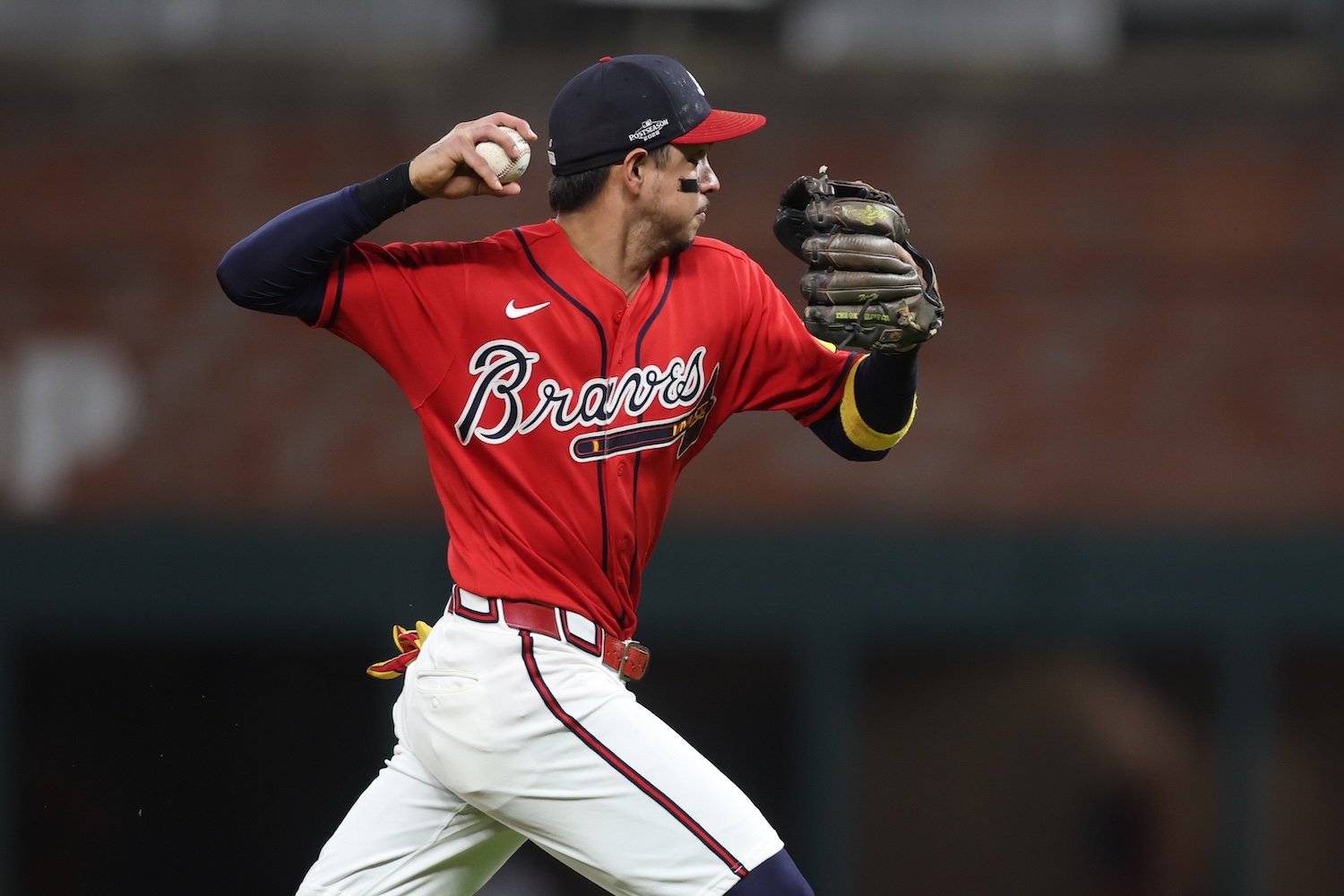 The Twins have hit the ground running in their efforts to improve their 2027 roster, bringing back Ryan Jeffers with the qualifying offer and inking old friend Sonny Gray to a two-year, $55 million deal. One would assume that they would continue trying to add to this team, though with two big-ish ticket items already down, it’s unclear just how much more they have to spend. If the Twins are trying to improve their position-player group on a budget, targeting Mauricio Dubón might deliver the best bang for their buck. Of course, most (including me) would prefer they set their sights a bit higher, targeting the bigger names like Brandon Lowe, Jazz Chisholm Jr., or Teruaki Sato, but Dubón could bring them a player who can affect winning without adding a third contract over $20 million this offseason. Put bluntly, Dubón is not in the same ballpark as a hitter as the aforementioned players, or even the next tier down, including names like Luis Arraez, Gleyber Torres, or Ty France. But he brings something that the Twins do not have: plus defense at multiple positions along with a capable bat. No player’s stock has benefitted more from MLB adding a utility category for the Gold Glove awards in 2022, as Dubón has won three of the five awarded, including three of the last four. Dubón is the platonic ideal of a utility infielder, with the ability to play all seven non-catcher positions in the field—and do it well. If you’re unfamiliar with his game, imagine if Willi Castro was a plus defender at shortstop and center field, rather than merely passable. Dubón has never appeared at a single position more than 85 times in a season (set in 2026 in left field), though he’s appeared in over 100 games each of the last five seasons, setting a career high of 153 in 2026. And as mentioned, he’s been a plus defender at every position throughout, even as he’s aged. Let’s look at his play as a shortstop to exemplify this. Prior to 2026, Dubón didn’t play much shortstop because he was on teams with good, everyday options. But, with the Braves this season, he played 456 2/3 innings at the position—about 51 games’ worth. And at age 31, an age at which most shortstops are no longer able to field the position adequately, Dubón mustered 5 outs above average (OAA). For reference, Ryan Kreidler and Kaelen Culpepper had 2 OAA in 395 innings and 1 OAA in 281 innings, respectively. Dubón would likely be the top defensive shortstop on the Opening Day roster if he becomes a Twin. However, Dubón’s hitting leaves something to be desired. His profile is very contact-oriented (a trait the Twins seem to have pursued in free agency in recent years), though his batting average since 2023 is (an empty) .268. He has a lifetime .680 OPS, 12% below league average, which has prevented him from being a true everyday player for much of his career given a lack og walks and power. However, over the last four seasons, his 92 OPS+ sniffs league average (note: it’s my personal rule that I treat 92 to 108 as league average; it just so happens that Dubón barely sneaks in), and he had what might be the best hitting season of his career in 2026, with an OPS of .719, just 2% below league average, bolstered by a career-high 12 home runs in 619 plate appearances. Clearly, Dubón does not stack up well offensively against about a dozen other infield options that the Twins can pursue, but he’s been roughly on par with Royce Lewis over the last three seasons, including beating him by 52 points of OPS in 2026. That’s admittedly a very low bar, but it’s also the bar the Twins should be attempting to clear on the infield, at a bare minimum, given that they've moved on from Lewis. If Dubón can provide roughly league-average offense and plus defense at second base (bumping Kody Clemens to first base), he can be a quality player for the Twins. But he also fits well with this team if Marek Houston debuts in 2027. Houston’s debut probably shifts the incumbent Kaelen Culpepper to second base, at which point Dubón could return to the super-utility role that has served him so well over the last five years of his career. And Dubón seems eminently gettable. Contract estimates for the free agent's services are generally $8 to $10 million per year on a one- or two-year contract, which comes in at half or a third of what many are expecting the top hitters to receive this offseason. The Twins would also have the benefit of being able to offer him an everyday role to begin the season, a luxury most teams trying to compete don’t have (now, this may be a mark against the Twins, as most teams aren’t improved with Dubón in an everyday role, but I digress). Jeffers's return significantly lightened the load offensively for the Twins, making Dubón more appealing (or tolerable) than he was a week ago. If Dubón indeed signs somewhere in the $8 to $10 million range, the Twins could effectively replace both Kreidler and Lewis’s roles for a very modest price, as Dubón can provide stability on the right side of the infield and serve as the primary backup shortstop, even being a step up defensively from the starter Culpepper. And Dubón also plays the outfield, which would provide depth for a group of players who will never be branded as healthy. It’s a signing that looks a lot better if the Twins already added an everyday infielder and Dubón was slotted into a bench role to begin the year, but either way, it would be a quality addition that provides value to the MLB roster. It’s fun to get carried away dreaming about who the next big name to walk through the door might be, but I wouldn’t be disappointed with Dubón in the slightest.
-
Even before they inked Sonny Gray to a two-year, $55-million deal to bring the 37-year-old back to Minnesota, the Twins faced an interesting quandary this offseason. They now employ nearly a dozen starting pitchers with big-league experience, and it’s hard to see all of them in the organization come Opening Day. However, there’s no such thing as too much starting pitching, and the Twins have preferred to stash one (if not two) MLB-ready pitchers outside their rotation (Bailey Ober and Louis Varland in 2023, Varland and Simeon Woods Richardson in 2024, Mick Abel and Zebby Matthews in 2026, etc.) heading into a given season. There are some names obviously on the chopping block, or who are primed for a move to the bullpen, but will that leave the Twins with the number of starting pitchers they need to make it through the season after the addition of Gray? Go through the list and be the judge. Do they need to cut, add, or both? I’ve listed the 10 who seem to belong in this conversation, beyond Gray. They've already proactively added him; there's no ambiguity about whether or how they'll use him. For everyone else, it's at least a discussion. (Sorry, Mike Paredes; no room for you.) Pablo López López, talent-wise, is probably the frontrunner to be the Twins’ Opening Day starter, as he was from 2023 to 2025. However, he hasn’t thrown a pitch in a game since September of 2025, and between bouts of injury and ineffectiveness, he hasn’t been the stalwart that fans would want fronting a rotation. Don’t be mistaken, López is a very good pitcher, but he’s only started 14 games since the end of the 2024 season, and his 2024 itself was pedestrian. This isn’t intended to denigrate López—merely to point out that even the Twins’ top pitcher (pre-Gray return) has his share of question marks beyond his recovery from a second UCL tear. Of course, it’s also unclear that López will be ready for Opening Day. So even if you see the Twins trimming their starting corps, they probably need to have to plan to have six MLB-caliber starters on the roster. Gray became the overwhelming favorite to start on Opening Day the moment he signed. Joe Ryan Ryan may have higher highs than López, but he also has lower lows. His second-half drop-offs are well-documented, as the difference between his first- and second-half ERAs is larger than that of any other notable Twins starter in the club’s history. Even with those struggles, he’s a two-time All-Star with an ERA 10% better than average over the course of his career. Ryan has been at the center of much trade discussion, including a false report that he had been traded to Boston at the 2025 trade deadline. This winter would be the Twins' last chance to truly cash in on Ryan via trade, as the soon-to-be 31-year-old is in his final year of team control. It would be prudent to listen to offers on Ryan, especially given uncertainty about whether a qualifying offer will be part of the next collective bargaining agreement, but it’s unclear what Ryan’s trade market looks like, given his inconsistency, limited team control, and age. But whatever chance Ryan had of being traded before Gray's addition has clearly increased. Taj Bradley Bradley was the shining star of the Twins rotation in 2026. Acquired for Griffin Jax at the 2025 trade deadline, he came to Minnesota with a lot of talent but many question marks. Just 25 last season, he came in with 73 career starts and a 4.86 ERA, 15% worse than average. His ERA was a full run lower in his 31 starts in 2026, at 3.73. Bradley is by far the least likely of these names to pitch elsewhere in 2027 and should be an extension candidate, as the Twins have him under team control only through his age-28 season. Bailey Ober Ober, like López and Ryan, has just one year of team control remaining. Unlike the other two, though, there are few (if any) onlookers excited about his upside in this rotation. Ober’s fastball velocity has fallen in recent seasons, from 91 in 2024 to 90 in 2025, to 88 in 2026. He threw his changeup more often than his four-seam fastball this season. Nonetheless, Ober was able to keep the line moving in the rotation, spinning a league-average 4.47 ERA in his 25 appearances. It’s not sexy, but it’s serviceable. The questions are 1) whether the Twins trust Ober to continue being a serviceable pitcher, regardless of velocity; 2) whether the Twins are willing to pay something around MLB Trade Rumors’s estimated $6.9 million for his final year of arbitration; 3) if no to either of the first two, whether another team will trade for Ober, or they’ll need to nontender him this week; and 4) if a team is willing to trade for him, what level of return the Twins will get. Ober’s future in Minnesota is very much in doubt, and he’s the most likely on this list to not don a Twins jersey next season, with perhaps one exception. Dean Kremer Kremer is the final Twins pitcher heading into his age-31 season with just one year of team control remaining. However, he’s the least likely to be moved, other than López (given the latter’s injury status). Kremer, acquired at the 2026 trade deadline for teenage outfield prospect Jhomnardo Reyes, has built a fine career as a mid- to back-of-the-rotation starter, consistently hurling a league-average ERA. He had a WHIP under 1.00 and a 3.48 ERA in 10 starts as a Twin last year, so it’s hard to imagine that he’s on the move after just a couple of months in Minnesota. Connor Prielipp The Twins’ patience with their 2022 second-round pick seems to finally be paying off, as Prielipp threw more innings last season (144 1/3) than he did in his five other seasons since high school (140 2/3) combined. It was rocky, as he had a season ERA pushing 5.00, but he had a sub-3.00 ERA in his final six starts, albeit against weaker competition. Prielipp being effective over his final 32 innings after pitching so sparingly the preceding five years is a mark in his favor as a viable, effective starter. If two of the following happen: 1) López is not ready for Opening Day, 2) Ryan is traded, 3) Ober is traded or not tendered a contract, or 4) a starter gets injured during spring training, Prielipp seems to be poised for an Opening Day job. What was a more straightforward path just a day ago is much muddier now, but (as previously noted) the Twins love stashing a pitcher like Prielipp in St. Paul, with the understanding that he'll probably be in the rotation by the beginning of May due to injury. Mick Abel For a moment, Abel was the most exciting thing in Twins Territory. He got off to a slow start in 2026 after a poor 2025 debut, but over the course of one week in April, he threw 13 innings, allowing no runs and striking out 16. Then elbow inflammation hit. Abel missed the rest of the season after undergoing arthroscopic elbow surgery, snuffing out the flame as soon as it had been lit. Abel should be ready for Opening Day, and he made the Opening Day rotation last season, but fans should be wary of believing that he’ll pick up where he left off in his final two starts of 2026, which may be over a year in the rearview mirror if the 2027 season starts late due to the lockout. There may be a world where Abel is converted to a bullpen role, but it seems a bit early for that right now. Zebby Matthews Matthews made a meteoric rise in the Twins system during the 2024 season, starting the year in High-A and ending it in the Twins rotation. Since then, though, the results have been discouraging. Through 48 career starts, Matthews has a 5.39 ERA, and although there have been flashes, his inconsistency, penchant for giving up the long ball, and struggles to finish at-bats have kept him from being a quality big-league starter. When Matthews is able to locate on the edge of the zone, he’s effective, but it just hasn’t been there, and he’s entering his age-27 season. Should the Twins opt to keep their starting rotation stocked by retaining current arms, Matthews is a prime candidate to be converted to the bullpen. There’s some similarity between his profile and that of Louis Varland, and if Matthews can replicate even half of Varland’s transition, it’s probably a good decision. Kendry Rojas Speaking of Varland, Rojas is the final serious internal candidate for a rotation spot. He was effective in his debut (expedited due to rotation injuries early in the season), though there was probably some smoke and mirrors in his profile. Although he mustered a 3.34 ERA, his WHIP was 1.52, and he was constantly working himself out of self-created jams. Working as a swingman, he never exceeded four innings or 60 pitches. Many view Rojas as an eventual reliever—and an effective one at that—but the Twins seem intent on giving him the opportunity to start, and they should be in no hurry to rush him into an MLB rotation, given that he’s dealt with injuries and will turn 24 later this month. David Festa No offense, but I’ll believe he’s back when I see it. And also, he should be in the bullpen. Given the 11 names in front of you after the Gray addition, how would you sort out this collection of starting arms? Keep, trade, release, move to the pen, or send to Triple-A? Image courtesy of Rick Scuteri-Imagn Images View full article
- 75 replies
-
- 1
-

-
- pablo lopez
- joe ryan
- (and 8 more)
-
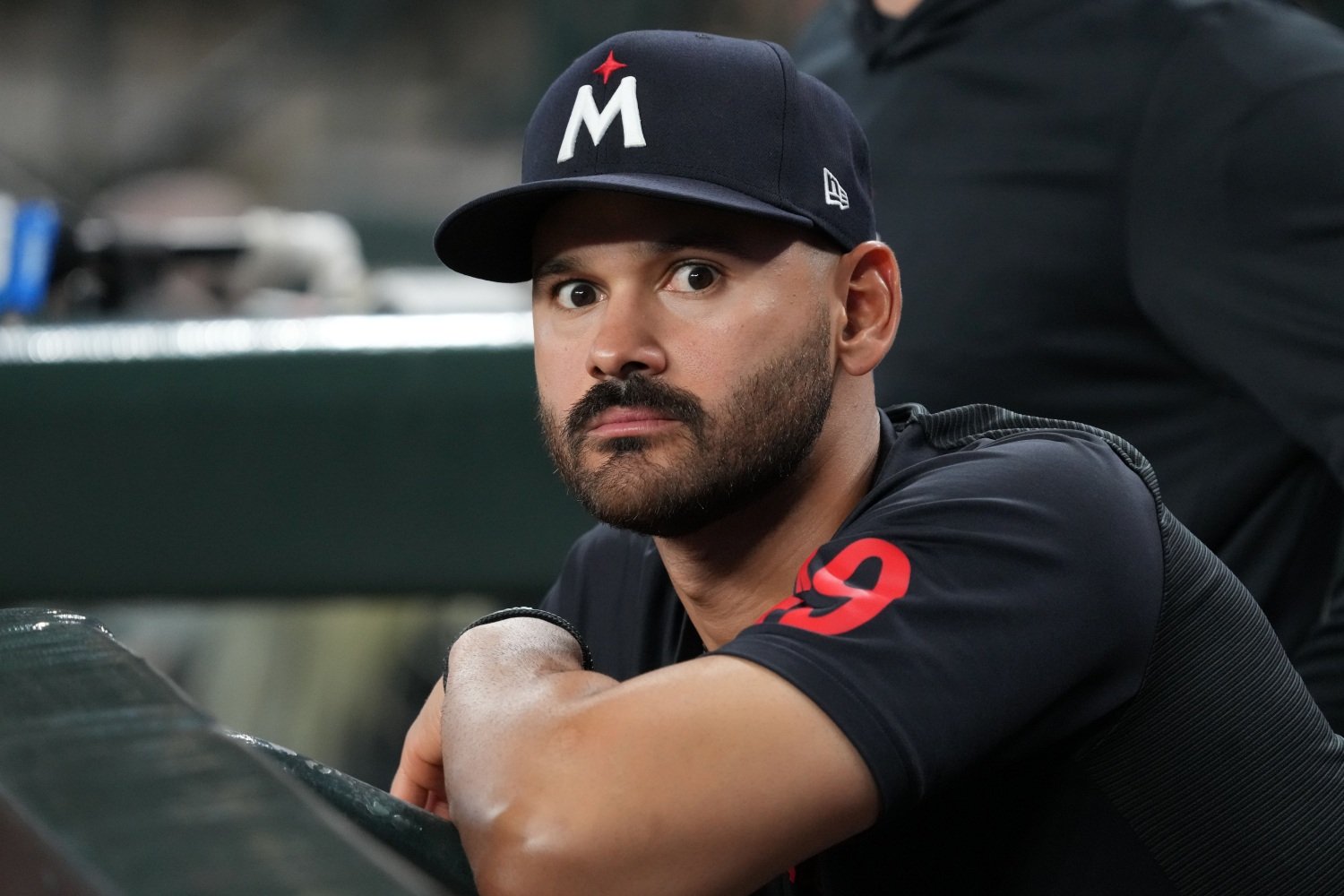 Even before they inked Sonny Gray to a two-year, $55-million deal to bring the 37-year-old back to Minnesota, the Twins faced an interesting quandary this offseason. They now employ nearly a dozen starting pitchers with big-league experience, and it’s hard to see all of them in the organization come Opening Day. However, there’s no such thing as too much starting pitching, and the Twins have preferred to stash one (if not two) MLB-ready pitchers outside their rotation (Bailey Ober and Louis Varland in 2023, Varland and Simeon Woods Richardson in 2024, Mick Abel and Zebby Matthews in 2026, etc.) heading into a given season. There are some names obviously on the chopping block, or who are primed for a move to the bullpen, but will that leave the Twins with the number of starting pitchers they need to make it through the season after the addition of Gray? Go through the list and be the judge. Do they need to cut, add, or both? I’ve listed the 10 who seem to belong in this conversation, beyond Gray. They've already proactively added him; there's no ambiguity about whether or how they'll use him. For everyone else, it's at least a discussion. (Sorry, Mike Paredes; no room for you.) Pablo López López, talent-wise, is probably the frontrunner to be the Twins’ Opening Day starter, as he was from 2023 to 2025. However, he hasn’t thrown a pitch in a game since September of 2025, and between bouts of injury and ineffectiveness, he hasn’t been the stalwart that fans would want fronting a rotation. Don’t be mistaken, López is a very good pitcher, but he’s only started 14 games since the end of the 2024 season, and his 2024 itself was pedestrian. This isn’t intended to denigrate López—merely to point out that even the Twins’ top pitcher (pre-Gray return) has his share of question marks beyond his recovery from a second UCL tear. Of course, it’s also unclear that López will be ready for Opening Day. So even if you see the Twins trimming their starting corps, they probably need to have to plan to have six MLB-caliber starters on the roster. Gray became the overwhelming favorite to start on Opening Day the moment he signed. Joe Ryan Ryan may have higher highs than López, but he also has lower lows. His second-half drop-offs are well-documented, as the difference between his first- and second-half ERAs is larger than that of any other notable Twins starter in the club’s history. Even with those struggles, he’s a two-time All-Star with an ERA 10% better than average over the course of his career. Ryan has been at the center of much trade discussion, including a false report that he had been traded to Boston at the 2025 trade deadline. This winter would be the Twins' last chance to truly cash in on Ryan via trade, as the soon-to-be 31-year-old is in his final year of team control. It would be prudent to listen to offers on Ryan, especially given uncertainty about whether a qualifying offer will be part of the next collective bargaining agreement, but it’s unclear what Ryan’s trade market looks like, given his inconsistency, limited team control, and age. But whatever chance Ryan had of being traded before Gray's addition has clearly increased. Taj Bradley Bradley was the shining star of the Twins rotation in 2026. Acquired for Griffin Jax at the 2025 trade deadline, he came to Minnesota with a lot of talent but many question marks. Just 25 last season, he came in with 73 career starts and a 4.86 ERA, 15% worse than average. His ERA was a full run lower in his 31 starts in 2026, at 3.73. Bradley is by far the least likely of these names to pitch elsewhere in 2027 and should be an extension candidate, as the Twins have him under team control only through his age-28 season. Bailey Ober Ober, like López and Ryan, has just one year of team control remaining. Unlike the other two, though, there are few (if any) onlookers excited about his upside in this rotation. Ober’s fastball velocity has fallen in recent seasons, from 91 in 2024 to 90 in 2025, to 88 in 2026. He threw his changeup more often than his four-seam fastball this season. Nonetheless, Ober was able to keep the line moving in the rotation, spinning a league-average 4.47 ERA in his 25 appearances. It’s not sexy, but it’s serviceable. The questions are 1) whether the Twins trust Ober to continue being a serviceable pitcher, regardless of velocity; 2) whether the Twins are willing to pay something around MLB Trade Rumors’s estimated $6.9 million for his final year of arbitration; 3) if no to either of the first two, whether another team will trade for Ober, or they’ll need to nontender him this week; and 4) if a team is willing to trade for him, what level of return the Twins will get. Ober’s future in Minnesota is very much in doubt, and he’s the most likely on this list to not don a Twins jersey next season, with perhaps one exception. Dean Kremer Kremer is the final Twins pitcher heading into his age-31 season with just one year of team control remaining. However, he’s the least likely to be moved, other than López (given the latter’s injury status). Kremer, acquired at the 2026 trade deadline for teenage outfield prospect Jhomnardo Reyes, has built a fine career as a mid- to back-of-the-rotation starter, consistently hurling a league-average ERA. He had a WHIP under 1.00 and a 3.48 ERA in 10 starts as a Twin last year, so it’s hard to imagine that he’s on the move after just a couple of months in Minnesota. Connor Prielipp The Twins’ patience with their 2022 second-round pick seems to finally be paying off, as Prielipp threw more innings last season (144 1/3) than he did in his five other seasons since high school (140 2/3) combined. It was rocky, as he had a season ERA pushing 5.00, but he had a sub-3.00 ERA in his final six starts, albeit against weaker competition. Prielipp being effective over his final 32 innings after pitching so sparingly the preceding five years is a mark in his favor as a viable, effective starter. If two of the following happen: 1) López is not ready for Opening Day, 2) Ryan is traded, 3) Ober is traded or not tendered a contract, or 4) a starter gets injured during spring training, Prielipp seems to be poised for an Opening Day job. What was a more straightforward path just a day ago is much muddier now, but (as previously noted) the Twins love stashing a pitcher like Prielipp in St. Paul, with the understanding that he'll probably be in the rotation by the beginning of May due to injury. Mick Abel For a moment, Abel was the most exciting thing in Twins Territory. He got off to a slow start in 2026 after a poor 2025 debut, but over the course of one week in April, he threw 13 innings, allowing no runs and striking out 16. Then elbow inflammation hit. Abel missed the rest of the season after undergoing arthroscopic elbow surgery, snuffing out the flame as soon as it had been lit. Abel should be ready for Opening Day, and he made the Opening Day rotation last season, but fans should be wary of believing that he’ll pick up where he left off in his final two starts of 2026, which may be over a year in the rearview mirror if the 2027 season starts late due to the lockout. There may be a world where Abel is converted to a bullpen role, but it seems a bit early for that right now. Zebby Matthews Matthews made a meteoric rise in the Twins system during the 2024 season, starting the year in High-A and ending it in the Twins rotation. Since then, though, the results have been discouraging. Through 48 career starts, Matthews has a 5.39 ERA, and although there have been flashes, his inconsistency, penchant for giving up the long ball, and struggles to finish at-bats have kept him from being a quality big-league starter. When Matthews is able to locate on the edge of the zone, he’s effective, but it just hasn’t been there, and he’s entering his age-27 season. Should the Twins opt to keep their starting rotation stocked by retaining current arms, Matthews is a prime candidate to be converted to the bullpen. There’s some similarity between his profile and that of Louis Varland, and if Matthews can replicate even half of Varland’s transition, it’s probably a good decision. Kendry Rojas Speaking of Varland, Rojas is the final serious internal candidate for a rotation spot. He was effective in his debut (expedited due to rotation injuries early in the season), though there was probably some smoke and mirrors in his profile. Although he mustered a 3.34 ERA, his WHIP was 1.52, and he was constantly working himself out of self-created jams. Working as a swingman, he never exceeded four innings or 60 pitches. Many view Rojas as an eventual reliever—and an effective one at that—but the Twins seem intent on giving him the opportunity to start, and they should be in no hurry to rush him into an MLB rotation, given that he’s dealt with injuries and will turn 24 later this month. David Festa No offense, but I’ll believe he’s back when I see it. And also, he should be in the bullpen. Given the 11 names in front of you after the Gray addition, how would you sort out this collection of starting arms? Keep, trade, release, move to the pen, or send to Triple-A?
- 75 comments
-
- 5
-
-
- pablo lopez
- joe ryan
- (and 8 more)
-
They're also spending 6M total on their LF, RF, 4OF, DH, SS, and 3B. It all comes out in the wash
-
There’s No Room for Royce Lewis
Greggory Masterson replied to Greggory Masterson's topic in Twins Daily Front Page News
I outlined how many teams do have a player like that on their bench—one who doesn't necessarily do one thing well but is only a half-step behind your average regular. The Twins have had guys very recently like Willi Castro and even Kyle Farmer (2023's version who could play shortstop and hit at a league-average level). The thing is that Lewis has no shown himself to be 2023 Kyle Farmer, and other than hoping they find the switch to get him to consistently play at a passable level, it's difficult to see how he becomes that. No one would be salivating over adding 2023 Kyle Farmer to this team, but his OPS that year was 60 points higher than Lewis's last year, and he could play a premium defensive position passably well. He had twice the bWAR in about a third of the plate appearances. I would love a good fifth infielder being added to the mix. The issue is that that player is not Royce Lewis. Or at least it hasn't been in 30 months. -
There’s No Room for Royce Lewis
Greggory Masterson replied to Greggory Masterson's topic in Twins Daily Front Page News
There is probably another team’s Royce Lewis who fits the current Twins better; that’s part of this. Royce probably fits another team better. But also, that 5.1M doesn’t need to be spent on a different 5M player. It can be the difference between bringing in a 12M infielder or a 17M infielder. Or a 5M reliever vs a 10M reliever. It’s all money that goes into the spending pool. -
There’s No Room for Royce Lewis
Greggory Masterson replied to Greggory Masterson's topic in Twins Daily Front Page News
The downside to this is probably that he’s going to be making a few million in arbitration (MLBTR estimates 5.1M). When budgeting for a roster, it’s possible that that 5.1M can be better spent elsewhere -
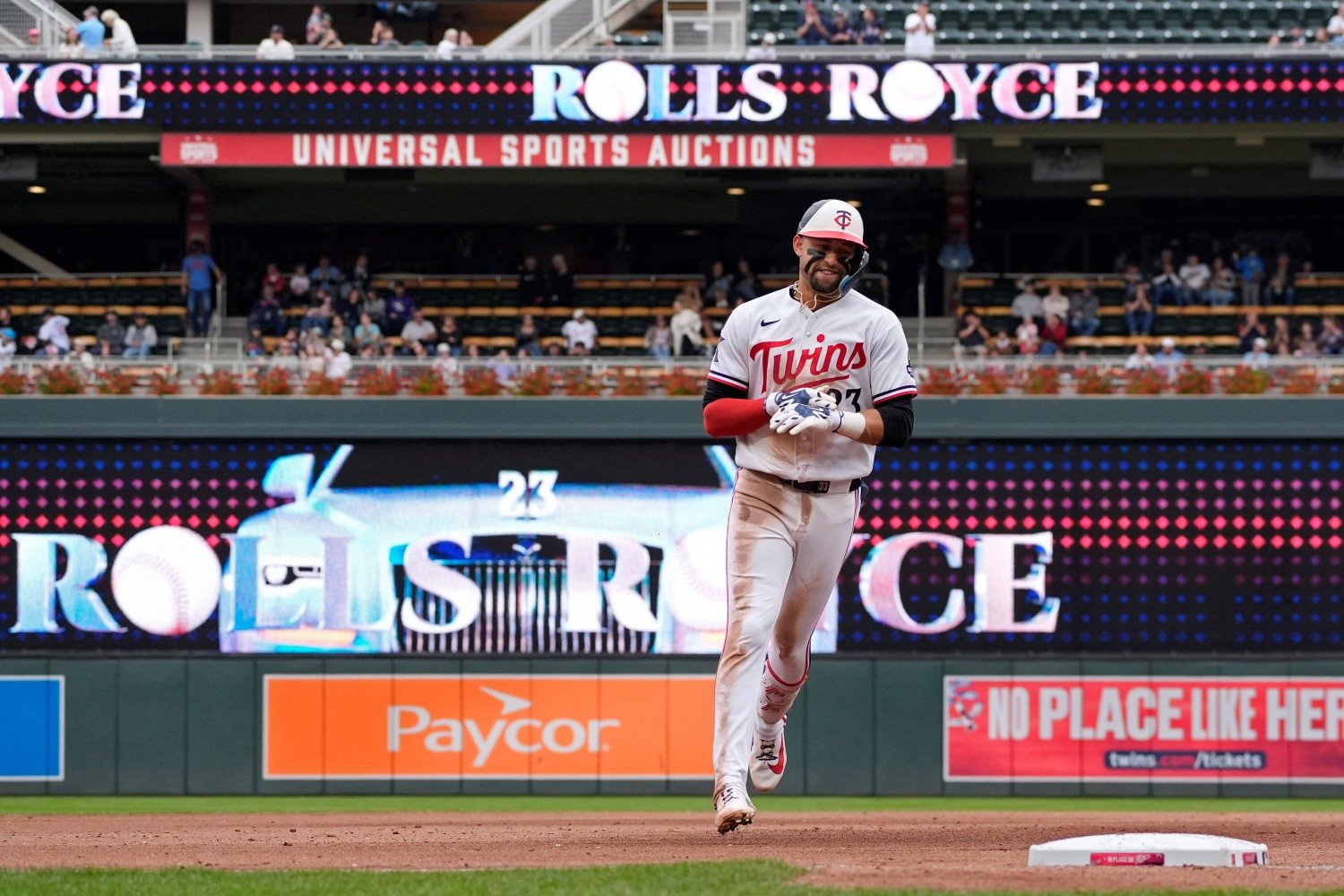 Let’s just call it as it is: It's been two and a half seasons since Royce Lewis was a good major leaguer. On June 22, 2024, Lewis woke up with a .996 career OPS (about 75% better than average) over 346 plate appearances. Since that day, Lewis has a .653 OPS (20% below average) in 1,171 trips to the plate. He has been a well-below-average hitter for more than three times as long as he was an exceptional hitter. He’s had stretches in which he’s returned to form, including a 32-game (injury-interrupted) stretch in 2025 with an OPS over .900 between May 30th and July 28th, or a stretch between mid-May and early September in 2026 in which he sustained an OPS over .750 for 81 games. But the highs haven’t been high enough, and the lows have been too low for the Twins to count on Lewis as an impact hitter. And this places both Lewis and the Twins in an awkward spot. Although Lewis is estimated by MLB Trade Rumors to command a modest $5.1 million in his second year of arbitration, his lack of production and the team’s current construction make it difficult to justify keeping Lewis in Minnesota in 2027. Even if Lewis believes his more well-compensated teammates are on the chopping block ahead of him, he may have already played his last game for the Twins. So, let’s talk about how Lewis fits on the 2027 squad. Lewis the Starter Lewis played a career-high 125 games in the majors this season (plus an additional 15 in the minors). He lost the third base job to Brooks Lee, but he saw nearly everyday playing time after being recalled from Triple-A in June, playing 94 of the team’s final 97 games. He primarily played first base, but appeared 16 times at second base and nine times at third. If the Twins were to run back the 2026 infield in 2027, Lewis would be the top candidate to start at first base on Opening Day, with Kody Clemens slotted in at second. Maybe they’d swap positions. But either way, the Twins probably didn’t have a serious offseason if that’s the case. For someone who hadn’t played the position before, Lewis adapted well to playing first base, but he’s no Gold Glover there. Nor was he any better than average at second base. He didn’t hit like even an average first baseman, even after returning from Triple-A. Lewis slashed .245/.295/.409 in those final 94 games. Given the Twins’ current roster (and barring Ryan Jeffers accepting the QO), adding a plus hitter at first or second base is the most straightforward way to upgrade the lineup. Even an anticlimactic addition like Gleyber Torres would be a substantial improvement over Lewis based on OPS alone (.727 last year for Torres compared to .667 for Lewis). It’s hard to justify Lewis filling an everyday role at first or second next season. Lewis the Reserve If Lewis shouldn’t be an everyday player, he could fit into a bench role. Or, perhaps, he could be fit into a bench role, whether it makes sense or not. The Twins have done a poor job in recent seasons constructing a bench with real utility. Gone are the halcyon days of Willi Castro, Kyle Farmer, Donovan Solano, and Michael A. Taylor. Since 2024, the Twins bench has been made of spare parts, filled with redundant, superfluous, or incapable players who met the Walmart greeter standard: they were warm bodies. Carrying Lewis in a bench role would continue this pattern. Valuable bench players have roles or specialties. Maybe they’re a pinch-running asset, maybe they’re a platoon partner, maybe they can play a difficult-to-defend position like shortstop, center field, or catcher. But they have a real use case. Lewis doesn’t do one thing that lends itself to such a role. He hasn’t played shortstop since playing one inning there in 2023, so the Twins would either need to carry a second bench infielder or stomach Lee being the primary backup shortstop—a difficult proposition, given his struggles there before sliding to third. Although Lewis plays a fine first, second, and third, he’s not good enough at any of those spots to justify being a defensive replacement. Nor has he played any outfield since tearing his ACL in 2022 while playing center field. Lewis bats right-handed and could be a platoon candidate with an infielder like Clemens, who has historically struggled against lefties (career .627 OPS, 20% below league average). However, Lewis hasn’t demolished lefties in his career, with a .747 lifetime OPS against southpaws, just 8% better than league average. For context, that’s right in line with Austin Martin’s .745 OPS against lefties. Lewis has been a below-average hitter against lefties overall during the past two seasons. He simply doesn’t hit well enough to be a platoon partner. He has been a good baserunner over the last year or so, making good decisions on the basepaths and going 28-for-31 as a base stealer over the past two seasons, but he doesn’t have the blazing speed you’d want from a dedicated pinch-runner. So, overall, Lewis has a middling-at-best bat that doesn’t offer a real platoon advantage. He has defensive flexibility, but you don’t love him at any position, and he doesn’t play shortstop. He runs well, but not enough to be a basepaths weapon. He does a bit of everything, just not terribly well. There is a role like that. You’re more likely to see it from a fourth outfielder than a fifth infielder, but there are plenty of guys around the league who are just a half-step worse than a traditional everyday player but can give several players a day off a week. Think 2019 Marwin Gonzalez, if Lewis was willing and able to play the corner outfield spots as well (which is questionable). But Gonzalez was a better hitter and fielder than Lewis has been over the last three seasons. It seems the more thought that goes into Lewis on the 2027 roster, the more it feels like we’re trying to find a way to make Lewis useful to the team, rather than including him because he’s actually useful. Really, the only way that he makes sense as an addition is if there's a real chance he can get closer to the player he was in his first 80 or so games, and it's quite easy to be skeptical of that. It's probably easier to be skeptical than optimistic there. Especially if Lewis is unable to play in the outfield, the Twins would need to flank him on the bench with a shortstop, a catcher, and probably another outfielder (likely Alan Roden or Emmanuel Rodríguez). Lewis would be the team’s primary bench platoon bat, and he’d probably play three or four times a week, giving players days off at the three non-shortstop spots with questionable production. It really seems like there’s a better way to build a roster than to shoehorn Lewis into one of the valuable 13 hitter spots. His admittedly modest $5.1 million estimated salary can probably be spent more efficiently at that.
-
Let’s just call it as it is: It's been two and a half seasons since Royce Lewis was a good major leaguer. On June 22, 2024, Lewis woke up with a .996 career OPS (about 75% better than average) over 346 plate appearances. Since that day, Lewis has a .653 OPS (20% below average) in 1,171 trips to the plate. He has been a well-below-average hitter for more than three times as long as he was an exceptional hitter. He’s had stretches in which he’s returned to form, including a 32-game (injury-interrupted) stretch in 2025 with an OPS over .900 between May 30th and July 28th, or a stretch between mid-May and early September in 2026 in which he sustained an OPS over .750 for 81 games. But the highs haven’t been high enough, and the lows have been too low for the Twins to count on Lewis as an impact hitter. And this places both Lewis and the Twins in an awkward spot. Although Lewis is estimated by MLB Trade Rumors to command a modest $5.1 million in his second year of arbitration, his lack of production and the team’s current construction make it difficult to justify keeping Lewis in Minnesota in 2027. Even if Lewis believes his more well-compensated teammates are on the chopping block ahead of him, he may have already played his last game for the Twins. So, let’s talk about how Lewis fits on the 2027 squad. Lewis the Starter Lewis played a career-high 125 games in the majors this season (plus an additional 15 in the minors). He lost the third base job to Brooks Lee, but he saw nearly everyday playing time after being recalled from Triple-A in June, playing 94 of the team’s final 97 games. He primarily played first base, but appeared 16 times at second base and nine times at third. If the Twins were to run back the 2026 infield in 2027, Lewis would be the top candidate to start at first base on Opening Day, with Kody Clemens slotted in at second. Maybe they’d swap positions. But either way, the Twins probably didn’t have a serious offseason if that’s the case. For someone who hadn’t played the position before, Lewis adapted well to playing first base, but he’s no Gold Glover there. Nor was he any better than average at second base. He didn’t hit like even an average first baseman, even after returning from Triple-A. Lewis slashed .245/.295/.409 in those final 94 games. Given the Twins’ current roster (and barring Ryan Jeffers accepting the QO), adding a plus hitter at first or second base is the most straightforward way to upgrade the lineup. Even an anticlimactic addition like Gleyber Torres would be a substantial improvement over Lewis based on OPS alone (.727 last year for Torres compared to .667 for Lewis). It’s hard to justify Lewis filling an everyday role at first or second next season. Lewis the Reserve If Lewis shouldn’t be an everyday player, he could fit into a bench role. Or, perhaps, he could be fit into a bench role, whether it makes sense or not. The Twins have done a poor job in recent seasons constructing a bench with real utility. Gone are the halcyon days of Willi Castro, Kyle Farmer, Donovan Solano, and Michael A. Taylor. Since 2024, the Twins bench has been made of spare parts, filled with redundant, superfluous, or incapable players who met the Walmart greeter standard: they were warm bodies. Carrying Lewis in a bench role would continue this pattern. Valuable bench players have roles or specialties. Maybe they’re a pinch-running asset, maybe they’re a platoon partner, maybe they can play a difficult-to-defend position like shortstop, center field, or catcher. But they have a real use case. Lewis doesn’t do one thing that lends itself to such a role. He hasn’t played shortstop since playing one inning there in 2023, so the Twins would either need to carry a second bench infielder or stomach Lee being the primary backup shortstop—a difficult proposition, given his struggles there before sliding to third. Although Lewis plays a fine first, second, and third, he’s not good enough at any of those spots to justify being a defensive replacement. Nor has he played any outfield since tearing his ACL in 2022 while playing center field. Lewis bats right-handed and could be a platoon candidate with an infielder like Clemens, who has historically struggled against lefties (career .627 OPS, 20% below league average). However, Lewis hasn’t demolished lefties in his career, with a .747 lifetime OPS against southpaws, just 8% better than league average. For context, that’s right in line with Austin Martin’s .745 OPS against lefties. Lewis has been a below-average hitter against lefties overall during the past two seasons. He simply doesn’t hit well enough to be a platoon partner. He has been a good baserunner over the last year or so, making good decisions on the basepaths and going 28-for-31 as a base stealer over the past two seasons, but he doesn’t have the blazing speed you’d want from a dedicated pinch-runner. So, overall, Lewis has a middling-at-best bat that doesn’t offer a real platoon advantage. He has defensive flexibility, but you don’t love him at any position, and he doesn’t play shortstop. He runs well, but not enough to be a basepaths weapon. He does a bit of everything, just not terribly well. There is a role like that. You’re more likely to see it from a fourth outfielder than a fifth infielder, but there are plenty of guys around the league who are just a half-step worse than a traditional everyday player but can give several players a day off a week. Think 2019 Marwin Gonzalez, if Lewis was willing and able to play the corner outfield spots as well (which is questionable). But Gonzalez was a better hitter and fielder than Lewis has been over the last three seasons. It seems the more thought that goes into Lewis on the 2027 roster, the more it feels like we’re trying to find a way to make Lewis useful to the team, rather than including him because he’s actually useful. Really, the only way that he makes sense as an addition is if there's a real chance he can get closer to the player he was in his first 80 or so games, and it's quite easy to be skeptical of that. It's probably easier to be skeptical than optimistic there. Especially if Lewis is unable to play in the outfield, the Twins would need to flank him on the bench with a shortstop, a catcher, and probably another outfielder (likely Alan Roden or Emmanuel Rodríguez). Lewis would be the team’s primary bench platoon bat, and he’d probably play three or four times a week, giving players days off at the three non-shortstop spots with questionable production. It really seems like there’s a better way to build a roster than to shoehorn Lewis into one of the valuable 13 hitter spots. His admittedly modest $5.1 million estimated salary can probably be spent more efficiently at that. Image courtesy of Bruce Kluckhohn-Imagn Images View full article
-
I am about to begin the world's silliest victory lap!
-
Don't get me wrong; this isn't proposing that Roden be the primary first baseman--I'm just interested in him playing there once a week, a few times a month. My belief is that they should acquire another infielder, probably a 1B/2B with Clemens playing the other. If he's a righty, it's easy to find Roden a handful of starts there. If he's a lefty, it's harder to get Roden playing time there between Clemens and [New Guy]'s starts. And if that's the case, so be it. I'd care more about truly upgrading in the infield than finding Roden games in the infield. But even then, it would help Roden's flexibility and could come in handy if there were an infield injury.
- 54 replies
-
- 5
-
-
- alan roden
- walker jenkins
- (and 3 more)
-
Like I always say: the best benches have a guy who can only play second base
- 54 replies
-
- 5
-

-
- alan roden
- walker jenkins
- (and 3 more)
-
Because you have to fill out a 13-man lineup, and that includes role players. But more importantly, something about Roden's swing scratches an itch in my brain, so I want to see it more often.
- 54 replies
-
- 4
-
-

-
-
- alan roden
- walker jenkins
- (and 3 more)
-
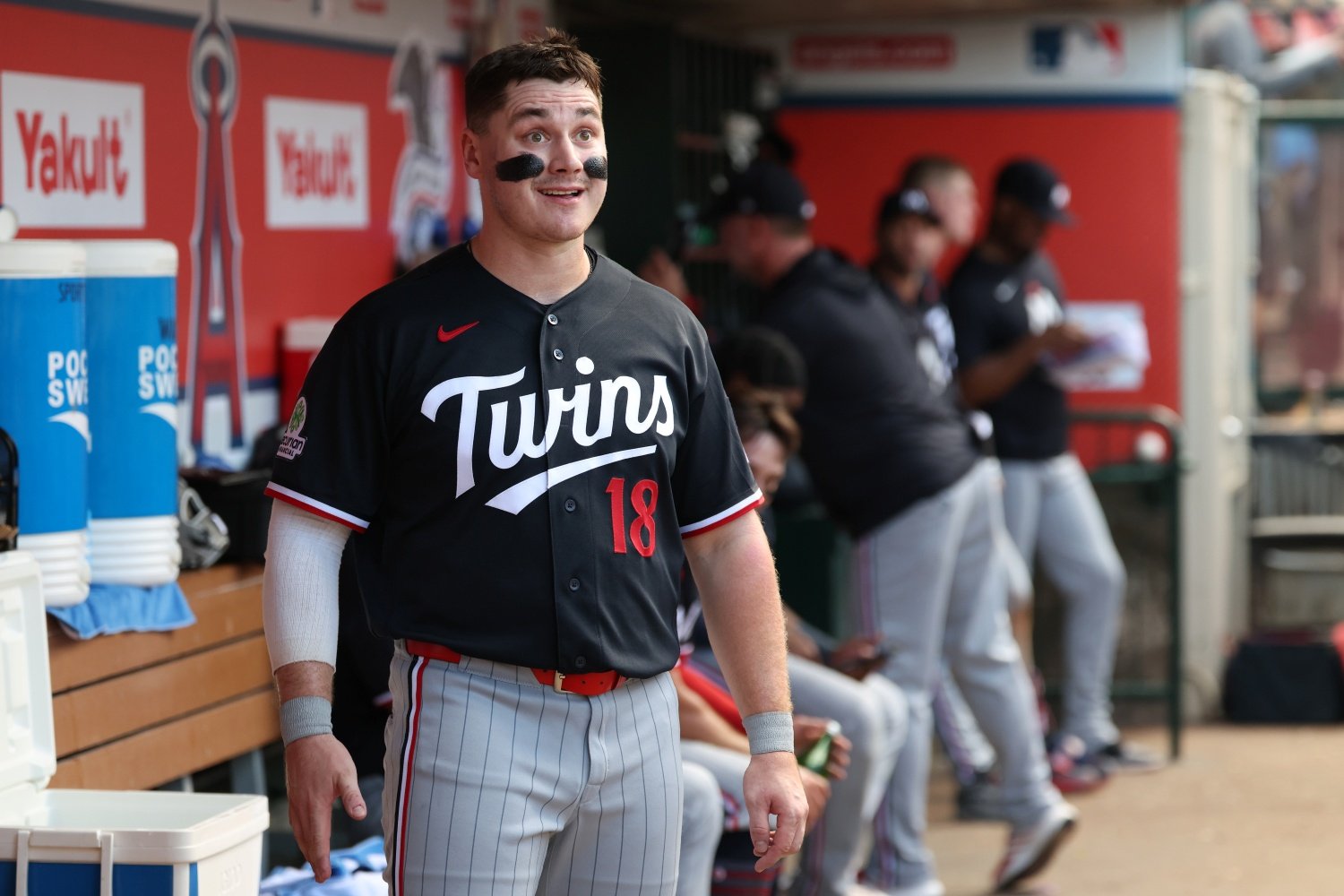 Alan Roden has had a Twins career that has been very unfair to Alan Roden, starting the moment many Twins fans learned that he existed. Twins historians may recall the 2025 trade deadline, during which the Twins made nine trades, the last of which sent then-setup man Louis Varland to Toronto. Roden was the second piece of the return for Varland (and Ty France), arriving in Minnesota alongside lefty pitching prospect Kendry Rojas. Fans were predisposed to dislike Roden for having the temerity to have been traded for a hometown kid, but he didn’t help himself much on the field. In 12 games, he mustered just a .463 OPS, then he sprained his thumb sliding into the wall chasing a foul ball. He missed the rest of that season. And Roden wasn’t in a position to struggle. At the time of his acquisition, he was just one of many left-handed corner outfield options, alongside (but not limited to) Trevor Larnach, Matt Wallner, James Outman, Walker Jenkins, and Emmanuel Rodriguez. He was thrust into a situation where he not only needed to fight for playing time in the present, but also had to fend off higher-profile prospects on his heels. After roster decisions and injury delayed Roden’s 2026 MLB season, he struggled out of the gate, with another OPS under .500 through his first eight games. However, even with a demotion and inconsistent playing time, he finished the season strong, slashing .317/.403/.450 and posting more walks than strikeouts over his last 24 games, to end the season with a .769 OPS in 32 games—15-20% better than average. It was fewer than 100 plate appearances, but it offered a glimpse of the player the Twins thought they had acquired from Toronto: a solid defensive corner outfielder with great strike-zone control and a little gap power. It’s not a high ceiling, but it’s easy to see how a player like Roden can be a solid, everyday player who helps teams win games. However, everyday play in the outfield probably isn’t feasible in Minnesota next season, even assuming that Larnach has played his last game in a Twins jersey (which, given the club’s history, might be a big assumption). Roden will be jockeying for playing time with fellow lefties Jenkins and Rodriguez, the latter of whom is out of options and will need to be on the big-league roster. Furthermore, Byron Buxton and Luke Keaschall will see a good share of time in the outfield. You might even say that the outfield is crowded before considering Roden. But there is some playing time to be spared. Jenkins, Rodriguez, Buxton, and Keaschall all have checkered injury histories, and it’s safe to assume there will be at least a couple of trips to the injured list from that group. Once you factor in rest days and a potentially fluid designated hitter spot, it’s not difficult to see some playing time every week. But at this point, he’s slotted in as the fifth outfielder. However, there might be another lane to playing time for Roden. Prior to his surprise selection in the third round of the 2022 draft, Roden was viewed primarily as a first baseman, having logged 39 appearances there as a 22-year-old junior at Creighton, compared to 15 games in the outfield. He also split time between the outfield and first base his draft summer in the Cape Cod League. As a pro, Roden has only logged one inning at first base, and he’s listed at 5-foot-11, but he’s got some athleticism, and it’s not hard to imagine him over there after watching France and Kody Clemens (both within an inch of Roden, height-wise) playing first base for the past two seasons. Even if Roden’s a bit rusty around the bag, the Twins have been successful in recent years in improving first base defense in players like Clemens and France, the latter of whom won a Gold Glove after years of being regarded as a poor defender. Carlos Santana also won his first Gold Glove at first base as a Twin, and they converted players like Luis Arraez into passable first basemen. This isn’t advocating for Roden to be an everyday first baseman or anything. But if the Twins want to get him on the field as much as is reasonably possible as a bench player, this is one way. A couple of outfield starts paired with a game at first base each week allows the Twins to play Roden about 50% of the time. Given Rodriguez’s lack of experience and Buxton’s recovery from offseason hip surgery, the Twins probably need to count on Roden even more at the beginning of the season than almost any other team’s fifth outfielder. And that day-to-day playing time can go up when any of the four guys ahead of him miss time later on. Nonetheless, it's difficult to see Roden carving out a consistent three-game-per-week role without a little time on the dirt, and he has real experience playing first base. If his true talent level is close to what he showed in 32 games this season, he’s a player that the Twins should want in the lineup—and he’d be a luxury to have on the bench. Of course, that’s assuming his true talent level is close to what we saw late this season. Roden as the backup first baseman (in addition to his work in the corners) makes sense with the roster as currently constructed, given that Royce Lewis is penciled into that spot and hits right-handed. Roden, a lefty, giving him a day off against righties would help Lewis’s numbers. But it remains to be seen if Lewis is indeed in that role next season. His production since the summer of 2024 certainly hasn’t earned it. If the everyday first baseman is instead Kody Clemens, a fellow lefty, it doesn’t make as much sense, unless the Twins play Clemens at second base on days Roden starts against a righty. Similarly, many of the potential bats that the Twins could add in free agency to replace Lewis in some form (such as Jake Bauers, Brandon Lowe, Nathaniel Lowe, Jazz Chisholm Jr., Jeff McNeil, or even Arraez) are left-handed. Adding a lefty infielder probably precludes Roden from any time on the dirt. But if they were to instead acquire a righty like Rhys Hoskins, Alec Bohm, or Gleyber Torres, Roden playing some first base could be valuable. Even without a little work at first base, Roden seems to be a valuable role player on next year’s team who could be thrust into more action at any time. But being able to add a bit of time at first base would immensely benefit his career and the Twins’ roster flexibility. Only read this if you won’t take it more than 10% seriously: Alan Roden was a high school catcher. The Twins have a very murky catching picture next season. Of course, they shouldn’t have him also come to camp with a catcher’s mitt. But maybe.
- 54 comments
-
- 7
-
-
- alan roden
- walker jenkins
- (and 3 more)
-
Image courtesy of Kiyoshi Mio-Imagn Images Alan Roden has had a Twins career that has been very unfair to Alan Roden, starting the moment many Twins fans learned that he existed. Twins historians may recall the 2025 trade deadline, during which the Twins made nine trades, the last of which sent then-setup man Louis Varland to Toronto. Roden was the second piece of the return for Varland (and Ty France), arriving in Minnesota alongside lefty pitching prospect Kendry Rojas. Fans were predisposed to dislike Roden for having the temerity to have been traded for a hometown kid, but he didn’t help himself much on the field. In 12 games, he mustered just a .463 OPS, then he sprained his thumb sliding into the wall chasing a foul ball. He missed the rest of that season. And Roden wasn’t in a position to struggle. At the time of his acquisition, he was just one of many left-handed corner outfield options, alongside (but not limited to) Trevor Larnach, Matt Wallner, James Outman, Walker Jenkins, and Emmanuel Rodriguez. He was thrust into a situation where he not only needed to fight for playing time in the present, but also had to fend off higher-profile prospects on his heels. After roster decisions and injury delayed Roden’s 2026 MLB season, he struggled out of the gate, with another OPS under .500 through his first eight games. However, even with a demotion and inconsistent playing time, he finished the season strong, slashing .317/.403/.450 and posting more walks than strikeouts over his last 24 games, to end the season with a .769 OPS in 32 games—15-20% better than average. It was fewer than 100 plate appearances, but it offered a glimpse of the player the Twins thought they had acquired from Toronto: a solid defensive corner outfielder with great strike-zone control and a little gap power. It’s not a high ceiling, but it’s easy to see how a player like Roden can be a solid, everyday player who helps teams win games. However, everyday play in the outfield probably isn’t feasible in Minnesota next season, even assuming that Larnach has played his last game in a Twins jersey (which, given the club’s history, might be a big assumption). Roden will be jockeying for playing time with fellow lefties Jenkins and Rodriguez, the latter of whom is out of options and will need to be on the big-league roster. Furthermore, Byron Buxton and Luke Keaschall will see a good share of time in the outfield. You might even say that the outfield is crowded before considering Roden. But there is some playing time to be spared. Jenkins, Rodriguez, Buxton, and Keaschall all have checkered injury histories, and it’s safe to assume there will be at least a couple of trips to the injured list from that group. Once you factor in rest days and a potentially fluid designated hitter spot, it’s not difficult to see some playing time every week. But at this point, he’s slotted in as the fifth outfielder. However, there might be another lane to playing time for Roden. Prior to his surprise selection in the third round of the 2022 draft, Roden was viewed primarily as a first baseman, having logged 39 appearances there as a 22-year-old junior at Creighton, compared to 15 games in the outfield. He also split time between the outfield and first base his draft summer in the Cape Cod League. As a pro, Roden has only logged one inning at first base, and he’s listed at 5-foot-11, but he’s got some athleticism, and it’s not hard to imagine him over there after watching France and Kody Clemens (both within an inch of Roden, height-wise) playing first base for the past two seasons. Even if Roden’s a bit rusty around the bag, the Twins have been successful in recent years in improving first base defense in players like Clemens and France, the latter of whom won a Gold Glove after years of being regarded as a poor defender. Carlos Santana also won his first Gold Glove at first base as a Twin, and they converted players like Luis Arraez into passable first basemen. This isn’t advocating for Roden to be an everyday first baseman or anything. But if the Twins want to get him on the field as much as is reasonably possible as a bench player, this is one way. A couple of outfield starts paired with a game at first base each week allows the Twins to play Roden about 50% of the time. Given Rodriguez’s lack of experience and Buxton’s recovery from offseason hip surgery, the Twins probably need to count on Roden even more at the beginning of the season than almost any other team’s fifth outfielder. And that day-to-day playing time can go up when any of the four guys ahead of him miss time later on. Nonetheless, it's difficult to see Roden carving out a consistent three-game-per-week role without a little time on the dirt, and he has real experience playing first base. If his true talent level is close to what he showed in 32 games this season, he’s a player that the Twins should want in the lineup—and he’d be a luxury to have on the bench. Of course, that’s assuming his true talent level is close to what we saw late this season. Roden as the backup first baseman (in addition to his work in the corners) makes sense with the roster as currently constructed, given that Royce Lewis is penciled into that spot and hits right-handed. Roden, a lefty, giving him a day off against righties would help Lewis’s numbers. But it remains to be seen if Lewis is indeed in that role next season. His production since the summer of 2024 certainly hasn’t earned it. If the everyday first baseman is instead Kody Clemens, a fellow lefty, it doesn’t make as much sense, unless the Twins play Clemens at second base on days Roden starts against a righty. Similarly, many of the potential bats that the Twins could add in free agency to replace Lewis in some form (such as Jake Bauers, Brandon Lowe, Nathaniel Lowe, Jazz Chisholm Jr., Jeff McNeil, or even Arraez) are left-handed. Adding a lefty infielder probably precludes Roden from any time on the dirt. But if they were to instead acquire a righty like Rhys Hoskins, Alec Bohm, or Gleyber Torres, Roden playing some first base could be valuable. Even without a little work at first base, Roden seems to be a valuable role player on next year’s team who could be thrust into more action at any time. But being able to add a bit of time at first base would immensely benefit his career and the Twins’ roster flexibility. Only read this if you won’t take it more than 10% seriously: Alan Roden was a high school catcher. The Twins have a very murky catching picture next season. Of course, they shouldn’t have him also come to camp with a catcher’s mitt. But maybe. View full article
- 54 replies
-
- 1
-
-
- alan roden
- walker jenkins
- (and 3 more)
-
fwiw I expect Clemens to be a major factor next year, but I just have reasonable doubt that he's their first or second baseman on Opening Day
- 63 replies
-
- 3
-
-
-
- kaelen culpepper
- walker jenkins
- (and 3 more)
-
It depends on your definition of "large," but yes, there are many fans who would prefer to not see Buxton play for the Twins again, one way or another. As for being healthy and productive, that also depends on your definition; many would say that Buxton has never been healthy and productive. I doubt anyone has ever thought, "I don't want a healthy and productive Buxton playing for the Twins," but that's probably because playing 100 games with a well above-average OPS isn't their version of "healthy and productive," given the time lost to injury. The best ability is availability, and all that.
- 63 replies
-
- 2
-
-
-
- kaelen culpepper
- walker jenkins
- (and 3 more)
-
September days and days on the injured list don't count.
- 63 replies
-
- 1
-
-
- kaelen culpepper
- walker jenkins
- (and 3 more)
-
The 5 Players Bolted Down in the 2027 Minnesota Twins Lineup
Greggory Masterson posted an article in Twins
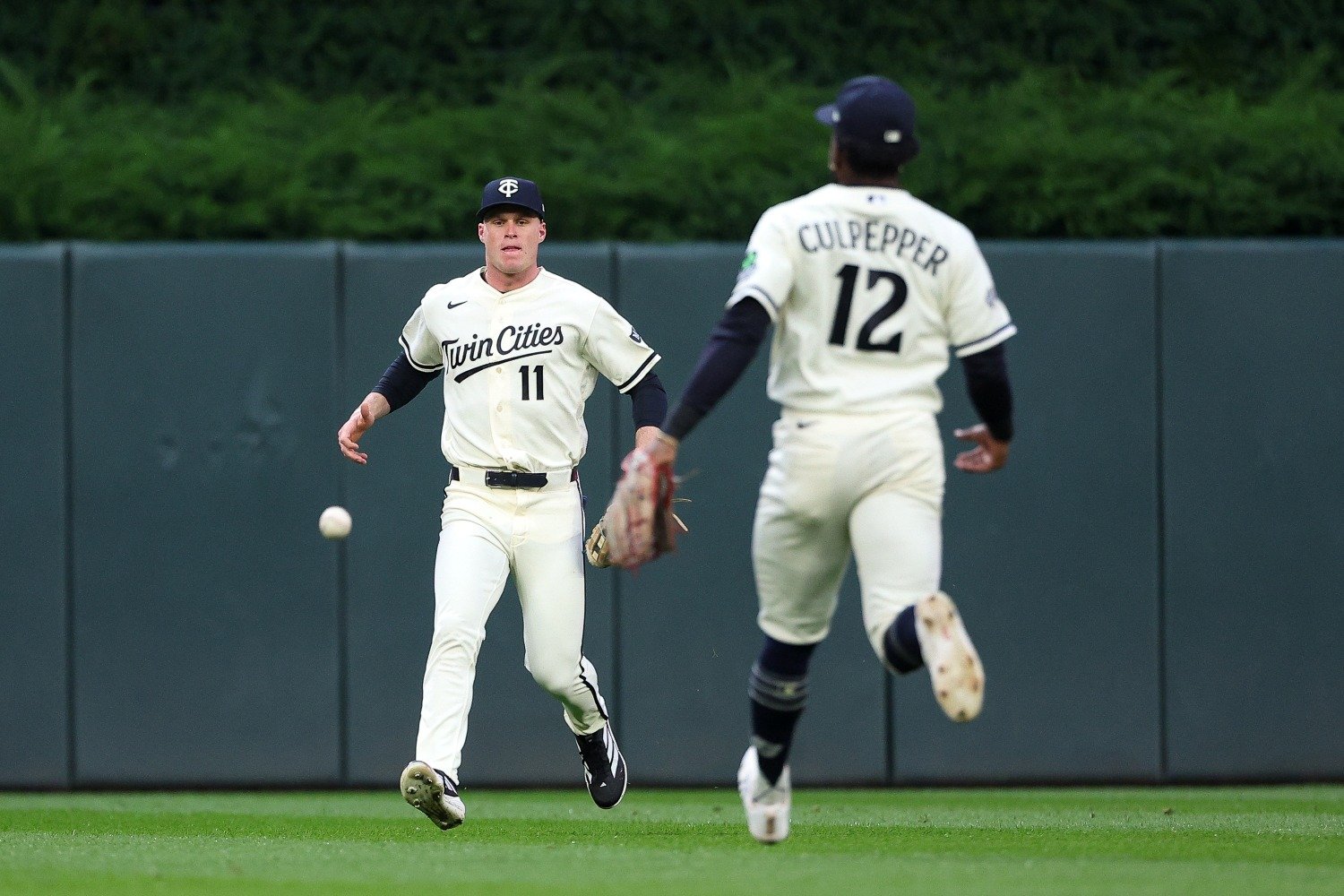 There’s a lot of uncertainty about Twins baseball right now, and a ton of questions about the hitting group manager Derek Shelton will have at his disposal next spring. About a month ago, I posted on Twitter the group I believe will almost certainly be locked into the Twins lineup next year (spoiler below). Now that the season is over, let’s go through those names. But first, defining what I mean by bolted down: I’m just going to say beyond a reasonable doubt as my standard. There might be a world in which any of these names are traded over the offseason, or the Twins might acquire players that squeeze someone on this list out of a starting job, but it’s so unlikely that it’s not worth considering. Likewise, I probably failed to include someone that you’re confident will be an everyday player. If they’re not on the list, though, I can easily envision a scenario in which they aren’t an everyday player for the Twins next season (when healthy). Let’s dig in. Infield: Brooks Lee Brooks Lee is probably the lowest-ceiling inclusion on this list. However, it’s very difficult to see him not penciled into the Opening Day lineup next season. He was a league-average hitter this season, with a .728 OPS and a low-OBP profile bolstered by a career-high 24 home runs. After being moved off shortstop midway through the season, Lee settled in well at third base, posting 6 outs above average (OAA) in about 100 games at the hot corner. A league-average bat with above-average defense at third base is a valuable secondary piece, and there’s some hope that the 25-year-old can continue to develop at the plate with better plate discipline and consistent pop. It’s very difficult to see the Twins moving on from Lee. I have him listed as a general infielder, though, because there’s a world in which he’s playing second base, instead, should the Twins bring in a third-base-only option. It’s unlikely, but hey, reasonable doubt. You might have expected Royce Lewis or Kody Clemens to appear here. Clemens is the more likely to return, but it’s hard to see both of them back in 2027, at least as everyday players. Maybe one of them is at first or second base, but the offseason was probably a failure if the Twins didn’t upgrade at either position. Neither is expensive, but neither is young, either. There are just too many ways that either could find themselves out of the picture to make this list. Shortstop: Kaelen Culpepper Kaelen Culpepper is the Twins' shortstop—at least for now. He'll still be rookie-eligible next year, after 128 plate appearances in which he slashed .274/.328/.393. Culpepper showed flashes that should get Twins fans excited for his career prospects, and there's no one crowding him out of shortstop at this point. He had moments that showed why some are skeptical about his shortstop defense, but he did enough, along with a league-average bat (which is a great thing!), to solidify his spot next season. Perhaps he has a sophomore slump that necessitates a detour to Triple-A, and maybe fellow prospect Marek Houston moves him to second or third base, but it’s very unlikely he won’t be the Opening Day shortstop. Outfield: Walker Jenkins Walker Jenkins, the Twins' No. 1 prospect, struggled in his first taste of the bigs, beginning his career 4-for-45 and making me nervous about my initial prediction. Over his final 10 games, though, he slashed .385/.400/.615. It’s clear that the global top-15 prospect will very much be in the picture next season. It’s unclear whether the Twins prefer him in right or left field, and that’s probably dependent on who the other corner outfielder is. Jenkins exclusively played center field in the majors, filling in for the sidelined Byron Buxton. When Buxton is unavailable, Jenkins is the likely fill-in. The other corner position? There are too many names to feel confident in any of them being the everyday guy. Emmanuel Rodriguez, Luke Keaschall, or even Alan Roden could be slotted into that other spot. Rodriguez has to be on the roster (or someone else’s) because he’s out of options and held his own in limited late-season MLB action, but it’s possible the Twins aren’t ready to foist him into everyday action quite yet. (Leadership did name him as part of the core around which they're building for next year, though, so he's closing in on this list.) Center Field: Byron Buxton Speaking of outfielders, Byron Buxton is the most obvious name on the list, when healthy. Being realistic, if he’s available, he’s playing. And yes, until further notice, he’s the center fielder. This almost isn’t even worth discussing. Yes, he’s coming off of labrum repair, and there’s uncertainty about his status, but if he’s healthy, he’s playing. You can’t stop it from happening. ????: Luke Keaschall Finally, Luke Keaschall. He’s probably going to be hitting leadoff. I have no idea where he’s going to play, though. The two most likely options are a corner outfield spot or a designated hitter role. Shoot, maybe even first base. I don’t know where he’s playing, but I know he will be at the top of the batting order. After a dreadful start in 2026, Keaschall rebounded to finish the season slashing .282/.374/.407, about 20% better than an average hitter. Although most designated hitters or left fielders have more power in their profiles, Keaschall’s overall line is more than sufficient to occupy one of those spots, making him a lock for next season. He added power as the season progressed, anyway. For the other four positions, your guess is as good as mine. But these five guys are locks. Potpourri This was put together with a focus on the lineup against right-handed pitching. Jenkins might not play every day against lefties. However, there’s not a platoon partner for him set in stone, either. Austin Martin got off to a great start in 2026, but he hit just .164 in the second half when he was mostly facing lefties. Gabriel Gonzalez or Aaron Sabato could factor in, but the Twins showed very little interest in playing them down the stretch. The catcher position is a mystery. Victor Caratini is under contract for next season, and it’s unlikely that the Twins cut him or find a trade partner willing to take on the $10 million he’s owed after barely playing enough late in 2026 to call him a second catcher. There’s reasonable doubt that he’s the everyday catcher, even if that is the most likely scenario. The Twins could get Ryan Jeffers back on a qualifying offer or pursue a different catcher in free agency that clears Caratini’s bar. So then, are you in agreement with this assessment? Do you have someone else bolted down, or do you think the screws are looser on any of the names I gave here?
- 63 comments
-
- 7
-
-
- kaelen culpepper
- walker jenkins
- (and 3 more)
-
Image courtesy of Matt Krohn-Imagn Images There’s a lot of uncertainty about Twins baseball right now, and a ton of questions about the hitting group manager Derek Shelton will have at his disposal next spring. About a month ago, I posted on Twitter the group I believe will almost certainly be locked into the Twins lineup next year (spoiler below). Now that the season is over, let’s go through those names. But first, defining what I mean by bolted down: I’m just going to say beyond a reasonable doubt as my standard. There might be a world in which any of these names are traded over the offseason, or the Twins might acquire players that squeeze someone on this list out of a starting job, but it’s so unlikely that it’s not worth considering. Likewise, I probably failed to include someone that you’re confident will be an everyday player. If they’re not on the list, though, I can easily envision a scenario in which they aren’t an everyday player for the Twins next season (when healthy). Let’s dig in. Infield: Brooks Lee Brooks Lee is probably the lowest-ceiling inclusion on this list. However, it’s very difficult to see him not penciled into the Opening Day lineup next season. He was a league-average hitter this season, with a .728 OPS and a low-OBP profile bolstered by a career-high 24 home runs. After being moved off shortstop midway through the season, Lee settled in well at third base, posting 6 outs above average (OAA) in about 100 games at the hot corner. A league-average bat with above-average defense at third base is a valuable secondary piece, and there’s some hope that the 25-year-old can continue to develop at the plate with better plate discipline and consistent pop. It’s very difficult to see the Twins moving on from Lee. I have him listed as a general infielder, though, because there’s a world in which he’s playing second base, instead, should the Twins bring in a third-base-only option. It’s unlikely, but hey, reasonable doubt. You might have expected Royce Lewis or Kody Clemens to appear here. Clemens is the more likely to return, but it’s hard to see both of them back in 2027, at least as everyday players. Maybe one of them is at first or second base, but the offseason was probably a failure if the Twins didn’t upgrade at either position. Neither is expensive, but neither is young, either. There are just too many ways that either could find themselves out of the picture to make this list. Shortstop: Kaelen Culpepper Kaelen Culpepper is the Twins' shortstop—at least for now. He'll still be rookie-eligible next year, after 128 plate appearances in which he slashed .274/.328/.393. Culpepper showed flashes that should get Twins fans excited for his career prospects, and there's no one crowding him out of shortstop at this point. He had moments that showed why some are skeptical about his shortstop defense, but he did enough, along with a league-average bat (which is a great thing!), to solidify his spot next season. Perhaps he has a sophomore slump that necessitates a detour to Triple-A, and maybe fellow prospect Marek Houston moves him to second or third base, but it’s very unlikely he won’t be the Opening Day shortstop. Outfield: Walker Jenkins Walker Jenkins, the Twins' No. 1 prospect, struggled in his first taste of the bigs, beginning his career 4-for-45 and making me nervous about my initial prediction. Over his final 10 games, though, he slashed .385/.400/.615. It’s clear that the global top-15 prospect will very much be in the picture next season. It’s unclear whether the Twins prefer him in right or left field, and that’s probably dependent on who the other corner outfielder is. Jenkins exclusively played center field in the majors, filling in for the sidelined Byron Buxton. When Buxton is unavailable, Jenkins is the likely fill-in. The other corner position? There are too many names to feel confident in any of them being the everyday guy. Emmanuel Rodriguez, Luke Keaschall, or even Alan Roden could be slotted into that other spot. Rodriguez has to be on the roster (or someone else’s) because he’s out of options and held his own in limited late-season MLB action, but it’s possible the Twins aren’t ready to foist him into everyday action quite yet. (Leadership did name him as part of the core around which they're building for next year, though, so he's closing in on this list.) Center Field: Byron Buxton Speaking of outfielders, Byron Buxton is the most obvious name on the list, when healthy. Being realistic, if he’s available, he’s playing. And yes, until further notice, he’s the center fielder. This almost isn’t even worth discussing. Yes, he’s coming off of labrum repair, and there’s uncertainty about his status, but if he’s healthy, he’s playing. You can’t stop it from happening. ????: Luke Keaschall Finally, Luke Keaschall. He’s probably going to be hitting leadoff. I have no idea where he’s going to play, though. The two most likely options are a corner outfield spot or a designated hitter role. Shoot, maybe even first base. I don’t know where he’s playing, but I know he will be at the top of the batting order. After a dreadful start in 2026, Keaschall rebounded to finish the season slashing .282/.374/.407, about 20% better than an average hitter. Although most designated hitters or left fielders have more power in their profiles, Keaschall’s overall line is more than sufficient to occupy one of those spots, making him a lock for next season. He added power as the season progressed, anyway. For the other four positions, your guess is as good as mine. But these five guys are locks. Potpourri This was put together with a focus on the lineup against right-handed pitching. Jenkins might not play every day against lefties. However, there’s not a platoon partner for him set in stone, either. Austin Martin got off to a great start in 2026, but he hit just .164 in the second half when he was mostly facing lefties. Gabriel Gonzalez or Aaron Sabato could factor in, but the Twins showed very little interest in playing them down the stretch. The catcher position is a mystery. Victor Caratini is under contract for next season, and it’s unlikely that the Twins cut him or find a trade partner willing to take on the $10 million he’s owed after barely playing enough late in 2026 to call him a second catcher. There’s reasonable doubt that he’s the everyday catcher, even if that is the most likely scenario. The Twins could get Ryan Jeffers back on a qualifying offer or pursue a different catcher in free agency that clears Caratini’s bar. So then, are you in agreement with this assessment? Do you have someone else bolted down, or do you think the screws are looser on any of the names I gave here? View full article
-
Former first round pick might be something there
-
Good point; I neglected to give the breakdown. Here’s his (innings) DRS/OAA/FRV at each position this season 2B (636): -5/-7/-4 RF (350): -7/-1/-2 CF (210): -8/-4/-4

