Greggory Masterson
-
Posts
819 -
Joined
-
Last visited
-
Days Won
2
Content Type
Profiles
News
Minnesota Twins Videos
2026 Minnesota Twins Top Prospects Ranking
2022 Minnesota Twins Draft Picks
Minnesota Twins Free Agent & Trade Rumors, Notes, & Tidbits
Guides & Resources
2023 Minnesota Twins Draft Picks
The Minnesota Twins Players Project
2024 Minnesota Twins Draft Picks
2025 Minnesota Twins Draft Pick Tracker
2026 Minnesota Twins Draft Tracker: Picks & Bonuses
Forums
Blogs
Events
Store
Downloads
Gallery
Everything posted by Greggory Masterson
-
 The season has just begun, and the Twins are already fighting to just keep their heads above water. Sweet Lou and Ol Gregg have a cathartic discussion for the first ever Twins On-Daily episode. After an episode of Gripes about pitchers' inability to throw to first base, luck not being the answer for everything, and the hopeless state of the fanbase, they finish on a Sweet Nothing. It was quite touching, if I do say so myself. Listen using Apple Podcasts: https://podcasts.apple.com/us/podcast/the-twins-off-daily-podcast/id1741266056 Listen using Spotify: https://open.spotify.com/show/4tb78XlurcPTYYSsARdbD7 Listen using iHeartRadio: https://www.iheart.com/podcast/263-the-twins-off-daily-podcas-167548600/ Listen using Pocket Casts: https://pca.st/nvclbt0w Watch on YouTube: https://www.youtube.com/@twinsdaily View full article
 -
The presence of a plan does not guarantee it's a good one
- 27 replies
-
- 9
-

-

-
- willi castro
- jose miranda
- (and 5 more)
-
The Twins have been remarkably consistent in their lineup construction against righties—but only in the top half of the order. What can we learn from these early looks? Image courtesy of © Jonathan Dyer-Imagn Images If you’re in the “Players need consistency in the lineup to succeed” camp, you’re probably a little more satisfied with Rocco Baldelli’s lineups in 2025. At minimum, he’s run out the same top of the order every day against righty starters—Matt Wallner, Carlos Correa, Byron Buxton, and Trevor Larnach—though that alleged consistency hasn’t done much to help them as a group (note to Gregg: don’t let your bias show too strongly). [Note to readers: the foregoing note to Gregg was from Gregg, not your trusty editor. I keep telling him to just let his rampant bias flow.] {Note to editor: Can we please handle this in private? Greggory.} Within that pattern is an encouraging development: all four are playing every day (other than Wallner and Larnach, against the one lefty starter that they’ve faced). The bottom five spots in the lineup have varied, but there’s been a level of consistency even there. Willi Castro has played every day, although sometimes it's been at second base, and other times at third. Ty France has started eight of nine games. Ryan Jeffers and Christian Vázquez have alternated behind the plate, resulting in five starts for Jeffers and four for Vázquez. Given the Twins’ limited bench, they have a narrow rotation in these lineups outside of the catcher spot. Most days, two of Jose Miranda (six starts), Harrison Bader (six), and Edouard Julien (five) will start, minus the odd start by Mickey Gasper (two, though one was in place of France at first). DaShawn Keirsey Jr. has not started a game this season. At first glance, the back end of the lineup appears scattershot, only repeating one time in the first nine games (Games 1 and 3: Jeffers, France, Castro, Miranda, Bader). However, some “rules” emerge, if you’ve stared at the lineups as long as I have ahead of writing this. If you’ve ever done those brain teasers that go something like “Arrange these 5 boxes, the green and blue boxes can’t be next to each other, the red box and yellow box must be next to each other, etc.,” you’ll know what I’m talking about. And those rules probably inform us a bit on how Baldelli views his options (though let’s not get carried away; this is more a fun exercise than a research paper). The Catchers (Jeffers and Vázquez) At the beginning of the season, this was pretty straightforward. When Jeffers started, he hit 5th. When Vázquez started, he hit 9th. Jeffers has moved around a bit since the opening couple of series, as he’s now also hit 8th and 6th, but that can be explained by two of the below players. Vázquez is going to hit 9th whenever he starts. That’s pretty simple. Ty France France has only hit 5th or 6th, and there’s a pretty clear pattern as to which spot he hits in: if Jeffers is hitting 5th, France hits 6th. If Jeffers isn’t in that spot, then it’s France. The last four games that France has started, he’s hit 5th. He’s been spraying the ball all over the field, and even though he hasn’t been good this year (.520 OPS), he’s been better than many of the other hitters on this list, so his spot has held steady. Willi Castro Castro is one of three players (Buxton, Correa) to start all 10 Twins games, which includes the nine they’ve played versus righties thus far. He batted 7th the first four games, moved up to 6th (behind France) the next three, hit 5th the day France sat, and then dropped back down to 7th in the most recent game. His positioning can be attributed mostly to one factor: his handedness. In lineups with only two lefty hitters (Wallner and Larnach), Castro will almost always hit 7th by default. He’s better against righties, so having him sandwiched between two righties protects him (and the team) from lefty relievers, though to a lesser extent than Wallner and Larnach. Having the three of them bat 1-4-7 spreads them out, and it’s a consistent pattern of Baldelli’s lineup construction over his tenure. I’m relatively confident in this, because once Julien was added to the lineup (Games 4-8), Castro began hitting higher up, but then dropped back to 7th when Julien sat (with the exception of Game 4, when Jeffers hit 5th, bumping France to 6th, leaving Castro and Julien to hit 7th and 8th, because we already know the France and Jeffers rules). Castro has been hitting higher than Jeffers of late, as well, likely because he’s simply performed better, being one of the team’s most consistent hitters in this young season. Harrison Bader Bader has played a lot, and he’s leading the team in OPS—pushing up against 1.000, at .988 with three home runs. However, he’s been a weak hitter with a great glove for most of his career, relegating him to the bottom of the lineup, because you, I, and Baldelli all lack faith that he’ll continue to be the club’s most effective hitter. As such, he’s been relegated to the 9th spot—unless Vázquez starts. Then, he’s 8th. It’s a pretty simple rule. Edouard Julien Julien, the third true lefty when he starts, has been mostly relegated to the 7th spot, for the rule discussed in the Castro blurb—he’s a lefty. Spacing him, Wallner, and Larnach out with two righties between them protects the lineup. There was the game in which Jeffers pushed France, Castro, and Julien down, but the rule holds pretty consistent. Jose Miranda Fans are split on Miranda’s role and potential, but it seems that management isn’t. He got starts over Julien early in the season while the Canadian was dealing with the stomach flu, but he mostly hit 8th, even falling to 9th when Vázquez and Bader both sat. Miranda did hit 6th in the most recent game, but that was out of default by the rules discussed here: France hits 5th, Castro hits 7th without Julien, Bader hits 8th when Vázquez catches, because Vázquez always hits 9th. Mickey Gasper He hit 6th once and 8th once, and you can basically backtrack through the rules to figure out why. Game 8 was a little wonky, but if you look at it, it makes sense, given Jeffers's and Castro’s differing performance levels. Now obviously, all of this will change over the season, or when Buxton and Correa aren’t in the lineup, or when Royce Lewis comes back and probably assumes the 5th spot. But it is a fun exercise to try to tease apart the lineup construction logic. Is it super meaningful? I’m skeptical, but it is something that a lot of people care about. How do you feel about the lineup construction early in the year? We’ve had a lot of games against righties already, so we’ve got a solid sample to choose from. View full article
- 27 replies
-
- 1
-
-
- willi castro
- jose miranda
- (and 5 more)
-
Unpacking the Methods of Rocco Baldelli’s Lineup Madness
Greggory Masterson posted an article in Twins
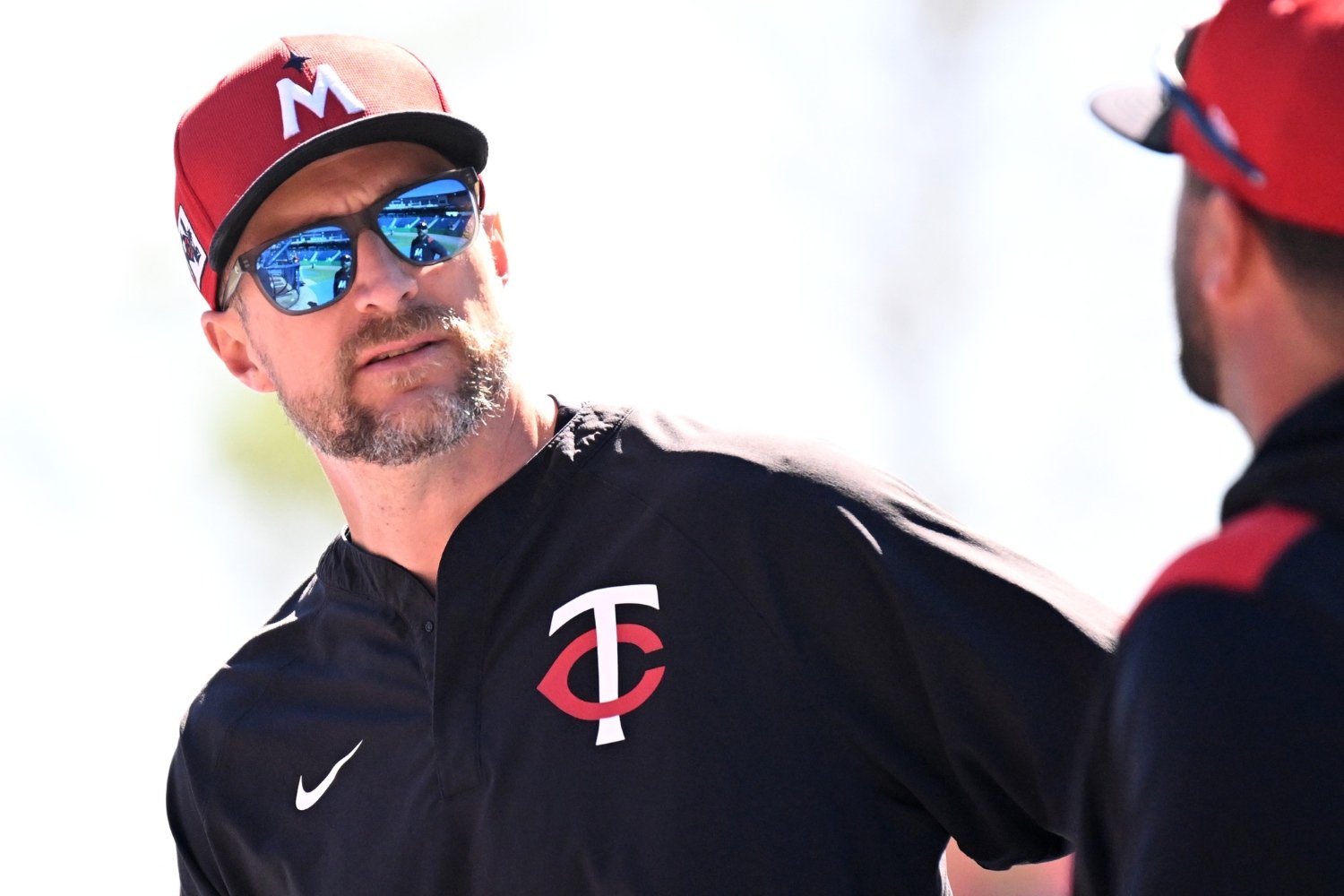 If you’re in the “Players need consistency in the lineup to succeed” camp, you’re probably a little more satisfied with Rocco Baldelli’s lineups in 2025. At minimum, he’s run out the same top of the order every day against righty starters—Matt Wallner, Carlos Correa, Byron Buxton, and Trevor Larnach—though that alleged consistency hasn’t done much to help them as a group (note to Gregg: don’t let your bias show too strongly). [Note to readers: the foregoing note to Gregg was from Gregg, not your trusty editor. I keep telling him to just let his rampant bias flow.] {Note to editor: Can we please handle this in private? Greggory.} Within that pattern is an encouraging development: all four are playing every day (other than Wallner and Larnach, against the one lefty starter that they’ve faced). The bottom five spots in the lineup have varied, but there’s been a level of consistency even there. Willi Castro has played every day, although sometimes it's been at second base, and other times at third. Ty France has started eight of nine games. Ryan Jeffers and Christian Vázquez have alternated behind the plate, resulting in five starts for Jeffers and four for Vázquez. Given the Twins’ limited bench, they have a narrow rotation in these lineups outside of the catcher spot. Most days, two of Jose Miranda (six starts), Harrison Bader (six), and Edouard Julien (five) will start, minus the odd start by Mickey Gasper (two, though one was in place of France at first). DaShawn Keirsey Jr. has not started a game this season. At first glance, the back end of the lineup appears scattershot, only repeating one time in the first nine games (Games 1 and 3: Jeffers, France, Castro, Miranda, Bader). However, some “rules” emerge, if you’ve stared at the lineups as long as I have ahead of writing this. If you’ve ever done those brain teasers that go something like “Arrange these 5 boxes, the green and blue boxes can’t be next to each other, the red box and yellow box must be next to each other, etc.,” you’ll know what I’m talking about. And those rules probably inform us a bit on how Baldelli views his options (though let’s not get carried away; this is more a fun exercise than a research paper). The Catchers (Jeffers and Vázquez) At the beginning of the season, this was pretty straightforward. When Jeffers started, he hit 5th. When Vázquez started, he hit 9th. Jeffers has moved around a bit since the opening couple of series, as he’s now also hit 8th and 6th, but that can be explained by two of the below players. Vázquez is going to hit 9th whenever he starts. That’s pretty simple. Ty France France has only hit 5th or 6th, and there’s a pretty clear pattern as to which spot he hits in: if Jeffers is hitting 5th, France hits 6th. If Jeffers isn’t in that spot, then it’s France. The last four games that France has started, he’s hit 5th. He’s been spraying the ball all over the field, and even though he hasn’t been good this year (.520 OPS), he’s been better than many of the other hitters on this list, so his spot has held steady. Willi Castro Castro is one of three players (Buxton, Correa) to start all 10 Twins games, which includes the nine they’ve played versus righties thus far. He batted 7th the first four games, moved up to 6th (behind France) the next three, hit 5th the day France sat, and then dropped back down to 7th in the most recent game. His positioning can be attributed mostly to one factor: his handedness. In lineups with only two lefty hitters (Wallner and Larnach), Castro will almost always hit 7th by default. He’s better against righties, so having him sandwiched between two righties protects him (and the team) from lefty relievers, though to a lesser extent than Wallner and Larnach. Having the three of them bat 1-4-7 spreads them out, and it’s a consistent pattern of Baldelli’s lineup construction over his tenure. I’m relatively confident in this, because once Julien was added to the lineup (Games 4-8), Castro began hitting higher up, but then dropped back to 7th when Julien sat (with the exception of Game 4, when Jeffers hit 5th, bumping France to 6th, leaving Castro and Julien to hit 7th and 8th, because we already know the France and Jeffers rules). Castro has been hitting higher than Jeffers of late, as well, likely because he’s simply performed better, being one of the team’s most consistent hitters in this young season. Harrison Bader Bader has played a lot, and he’s leading the team in OPS—pushing up against 1.000, at .988 with three home runs. However, he’s been a weak hitter with a great glove for most of his career, relegating him to the bottom of the lineup, because you, I, and Baldelli all lack faith that he’ll continue to be the club’s most effective hitter. As such, he’s been relegated to the 9th spot—unless Vázquez starts. Then, he’s 8th. It’s a pretty simple rule. Edouard Julien Julien, the third true lefty when he starts, has been mostly relegated to the 7th spot, for the rule discussed in the Castro blurb—he’s a lefty. Spacing him, Wallner, and Larnach out with two righties between them protects the lineup. There was the game in which Jeffers pushed France, Castro, and Julien down, but the rule holds pretty consistent. Jose Miranda Fans are split on Miranda’s role and potential, but it seems that management isn’t. He got starts over Julien early in the season while the Canadian was dealing with the stomach flu, but he mostly hit 8th, even falling to 9th when Vázquez and Bader both sat. Miranda did hit 6th in the most recent game, but that was out of default by the rules discussed here: France hits 5th, Castro hits 7th without Julien, Bader hits 8th when Vázquez catches, because Vázquez always hits 9th. Mickey Gasper He hit 6th once and 8th once, and you can basically backtrack through the rules to figure out why. Game 8 was a little wonky, but if you look at it, it makes sense, given Jeffers's and Castro’s differing performance levels. Now obviously, all of this will change over the season, or when Buxton and Correa aren’t in the lineup, or when Royce Lewis comes back and probably assumes the 5th spot. But it is a fun exercise to try to tease apart the lineup construction logic. Is it super meaningful? I’m skeptical, but it is something that a lot of people care about. How do you feel about the lineup construction early in the year? We’ve had a lot of games against righties already, so we’ve got a solid sample to choose from.
- 27 comments
-
- 4
-
-
- willi castro
- jose miranda
- (and 5 more)
-
Episode 37: Sweet Lou Home Alone?
Greggory Masterson replied to Lou Hennessy's topic in Twins Daily Front Page News
Wow how is way better without that Greggory clown edit: mods how do you delete a comment please respond -
You cooked me here; I can't lie.
-
Incorrect. I think that Ryan Jeffers is a fine, average-level starting catcher. At no point in the article did I say that the Twins should extend Ryan Jeffers. I’m personally not a “big fan” of him (here’s me also exploring the idea of trading him over the offseason: . I just used Raleigh’s extension to explore the idea. The contract number that I threw out was an estimate of what it might take to actually get an extension done given his production, age, and remaining team control. And for this type of exercise, I tend to overestimate the cost, because I’d prefer the complaints to be “he’s not worth that” instead of “dream on that’s a sweetheart deal.”
- 31 replies
-
- 2
-
-
- ryan jeffers
- christian vazquez
- (and 5 more)
-
It's admittedly a huge part of this conversation/decision, but the writeup was getting long and I had a lot of aspects I wanted to note, so I ended up deleting a bit of the 28 y/o and arbitration years discussions
-
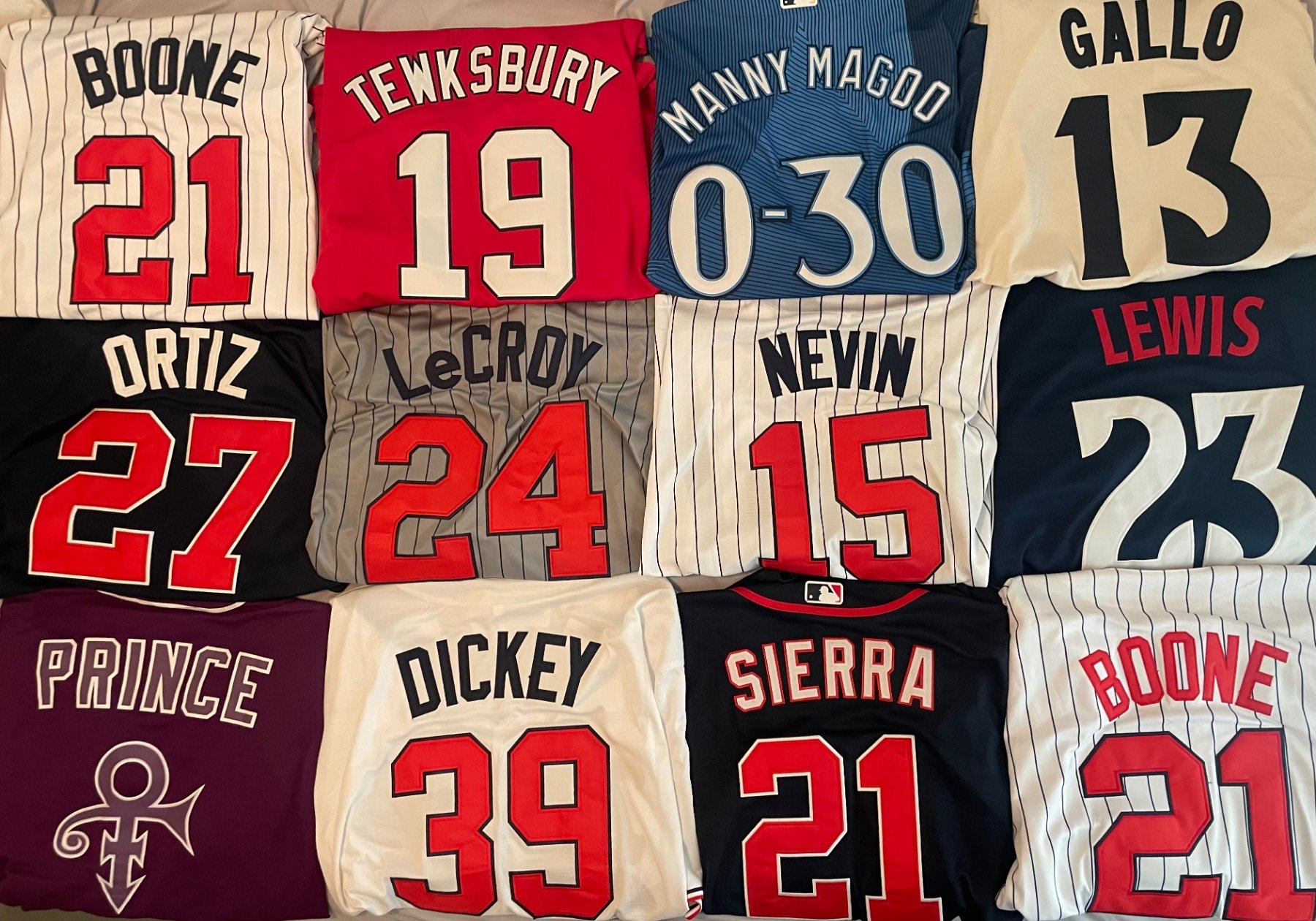
come on edit: for the uninitiated
-
"He’s never caught in more than 86 games in a season, and he’s stayed relatively healthy, only missing significant time in 2022 (presumably due, in part, to the Twins’ commitment to splitting time to keep both primary catchers fresh). The lack of miles on his tires may protect him a bit from a catcher’s typical aging curve (or cliff). However, that brings up another point: Jeffers has never been a full-time catcher. The last three catchers to get multi-year extensions consistently caught at least 100 games per year. If the Twins are committing that money to Jeffers, would they need him to catch more often than not, and would his body hold up to that workload? We’ve never seen it before for him, so that’s a question." Jeffers and the other 3 catchers' ages were referenced several times, as well as the danger of signing up for an aging catcher's services, given their aging curve. There were also multiple notes that Jeffers is not the same caliber of catcher as Raleigh (despite roughly equal offense), which is why I didn't suggest signing him to a contract that paid out 20M in any year. If Raleigh was going to sign a six year deal that only bought out his last year of arbitration, his AAV would be in the 20s, not 17.5.
- 31 replies
-
- 4
-
-
- ryan jeffers
- christian vazquez
- (and 5 more)
-
It's a tough game to play because there just have not been may catcher extensions in the recent past. Raleigh's 3 years of arbitration got bought out at about 11M each, but then it jumps into the 20s after that. Jeffers isn't worth that. And Smith's 14M AAV would have likely been higher had he signed for 6 years like the others. When I play the unwinnable game of guessing contracts, I tend to err on the side overestimating the cost. I could feasibly see a 4/48, a 3/45, 3/40, or something like that getting it done, but I'm not paid enough to soothsay.
- 31 replies
-
- 3
-
-
- ryan jeffers
- christian vazquez
- (and 5 more)
-
Episode 36: The Twins Are Already In Midseason Form
Greggory Masterson posted an article in Podcasts
 Send Pablo to Cedar Rapids and plan the Harrison Bader MVP celebration! The crew also discusses the Cardinals' pregame ceremony, predict team MVP, Cy Young, and so forth, and struggle through a blind lineup. The season is back and so are we, every off day! Listen using Apple Podcasts: https://podcasts.apple.com/us/podcast/the-twins-off-daily-podcast/id1741266056 Listen using Spotify: https://open.spotify.com/show/4tb78XlurcPTYYSsARdbD7 Listen using iHeartRadio: https://www.iheart.com/podcast/263-the-twins-off-daily-podcas-167548600/ Listen using Pocket Casts: https://pca.st/nvclbt0w Watch on YouTube: https://www.youtube.com/@twinsdaily
 -
Sweet Lou, Car Rant Cody, and Ol Gregg overreact to everything that happened in the Twins' first game of the year. Send Pablo to Cedar Rapids and plan the Harrison Bader MVP celebration! The crew also discusses the Cardinals' pregame ceremony, predict team MVP, Cy Young, and so forth, and struggle through a blind lineup. The season is back and so are we, every off day! Listen using Apple Podcasts: https://podcasts.apple.com/us/podcast/the-twins-off-daily-podcast/id1741266056 Listen using Spotify: https://open.spotify.com/show/4tb78XlurcPTYYSsARdbD7 Listen using iHeartRadio: https://www.iheart.com/podcast/263-the-twins-off-daily-podcas-167548600/ Listen using Pocket Casts: https://pca.st/nvclbt0w Watch on YouTube: https://www.youtube.com/@twinsdaily View full article
-
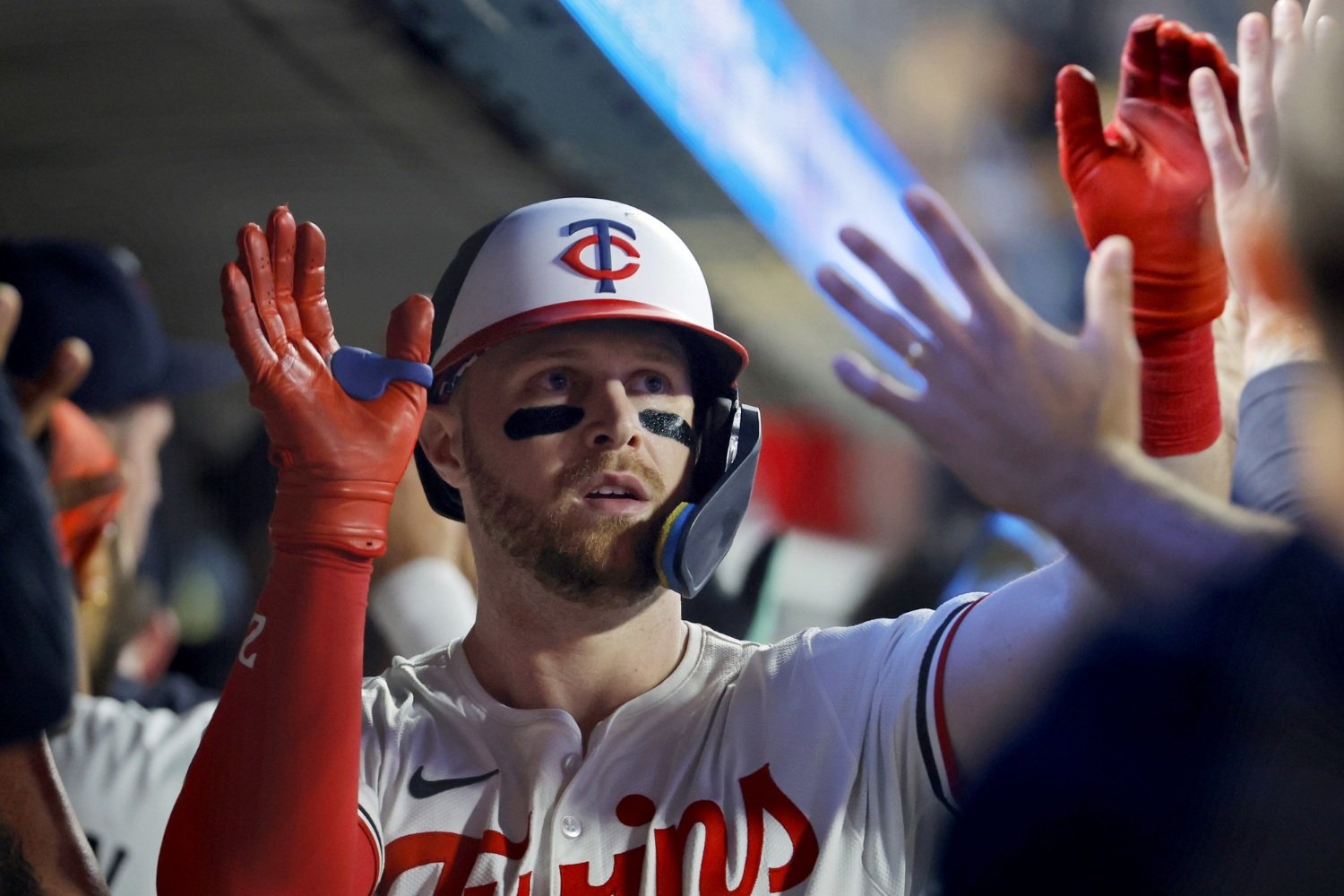 In your head, Ryan Jeffers might be a young building block for the Minnesota Twins, but time is running low on his tenure. Since his debut in 2020, he’s more or less been the Twins' starting catcher. At minimum, he's held a substantial portion of a timeshare behind the plate—whether that be alongside Mitch Garver (2020-2021), Gary Sánchez (2022), or Christian Vázquez (2023-2025). He’s hit fairly well, sporting a career 104 OPS+, which is about average for the league overall but much better than the average catcher. The offensive standard for backstops hovers around 90, or 10% below league average. In that context, a 104 OPS+ is substantial. In 2024, Jeffers came in at 103. In 2023, that figure was 133, nearly 50% better than the average catcher that year. His defense has graded out inconsistently. Early in his career, his receiving was his strong suit, and the major questions were about his arm. Over time, his reputation for framing diminished, but he improved in controlling the running game. He seems to be reliable in challenging pitches in the automated ball-strike system, as he was fairly successful during spring training. In all likelihood, starting next year, that will become an actual (and fairly valuable) skill. I have laid out this information to set up a comparison to the Mariners’ Cal Raleigh, the latest of a few catchers to be extended recently. Raleigh signed a six-year, $105-million extension, with a vesting option for a seventh year. Raleigh shares some similarities with Jeffers. They’re around the same age—Raleigh is about half a year older. Raleigh had two years of team control after 2025 before his extension—one more than Jeffers. They both hit well for catchers. Raleigh has the better career mark, with a 112 OPS+, though Jeffers has been almost exactly as good if we only consider the last two seasons: 117 for Raleigh and 116 for Jeffers (which admittedly may be buoyed by the latter's outstanding 2023). Ryan Jeffers v. Cal Raleigh, 2023-24 In addition to being the better hitter for his career, Raleigh controls the running game and receives substantially better than Jeffers. Raleigh won the Gold Glove for American League catchers last season and the Rawlings Platinum Glove, given to the best fielder in the league across all positions. He’s very good. Jeffers isn’t Raleigh, so his figure probably wouldn’t come in so high. For reference, Raleigh’s $105 million is divided up like so: 2025: $11 million 2026: $11 million 2027: $12 million 2028: $23 million 2029: $23 million 2030: $23 million 2031: $20 million (vesting option, $2 million buyout) Other relevant recent extensions include the Dodgers buying out Will Smith’s last two years of team control and eight additional years (until his age-38 season) at $14 million per year in 2024 and Atlanta buying out all three years of Sean Murphy’s arbitration, plus three more years and a team option ($15 million for his age-34 season) for $12.2 million per year, on average. Smith and Murphy are also viewed as better hitters and defenders (though that’s debatable, with Smith) than Jeffers. All three of these comparable cases were extended earlier in their arbitration processes than Jeffers, which does diminish their average annual value, given that they have less leverage for those years, and Smith’s long contract is structured to spread money out and manipulate the luxury tax system for the Dodgers. (I’d be surprised if he finished the contract.) However, each was extended ahead of his age-28 or 29 season, right in line with Jeffers. So, what might an extension for Jeffers look like? Perhaps it would be five years, with an average annual value around $12-15 million. He only has one arbitration year remaining, which removes some of the artificial suppression on the yearly value. A five-year, $70-million contract would align him with Murphy’s (arbitration-deflated) deal and retain Jeffers through his age-33 season. I’m sure I could be talked into something longer or shorter, more expensive or less expensive, maybe with a vesting option for his age-34 season, but $70 million over five seasons is a decent spot to start thinking through this. Is this something that the Twins would want to do? There are a few factors at play. Right now, $14 million (the average annual value for this hypothetical deal) would represent about 10% of the Twins’ total payroll, just a hair less than the money Byron Buxton is getting—though also less than Jeffers and Vázquez are making combined this year as the catching tandem. That’s not an insignificant amount, and we’ve already seen the repercussions of an aging catcher getting an eight-figure salary with Vázquez’s performance over the last three years (which, by the way, does still indicate that the team is open to multi-year, eight-digit AAV contracts for starting catchers). Given this concern in particular, it’s worth speculating on how Jeffers will hold up as he ages. Catchers do not age gracefully. It’s a demanding position that ages a young man quickly. Jeffers is a big guy, at 6-foot-3. However, he’s been lightly ridden over his career. He’s never caught in more than 86 games in a season, and he’s stayed relatively healthy, only missing significant time in 2022 (presumably due, in part, to the Twins’ commitment to splitting time to keep both primary catchers fresh). The lack of miles on his tires may protect him a bit from a catcher’s typical aging curve (or cliff). However, that brings up another point: Jeffers has never been a full-time catcher. The last three catchers to get multi-year extensions consistently caught at least 100 games per year. If the Twins are committing that money to Jeffers, would they need him to catch more often than not, and would his body hold up to that workload? We’ve never seen it before for him, so that’s a question. Finally, the last factor that needs to be considered here is the alternative options. The Twins do not have a clear replacement for Jeffers come 2027. Right now, they have two minor-league catchers on the 40-man roster, in Jair Camargo and Diego Cartaya. Camargo seems destined for a career as a backup catcher, and assuming he plays his way into that role, he could be an inexpensive catching partner with Jeffers for the life of his extension. However, that plan would likely require Jeffers to get above the 100 games caught threshold. Cartaya, once a top prospect, still has a ceiling where he could feasibly become a starting-caliber catcher, but that’s assuming a lot for a kid who’s struggled over the last couple of years. However, he is still young, and he could get to a level where the Twins feel comfortable splitting time between him and Jeffers more evenly. He could also top out as a more traditional backup, and fill a similar role to the one we discussed with Camargo. Then again, perhaps neither of them could ever be viable options. Who knows? Outside of those two, the Twins don’t have a name that jumps off the page. Ricardo Olivar, Khadim Diaw, or Ricardo Pena could be options, but there are huge questions for those names (and any others in the system). If the Twins don’t extend Jeffers, they could still need to invest salary or prospect trade capital in covering the positions in the years after Jeffers exits. It may just be a question of whether they want to pay Jeffers a good chunk of change, or someone else (probably worse) a bit less.
- 31 comments
-
- 6
-
-
- ryan jeffers
- christian vazquez
- (and 5 more)
-
Ryan Jeffers only has two years of team control left with the Twins, and there's no clear replacement. Would it be possible to extend the soon-to-be 28-year-old, following the Mariners’ lead? Image courtesy of © Bruce Kluckhohn-Imagn Images In your head, Ryan Jeffers might be a young building block for the Minnesota Twins, but time is running low on his tenure. Since his debut in 2020, he’s more or less been the Twins' starting catcher. At minimum, he's held a substantial portion of a timeshare behind the plate—whether that be alongside Mitch Garver (2020-2021), Gary Sánchez (2022), or Christian Vázquez (2023-2025). He’s hit fairly well, sporting a career 104 OPS+, which is about average for the league overall but much better than the average catcher. The offensive standard for backstops hovers around 90, or 10% below league average. In that context, a 104 OPS+ is substantial. In 2024, Jeffers came in at 103. In 2023, that figure was 133, nearly 50% better than the average catcher that year. His defense has graded out inconsistently. Early in his career, his receiving was his strong suit, and the major questions were about his arm. Over time, his reputation for framing diminished, but he improved in controlling the running game. He seems to be reliable in challenging pitches in the automated ball-strike system, as he was fairly successful during spring training. In all likelihood, starting next year, that will become an actual (and fairly valuable) skill. I have laid out this information to set up a comparison to the Mariners’ Cal Raleigh, the latest of a few catchers to be extended recently. Raleigh signed a six-year, $105-million extension, with a vesting option for a seventh year. Raleigh shares some similarities with Jeffers. They’re around the same age—Raleigh is about half a year older. Raleigh had two years of team control after 2025 before his extension—one more than Jeffers. They both hit well for catchers. Raleigh has the better career mark, with a 112 OPS+, though Jeffers has been almost exactly as good if we only consider the last two seasons: 117 for Raleigh and 116 for Jeffers (which admittedly may be buoyed by the latter's outstanding 2023). Ryan Jeffers v. Cal Raleigh, 2023-24 In addition to being the better hitter for his career, Raleigh controls the running game and receives substantially better than Jeffers. Raleigh won the Gold Glove for American League catchers last season and the Rawlings Platinum Glove, given to the best fielder in the league across all positions. He’s very good. Jeffers isn’t Raleigh, so his figure probably wouldn’t come in so high. For reference, Raleigh’s $105 million is divided up like so: 2025: $11 million 2026: $11 million 2027: $12 million 2028: $23 million 2029: $23 million 2030: $23 million 2031: $20 million (vesting option, $2 million buyout) Other relevant recent extensions include the Dodgers buying out Will Smith’s last two years of team control and eight additional years (until his age-38 season) at $14 million per year in 2024 and Atlanta buying out all three years of Sean Murphy’s arbitration, plus three more years and a team option ($15 million for his age-34 season) for $12.2 million per year, on average. Smith and Murphy are also viewed as better hitters and defenders (though that’s debatable, with Smith) than Jeffers. All three of these comparable cases were extended earlier in their arbitration processes than Jeffers, which does diminish their average annual value, given that they have less leverage for those years, and Smith’s long contract is structured to spread money out and manipulate the luxury tax system for the Dodgers. (I’d be surprised if he finished the contract.) However, each was extended ahead of his age-28 or 29 season, right in line with Jeffers. So, what might an extension for Jeffers look like? Perhaps it would be five years, with an average annual value around $12-15 million. He only has one arbitration year remaining, which removes some of the artificial suppression on the yearly value. A five-year, $70-million contract would align him with Murphy’s (arbitration-deflated) deal and retain Jeffers through his age-33 season. I’m sure I could be talked into something longer or shorter, more expensive or less expensive, maybe with a vesting option for his age-34 season, but $70 million over five seasons is a decent spot to start thinking through this. Is this something that the Twins would want to do? There are a few factors at play. Right now, $14 million (the average annual value for this hypothetical deal) would represent about 10% of the Twins’ total payroll, just a hair less than the money Byron Buxton is getting—though also less than Jeffers and Vázquez are making combined this year as the catching tandem. That’s not an insignificant amount, and we’ve already seen the repercussions of an aging catcher getting an eight-figure salary with Vázquez’s performance over the last three years (which, by the way, does still indicate that the team is open to multi-year, eight-digit AAV contracts for starting catchers). Given this concern in particular, it’s worth speculating on how Jeffers will hold up as he ages. Catchers do not age gracefully. It’s a demanding position that ages a young man quickly. Jeffers is a big guy, at 6-foot-3. However, he’s been lightly ridden over his career. He’s never caught in more than 86 games in a season, and he’s stayed relatively healthy, only missing significant time in 2022 (presumably due, in part, to the Twins’ commitment to splitting time to keep both primary catchers fresh). The lack of miles on his tires may protect him a bit from a catcher’s typical aging curve (or cliff). However, that brings up another point: Jeffers has never been a full-time catcher. The last three catchers to get multi-year extensions consistently caught at least 100 games per year. If the Twins are committing that money to Jeffers, would they need him to catch more often than not, and would his body hold up to that workload? We’ve never seen it before for him, so that’s a question. Finally, the last factor that needs to be considered here is the alternative options. The Twins do not have a clear replacement for Jeffers come 2027. Right now, they have two minor-league catchers on the 40-man roster, in Jair Camargo and Diego Cartaya. Camargo seems destined for a career as a backup catcher, and assuming he plays his way into that role, he could be an inexpensive catching partner with Jeffers for the life of his extension. However, that plan would likely require Jeffers to get above the 100 games caught threshold. Cartaya, once a top prospect, still has a ceiling where he could feasibly become a starting-caliber catcher, but that’s assuming a lot for a kid who’s struggled over the last couple of years. However, he is still young, and he could get to a level where the Twins feel comfortable splitting time between him and Jeffers more evenly. He could also top out as a more traditional backup, and fill a similar role to the one we discussed with Camargo. Then again, perhaps neither of them could ever be viable options. Who knows? Outside of those two, the Twins don’t have a name that jumps off the page. Ricardo Olivar, Khadim Diaw, or Ricardo Pena could be options, but there are huge questions for those names (and any others in the system). If the Twins don’t extend Jeffers, they could still need to invest salary or prospect trade capital in covering the positions in the years after Jeffers exits. It may just be a question of whether they want to pay Jeffers a good chunk of change, or someone else (probably worse) a bit less. View full article
-
@Lou Hennessy please provide our friend here with a bingo board of their own.
- 2 replies
-
- 1
-
-
- michael tonkin
- pablo lopez
- (and 1 more)
-
Here comes Opening Day! Sweet Lou and Ol Gregg are joined by Matthew Trueblood to preview the 2025 season in a way only they know how: setting up a season-long bingo card. Will Michael Tonkin be DFAed and then claimed later in the season? Will Pablo Lopez have a wholesome moment? Will Matt Wallner damage a wall? And who is the most random Twin to make an Opening Day roster that you remember? Listen using Apple Podcasts: https://podcasts.apple.com/us/podcast/the-twins-off-daily-podcast/id1741266056 Listen using Spotify: https://open.spotify.com/show/4tb78XlurcPTYYSsARdbD7 Listen using iHeartRadio: https://www.iheart.com/podcast/263-the-twins-off-daily-podcas-167548600/ Listen using Pocket Casts: https://pca.st/nvclbt0w Watch on YouTube: https://www.youtube.com/@twinsdaily View full article
-
 Sweet Lou and Ol Gregg are joined by Matthew Trueblood to preview the 2025 season in a way only they know how: setting up a season-long bingo card. Will Michael Tonkin be DFAed and then claimed later in the season? Will Pablo Lopez have a wholesome moment? Will Matt Wallner damage a wall? And who is the most random Twin to make an Opening Day roster that you remember? Listen using Apple Podcasts: https://podcasts.apple.com/us/podcast/the-twins-off-daily-podcast/id1741266056 Listen using Spotify: https://open.spotify.com/show/4tb78XlurcPTYYSsARdbD7 Listen using iHeartRadio: https://www.iheart.com/podcast/263-the-twins-off-daily-podcas-167548600/ Listen using Pocket Casts: https://pca.st/nvclbt0w Watch on YouTube: https://www.youtube.com/@twinsdaily
- 2 comments
-
- 1
-
-
- michael tonkin
- pablo lopez
- (and 1 more)
-
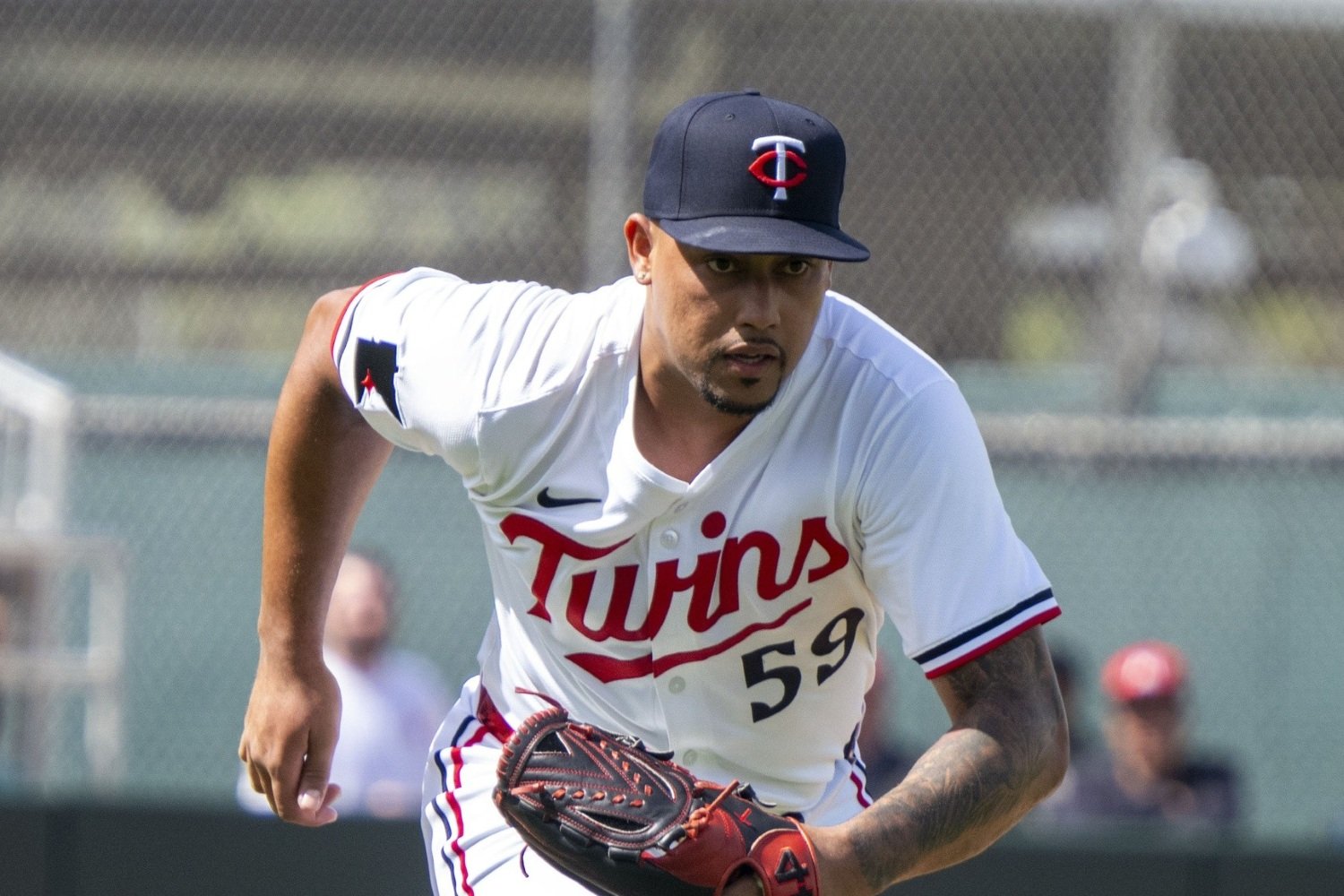 We’ve got some awards to hand out, and they’re not for meaningless things like “best spring training hitter" or anything. No, we’re locking in and giving out trophies for the most cliché happenings. Every year, the same storylines tend to pop up, and fans consume them like Kramarczuk's sausages. We had a great showing this year. Every predicted cliché had at least one qualifier, and many award winners shone magnificently, going above and beyond what the academy was looking for. Let’s get started! Miguel Sanó Memorial "Best Shape of His Life" Award: Jhoan Durán We start our awards with a classic. Each year, someone in every camp shows up in what they or someone else can describe as “the best shape of his life.” Sometimes, several people show up in such a state. Some people show up in such a state several times (hence the award being named after Boquetón himself). Like last year, there was no impressive, runaway winner. In 2024, Christian Vázquez showed up to camp eight pounds lighter than he had been the previous year, and I determined that wasn’t enough weight (my rule of thumb: if I’ve lost that much weight in 24 hours before, it’s not notable). However, this year, Jhoan Durán showed up 12 pounds lighter (surpassing my 11-pound threshold), making him deserving of the Best Shape of His Life Award. Hopefully, his weight stays down, and his velocity stays up. Previous winners: Jhoan Durán (2024), José Miranda (2023) "Newest Pitch" Award: Jorge Alcalá It was a relatively quiet year on the new pitch front. Every year, several pitchers come in trying to tinker with something. Sometimes it’s something they start working on in camp; sometimes it’s a pitch they designed at Driveline; and sometimes they tried something once at the behest of a teammate and it becomes a real thing. Does it carry over to the regular season? Not often. But it’s always interesting to see if it can. The most prominent new pitch discussed this spring was David Festa’s new sinker—an option for him to mix in against righties. However, this is the newest pitch award, and one Twins pitcher has had a new offering flying under the radar. It looks like Jorge Alcalá is now throwing a curveball, a pitch he hasn’t thrown to this point in his career. It showed up at Pitch Profiler at the beginning of March, and Brooks Baseball claims he’s thrown it about two dozen times. Who knows if it’ll carry over into the season, but its 12-6 shape might help him finally neutralize lefties—something he’s struggled to do to this point in his career. This unseats Joe Ryan, who had won in back-to-back seasons. Threepeats are unheard of when it comes to the Golden Grapefruits, and Ryan wasn't daring enough to come in this year with some wacky new thing to change that status quo. Previous winners: Joe Ryan (2024, 2023), Griffin Jax (2023) "Most Revamped Swing" Award: Ty France It’s a little more challenging to pick out which guys have made swing overhauls, but someone usually tells you about it. Ty France was that guy this year. Actually, France wasn’t the guy who first brought it up. Twins legend Denny Hocking tweeted out that he had worked with France over the offseason mere hours before the Twins announced his signing. Allegedly, France spent the offseason getting back to basics, simplifying his swing. It’s a pretty normal reaction after struggling mightily last season, and early returns have been tremendous. If we gave out a spring training MVP, it'd probably be his for the taking. Previous winners: Brooks Lee (2024), Max Kepler (2023) "Weirdest Injury" Award: Mickey Gasper Although not a cliché, it seems that every year there is an inexplicable injury that can only be chalked up to spring training. Recall 2021, when Byron Buxton missed a few weeks due to a root canal after chipping his tooth while eating steak. I thought I’d be giving the award to Chris Paddack. If I had a nickel for every time Paddack got hit with a comebacker in the third inning of the Twins' March 8 game, I’d have 10 cents—which isn’t a lot, but it’s weird that it happened twice. He took two comebackers in a single inning, the second hitting him in the head and giving him a bruise. However, on Sunday, newly minted cult hero Mickey Gasper managed to get stepped on by top prospect Brandon Winokur, requiring six stitches in his heel. Gasper was playing second base, and Winokur was playing shortstop, and they collided on a grounder up the middle. Hindsight is 20/20 (though peripheral vision doesn't appear to be, for these two), but it’s worth asking if putting a guy who shouldn’t be playing much second base next to a guy who shouldn’t be playing much shortstop in major-league camp was such a great idea. Fortunately, Gasper is still making the Opening Day roster, even if that requires a Curt Schilling bloody sock. Previous winners: Pete Maki (ruptured bicep doing pullups, 2024), Jordan Balazovic (broken jaw, bar fight, 2023) "Honey, Grab My Program" Award: Jeferson Morales Spring training, especially early in the year and late in games, features a rotating cast of characters more extensive than The Simpsons'. Non-roster invitees, prospects, and career minor-leaguers are each given their turns in the Florida sun. Every year, a few prospects get their number called more than others, consistently sending fans scrambling to look up who No. 80 is. Only players who have never appeared in MLB and are not on the 40-man roster qualify for this award. Jeferson Morales ran away with it this year, nearly leading the whole club in games played (18, one short of MLB vet Armando Alvarez’s 19), and earning 34 at-bats, ranking 18th in the organization and eight ahead of the next qualified candidate, Luke Keaschall (26 PA). Morales made the most of his opportunity, with an OPS over 1.000, and given his flexibility, he’s a sleeper pick to get some big-league time this year if there are injuries. Of note, though, the previous two winners of this award left the Twins organization the following season. Previous winners: Chris Williams (2024), Andrew Bechtold (2023) "First Cliché Statement" Award: Rocco Baldelli We have an upset. I really thought Carlos Correa would win this award until his contract was up, but Rocco Baldelli swooped in and stole it from under him. Likely due in part to the collapse, Rocco has a bit of a fire lit under him (and maybe his seat) and became a bit more of a hardo this spring. Workouts have been more structured, for instance. “I think we're going to prepare more as a team," Baldelli said, on the very day when pitchers and catchers reported to camp. "They're still going to have individual things they're going to work on. But I like the idea and the way I think it'll look in practice, getting the guys out there as a group to get ready.” Although it might not have been a bona fide cliché, he’s clearly running his team in a more stereotypical way, and that aura is enough to win it for him this year. I’m sure Carlos will spend all season training for next spring. Previous winners: Carlos Correa (2024, 2023) "Grainiest Video" Award: Dan Hayes Finally, my favorite award. The media can’t help themselves, and we, as fans, will eat up whatever they give us. When baseball’s back, we need proof. Grainy videos taken through a fence at the beginning of camp are a spring training staple. Do-Hyoung Park was consistently the best at this one, though I gave him a one-year suspension in 2024 for appearing to take grainy video intentionally. It ended up being a de facto lifetime suspension, as he left the beat after this season. And we missed him. There just weren’t many bad videos. Dan Hayes won, though. This one is probably my favorite, because he inexplicably took it while lying on the floor. This one was also pretty good, given the dreariness and silence and the batters being obscured by the protective screen. Previous winners: Dan Hayes (2024), Do-Hyoung Park (2023)
- 5 comments
-
- 8
-
-

-
-
- jhoan duran
- rocco baldelli
- (and 2 more)
-
Unless Rob Manfred has his way, some things in baseball are eternal. Three strikes and you’re out. Nine innings make a game. Someone shows up to spring training in the best shape of their life. Let’s give out some awards. Image courtesy of © Chris Tilley-Imagn Images We’ve got some awards to hand out, and they’re not for meaningless things like “best spring training hitter" or anything. No, we’re locking in and giving out trophies for the most cliché happenings. Every year, the same storylines tend to pop up, and fans consume them like Kramarczuk's sausages. We had a great showing this year. Every predicted cliché had at least one qualifier, and many award winners shone magnificently, going above and beyond what the academy was looking for. Let’s get started! Miguel Sanó Memorial "Best Shape of His Life" Award: Jhoan Durán We start our awards with a classic. Each year, someone in every camp shows up in what they or someone else can describe as “the best shape of his life.” Sometimes, several people show up in such a state. Some people show up in such a state several times (hence the award being named after Boquetón himself). Like last year, there was no impressive, runaway winner. In 2024, Christian Vázquez showed up to camp eight pounds lighter than he had been the previous year, and I determined that wasn’t enough weight (my rule of thumb: if I’ve lost that much weight in 24 hours before, it’s not notable). However, this year, Jhoan Durán showed up 12 pounds lighter (surpassing my 11-pound threshold), making him deserving of the Best Shape of His Life Award. Hopefully, his weight stays down, and his velocity stays up. Previous winners: Jhoan Durán (2024), José Miranda (2023) "Newest Pitch" Award: Jorge Alcalá It was a relatively quiet year on the new pitch front. Every year, several pitchers come in trying to tinker with something. Sometimes it’s something they start working on in camp; sometimes it’s a pitch they designed at Driveline; and sometimes they tried something once at the behest of a teammate and it becomes a real thing. Does it carry over to the regular season? Not often. But it’s always interesting to see if it can. The most prominent new pitch discussed this spring was David Festa’s new sinker—an option for him to mix in against righties. However, this is the newest pitch award, and one Twins pitcher has had a new offering flying under the radar. It looks like Jorge Alcalá is now throwing a curveball, a pitch he hasn’t thrown to this point in his career. It showed up at Pitch Profiler at the beginning of March, and Brooks Baseball claims he’s thrown it about two dozen times. Who knows if it’ll carry over into the season, but its 12-6 shape might help him finally neutralize lefties—something he’s struggled to do to this point in his career. This unseats Joe Ryan, who had won in back-to-back seasons. Threepeats are unheard of when it comes to the Golden Grapefruits, and Ryan wasn't daring enough to come in this year with some wacky new thing to change that status quo. Previous winners: Joe Ryan (2024, 2023), Griffin Jax (2023) "Most Revamped Swing" Award: Ty France It’s a little more challenging to pick out which guys have made swing overhauls, but someone usually tells you about it. Ty France was that guy this year. Actually, France wasn’t the guy who first brought it up. Twins legend Denny Hocking tweeted out that he had worked with France over the offseason mere hours before the Twins announced his signing. Allegedly, France spent the offseason getting back to basics, simplifying his swing. It’s a pretty normal reaction after struggling mightily last season, and early returns have been tremendous. If we gave out a spring training MVP, it'd probably be his for the taking. Previous winners: Brooks Lee (2024), Max Kepler (2023) "Weirdest Injury" Award: Mickey Gasper Although not a cliché, it seems that every year there is an inexplicable injury that can only be chalked up to spring training. Recall 2021, when Byron Buxton missed a few weeks due to a root canal after chipping his tooth while eating steak. I thought I’d be giving the award to Chris Paddack. If I had a nickel for every time Paddack got hit with a comebacker in the third inning of the Twins' March 8 game, I’d have 10 cents—which isn’t a lot, but it’s weird that it happened twice. He took two comebackers in a single inning, the second hitting him in the head and giving him a bruise. However, on Sunday, newly minted cult hero Mickey Gasper managed to get stepped on by top prospect Brandon Winokur, requiring six stitches in his heel. Gasper was playing second base, and Winokur was playing shortstop, and they collided on a grounder up the middle. Hindsight is 20/20 (though peripheral vision doesn't appear to be, for these two), but it’s worth asking if putting a guy who shouldn’t be playing much second base next to a guy who shouldn’t be playing much shortstop in major-league camp was such a great idea. Fortunately, Gasper is still making the Opening Day roster, even if that requires a Curt Schilling bloody sock. Previous winners: Pete Maki (ruptured bicep doing pullups, 2024), Jordan Balazovic (broken jaw, bar fight, 2023) "Honey, Grab My Program" Award: Jeferson Morales Spring training, especially early in the year and late in games, features a rotating cast of characters more extensive than The Simpsons'. Non-roster invitees, prospects, and career minor-leaguers are each given their turns in the Florida sun. Every year, a few prospects get their number called more than others, consistently sending fans scrambling to look up who No. 80 is. Only players who have never appeared in MLB and are not on the 40-man roster qualify for this award. Jeferson Morales ran away with it this year, nearly leading the whole club in games played (18, one short of MLB vet Armando Alvarez’s 19), and earning 34 at-bats, ranking 18th in the organization and eight ahead of the next qualified candidate, Luke Keaschall (26 PA). Morales made the most of his opportunity, with an OPS over 1.000, and given his flexibility, he’s a sleeper pick to get some big-league time this year if there are injuries. Of note, though, the previous two winners of this award left the Twins organization the following season. Previous winners: Chris Williams (2024), Andrew Bechtold (2023) "First Cliché Statement" Award: Rocco Baldelli We have an upset. I really thought Carlos Correa would win this award until his contract was up, but Rocco Baldelli swooped in and stole it from under him. Likely due in part to the collapse, Rocco has a bit of a fire lit under him (and maybe his seat) and became a bit more of a hardo this spring. Workouts have been more structured, for instance. “I think we're going to prepare more as a team," Baldelli said, on the very day when pitchers and catchers reported to camp. "They're still going to have individual things they're going to work on. But I like the idea and the way I think it'll look in practice, getting the guys out there as a group to get ready.” Although it might not have been a bona fide cliché, he’s clearly running his team in a more stereotypical way, and that aura is enough to win it for him this year. I’m sure Carlos will spend all season training for next spring. Previous winners: Carlos Correa (2024, 2023) "Grainiest Video" Award: Dan Hayes Finally, my favorite award. The media can’t help themselves, and we, as fans, will eat up whatever they give us. When baseball’s back, we need proof. Grainy videos taken through a fence at the beginning of camp are a spring training staple. Do-Hyoung Park was consistently the best at this one, though I gave him a one-year suspension in 2024 for appearing to take grainy video intentionally. It ended up being a de facto lifetime suspension, as he left the beat after this season. And we missed him. There just weren’t many bad videos. Dan Hayes won, though. This one is probably my favorite, because he inexplicably took it while lying on the floor. This one was also pretty good, given the dreariness and silence and the batters being obscured by the protective screen. Previous winners: Dan Hayes (2024), Do-Hyoung Park (2023) View full article
-
No one else has the courage to draft the least valuable players. Sweet Lou and Ol Gregg predict who the least valuable Twins will be in 2025 by WAR. Yes, really. All in good fun, of course. Gregg complains about his time at Guardians spring training, and Lou struggles to build a blind lineup in his debut on the player's side of the game. Listen using Apple Podcasts: https://podcasts.apple.com/us/podcast/the-twins-off-daily-podcast/id1741266056 Listen using Spotify: https://open.spotify.com/show/4tb78XlurcPTYYSsARdbD7 Listen using iHeartRadio: https://www.iheart.com/podcast/263-the-twins-off-daily-podcas-167548600/ Listen using Pocket Casts: https://pca.st/nvclbt0w Watch on YouTube: https://www.youtube.com/@twinsdaily View full article
-
 Sweet Lou and Ol Gregg predict who the least valuable Twins will be in 2025 by WAR. Yes, really. All in good fun, of course. Gregg complains about his time at Guardians spring training, and Lou struggles to build a blind lineup in his debut on the player's side of the game. Listen using Apple Podcasts: https://podcasts.apple.com/us/podcast/the-twins-off-daily-podcast/id1741266056 Listen using Spotify: https://open.spotify.com/show/4tb78XlurcPTYYSsARdbD7 Listen using iHeartRadio: https://www.iheart.com/podcast/263-the-twins-off-daily-podcas-167548600/ Listen using Pocket Casts: https://pca.st/nvclbt0w Watch on YouTube: https://www.youtube.com/@twinsdaily
 -
Many roster projections, including some on this very website, predict that both young infielders will make the team out of spring training. But that invites a question: Even if they’re both performing adequately, is there enough playing time to go around? Image courtesy of © Jonathan Dyer-Imagn Images Second base is perhaps the only roster battle (on the hitter side) for the Twins this spring training. They have three leading candidates: Willi Castro, Brooks Lee, and Edouard Julien—three hitters who each face major questions ahead of the 2025 season. Lee and Julien, each (at different times) dubbed the Twins’ future answer at the keystone, struggled last season. In 185 plate appearances as a rookie, Lee had a .585 OPS, and Julien only performed marginally better. For what it’s worth, Lee appears to be the far superior defender, but neither inspires supreme confidence. The general feeling among onlookers is that the battle for second base is between Lee and Julien, but if neither performs, Castro will be a suitable solution. Although he struggled in the second half last season (.627 OPS, 77 OPS+), and some of his value is tied up in being to play all over the diamond, Castro has been a relatively consistent (103 OPS+ between 2023 and 2024) option and could fill the position admirably. However, even if Castro is the Opening Day second baseman, that versatility likely means there will still be a spot for Lee or Julien on the bench. Without Lee or Castro, the alternatives at second base would be Royce Lewis, Austin Martin, or Mickey Gasper. So whether or not one of the two wins the starting job, there will be at least one spot for them to fight over. Lee certainly has more flexibility than Julien, with the ability to play second base, third base, and shortstop. There are questions as to whether Lee has the range to play shortstop, but if he’s on the team, he’d probably be the backup shortstop, edging out Castro. Julien, on the other hand, can play only questionable defense at second and first base. Whether they were the starting second baseman or a bench player, both would get at least a little playing time away from the keystone. And yet, it’s debatable whether both can get enough playing time right now. Dividing Up Playing Time For this exercise, let's assume that Lee wins the job out of spring training and is the team’s primary second baseman (which seems more likely at this point). Suppose Julien makes the team as a bench player who will see time at first base, second base, and designated hitter. In that case, the bench will look like this: Julien as a backup infielder, Harrison Bader as a backup outfielder, Castro as a super-utility option, and Christian Vázquez as the backup catcher. In this case, where would Julien get his playing time? Well, he wouldn’t be starting against lefties, so we can cross out about 25-30% of games right away. Then, we need to consider Bader and Castro. Bader will (hopefully) mainly be playing center field, giving Byron Buxton the day off. Still, he’ll also get the occasional start in a corner, bumping Matt Wallner or Trevor Larnach to designated hitter or shielding them from a left-handed starter altogether. It seems Bader will be something of a pseudo-starter, getting considerable run—more than a standard fourth outfielder. Speaking of pseudo-starters, Castro, too, will play a lot. However, he needs to coexist with Bader, which means that Castro will play minimally in center field (where he started 24 times in 2024 and 29 times in 2023). Twins fans can expect Castro to play a more prominent role on the dirt, in this scenario, especially against righties. (He’s better from the left side of the plate.) In that case, Julien would get time at second base (if Lee is either covering shortstop for the day or taking the day off and Castro is on the bench) or playing third base or the outfield (which would only be days that Bader is in center or sitting). In short, he would only play second base on days that neither Lee nor Castro are, and there’s a righty on the mound. Julien can play first base and DH. However, first base is also crowded (albeit not with elite talent but rather hard-to-move bodies), given the presence of Jose Miranda and Ty France—pseudo-starters themselves, at minimum. Miranda will also get time at third base, further limiting Castro’s non-second-base duties. Even without that, the path to playing time for Julien at first base isn’t clear; he didn't meet the offensive standard at the position last year. It’s a couple of crowded rooms that Julien is stepping into, and as a bat that the Twins (at least in the recent past) thought could be a future asset, it’s hard to sign him up for playing so sparingly. We don’t need to do the same step-by-step with Lee, because many of the same factors come into play. If Lee isn’t the primary second baseman, some of his time will come in starts against lefties (hitting right-handed has historically been his weaker side, at least in the minors, for what it’s worth) at second base, in lieu of Julien. He would see minimal time at DH, so the rest of his action against righties would come when A) Lewis, Castro, and Miranda aren’t playing third base, B) Correa isn’t playing shortstop, and C) Julien and Castro aren’t playing second base. He’d probably be able to weasel his way into more playing time as a bench player than Julien would, but it’s hard to see it being more than about 70% of the time, which might not be enough to justify the very recent top prospect’s role. Of course, all of this goes out the window when the Twins face some injury, which is inevitable—and may even happen before Opening Day. Also, if Castro doesn't repeat his performance of the last two seasons, Lee and Julien will have more time. But as this roster is constructed right now, there are too many players in line for regular time to roster both Lee and Julien. Despite their flexibility, there’s only enough room for one to get enough playing time to flourish. Given all of the platoon bats and pseudo-starters, a lesser player may actually have more utility than one of the two second basemen. If Julien starts the year in Triple A, Gasper could be an option who can do the things Julien can do (get on base and play passable first, second, and DH) while also serving as an emergency catcher—without the handwringing over whether the 29-year-old rookie is getting enough playing time. Martin and DaShawn Keirsey could also play bit roles at the end of the bench. Martin, a righty hitter, could see time versus southpaws in the outfield (though he doesn’t have great platoon splits), keep Castro out of center (where he is at higher risk of wearing down), be an emergency option at second base behind Castro and whichever of the two make the team, and be a pinch-running option late in games. Keirsey, too, can cover all three outfield spots and pinch-run, though he is left-handed and a bit redundant alongside Wallner and Larnach. However, if the Twins are looking for something they don’t have, his speed complements the current roster, and could you imagine a late-game outfield defense of Bader, Buxton, and Keirsey? Wow. Again, none of this will matter once someone inevitably gets hurt, but with FanGraphs’s Roster Resource projecting both to make the Opening Day roster, it’s worth examining how feasible that would actually be. View full article
-
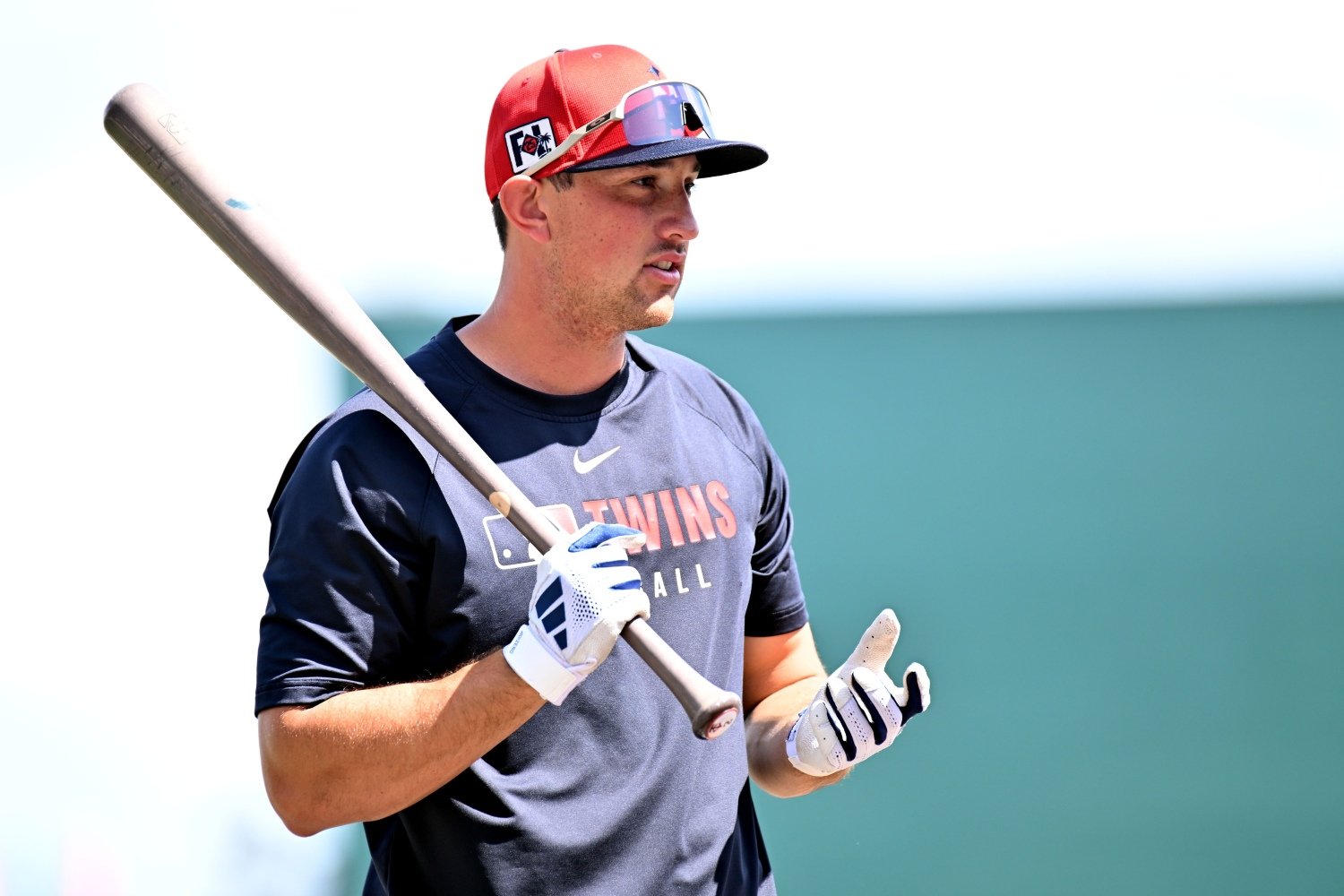 Second base is perhaps the only roster battle (on the hitter side) for the Twins this spring training. They have three leading candidates: Willi Castro, Brooks Lee, and Edouard Julien—three hitters who each face major questions ahead of the 2025 season. Lee and Julien, each (at different times) dubbed the Twins’ future answer at the keystone, struggled last season. In 185 plate appearances as a rookie, Lee had a .585 OPS, and Julien only performed marginally better. For what it’s worth, Lee appears to be the far superior defender, but neither inspires supreme confidence. The general feeling among onlookers is that the battle for second base is between Lee and Julien, but if neither performs, Castro will be a suitable solution. Although he struggled in the second half last season (.627 OPS, 77 OPS+), and some of his value is tied up in being to play all over the diamond, Castro has been a relatively consistent (103 OPS+ between 2023 and 2024) option and could fill the position admirably. However, even if Castro is the Opening Day second baseman, that versatility likely means there will still be a spot for Lee or Julien on the bench. Without Lee or Castro, the alternatives at second base would be Royce Lewis, Austin Martin, or Mickey Gasper. So whether or not one of the two wins the starting job, there will be at least one spot for them to fight over. Lee certainly has more flexibility than Julien, with the ability to play second base, third base, and shortstop. There are questions as to whether Lee has the range to play shortstop, but if he’s on the team, he’d probably be the backup shortstop, edging out Castro. Julien, on the other hand, can play only questionable defense at second and first base. Whether they were the starting second baseman or a bench player, both would get at least a little playing time away from the keystone. And yet, it’s debatable whether both can get enough playing time right now. Dividing Up Playing Time For this exercise, let's assume that Lee wins the job out of spring training and is the team’s primary second baseman (which seems more likely at this point). Suppose Julien makes the team as a bench player who will see time at first base, second base, and designated hitter. In that case, the bench will look like this: Julien as a backup infielder, Harrison Bader as a backup outfielder, Castro as a super-utility option, and Christian Vázquez as the backup catcher. In this case, where would Julien get his playing time? Well, he wouldn’t be starting against lefties, so we can cross out about 25-30% of games right away. Then, we need to consider Bader and Castro. Bader will (hopefully) mainly be playing center field, giving Byron Buxton the day off. Still, he’ll also get the occasional start in a corner, bumping Matt Wallner or Trevor Larnach to designated hitter or shielding them from a left-handed starter altogether. It seems Bader will be something of a pseudo-starter, getting considerable run—more than a standard fourth outfielder. Speaking of pseudo-starters, Castro, too, will play a lot. However, he needs to coexist with Bader, which means that Castro will play minimally in center field (where he started 24 times in 2024 and 29 times in 2023). Twins fans can expect Castro to play a more prominent role on the dirt, in this scenario, especially against righties. (He’s better from the left side of the plate.) In that case, Julien would get time at second base (if Lee is either covering shortstop for the day or taking the day off and Castro is on the bench) or playing third base or the outfield (which would only be days that Bader is in center or sitting). In short, he would only play second base on days that neither Lee nor Castro are, and there’s a righty on the mound. Julien can play first base and DH. However, first base is also crowded (albeit not with elite talent but rather hard-to-move bodies), given the presence of Jose Miranda and Ty France—pseudo-starters themselves, at minimum. Miranda will also get time at third base, further limiting Castro’s non-second-base duties. Even without that, the path to playing time for Julien at first base isn’t clear; he didn't meet the offensive standard at the position last year. It’s a couple of crowded rooms that Julien is stepping into, and as a bat that the Twins (at least in the recent past) thought could be a future asset, it’s hard to sign him up for playing so sparingly. We don’t need to do the same step-by-step with Lee, because many of the same factors come into play. If Lee isn’t the primary second baseman, some of his time will come in starts against lefties (hitting right-handed has historically been his weaker side, at least in the minors, for what it’s worth) at second base, in lieu of Julien. He would see minimal time at DH, so the rest of his action against righties would come when A) Lewis, Castro, and Miranda aren’t playing third base, B) Correa isn’t playing shortstop, and C) Julien and Castro aren’t playing second base. He’d probably be able to weasel his way into more playing time as a bench player than Julien would, but it’s hard to see it being more than about 70% of the time, which might not be enough to justify the very recent top prospect’s role. Of course, all of this goes out the window when the Twins face some injury, which is inevitable—and may even happen before Opening Day. Also, if Castro doesn't repeat his performance of the last two seasons, Lee and Julien will have more time. But as this roster is constructed right now, there are too many players in line for regular time to roster both Lee and Julien. Despite their flexibility, there’s only enough room for one to get enough playing time to flourish. Given all of the platoon bats and pseudo-starters, a lesser player may actually have more utility than one of the two second basemen. If Julien starts the year in Triple A, Gasper could be an option who can do the things Julien can do (get on base and play passable first, second, and DH) while also serving as an emergency catcher—without the handwringing over whether the 29-year-old rookie is getting enough playing time. Martin and DaShawn Keirsey could also play bit roles at the end of the bench. Martin, a righty hitter, could see time versus southpaws in the outfield (though he doesn’t have great platoon splits), keep Castro out of center (where he is at higher risk of wearing down), be an emergency option at second base behind Castro and whichever of the two make the team, and be a pinch-running option late in games. Keirsey, too, can cover all three outfield spots and pinch-run, though he is left-handed and a bit redundant alongside Wallner and Larnach. However, if the Twins are looking for something they don’t have, his speed complements the current roster, and could you imagine a late-game outfield defense of Bader, Buxton, and Keirsey? Wow. Again, none of this will matter once someone inevitably gets hurt, but with FanGraphs’s Roster Resource projecting both to make the Opening Day roster, it’s worth examining how feasible that would actually be.
- 55 comments
-
- 5
-
-
- brooks lee
- edouard julien
- (and 5 more)
-
Episode 33: Spring Training Mailbag
Greggory Masterson posted a topic in Twins Daily Front Page News
You have questions. Twins Off-Daily has answers. Sort of. Sweet Lou, Comrade Cody, and Ol Gregg dig into a spring training mailbag, answering questions from you, the listeners. They discuss second base, the rotation, the last bench spot, what constitutes a short king, and more! Gregg attempts to Stump the Schoen, and Lou might claims Mickey Gasper will be an Opening Day starter. You'll have to listen to know for sure. Listen using Apple Podcasts: https://podcasts.apple.com/us/podcast/the-twins-off-daily-podcast/id1741266056 Listen using Spotify: https://open.spotify.com/show/4tb78XlurcPTYYSsARdbD7 Listen using iHeartRadio: https://www.iheart.com/podcast/263-the-twins-off-daily-podcas-167548600/ Listen using Pocket Casts: https://pca.st/nvclbt0w Watch on YouTube: https://www.youtube.com/@twinsdaily View full article