Greggory Masterson
-
Posts
819 -
Joined
-
Last visited
-
Days Won
2
Content Type
Profiles
News
Minnesota Twins Videos
2026 Minnesota Twins Top Prospects Ranking
2022 Minnesota Twins Draft Picks
Minnesota Twins Free Agent & Trade Rumors, Notes, & Tidbits
Guides & Resources
2023 Minnesota Twins Draft Picks
The Minnesota Twins Players Project
2024 Minnesota Twins Draft Picks
2025 Minnesota Twins Draft Pick Tracker
2026 Minnesota Twins Draft Tracker: Picks & Bonuses
Forums
Blogs
Events
Store
Downloads
Gallery
Everything posted by Greggory Masterson
-
 As much as I want to give a clear answer, I know that that would be dishonest. My own calculation for Opening Day payroll comes in around 132M, but I shouldn’t pretend to know that that’s the number the Twins also have OR if it’s the calculation they care about.
 -
Where Does Minnesota Twins Payroll Actually Stand Right Now?
Greggory Masterson posted an article in Twins
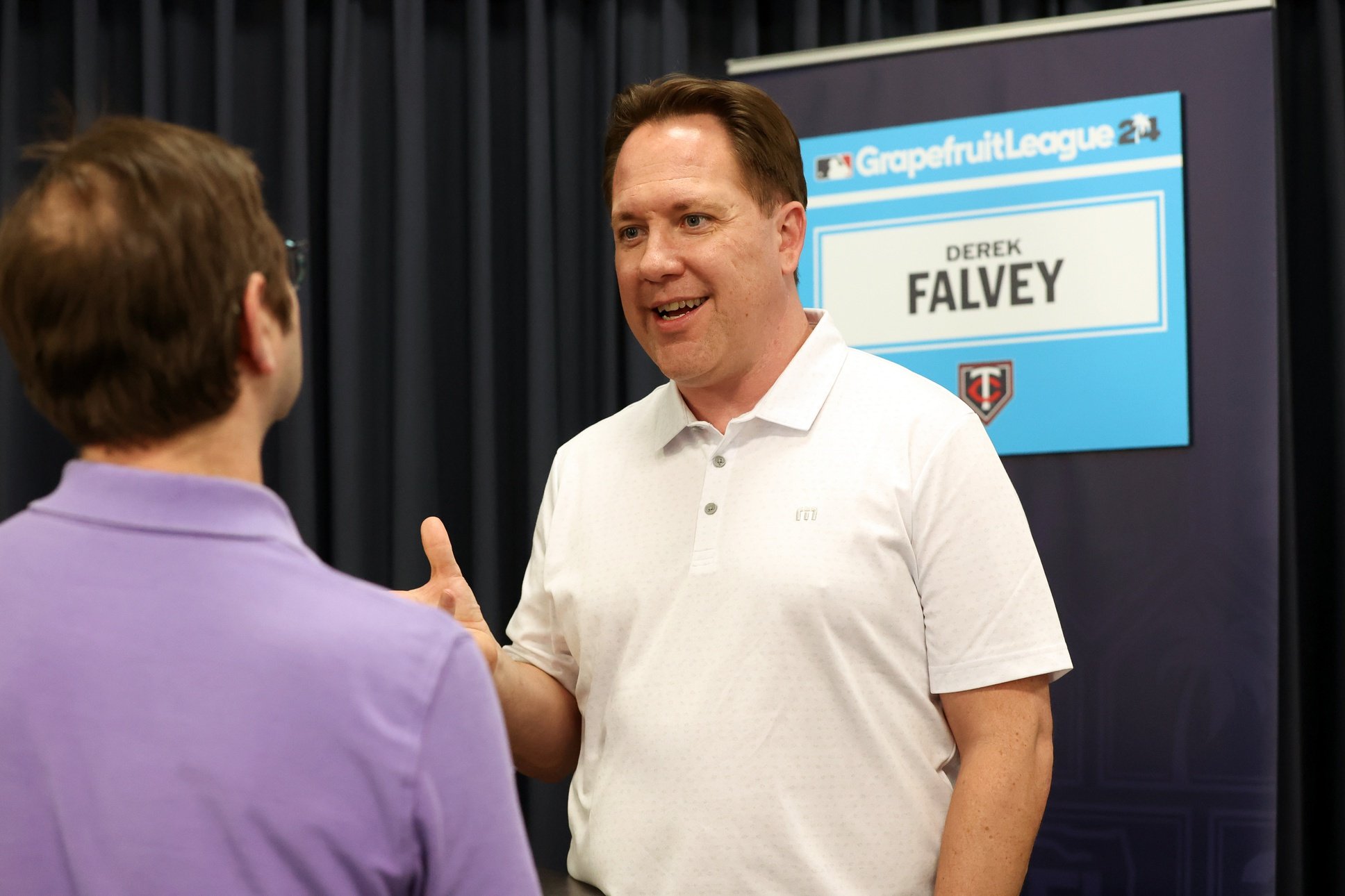 On X/Twitter last week, BrooksGate, a popular account that posts a lot of interesting tidbits and stats of questionable legitimacy, tweeted a graphic detailing year-over-year changes between the payrolls of MLB teams, comparing teams’ current payrolls to last year’s. Strikingly, the graphic showed that the Minnesota Twins have cut their payroll this offseason by nearly $27 million from where it stood in 2024. Among the hundreds of people who responded to the post was Jon Becker of FanGraphs, who pointed out that Spotrac, the source of the figures, does not factor in pre-arbitration salaries (i.e., minimum-salary players who fill out the rest of the roster), only counting the guaranteed salaries. Our own Matthew Trueblood also pointed out that the two sets of numbers described different types of data: competitive balance tax totals (CBT; which include penalties for spending above certain thresholds) and 40-man roster payroll, making a comparison foolish. Apples and oranges. Coincidentally, a few hours before these tweets, the Twins Daily Slack channel was trying to answer exactly where the Twins’ payroll figure stood after the team’s 11 arbitration settlements. It’s a pretty important figure for the discussion and narratives this offseason. A difference of a couple of million dollars might be the difference between the Twins adding any outside talent or … no outside talent at all by edict of ownership. And it seems every source that lists a payroll total gives a different number. As a reminder, here’s the information we’ve been working with this offseason. After slashing payroll ahead of the 2024 season for reasons you might personally find justifiable or egregious, depending on your persuasion, Minnesota's Opening Day payroll was somewhere around $130 million. After the 2024 season, one of the first bits of news about the 2025 season was that the team would not be further reducing payroll. So we’ve collectively, as a fanbase, been using $130 million as our rough estimate for what payroll will be next year. The problem for the Twins is that their estimated Opening Day payroll for 2025 was somewhere between $130 and $140 million on the day the season ended. Although they shed the salaries of players like Max Kepler and Carlos Santana, veterans Pablo Lopez, Chris Paddack, Carlos Correa, and Randy Dobnak were each due guaranteed raises in their contracts, and 13 other Twins were due raises in arbitration. There has never been a declarative statement as to what payroll figure the team is looking for, and last week, newly minted General Manager Jeremy Zoll indicated that the Twins do not need to shed salary before Opening Day. However, early-offseason suspicions and subsequent inactivity (I don’t know if you’ve heard this, but the Twins haven’t added an MLB player this offseason) have converged to suggest that they don’t have much room to work with. Now, “they don’t have much room to work with” might be enough for some people, but the most pedantic among us crave a little bit more information. There are estimates of where the Twins payroll sits, which helps us daydream clearer if we know the official number. However, as mentioned, there are several different sources of this information, each providing a slightly different number — sometimes within the same source. So why do these numbers vary from site to site? Well, different people find different calculations valuable and meaningful. For example, competitive balance tax totals are important to some teams but meaningless for a team like the Twins. They don’t spend enough to care about those totals. It’s not worthwhile for a Twins fan to check those. Let’s start with Spotrac, preferred by many for their easy-to-use and aesthetically pleasing user interface. They provide two figures: current payroll allocations ($127,486,190) and projected total allocations ($137,766,190). Neither figure is what we’d typically call an Opening Day payroll. To calculate current payroll allocations, Spotrac first adds up the guaranteed contracts for players signed through at least 2025 (remember this includes Randy Dobnak). This is a total of 18 players now that the Twins have settled with their arbitration-eligible players. They also add in signing bonuses, which total about $2 million owed to Correa, Buxton, and Lopez. These bonuses are given toward the start of the contract (i.e., they’ve already been paid and aren’t a money factor this year) but on these books they are evenly spread across the whole contract for accounting purposes (mostly for CBT purposes, so it really doesn’t matter for the Twins). They also include contract buyouts in this figure, which is $450,000 to Kyle Farmer and Jay Jackson this year, but buyout money is typically counted the year the contract is signed, so that money also shouldn’t count toward next year’s payroll. You can run over to the Twins Daily payroll blueprint tool to see the slight variation after excluding signing bonuses and buyouts. Do you see what I mean when I say this is complicated and not necessarily accurate? The buyout money and signing bonuses are counted in this total, but that’s not a factor in practice. Do you know what this number doesn’t include, though? The rest of the guys on the roster. This estimate accounts for the 18 guaranteed-salary players, but there are 26 players on a team. And one of those 18 is Randy Dobnak, so in reality the Twins would fill out the roster with nine additional minimum-salary players (approximately $800,000 to each). Those nine are not represented in the current payroll allocations figure. If you think that the nine minimum salaried players explains the difference between current and projected payroll allocations, close, but no cigar. The difference between those two numbers is the equivalent of 12.85 minimum-salary players — about four more than you’d need to fill out a roster. Where do those guys come from? Well, players get injured. And when a player is on the injured list, he still gets paid. So if Correa misses a week, he continues to get paid, and a minor leaguer gets called up. Let’s just say it’s Michael Helman. If Correa misses 10 days, the Twins pay both his salary and Helman’s prorated minimum contract salary (about $47,000 for ten days). Those add up during the season, especially for a team as injury-prone as Minnesota. Spotrac assumes they’ll pay the equivalent of about four players’ worth of salary to players filling in for injuries. And that’s where they get the larger $137,766,190 projected total allocations number. It includes the guaranteed money, the rest of the roster, a guess for how much time is lost to injury, and bonuses or buyouts that don’t actually count for this season’s total. It’s a mess. Cot’s Contracts similarly projects year-end payroll. Their calculation uses the equivalent of seven additional players from the minors as injury replacements over the course of a year (i.e., an average of seven players on the injured list throughout the season), raising that total money a bit higher. Cot’s, though, also includes estimates for how much players on the 40-man roster will make while playing in the minors, totaling $2,604,000 in additional pay to account for. Cot’s also includes the signing bonuses (which were paid at least a year ago) in their year-end payroll projection total ($141,970,190). Unlike Spotrac, Cot’s does include an Opening Day payroll figure, which comes in at $134,011,190. This number also starts with the guaranteed contracts, but it actually includes the rest of the roster, fixing that problem. The nine minimum-salary players make up most of the $7,959,000 difference here. However, it still also includes the already-paid signing bonuses, which isn’t helpful. Speaking of unhelpful, Cot’s also has a CBT projection that’s of no use to the Twins, at least until they double their payroll. Moving on! Finally, let’s look at the figures that FanGraphs’ RosterResource's payroll figure: Estimated 2025 Payroll. For the Twins, that number is $140,181,190, not far removed from Cot’s. Two factors can explain the difference. First, FanGraphs, like Spotrac, includes buyouts, so $450,000 for Farmer and Jackson. Second, they factor in a little less time lost to injury—but still around seven players’ worth of time. There’s also CBT stuff at the bottom of the page, but once again that doesn’t matter for the Twins. Don’t look there. It’s not worth anyone’s time. So that was a lot. What do we do with this? Well, first, it’s important to recognize that these books are wonky. There’s more than one way to skin a cat here, and we’re not even sure which number Twins decision-makers use as their own guide. There’s a difference between what payroll is on Opening Day and what it is at the end of the year, and that’s before considering midseason subtractions or additions via trade, waiver claim, or free agency. Given the Twins’ current situation, though, I wouldn’t be surprised if the Opening Day payroll is what matters most right now. Rumors continue to swirl around a potential sale, and even if these hypothetical new owners, whoever they may be, don’t come down from the heavens ready to open up the pocketbook, that’s not really the current owners’ concern. If the sale is as imminent as we expect, allegedly before Opening Day by some rosy estimates, then Opening Day payroll is what we probably care about. At the very least, we owe it to each other to discuss the team’s payroll on equal terms. If one person cites Spotrac’s $127,486,190 current payroll allocations and another cites Cot’s $141,970,190 year-end projection, you’re not having the same conversation. At 127 anyone would agree there’s immediate room to add at least a little something. At 142 no one is getting their hopes up. The true number that matters here probably lies somewhere in the middle, but closer to 130 than 140. Again, we still don’t know on the outside what the magic limit is, but it’s worthwhile to talk about the same numbers as we argue with each other about what moves should be made.
- 35 comments
-
- 11
-

-

-
Some say the Twins’ current payroll is $142. Some say it’s $127. My uncle Lenny says that back in his day, ballplayers paid for a nickel and an opera ticket. In an offseason dominated by payroll discussion, agreeing on a number is probably worthwhile, right? Image courtesy of Kim Klement Neitzel-Imagn Images On X/Twitter last week, BrooksGate, a popular account that posts a lot of interesting tidbits and stats of questionable legitimacy, tweeted a graphic detailing year-over-year changes between the payrolls of MLB teams, comparing teams’ current payrolls to last year’s. Strikingly, the graphic showed that the Minnesota Twins have cut their payroll this offseason by nearly $27 million from where it stood in 2024. Among the hundreds of people who responded to the post was Jon Becker of FanGraphs, who pointed out that Spotrac, the source of the figures, does not factor in pre-arbitration salaries (i.e., minimum-salary players who fill out the rest of the roster), only counting the guaranteed salaries. Our own Matthew Trueblood also pointed out that the two sets of numbers described different types of data: competitive balance tax totals (CBT; which include penalties for spending above certain thresholds) and 40-man roster payroll, making a comparison foolish. Apples and oranges. Coincidentally, a few hours before these tweets, the Twins Daily Slack channel was trying to answer exactly where the Twins’ payroll figure stood after the team’s 11 arbitration settlements. It’s a pretty important figure for the discussion and narratives this offseason. A difference of a couple of million dollars might be the difference between the Twins adding any outside talent or … no outside talent at all by edict of ownership. And it seems every source that lists a payroll total gives a different number. As a reminder, here’s the information we’ve been working with this offseason. After slashing payroll ahead of the 2024 season for reasons you might personally find justifiable or egregious, depending on your persuasion, Minnesota's Opening Day payroll was somewhere around $130 million. After the 2024 season, one of the first bits of news about the 2025 season was that the team would not be further reducing payroll. So we’ve collectively, as a fanbase, been using $130 million as our rough estimate for what payroll will be next year. The problem for the Twins is that their estimated Opening Day payroll for 2025 was somewhere between $130 and $140 million on the day the season ended. Although they shed the salaries of players like Max Kepler and Carlos Santana, veterans Pablo Lopez, Chris Paddack, Carlos Correa, and Randy Dobnak were each due guaranteed raises in their contracts, and 13 other Twins were due raises in arbitration. There has never been a declarative statement as to what payroll figure the team is looking for, and last week, newly minted General Manager Jeremy Zoll indicated that the Twins do not need to shed salary before Opening Day. However, early-offseason suspicions and subsequent inactivity (I don’t know if you’ve heard this, but the Twins haven’t added an MLB player this offseason) have converged to suggest that they don’t have much room to work with. Now, “they don’t have much room to work with” might be enough for some people, but the most pedantic among us crave a little bit more information. There are estimates of where the Twins payroll sits, which helps us daydream clearer if we know the official number. However, as mentioned, there are several different sources of this information, each providing a slightly different number — sometimes within the same source. So why do these numbers vary from site to site? Well, different people find different calculations valuable and meaningful. For example, competitive balance tax totals are important to some teams but meaningless for a team like the Twins. They don’t spend enough to care about those totals. It’s not worthwhile for a Twins fan to check those. Let’s start with Spotrac, preferred by many for their easy-to-use and aesthetically pleasing user interface. They provide two figures: current payroll allocations ($127,486,190) and projected total allocations ($137,766,190). Neither figure is what we’d typically call an Opening Day payroll. To calculate current payroll allocations, Spotrac first adds up the guaranteed contracts for players signed through at least 2025 (remember this includes Randy Dobnak). This is a total of 18 players now that the Twins have settled with their arbitration-eligible players. They also add in signing bonuses, which total about $2 million owed to Correa, Buxton, and Lopez. These bonuses are given toward the start of the contract (i.e., they’ve already been paid and aren’t a money factor this year) but on these books they are evenly spread across the whole contract for accounting purposes (mostly for CBT purposes, so it really doesn’t matter for the Twins). They also include contract buyouts in this figure, which is $450,000 to Kyle Farmer and Jay Jackson this year, but buyout money is typically counted the year the contract is signed, so that money also shouldn’t count toward next year’s payroll. You can run over to the Twins Daily payroll blueprint tool to see the slight variation after excluding signing bonuses and buyouts. Do you see what I mean when I say this is complicated and not necessarily accurate? The buyout money and signing bonuses are counted in this total, but that’s not a factor in practice. Do you know what this number doesn’t include, though? The rest of the guys on the roster. This estimate accounts for the 18 guaranteed-salary players, but there are 26 players on a team. And one of those 18 is Randy Dobnak, so in reality the Twins would fill out the roster with nine additional minimum-salary players (approximately $800,000 to each). Those nine are not represented in the current payroll allocations figure. If you think that the nine minimum salaried players explains the difference between current and projected payroll allocations, close, but no cigar. The difference between those two numbers is the equivalent of 12.85 minimum-salary players — about four more than you’d need to fill out a roster. Where do those guys come from? Well, players get injured. And when a player is on the injured list, he still gets paid. So if Correa misses a week, he continues to get paid, and a minor leaguer gets called up. Let’s just say it’s Michael Helman. If Correa misses 10 days, the Twins pay both his salary and Helman’s prorated minimum contract salary (about $47,000 for ten days). Those add up during the season, especially for a team as injury-prone as Minnesota. Spotrac assumes they’ll pay the equivalent of about four players’ worth of salary to players filling in for injuries. And that’s where they get the larger $137,766,190 projected total allocations number. It includes the guaranteed money, the rest of the roster, a guess for how much time is lost to injury, and bonuses or buyouts that don’t actually count for this season’s total. It’s a mess. Cot’s Contracts similarly projects year-end payroll. Their calculation uses the equivalent of seven additional players from the minors as injury replacements over the course of a year (i.e., an average of seven players on the injured list throughout the season), raising that total money a bit higher. Cot’s, though, also includes estimates for how much players on the 40-man roster will make while playing in the minors, totaling $2,604,000 in additional pay to account for. Cot’s also includes the signing bonuses (which were paid at least a year ago) in their year-end payroll projection total ($141,970,190). Unlike Spotrac, Cot’s does include an Opening Day payroll figure, which comes in at $134,011,190. This number also starts with the guaranteed contracts, but it actually includes the rest of the roster, fixing that problem. The nine minimum-salary players make up most of the $7,959,000 difference here. However, it still also includes the already-paid signing bonuses, which isn’t helpful. Speaking of unhelpful, Cot’s also has a CBT projection that’s of no use to the Twins, at least until they double their payroll. Moving on! Finally, let’s look at the figures that FanGraphs’ RosterResource's payroll figure: Estimated 2025 Payroll. For the Twins, that number is $140,181,190, not far removed from Cot’s. Two factors can explain the difference. First, FanGraphs, like Spotrac, includes buyouts, so $450,000 for Farmer and Jackson. Second, they factor in a little less time lost to injury—but still around seven players’ worth of time. There’s also CBT stuff at the bottom of the page, but once again that doesn’t matter for the Twins. Don’t look there. It’s not worth anyone’s time. So that was a lot. What do we do with this? Well, first, it’s important to recognize that these books are wonky. There’s more than one way to skin a cat here, and we’re not even sure which number Twins decision-makers use as their own guide. There’s a difference between what payroll is on Opening Day and what it is at the end of the year, and that’s before considering midseason subtractions or additions via trade, waiver claim, or free agency. Given the Twins’ current situation, though, I wouldn’t be surprised if the Opening Day payroll is what matters most right now. Rumors continue to swirl around a potential sale, and even if these hypothetical new owners, whoever they may be, don’t come down from the heavens ready to open up the pocketbook, that’s not really the current owners’ concern. If the sale is as imminent as we expect, allegedly before Opening Day by some rosy estimates, then Opening Day payroll is what we probably care about. At the very least, we owe it to each other to discuss the team’s payroll on equal terms. If one person cites Spotrac’s $127,486,190 current payroll allocations and another cites Cot’s $141,970,190 year-end projection, you’re not having the same conversation. At 127 anyone would agree there’s immediate room to add at least a little something. At 142 no one is getting their hopes up. The true number that matters here probably lies somewhere in the middle, but closer to 130 than 140. Again, we still don’t know on the outside what the magic limit is, but it’s worthwhile to talk about the same numbers as we argue with each other about what moves should be made. View full article
-
I didn't realize you were messing with me. My bad
-
I think you missed the next sentence talking about Donovan Solano, unless he's now a corner outfielder who can play some center and played bad in Colorado. Clearly I'm talking about a useful bench role player who makes around 2M as a free agent, not Randal Grichuk specifically.
-
Correct—I didn’t mean Grichuk himself; I was just talking about that class of players, trusting that the Twins choose correctly
-
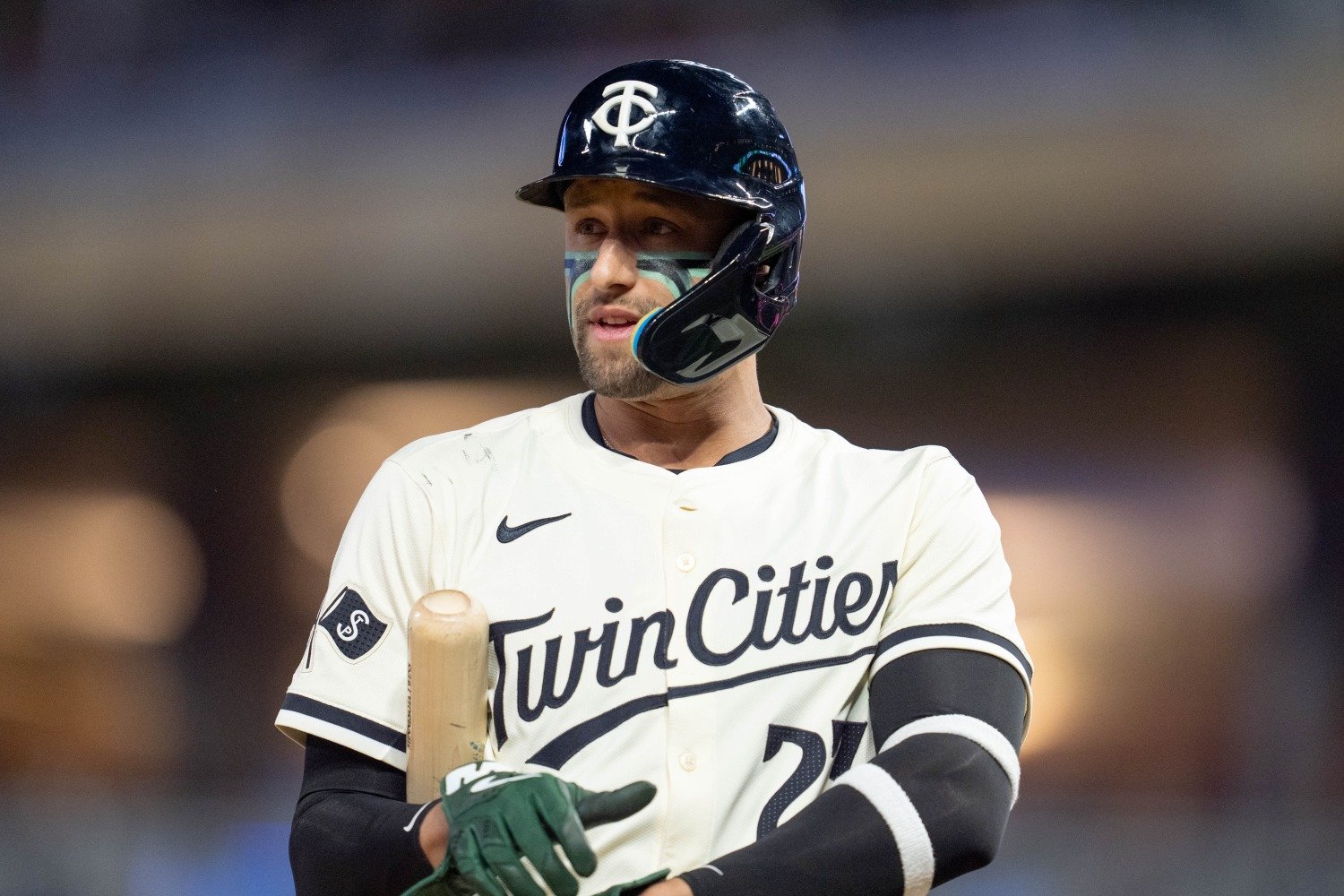 After three years of service time (or when just shy of that threshold by a month or so), MLB players can automatically start making more than their standard minimum salary, until they reach free agency after six years of service time. If the team and player cannot come to an agreement on what their salary will be, they can appear before an arbitration panel. By and large, though, the team and arbitration-eligible player can come to some sort of agreement. The Twins had 13 players eligible for arbitration this offseason. That’s half of their roster. Although these players tend to earn less than equally skilled players on guaranteed contracts, the team at least knows how much those guaranteed contracts will cost them. The Twins gladly pay Joe Ryan and Bailey Ober less than they’re paying Chris Paddack, but at least they’ve known for years what Paddack will cost in 2025. For Ryan and Ober, they just learned that last week. Five of the 13 arbitration-eligible player cases were determined early in the offseason. Alex Kirilloff retired, so we don’t have to worry about that. Jorge Alcalá had a team option for 2025 that was exercised, skipping his arbitration eligibility. Justin Topa, Michael Tonkin, and Brock Stewart all agreed to deals on the deadline to tender contracts (i.e., anyone who wasn’t non-tendered by that day has to be paid), in a series of deals that reeked of “Take this offer or find somewhere else to play on your own.” MLB Trade Rumors (MLBTR) provides salary estimates for arbitration-eligible players, and these estimates are generally held as the industry standard for those among us who don’t have access to teams’ internal projections. The deals for Alcalá, Topa, Tonkin, and Stewart combined to come in about $600,000 below the estimates, which is a good start but not abnormal for take-it-or-leave-it early final offers. The other eight contracts were announced by a combination of Darren Wolfson and Dan Hayes on Twitter on Jan. 9, the deadline to agree to terms and avoid having to submit figures for an eventual arbitration hearing. MLBTR's estimates were largely accurate. The site’s biggest underestimation among Twins was Jhoan Durán’s, which was settled at $4.125 million, about $400,000 above their $3.7 million estimate. Overall, though, the site trended toward overestimating Twins salaries, with Ryan, Ober, and Royce Lewis’s final numbers coming in between $600,000 and $800,000 below the projections. In total, the Twins’ arbitration-eligible players (excluding Alcalá, given the player option) earned approximately $2.4 million less than MLBTR foretold. It’s totally possible that this number was right in line with what the Twins’ front office had projected internally, but let’s assume that their projections were close to the $33.3 million total that MLBTR had. In truth, there’s reason to believe that, at least from a spending perspective, the Twins took a more conservative approach and planned around more than that figure, so as not to bite off more than they could chew ahead of 2025’s payroll limitations. Now that these salaries are set, the Twins benefit in two ways. First, there’s cost certainty. They no longer need to fumble around with rough estimates of their current payroll. Public estimates have ranged from $132 to $144 million this offseason as to where the payroll would stand without any talent being traded away. Now, though, they have a number. There is no sliding scale. There’s another easily imagined reality in which the arbitration-eligible players made a collective $5 million more than they did in this reality. They no longer have to guess. No longer having to guess means that they can start making real plans for appropriate payroll. Honestly, there’s a chance that some of the team’s inactivity this offseason is because they were waiting to know how much nearly a third of their current roster, making up about a quarter of their committed salaries, will be paid. If they indeed plan on moving Paddack, for instance, they would be more likely to seek deals to move his entire salary if their projected Opening Day payroll clocked in at $142 million. If the projected Opening Day payroll was $132 million, they would probably be more open to retaining some of his contract, which means sending cash along in a deal but getting a better player back. But until the numbers were finalized, they couldn’t know that. The second benefit is the obvious one: they have about $2.5 million available that they were not projected to. In a typical offseason, that’s a negligible amount. But for a team that still seems to be above the Opening Day payroll people have assumed they are aiming to get to, that goes a long way. Although some may speculate that the Twins are not in a mad dash to reduce payroll, it’s been a safe assumption to expect Opening Day payroll to be around $130 million. After the Twins’ newly settled contracts, their projected Opening Day payroll is about $134 million, according to Cot’s Contracts. That number would have been about $136.5 million using MLTR’s projections. It could have been higher than that, had negotiation not gone the team’s way. Let’s use Paddack yet again. He’s making $7.5 million this year, no matter who he’s playing for or who’s paying him. At this new figure, offloading his entire contract, or even part of it, can be enough to get the Twins under their necessary threshold. If the Twins retained, say, $2 million of his contract in a trade, they’re still in a better financial position than they would have been if they traded his whole contract but owed the MLBTR projections. Suddenly, there’s more breathing room. Let’s say they can still move all of Paddack’s salary, as they always planned to. Well, now, they have $2.4 million more than they had planned. Again, that’s not world-changing money, but if they have one big fish they’re trying to reel in this offseason, an extra couple million dollars might make it possible. Furthermore, Randal Grichuk made $2 million last season. Donovan Solano made the same the year prior, and only signed for $3.5 million with the Mariners on Monday. That money under projections can be the difference between an MLB veteran sitting on the bench over Michael Helman right now (assuming the Twins sign the right two-million-dollar guy, of course). It may not seem like big news, but these figures represent some of the most meaningful news the Twins have gotten or produced this offseason. It’s a low bar, sure, but it means a ton this offseason.
 -
The Twins appear to have saved money in arbitration this offseason, and although it only came about $2 million under projections, that savings carries extra meaning for a team up to its waist in mud. Image courtesy of © Matt Blewett-Imagn Images After three years of service time (or when just shy of that threshold by a month or so), MLB players can automatically start making more than their standard minimum salary, until they reach free agency after six years of service time. If the team and player cannot come to an agreement on what their salary will be, they can appear before an arbitration panel. By and large, though, the team and arbitration-eligible player can come to some sort of agreement. The Twins had 13 players eligible for arbitration this offseason. That’s half of their roster. Although these players tend to earn less than equally skilled players on guaranteed contracts, the team at least knows how much those guaranteed contracts will cost them. The Twins gladly pay Joe Ryan and Bailey Ober less than they’re paying Chris Paddack, but at least they’ve known for years what Paddack will cost in 2025. For Ryan and Ober, they just learned that last week. Five of the 13 arbitration-eligible player cases were determined early in the offseason. Alex Kirilloff retired, so we don’t have to worry about that. Jorge Alcalá had a team option for 2025 that was exercised, skipping his arbitration eligibility. Justin Topa, Michael Tonkin, and Brock Stewart all agreed to deals on the deadline to tender contracts (i.e., anyone who wasn’t non-tendered by that day has to be paid), in a series of deals that reeked of “Take this offer or find somewhere else to play on your own.” MLB Trade Rumors (MLBTR) provides salary estimates for arbitration-eligible players, and these estimates are generally held as the industry standard for those among us who don’t have access to teams’ internal projections. The deals for Alcalá, Topa, Tonkin, and Stewart combined to come in about $600,000 below the estimates, which is a good start but not abnormal for take-it-or-leave-it early final offers. The other eight contracts were announced by a combination of Darren Wolfson and Dan Hayes on Twitter on Jan. 9, the deadline to agree to terms and avoid having to submit figures for an eventual arbitration hearing. MLBTR's estimates were largely accurate. The site’s biggest underestimation among Twins was Jhoan Durán’s, which was settled at $4.125 million, about $400,000 above their $3.7 million estimate. Overall, though, the site trended toward overestimating Twins salaries, with Ryan, Ober, and Royce Lewis’s final numbers coming in between $600,000 and $800,000 below the projections. In total, the Twins’ arbitration-eligible players (excluding Alcalá, given the player option) earned approximately $2.4 million less than MLBTR foretold. It’s totally possible that this number was right in line with what the Twins’ front office had projected internally, but let’s assume that their projections were close to the $33.3 million total that MLBTR had. In truth, there’s reason to believe that, at least from a spending perspective, the Twins took a more conservative approach and planned around more than that figure, so as not to bite off more than they could chew ahead of 2025’s payroll limitations. Now that these salaries are set, the Twins benefit in two ways. First, there’s cost certainty. They no longer need to fumble around with rough estimates of their current payroll. Public estimates have ranged from $132 to $144 million this offseason as to where the payroll would stand without any talent being traded away. Now, though, they have a number. There is no sliding scale. There’s another easily imagined reality in which the arbitration-eligible players made a collective $5 million more than they did in this reality. They no longer have to guess. No longer having to guess means that they can start making real plans for appropriate payroll. Honestly, there’s a chance that some of the team’s inactivity this offseason is because they were waiting to know how much nearly a third of their current roster, making up about a quarter of their committed salaries, will be paid. If they indeed plan on moving Paddack, for instance, they would be more likely to seek deals to move his entire salary if their projected Opening Day payroll clocked in at $142 million. If the projected Opening Day payroll was $132 million, they would probably be more open to retaining some of his contract, which means sending cash along in a deal but getting a better player back. But until the numbers were finalized, they couldn’t know that. The second benefit is the obvious one: they have about $2.5 million available that they were not projected to. In a typical offseason, that’s a negligible amount. But for a team that still seems to be above the Opening Day payroll people have assumed they are aiming to get to, that goes a long way. Although some may speculate that the Twins are not in a mad dash to reduce payroll, it’s been a safe assumption to expect Opening Day payroll to be around $130 million. After the Twins’ newly settled contracts, their projected Opening Day payroll is about $134 million, according to Cot’s Contracts. That number would have been about $136.5 million using MLTR’s projections. It could have been higher than that, had negotiation not gone the team’s way. Let’s use Paddack yet again. He’s making $7.5 million this year, no matter who he’s playing for or who’s paying him. At this new figure, offloading his entire contract, or even part of it, can be enough to get the Twins under their necessary threshold. If the Twins retained, say, $2 million of his contract in a trade, they’re still in a better financial position than they would have been if they traded his whole contract but owed the MLBTR projections. Suddenly, there’s more breathing room. Let’s say they can still move all of Paddack’s salary, as they always planned to. Well, now, they have $2.4 million more than they had planned. Again, that’s not world-changing money, but if they have one big fish they’re trying to reel in this offseason, an extra couple million dollars might make it possible. Furthermore, Randal Grichuk made $2 million last season. Donovan Solano made the same the year prior, and only signed for $3.5 million with the Mariners on Monday. That money under projections can be the difference between an MLB veteran sitting on the bench over Michael Helman right now (assuming the Twins sign the right two-million-dollar guy, of course). It may not seem like big news, but these figures represent some of the most meaningful news the Twins have gotten or produced this offseason. It’s a low bar, sure, but it means a ton this offseason. View full article
-
 Sweet Lou, Comrade Cody, and Ol Gregg are joined by Tom Froemming to talk about the Twins' lack of action this offseason. Will fans show up under new ownership, will the Winter Meltdown feature bingo this year, will Chris Paddack ever be traded, and many more questions are answered this week, to varying degrees of quality. Listen using Apple Podcasts: https://podcasts.apple.com/us/podcast/the-twins-off-daily-podcast/id1741266056 Listen using Spotify: https://open.spotify.com/show/4tb78XlurcPTYYSsARdbD7 Listen using iHeartRadio: https://www.iheart.com/podcast/263-the-twins-off-daily-podcas-167548600/ Listen using Pocket Casts: https://pca.st/nvclbt0w Watch on YouTube: https://www.youtube.com/@twinsdaily
 -
We're back! And no, nothing has happened! Sweet Lou, Comrade Cody, and Ol Gregg are joined by Tom Froemming to talk about the Twins' lack of action this offseason. Will fans show up under new ownership, will the Winter Meltdown feature bingo this year, will Chris Paddack ever be traded, and many more questions are answered this week, to varying degrees of quality. Listen using Apple Podcasts: https://podcasts.apple.com/us/podcast/the-twins-off-daily-podcast/id1741266056 Listen using Spotify: https://open.spotify.com/show/4tb78XlurcPTYYSsARdbD7 Listen using iHeartRadio: https://www.iheart.com/podcast/263-the-twins-off-daily-podcas-167548600/ Listen using Pocket Casts: https://pca.st/nvclbt0w Watch on YouTube: https://www.youtube.com/@twinsdaily View full article
-
I'm not one to sit here and gas up Twins. Nearly every list that has come out so far (it's still early) have both Jax and Duran in the top 10 ahead of 2024. Steamer has them both in the top 8. That doesn't mean they'll finish the year as top-10 relievers, but there absolutely are not 6 other relievers in the Central who are better than Jax and Duran. I'll give you Clase, and I'll listen to arguments about Cade Smith.
-
Listen, I’m not gonna say they’re the best pen, If we can’t understand why their December projections like a bullpen with 2 top 12-15 relievers in baseball, several setup caliber arms, and no abject disasters in their top 8, I think we’ve lost the point. Also other pens will catch up as FAs are added. As for the second point, I’m glad I didn’t write that one. I’d have some ‘splainin to do
-
I’m fairly confident that they could clear up all of Paddack and more than half of Vázquez. Also keep in mind that teams can send cash in trades to make the money work. Guys like Diaz and Lowe might be it of their budget, but it’s at least mildly feasible
-
This is an additional wrinkle, but for this discussion I just focused on how FG divvied up the playing time, and they project Lewis to almost exclusively play third base. If you add in the Twins’ noncommittal approach with Lewis’s position, then these ideas carry even more weight because there’s potential playing time at either second or third.
-
Improving the 2025 Minnesota Twins is Simpler Than We're Making It
Greggory Masterson posted an article in Twins
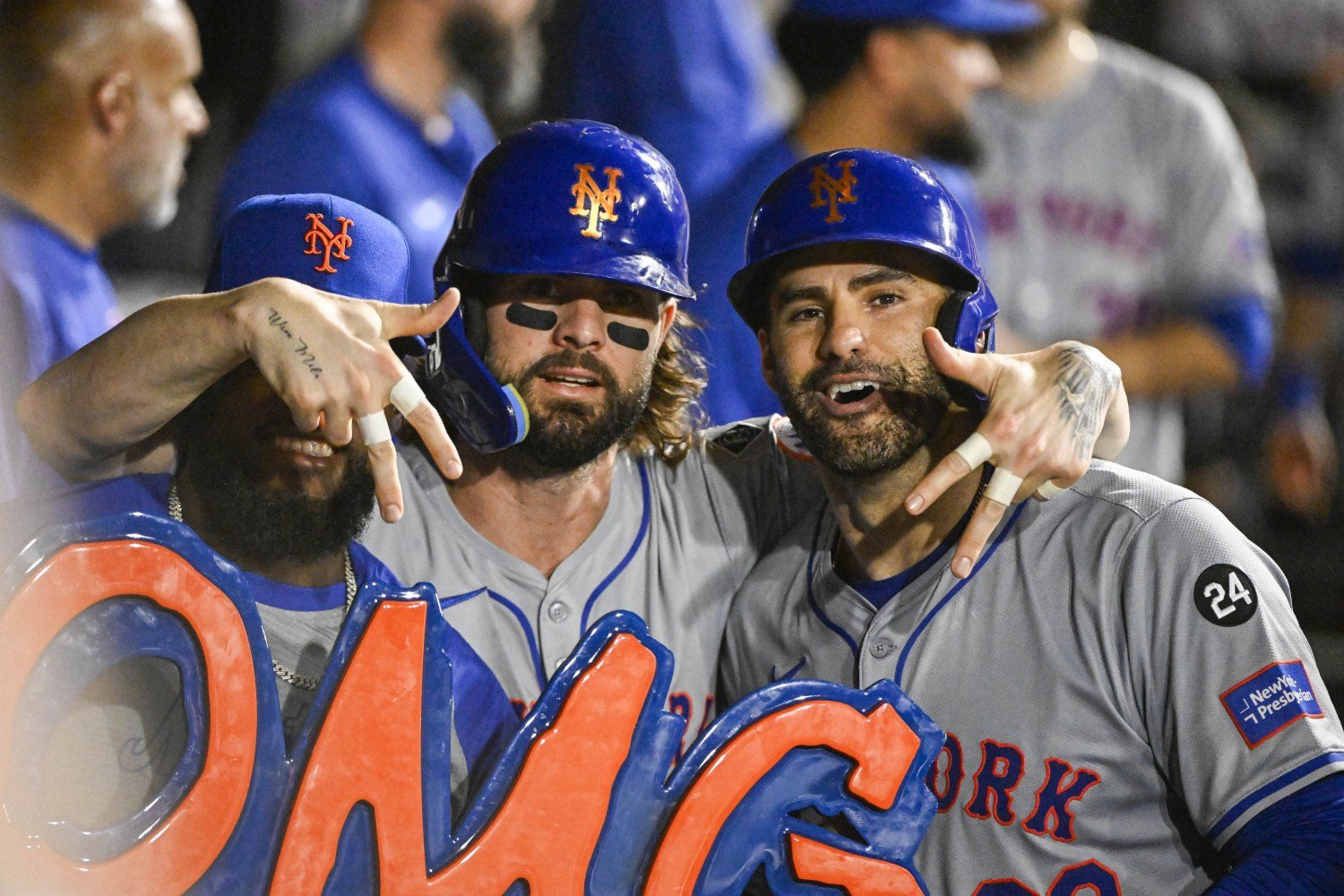 The Minnesota Twins are a good team—at least on paper. FanGraphs runs projections over the offseason, and currently, the Twins rank seventh among all MLB teams in projected wins above replacement. It’s not a perfect system—baseball is played on the field, not a spreadsheet; they project Byron Buxton, Royce Lewis, and Carlos Correa to play close to full seasons; plenty of remaining free agents can tilt the scales when they sign with other teams. But it is a nice tool to use when evaluating a team against the rest of the league, at least in terms of present talent level. "Present" is doing a lot of work for the Twins who, by all accounts, won’t be making many moves this offseason due to payroll constraints, while their rivals with more spending power add to their squads. FanGraphs projects Minnesota to have the best bullpen in baseball and sixth-best rotation, combining for the third-best pitching staff. They rank in the top 10 in projected performance at shortstop, third base, center field, and right field. Their second base group is seen as middle-of-the-pack. Their catcher, first base, left field, and designated hitter spots are all in the late teens. Catcher is going to be what it’s going to be. There will likely be some sort of mix of Ryan Jeffers (if not traded), Christian Vázquez (if not traded), Jair Camargo, new addition Mickey Gasper, or a low-tier veteran free agent. But the other three spots are somewhat peculiar. Whether you buy into the projections and methodologies used or not, the system can identify spots most open to improvement, and when your three lowest spots are left field, first base, and designated hitter, hoo boy, the mind starts running. These three positions are lowest on the defensive spectrum, meaning that there’s a higher offensive bar to clear to be an average or better hitter, but having a need at a combination of the areas opens a door so big even my inflated head could fit through it. Those three spots being the teams’ positions of need means anyone can fill that hole. Right now, Fangraphs projects some combination of Trevor Larnach, José Miranda, Edouard Julien, Willi Castro, and Luke Keaschall to fill those three spots. That group has a high ceiling but a low floor, given the question marks around each player. Any bat will do. The team isn’t looking for, say, a third baseman; that’s Royce Lewis’s spot. They just need some sort of bat. There’s been some hemming and hawing about finding a first baseman specifically, but they probably don’t even have to do that. If they find an outfielder with enough thump, they can easily make room for him in left field and at DH without sacrificing whichever of the aforementioned hitters establishes himself this season. Handedness probably doesn’t matter much, either. Just find the best hitter available in the team’s budget. They’re a little desperate, I would assume. If FanGraphs's projections are to be believed, we've probably collectively gotten a little too cute in our shopping lists. The best bat available will make a difference, regardless of handedness or position. So, let’s broaden the scope of the hunt for an offseason addition. The elephant in the room is still payroll limitations. Despite the imposed hardships, it’s not unreasonable to assume the team could have somewhere between $5 million and $10 million to spend on a mid-sized addition—following the trades of at least two of Vázquez, Castro, and Chris Paddack, unrealized actions which have become Twins fan canon by now. That constraint still prices out the biggest available bats, like Pete Alonso and Anthony Santander, and makes names like Jurickson Profar or Alex Verdugo unlikely. However, the Twins could feasibly take their pick of the litter below that, with this wide net. We’re not talking about sexy names, but after the recent signings of first basemen Carlos Santana, Josh Bell, and Paul Goldschmidt, the pool of true first basemen available in free agency had been whittled down to a group headlined by a collection of dudes old enough to form an unironic barbershop quartet: Justin Turner, Anthony Rizzo, Mark Canha, and Donovan Solano. If the Twins choose to look at the expanded pool of “best bat available,” they can add hitters like outfielder Jesse Winker or infielders Jorge Polanco and Yoán Moncada to the mix. The belle of this expanded ball is probably DH-only J.D. Martinez, who has remained a valuable hitter into his late thirties. These aren’t game-changing names. That goes without saying. At least one of them probably hurt your eyes when reading. But the Twins will be adding someone, and that someone will come down to a combination of who is available in their price range and who they see as a functional hitter. In the past two seasons, they have hit a couple of times on doing just that, choosing right with Solano and Santana. One of the more frustrating aspects of this process, at least for fans, is that this addition could end up being late in the offseason, once whoever’s left’s asking prices are near the floor. But it’s better to choose from all hitters at that point, not limit oneself to a single position. It’s been reported that the team is interested in adding through trade as well, which likely allows them to access better options than those in the free-agent pool at the expense of prospects. Many fans and writers at this very site have thrown out the name Yandy Díaz of the Rays as a potential first base trade target, as the Rays have indicated that they’re listening to offers for him. However, second baseman (and occasional first baseman) Brandon Lowe, the other player whom the Rays are actively open to moving, could also be a match for the team if they’re willing to shuffle things around. Some have discussed a potential reunion with LaMonte Wade Jr., as the Giants have made the first baseman-outfielder available, but the club has also named Mike Yazstrzemski as a potential trade chip. If the Twins see him as an upgrade somewhere in the group of positions, then why not? Taylor Ward of the Angels and Alec Bohm of the Phillies also fall into this discussion, as neither seem to be full-time first basemen but could fit into the three-position group as valuable pieces. Each potential target is slated to make $10 million or less in 2025, and could fill one of the three slots most ripe for improvement. It’s a pretty simple formula. Just get a hitter and figure out the alignment later. You have your shortstop and your center fielder, and the pitching staff doesn’t have a glaring hole (unless you count a lefty reliever). Just find a bat. Any bat will do. Oh, and before you say it: yes, new ownership is also a simple way to improve the team. Beat you to it.
 -
The Twins have accomplished next-to nothing this offseason. Fortunately, at least according to FanGraphs, nearly any offensive addition would help. Image courtesy of © Matt Marton-Imagn Images The Minnesota Twins are a good team—at least on paper. FanGraphs runs projections over the offseason, and currently, the Twins rank seventh among all MLB teams in projected wins above replacement. It’s not a perfect system—baseball is played on the field, not a spreadsheet; they project Byron Buxton, Royce Lewis, and Carlos Correa to play close to full seasons; plenty of remaining free agents can tilt the scales when they sign with other teams. But it is a nice tool to use when evaluating a team against the rest of the league, at least in terms of present talent level. "Present" is doing a lot of work for the Twins who, by all accounts, won’t be making many moves this offseason due to payroll constraints, while their rivals with more spending power add to their squads. FanGraphs projects Minnesota to have the best bullpen in baseball and sixth-best rotation, combining for the third-best pitching staff. They rank in the top 10 in projected performance at shortstop, third base, center field, and right field. Their second base group is seen as middle-of-the-pack. Their catcher, first base, left field, and designated hitter spots are all in the late teens. Catcher is going to be what it’s going to be. There will likely be some sort of mix of Ryan Jeffers (if not traded), Christian Vázquez (if not traded), Jair Camargo, new addition Mickey Gasper, or a low-tier veteran free agent. But the other three spots are somewhat peculiar. Whether you buy into the projections and methodologies used or not, the system can identify spots most open to improvement, and when your three lowest spots are left field, first base, and designated hitter, hoo boy, the mind starts running. These three positions are lowest on the defensive spectrum, meaning that there’s a higher offensive bar to clear to be an average or better hitter, but having a need at a combination of the areas opens a door so big even my inflated head could fit through it. Those three spots being the teams’ positions of need means anyone can fill that hole. Right now, Fangraphs projects some combination of Trevor Larnach, José Miranda, Edouard Julien, Willi Castro, and Luke Keaschall to fill those three spots. That group has a high ceiling but a low floor, given the question marks around each player. Any bat will do. The team isn’t looking for, say, a third baseman; that’s Royce Lewis’s spot. They just need some sort of bat. There’s been some hemming and hawing about finding a first baseman specifically, but they probably don’t even have to do that. If they find an outfielder with enough thump, they can easily make room for him in left field and at DH without sacrificing whichever of the aforementioned hitters establishes himself this season. Handedness probably doesn’t matter much, either. Just find the best hitter available in the team’s budget. They’re a little desperate, I would assume. If FanGraphs's projections are to be believed, we've probably collectively gotten a little too cute in our shopping lists. The best bat available will make a difference, regardless of handedness or position. So, let’s broaden the scope of the hunt for an offseason addition. The elephant in the room is still payroll limitations. Despite the imposed hardships, it’s not unreasonable to assume the team could have somewhere between $5 million and $10 million to spend on a mid-sized addition—following the trades of at least two of Vázquez, Castro, and Chris Paddack, unrealized actions which have become Twins fan canon by now. That constraint still prices out the biggest available bats, like Pete Alonso and Anthony Santander, and makes names like Jurickson Profar or Alex Verdugo unlikely. However, the Twins could feasibly take their pick of the litter below that, with this wide net. We’re not talking about sexy names, but after the recent signings of first basemen Carlos Santana, Josh Bell, and Paul Goldschmidt, the pool of true first basemen available in free agency had been whittled down to a group headlined by a collection of dudes old enough to form an unironic barbershop quartet: Justin Turner, Anthony Rizzo, Mark Canha, and Donovan Solano. If the Twins choose to look at the expanded pool of “best bat available,” they can add hitters like outfielder Jesse Winker or infielders Jorge Polanco and Yoán Moncada to the mix. The belle of this expanded ball is probably DH-only J.D. Martinez, who has remained a valuable hitter into his late thirties. These aren’t game-changing names. That goes without saying. At least one of them probably hurt your eyes when reading. But the Twins will be adding someone, and that someone will come down to a combination of who is available in their price range and who they see as a functional hitter. In the past two seasons, they have hit a couple of times on doing just that, choosing right with Solano and Santana. One of the more frustrating aspects of this process, at least for fans, is that this addition could end up being late in the offseason, once whoever’s left’s asking prices are near the floor. But it’s better to choose from all hitters at that point, not limit oneself to a single position. It’s been reported that the team is interested in adding through trade as well, which likely allows them to access better options than those in the free-agent pool at the expense of prospects. Many fans and writers at this very site have thrown out the name Yandy Díaz of the Rays as a potential first base trade target, as the Rays have indicated that they’re listening to offers for him. However, second baseman (and occasional first baseman) Brandon Lowe, the other player whom the Rays are actively open to moving, could also be a match for the team if they’re willing to shuffle things around. Some have discussed a potential reunion with LaMonte Wade Jr., as the Giants have made the first baseman-outfielder available, but the club has also named Mike Yazstrzemski as a potential trade chip. If the Twins see him as an upgrade somewhere in the group of positions, then why not? Taylor Ward of the Angels and Alec Bohm of the Phillies also fall into this discussion, as neither seem to be full-time first basemen but could fit into the three-position group as valuable pieces. Each potential target is slated to make $10 million or less in 2025, and could fill one of the three slots most ripe for improvement. It’s a pretty simple formula. Just get a hitter and figure out the alignment later. You have your shortstop and your center fielder, and the pitching staff doesn’t have a glaring hole (unless you count a lefty reliever). Just find a bat. Any bat will do. Oh, and before you say it: yes, new ownership is also a simple way to improve the team. Beat you to it. View full article
-
I wrote this more in an effort to put fans’ minds at ease, but as I reread it today I’m realizing that it comes off more as a plea to the front office, especially in the title.
- 39 replies
-
- 2
-
-
- carlos correa
- pablo lopez
- (and 1 more)
-
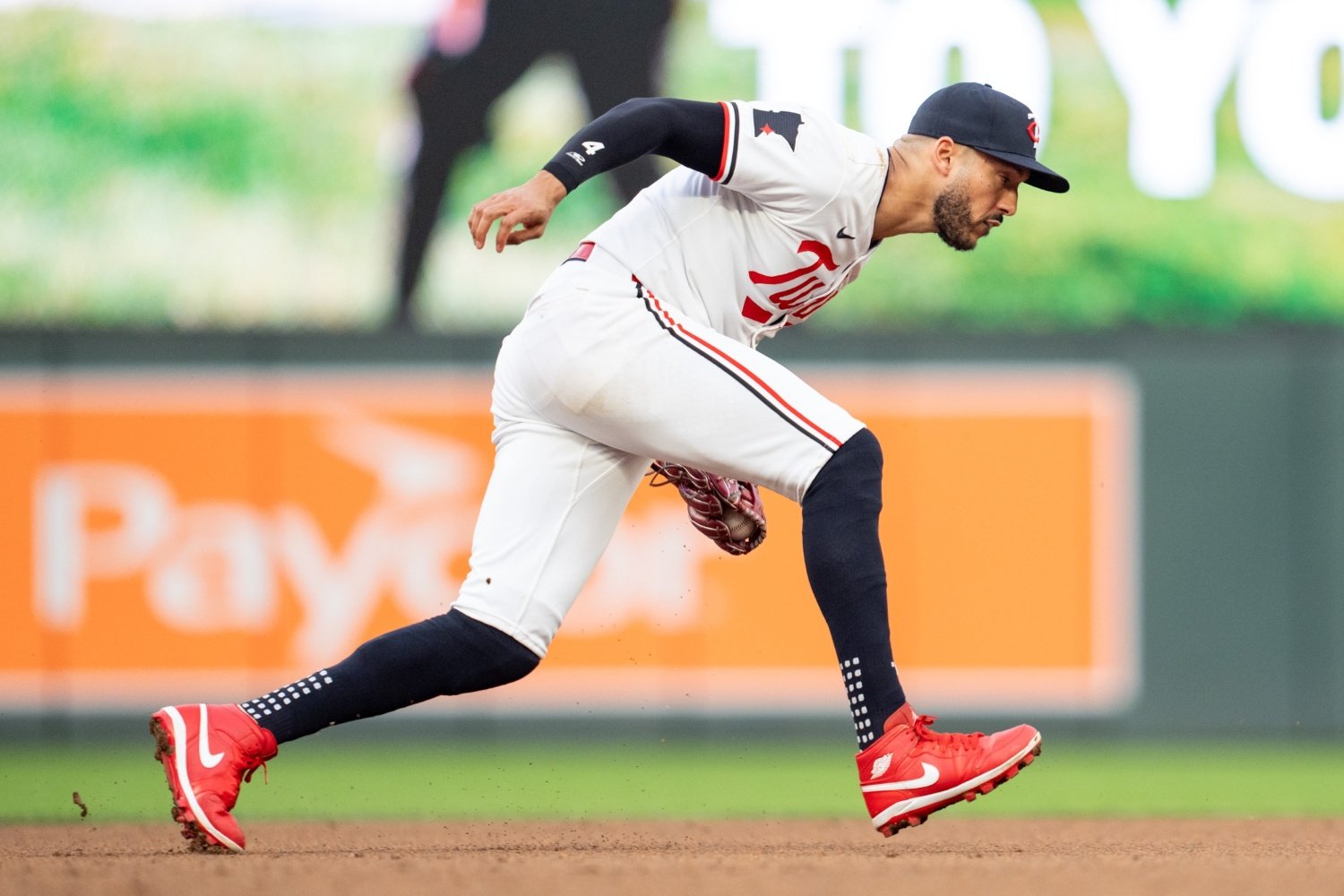 Ahead of the impending sale of the Minnesota Twins, many have speculated about what the team can do today to make the organization more attractive to potential buyers. One of the most common ideas that come up is that a new owner would want clean books—no messy contracts, no back payments to aging players, or money retained in trades. Basically, there shouldn’t be money that the new guy has to deal with for the next decade whether they like it or not. However, when that general idea is extended to mean that a new owner doesn’t want any money tied up, we might be missing the point a bit. One tangible example is some fans’ opinion that a new owner wouldn’t want to sign up for paying Carlos Correa $100 million for the first three years of their regime. In that case, the team should try to flip Correa to present this hypothetical owner with clean books. This idea makes sense at the most rudimentary level: some big hotshot billionaire is in this business to make money! Don’t sign him up for spending money that he didn’t agree to! However, that’s probably not exactly how this works. You’re more likely to see the save every penny, please don’t spend my money approach from more tenured, old-school owners—or at least from owners who have owned the team for more than five years. Baltimore and Miami saw $30-$40 million spikes in their first years under new ownership. We’re much more likely to see a new owner focus more on success than an older one. Shoot, John Rubenstein is practically begging the Orioles to spend his money. Recent reports suggest Justin and Mat Ishbia have emerged as potential buyers of the team, and from their history with the Phoenix Suns, it’s not hard to imagine them taking more of a winning focus than a moneymaking focus. Of course, I could be completely wrong in this imagining, or some other rich person might buy the team, but you can use those brothers as stand-ins for this imaginary owner if you want. Would a new owner who wants to win now prefer to greenlight moves for the team in his own image? Sure. But there’s a lot that goes into that. Let’s stick with Correa, as an example. Sure, you could flip him for some modest prospect package and have his remaining $92 million off the books for 2026 and beyond. That makes the books cleaner. Do you know what it doesn’t make cleaner? Anything else. Congrats, you’ve rid yourself of that pesky All-Star shortstop. Next step? Replace that pesky All-Star shortstop on your own. You’re probably going to need to win a new bidding war. Your 2026 options are Bo Bichette and the ghost of Trevor Story. Oh, you’re okay with just finding a shortstop, and he doesn’t need to be an All-Star? You’ll have the pick of the litter between David Fletcher, Luis Rengifo, and Brooks Lee—a kid who’s already slow at 24. I forget: is quickness important at shortstop? Just because a book is “clean” doesn’t mean it’s good. There are no albatross contracts on this team. The worst contract, right now, belongs to Christian Vázquez—a one-year, $10-million contract for a high-end backup catcher whom some team would likely pay for 60% of if the team wants to move him. There are no long-term deals here. There’s no Giancarlo Stanton-like contracts or Rafael Devers and Xander Boegarts-esque deals that reach into the 2030s. The Twins’ closest things to albatross contracts are Correa, Pablo López, and Byron Buxton, the longest of which reaches into 2028. In fact, those three are the only players with guaranteed contracts past 2026, which would, in all practicality, be the new ownership group’s first year. We’ve already gone over Correa’s deal, but paying an All-Star shortstop in his early thirties that amount of money isn’t the end of the world. He needs to stay healthy, but if that’s your worst long-term contract, you have bigger fish to fry as a new ownership group. López is only under contract through 2027 and has shown the ability to be an elite pitcher. He’s stayed healthy, and he’s on a relatively team-friendly contract, compared to what pitchers of his caliber are making in free agency right now. A new owner is not getting a López-tier starter for $21.75 million right now. It is more work to get rid of him and replace him. Buxton, at this point, will likely never be fully healthy for a season. That’s part of the deal. But he’s an All-Star-caliber player when healthy, and the $15 million that he’s making each year through 2028 is not that much money compared to the rest of the league. Ahead of 2025, that’s not even a top-100 contract per year. By 2028, it will be even more insignificant. And again, those are the only three players on guaranteed contracts after 2026. Actually, I fibbed. They’re the only three contracts on the books after this year. I’m not a billionaire, but that seems pretty palatable. There’s still tons of room to maneuver and style the team as the new guy sees fit. It’s not like the three names tied up are Anthony Rendon, Miguel Cabrera, and Stephen Strasburg. These are good books. There’s a nonzero chance that moving those contracts would make the team less valuable. The elephant in the room is that it might not matter what the new owners want to do. It’s possible that the Pohlad family might have more of an eye on the money today, wanting to get down to a magical payroll level that preserves their own funds ahead of the sale. That’s a totally different thing, though. They’re not doing that for the sale's profitability or the team's medium-term outlook for a new ownership group, one that would probably prefer not to build from scratch. They’d be doing that for liquidity today, in this fictitious universe that I made up in my head. Nonetheless, fans shouldn’t be so quick to assume that the best thing for the sale of the franchise is a housecleaning on the active roster. Such efforts might do the opposite. Some good books are clean, but not all clean books are good. The books are only good if they’re setting the team up for success, and the books that have Correa, López and Buxton on them do that better than any realistic set of books without them.
- 39 comments
-
- 20
-
-
-

-
- carlos correa
- pablo lopez
- (and 1 more)
-
Some good books are clean. Some clean books are good. But just because a team’s book is clean, that doesn’t mean the organization is attractive to buyers. Image courtesy of © Matt Blewett-Imagn Images Ahead of the impending sale of the Minnesota Twins, many have speculated about what the team can do today to make the organization more attractive to potential buyers. One of the most common ideas that come up is that a new owner would want clean books—no messy contracts, no back payments to aging players, or money retained in trades. Basically, there shouldn’t be money that the new guy has to deal with for the next decade whether they like it or not. However, when that general idea is extended to mean that a new owner doesn’t want any money tied up, we might be missing the point a bit. One tangible example is some fans’ opinion that a new owner wouldn’t want to sign up for paying Carlos Correa $100 million for the first three years of their regime. In that case, the team should try to flip Correa to present this hypothetical owner with clean books. This idea makes sense at the most rudimentary level: some big hotshot billionaire is in this business to make money! Don’t sign him up for spending money that he didn’t agree to! However, that’s probably not exactly how this works. You’re more likely to see the save every penny, please don’t spend my money approach from more tenured, old-school owners—or at least from owners who have owned the team for more than five years. Baltimore and Miami saw $30-$40 million spikes in their first years under new ownership. We’re much more likely to see a new owner focus more on success than an older one. Shoot, John Rubenstein is practically begging the Orioles to spend his money. Recent reports suggest Justin and Mat Ishbia have emerged as potential buyers of the team, and from their history with the Phoenix Suns, it’s not hard to imagine them taking more of a winning focus than a moneymaking focus. Of course, I could be completely wrong in this imagining, or some other rich person might buy the team, but you can use those brothers as stand-ins for this imaginary owner if you want. Would a new owner who wants to win now prefer to greenlight moves for the team in his own image? Sure. But there’s a lot that goes into that. Let’s stick with Correa, as an example. Sure, you could flip him for some modest prospect package and have his remaining $92 million off the books for 2026 and beyond. That makes the books cleaner. Do you know what it doesn’t make cleaner? Anything else. Congrats, you’ve rid yourself of that pesky All-Star shortstop. Next step? Replace that pesky All-Star shortstop on your own. You’re probably going to need to win a new bidding war. Your 2026 options are Bo Bichette and the ghost of Trevor Story. Oh, you’re okay with just finding a shortstop, and he doesn’t need to be an All-Star? You’ll have the pick of the litter between David Fletcher, Luis Rengifo, and Brooks Lee—a kid who’s already slow at 24. I forget: is quickness important at shortstop? Just because a book is “clean” doesn’t mean it’s good. There are no albatross contracts on this team. The worst contract, right now, belongs to Christian Vázquez—a one-year, $10-million contract for a high-end backup catcher whom some team would likely pay for 60% of if the team wants to move him. There are no long-term deals here. There’s no Giancarlo Stanton-like contracts or Rafael Devers and Xander Boegarts-esque deals that reach into the 2030s. The Twins’ closest things to albatross contracts are Correa, Pablo López, and Byron Buxton, the longest of which reaches into 2028. In fact, those three are the only players with guaranteed contracts past 2026, which would, in all practicality, be the new ownership group’s first year. We’ve already gone over Correa’s deal, but paying an All-Star shortstop in his early thirties that amount of money isn’t the end of the world. He needs to stay healthy, but if that’s your worst long-term contract, you have bigger fish to fry as a new ownership group. López is only under contract through 2027 and has shown the ability to be an elite pitcher. He’s stayed healthy, and he’s on a relatively team-friendly contract, compared to what pitchers of his caliber are making in free agency right now. A new owner is not getting a López-tier starter for $21.75 million right now. It is more work to get rid of him and replace him. Buxton, at this point, will likely never be fully healthy for a season. That’s part of the deal. But he’s an All-Star-caliber player when healthy, and the $15 million that he’s making each year through 2028 is not that much money compared to the rest of the league. Ahead of 2025, that’s not even a top-100 contract per year. By 2028, it will be even more insignificant. And again, those are the only three players on guaranteed contracts after 2026. Actually, I fibbed. They’re the only three contracts on the books after this year. I’m not a billionaire, but that seems pretty palatable. There’s still tons of room to maneuver and style the team as the new guy sees fit. It’s not like the three names tied up are Anthony Rendon, Miguel Cabrera, and Stephen Strasburg. These are good books. There’s a nonzero chance that moving those contracts would make the team less valuable. The elephant in the room is that it might not matter what the new owners want to do. It’s possible that the Pohlad family might have more of an eye on the money today, wanting to get down to a magical payroll level that preserves their own funds ahead of the sale. That’s a totally different thing, though. They’re not doing that for the sale's profitability or the team's medium-term outlook for a new ownership group, one that would probably prefer not to build from scratch. They’d be doing that for liquidity today, in this fictitious universe that I made up in my head. Nonetheless, fans shouldn’t be so quick to assume that the best thing for the sale of the franchise is a housecleaning on the active roster. Such efforts might do the opposite. Some good books are clean, but not all clean books are good. The books are only good if they’re setting the team up for success, and the books that have Correa, López and Buxton on them do that better than any realistic set of books without them. View full article
-
I’m not sure that’s a good thing, but it is notable. Image courtesy of Jesse Johnson-Imagn Sports Last Thursday, Max Kepler agreed to a $10 million contract with the Philadelphia Phillies. He’ll play his first game outside the organization he spent half his life in. The club had opportunities to trade him over the last dozen years but never pulled the trigger. After thinking on it for a while, I’m going to stand by the title of this article. Under Derek Falvey, no Twin has left the organization for no return while being better at baseball than Max Kepler. Opinions among fans vary wildly on Kepler. For most of his career, he was a good glove at a non-premium position with a low batting average but decent on-base skills and 15- to 20-homer pop in his streaky bat. His actual value and performance probably lie precisely in the middle of fans' most wild positive and negative views of him. He certainly isn't an elite player, but he wasn’t bad. At worst, he was slightly but frustratingly below average. I wrote that title myself, and I keep asking myself if I’m sure, but I really think I am. I’m not being hyperbolic. And I’ve never even been a Max Kepler guy. Beyond that, I just think it's notable. You might have other names in mind that fly in the face of that statement. Brent Rooker is a multi-time All-Star, but the Twins got Chris Paddack and Emilio Pagán for him and Taylor Rogers. Luis Gil just won Rookie of the Year, but the Yankees didn’t get him for free; they had to give up Jake Cave! Yennier Cano, Spencer Steer, Christian Encarnacion-Strand, Cade Povich, and Steven Hajjar were let go in trades. Inadvisable trades in hindsight? Yes. But they did get something back for them in the forms of Tyler Mahle and Jorge López. Sonny Gray walked for free — but the Twins got a compensation pick that they turned into Kyle DeBarge. Lance Lynn netted them Tyler Austin and Luis Rijo. LaMonte Wade Jr.? Shaun Anderson. Ryan Pressly? Jorge Alcala and Gilberto Celestino. Eduardo Escobar? Jhoan Durán and friends. Mitch Garver? Isiah Kiner-Falefa and Ronny Henriquez. Gio Urshela? Alejandro Hidalgo. Danny Coulombe? Cash. If you want to be hyperbolic or pragmatic alike, you can very well claim that some of these trades were “for nothing.” The Jorge Polanco trade may give the Twins two 2024 relief innings from Justin Topa, but I’m pedantic and will insist that that’s not nothing. It speaks to an organizational philosophy: don’t let value die on the vine or fall to the ground ripe. Teams generally have a similar idea, exercised to one degree or another, but teams toward the bottom of spending need to be good at it. They lose value when players leave in free agency. Players traded allow the organization to retain at least some of it. The best organizations find a proper balance of retaining current value to remain competitive and flipping assets to keep the organization young and healthy. Among the assets that weren’t traded, many of them had something approximating no value remaining when they left. I won’t bore you with all of the names, but here are some: Miguel Sanó, Marwin González, Logan Morrison, J.A. Happ, Kenta Maeda, and Jake Odorizzi. Some of these guys signed deals, but the writing was on the wall due to age, injury, or something else. So who is Kepler’s competition for this title? I’ve done some research and have a few names. First, there’s Eddie Rosario, who was non-tendered in 2020 with a year remaining on his contract. The Twins held on too long to get anything in return for him, and no team claimed him on waivers. He’s been all over the board in terms of performance since leaving Minnesota, but I’m listing him because of the effect he had on the Braves’ 2021 World Series. Fellow Bomba Squad teammates Jonathan Schoop and C.J. Cron were solid regulars for a few years after their one-off year in Minnesota (including an All-Star appearance for Cron). Both managed to play themselves out of the league in their early thirties, and both maxed out at $7.5 million in salary for any one year. One name that caught Twins fans by surprise was Kyle Gibson, who has made $50 million in the years since he was in Minnesota, though he’s only had one season below a 4.70 ERA (albeit an All-Star year). The Twins let Martín Pérez walk the same year, and he had an electric 2022 with a sub-3.00 ERA that oddly earned him no Cy Young votes, but outside of that year, he hasn’t had an ERA under 4.50. Zack Littell is a dark horse in this conversation. After being released by Minnesota, he’s bounced around a bit but has spent the last year and a half as a very solid and cheap starting pitcher for the Rays. This is an outcome few in Minnesota foresaw after three years as a long or middle reliever in Minnesota, though he was only 25 at the time he was released. The Twins have also had scares in the Rule 5 Draft over the last couple of years in Akil Baddoo and Tyler Wells, but Baddoo has played his way out of Detroit, and Wells is already 30 and has struggled with health. It really seems like Derek Falvey has tried to emulate the models of successful small-market clubs, selling whenever he can, whether that be on Taylor Rogers and José Berríos or Nelson Cruz and Brian Dozier. Extensions also play a part in this, such as with Sanó or Byron Buxton. The former stayed in the organization until he wasn’t worth anything in trade. The latter may do the same, but there were rumblings at the time that Buxton was actively being shopped as the contract was negotiated. In truth, we’re working with a limited sample, as Falvey has only run the team for eight seasons, and only two of those seasons — 2018 and 2021 — saw the Twins in sell mode. Even so, they’ve made efforts to ensure the talent cycle continues. If Kepler turns in three or four more seasons as an average regular, he’s probably the best player the Twins have let walk since 2017. But I guess the question is: should he have made it this far? That’s really the kicker here, isn’t it? View full article
-
Max Kepler Is the Best Player Derek Falvey Has Let Walk for Nothing
Greggory Masterson posted an article in Twins
.jpg.66f4a2bc82de7d0dd3a46d31444a3ee4.jpg) Last Thursday, Max Kepler agreed to a $10 million contract with the Philadelphia Phillies. He’ll play his first game outside the organization he spent half his life in. The club had opportunities to trade him over the last dozen years but never pulled the trigger. After thinking on it for a while, I’m going to stand by the title of this article. Under Derek Falvey, no Twin has left the organization for no return while being better at baseball than Max Kepler. Opinions among fans vary wildly on Kepler. For most of his career, he was a good glove at a non-premium position with a low batting average but decent on-base skills and 15- to 20-homer pop in his streaky bat. His actual value and performance probably lie precisely in the middle of fans' most wild positive and negative views of him. He certainly isn't an elite player, but he wasn’t bad. At worst, he was slightly but frustratingly below average. I wrote that title myself, and I keep asking myself if I’m sure, but I really think I am. I’m not being hyperbolic. And I’ve never even been a Max Kepler guy. Beyond that, I just think it's notable. You might have other names in mind that fly in the face of that statement. Brent Rooker is a multi-time All-Star, but the Twins got Chris Paddack and Emilio Pagán for him and Taylor Rogers. Luis Gil just won Rookie of the Year, but the Yankees didn’t get him for free; they had to give up Jake Cave! Yennier Cano, Spencer Steer, Christian Encarnacion-Strand, Cade Povich, and Steven Hajjar were let go in trades. Inadvisable trades in hindsight? Yes. But they did get something back for them in the forms of Tyler Mahle and Jorge López. Sonny Gray walked for free — but the Twins got a compensation pick that they turned into Kyle DeBarge. Lance Lynn netted them Tyler Austin and Luis Rijo. LaMonte Wade Jr.? Shaun Anderson. Ryan Pressly? Jorge Alcala and Gilberto Celestino. Eduardo Escobar? Jhoan Durán and friends. Mitch Garver? Isiah Kiner-Falefa and Ronny Henriquez. Gio Urshela? Alejandro Hidalgo. Danny Coulombe? Cash. If you want to be hyperbolic or pragmatic alike, you can very well claim that some of these trades were “for nothing.” The Jorge Polanco trade may give the Twins two 2024 relief innings from Justin Topa, but I’m pedantic and will insist that that’s not nothing. It speaks to an organizational philosophy: don’t let value die on the vine or fall to the ground ripe. Teams generally have a similar idea, exercised to one degree or another, but teams toward the bottom of spending need to be good at it. They lose value when players leave in free agency. Players traded allow the organization to retain at least some of it. The best organizations find a proper balance of retaining current value to remain competitive and flipping assets to keep the organization young and healthy. Among the assets that weren’t traded, many of them had something approximating no value remaining when they left. I won’t bore you with all of the names, but here are some: Miguel Sanó, Marwin González, Logan Morrison, J.A. Happ, Kenta Maeda, and Jake Odorizzi. Some of these guys signed deals, but the writing was on the wall due to age, injury, or something else. So who is Kepler’s competition for this title? I’ve done some research and have a few names. First, there’s Eddie Rosario, who was non-tendered in 2020 with a year remaining on his contract. The Twins held on too long to get anything in return for him, and no team claimed him on waivers. He’s been all over the board in terms of performance since leaving Minnesota, but I’m listing him because of the effect he had on the Braves’ 2021 World Series. Fellow Bomba Squad teammates Jonathan Schoop and C.J. Cron were solid regulars for a few years after their one-off year in Minnesota (including an All-Star appearance for Cron). Both managed to play themselves out of the league in their early thirties, and both maxed out at $7.5 million in salary for any one year. One name that caught Twins fans by surprise was Kyle Gibson, who has made $50 million in the years since he was in Minnesota, though he’s only had one season below a 4.70 ERA (albeit an All-Star year). The Twins let Martín Pérez walk the same year, and he had an electric 2022 with a sub-3.00 ERA that oddly earned him no Cy Young votes, but outside of that year, he hasn’t had an ERA under 4.50. Zack Littell is a dark horse in this conversation. After being released by Minnesota, he’s bounced around a bit but has spent the last year and a half as a very solid and cheap starting pitcher for the Rays. This is an outcome few in Minnesota foresaw after three years as a long or middle reliever in Minnesota, though he was only 25 at the time he was released. The Twins have also had scares in the Rule 5 Draft over the last couple of years in Akil Baddoo and Tyler Wells, but Baddoo has played his way out of Detroit, and Wells is already 30 and has struggled with health. It really seems like Derek Falvey has tried to emulate the models of successful small-market clubs, selling whenever he can, whether that be on Taylor Rogers and José Berríos or Nelson Cruz and Brian Dozier. Extensions also play a part in this, such as with Sanó or Byron Buxton. The former stayed in the organization until he wasn’t worth anything in trade. The latter may do the same, but there were rumblings at the time that Buxton was actively being shopped as the contract was negotiated. In truth, we’re working with a limited sample, as Falvey has only run the team for eight seasons, and only two of those seasons — 2018 and 2021 — saw the Twins in sell mode. Even so, they’ve made efforts to ensure the talent cycle continues. If Kepler turns in three or four more seasons as an average regular, he’s probably the best player the Twins have let walk since 2017. But I guess the question is: should he have made it this far? That’s really the kicker here, isn’t it?
Last Thursday, Max Kepler agreed to a $10 million contract with the Philadelphia Phillies. He’ll play his first game outside the organization he spent half his life in. The club had opportunities to trade him over the last dozen years but never pulled the trigger. After thinking on it for a while, I’m going to stand by the title of this article. Under Derek Falvey, no Twin has left the organization for no return while being better at baseball than Max Kepler. Opinions among fans vary wildly on Kepler. For most of his career, he was a good glove at a non-premium position with a low batting average but decent on-base skills and 15- to 20-homer pop in his streaky bat. His actual value and performance probably lie precisely in the middle of fans' most wild positive and negative views of him. He certainly isn't an elite player, but he wasn’t bad. At worst, he was slightly but frustratingly below average. I wrote that title myself, and I keep asking myself if I’m sure, but I really think I am. I’m not being hyperbolic. And I’ve never even been a Max Kepler guy. Beyond that, I just think it's notable. You might have other names in mind that fly in the face of that statement. Brent Rooker is a multi-time All-Star, but the Twins got Chris Paddack and Emilio Pagán for him and Taylor Rogers. Luis Gil just won Rookie of the Year, but the Yankees didn’t get him for free; they had to give up Jake Cave! Yennier Cano, Spencer Steer, Christian Encarnacion-Strand, Cade Povich, and Steven Hajjar were let go in trades. Inadvisable trades in hindsight? Yes. But they did get something back for them in the forms of Tyler Mahle and Jorge López. Sonny Gray walked for free — but the Twins got a compensation pick that they turned into Kyle DeBarge. Lance Lynn netted them Tyler Austin and Luis Rijo. LaMonte Wade Jr.? Shaun Anderson. Ryan Pressly? Jorge Alcala and Gilberto Celestino. Eduardo Escobar? Jhoan Durán and friends. Mitch Garver? Isiah Kiner-Falefa and Ronny Henriquez. Gio Urshela? Alejandro Hidalgo. Danny Coulombe? Cash. If you want to be hyperbolic or pragmatic alike, you can very well claim that some of these trades were “for nothing.” The Jorge Polanco trade may give the Twins two 2024 relief innings from Justin Topa, but I’m pedantic and will insist that that’s not nothing. It speaks to an organizational philosophy: don’t let value die on the vine or fall to the ground ripe. Teams generally have a similar idea, exercised to one degree or another, but teams toward the bottom of spending need to be good at it. They lose value when players leave in free agency. Players traded allow the organization to retain at least some of it. The best organizations find a proper balance of retaining current value to remain competitive and flipping assets to keep the organization young and healthy. Among the assets that weren’t traded, many of them had something approximating no value remaining when they left. I won’t bore you with all of the names, but here are some: Miguel Sanó, Marwin González, Logan Morrison, J.A. Happ, Kenta Maeda, and Jake Odorizzi. Some of these guys signed deals, but the writing was on the wall due to age, injury, or something else. So who is Kepler’s competition for this title? I’ve done some research and have a few names. First, there’s Eddie Rosario, who was non-tendered in 2020 with a year remaining on his contract. The Twins held on too long to get anything in return for him, and no team claimed him on waivers. He’s been all over the board in terms of performance since leaving Minnesota, but I’m listing him because of the effect he had on the Braves’ 2021 World Series. Fellow Bomba Squad teammates Jonathan Schoop and C.J. Cron were solid regulars for a few years after their one-off year in Minnesota (including an All-Star appearance for Cron). Both managed to play themselves out of the league in their early thirties, and both maxed out at $7.5 million in salary for any one year. One name that caught Twins fans by surprise was Kyle Gibson, who has made $50 million in the years since he was in Minnesota, though he’s only had one season below a 4.70 ERA (albeit an All-Star year). The Twins let Martín Pérez walk the same year, and he had an electric 2022 with a sub-3.00 ERA that oddly earned him no Cy Young votes, but outside of that year, he hasn’t had an ERA under 4.50. Zack Littell is a dark horse in this conversation. After being released by Minnesota, he’s bounced around a bit but has spent the last year and a half as a very solid and cheap starting pitcher for the Rays. This is an outcome few in Minnesota foresaw after three years as a long or middle reliever in Minnesota, though he was only 25 at the time he was released. The Twins have also had scares in the Rule 5 Draft over the last couple of years in Akil Baddoo and Tyler Wells, but Baddoo has played his way out of Detroit, and Wells is already 30 and has struggled with health. It really seems like Derek Falvey has tried to emulate the models of successful small-market clubs, selling whenever he can, whether that be on Taylor Rogers and José Berríos or Nelson Cruz and Brian Dozier. Extensions also play a part in this, such as with Sanó or Byron Buxton. The former stayed in the organization until he wasn’t worth anything in trade. The latter may do the same, but there were rumblings at the time that Buxton was actively being shopped as the contract was negotiated. In truth, we’re working with a limited sample, as Falvey has only run the team for eight seasons, and only two of those seasons — 2018 and 2021 — saw the Twins in sell mode. Even so, they’ve made efforts to ensure the talent cycle continues. If Kepler turns in three or four more seasons as an average regular, he’s probably the best player the Twins have let walk since 2017. But I guess the question is: should he have made it this far? That’s really the kicker here, isn’t it?- 67 comments
-
- 6
-
-
- max kepler
- brent rooker
- (and 3 more)
-
 There’s an old saying: “The fans pay your salary.” It’s a very wise one typically directed at stuck up athletes who refuse to take criticism from the people who watch every single game and know team history much better than the self-centered players. It’s true. If we didn’t pay for tickets to the game, the athletes would have no salary. Let’s take it a step further. I am calling all Millennials to forgo their most sacred snack, just one time, for the good of the team. Me personally, my favorite snack is hose water and also licking the walls for that tangy lead taste, but that’s besides the point. It’s time to do some analytics. The Barnes and Noble in Edina sells avocado toast for 12 dollars, per Elon Musk’s Grok AI 2.0. If you’re eating it three times a day, then no wonder you’re not building equity, but that’s besides the point. Let’s just start with one forgone avocado toast. It’s good to start them off slow, like texting them before calling. Back in my day we just would call and say “Hi Mrs. Butz, is Seymour there?” when we wanted to talk to Seymour, but I guess times have changed. Can you imagine if Tom Kelly had to text the bullpen before calling the bullpen phone? Let’s just say there would be a lot more Jack Morrises and a lot less Blake Snells if Millennials were managing. Anyway, let’s just start with 12 dollars. Now, Dave St. Peter said with the direct-to streaming the Twins now reach 4.40 million households, up from 1.08 when they had the Ballyses’s deal. Now, obviously, not every household is filled with Millennials. But many households have a lot of them all living six people in a two bedroom hovel getting up to who knows what. But I digress. According to Google AI, approximately 21.7% of the US population is Millennials. There’s 2.5 people per household according to ChatGPT. That’s the problem with analytics because unless we’re talking Charley Sheen, there’s no half men. It should be 2 or 3, but these are the same people (Michael Lewis) who say that a player can be worth 4.6 wins, which is especially egregious when the player in question is Joey Gallo in 2022. So now we have our numbers, let’s do some math. Luckily I went to a time where they taught us math in school by memorizing time tables instead of understanding numbers like they do in Common C(rap)ore. We learned how to calculate the area of a rectangle by its hypotenuse but Millennials were told to just color the rectangle in however they felt that day. Rectangles are green and they always will be. But that's I digress. 4,400,000 households in Twins Territory times 2.5 people per household gets us a total population of 11,000,000 people in Twins Territory. Of those 11,000,000 people, 21.7% of them are Millennials, or those born between 1981 and 1996, AKA kids who didn’t go to Woodstock and grew up with the World Wide Web. So we take 11,000,000 and times it by 21.7 and we get 238,700,000 Millennials in Twins Territory. Or at least we would if we did Common C(rap) math. Or if cheap pohlad had just removed the blackout restrictions earlier so everyone in the world would be Twins fans. Instead we have to times 11,000,000 by .217 because that’s how percentages work. We get a grand total of 2,378,000 Millennials in Twins Territory. If each of those Twins Territory Millennials gave up avocado toast one time, at $12 dollars a toast, that would be a savings of $28,644,000. Boom. Payroll crunched solved. Talk about a fanbase pulling themselves up by the bootstraps. If a backend starter like Jorge Lopez can get paid 21 million from the Twins this year, imagine what 28 million gets the team. Maybe Sunny Gray. “But Gregg,” I hear you say. “Not all Millennials are baseball fans. Its too boring for their short attention spans.” That’s right but that’s a problem we need to solve. Do you think that anyone said “But I didn’t enjoy the first World War, I don’t want to help with the second”? No. They knew what Uncle Sam asked of them. And Baseball is America’s pastime, so Uncle Gregg asks you, Millennials in Twins Territory, not what your baseball team can do for you, but what you can do for your baseball team.
 -
It’s time for the most lazy and entitled generation to finally do something for the common good. Or is that too much adulting? Image courtesy of Unsplash, Paul Hanaoka There’s an old saying: “The fans pay your salary.” It’s a very wise one typically directed at stuck up athletes who refuse to take criticism from the people who watch every single game and know team history much better than the self-centered players. It’s true. If we didn’t pay for tickets to the game, the athletes would have no salary. Let’s take it a step further. I am calling all Millennials to forgo their most sacred snack, just one time, for the good of the team. Me personally, my favorite snack is hose water and also licking the walls for that tangy lead taste, but that’s besides the point. It’s time to do some analytics. The Barnes and Noble in Edina sells avocado toast for 12 dollars, per Elon Musk’s Grok AI 2.0. If you’re eating it three times a day, then no wonder you’re not building equity, but that’s besides the point. Let’s just start with one forgone avocado toast. It’s good to start them off slow, like texting them before calling. Back in my day we just would call and say “Hi Mrs. Butz, is Seymour there?” when we wanted to talk to Seymour, but I guess times have changed. Can you imagine if Tom Kelly had to text the bullpen before calling the bullpen phone? Let’s just say there would be a lot more Jack Morrises and a lot less Blake Snells if Millennials were managing. Anyway, let’s just start with 12 dollars. Now, Dave St. Peter said with the direct-to streaming the Twins now reach 4.40 million households, up from 1.08 when they had the Ballyses’s deal. Now, obviously, not every household is filled with Millennials. But many households have a lot of them all living six people in a two bedroom hovel getting up to who knows what. But I digress. According to Google AI, approximately 21.7% of the US population is Millennials. There’s 2.5 people per household according to ChatGPT. That’s the problem with analytics because unless we’re talking Charley Sheen, there’s no half men. It should be 2 or 3, but these are the same people (Michael Lewis) who say that a player can be worth 4.6 wins, which is especially egregious when the player in question is Joey Gallo in 2022. So now we have our numbers, let’s do some math. Luckily I went to a time where they taught us math in school by memorizing time tables instead of understanding numbers like they do in Common C(rap)ore. We learned how to calculate the area of a rectangle by its hypotenuse but Millennials were told to just color the rectangle in however they felt that day. Rectangles are green and they always will be. But that's I digress. 4,400,000 households in Twins Territory times 2.5 people per household gets us a total population of 11,000,000 people in Twins Territory. Of those 11,000,000 people, 21.7% of them are Millennials, or those born between 1981 and 1996, AKA kids who didn’t go to Woodstock and grew up with the World Wide Web. So we take 11,000,000 and times it by 21.7 and we get 238,700,000 Millennials in Twins Territory. Or at least we would if we did Common C(rap) math. Or if cheap pohlad had just removed the blackout restrictions earlier so everyone in the world would be Twins fans. Instead we have to times 11,000,000 by .217 because that’s how percentages work. We get a grand total of 2,378,000 Millennials in Twins Territory. If each of those Twins Territory Millennials gave up avocado toast one time, at $12 dollars a toast, that would be a savings of $28,644,000. Boom. Payroll crunched solved. Talk about a fanbase pulling themselves up by the bootstraps. If a backend starter like Jorge Lopez can get paid 21 million from the Twins this year, imagine what 28 million gets the team. Maybe Sunny Gray. “But Gregg,” I hear you say. “Not all Millennials are baseball fans. Its too boring for their short attention spans.” That’s right but that’s a problem we need to solve. Do you think that anyone said “But I didn’t enjoy the first World War, I don’t want to help with the second”? No. They knew what Uncle Sam asked of them. And Baseball is America’s pastime, so Uncle Gregg asks you, Millennials in Twins Territory, not what your baseball team can do for you, but what you can do for your baseball team. View full article


.jpg.66f4a2bc82de7d0dd3a46d31444a3ee4.jpg)