


Twins Video
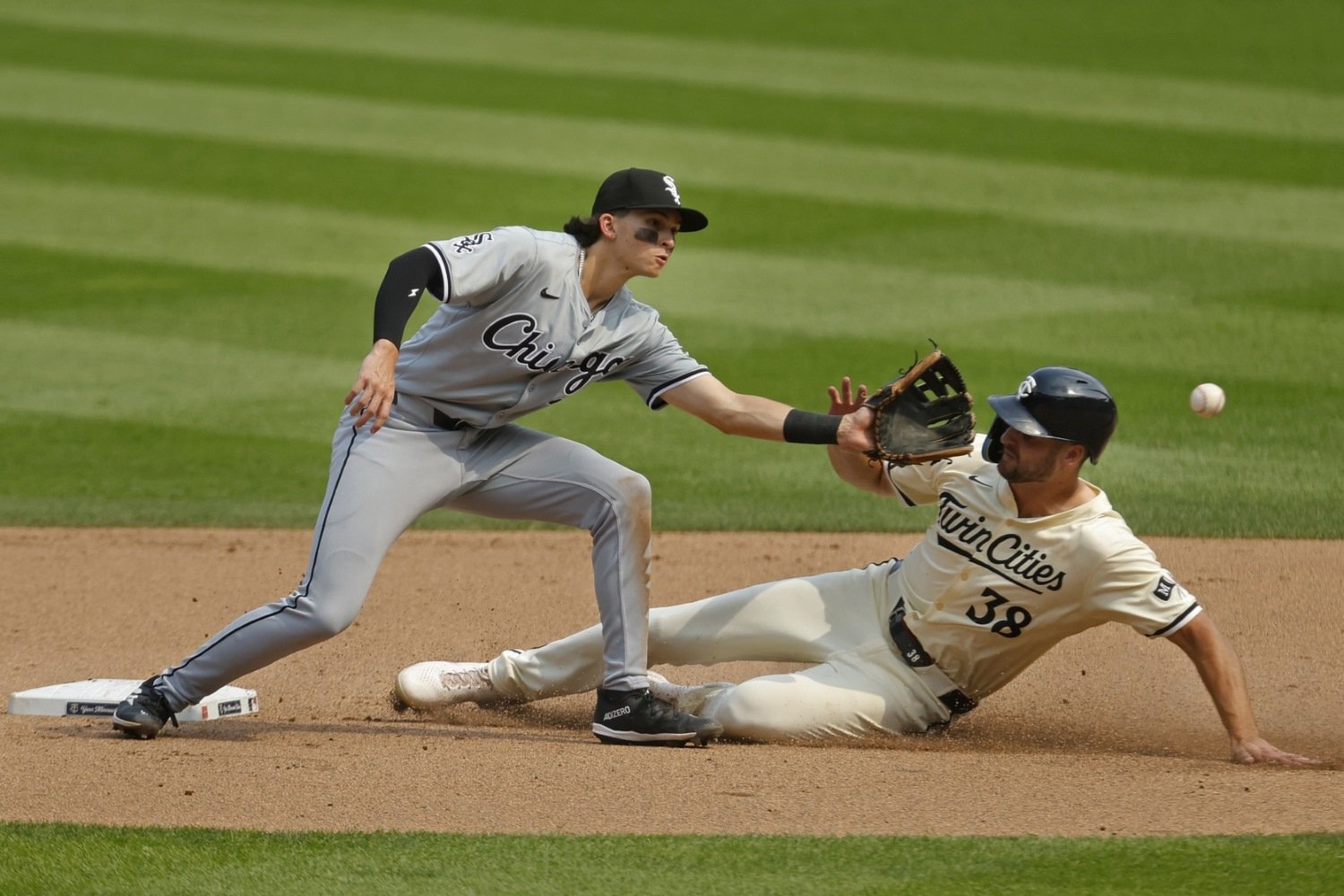
The Twins are not fast. The team is in the bottom third of the league in terms of stolen bases and caught-stealing percentage. They’ve been at the bottom of the league in steals for years. It’s by design—they don’t employ fast players. But the other stat can’t be blamed on the team’s slowest guys.
The Twins’ most prolific speed guys also lead the team in steals: Willi Castro (12), Austin Martin (7), and Byron Buxton (6). Those are low numbers, but it gets worse. Castro (60% success rate) and Martin (70%) have been inefficient, probably giving away more runs than they’re taking while trying to steal. Buxton (75%), previously the most efficient base stealer in baseball history, has been technically neutral, but below the ever-rising league average.
The three of them have stolen a combined 25 bases in 37 tries, an inefficient 68-percent success rate. The rule of thumb is that a player or team should successfully steal around 75 percent of the time, and since last year's rule changes, the league is closer to 80%.
Beyond that trio, the Twins don’t have much in the way of stolen base threats. Max Kepler and Manuel Margot ran very well when they were younger, but neither have attempted many steals in their career and neither has ever been especially successful. Edouard Julien stole many bases in the minors, but much of that success was based on gaming the pitch clock in the lower levels. Due to reduced speed and injury risk, Royce Lewis hasn’t attempted a stolen base since 2023.
And yet, Twins who aren’t named Castro, Martin, and Buxton are a combined 36 for 44 (82%) on stolen bases. They’re 33 for 36 (92%) if you exclude Kyle Farmer’s season-long baserunning shenanigans (three for eight stealing bases and several other TOOTBLANS).
How are they doing it? Sheer cunning.
Julien (6), Margot (4), Carlos Santana (4), Trevor Larnach (4), Ryan Jeffers (3), Matt Wallner (3), Brooks Lee (3), and Kepler (1) have each stolen bases without being thrown out this season. Christian Vázquez (3 steals) has been caught once, and José Miranda (2) twice. That’s not a list of names that make pitchers sweat while they’re in the stretch, yet they’ve managed to gain ground for the team with remarkable efficiency.
That last sentence probably contained the key: they’re not making pitchers sweat. If you were a pitcher and Carlos Santana was standing at first base, how much attention would you give him? Probably not much. He’s no Rickey Henderson. He’s not even Gunnar Henderson.
But Santana has stolen 17 bases in a row, dating back to 2018. Move over Byron Buxton; there’s a new efficiency king in town.
The Twins have become remarkably good at stealing off the pitcher this season. It’s a skill that even the fastest players in baseball need to learn to be successful. Good jumps can make good runners great and great runners elite. Heck, Rod Carew himself has referenced how Billy Martin taught him how to steal home in 1969, and he responded by setting the all-time record for stealing home in a season.
Stealing off the pitcher doesn’t make a slow runner a good runner, but gaining an extra 90 feet can be the difference between scoring a run and a man left on; it’s incredibly valuable. Sometimes, stealing off the pitcher means that the pitcher’s delivery doesn’t allow the catcher to get a throw down to second in time to catch a base stealer. Other times, stealing off the pitcher comes down to recognizing the pitcher isn’t paying attention at all.
The latter is where the Twins have excelled in 2024. A lackadaisical pitcher, all but forgetting that a baserunner is on, can almost gift a runner, regardless of speed, a free base—assuming that the runner picks up on the pitcher’s lack of attention. Observant runners and good base coaches can make that happen.
Many times this year, slower Twins runners like Santana, Wallner, and Larnach have walked out to big leads and run on first motion as the pitcher delivers from the stretch. One of the benefits of being speed-challenged is that the pitcher often doesn’t waste effort on a throwover, which allows for running on first motion.
The pitch clock also serves as a cue at times. A few times this year, a runner has been able to anticipate the ball being delivered because of the clock approaching one and can take off for a second before the ball is even delivered.
This practice is a recent development for Minnesota. Excluding their “speed guys” in 2023 (Castro, Buxton, Lewis, Michael A. Taylor, Andrew Stevenson), they went 21 for 31 (68%). In 2022, excluding their speed guys (Buxton, Nick Gordon, Gilberto Celestino), they went 22 for 34 (65%). In 2021, excluding their speed guys (Jorge Polanco, Kepler, Gordon, Buxton), they went 14 for 21 (67%).
No, this new trick isn’t the difference between a great running team and a poor one, but it is a little thing that helps to win games. And for a team that has been panned for not doing the little things in recent years, it’s a pleasant development. They’re a slow team that runs better than their raw speed would suggest. It should be a notch in the players’ and the coaches’ belts.
And maybe if they do it enough, it will provide another thing that pitchers must keep in mind when a tottering corner bat reaches first base in the playoffs. It’s the little things, and their slower players have been providing more value via stealing bases than their fast players this season.







Recommended Comments
Create an account or sign in to comment
You need to be a member in order to leave a comment
Create an account
Sign up for a new account in our community. It's easy!
Register a new accountSign in
Already have an account? Sign in here.
Sign In Now