



Greggory Masterson
-
Posts
819 -
Joined
-
Last visited
-
Days Won
2
Content Type
Profiles
News
Minnesota Twins Videos
2026 Minnesota Twins Top Prospects Ranking
2022 Minnesota Twins Draft Picks
Minnesota Twins Free Agent & Trade Rumors, Notes, & Tidbits
Guides & Resources
2023 Minnesota Twins Draft Picks
The Minnesota Twins Players Project
2024 Minnesota Twins Draft Picks
2025 Minnesota Twins Draft Pick Tracker
2026 Minnesota Twins Draft Tracker: Picks & Bonuses
Forums
Blogs
Events
Store
Downloads
Gallery
Everything posted by Greggory Masterson
-
 The reason I include all the other information is because I recognize WAR only gives part of the story. However, I choose not to include next stops and returns in subsequent trades because the value balance gets untenable to summarize (e.g., how do you balance Hajjar being traded vs Rooker being cut?). If you have a suggestion, I’m all ears. as for the Delmon Young comparison, I think that’s a bit of overkill. What did San Diego get from the deal?
- 38 replies
-
- 1
-

-
- brent rooker
- lamonte wade
- (and 5 more)
-
If there’s an an offseason MLB-for-MLB trade I missed, let me know! I separate this series into 4 parts (offseason/deadline, buy/sell) because of how big the list has gotten. Deadline buys is definitely the worst showing
- 38 replies
-
- 1
-
-
- brent rooker
- lamonte wade
- (and 5 more)
-
The Twins' front office doesn't have much payroll space to work with. If they want to add, they have to get creative. Let's review every big-leaguer-for-big-leaguer trade Derek Falvey has ever made. Image courtesy of Orlando Ramirez-Imagn Images (Rooker), Stan Szeto-Imagn Images As we look ahead to another “exciting Twins offseason,” it’s become increasingly apparent that the Twins’ brass will need to get creative amid payroll constraints. Just look at the Offseason Blueprints being generated all over Twins Daily as we speak. Derek Falvey and Co. have pulled off their fair share of creative trades, seeking to add to the current big league team even if it takes a big leaguer or two in return. Funnily enough, under Falvey's watchful eye, the Twins have rarely sold over the offseason at all, seemingly preferring to swap their MLB talent for help today rather than prospects for tomorrow. Gio Urshela, by my count, was the only major leaguer to be traded for a prospect since 2017. The team has been trying to win, not stock up assets, leaning into its creativity to make things happen. But, of course, that creativity needs to work. No team wins every trade, but competitive teams need to win more than they lose. It’s pretty straightforward when picking winners and losers when a team sends away MLB contributors from a position of strength to bring in other MLB contributors in a position of need. Below, I’ve listed every trade that could be considered an offseason challenge trade–MLB for MLB (occasionally prospects get added to the deals, but they have to have an MLB contract going each way)–over the offseason. Before we begin, some housekeeping. I provided stats for each player with their new team. Performance isn’t considered if they were again traded or signed elsewhere as free agents after the trade being discussed. Obviously, this analysis doesn’t include future performance, either. This information is accurate as of November 19th, 2024. Those with an * indicate that the player is still in the organization they were traded to, so the complete picture isn’t available. I will also be providing some context for each trade. Comparing statistics does not necessarily indicate which team won the trade, so I have done my best to explain why the trade occurred. See the Yankees trade below for an example of why comparing statistics isn’t ideal. Although the Twins lost the trade by WAR, it cleared the salary owed to Josh Donaldson and gave them the room to sign Carlos Correa to his first Minnesota contract. Without further ado, my subjective order is from best to worst. 3/13/22: Minnesota acquires Gio Urshela (551 PA, 119 OPS+, 3.1 bWAR), Gary Sanchez (471 PA, 88 OPS+, 0.9 bWAR) from New York (AL) for Josh Donaldson (666 PA, 90 OPS+, 2.3 bWAR), Isiah Kiner-Falefa (892 PA, 81 OPS+, 2.9 bWAR), Ben Rortvedt (79 PA, 28 OPS+, -0.2 bWAR), +1.0 bWAR for Minnesota. There’s a lot to unpack in this trade, primarily orchestrated to clear up salary room from 2022 to 2024 and be rid of Donaldson, who some reports suggest had worn out his welcome in Minnesota. Donaldson was a solid contributor for New York in 2022 but wore out his welcome and was waived before the end of 2023. Kiner-Falefa played two decent years in pinstripes. Rortvedt played minimally in New York due to injury. Urshela and Sanchez spent a year in Minnesota and filled the roles they were brought in for, but neither returned for 2023. Although both Urshela and Sanchez had contracts that offset some of Donaldson’s, that excess money helped bring in Correa before 2022 and 2023. 1/20/23: Minnesota acquires Pablo López* (379.1 IP, 110 ERA+, 5.8 bWAR), Jose Salas* (has not reached Minnesota), Byron Churio* (has not reached Minnesota) from Miami for Luis Arraez (765 PA, 122 OPS+, 5.0 bWAR), +0.8 bWAR for Minnesota. López was tagged as the Opening Day starter after the trade that sent the batting champion Arraez to Miami. After four great starts and a four-year, $73 million extension, López finished seventh in the AL Cy Young. Churio and Salas were promising prospects many did not anticipate being included in the deal, though it’s questionable whether either will make it to the big leagues. Arraez won his second consecutive batting title and placed eighth in the 2023 NL MVP voting. He was traded to San Diego mid-season in 2024 and just won his third consecutive batting title. 2/9/20: Minnesota acquires Kenta Maeda (277.1 IP, 106 ERA+, 3.0 bWAR), Jair Camargo* (7 PA, -54 OPS+, -0.1 bWAR) from Los Angeles (NL) for Brusdar Graterol* (181 IP, 158 ERA+, 3.5 bWAR), Luke Raley (72 PA, 43 OPS+, -0.5 bWAR), -0.1 bWAR for Minnesota. Maeda finished second in the 2020 Cy Young voting during the shortened season but struggled in 2021, had Tommy John surgery, and reestablished himself in 2023, though not without continued injury concerns. At the time of the trade, the Twins knew he may have elbow issues. Graterol has been a solid force in LA’s bullpen when healthy. Camargo has gotten a cup of coffee in MLB, and Raley was traded to Tampa. This trade also sent a 2nd round pick to LA. 3/12/22: Minnesota acquires Isiah Kiner-Falefa (did not reach Minnesota), Ronny Henriquez* (31.0 IP, 143 ERA+, 0.5 bWAR) from Texas for Mitch Garver (559 PA, 121 OPS+, 2.5 bWAR), -2.0 bWAR for Minnesota. Coming out of the lockout, Minnesota made a move that killed two birds with one stone: got a return for the off-injured Garver and filled a hole at shortstop. Garver dealt with injuries in Texas but still hit well enough for mainly DH role. Kiner-Falefa was a Twin for one day before getting traded again. Henriquez,24, saw mild success out of the pen for the Twins in 2024 and could rack up frequent rider miles on the Green Line between St. Paul and Minnesota for the next few years. 4/7/22: Minnesota acquires Chris Paddack* (115.2 IP, 86 ERA+, 0.7 bWAR), Emilio Pagán (132.1 IP, 112 OPS+, 0.9 bWAR), Brayan Medina* (has not reached Minnesota) from San Diego for Taylor Rogers (41.1 IP, 87 ERA+, -0.2 bWAR), Brent Rooker (7 PA, -100 OPS+, -0.2 bWAR), +2.0 bWAR for Minnesota. This infamous trade sent away the Twins' top reliever in Rogers, who struggled in San Diego. Rooker, a depth outfielder, only registered seven plate appearances for San Diego but has blossomed into an All-Star in Oakland. Both were traded from San Diego at the 2022 deadline. In return, the team received Paddack, who had known elbow issues, pitched well in five starts, then underwent Tommy John. He returned as a bullpen piece down the stretch in 2023 and threw 88 innings at the back of the Twins rotation in 2024. Pagán largely struggled through 2022 as a high-leverage arm, but he posted a sub-3.00 ERA and led the bullpen in innings in 2023. Medina was released after three years of Rookie ball, and the Twins retained most of Rogers’ salary. 1/19/24: Minnesota acquires Anthony DeSclafani (did not play for Minnesota), Justin Topa* (2.1 IP, 999 ERA+, 0.2 bWAR), Gabriel Gonzalez* (has not reached Minnesota), Darren Bowen* (has not reached Minnesota) from Seattle for Jorge Polanco (469 PA, 93 OPS+, 1.4 bWAR), -1.2 bWAR for Minnesota. This one’s a doozie. The Twins needed to free up payroll space and traded one of their longest-tenured players in Polanco. Seattle sent back starter Anthony DeSclafani–who missed the entire year with injury–and reliever Justin Topa–who missed all but a week of the season with injury. They also received prospects in the form of outfielder Gabriel Gonzalez (who received one rouge listing on a top-100 prospect list) and pitcher Darren Bowen. For his part, Polanco struggled as well. No real winners in this trade unless Gonzalez turns into something. At least the excess space salary got turned into Carlos Santana. 2/11/24: Minnesota acquires Steven Okert (35.1 IP, 82 ERA+, -0.3 bWAR) from Miami for Nick Gordon (275 PA, 68 OPS+, -1.7 bWAR), +1.4 bWAR for Minnesota. Nick Gordon didn’t have a place on the 2024 Twins after a 2023 lost to injury, and he was out of options. He was flipped to Miami for Okert in the hopes the lefty could cover some middle innings. Okert’s highs were “fine,” and his lows were “bad.” Gordon was all “bad.” The Twins won the WAR, but both teams lost. 11/18/22: Minnesota acquires Alejandro Hidalgo* (has not reached Minnesota) from Los Angeles (AL) for Gio Urshela (130 PA, 84 OPS+, 0.2 bWAR), -0.2 bWAR for Minnesota. Urshela became a fan-favorite and consistent performer in his year in Minnesota but would have likely been non-tendered in arbitration to prevent a perceived logjam on the Minnesota infield. He played all around the infield and had been moderately productive for the Angels before a broken pelvis ended his season. Hidalgo is still 20 years old but just lost an entire season to injury. 2/5/21: Minnesota acquires Shaun Anderson (8.2 IP, 47 ERA+, -0.5 bWAR) from San Francisco for LaMonte Wade, Jr.* (1552 PA, 115 OPS+, 6.0 bWAR), -4.4 bWAR for Minnesota. In retrospect, this was an unforced error. The Twins had two similar options for their fourth outfielder going into 2021—Wade and Jake Cave—and they elected to trade Wade, who, when healthy, has been a consistent presence in the Giants lineup for several years. Cave struggled over his last two years in Minnesota, and Anderson, the AAAA lottery ticket they got for Wade, was out of the organization before the year ended. In total, Minnesota has lost 2.7 WAR in these trades–under this methodology for counting WAR at least. They certainly haven’t hit a home run on the whole, but there’s only been one true, unmitigated blunder–the Wade trade. Even the Rooker trade returned decent pitching, and Rooker bounced around before becoming the guy he is today. What do you think? How much confidence do you have in the Twins pulling off some creative big-leaguer-for-big-leaguer trades this offseason? View full article
- 38 replies
-
- 1
-
-
- brent rooker
- lamonte wade
- (and 5 more)
-
Have the Twins Been Successful Getting Creative in Trades?
Greggory Masterson posted an article in Twins
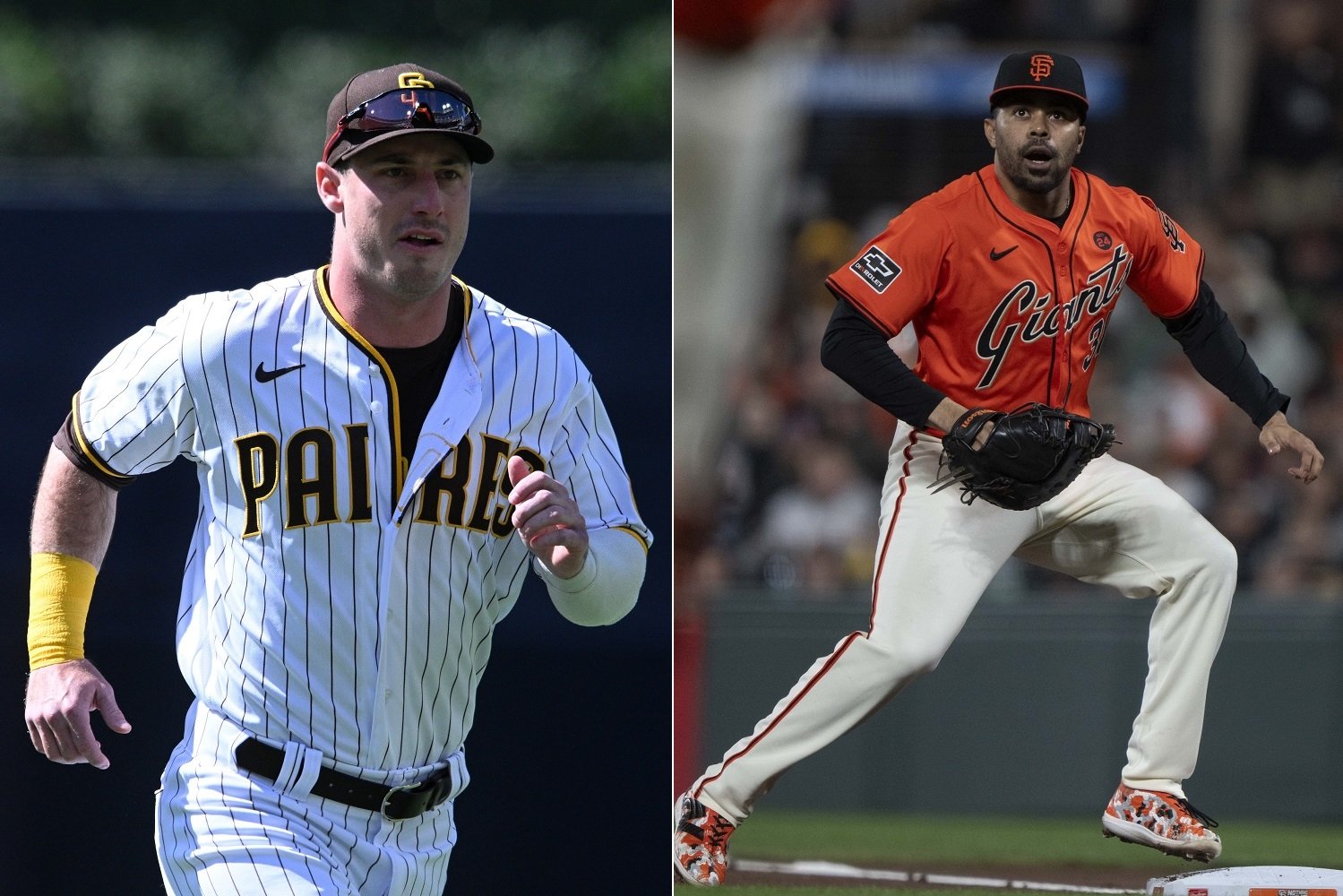 As we look ahead to another “exciting Twins offseason,” it’s become increasingly apparent that the Twins’ brass will need to get creative amid payroll constraints. Just look at the Offseason Blueprints being generated all over Twins Daily as we speak. Derek Falvey and Co. have pulled off their fair share of creative trades, seeking to add to the current big league team even if it takes a big leaguer or two in return. Funnily enough, under Falvey's watchful eye, the Twins have rarely sold over the offseason at all, seemingly preferring to swap their MLB talent for help today rather than prospects for tomorrow. Gio Urshela, by my count, was the only major leaguer to be traded for a prospect since 2017. The team has been trying to win, not stock up assets, leaning into its creativity to make things happen. But, of course, that creativity needs to work. No team wins every trade, but competitive teams need to win more than they lose. It’s pretty straightforward when picking winners and losers when a team sends away MLB contributors from a position of strength to bring in other MLB contributors in a position of need. Below, I’ve listed every trade that could be considered an offseason challenge trade–MLB for MLB (occasionally prospects get added to the deals, but they have to have an MLB contract going each way)–over the offseason. Before we begin, some housekeeping. I provided stats for each player with their new team. Performance isn’t considered if they were again traded or signed elsewhere as free agents after the trade being discussed. Obviously, this analysis doesn’t include future performance, either. This information is accurate as of November 19th, 2024. Those with an * indicate that the player is still in the organization they were traded to, so the complete picture isn’t available. I will also be providing some context for each trade. Comparing statistics does not necessarily indicate which team won the trade, so I have done my best to explain why the trade occurred. See the Yankees trade below for an example of why comparing statistics isn’t ideal. Although the Twins lost the trade by WAR, it cleared the salary owed to Josh Donaldson and gave them the room to sign Carlos Correa to his first Minnesota contract. Without further ado, my subjective order is from best to worst. 3/13/22: Minnesota acquires Gio Urshela (551 PA, 119 OPS+, 3.1 bWAR), Gary Sanchez (471 PA, 88 OPS+, 0.9 bWAR) from New York (AL) for Josh Donaldson (666 PA, 90 OPS+, 2.3 bWAR), Isiah Kiner-Falefa (892 PA, 81 OPS+, 2.9 bWAR), Ben Rortvedt (79 PA, 28 OPS+, -0.2 bWAR), +1.0 bWAR for Minnesota. There’s a lot to unpack in this trade, primarily orchestrated to clear up salary room from 2022 to 2024 and be rid of Donaldson, who some reports suggest had worn out his welcome in Minnesota. Donaldson was a solid contributor for New York in 2022 but wore out his welcome and was waived before the end of 2023. Kiner-Falefa played two decent years in pinstripes. Rortvedt played minimally in New York due to injury. Urshela and Sanchez spent a year in Minnesota and filled the roles they were brought in for, but neither returned for 2023. Although both Urshela and Sanchez had contracts that offset some of Donaldson’s, that excess money helped bring in Correa before 2022 and 2023. 1/20/23: Minnesota acquires Pablo López* (379.1 IP, 110 ERA+, 5.8 bWAR), Jose Salas* (has not reached Minnesota), Byron Churio* (has not reached Minnesota) from Miami for Luis Arraez (765 PA, 122 OPS+, 5.0 bWAR), +0.8 bWAR for Minnesota. López was tagged as the Opening Day starter after the trade that sent the batting champion Arraez to Miami. After four great starts and a four-year, $73 million extension, López finished seventh in the AL Cy Young. Churio and Salas were promising prospects many did not anticipate being included in the deal, though it’s questionable whether either will make it to the big leagues. Arraez won his second consecutive batting title and placed eighth in the 2023 NL MVP voting. He was traded to San Diego mid-season in 2024 and just won his third consecutive batting title. 2/9/20: Minnesota acquires Kenta Maeda (277.1 IP, 106 ERA+, 3.0 bWAR), Jair Camargo* (7 PA, -54 OPS+, -0.1 bWAR) from Los Angeles (NL) for Brusdar Graterol* (181 IP, 158 ERA+, 3.5 bWAR), Luke Raley (72 PA, 43 OPS+, -0.5 bWAR), -0.1 bWAR for Minnesota. Maeda finished second in the 2020 Cy Young voting during the shortened season but struggled in 2021, had Tommy John surgery, and reestablished himself in 2023, though not without continued injury concerns. At the time of the trade, the Twins knew he may have elbow issues. Graterol has been a solid force in LA’s bullpen when healthy. Camargo has gotten a cup of coffee in MLB, and Raley was traded to Tampa. This trade also sent a 2nd round pick to LA. 3/12/22: Minnesota acquires Isiah Kiner-Falefa (did not reach Minnesota), Ronny Henriquez* (31.0 IP, 143 ERA+, 0.5 bWAR) from Texas for Mitch Garver (559 PA, 121 OPS+, 2.5 bWAR), -2.0 bWAR for Minnesota. Coming out of the lockout, Minnesota made a move that killed two birds with one stone: got a return for the off-injured Garver and filled a hole at shortstop. Garver dealt with injuries in Texas but still hit well enough for mainly DH role. Kiner-Falefa was a Twin for one day before getting traded again. Henriquez,24, saw mild success out of the pen for the Twins in 2024 and could rack up frequent rider miles on the Green Line between St. Paul and Minnesota for the next few years. 4/7/22: Minnesota acquires Chris Paddack* (115.2 IP, 86 ERA+, 0.7 bWAR), Emilio Pagán (132.1 IP, 112 OPS+, 0.9 bWAR), Brayan Medina* (has not reached Minnesota) from San Diego for Taylor Rogers (41.1 IP, 87 ERA+, -0.2 bWAR), Brent Rooker (7 PA, -100 OPS+, -0.2 bWAR), +2.0 bWAR for Minnesota. This infamous trade sent away the Twins' top reliever in Rogers, who struggled in San Diego. Rooker, a depth outfielder, only registered seven plate appearances for San Diego but has blossomed into an All-Star in Oakland. Both were traded from San Diego at the 2022 deadline. In return, the team received Paddack, who had known elbow issues, pitched well in five starts, then underwent Tommy John. He returned as a bullpen piece down the stretch in 2023 and threw 88 innings at the back of the Twins rotation in 2024. Pagán largely struggled through 2022 as a high-leverage arm, but he posted a sub-3.00 ERA and led the bullpen in innings in 2023. Medina was released after three years of Rookie ball, and the Twins retained most of Rogers’ salary. 1/19/24: Minnesota acquires Anthony DeSclafani (did not play for Minnesota), Justin Topa* (2.1 IP, 999 ERA+, 0.2 bWAR), Gabriel Gonzalez* (has not reached Minnesota), Darren Bowen* (has not reached Minnesota) from Seattle for Jorge Polanco (469 PA, 93 OPS+, 1.4 bWAR), -1.2 bWAR for Minnesota. This one’s a doozie. The Twins needed to free up payroll space and traded one of their longest-tenured players in Polanco. Seattle sent back starter Anthony DeSclafani–who missed the entire year with injury–and reliever Justin Topa–who missed all but a week of the season with injury. They also received prospects in the form of outfielder Gabriel Gonzalez (who received one rouge listing on a top-100 prospect list) and pitcher Darren Bowen. For his part, Polanco struggled as well. No real winners in this trade unless Gonzalez turns into something. At least the excess space salary got turned into Carlos Santana. 2/11/24: Minnesota acquires Steven Okert (35.1 IP, 82 ERA+, -0.3 bWAR) from Miami for Nick Gordon (275 PA, 68 OPS+, -1.7 bWAR), +1.4 bWAR for Minnesota. Nick Gordon didn’t have a place on the 2024 Twins after a 2023 lost to injury, and he was out of options. He was flipped to Miami for Okert in the hopes the lefty could cover some middle innings. Okert’s highs were “fine,” and his lows were “bad.” Gordon was all “bad.” The Twins won the WAR, but both teams lost. 11/18/22: Minnesota acquires Alejandro Hidalgo* (has not reached Minnesota) from Los Angeles (AL) for Gio Urshela (130 PA, 84 OPS+, 0.2 bWAR), -0.2 bWAR for Minnesota. Urshela became a fan-favorite and consistent performer in his year in Minnesota but would have likely been non-tendered in arbitration to prevent a perceived logjam on the Minnesota infield. He played all around the infield and had been moderately productive for the Angels before a broken pelvis ended his season. Hidalgo is still 20 years old but just lost an entire season to injury. 2/5/21: Minnesota acquires Shaun Anderson (8.2 IP, 47 ERA+, -0.5 bWAR) from San Francisco for LaMonte Wade, Jr.* (1552 PA, 115 OPS+, 6.0 bWAR), -4.4 bWAR for Minnesota. In retrospect, this was an unforced error. The Twins had two similar options for their fourth outfielder going into 2021—Wade and Jake Cave—and they elected to trade Wade, who, when healthy, has been a consistent presence in the Giants lineup for several years. Cave struggled over his last two years in Minnesota, and Anderson, the AAAA lottery ticket they got for Wade, was out of the organization before the year ended. In total, Minnesota has lost 2.7 WAR in these trades–under this methodology for counting WAR at least. They certainly haven’t hit a home run on the whole, but there’s only been one true, unmitigated blunder–the Wade trade. Even the Rooker trade returned decent pitching, and Rooker bounced around before becoming the guy he is today. What do you think? How much confidence do you have in the Twins pulling off some creative big-leaguer-for-big-leaguer trades this offseason?
- 38 comments
-
- 3
-
-
- brent rooker
- lamonte wade
- (and 5 more)
-
Let’s walk down one path this smelly offseason can take, courtesy of the Twins Daily Payroll Tool. It’s time to make some moves, including at least one funky one. Image courtesy of © Jeff Curry-Imagn Images This series of articles is a primer on the release of our new "You're The Twins GM!" tool where you play the role of Derek Falvey and build your own Twins offseason. Please visit the tool here and join in on the fun! Let’s first set the scene. The Twins have approximately $130 million to spend this season, so the limit for my exercise is $130 million (also, I broke my self-imposed limit, like a bad boy). By my estimate, we’re starting at a payroll of $134.5 million, a number ownership probably wants us to get down from. But we also want to improve the team. The Twins have the following guaranteed contracts: $36 million to Carlos Correa $21 million to Pablo Lopez $15 million to Byron Buxton $10 million to Christian Vazquez $7.5 million to Chris Paddack $3 million to Randy Dobnak $1.5 million to Jorge Alcala (option already exercised) The Twins also have 11 players eligible for arbitration. I’ll be using MLB Trade Rumors’s estimates for their salaries. I will tender contracts to all arbitration-eligible players other than Michael Tonkin (estimated $1.5 million). If some other team throws me a fringy 18-year-old for his rights, I will take it, but otherwise, he’s a non-tender. Willi Castro, Ryan Jeffers, Bailey Ober, Joe Ryan, Jhoan Durán, Griffin Jax, Royce Lewis, Trevor Larnach, Justin Topa, and Brock Stewart all remain Twins for an estimated $31.8 million. The minimum salary in MLB for 2025 is $760,000. However, some minimum salary players get small raises and other miscellaneous bonuses, so for this exercise, every other player on the roster will get an estimated $800,000 salary. Move 1: Trade Chris Paddack Given the payroll constraints, finding trading partners will be key this offseason. You may believe otherwise, but I’m a firm believer that the Twins can move Paddack’s entire salary. I don’t believe it would net them a great prospect, but $7.5 million is a reasonable price for a player of his caliber and pedigree on the free market. Who could he get the Twins in return? Honestly, I don’t care; nor do I care where he goes. I’ve been operating under the assumption all offseason that the Sheriff is riding out of town, one way or another. Let’s just say he gets traded to the Red Sox, and the Twins get someone like catcher Nathan Hickey. Sure. Him. $7.50 million removed from the 2024 payroll. Lost: Chris Paddack Move 2: Trade Christian Vázquez and Get Messy with It I told you there’d be funk. Here it is. Vázquez handles a pitching staff well enough to be a starting catcher. However, he’s not worth $10 million to the Twins, and he’s likely not worth that to other teams, either. A key for the Twins will likely be finding the team willing to take on the most salary and sending him there. In recent years, Falvey has pulled off some trades that ranged from unorthodox to boneheaded, and even if they didn’t work, they were kinda fun. San Diego is a great trade partner here for several reasons. First, they need a catcher. The team soured on their former catcher of the future—Luis Campusano, who has four years of arbitration remaining—down the stretch in 2024, starting a tandem of Kyle Higashioka and Elías Díaz down the stretch. Both the veterans are now free agents, and the team needs a starting catcher to hold the spot warm until top prospect Ethan Salas is ready to roll. Also, A.J. Preller trades like a madman. Like, no trade he could ever make would surprise me. So here’s what I’m thinking. Send Vázquez to San Diego for the disgraced youngster Campusano and lefty reliever Wandy Peralta. Peralta, 33, had a bit of a messy year in 2024, losing a step from his stellar 2020 to 2023, but he kept his ERA under 4.00. Peralta, like Vázquez, has an annoying contract that might not justify his play, being owed $13.15 million over the next three years with opt-outs after each season. In 2025, he’s owed $4.25 million. If Peralta gets back on track, he may opt out after the 2025 season, but if he struggles or is truly cooked, the Twins could be on the hook for $4.45 million of dead money for 2025 and 2026. It’s two bad contracts for questionable players. Add in a catcher with more team control, which, the Twins are in desperate need of a catcher they can turn to after Ryan Jeffers reaches free agency after 2026. In my hypothesized world, the Twins would include some very young, high-variance prospects like Adrian Bohorquez (MLB Pipeline’s #29 Twins prospect) and Eduardo Beltre (23)—an archetype Preller loves to collect so that he himself can flip them when they start looking exciting. That’s the starting point, anyway. I could be talked into someone higher up the chain, including other high-variance players like Brandon Winokur (16) or Yasser Mercedes (14), a top-ten prospect like Gabriel Gonzalez (7) or one of the club's high-minors pitchers if I was convinced Campusano could be fixed—I just don't know what the league thinks of him right now. That's one of the reasons that efforts like these are fruitless to predict from the outside. Shoot, San Diego might be looking for international bonus pool money to make a run at Roki Sasaki, and the Twins are probably looking for reasons to not spend money in international free agency; add that if it helps! If I don’t feel Campusano can be fixed, I’d scale back the this deal, but I might be interested in someone like Boston’s Connor Wong, who is also a decent catcher with team control and a top prospect (Kyle Teel) who could soon be taking his job. I'm willing to be a bit reckless in prospect capital if I can find a young, controllable catcher, even if he's just a run-of-the-mill piece, given the Twins' lack of depth at the spot. However, if I can't find someone, I'd just throw some money at a low-end backup veteran catcher to prevent Jeffers and Jair Camargo (whom I have not been sold on yet) being the only catching options. If Peralta doesn't opt out, in this hypothetical scenario, San Diego would pay $1 million per year of Peralta’s contract and $0.5 of Campusano’s estimated $1.7 million in 2025. I would be stunned if this exact trade happened, but I have the feeling that if Vázquez is moved, it won’t be in a total salary dump. Hopefully the club can find a way to get really creative. $5.55 million removed from the payroll. Lost: Christian Vázquez. Added: Wandy Peralta, Luis Campusano Move 3: Trade for Yandy Díaz First Wandy, now Yandy. Let’s reallocate some of that salary that we just moved. The Rays have made it clear that they are open to trading Díaz, who will make $10 million this season and has a $12 million option for 2026, with no buyout money. If whatever team he’s playing for doesn’t want to bring him back, they can let him walk for free. However, if traded, his new team owes him an additional $1 million. What would it take? That’s a good question. There are other first basemen available in free agency this offseason, so it’s not like Díaz is the only option among first basemen. My initial package would include high-minors pitching prospects Andrew Morris (6) and C.J. Culpepper (12), and then either catcher Ricardo Olivar (15) or outfielder Kala’i Rosario (19). It’s time for the Twins to cash in their great pitching draft classes, as St. Paul probably has more pitchers than is reasonable right now. Ahead of the Rule 5 Draft, the Twins didn't protect Olivar or Rosario, so I would be interested in trading them if the team has any inkling that another club might try to snatch them away. Does this do it? Maybe not, but it’s a place to start. I could be talked into building a package for Díaz for anything less than Luke Keaschall (3), especially if that led to Tampa kicking in a little salary. Ideally, the Twins could get the Rays to kick in $3 million (less than they paid to get Manuel Margot out of town, by the way). $8 million added to the payroll ($7 million in salary, $1 million in trade assignment). Added: Yandy Díaz Moves 4 & 5 (and 6): Fill Out the Bench These two moves aren’t exciting at all, but I'd add a couple of (potentially) competent role players. First, Amed Rosario. Rosario is a utility player who’s frankly had an up-and-down career. Still, he’s a 29-year-old with positional flexibility, speed, and a good bat against lefties his entire career. I’d love to see him get a $2 million contract for 2025 with a $5 million option for 2026 if the Twins find something in him. A $500,000 buyout sounds good (it goes on this year’s ledger). Second, I’d sign a bat-first righty outfielder. Now, this could be any number of dudes like Robbie Grossman, Tommy Pham, Adam Duvall, or whatever (if my scouts, of which I employ many, think they're not stew meat at this point in their careers, of course). There’s several of them, and one of them is going to be looking for a home in February. Throw $2 million at him and let him platoon with big, beefy boys Trevor Larnach and Matt Wallner. Let's say it's Pham. Honestly, I would be open to this bench spot being a lefty or an infielder, too. But they need to be able to hit. I guess that's the main thing here. Donovan Solano? I don't know, man, just find me someone who can play a corner spot or DH and is looking for a job in February. However, this fifth move isn't a necessity. Don't spend money you don't need to; just backfill that spot with an internal option. Also, knowing when to cut the cord is critical to both fringe additions. My last move would hopefully be free, but I’d try to find a way to bring in 25-year-old Cristian Pache on a minor league deal. Pache is a former top prospect who plays elite defense in center field but has struggled badly at the plate in his big-league career. He’s out of options, but he could still have a higher ceiling than someone like DaShawn Keirsey, and he’s right-handed. A Byron Buxton organization can’t have enough center field depth. $4.5 million added to the payroll. Added: Amed Rosario, Tommy Pham, Cristian Pache (MiLB) Please see my attached sheet for my estimate of how these moves would shake out payroll-wise. It would take some finagling, some negotiations going right, and some serious prospects, but I kind of like this roster. My final count is $130.85 million. What do you think of this offseason plan? Do you think you can do better? Then build your own Twins roster and hit the button below! Start Your Payroll Blueprint Now View full article
-
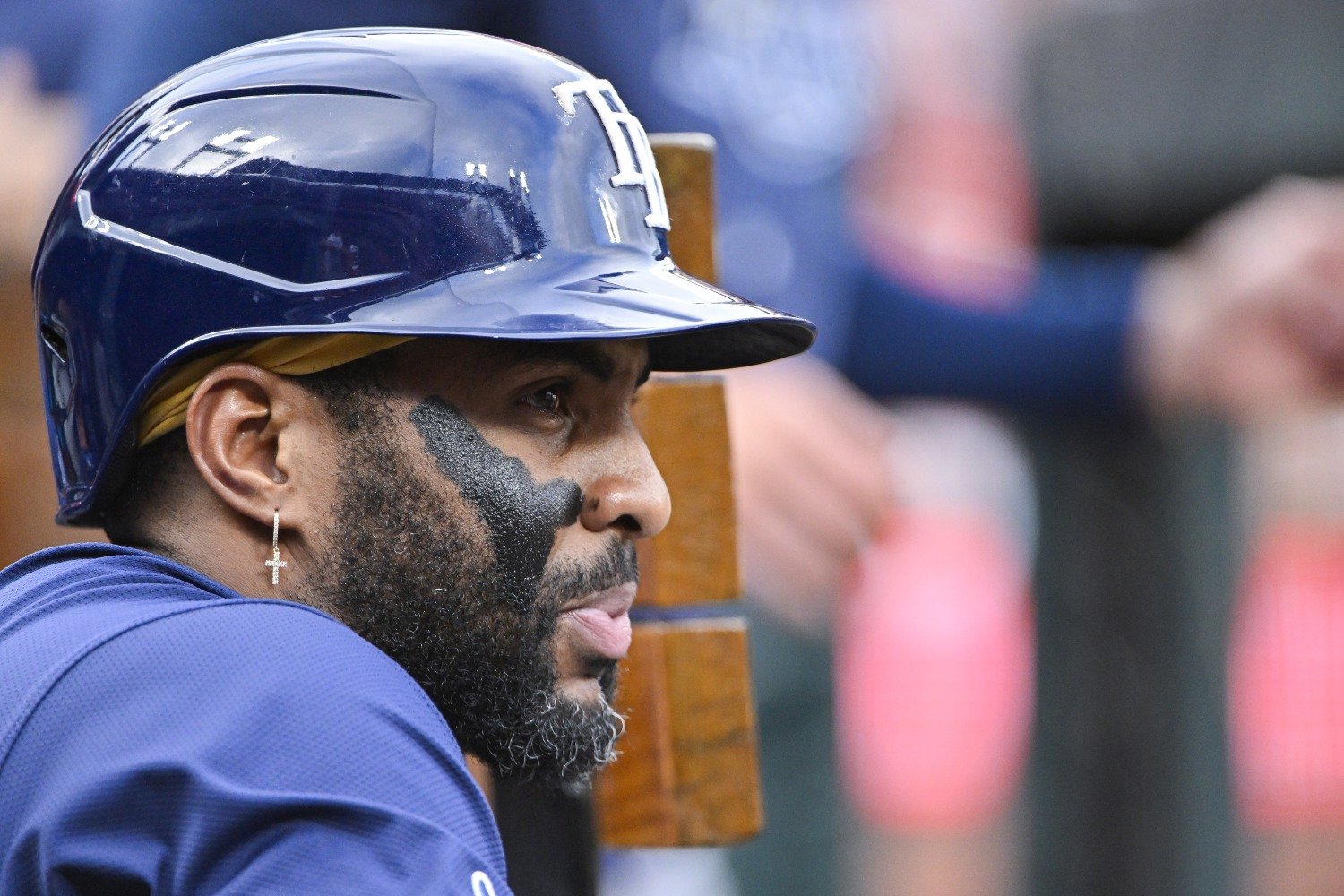 This series of articles is a primer on the release of our new "You're The Twins GM!" tool where you play the role of Derek Falvey and build your own Twins offseason. Please visit the tool here and join in on the fun! Let’s first set the scene. The Twins have approximately $130 million to spend this season, so the limit for my exercise is $130 million (also, I broke my self-imposed limit, like a bad boy). By my estimate, we’re starting at a payroll of $134.5 million, a number ownership probably wants us to get down from. But we also want to improve the team. The Twins have the following guaranteed contracts: $36 million to Carlos Correa $21 million to Pablo Lopez $15 million to Byron Buxton $10 million to Christian Vazquez $7.5 million to Chris Paddack $3 million to Randy Dobnak $1.5 million to Jorge Alcala (option already exercised) The Twins also have 11 players eligible for arbitration. I’ll be using MLB Trade Rumors’s estimates for their salaries. I will tender contracts to all arbitration-eligible players other than Michael Tonkin (estimated $1.5 million). If some other team throws me a fringy 18-year-old for his rights, I will take it, but otherwise, he’s a non-tender. Willi Castro, Ryan Jeffers, Bailey Ober, Joe Ryan, Jhoan Durán, Griffin Jax, Royce Lewis, Trevor Larnach, Justin Topa, and Brock Stewart all remain Twins for an estimated $31.8 million. The minimum salary in MLB for 2025 is $760,000. However, some minimum salary players get small raises and other miscellaneous bonuses, so for this exercise, every other player on the roster will get an estimated $800,000 salary. Move 1: Trade Chris Paddack Given the payroll constraints, finding trading partners will be key this offseason. You may believe otherwise, but I’m a firm believer that the Twins can move Paddack’s entire salary. I don’t believe it would net them a great prospect, but $7.5 million is a reasonable price for a player of his caliber and pedigree on the free market. Who could he get the Twins in return? Honestly, I don’t care; nor do I care where he goes. I’ve been operating under the assumption all offseason that the Sheriff is riding out of town, one way or another. Let’s just say he gets traded to the Red Sox, and the Twins get someone like catcher Nathan Hickey. Sure. Him. $7.50 million removed from the 2024 payroll. Lost: Chris Paddack Move 2: Trade Christian Vázquez and Get Messy with It I told you there’d be funk. Here it is. Vázquez handles a pitching staff well enough to be a starting catcher. However, he’s not worth $10 million to the Twins, and he’s likely not worth that to other teams, either. A key for the Twins will likely be finding the team willing to take on the most salary and sending him there. In recent years, Falvey has pulled off some trades that ranged from unorthodox to boneheaded, and even if they didn’t work, they were kinda fun. San Diego is a great trade partner here for several reasons. First, they need a catcher. The team soured on their former catcher of the future—Luis Campusano, who has four years of arbitration remaining—down the stretch in 2024, starting a tandem of Kyle Higashioka and Elías Díaz down the stretch. Both the veterans are now free agents, and the team needs a starting catcher to hold the spot warm until top prospect Ethan Salas is ready to roll. Also, A.J. Preller trades like a madman. Like, no trade he could ever make would surprise me. So here’s what I’m thinking. Send Vázquez to San Diego for the disgraced youngster Campusano and lefty reliever Wandy Peralta. Peralta, 33, had a bit of a messy year in 2024, losing a step from his stellar 2020 to 2023, but he kept his ERA under 4.00. Peralta, like Vázquez, has an annoying contract that might not justify his play, being owed $13.15 million over the next three years with opt-outs after each season. In 2025, he’s owed $4.25 million. If Peralta gets back on track, he may opt out after the 2025 season, but if he struggles or is truly cooked, the Twins could be on the hook for $4.45 million of dead money for 2025 and 2026. It’s two bad contracts for questionable players. Add in a catcher with more team control, which, the Twins are in desperate need of a catcher they can turn to after Ryan Jeffers reaches free agency after 2026. In my hypothesized world, the Twins would include some very young, high-variance prospects like Adrian Bohorquez (MLB Pipeline’s #29 Twins prospect) and Eduardo Beltre (23)—an archetype Preller loves to collect so that he himself can flip them when they start looking exciting. That’s the starting point, anyway. I could be talked into someone higher up the chain, including other high-variance players like Brandon Winokur (16) or Yasser Mercedes (14), a top-ten prospect like Gabriel Gonzalez (7) or one of the club's high-minors pitchers if I was convinced Campusano could be fixed—I just don't know what the league thinks of him right now. That's one of the reasons that efforts like these are fruitless to predict from the outside. Shoot, San Diego might be looking for international bonus pool money to make a run at Roki Sasaki, and the Twins are probably looking for reasons to not spend money in international free agency; add that if it helps! If I don’t feel Campusano can be fixed, I’d scale back the this deal, but I might be interested in someone like Boston’s Connor Wong, who is also a decent catcher with team control and a top prospect (Kyle Teel) who could soon be taking his job. I'm willing to be a bit reckless in prospect capital if I can find a young, controllable catcher, even if he's just a run-of-the-mill piece, given the Twins' lack of depth at the spot. However, if I can't find someone, I'd just throw some money at a low-end backup veteran catcher to prevent Jeffers and Jair Camargo (whom I have not been sold on yet) being the only catching options. If Peralta doesn't opt out, in this hypothetical scenario, San Diego would pay $1 million per year of Peralta’s contract and $0.5 of Campusano’s estimated $1.7 million in 2025. I would be stunned if this exact trade happened, but I have the feeling that if Vázquez is moved, it won’t be in a total salary dump. Hopefully the club can find a way to get really creative. $5.55 million removed from the payroll. Lost: Christian Vázquez. Added: Wandy Peralta, Luis Campusano Move 3: Trade for Yandy Díaz First Wandy, now Yandy. Let’s reallocate some of that salary that we just moved. The Rays have made it clear that they are open to trading Díaz, who will make $10 million this season and has a $12 million option for 2026, with no buyout money. If whatever team he’s playing for doesn’t want to bring him back, they can let him walk for free. However, if traded, his new team owes him an additional $1 million. What would it take? That’s a good question. There are other first basemen available in free agency this offseason, so it’s not like Díaz is the only option among first basemen. My initial package would include high-minors pitching prospects Andrew Morris (6) and C.J. Culpepper (12), and then either catcher Ricardo Olivar (15) or outfielder Kala’i Rosario (19). It’s time for the Twins to cash in their great pitching draft classes, as St. Paul probably has more pitchers than is reasonable right now. Ahead of the Rule 5 Draft, the Twins didn't protect Olivar or Rosario, so I would be interested in trading them if the team has any inkling that another club might try to snatch them away. Does this do it? Maybe not, but it’s a place to start. I could be talked into building a package for Díaz for anything less than Luke Keaschall (3), especially if that led to Tampa kicking in a little salary. Ideally, the Twins could get the Rays to kick in $3 million (less than they paid to get Manuel Margot out of town, by the way). $8 million added to the payroll ($7 million in salary, $1 million in trade assignment). Added: Yandy Díaz Moves 4 & 5 (and 6): Fill Out the Bench These two moves aren’t exciting at all, but I'd add a couple of (potentially) competent role players. First, Amed Rosario. Rosario is a utility player who’s frankly had an up-and-down career. Still, he’s a 29-year-old with positional flexibility, speed, and a good bat against lefties his entire career. I’d love to see him get a $2 million contract for 2025 with a $5 million option for 2026 if the Twins find something in him. A $500,000 buyout sounds good (it goes on this year’s ledger). Second, I’d sign a bat-first righty outfielder. Now, this could be any number of dudes like Robbie Grossman, Tommy Pham, Adam Duvall, or whatever (if my scouts, of which I employ many, think they're not stew meat at this point in their careers, of course). There’s several of them, and one of them is going to be looking for a home in February. Throw $2 million at him and let him platoon with big, beefy boys Trevor Larnach and Matt Wallner. Let's say it's Pham. Honestly, I would be open to this bench spot being a lefty or an infielder, too. But they need to be able to hit. I guess that's the main thing here. Donovan Solano? I don't know, man, just find me someone who can play a corner spot or DH and is looking for a job in February. However, this fifth move isn't a necessity. Don't spend money you don't need to; just backfill that spot with an internal option. Also, knowing when to cut the cord is critical to both fringe additions. My last move would hopefully be free, but I’d try to find a way to bring in 25-year-old Cristian Pache on a minor league deal. Pache is a former top prospect who plays elite defense in center field but has struggled badly at the plate in his big-league career. He’s out of options, but he could still have a higher ceiling than someone like DaShawn Keirsey, and he’s right-handed. A Byron Buxton organization can’t have enough center field depth. $4.5 million added to the payroll. Added: Amed Rosario, Tommy Pham, Cristian Pache (MiLB) Please see my attached sheet for my estimate of how these moves would shake out payroll-wise. It would take some finagling, some negotiations going right, and some serious prospects, but I kind of like this roster. My final count is $130.85 million. What do you think of this offseason plan? Do you think you can do better? Then build your own Twins roster and hit the button below! Start Your Payroll Blueprint Now
 -
The offseason is fully underway, let's talk about how the Twins have done absolutely nothing. Sweet Lou, Comrade Cody, and Ol Gregg discuss the upcoming potential nontender candidates and key names ahead of the Rule 5 Draft protection deadline. They also lay out their offseason blueprints, including Lou trading a fan favorite and Cody plagiarizing Gregg and making a threat. Listen using Apple Podcasts: https://podcasts.apple.com/us/podcast/the-twins-off-daily-podcast/id1741266056 Listen using Spotify: https://open.spotify.com/show/4tb78XlurcPTYYSsARdbD7 Listen using iHeartRadio: https://www.iheart.com/podcast/263-the-twins-off-daily-podcas-167548600/ Listen using Pocket Casts: https://pca.st/nvclbt0w Watch on YouTube: https://www.youtube.com/@twinsdaily View full article
-
 Sweet Lou, Comrade Cody, and Ol Gregg discuss the upcoming potential nontender candidates and key names ahead of the Rule 5 Draft protection deadline. They also lay out their offseason blueprints, including Lou trading a fan favorite and Cody plagiarizing Gregg and making a threat. Listen using Apple Podcasts: https://podcasts.apple.com/us/podcast/the-twins-off-daily-podcast/id1741266056 Listen using Spotify: https://open.spotify.com/show/4tb78XlurcPTYYSsARdbD7 Listen using iHeartRadio: https://www.iheart.com/podcast/263-the-twins-off-daily-podcas-167548600/ Listen using Pocket Casts: https://pca.st/nvclbt0w Watch on YouTube: https://www.youtube.com/@twinsdaily
 -
So if I’m understanding you right, Jeffers has good trade value, and the Twins could get value for his last two years of team control, and they could even get another catcher with more team control in return for him in the process? Were you lying when you said you didn’t read this?
-
Moving on from the Twins’ backup catcher from the past two years makes some sense. Oh wait, you mean Jeffers? Okay, we can quibble over semantics—yes, Ryan Jeffers did catch one more inning in 2024 than Christian Vazquez. But let me have this hook (Vazquez has caught 150 innings more in total over the last two years in the Twins alternating setup, anyway). What's Up with Ryan Jeffers Jeffers just completed his fifth season in a Twins uniform. He’s had his ups and downs both at and behind the plate, but on the whole, he’s averaged out to being a solid big-league starting catcher. Over the first two months of the 2024 season, he was one of the best hitters on the squad, if not the best, boasting an OPS about 50% above league average. However, he spent most of the final four months in a slump, finishing with an OPS+ of 105—league average. Mind you, that’s still pretty good for a catcher and matches his career OPS+ of 103. Defensively, it seems like Jeffers has lost something. Lauded for his skills as a pitch framer at his debut, the backstop has seen his performance decline year-over-year until he graded out as one of the worst pitch framers in baseball in 2024. He’s never been good at blocking, and 2024 was the only season that he’s been even an average blocker. And, yet, he’s still a solid, young catcher with a few years of team control. The Case for Trading Ryan Jeffers One of the biggest talking points this offseason has been the Twins’ payroll limitations. The club is seemingly already past their own self-imposed spending limit before making a single addition. One of the positions consistently highlighted as a potential target for payroll deductions is catcher. Jeffers and Vazquez are slated to earn a combined $15 million or so in 2025 to split duties (perhaps 50-50) behind the plate. That’s not a terrible sum—unless a team like the Twins is trying to create spending room in any way possible. It’s almost impossible to discuss the case for trading Jeffers without discussing Vazquez (especially given most of the discourse around trading a catcher has been focused on Vazquez), so I apologize if I repeat the points raised by Brandon Glick in his feature. Although Vazquez is in the last year of his deal, and Jeffers has been seen as the catcher of the future, the younger backstop has only two years of team control left. That is to say, it’s not like either catcher (barring an extension) is going to be around for the long haul anymore. Jeffers is regarded by most as the more talented catcher, with his offense making up for what he lacks behind the dish compared to Vazquez. According to MLB Trade Rumors, he’s also due less than half of Vazquez’s salary in arbitration this year, $4.7 million. He’s not a terribly consistent player, but his highs are high, and teams can dream on what he could be in their uniforms to a degree that’s impossible with Vazquez at this stage of his career. And if the Twins want to get value out of dumping one of their starting catchers, not just salary relief, the choice has to be Jeffers. Note: If you’d like to see an in-depth analysis of how the two compare at the plate (it might be closer than you expect), see Matthew Trueblood’s Offseason Handbook article). Comparable Trades of the Past You don’t have to look far to find a case of the Twins trading their popular, bat-first starting catcher with two years of team control left; look no further than 2022. In March of that year, the Twins traded 2020 Silver Slugger catcher Mitch Garver to Texas for shortstop Isiah Kiner-Falefa and pitcher Ronny Henriquez. The trade moved value from a position of surplus (making room for a young Jeffers) to a position of need, as to that point, the team had not signed Carlos Correa to fill their gaping hole at shortstop. Kiner-Falefa was eventually (and by eventually, I mean the following day) traded to New York in the Josh Donaldson trade, but he turned in a good year for the Yankees. He would have been a solid enough starting shortstop for the Twins had he stayed in town longer than a day. Henriquez has converted to the pen and could be a factor in the 2025 season. Overall, that’s a solid value return, given the squad's needs. It’s actually pretty difficult to find instances of starting catchers being traded over the offseason. Sometimes, a high-quality catcher will be traded at the deadline if he’s on an expiring contract, as happened with Vazquez himself in 2022 when he was traded for Emmanuel Valdez and Wilyer Abreu, who appears to be a mainstay in Boston’s outfield for years to come. There was also the trade between Oakland, Milwaukee, and Atlanta in which All-Star catchers William Contreras and Sean Murphy were swapped, but that’s an exception to the rule. In 2019, after a good year behind the dish, Seattle flipped Omar Narvaez to Milwaukee for a middling pitching prospect and a second-round compensation pick? Mike Zunino—with two years of arbitration remaining—was part of a package that brought back Mallex Smith and Jake Fraley? I don’t know, I’m grasping at straws here for other examples. Starting-caliber catchers tend to get traded early in their big league career, right before they debut, or on an expiring contract. There’s little precedent for a trade like this, but this series aims to prime readers for what could happen and why. Potential Trade Partners One of the factors that makes a Jeffers trade difficult is that “starting catcher” isn’t a general need. Most teams have one, and if you already have one, what’s the point of getting another unless your owner is feeling generous *cough*? However, a handful of playoff contenders don’t have great catching cores at present, which could give the Twins a lane to close a deal. San Diego Padres San Diego was one of the best teams in baseball this year, but its catching room leaves a lot to be desired. Their former catcher of the future, Luis Campusano, has not impressed over his early career on either side of the ball, outside of a productive 49-game season in 2023. Their top prospect, catcher Ethan Salas, still projects to need at least another year before cracking the big league roster. Jeffers could be an option to hold Salas’s spot warm and would slot in well amid one of the most exciting lineups in baseball. The Padres have a shallow farm system, but a return package could include Campusano himself amid other prospects or big-league talent if the Twins see a way to get his young career back on track. Boston Red Sox Boston is coming off a mediocre year, but if they’re looking to compete in 2025, catcher could be a spot they try to upgrade at. Like San Diego’s Salas, Boston also has a high-profile catcher nearing MLB readiness in Kyle Teel. Their current everyday catcher, Connor Wong, is a 28-year-old coming off his best season at the plate, though he was one of the worst defensive catchers in baseball, and Boston could seek an upgrade in the interim. If they were to take a liking to Jeffers, he could serve as a stopgap and split duties with the prospect Teel, protecting the younger player from tough lefties. Boston has a very healthy farm system and can deal from that surplus to improve in 2025 and 2026. Tampa Bay Rays Dealing with Tampa is always fun, and no team has ever regretted trading with Tampa! Hey, put away the Delmon Young Trade Tree. I’m still updating those numbers! Tampa is a bit of a wildcard, coming off their worst season in seven years, but they’re always a factor and have never shied away from unorthodox trades. They currently have a bunch of catchers who swing limp pool noodles, including former Twin Ben Rortvedt, so Jeffers could find work—if they’re willing to open their pocketbooks. Tampa, like Boston, has a great farm system, so it’s a possibility. The Field I mean, I’m sure there is a bevy of competing teams who won’t necessarily turn down the option to add Jeffers to their roster. If a team really likes him and wants to pair him with who they’ve already got, even in a timeshare like that he’s been part of throughout his entire career in Minnesota. So if an owner is feeling generous, a Jeffers trade could be, well, almost anywhere. Conclusions As I’ve stated, there isn’t a ton of precedent for this type of trade. There aren’t many competing teams that you can circle and say, “This team absolutely needs Ryan Jeffers.” But he is an asset; he has a couple of years of team control, and he’s inexpensive. If the team needs to move one of the two catchers for payroll reasons, and they want to get something of value in return, the move is Jeffers, though it may not hurt as much as we might initially believe. View full article
-
 Okay, we can quibble over semantics—yes, Ryan Jeffers did catch one more inning in 2024 than Christian Vazquez. But let me have this hook (Vazquez has caught 150 innings more in total over the last two years in the Twins alternating setup, anyway). What's Up with Ryan Jeffers Jeffers just completed his fifth season in a Twins uniform. He’s had his ups and downs both at and behind the plate, but on the whole, he’s averaged out to being a solid big-league starting catcher. Over the first two months of the 2024 season, he was one of the best hitters on the squad, if not the best, boasting an OPS about 50% above league average. However, he spent most of the final four months in a slump, finishing with an OPS+ of 105—league average. Mind you, that’s still pretty good for a catcher and matches his career OPS+ of 103. Defensively, it seems like Jeffers has lost something. Lauded for his skills as a pitch framer at his debut, the backstop has seen his performance decline year-over-year until he graded out as one of the worst pitch framers in baseball in 2024. He’s never been good at blocking, and 2024 was the only season that he’s been even an average blocker. And, yet, he’s still a solid, young catcher with a few years of team control. The Case for Trading Ryan Jeffers One of the biggest talking points this offseason has been the Twins’ payroll limitations. The club is seemingly already past their own self-imposed spending limit before making a single addition. One of the positions consistently highlighted as a potential target for payroll deductions is catcher. Jeffers and Vazquez are slated to earn a combined $15 million or so in 2025 to split duties (perhaps 50-50) behind the plate. That’s not a terrible sum—unless a team like the Twins is trying to create spending room in any way possible. It’s almost impossible to discuss the case for trading Jeffers without discussing Vazquez (especially given most of the discourse around trading a catcher has been focused on Vazquez), so I apologize if I repeat the points raised by Brandon Glick in his feature. Although Vazquez is in the last year of his deal, and Jeffers has been seen as the catcher of the future, the younger backstop has only two years of team control left. That is to say, it’s not like either catcher (barring an extension) is going to be around for the long haul anymore. Jeffers is regarded by most as the more talented catcher, with his offense making up for what he lacks behind the dish compared to Vazquez. According to MLB Trade Rumors, he’s also due less than half of Vazquez’s salary in arbitration this year, $4.7 million. He’s not a terribly consistent player, but his highs are high, and teams can dream on what he could be in their uniforms to a degree that’s impossible with Vazquez at this stage of his career. And if the Twins want to get value out of dumping one of their starting catchers, not just salary relief, the choice has to be Jeffers. Note: If you’d like to see an in-depth analysis of how the two compare at the plate (it might be closer than you expect), see Matthew Trueblood’s Offseason Handbook article). Comparable Trades of the Past You don’t have to look far to find a case of the Twins trading their popular, bat-first starting catcher with two years of team control left; look no further than 2022. In March of that year, the Twins traded 2020 Silver Slugger catcher Mitch Garver to Texas for shortstop Isiah Kiner-Falefa and pitcher Ronny Henriquez. The trade moved value from a position of surplus (making room for a young Jeffers) to a position of need, as to that point, the team had not signed Carlos Correa to fill their gaping hole at shortstop. Kiner-Falefa was eventually (and by eventually, I mean the following day) traded to New York in the Josh Donaldson trade, but he turned in a good year for the Yankees. He would have been a solid enough starting shortstop for the Twins had he stayed in town longer than a day. Henriquez has converted to the pen and could be a factor in the 2025 season. Overall, that’s a solid value return, given the squad's needs. It’s actually pretty difficult to find instances of starting catchers being traded over the offseason. Sometimes, a high-quality catcher will be traded at the deadline if he’s on an expiring contract, as happened with Vazquez himself in 2022 when he was traded for Emmanuel Valdez and Wilyer Abreu, who appears to be a mainstay in Boston’s outfield for years to come. There was also the trade between Oakland, Milwaukee, and Atlanta in which All-Star catchers William Contreras and Sean Murphy were swapped, but that’s an exception to the rule. In 2019, after a good year behind the dish, Seattle flipped Omar Narvaez to Milwaukee for a middling pitching prospect and a second-round compensation pick? Mike Zunino—with two years of arbitration remaining—was part of a package that brought back Mallex Smith and Jake Fraley? I don’t know, I’m grasping at straws here for other examples. Starting-caliber catchers tend to get traded early in their big league career, right before they debut, or on an expiring contract. There’s little precedent for a trade like this, but this series aims to prime readers for what could happen and why. Potential Trade Partners One of the factors that makes a Jeffers trade difficult is that “starting catcher” isn’t a general need. Most teams have one, and if you already have one, what’s the point of getting another unless your owner is feeling generous *cough*? However, a handful of playoff contenders don’t have great catching cores at present, which could give the Twins a lane to close a deal. San Diego Padres San Diego was one of the best teams in baseball this year, but its catching room leaves a lot to be desired. Their former catcher of the future, Luis Campusano, has not impressed over his early career on either side of the ball, outside of a productive 49-game season in 2023. Their top prospect, catcher Ethan Salas, still projects to need at least another year before cracking the big league roster. Jeffers could be an option to hold Salas’s spot warm and would slot in well amid one of the most exciting lineups in baseball. The Padres have a shallow farm system, but a return package could include Campusano himself amid other prospects or big-league talent if the Twins see a way to get his young career back on track. Boston Red Sox Boston is coming off a mediocre year, but if they’re looking to compete in 2025, catcher could be a spot they try to upgrade at. Like San Diego’s Salas, Boston also has a high-profile catcher nearing MLB readiness in Kyle Teel. Their current everyday catcher, Connor Wong, is a 28-year-old coming off his best season at the plate, though he was one of the worst defensive catchers in baseball, and Boston could seek an upgrade in the interim. If they were to take a liking to Jeffers, he could serve as a stopgap and split duties with the prospect Teel, protecting the younger player from tough lefties. Boston has a very healthy farm system and can deal from that surplus to improve in 2025 and 2026. Tampa Bay Rays Dealing with Tampa is always fun, and no team has ever regretted trading with Tampa! Hey, put away the Delmon Young Trade Tree. I’m still updating those numbers! Tampa is a bit of a wildcard, coming off their worst season in seven years, but they’re always a factor and have never shied away from unorthodox trades. They currently have a bunch of catchers who swing limp pool noodles, including former Twin Ben Rortvedt, so Jeffers could find work—if they’re willing to open their pocketbooks. Tampa, like Boston, has a great farm system, so it’s a possibility. The Field I mean, I’m sure there is a bevy of competing teams who won’t necessarily turn down the option to add Jeffers to their roster. If a team really likes him and wants to pair him with who they’ve already got, even in a timeshare like that he’s been part of throughout his entire career in Minnesota. So if an owner is feeling generous, a Jeffers trade could be, well, almost anywhere. Conclusions As I’ve stated, there isn’t a ton of precedent for this type of trade. There aren’t many competing teams that you can circle and say, “This team absolutely needs Ryan Jeffers.” But he is an asset; he has a couple of years of team control, and he’s inexpensive. If the team needs to move one of the two catchers for payroll reasons, and they want to get something of value in return, the move is Jeffers, though it may not hurt as much as we might initially believe.
 -
We're officially into the offseason, and the only rumors swirling around the Twins are not what fans want to hear. Sweet Lou, Cody the Malcontent, and Ol Gregg catch up on the nothing that's happened so far this offseason. They discuss some realistic yet sad Twins targets in free agency, Cody calls for the immediate trade of Carlos Correa, and Gregg tries to play an outro song live. Listen using Apple Podcasts: https://podcasts.apple.com/us/podcast/the-twins-off-daily-podcast/id1741266056 Listen using Spotify: https://open.spotify.com/show/4tb78XlurcPTYYSsARdbD7 View full article
-
 Sweet Lou, Cody the Malcontent, and Ol Gregg catch up on the nothing that's happened so far this offseason. They discuss some realistic yet sad Twins targets in free agency, Cody calls for the immediate trade of Carlos Correa, and Gregg tries to play an outro song live. Listen using Apple Podcasts: https://podcasts.apple.com/us/podcast/the-twins-off-daily-podcast/id1741266056 Listen using Spotify: https://open.spotify.com/show/4tb78XlurcPTYYSsARdbD7
 -
TC Bear Elected Mayor of Owatonna
Greggory Masterson replied to RandBalls Stu's topic in Twins Daily Front Page News
As long as he can't do both at once (he can't; no work ethic) I'm fine. Not my bear; not my city. -
For the first time in almost a decade, a certain handsome German won't be taking up a post in the Twins' outfield next year. Add to his departure the team's perpetual need for high-quality fallback plans in center field, and there's a big opening the team needs to fill this winter. Image courtesy of © Jesse Johnson-Imagn Images Welcome to the 2025 Offseason Handbook! This year, we’re offering the format online only through our Caretakers program. The Offseason Handbook is a comprehensive look at what challenges the Twins face in the coming winter to field a competitive team in 2025. To become a Caretaker, visit this page. On top of receiving exclusive access to the Offseason Handbook, Caretakers also receive in-depth analysis from national writers you cannot find anywhere else. You will also receive exclusive access to events and an ad-free browsing option. In celebration of the Offseason Handbook’s release, we’re offering 20% off all Caretaker programs for the next week. Use the code HANDBOOK at checkout to receive 20% off your purchase! Looking ahead to next season, the Twins will be without two of their top four highest-paid players from 2024—a duo who combined for nearly 1,500 of the Twins’ outfield innings (35%). The players in question—Max Kepler and Manuel Margot—need to be replaced in playing time and role. The two occupied right field for 75% of the season and occupied distinct, full-season places on the Twins roster, with the exception of the time Kepler lost to injury. Kepler was one of the longest-tenured Twins, and has been the team’s primary right fielder since 2016. He provided above-average right field defense as a Twin throughout his career, though he has slowed with age and that glovework slid from elite to merely solid. In 2024, he played 105 games, with a mediocre performance at the plate, unable to build upon his torrid second half of 2023. Regardless of that letdown, he has been a fixture, and his playing time has to go somewhere. Margot was seemingly the inverse of Kepler. Whereas Kepler was shielded slightly against left-handed starters, Margot’s primary role was hitting lefties. Kepler’s consistency as a defender was mirrored by Margot’s sudden and mortifying inability to convert even routine balls into outs. Margot ended up playing in 129 games this season, third-most on the team, despite his minor role heading into the season. Did I mention he also led the team in pinch-hitting appearances, en route to a major-league record 35 appearances as a pinch-hitter in a season without a hit? That’s a lot of playing time that needs to be reassigned. Between the two, it’s more than one full-time player’s worth of plate appearances, a little corner outfield pop, a prominent pinch-hitter, and some center field depth. There isn’t a single player who can pick up that slack, but roster incumbents, internal options, and newcomers will be able to collectively fill those shoes—though the pinch-hitting bat doesn’t need to be an outfielder and can, frankly, be anyone with a pulse. First, let’s address the matter of an everyday right fielder. The Twins currently have two traditional, everyday-caliber corner outfielders on the roster: Matt Wallner and Trevor Larnach. Wallner was the team’s Opening Day starter in left field, opposite Kepler. Although he was demoted early in the season, after being recalled in July, Wallner played like the player the Twins hoped he would be with a 149 OPS+, albeit over 261 total plate appearances. Larnach did not make the Opening Day roster, but he ended up registering more plate appearances in 2024 than any other Twins outfielder. He produced well, battling through lower body injuries all year, to the tune of a 116 OPS+. Because of his bumps and bruises, he led the team in appearances as a designated hitter, and shifting him to the outfield more often can open up playing time for other bats there. A betting man would assume that Larnach will be the Twins’ primary left fielder in 2024, leaving right field for Wallner and his elite arm. Alongside Byron Buxton in center, the everyday outfield is pretty clear. However, given the Twins’ propensity for platooning (along with the pragmatic need for more than three outfielders at any one time as depth), there’s still playing time to go around. View full article
-
.png.eb84886d869698ebb7b46269ae51113f.png) Welcome to the 2025 Offseason Handbook! This year, we’re offering the format online only through our Caretakers program. The Offseason Handbook is a comprehensive look at what challenges the Twins face in the coming winter to field a competitive team in 2025. To become a Caretaker, visit this page. On top of receiving exclusive access to the Offseason Handbook, Caretakers also receive in-depth analysis from national writers you cannot find anywhere else. You will also receive exclusive access to events and an ad-free browsing option. In celebration of the Offseason Handbook’s release, we’re offering 20% off all Caretaker programs for the next week. Use the code HANDBOOK at checkout to receive 20% off your purchase! Looking ahead to next season, the Twins will be without two of their top four highest-paid players from 2024—a duo who combined for nearly 1,500 of the Twins’ outfield innings (35%). The players in question—Max Kepler and Manuel Margot—need to be replaced in playing time and role. The two occupied right field for 75% of the season and occupied distinct, full-season places on the Twins roster, with the exception of the time Kepler lost to injury. Kepler was one of the longest-tenured Twins, and has been the team’s primary right fielder since 2016. He provided above-average right field defense as a Twin throughout his career, though he has slowed with age and that glovework slid from elite to merely solid. In 2024, he played 105 games, with a mediocre performance at the plate, unable to build upon his torrid second half of 2023. Regardless of that letdown, he has been a fixture, and his playing time has to go somewhere. Margot was seemingly the inverse of Kepler. Whereas Kepler was shielded slightly against left-handed starters, Margot’s primary role was hitting lefties. Kepler’s consistency as a defender was mirrored by Margot’s sudden and mortifying inability to convert even routine balls into outs. Margot ended up playing in 129 games this season, third-most on the team, despite his minor role heading into the season. Did I mention he also led the team in pinch-hitting appearances, en route to a major-league record 35 appearances as a pinch-hitter in a season without a hit? That’s a lot of playing time that needs to be reassigned. Between the two, it’s more than one full-time player’s worth of plate appearances, a little corner outfield pop, a prominent pinch-hitter, and some center field depth. There isn’t a single player who can pick up that slack, but roster incumbents, internal options, and newcomers will be able to collectively fill those shoes—though the pinch-hitting bat doesn’t need to be an outfielder and can, frankly, be anyone with a pulse. First, let’s address the matter of an everyday right fielder. The Twins currently have two traditional, everyday-caliber corner outfielders on the roster: Matt Wallner and Trevor Larnach. Wallner was the team’s Opening Day starter in left field, opposite Kepler. Although he was demoted early in the season, after being recalled in July, Wallner played like the player the Twins hoped he would be with a 149 OPS+, albeit over 261 total plate appearances. Larnach did not make the Opening Day roster, but he ended up registering more plate appearances in 2024 than any other Twins outfielder. He produced well, battling through lower body injuries all year, to the tune of a 116 OPS+. Because of his bumps and bruises, he led the team in appearances as a designated hitter, and shifting him to the outfield more often can open up playing time for other bats there. A betting man would assume that Larnach will be the Twins’ primary left fielder in 2024, leaving right field for Wallner and his elite arm. Alongside Byron Buxton in center, the everyday outfield is pretty clear. However, given the Twins’ propensity for platooning (along with the pragmatic need for more than three outfielders at any one time as depth), there’s still playing time to go around.
Welcome to the 2025 Offseason Handbook! This year, we’re offering the format online only through our Caretakers program. The Offseason Handbook is a comprehensive look at what challenges the Twins face in the coming winter to field a competitive team in 2025. To become a Caretaker, visit this page. On top of receiving exclusive access to the Offseason Handbook, Caretakers also receive in-depth analysis from national writers you cannot find anywhere else. You will also receive exclusive access to events and an ad-free browsing option. In celebration of the Offseason Handbook’s release, we’re offering 20% off all Caretaker programs for the next week. Use the code HANDBOOK at checkout to receive 20% off your purchase! Looking ahead to next season, the Twins will be without two of their top four highest-paid players from 2024—a duo who combined for nearly 1,500 of the Twins’ outfield innings (35%). The players in question—Max Kepler and Manuel Margot—need to be replaced in playing time and role. The two occupied right field for 75% of the season and occupied distinct, full-season places on the Twins roster, with the exception of the time Kepler lost to injury. Kepler was one of the longest-tenured Twins, and has been the team’s primary right fielder since 2016. He provided above-average right field defense as a Twin throughout his career, though he has slowed with age and that glovework slid from elite to merely solid. In 2024, he played 105 games, with a mediocre performance at the plate, unable to build upon his torrid second half of 2023. Regardless of that letdown, he has been a fixture, and his playing time has to go somewhere. Margot was seemingly the inverse of Kepler. Whereas Kepler was shielded slightly against left-handed starters, Margot’s primary role was hitting lefties. Kepler’s consistency as a defender was mirrored by Margot’s sudden and mortifying inability to convert even routine balls into outs. Margot ended up playing in 129 games this season, third-most on the team, despite his minor role heading into the season. Did I mention he also led the team in pinch-hitting appearances, en route to a major-league record 35 appearances as a pinch-hitter in a season without a hit? That’s a lot of playing time that needs to be reassigned. Between the two, it’s more than one full-time player’s worth of plate appearances, a little corner outfield pop, a prominent pinch-hitter, and some center field depth. There isn’t a single player who can pick up that slack, but roster incumbents, internal options, and newcomers will be able to collectively fill those shoes—though the pinch-hitting bat doesn’t need to be an outfielder and can, frankly, be anyone with a pulse. First, let’s address the matter of an everyday right fielder. The Twins currently have two traditional, everyday-caliber corner outfielders on the roster: Matt Wallner and Trevor Larnach. Wallner was the team’s Opening Day starter in left field, opposite Kepler. Although he was demoted early in the season, after being recalled in July, Wallner played like the player the Twins hoped he would be with a 149 OPS+, albeit over 261 total plate appearances. Larnach did not make the Opening Day roster, but he ended up registering more plate appearances in 2024 than any other Twins outfielder. He produced well, battling through lower body injuries all year, to the tune of a 116 OPS+. Because of his bumps and bruises, he led the team in appearances as a designated hitter, and shifting him to the outfield more often can open up playing time for other bats there. A betting man would assume that Larnach will be the Twins’ primary left fielder in 2024, leaving right field for Wallner and his elite arm. Alongside Byron Buxton in center, the everyday outfield is pretty clear. However, given the Twins’ propensity for platooning (along with the pragmatic need for more than three outfielders at any one time as depth), there’s still playing time to go around. -
 Lou, Cody, and Gregg break down what they see as the Twins biggest offseason needs, how they think they might fill them, and unleash some bold predictions. They also play a blind lineup, discuss the return of Backyard Baseball, and Gregg has TWO gripes. Listen using Apple Podcasts: https://podcasts.apple.com/us/podcast/the-twins-off-daily-podcast/id1741266056 Listen using Spotify: https://open.spotify.com/show/4tb78XlurcPTYYSsARdbD7
 -
It's going to be a weird Twins offseason, let's talk about it. Lou, Cody, and Gregg break down what they see as the Twins biggest offseason needs, how they think they might fill them, and unleash some bold predictions. They also play a blind lineup, discuss the return of Backyard Baseball, and Gregg has TWO gripes. Listen using Apple Podcasts: https://podcasts.apple.com/us/podcast/the-twins-off-daily-podcast/id1741266056 Listen using Spotify: https://open.spotify.com/show/4tb78XlurcPTYYSsARdbD7 View full article
-
Put away your abaci, nerds. Willi Castro changes the definition of a replacement player. Image courtesy of © Matt Blewett-Imagn Images Okay, maybe “changes the definition” is a bit extreme, but stick with me here. A Willi Castro-type player alters team construction and decision-making in a way that’s unique to a small subset of players, even if he’s not an elite player in and of himself. The Twins have a decision ahead of them. It’s a decision that probably isn’t so tricky but for the apparent need to keep payroll tight ahead of 2025, but here we are. Willi Castro, their do-everything man, is due for about $6.2 million in arbitration, according to MLB Trade Rumors’ projections. Castro earned himself some recognition this season, being named an All-Star and a "finalist" for the Gold Glove at the utility position (whatever that means). He was about 5 percent better than the average hitter, starting more than 25 games at five different positions (including shortstop and center field). He led the team in both games played (158) and plate appearances (635). For the analytics wonks out there, FanGraphs had him at 3.1 WAR, and Baseball Reference had him at 1.6. He produced like a solid starter. The All-Star nod was based on his electric first half, and he saw a significant drop-off in the final three months of the year, but production is production. He’s not a great defender at shortstop or in center field, but he can play there well enough to get you by. He’s the quintessential 10th man, and there are few like him. Sure, there are players who can play multiple positions on every bench, but it’s rare to find one who can both hold his own at the plate and cover the more challenging positions. And that has ripple effects. First, he’s a starting-caliber player who can replace anyone. Should injuries (or ineffectiveness) happen at any position, Castro can cover that spot for weeks at a time, as he did in 2024 at second and third base, shortstop, and center field. There’s value in that, by itself. If a team’s best bench option is a utility infielder, that guy can’t cover center field. If the team has a solid corner outfielder on the bench, good luck teaching him third base. In such cases, teams have to skip over their top players for their second or third options. That’s not so with Castro. Even though Castro doesn’t play right field often or first base at all, all those positions require is a slide across the field from one of the team’s other starters. He can handle it everywhere else. You don’t have to skip over Castro to get to someone else. Second, Castro’s flexibility allows more creativity in bench construction. The modern four-man bench in MLB looks something like this: backup catcher, backup infielder, backup outfielder, free space. It's pretty straightforward with the backup outfielder and infielder—if the team loses a player in the infield, the bench guy comes in to take his spot or some sort of realignment, and it’s the same for the outfielder. In this setup, a massive part of who ends up on the bench for the team is coverage. There’s no hole one of those first three guys can’t fill. But what if one guy can cover both? That’s Castro (and a select group of other players in the majors, like Houston’s Mauricio Dubón). Because Castro can hit and play six and a half positions (like, I guess he’d play right field in an outfield alongside Austin Martin and Byron Buxton), a team now has two free spaces. If you want a big bench bat, go for it! A mostly platoon hitter? Why not! Carry both! You can justify a roster setup that you wouldn’t be able to without Castro being both your utility infielder and outfielder. The situational and functional effectiveness of the bench just went up. Note: Of course, this only works if the other role players on the bench also fulfill their bit roles and aren’t stretched past their capabilities (see M. Margot, Minnesota Twins, 2024). However, that’s true of all benches and roles. Form follows function and all that. In these cases, though, the positional component is reduced. The team has coverage. You don’t need to place as much emphasis on having a glove-first infielder as you would have otherwise. It would be nice to have a better option defensively up the middle, but Castro reduces that need and allows more roster construction flexibility. Third, and here we’re getting to the replacement player part (I know Chekhov’s Gun; I don’t leave those loose ends), Castro affects who the team’s replacements are. You know, those hypothetical replacement players freely available at Triple-A, or on waivers, or free agents, or whatever. With Castro, you get the pick of the litter. Let’s consider a 2025 hypothetical scenario. Royce Lewis, everyday second baseman, gets hurt. He needs to go on the IL. The top infield option for a call-up is Michael Helman. The top outfield option for a call-up is Emmanuel Rodriguez. Sight unseen, who would you prefer to get the call? Well, if your Kyle Farmer-type is moving into an everyday role, you probably want the infielder. Suppose your Willi Castro is moving to an everyday role. In that case, you might have some room for your top prospect to get some time in the outfield, taking Castro’s time out there now that that’s free, given that the initial plans would include him playing a little on the dirt, a little in the outfield, pinch running, platooning. After he’s tied down, there’s playing time everywhere else to be had. In truth, we never really saw how Castro’s versatility would have played out as a primary bench player, in which he would have time spread out around the diamond and been used situationally as he was in 2023 (see this Ben Clemens article on depth charts, if this stuff interests you). Instead, he was thrust into the starting lineup in the second game of the season after an injury to Lewis. And that’s the fourth effect. A Twins team that is as injury-prone as this one needs a Castro. Not every team relies on so much production from players who are injured so often, and to an extent, having a solid 10th man allows some risk-taking. That doesn’t show up in his statistics, but it’s another effect. A team with a strong bench or competent high-minors bats is tooled to withstand the injury bug better than the average team, and for the Twins, that’s not something that they can afford to forego. A team can only feasibly carry ten everyday players, but not every team can get to that number. A Castro-type makes that possible. Castro’s effects aren’t neatly summed up in a WAR number or stat line. Those still look nice, but some value is in the value that a player creates in the spots on the roster that they don’t occupy. It’s one of the reasons that Shohei Ohtani’s two-way abilities are so valuable, beyond his quantifiable production. His team has the freedom to do a little more with the spots around him. Note 2: If you read those last two sentences and think that it says “Willi Castro and Shohei Ohtani are equally valuable,” so help me. Naturally, none of this holds up if Castro is closer to the player that he was in the second half of 2024. Hopefully, any Castro decisions this offseason will be made based on how skilled the team believes he is, rather than the moderate sum he'll be owed. If there's a tiebreaker to be found, though, let it be the unmeasured value of the flexibility boost he provides. View full article
-
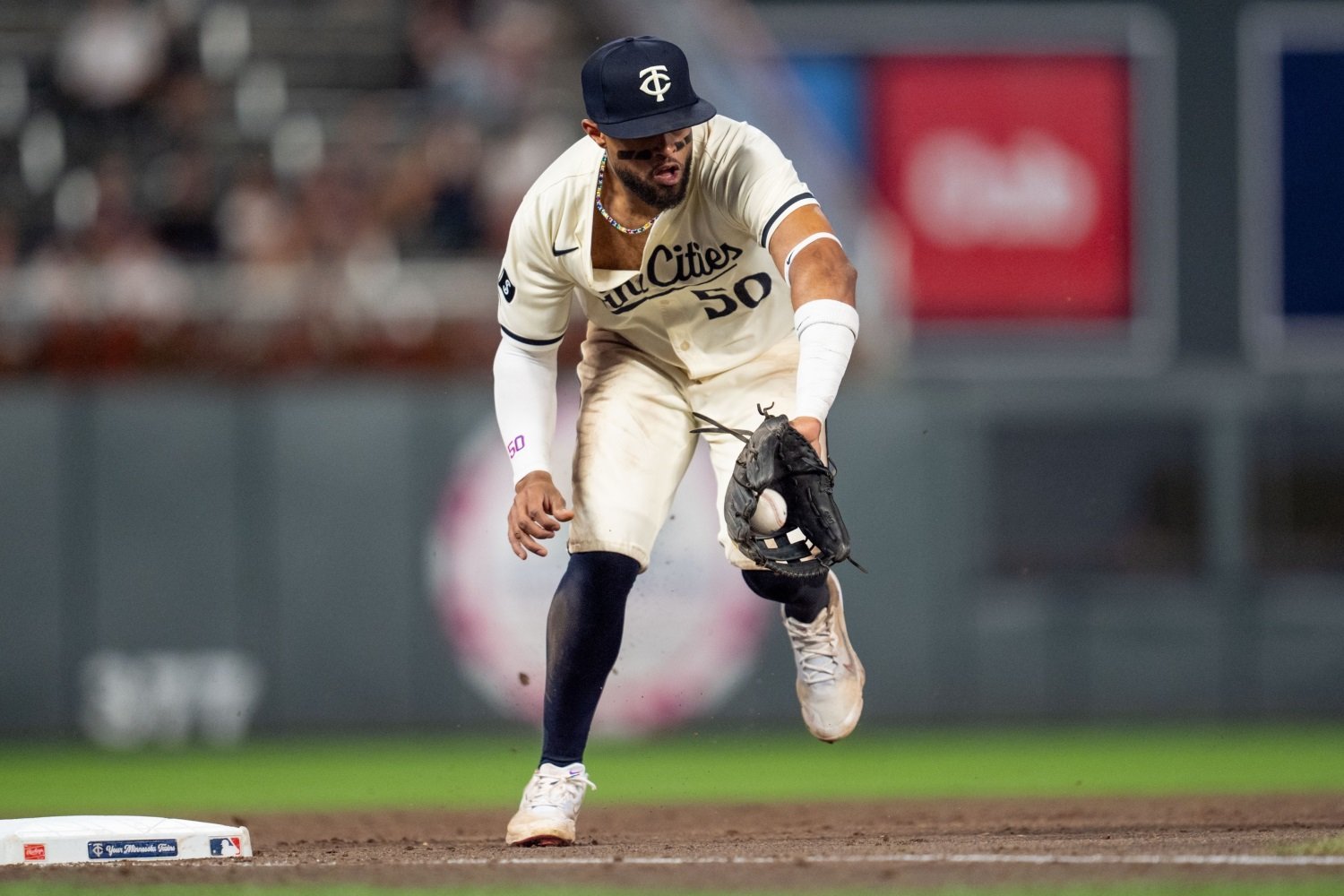 Okay, maybe “changes the definition” is a bit extreme, but stick with me here. A Willi Castro-type player alters team construction and decision-making in a way that’s unique to a small subset of players, even if he’s not an elite player in and of himself. The Twins have a decision ahead of them. It’s a decision that probably isn’t so tricky but for the apparent need to keep payroll tight ahead of 2025, but here we are. Willi Castro, their do-everything man, is due for about $6.2 million in arbitration, according to MLB Trade Rumors’ projections. Castro earned himself some recognition this season, being named an All-Star and a "finalist" for the Gold Glove at the utility position (whatever that means). He was about 5 percent better than the average hitter, starting more than 25 games at five different positions (including shortstop and center field). He led the team in both games played (158) and plate appearances (635). For the analytics wonks out there, FanGraphs had him at 3.1 WAR, and Baseball Reference had him at 1.6. He produced like a solid starter. The All-Star nod was based on his electric first half, and he saw a significant drop-off in the final three months of the year, but production is production. He’s not a great defender at shortstop or in center field, but he can play there well enough to get you by. He’s the quintessential 10th man, and there are few like him. Sure, there are players who can play multiple positions on every bench, but it’s rare to find one who can both hold his own at the plate and cover the more challenging positions. And that has ripple effects. First, he’s a starting-caliber player who can replace anyone. Should injuries (or ineffectiveness) happen at any position, Castro can cover that spot for weeks at a time, as he did in 2024 at second and third base, shortstop, and center field. There’s value in that, by itself. If a team’s best bench option is a utility infielder, that guy can’t cover center field. If the team has a solid corner outfielder on the bench, good luck teaching him third base. In such cases, teams have to skip over their top players for their second or third options. That’s not so with Castro. Even though Castro doesn’t play right field often or first base at all, all those positions require is a slide across the field from one of the team’s other starters. He can handle it everywhere else. You don’t have to skip over Castro to get to someone else. Second, Castro’s flexibility allows more creativity in bench construction. The modern four-man bench in MLB looks something like this: backup catcher, backup infielder, backup outfielder, free space. It's pretty straightforward with the backup outfielder and infielder—if the team loses a player in the infield, the bench guy comes in to take his spot or some sort of realignment, and it’s the same for the outfielder. In this setup, a massive part of who ends up on the bench for the team is coverage. There’s no hole one of those first three guys can’t fill. But what if one guy can cover both? That’s Castro (and a select group of other players in the majors, like Houston’s Mauricio Dubón). Because Castro can hit and play six and a half positions (like, I guess he’d play right field in an outfield alongside Austin Martin and Byron Buxton), a team now has two free spaces. If you want a big bench bat, go for it! A mostly platoon hitter? Why not! Carry both! You can justify a roster setup that you wouldn’t be able to without Castro being both your utility infielder and outfielder. The situational and functional effectiveness of the bench just went up. Note: Of course, this only works if the other role players on the bench also fulfill their bit roles and aren’t stretched past their capabilities (see M. Margot, Minnesota Twins, 2024). However, that’s true of all benches and roles. Form follows function and all that. In these cases, though, the positional component is reduced. The team has coverage. You don’t need to place as much emphasis on having a glove-first infielder as you would have otherwise. It would be nice to have a better option defensively up the middle, but Castro reduces that need and allows more roster construction flexibility. Third, and here we’re getting to the replacement player part (I know Chekhov’s Gun; I don’t leave those loose ends), Castro affects who the team’s replacements are. You know, those hypothetical replacement players freely available at Triple-A, or on waivers, or free agents, or whatever. With Castro, you get the pick of the litter. Let’s consider a 2025 hypothetical scenario. Royce Lewis, everyday second baseman, gets hurt. He needs to go on the IL. The top infield option for a call-up is Michael Helman. The top outfield option for a call-up is Emmanuel Rodriguez. Sight unseen, who would you prefer to get the call? Well, if your Kyle Farmer-type is moving into an everyday role, you probably want the infielder. Suppose your Willi Castro is moving to an everyday role. In that case, you might have some room for your top prospect to get some time in the outfield, taking Castro’s time out there now that that’s free, given that the initial plans would include him playing a little on the dirt, a little in the outfield, pinch running, platooning. After he’s tied down, there’s playing time everywhere else to be had. In truth, we never really saw how Castro’s versatility would have played out as a primary bench player, in which he would have time spread out around the diamond and been used situationally as he was in 2023 (see this Ben Clemens article on depth charts, if this stuff interests you). Instead, he was thrust into the starting lineup in the second game of the season after an injury to Lewis. And that’s the fourth effect. A Twins team that is as injury-prone as this one needs a Castro. Not every team relies on so much production from players who are injured so often, and to an extent, having a solid 10th man allows some risk-taking. That doesn’t show up in his statistics, but it’s another effect. A team with a strong bench or competent high-minors bats is tooled to withstand the injury bug better than the average team, and for the Twins, that’s not something that they can afford to forego. A team can only feasibly carry ten everyday players, but not every team can get to that number. A Castro-type makes that possible. Castro’s effects aren’t neatly summed up in a WAR number or stat line. Those still look nice, but some value is in the value that a player creates in the spots on the roster that they don’t occupy. It’s one of the reasons that Shohei Ohtani’s two-way abilities are so valuable, beyond his quantifiable production. His team has the freedom to do a little more with the spots around him. Note 2: If you read those last two sentences and think that it says “Willi Castro and Shohei Ohtani are equally valuable,” so help me. Naturally, none of this holds up if Castro is closer to the player that he was in the second half of 2024. Hopefully, any Castro decisions this offseason will be made based on how skilled the team believes he is, rather than the moderate sum he'll be owed. If there's a tiebreaker to be found, though, let it be the unmeasured value of the flexibility boost he provides.
 -
Another stellar piece of Friday Satire, Stu! You almost had me there!
-
The Twins Have a First Base Problem
Greggory Masterson replied to Greggory Masterson's topic in Twins Daily Front Page News
This is something I considered going into a deeper discussion on. It seems like the position has been dropping off in recent years, perhaps because big plodding mashers just don’t cut it anymore for some reason or another. It’s reflected in the wRC+ for the position, in that 20 years ago 1st baseman were around 15-20% better hitters than league average but recently it’s more in the 107-115 range. That’s part of the reason I focused on the Twins’ rank at the position rather than the raw numbers. It’s understandable that not every team will have a guy who’s 2004 Shawn Green (126 wRC+, 10th among first basemen, minimum 200 PA) in modern baseball. But the Twins have gone 13 years without cracking the top 10, and their first basemen have tended to be more or less merely slightly above league-average hitters in their best years- 85 replies
-
- 3
-
-
- carlos santana
- donovan solano
- (and 5 more)
-
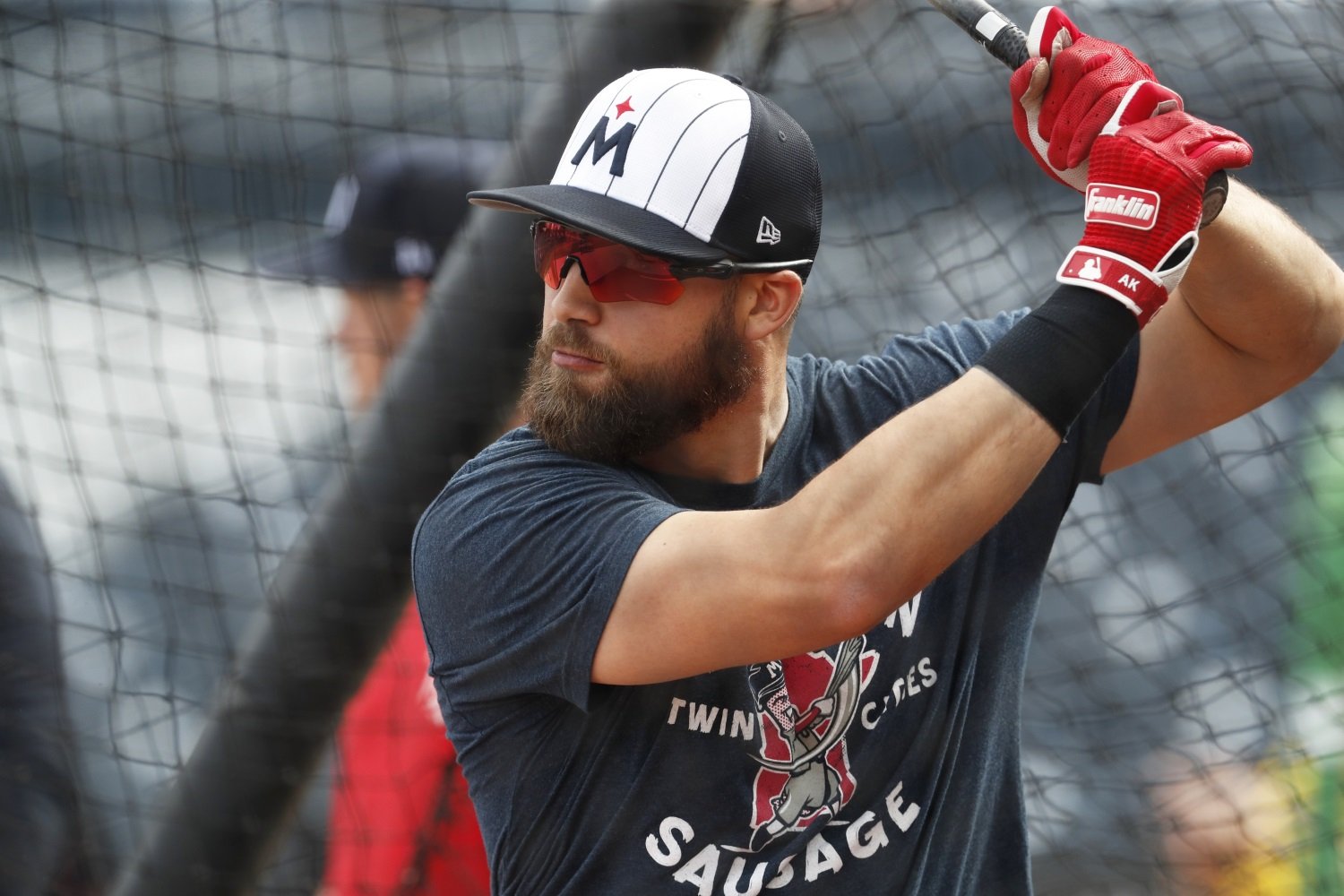 I’m just going to cut to the chase: Justin Morneau in 2009. That’s the last time that a Twins’ primary first baseman has been a scary dude in the middle of a lineup. Seriously. Technically, Morneau was also a lethal bat in 2010, but because of the midseason concussion that cut short a potential MVP campaign and altered the course of his career, Michael Cuddyer technically logged more appearances at first base than Morneau did that year, and a 15-year drought sounds more significant than a measly 14-year drought. But whether you prefer to be technically right or technically wrong doesn’t matter; the first base situation does. First base is a place you can put nearly anyone—in theory. It’s the lowest position in the field on the defensive spectrum, meaning that the value of having a good defender there is lessened. You can get away with putting some schlub there that you wouldn’t dream about sticking in center field or at shortstop--or, to put it another way, you can take just about anyone who can play a passable center field, or third base, or catcher, and they're likely to be ok with the glove at first. As such, first base has historically been seen as a home for big bats. It’s a position that features players around whom a team builds their lineup. Since 2010, the average first baseman has been about 5 to 20% better than an average hitter, with very few years in which the position as a whole is less than 10% better than average. But for the Twins, it’s been closer to just another bat. The Twins have not been among the top 10 in MLB in first baseman OPS+ since a combination of an injury-riddled Morneau, Cuddyer, Luke Hughes, Chris Parmalee, Joe Mauer, and Trevor Plouffe ranked 10th in 2011. A Carlos Santana-led 2024 group (José Miranda and Alex Kirilloff both had a dozen appearances) nearly cracked the list, ranking 11th. But alas, Santana’s time as a Twin is likely over, and it would be difficult to count on a man in his age-39 season to match his age-38 production, even though his numbers weren’t eye-popping themselves. Santana was about 10 to 15% better than league-average as a hitter last season, and in a down year for first basemen (their lowest wRC+ as a group in decades: 107), that’s enough to almost propel the group into the top 10, but it’s still right around average for the position historically. Prior to Santana, the Twins spent a couple of years with a revolving door at first base. In 2023, Donovan Solano—a utility infielder—got a very slight majority of the time at first base, appearing in just over half of the team’s games (85). He was also about 10-15% better than an average hitter, which was average among first basemen that year. Kirilloff had a slightly better offensive year than Solano, but he was held to just 88 total games by injury, splitting his appearances between first base and the outfield. Joey Gallo also saw time there early in the season (when he was swinging the bat well), raising their level of production but not cracking the top 10. In 2022, Miranda played a plurality of games at first base (77 appearances), followed by Luis Arraez (65 appearances), and a dozen or so games from Miguel Sanó and Kirilloff. Despite good years from Miranda and Arraez, the group barely made it into the top 20 among the league’s first-base groups. Sanó was the primary first baseman in 2021 and 2020, and he clubbed 43 home runs in 170 games during that stretch (which included the 2020 shortened season), but he did little else, grading out as, at best, a league-average first baseman during that time—more of a sixth or seventh hitter in the order than a third or fourth—and the rest of the plate appearances went to a mediocre Kirilloff and Willains Astudillo performing like his post-2018 self. In 2019, everyone was hitting the ball across the league. Relative to the league, first-base production was a bit down, mostly because everyone was up. CJ Cron manned the position admirably until a thumb injury that substantially hampered his performance, as he had an .814 OPS before the injury and a .702 mark after it. In his absence, utility players Marwin González, Ehire Adrianza, and Astudillo got the lion’s share of the work, and they hit like utility players. Prior to those years, Mauer and Morneau held down the position. Both were (seemingly) held back by the brain trauma that they suffered in the earlier part of the decade. We don’t need to go back that far, but it ties the story together. This has been an ongoing problem. And looking forward, it’s unclear how exactly it’s fixed. The Twins are in a great position right now, with players like Byron Buxton and Carlos Correa providing good offense while playing defense-first spots and other players that the organization hopes can be relied on for offense, but they don’t have a full-time first baseman right now. On the current depth chart, infielders Miranda and Edouard Julien seem to be the heirs apparent. They are suboptimal defenders at third and second base, respectively, and show flashes of having plus bats that can rank among the top 10 first basemen in the league. However, both have been inconsistent early in their careers. Corner outfielders Matt Wallner and Trevor Larnach turned in good 2024 campaigns, and with the likes of top outfield prospect Emmanuel Rodriguez knocking on the door to the majors, it would be sensible to convert one of the two to first base, but the team has previously shown no interest. The former first baseman of the future, the oft-injured Kirilloff, has been inconsistent offensively and a poor defender, which has led to him being labeled a non-tender candidate this offseason. Right now, the position—the spot where offense should come the easiest—is in flux for the third straight offseason, with no clear internal fix and a seemingly limited payroll. Hypothetically, it should be an easy problem to fix, but the Twins have shown themselves incapable of finding a middle-of-the-order first-base bat for a decade now. Sometimes that can be offset by defense, like Santana in 2024 or Mauer in 2017, but for a team that has struggled to produce consistent offense in recent years, finding that big bat could be more vital than ever.
- 85 comments
-
- 6
-
-
- carlos santana
- donovan solano
- (and 5 more)
-
The Twins Have a First Base Problem
Greggory Masterson posted a topic in Twins Daily Front Page News
It’s been how many years since a Twins’ first baseman was a middle-of-the-order bat? Image courtesy of © Charles LeClaire-Imagn Images I’m just going to cut to the chase: Justin Morneau in 2009. That’s the last time that a Twins’ primary first baseman has been a scary dude in the middle of a lineup. Seriously. Technically, Morneau was also a lethal bat in 2010, but because of the midseason concussion that cut short a potential MVP campaign and altered the course of his career, Michael Cuddyer technically logged more appearances at first base than Morneau did that year, and a 15-year drought sounds more significant than a measly 14-year drought. But whether you prefer to be technically right or technically wrong doesn’t matter; the first base situation does. First base is a place you can put nearly anyone—in theory. It’s the lowest position in the field on the defensive spectrum, meaning that the value of having a good defender there is lessened. You can get away with putting some schlub there that you wouldn’t dream about sticking in center field or at shortstop--or, to put it another way, you can take just about anyone who can play a passable center field, or third base, or catcher, and they're likely to be ok with the glove at first. As such, first base has historically been seen as a home for big bats. It’s a position that features players around whom a team builds their lineup. Since 2010, the average first baseman has been about 5 to 20% better than an average hitter, with very few years in which the position as a whole is less than 10% better than average. But for the Twins, it’s been closer to just another bat. The Twins have not been among the top 10 in MLB in first baseman OPS+ since a combination of an injury-riddled Morneau, Cuddyer, Luke Hughes, Chris Parmalee, Joe Mauer, and Trevor Plouffe ranked 10th in 2011. A Carlos Santana-led 2024 group (José Miranda and Alex Kirilloff both had a dozen appearances) nearly cracked the list, ranking 11th. But alas, Santana’s time as a Twin is likely over, and it would be difficult to count on a man in his age-39 season to match his age-38 production, even though his numbers weren’t eye-popping themselves. Santana was about 10 to 15% better than league-average as a hitter last season, and in a down year for first basemen (their lowest wRC+ as a group in decades: 107), that’s enough to almost propel the group into the top 10, but it’s still right around average for the position historically. Prior to Santana, the Twins spent a couple of years with a revolving door at first base. In 2023, Donovan Solano—a utility infielder—got a very slight majority of the time at first base, appearing in just over half of the team’s games (85). He was also about 10-15% better than an average hitter, which was average among first basemen that year. Kirilloff had a slightly better offensive year than Solano, but he was held to just 88 total games by injury, splitting his appearances between first base and the outfield. Joey Gallo also saw time there early in the season (when he was swinging the bat well), raising their level of production but not cracking the top 10. In 2022, Miranda played a plurality of games at first base (77 appearances), followed by Luis Arraez (65 appearances), and a dozen or so games from Miguel Sanó and Kirilloff. Despite good years from Miranda and Arraez, the group barely made it into the top 20 among the league’s first-base groups. Sanó was the primary first baseman in 2021 and 2020, and he clubbed 43 home runs in 170 games during that stretch (which included the 2020 shortened season), but he did little else, grading out as, at best, a league-average first baseman during that time—more of a sixth or seventh hitter in the order than a third or fourth—and the rest of the plate appearances went to a mediocre Kirilloff and Willains Astudillo performing like his post-2018 self. In 2019, everyone was hitting the ball across the league. Relative to the league, first-base production was a bit down, mostly because everyone was up. CJ Cron manned the position admirably until a thumb injury that substantially hampered his performance, as he had an .814 OPS before the injury and a .702 mark after it. In his absence, utility players Marwin González, Ehire Adrianza, and Astudillo got the lion’s share of the work, and they hit like utility players. Prior to those years, Mauer and Morneau held down the position. Both were (seemingly) held back by the brain trauma that they suffered in the earlier part of the decade. We don’t need to go back that far, but it ties the story together. This has been an ongoing problem. And looking forward, it’s unclear how exactly it’s fixed. The Twins are in a great position right now, with players like Byron Buxton and Carlos Correa providing good offense while playing defense-first spots and other players that the organization hopes can be relied on for offense, but they don’t have a full-time first baseman right now. On the current depth chart, infielders Miranda and Edouard Julien seem to be the heirs apparent. They are suboptimal defenders at third and second base, respectively, and show flashes of having plus bats that can rank among the top 10 first basemen in the league. However, both have been inconsistent early in their careers. Corner outfielders Matt Wallner and Trevor Larnach turned in good 2024 campaigns, and with the likes of top outfield prospect Emmanuel Rodriguez knocking on the door to the majors, it would be sensible to convert one of the two to first base, but the team has previously shown no interest. The former first baseman of the future, the oft-injured Kirilloff, has been inconsistent offensively and a poor defender, which has led to him being labeled a non-tender candidate this offseason. Right now, the position—the spot where offense should come the easiest—is in flux for the third straight offseason, with no clear internal fix and a seemingly limited payroll. Hypothetically, it should be an easy problem to fix, but the Twins have shown themselves incapable of finding a middle-of-the-order first-base bat for a decade now. Sometimes that can be offset by defense, like Santana in 2024 or Mauer in 2017, but for a team that has struggled to produce consistent offense in recent years, finding that big bat could be more vital than ever. View full article -
 Sweet Lou and Ol Gregg kick off the offseason with a little of everything: takeaways from the final week of the season, discussion of what the core of this team is, and a check-in in on some of fans' free agent wish lists from a year ago. Lou also commandeers Greggory's Gripes and they answer a few listener questions. Listen using Apple Podcasts: https://podcasts.apple.com/us/podcast/the-twins-off-daily-podcast/id1741266056 Listen using Spotify: https://open.spotify.com/show/4tb78XlurcPTYYSsARdbD7



.png.eb84886d869698ebb7b46269ae51113f.png)
