

Twins Video
The Twins got their start in 1901 as the Washington Senators. Sure, they began playing baseball in Bloomington 60 years later, but they didn’t fall out of a coconut red pine tree. They have a proud history as one of the eight charter member franchises of the American League. As such, they are responsible for maintaining that place in baseball history.
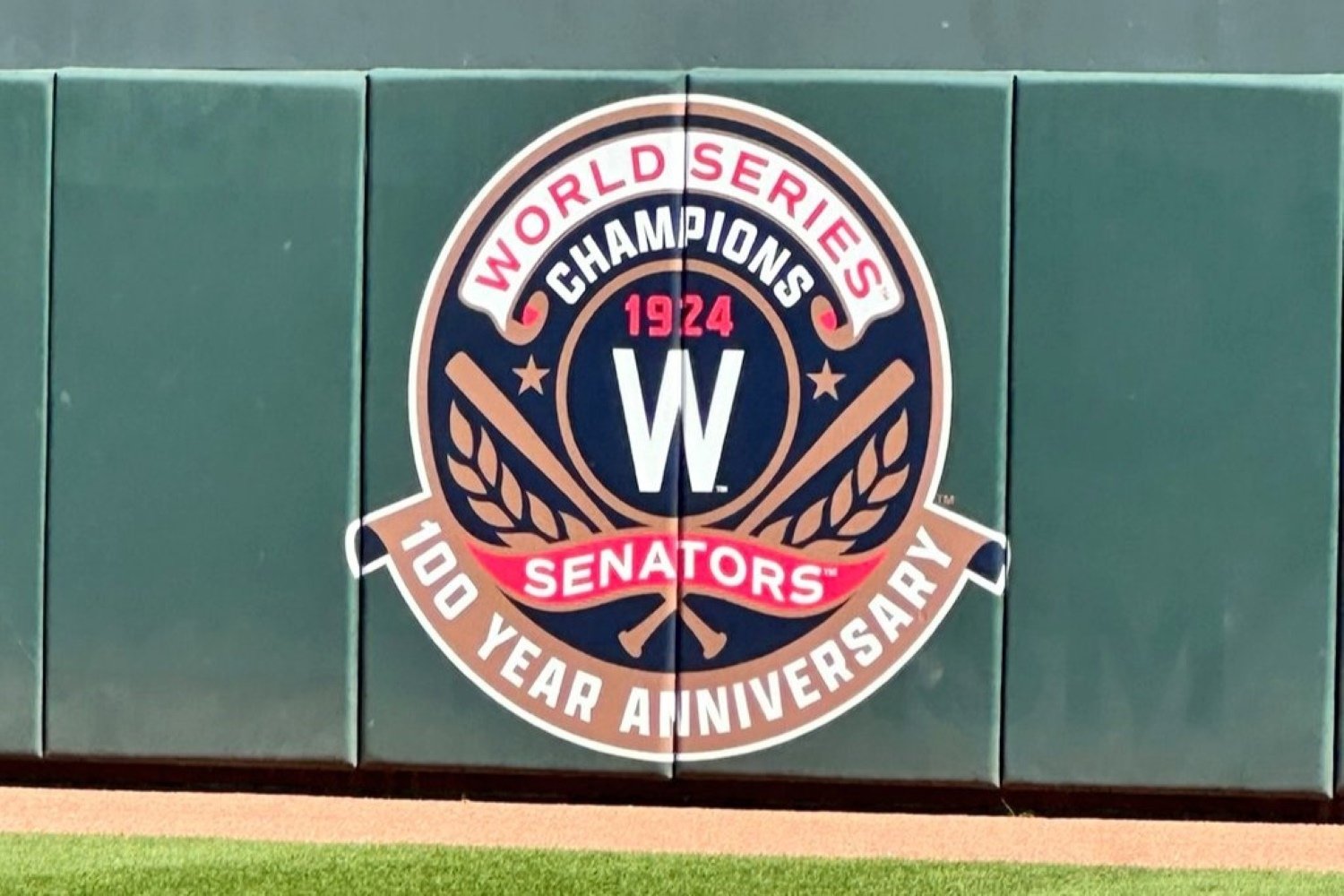
Many Minnesota fans may be hesitant to embrace that responsibility. Some may not even be aware of the franchise’s history prior to 1961. There was some confusion amid the Twins’ celebration of the 1924 World Series and (hilarious, out-of-context) retiring of the W alongside Twins greats and Jackie Robinson’s 42 two weeks ago.
In 1961, Calvin Griffith moved the Washington Senators (sometimes referred to as the Nationals) to Minnesota and renamed them the Twins. Baseball was moving to the West, and Griffith saw an opportunity to place a team in the Upper Midwest. Teams moved all the time, back then. Of the eight charter members of the American League, only four remained in the city they started. The Athletics had moved from Philadelphia to Kansas City in 1955. They kept their name the whole way, but the Brewers decamped from Milwaukee to St. Louis and rebranded themselves the Browns--then, when they flitted off to Baltimore, they became the Orioles. (The original Baltimore Orioles folded.) It’s what teams did, and continue to do. Sometimes they kept their names, like the Athletics or the Boston-Milwaukee-Atlanta team that really wanted to hang onto their branding. Other teams remained in place and changed names, like the Cleveland Bluebirds-turned-Bronchos-turned-Naps, who also finally settled on one name for a long while before becoming the Guardians a few years ago.
That movement or name change doesn’t mean that the franchise ended. The players were still there. The most obvious example for Minnesota fans is Harmon Killebrew. Killer played for the franchise 21 of his 22 years in MLB. Six of those seasons came for the Washington Senators, which includes an All-Star appearance in 1959. Other Twins legends, like Earl Battey, Bob Allison, Camilo Pasqual, Jim Kaat, and Zoilo Versalles came over in the relocation. At that time, they were as much Senators as they were Twins.
Sure, they didn’t play in Minnesota before 1961, but they never left their organization to get here. It was the same guys, in a different shirt. This might be controversial to say, but the team does not belong to the city; it just lives there. Just ask baseball fans in Philadelphia, Kansas City, and now Oakland. We're 140 years past the idea that professional-caliber teams would be made up principally of players from the city they represented. Once that representation ceases to be geographically determined, one has to acknowledge that some of our loyalty is to the organization, rather than the place. How much of each it ought to be is a personal choice for each fan.
Baseball continued in the nation’s capital. Immediately after the Senators left for Minnesota, MLB expanded and placed a new Washington Senators in D.C. The District of Columbia kept baseball, but that’s a new team, even if it has a different name. Killebrew, Allison, Pasqual, Kaat, and Versalles were replaced by Dick Donovan, Joe McClain, and Bennie Daniels. The rose by another name didn’t smell as sweet.
What claim did the new Senators have over the old Senators? They didn’t get to claim Killebrew and company. They had their own story to write. And they wrote that story in Washington until 1971, when the franchise relocated to Arlington and became the Rangers.
Three decades later, the Capitol got another shot at baseball in the form of the Washington Expos’ relocation and rebranding as the Nationals. But, again, they brought their own story to the D.C.
Why does this history lesson matter? Well, for one, it lays out the complexity of the revolving door of baseball teams in Washington. But it also highlights a conundrum—a confusion over who retains the Washington Senators' history. As a Minnesota baseball fan, that might not matter to you. But it should.
No player’s story better drives home the point than Walter Johnson. The Big Train, depending on your definition, may be the greatest pitcher in the history of baseball. All-time, he ranks 1st in shutouts, 2nd in wins (417), 3rd in innings pitched (5,914), 7th in ERA (2.17), and 9th in strikeouts (3,508). Baseball Reference ranks him 2nd in career pitching WAR, and FanGraphs ranks him 4th.
Johnson played his entire 21-year career for the Senators, between 1907 and 1927. He deserves to be celebrated, even by current baseball fans. But who will do it, if not the Twins—the franchise for which he threw almost 6,000 innings?
The Texas Rangers lay no claim to him. Those Senators didn’t exist within Johnson’s lifetime, and they were only in town for 11 years. It’d be sacrilege to have a Walter Johnson night in Arlington.
The Nationals have a better case, but it’s still weak. The franchise now resides in D.C., and at times the Senators of yore went by the name Nationals, but this franchise, which started in Montreal decades after Johnson’s passing, has no connection to him other than living in the same place 80 years after his career ended. I’ll be dead before the former Montreal Expos have the honor of calling Walter Johnson one of their own, at least in any exclusive sense.
That duty, and privilege, falls to the Twins—the franchise that employed Johnson for 21 years. There's real connective tissue between him and these Twins. For better and worse, the Twins organization's history can't be told without Calvin Griffith, whose father Clark pitched alongside Johnson and then became the president of the team, before passing it to his stepson. Calvin, the same man whose casual racism cost the Twins Rod Carew in the 1970s, was a bat boy for Johnson the year he did what Carew never quite could--bat .400 in a championship season. It's not all happy history, but the Griffith family is a vital part of Twins history, and the Griffith family became a baseball family in Washington.
Sure, you might say that Johnson belongs to Washington baseball and its fans, and you have a point. Because a franchise and the place where it resides are not one and the same, a player, a team, and a local fan base can all belong to each other, with overlapping, countervailing, and interleaved loyalties. You can apply that same logic to Minnesota baseball fans, to explain why those fans might have no connection to Johnson. But it’s not about Minnesotans and Minnecentrism. It’s about baseball history.
You don’t have to claim Walter Johnson as a Minnesota baseball legend. But the Minnesota Twins—the former Washington Senators, who live here now—do need to claim him, because no other franchise properly can.
Walter Johnson is a giant in baseball history, but there are also 39 more years of non-Big Train baseball for the franchise in Washington. There are 60 years of stories to be preserved.
If the Twins don’t take it upon themselves to keep that history alive, who will? Sure as hell not the ex-Expos.








Recommended Comments
Create an account or sign in to comment
You need to be a member in order to leave a comment
Create an account
Sign up for a new account in our community. It's easy!
Register a new accountSign in
Already have an account? Sign in here.
Sign In Now