



Greggory Masterson
-
Posts
819 -
Joined
-
Last visited
-
Days Won
2
Content Type
Profiles
News
Minnesota Twins Videos
2026 Minnesota Twins Top Prospects Ranking
2022 Minnesota Twins Draft Picks
Minnesota Twins Free Agent & Trade Rumors, Notes, & Tidbits
Guides & Resources
2023 Minnesota Twins Draft Picks
The Minnesota Twins Players Project
2024 Minnesota Twins Draft Picks
2025 Minnesota Twins Draft Pick Tracker
2026 Minnesota Twins Draft Tracker: Picks & Bonuses
Forums
Blogs
Events
Store
Downloads
Gallery
Everything posted by Greggory Masterson
-
 I think you might have paid more attention to tone than content here.
 -
Image courtesy of © Vincent Carchietta-Imagn Images Byron Buxton has been one of the most talented players in baseball over the past decade, full stop. He has the hardware to prove it. On Thursday night, the Twins announced that Buxton received one of the league’s three Silver Slugger Awards given to American League outfielders, alongside MVP hopeful Aaron Judge and rising star Riley Greene. Buxton ranked fifth in home runs (35), sixth in batting average (.264), second in slugging (.551), third in runs (97), seventh in stolen bases (24 of 24), and most importantly, second in OPS (136 OPS+) among AL outfielders, trailing only Judge. It wasn’t a sure thing, but it was certainly deserved. Eight seasons ago, the two-time All-Star also brought home hardware, but instead of with his bat, it was with his glove. Buxton was awarded the Gold Glove in 2017, his first full year as a pro, as well as the even more exclusive Platinum Glove, awarded by Rawlings to the single top defender in each league regardless of position. Buxton’s 2017 defense registered 27 outs above average per Statcast, the most value accrued by an outfielder since its inception in 2016 and the third most at any position. Think about that for a moment. Buxton once had the ability to be the best defender in baseball, and now he’s among the league’s best hitters (his .878 OPS was the fourth-highest in the American League and ninth-highest in MLB). And he’s still playing an admirable center field, one of the toughest positions to cover in baseball. In total, 21 other players have won both a Silver Slugger and a Gold Glove in seasons primarily playing center field. This includes those who, like Buxton, did not win both awards in the same season. Admittedly, most of them did; 12 of the 21 won their first center field Silver Slugger and Gold Glove in the same year. Buxton is tied for the longest drought between the two awards with Torii Hunter, who won his first Gold Glove in 2001 but had to wait until 2009 for that elusive Silver Slugger. Here’s the full list of players to win both awards as center fielders, in alphabetical order: Carlos Beltrán, Ellis Burks, Eric Davis, Andre Dawson, Jim Edmonds, Jacoby Ellsbury, Ken Griffey Jr., Tony Gwynn, Torii Hunter, Adam Jones, Andruw Jones, Matt Kemp, Andrew McCutchen, Willie McGee, Dale Murphy, Kirby Puckett, Grady Sizemore, Ichiro Suzuki, Andy Van Slyke, Vernon Wells, Bernie Williams. It's a good mix of Hall of Famers and “that dude was cold.” Some takeaways from that group are below. Griffey leads the group in total awards with 17, tying Andruw Jones for the most with 10 Gold Gloves and leading the group in Silver Sluggers. Second in Silver Sluggers was Puckett with five. Other players who, like Buxton and Hunter, had to wait to obtain both were Edmonds and Andruw Jones (both seven years) and Williams (five). Buxton joins Burks, Ellsbury, Gwynn, and Suzuki as the only players with exactly one of each, though the other four won both of theirs in the same season. Also, Gwynn and Suzuki were not primarily center fielders, but both had one season in the middle of their primes during which they played primarily center field (Gwynn just 86 games, but we'll count it), and both took home both awards. Fun! There are a few extra players who have won both awards, but one was at a different position, such as Robin Yount winning a Silver Slugger in center field but a Gold Glove at shortstop, or Cody Bellinger winning a Gold Glove as a right fielder and a Silver Slugger as a center fielder. It should be noted that Silver Sluggers are awarded to outfielders generally, which puts center fielders at a disadvantage, given that the position is typically filled by players known more for their gloves. Winning the award means they outhit not just other center fielders but also the more offense-focused corner outfielders. Another aspect to keep in mind is that from 1961 to 2010, Gold Gloves were similarly given generally to outfielders, which often resulted in only center fielders receiving the award. There were seasons in which, if you were a starting center fielder, you had a 25% chance of winning a Gold Glove. Of the list given, only four received their award after center field was singled out in the voting (Ellsbury, Adam Jones, Kemp, McCutchen). But this accomplishment has a bit of a cloud over it. As noted, Buxton is tied with Hunter for the longest gap between first Gold Glove and first Silver Slugger. Hunter, though, won eight Gold Gloves in those eight years. Jones racked up seven during his seven-year wait, and Edmonds had six during his seven-year wait. Buxton still doesn’t have another Gold Glove. He won his Gold and Platinum Gloves in his first full season in the big leagues, but that was also his final full season in the big leagues until 2025—eight years later. It’s hard not to play the what-if game. Obviously, he wasn’t hitting enough at 23 to compete for a Silver Slugger, but his 136 OPS+ this season is quite close to the 131 OPS+ that he’s carried for the past seven seasons, since the start of 2019. That’s good enough to compete for a trophy, and his defense was elite for much of that stretch. But we know why that gap exists. Buxton averaged just 89 games between 2019 and 2024, even prorating 2020’s truncated season. And although he put up flashy rate stats, you can’t win a Silver Slugger with 19 homers and 32 RBI, even if a 1.005 OPS and 4.9 bWAR accompany it in 61 first-half games (can we please take a moment to marvel at Buxton's 2021?). Apparently, it wasn’t even worth an All-Star nod. It’s hard not to dream about what that gap could have contained had Buxton stayed healthy. At age 23, he was the best defender in baseball. At age 31, he was one of the handful of best hitters in baseball. And we saw flashes of both between them, but not enough to take home any hardware. From another point of view, though, it’s actually remarkable—in a positive way—that he’s been able to put together a rebound like this. Just two seasons ago, this player didn’t play a single inning in center field due to health reasons. From 2018 to 2023, 92 games was his high-water mark. He had hand, knee, hip, and brain injuries that kept him from the field for months at a time. And after all that, as a 31-year-old, he was still one of the top offensive assets in the game while playing an admirable center field at an age when even great center fielders get moved to a corner position. Heck, many fans just two years ago pleaded for him to retire for health reasons. Buxton is a marvel. If you can’t see that, I don’t know what to tell you. Congratulations, Buck. View full article
-
Few Players Have Had Byron Buxton's Talent, and Awards Show That
Greggory Masterson posted an article in Twins
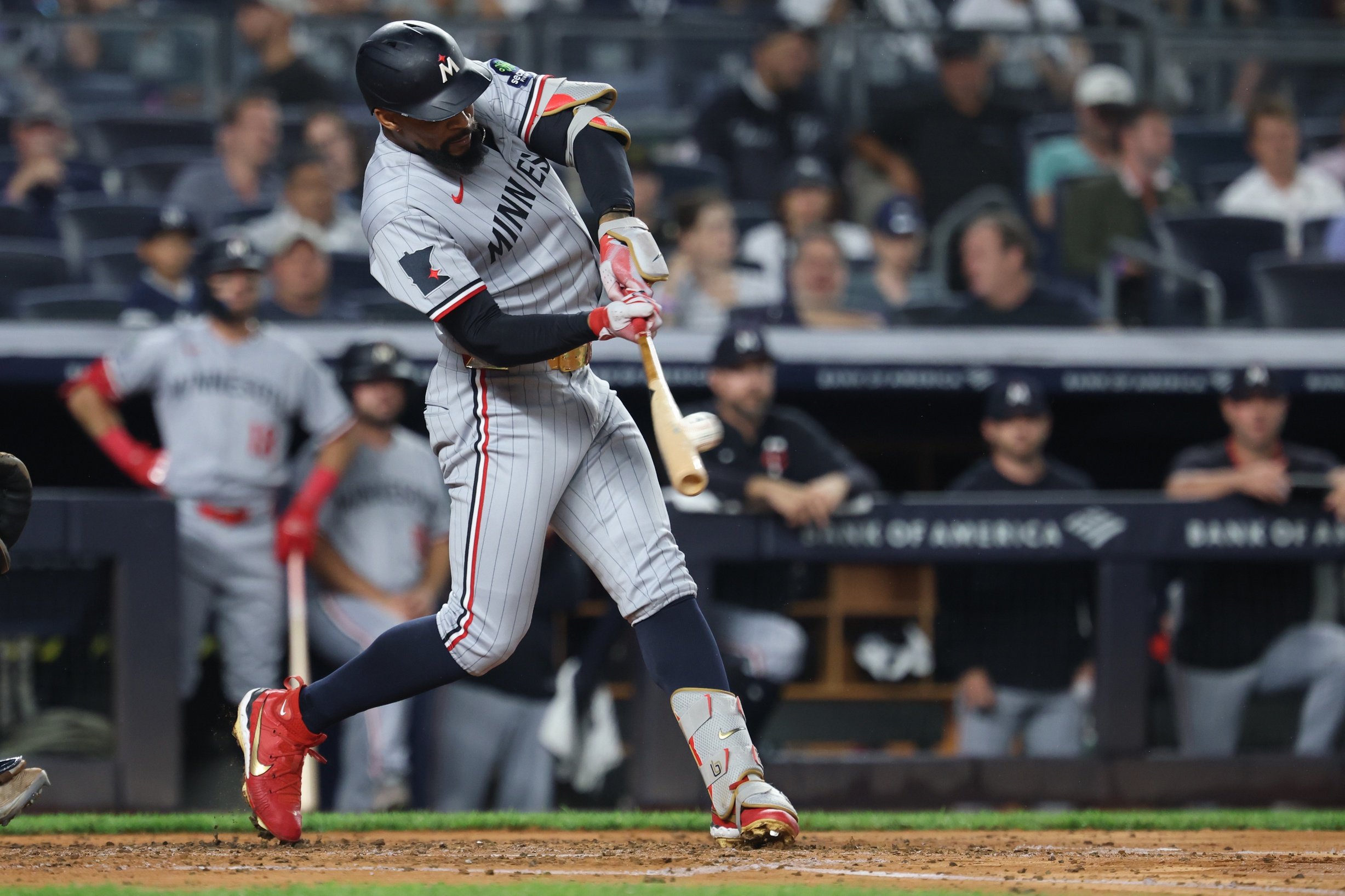 Byron Buxton has been one of the most talented players in baseball over the past decade, full stop. He has the hardware to prove it. On Thursday night, the Twins announced that Buxton received one of the league’s three Silver Slugger Awards given to American League outfielders, alongside MVP hopeful Aaron Judge and rising star Riley Greene. Buxton ranked fifth in home runs (35), sixth in batting average (.264), second in slugging (.551), third in runs (97), seventh in stolen bases (24 of 24), and most importantly, second in OPS (136 OPS+) among AL outfielders, trailing only Judge. It wasn’t a sure thing, but it was certainly deserved. Eight seasons ago, the two-time All-Star also brought home hardware, but instead of with his bat, it was with his glove. Buxton was awarded the Gold Glove in 2017, his first full year as a pro, as well as the even more exclusive Platinum Glove, awarded by Rawlings to the single top defender in each league regardless of position. Buxton’s 2017 defense registered 27 outs above average per Statcast, the most value accrued by an outfielder since its inception in 2016 and the third most at any position. Think about that for a moment. Buxton once had the ability to be the best defender in baseball, and now he’s among the league’s best hitters (his .878 OPS was the fourth-highest in the American League and ninth-highest in MLB). And he’s still playing an admirable center field, one of the toughest positions to cover in baseball. In total, 21 other players have won both a Silver Slugger and a Gold Glove in seasons primarily playing center field. This includes those who, like Buxton, did not win both awards in the same season. Admittedly, most of them did; 12 of the 21 won their first center field Silver Slugger and Gold Glove in the same year. Buxton is tied for the longest drought between the two awards with Torii Hunter, who won his first Gold Glove in 2001 but had to wait until 2009 for that elusive Silver Slugger. Here’s the full list of players to win both awards as center fielders, in alphabetical order: Carlos Beltrán, Ellis Burks, Eric Davis, Andre Dawson, Jim Edmonds, Jacoby Ellsbury, Ken Griffey Jr., Tony Gwynn, Torii Hunter, Adam Jones, Andruw Jones, Matt Kemp, Andrew McCutchen, Willie McGee, Dale Murphy, Kirby Puckett, Grady Sizemore, Ichiro Suzuki, Andy Van Slyke, Vernon Wells, Bernie Williams. It's a good mix of Hall of Famers and “that dude was cold.” Some takeaways from that group are below. Griffey leads the group in total awards with 17, tying Andruw Jones for the most with 10 Gold Gloves and leading the group in Silver Sluggers. Second in Silver Sluggers was Puckett with five. Other players who, like Buxton and Hunter, had to wait to obtain both were Edmonds and Andruw Jones (both seven years) and Williams (five). Buxton joins Burks, Ellsbury, Gwynn, and Suzuki as the only players with exactly one of each, though the other four won both of theirs in the same season. Also, Gwynn and Suzuki were not primarily center fielders, but both had one season in the middle of their primes during which they played primarily center field (Gwynn just 86 games, but we'll count it), and both took home both awards. Fun! There are a few extra players who have won both awards, but one was at a different position, such as Robin Yount winning a Silver Slugger in center field but a Gold Glove at shortstop, or Cody Bellinger winning a Gold Glove as a right fielder and a Silver Slugger as a center fielder. It should be noted that Silver Sluggers are awarded to outfielders generally, which puts center fielders at a disadvantage, given that the position is typically filled by players known more for their gloves. Winning the award means they outhit not just other center fielders but also the more offense-focused corner outfielders. Another aspect to keep in mind is that from 1961 to 2010, Gold Gloves were similarly given generally to outfielders, which often resulted in only center fielders receiving the award. There were seasons in which, if you were a starting center fielder, you had a 25% chance of winning a Gold Glove. Of the list given, only four received their award after center field was singled out in the voting (Ellsbury, Adam Jones, Kemp, McCutchen). But this accomplishment has a bit of a cloud over it. As noted, Buxton is tied with Hunter for the longest gap between first Gold Glove and first Silver Slugger. Hunter, though, won eight Gold Gloves in those eight years. Jones racked up seven during his seven-year wait, and Edmonds had six during his seven-year wait. Buxton still doesn’t have another Gold Glove. He won his Gold and Platinum Gloves in his first full season in the big leagues, but that was also his final full season in the big leagues until 2025—eight years later. It’s hard not to play the what-if game. Obviously, he wasn’t hitting enough at 23 to compete for a Silver Slugger, but his 136 OPS+ this season is quite close to the 131 OPS+ that he’s carried for the past seven seasons, since the start of 2019. That’s good enough to compete for a trophy, and his defense was elite for much of that stretch. But we know why that gap exists. Buxton averaged just 89 games between 2019 and 2024, even prorating 2020’s truncated season. And although he put up flashy rate stats, you can’t win a Silver Slugger with 19 homers and 32 RBI, even if a 1.005 OPS and 4.9 bWAR accompany it in 61 first-half games (can we please take a moment to marvel at Buxton's 2021?). Apparently, it wasn’t even worth an All-Star nod. It’s hard not to dream about what that gap could have contained had Buxton stayed healthy. At age 23, he was the best defender in baseball. At age 31, he was one of the handful of best hitters in baseball. And we saw flashes of both between them, but not enough to take home any hardware. From another point of view, though, it’s actually remarkable—in a positive way—that he’s been able to put together a rebound like this. Just two seasons ago, this player didn’t play a single inning in center field due to health reasons. From 2018 to 2023, 92 games was his high-water mark. He had hand, knee, hip, and brain injuries that kept him from the field for months at a time. And after all that, as a 31-year-old, he was still one of the top offensive assets in the game while playing an admirable center field at an age when even great center fielders get moved to a corner position. Heck, many fans just two years ago pleaded for him to retire for health reasons. Buxton is a marvel. If you can’t see that, I don’t know what to tell you. Congratulations, Buck.
 -
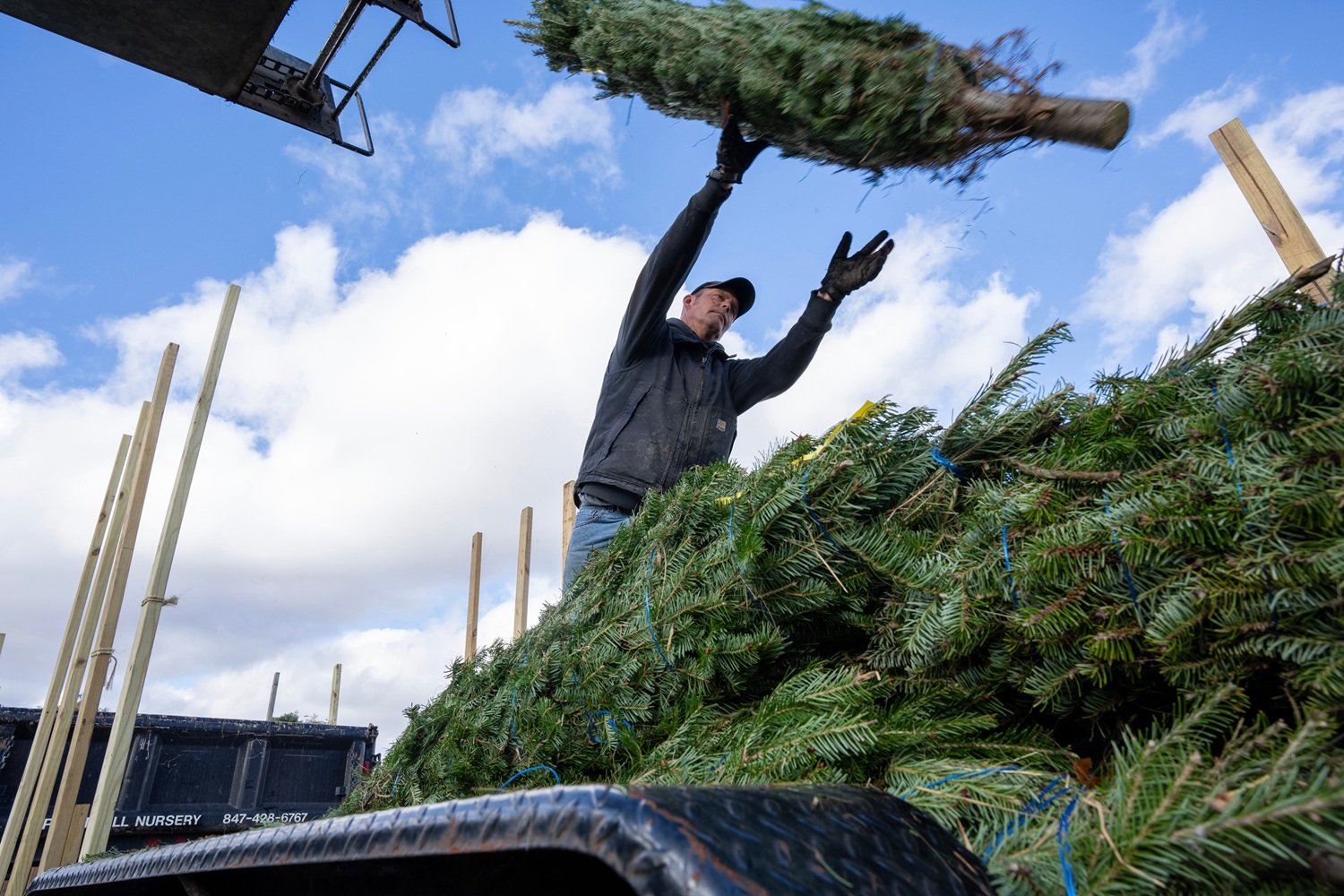 Randal Stewart Stephenson has been down on his luck for some time. Now, you may have read the title and thought this was going to be some sort of hackneyed joke about how some guy from out in the sticks thought all his problems—probably his drunkenness, ongoing divorce proceedings, and children who won’t answer his calls or drop-ins at their office jobs on what he calls “Dadsual Fridays”—would go away when the man he likely called “Rockhead Baldummy” was axed. Or maybe he was a “Doc Roc” type of guy. Maybe he even had some weird saying like “Spreadsheets put me in my bedsheets because I’m bored and don’t want to watch baseball anymore.” Or he called his microwave TV dinner choices his “2 o’clock pitching decisions.” You know the type. And that’s the type of lout I set out to find. But Uncle John Bonnes recently rightsized the website, and I only had the funds for one interview. “Stew,” as his friends call him, is not that type of lout. I had one chance to talk to some ne’er-do-well about the Woonsocket Rocket, and I blew it when I spotted Stew Stephenson at the Lino Lakes Casey’s. Because, sadly, Stew’s not some sot, just a guy who’s run into some back luck that coincides with Baldelli getting the hook. He’s been liquor-free since ‘03! A couple weeks back, Stew totaled his own car by colliding with a deer on I-35W, then borrowed his in-laws’ Escort—only to immediately put a rock through the window after it fell off a gravel truck. His lovely daughter Emily also lost her retainer this week. Life has been less Field of Dreams and more Final Destination. He'd hoped his misfortune would be over this week, but he’s gonna need at least another week to get back on the winning track. His thoughts on Baldelli? He’s not a Twins fan. Or a “base ball” fan at all. You could hear it in the way he said that he thinks it’s still spelled with two words, like it’s 1845 Hoboken. In fact, when I brought up Baldelli’s name, he said “Oh I love that guy. From the Sopranos, yeah? Love when the little dude gives a big boom to things, too.” He then segued into a ten-minute monologue about authentic Italian cuisine, which, in his telling, consists of chicken alfredo and pepperoni pizza. This was punctuated by an offensive faux-Italian accent that landed somewhere between Luigi from Nintendo and Jared Leto in House of Gucci. I won’t reprint the anti-Italian slurs he threw in for seasoning, but let’s just say you shouldn’t repeat them around Aaron Sabato. If anyone from the Twins is reading this, I would like a press pass. I’m a real journalist who knows fancy words like “communiqué” and “embargo.” “Pope’s American, not Italian now. I hear he’s a Black Socks fan,” he eventually said. I can tell from the way he pronounced “Black Socks” that he definitely doesn’t know that it’s spelled “Sox,” but I digress. Trying to get him back on track, I asked him his thoughts on the Pohlad family, and he responded that he recently bought his lovely daughter Emily one of those instant-print Pohloid cameras. “She said it makes her feel like she’s living way back in the 2000s, which hurts a little,” Stephenson said. Just another loss for the home team. I asked him for his general thoughts on the team, in an attempt to get anything useful out of him, and he said “I saw on Twitter they’re bringing the trees back. Shame they removed them from the field. Who was it that had them remove them? Craig Monroe? You know that guy stole a belt once?” How he knew the name Craig Monroe is beyond me. I don’t think I want to do these kinds of assignments anymore.
 -
Image courtesy of © Mark Hoffman/Milwaukee Journal Sentinel / USA TODAY NETWORK via Imagn Images Randal Stewart Stephenson has been down on his luck for some time. Now, you may have read the title and thought this was going to be some sort of hackneyed joke about how some guy from out in the sticks thought all his problems—probably his drunkenness, ongoing divorce proceedings, and children who won’t answer his calls or drop-ins at their office jobs on what he calls “Dadsual Fridays”—would go away when the man he likely called “Rockhead Baldummy” was axed. Or maybe he was a “Doc Roc” type of guy. Maybe he even had some weird saying like “Spreadsheets put me in my bedsheets because I’m bored and don’t want to watch baseball anymore.” Or he called his microwave TV dinner choices his “2 o’clock pitching decisions.” You know the type. And that’s the type of lout I set out to find. But Uncle John Bonnes recently rightsized the website, and I only had the funds for one interview. “Stew,” as his friends call him, is not that type of lout. I had one chance to talk to some ne’er-do-well about the Woonsocket Rocket, and I blew it when I spotted Stew Stephenson at the Lino Lakes Casey’s. Because, sadly, Stew’s not some sot, just a guy who’s run into some back luck that coincides with Baldelli getting the hook. He’s been liquor-free since ‘03! A couple weeks back, Stew totaled his own car by colliding with a deer on I-35W, then borrowed his in-laws’ Escort—only to immediately put a rock through the window after it fell off a gravel truck. His lovely daughter Emily also lost her retainer this week. Life has been less Field of Dreams and more Final Destination. He'd hoped his misfortune would be over this week, but he’s gonna need at least another week to get back on the winning track. His thoughts on Baldelli? He’s not a Twins fan. Or a “base ball” fan at all. You could hear it in the way he said that he thinks it’s still spelled with two words, like it’s 1845 Hoboken. In fact, when I brought up Baldelli’s name, he said “Oh I love that guy. From the Sopranos, yeah? Love when the little dude gives a big boom to things, too.” He then segued into a ten-minute monologue about authentic Italian cuisine, which, in his telling, consists of chicken alfredo and pepperoni pizza. This was punctuated by an offensive faux-Italian accent that landed somewhere between Luigi from Nintendo and Jared Leto in House of Gucci. I won’t reprint the anti-Italian slurs he threw in for seasoning, but let’s just say you shouldn’t repeat them around Aaron Sabato. If anyone from the Twins is reading this, I would like a press pass. I’m a real journalist who knows fancy words like “communiqué” and “embargo.” “Pope’s American, not Italian now. I hear he’s a Black Socks fan,” he eventually said. I can tell from the way he pronounced “Black Socks” that he definitely doesn’t know that it’s spelled “Sox,” but I digress. Trying to get him back on track, I asked him his thoughts on the Pohlad family, and he responded that he recently bought his lovely daughter Emily one of those instant-print Pohloid cameras. “She said it makes her feel like she’s living way back in the 2000s, which hurts a little,” Stephenson said. Just another loss for the home team. I asked him for his general thoughts on the team, in an attempt to get anything useful out of him, and he said “I saw on Twitter they’re bringing the trees back. Shame they removed them from the field. Who was it that had them remove them? Craig Monroe? You know that guy stole a belt once?” How he knew the name Craig Monroe is beyond me. I don’t think I want to do these kinds of assignments anymore. View full article
-
Jrejjory*. You have to make sure to pronounce all 3 Gs
-
Finally a Gregg with 5 Gs
-
 Sweet Lou, Ol' Gregg, and Comrade Cody break down the Twins' decision to cut ties with longtime manager Rocco Baldelli. They take suggestions for who should replace him, what's next for Rocco, and what the heck is Josh Willingham up to these days? Listen using Apple Podcasts: https://podcasts.apple.com/us/podcast/the-twins-off-daily-podcast/id1741266056 Listen using Spotify: https://open.spotify.com/show/4tb78XlurcPTYYSsARdbD7 Listen using iHeartRadio: https://www.iheart.com/podcast/263-the-twins-off-daily-podcas-167548600/ Listen using Pocket Casts: https://pca.st/nvclbt0w Watch on YouTube: https://www.youtube.com/@twinsdaily
 -
Sweet Lou, Ol' Gregg, and Comrade Cody break down the Twins' decision to cut ties with longtime manager Rocco Baldelli. They take suggestions for who should replace him, what's next for Rocco, and what the heck is Josh Willingham up to these days? Listen using Apple Podcasts: https://podcasts.apple.com/us/podcast/the-twins-off-daily-podcast/id1741266056 Listen using Spotify: https://open.spotify.com/show/4tb78XlurcPTYYSsARdbD7 Listen using iHeartRadio: https://www.iheart.com/podcast/263-the-twins-off-daily-podcas-167548600/ Listen using Pocket Casts: https://pca.st/nvclbt0w Watch on YouTube: https://www.youtube.com/@twinsdaily View full article
-
They’ve stolen at a 83% clip, at least when I wrote this, which is far above the 72% current breakeven benchmark
- 28 replies
-
- 1
-

-
- luke keaschall
- byron buxton
- (and 2 more)
-
Gregg Cavan? More like Gregg Craven!
-
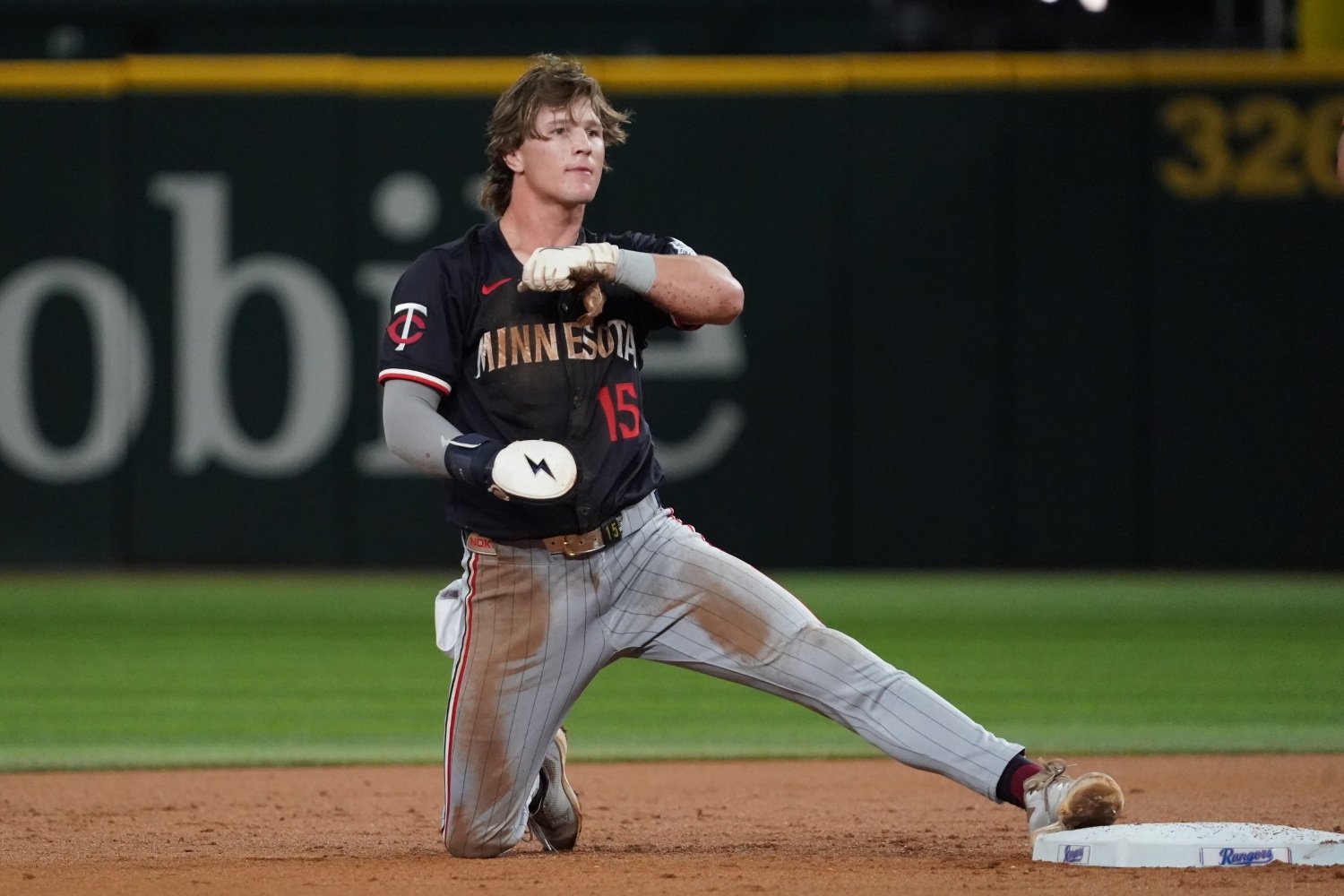 You read that right. This September, the Twins have stolen 34 bases. The next-highest total for a team is 25, by the Baltimore Orioles. And it’s not like the Twins have been inefficient, either. They’ve only been caught six times, successfully stealing 85% of the time, which ranks them as the ninth-most efficient team in the league during that period. Since the trade deadline, they have the second-most stolen bases, at 57. They've been caught only 12 times, an 83% success rate, which ranks eighth in efficiency. Only the New York Yankees have stolen more bases since the deadline (58). Granted, part of the runaway by the Twins (pun intended) could be chalked up to some teams taking their foot off the gas at the end of the season, opting to take fewer risks now that their teams are either out of contention or locked into a playoff spot, but to have 36% more stolen bases than the second-highest team over the course of a month is notable—especially for a team like the Twins. From the 2024 season back to 2018, the Twins have ranked 30th, 24th, 30th, 25th, 30th, 30th, and 27th, in that order, in stolen bases per year. Over the past 10 seasons, the Twins rank dead last in baseball in stolen bases. This year? They’ve snuck up to 15th, with 112 steals, 57 of those (over half) coming in August and September. Those 112 are the most bases the team has stolen since 2012, and if they steal four more in their final three games, they’ll be tied for their second-highest total since 2000. That’s a heck of a development. After the trade deadline, the team has made a concerted effort to lean more heavily into the running game—a move that has been echoed around the league, due to rule changes regarding pickoffs and base sizes. But beyond the league-wide shift toward running more, the Twins’ formula—slugging teams to death—hasn’t worked. As a whole, the team is below-average offensively (.708 OPS and 97 wRC+, both 17th in MLB), which necessitates that they attempt to score runs some other way, or at least vary their approach. A lot of this effort has been spearheaded by Byron Buxton, who is 24-for-24 stealing bases this season and has accounted for 21% of the team’s total stolen bases in his healthiest year since 2017. However, only seven of those have come in August and September. Royce Lewis has been the standout in this late-season effort, going 11-for-12 since the deadline, more than doubling his career steals total, and Austin Martin, the belle of the post-deadline ball, is 11-for-14. Luke Keaschall has also helped in the effort, going 9-for-12, and Kody Clemens (perfect on five attempts) and Matt Wallner (four of five) have sneakily added to the total. Actually, almost all of the Twins who have played a game since the deadline have attempted a steal—the lone exception being depth catcher Jhonny Pereda. Yes, even Carson McCusker and Ryan Jeffers have tried to steal (unsuccessfully), and lead-footed Christian Vázquez and Brooks Lee have both been successful in their only steal attempts. Some of these attempts are failed pickoffs that the opposing teams have thrown away after successfully catching the newly aggressive Twins leaning, but that’s baked into every team’s throwing numbers. It’s been fun to watch everyone get the green light. Yes, much of this effort has been spearheaded by the fastest guys still on this team. But some of those fast guys are new additions—like Keaschall and Martin—who replaced other fast guys like Harrison Bader and Willi Castro, and they’ve been given the green light far more often than even the fastest guys have in the past. And the slow guys? Sure, they’re allowed to run now, too, though that’s not necessarily a new development. Last season, Trevor Larnach, Carlos Santana, Jeffers, Vázquez, Wallner, and Lee, among the slowest players in baseball (with the exception of Wallner, who is more middle-of-the-pack but with poor acceleration) managed to go 20-for-22 stealing bases, stealing off pitchers who stopped paying attention to them. I think this is where I’m supposed to say that the Mariners’ rotund first baseman Josh Naylor is 29-for-31 this season and that stealing bases isn’t all about being fast, or whatever. The biggest development in this regard is probably Royce Lewis’s emergence as a base stealer. Once a prospect with 70-grade speed, Lewis has been slowed by repeated lower-body and core injuries, including tearing his ACL twice in a little over a year, to the point that he’s now in the bottom third of the league in sprint speed as a 26-year-old. Despite his speed, scouts had questions about his ability to consistently steal bases in the big leagues, and he wasn’t an electric base stealer before the injuries, successful on just 74% of his steal attempts between Single-A and Double-A. For years, the reasoning for the Twins not utilizing the running game was that they were simply slow. Now, though, they're not exactly fast, but they're also not the slowest team in baseball. They've just been given the green light far more often. The other argument against them running was health, and that's reared its ugly head this season, with Buxton appearing shaken up after a couple of steals and Keaschall ending his season with an injured thumb that may require offseason surgery. So I guess they were onto something there. Some of this success may be a gap in the scouting reports. If a team has spent a decade stealing almost no bases, they’re naturally going to see less attention from pitchers and catchers. You'd guess that by this point in the season, those would start to change, but they’ve only increased their number of steals and gotten more efficient as the season has gone on. It’s fascinating, and it may be the proof of concept that the team needs to lean more into the running game in 2026—if they can stomach the risk, when they may be trying to compete for real again.
- 28 comments
-
- 9
-
-
- luke keaschall
- byron buxton
- (and 2 more)
-
Image courtesy of © Raymond Carlin III-Imagn Images You read that right. This September, the Twins have stolen 34 bases. The next-highest total for a team is 25, by the Baltimore Orioles. And it’s not like the Twins have been inefficient, either. They’ve only been caught six times, successfully stealing 85% of the time, which ranks them as the ninth-most efficient team in the league during that period. Since the trade deadline, they have the second-most stolen bases, at 57. They've been caught only 12 times, an 83% success rate, which ranks eighth in efficiency. Only the New York Yankees have stolen more bases since the deadline (58). Granted, part of the runaway by the Twins (pun intended) could be chalked up to some teams taking their foot off the gas at the end of the season, opting to take fewer risks now that their teams are either out of contention or locked into a playoff spot, but to have 36% more stolen bases than the second-highest team over the course of a month is notable—especially for a team like the Twins. From the 2024 season back to 2018, the Twins have ranked 30th, 24th, 30th, 25th, 30th, 30th, and 27th, in that order, in stolen bases per year. Over the past 10 seasons, the Twins rank dead last in baseball in stolen bases. This year? They’ve snuck up to 15th, with 112 steals, 57 of those (over half) coming in August and September. Those 112 are the most bases the team has stolen since 2012, and if they steal four more in their final three games, they’ll be tied for their second-highest total since 2000. That’s a heck of a development. After the trade deadline, the team has made a concerted effort to lean more heavily into the running game—a move that has been echoed around the league, due to rule changes regarding pickoffs and base sizes. But beyond the league-wide shift toward running more, the Twins’ formula—slugging teams to death—hasn’t worked. As a whole, the team is below-average offensively (.708 OPS and 97 wRC+, both 17th in MLB), which necessitates that they attempt to score runs some other way, or at least vary their approach. A lot of this effort has been spearheaded by Byron Buxton, who is 24-for-24 stealing bases this season and has accounted for 21% of the team’s total stolen bases in his healthiest year since 2017. However, only seven of those have come in August and September. Royce Lewis has been the standout in this late-season effort, going 11-for-12 since the deadline, more than doubling his career steals total, and Austin Martin, the belle of the post-deadline ball, is 11-for-14. Luke Keaschall has also helped in the effort, going 9-for-12, and Kody Clemens (perfect on five attempts) and Matt Wallner (four of five) have sneakily added to the total. Actually, almost all of the Twins who have played a game since the deadline have attempted a steal—the lone exception being depth catcher Jhonny Pereda. Yes, even Carson McCusker and Ryan Jeffers have tried to steal (unsuccessfully), and lead-footed Christian Vázquez and Brooks Lee have both been successful in their only steal attempts. Some of these attempts are failed pickoffs that the opposing teams have thrown away after successfully catching the newly aggressive Twins leaning, but that’s baked into every team’s throwing numbers. It’s been fun to watch everyone get the green light. Yes, much of this effort has been spearheaded by the fastest guys still on this team. But some of those fast guys are new additions—like Keaschall and Martin—who replaced other fast guys like Harrison Bader and Willi Castro, and they’ve been given the green light far more often than even the fastest guys have in the past. And the slow guys? Sure, they’re allowed to run now, too, though that’s not necessarily a new development. Last season, Trevor Larnach, Carlos Santana, Jeffers, Vázquez, Wallner, and Lee, among the slowest players in baseball (with the exception of Wallner, who is more middle-of-the-pack but with poor acceleration) managed to go 20-for-22 stealing bases, stealing off pitchers who stopped paying attention to them. I think this is where I’m supposed to say that the Mariners’ rotund first baseman Josh Naylor is 29-for-31 this season and that stealing bases isn’t all about being fast, or whatever. The biggest development in this regard is probably Royce Lewis’s emergence as a base stealer. Once a prospect with 70-grade speed, Lewis has been slowed by repeated lower-body and core injuries, including tearing his ACL twice in a little over a year, to the point that he’s now in the bottom third of the league in sprint speed as a 26-year-old. Despite his speed, scouts had questions about his ability to consistently steal bases in the big leagues, and he wasn’t an electric base stealer before the injuries, successful on just 74% of his steal attempts between Single-A and Double-A. For years, the reasoning for the Twins not utilizing the running game was that they were simply slow. Now, though, they're not exactly fast, but they're also not the slowest team in baseball. They've just been given the green light far more often. The other argument against them running was health, and that's reared its ugly head this season, with Buxton appearing shaken up after a couple of steals and Keaschall ending his season with an injured thumb that may require offseason surgery. So I guess they were onto something there. Some of this success may be a gap in the scouting reports. If a team has spent a decade stealing almost no bases, they’re naturally going to see less attention from pitchers and catchers. You'd guess that by this point in the season, those would start to change, but they’ve only increased their number of steals and gotten more efficient as the season has gone on. It’s fascinating, and it may be the proof of concept that the team needs to lean more into the running game in 2026—if they can stomach the risk, when they may be trying to compete for real again. View full article
-
My working theory is that they’d prefer not to keep him on the 40 man roster over the offseason because they don’t plan on protecting him from the Rule 5, but they also don’t want to waive him in November
-
Because they're in the organization, and ignoring that or pretending to know that they won’t have a role is silly, though most mentions of their names here are accompanied by something like “if they’re still around.”
-
Image courtesy of © Jesse Johnson-Imagn Images After the 2025 trade deadline, the Twins had spots to fill. Pitching got the most attention, but the Twins also needed to fill the holes left by Carlos Correa, Harrison Bader, Willi Castro, and Ty France. One of the beneficiaries of those vacancies was Austin Martin, and he’s really the only hitter to have successfully seized that opportunity. Since coming up at the beginning of August, he's batted .294/.385/.390 across 136 plate appearances, with solid defense in left field. It wasn’t a foregone conclusion that Martin would see success. He struggled in 93 games in 2024, both offensively (his .670 OPS was 10% below average) and defensively. There wasn’t even a clear path to playing time this year (despite the departures of Bader and Castro), given the presence of Byron Buxton, Matt Wallner, Trevor Larnach, Alan Roden, James Outman, and DaShawn Keirsey Jr. in the Twins outfield picture. But Martin parlayed his .319/.431/.398 line at Triple-A St. Paul into a call-up, and he hasn’t looked back. So, how does his unexpected emergence change things going forward? Well, first, his presence adds yet another name to the list of corner outfield options that seems to get longer by the day. The aforementioned Wallner, Larnach, Roden, and Outman (and I suppose Keirsey and Carson McCusker, should they survive a winter's worth of roster pruning) will all vie for time in right or left field next year. Other options like Walker Jenkins, Emmanuel Rodriguez, and Gabriel Gonzalez all await their chance at. Also, Kody Clemens can play out there, if that excites you—and Luke Keaschall might have to play out there, whether that excites you or not. It’s unclear how much Martin’s play will change the Twins’ plans on any of those names right now. Few would have been surprised if Larnach were traded (or released) this offseason, even before Martin's hot stretch. Outman, Keirsey, and McCusker all seemed to be in line for more minor roles, if they’re even in the organization, and Martin isn’t going to divert any top prospects from the track they’re already on. But it does give the Twins breathing room. Roden and the prospects, for instance, aren’t going to be thrust into roles the team doesn’t feel that they’re ready for just to fill space. Martin provides one line of protection there. It’s doubtful that the Twins feel any need to add a corner outfielder in free agency for that buffer—if they ever did at all. Beyond just being a warm, capable body in the corners, Martin fills another couple of roles. He’s right-handed, unlike any of the names listed above other than Buxton and McCusker. He makes a nice platoon partner with whichever lefty outfielder you prefer in left field, if you aren’t convinced that Martin can handle a full-time gig. That underscores a lesser need to acquire another outfielder this offseason—a right-handed swinger, in this case. Martin can also cover center field, if needed. It’s not pretty, but it’s likely better than what the team could get from Roden (or Clemens, who did play out there once this season), especially if the team elects to move on from Outman and Keirsey. Even if the Twins open the season with Martin covering the spot on Buxton’s days off, hopefully, Jenkins and Rodriguez would be able to step into the backup role before too much of the season elapses. It’s another fringe role that Martin can fill without the team spending any precious payroll space. He’s also an emergency infielder, which doesn’t really make that much difference, but I think we’re contractually obligated to say that anytime Martin’s name comes up. Given the rest of the depth and options, though, it seems pretty low-risk to simply roll with Martin penciled into an everyday role (or something approximating it). The weird thing about his emergence is that it doesn’t have an enormous effect on the rest of the plans. Almost all personnel decisions—outside of perhaps bringing in a free agent righty—will proceed as planned, without regard to Martin’s play this season. They’re more dependent on the team’s evaluation of those other players and their individual performances. Even if Martin is the team’s Opening Day left fielder in 2025, next season probably isn’t about him. It’s about Wallner having a bounce-back or Jenkins or Rodriguez settling into a role. Martin’s ceiling isn’t astronomical. He is a potentially good (but not elite) defender at a bottom-of-the-defensive-spectrum position whose offensive viability is predicated on his ability to flirt with a .400 on-base percentage with little-to-no power. He can still carve out a big-league career. He can still provide value on a good team. He might be a viable, league-average regular, if the team gives him a full season to play most days. And even if he’s squeezed out of the “starting role,” he can carve out a niche within a team—even one stocked with corner outfielders. Starting against lefties (and some righties) and pinch-hitting in situations in which the team needs a baserunner, and pinch-running when the team needs a stolen base—that’s a viable career. Martin, who has just one minor league option year after this season and will be 27 next year, might not have been in line for even this much of a big-league future if he didn’t make the most of his opportunity this summer. Outside of having one more reason to not go get a veteran righty outfielder, Martin provides another option to fill in the gaps of a roster that has many, many question marks, and it’s great to see him making the most of it. View full article
-
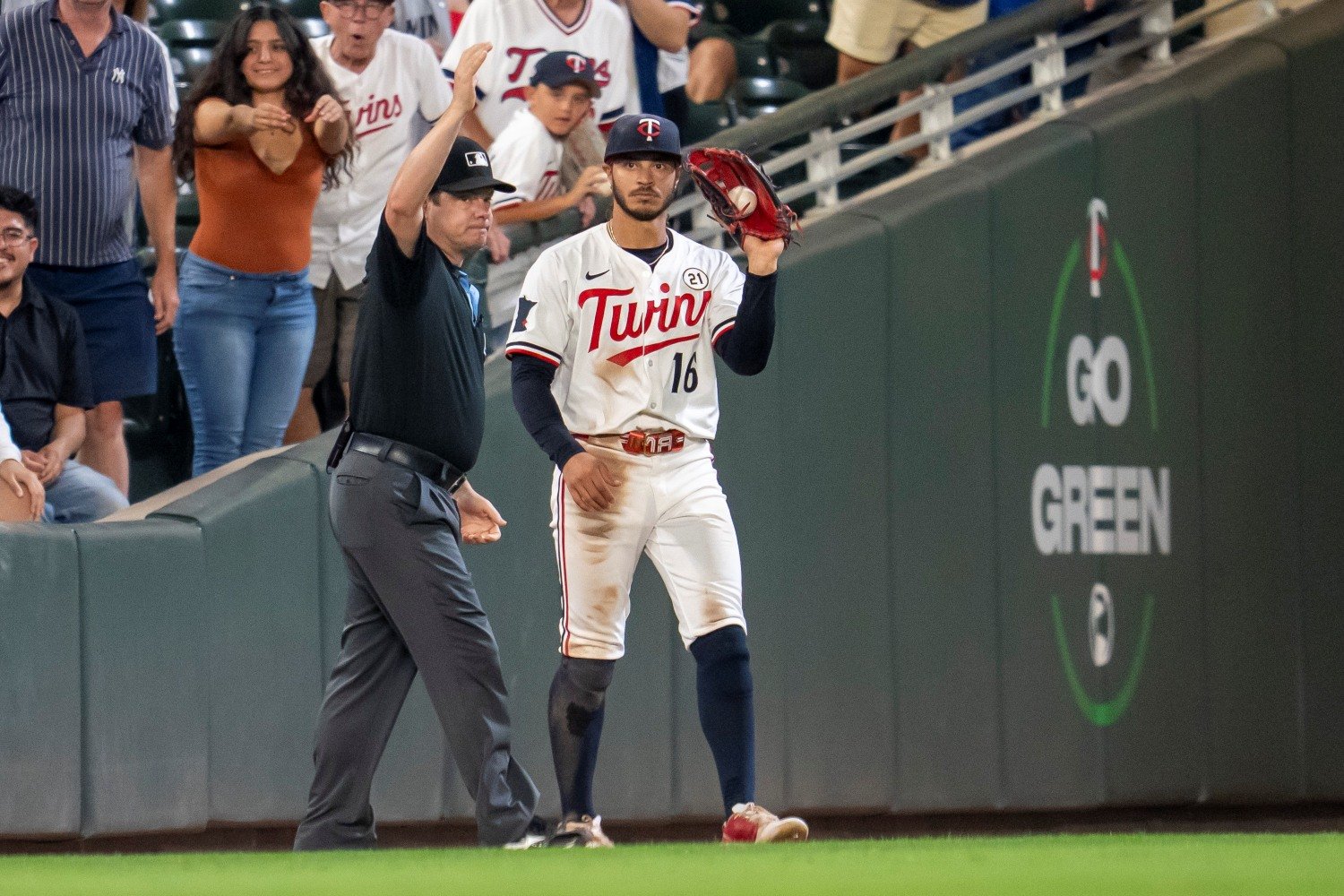 After the 2025 trade deadline, the Twins had spots to fill. Pitching got the most attention, but the Twins also needed to fill the holes left by Carlos Correa, Harrison Bader, Willi Castro, and Ty France. One of the beneficiaries of those vacancies was Austin Martin, and he’s really the only hitter to have successfully seized that opportunity. Since coming up at the beginning of August, he's batted .294/.385/.390 across 136 plate appearances, with solid defense in left field. It wasn’t a foregone conclusion that Martin would see success. He struggled in 93 games in 2024, both offensively (his .670 OPS was 10% below average) and defensively. There wasn’t even a clear path to playing time this year (despite the departures of Bader and Castro), given the presence of Byron Buxton, Matt Wallner, Trevor Larnach, Alan Roden, James Outman, and DaShawn Keirsey Jr. in the Twins outfield picture. But Martin parlayed his .319/.431/.398 line at Triple-A St. Paul into a call-up, and he hasn’t looked back. So, how does his unexpected emergence change things going forward? Well, first, his presence adds yet another name to the list of corner outfield options that seems to get longer by the day. The aforementioned Wallner, Larnach, Roden, and Outman (and I suppose Keirsey and Carson McCusker, should they survive a winter's worth of roster pruning) will all vie for time in right or left field next year. Other options like Walker Jenkins, Emmanuel Rodriguez, and Gabriel Gonzalez all await their chance at. Also, Kody Clemens can play out there, if that excites you—and Luke Keaschall might have to play out there, whether that excites you or not. It’s unclear how much Martin’s play will change the Twins’ plans on any of those names right now. Few would have been surprised if Larnach were traded (or released) this offseason, even before Martin's hot stretch. Outman, Keirsey, and McCusker all seemed to be in line for more minor roles, if they’re even in the organization, and Martin isn’t going to divert any top prospects from the track they’re already on. But it does give the Twins breathing room. Roden and the prospects, for instance, aren’t going to be thrust into roles the team doesn’t feel that they’re ready for just to fill space. Martin provides one line of protection there. It’s doubtful that the Twins feel any need to add a corner outfielder in free agency for that buffer—if they ever did at all. Beyond just being a warm, capable body in the corners, Martin fills another couple of roles. He’s right-handed, unlike any of the names listed above other than Buxton and McCusker. He makes a nice platoon partner with whichever lefty outfielder you prefer in left field, if you aren’t convinced that Martin can handle a full-time gig. That underscores a lesser need to acquire another outfielder this offseason—a right-handed swinger, in this case. Martin can also cover center field, if needed. It’s not pretty, but it’s likely better than what the team could get from Roden (or Clemens, who did play out there once this season), especially if the team elects to move on from Outman and Keirsey. Even if the Twins open the season with Martin covering the spot on Buxton’s days off, hopefully, Jenkins and Rodriguez would be able to step into the backup role before too much of the season elapses. It’s another fringe role that Martin can fill without the team spending any precious payroll space. He’s also an emergency infielder, which doesn’t really make that much difference, but I think we’re contractually obligated to say that anytime Martin’s name comes up. Given the rest of the depth and options, though, it seems pretty low-risk to simply roll with Martin penciled into an everyday role (or something approximating it). The weird thing about his emergence is that it doesn’t have an enormous effect on the rest of the plans. Almost all personnel decisions—outside of perhaps bringing in a free agent righty—will proceed as planned, without regard to Martin’s play this season. They’re more dependent on the team’s evaluation of those other players and their individual performances. Even if Martin is the team’s Opening Day left fielder in 2025, next season probably isn’t about him. It’s about Wallner having a bounce-back or Jenkins or Rodriguez settling into a role. Martin’s ceiling isn’t astronomical. He is a potentially good (but not elite) defender at a bottom-of-the-defensive-spectrum position whose offensive viability is predicated on his ability to flirt with a .400 on-base percentage with little-to-no power. He can still carve out a big-league career. He can still provide value on a good team. He might be a viable, league-average regular, if the team gives him a full season to play most days. And even if he’s squeezed out of the “starting role,” he can carve out a niche within a team—even one stocked with corner outfielders. Starting against lefties (and some righties) and pinch-hitting in situations in which the team needs a baserunner, and pinch-running when the team needs a stolen base—that’s a viable career. Martin, who has just one minor league option year after this season and will be 27 next year, might not have been in line for even this much of a big-league future if he didn’t make the most of his opportunity this summer. Outside of having one more reason to not go get a veteran righty outfielder, Martin provides another option to fill in the gaps of a roster that has many, many question marks, and it’s great to see him making the most of it.
 -
Episode 60: Twins' Suckups Night & The Return Of The Schoen
Greggory Masterson posted an article in Podcasts
 Comrade Cody is back after a two-month sabbatical to analyze the last couple of weeks (and months) of Twins baseball, relitigating the trade deadline. Gregg recounts his night as a special guest of the Twins and his missed chance to throw out the first pitch. Lou is stumped in the end. Listen using Apple Podcasts: https://podcasts.apple.com/us/podcast/the-twins-off-daily-podcast/id1741266056 Listen using Spotify: https://open.spotify.com/show/4tb78XlurcPTYYSsARdbD7 Listen using iHeartRadio: https://www.iheart.com/podcast/263-the-twins-off-daily-podcas-167548600/ Listen using Pocket Casts: https://pca.st/nvclbt0w Watch on YouTube: https://www.youtube.com/@twinsdaily
 -
Comrade Cody is back after a two-month sabbatical to analyze the last couple of weeks (and months) of Twins baseball, relitigating the trade deadline. Gregg recounts his night as a special guest of the Twins and his missed chance to throw out the first pitch. Lou is stumped in the end. Listen using Apple Podcasts: https://podcasts.apple.com/us/podcast/the-twins-off-daily-podcast/id1741266056 Listen using Spotify: https://open.spotify.com/show/4tb78XlurcPTYYSsARdbD7 Listen using iHeartRadio: https://www.iheart.com/podcast/263-the-twins-off-daily-podcas-167548600/ Listen using Pocket Casts: https://pca.st/nvclbt0w Watch on YouTube: https://www.youtube.com/@twinsdaily View full article
-
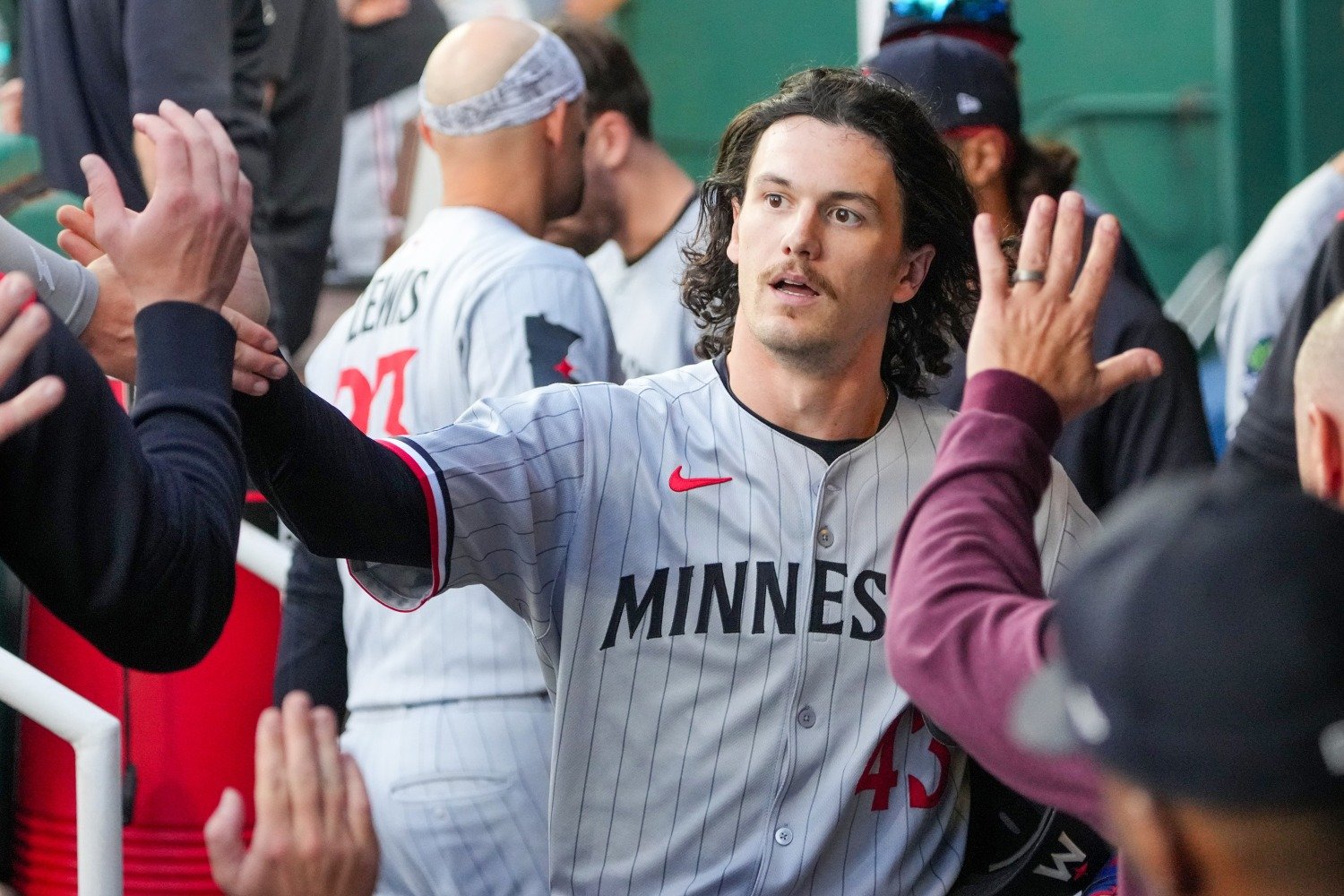 Maybe it’s irrational. But I’ve been rolling it around in my head for weeks. I think that there are a lot of things at play as Twins fans look at their favorite team and feel like there’s an anchor attached to the team. It’s natural to have fatalistic feelings in times like this, but I think there is something unique about the Twins’ situation. Literally one year ago, they were in playoff position, and today they’re vying for one of the top lottery picks. They just traded nearly half of their active roster. And it all feels stuck. I’m not about to point out what moves worked and what didn’t, who should be cut or fired, or anything like that. I just want to investigate why it seems like the Twins are trapped, and like it’s not going to change anytime soon. First, there are a lot of pieces of this roster that do feel lodged in place. Maybe not in the bullpen, and not for as long as it might appear, but they do feel stuck. There’s been very little turnover, year-to-year. After 2023, the Twins lost Sonny Gray, Donovan Solano, Joey Gallo, Michael A. Taylor, Kenta Maeda, and Emilio Pagán, then traded Jorge Polanco. They were replaced with Carlos Santana, Manuel Margot, Anthony DeSclafani, Jay Jackson, Steven Okert, and Justin Topa. That turnover largely consisted of downgrades, and after 2024, all but Topa were gone, along with Max Kepler, Caleb Thielbar, and Alex Kirilloff, this time replaced with Harrison Bader, Danny Coulombe, Ty France, and (later) Kody Clemens. You’ll notice that the last wave was smaller. It’s easy to point at this factor as the key—there’s been very little new blood brought in from outside the organization, and in 2025, there was even little new blood called up internally. Luke Keaschall is the only notable prospect to see any real success with the Twins this season. That lack of additions can be chalked up to two factors: a tightening of the belt by ownership and a lack of activity from management. After the Pohlad family spent 10 months attempting to sell the team, fans patiently waiting for change there were rewarded with the most inconsequential version of said sale: additional minority partners. Thus, even as the sale was technically completed, ownership is still left almost exactly where it started. The inactive management team is also still here (at least for now). Don’t get me wrong; I was in favor of largely keeping the team intact after 2024. I also believed that the team hit a rough skid, but had the ability to compete for a division title again after a reset. But that doesn’t mean that the team doesn’t feel stuck in place, after effectively running it back in the wake of a disastrous collapse one year ago. One perplexing aspect of this feeling, however, is that inactivity is a recent phenomenon for this front office, not their modus operandi. This is a front office that, at least compared to previous iterations, tends toward risk-taking and creativity. Three times, they signed the largest free-agent contract in team history—once with Josh Donaldson, and twice with Carlos Correa. The first Correa contract started a league-wide spree of creative, incentive-laden three-year contracts with player opt-outs after each year. This is the same front office that traded a fan favorite and batting champion for a frontline starter, absorbing the risk of public discontent. This is the same front office that waited out a market and tried to sign Lance Lynn and Logan Morrison to pillow deals when they had nowhere else to turn. Even as recently as 2024, they traded Polanco for prospects, bullpen depth, and starting pitching depth, before using the salary saved to acquire a first baseman and another middle reliever—creatively skating under their spending cap and checking several items off their offseason shopping list. Obviously, I’m not speaking to the success of these moves; I’m merely pointing out that this very front office—one that has largely been the same for the better part of a decade, at levels from leadership to analyst, only growing—was making risky decisions on a routine basis relatively recently. Their risky 2022 trade deadline, in which they acquired a frontline starter, closer, and setup man, was followed up with back-to-back acquisitions of one middle reliever who didn’t finish the season on the roster in 2023 and 2024. It wasn’t always like this, but it's sure like this now. Even on the field, though, the sense of ruthless repetition is getting palpable. This was the fifth season in which fans asked if Jorge Alcala could take the next step; if we’d see a healthy and productive season from Royce Lewis; and if Trevor Larnach would finally hit his ceiling. Really—we’ve been asking those same questions since 2021. The same was true with Chris Paddack since 2022. Ditto for pop-up prospects like Edouard Julien and Jose Miranda. Is this the year they start acting normal? The big three in the rotation have all been around for at least three years, without anyone else sneaking into the conversation over the last two. There are bright spots on the horizon, like Walker Jenkins, Emmanuel Rodriguez, Kaelen Culpepper, or Connor Prielipp. But they also seem so far away, for a team that feels like it’s at its waist in mud, led by the same manager who has led largely floundering teams who just couldn’t quite make it work for a half-decade. Again, this isn’t an analysis of what needs to happen or what went wrong. I’m just trying to work through why it feels like there’s no light at the end of the tunnel today. Maybe that feeling stretches throughout Twins Territory. Maybe the prospect pipeline has you feeling some creeping hope, even amid the gloom of this finish. Either way, though, it'd be great to see some tangible change this fall.
- 48 comments
-
- 11
-

-
-
Image courtesy of © Denny Medley-Imagn Images Maybe it’s irrational. But I’ve been rolling it around in my head for weeks. I think that there are a lot of things at play as Twins fans look at their favorite team and feel like there’s an anchor attached to the team. It’s natural to have fatalistic feelings in times like this, but I think there is something unique about the Twins’ situation. Literally one year ago, they were in playoff position, and today they’re vying for one of the top lottery picks. They just traded nearly half of their active roster. And it all feels stuck. I’m not about to point out what moves worked and what didn’t, who should be cut or fired, or anything like that. I just want to investigate why it seems like the Twins are trapped, and like it’s not going to change anytime soon. First, there are a lot of pieces of this roster that do feel lodged in place. Maybe not in the bullpen, and not for as long as it might appear, but they do feel stuck. There’s been very little turnover, year-to-year. After 2023, the Twins lost Sonny Gray, Donovan Solano, Joey Gallo, Michael A. Taylor, Kenta Maeda, and Emilio Pagán, then traded Jorge Polanco. They were replaced with Carlos Santana, Manuel Margot, Anthony DeSclafani, Jay Jackson, Steven Okert, and Justin Topa. That turnover largely consisted of downgrades, and after 2024, all but Topa were gone, along with Max Kepler, Caleb Thielbar, and Alex Kirilloff, this time replaced with Harrison Bader, Danny Coulombe, Ty France, and (later) Kody Clemens. You’ll notice that the last wave was smaller. It’s easy to point at this factor as the key—there’s been very little new blood brought in from outside the organization, and in 2025, there was even little new blood called up internally. Luke Keaschall is the only notable prospect to see any real success with the Twins this season. That lack of additions can be chalked up to two factors: a tightening of the belt by ownership and a lack of activity from management. After the Pohlad family spent 10 months attempting to sell the team, fans patiently waiting for change there were rewarded with the most inconsequential version of said sale: additional minority partners. Thus, even as the sale was technically completed, ownership is still left almost exactly where it started. The inactive management team is also still here (at least for now). Don’t get me wrong; I was in favor of largely keeping the team intact after 2024. I also believed that the team hit a rough skid, but had the ability to compete for a division title again after a reset. But that doesn’t mean that the team doesn’t feel stuck in place, after effectively running it back in the wake of a disastrous collapse one year ago. One perplexing aspect of this feeling, however, is that inactivity is a recent phenomenon for this front office, not their modus operandi. This is a front office that, at least compared to previous iterations, tends toward risk-taking and creativity. Three times, they signed the largest free-agent contract in team history—once with Josh Donaldson, and twice with Carlos Correa. The first Correa contract started a league-wide spree of creative, incentive-laden three-year contracts with player opt-outs after each year. This is the same front office that traded a fan favorite and batting champion for a frontline starter, absorbing the risk of public discontent. This is the same front office that waited out a market and tried to sign Lance Lynn and Logan Morrison to pillow deals when they had nowhere else to turn. Even as recently as 2024, they traded Polanco for prospects, bullpen depth, and starting pitching depth, before using the salary saved to acquire a first baseman and another middle reliever—creatively skating under their spending cap and checking several items off their offseason shopping list. Obviously, I’m not speaking to the success of these moves; I’m merely pointing out that this very front office—one that has largely been the same for the better part of a decade, at levels from leadership to analyst, only growing—was making risky decisions on a routine basis relatively recently. Their risky 2022 trade deadline, in which they acquired a frontline starter, closer, and setup man, was followed up with back-to-back acquisitions of one middle reliever who didn’t finish the season on the roster in 2023 and 2024. It wasn’t always like this, but it's sure like this now. Even on the field, though, the sense of ruthless repetition is getting palpable. This was the fifth season in which fans asked if Jorge Alcala could take the next step; if we’d see a healthy and productive season from Royce Lewis; and if Trevor Larnach would finally hit his ceiling. Really—we’ve been asking those same questions since 2021. The same was true with Chris Paddack since 2022. Ditto for pop-up prospects like Edouard Julien and Jose Miranda. Is this the year they start acting normal? The big three in the rotation have all been around for at least three years, without anyone else sneaking into the conversation over the last two. There are bright spots on the horizon, like Walker Jenkins, Emmanuel Rodriguez, Kaelen Culpepper, or Connor Prielipp. But they also seem so far away, for a team that feels like it’s at its waist in mud, led by the same manager who has led largely floundering teams who just couldn’t quite make it work for a half-decade. Again, this isn’t an analysis of what needs to happen or what went wrong. I’m just trying to work through why it feels like there’s no light at the end of the tunnel today. Maybe that feeling stretches throughout Twins Territory. Maybe the prospect pipeline has you feeling some creeping hope, even amid the gloom of this finish. Either way, though, it'd be great to see some tangible change this fall. View full article
-
I appreciate you caring just enough to leave a comment. I get paid per view!
- 51 replies
-
- 5
-

-
- jose miranda
- edouard julien
- (and 3 more)
-
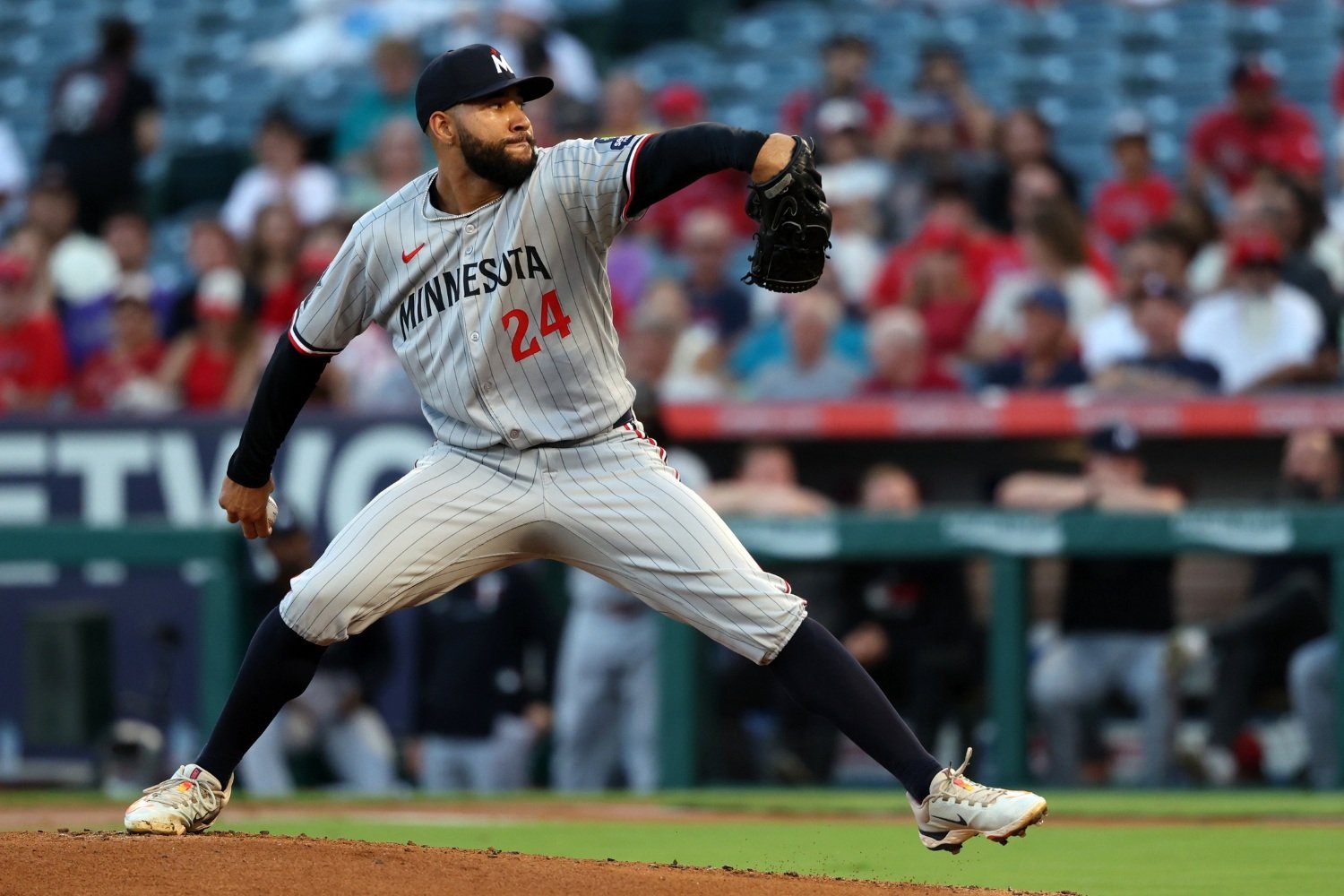 Obviously, every player is playing for their jobs. If you play poorly, you’re constantly at risk of seeing yourself pushed out of an organization. However, that pressure is amplified for young (let's just say under-30) players who have used up their minor-league options. Major League Baseball has many convoluted rules, and no set of rules may be more confusing to fans than those related to minor-league options. In short, players on the 40-man roster can be on the active MLB roster or in the minor leagues. However, players on the 40-man roster cannot be kept in the minor leagues indefinitely. If a player spends more than 20 days in the minor leagues while on the 40-man roster, they use one of their minor-league option years. They have three such option years. If the player has already used their three options, they must stay on the active roster and can only be moved to the minors if they are waived (meaning any of the other 29 teams can claim them) and then removed from the 40-man. Why does this matter in this discussion? Well, the Twins have a small handful of players who are out of options next season. That puts a bit of a target on their backs, because the organization needs to have some confidence that they’re big-league contributors. A player like, say, Mickey Gasper isn’t a guy a team has confidence will stick on an MLB roster, but because he has options, he can stick around as a depth option. When a player transitions from a fungible depth option to a roster lock, the bar rises. And when that bar rises, the calculus on keeping him around changes. Over the offseason, that might mean some guys will be out of a job. As the season winds down over the next couple of weeks, the Twins have five such players who will force decisions that might not happen if they could be sent down. (Ok, technically, there are eight, but three of those are Thomas Hatch, Michael Tonkin, and Génesis Cabrera, relievers here to soak up innings. I guess you could make an argument that fans should care if you have a favorite reliever in that bunch, but I’ll skip discussing them for reasons that should be obvious.) Jose Miranda Did you forget about Jose Miranda? Many have. This one appears to be the clearest case (no pun intended) among notable players out of options. Miranda was demoted in April, burning his final option, and has been one of the worst hitters in Triple-A this season, slashing .194/.271/.303. It’s probably the end of the line for his Twins career, and nothing he does down the stretch will change that. Edouard Julien Julien was a fixture in the Twins' 2023 lineup and slated to be a mainstay at the top of the lineup for years, but he’s sputtered in 2024 and 2025, burning his last two option years as he oscillated between Triple-A and MLB. He was called up after the trade deadline fire sale for what might be one final opportunity, and he’s played more often than not against righties either at first base or designated hitter. He’s been squeezed out of second base reps, with even Austin Martin getting time there over him. And he hasn’t been good, slashing .188/.284/.299 in the majors this season, with a .548 OPS since his August 1 tryout began. Julien has theoretical upside as a hitter, but he hasn’t flashed that in two years. The Twins could be talked into chasing that dragon again in 2026, but with Julien being out of options, that’s a harder bridge to sell. Kody Clemens You could call Clemens Julien-adjacent, as there might be something of an internal battle over who the default lefty first baseman is going into next season. There might be room for one of them, but not both, and Clemens has hit better this year, played a better second and first base, and shown flexibility in the outfield. If we were having this conversation a month ago, it’d be much more straightforward, but Clemens, the only player on this list currently out of options (which is why the Twins got him for cash considerations from Philadelphia), has struggled mightily down the stretch, slashing .154/.214/.282 as the Twins’ primary first baseman. Given his great start and middle of the season and his flexibility, he’d probably be a no-brainer to at least be penciled into the plans next year, but his skid and lack of options muddy that. He probably has a better chance of hanging on the roster over the offseason than the first two on this list. James Outman The prized jewel from the Brock Stewart trade everyone loved and totally understood, Outman is a lefty outfielder for a team I’m pretty sure has no other left-handed outfielders. Outman has a very clear path to playing time, given that there are no other left-handed outfielders on the major-league roster or in the high minors, so I’m sure his being out of options won’t play a factor in any decision-making for him or adjacent players. Certainly, he won’t be given a spot due to the sunk cost fallacy and will instead get a lot of playing time because there’s a clear role for him on next year’s team. (Hang on, I'm being handed a note...) At least he plays center field. And has a .642 OPS as a Twin. Who knows, honestly? I’m not mad; I’m still just confused. Simeon Woods Richardson Okay, joking about Outman aside, this is the big one. This is the case that got me thinking about the topic. Woods Richardson kept the Twins rotation afloat in 2024, providing much-needed depth, with a 4.17 ERA in 28 starts. He struggled early in 2025, necessitating a trip to the minors, which burned his final option year. Woods Richardson has been a productive backend starter. Not sexy, but competent enough. However, the Twins have eight MLB starters (or seven, pending the health of David Festa), and the 2026 rotation is not yet apparent. Joe Ryan, Pablo López, and Bailey Ober seem to slot in ahead of him, and Zebby Matthews is likely ahead of him, as well. Taj Bradley has about the same amount of big-league action as Woods Richardson, and he’s viewed as a higher-upside youngster. So what does that mean for Woods Richardson? He’d be a perfect next-man-up, but he can’t be stashed at Triple-A to open the season. There’s no clear path for him in a bullpen role either, given his pitch mix and stuff. There may be a trade of Ryan or López that clears this logjam up, but Woods Richardson seems like the odd man out, unless they demote Bradley or Matthews, and that says nothing about other prospects vying for depth innings like Mick Abel, Connor Prielipp, or Kendry Rojas. He hasn't looked great over his past three starts since recovering from a stomach virus, running a 6.59 ERA across 13 2/3 innings in three starts. Woods Richardson is a competent backend starter with four more years of team control, but that may have to come for another team. It’s difficult to map out a role for him going into next year, with the pitching corps as constructed and no ability to demote him to the minors. That will be the story for more than one of this quintet.
- 51 comments
-
- 12
-
-
- jose miranda
- edouard julien
- (and 3 more)
-
Image courtesy of © Kiyoshi Mio-Imagn Images Obviously, every player is playing for their jobs. If you play poorly, you’re constantly at risk of seeing yourself pushed out of an organization. However, that pressure is amplified for young (let's just say under-30) players who have used up their minor-league options. Major League Baseball has many convoluted rules, and no set of rules may be more confusing to fans than those related to minor-league options. In short, players on the 40-man roster can be on the active MLB roster or in the minor leagues. However, players on the 40-man roster cannot be kept in the minor leagues indefinitely. If a player spends more than 20 days in the minor leagues while on the 40-man roster, they use one of their minor-league option years. They have three such option years. If the player has already used their three options, they must stay on the active roster and can only be moved to the minors if they are waived (meaning any of the other 29 teams can claim them) and then removed from the 40-man. Why does this matter in this discussion? Well, the Twins have a small handful of players who are out of options next season. That puts a bit of a target on their backs, because the organization needs to have some confidence that they’re big-league contributors. A player like, say, Mickey Gasper isn’t a guy a team has confidence will stick on an MLB roster, but because he has options, he can stick around as a depth option. When a player transitions from a fungible depth option to a roster lock, the bar rises. And when that bar rises, the calculus on keeping him around changes. Over the offseason, that might mean some guys will be out of a job. As the season winds down over the next couple of weeks, the Twins have five such players who will force decisions that might not happen if they could be sent down. (Ok, technically, there are eight, but three of those are Thomas Hatch, Michael Tonkin, and Génesis Cabrera, relievers here to soak up innings. I guess you could make an argument that fans should care if you have a favorite reliever in that bunch, but I’ll skip discussing them for reasons that should be obvious.) Jose Miranda Did you forget about Jose Miranda? Many have. This one appears to be the clearest case (no pun intended) among notable players out of options. Miranda was demoted in April, burning his final option, and has been one of the worst hitters in Triple-A this season, slashing .194/.271/.303. It’s probably the end of the line for his Twins career, and nothing he does down the stretch will change that. Edouard Julien Julien was a fixture in the Twins' 2023 lineup and slated to be a mainstay at the top of the lineup for years, but he’s sputtered in 2024 and 2025, burning his last two option years as he oscillated between Triple-A and MLB. He was called up after the trade deadline fire sale for what might be one final opportunity, and he’s played more often than not against righties either at first base or designated hitter. He’s been squeezed out of second base reps, with even Austin Martin getting time there over him. And he hasn’t been good, slashing .188/.284/.299 in the majors this season, with a .548 OPS since his August 1 tryout began. Julien has theoretical upside as a hitter, but he hasn’t flashed that in two years. The Twins could be talked into chasing that dragon again in 2026, but with Julien being out of options, that’s a harder bridge to sell. Kody Clemens You could call Clemens Julien-adjacent, as there might be something of an internal battle over who the default lefty first baseman is going into next season. There might be room for one of them, but not both, and Clemens has hit better this year, played a better second and first base, and shown flexibility in the outfield. If we were having this conversation a month ago, it’d be much more straightforward, but Clemens, the only player on this list currently out of options (which is why the Twins got him for cash considerations from Philadelphia), has struggled mightily down the stretch, slashing .154/.214/.282 as the Twins’ primary first baseman. Given his great start and middle of the season and his flexibility, he’d probably be a no-brainer to at least be penciled into the plans next year, but his skid and lack of options muddy that. He probably has a better chance of hanging on the roster over the offseason than the first two on this list. James Outman The prized jewel from the Brock Stewart trade everyone loved and totally understood, Outman is a lefty outfielder for a team I’m pretty sure has no other left-handed outfielders. Outman has a very clear path to playing time, given that there are no other left-handed outfielders on the major-league roster or in the high minors, so I’m sure his being out of options won’t play a factor in any decision-making for him or adjacent players. Certainly, he won’t be given a spot due to the sunk cost fallacy and will instead get a lot of playing time because there’s a clear role for him on next year’s team. (Hang on, I'm being handed a note...) At least he plays center field. And has a .642 OPS as a Twin. Who knows, honestly? I’m not mad; I’m still just confused. Simeon Woods Richardson Okay, joking about Outman aside, this is the big one. This is the case that got me thinking about the topic. Woods Richardson kept the Twins rotation afloat in 2024, providing much-needed depth, with a 4.17 ERA in 28 starts. He struggled early in 2025, necessitating a trip to the minors, which burned his final option year. Woods Richardson has been a productive backend starter. Not sexy, but competent enough. However, the Twins have eight MLB starters (or seven, pending the health of David Festa), and the 2026 rotation is not yet apparent. Joe Ryan, Pablo López, and Bailey Ober seem to slot in ahead of him, and Zebby Matthews is likely ahead of him, as well. Taj Bradley has about the same amount of big-league action as Woods Richardson, and he’s viewed as a higher-upside youngster. So what does that mean for Woods Richardson? He’d be a perfect next-man-up, but he can’t be stashed at Triple-A to open the season. There’s no clear path for him in a bullpen role either, given his pitch mix and stuff. There may be a trade of Ryan or López that clears this logjam up, but Woods Richardson seems like the odd man out, unless they demote Bradley or Matthews, and that says nothing about other prospects vying for depth innings like Mick Abel, Connor Prielipp, or Kendry Rojas. He hasn't looked great over his past three starts since recovering from a stomach virus, running a 6.59 ERA across 13 2/3 innings in three starts. Woods Richardson is a competent backend starter with four more years of team control, but that may have to come for another team. It’s difficult to map out a role for him going into next year, with the pitching corps as constructed and no ability to demote him to the minors. That will be the story for more than one of this quintet. View full article
-
 Sweet Lou and Ol Gregg livestream, discussing the current state of the franchise, prospects, and fan appreciation. Listen using Apple Podcasts: https://podcasts.apple.com/us/podcast/the-twins-off-daily-podcast/id1741266056 Listen using Spotify: https://open.spotify.com/show/4tb78XlurcPTYYSsARdbD7 Listen using iHeartRadio: https://www.iheart.com/podcast/263-the-twins-off-daily-podcas-167548600/ Listen using Pocket Casts: https://pca.st/nvclbt0w Watch on YouTube: https://www.youtube.com/@twinsdaily
