


Twins Video
Okay, maybe “changes the definition” is a bit extreme, but stick with me here. A Willi Castro-type player alters team construction and decision-making in a way that’s unique to a small subset of players, even if he’s not an elite player in and of himself.
The Twins have a decision ahead of them. It’s a decision that probably isn’t so tricky but for the apparent need to keep payroll tight ahead of 2025, but here we are. Willi Castro, their do-everything man, is due for about $6.2 million in arbitration, according to MLB Trade Rumors’ projections.
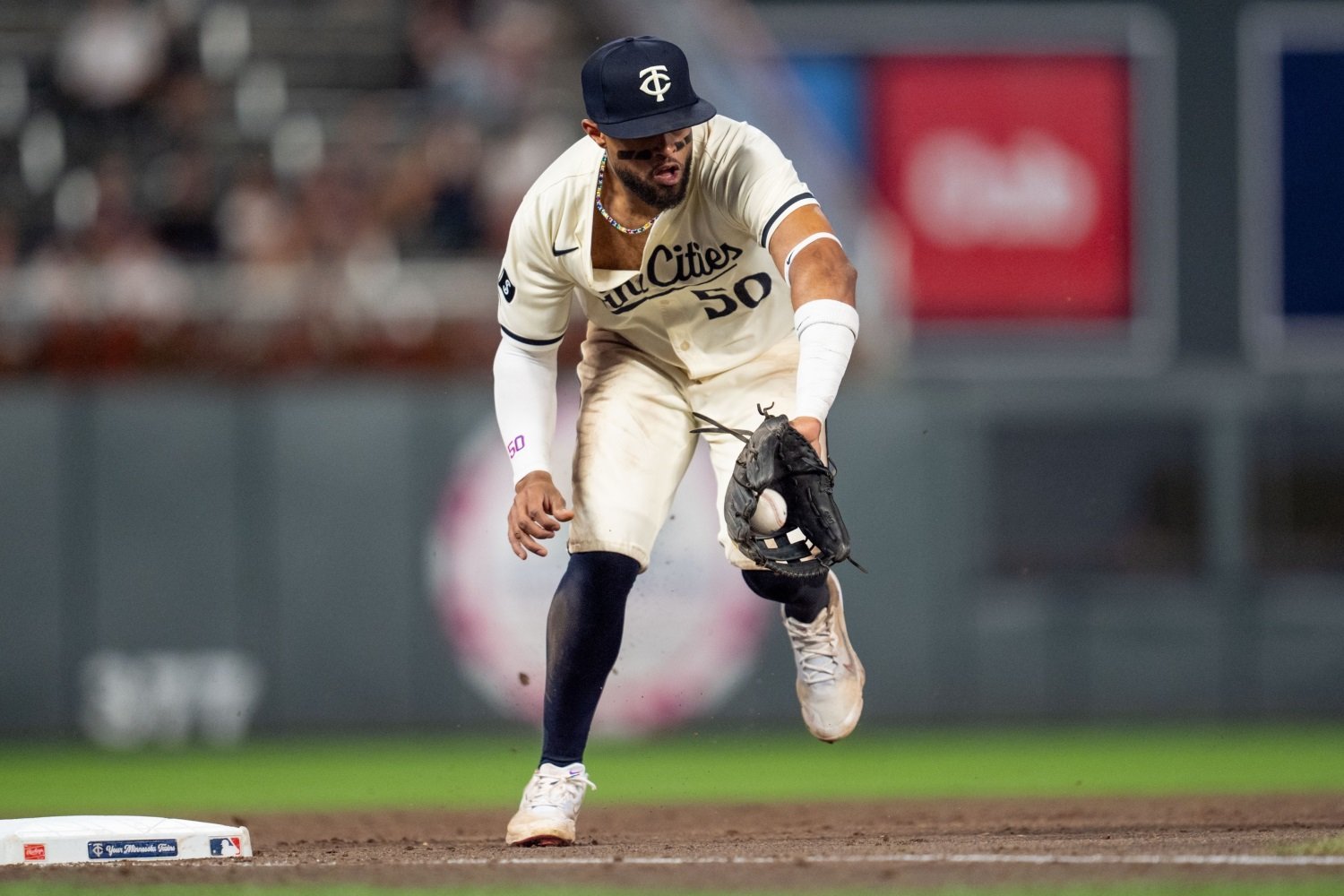
Castro earned himself some recognition this season, being named an All-Star and a "finalist" for the Gold Glove at the utility position (whatever that means). He was about 5 percent better than the average hitter, starting more than 25 games at five different positions (including shortstop and center field). He led the team in both games played (158) and plate appearances (635). For the analytics wonks out there, FanGraphs had him at 3.1 WAR, and Baseball Reference had him at 1.6.
He produced like a solid starter. The All-Star nod was based on his electric first half, and he saw a significant drop-off in the final three months of the year, but production is production. He’s not a great defender at shortstop or in center field, but he can play there well enough to get you by. He’s the quintessential 10th man, and there are few like him.
Sure, there are players who can play multiple positions on every bench, but it’s rare to find one who can both hold his own at the plate and cover the more challenging positions. And that has ripple effects.
First, he’s a starting-caliber player who can replace anyone. Should injuries (or ineffectiveness) happen at any position, Castro can cover that spot for weeks at a time, as he did in 2024 at second and third base, shortstop, and center field. There’s value in that, by itself. If a team’s best bench option is a utility infielder, that guy can’t cover center field. If the team has a solid corner outfielder on the bench, good luck teaching him third base.
In such cases, teams have to skip over their top players for their second or third options. That’s not so with Castro. Even though Castro doesn’t play right field often or first base at all, all those positions require is a slide across the field from one of the team’s other starters. He can handle it everywhere else. You don’t have to skip over Castro to get to someone else.
Second, Castro’s flexibility allows more creativity in bench construction. The modern four-man bench in MLB looks something like this: backup catcher, backup infielder, backup outfielder, free space. It's pretty straightforward with the backup outfielder and infielder—if the team loses a player in the infield, the bench guy comes in to take his spot or some sort of realignment, and it’s the same for the outfielder. In this setup, a massive part of who ends up on the bench for the team is coverage. There’s no hole one of those first three guys can’t fill.
But what if one guy can cover both?
That’s Castro (and a select group of other players in the majors, like Houston’s Mauricio Dubón). Because Castro can hit and play six and a half positions (like, I guess he’d play right field in an outfield alongside Austin Martin and Byron Buxton), a team now has two free spaces. If you want a big bench bat, go for it! A mostly platoon hitter? Why not! Carry both! You can justify a roster setup that you wouldn’t be able to without Castro being both your utility infielder and outfielder. The situational and functional effectiveness of the bench just went up.
Note: Of course, this only works if the other role players on the bench also fulfill their bit roles and aren’t stretched past their capabilities (see M. Margot, Minnesota Twins, 2024). However, that’s true of all benches and roles. Form follows function and all that.
In these cases, though, the positional component is reduced. The team has coverage. You don’t need to place as much emphasis on having a glove-first infielder as you would have otherwise. It would be nice to have a better option defensively up the middle, but Castro reduces that need and allows more roster construction flexibility.
Third, and here we’re getting to the replacement player part (I know Chekhov’s Gun; I don’t leave those loose ends), Castro affects who the team’s replacements are. You know, those hypothetical replacement players freely available at Triple-A, or on waivers, or free agents, or whatever. With Castro, you get the pick of the litter.
Let’s consider a 2025 hypothetical scenario. Royce Lewis, everyday second baseman, gets hurt. He needs to go on the IL. The top infield option for a call-up is Michael Helman. The top outfield option for a call-up is Emmanuel Rodriguez. Sight unseen, who would you prefer to get the call?
Well, if your Kyle Farmer-type is moving into an everyday role, you probably want the infielder. Suppose your Willi Castro is moving to an everyday role. In that case, you might have some room for your top prospect to get some time in the outfield, taking Castro’s time out there now that that’s free, given that the initial plans would include him playing a little on the dirt, a little in the outfield, pinch running, platooning. After he’s tied down, there’s playing time everywhere else to be had.
In truth, we never really saw how Castro’s versatility would have played out as a primary bench player, in which he would have time spread out around the diamond and been used situationally as he was in 2023 (see this Ben Clemens article on depth charts, if this stuff interests you). Instead, he was thrust into the starting lineup in the second game of the season after an injury to Lewis.
And that’s the fourth effect. A Twins team that is as injury-prone as this one needs a Castro. Not every team relies on so much production from players who are injured so often, and to an extent, having a solid 10th man allows some risk-taking. That doesn’t show up in his statistics, but it’s another effect. A team with a strong bench or competent high-minors bats is tooled to withstand the injury bug better than the average team, and for the Twins, that’s not something that they can afford to forego. A team can only feasibly carry ten everyday players, but not every team can get to that number. A Castro-type makes that possible.
Castro’s effects aren’t neatly summed up in a WAR number or stat line. Those still look nice, but some value is in the value that a player creates in the spots on the roster that they don’t occupy. It’s one of the reasons that Shohei Ohtani’s two-way abilities are so valuable, beyond his quantifiable production. His team has the freedom to do a little more with the spots around him.
Note 2: If you read those last two sentences and think that it says “Willi Castro and Shohei Ohtani are equally valuable,” so help me.
Naturally, none of this holds up if Castro is closer to the player that he was in the second half of 2024. Hopefully, any Castro decisions this offseason will be made based on how skilled the team believes he is, rather than the moderate sum he'll be owed. If there's a tiebreaker to be found, though, let it be the unmeasured value of the flexibility boost he provides.
Do you approve of the job the Twins front office is doing?

Follow Twins Daily For Minnesota Twins News & Analysis



- Karbo, Hrbeks Divot, Mia Bednar and 5 others
-
 8
8



Recommended Comments
Create an account or sign in to comment
You need to be a member in order to leave a comment
Create an account
Sign up for a new account in our community. It's easy!
Register a new accountSign in
Already have an account? Sign in here.
Sign In Now