



Matt Braun
-
Posts
1,393 -
Joined
-
Last visited
-
Days Won
1
Content Type
Profiles
News
Minnesota Twins Videos
2026 Minnesota Twins Top Prospects Ranking
2022 Minnesota Twins Draft Picks
Minnesota Twins Free Agent & Trade Rumors, Notes, & Tidbits
Guides & Resources
2023 Minnesota Twins Draft Picks
The Minnesota Twins Players Project
2024 Minnesota Twins Draft Picks
2025 Minnesota Twins Draft Pick Tracker
2026 Minnesota Twins Draft Tracker: Picks & Bonuses
Forums
Blogs
Events
Store
Downloads
Gallery
Everything posted by Matt Braun
-
Thank god help is on the horizon. Image courtesy of Ed Bailey, Wichita Wind Surge TRANSACTIONS INF Nick Lucky transferred from Low-A Fort Myers to AAA St. Paul Saints Sentinel St. Paul 4, Louisville 9 Box Score Aaron Rozek: 3 IP, 0 H, 0 ER, 0 BB, 5 K HR: Anthony Prato (2) Multi-hit games: Alex Isola (2-for-4, R, RBI), Maddux Houghton (2-for-3, R) Middle relief failed the Saints on Sunday. Aaron Rozek killed it. The 28-year-old Burnsville native—typically an up/down arm for the high minors—diced through the Bats lineup with ease, punching out five with unique efficiency. Louisville likely celebrated when they saw him stay in the dugout for the 4th inning. And then they pounced. Good lord, did they pounce. Zack Weiss allowed a dinky single, struck out the next batter, then watched a line of shenanigans and singles turn a slim lead into a 4-1 deficit. Tossing a cement mixer to Livan Soto didn’t help, either; the lefty out of Venezuela deposited the offering over the right field wall. Louisville waited patiently and mercifully for one more frame before clubbing the Saints again—this time with a five-run attack. Weiss started that inning, quickly giving way to Austin Brice when it became clear to Toby Gardenhire that keeping him in could be deemed cruel and unusual punishment. Brice was no better. He hit one, walked three, allowed an RBI single, and elicited his only out when Chris Williams caught a runner attempting to swipe third. Ronny Henriquez cleaned up with mild resistance. Nine runs proved too much for a poorly coordinated but decently effective Saints offense. St. Paul could only jab; they plated four in single-run intervals, as each attempt at a crooked number ended before much could occur. Anthony Prato whacked his second homer of the year. Louisville centerfielder Blake Dunn claims the 10th spot on the Reds’ prospect list. He struck out three times in four at-bats. WIND SURGE WISDOM Wichita 9, Springfield 16 Box Score Andrew Morris: 1 IP, 5 H, 0 ER, 0 BB, 0 K HR: Carson McCusker (9), Dalton Shuffield (2) Multi-hit games: Tanner Schobel (2-for-5, 2B, R), Ben Ross (2-for-3, 2B, 2 R, RBI), Dalton Shuffield (2-for-5, HR, 2B, 2 R, 4 RBI) The Wind Surge lost a sloppy, sloppy game on Sunday. Something must be in the water; Zebby Matthew, Cory Lewis, and now Andrew Morris turned in some of their worst performances as a pro this last week. Morris at least has some excuse, given that he needed to earn five outs just to escape the 1st. And, unfortunately, the 41 pitches he threw to earn what is usually a gimme took him out of the game for good. All five runs scored on him were unearned. He lowered his season ERA. The Cardinals plated five more runs before Wichita’s bats woke from their slumber. They rose with a vengeance: nine furious runs pushed the game to a one-run match, at least for a time. Andrew Cossetti, Dalton Shuffield, and Jake Rucker had the run-scoring knocks in the 5th; Carson McCusker, Ben Ross, and Shuffield had them in the 6th. Between the two frames, Wichita collected six extra-base hits, reached base 11 times, and nearly evened what was once a 10-run deficit. As it happens, the Cardinals soon realized they could respond to Wichita’s flurry. They did. They continued to bleed the Wind Surge bullpen dry, scoring in the 6th, 7th, and 8th to mask the fact that this once looked like a close game. Rehabbing big leaguer Tommy Edman collected two hits and three RBIs. Despite claiming a plethora of excellent pitching prospects, Springfield’s highest-ranked youngster active on Sunday was the brilliantly named Jimmy Crooks. The catcher homered in a 2-5 showing. KERNELS NUGGETS Cedar Rapids 2, Beloit 3 Box Score Jeremy Lee: 4 ⅔ IP, 6 H, 2 ER, 2 BB, 6 K HR: None Multi-hit games: Gabriel Gonzalez (2-for-4, R) The Kernels couldn’t hold on to an early lead on Sunday. Jeremy Lee was solid. A little inefficient, but solid. The Sky Carp knocked around him for six hits—mostly singles—and took two walks, but Lee nearly escaped without a scratch; too bad Carlos Santiago blasted a two-run homer off him. Lee’s elevated pitch count begat a tremendous 2 ⅓ inning, five punchout performance by Jacob Wosinski; the 6’8” righty from Grand Rapids blew through the Sky Carp, only faltering when that damned Santiago manufactured a run with a walk/stolen base/advance on a wild pitch combo. He scored on a single. In the background, the Kernels' offense was patient and ineffective. They plated a pair with an eventful 1st inning, but failed to capitalize more, eventually leaving the bases loaded with tepid at-bats from Jose Salas and Kyle Hess. And that was the last time a Kernel reached second base. Twice, they ended a frame with a double play; thrice, their attempted rally simply started too late. Overall, they took six walks but could muster up just four hits. Typically, the Sky Carp are fronted by a duo of tremendous pitching prospects, Noble Meyer and Thomas White, but—because both hurlers participated in the Futures Game on Saturday, their best prospect to play on Sunday was first baseman Brock Vradenburg, ranked 18th in their system. He went 0-4 with three strikeouts. MUSSEL MATTERS Fort Myers 3, Daytona 6 Box Score Spencer Bengard: 5 IP, 7 H, 2 ER, 3 BB, 4 K HR: Poncho Ruiz (3) Multi-hit games: Walker Jenkins (2-for-5, 2B, RBI), Yohander Martinez (2-for-3, 2B, BB) The Mighty Mussels dropped their finale against the Tortugas on Sunday. Starter Spencer Bengard pitched a working man’s five innings for Fort Myers. He didn’t dominate—his strike rate was just 60%—and ten men reached base against him, but only two scored; perhaps a sign of tremendous gumption or plain good luck. In any case, Bengard’s season ERA sits at a shiny 1.54, the fourth-lowest of all pitchers in the FSL with at least 50 innings pitched. That dam held back by Bengard broke, though, the second he left the game: Daytona buried Ben Ethridge with three runs as he could only coax one out before exiting the mound, likely grumpier than before. Fort Myers’ offense, in return, could not keep up with this flurry. Or, they at least ran out of time before finding the necessary gear. Walker Jenkins plated their opening run with a 5th-inning single, but the knock only portended a missed opportunity: Brandon Winokur snipped the rally prematurely by grounding into an inning-ending double play. The next runs didn’t come until the 8th when Poncho Ruiz bruised the berm with a two-run smash. The hit could only make the score look a little better, as the Mighty Mussels came up empty in the 9th and fell to just two games over .500. Daytona’s best prospect is Ricardo Cabrera, ranked 8th in the Reds system. He collected three hits and two RBIs in five at-bats. TWINS DAILY PLAYERS OF THE DAY Twins Daily Minor League Pitcher of the Day – Aaron Rozek Twins Daily Minor League Hitter of the Day – Dalton Shuffield PROSPECT SUMMARY Here’s a look at how the Twins Daily Top 20 Twins Prospects performed: #1 - Walker Jenkins (Fort Myers) - 2-5, 2B, RBI #5 - Gabriel Gonzalez (Cedar Rapids) - 2-4, R, 2 K #10 - Brandon Winokur (Fort Myers) - 1-3, R, K #13 - Tanner Schobel (Wichita) - 2-5, 2B, R #18 - Yunior Severino (St. Paul) - 1-4, 2 RBI, K #20 - Ricardo Olivar (Cedar Rapids) - 0-2, R, 2 BB MONDAY’S PROBABLE STARTERS DSL Twins @ DSL Mets Orange (10:00 AM) - TBD FCL Twins @ FCL Braves (11:00 AM) - TBD View full article
- 4 replies
-
- 1
-

-
- aaron rozek
- dalton shuffield
- (and 5 more)
-
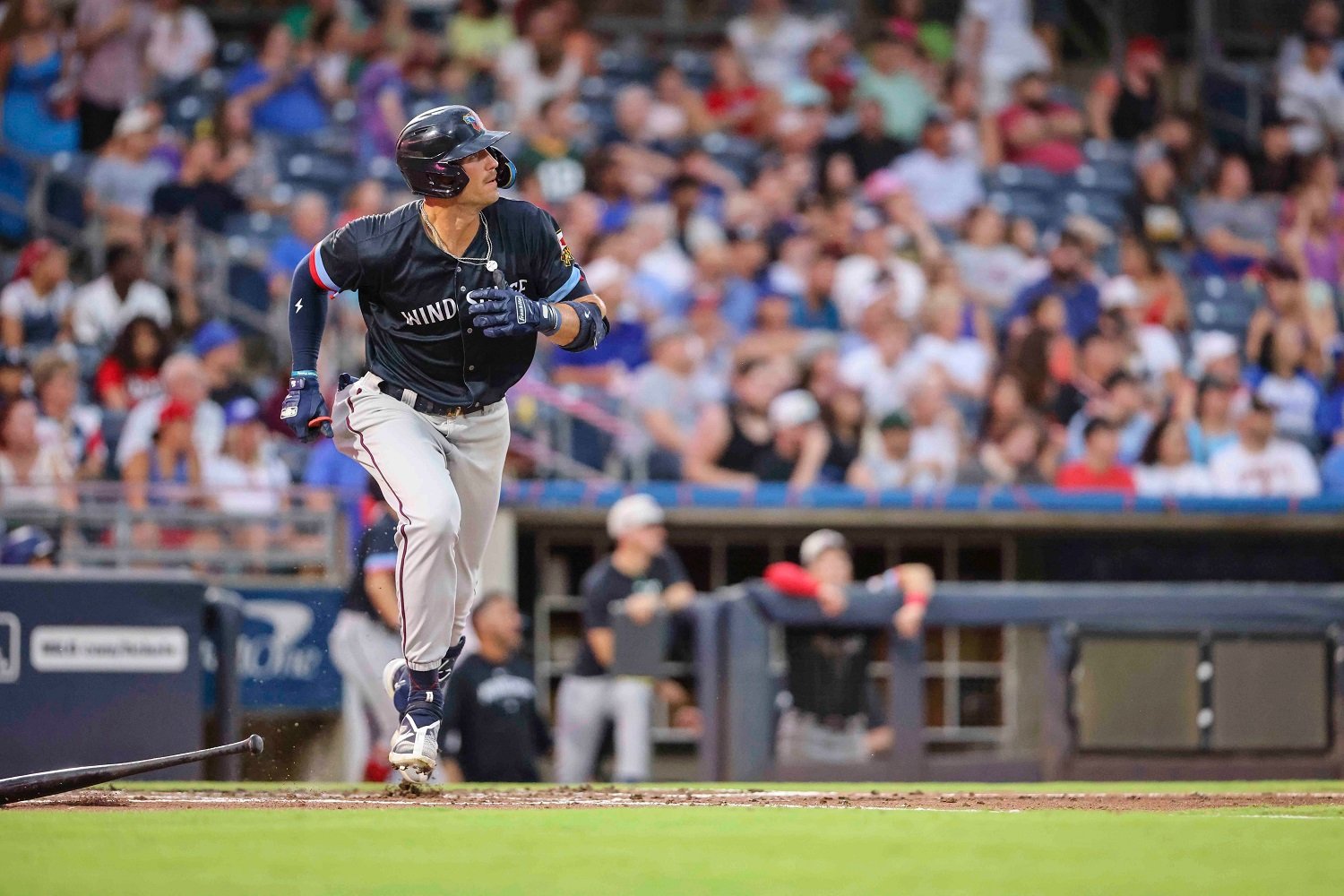 TRANSACTIONS INF Nick Lucky transferred from Low-A Fort Myers to AAA St. Paul Saints Sentinel St. Paul 4, Louisville 9 Box Score Aaron Rozek: 3 IP, 0 H, 0 ER, 0 BB, 5 K HR: Anthony Prato (2) Multi-hit games: Alex Isola (2-for-4, R, RBI), Maddux Houghton (2-for-3, R) Middle relief failed the Saints on Sunday. Aaron Rozek killed it. The 28-year-old Burnsville native—typically an up/down arm for the high minors—diced through the Bats lineup with ease, punching out five with unique efficiency. Louisville likely celebrated when they saw him stay in the dugout for the 4th inning. And then they pounced. Good lord, did they pounce. Zack Weiss allowed a dinky single, struck out the next batter, then watched a line of shenanigans and singles turn a slim lead into a 4-1 deficit. Tossing a cement mixer to Livan Soto didn’t help, either; the lefty out of Venezuela deposited the offering over the right field wall. Louisville waited patiently and mercifully for one more frame before clubbing the Saints again—this time with a five-run attack. Weiss started that inning, quickly giving way to Austin Brice when it became clear to Toby Gardenhire that keeping him in could be deemed cruel and unusual punishment. Brice was no better. He hit one, walked three, allowed an RBI single, and elicited his only out when Chris Williams caught a runner attempting to swipe third. Ronny Henriquez cleaned up with mild resistance. Nine runs proved too much for a poorly coordinated but decently effective Saints offense. St. Paul could only jab; they plated four in single-run intervals, as each attempt at a crooked number ended before much could occur. Anthony Prato whacked his second homer of the year. Louisville centerfielder Blake Dunn claims the 10th spot on the Reds’ prospect list. He struck out three times in four at-bats. WIND SURGE WISDOM Wichita 9, Springfield 16 Box Score Andrew Morris: 1 IP, 5 H, 0 ER, 0 BB, 0 K HR: Carson McCusker (9), Dalton Shuffield (2) Multi-hit games: Tanner Schobel (2-for-5, 2B, R), Ben Ross (2-for-3, 2B, 2 R, RBI), Dalton Shuffield (2-for-5, HR, 2B, 2 R, 4 RBI) The Wind Surge lost a sloppy, sloppy game on Sunday. Something must be in the water; Zebby Matthew, Cory Lewis, and now Andrew Morris turned in some of their worst performances as a pro this last week. Morris at least has some excuse, given that he needed to earn five outs just to escape the 1st. And, unfortunately, the 41 pitches he threw to earn what is usually a gimme took him out of the game for good. All five runs scored on him were unearned. He lowered his season ERA. The Cardinals plated five more runs before Wichita’s bats woke from their slumber. They rose with a vengeance: nine furious runs pushed the game to a one-run match, at least for a time. Andrew Cossetti, Dalton Shuffield, and Jake Rucker had the run-scoring knocks in the 5th; Carson McCusker, Ben Ross, and Shuffield had them in the 6th. Between the two frames, Wichita collected six extra-base hits, reached base 11 times, and nearly evened what was once a 10-run deficit. As it happens, the Cardinals soon realized they could respond to Wichita’s flurry. They did. They continued to bleed the Wind Surge bullpen dry, scoring in the 6th, 7th, and 8th to mask the fact that this once looked like a close game. Rehabbing big leaguer Tommy Edman collected two hits and three RBIs. Despite claiming a plethora of excellent pitching prospects, Springfield’s highest-ranked youngster active on Sunday was the brilliantly named Jimmy Crooks. The catcher homered in a 2-5 showing. KERNELS NUGGETS Cedar Rapids 2, Beloit 3 Box Score Jeremy Lee: 4 ⅔ IP, 6 H, 2 ER, 2 BB, 6 K HR: None Multi-hit games: Gabriel Gonzalez (2-for-4, R) The Kernels couldn’t hold on to an early lead on Sunday. Jeremy Lee was solid. A little inefficient, but solid. The Sky Carp knocked around him for six hits—mostly singles—and took two walks, but Lee nearly escaped without a scratch; too bad Carlos Santiago blasted a two-run homer off him. Lee’s elevated pitch count begat a tremendous 2 ⅓ inning, five punchout performance by Jacob Wosinski; the 6’8” righty from Grand Rapids blew through the Sky Carp, only faltering when that damned Santiago manufactured a run with a walk/stolen base/advance on a wild pitch combo. He scored on a single. In the background, the Kernels' offense was patient and ineffective. They plated a pair with an eventful 1st inning, but failed to capitalize more, eventually leaving the bases loaded with tepid at-bats from Jose Salas and Kyle Hess. And that was the last time a Kernel reached second base. Twice, they ended a frame with a double play; thrice, their attempted rally simply started too late. Overall, they took six walks but could muster up just four hits. Typically, the Sky Carp are fronted by a duo of tremendous pitching prospects, Noble Meyer and Thomas White, but—because both hurlers participated in the Futures Game on Saturday, their best prospect to play on Sunday was first baseman Brock Vradenburg, ranked 18th in their system. He went 0-4 with three strikeouts. MUSSEL MATTERS Fort Myers 3, Daytona 6 Box Score Spencer Bengard: 5 IP, 7 H, 2 ER, 3 BB, 4 K HR: Poncho Ruiz (3) Multi-hit games: Walker Jenkins (2-for-5, 2B, RBI), Yohander Martinez (2-for-3, 2B, BB) The Mighty Mussels dropped their finale against the Tortugas on Sunday. Starter Spencer Bengard pitched a working man’s five innings for Fort Myers. He didn’t dominate—his strike rate was just 60%—and ten men reached base against him, but only two scored; perhaps a sign of tremendous gumption or plain good luck. In any case, Bengard’s season ERA sits at a shiny 1.54, the fourth-lowest of all pitchers in the FSL with at least 50 innings pitched. That dam held back by Bengard broke, though, the second he left the game: Daytona buried Ben Ethridge with three runs as he could only coax one out before exiting the mound, likely grumpier than before. Fort Myers’ offense, in return, could not keep up with this flurry. Or, they at least ran out of time before finding the necessary gear. Walker Jenkins plated their opening run with a 5th-inning single, but the knock only portended a missed opportunity: Brandon Winokur snipped the rally prematurely by grounding into an inning-ending double play. The next runs didn’t come until the 8th when Poncho Ruiz bruised the berm with a two-run smash. The hit could only make the score look a little better, as the Mighty Mussels came up empty in the 9th and fell to just two games over .500. Daytona’s best prospect is Ricardo Cabrera, ranked 8th in the Reds system. He collected three hits and two RBIs in five at-bats. TWINS DAILY PLAYERS OF THE DAY Twins Daily Minor League Pitcher of the Day – Aaron Rozek Twins Daily Minor League Hitter of the Day – Dalton Shuffield PROSPECT SUMMARY Here’s a look at how the Twins Daily Top 20 Twins Prospects performed: #1 - Walker Jenkins (Fort Myers) - 2-5, 2B, RBI #5 - Gabriel Gonzalez (Cedar Rapids) - 2-4, R, 2 K #10 - Brandon Winokur (Fort Myers) - 1-3, R, K #13 - Tanner Schobel (Wichita) - 2-5, 2B, R #18 - Yunior Severino (St. Paul) - 1-4, 2 RBI, K #20 - Ricardo Olivar (Cedar Rapids) - 0-2, R, 2 BB MONDAY’S PROBABLE STARTERS DSL Twins @ DSL Mets Orange (10:00 AM) - TBD FCL Twins @ FCL Braves (11:00 AM) - TBD
- 4 comments
-
- 2
-

-
-
- aaron rozek
- dalton shuffield
- (and 5 more)
-
I don't remember advocating for much in my comment; maybe I'll interrogate it more to find whatever you appeared to have uncovered. Anyways, the point was that---for as much consternation that Margot elicits---he's been a perfectly fine, if not outright good lefty killer. He's going to bat leadoff against southpaws, and he's done quite well in that role. All the fruitless pinch-hitting and terrible play against righties is a different story.
-
Margot is hitting .313/.373/.493 out of the leadoff spot this season.
- 34 replies
-
- 2
-
-
-
- joe ryan
- byron buxton
- (and 3 more)
-
You know that kind of terrible movie whose ending you can predict after about 20 minutes? Image courtesy of © John Hefti-USA TODAY Sports Box Score Joe Ryan: 5 ⅓ IP, 6 H, 5 ER, 3 BB, 6 K Home Runs: None Bottom 3 WPA: Joe Ryan (-.208), Christian Vázquez (-.118), Manuel Margot (-.071) Win Probability Chart (via FanGraphs) It was June, 2017. Ervin Santana tossed one of his five complete games that year, Kennys Vargas cracked a homer off Jeff Samardzija, and Nik Turley—yes, Nik Turley—started game three of the series. These are the vapid, vague memories of the last time the Twins played in San Francisco, some near decade ago when Byron Buxton and Max Kepler were still youngsters and Brooks Lee was in high school. That series ended in a Minnesota victory; would 2024’s matchup follow a similar path? The man on the mound was familiar with this turf. Joe Ryan walked this land and breathed this air as a boy: he was born in San Francisco and went to high school some 20 miles north in San Anselmo. He loved the Giants. And the Grateful Dead. Familiar or not, Oracle Park proved unfriendly early and often; an otherwise typical 1st inning line drive portended defensive disaster when Matt Wallner collapsed on himself and allowed Jorge Soler to reach third base. The play did not result in an error. Only the finest for sport’s most subjective stat. That runner soon scored, as did two more the following frame when Byron Buxton nearly chased down a ball in the gap before Brett Wisely dumped a dying quail right in front of him to plate a third run. If a ball could mock someone while falling, that one sure did. Accentuating San Francisco’s offensive flurry was Minnesota’s impotence in the same situation. They put runners on, but moving them around was a hassle; Brooks Lee flew out on a ball gone in 23 ballparks; line drives found gloves; two men on with no one out begat three of the worst at-bats taken all game. The one run they did score felt more like an insult than a celebration; they should have had four of them by now. No matter. Josh Staumont entered, finally allowed a few earned runs, and turned the game from an optimist's close match to a true laugher. Minnesota's bats fell even more tepid into the void encompassing them all day, and the end result we all knew to be imminent and true. Notes: Joe Ryan's three walks were a season-high. Ryan's six strikeouts give him 502 in his Twins career, good for 27th-most all-time. He is three strikeouts away from passing Glen Perkins and Dean Chance for 25th place. Byron Buxton and Carlos Correa now have hitting streaks of eight and 13 games, respectively. Buxton earned his fifth multi-hit game of July. He is slashing .452/.500/.742 since the month's turn. Brooks Lee has reached base in eight of his nine first career games. Post-Game Interview: What’s Next? The Twins and Giants will play the second game of their series on Saturday. Simeon Woods Richardson faces off against Hayden Birdsong. First pitch is at 6:15 PM. Bullpen Usage Spreadsheet View full article
- 34 replies
-
- 2
-
-
- joe ryan
- byron buxton
- (and 3 more)
-
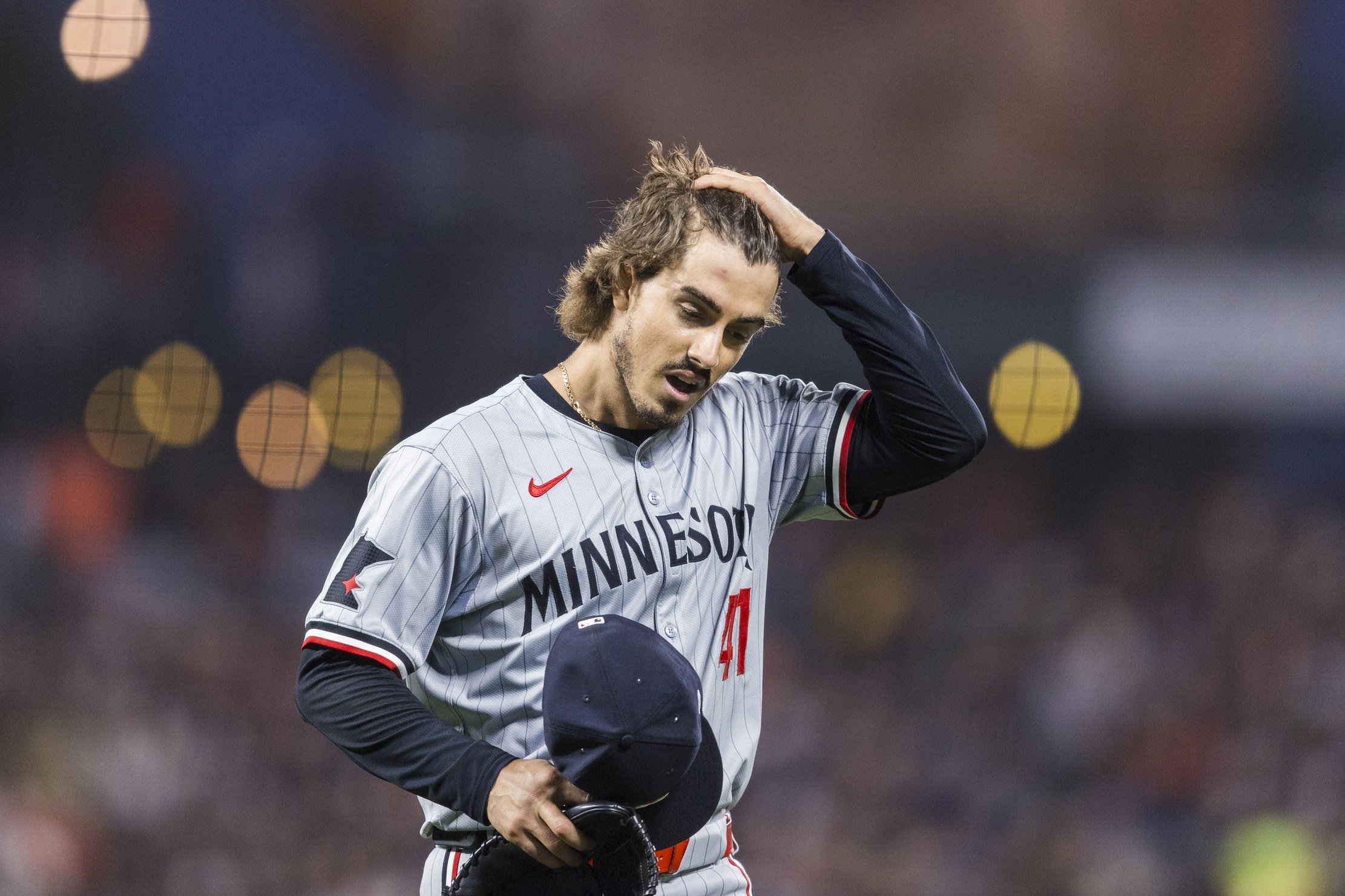 Box Score Joe Ryan: 5 ⅓ IP, 6 H, 5 ER, 3 BB, 6 K Home Runs: None Bottom 3 WPA: Joe Ryan (-.208), Christian Vázquez (-.118), Manuel Margot (-.071) Win Probability Chart (via FanGraphs) It was June, 2017. Ervin Santana tossed one of his five complete games that year, Kennys Vargas cracked a homer off Jeff Samardzija, and Nik Turley—yes, Nik Turley—started game three of the series. These are the vapid, vague memories of the last time the Twins played in San Francisco, some near decade ago when Byron Buxton and Max Kepler were still youngsters and Brooks Lee was in high school. That series ended in a Minnesota victory; would 2024’s matchup follow a similar path? The man on the mound was familiar with this turf. Joe Ryan walked this land and breathed this air as a boy: he was born in San Francisco and went to high school some 20 miles north in San Anselmo. He loved the Giants. And the Grateful Dead. Familiar or not, Oracle Park proved unfriendly early and often; an otherwise typical 1st inning line drive portended defensive disaster when Matt Wallner collapsed on himself and allowed Jorge Soler to reach third base. The play did not result in an error. Only the finest for sport’s most subjective stat. That runner soon scored, as did two more the following frame when Byron Buxton nearly chased down a ball in the gap before Brett Wisely dumped a dying quail right in front of him to plate a third run. If a ball could mock someone while falling, that one sure did. Accentuating San Francisco’s offensive flurry was Minnesota’s impotence in the same situation. They put runners on, but moving them around was a hassle; Brooks Lee flew out on a ball gone in 23 ballparks; line drives found gloves; two men on with no one out begat three of the worst at-bats taken all game. The one run they did score felt more like an insult than a celebration; they should have had four of them by now. No matter. Josh Staumont entered, finally allowed a few earned runs, and turned the game from an optimist's close match to a true laugher. Minnesota's bats fell even more tepid into the void encompassing them all day, and the end result we all knew to be imminent and true. Notes: Joe Ryan's three walks were a season-high. Ryan's six strikeouts give him 502 in his Twins career, good for 27th-most all-time. He is three strikeouts away from passing Glen Perkins and Dean Chance for 25th place. Byron Buxton and Carlos Correa now have hitting streaks of eight and 13 games, respectively. Buxton earned his fifth multi-hit game of July. He is slashing .452/.500/.742 since the month's turn. Brooks Lee has reached base in eight of his nine first career games. Post-Game Interview: What’s Next? The Twins and Giants will play the second game of their series on Saturday. Simeon Woods Richardson faces off against Hayden Birdsong. First pitch is at 6:15 PM. Bullpen Usage Spreadsheet
- 34 comments
-
- 7
-
-
- joe ryan
- byron buxton
- (and 3 more)
-
Underrated turning point was Jax allowing a weird, flopping double before locking in and mowing down the next three batters in order. That's all-star level stuff, folks.
- 110 replies
-
- 15
-
-
- simeon woods richardson
- christian vazquez
- (and 1 more)
-
Thank goodness it ended up being a good game. Image courtesy of Rob Thompson, St. Paul Saints TRANSACTIONS OF Matt Wallner recalled by Twins RHP John Stankiewicz promoted from AA Wichita to AAA St. Paul Saints Sentinel St. Paul 4, Gwinnett 3 Box Score Randy Dobnak: 4 ⅓ IP, 6 H, 2 ER, 3 BB, 5 K HR: Jair Camargo (6), Chris Williams (9) Multi-hit games: None The Saints were just one of four teams to play a game on Sunday; everyone else played a rare Monday game earlier in the week, making St. Paul the sole focus of today’s minor league report. Randy Dobnak earned the start on Sunday. He entered action on fire: the righty allowed just seven earned runs since June began, with four of those coming in a meager outing against Syracuse on June 8th. That stretch included a terrific 10 K performance against the Bats just one start later, helping deflate his ERA from over 5 following the Syracuse game to under 4 heading into Sunday's outing. And on the 7th, he was okay—perfectly cromulent. Gwinnett tagged him for an early run, but laborious 3rd, 4th, and 5th innings knocked him out of the game before he could line himself up to earn the “W.” A walk of Yuli Gurriel—a man who swings as much as Count Basie—moved Toby Gardenhire to remove his starter. Dobnak whiffed five and walked three. Fortunately, the Saints’ offense was ready to hit, even without the reigning International League Hitter of the Month. A double play coaxed in their first run, while a Yunior Severino stinging double gave St. Paul a small, soon-to-be-vanishing lead. No matter. The Saints waited a few innings, gathered their thoughts, and cracked the Stripers with a ferocious one-two punch in the 6th. Jair Camargo obliterated a 448-foot solo shot over the batter’s eye in center, and Chris Williams smoked a more humble 397-foot homer to push St. Paul in front. "I knew it was far, and I knew it was hard, and it was loud," said Camargo after the game. "And shoutout Tramp man (Saints clubhouse manager Matt Tramp). He changed my bat, and I was like, 'Man, whatever you put in there, I am going to swing it,' so big shoutout to him. It felt good." (Quote via our resident journalist, Theo Tollefson.) John Stankiewicz hadn’t pitched above AA; Gardenhire did not care. The Fordham product donned a Saints uniform for the first time in his career, entered the game in the 7th, and stared down a trio of big leaguers for his first AAA outing. He pitched beautifully. Brian Anderson weakly flailed at a cutter, Gurriel harmlessly grounded out to 2nd, and Eddie Rosario hit a home run in a silo, sending Stankiewicz’s offering nearly straight up and safely into Payton Eeles’ glove. Just another day of work. Matt Bowman's scoreless 8th begat a Diego Castillo save opportunity in the 9th. He walked the lead-off man before eliciting a flyball out to left field. Perhaps desiring to become the game's hero, Gwinnett's baserunner Nacho Alvarez Jr. bolted for 2nd. In the mad scramble, Williams cooly rifled a throw to the infield, gunning down Alvarez for the second out of the inning. The final batter was an afterthought. The Saints walked away with an impressive come-from-behind victory. TWINS DAILY PLAYERS OF THE DAY Twins Daily Minor League Pitcher of the Day – John Stankiewicz Twins Daily Minor League Hitter of the Day – Jair Camargo PROSPECT SUMMARY Here’s a look at how the Twins Daily Top 20 Twins Prospects performed: #2 - Brooks Lee (Twins) - 2-4, R #11 - Simeon Woods Richardson (Twins) - 6 IP, 3 H, 2 ER, 2 BB, 4 K #18 - Yunior Severino (St. Paul) - 1-4, RBI, K MONDAY’S PROBABLE STARTERS DSL Phillies White @ DSL Twins (10:00 AM) - TBD FCL Orioles @ FCL Twins (11:00 AM) - TBD View full article
- 3 replies
-
- 1
-
-
- randy dobnak
- jair camargo
- (and 3 more)
-
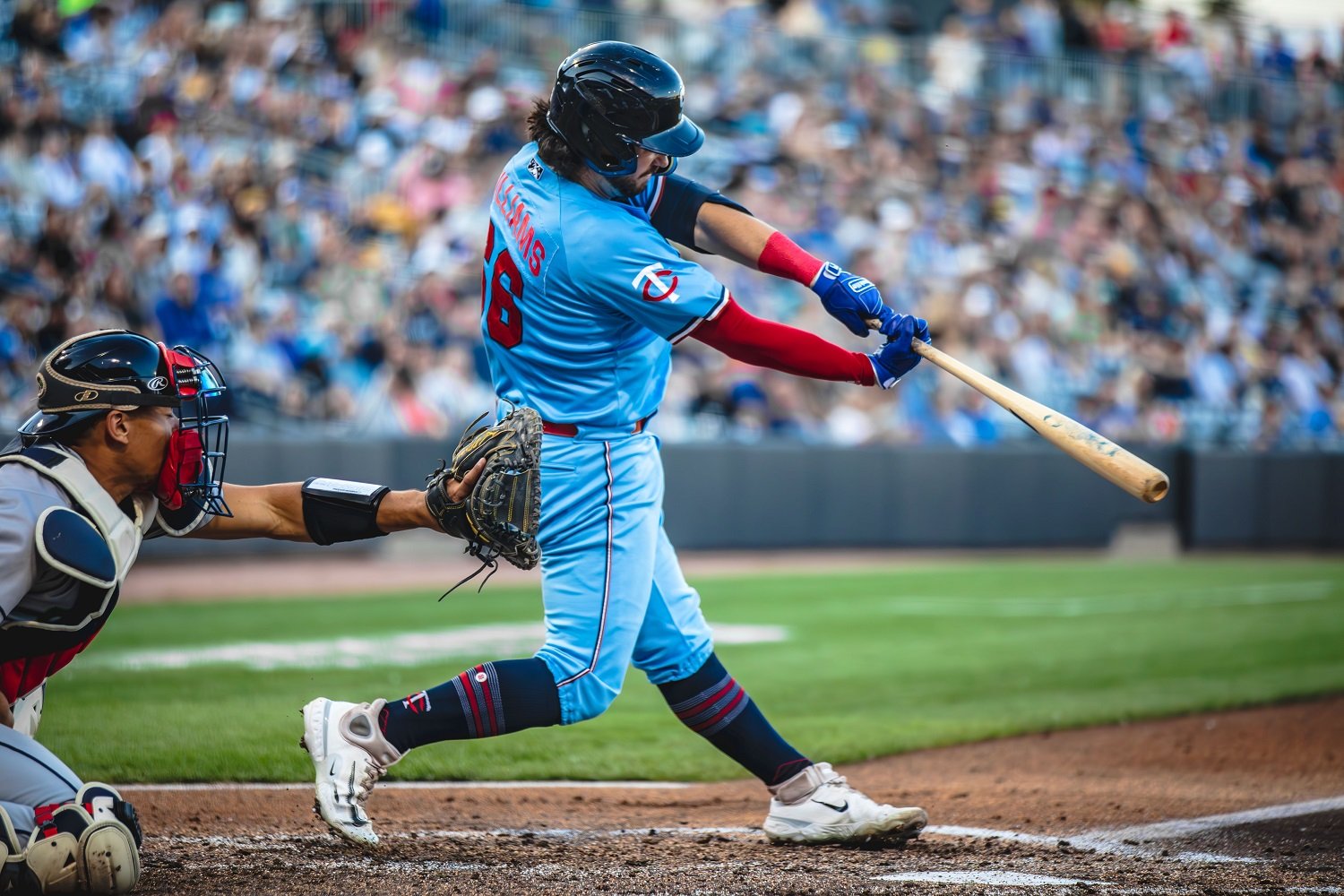 TRANSACTIONS OF Matt Wallner recalled by Twins RHP John Stankiewicz promoted from AA Wichita to AAA St. Paul Saints Sentinel St. Paul 4, Gwinnett 3 Box Score Randy Dobnak: 4 ⅓ IP, 6 H, 2 ER, 3 BB, 5 K HR: Jair Camargo (6), Chris Williams (9) Multi-hit games: None The Saints were just one of four teams to play a game on Sunday; everyone else played a rare Monday game earlier in the week, making St. Paul the sole focus of today’s minor league report. Randy Dobnak earned the start on Sunday. He entered action on fire: the righty allowed just seven earned runs since June began, with four of those coming in a meager outing against Syracuse on June 8th. That stretch included a terrific 10 K performance against the Bats just one start later, helping deflate his ERA from over 5 following the Syracuse game to under 4 heading into Sunday's outing. And on the 7th, he was okay—perfectly cromulent. Gwinnett tagged him for an early run, but laborious 3rd, 4th, and 5th innings knocked him out of the game before he could line himself up to earn the “W.” A walk of Yuli Gurriel—a man who swings as much as Count Basie—moved Toby Gardenhire to remove his starter. Dobnak whiffed five and walked three. Fortunately, the Saints’ offense was ready to hit, even without the reigning International League Hitter of the Month. A double play coaxed in their first run, while a Yunior Severino stinging double gave St. Paul a small, soon-to-be-vanishing lead. No matter. The Saints waited a few innings, gathered their thoughts, and cracked the Stripers with a ferocious one-two punch in the 6th. Jair Camargo obliterated a 448-foot solo shot over the batter’s eye in center, and Chris Williams smoked a more humble 397-foot homer to push St. Paul in front. "I knew it was far, and I knew it was hard, and it was loud," said Camargo after the game. "And shoutout Tramp man (Saints clubhouse manager Matt Tramp). He changed my bat, and I was like, 'Man, whatever you put in there, I am going to swing it,' so big shoutout to him. It felt good." (Quote via our resident journalist, Theo Tollefson.) John Stankiewicz hadn’t pitched above AA; Gardenhire did not care. The Fordham product donned a Saints uniform for the first time in his career, entered the game in the 7th, and stared down a trio of big leaguers for his first AAA outing. He pitched beautifully. Brian Anderson weakly flailed at a cutter, Gurriel harmlessly grounded out to 2nd, and Eddie Rosario hit a home run in a silo, sending Stankiewicz’s offering nearly straight up and safely into Payton Eeles’ glove. Just another day of work. Matt Bowman's scoreless 8th begat a Diego Castillo save opportunity in the 9th. He walked the lead-off man before eliciting a flyball out to left field. Perhaps desiring to become the game's hero, Gwinnett's baserunner Nacho Alvarez Jr. bolted for 2nd. In the mad scramble, Williams cooly rifled a throw to the infield, gunning down Alvarez for the second out of the inning. The final batter was an afterthought. The Saints walked away with an impressive come-from-behind victory. TWINS DAILY PLAYERS OF THE DAY Twins Daily Minor League Pitcher of the Day – John Stankiewicz Twins Daily Minor League Hitter of the Day – Jair Camargo PROSPECT SUMMARY Here’s a look at how the Twins Daily Top 20 Twins Prospects performed: #2 - Brooks Lee (Twins) - 2-4, R #11 - Simeon Woods Richardson (Twins) - 6 IP, 3 H, 2 ER, 2 BB, 4 K #18 - Yunior Severino (St. Paul) - 1-4, RBI, K MONDAY’S PROBABLE STARTERS DSL Phillies White @ DSL Twins (10:00 AM) - TBD FCL Orioles @ FCL Twins (11:00 AM) - TBD
- 3 comments
-
- 4
-
-
-
- randy dobnak
- jair camargo
- (and 3 more)
-
Quite a day for fans of standing ovations. Image courtesy of © Matt Krohn-USA TODAY Sports Box Score Joe Ryan: 5 ⅔ IP, 5 H, 3 ER, 1 BB, 8 K Home Runs: Brooks Lee (1), Byron Buxton (9) Top 3 WPA: Jose Miranda (.118), Willi Castro (.104), Trevor Larnach (.083) Win Probability Chart (via FanGraphs) Friday’s game stunk. The back-and-forth seesaw event turned blowout, turned “maybe Josh Winder shouldn’t have pitched as long as he did” bonanza burned the Twins and left fans with a terrible aftertaste. What a great game, and yet, what a rotten one. Fortunately, baseball never waits long to offer a new opportunity to succeed—and the Twins took full advantage on Saturday. Entering the game, Astros starting pitcher Hunter Brown had been unhittable. His ordinary season stats belie a tremendous month of June: the righty allowed four runs all month, good for a 1.16 ERA. He then tossed six scoreless to start July. And—evidently—no one told this to Minnesota’s hitters. They creamed him. Two runs in the first begat a trio in the second, concluding with another multi-run frame in the third. The Twins nearly had more runs than Brown had outs. Nestled at the heart of the offensive outburst was Jose Miranda, the man on a streak so incendiary that amateur prognosticators have flocked to the Thesaurus website in search of worthy synonyms for the word “hot.” He entered the day reaching base safely in ten straight plate appearances; an early hit-by-pitch and subsequent RBI single quickly grew that total to 12, a Twins franchise record. A later single gave him 12 straight at-bats with a hit, the most since Walt Dropo in 1952. "So much for that being the focus,” thought Brooks Lee , perhaps stewing that his teammate has swiped so much attention. He was a top prospect, hitting .500 in his time in the majors; what the hell does he have to do to earn some respect? Well, Lee took over for at least one swing; he scooped a low curveball and just barely coaxed the ball over the towering right-field wall for his first career major league homer. The runs were needed as “a safe lead” did not exist in anyone’s lexicon after last night’s game. In point, Joe Ryan was nearly dominant. He struck out eight, earned about a thousand whiffs, and still left the game in a state where one swing could have knotted things. That’s no insult to Ryan, who expertly diced up Houston’s veterans more than a few times; rather, it resulted from two blazing offenses refusing to settle quietly. Jon Singleton homered, Alex Bregman doubled, and a whole bunch of foul balls in the 6th forced Ryan to exit before earning the elusive quality start. Fortunately, Jorge Alcalá netted the final out, and in an even better turn of luck, Byron Buxton turned it into a six-run game with a 7th-inning two-run bomb. That was the final touch. Cole Sands cut down the Astros in the 7th and 8th, Caleb Thielbar flirted with an immaculate inning in the 9th, and Minnesota earned their 50th win of the season. Notes: José Miranda's 12 consecutive at-bats with a hit tied an MLB record shared by three other players: Walt Dropo, Pinky Higgins, and Johnny Kling. Miranda's streak of 13 consecutive plate appearances reaching base safely set a Twins franchise record. Minnesota's 12 pitching strikeouts give them 810 on the year, the highest total in MLB. Byron Buxton's 124th homer is good for 16th place on the all-time Twins leaderboard. He is eight away from tying Jacque Jones for 15th. Harmon Killebrew remains deep on the horizon. Post-Game Interview: What’s Next? The Twins and Astros will play the final game of their weekend series on Sunday, with Simeon Woods Richardson facing off against Spencer Arrighetti. First pitch is at 1:10 PM. Bullpen Usage Spreadsheet View full article
- 68 replies
-
- 1
-
-
- jose miranda
- brooks lee
- (and 4 more)
-
 Box Score Joe Ryan: 5 ⅔ IP, 5 H, 3 ER, 1 BB, 8 K Home Runs: Brooks Lee (1), Byron Buxton (9) Top 3 WPA: Jose Miranda (.118), Willi Castro (.104), Trevor Larnach (.083) Win Probability Chart (via FanGraphs) Friday’s game stunk. The back-and-forth seesaw event turned blowout, turned “maybe Josh Winder shouldn’t have pitched as long as he did” bonanza burned the Twins and left fans with a terrible aftertaste. What a great game, and yet, what a rotten one. Fortunately, baseball never waits long to offer a new opportunity to succeed—and the Twins took full advantage on Saturday. Entering the game, Astros starting pitcher Hunter Brown had been unhittable. His ordinary season stats belie a tremendous month of June: the righty allowed four runs all month, good for a 1.16 ERA. He then tossed six scoreless to start July. And—evidently—no one told this to Minnesota’s hitters. They creamed him. Two runs in the first begat a trio in the second, concluding with another multi-run frame in the third. The Twins nearly had more runs than Brown had outs. Nestled at the heart of the offensive outburst was Jose Miranda, the man on a streak so incendiary that amateur prognosticators have flocked to the Thesaurus website in search of worthy synonyms for the word “hot.” He entered the day reaching base safely in ten straight plate appearances; an early hit-by-pitch and subsequent RBI single quickly grew that total to 12, a Twins franchise record. A later single gave him 12 straight at-bats with a hit, the most since Walt Dropo in 1952. "So much for that being the focus,” thought Brooks Lee , perhaps stewing that his teammate has swiped so much attention. He was a top prospect, hitting .500 in his time in the majors; what the hell does he have to do to earn some respect? Well, Lee took over for at least one swing; he scooped a low curveball and just barely coaxed the ball over the towering right-field wall for his first career major league homer. The runs were needed as “a safe lead” did not exist in anyone’s lexicon after last night’s game. In point, Joe Ryan was nearly dominant. He struck out eight, earned about a thousand whiffs, and still left the game in a state where one swing could have knotted things. That’s no insult to Ryan, who expertly diced up Houston’s veterans more than a few times; rather, it resulted from two blazing offenses refusing to settle quietly. Jon Singleton homered, Alex Bregman doubled, and a whole bunch of foul balls in the 6th forced Ryan to exit before earning the elusive quality start. Fortunately, Jorge Alcalá netted the final out, and in an even better turn of luck, Byron Buxton turned it into a six-run game with a 7th-inning two-run bomb. That was the final touch. Cole Sands cut down the Astros in the 7th and 8th, Caleb Thielbar flirted with an immaculate inning in the 9th, and Minnesota earned their 50th win of the season. Notes: José Miranda's 12 consecutive at-bats with a hit tied an MLB record shared by three other players: Walt Dropo, Pinky Higgins, and Johnny Kling. Miranda's streak of 13 consecutive plate appearances reaching base safely set a Twins franchise record. Minnesota's 12 pitching strikeouts give them 810 on the year, the highest total in MLB. Byron Buxton's 124th homer is good for 16th place on the all-time Twins leaderboard. He is eight away from tying Jacque Jones for 15th. Harmon Killebrew remains deep on the horizon. Post-Game Interview: What’s Next? The Twins and Astros will play the final game of their weekend series on Sunday, with Simeon Woods Richardson facing off against Spencer Arrighetti. First pitch is at 1:10 PM. Bullpen Usage Spreadsheet
- 68 comments
-
- 8
-
-
- jose miranda
- brooks lee
- (and 4 more)
-
Man, Byron is swinging a hot bat. Feels like he’s about to carry the club for the next month or so. Good to see Pablo settle down and turn in a solid outing. Go Twins!
- 25 replies
-
- 11
-
-
- pablo lopez
- max kepler
- (and 5 more)
-
You may want to say a quick prayer before seeing Louie Varland's pitching line. Image courtesy of William Parmeter (photo of Matthew Clayton) TRANSACTIONS RHP Jay Jackson outrighted to AAA St. Paul LHP Aaron Rozek promoted to AAA St. Paul Saints Sentinel St. Paul 9, Toledo 20 Box Score Louie Varland: 2 ⅓ IP, 11 H, 11 ER, 0 BB, 5 K HR: None Multi-hit games: Edouard Julien (2-for-3, 2B, 2 R, 3 BB), Jair Camargo (2-for-5, 2B, 3B, R, RBI), Will Holland (2-for-5, 2B, 2 R, RBI), Patrick Winkel (2-for-4, 2 2B, RBI, BB) The Saints lost an ugly, ugly game on Sunday. If you’re going to snap a winning streak, you may as well go all out. Louie Varland got a swinging strike on the first pitch he threw. That was the best it was ever going to get. Parker Meadows blasted his next offering 423 feet out to centerfield, and perhaps the worst day of pitching Varland has ever experienced came crashing down in a multitude of blasts. He allowed five homers, most of them with a “distance traveled” that started with the number “4.” Toby Gardenhire only finally pulled the plug when another Meadows’ extra-base hit continued the early-game tragedy. Oh, but the brutality did not end. This was an advanced sort of punishment. Aaron Rozek—a good soldier—ended the 3rd as reasonably as any pitch could but experienced the exact same holy-crap-what-is-going-on whiplash his predecessor endured. He never made it out of the 4th; the Mud Hens blasted him for six earned runs, a few of which came when Scott Blewett allowed the 496th homer of the day. The funny thing is, St. Paul actually had a lead in the middle of all this. They stormed back with five runs in the 1st, giving the team a semblance of hope before everything fell apart. Edouard Julien reached base five times on Sunday, walking thrice in a classic Julien-ish performance. Every batter in the Saints lineup collected a hit. Toledo’s starter, Ty Madden, is the Tigers’ 5th-ranked prospect. He allowed eight runs over four frames while walking five. WIND SURGE WISDOM Wichita 3, Arkansas 2 Box Score Travis Adams: 5 IP, 1 H, 0 ER, 3 BB, 7 K HR: Jake Rucker (5) Multi-hit games: Jake Rucker (2-for-5, HR, R, RBI), Kyler Fedko (2-for-4, 2B, R) Wichita narrowly hung on in a thriller on Sunday. Travis Adams was spectacular. For two years, the righty out of Sacramento State has found the Texas League an uncaring place to pitch, with runs coming far easier than any pitcher cares to see. He shed that notion just for one day; Adams tossed five scoreless innings, walking three while punching out seven in one of his finest starts as a member of the Wind Surge. Adams and the rest of Wichita’s pitching staff earned offensive support, somehow both tenacious and tepid. For one, the Wind Surge banged out eight hits, took five walks, and went down on strikes just five times. But the hits were poorly timed; only one came with a runner on base. Runners don’t always need to be on base to score, though. Just ask Jake Rucker, who lifted a fly ball deep enough out to left field to clear the wall, giving Wichita a 1-0 advantage in the 1st. Their next run came off a Dalton Shuffield single in the 5th. And, finally, an 8th-inning sacrifice fly appeared to hand the Wind Surge an insurmountable lead. Three runs in two innings is a tough ask; the Travelers nearly did it. Jared Solomon allowed a trio of doubles, plating two runs and necessitating an emergency appearance from Cody Laweryson one out earlier than expected. No matter. The righty struck out the last batter of the 8th, rang up the next two to start the 9th, and coaxed a weak chopper to Aaron Sabato to end the game. The Travelers are led by a duo of awesome Mariners prospects, Cole Young and Harry Ford. Young, a shortstop, doubled and walked in four plate appearances, while Ford, a catcher, doubled and struck out twice. KERNELS NUGGETS Cedar Rapids 2, Peoria 9 Box Score John Klein: 4 ⅔ IP, 6 H, 3 ER, 1 BB, 5 K HR: None Multi-hit games: None The Kernels could only muster two hits on Sunday. If introductions were gospel, everything would have been fine; Cedar Rapids actually struck first when Rayne Doncon kicked off the home team’s hitting with a triple. He scored on a sacrifice fly. Then, it became Peoria’s game. Brooklyn Park’s John Klein surrendered the lead during an agonizing nickel-and-dime-fest made up of four singles, a walk, and a sacrifice fly. He was otherwise good over his 4 ⅔ inning start, but the 2nd lorded over his outing and ultimately soiled his day. The Chiefs called off their attack until Cedar Rapids’ bullpen entered the game; from there, they scored in increasingly successful intervals, capping their outburst with a game-sealing bases-clearing double off Ricardo Velez. In stark contrast, the Kernels accomplished almost nothing against Peoria’s pitching staff. Their lone run outside of the opening frame scored when a hit by pitch portended an eventual adventure around the bases for Payton Eeles, eventually resulting in the second baseman reaching home off a wild pitch. That was it. Nate Baez’s 4th inning single was the team’s only hit following Doncon’s triple. Peoria’s catcher—20-year-old Leonardo Bernal—is the Cardinals’ 7th-ranked prospect. He doubled once in five trips to the plate. MUSSEL MATTERS Fort Myers 14, St. Lucie 2 Box Score Jose Olivares: 5 IP, 4 H, 1 ER, 1 BB, 6 K HR: Matthew Clayton 2 (1, 2), Rixon Wingrove (4) Multi-hit games: Matthew Clayton (3-for-4, 2 HR, 3 R, 4 RBI, BB), Carlos Aguiar (2-for-5, 2B, RBI) The Mighty Mussels won big on Sunday. Seven-run innings will do that. Fort Myers breezed through the 1st before bludgeoning their opponent in the 2nd, pouring on runs in a cascade of hits and runs. Matthew Clayton kicked off the scoring with a solo homer. Mets starter Joel Díaz collected a pair of outs. That’s when the trouble began: the Mighty Mussels went walk, hit by pitch, double, single, single, home run, walk (by the same Clayton who earlier homered), and—mercifully—concluded the frame with a flyout. Likely now pitching with far less pressure, Jose Olivares locked in and cruised through five outstanding frames. He punched out six—twice on strikes so good the Mets felt obligated to challenge the call; both times, they were wrong—and allowed one lone run. His season ERA now sits at 2.55. Fort Myers was not yet done mocking St. Lucie’s pitching staff. They sat in silence for a few more frames before exploding on poor Juan Arnaud for six runs. A 6th inning sacrifice fly served as the maître d' for another vigorous thrashing, yet again featuring a Clayton long ball. Clayton—a product of the University of Nevada—is now slashing .281/.440/.406 after today’s action. The Mighty Mussels then loaded the bases and plated a few more off a grounder and a fielding error. Their bloodlust concluded with an 8th-inning RBI double by Carlos Aguiar. The Mets feature the franchise’s 7th-ranked prospect, a shortstop named Colin Houck. New York selected him in the 1st round in 2023 out of the same high school that produced Matt Olson and Jeff Francoeur . On Sunday, Houck punched out twice in four at-bats. TWINS DAILY PLAYERS OF THE DAY Twins Daily Minor League Pitcher of the Day – Travis Adams Twins Daily Minor League Hitter of the Day – Matthew Clayton PROSPECT SUMMARY Here’s a look at how the Twins Daily Top 20 Twins Prospects performed: #1 - Walker Jenkins (Fort Myers) - 1-6, R, 2 RBI, K #9 - Luke Keaschall (Wichita) - 1-3, R, 2 BB #13 - Tanner Schobel (Wichita) - 1-3, BB #18 - Yunior Severino (St. Paul) - 1-4, BB, K #20 - Ricardo Olivar (Cedar Rapids) - 0-1, RBI, 2 BB MONDAY’S PROBABLE STARTERS DSL Twins @ DSL Cardinals (10:00 AM) - TBD FCL Rays @ FCL Twins (11:00 AM) - TBD View full article
- 28 replies
-
- 1
-
-
- louis varland
- matthew clayton
- (and 5 more)
-
 TRANSACTIONS RHP Jay Jackson outrighted to AAA St. Paul LHP Aaron Rozek promoted to AAA St. Paul Saints Sentinel St. Paul 9, Toledo 20 Box Score Louie Varland: 2 ⅓ IP, 11 H, 11 ER, 0 BB, 5 K HR: None Multi-hit games: Edouard Julien (2-for-3, 2B, 2 R, 3 BB), Jair Camargo (2-for-5, 2B, 3B, R, RBI), Will Holland (2-for-5, 2B, 2 R, RBI), Patrick Winkel (2-for-4, 2 2B, RBI, BB) The Saints lost an ugly, ugly game on Sunday. If you’re going to snap a winning streak, you may as well go all out. Louie Varland got a swinging strike on the first pitch he threw. That was the best it was ever going to get. Parker Meadows blasted his next offering 423 feet out to centerfield, and perhaps the worst day of pitching Varland has ever experienced came crashing down in a multitude of blasts. He allowed five homers, most of them with a “distance traveled” that started with the number “4.” Toby Gardenhire only finally pulled the plug when another Meadows’ extra-base hit continued the early-game tragedy. Oh, but the brutality did not end. This was an advanced sort of punishment. Aaron Rozek—a good soldier—ended the 3rd as reasonably as any pitch could but experienced the exact same holy-crap-what-is-going-on whiplash his predecessor endured. He never made it out of the 4th; the Mud Hens blasted him for six earned runs, a few of which came when Scott Blewett allowed the 496th homer of the day. The funny thing is, St. Paul actually had a lead in the middle of all this. They stormed back with five runs in the 1st, giving the team a semblance of hope before everything fell apart. Edouard Julien reached base five times on Sunday, walking thrice in a classic Julien-ish performance. Every batter in the Saints lineup collected a hit. Toledo’s starter, Ty Madden, is the Tigers’ 5th-ranked prospect. He allowed eight runs over four frames while walking five. WIND SURGE WISDOM Wichita 3, Arkansas 2 Box Score Travis Adams: 5 IP, 1 H, 0 ER, 3 BB, 7 K HR: Jake Rucker (5) Multi-hit games: Jake Rucker (2-for-5, HR, R, RBI), Kyler Fedko (2-for-4, 2B, R) Wichita narrowly hung on in a thriller on Sunday. Travis Adams was spectacular. For two years, the righty out of Sacramento State has found the Texas League an uncaring place to pitch, with runs coming far easier than any pitcher cares to see. He shed that notion just for one day; Adams tossed five scoreless innings, walking three while punching out seven in one of his finest starts as a member of the Wind Surge. Adams and the rest of Wichita’s pitching staff earned offensive support, somehow both tenacious and tepid. For one, the Wind Surge banged out eight hits, took five walks, and went down on strikes just five times. But the hits were poorly timed; only one came with a runner on base. Runners don’t always need to be on base to score, though. Just ask Jake Rucker, who lifted a fly ball deep enough out to left field to clear the wall, giving Wichita a 1-0 advantage in the 1st. Their next run came off a Dalton Shuffield single in the 5th. And, finally, an 8th-inning sacrifice fly appeared to hand the Wind Surge an insurmountable lead. Three runs in two innings is a tough ask; the Travelers nearly did it. Jared Solomon allowed a trio of doubles, plating two runs and necessitating an emergency appearance from Cody Laweryson one out earlier than expected. No matter. The righty struck out the last batter of the 8th, rang up the next two to start the 9th, and coaxed a weak chopper to Aaron Sabato to end the game. The Travelers are led by a duo of awesome Mariners prospects, Cole Young and Harry Ford. Young, a shortstop, doubled and walked in four plate appearances, while Ford, a catcher, doubled and struck out twice. KERNELS NUGGETS Cedar Rapids 2, Peoria 9 Box Score John Klein: 4 ⅔ IP, 6 H, 3 ER, 1 BB, 5 K HR: None Multi-hit games: None The Kernels could only muster two hits on Sunday. If introductions were gospel, everything would have been fine; Cedar Rapids actually struck first when Rayne Doncon kicked off the home team’s hitting with a triple. He scored on a sacrifice fly. Then, it became Peoria’s game. Brooklyn Park’s John Klein surrendered the lead during an agonizing nickel-and-dime-fest made up of four singles, a walk, and a sacrifice fly. He was otherwise good over his 4 ⅔ inning start, but the 2nd lorded over his outing and ultimately soiled his day. The Chiefs called off their attack until Cedar Rapids’ bullpen entered the game; from there, they scored in increasingly successful intervals, capping their outburst with a game-sealing bases-clearing double off Ricardo Velez. In stark contrast, the Kernels accomplished almost nothing against Peoria’s pitching staff. Their lone run outside of the opening frame scored when a hit by pitch portended an eventual adventure around the bases for Payton Eeles, eventually resulting in the second baseman reaching home off a wild pitch. That was it. Nate Baez’s 4th inning single was the team’s only hit following Doncon’s triple. Peoria’s catcher—20-year-old Leonardo Bernal—is the Cardinals’ 7th-ranked prospect. He doubled once in five trips to the plate. MUSSEL MATTERS Fort Myers 14, St. Lucie 2 Box Score Jose Olivares: 5 IP, 4 H, 1 ER, 1 BB, 6 K HR: Matthew Clayton 2 (1, 2), Rixon Wingrove (4) Multi-hit games: Matthew Clayton (3-for-4, 2 HR, 3 R, 4 RBI, BB), Carlos Aguiar (2-for-5, 2B, RBI) The Mighty Mussels won big on Sunday. Seven-run innings will do that. Fort Myers breezed through the 1st before bludgeoning their opponent in the 2nd, pouring on runs in a cascade of hits and runs. Matthew Clayton kicked off the scoring with a solo homer. Mets starter Joel Díaz collected a pair of outs. That’s when the trouble began: the Mighty Mussels went walk, hit by pitch, double, single, single, home run, walk (by the same Clayton who earlier homered), and—mercifully—concluded the frame with a flyout. Likely now pitching with far less pressure, Jose Olivares locked in and cruised through five outstanding frames. He punched out six—twice on strikes so good the Mets felt obligated to challenge the call; both times, they were wrong—and allowed one lone run. His season ERA now sits at 2.55. Fort Myers was not yet done mocking St. Lucie’s pitching staff. They sat in silence for a few more frames before exploding on poor Juan Arnaud for six runs. A 6th inning sacrifice fly served as the maître d' for another vigorous thrashing, yet again featuring a Clayton long ball. Clayton—a product of the University of Nevada—is now slashing .281/.440/.406 after today’s action. The Mighty Mussels then loaded the bases and plated a few more off a grounder and a fielding error. Their bloodlust concluded with an 8th-inning RBI double by Carlos Aguiar. The Mets feature the franchise’s 7th-ranked prospect, a shortstop named Colin Houck. New York selected him in the 1st round in 2023 out of the same high school that produced Matt Olson and Jeff Francoeur . On Sunday, Houck punched out twice in four at-bats. TWINS DAILY PLAYERS OF THE DAY Twins Daily Minor League Pitcher of the Day – Travis Adams Twins Daily Minor League Hitter of the Day – Matthew Clayton PROSPECT SUMMARY Here’s a look at how the Twins Daily Top 20 Twins Prospects performed: #1 - Walker Jenkins (Fort Myers) - 1-6, R, 2 RBI, K #9 - Luke Keaschall (Wichita) - 1-3, R, 2 BB #13 - Tanner Schobel (Wichita) - 1-3, BB #18 - Yunior Severino (St. Paul) - 1-4, BB, K #20 - Ricardo Olivar (Cedar Rapids) - 0-1, RBI, 2 BB MONDAY’S PROBABLE STARTERS DSL Twins @ DSL Cardinals (10:00 AM) - TBD FCL Rays @ FCL Twins (11:00 AM) - TBD
- 28 comments
-
- 2
-
-
- louis varland
- matthew clayton
- (and 5 more)
-
On a scale from Kevin Jepsen to Ron Davis, Jhoan Duran is awfully close to being a Matt Capps. Image courtesy of © Stan Szeto - USA TODAY Box Score Chris Paddack: 4 ⅔ IP, 5 H, 3 ER, 3 BB, 3 K Home Runs: Royce Lewis (10), Willi Castro (6) Bottom 3 WPA: Jhoan Duran (-.560), Kody Funderburk (-.285), Manuel Margot (-.128) Win Probability Chart (via FanGraphs) Baseball in Oakland will soon be no more. This has been the reality for some time now, but for the Twins, that meant this series—an otherwise non-descript set in the middle of June—marks their final foray into the Oakland Coliseum. Their conquest over the A’s in 2002, forever immortalized thanks to Moneyball, soon to be a relic. The team in Sacramento will know no such pain. Whatever occurs in Oakland this weekend, a melancholic mood will follow the result—hopefully, it will support wins, not curse losses. Friday began with a rematch: Chris Paddack vs Joey Estes. Neither man hung around for long last time; Minnesota’s righty turned in a dreadful performance last Sunday, exiting the game after just 2 ⅓ innings with five earned runs against him. Contact against him was not quiet. Estes, though, was basically just as bad; he netted one more out, but the trade-off coaxed an extra earned run from his ledger. This game—the one that could change the vibes for each respective hurler—teetered on becoming like the one from before: Paddack walked a season-high three batters over 4 ⅔ mildly effective innings, allowing a bevy of line drives and baserunners. Men were on base in almost every frame. Oakland hitters swung with confidence. The Texan’s line appeared passable for a time, but Kody Funderburk’s blunders in “relief” swelled Paddack’s earned run total from one to three. So it goes. Minnesota had less luck against their opponent. Estes escaped their grasp whenever they tried to trap him. An early run seemed to begat a repeat of last week’s outing, but Estes slithered away from damage at almost every turn. Someone should have checked his pocket for a horseshoe. Of course, then he ran into Royce Lewis. The inevitable. The assumed. The predictable. Royce observed a sweeper on the outside corner before finding one spinning at the top of the zone; it didn’t touch down until it flew 380 feet away, just enough to give him his 10th homer of the year. In 16 games. That seemed to spark things for the tepid, sleepy Twins offense. They greeted Oakland reliever Austin Adams with a single and a walk to send the go-ahead run to the plate. That run—who has a name; Willi Castro—cracked a soaring, skyscraping flyball, holding just barely fair as it landed safely in the bleachers for a three-run homer. Twins lead. It appeared to be the clinching hit. If there ever was a blast to equalize things and establish order in the chaos, Castro's three-run homer should have been like Thanos' infamous snap. It was not. Jorge Alcalá worked a scoreless frame before Jhoan Duran entered in the 8th. The formerly dominant closer plunked a batter with a curveball, proving yet again that he is not the same reliever we could have once turned the TV off and assumed a win. He unleashed a splitter far less mean than before, and Shea Langeliers blasted a go-ahead two-run homer to left field. Mason Miller set the Twins down in order. Yet again, Minnesota nearly made a comeback but ultimately failed to escape themselves in an excruciating loss. Notes: Carlos Santana played in his 2,000th career MLB game on Friday. Only four players have more home runs than Royce Lewis in their first 16 games of a season: Willi Castro is slashing .290/.395/.478 in June. Jorge Alcalá lowered his season ERA to 1.75 on Friday. Post-Game Interview: What’s Next? The Twins and Athletics will play the second game of their weekend series on Saturday, with first pitch coming at 3:07 PM. Bailey Ober will start opposite JP Sears. Bullpen Usage Spreadsheet View full article
-
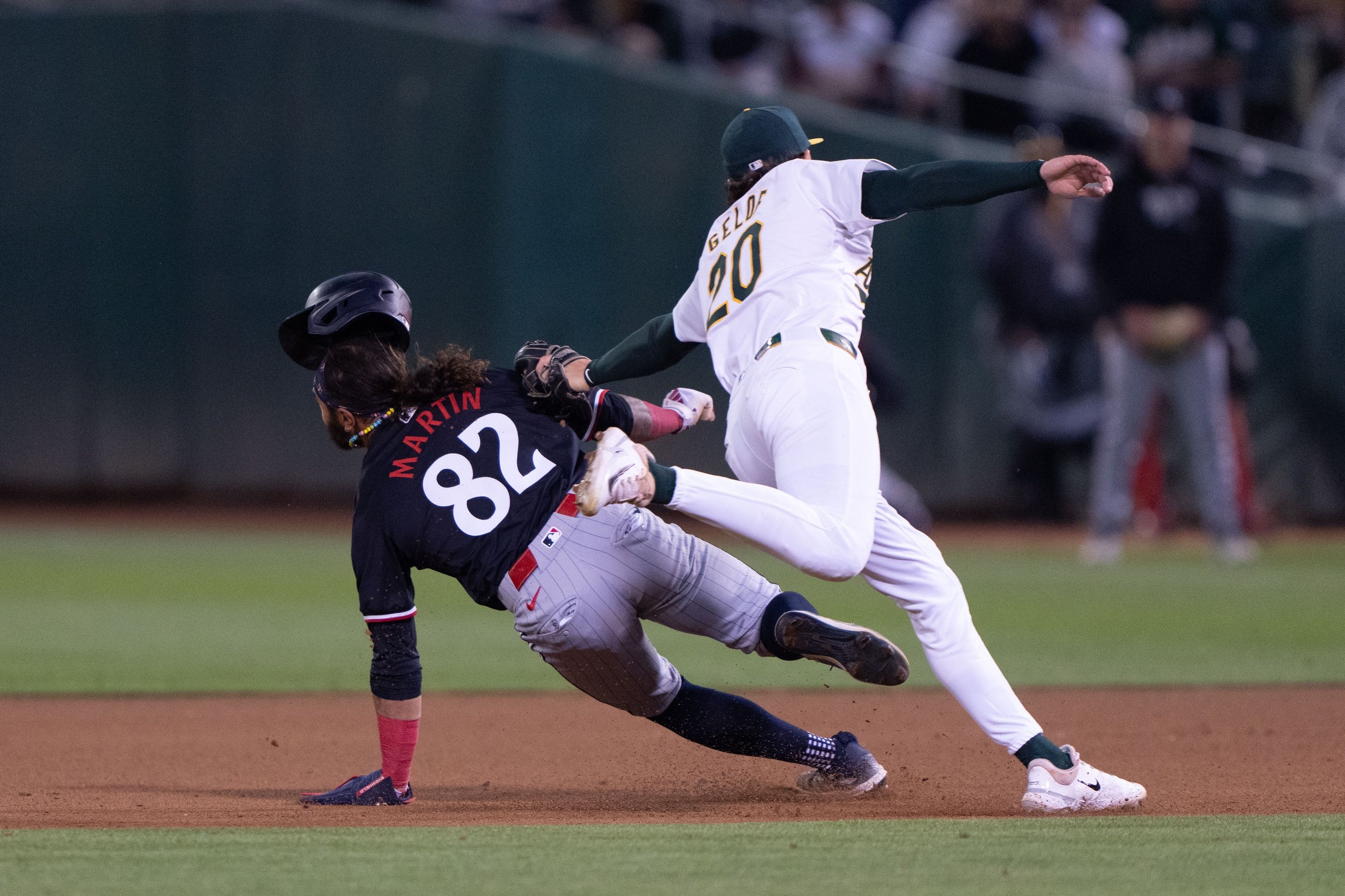 Box Score Chris Paddack: 4 ⅔ IP, 5 H, 3 ER, 3 BB, 3 K Home Runs: Royce Lewis (10), Willi Castro (6) Bottom 3 WPA: Jhoan Duran (-.560), Kody Funderburk (-.285), Manuel Margot (-.128) Win Probability Chart (via FanGraphs) Baseball in Oakland will soon be no more. This has been the reality for some time now, but for the Twins, that meant this series—an otherwise non-descript set in the middle of June—marks their final foray into the Oakland Coliseum. Their conquest over the A’s in 2002, forever immortalized thanks to Moneyball, soon to be a relic. The team in Sacramento will know no such pain. Whatever occurs in Oakland this weekend, a melancholic mood will follow the result—hopefully, it will support wins, not curse losses. Friday began with a rematch: Chris Paddack vs Joey Estes. Neither man hung around for long last time; Minnesota’s righty turned in a dreadful performance last Sunday, exiting the game after just 2 ⅓ innings with five earned runs against him. Contact against him was not quiet. Estes, though, was basically just as bad; he netted one more out, but the trade-off coaxed an extra earned run from his ledger. This game—the one that could change the vibes for each respective hurler—teetered on becoming like the one from before: Paddack walked a season-high three batters over 4 ⅔ mildly effective innings, allowing a bevy of line drives and baserunners. Men were on base in almost every frame. Oakland hitters swung with confidence. The Texan’s line appeared passable for a time, but Kody Funderburk’s blunders in “relief” swelled Paddack’s earned run total from one to three. So it goes. Minnesota had less luck against their opponent. Estes escaped their grasp whenever they tried to trap him. An early run seemed to begat a repeat of last week’s outing, but Estes slithered away from damage at almost every turn. Someone should have checked his pocket for a horseshoe. Of course, then he ran into Royce Lewis. The inevitable. The assumed. The predictable. Royce observed a sweeper on the outside corner before finding one spinning at the top of the zone; it didn’t touch down until it flew 380 feet away, just enough to give him his 10th homer of the year. In 16 games. That seemed to spark things for the tepid, sleepy Twins offense. They greeted Oakland reliever Austin Adams with a single and a walk to send the go-ahead run to the plate. That run—who has a name; Willi Castro—cracked a soaring, skyscraping flyball, holding just barely fair as it landed safely in the bleachers for a three-run homer. Twins lead. It appeared to be the clinching hit. If there ever was a blast to equalize things and establish order in the chaos, Castro's three-run homer should have been like Thanos' infamous snap. It was not. Jorge Alcalá worked a scoreless frame before Jhoan Duran entered in the 8th. The formerly dominant closer plunked a batter with a curveball, proving yet again that he is not the same reliever we could have once turned the TV off and assumed a win. He unleashed a splitter far less mean than before, and Shea Langeliers blasted a go-ahead two-run homer to left field. Mason Miller set the Twins down in order. Yet again, Minnesota nearly made a comeback but ultimately failed to escape themselves in an excruciating loss. Notes: Carlos Santana played in his 2,000th career MLB game on Friday. Only four players have more home runs than Royce Lewis in their first 16 games of a season: Willi Castro is slashing .290/.395/.478 in June. Jorge Alcalá lowered his season ERA to 1.75 on Friday. Post-Game Interview: What’s Next? The Twins and Athletics will play the second game of their weekend series on Saturday, with first pitch coming at 3:07 PM. Bailey Ober will start opposite JP Sears. Bullpen Usage Spreadsheet
- 34 comments
-
- 5
-
-
- jhoan duran
- kody funderburk
- (and 3 more)
-
Come on, you must read something while waiting for game two to start. Image courtesy of Ed Bailey, Wichita Wind Surge TRANSACTIONS RHP Louie Varland recalled as the 26th man Saints Sentinel St. Paul 6, Louisville 3 Box Score Caleb Boushley: 6 ⅔ IP, 5 H, 3 ER, 1 BB, 3 K HR: Edouard Julien (2), Matt Wallner 2 (15, 16) Multi-hit games: Matt Wallner (2-for-5, 2 HR, 2 R, 3 RBI), Yunior Severino (3-for-5, HR, 2B, R, RBI), Alex Isola (2-for-5, R), Anthony Prato (2-for-5), Will Holland (2-for-4, RBI) The Saints swept the Bats on Sunday. Caleb Boushley continued to impress on the mound. The 30-year-old native of Hortonville, Wisconsin, worked 6 ⅔ innings, allowing three runs while punching out a trio in a start that came one out away from tying his season-high in frames. No matter; he’ll settle for his seventh win (against just one loss) and the seventh-best ERA amongst qualified International League hurlers. Starting opposite Boushley was Brandon Leibrandt, son of Charlie. In a cruel nod to Father’s Day, Matt Wallner played the role of Kirby Puckett: the lefty walloped a pair of homers, the first a 481-foot rocket the cameraman could only catch after it bounced off the scoreboard. The second was a more casual shot off reliever Alex Young. Edouard Julien and Yunior Severino also cracked long balls off of Leibrandt. Somewhere, Charlie likely shuttered and cursed Bobby Cox for putting him into that damn game in the first place. The laser show perfectly complemented St. Paul’s relief effort, as Scott Blewett, Ryan Jensen, and Ronny Henriquez combined to shut out the bats for the game’s final seven outs. Henriquez needed just seven pitches to elicit three outs. Wallner is slashing .397/.453/.931 in June. Yes, that is his slugging percentage at the end. The Bats are led by Noelvi Marte, the 28th-best prospect in baseball, according to MLB Pipeline. He went 0-for-4. WIND SURGE WISDOM Wichita 6, Midland 0 Box Score Jaylen Nowlin: 8 IP, 1 H, 0 ER, 0 BB, 4 K HR: Aaron Sabato (6) Multi-hit games: Kyler Fedko (2-for-4, 2 RBI), Aaron Sabato (3-for-4, HR, 2B, R, 2 RBI) Wichita shut out the RockHounds on Sunday. For eight innings, it was the Jaylen Nowlin show. The lefty shed his usual brand of pitching and, for an afternoon, became a modern Tom Glavine, mowing down Midland’s hitters with shocking efficiency and a plethora of ground balls; he exited the game with just 84 pitches. A 5th-inning infield single that went nowhere served as the lone runner to reach base against him. Pure dominance from the 23-year-old. Cody Laweryson pitched a perfect 9th to conclude the shutout. The Wind Surge offense didn’t need to do much, but they decided to go above and beyond in support of their dealing starter. Kyler Fedko plated a run with a 1st inning single and coaxed home two more runs with a knock in his next at-bat. Then, Aaron Sabato entered: Minnesota’s 1st round pick in 2020 blasted an RBI double in the 5th before clearing the wall in right-center for his second extra-base hit of the day. He also walked. And he stole a base. For real. The RockHounds are led by Oakland’s 11th-ranked prospect, Colby Thomas. He—like nearly every other hitter—went 0-3. KERNELS NUGGETS Cedar Rapids 9, Lansing 8 Box Score Ty Langenberg: 5 IP, 3 H, 3 ER, 3 BB, 7 K HR: Nate Baez 2 (6, 7), Rubel Cespedes (8) Multi-hit games: Ricardo Olivar (2-for-4, R, BB), Rubel Cespedes (2-for-5, HR, 2 R, RBI), Nate Baez (2-for-3, 2 HR, 2 R, 3 RBI, BB) The Kernels hung on in a thriller. Urbandale, Iowa native Ty Langenberg earned the nod for his home-state team for the first time in his career. After decimating A-Ball in May and early June, Langenberg greeted the next level with a promising yet lukewarm start. He struck out seven but walked three. He allowed just a trio of hits but matched them in runs. Ultimately, it was ok showing for a player likely battling nerves and excitement on top of the hitters in the batter’s box. Speaking of hitting, the Kernels did a lot of it on Sunday: Cedar Rapids cracked 10 hits, took four walks, and scored nine runs, six of which came in the 3rd. Nearly everyone got in on the fun; centerfielder Kyle Hess was the only batter who didn’t reach base. The most prolific hitter of the day was easily Nate Baez, who—despite now only claiming 12 professional home runs—scored his third career multi-homer game. Half of his home runs have come in just three games! The righty out of Arizona State is slugging .788 in June. Entering the 8th with a 9-3 lead, Cedar Rapids nearly melted down and lost a guaranteed win when Sheldon Reed and Ricardo Velez (he is human, after all) allowed five runs in the final two frames. In fact, all three of Velez’s runs came with no one out; he then settled down to coax a pair of groundouts and a game-winning strikeout. The Lugnuts are the A+ affiliate of the Oakland Athletics, so while the Twins and A’s duked it out over the weekend, the Kernels became familiar with Henry Bolte, the franchise’s 10th-ranked prospect. The outfielder singled twice in five trips to the plate. MUSSEL MATTERS Fort Myers 4, Lakeland 6 (Seven Innings) Box Score Jose Olivares: 4 ⅔ IP, 4 H, 3 ER, 3 BB, 5 K HR: None Multi-hit games: Payton Eeles (2-for-3, 2B, 3 R) The Mighty Mussels lost the first game of their doubleheader on Sunday. Starter Jose Olivares was cromulent—somewhere in the realm of acceptable but not quite good. His command oscillated early before escaping altogether in his final two frames. Those innings saw a mess of baserunners, stolen bases, and a few too many free passes for manager Brian Meyer. Olivares exited, and an error brought home a fourth (but unearned) run against his ledger. Stolen bases were a problem all day: Lakeland stole seven bags against the Mighty Mussels (in just seven innings!), exposing a flaw in Fort Myers’ base running strategy. The bats were mostly silent, but they nearly scored enough to threaten the Flying Tigers’ lead thanks to a chaotic 5th. Yohander Martinez singled, Payton Eeles singled, advancing an extra base for both men off a Lakeland error, Walker Jenkins sent those runners to home and third, respectively, with a sacrifice fly, and Eeles scored on a balk. Now, that’s the kind of manufacturing that would make Henry Ford proud. The shenanigans ended there, though, and two more Flying Tigers runs iced the game. Eeles—apparently the second coming of Chuck Knoblauch (hopefully just on the field)—scored three runs and pushed his Fort Myers OPS to .990. He also stole a base. The 5’7” infielder plucked from Indy ball has been a terror since joining the organization in early May. The Flying Tigers are led by Max Clark, the 3rd overall pick from the 2023 MLB Draft. He lived up to the billing, cracking a homer while swiping his 17th base of the season. Game Two: Fort Myers 2, Lakeland 6 (Seven Innings) Box Score Tomas Cleto: 1 ⅓ IP, 1 H, 3 ER, 3 BB, 0 K HR: None Multi-hit games: None The Mighty Mussels came up empty in game two, as well. While the Twins found success against a lefty named “Sears,” Fort Myers could elicit no such luck; Lakeland’s hurler, Andrew, held his opponents at bay, totaling five innings with just two earned runs against him. Oakland’s JP allowed two runs after just two batters. Tomas Cleto could not match his mound foe. He was wild early and pitched himself out of the game after acquiring just four outs. Paulshawn Pasqualotto entered to establish some sort of order, but he too struggled to quell Lakeland’s bats; he allowed a pair of runs thanks to a 4th inning homer. Fort Myers’ offensive display was brief. If you blinked, you could have missed it. They flashed discipline by taking five walks, but their bats only found three hits, none of them of the run-scoring variety. Clark flashed his prospect status once again, singling thrice while stealing two more bases. What a terror. TWINS DAILY PLAYERS OF THE DAY Twins Daily Minor League Pitcher of the Day – Jaylen Nowlin Twins Daily Minor League Hitter of the Day – Nate Baez PROSPECT SUMMARY Here’s a look at how the Twins Daily Top 20 Twins Prospects performed: #1 - Walker Jenkins (Fort Myers) - 1-3, 2B, 2 RBI, K #2 - Brooks Lee (St. Paul) - 1-5 R #9 - Luke Keaschall (Wichita) - 0-4, 3 K #18 - Yunior Severino (St. Paul) - 3-5, HR, 2B, R, RBI, K #20 - Ricardo Olivar (Cedar Rapids) - 2-for-4, R, BB MONDAY’S PROBABLE STARTERS DSL Rockies @ DSL Twins (9:00 AM) - TBD DSL Rockies @ DSL Twins (Game Two) - TBD FCL Orioles @ FCL Twins (11:00 AM) - TBD View full article
- 32 replies
-
- 1
-
-
- jaylen nowlin
- nate baez
- (and 5 more)
-
 TRANSACTIONS RHP Louie Varland recalled as the 26th man Saints Sentinel St. Paul 6, Louisville 3 Box Score Caleb Boushley: 6 ⅔ IP, 5 H, 3 ER, 1 BB, 3 K HR: Edouard Julien (2), Matt Wallner 2 (15, 16) Multi-hit games: Matt Wallner (2-for-5, 2 HR, 2 R, 3 RBI), Yunior Severino (3-for-5, HR, 2B, R, RBI), Alex Isola (2-for-5, R), Anthony Prato (2-for-5), Will Holland (2-for-4, RBI) The Saints swept the Bats on Sunday. Caleb Boushley continued to impress on the mound. The 30-year-old native of Hortonville, Wisconsin, worked 6 ⅔ innings, allowing three runs while punching out a trio in a start that came one out away from tying his season-high in frames. No matter; he’ll settle for his seventh win (against just one loss) and the seventh-best ERA amongst qualified International League hurlers. Starting opposite Boushley was Brandon Leibrandt, son of Charlie. In a cruel nod to Father’s Day, Matt Wallner played the role of Kirby Puckett: the lefty walloped a pair of homers, the first a 481-foot rocket the cameraman could only catch after it bounced off the scoreboard. The second was a more casual shot off reliever Alex Young. Edouard Julien and Yunior Severino also cracked long balls off of Leibrandt. Somewhere, Charlie likely shuttered and cursed Bobby Cox for putting him into that damn game in the first place. The laser show perfectly complemented St. Paul’s relief effort, as Scott Blewett, Ryan Jensen, and Ronny Henriquez combined to shut out the bats for the game’s final seven outs. Henriquez needed just seven pitches to elicit three outs. Wallner is slashing .397/.453/.931 in June. Yes, that is his slugging percentage at the end. The Bats are led by Noelvi Marte, the 28th-best prospect in baseball, according to MLB Pipeline. He went 0-for-4. WIND SURGE WISDOM Wichita 6, Midland 0 Box Score Jaylen Nowlin: 8 IP, 1 H, 0 ER, 0 BB, 4 K HR: Aaron Sabato (6) Multi-hit games: Kyler Fedko (2-for-4, 2 RBI), Aaron Sabato (3-for-4, HR, 2B, R, 2 RBI) Wichita shut out the RockHounds on Sunday. For eight innings, it was the Jaylen Nowlin show. The lefty shed his usual brand of pitching and, for an afternoon, became a modern Tom Glavine, mowing down Midland’s hitters with shocking efficiency and a plethora of ground balls; he exited the game with just 84 pitches. A 5th-inning infield single that went nowhere served as the lone runner to reach base against him. Pure dominance from the 23-year-old. Cody Laweryson pitched a perfect 9th to conclude the shutout. The Wind Surge offense didn’t need to do much, but they decided to go above and beyond in support of their dealing starter. Kyler Fedko plated a run with a 1st inning single and coaxed home two more runs with a knock in his next at-bat. Then, Aaron Sabato entered: Minnesota’s 1st round pick in 2020 blasted an RBI double in the 5th before clearing the wall in right-center for his second extra-base hit of the day. He also walked. And he stole a base. For real. The RockHounds are led by Oakland’s 11th-ranked prospect, Colby Thomas. He—like nearly every other hitter—went 0-3. KERNELS NUGGETS Cedar Rapids 9, Lansing 8 Box Score Ty Langenberg: 5 IP, 3 H, 3 ER, 3 BB, 7 K HR: Nate Baez 2 (6, 7), Rubel Cespedes (8) Multi-hit games: Ricardo Olivar (2-for-4, R, BB), Rubel Cespedes (2-for-5, HR, 2 R, RBI), Nate Baez (2-for-3, 2 HR, 2 R, 3 RBI, BB) The Kernels hung on in a thriller. Urbandale, Iowa native Ty Langenberg earned the nod for his home-state team for the first time in his career. After decimating A-Ball in May and early June, Langenberg greeted the next level with a promising yet lukewarm start. He struck out seven but walked three. He allowed just a trio of hits but matched them in runs. Ultimately, it was ok showing for a player likely battling nerves and excitement on top of the hitters in the batter’s box. Speaking of hitting, the Kernels did a lot of it on Sunday: Cedar Rapids cracked 10 hits, took four walks, and scored nine runs, six of which came in the 3rd. Nearly everyone got in on the fun; centerfielder Kyle Hess was the only batter who didn’t reach base. The most prolific hitter of the day was easily Nate Baez, who—despite now only claiming 12 professional home runs—scored his third career multi-homer game. Half of his home runs have come in just three games! The righty out of Arizona State is slugging .788 in June. Entering the 8th with a 9-3 lead, Cedar Rapids nearly melted down and lost a guaranteed win when Sheldon Reed and Ricardo Velez (he is human, after all) allowed five runs in the final two frames. In fact, all three of Velez’s runs came with no one out; he then settled down to coax a pair of groundouts and a game-winning strikeout. The Lugnuts are the A+ affiliate of the Oakland Athletics, so while the Twins and A’s duked it out over the weekend, the Kernels became familiar with Henry Bolte, the franchise’s 10th-ranked prospect. The outfielder singled twice in five trips to the plate. MUSSEL MATTERS Fort Myers 4, Lakeland 6 (Seven Innings) Box Score Jose Olivares: 4 ⅔ IP, 4 H, 3 ER, 3 BB, 5 K HR: None Multi-hit games: Payton Eeles (2-for-3, 2B, 3 R) The Mighty Mussels lost the first game of their doubleheader on Sunday. Starter Jose Olivares was cromulent—somewhere in the realm of acceptable but not quite good. His command oscillated early before escaping altogether in his final two frames. Those innings saw a mess of baserunners, stolen bases, and a few too many free passes for manager Brian Meyer. Olivares exited, and an error brought home a fourth (but unearned) run against his ledger. Stolen bases were a problem all day: Lakeland stole seven bags against the Mighty Mussels (in just seven innings!), exposing a flaw in Fort Myers’ base running strategy. The bats were mostly silent, but they nearly scored enough to threaten the Flying Tigers’ lead thanks to a chaotic 5th. Yohander Martinez singled, Payton Eeles singled, advancing an extra base for both men off a Lakeland error, Walker Jenkins sent those runners to home and third, respectively, with a sacrifice fly, and Eeles scored on a balk. Now, that’s the kind of manufacturing that would make Henry Ford proud. The shenanigans ended there, though, and two more Flying Tigers runs iced the game. Eeles—apparently the second coming of Chuck Knoblauch (hopefully just on the field)—scored three runs and pushed his Fort Myers OPS to .990. He also stole a base. The 5’7” infielder plucked from Indy ball has been a terror since joining the organization in early May. The Flying Tigers are led by Max Clark, the 3rd overall pick from the 2023 MLB Draft. He lived up to the billing, cracking a homer while swiping his 17th base of the season. Game Two: Fort Myers 2, Lakeland 6 (Seven Innings) Box Score Tomas Cleto: 1 ⅓ IP, 1 H, 3 ER, 3 BB, 0 K HR: None Multi-hit games: None The Mighty Mussels came up empty in game two, as well. While the Twins found success against a lefty named “Sears,” Fort Myers could elicit no such luck; Lakeland’s hurler, Andrew, held his opponents at bay, totaling five innings with just two earned runs against him. Oakland’s JP allowed two runs after just two batters. Tomas Cleto could not match his mound foe. He was wild early and pitched himself out of the game after acquiring just four outs. Paulshawn Pasqualotto entered to establish some sort of order, but he too struggled to quell Lakeland’s bats; he allowed a pair of runs thanks to a 4th inning homer. Fort Myers’ offensive display was brief. If you blinked, you could have missed it. They flashed discipline by taking five walks, but their bats only found three hits, none of them of the run-scoring variety. Clark flashed his prospect status once again, singling thrice while stealing two more bases. What a terror. TWINS DAILY PLAYERS OF THE DAY Twins Daily Minor League Pitcher of the Day – Jaylen Nowlin Twins Daily Minor League Hitter of the Day – Nate Baez PROSPECT SUMMARY Here’s a look at how the Twins Daily Top 20 Twins Prospects performed: #1 - Walker Jenkins (Fort Myers) - 1-3, 2B, 2 RBI, K #2 - Brooks Lee (St. Paul) - 1-5 R #9 - Luke Keaschall (Wichita) - 0-4, 3 K #18 - Yunior Severino (St. Paul) - 3-5, HR, 2B, R, RBI, K #20 - Ricardo Olivar (Cedar Rapids) - 2-for-4, R, BB MONDAY’S PROBABLE STARTERS DSL Rockies @ DSL Twins (9:00 AM) - TBD DSL Rockies @ DSL Twins (Game Two) - TBD FCL Orioles @ FCL Twins (11:00 AM) - TBD
- 32 comments
-
- 4
-
-
- jaylen nowlin
- nate baez
- (and 5 more)
-
 Box Score Simeon Woods Richardson: 4 IP, 4 H, 4 ER, 4 BB, 4 K (For real) Home Runs: Max Kepler (5) Top 3 WPA: Max Kepler (.621), Jhoan Duran (.445), Jose Miranda (.153) Win Probability Chart (via FanGraphs) Donned in a uniform that can only be described as the result of the Mariners creating a soccer kit, the Twins entered Friday’s game with a unique pressure. Sure, their rival Guardians appeared incapable of losing, but a real problem underscored the match: they needed to win with their City Connect jerseys. You can’t look weird and play bad. That’s uncouth. Minnesota had to establish an attitude of dominance—and they needed to do it now. That mandate flailed early. Simeon Woods Richardson pitched perhaps a little too much; his 1st inning was a series of extended plate appearances, dunked changeups, and anxious vibes that clearly rattled the otherwise smooth and collected rookie. He entered the frame with a 2.84 ERA. He left it a few ticks higher. With men on each base, Woods Richardson delivered Shea Langeliers a lethargic cement mixer of a slider and watched in horror as he deposited it 408 feet out to left field. 4-0 A’s. The Twins haven’t even hit. And so they didn’t, for a time. Minnesota batters thrice hit into double plays against starter Mitch Spence, struggling to turn on his odd cutting-fastball with any sort of authority. With the exception of Byron Buxton—who absolutely clobbered an RBI triple off the righty in the 2nd—the Twins mostly found gloves and false hope in the game’s first five innings. Perhaps, then, some big thank-goodness-someone-finally-came-through knock was in the works for Minnesota. Runners don’t remain stranded forever; given enough chances, even the coldest batter will find a cookie, some pitch they’ve handled for as long as they can remember, and turn fortunes around. That hit came in the 6th, and Max Kepler was its architect. Staring down a .158/.214/.184 month of June, Kepler lit up on the first he saw, whacked a slider, and delivered just enough oomph on the ball to clear the high wall in right-center, tying the game on one critical blow. If that somehow wasn't dramatic enough, the rest of the game surely satisfied your unrealistic palate. The Twins immediately surrendered the lead when Brent Rooker—evidently feeling a type of way against his former team—cracked a triple into center to score the go-ahead run. Buxton made a valiant effort. To no avail. Rooker hit it too tall. Minnesota stayed at bay in the 7th but decided to strike in the 8th; a horrible error, hit-by-pitch, walk combo reminded the team they were indeed playing the Athletics—and the threat coaxed manager Mark Kotsay into smashing his let-Mason-Miller-save-my-ass button, summoning his closer a frame earlier than usual. It kind of worked. The young righty walked in the tying run but lured tepid contact to walk away with nothing more. The 9th melted into the 10th, and suddenly, we entered a strange present: the Manfred Man zone, where runners earn bases for free. This bizarro baseball could spell disaster for home teams, but the Twins simply let Jhoan Duran, in his second inning of work, cut down Oakland in order. So he did; the free runner didn't even budge. And—fueled by their pitching dominance—Minnesota culled a win from their fortunes and needed just one pitch to do it: Scott Alexander intentionally walked Carlos Correa, and his opening pitch to Kepler was scalded beyond Oakland first baseman Tyler Soderstrom. Austin Martin, the free runner, booked it around the bases, sliding into home as the throw could only reach the catcher's glove a few ticks too late. Twins win. Notes: Max Kepler's homer gave him 81 in his Target Field career, passing Brian Dozier for the most homers hit in the stadium by one player. Kepler's four RBIs give him 493 in his career, passing Dozier once again, this time for 12th all-time for RBIs hit in Twins history. Kepler is 87 away from tying the next hitter, Michael Cuddyer. Carlos Santana's 8th-inning walk earned him his 1,045th career RBI, passing Ron Fairly for 264th all-time in MLB history. Byron Buxton's 24th career triple ties Shane Mack for 21st place in Twins history. Rod Carew claims 1st place with 90 three-baggers. Post-Game Interview: What’s Next? The Twins and Athletics are set to play the third game of their series on Saturday. Bailey Ober will start opposite Joey Estes. First pitch is at 1:10 PM. Bullpen Usage Spreadsheet
- 48 comments
-
- 6
-
-
- max kepler
- simeon woods richardson
- (and 4 more)
-
Not that they have to continue wearing the jerseys. Image courtesy of Brad Rempel-USA TODAY Sports Box Score Simeon Woods Richardson: 4 IP, 4 H, 4 ER, 4 BB, 4 K (For real) Home Runs: Max Kepler (5) Top 3 WPA: Max Kepler (.621), Jhoan Duran (.445), Jose Miranda (.153) Win Probability Chart (via FanGraphs) Donned in a uniform that can only be described as the result of the Mariners creating a soccer kit, the Twins entered Friday’s game with a unique pressure. Sure, their rival Guardians appeared incapable of losing, but a real problem underscored the match: they needed to win with their City Connect jerseys. You can’t look weird and play bad. That’s uncouth. Minnesota had to establish an attitude of dominance—and they needed to do it now. That mandate flailed early. Simeon Woods Richardson pitched perhaps a little too much; his 1st inning was a series of extended plate appearances, dunked changeups, and anxious vibes that clearly rattled the otherwise smooth and collected rookie. He entered the frame with a 2.84 ERA. He left it a few ticks higher. With men on each base, Woods Richardson delivered Shea Langeliers a lethargic cement mixer of a slider and watched in horror as he deposited it 408 feet out to left field. 4-0 A’s. The Twins haven’t even hit. And so they didn’t, for a time. Minnesota batters thrice hit into double plays against starter Mitch Spence, struggling to turn on his odd cutting-fastball with any sort of authority. With the exception of Byron Buxton—who absolutely clobbered an RBI triple off the righty in the 2nd—the Twins mostly found gloves and false hope in the game’s first five innings. Perhaps, then, some big thank-goodness-someone-finally-came-through knock was in the works for Minnesota. Runners don’t remain stranded forever; given enough chances, even the coldest batter will find a cookie, some pitch they’ve handled for as long as they can remember, and turn fortunes around. That hit came in the 6th, and Max Kepler was its architect. Staring down a .158/.214/.184 month of June, Kepler lit up on the first he saw, whacked a slider, and delivered just enough oomph on the ball to clear the high wall in right-center, tying the game on one critical blow. If that somehow wasn't dramatic enough, the rest of the game surely satisfied your unrealistic palate. The Twins immediately surrendered the lead when Brent Rooker—evidently feeling a type of way against his former team—cracked a triple into center to score the go-ahead run. Buxton made a valiant effort. To no avail. Rooker hit it too tall. Minnesota stayed at bay in the 7th but decided to strike in the 8th; a horrible error, hit-by-pitch, walk combo reminded the team they were indeed playing the Athletics—and the threat coaxed manager Mark Kotsay into smashing his let-Mason-Miller-save-my-ass button, summoning his closer a frame earlier than usual. It kind of worked. The young righty walked in the tying run but lured tepid contact to walk away with nothing more. The 9th melted into the 10th, and suddenly, we entered a strange present: the Manfred Man zone, where runners earn bases for free. This bizarro baseball could spell disaster for home teams, but the Twins simply let Jhoan Duran, in his second inning of work, cut down Oakland in order. So he did; the free runner didn't even budge. And—fueled by their pitching dominance—Minnesota culled a win from their fortunes and needed just one pitch to do it: Scott Alexander intentionally walked Carlos Correa, and his opening pitch to Kepler was scalded beyond Oakland first baseman Tyler Soderstrom. Austin Martin, the free runner, booked it around the bases, sliding into home as the throw could only reach the catcher's glove a few ticks too late. Twins win. Notes: Max Kepler's homer gave him 81 in his Target Field career, passing Brian Dozier for the most homers hit in the stadium by one player. Kepler's four RBIs give him 493 in his career, passing Dozier once again, this time for 12th all-time for RBIs hit in Twins history. Kepler is 87 away from tying the next hitter, Michael Cuddyer. Carlos Santana's 8th-inning walk earned him his 1,045th career RBI, passing Ron Fairly for 264th all-time in MLB history. Byron Buxton's 24th career triple ties Shane Mack for 21st place in Twins history. Rod Carew claims 1st place with 90 three-baggers. Post-Game Interview: What’s Next? The Twins and Athletics are set to play the third game of their series on Saturday. Bailey Ober will start opposite Joey Estes. First pitch is at 1:10 PM. Bullpen Usage Spreadsheet View full article
- 48 replies
-
- 1
-
-
- max kepler
- simeon woods richardson
- (and 4 more)
-
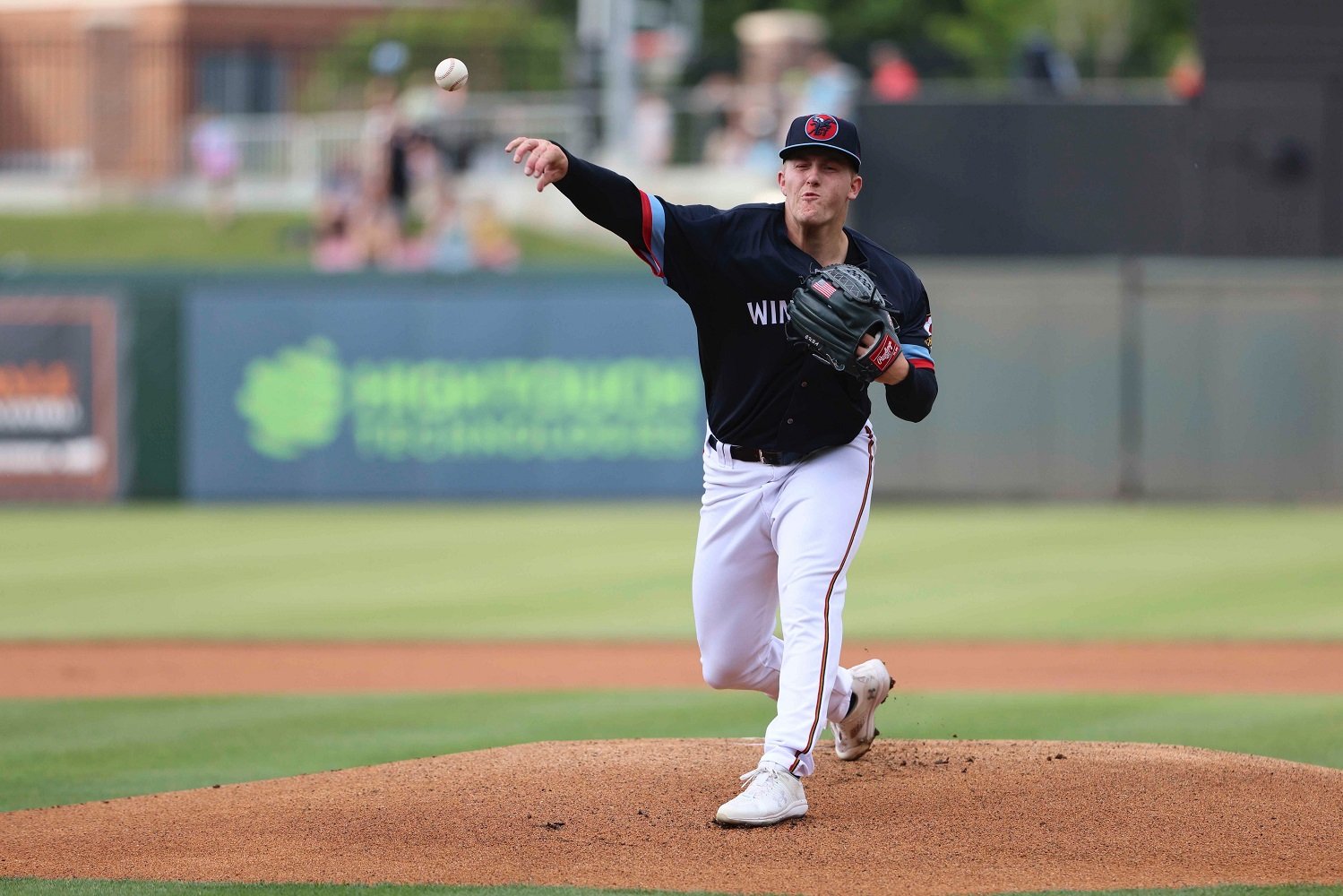 TRANSACTIONS There were no moves made on Sunday. Saints Sentinel St. Paul 4, Syracuse 7 Box Score Scott Blewett: 3 IP, 4 H, 2 ER, 1 BB, 3 K HR: Yunior Severino (10), Michael Helman (10) Multi-hit games: Michael Helman (3-for-4, HR, 2B, R, 3 RBI, Yunior Severino (3-for-5, HR, R, RBI), Will Holland (2-for-3, 2B) The Saints banged out 12 hits but could not make them count on Sunday. It took until the fourth pitcher of the game before Toby Gardenhire found a hurler capable of keeping runs off the board. Starter Scott Blewett couldn’t do it, Jordan Balazovic wasn’t the right man either, and Josh Winder allowed a flurry of hits during his time on the mound. By the time Jeff Brigham and Kody Funderburk blanked the Mets, seven runs were on the board, and the damage was too serious for St. Paul’s bats to overcome. But they tried. They sure tried. Former Twins first-rounder Tyler Jay started for Syracuse and allowed a homer to deep center by Yunior Severino. Michael Helman followed with a shot off Jon Duplantier. But, the runs nearly ceased there. Helman came back to drive in a run with a later double; every other inning was a series of frustration and emptiness, with runners reaching base and subsequently jogging back to the dugout before they could touch home. The Saints loaded the bases in back-to-back innings and failed to score a single run. Once again, St. Paul threatened with some action in the 9th, but—in a continuation with Sunday’s theme—Patrick Winkel could not keep the threat alive, and he whiffed on three pitches to strand a pair of runners. When asked about Matt Wallner and Edouard Julien, Toby Gardenhire stated that "[b]oth those guys are kind of searching right now, they're trying to figure it out. It's tough. You know, you go up to the Big Leagues [where] they've had success. And then they come down and right now it's just they're trying to work through some stuff. They're both really good players, and they're both really good hitters the big thing is just for them to keep getting in the work because eventually we know both those guys will be back." (Quote via our on-hand journalist, Theo Tollefson.) Luisangel Acuña—the brother of some famous baseball player; the name will come to me eventually—is the 5th-ranked prospect in the Mets system. He walked and struck out twice in five plate appearances. WIND SURGE WISDOM Wichita 2, NW Arkansas 3 Box Score Zebby Matthews: 7 IP, 3 H, 0 ER, 0 BB, 8 K HR: Jeferson Morales (3) Multi-hit games: Jeferson Morales (2-for-3, HR, R, 2 RBI, BB) The Wind Surge were walked off in tragic fashion. Daniel Zebulon Matthews yet again graced the mound with his presence on Sunday. The righty from North Carolina is essentially royalty at this point; his 2024 ERA is 1.38, he’s walked just two batters all season, and his WHIP is 0.69. By themselves, these would be impressive stats. When combined, they are simply Zebby. And he did what he does. Twins Daily's May MiLB Starting Pitcher of the Month diced up the Naturals, breezing through seven frames of shutout ball with just 87 pitches. No runner sniffed second base. He whiffed eight. At this point, his utter dominance and cartoonish numbers are as assumed and consistent as the moving of the seasons. Unfortunately, regality wasn’t in the cards for the Wind Surge lineup (save for Jeferson Morales). Wichita put together so little that it could have easily been interpreted as nothing: their lone runs came when Morales delivered a two-run homer over the left field wall. A lead, for a time. But Wichita’s bullpen had to get involved. Taylor Floyd quickly surrendered the advantage, and John Stankiewicz—one of the few men Ramon Borrego could trust in a time like this—handed over the walk-off the following frame. Second baseman Peyton Wilson serves as the Royals’ 22nd-ranked prospect. He walked once in four trips to the plate. KERNELS NUGGETS Cedar Rapids 9, Great Lakes 6 Box Score Jordan Carr: 5 IP, 4 H, 4 ER, 1 BB, 5 K HR: Agustin Ruiz (3), Nate Baez (4) Multi-hit games: Agustin Ruiz (2-for-5, HR, 2 R, RBI), Rayne Doncon (4-for-5, 2B, 2 R, 3 RBI), Jose Salas (3-for-5, R, RBI), Nate Baez (3-for-4, HR, 2B, R, 4 RBI) The Kernels built a major comeback on Sunday. Agustin Ruiz hit a 1st inning homer. Then, the trouble began. The Loons—evidently annoyed at their immediate deficit—responded with a three-spot in the bottom half of the frame, putting starter Jordan Carr on the ropes quickly. To his credit, he responded about as well as a hurler could: he allowed just one more run before calling it a day after the 5th. The lefty whiffed five and walked one. Cedar Rapids scored as well, keeping the game within striking distance before the bats fell dormant for the entirety of the second act. Hope was hard to find at the start of the 8th; the Loons carried a 6-3 advantage, and outs became precious. There was no breathing room. Any rally needed to be efficient and decadent. That’s when the **** hit the fan: the Kernels loaded the bases, and Rayne Doncon partly cleared them with a two-run single, setting the stage for precisely the kind of late-game heroics needed in a moment like this. Jose Salas singled in the tying run and swiped second. Nate Baez—with two strikes and two outs against him—cracked the heartbreaker, a go-ahead double that plated an insurance run for good measure. Doncon added on with an RBI knock in the 9th. Mike Parades held on to carry the game to a victorious ending. Thayron Liranzo, the Loons 1st baseman, is the 6th-ranked player in the Dodgers system, and he singled twice in four at-bats. Also, the Great Lakes’ leadoff man may have looked familiar: Noah Miller—once a 1st round pick for the Twins—singled and walked over five plate appearances. MUSSEL MATTERS Fort Myers 4, Tampa 8 Box Score Spencer Bengard: 3 IP, 3 H, 2 ER, 2 BB, 3 K HR: Brandon Winokur (5) Multi-hit games: Brandon Winokur (3-for-4, HR, R, RBI, BB) Fort Myers lost handily on Sunday. Brandon Winokur was the star of the show offensively. The lanky 19-year-old out of Huntington Beach reached base four times, cracking a pair of singles, walking once, and blasting an opposite-field homer to give him a potent all-around performance. It was the third time in his professional career totaling six bases in a game. The good news ended somewhere around there, though, as only one Mighty Mussels pitcher knew how to keep runs off the board. Spencer Bengard—so brilliant in May—labored through three inefficient innings before giving way to an ineffective combined bullpen effort. Everyone outside of Danny Moreno probably wished they didn’t pitch that day. It was just one of those games. And the bats outside of Winokur likely felt spurned and disappointed as well; Fort Myers struck out 15 times and totaled just five hits, not a great ratio. The offense beyond the Payton Eeles, Walker Jenkins, and Winokur top three accounted for 13 of those Ks and just one hit. Jenkins is slashing a lopsided .222/.391/.278 in five games since rejoining the Mighty Mussels. Tampa DH Roderick Arias is the Yankees' 4th-ranked prospect, according to MLB Pipeline. He doubled and walked twice on Sunday. TWINS DAILY PLAYERS OF THE DAY Twins Daily Minor League Pitcher of the Day – Zebby Matthews Twins Daily Minor League Hitter of the Day – Brandon Winokur PROSPECT SUMMARY Here’s a look at how the Twins Daily Top 20 Twins Prospects performed: #1 - Walker Jenkins (Fort Myers) - 1-4, RBI, BB #9 - Luke Keaschall (Wichita) - 1-3, R, BB, K #10 - Brandon Winokur (Fort Myers) - 3-for-4, HR, R, RBI, BB #12 - Kala’i Rosario (Wichita) - 1-3, BB #13 - Tanner Schobel (Wichita) - 0-3, BB, 2 K #14 - Zebby Matthews (Wichita) - 7 IP, 3 H, 0 BB, 0 ER, 8 K #18 - Yunior Severino (St. Paul) - 3-for-5, HR, R, RBI, K #20 - Ricardo Olivar (Cedar Rapids) - 1-3, 2 R, 2 BB MONDAY’S PROBABLE STARTERS DSL Phillies Red @ DSL Twins (10:00 AM) - TBD FCL Braves @ FCL Twins (11:00 AM) - TBD
- 19 comments
-
- 2
-
-
- zebby matthews
- brandon winokur
- (and 5 more)
-
Also, if I had a nickel for every former Twins 1st-round pick that played against a team in the system today, I'd have two nickels, which isn't a lot, but it's weird that it happened twice. Image courtesy of Ed Bailey, Wichita Wind Surge TRANSACTIONS There were no moves made on Sunday. Saints Sentinel St. Paul 4, Syracuse 7 Box Score Scott Blewett: 3 IP, 4 H, 2 ER, 1 BB, 3 K HR: Yunior Severino (10), Michael Helman (10) Multi-hit games: Michael Helman (3-for-4, HR, 2B, R, 3 RBI, Yunior Severino (3-for-5, HR, R, RBI), Will Holland (2-for-3, 2B) The Saints banged out 12 hits but could not make them count on Sunday. It took until the fourth pitcher of the game before Toby Gardenhire found a hurler capable of keeping runs off the board. Starter Scott Blewett couldn’t do it, Jordan Balazovic wasn’t the right man either, and Josh Winder allowed a flurry of hits during his time on the mound. By the time Jeff Brigham and Kody Funderburk blanked the Mets, seven runs were on the board, and the damage was too serious for St. Paul’s bats to overcome. But they tried. They sure tried. Former Twins first-rounder Tyler Jay started for Syracuse and allowed a homer to deep center by Yunior Severino. Michael Helman followed with a shot off Jon Duplantier. But, the runs nearly ceased there. Helman came back to drive in a run with a later double; every other inning was a series of frustration and emptiness, with runners reaching base and subsequently jogging back to the dugout before they could touch home. The Saints loaded the bases in back-to-back innings and failed to score a single run. Once again, St. Paul threatened with some action in the 9th, but—in a continuation with Sunday’s theme—Patrick Winkel could not keep the threat alive, and he whiffed on three pitches to strand a pair of runners. When asked about Matt Wallner and Edouard Julien, Toby Gardenhire stated that "[b]oth those guys are kind of searching right now, they're trying to figure it out. It's tough. You know, you go up to the Big Leagues [where] they've had success. And then they come down and right now it's just they're trying to work through some stuff. They're both really good players, and they're both really good hitters the big thing is just for them to keep getting in the work because eventually we know both those guys will be back." (Quote via our on-hand journalist, Theo Tollefson.) Luisangel Acuña—the brother of some famous baseball player; the name will come to me eventually—is the 5th-ranked prospect in the Mets system. He walked and struck out twice in five plate appearances. WIND SURGE WISDOM Wichita 2, NW Arkansas 3 Box Score Zebby Matthews: 7 IP, 3 H, 0 ER, 0 BB, 8 K HR: Jeferson Morales (3) Multi-hit games: Jeferson Morales (2-for-3, HR, R, 2 RBI, BB) The Wind Surge were walked off in tragic fashion. Daniel Zebulon Matthews yet again graced the mound with his presence on Sunday. The righty from North Carolina is essentially royalty at this point; his 2024 ERA is 1.38, he’s walked just two batters all season, and his WHIP is 0.69. By themselves, these would be impressive stats. When combined, they are simply Zebby. And he did what he does. Twins Daily's May MiLB Starting Pitcher of the Month diced up the Naturals, breezing through seven frames of shutout ball with just 87 pitches. No runner sniffed second base. He whiffed eight. At this point, his utter dominance and cartoonish numbers are as assumed and consistent as the moving of the seasons. Unfortunately, regality wasn’t in the cards for the Wind Surge lineup (save for Jeferson Morales). Wichita put together so little that it could have easily been interpreted as nothing: their lone runs came when Morales delivered a two-run homer over the left field wall. A lead, for a time. But Wichita’s bullpen had to get involved. Taylor Floyd quickly surrendered the advantage, and John Stankiewicz—one of the few men Ramon Borrego could trust in a time like this—handed over the walk-off the following frame. Second baseman Peyton Wilson serves as the Royals’ 22nd-ranked prospect. He walked once in four trips to the plate. KERNELS NUGGETS Cedar Rapids 9, Great Lakes 6 Box Score Jordan Carr: 5 IP, 4 H, 4 ER, 1 BB, 5 K HR: Agustin Ruiz (3), Nate Baez (4) Multi-hit games: Agustin Ruiz (2-for-5, HR, 2 R, RBI), Rayne Doncon (4-for-5, 2B, 2 R, 3 RBI), Jose Salas (3-for-5, R, RBI), Nate Baez (3-for-4, HR, 2B, R, 4 RBI) The Kernels built a major comeback on Sunday. Agustin Ruiz hit a 1st inning homer. Then, the trouble began. The Loons—evidently annoyed at their immediate deficit—responded with a three-spot in the bottom half of the frame, putting starter Jordan Carr on the ropes quickly. To his credit, he responded about as well as a hurler could: he allowed just one more run before calling it a day after the 5th. The lefty whiffed five and walked one. Cedar Rapids scored as well, keeping the game within striking distance before the bats fell dormant for the entirety of the second act. Hope was hard to find at the start of the 8th; the Loons carried a 6-3 advantage, and outs became precious. There was no breathing room. Any rally needed to be efficient and decadent. That’s when the **** hit the fan: the Kernels loaded the bases, and Rayne Doncon partly cleared them with a two-run single, setting the stage for precisely the kind of late-game heroics needed in a moment like this. Jose Salas singled in the tying run and swiped second. Nate Baez—with two strikes and two outs against him—cracked the heartbreaker, a go-ahead double that plated an insurance run for good measure. Doncon added on with an RBI knock in the 9th. Mike Parades held on to carry the game to a victorious ending. Thayron Liranzo, the Loons 1st baseman, is the 6th-ranked player in the Dodgers system, and he singled twice in four at-bats. Also, the Great Lakes’ leadoff man may have looked familiar: Noah Miller—once a 1st round pick for the Twins—singled and walked over five plate appearances. MUSSEL MATTERS Fort Myers 4, Tampa 8 Box Score Spencer Bengard: 3 IP, 3 H, 2 ER, 2 BB, 3 K HR: Brandon Winokur (5) Multi-hit games: Brandon Winokur (3-for-4, HR, R, RBI, BB) Fort Myers lost handily on Sunday. Brandon Winokur was the star of the show offensively. The lanky 19-year-old out of Huntington Beach reached base four times, cracking a pair of singles, walking once, and blasting an opposite-field homer to give him a potent all-around performance. It was the third time in his professional career totaling six bases in a game. The good news ended somewhere around there, though, as only one Mighty Mussels pitcher knew how to keep runs off the board. Spencer Bengard—so brilliant in May—labored through three inefficient innings before giving way to an ineffective combined bullpen effort. Everyone outside of Danny Moreno probably wished they didn’t pitch that day. It was just one of those games. And the bats outside of Winokur likely felt spurned and disappointed as well; Fort Myers struck out 15 times and totaled just five hits, not a great ratio. The offense beyond the Payton Eeles, Walker Jenkins, and Winokur top three accounted for 13 of those Ks and just one hit. Jenkins is slashing a lopsided .222/.391/.278 in five games since rejoining the Mighty Mussels. Tampa DH Roderick Arias is the Yankees' 4th-ranked prospect, according to MLB Pipeline. He doubled and walked twice on Sunday. TWINS DAILY PLAYERS OF THE DAY Twins Daily Minor League Pitcher of the Day – Zebby Matthews Twins Daily Minor League Hitter of the Day – Brandon Winokur PROSPECT SUMMARY Here’s a look at how the Twins Daily Top 20 Twins Prospects performed: #1 - Walker Jenkins (Fort Myers) - 1-4, RBI, BB #9 - Luke Keaschall (Wichita) - 1-3, R, BB, K #10 - Brandon Winokur (Fort Myers) - 3-for-4, HR, R, RBI, BB #12 - Kala’i Rosario (Wichita) - 1-3, BB #13 - Tanner Schobel (Wichita) - 0-3, BB, 2 K #14 - Zebby Matthews (Wichita) - 7 IP, 3 H, 0 BB, 0 ER, 8 K #18 - Yunior Severino (St. Paul) - 3-for-5, HR, R, RBI, K #20 - Ricardo Olivar (Cedar Rapids) - 1-3, 2 R, 2 BB MONDAY’S PROBABLE STARTERS DSL Phillies Red @ DSL Twins (10:00 AM) - TBD FCL Braves @ FCL Twins (11:00 AM) - TBD View full article
- 19 replies
-
- 1
-
-
- zebby matthews
- brandon winokur
- (and 5 more)


