



Matt Braun
-
Posts
1,393 -
Joined
-
Last visited
-
Days Won
1
Content Type
Profiles
News
Minnesota Twins Videos
2026 Minnesota Twins Top Prospects Ranking
2022 Minnesota Twins Draft Picks
Minnesota Twins Free Agent & Trade Rumors, Notes, & Tidbits
Guides & Resources
2023 Minnesota Twins Draft Picks
The Minnesota Twins Players Project
2024 Minnesota Twins Draft Picks
2025 Minnesota Twins Draft Pick Tracker
2026 Minnesota Twins Draft Tracker: Picks & Bonuses
Forums
Blogs
Events
Store
Downloads
Gallery
Everything posted by Matt Braun
-
Maybe we should have rooted for the rain. Image courtesy of Rick Osentoski-USA TODAY Sports Box Score Pablo López: 4 IP, 6 H, 5 ER, 3 BB, 7 K Home Runs: None Bottom 3 WPA: Pablo López (-.180), Austin Martin (-.085), Carlos Correa (-.065) Win Probability Chart (via FanGraphs) One day wasn’t enough to wait before baseball could be played in Detroit; the previous day’s dampness rolled over and pushed back the game start about an hour. The beauty of April baseball in the Midwest. The weather affected all: neither starter was as sharp as usual, and Adam Beck, calling the game behind the plate, chose to read Gone With the Wind between deciding strikes. Pablo López caught the worst of it, though. He kicked off the game by allowing a solo homer to Mark Canha before only escaping the frame when Kerry Carpenter inexplicably attempted to go first-to-third on a hit aimed directly towards Byron Buxton. Kyle Farmer chose War And Peace to hold him over while waiting for the runner. That inning portended significant labor. Even the clean innings felt painful; a 1-2-3 scoreless 3rd needed 19 pitches. The dam finally broke when dinks, dunks, and a poorly placed fastball to Riley Greene suddenly bloated his earned run total for the day to five, pushing Rocco Baldelli to trudge to the mound and remove his ace. López’s off night would have meant more had Minnesota’s offense not remained impotent and unintimidating. They did an admiral job keeping Tarik Skubal inefficient, but the big bop never came. Even the hits were toothless; the pair of infield singles that stood as the only hits they had against Skubal could have just as easily been wiped from the ledger had Detroit’s defense been sharper. Michael Tonkin made his first appearance as a Twin since September 30th, 2017. He allowed a pair of runs and struck out five. The rest of the game was something that happened, I’m sure of it, but its existence rivaled muck and caused a deep glazing of the eyes. Both teams sleepwalked towards inevitability, only occasionally stopping for the rare notable side-show or added run. Willi Castro pitched once the game reached the proper MLB-state-approved run difference. Christian Vázquez played 3rd base. Eyes rolled. Mercifully, the game ended after a small 9th-inning skirmish made the beating a little less brutal. Carlos Correa exited the game with a right oblique strain. He is expected to hit the IL. Before he left, he was still able to make a fabulous diving play. Notes: Kyle Farmer earned his first hit of the season with a 9th-inning double down the 1st-base line. Michael Tonkin first played with the Twins in 2013. The closer for that team was Glen Perkins, who served as the color commentator for Friday's game. Minnesota's pitchers struck out 15 batters, their highest total of the year. Kody Funderburk's career ERA is now 0.98. Post-Game Interview: What’s Next? The Twins and Tigers will play a straight doubleheader on Saturday. Joe Ryan will start game 1, and Simeon Woods Richardson will serve as the 27th man and pitch in game 2. First pitch is at 12:10 PM. Second pitch will be 30 minutes after the end of game 1. Bullpen Usage Spreadsheet View full article
- 49 replies
-
- 1
-

-
- pablo lopez
- carlos correa
- (and 3 more)
-
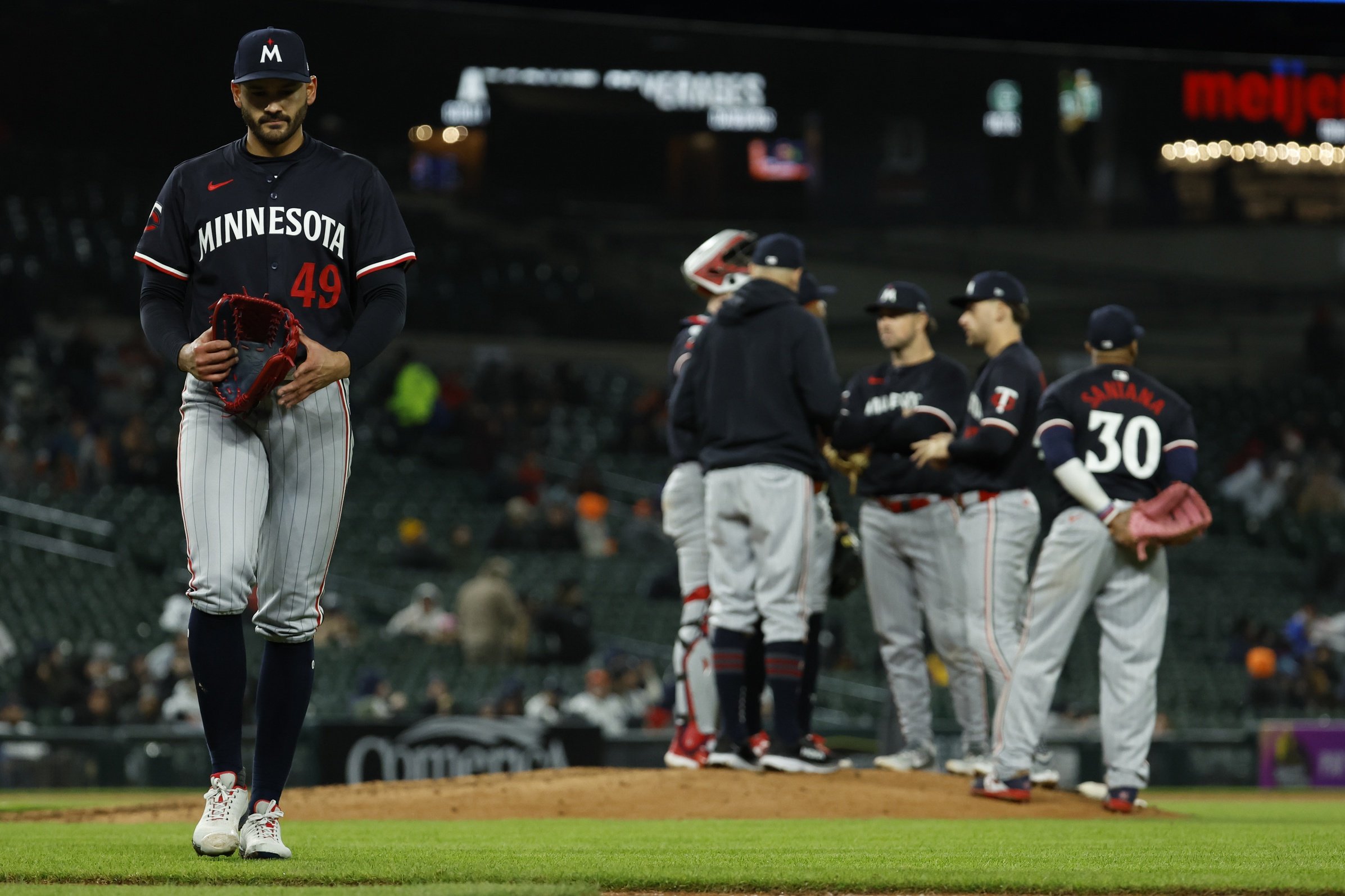 Box Score Pablo López: 4 IP, 6 H, 5 ER, 3 BB, 7 K Home Runs: None Bottom 3 WPA: Pablo López (-.180), Austin Martin (-.085), Carlos Correa (-.065) Win Probability Chart (via FanGraphs) One day wasn’t enough to wait before baseball could be played in Detroit; the previous day’s dampness rolled over and pushed back the game start about an hour. The beauty of April baseball in the Midwest. The weather affected all: neither starter was as sharp as usual, and Adam Beck, calling the game behind the plate, chose to read Gone With the Wind between deciding strikes. Pablo López caught the worst of it, though. He kicked off the game by allowing a solo homer to Mark Canha before only escaping the frame when Kerry Carpenter inexplicably attempted to go first-to-third on a hit aimed directly towards Byron Buxton. Kyle Farmer chose War And Peace to hold him over while waiting for the runner. That inning portended significant labor. Even the clean innings felt painful; a 1-2-3 scoreless 3rd needed 19 pitches. The dam finally broke when dinks, dunks, and a poorly placed fastball to Riley Greene suddenly bloated his earned run total for the day to five, pushing Rocco Baldelli to trudge to the mound and remove his ace. López’s off night would have meant more had Minnesota’s offense not remained impotent and unintimidating. They did an admiral job keeping Tarik Skubal inefficient, but the big bop never came. Even the hits were toothless; the pair of infield singles that stood as the only hits they had against Skubal could have just as easily been wiped from the ledger had Detroit’s defense been sharper. Michael Tonkin made his first appearance as a Twin since September 30th, 2017. He allowed a pair of runs and struck out five. The rest of the game was something that happened, I’m sure of it, but its existence rivaled muck and caused a deep glazing of the eyes. Both teams sleepwalked towards inevitability, only occasionally stopping for the rare notable side-show or added run. Willi Castro pitched once the game reached the proper MLB-state-approved run difference. Christian Vázquez played 3rd base. Eyes rolled. Mercifully, the game ended after a small 9th-inning skirmish made the beating a little less brutal. Carlos Correa exited the game with a right oblique strain. He is expected to hit the IL. Before he left, he was still able to make a fabulous diving play. Notes: Kyle Farmer earned his first hit of the season with a 9th-inning double down the 1st-base line. Michael Tonkin first played with the Twins in 2013. The closer for that team was Glen Perkins, who served as the color commentator for Friday's game. Minnesota's pitchers struck out 15 batters, their highest total of the year. Kody Funderburk's career ERA is now 0.98. Post-Game Interview: What’s Next? The Twins and Tigers will play a straight doubleheader on Saturday. Joe Ryan will start game 1, and Simeon Woods Richardson will serve as the 27th man and pitch in game 2. First pitch is at 12:10 PM. Second pitch will be 30 minutes after the end of game 1. Bullpen Usage Spreadsheet
- 49 comments
-
- 1
-
-
- pablo lopez
- carlos correa
- (and 3 more)
-
Rayne came over from the Dodgers along with Manuel Margot in exchange for Noah Miller.
- 9 replies
-
- 2
-
-
- rayne doncon
- simeon woods richardson
- (and 3 more)
-
Anyone know where to find some pitching? Image courtesy of William Parmeter (photo of Rayne Doncan) TRANSACTIONS LHP Aaron Rozek transferred to AAA St. Paul RHP Jeff Brigham placed on 7-day IL retroactive to April 6 with a left oblique strain (St. Paul) Saints Sentinel St. Paul 1, Nashville 8 Box Score Simeon Woods Richardson: 3 ⅓ IP, 7 H, 7 ER, 2 BB, 4 K HR: Will Holland (1) Multi-hit games: None Oh, if you could remove just one inning. Through three frames, Simeon Woods Richardson looked marvelous. He dazzled the Sounds with his overhand off-speed stuff, leading to a pair of strikeouts and a slate you could eat breakfast off. Everything appeared fine until the 4th went as follows: walk, single, strikeout, single, walk, double, single, double. Joe Gunkel was summoned to earn the final two outs. He allowed a home run. So it goes. That story would have been more painful had St. Paul’s offense been anything but dreadful, as it was on Sunday. Their lone run came when Will Holland plopped a fly ball into left field, inspiring Nashville’s Chavez Young to ungracefully slide around the ball as Holland dashed around the bases to score an inside-the-park home run—perhaps the most fitting score for a game like this. New Saint Diego A. Castillo went 0-for-3 in his second game with the squad. St. Paul’s bullpen combined for 4 2/3 quality innings of relief, striking out five without a walk. Tyler Black—the 43rd prospect in baseball and 4th-best player in Milwaukee’s farm system—went 1-for-4 while scoring a run. WIND SURGE WISDOM Wichita 8, Frisco 12 Box Score Pierson Ohl: 5 IP, 5 H, 2 ER, 1 BB, 4 K HR: Kala’i Rosario (2), Noah Cardenas (1) Multi-hit games: Tanner Schobel (2-for-3, R, 2 BB), Andrew Cossetti (2-for-4, R, RBI), Carson McCusker (3-for-4, 2 2B, 2 R) The Wind Surge lost a wild one on Sunday. If you tuned in at the start of the 2nd inning and left following the 6th, you’d probably think this was the most boring game of baseball ever played; assorted walks and hits scattered to give those frames some noise, but the action never grew beyond pianissimo, as the pitchers kept everything in order. Outside of those frames? Hell. Pure chaos. The kind of mayhem that drives a manager crazy. Frisco kicked off the game with a three-spot in the 1st, only to be doubled in effort by the Wind Surge, who plated six before their half of the inning ended. Kala’i Rosario stroked his second three-run shot of the season. Noah Cardenas drove one out to right. All appeared settled. And so it was, for a time; Pierson Ohl regained his composure and fended off the Rough Riders for four more frames, eventually walking away with just one hit allowed beyond his nightmare opening inning. Frisco did the same, keeping Wichita at bay during the middle innings. Then, the 7th. The dam broke. Frisco plated two, then scored two more in the 8th, and finally capped their onslaught with a drumming of Wichita’s Miguel Rodriguez in the 9th, handing him a 135.00 ERA to start his season (that is not a typo). The Wind Surge did claim a small lead when Frisco played hot potato with the baseball in the 8th, but they could not overcome their late mistakes. Abimelec Ortiz claims the title as Frisco’s best prospect. The man ranked 12th in the Rangers’ system by MLB Pipeline went 2-for-4 with three RBIs and a walk. KERNELS NUGGETS Mother nature objected to a second relevant Iowa sporting event on Sunday, leaving the Kernels sopping and baseball-less. Their game will be made up as part of a doubleheader on Saturday, April 27th. MUSSEL MATTERS Fort Myers 5, Tampa 2 Box Score Tanner Hall: 1 IP, 2 H, 2 ER, 1 BB, 2 K HR: Rayne Doncon (1) Multi-hit games: Byron Chourio (2-for-4, 2 R, RBI), Rayne Doncon (2-for-4, HR, 2B, R, 3 RBI), Wilfri Castro (2-for-3, 2B, R, RBI) The Mighty Mussels breezed to a victory on Sunday. It did not start pleasantly. Starter Tanner Hall walked Tampa’s lead-off man, George Lombard Jr. (now that’s a baseball name), and watched him reach third base on a botched throw attempt to halt his steal attempt. He scored two batters later. Another run scored when Dylan Jasso tripled to right. Hall’s day concluded at the end of the frame—and the Mighty Mussels needed to respond quickly. They did just that. Byron Chourio smacked a single to center before Rayne Doncon's big, twitchy bat summoned him home on Fort Myers’ first homer of the season. That 0-2 hanger begat a 98.9 MPH, 388-foot shot for Doncon. The lead only increased from there: Wilfri Castro poked a double down the left-field line to give the Mighty Mussels the lead, and Chourio singled him home to stretch the advantage to two. Doncon’s second extra-base hit of the day gave Fort Myers a three-run cushion, more than enough to support their pitching on Sunday. Paulshawn Pasqualotto (I take it back; now that is a baseball name) spearheaded the effort on the mound with five clean innings of relief. The Cal Berkeley product made his pro debut, fanning three and topping out at 95.9 MPH while throwing nearly as many changeups as heaters. He earned eight total swings-and-misses. Tampa is led by Roderick Arias, the Yankees’ third-best prospect and the 81st highest-rated prospect in baseball, according to MLB Pipeline. The second baseman went 0-4 with three strikeouts. TWINS DAILY PLAYERS OF THE DAY Twins Daily Minor League Pitcher of the Day – Paulshawn Pasqualotto Twins Daily Minor League Hitter of the Day – Rayne Doncon PROSPECT SUMMARY Here’s a look at how the Twins Daily Top 20 Twins Prospects performed: #3 - Emmanuel Rodriguez (Wichita) - 0-3, R, 2 BB, K #10 - Brandon Winokur (Fort Myers) - 1-3, BB, 2 K #11 - Tanner Schobel (Wichita) - 2-3, R, 2 BB, K #13 - Kala’i Rosario (Wichita) - 1-5, HR, R, 3 RBI, 3 K #16 - Yunior Severino (St. Paul) - 0-2, BB #20 - Simeon Woods Richardson (St. Paul) - 3 ⅓ IP, 7 H, 7 ER, 2 BB, 4 K TUESDAY’S PROBABLE STARTERS Iowa @ St. Paul (4:07 PM) - RHP Caleb Boushley Wichita @ Springfield (6:35 PM) - TBD Dayton @ Cedar Rapids (6:35 PM) - TBD Fort Myers @ Clearwater (5:30 PM) - LHP Cesar Lares View full article
- 9 replies
-
- 1
-
-
- rayne doncon
- simeon woods richardson
- (and 3 more)
-
Minor League Report (4/7): Rayne Doncon Redeems a Strange Day on the Farm
Matt Braun posted an article in Twins
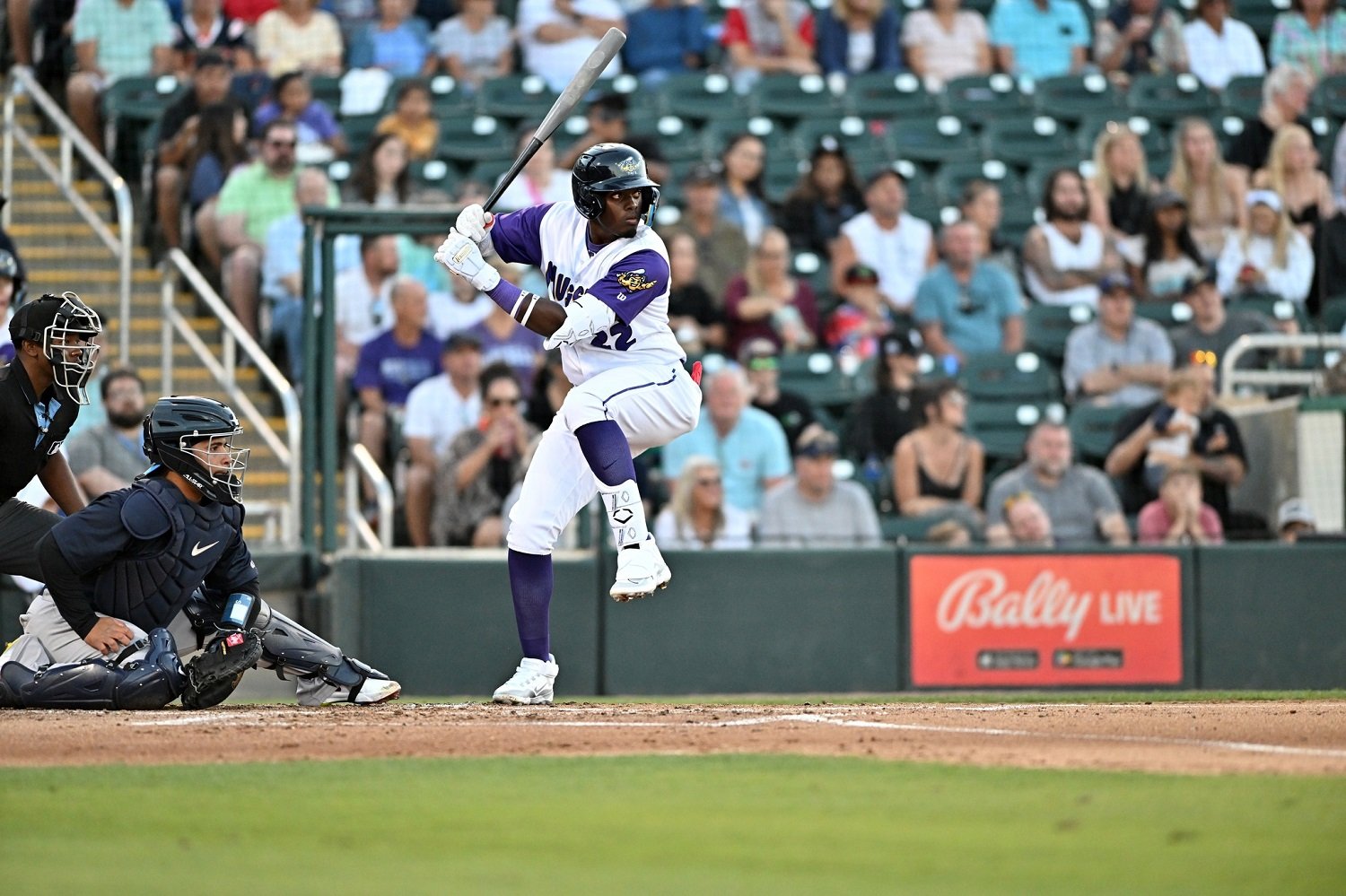 TRANSACTIONS LHP Aaron Rozek transferred to AAA St. Paul RHP Jeff Brigham placed on 7-day IL retroactive to April 6 with a left oblique strain (St. Paul) Saints Sentinel St. Paul 1, Nashville 8 Box Score Simeon Woods Richardson: 3 ⅓ IP, 7 H, 7 ER, 2 BB, 4 K HR: Will Holland (1) Multi-hit games: None Oh, if you could remove just one inning. Through three frames, Simeon Woods Richardson looked marvelous. He dazzled the Sounds with his overhand off-speed stuff, leading to a pair of strikeouts and a slate you could eat breakfast off. Everything appeared fine until the 4th went as follows: walk, single, strikeout, single, walk, double, single, double. Joe Gunkel was summoned to earn the final two outs. He allowed a home run. So it goes. That story would have been more painful had St. Paul’s offense been anything but dreadful, as it was on Sunday. Their lone run came when Will Holland plopped a fly ball into left field, inspiring Nashville’s Chavez Young to ungracefully slide around the ball as Holland dashed around the bases to score an inside-the-park home run—perhaps the most fitting score for a game like this. New Saint Diego A. Castillo went 0-for-3 in his second game with the squad. St. Paul’s bullpen combined for 4 2/3 quality innings of relief, striking out five without a walk. Tyler Black—the 43rd prospect in baseball and 4th-best player in Milwaukee’s farm system—went 1-for-4 while scoring a run. WIND SURGE WISDOM Wichita 8, Frisco 12 Box Score Pierson Ohl: 5 IP, 5 H, 2 ER, 1 BB, 4 K HR: Kala’i Rosario (2), Noah Cardenas (1) Multi-hit games: Tanner Schobel (2-for-3, R, 2 BB), Andrew Cossetti (2-for-4, R, RBI), Carson McCusker (3-for-4, 2 2B, 2 R) The Wind Surge lost a wild one on Sunday. If you tuned in at the start of the 2nd inning and left following the 6th, you’d probably think this was the most boring game of baseball ever played; assorted walks and hits scattered to give those frames some noise, but the action never grew beyond pianissimo, as the pitchers kept everything in order. Outside of those frames? Hell. Pure chaos. The kind of mayhem that drives a manager crazy. Frisco kicked off the game with a three-spot in the 1st, only to be doubled in effort by the Wind Surge, who plated six before their half of the inning ended. Kala’i Rosario stroked his second three-run shot of the season. Noah Cardenas drove one out to right. All appeared settled. And so it was, for a time; Pierson Ohl regained his composure and fended off the Rough Riders for four more frames, eventually walking away with just one hit allowed beyond his nightmare opening inning. Frisco did the same, keeping Wichita at bay during the middle innings. Then, the 7th. The dam broke. Frisco plated two, then scored two more in the 8th, and finally capped their onslaught with a drumming of Wichita’s Miguel Rodriguez in the 9th, handing him a 135.00 ERA to start his season (that is not a typo). The Wind Surge did claim a small lead when Frisco played hot potato with the baseball in the 8th, but they could not overcome their late mistakes. Abimelec Ortiz claims the title as Frisco’s best prospect. The man ranked 12th in the Rangers’ system by MLB Pipeline went 2-for-4 with three RBIs and a walk. KERNELS NUGGETS Mother nature objected to a second relevant Iowa sporting event on Sunday, leaving the Kernels sopping and baseball-less. Their game will be made up as part of a doubleheader on Saturday, April 27th. MUSSEL MATTERS Fort Myers 5, Tampa 2 Box Score Tanner Hall: 1 IP, 2 H, 2 ER, 1 BB, 2 K HR: Rayne Doncon (1) Multi-hit games: Byron Chourio (2-for-4, 2 R, RBI), Rayne Doncon (2-for-4, HR, 2B, R, 3 RBI), Wilfri Castro (2-for-3, 2B, R, RBI) The Mighty Mussels breezed to a victory on Sunday. It did not start pleasantly. Starter Tanner Hall walked Tampa’s lead-off man, George Lombard Jr. (now that’s a baseball name), and watched him reach third base on a botched throw attempt to halt his steal attempt. He scored two batters later. Another run scored when Dylan Jasso tripled to right. Hall’s day concluded at the end of the frame—and the Mighty Mussels needed to respond quickly. They did just that. Byron Chourio smacked a single to center before Rayne Doncon's big, twitchy bat summoned him home on Fort Myers’ first homer of the season. That 0-2 hanger begat a 98.9 MPH, 388-foot shot for Doncon. The lead only increased from there: Wilfri Castro poked a double down the left-field line to give the Mighty Mussels the lead, and Chourio singled him home to stretch the advantage to two. Doncon’s second extra-base hit of the day gave Fort Myers a three-run cushion, more than enough to support their pitching on Sunday. Paulshawn Pasqualotto (I take it back; now that is a baseball name) spearheaded the effort on the mound with five clean innings of relief. The Cal Berkeley product made his pro debut, fanning three and topping out at 95.9 MPH while throwing nearly as many changeups as heaters. He earned eight total swings-and-misses. Tampa is led by Roderick Arias, the Yankees’ third-best prospect and the 81st highest-rated prospect in baseball, according to MLB Pipeline. The second baseman went 0-4 with three strikeouts. TWINS DAILY PLAYERS OF THE DAY Twins Daily Minor League Pitcher of the Day – Paulshawn Pasqualotto Twins Daily Minor League Hitter of the Day – Rayne Doncon PROSPECT SUMMARY Here’s a look at how the Twins Daily Top 20 Twins Prospects performed: #3 - Emmanuel Rodriguez (Wichita) - 0-3, R, 2 BB, K #10 - Brandon Winokur (Fort Myers) - 1-3, BB, 2 K #11 - Tanner Schobel (Wichita) - 2-3, R, 2 BB, K #13 - Kala’i Rosario (Wichita) - 1-5, HR, R, 3 RBI, 3 K #16 - Yunior Severino (St. Paul) - 0-2, BB #20 - Simeon Woods Richardson (St. Paul) - 3 ⅓ IP, 7 H, 7 ER, 2 BB, 4 K TUESDAY’S PROBABLE STARTERS Iowa @ St. Paul (4:07 PM) - RHP Caleb Boushley Wichita @ Springfield (6:35 PM) - TBD Dayton @ Cedar Rapids (6:35 PM) - TBD Fort Myers @ Clearwater (5:30 PM) - LHP Cesar Lares
- 9 comments
-
- 4
-
-

-
- rayne doncon
- simeon woods richardson
- (and 3 more)
-
Minor League Report (3/31): Yoyner Fajardo Calls Game
Matt Braun replied to Matt Braun's topic in Twins Minor League Talk
It wasn't misleading; it was true. St. Paul did not score just one run. Perhaps I believed describing it that way added a dramatic allure. -
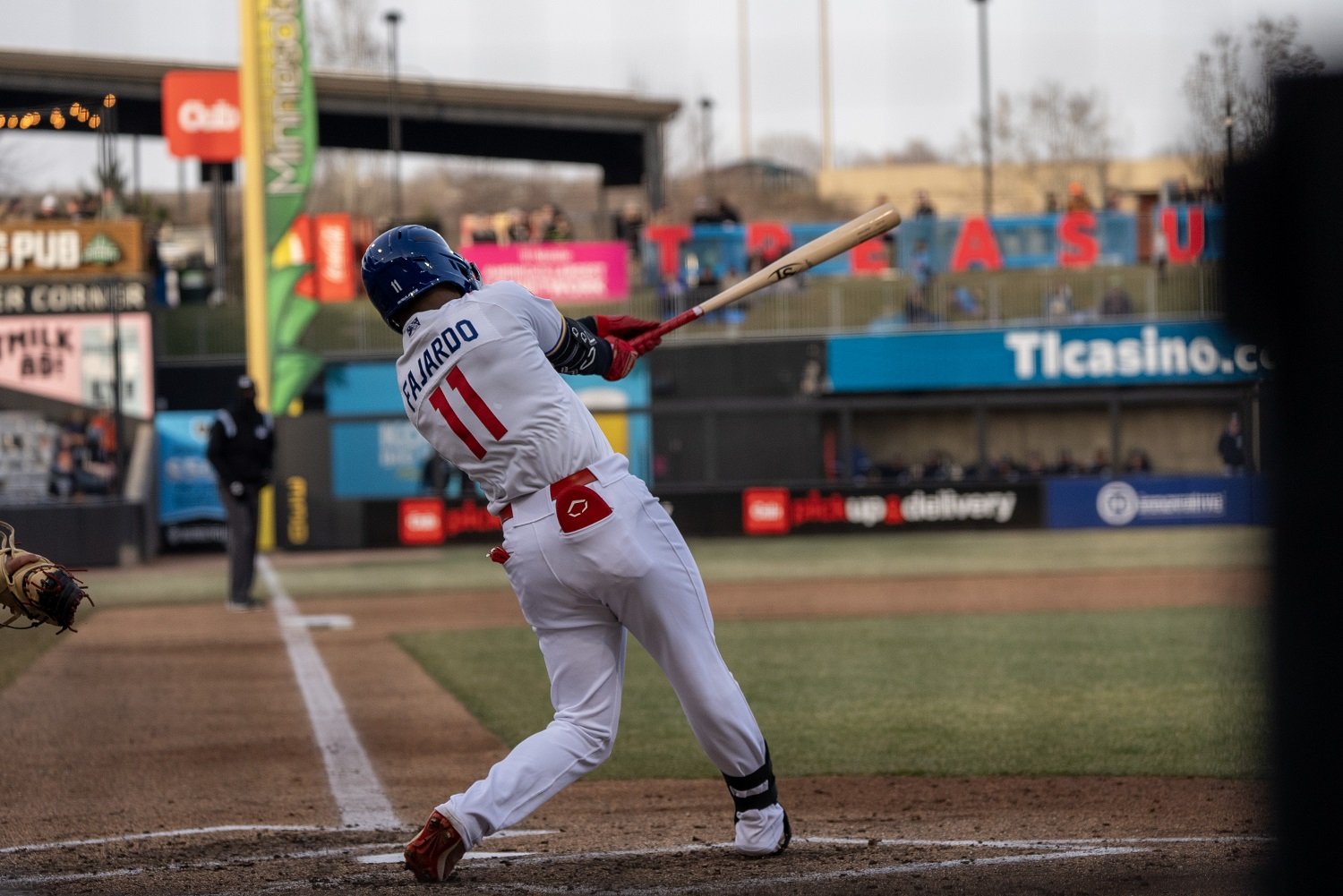 TRANSACTIONS There were no moves. Saints Sentinel St. Paul 5, Columbus 4 Box Score Brent Headrick: 3 ⅔ IP, 5 H, 2 ER, 0 BB, 8 K HR: None Multi-hit games: Anthony Prato (2-for-3, 2 R, 2 BB) Brent Headrick, the slender lefty, made his 2024 debut on Sunday. He faced trouble immediately. He allowed three hits in the opening frame but escaped without an earned run thanks to two fortunate outcomes: a double play split between the knocks and a ground-rule double called despite neither outfielder raising his arms in surrender. The decision removed a score. Now blessed with a fresh slate, Headrick dominated; eight of his 11 outs came via whiffs. He topped out at 93.8 and earned 12 swings-and-misses. His lone error was a two-run shot in the third. A critical part of Headrick's success? His breaking ball. "In the cold weather, the off-speed is important," he told our resident reporter, Theo Tollefson. "So seeing the slider [that the] was able to be in the zone and out of the zone where it needed to be was a positive." Perhaps fueled by Headrick’s tremendous effort, the rest of St. Paul’s pitchers on the day—an assortment of relievers mirroring the group needed by the parent club—combined to punch out 14 with two walks. One of those pitchers was a familiar name: Diego Castillo. The one-time dominant Ray inked a minor-league deal with the Twins on Saturday, and he reached the mound on Sunday. St. Paul’s equipment manager wastes no time. Castillo pitched a scoreless frame, topping out at 94.7 MPH. This four-paragraph ode to the Saints’ pitching staff offers thin protection for an ultimate truth: St. Paul’s bats were sluggish. They took four walks but failed to score outside of when DaShawn Keirsey Jr. flipped an RBI single into left in the 3rd inning. Until the 9th, that is. The seemingly magic frame that flips narratives and breathes life struck once again when the Saints—once presumed dead—rose to score the game-tying run. Anthony Prato singled. A wild pitch moved him to 2nd. A groundout sent him to 3rd. A sacrifice fly beckoned him home. The hero's journey in manufactured form. The game officially transitioned to Manfredball. The teams exchanged implied runs in the 10th before moving to the 11th. Columbus scored one more run. The Saints scored more. With the bases loaded and an 0-for-4 weighing on his conscience, Yoyner Fajardo swung at a lethargic cutter and smacked the pitch up the middle. José Tena dove to stop the ball. He didn’t. The adventure ended with Prato galloping around 3rd as Columbus’ centerfielder Lorenzo Cedrola never even bothered with a courtesy throw home. "He's a guy who's always going to give you a competitive at-bat," said Saints hitting coach Shawn Schlechter, "and we knew that even with the left-on-left matchup, he was a guy who could create some action by putting a ball in play. In those situations, we trust that he's going to grind out at-bats, and he's going to see pitches to move it forward." Columbus shortstop Juan Brito homered and drove in three in a 3-for-5 effort. He is Cleveland’s 7th-ranked prospect according to MLB pipeline. TWINS DAILY PLAYERS OF THE DAY Twins Daily Minor League Pitcher of the Day – Brent Headrick Twins Daily Minor League Hitter of the Day – Anthony Prato PROSPECT SUMMARY Here’s a look at how the Twins Daily Top 20 Twins Prospects performed: #16 - Yunior Severino (St. Paul) - 0-5. 3 K TUESDAY’S PROBABLE STARTERS St. Paul @ Nashville (6:35 PM) - RHP Simeon Woods Richardson
- 12 comments
-
- 6
-
-
- brent headrick
- diego castillo
- (and 3 more)
-
Really, it should be called "the St. Paul report." At least until next Friday. Image courtesy of Grayson Wolfe, Twins Daily TRANSACTIONS There were no moves. Saints Sentinel St. Paul 5, Columbus 4 Box Score Brent Headrick: 3 ⅔ IP, 5 H, 2 ER, 0 BB, 8 K HR: None Multi-hit games: Anthony Prato (2-for-3, 2 R, 2 BB) Brent Headrick, the slender lefty, made his 2024 debut on Sunday. He faced trouble immediately. He allowed three hits in the opening frame but escaped without an earned run thanks to two fortunate outcomes: a double play split between the knocks and a ground-rule double called despite neither outfielder raising his arms in surrender. The decision removed a score. Now blessed with a fresh slate, Headrick dominated; eight of his 11 outs came via whiffs. He topped out at 93.8 and earned 12 swings-and-misses. His lone error was a two-run shot in the third. A critical part of Headrick's success? His breaking ball. "In the cold weather, the off-speed is important," he told our resident reporter, Theo Tollefson. "So seeing the slider [that the] was able to be in the zone and out of the zone where it needed to be was a positive." Perhaps fueled by Headrick’s tremendous effort, the rest of St. Paul’s pitchers on the day—an assortment of relievers mirroring the group needed by the parent club—combined to punch out 14 with two walks. One of those pitchers was a familiar name: Diego Castillo. The one-time dominant Ray inked a minor-league deal with the Twins on Saturday, and he reached the mound on Sunday. St. Paul’s equipment manager wastes no time. Castillo pitched a scoreless frame, topping out at 94.7 MPH. This four-paragraph ode to the Saints’ pitching staff offers thin protection for an ultimate truth: St. Paul’s bats were sluggish. They took four walks but failed to score outside of when DaShawn Keirsey Jr. flipped an RBI single into left in the 3rd inning. Until the 9th, that is. The seemingly magic frame that flips narratives and breathes life struck once again when the Saints—once presumed dead—rose to score the game-tying run. Anthony Prato singled. A wild pitch moved him to 2nd. A groundout sent him to 3rd. A sacrifice fly beckoned him home. The hero's journey in manufactured form. The game officially transitioned to Manfredball. The teams exchanged implied runs in the 10th before moving to the 11th. Columbus scored one more run. The Saints scored more. With the bases loaded and an 0-for-4 weighing on his conscience, Yoyner Fajardo swung at a lethargic cutter and smacked the pitch up the middle. José Tena dove to stop the ball. He didn’t. The adventure ended with Prato galloping around 3rd as Columbus’ centerfielder Lorenzo Cedrola never even bothered with a courtesy throw home. "He's a guy who's always going to give you a competitive at-bat," said Saints hitting coach Shawn Schlechter, "and we knew that even with the left-on-left matchup, he was a guy who could create some action by putting a ball in play. In those situations, we trust that he's going to grind out at-bats, and he's going to see pitches to move it forward." Columbus shortstop Juan Brito homered and drove in three in a 3-for-5 effort. He is Cleveland’s 7th-ranked prospect according to MLB pipeline. TWINS DAILY PLAYERS OF THE DAY Twins Daily Minor League Pitcher of the Day – Brent Headrick Twins Daily Minor League Hitter of the Day – Anthony Prato PROSPECT SUMMARY Here’s a look at how the Twins Daily Top 20 Twins Prospects performed: #16 - Yunior Severino (St. Paul) - 0-5. 3 K TUESDAY’S PROBABLE STARTERS St. Paul @ Nashville (6:35 PM) - RHP Simeon Woods Richardson View full article
- 12 replies
-
- 1
-
-
- brent headrick
- diego castillo
- (and 3 more)
-
I'm quite impressed with Cole Ragans. I think KC found a good one there. Liked to see Correa lining the ball all over the field, as well. Hoping Royce is ok!
-
Corey Seager? The 6'4" Corey Seager who OPS'd .915 at AA at the same age Noah Miller did .648 at A+?
- 246 replies
-
- 12
-

-
-
-
- noah miller
- manuel margot
- (and 1 more)
-
Pablo López is an Outlier Among Modern MLB Starters
Matt Braun replied to Matt Braun's topic in Twins Daily Front Page News
This is an excellent question. I wish I had more expertise to better answer it. My *guess* would be the access to American colleges makes a world of difference. Players entering from the collegiate level have three years of competition at a fairly high level and teaching at institutions that honestly may be better than MLB franchises in some respects. That’s a hell of a head start. Hard to beat that. -
The Minnesota Twins' ace is an extremely rare breed. Just how so may surprise you. Image courtesy of © Erik Williams-USA TODAY Sports Pablo López’s 2023 was outstanding. This site has spent most of the offseason interrogating his numbers to tell you just that. Indeed, his 3.33 FIP and relatively impressive bulk of consumed innings netted him 4.5 fWAR—the 10th-best in MLB among starting pitchers. Zach Eflin, a former 1st-round pick from the Padres, was ahead of him, and George Kirby, Seattle’s 1st-round selection from 2019, slotted in right behind him. And—to finally clarify where any of this is going—the 12th-ranked starting pitcher was Framber Valdez, the only other starter in the top 15 to be an international free agent signing. Quietly, international amateurs rarely become quality major-league starters. This isn’t a new phenomenon. Ten years ago, the great Félix Hernández dominated pitching leaderboards, with José Quintana not far behind him and Julio Teherán and Ervin Santana farther down. Over the last 10 years—excluding 2020—49 individual seasons ending in a top-30 starting pitcher fWAR season were accomplished by a pitcher signed as an international amateur, meaning they made up about 16.3 percent of those leaderboards. In 2018, the share dipped as low as 10 percent (three of the top 30), with a handful of years clocking in at 20 percent, the highwater mark over this time. Position players, though? International free agents have accounted for 67 individual leaderboard-worthy seasons, or 22.3 percent of the total. Last season crushed any year put forth by pitchers, with 10 different international players accruing enough fWAR to make the top 30. That’s ⅓ of the list! So, what’s happening here? Why is it that every year, there seems to be a new Juan Soto or Fernando Tatis Jr. fighting for MVP votes (get ready for Jackson Chourio, very soon!), while Sandy Alcántara essentially serves as the lone international superstar in recent years to claim the rubber as the place to showcase his craft? Part of it is the result of an axiom anyone who played Little League knows about: the best athletes play shortstop or center field. Hell, Minnesota’s top two international signings just a month ago—Daibel De Los Santos and Eduardo Beltre—call those positions home. Miguel Sanó was initially announced as a shortstop when he signed (although no one really believed that he would stay there). If you’re good enough to get major-league talent evaluators to care about you, you’re probably playing at either of those premium positions. There’s more to it, though: the issue is one of resources and organizational decision-making influenced by the Rule 5 draft disproportionately affecting international players. This was something touched on in a previous piece about Johan Santana. Teams only have a few years (typically five, for young international players) before they can choose their role in a player’s future: do they place trust in them and use one of their few, precious 40-man spots on a potential that may never come; or do they cut their losses and move on? Minnesota—and Santana, for that matter—reaped the benefits of Houston doubting him, thanks to the Twins teams of that era not being particularly good, but a competing team can’t afford the same risk. They’re more likely to cut bait. Or, instead, move them to the bullpen. Indeed, international pitchers aren’t disappearing; they just enter later in the game. Teams would rather see some return on their investment, after all, and relievers have a better chance of sticking around than starters. An astronomical 27 percent of top-30 relief seasons over the past 10 years are from international amateurs, with guys like Aroldis Chapman and Kenley Jansen showing up perennially. That number has shot up to 37 percent over the last two seasons (although the missed COVID year also probably feeds into that.) It’s a tough life for an international pitcher. At around the same age when collegiate pitchers are a year or two into their careers, they enter a brutal fork in the road, where—if there’s any doubt in their ability to stay a starter—the overwhelming odds point towards a move to the bullpen. Eric Longenhagen broke this problem down to its most granular studs. López’s imminent need to be added to the 40-man likely pushed Seattle to deal him away at the trade deadline in 2017. Again, a not-good team (Miami) could afford the risk, and they saw him develop into a solid starter before shipping him off to Minnesota. That’s the good outcome; Pablo is probably a regular in the Mariners pen in most universes. Perhaps a move back to the pre-2006 Rule 5 eligibility could cut down on the unnecessary shuffling, where teams move international pitchers with extreme recklessness. Their timelines don’t work. Outside of the freaks and phenoms like Félix (or even Pablo, to a degree), the current pipeline sends these arms straight to the bullpen without much of a chance to make it as a starter. MLB needs to extend them a lifeline—or give them more time to develop. View full article
-
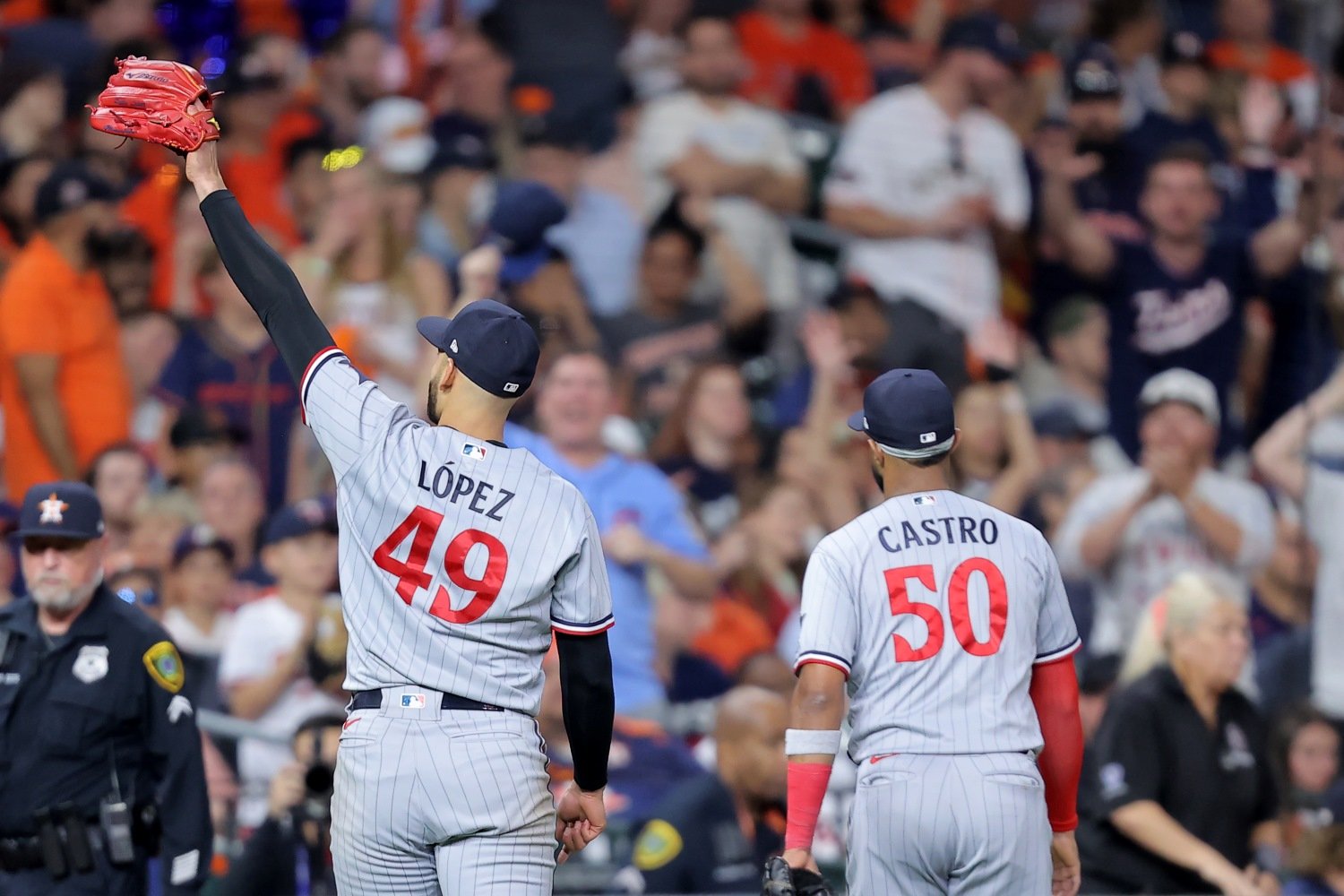 Pablo López’s 2023 was outstanding. This site has spent most of the offseason interrogating his numbers to tell you just that. Indeed, his 3.33 FIP and relatively impressive bulk of consumed innings netted him 4.5 fWAR—the 10th-best in MLB among starting pitchers. Zach Eflin, a former 1st-round pick from the Padres, was ahead of him, and George Kirby, Seattle’s 1st-round selection from 2019, slotted in right behind him. And—to finally clarify where any of this is going—the 12th-ranked starting pitcher was Framber Valdez, the only other starter in the top 15 to be an international free agent signing. Quietly, international amateurs rarely become quality major-league starters. This isn’t a new phenomenon. Ten years ago, the great Félix Hernández dominated pitching leaderboards, with José Quintana not far behind him and Julio Teherán and Ervin Santana farther down. Over the last 10 years—excluding 2020—49 individual seasons ending in a top-30 starting pitcher fWAR season were accomplished by a pitcher signed as an international amateur, meaning they made up about 16.3 percent of those leaderboards. In 2018, the share dipped as low as 10 percent (three of the top 30), with a handful of years clocking in at 20 percent, the highwater mark over this time. Position players, though? International free agents have accounted for 67 individual leaderboard-worthy seasons, or 22.3 percent of the total. Last season crushed any year put forth by pitchers, with 10 different international players accruing enough fWAR to make the top 30. That’s ⅓ of the list! So, what’s happening here? Why is it that every year, there seems to be a new Juan Soto or Fernando Tatis Jr. fighting for MVP votes (get ready for Jackson Chourio, very soon!), while Sandy Alcántara essentially serves as the lone international superstar in recent years to claim the rubber as the place to showcase his craft? Part of it is the result of an axiom anyone who played Little League knows about: the best athletes play shortstop or center field. Hell, Minnesota’s top two international signings just a month ago—Daibel De Los Santos and Eduardo Beltre—call those positions home. Miguel Sanó was initially announced as a shortstop when he signed (although no one really believed that he would stay there). If you’re good enough to get major-league talent evaluators to care about you, you’re probably playing at either of those premium positions. There’s more to it, though: the issue is one of resources and organizational decision-making influenced by the Rule 5 draft disproportionately affecting international players. This was something touched on in a previous piece about Johan Santana. Teams only have a few years (typically five, for young international players) before they can choose their role in a player’s future: do they place trust in them and use one of their few, precious 40-man spots on a potential that may never come; or do they cut their losses and move on? Minnesota—and Santana, for that matter—reaped the benefits of Houston doubting him, thanks to the Twins teams of that era not being particularly good, but a competing team can’t afford the same risk. They’re more likely to cut bait. Or, instead, move them to the bullpen. Indeed, international pitchers aren’t disappearing; they just enter later in the game. Teams would rather see some return on their investment, after all, and relievers have a better chance of sticking around than starters. An astronomical 27 percent of top-30 relief seasons over the past 10 years are from international amateurs, with guys like Aroldis Chapman and Kenley Jansen showing up perennially. That number has shot up to 37 percent over the last two seasons (although the missed COVID year also probably feeds into that.) It’s a tough life for an international pitcher. At around the same age when collegiate pitchers are a year or two into their careers, they enter a brutal fork in the road, where—if there’s any doubt in their ability to stay a starter—the overwhelming odds point towards a move to the bullpen. Eric Longenhagen broke this problem down to its most granular studs. López’s imminent need to be added to the 40-man likely pushed Seattle to deal him away at the trade deadline in 2017. Again, a not-good team (Miami) could afford the risk, and they saw him develop into a solid starter before shipping him off to Minnesota. That’s the good outcome; Pablo is probably a regular in the Mariners pen in most universes. Perhaps a move back to the pre-2006 Rule 5 eligibility could cut down on the unnecessary shuffling, where teams move international pitchers with extreme recklessness. Their timelines don’t work. Outside of the freaks and phenoms like Félix (or even Pablo, to a degree), the current pipeline sends these arms straight to the bullpen without much of a chance to make it as a starter. MLB needs to extend them a lifeline—or give them more time to develop.
- 8 comments
-
- 8
-
-
-
- pablo lopez
- ervin santana
- (and 3 more)
-
And I think the pivot into this direction has less to do with copying the Rays, but, rather, seeing the dearth of quality starting pitching available, and deciding mashing together frames like a Frankenstein's monster pitching staff is way smarter than handing almost $20 million a year to Lucas Giolito.
- 36 replies
-
- 12
-
-
-
Minnesota Twins 2024 PECOTA Projections: The Hitters
Matt Braun replied to Matt Braun's topic in Twins Daily Front Page News
Jeffers is a tough one because his batted ball only improved slightly and actually downgraded as far as barrel rate goes. I think skepticism around the BABIP spike is warranted, but his raw power likely keeps him around league average as a hitter, perhaps a little better.- 11 replies
-
- 1
-
-
- emmanuel rodriguez
- royce lewis
- (and 3 more)
-
What does Baseball Prospectus’s flagship projection system think of Minnesota’s batters? Image courtesy of © John Leyba-USA TODAY Sports Yesterday, we looked at the projections for the men who will toe the rubber for the Twins in 2024. Today, we’ll analyze the hitting side of things. I’ve chosen to use DRC+ as the sole hitting metric, simply because it’s the cleanest one Baseball Prospectus offers, and lord knows no one wants to read a table bigger than it should be. If you want a rundown on what exactly that stat means, click here. I’ve added the top comps for each player, mainly because I find the exercise fun. They’re based specifically on age, so Carlos Correa’s Jim Fregosi comp—sorry, spoilers—relates to Correa moving into his age-29 season compared to Fregosi’s career up to that point. Also, don’t take them too seriously. Some comps are way closer than others, and just because someone is likened to another player doesn’t mean they’re cursed with the weight of mimicking their career. Anyway, on to the projections: Nothing is too shocking here. Royce Lewis gets a much heartier projection than last year, thanks to his increased sample of dominance. He’s the 72nd-best position player in the league, which is incredibly impressive considering that systems like PECOTA are typically suspicious of players with a limited history of crushing the ball. It’s hard to fake that kind of power, though. Edouard Julien is an interesting case. Robert Orr laid out in a piece a few days ago that PECOTA will naturally be skeptical of a young player striking out at a 30+% clip while BABIPing .370, regardless of their contact quality. It’s certainly possible that that’s simply how his game works—and his plate discipline is legit, buoying his profile—but projection systems need to see more before they begin to give a guy like him the benefit of the doubt. Consider him a tough one to figure. Perhaps the most shocking result is that Emmanuel Rodriguez, despite only reaching High-A in 2023, is projected to hold his own at the major-league level. Holding a .400 OBP over 99 games in a tough hitting environment obviously impressed the computer. That comp got a chuckle out of me, too. Speaking of comps: I wasn’t expecting Carlos Santana’s to send me on a history trip like that. Earl Torgeson was a very good player, though, and one of the best the state of Washington ever bore. Finally, I didn’t put him on the table, but Brooks Lee was way, way down the list, somewhere in the 1,000s. I think projecting anything solely based on minor-league stats can yield some goofy results. Still, perhaps his performance so far deserves more scrutiny than we’re giving it. Or maybe not. We’ll earn a better understanding of him as a player once he sees playing time in the majors—which could come as soon as this season. If you would like to see any of this PECOTA stuff yourself, consider heading over to Baseball Prospectus's website to subscribe and read some of the best baseball writing in the business. Their alumni include Brandon Warne and Aaron Gleeman, and our editor, Matthew Trueblood, writes pieces for them as well. No one told me to write this; I truly believe they are one the best resources for analytical and creative baseball thinking currently in operation. What are your reactions to these projections for the Twins offense? Which ones jump out? Where do you disagree with PECOTA. Weigh in below. View full article
-
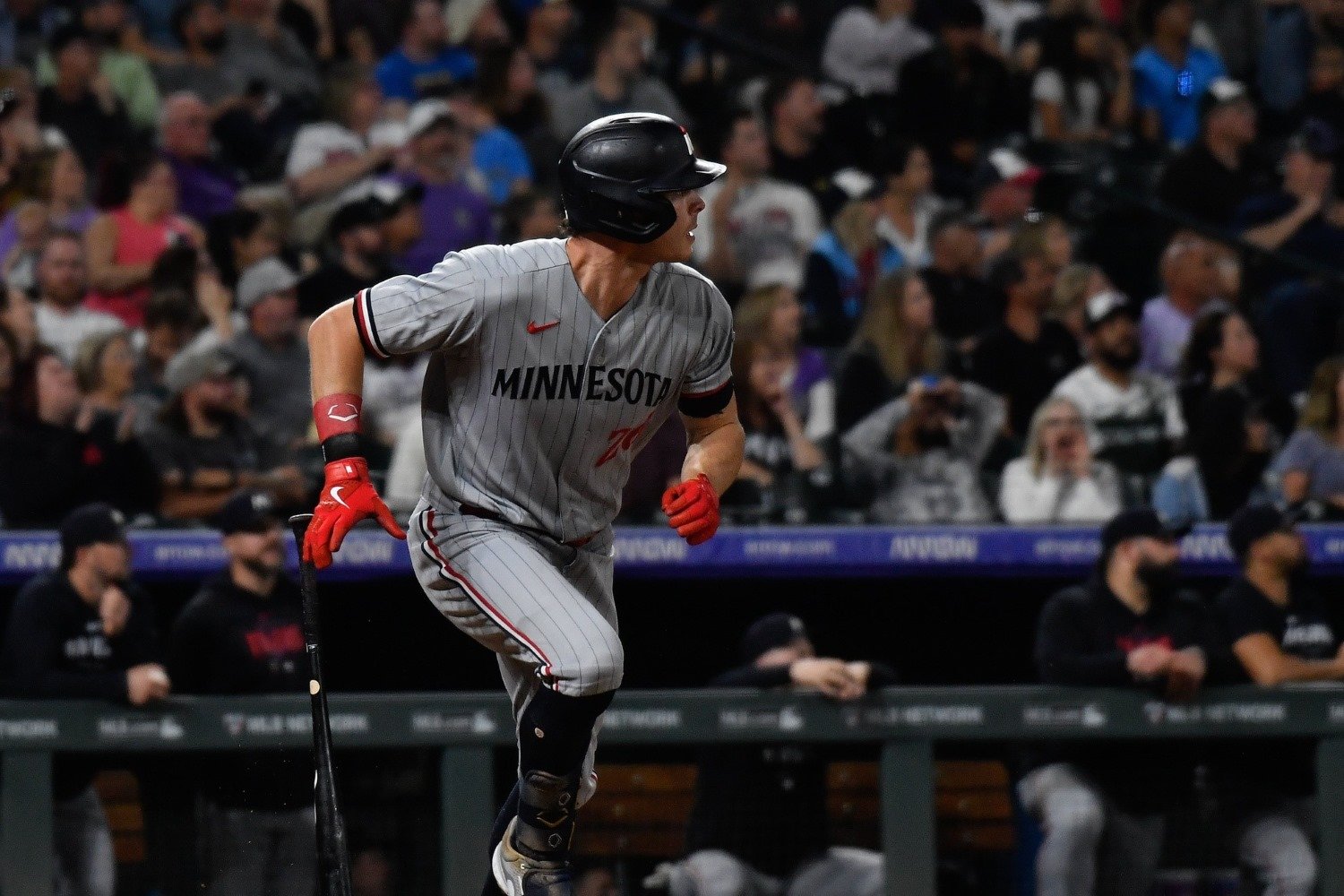 Yesterday, we looked at the projections for the men who will toe the rubber for the Twins in 2024. Today, we’ll analyze the hitting side of things. I’ve chosen to use DRC+ as the sole hitting metric, simply because it’s the cleanest one Baseball Prospectus offers, and lord knows no one wants to read a table bigger than it should be. If you want a rundown on what exactly that stat means, click here. I’ve added the top comps for each player, mainly because I find the exercise fun. They’re based specifically on age, so Carlos Correa’s Jim Fregosi comp—sorry, spoilers—relates to Correa moving into his age-29 season compared to Fregosi’s career up to that point. Also, don’t take them too seriously. Some comps are way closer than others, and just because someone is likened to another player doesn’t mean they’re cursed with the weight of mimicking their career. Anyway, on to the projections: Nothing is too shocking here. Royce Lewis gets a much heartier projection than last year, thanks to his increased sample of dominance. He’s the 72nd-best position player in the league, which is incredibly impressive considering that systems like PECOTA are typically suspicious of players with a limited history of crushing the ball. It’s hard to fake that kind of power, though. Edouard Julien is an interesting case. Robert Orr laid out in a piece a few days ago that PECOTA will naturally be skeptical of a young player striking out at a 30+% clip while BABIPing .370, regardless of their contact quality. It’s certainly possible that that’s simply how his game works—and his plate discipline is legit, buoying his profile—but projection systems need to see more before they begin to give a guy like him the benefit of the doubt. Consider him a tough one to figure. Perhaps the most shocking result is that Emmanuel Rodriguez, despite only reaching High-A in 2023, is projected to hold his own at the major-league level. Holding a .400 OBP over 99 games in a tough hitting environment obviously impressed the computer. That comp got a chuckle out of me, too. Speaking of comps: I wasn’t expecting Carlos Santana’s to send me on a history trip like that. Earl Torgeson was a very good player, though, and one of the best the state of Washington ever bore. Finally, I didn’t put him on the table, but Brooks Lee was way, way down the list, somewhere in the 1,000s. I think projecting anything solely based on minor-league stats can yield some goofy results. Still, perhaps his performance so far deserves more scrutiny than we’re giving it. Or maybe not. We’ll earn a better understanding of him as a player once he sees playing time in the majors—which could come as soon as this season. If you would like to see any of this PECOTA stuff yourself, consider heading over to Baseball Prospectus's website to subscribe and read some of the best baseball writing in the business. Their alumni include Brandon Warne and Aaron Gleeman, and our editor, Matthew Trueblood, writes pieces for them as well. No one told me to write this; I truly believe they are one the best resources for analytical and creative baseball thinking currently in operation. What are your reactions to these projections for the Twins offense? Which ones jump out? Where do you disagree with PECOTA. Weigh in below.
- 11 comments
-
- 3
-
-
- emmanuel rodriguez
- royce lewis
- (and 3 more)
-
Minnesota Twins PECOTA Projections: The Pitchers
Matt Braun replied to Matt Braun's topic in Twins Daily Front Page News
I'm glad you mentioned Rick Wise because there's an important caveat I should have mentioned with the comps: they're all based on age. So when you see "Rick Wise," PECOTA isn't talking about the All-Star, but rather, the mid-30s Wise who was useful but certainly not the guy he was a few years prior.- 19 replies
-
- 4
-
-
- pablo lopez
- joe ryan
- (and 3 more)
-
Minnesota Twins PECOTA Projections: The Pitchers
Matt Braun replied to Matt Braun's topic in Twins Daily Front Page News
I don't know. I think the trouble is that Funderburk has options remaining, and projection systems have no idea what to do with a guy who isn't firmly entrenched in the roster. It's probably assuming that Thielbar and Okert will net the lion's share of lefty innings.- 19 replies
-
- 8
-
-
- pablo lopez
- joe ryan
- (and 3 more)
-
Minnesota Twins PECOTA Projections: The Pitchers
Matt Braun replied to Matt Braun's topic in Twins Daily Front Page News
For number 2: Canterino is projected for about 25 innings, and Funderburk is at 29. Kody's projected ERA and FIP are quite good (3.91 and 3.82), so, yes, their totals are related to innings.- 19 replies
-
- 3
-
-
- pablo lopez
- joe ryan
- (and 3 more)
-
What does Baseball Prospectus’s flagship projection system think of Minnesota’s hurlers? Image courtesy of © Tommy Gilligan-USA TODAY Sports The end of the Super Bowl means two things: pitchers and catchers reporting to spring training, and projection season. Teams are finished touching up their roster (sans a notable quartet of free agents still available), allowing our not-quite-yet robot overlords to offer their opinions on each squad. I previously reviewed PECOTA’s predictions for the 2023 team here, and the articles about the pitching and hitting projections can be found here and here, respectively, along with a short description of what any of this is. Let’s wait no more, here are Minnesota’s top 12 projected pitchers. (Other notable projected pitchers include Kody Funderburk (0.3 WARP), Jay Jackson (0.2), and Matt Canterino (0.2).) Edit: I also forgot that Steven Okert shows up as a Marlin in the spreadsheet; his projection is a 3.94 ERA, a 4.11 FIP, and 0.5 WARP. That Pablo López comes in as the best pitcher on the team is no surprise; PECOTA pegged him as a top-tier arm last year, and he only reinforced the system's confidence with his best all-around year to date. PECOTA only sees 10 other pitchers accruing more WARP in 2024. Then, Joe Ryan. Man, PECOTA loves Joe Ryan. He had an eyebrow-raisingly high projection heading into 2022, and ranked solidly last year. It’s hard not to love his ability to combine an elite strikeout rate with an abnormally low walk rate; projections eat that skillset up. I think his relatively new home run problem gives the computer hope that it’s a fluke, not a sudden slide into late-career Bert Blyleven “all systems go” territory. Bailey Ober rounds out the trio that, according to PECOTA, gives the Twins three of the 40 best pitchers in MLB. Yet again, projections love guys who can whiff hitters while keeping the walks low—and Ober’s increased workload in 2023 increased confidence in him staying healthy moving forward. Jhoan Durán earns the best projection among all MLB relievers. His odd command downslide in 2023 did not portend disaster: he still struck out everyone and their mother and upped his groundball rate to 65.9%. Much like low walk rates, projection systems adore pitchers able to induce grounders at an elevated clip. When matched with elite strikeout production, few other relief arms can touch Durán. The last thing I want to touch on is the two final arms. Dan Szymborski talked about the Brock Stewart conundrum in his piece here, in which he explains the deviation surrounding Stewart has to do with sample size: how can you project a 32-year-old who missed three MLB seasons, entered the year with a negative career WAR, and then mowed down guys like prime Joe Nathan? Simple: assume regression. Now, Szymborski points out that Stewart’s underlying numbers—mainly a 20% swinging-strike rate on all pitches and a 60.6% contact rate on swings—are hard to fake, giving legitimate credence to his success. Still, it’s going to take a few years for any projection system to believe in him. (You can essentially say the same thing about Justin Topa, who didn’t shed rookie eligibility until his age-32 (!!!) season. How do you project something that almost never happens?) Everything passes the smell test here. Minnesota’s big three look solid, but their back-end depth is a little scary, and the sleeping dragon nestled in the back of their bullpen should drive what appears to be a deep unit. If you would like to see any of this PECOTA stuff yourself, consider heading over to Baseball Prospectus's website to subscribe and read some of the best baseball writing in the business. Their alumni include Brandon Warne and Aaron Gleeman, and our editor, Matthew Trueblood, writes pieces for them as well. No one told me to write this; I truly believe they are one the best resources for analytical and creative baseball thinking currently in operation. What stands out most to you in these projections? Where would you place more faith, or less? Spark a discussion in the comments, below. View full article
-
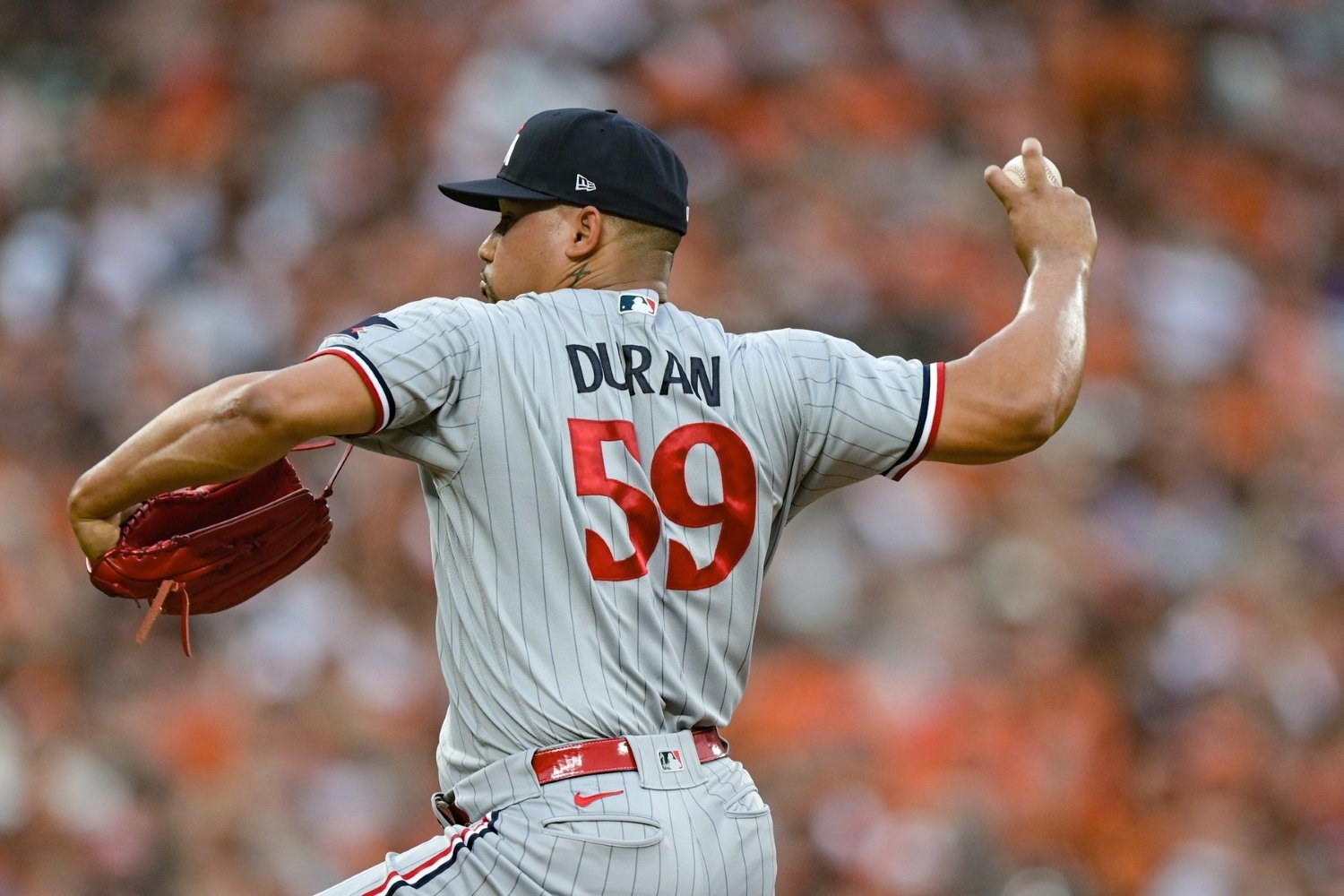 The end of the Super Bowl means two things: pitchers and catchers reporting to spring training, and projection season. Teams are finished touching up their roster (sans a notable quartet of free agents still available), allowing our not-quite-yet robot overlords to offer their opinions on each squad. I previously reviewed PECOTA’s predictions for the 2023 team here, and the articles about the pitching and hitting projections can be found here and here, respectively, along with a short description of what any of this is. Let’s wait no more, here are Minnesota’s top 12 projected pitchers. (Other notable projected pitchers include Kody Funderburk (0.3 WARP), Jay Jackson (0.2), and Matt Canterino (0.2).) Edit: I also forgot that Steven Okert shows up as a Marlin in the spreadsheet; his projection is a 3.94 ERA, a 4.11 FIP, and 0.5 WARP. That Pablo López comes in as the best pitcher on the team is no surprise; PECOTA pegged him as a top-tier arm last year, and he only reinforced the system's confidence with his best all-around year to date. PECOTA only sees 10 other pitchers accruing more WARP in 2024. Then, Joe Ryan. Man, PECOTA loves Joe Ryan. He had an eyebrow-raisingly high projection heading into 2022, and ranked solidly last year. It’s hard not to love his ability to combine an elite strikeout rate with an abnormally low walk rate; projections eat that skillset up. I think his relatively new home run problem gives the computer hope that it’s a fluke, not a sudden slide into late-career Bert Blyleven “all systems go” territory. Bailey Ober rounds out the trio that, according to PECOTA, gives the Twins three of the 40 best pitchers in MLB. Yet again, projections love guys who can whiff hitters while keeping the walks low—and Ober’s increased workload in 2023 increased confidence in him staying healthy moving forward. Jhoan Durán earns the best projection among all MLB relievers. His odd command downslide in 2023 did not portend disaster: he still struck out everyone and their mother and upped his groundball rate to 65.9%. Much like low walk rates, projection systems adore pitchers able to induce grounders at an elevated clip. When matched with elite strikeout production, few other relief arms can touch Durán. The last thing I want to touch on is the two final arms. Dan Szymborski talked about the Brock Stewart conundrum in his piece here, in which he explains the deviation surrounding Stewart has to do with sample size: how can you project a 32-year-old who missed three MLB seasons, entered the year with a negative career WAR, and then mowed down guys like prime Joe Nathan? Simple: assume regression. Now, Szymborski points out that Stewart’s underlying numbers—mainly a 20% swinging-strike rate on all pitches and a 60.6% contact rate on swings—are hard to fake, giving legitimate credence to his success. Still, it’s going to take a few years for any projection system to believe in him. (You can essentially say the same thing about Justin Topa, who didn’t shed rookie eligibility until his age-32 (!!!) season. How do you project something that almost never happens?) Everything passes the smell test here. Minnesota’s big three look solid, but their back-end depth is a little scary, and the sleeping dragon nestled in the back of their bullpen should drive what appears to be a deep unit. If you would like to see any of this PECOTA stuff yourself, consider heading over to Baseball Prospectus's website to subscribe and read some of the best baseball writing in the business. Their alumni include Brandon Warne and Aaron Gleeman, and our editor, Matthew Trueblood, writes pieces for them as well. No one told me to write this; I truly believe they are one the best resources for analytical and creative baseball thinking currently in operation. What stands out most to you in these projections? Where would you place more faith, or less? Spark a discussion in the comments, below.
- 19 comments
-
- 7
-
-
- pablo lopez
- joe ryan
- (and 3 more)
-
Join us in argument as we count down the greatest Twins teams in history, as voted on by the Twins Daily writers. Today: the first-ranked team. Image courtesy of Thiéres Rabelo The post-World Series journey for the Twins had been strange. The magic wasn’t there in 1988, despite an improved record for the team, and the following two seasons saw a direct plunge into mediocrity. Frank Viola now played in New York, Bert Blyleven in California. No pitcher from the squad that became immortal still called Minnesota home. Perhaps, it seemed, the team saw its moment come and go without even realizing their time was up. Perhaps, though, some new heroes could establish themselves. The disappearance of old legends doesn’t stop new ones from arriving. Still armed with their two main protagonists—Kirby Puckett and Kent Hrbek—the 1991 Twins grew from their previous muck, overcoming their malaise to lead the team into a second glorious apex. Lineup Any Twins lineup from this era starts with two men: Puckett and Hrbek. Puckett, Minnesota’s first cultural superstar since Rod Carew left town, was still firmly in his prime. His .319/.352/.460 line sent him to his 378th All-Star game, and he would eventually earn back the Gold Glove he lost in 1990, the 5th of his six career honors. Sure, he lacked the power a more youthful Puckett enjoyed before 1989, yet few forces at the top of a lineup were more intimidating than the 5’8” outfielder from Triton College. Hrbek wasn’t quite at his peak, but he was damn close: the first baseman’s slugging percentage took a final nosedive below the .500 mark the previous year, leaving him more reliant on his tremendous plate discipline. Fortunately, that was still intact; Hrbek walked more than he struck out for the 5th straight year of his career. Neither were statistically the best hitters on the team, though. Minnesota took a risk on a talented yet inconsistent outfielder from the Padres the previous season, deciding that Shane Mack’s potential hitting brilliance was too tempting to watch wallow in the minors. They were correct. Mack slashed .326/.392/.460 in a part-time role in 1990, leading manager Tom Kelly to unleash him as the most overqualified seven-hitter in baseball. Not far behind Mack was Chili Davis, the best-hired gun in the league. Davis played for five different teams; he crushed with all five. The switch-hitting Jamaican native became an assassin out of the DH spot for the team, slashing .277/.385/.507 in a season that saw him earn down-ballot support for MVP. The most famous season of any Twin batter, though, easily goes to second-baseman and Rookie of the Year winner Chuck Knoblauch. Minnesota’s 1st-round pick just two years ago blitzed through the minors, skipping AAA entirely to provide a jolt from a position previously handled by the tepid bats of Al Newman, Wally Backman, and Steve Lombardozzi. Tim Teuful’s OPS+ of 97 in 1985 looked downright Bonds-ian compared to Minnesota’s typical production at second. Knoblauch only knocked one regular season homer for the team, but he reached base at a .351 clip and swiped enough bases to make him the platonic idea of a gritty number two hitter. Overall, the Twins in 91 held the 3rd-best wRC+ in MLB with a 107 mark, scored the 4th-most runs in the league and claimed the highest batting average and on-base percentage amongst all 26 teams. Perhaps most impressive is that the team bopped a top-10 140 homers while still striking out at just a 12% clip; that’s a special combination of hitting ability. Pitching The dealing above of Sweet Music to the Mets netted a few critical parts of the team’s pitching machine -- namely, the mercurial play of the Upper Kevin Tapani. Once a member of Minnesota’s Young Guns, Tapani crossed the crucial bridge connecting potential to results, turning in a tremendous 244-inning, 2.99 ERA season that earned him a seventh-place finish in the AL Cy Young voting. He would have finished higher if not for two of his rotation mates: Jack Morris and Scott Erickson. Erickson was even younger than Tapani—just 23 for the season—when he made his sudden ascent into baseball superstardom. He won 20 games, the best in the league, back when that mattered, and finished a distant second to Roger Clemens, who claimed the third Cy Young win of his short career. Morris. Well, you know Morris; the St. Paul native spent most of the 80s spanking the Twins on some loaded Tigers squad; he pitched to a 3.33 ERA against the team in his career and allowed just a .627 OPS, both the lowest of any team he faced. Morris was 36 now, though, and fresh off a season that saw him lead the league in earned runs. Detroit had offered the veteran a three-year deal for more guaranteed money, but the righty decided to head home and pitch for his hometown squad with the hopes of a rebound parlaying into a potentially bigger deal the following year. His season was incredible; he made his fifth and final All-Star game while posting his lowest ERA (3.43) since 1987. The Minnesota bullpen was a two-headed monster, three, if you want to be generous. Rick Aguilara—also one of the return players from the Viola trade—was a moderately successful starter who evolved into a ferocious back-of-the-bullpen force for the Twins. In 11 seasons, in almost 700 innings, Aguilera notched an ERA+ of 130, a nearly unheard-of consistency from a reliever. He also made three All-Star games. 1991 was one of them, and for good reason, he saved 42 games with a 2.35 ERA. Carl Willis’ path to Minnesota’s pen was certainly far rockier. Nowadays, you can see him talking to Shane Bieber or Triston McKenzie, stony-eyed and crusty as Cleveland’s longtime ace pitching coach, but his time in baseball once appeared short. He barely pitched in MLB between 1987 and 1990, with just a 12-inning foray on a hilariously forgettable 1988 White Sox team serving as his only time in the bigs. He jumped from organizations like CCR released albums. Then, he signed a deal with the Twins, dominated AAA, and became a rock for the team. He was a long-relief specialist, gobbling 89 innings in just 40 games as Tom Kelly often looked to him to move the game from the middle to the late innings drama-free. His ERA was 2.63. Drama rarely occurred. That left Terry Leach as the only other consistent reliever with an above-average ERA. The late-blooming righty served as Aguilera’s setup man—and he did job well, totaling a 3.61 ERA with just two blown saves. Depth problems caused both the rotation and bullpen to scrape by into being top-10 units in the league, but few could claim the kind of top-end performance of Minnesota’s unit. Postseason The Twins won 95 games, the best in the AL in an abnormally equal season; 11 AL squads finished at .500 or better. That set them up to face the Toronto Blue Jays in the ALCS. spearheaded by ace Dave Stieb, Toronto was smack-dab in the middle of a shocking run of competency and consistency from a franchise that had not existed until 1977. They were sometimes solid, but Cito Gaston at the manager’s helm seemed to be the tweak they needed; he would take them to back-to-back World Series wins in 1992 and 1993. In 1991, though, the Twins were a force they couldn’t handle. Minnesota took Game One in a squeaker before the Blue Jays knotted the series in a Game Two victory over Tapani. Then, the Twins waltzed into Canada and took the final three games, ending the series with decisive wins. Kirby Puckett earned MVP honors by slashing .429/.435/.762. The win made the World Series a battle against another worst-to-first team: the Atlanta Braves. No one knew it then, but the Braves would soon become the unofficial team of the 90s, collecting an absurd amount of Hall of Fame talent on their way to five World Series matchups. Their pull? Three Hall of Fame starting pitchers: Greg Maddux, John Smoltz, and Tom Glavine. In 1991, though, Glavine was simply a first-time All-Star (and soon-to-be Cy Young winner), Smoltz was a talented yet frustrating youngster, and Greg Maddux was… a Cub, two years away from making potentially the most critical free agent decision in baseball history. Don’t think that made Atlanta pushovers; 34-year-old Charlie Leibrandt could still plant his changeup directly on the low outside corner against righties, and third baseman Terry Pendleton hit .319 on his way toward winning the NL MVP. They even enjoyed a dominant closing season from a Twin on the 87 squad, Juan Berenguer. Minnesota claimed Game One and Two off the backs of suffocating starts from Jack Morris and Kevin Tapani. Aided in the Tapani effort was Ron Gant’s clumsiness at first base when attempting to return to the bag; fortunately, Hrbek was right there to stop Gant from falling to the ground and potentially injuring himself. The home run bats proved the difference offensively, with Greg Gagne, Kent Hrbek, Chili Davis, and Scott Leius blasting homers in the wins. Then came the first non-artificial turf games of the Twins’ playoff run. They probably would have preferred to stay with science. The team lost a 12-inning Game Three when a largely ineffective Scott Erickson start begat a late-inning rally eventually negated by Mark Lemke’s walk-off single. Game Four was another one-run stinger, and Game Five need not be discussed. That set up the Twins with the same ultimatum pushed on them four years prior: they could not afford to lose a single game the rest of the way, but the friendly, bright atmosphere of the Metrodome could guide them in the final two games. Game Six would have been a classic no matter how it ended: Erickson rebounded somewhat to give Minnesota six cromulent frames as Steve Avery followed with an almost identical line. Although his start would have been worse had Puckett not made an incredible catch from the Metrodrome’s rafters to steal an extra-base hit from Gant. The even play pushed the game into extras. Mike Stanton and Alejandro Pena’s outstanding multi-inning relief outings matched the ones from Carl Willis and Rick Aguilera; Kirby Puckett’s steal of 2nd constituted the only time a runner reached beyond 1st once the top of the 7th ended. In a surprising move, Braves Manager Bobby Cox decided to call upon Leibrandt to be the man to continue the extra-inning odyssey. The lefty would be many things in his long MLB career; a reliever was not one of them -- he would pitch out of the bullpen just 48 times in over the course of his time in the majors. Naturally, the man to first face Leibrandt was Puckett—Minnesota’s long-time hero. He took three pitches before Leibrandt delivered a lethargic changeup, a pitch that more resembled the sort of lofted tennis ball toss one offers to their dog. Pucket swung and crushed the pitch. He didn’t realize what he had done until he noticed 1st base coach Wayne Terwilliger throw up his arms in celebration. There would be a tomorrow night. Somehow, that was only the introduction to the most incredible game in World Series history. Smoltz. Morris. Game Seven. The words have been spilled over and over so much that attempting to recapture the pure, maniacal magic of the moment would be like trying to re-shoot Citizen Kane. The brilliance is simple: 7 ⅓ shutout frames from the youngster Smoltz countered by ten gee-dee shutout innings by Morris. Superhuman doesn’t cover it; Morris refused to allow his team to lose. Dan Gladden started the 10th with a hustle double, and Gene Larkin hit him home to conclude potentially the best World Series in baseball history. Concluding Thoughts Well, after writing all that, it is hard to argue against this team, huh? That “1991” is still common in baseball vernacular places the squad in rarefied air. Entire franchises will rise and fall before seeing an outcome that can even come close to challenging this World Series in dramatics and theater. But—yeah, you had to have seen this coming—I think we need to separate the series from the quality of the team. The Twins were an undeniably good offense, but the pitching staff was very top-heavy and could barely qualify as a top-10 unit in a league with only 26 teams. The pure, hard stats point towards the 1965 team as being better. That said, I’m open to considering an emotional appeal based on the raw production value of the postseason. Humans love a good story, after all. "Greatest team? Probably not, but the playoffs are where legends are made and anyone associated with those two championships is considered a deity." -Seth Stohs "Kirby, Jack, best WS ever." -Hans Birkeland "Now here’s a World Series champion that lives up to the billing. The ‘91 club winning 95 games is nothing to sneeze at in its own right, but they actually got off to a slow start that season. From June on, they went 72-42, which is a 102-win pace. They finished with the best record in the AL and were a legit juggernaut, unlike the plucky underdog ‘87 club. Scott Erickson was runner-up to Roger Clemens in AL Cy Young voting while Jack Morris finished fourth. Chuck Knoblauch was Rookie of the Year." -Tom Froemming "This is unarguably the greatest Twins team in my mind, It's hard to argue against a World Series-winning team being the best in franchise history, and almost everyone would agree that the '91 team is better than the '87 team." -Cody Schoenmann Previous Entries #10 - 2010 #9 - 2023 #8 - 2002 #7 - 1970 #6 - 2019 #5 - 2006 #4 - 1969 #3 - 1987 #2 - 1965 Honorable Mentions View full article
- 13 replies
-
- 1
-
-
- jack morris
- kirby puckett
- (and 3 more)
-
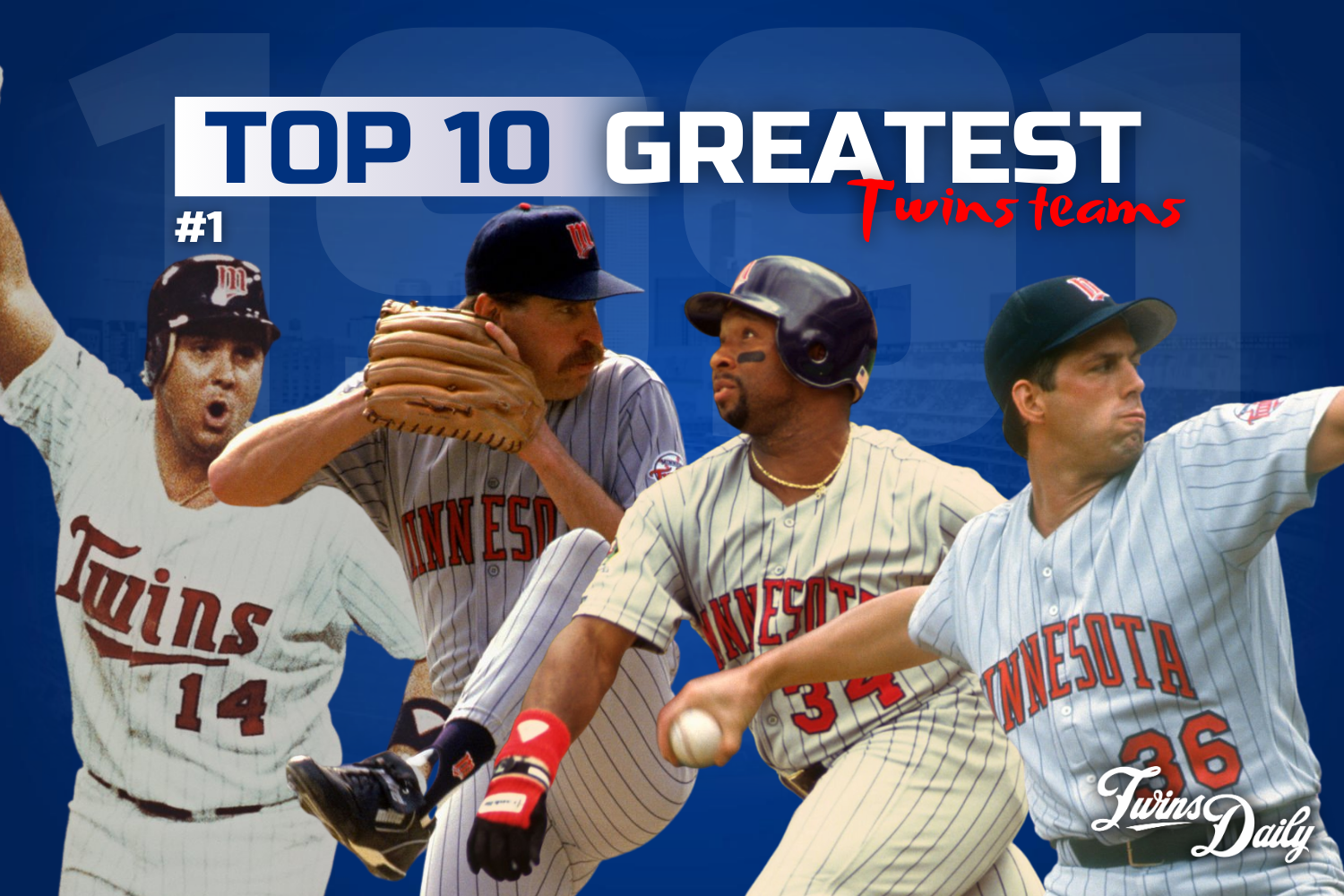 The post-World Series journey for the Twins had been strange. The magic wasn’t there in 1988, despite an improved record for the team, and the following two seasons saw a direct plunge into mediocrity. Frank Viola now played in New York, Bert Blyleven in California. No pitcher from the squad that became immortal still called Minnesota home. Perhaps, it seemed, the team saw its moment come and go without even realizing their time was up. Perhaps, though, some new heroes could establish themselves. The disappearance of old legends doesn’t stop new ones from arriving. Still armed with their two main protagonists—Kirby Puckett and Kent Hrbek—the 1991 Twins grew from their previous muck, overcoming their malaise to lead the team into a second glorious apex. Lineup Any Twins lineup from this era starts with two men: Puckett and Hrbek. Puckett, Minnesota’s first cultural superstar since Rod Carew left town, was still firmly in his prime. His .319/.352/.460 line sent him to his 378th All-Star game, and he would eventually earn back the Gold Glove he lost in 1990, the 5th of his six career honors. Sure, he lacked the power a more youthful Puckett enjoyed before 1989, yet few forces at the top of a lineup were more intimidating than the 5’8” outfielder from Triton College. Hrbek wasn’t quite at his peak, but he was damn close: the first baseman’s slugging percentage took a final nosedive below the .500 mark the previous year, leaving him more reliant on his tremendous plate discipline. Fortunately, that was still intact; Hrbek walked more than he struck out for the 5th straight year of his career. Neither were statistically the best hitters on the team, though. Minnesota took a risk on a talented yet inconsistent outfielder from the Padres the previous season, deciding that Shane Mack’s potential hitting brilliance was too tempting to watch wallow in the minors. They were correct. Mack slashed .326/.392/.460 in a part-time role in 1990, leading manager Tom Kelly to unleash him as the most overqualified seven-hitter in baseball. Not far behind Mack was Chili Davis, the best-hired gun in the league. Davis played for five different teams; he crushed with all five. The switch-hitting Jamaican native became an assassin out of the DH spot for the team, slashing .277/.385/.507 in a season that saw him earn down-ballot support for MVP. The most famous season of any Twin batter, though, easily goes to second-baseman and Rookie of the Year winner Chuck Knoblauch. Minnesota’s 1st-round pick just two years ago blitzed through the minors, skipping AAA entirely to provide a jolt from a position previously handled by the tepid bats of Al Newman, Wally Backman, and Steve Lombardozzi. Tim Teuful’s OPS+ of 97 in 1985 looked downright Bonds-ian compared to Minnesota’s typical production at second. Knoblauch only knocked one regular season homer for the team, but he reached base at a .351 clip and swiped enough bases to make him the platonic idea of a gritty number two hitter. Overall, the Twins in 91 held the 3rd-best wRC+ in MLB with a 107 mark, scored the 4th-most runs in the league and claimed the highest batting average and on-base percentage amongst all 26 teams. Perhaps most impressive is that the team bopped a top-10 140 homers while still striking out at just a 12% clip; that’s a special combination of hitting ability. Pitching The dealing above of Sweet Music to the Mets netted a few critical parts of the team’s pitching machine -- namely, the mercurial play of the Upper Kevin Tapani. Once a member of Minnesota’s Young Guns, Tapani crossed the crucial bridge connecting potential to results, turning in a tremendous 244-inning, 2.99 ERA season that earned him a seventh-place finish in the AL Cy Young voting. He would have finished higher if not for two of his rotation mates: Jack Morris and Scott Erickson. Erickson was even younger than Tapani—just 23 for the season—when he made his sudden ascent into baseball superstardom. He won 20 games, the best in the league, back when that mattered, and finished a distant second to Roger Clemens, who claimed the third Cy Young win of his short career. Morris. Well, you know Morris; the St. Paul native spent most of the 80s spanking the Twins on some loaded Tigers squad; he pitched to a 3.33 ERA against the team in his career and allowed just a .627 OPS, both the lowest of any team he faced. Morris was 36 now, though, and fresh off a season that saw him lead the league in earned runs. Detroit had offered the veteran a three-year deal for more guaranteed money, but the righty decided to head home and pitch for his hometown squad with the hopes of a rebound parlaying into a potentially bigger deal the following year. His season was incredible; he made his fifth and final All-Star game while posting his lowest ERA (3.43) since 1987. The Minnesota bullpen was a two-headed monster, three, if you want to be generous. Rick Aguilara—also one of the return players from the Viola trade—was a moderately successful starter who evolved into a ferocious back-of-the-bullpen force for the Twins. In 11 seasons, in almost 700 innings, Aguilera notched an ERA+ of 130, a nearly unheard-of consistency from a reliever. He also made three All-Star games. 1991 was one of them, and for good reason, he saved 42 games with a 2.35 ERA. Carl Willis’ path to Minnesota’s pen was certainly far rockier. Nowadays, you can see him talking to Shane Bieber or Triston McKenzie, stony-eyed and crusty as Cleveland’s longtime ace pitching coach, but his time in baseball once appeared short. He barely pitched in MLB between 1987 and 1990, with just a 12-inning foray on a hilariously forgettable 1988 White Sox team serving as his only time in the bigs. He jumped from organizations like CCR released albums. Then, he signed a deal with the Twins, dominated AAA, and became a rock for the team. He was a long-relief specialist, gobbling 89 innings in just 40 games as Tom Kelly often looked to him to move the game from the middle to the late innings drama-free. His ERA was 2.63. Drama rarely occurred. That left Terry Leach as the only other consistent reliever with an above-average ERA. The late-blooming righty served as Aguilera’s setup man—and he did job well, totaling a 3.61 ERA with just two blown saves. Depth problems caused both the rotation and bullpen to scrape by into being top-10 units in the league, but few could claim the kind of top-end performance of Minnesota’s unit. Postseason The Twins won 95 games, the best in the AL in an abnormally equal season; 11 AL squads finished at .500 or better. That set them up to face the Toronto Blue Jays in the ALCS. spearheaded by ace Dave Stieb, Toronto was smack-dab in the middle of a shocking run of competency and consistency from a franchise that had not existed until 1977. They were sometimes solid, but Cito Gaston at the manager’s helm seemed to be the tweak they needed; he would take them to back-to-back World Series wins in 1992 and 1993. In 1991, though, the Twins were a force they couldn’t handle. Minnesota took Game One in a squeaker before the Blue Jays knotted the series in a Game Two victory over Tapani. Then, the Twins waltzed into Canada and took the final three games, ending the series with decisive wins. Kirby Puckett earned MVP honors by slashing .429/.435/.762. The win made the World Series a battle against another worst-to-first team: the Atlanta Braves. No one knew it then, but the Braves would soon become the unofficial team of the 90s, collecting an absurd amount of Hall of Fame talent on their way to five World Series matchups. Their pull? Three Hall of Fame starting pitchers: Greg Maddux, John Smoltz, and Tom Glavine. In 1991, though, Glavine was simply a first-time All-Star (and soon-to-be Cy Young winner), Smoltz was a talented yet frustrating youngster, and Greg Maddux was… a Cub, two years away from making potentially the most critical free agent decision in baseball history. Don’t think that made Atlanta pushovers; 34-year-old Charlie Leibrandt could still plant his changeup directly on the low outside corner against righties, and third baseman Terry Pendleton hit .319 on his way toward winning the NL MVP. They even enjoyed a dominant closing season from a Twin on the 87 squad, Juan Berenguer. Minnesota claimed Game One and Two off the backs of suffocating starts from Jack Morris and Kevin Tapani. Aided in the Tapani effort was Ron Gant’s clumsiness at first base when attempting to return to the bag; fortunately, Hrbek was right there to stop Gant from falling to the ground and potentially injuring himself. The home run bats proved the difference offensively, with Greg Gagne, Kent Hrbek, Chili Davis, and Scott Leius blasting homers in the wins. Then came the first non-artificial turf games of the Twins’ playoff run. They probably would have preferred to stay with science. The team lost a 12-inning Game Three when a largely ineffective Scott Erickson start begat a late-inning rally eventually negated by Mark Lemke’s walk-off single. Game Four was another one-run stinger, and Game Five need not be discussed. That set up the Twins with the same ultimatum pushed on them four years prior: they could not afford to lose a single game the rest of the way, but the friendly, bright atmosphere of the Metrodome could guide them in the final two games. Game Six would have been a classic no matter how it ended: Erickson rebounded somewhat to give Minnesota six cromulent frames as Steve Avery followed with an almost identical line. Although his start would have been worse had Puckett not made an incredible catch from the Metrodrome’s rafters to steal an extra-base hit from Gant. The even play pushed the game into extras. Mike Stanton and Alejandro Pena’s outstanding multi-inning relief outings matched the ones from Carl Willis and Rick Aguilera; Kirby Puckett’s steal of 2nd constituted the only time a runner reached beyond 1st once the top of the 7th ended. In a surprising move, Braves Manager Bobby Cox decided to call upon Leibrandt to be the man to continue the extra-inning odyssey. The lefty would be many things in his long MLB career; a reliever was not one of them -- he would pitch out of the bullpen just 48 times in over the course of his time in the majors. Naturally, the man to first face Leibrandt was Puckett—Minnesota’s long-time hero. He took three pitches before Leibrandt delivered a lethargic changeup, a pitch that more resembled the sort of lofted tennis ball toss one offers to their dog. Pucket swung and crushed the pitch. He didn’t realize what he had done until he noticed 1st base coach Wayne Terwilliger throw up his arms in celebration. There would be a tomorrow night. Somehow, that was only the introduction to the most incredible game in World Series history. Smoltz. Morris. Game Seven. The words have been spilled over and over so much that attempting to recapture the pure, maniacal magic of the moment would be like trying to re-shoot Citizen Kane. The brilliance is simple: 7 ⅓ shutout frames from the youngster Smoltz countered by ten gee-dee shutout innings by Morris. Superhuman doesn’t cover it; Morris refused to allow his team to lose. Dan Gladden started the 10th with a hustle double, and Gene Larkin hit him home to conclude potentially the best World Series in baseball history. Concluding Thoughts Well, after writing all that, it is hard to argue against this team, huh? That “1991” is still common in baseball vernacular places the squad in rarefied air. Entire franchises will rise and fall before seeing an outcome that can even come close to challenging this World Series in dramatics and theater. But—yeah, you had to have seen this coming—I think we need to separate the series from the quality of the team. The Twins were an undeniably good offense, but the pitching staff was very top-heavy and could barely qualify as a top-10 unit in a league with only 26 teams. The pure, hard stats point towards the 1965 team as being better. That said, I’m open to considering an emotional appeal based on the raw production value of the postseason. Humans love a good story, after all. "Greatest team? Probably not, but the playoffs are where legends are made and anyone associated with those two championships is considered a deity." -Seth Stohs "Kirby, Jack, best WS ever." -Hans Birkeland "Now here’s a World Series champion that lives up to the billing. The ‘91 club winning 95 games is nothing to sneeze at in its own right, but they actually got off to a slow start that season. From June on, they went 72-42, which is a 102-win pace. They finished with the best record in the AL and were a legit juggernaut, unlike the plucky underdog ‘87 club. Scott Erickson was runner-up to Roger Clemens in AL Cy Young voting while Jack Morris finished fourth. Chuck Knoblauch was Rookie of the Year." -Tom Froemming "This is unarguably the greatest Twins team in my mind, It's hard to argue against a World Series-winning team being the best in franchise history, and almost everyone would agree that the '91 team is better than the '87 team." -Cody Schoenmann Previous Entries #10 - 2010 #9 - 2023 #8 - 2002 #7 - 1970 #6 - 2019 #5 - 2006 #4 - 1969 #3 - 1987 #2 - 1965 Honorable Mentions
- 13 comments
-
- 3
-
-
-
- jack morris
- kirby puckett
- (and 3 more)
-
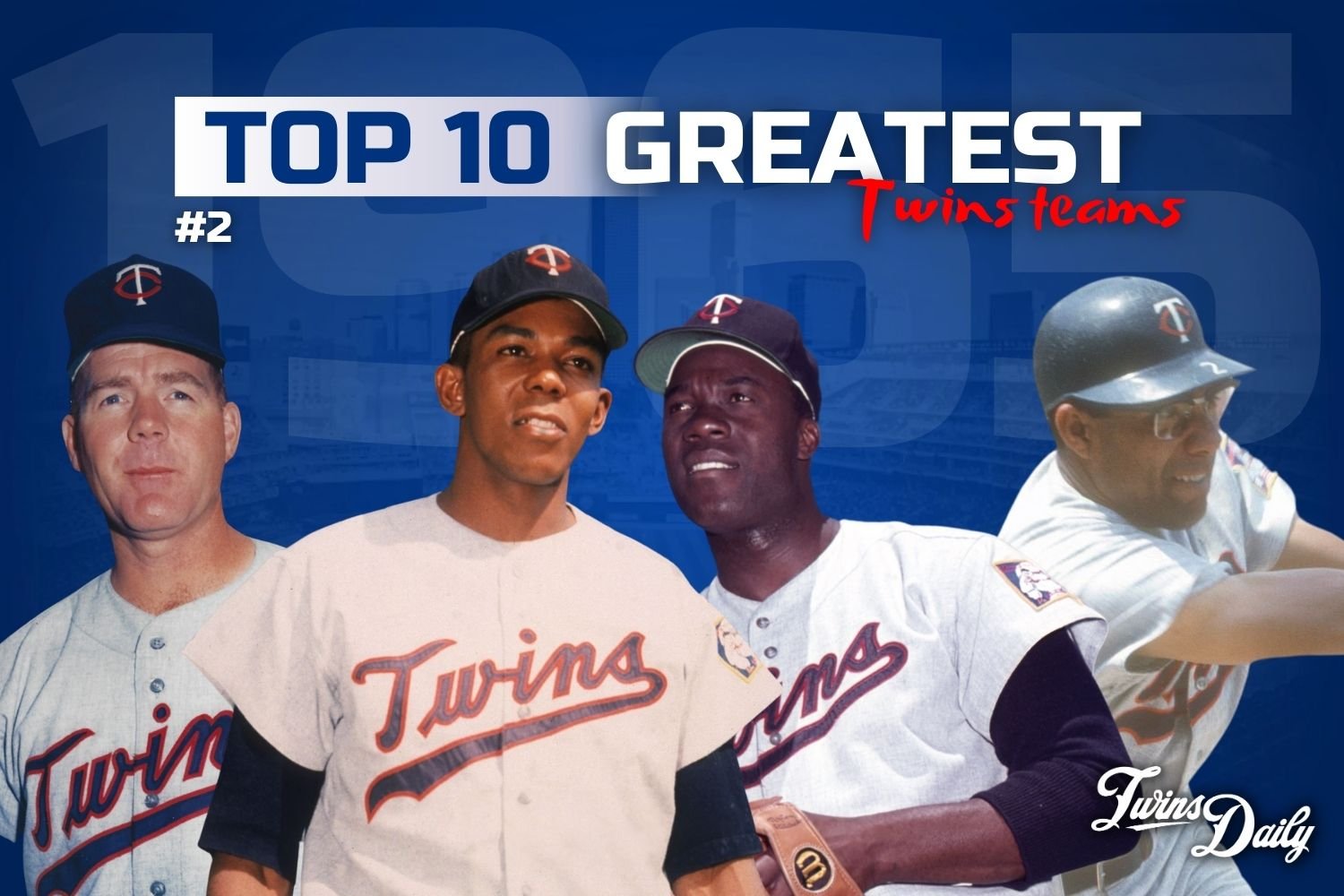 Overview The early '60s Twins were shockingly talented for a team that had freshly arrived in a new city. The 1961 team—the first one officially known as “the Twins”—featured two future MVPs in the lineup (Harmon Killebrew and Zoilo Versalles), and an eventual Hall-of-Famer in the rotation (Jim Kaat). Times were pretty good, better than they should have been. But Mickey Mantle was smack dab in the middle of his goliath destruction of AL pitching, and the rest of the team around him was pretty good. Those Yankees won the pennant every year from 1960-1964, often cracking 100 wins in the process. They rejected a pair of solid Twins squads in 1962 and 1963, and a down year in 1964 meant the team never came close to a serious run at the World Series. So, with oodles of talent—and enough classic names to fill a history book—the 1965 Twins set off on their greatest adventure yet, decimating the league with shocking efficiency. Lineup Minnesota saw seven separate regulars post an OPS+ of at least 115 on their way to scoring nearly 100 runs more than their closest AL competitor*. Killebrew led the group with a pedestrian-for-him 145 mark, while Tony Oliva finished just a few points lower at 141. Yes, how new: a 1960s Twins team had Killebrew and Oliva as the best contributors. What did stand out about this team was the breadth of stud hitters behind those two. Don Mincher—one of the underappreciated sluggers of his time—cracked 22 home runs and led the league in intentional walks with 15. Not bad for a guy who was almost strictly a pinch-hitter until June. Earl Battey was his typical, reliable self, enjoying the 3rd-best OPS+ of his career (119). Bob Allison was much the same—although his numbers did dip from the skyscraping highs they stood at the two years prior. And then there was Jimmie Hall. Hall has been lost to time somewhat, forgotten in the great churn of baseball players. The ones who remember him are few and likely don’t find themselves in the company of people who care much to know about him. But, dammit, he owns one of the most fascinating career arcs in baseball history. Norm King, writing for SABR, briefly summarizes Hall’s odyssey: “Hall burst on the scene with a bang with the Minnesota Twins in 1963. Actually, he had 33 of them, which broke Ted Williams’s AL record for home runs by a first-year player who had never batted in his rookie year. Yes, THAT Ted Williams! But after five seasons that ranged from respectable to excellent, Hall hit seven home runs in his last three campaigns and then disappeared from the game.”** Hall was still in the midst of that great run in 1965; he essentially matched his line from the previous year but also added 14 steals and sliced a solid chunk off his strikeout rate. But the man of the year was Zoilo Versalles. He reached his baseball apex, leading the league in runs, doubles, triples, and total bases while playing Gold Glove defense at shortstop. He also stole 27 bases, because why the hell not? In all but seven games, Versalles was the first Twin the opposing starting pitcher battled that day. Oh, and Versalles is perhaps an even more bizarre case than Hall. Steve Treder dedicated an extended piece at The Hardball Times to ancillary figures in the margins of baseball's strange sudden drop-offs, with Versalles serving as his main character (and Hall as a sidekick). He writes: “[1965] was a lofty perch, and Versalles’ fall was immediate and sickening. In 1966, he saw his batting average drop by 24 points while producing fewer than half as many extra-base hits as in ’65: his Isolated Power went from .189 to .095. He went from a 27-for-32 base stealer to 10-for-22. He went from 32 Win Shares to 12. And he was just getting started.”*** Two years later, Zoilo was a Dodger, and three years after that, he took his final at-bat in the big leagues. Pitching The Twins weren’t as great at pitching as they were at hitting, but they were close. Their 114 team ERA+ was the 4th-best in the majors, and the second-best in the AL, only just beaten by the Orioles. The rotation saw one of the better years of Jim Kaat’s Hall-of-Fame career. Mudcat Grant backed him up with his second (and final) All-Star season; he won 21 games and finished 6th in the MVP vote despite a pedestrian ERA by his standards. The rest of the starting staff was an assortment of chewed gum and sawdust, a smorgasbord of arms used whenever manager Sam Mele needed the man behind the ligament to eat innings for him. The horribly underrated and typically excellent Camilo Pascual toughed through shoulder tightness—and a nearly three-month-long run without a win—to toss “just” 156 frames. The injury helped push veteran Jim Perry into the starting rotation (where he probably should have been), and he excelled, carrying a 2.63 ERA, the third-lowest of his career. The search for arms was desperate enough that eclectic names like Dwight Siebler and Mel Nelson earned starts as Mele tried anything to get his staff going. Fortunately, the manager knew he had two studs at the back of his bullpen: Johnny Klippstein and Al Worthington. The two had been big leaguers since the Truman and Eisenhower administrations, respectively. Worthington—a man of such conviction that one of his former employers once jettisoned the righty for disagreeing with their sign-stealing system—joined Minnesota as a spry 35-year-old the previous season and would continue to pitch very effectively for the team into his age 40 seasons.*** The now 94-year-old is still kicking and was recently inducted into the Virginia Baseball Coaches Association Hall-of-Fame for his work at Liberty College.**** Klippstein also became a Twin in 1964; 1965 was his best full season with the team; he held a 2.24 ERA and occasionally spelled Worthington in closing situations. Postseason Because this was 1965, the Twins had a simple playoff itinerary: go play the Dodgers for the World Series. LA enjoyed the late-blooming talents of Maury Wills, the truncated Hall-of-Fame arm of Don Drysdale, and the rookie of the year credentials of Jim Lefebvre. But, every other player was window dressing to the resplendent, radiant Sandy Koufax. Baseball had never seen a pitcher so dominant since Cy Young walked off the mound for the final time. His regal excellence shone as brightly in 1965 as they had in any other year; it would take Nolan Ryan’s superhuman power for a mortal to best Koufax’s strikeout total from this season (382). He threw MLB's eighth perfect game just one month prior. Minnesota claimed the first two games in outstanding fashion. An 8-2 drumming of Drysdale started the series before the team outlasted Koufax in Game Two, instead cracking Ron Perranoski for a trio of runs to back up Kaat in a complete game. LA won the next three games in their home—all of them as perplexingly convincing as the victories the Twins earned. Game Six knotted the series when Bob Allison and Mudcat Grant—yes, the pitcher—both crushed homers in a Grant complete game, setting up Game Seven as the ultimate do-or-die. Unfortunately for the Twins, Koufax was still very much an outlandish pitching force; he struck out 10 in a complete game shutout to claim the Dodgers’ third championship since moving west. Concluding Thoughts I think there’s a very strong argument this team should be #1. No Twins team has won more regular season games, and their offense, relative to the league average, was tremendous. They didn’t even get a full season out of Harmon Killebrew! It didn’t matter; Minnesota still lapped the AL field in scoring. Sure, they could have pitched better. If you’re splitting hairs, like we have to do in this endeavor, then Kaat is merely a solid ace, not a Frank Viola-type capable of constantly single-handedly shutting down a game. Their best bet for that player may have actually been Jim Perry, who absolutely should have started more than he did. Still, 102 wins and by far the best run differential in MLB sure looks like an all-time team to me. I think if they win that Game Seven, then there really isn’t a discussion. They take the mantle over any other team. So, should we let one simple game stand between appreciating greatness and ranking a 95-win team above them? I don’t know. "The legends on that team are just remarkable. Killebrew. Oliva. Allison. Zoilo's MVP season, which could have been Tony O's. Kaat was great. Grant was incredible. Again, just a legendary group. And they won 102 games." -Seth Stohs "It was before my time, but I can’t imagine how exciting it must have been to go from not having Major League Baseball in Minnesota to hosting the World Series in less than five years. This team won 102 games, still a franchise record. Zoilo Versalles and Tony Olive finished 1-2 in AL MVP voting. If it wasn’t for Sandy Koufax, this team would have been world champs and probably in the top spot on this list." -Tom Froemming "This is probably the best Twins team, but they didn't win the World Series, which I think rightfully holds a lot of weight. If this team had won the World Series, they likely would have been number one of this list." -Cody Schoenmann Previous Entries #10 - 2010 #9 - 2023 #8 - 2002 #7 - 1970 #6 - 2019 #5 - 2006 #4 - 1969 #3 - 1987 Honorable Mentions Sources *774, to be exact. Detroit scored 680. King, Norm, "Jimmie Hall," SABR. Tredder, Steve, "Of Fades, Flops, and Zoilo," The Hardball Times, November 23rd, 2004. Laurila, David, "Sunday Notes: Kody Clemens Has Grown Into His Pop," Fangraphs, February 13th, 2022. Liberty Flames, "Former Liberty Head Baseball Coach Al Worthington to be Inducted into the VBCA Hall of Fame," December 7th, 2023.
