



Nate Palmer
-
Posts
439 -
Joined
-
Last visited
2 Followers


Nate Palmer's Achievements






-
 nicksaviking reacted to a post in a topic:
Twins Farm System Updates: Breaking Down the Updated Twins Daily Top 20 Prospects List
nicksaviking reacted to a post in a topic:
Twins Farm System Updates: Breaking Down the Updated Twins Daily Top 20 Prospects List
-
DocBauer reacted to an article:
Twins Farm System Updates: Breaking Down the Updated Twins Daily Top 20 Prospects List
-
mikelink45 reacted to an article:
Twins Farm System Updates: Breaking Down the Updated Twins Daily Top 20 Prospects List
-
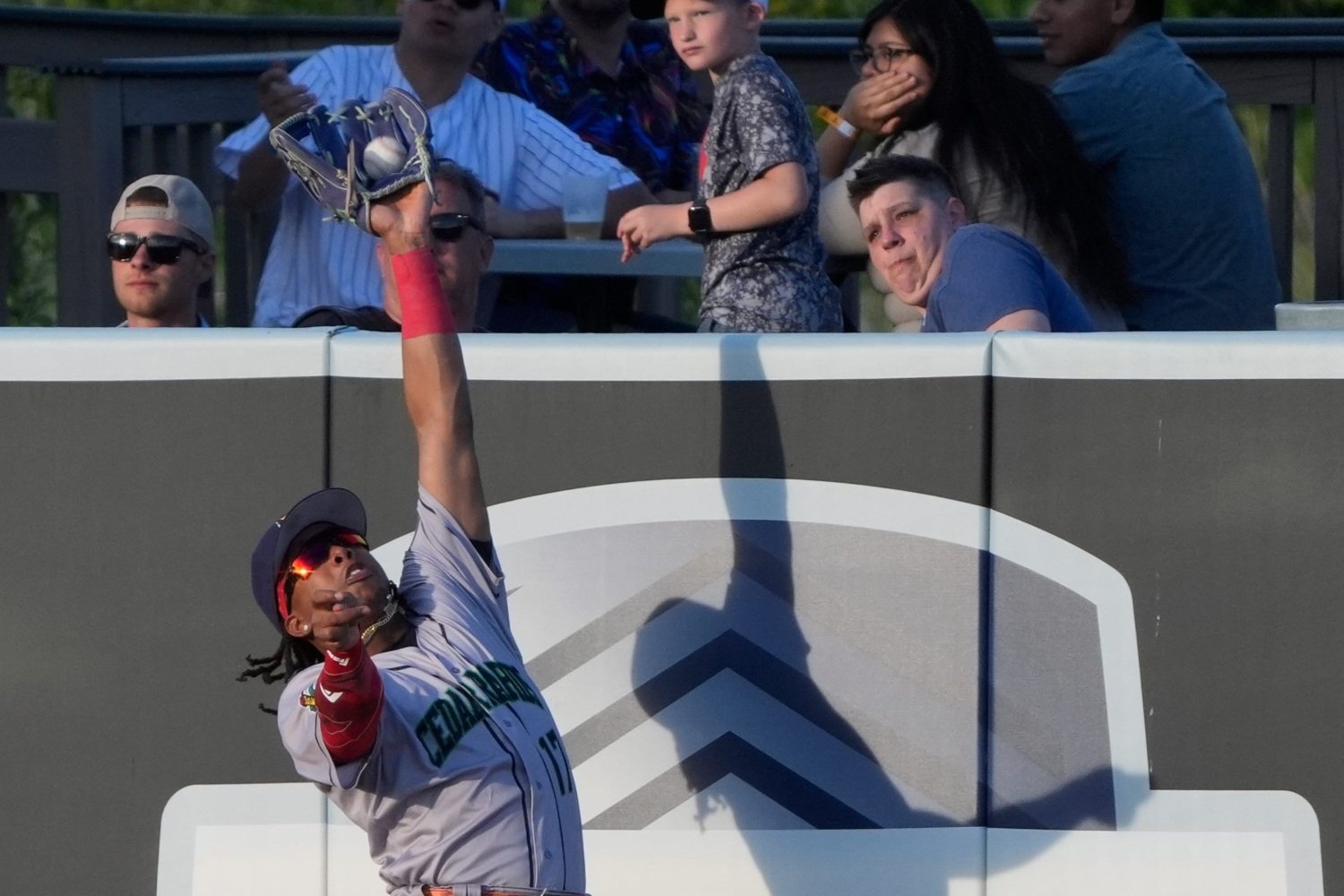 The baseball season has passed the trade deadline, and the playoff push is in full effect. It's time to look at the shakeups on Twins Daily's latest prospect ranking list. One notable prospect left the organization via trade, and the recent draft picks have gotten some time under their belt, as well, giving us an early glimpse at what they look like as professionals. 1. Walker Jenkins, OF, AAA (Previously #1) 2. Vahn Lackey, C, A (Previously #2) 3. Kaelen Culpepper, SS, MLB (Previously #3) 4. Marek Houston, SS, AA (Previously #5) 5. Riley Quick, RHP, AA (Previously #6) 6. Emmanuel Rodriguez, OF, AAA (Previously #5) 7. Hendry Mendez, OF, AAA (Previously #10) 8. Eduardo Tait, C, A+ (Previously #7) 9. Gabriel Gonzalez, OF/1B, AAA (Previously #11) 10. Charlee Soto, RHP, A+ (Previously #12) 11. Carson Tinney, C, A (Previously #13) 12. Brandon Winokur, 3B/CF, AA (Previously #15) 13. Khadim Diaw, C/OF, AA (Previously #14) 14. Ethan Wachsmann, RHP, FCL (Previously #20) 15. Ryan Gallagher, RHP, AAA (Previously #18) 16. Brett Renfrow, RHP, FCL (Previously #16) 17. James Ellwanger, RHP, A (Previously #19) 18. Quentin Young, SS/3B, A (Previously #17) 19. Yasser Mercedes, OF, A+ (Previously Unranked) 20. Enrique Jimenez, C, A+ (Previously Unranked) In the updated rankings, 18 of the 20 names will look the same, while two new names appear. Room was made for the new names through Kendry Rojas’s graduation from the list. Rojas has now tossed 29 2/3 innings for the Twins while appearing in 12 games, although the left-hander is currently on the IL with the Saints. Dasan Hill left the Twins as the centerpiece of the trade for reliever Jeff Hoffman. Hill was No. 9 on our list before the trade and has joined Toronto’s High-A affiliate. Those subtractions created room for outfielder Yasser Mercedes and catcher Enrique Jimenez to land in the final two spots on the list. Top Risers Right-handed hurler Ethan Wachsmann took the biggest jump (six spots) in this edition of the prospect rankings. He hasn’t even thrown a pitch for a Twins affiliate after being drafted in the 3rd round (79th overall) of this year's draft. As Wachsmann progresses through the Twins system, he'll need to learn to harness great raw tools and a fastball capable of hitting triple digits. Looking at the clay that's there to be molded, it's obvious why Wachsmann is thought highly enough of (at 18 years of age) to make the jump to No. 14. Three other prospects jumped three spots from their previous ranking. The highest-ranked of the bunch is outfielder Hendry Mendez, now at No. 7. Mendez has continued to produce at the plate in 63 games since his mid-season promotion to Triple-A St. Paul. The 22-year-old has hit .278/.378/.413 at the highest level of minor-league ball. Mendez is reaching a point where it's simply his batting handedness (left-handed) and primary position (outfield) holding him back from a call-up. At No. 12 is third baseman and outfielder Brandon Winokur. After starting the season at High-A, Winokur has now played 30 games at Double-A Wichita, where he's hit .262/.329/.448. Winokur’s offensive output plummeted to begin the month of August, but the 21-year-old has rebounded. He now holds a .706 OPS since the beginning of the month. Hopefully, this is the beginning of the adjustment trend we saw from the right-handed slugger-in-training as he adjusted to Low-A. Righty Ryan Gallagher ranks 15th. He had been pitching very well for the Saints until last week. In his two most recent games, Gallagher has allowed five and nine earned runs, respectively. Just before that, however, Gallagher went 5 ⅔ innings, allowed three hits, one earned run, one walk, and struck out seven batters. He held a 2.30 ERA and had 31 strikeouts to eight walks in his first handful of starts coming out of the All-Star break. This was an encouraging development from a rough initial introduction to the Triple-A level. Now, let’s hope that the most recent stretch isn’t a true regression to early-season Gallagher, but rather a blip on the radar. Overall, as a guy who isn’t going to wow with his velocity, Gallagher continues to check boxes and put himself in position to be considered for the major-league roster at some point. New Additions: 19. OF Yasser Mercedes, High-A Cedar Rapids Kernels Mercedes has, from the beginning, profiled as a power hitter. He's had to adjust to each level as he has advanced through the Twins system. After tearing up the DSL, it took Mercedes time to adjust to Low-A competition. To begin this season, Mercedes adjusted just fine, hitting .321/.439/.642, including six home runs and 11 stolen bases. Mercedes's bat has cooled again after a promotion to High-A Cedar Rapids. If he follows his normal developmental trajectory, he should rebound in time. What's really boosted Mercedes’s prospect stock is the fact that he's become a much better defensive fielder than was expected. He has moved himself from a projection as a power-hitting corner outfielder to having fringe center field capabilities. At the very least, this more athletic version of him looks like it could translate to above-average defense in a corner. A key stat to keep an eye on with Mercedes is his strikeout rate. In Low-A from 2025 to this season (2026), he improved it from 25.1% to 21.4%. In his first go-around at High-A, his strikeout rate has jumped back up to 29.1%. Considering that Mercedes is young for the level, it's an area of growth the Twins will be watching, to see if he can overcome it once again. 20. C Enrique Jimenez, High-A Cedar Rapids After struggling with a finger injury early in the season, Jimenez returned to Low-A Fort Myers and put together a solid stretch. In 11 games, the 20-year-old catcher hit .314/.490/.514 for Fort Myers and earned a promotion to High-A Cedar Rapids. In 24 games there, he's still working to adjust to the new level, hitting .205/.340/.375. As a hitter, Jimenez hasn’t displayed great power and looks to be more of a line-drive hitter. Crucially, he commands the zone well and is willing to take walks, as evidenced by a 26.5% walk rate at Low-A and 20.7% across both levels of A ball he has played at this season. Defensively, Jimenez has proven to be a decent catcher, but long-term, the stocky catcher may become a candidate to move off the position. That could be even more true, as several catchers across the Twins system have quickly surrounded Jimenez. Considering where Jimenez is in terms of age and level, he has plenty of time to prove that defensive projection wrong and improve his craft behind the plate. The tough break for Jimenez and the Twins is that he looks to be done for the season, after experiencing a significant strain in his left hamstring. His season was cut short, but it's a testament to the progress he made that his prospect status hasn't taken a hit.
- 29 comments
-
- 3
-
-
- yasser mercedes
- enrique jimenez
- (and 3 more)
-
Image courtesy of USA TODAY Network via Reuters Connect The baseball season has passed the trade deadline, and the playoff push is in full effect. It's time to look at the shakeups on Twins Daily's latest prospect ranking list. One notable prospect left the organization via trade, and the recent draft picks have gotten some time under their belt, as well, giving us an early glimpse at what they look like as professionals. 1. Walker Jenkins, OF, AAA (Previously #1) 2. Vahn Lackey, C, A (Previously #2) 3. Kaelen Culpepper, SS, MLB (Previously #3) 4. Marek Houston, SS, AA (Previously #5) 5. Riley Quick, RHP, AA (Previously #6) 6. Emmanuel Rodriguez, OF, AAA (Previously #5) 7. Hendry Mendez, OF, AAA (Previously #10) 8. Eduardo Tait, C, A+ (Previously #7) 9. Gabriel Gonzalez, OF/1B, AAA (Previously #11) 10. Charlee Soto, RHP, A+ (Previously #12) 11. Carson Tinney, C, A (Previously #13) 12. Brandon Winokur, 3B/CF, AA (Previously #15) 13. Khadim Diaw, C/OF, AA (Previously #14) 14. Ethan Wachsmann, RHP, FCL (Previously #20) 15. Ryan Gallagher, RHP, AAA (Previously #18) 16. Brett Renfrow, RHP, FCL (Previously #16) 17. James Ellwanger, RHP, A (Previously #19) 18. Quentin Young, SS/3B, A (Previously #17) 19. Yasser Mercedes, OF, A+ (Previously Unranked) 20. Enrique Jimenez, C, A+ (Previously Unranked) In the updated rankings, 18 of the 20 names will look the same, while two new names appear. Room was made for the new names through Kendry Rojas’s graduation from the list. Rojas has now tossed 29 ⅔ innings for the Twins while appearing in 12 games, although the left-hander is currently on the IL with the Saints. Dasan Hill left the Twins as the centerpiece of the trade for reliever Jeff Hoffman. Hill was No. 9 on our list before the trade and has joined Toronto’s High-A affiliate. Those subtractions created room for outfielder Yasser Mercedes and catcher Enrique Jimenez to land in the final two spots on the list. Top Risers Right-handed hurler Ethan Wachsmann took the biggest jump (six spots) in this edition of the prospect rankings. He hasn’t even thrown a pitch for a Twins affiliate after being drafted in the 3rd round (79th overall) of this year's draft. As Wachsmann progresses through the Twins system, he'll need to learn to harness great raw tools and a fastball capable of hitting triple digits. Looking at the clay that's there to be molded, it's obvious why Wachsmann is thought highly enough of (at 18 years of age) to make the jump to No. 14. Three other prospects jumped three spots from their previous ranking. The highest-ranked of the bunch is outfielder Hendry Mendez, now at No. 7. Mendez has continued to produce at the plate in 63 games since his mid-season promotion to Triple-A St. Paul. The 22-year-old has hit .278/.378/.413 at the highest level of minor-league ball. Mendez is reaching a point where it's simply his batting handedness (left-handed) and primary position (outfield) holding him back from a call-up. At No. 12 is third baseman and outfielder Brandon Winokur. After starting the season at High-A, Winokur has now played 30 games at Double-A Wichita, where he's hit .262/.329/.448. Winokur’s offensive output plummeted to begin the month of August, but the 21-year-old has rebounded. He now holds a .706 OPS since the beginning of the month. Hopefully, this is the beginning of the adjustment trend we saw from the right-handed slugger-in-training as he adjusted to Low-A. Righty Ryan Gallagher ranks 15th. He had been pitching very well for the Saints until last week. In his two most recent games, Gallagher has allowed five and nine earned runs, respectively. Just before that, however, Gallagher went 5 ⅔ innings, allowed three hits, one earned run, one walk, and struck out seven batters. He held a 2.30 ERA and had 31 strikeouts to eight walks in his first handful of starts coming out of the All-Star break. This was an encouraging development from a rough initial introduction to the Triple-A level. Now, let’s hope that the most recent stretch isn’t a true regression to early-season Gallagher, but rather a blip on the radar. Overall, as a guy who isn’t going to wow with his velocity, Gallagher continues to check boxes and put himself in position to be considered for the major-league roster at some point. New Additions: 19. OF Yasser Mercedes, High-A Cedar Rapids Kernels Mercedes has, from the beginning, profiled as a power hitter. He's had to adjust to each level as he has advanced through the Twins system. After tearing up the DSL, it took Mercedes time to adjust to Low-A competition. To begin this season, Mercedes adjusted just fine, hitting .321/.439/.642, including six home runs and 11 stolen bases. Mercedes's bat has cooled again after a promotion to High-A Cedar Rapids. If he follows his normal developmental trajectory, he should rebound in time. What's really boosted Mercedes’s prospect stock is the fact that he's become a much better defensive fielder than was expected. He has moved himself from a projection as a power-hitting corner outfielder to having fringe center field capabilities. At the very least, this more athletic version of him looks like it could translate to above-average defense in a corner. A key stat to keep an eye on with Mercedes is his strikeout rate. In Low-A from 2025 to this season (2026), he improved it from 25.1% to 21.4%. In his first go-around at High-A, his strikeout rate has jumped back up to 29.1%. Considering that Mercedes is young for the level, it's an area of growth the Twins will be watching, to see if he can overcome it once again. 20. C Enrique Jimenez, High-A Cedar Rapids After struggling with a finger injury early in the season, Jimenez returned to Low-A Fort Myers and put together a solid stretch. In 11 games, the 20-year-old catcher hit .314/.490/.514 for Fort Myers and earned a promotion to High-A Cedar Rapids. In 24 games there, he's still working to adjust to the new level, hitting .205/.340/.375. As a hitter, Jimenez hasn’t displayed great power and looks to be more of a line-drive hitter. Crucially, he commands the zone well and is willing to take walks, as evidenced by a 26.5% walk rate at Low-A and 20.7% across both levels of A ball he has played at this season. Defensively, Jimenez has proven to be a decent catcher, but long-term, the stocky catcher may become a candidate to move off the position. That could be even more true, as several catchers across the Twins system have quickly surrounded Jimenez. Considering where Jimenez is in terms of age and level, he has plenty of time to prove that defensive projection wrong and improve his craft behind the plate. The tough break for Jimenez and the Twins is that he looks to be done for the season, after experiencing a significant strain in his left hamstring. His season was cut short, but it's a testament to the progress he made that his prospect status hasn't taken a hit. View full article
- 29 replies
-
- 1
-
-
- yasser mercedes
- enrique jimenez
- (and 3 more)
-
Image courtesy of William Parmeter (photo of Luis Fragoza) TRANSACTIONS Minnesota Twins selected the contract of C Alex Jackson from St. Paul Saints. OF Luis Fragoza assigned to Cedar Rapids Kernels from Fort Myers Mighty Mussels. RHP Michael Hilker assigned to Cedar Rapids Kernels from Fort Myers Mighty Mussels. Cedar Rapids Kernels placed C Ricardo Pena on the 7-day injured list. Cedar Rapids Kernels placed RHP Cole Peschl on the 7-day injured list. Cedar Rapids Kernels released UT Miguel Briceno. Fort Myers Mighty Mussels transferred RHP Ramiro Villanueva to the Development List. SAINTS SENTINEL The Saints split their series in Iowa against the Cubs, including a 3-6 loss in the Field of Dreams game to start the week. Now the Saints stay on the road as they travel to Columbus, whom they went 4-2 against back in July. The Columbus Clippers boast some of Cleveland’s top talent on their roster. Top 50 nationally ranked prospect, 1B/LF Ralphy Velazquez, has hit .264/.348/.494 (.842). That only tells part of the story. Velazquez had a slow start after being promoted to Triple-A; since playing against the Saints last, he has hit .333/.394/.877 (1.271). The 21-year-old could certainly pose challenges for the Saints' pitching staff. The Clippers also roster two other players on the fringe of their Top 10 organizational prospects. C/LF Cooper Ingle had a cup of coffee in the majors this year and is hitting .306/.429/.570 (.999) in Triple-A. The other prospect to watch is Khalil Watson, who is back at Triple-A after getting some time in the majors like Ingle. In his second year at Triple-A, Watson is hitting .253/.364/.462 (.827). WIND SURGE WISDOM The Wind Surge were able to split their series 3-3 as they hosted Corpus Christi over the last week. Now Wichita will travel and get their first look at the Texas Rangers affiliate, Frisco Rough Riders. On Frisco’s roster is the Rangers top organizational prospect and borderline Top 10 national prospect SS/3B Sebastian Walcott. At Double-A, Walcott has hit .319/.373/.580 (.953 OPS). Alongside Walcott is Top 10 organizational prospect corner infielder Rafe Perich. The switch-hitter is hitting .297/.380/.565 (.945) in 60 games this season. KERNEL CHRONICLE Cedar Rapids continues the streak and split their series with the Wisconsin Timber Rattlers. The Kernels will now travel to Beloit to take on a different Wisconsin-based affiliate. In the shortened All-Star week, the Kernels split their four-game series as they hosted Beloit in Cedar Rapids. The Sky Carp have the number seven-ranked organizational prospect according to Fish on First in SS Starlyn Caba. Caba’s defense is strong, but his offense has raised questions as he has hit .236/.390/.388 (.777). He has flashed his speed with 20 stolen bases at Triple-A in 2026. The only two other players rostered by Beloit who appear on deeper prospect ranking lists are a pair of 21-year-old pitchers, Liomar Martinez and Nate Payne. MIGHTY MATTERS The Mussels are our streak-breaker, being the only full-season affiliate to win their week's series, going 4-2 against Clearwater. Next up is a trip to the Palm Beach Cardinals, whom Fort Myers split with just a few short weeks ago. The Mussels will take on Top 10 organizational prospect SS Yairo Padilla once again. Now playing with Palm Beach for 29 games, Padilla has hit .281/.354/.474 (.828). At the trade deadline, Palm Beach added a Top 50 nationally ranked prospect to their roster. Corner outfielder Alexander Frias came over from the Brewers and has hit .333/.422/.538 (.959) across all levels of the minors this season, adding another key bat to watch. INF/OF Luis Fragoza FSL Player of the Week If Luis Fragoza keeps having performances like he did this past week, it won’t be long until he hits the Twins Daily Top 20 list. In five games, Fragoza hit at an unreal clip of .667/.800/1.583 (2.383 OPS), with three home runs, nine stolen bases, and seven total extra base hits. Those video game-type numbers made Fragoza the choice for the Florida State League’s Player of the Week Award. His week also offered a positive sign for the 19-year-old prospect who MLB.com has ranked as the Twins number 27 prospect in the system. In case you missed it at the top of the page, on top of this great week on the field, Fragoza was just promoted to High-A and will begin playing with the Cedar Rapids Kernels. DSL TWINS Twins 9, Marlins 7 Box Score The Twins came away with a win over the Marlins, but if you turned your attention away from the game early, you wouldn’t have thought that would wind up being the result. Through five innings, the Marlins were in full control of the game, leading 5-0. Then, in the sixth inning, everything went the Twins way. Enmanuel Merlo got things going with a leadoff walk and advanced to second on a wild pitch. After an Anibal Beltre strikeout, two more walks from Jeferson Abreu and Fabian Ulloa followed to load the bases. Abreu was on base a lot Monday, racking up three total walks. Luis Suarez would break through for the Twins first run with an RBI single. Another wild pitch would plate Abreu for the Twins second run. A pitch would then hit Daiyer Barboza to load the bases once again and set the stage for a big Jendy Martinez at-bat. Martinez sent the ball to right-field for a triple, tying the game 5-5 and erasing the Marlins’ early lead. Martinez also added three walks to his day, reaching base a total of four times for the Twins. There was still only one out in the sixth inning, and the Twins were not finished. After a Jhon Gonzalez strikeout, Martinez would score on a wild pitch to bring the score to a 6-5 Twins lead. Abel Sosa was the next Twin to take a walk. Sosa advanced to third base on an Enmanuel Merlo single in his second at-bat of the inning. In a double steal attempt, Merlo would be picked off at second but created enough time and space for Sosa to score the Twins seventh run of the inning. The scoring continued into the seventh inning; walks and wild pitches fueled two runs being added. Beltre, Abreu, and Suarez would each reach on walks. Fabian Ulloa reached on a fielder’s choice and stole second base for his eighth of the year. Each of those helped set the Twins up for two insurance runs, with Beltre scoring on a wild pitch and Barboza hitting the sacrifice to score Ulloa and give the Twins a 9-5 lead. Jeremy Jimenez, who pitched a scoreless sixth inning, would start the seventh for the Twins. It was a classic bloop-and-a-blast scenario. Jimenez nearly stranded Eliecer Mendoza at first after allowing him a single, but with two outs, Gregori Arias hit his fourth home run of the season for the Marlins to bring the lead to 9-7. Arthur De La Cruz was then brought on to close out the game. Needing just one out, De La Cruz forced Steven Herrera into a ground out to earn the save in the Twins win. Pitchers Emmanuel Mena and Abraham Martinez each did not allow a run while they were on the mound. Mena went 1 1/3 innings, allowed no hits, three walks, and struck out one batter. Martinez, who was credited with the win, pitched one inning, allowed no hits, and two walks. TWINS DAILY PLAYERS OF THE DAY Jendy Martinez: 1-2, 1 H, 1 R, 3 BB, 3 RBI, 1 3B Emmanuel Mena: 1 1/3 IP, 0 ER, 0 H, 3 BB, 1 K TOP 20 PROSPECT WEEK IN REVIEW #1- Walker Jenkins (Saints)- .412/.545/.647 (1.193), 1 2B, 1 HR #2- Vahn Lackey (Mussels)- .154/.200/.462 (.662), 2 3B #3- Kaelen Culpepper (Twins)- .263/.286/.316 (.602), 1 2B #4- Marek Houston (Wind Surge)- .238/.273/.238 (.511) #5- Riley Quick (Wind Surge)- 4 IP, 4 H, 1 R, 1 ER, 2 BB, 4 K #6- Emmanuel Rodriguez (Saints)- .222/.333/.278 (.611 OPS), 1 2B #7- Hendry Mendez (Saints)- .182/.400/.455 (.855 OPS), 1 HR #8- Eduardo Tait (Kernels)- .190/.227/.381 (.608), 1 2B, 1 HR #9- Gabriel Gonzalez (Saints)- .000/.300/.000 (.300) #11- Carson Tinney (Mussels)- .200/.294/.600 (.894), 2 HR #12- Brandon Winokur (Wind Surge)- .190/.292/.333 (.625), 1 HR #13- Khadim Diaw (Wind Surge)- 1.000/1.000/1.000 (2.000) #15- Ryan Gallagher (Saints)- 5 2/3 IP, 3 H, 1 ER, 1 BB, 7 K #18- Quentin Young (Mussels)- .235/.350/.529 (.879 OPS) 2 2B, 1 HR #19- Yasser Mercedes (Kernels)- .316/.381/.421 (.802), 2 2B TUESDAY’S PROBABLE STARTERS St. Paul Saints @ Columbus- RHP Ryan Gallagher Wichita Wind Surge @ Frisco- TBD Cedar Rapids Kernels @ Beloit- TBD Fort Myers Mighty Mussels @ Palm Beach- TBD DSL Twins @ DSL Cardinals- TBD DSL Cardinals @ DSL Twins- TBD View full article
-
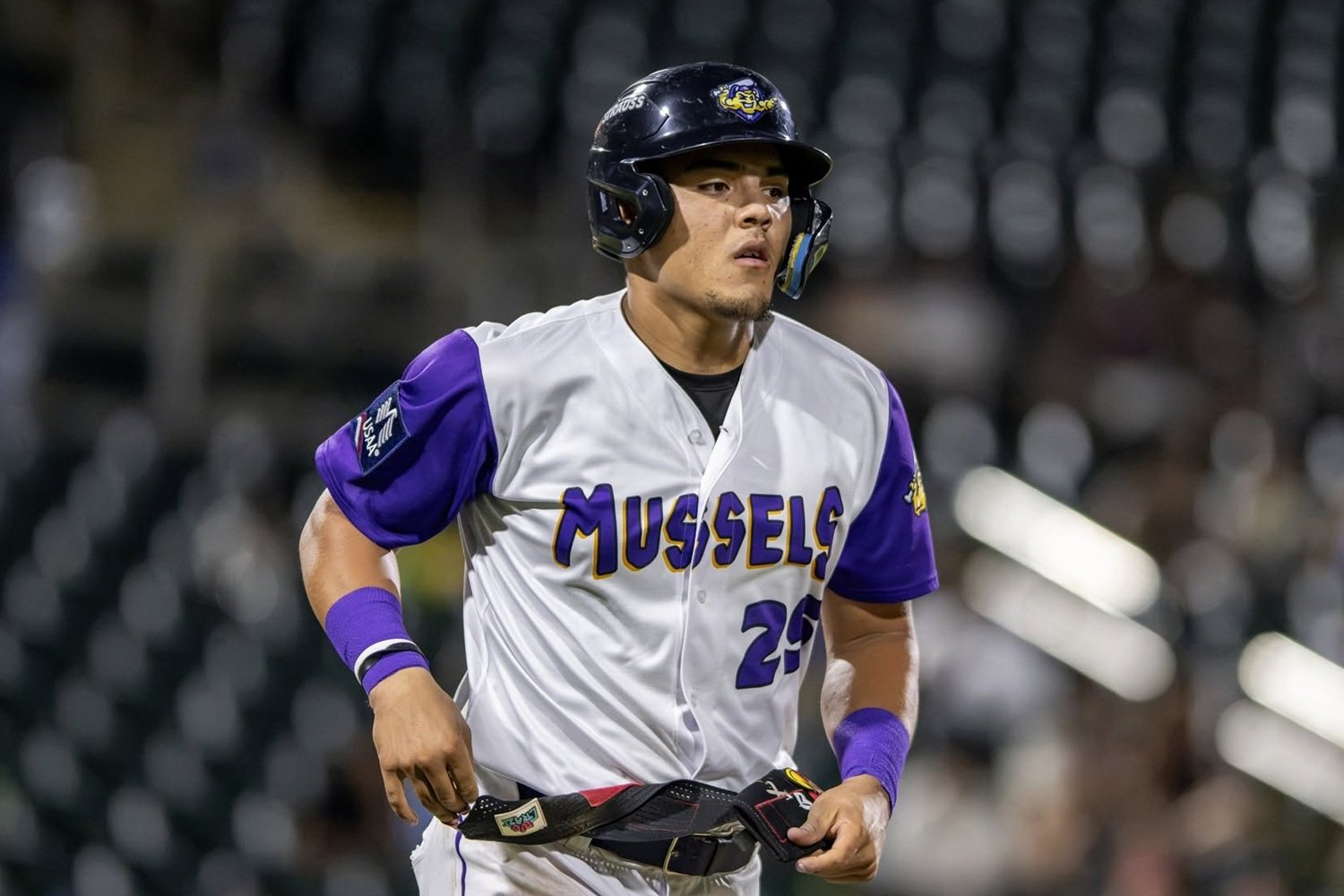 TRANSACTIONS Minnesota Twins selected the contract of C Alex Jackson from St. Paul Saints. OF Luis Fragoza assigned to Cedar Rapids Kernels from Fort Myers Mighty Mussels. RHP Michael Hilker assigned to Cedar Rapids Kernels from Fort Myers Mighty Mussels. Cedar Rapids Kernels placed C Ricardo Pena on the 7-day injured list. Cedar Rapids Kernels placed RHP Cole Peschl on the 7-day injured list. Cedar Rapids Kernels released UT Miguel Briceno. Fort Myers Mighty Mussels transferred RHP Ramiro Villanueva to the Development List. SAINTS SENTINEL The Saints split their series in Iowa against the Cubs, including a 3-6 loss in the Field of Dreams game to start the week. Now the Saints stay on the road as they travel to Columbus, whom they went 4-2 against back in July. The Columbus Clippers boast some of Cleveland’s top talent on their roster. Top 50 nationally ranked prospect, 1B/LF Ralphy Velazquez, has hit .264/.348/.494 (.842). That only tells part of the story. Velazquez had a slow start after being promoted to Triple-A; since playing against the Saints last, he has hit .333/.394/.877 (1.271). The 21-year-old could certainly pose challenges for the Saints' pitching staff. The Clippers also roster two other players on the fringe of their Top 10 organizational prospects. C/LF Cooper Ingle had a cup of coffee in the majors this year and is hitting .306/.429/.570 (.999) in Triple-A. The other prospect to watch is Khalil Watson, who is back at Triple-A after getting some time in the majors like Ingle. In his second year at Triple-A, Watson is hitting .253/.364/.462 (.827). WIND SURGE WISDOM The Wind Surge were able to split their series 3-3 as they hosted Corpus Christi over the last week. Now Wichita will travel and get their first look at the Texas Rangers affiliate, Frisco Rough Riders. On Frisco’s roster is the Rangers top organizational prospect and borderline Top 10 national prospect SS/3B Sebastian Walcott. At Double-A, Walcott has hit .319/.373/.580 (.953 OPS). Alongside Walcott is Top 10 organizational prospect corner infielder Rafe Perich. The switch-hitter is hitting .297/.380/.565 (.945) in 60 games this season. KERNEL CHRONICLE Cedar Rapids continues the streak and split their series with the Wisconsin Timber Rattlers. The Kernels will now travel to Beloit to take on a different Wisconsin-based affiliate. In the shortened All-Star week, the Kernels split their four-game series as they hosted Beloit in Cedar Rapids. The Sky Carp have the number seven-ranked organizational prospect according to Fish on First in SS Starlyn Caba. Caba’s defense is strong, but his offense has raised questions as he has hit .236/.390/.388 (.777). He has flashed his speed with 20 stolen bases at Triple-A in 2026. The only two other players rostered by Beloit who appear on deeper prospect ranking lists are a pair of 21-year-old pitchers, Liomar Martinez and Nate Payne. MIGHTY MATTERS The Mussels are our streak-breaker, being the only full-season affiliate to win their week's series, going 4-2 against Clearwater. Next up is a trip to the Palm Beach Cardinals, whom Fort Myers split with just a few short weeks ago. The Mussels will take on Top 10 organizational prospect SS Yairo Padilla once again. Now playing with Palm Beach for 29 games, Padilla has hit .281/.354/.474 (.828). At the trade deadline, Palm Beach added a Top 50 nationally ranked prospect to their roster. Corner outfielder Alexander Frias came over from the Brewers and has hit .333/.422/.538 (.959) across all levels of the minors this season, adding another key bat to watch. INF/OF Luis Fragoza FSL Player of the Week If Luis Fragoza keeps having performances like he did this past week, it won’t be long until he hits the Twins Daily Top 20 list. In five games, Fragoza hit at an unreal clip of .667/.800/1.583 (2.383 OPS), with three home runs, nine stolen bases, and seven total extra base hits. Those video game-type numbers made Fragoza the choice for the Florida State League’s Player of the Week Award. His week also offered a positive sign for the 19-year-old prospect who MLB.com has ranked as the Twins number 27 prospect in the system. In case you missed it at the top of the page, on top of this great week on the field, Fragoza was just promoted to High-A and will begin playing with the Cedar Rapids Kernels. DSL TWINS Twins 9, Marlins 7 Box Score The Twins came away with a win over the Marlins, but if you turned your attention away from the game early, you wouldn’t have thought that would wind up being the result. Through five innings, the Marlins were in full control of the game, leading 5-0. Then, in the sixth inning, everything went the Twins way. Enmanuel Merlo got things going with a leadoff walk and advanced to second on a wild pitch. After an Anibal Beltre strikeout, two more walks from Jeferson Abreu and Fabian Ulloa followed to load the bases. Abreu was on base a lot Monday, racking up three total walks. Luis Suarez would break through for the Twins first run with an RBI single. Another wild pitch would plate Abreu for the Twins second run. A pitch would then hit Daiyer Barboza to load the bases once again and set the stage for a big Jendy Martinez at-bat. Martinez sent the ball to right-field for a triple, tying the game 5-5 and erasing the Marlins’ early lead. Martinez also added three walks to his day, reaching base a total of four times for the Twins. There was still only one out in the sixth inning, and the Twins were not finished. After a Jhon Gonzalez strikeout, Martinez would score on a wild pitch to bring the score to a 6-5 Twins lead. Abel Sosa was the next Twin to take a walk. Sosa advanced to third base on an Enmanuel Merlo single in his second at-bat of the inning. In a double steal attempt, Merlo would be picked off at second but created enough time and space for Sosa to score the Twins seventh run of the inning. The scoring continued into the seventh inning; walks and wild pitches fueled two runs being added. Beltre, Abreu, and Suarez would each reach on walks. Fabian Ulloa reached on a fielder’s choice and stole second base for his eighth of the year. Each of those helped set the Twins up for two insurance runs, with Beltre scoring on a wild pitch and Barboza hitting the sacrifice to score Ulloa and give the Twins a 9-5 lead. Jeremy Jimenez, who pitched a scoreless sixth inning, would start the seventh for the Twins. It was a classic bloop-and-a-blast scenario. Jimenez nearly stranded Eliecer Mendoza at first after allowing him a single, but with two outs, Gregori Arias hit his fourth home run of the season for the Marlins to bring the lead to 9-7. Arthur De La Cruz was then brought on to close out the game. Needing just one out, De La Cruz forced Steven Herrera into a ground out to earn the save in the Twins win. Pitchers Emmanuel Mena and Abraham Martinez each did not allow a run while they were on the mound. Mena went 1 1/3 innings, allowed no hits, three walks, and struck out one batter. Martinez, who was credited with the win, pitched one inning, allowed no hits, and two walks. TWINS DAILY PLAYERS OF THE DAY Jendy Martinez: 1-2, 1 H, 1 R, 3 BB, 3 RBI, 1 3B Emmanuel Mena: 1 1/3 IP, 0 ER, 0 H, 3 BB, 1 K TOP 20 PROSPECT WEEK IN REVIEW #1- Walker Jenkins (Saints)- .412/.545/.647 (1.193), 1 2B, 1 HR #2- Vahn Lackey (Mussels)- .154/.200/.462 (.662), 2 3B #3- Kaelen Culpepper (Twins)- .263/.286/.316 (.602), 1 2B #4- Marek Houston (Wind Surge)- .238/.273/.238 (.511) #5- Riley Quick (Wind Surge)- 4 IP, 4 H, 1 R, 1 ER, 2 BB, 4 K #6- Emmanuel Rodriguez (Saints)- .222/.333/.278 (.611 OPS), 1 2B #7- Hendry Mendez (Saints)- .182/.400/.455 (.855 OPS), 1 HR #8- Eduardo Tait (Kernels)- .190/.227/.381 (.608), 1 2B, 1 HR #9- Gabriel Gonzalez (Saints)- .000/.300/.000 (.300) #11- Carson Tinney (Mussels)- .200/.294/.600 (.894), 2 HR #12- Brandon Winokur (Wind Surge)- .190/.292/.333 (.625), 1 HR #13- Khadim Diaw (Wind Surge)- 1.000/1.000/1.000 (2.000) #15- Ryan Gallagher (Saints)- 5 2/3 IP, 3 H, 1 ER, 1 BB, 7 K #18- Quentin Young (Mussels)- .235/.350/.529 (.879 OPS) 2 2B, 1 HR #19- Yasser Mercedes (Kernels)- .316/.381/.421 (.802), 2 2B TUESDAY’S PROBABLE STARTERS St. Paul Saints @ Columbus- RHP Ryan Gallagher Wichita Wind Surge @ Frisco- TBD Cedar Rapids Kernels @ Beloit- TBD Fort Myers Mighty Mussels @ Palm Beach- TBD DSL Twins @ DSL Cardinals- TBD DSL Cardinals @ DSL Twins- TBD
- 6 comments
-
- 5
-
-

-
- luis fragoza
- jendy martinez
- (and 2 more)
-
thelanges5 reacted to an article:
Going Oppo: Jeff Hoffman's Elite Underlying Numbers Tell The Real Story
-
The Twins acquired Jeff Hoffman just before the trade deadline as the front office made strides to strengthen the bullpen for a playoff run. Many will remember that Hoffman spent spring training with the Twins in 2023 but opted out of the deal before ever putting on a Twins jersey for a regular-season game. Now he returns to the Twins, but his path brings him back as a much different reliever than he was then. Going Oppo is two stories on Twins Daily with different opinions running simultaneously. Read the other side here. Since leaving the Twins, he found success with the Philadelphia Phillies. That season, he posted an increased K-rate and K/9 that landed him as the closer on a very competitive Phillies team for two seasons. As a free agent, he translated that into a nice little contract (3 years, $33 million) with the Toronto Blue Jays, and the world watched last season as he anchored their bullpen during a World Series run. This season, Hoffman fell out of favor with Blue Jays leadership and was removed from being the primary closer in favor of Louis Varland. Most glaringly, one can look at Hoffman’s numbers and see a 3.94 ERA this season and a 4.37 ERA last season and wonder exactly what the Twins have gotten themselves into here? One aspect of Hoffman’s statistics this season that sticks out like a sore thumb that directly impacts his ERA is a gigantic number in the BABIP column, .389. Since establishing himself as the competitive closer he has been the last several seasons, his BABIP sits most often in the lower .200s, with a .278 BABIP in 2024 being the highest through that stretch. So, one could argue his slow start in 2026 was at least somewhat attributable to bad luck. If one is concerned with Hoffman’s output based on ERA, that number alone should regress to its normal mean. Often, to do so, it will be much better than his career norms, and the Twins could reap the rewards. Hoffman’s xERA reflects the reality that his outcomes should most often be better than they have been, as he carries a 3.75 xERA versus his 4.37 actual ERA. A direct correlation with Hoffman’s success since 2023 is an increase in his fastball velocity. For years, the former ninth overall pick sat around 94 mph with his fastball. Then in 2023 it jumped up to 97 mph. He is still throwing near that mark, averaging 96 mph with his four-seam fastball. Hoffman has traditionally used his slider to attack right-handed hitters and his four-seamer to attack left-handers. Something in that approach this season has caused him to have far less success against righties than usual, currently allowing right-handed hitters to carry a .306 batting average against him. It could be that even with a dropped arm angle, Hoffman isn’t getting as much run on his slider as he has in past seasons. Even with those struggles, Hoffman has proven to be a reliable reliever since opting out of his minor-league contract and leaving Twins camp those years ago. While Hoffman will be remembered for his blown save in Game 7 of last year’s World Series, his overall numbers last postseason will still be what you want out of a backend reliever. Over 12 1/3 innings, Hoffman held a 1.46 ERA, allowed two earned runs, six hits, and struck out 18 batters while only walking four. Even this season, since the beginning of June, he holds a miniscule 1.21 ERA, three earned runs, 30 strikeouts, and eight walks. Putting the whole package together, it begins to be obvious why the Twins targeted Hoffman and were willing to part with a top 10 prospect in Dasan Hill to do so. View full article
-
Going Oppo: Jeff Hoffman's Elite Underlying Numbers Tell The Real Story
Nate Palmer posted an article in Twins
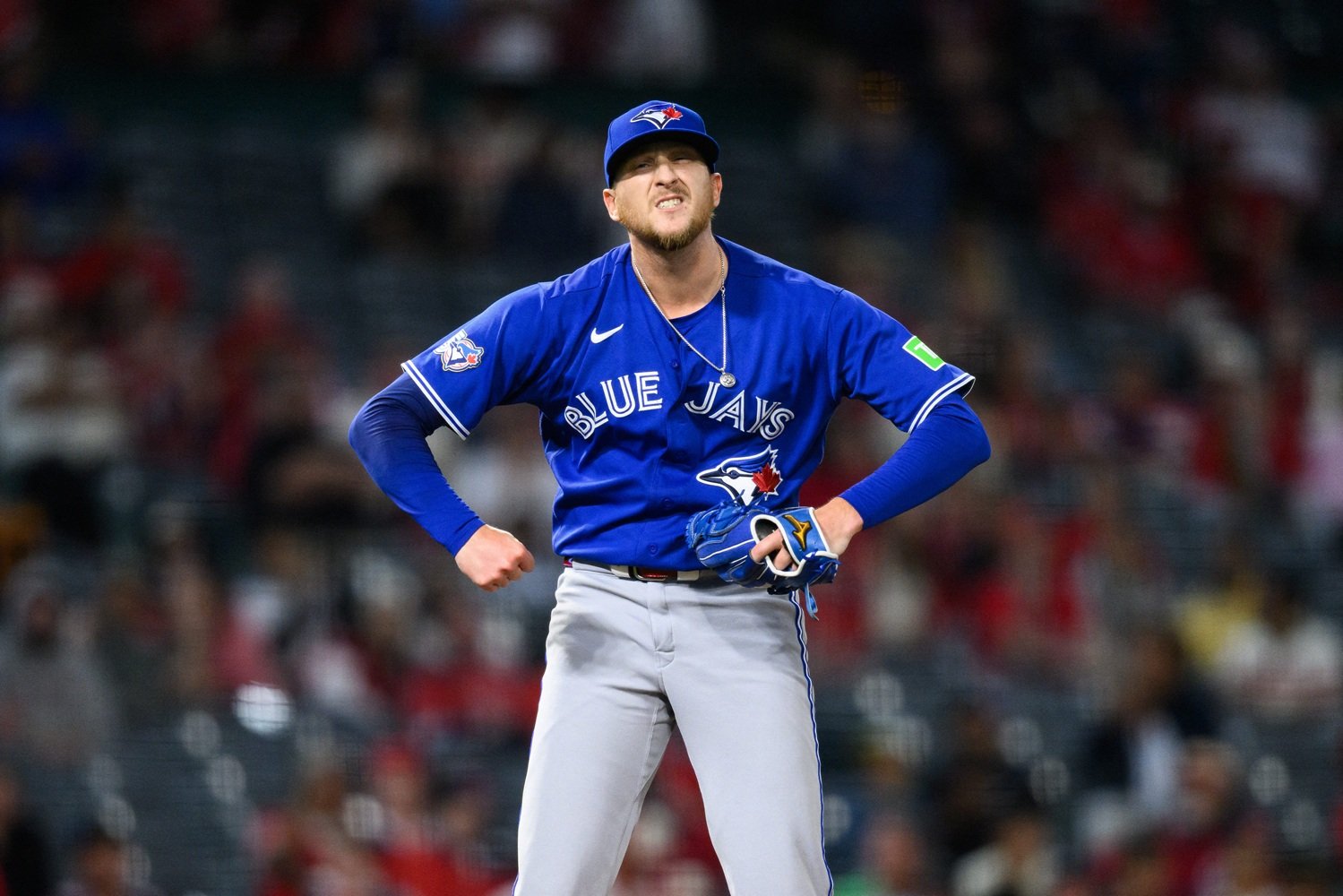 The Twins acquired Jeff Hoffman just before the trade deadline as the front office made strides to strengthen the bullpen for a playoff run. Many will remember that Hoffman spent spring training with the Twins in 2023 but opted out of the deal before ever putting on a Twins jersey for a regular-season game. Now he returns to the Twins, but his path brings him back as a much different reliever than he was then. Going Oppo is two stories on Twins Daily with different opinions running simultaneously. Read the other side here. Since leaving the Twins, he found success with the Philadelphia Phillies. That season, he posted an increased K-rate and K/9 that landed him as the closer on a very competitive Phillies team for two seasons. As a free agent, he translated that into a nice little contract (3 years, $33 million) with the Toronto Blue Jays, and the world watched last season as he anchored their bullpen during a World Series run. This season, Hoffman fell out of favor with Blue Jays leadership and was removed from being the primary closer in favor of Louis Varland. Most glaringly, one can look at Hoffman’s numbers and see a 3.94 ERA this season and a 4.37 ERA last season and wonder exactly what the Twins have gotten themselves into here? One aspect of Hoffman’s statistics this season that sticks out like a sore thumb that directly impacts his ERA is a gigantic number in the BABIP column, .389. Since establishing himself as the competitive closer he has been the last several seasons, his BABIP sits most often in the lower .200s, with a .278 BABIP in 2024 being the highest through that stretch. So, one could argue his slow start in 2026 was at least somewhat attributable to bad luck. If one is concerned with Hoffman’s output based on ERA, that number alone should regress to its normal mean. Often, to do so, it will be much better than his career norms, and the Twins could reap the rewards. Hoffman’s xERA reflects the reality that his outcomes should most often be better than they have been, as he carries a 3.75 xERA versus his 4.37 actual ERA. A direct correlation with Hoffman’s success since 2023 is an increase in his fastball velocity. For years, the former ninth overall pick sat around 94 mph with his fastball. Then in 2023 it jumped up to 97 mph. He is still throwing near that mark, averaging 96 mph with his four-seam fastball. Hoffman has traditionally used his slider to attack right-handed hitters and his four-seamer to attack left-handers. Something in that approach this season has caused him to have far less success against righties than usual, currently allowing right-handed hitters to carry a .306 batting average against him. It could be that even with a dropped arm angle, Hoffman isn’t getting as much run on his slider as he has in past seasons. Even with those struggles, Hoffman has proven to be a reliable reliever since opting out of his minor-league contract and leaving Twins camp those years ago. While Hoffman will be remembered for his blown save in Game 7 of last year’s World Series, his overall numbers last postseason will still be what you want out of a backend reliever. Over 12 1/3 innings, Hoffman held a 1.46 ERA, allowed two earned runs, six hits, and struck out 18 batters while only walking four. Even this season, since the beginning of June, he holds a miniscule 1.21 ERA, three earned runs, 30 strikeouts, and eight walks. Putting the whole package together, it begins to be obvious why the Twins targeted Hoffman and were willing to part with a top 10 prospect in Dasan Hill to do so.
 -
TRANSACTIONS St. Paul Saints placed LF Kyler Fedko on the 7-day injured list. ST. PAUL SAINTS SENTINEL The Saints split their series in Omaha at 3-3 and will now turn their attention to hosting the Louisville Bats. The Saints will see some considerable prospect talent from the Reds system barring any roster action. On the hitting side, outfielder Hector Rodriguez will bring his strong hitting to town. The lefty is hitting .274/.347/.533 (.881 OPS). Fellow outfielder Carlos Jorge joins Rodriguez. Jorge has played 22 games at Triple-A and is being challenged a bit as he is hitting considerably below his Double-A numbers at .267/.305/.378 (.683 OPS). On the pitching side is old friend Chase Petty, whom the Twins traded to the Reds to acquire Sonny Gray. Petty was optioned back to Triple-A this past Thursday. Petty holds a 4.50 ERA in the majors this season, but hasn’t been able to maintain the same sort of K-rate in the majors as he has in the minors. His K-rate drops down to 10.8% when putting on a Reds uniform. WICHITA WIND SURGE WISDOM Springfield had the upper hand over Wichita this weekend, with the Wind Surge only managing one win out of the six played. They will look forward to facing NW Arkansas and seeing if they can collectively turn things around this week. The Wind Surge will see outfielder Carson Roccaforte, who ranks ninth on Royals Keep’s top prospect list. The 24-year-old is hitting .247/.334/.506 (.841 OPS). There is also a trio of pitchers just outside the top ten on Royals Keep's list. Left-hander Justin Lamkin, in only two starts thus far, has a 3.97 ERA at Double-A and a 34.9% K-rate. Right-hander Drew Beam is headed in the wrong direction with a 7.13 ERA. Lastly is Felix Arronde, who in 17 starts has a 5.77 ERA, 20.1% K-rate, and 11.1% walk-rate. CEDAR RAPIDS KERNELS CHRONICLE Cedar Rapids spent a lot of time losing this last week; in fact, the entire week was filled with a loss. They will turn the page and visit South Bend and take on the Cubs. Unfortunately for the Kernels, South Bend isn’t exactly an easier matchup, largely because of some high-end organizational prospect talent. That includes a top-50 prospect nationally and North Side Baseball’s number two prospect, Josiah Hartshorn. At High-A, Hartshorn has hit .279/.377/.532 (.909 OPS) with 11 home runs. There is also number six prospect, outfielder Kane Kepley, who is hitting .254/.435/.414 (.849 OPS). FORT MYERS MIGHTY MUSSELS MATTERS Fort Myers went 3-3 over the past week while visiting Palm Beach. What was exciting about the past week in Florida was that many of the Twins top draft picks from this year's draft began to play in real games at this level. First-round pick Vahn Lackey was able to show off all the tools that led to him being the Twins pick. Carson Tinnney, the other catcher taken in the second round, quickly showed off the power that made him intriguing regardless of what position he ends up at as he develops. The Mussels will hope some of their new talent will help them improve on their performance against Bradenton, whom they travel to face off against this week, and last time went 1-4 against. Middle infielder Johan De Los Santos continues to be the most exciting prospect for the Pirates on Bradenton’s roster. His adjustment to the level has not gone smoothly as he is hitting .218/.258/.310 (.568 OPS). DSL TWINS Twins 4, Phillies 6 Box Score The Phillies jumped on Twins starter Agustin Campusano in the second inning to take an early 3-0 lead. The Phillies didn’t hit Campusano with any big blasts in the inning, with Nelson Prieto’s double being the loudest hit. Instead, it was a series of singles, sacrifices, a throwing error, and a balk that put them on the scoreboard. The Twins did answer in the second, taking advantage of an Abel Sosa walk and an Anibal Beltre hit-by-pitch. That led to a strange series of events centered around a ground out by Fabian Ulloa, which led to Sosa scoring the Twins a run to make it 3-1. It was in that same play that the inning eventually ended, as the Phillies recorded the final two outs after the run-scoring hit. Sosa did score two runs on Monday after reaching base on two walks. Daiyer Barboza may have had the most exciting hit of the day, recording an inside-the-park home run in the fifth inning, bringing the score to 5-3 in the Phillies favor. That was Barboza’s only hit of the day alongside two walks, bringing his year-long OPS to .870. In the next inning, Enmanuel Merlo tripled to put himself in position to score off of a single by Beltre. Merlo added a walk to his triple. The Twins did finish the day with eight total walks, doubling up their four hits. Miguel Martinez gave the Twins two solid innings out of the bullpen Monday. The right-hander pitched two innings, gave up two hits, walked no one, and struck out three batters. Campusano was charged with four earned runs while giving up five total, walked one batter, and struck out one batter. The Twins were very much in this game most of the way, but in the end could not overcome the early second inning runs. The team will look to rebound against Mets Orange tomorrow. TWINS DAILY PLAYERS OF THE DAY Daiyer Barboza: 1-2, 1 H, 1 R, 2 BB, 1 RBI, 1 HR Miguel Martinez: 2 IP, 0 ER, 2 H, 0 BB, 3 K TOP 20 PROSPECT WEEK IN REVIEW #1- Walker Jenkins (Saints)- .368/.478/.474, .952 OPS, 2 2B #2- Vahn Lackey (Mussels)- .286/.500/.286, .786, 2 SB #3- Kaelen Culpepper (Saints)- .190/.227/.238, .465 OPS, 1 2B, 1 SB #4- Emmanuel Rodriguez (Rehab)- .286/.333/.429, .762 OPS, 1 3B #5- Marek Houston (Wind Surge)- .318/.375/.727, 1.102 OPS, 3 2B, 2 HR, 2 SB #6- Riley Quick (Wind Surge)- 2 ⅔ IP, 3 H, 4 R, 3 ER, 2 BB, 1 K #7- Eduardo Tait (Kernels)- .296/.321/.444, .766 OPS, 1 2B, 1 HR #8- Kendry Rojas (Twins)- 4 IP, 6 H, 3 ER, 3 BB, 5 K #9- Dasan Hill (Kernels)- 3 IP, 2 H, 0 ER, 0 BB, 6 K #10- Hendry Mendez (Saints)- .353/.429/.647, 1.076 OPS, 2 2B, 1 HR #11- Gabriel Gonzalez (Saints)- .000/.125/.000, .125 OPS #13- Carson Tinney (Mussels)- .167/.474/.417, .890 OPS, 1 HR #14- Khadim Diaw (Wind Surge)- .375/.444/.375, .819 OPS #15- Brandon Winokur (Wind Surge)- .150/.292/.300, .592 OPS, 1 HR, 1 SB #17- Quentin Young (Mussels)- .385/.500/.769, 1.269 OPS, 1 3B, 1 HR #18- Ryan Gallagher (Saints)- 5 ⅔ IP, 3 H, 1 ER, 3 BB, 6 K TUESDAY’S PROBABLE STARTERS Louisville @ St. Paul Saints- LHP Aaron Rozek Wichita Wind Surge @ NW Arkansas- RHP Chris Vallimont Cedar Rapids Kernels @ South Bend- TBD Fort Myers Mighty Mussels @ Bradenton- RHP Eric Hammond DSL Twins @ DSL Mets Orange- TBD View full article
-
 TRANSACTIONS St. Paul Saints placed LF Kyler Fedko on the 7-day injured list. ST. PAUL SAINTS SENTINEL The Saints split their series in Omaha at 3-3 and will now turn their attention to hosting the Louisville Bats. The Saints will see some considerable prospect talent from the Reds system barring any roster action. On the hitting side, outfielder Hector Rodriguez will bring his strong hitting to town. The lefty is hitting .274/.347/.533 (.881 OPS). Fellow outfielder Carlos Jorge joins Rodriguez. Jorge has played 22 games at Triple-A and is being challenged a bit as he is hitting considerably below his Double-A numbers at .267/.305/.378 (.683 OPS). On the pitching side is old friend Chase Petty, whom the Twins traded to the Reds to acquire Sonny Gray. Petty was optioned back to Triple-A this past Thursday. Petty holds a 4.50 ERA in the majors this season, but hasn’t been able to maintain the same sort of K-rate in the majors as he has in the minors. His K-rate drops down to 10.8% when putting on a Reds uniform. WICHITA WIND SURGE WISDOM Springfield had the upper hand over Wichita this weekend, with the Wind Surge only managing one win out of the six played. They will look forward to facing NW Arkansas and seeing if they can collectively turn things around this week. The Wind Surge will see outfielder Carson Roccaforte, who ranks ninth on Royals Keep’s top prospect list. The 24-year-old is hitting .247/.334/.506 (.841 OPS). There is also a trio of pitchers just outside the top ten on Royals Keep's list. Left-hander Justin Lamkin, in only two starts thus far, has a 3.97 ERA at Double-A and a 34.9% K-rate. Right-hander Drew Beam is headed in the wrong direction with a 7.13 ERA. Lastly is Felix Arronde, who in 17 starts has a 5.77 ERA, 20.1% K-rate, and 11.1% walk-rate. CEDAR RAPIDS KERNELS CHRONICLE Cedar Rapids spent a lot of time losing this last week; in fact, the entire week was filled with a loss. They will turn the page and visit South Bend and take on the Cubs. Unfortunately for the Kernels, South Bend isn’t exactly an easier matchup, largely because of some high-end organizational prospect talent. That includes a top-50 prospect nationally and North Side Baseball’s number two prospect, Josiah Hartshorn. At High-A, Hartshorn has hit .279/.377/.532 (.909 OPS) with 11 home runs. There is also number six prospect, outfielder Kane Kepley, who is hitting .254/.435/.414 (.849 OPS). FORT MYERS MIGHTY MUSSELS MATTERS Fort Myers went 3-3 over the past week while visiting Palm Beach. What was exciting about the past week in Florida was that many of the Twins top draft picks from this year's draft began to play in real games at this level. First-round pick Vahn Lackey was able to show off all the tools that led to him being the Twins pick. Carson Tinnney, the other catcher taken in the second round, quickly showed off the power that made him intriguing regardless of what position he ends up at as he develops. The Mussels will hope some of their new talent will help them improve on their performance against Bradenton, whom they travel to face off against this week, and last time went 1-4 against. Middle infielder Johan De Los Santos continues to be the most exciting prospect for the Pirates on Bradenton’s roster. His adjustment to the level has not gone smoothly as he is hitting .218/.258/.310 (.568 OPS). DSL TWINS Twins 4, Phillies 6 Box Score The Phillies jumped on Twins starter Agustin Campusano in the second inning to take an early 3-0 lead. The Phillies didn’t hit Campusano with any big blasts in the inning, with Nelson Prieto’s double being the loudest hit. Instead, it was a series of singles, sacrifices, a throwing error, and a balk that put them on the scoreboard. The Twins did answer in the second, taking advantage of an Abel Sosa walk and an Anibal Beltre hit-by-pitch. That led to a strange series of events centered around a ground out by Fabian Ulloa, which led to Sosa scoring the Twins a run to make it 3-1. It was in that same play that the inning eventually ended, as the Phillies recorded the final two outs after the run-scoring hit. Sosa did score two runs on Monday after reaching base on two walks. Daiyer Barboza may have had the most exciting hit of the day, recording an inside-the-park home run in the fifth inning, bringing the score to 5-3 in the Phillies favor. That was Barboza’s only hit of the day alongside two walks, bringing his year-long OPS to .870. In the next inning, Enmanuel Merlo tripled to put himself in position to score off of a single by Beltre. Merlo added a walk to his triple. The Twins did finish the day with eight total walks, doubling up their four hits. Miguel Martinez gave the Twins two solid innings out of the bullpen Monday. The right-hander pitched two innings, gave up two hits, walked no one, and struck out three batters. Campusano was charged with four earned runs while giving up five total, walked one batter, and struck out one batter. The Twins were very much in this game most of the way, but in the end could not overcome the early second inning runs. The team will look to rebound against Mets Orange tomorrow. TWINS DAILY PLAYERS OF THE DAY Daiyer Barboza: 1-2, 1 H, 1 R, 2 BB, 1 RBI, 1 HR Miguel Martinez: 2 IP, 0 ER, 2 H, 0 BB, 3 K TOP 20 PROSPECT WEEK IN REVIEW #1- Walker Jenkins (Saints)- .368/.478/.474, .952 OPS, 2 2B #2- Vahn Lackey (Mussels)- .286/.500/.286, .786, 2 SB #3- Kaelen Culpepper (Saints)- .190/.227/.238, .465 OPS, 1 2B, 1 SB #4- Emmanuel Rodriguez (Rehab)- .286/.333/.429, .762 OPS, 1 3B #5- Marek Houston (Wind Surge)- .318/.375/.727, 1.102 OPS, 3 2B, 2 HR, 2 SB #6- Riley Quick (Wind Surge)- 2 ⅔ IP, 3 H, 4 R, 3 ER, 2 BB, 1 K #7- Eduardo Tait (Kernels)- .296/.321/.444, .766 OPS, 1 2B, 1 HR #8- Kendry Rojas (Twins)- 4 IP, 6 H, 3 ER, 3 BB, 5 K #9- Dasan Hill (Kernels)- 3 IP, 2 H, 0 ER, 0 BB, 6 K #10- Hendry Mendez (Saints)- .353/.429/.647, 1.076 OPS, 2 2B, 1 HR #11- Gabriel Gonzalez (Saints)- .000/.125/.000, .125 OPS #13- Carson Tinney (Mussels)- .167/.474/.417, .890 OPS, 1 HR #14- Khadim Diaw (Wind Surge)- .375/.444/.375, .819 OPS #15- Brandon Winokur (Wind Surge)- .150/.292/.300, .592 OPS, 1 HR, 1 SB #17- Quentin Young (Mussels)- .385/.500/.769, 1.269 OPS, 1 3B, 1 HR #18- Ryan Gallagher (Saints)- 5 ⅔ IP, 3 H, 1 ER, 3 BB, 6 K TUESDAY’S PROBABLE STARTERS Louisville @ St. Paul Saints- LHP Aaron Rozek Wichita Wind Surge @ NW Arkansas- RHP Chris Vallimont Cedar Rapids Kernels @ South Bend- TBD Fort Myers Mighty Mussels @ Bradenton- RHP Eric Hammond DSL Twins @ DSL Mets Orange- TBD
 -
Twins Minor League Report (7/27): DSL Twins Thrashed, What's Next?
Nate Palmer posted an article in Minor Leagues
 TRANSACTIONS St. Paul transferred RHP Raul Brito to the Development List. OF Kala'i Rosario assigned to Wichita from the Saints. RHP Ruddy Gomez assigned to St. Paul from Wichita. The Twins released OF Maddux Houghton (Wichita) and RHP Nick Trabacchi (Cedar Rapids). Cedar Rapids activated LHP Ross Dunn from the 60-Day Injured List. RHP Matthew Dalquist and IF Bryan Acuna activated from the Fort Myers Injured List. UT Harry Genth was placed on the 7-Day IL. SAINTS SENTINEL The Saints had a successful week, going 4-2 last week hosting Columbus. This week, St. Paul hits the road to take on the Omaha Storm Chasers. When Omaha visited St. Paul in the middle of June, the Saints and Storm Chasers split the series, but the series did include the opening 21-2 thrashing the Saints handed to the Storm Chasers. From a prospect perspective, Omaha continues not to roster much, as a bulk of the Royals talent resides in the lower levels. According to our sister site, Royals Keep, RHP Ben Kudrna is the top talent to keep an eye on as the organization's #18 prospect. Kudrna will not be taking the mound as he is still recovering from olecranon stress fracture fixation surgery. There will be plenty of old friends to visit while in Omaha, as the Storm Chasers roster includes Dan Altavilla and Justin Topa. WIND SURGE WISDOM The Wind Surge also had a very successful week as they wrapped up a 5-1 series hosting Midland. Wichita will head to Springfield this coming week to take on the Cardinals. The Cardinals roster two top-100 prospects in C/1B Rainiel Rodriguez and LHP Liam Doyle. In 52 games at Double-A, Rodriguez has hit .268/.360/.449 (.809 OPS) with nine home runs. Doyle has started 16 games this season, holds a 4.91 ERA, 27.9% K-rate, and a 13.9% walk-rate. A third prospect to pay attention to is LHP Brandon Clarke. Clarke is working his way back from injury and hasn’t pitched much this season but can top 100 mph and even up to 103 mph. KERNEL CHRONICLE A trip to Dayton did not treat the Kernels well as they went 1-5 over the last week. As they return home to Cedar Rapids, Peoria will make their way to town. Back in May, the Kernels went 2-4 against Peoria mid-May. The Peoria Chiefs, also of the Cardinals system, carry one top-20 prospect on their roster. That is SS/OF Tai Peete, who has hit .283/.352/.579 (.931). The Chiefs also roster Midwest League Player of the Week Jack Gurevitch, who after a hot week is hitting .308/.377/.552 (.929) in 54 games this season. MIGHTY MATTERS After a 4-3 week in St. Lucie, Fort Myers will return home to host Palm Beach. The Cardinals round out what will turn out to be a trifecta of Twins-Cardinals affiliate matchups this week. SS Yairo Padilla is the highest-ranked Cardinals prospect on the Palm Beach roster. The switch hitter has played 12 games at Single-A and is hitting .304/.373/.522 (.894 OPS) along with seven stolen bases. FCL TWINS Season completed. DSL TWINS Twins 0, Giants Black 10 Box Score The DSL Twins played the only game across the organization Monday, and it was a rough one. With a final score of 10-0, it is tough to find many highlights for the Twins side of the equation. The third inning was specifically a tough one. In all, four of the Giants 10 runs were scored. Arthur De La Cruz was on the mound for the first run-scoring hit, which was a double off the bat of Diego Alambarrio. De La Cruz was one of Twins pitchers hit the hardest, logging 1 ⅓ inning while allowing four hits, four runs, three earned, two walks, while striking out two. Miguel Martinez came on in relief for De La Cruz, but more runs were to be scored. This time by way of an Alexander Camacaro two-run home run. That led to Martinez almost perfectly matching De La Cruz as the hardest-hit pitcher of the day, also logging 1 1/3 innings, two hits, four runs, three earned runs, two walks, and two strikeouts. The second inning was one of the most promising offensive innings for the Twins. Luis Duarte was hit by a pitch. It was followed by a Jeferson Abreu single, and a Luis Suarez walk to load the bases with one out. Misael Rodriguez was not able to punch through against the Giants and grounded into a double play, getting Giants pitcher Randry De Leon out of the jam he had found himself in. SS Anibal Beltre had the best day offensively, going 2-for-3 and was the only hitter to collect more than one hit. Overall, seven hits by the Twins weren’t completely awful, but the team could never get them strung together to score any runs. Juan Quinones did come into the game late and shut down the Giants offense. Quinones pitched 2 1/3 innings, allowed two hits, no runs, two walks, and struck out one batter. TWINS DAILY PLAYERS OF THE DAY Anibal Beltre: 2-3, 1 K Juan Quinones: 2 ⅓ IP, 0 ER, 2 H, 2 BB, 1 K TOP 20 PROSPECT WEEK IN REVIEW #1- Walker Jenkins (Saints)- .190/.227/.238, .465 OPS, 1 2B #3- Kaelen Culpepper (Saints)- .182/.250/.273, .523 OPS, 1 2B #5- Marek Houston (Wind Surge)- .500/.571/.909, 1.481 OPS, 3 2B, 2 HR #7- Eduardo Tait (Kernels)- .250/.321/.583, .905 OPS, 1 3B, 2 HR #8- Kendry Rojas (Twins)- 6 ⅓ IP, 2 H, 2 ER, 3 BB, 7 K #9- Dasan Hill (Kernels)- 2 ⅔ IP, 3 H, 2 ER, 2 BB, 6 K #10- Hendry Mendez (Saints)- .313/.389/.500, .889 OPS, 1 HR #11- Gabriel Gonzalez (Saints)- .250/.308/.500, .808 OPS, 3 2B #14- Khadim Diaw (Wind Surge)- .316/.381/.684, 1.065 OPS, 4 2B, 1 HR #15- Brandon Winokur (Wind Surge)- .389/.455/.722, 1.177 OPS, 2 HR #17- Quentin Young (Mussels)- .185/.233/.444, .678 OPS, 1 2B, 2 HR #18- Ryan Gallagher (Saints)- 5 IP, 5 H, 3 ER, 2 BB, 5 K TUESDAY’S PROBABLE STARTERS St. Paul Saints @ Omaha- RHP Ricky Castro Wichita Wind Surge @ Springfield- RHP Cory Lewis Peoria @ Cedar Rapids Kernels- LHP Cesar Lares Palm Beach @ Fort Myers Mighty Mussels- TBD DSL Twins @ DSL Rangers Red- TBD
 -
TRANSACTIONS St. Paul transferred RHP Raul Brito to the Development List. OF Kala'i Rosario assigned to Wichita from the Saints. RHP Ruddy Gomez assigned to St. Paul from Wichita. The Twins released OF Maddux Houghton (Wichita) and RHP Nick Trabacchi (Cedar Rapids). Cedar Rapids activated LHP Ross Dunn from the 60-Day Injured List. RHP Matthew Dalquist and IF Bryan Acuna activated from the Fort Myers Injured List. UT Harry Genth was placed on the 7-Day IL. SAINTS SENTINEL The Saints had a successful week, going 4-2 last week hosting Columbus. This week, St. Paul hits the road to take on the Omaha Storm Chasers. When Omaha visited St. Paul in the middle of June, the Saints and Storm Chasers split the series, but the series did include the opening 21-2 thrashing the Saints handed to the Storm Chasers. From a prospect perspective, Omaha continues not to roster much, as a bulk of the Royals talent resides in the lower levels. According to our sister site, Royals Keep, RHP Ben Kudrna is the top talent to keep an eye on as the organization's #18 prospect. Kudrna will not be taking the mound as he is still recovering from olecranon stress fracture fixation surgery. There will be plenty of old friends to visit while in Omaha, as the Storm Chasers roster includes Dan Altavilla and Justin Topa. WIND SURGE WISDOM The Wind Surge also had a very successful week as they wrapped up a 5-1 series hosting Midland. Wichita will head to Springfield this coming week to take on the Cardinals. The Cardinals roster two top-100 prospects in C/1B Rainiel Rodriguez and LHP Liam Doyle. In 52 games at Double-A, Rodriguez has hit .268/.360/.449 (.809 OPS) with nine home runs. Doyle has started 16 games this season, holds a 4.91 ERA, 27.9% K-rate, and a 13.9% walk-rate. A third prospect to pay attention to is LHP Brandon Clarke. Clarke is working his way back from injury and hasn’t pitched much this season but can top 100 mph and even up to 103 mph. KERNEL CHRONICLE A trip to Dayton did not treat the Kernels well as they went 1-5 over the last week. As they return home to Cedar Rapids, Peoria will make their way to town. Back in May, the Kernels went 2-4 against Peoria mid-May. The Peoria Chiefs, also of the Cardinals system, carry one top-20 prospect on their roster. That is SS/OF Tai Peete, who has hit .283/.352/.579 (.931). The Chiefs also roster Midwest League Player of the Week Jack Gurevitch, who after a hot week is hitting .308/.377/.552 (.929) in 54 games this season. MIGHTY MATTERS After a 4-3 week in St. Lucie, Fort Myers will return home to host Palm Beach. The Cardinals round out what will turn out to be a trifecta of Twins-Cardinals affiliate matchups this week. SS Yairo Padilla is the highest-ranked Cardinals prospect on the Palm Beach roster. The switch hitter has played 12 games at Single-A and is hitting .304/.373/.522 (.894 OPS) along with seven stolen bases. FCL TWINS Season completed. DSL TWINS Twins 0, Giants Black 10 Box Score The DSL Twins played the only game across the organization Monday, and it was a rough one. With a final score of 10-0, it is tough to find many highlights for the Twins side of the equation. The third inning was specifically a tough one. In all, four of the Giants 10 runs were scored. Arthur De La Cruz was on the mound for the first run-scoring hit, which was a double off the bat of Diego Alambarrio. De La Cruz was one of Twins pitchers hit the hardest, logging 1 ⅓ inning while allowing four hits, four runs, three earned, two walks, while striking out two. Miguel Martinez came on in relief for De La Cruz, but more runs were to be scored. This time by way of an Alexander Camacaro two-run home run. That led to Martinez almost perfectly matching De La Cruz as the hardest-hit pitcher of the day, also logging 1 1/3 innings, two hits, four runs, three earned runs, two walks, and two strikeouts. The second inning was one of the most promising offensive innings for the Twins. Luis Duarte was hit by a pitch. It was followed by a Jeferson Abreu single, and a Luis Suarez walk to load the bases with one out. Misael Rodriguez was not able to punch through against the Giants and grounded into a double play, getting Giants pitcher Randry De Leon out of the jam he had found himself in. SS Anibal Beltre had the best day offensively, going 2-for-3 and was the only hitter to collect more than one hit. Overall, seven hits by the Twins weren’t completely awful, but the team could never get them strung together to score any runs. Juan Quinones did come into the game late and shut down the Giants offense. Quinones pitched 2 1/3 innings, allowed two hits, no runs, two walks, and struck out one batter. TWINS DAILY PLAYERS OF THE DAY Anibal Beltre: 2-3, 1 K Juan Quinones: 2 ⅓ IP, 0 ER, 2 H, 2 BB, 1 K TOP 20 PROSPECT WEEK IN REVIEW #1- Walker Jenkins (Saints)- .190/.227/.238, .465 OPS, 1 2B #3- Kaelen Culpepper (Saints)- .182/.250/.273, .523 OPS, 1 2B #5- Marek Houston (Wind Surge)- .500/.571/.909, 1.481 OPS, 3 2B, 2 HR #7- Eduardo Tait (Kernels)- .250/.321/.583, .905 OPS, 1 3B, 2 HR #8- Kendry Rojas (Twins)- 6 ⅓ IP, 2 H, 2 ER, 3 BB, 7 K #9- Dasan Hill (Kernels)- 2 ⅔ IP, 3 H, 2 ER, 2 BB, 6 K #10- Hendry Mendez (Saints)- .313/.389/.500, .889 OPS, 1 HR #11- Gabriel Gonzalez (Saints)- .250/.308/.500, .808 OPS, 3 2B #14- Khadim Diaw (Wind Surge)- .316/.381/.684, 1.065 OPS, 4 2B, 1 HR #15- Brandon Winokur (Wind Surge)- .389/.455/.722, 1.177 OPS, 2 HR #17- Quentin Young (Mussels)- .185/.233/.444, .678 OPS, 1 2B, 2 HR #18- Ryan Gallagher (Saints)- 5 IP, 5 H, 3 ER, 2 BB, 5 K TUESDAY’S PROBABLE STARTERS St. Paul Saints @ Omaha- RHP Ricky Castro Wichita Wind Surge @ Springfield- RHP Cory Lewis Peoria @ Cedar Rapids Kernels- LHP Cesar Lares Palm Beach @ Fort Myers Mighty Mussels- TBD DSL Twins @ DSL Rangers Red- TBD View full article
-
 TRANSACTIONS DSL Twins activated RHP Camilo Made. Minnesota Twins optioned SS Tristan Gray to St. Paul Saints. SAINTS SENTINEL The Saints rebounded tremendously coming out of the All-Star break, sweeping the Louisville Bats 4-0 over the weekend. The Saints will return home this week to take on Columbus, whom they split their late-May series with earlier this season. The Clippers, of the Cleveland Guardians organization, will bring with them two top-100 talents. 1B/LF Ralphy Velazquez has split his season between Double-A and Triple-A, now playing 42 games with the Clippers. Triple-A competition has proven to cool him a bit initially, as the 21-year-old is now hitting .273/.357/.422 (.780 OPS). Switch-hitting Angel Genao will also make the trip to St. Paul and has been hitting well after his mid-season promotion to Triple-A as he slashes .305/.390/.486 (.876 OPS) C/LF Cooper Ingle is a top-10 organizational prospect for Cleveland. At 24 years old and in part of a second season at Triple-A, Ingle has put together very positive numbers, hitting .295/.422/.570 (.992 OPS). Those numbers were enough to give Ingle a brief stint in the big leagues. WIND SURGE WISDOM The break also proved effective for the Wind Surge, as they went 3-0 over their short series with Arkansas. The Wind Surge will now take on the Midland Rockhounds at home, who had Wichita’s number last time in a 1-5 series at the end of June. Top nationally ranked prospect, SS Leo De Vries, has only improved on his hitting numbers, which now sit at .292/.384/.455 (.839 OPS). The same trend is true for OF Devin Taylor, whose numbers have improved to .338/.400/.610 (1.010 OPS) in his 33 games at Double-A. The final top Athletic prospect to keep an eye on is LHP Jamie Arnold, whose ERA has dropped from 4.64 to 4.11 since last facing the Wind Surge. KERNEL CHRONICLE Cedar Rapids split their four-game series with Beloit over the weekend and now travel to Dayton for a full six-game series. The Cincinnati Reds affiliate boasts one borderline top-10 prospect. That prospect is 20-year-old 3B/SS Tyson Lewis. Lewis is a short 13 games into his High-A career and is batting .288/.327/.442 (.770 OPS) with two stolen bases (9 total between Low and High-A). MIGHTY MATTERS Fort Myers only managed to go 1-2 against Lakeland in their three-game set, but there was a fun family rivalry between the Rucker family. Now the Mussels will travel to St. Lucie. The Mets affiliate still boasts Elian Pena as their most intriguing prospect. Pena is hitting similarly to what he did last time the Mussels saw St. Lucie with a slash line of .261/.387/.352 (.739 OPS). FCL TWINS Twins 4, Pirates 10 Box Score The Monday loss officially eliminated the FCL Twins from playing in the FCL playoffs this year. They are one of five teams with more than 30 wins. Unfortunately, the Wild Card will also come from the same division. The two remaining games with the Orioles will no longer have playoff implications. The Twins were neck and neck with the Pirates for most of the game, but the seventh inning turned ugly as the Pirates put a crooked six on the scoreboard. In the top of the third inning, Yovanny Duran was able to put up the Twins second run after scoring on a wild pitch. Duran had a productive day going 1-for-4 with a double, a walk, and two runs scored. Ironically, both of Duran’s runs scored came on wild pitches. After the Pirates tied the game up in the fourth inning, the Twins came up in the top of the fifth and Teilon Serrano singled to score 2B Bryan Acuna. Acuna was 1-for-4, with a walk, and a run scored on Monday. Serrano also added a walk to his single that scored Acuna. Melvin Rodriguez got the start for the Twins and had a productive start even if that is not reflected in the final score. Rodriguez went 4 ⅔ innings, allowed five hits, two earned runs, two walks, while striking out four. Carter Joljes, who ended up as the pitcher of record, pitched 1 ⅓ innings of relief, allowing five hits, seven runs, four earned runs, issued two walks, and recorded one strikeout. DSL TWINS Twins 1, Marlins 10 Box Score In a 10-1 loss, it is hard to find anything positive, but there are a few highlights over what will ultimately go down as a tough loss. Miguel Martinez got the Twins started with a clean first inning, allowing no hits, one walk, and two strikeouts. That was the only inning Martinez pitched, seemingly acting as an opener for the Twins against the Marlins. Jesus Moreno tackled a bulk of the Twins pitching innings, and he was the first pitcher the Marlins got to, although not until Moreno’s third and final inning of work. Moreno held the Marlins scoreless for two innings, but in the end his stat line was three innings pitched, five hits, five runs, four earned runs, two walks, and two strikeouts. Offensively, the Twins scored their one run right after the Marlins exploded for five in the fifth inning. It was the often-impactful Luis Duarte who singled to drive in Misael Rodriguez to bring the score to 5-1. Rodriguez was subbed into the game for Juan Holmann, who didn’t record an at-bat and went 2-for-3 to raise his average to .302. Jendy Martinez also had a good day at the plate, going 2-for-2 with a walk. Anibal Beltre was the third Twins player to have a multi-hit day, going 2-for-3 with a strikeout. Six of the Twins seven hits Monday were evenly divided up between Martinez, Rodriguez, and Beltre. Daiyer Barboza and Abel Sosa were the Twins representatives in the DSL All-Star Game Sunday. Sosa entered the game but did not record an at-bat. Barboza did not show up in the box score for the game. TWINS DAILY PLAYERS OF THE DAY Misael Rodriguez: 2-3, 1 R, 1 K Melvin Rodriguez: 4 ⅔ IP, 2 ER, 5 H, 2 BB, 4 K TOP 20 PROSPECT WEEK IN REVIEW #1- Walker Jenkins (Saints)- .286/.412/.643, 1.055 OPS, 2 2B, 1 HR #4- Eduardo Tait (Kernels)- .308/.400/.692, 1.092 OPS, 2 2B, 1 HR #5- Marek Houston (Wind Surge)- .214/.294/.214, .508 OPS #6- Riley Quick (Kernels)- 2 IP, 2 H, 3 R, 2 ER, 4 BB, 4 K #7- Kendry Rojas (Twins)- 1 IP, 1 H, 0 ER, 0 BB, 1 K #8- Hendry Mendez (Saints)- ..125/.125/.125, .250 OPS #10- Gabriel Gonzalez (Saints)- .417/.417/.500, .917 OPS. 1 2B #12- Brandon Winokur (Wind Surge)- .400/.375/.400, .775 OPS #13- Khadim Diaw (Wind Surge)- .385/.529/.385, .914 OPS #14- Quentin Young (Mussels)- .167/.286/.167, .452 OPS #15- Ryan Gallagher (Saints)- 5 IP, 4 H, 1 ER, 1 BB, 4 K #17-C.J. Culpepper (Saints)-1 ⅓ IP, 1 H, 0 ER, 0 BB, 1 K #18- Yasser Mercedes (Kernels)- .294/.400/.412, .812 OPS, 2 2B #19- Billy Amick (Wind Surge)- .250/.428/.333, .771 OPS, 1 2B #20- Kyle DeBarge (Wind Surge)- .429/.500/.714, 1.214 OPS, 2 2B, 1 3B TUESDAY’S PROBABLE STARTERS Columbus @ St. Paul Saints- RHP Jack Anderson Midland @ Wichita Wind Surge- TBD Cedar Rapids Kernels @ Dayton- RHP Ivran Romero Fort Myers Mighty Mussels @ St. Lucie- RHP Eric Hammond FCL Orioles @ FCL Twins - TBD
- 1 comment
-
- 2
-
-
-
- daiyer barboza
- abel sosa
- (and 6 more)
-
TRANSACTIONS DSL Twins activated RHP Camilo Made. Minnesota Twins optioned SS Tristan Gray to St. Paul Saints. SAINTS SENTINEL The Saints rebounded tremendously coming out of the All-Star break, sweeping the Louisville Bats 4-0 over the weekend. The Saints will return home this week to take on Columbus, whom they split their late-May series with earlier this season. The Clippers, of the Cleveland Guardians organization, will bring with them two top-100 talents. 1B/LF Ralphy Velazquez has split his season between Double-A and Triple-A, now playing 42 games with the Clippers. Triple-A competition has proven to cool him a bit initially, as the 21-year-old is now hitting .273/.357/.422 (.780 OPS). Switch-hitting Angel Genao will also make the trip to St. Paul and has been hitting well after his mid-season promotion to Triple-A as he slashes .305/.390/.486 (.876 OPS) C/LF Cooper Ingle is a top-10 organizational prospect for Cleveland. At 24 years old and in part of a second season at Triple-A, Ingle has put together very positive numbers, hitting .295/.422/.570 (.992 OPS). Those numbers were enough to give Ingle a brief stint in the big leagues. WIND SURGE WISDOM The break also proved effective for the Wind Surge, as they went 3-0 over their short series with Arkansas. The Wind Surge will now take on the Midland Rockhounds at home, who had Wichita’s number last time in a 1-5 series at the end of June. Top nationally ranked prospect, SS Leo De Vries, has only improved on his hitting numbers, which now sit at .292/.384/.455 (.839 OPS). The same trend is true for OF Devin Taylor, whose numbers have improved to .338/.400/.610 (1.010 OPS) in his 33 games at Double-A. The final top Athletic prospect to keep an eye on is LHP Jamie Arnold, whose ERA has dropped from 4.64 to 4.11 since last facing the Wind Surge. KERNEL CHRONICLE Cedar Rapids split their four-game series with Beloit over the weekend and now travel to Dayton for a full six-game series. The Cincinnati Reds affiliate boasts one borderline top-10 prospect. That prospect is 20-year-old 3B/SS Tyson Lewis. Lewis is a short 13 games into his High-A career and is batting .288/.327/.442 (.770 OPS) with two stolen bases (9 total between Low and High-A). MIGHTY MATTERS Fort Myers only managed to go 1-2 against Lakeland in their three-game set, but there was a fun family rivalry between the Rucker family. Now the Mussels will travel to St. Lucie. The Mets affiliate still boasts Elian Pena as their most intriguing prospect. Pena is hitting similarly to what he did last time the Mussels saw St. Lucie with a slash line of .261/.387/.352 (.739 OPS). FCL TWINS Twins 4, Pirates 10 Box Score The Monday loss officially eliminated the FCL Twins from playing in the FCL playoffs this year. They are one of five teams with more than 30 wins. Unfortunately, the Wild Card will also come from the same division. The two remaining games with the Orioles will no longer have playoff implications. The Twins were neck and neck with the Pirates for most of the game, but the seventh inning turned ugly as the Pirates put a crooked six on the scoreboard. In the top of the third inning, Yovanny Duran was able to put up the Twins second run after scoring on a wild pitch. Duran had a productive day going 1-for-4 with a double, a walk, and two runs scored. Ironically, both of Duran’s runs scored came on wild pitches. After the Pirates tied the game up in the fourth inning, the Twins came up in the top of the fifth and Teilon Serrano singled to score 2B Bryan Acuna. Acuna was 1-for-4, with a walk, and a run scored on Monday. Serrano also added a walk to his single that scored Acuna. Melvin Rodriguez got the start for the Twins and had a productive start even if that is not reflected in the final score. Rodriguez went 4 ⅔ innings, allowed five hits, two earned runs, two walks, while striking out four. Carter Joljes, who ended up as the pitcher of record, pitched 1 ⅓ innings of relief, allowing five hits, seven runs, four earned runs, issued two walks, and recorded one strikeout. DSL TWINS Twins 1, Marlins 10 Box Score In a 10-1 loss, it is hard to find anything positive, but there are a few highlights over what will ultimately go down as a tough loss. Miguel Martinez got the Twins started with a clean first inning, allowing no hits, one walk, and two strikeouts. That was the only inning Martinez pitched, seemingly acting as an opener for the Twins against the Marlins. Jesus Moreno tackled a bulk of the Twins pitching innings, and he was the first pitcher the Marlins got to, although not until Moreno’s third and final inning of work. Moreno held the Marlins scoreless for two innings, but in the end his stat line was three innings pitched, five hits, five runs, four earned runs, two walks, and two strikeouts. Offensively, the Twins scored their one run right after the Marlins exploded for five in the fifth inning. It was the often-impactful Luis Duarte who singled to drive in Misael Rodriguez to bring the score to 5-1. Rodriguez was subbed into the game for Juan Holmann, who didn’t record an at-bat and went 2-for-3 to raise his average to .302. Jendy Martinez also had a good day at the plate, going 2-for-2 with a walk. Anibal Beltre was the third Twins player to have a multi-hit day, going 2-for-3 with a strikeout. Six of the Twins seven hits Monday were evenly divided up between Martinez, Rodriguez, and Beltre. Daiyer Barboza and Abel Sosa were the Twins representatives in the DSL All-Star Game Sunday. Sosa entered the game but did not record an at-bat. Barboza did not show up in the box score for the game. TWINS DAILY PLAYERS OF THE DAY Misael Rodriguez: 2-3, 1 R, 1 K Melvin Rodriguez: 4 ⅔ IP, 2 ER, 5 H, 2 BB, 4 K TOP 20 PROSPECT WEEK IN REVIEW #1- Walker Jenkins (Saints)- .286/.412/.643, 1.055 OPS, 2 2B, 1 HR #4- Eduardo Tait (Kernels)- .308/.400/.692, 1.092 OPS, 2 2B, 1 HR #5- Marek Houston (Wind Surge)- .214/.294/.214, .508 OPS #6- Riley Quick (Kernels)- 2 IP, 2 H, 3 R, 2 ER, 4 BB, 4 K #7- Kendry Rojas (Twins)- 1 IP, 1 H, 0 ER, 0 BB, 1 K #8- Hendry Mendez (Saints)- ..125/.125/.125, .250 OPS #10- Gabriel Gonzalez (Saints)- .417/.417/.500, .917 OPS. 1 2B #12- Brandon Winokur (Wind Surge)- .400/.375/.400, .775 OPS #13- Khadim Diaw (Wind Surge)- .385/.529/.385, .914 OPS #14- Quentin Young (Mussels)- .167/.286/.167, .452 OPS #15- Ryan Gallagher (Saints)- 5 IP, 4 H, 1 ER, 1 BB, 4 K #17-C.J. Culpepper (Saints)-1 ⅓ IP, 1 H, 0 ER, 0 BB, 1 K #18- Yasser Mercedes (Kernels)- .294/.400/.412, .812 OPS, 2 2B #19- Billy Amick (Wind Surge)- .250/.428/.333, .771 OPS, 1 2B #20- Kyle DeBarge (Wind Surge)- .429/.500/.714, 1.214 OPS, 2 2B, 1 3B TUESDAY’S PROBABLE STARTERS Columbus @ St. Paul Saints- RHP Jack Anderson Midland @ Wichita Wind Surge- TBD Cedar Rapids Kernels @ Dayton- RHP Ivran Romero Fort Myers Mighty Mussels @ St. Lucie- RHP Eric Hammond FCL Orioles @ FCL Twins - TBD View full article
- 1 reply
-
- 1
-
-
- daiyer barboza
- abel sosa
- (and 6 more)
-
The reason you see that in these Monday reports is simply because the top four affiliates are not playing games on Monday. Hopefully, it helps you be ready for what is to come this week and gauge or engage differently as the week goes on for the Twins prospects. I do place significant stats from the past week at the end of these reports for the healthy top prospects according to our prospect rankings. Thank you for reading BaseballDad.
-
Image courtesy of Thieres Rabelo TRANSACTIONS C Irvin Nunez assigned to Fort Myers Mighty Mussels from Cedar Rapids Kernels. St. Paul Saints activated OF Walker Jenkins. RHP Ty Langenberg assigned to Wichita Wind Surge from St. Paul Saints. LHP Jake Higginbotham assigned to Wichita Wind Surge from St. Paul Saints. Wichita Wind Surge transferred C Poncho Ruiz from the 7-day injured list to the 60-day injured list. Wichita Wind Surge released RHP Nick Mikolajchak. Wichita Wind Surge released RHP Sam Ryan. With it being the All-Star break, most of the Twins affiliates also get to enjoy some time off, with their first game of the week coming on Friday. Here, then, is a preview of the short week ahead for the Twins top affiliates. SAINTS SENTINEL The trip down I-35 was not kind to the Saints, as they went 2-4 with bookend wins against the Iowa Cubs. The Saints will return to St. Paul for four games against the Louisville Bats. The Saints did have success against the Bats at the end of June, and hopefully that will get the hometown club back on a series win. OF Hector Rodriguez continues to be a bat to keep an eye on. The 22-year-old is currently hitting .284/.364/.546 (.910 OPS) with 23 home runs. Fellow outfielder Carlos Jorge fits right on the edge of being a top-10 prospect for the Reds and was recently promoted to Triple-A. Since the promotion, he has been hitting .182/.250/.295 (.545 OPS) in 11 games, but had been hitting much better at Double-A before his promotion .330/.402/.452 (.854 OPS). RHP Jose Franco experienced his early-season work with the major league club, but now he's getting his reps with the Bats. Last time out, the Saints were able to put up three runs against Franco over five innings. Something the Saints would like to replicate or better their performance in order to bump up Franco’s current 3.97 ERA over 45 ⅓ innings at Triple-A. WIND SURGE WISDOM The Wind Surge wanted to be just like the Saints and also went 2-4 with bookend wins as they hosted Northwest Arkansas this past week. When play resumes Friday, the Wind Surge will travel to take on the Seattle Mariners affiliate, the Arkansas Travelers. The Wind Surge bats will be tested by two organizational top-10 pitching prospects. RHP Ryan Sloan pitched against the Wind Surge back in April, going four innings and limiting the Wind Surge to one earned run, two total runs. Sloan has a 4.04 ERA on the season over 62 ⅓ innings, 29.7% K-rate, and a 4.6% walk-rate. LHP Kade Anderson is the other pitcher to keep an eye on. In Anderson’s April start against the Wind Surge, he allowed no hits, no runs, walked two, and struck out 11. That is right in line with some near video game type numbers for a starter that is carrying a season-long 1.36 ERA, with a 41.4% K-rate, and 3.8% walk-rate over 72 ⅔ innings. KERNEL CHRONICLE As is the running theme this week, the Kernels went 2-4 while facing the South Bend Cubs. The Beloit Sky Carp are next up for the Kernels, and they will look to improve upon their 2-3 week record against them from mid-June. The two top-10 organizational prospects that are on the Sky Carp roster have been losing ground in prospect rankings since last month. Starlyn Caba has dropped a spot to #7 on our sister site Fish on First’s rankings, and Dillion Head has dropped two spots to #11. On the season, the switch-hitting Caba is hitting .250/.395/.394 (.789 OPS). While Head, a left-handed hitter, is hitting .263/.360/.416 (.776 OPS). MIGHTY MATTERS To round out a losing week, Fort Myers went 1-4 against Bradenton. Up next will be three games against Lakeland. The Flying Tigers brought winning ways to the Fort Myers clubhouse last month, and hopefully that will be the case again after the All-Star break. The Flying Tigers do bring with them a 19-year-old shortstop prospect in Jordan Yost, who lands in the top-10 of their organization. Yost has 50 games under his belt and is hitting .255/.387/.340 (.727 OPS) with 39 runs scored and nine stolen bases. FCL TWINS Twins 2, Braves 4 Box Score The Twins ran into three major league players as they lost 4-2 to the Braves on Monday. Ronald Acuna Jr., Ha-Seong Kim, and Andrew McCutchen rounded out that trio. Kim was able to hit a home run in the first inning, putting the Braves up 1-0, and they didn’t look back from there. The Twins were unable to muster much of anything in the way of offense, recording only one hit and being buoyed a bit by six walks. The pair of runs scored by the Twins came in the top of the sixth inning, where Yovanny Duran walked, Jake Rucker was hit by a pitch, and then each of them executed a double steal to put runners on second and third. It was Carlos Taveras and the Twins lone hit, a single, that drove both Duran and Rucker in to bring the score to 4-2. Halton Hardy was the Twins starter and went 4 innings, allowed two earned runs, struck out eight batters, and only walked two. Carter Holjes came on in relief, tossing two innings, allowed two runs with one of those earned, struck out two, and walked none. DSL Twins Twins 3, Rangers Red 7 Box Score Early on, the Twins took the lead, and it looked like the game could go their way, but the Rangers bounced back and grabbed a 7-3 victory. It was an early two-out rally that got the Twins on the board and gave them a lead. Anibal Beltre singled, and in the following at-bat. Beltre was able to go first to home and score thanks to a Luis Duarte double. Jefferson Abreu came up next and traded places with Duarte, putting the Twins up 2-1. Beltre had an impressive day, going 2-for-2 with two walks and the run scored. The Twins wouldn’t score again until the top of the sixth inning. Jhon Gonzalez hit a double. Two batters later, Enmanuel Merlo singled to drive Gonzalez in. At the time, it brought the Twins within two runs, as the Rangers led 5-3, before the Rangers eventually tacked on two final runs. Daiyer Barboza didn’t figure into any of the scoring but had a good day, going 2-for-3 with two walks, raising his average to .311 (1.095 OPS). Agustin Campusano started and was certainly roughed up by the Rangers. In three innings, Campusano allowed eight hits, three earned runs, and two walks while collecting three strikeouts. Aldwin Morillo had the cleanest pitching line as the final reliever to appear for the Twins. Morillo went 1 ⅓ innings, allowing no hits, no runs, three walks, with one strikeout. TWINS DAILY PLAYERS OF THE DAY Anibal Beltre: 2-2, 2 BB, 1 R Aldwin Morillo: 1 ⅓ IP, 0 ER, 0 H, 3 BB, 1 K TOP 20 PROSPECT WEEK IN REVIEW #1- Walker Jenkins (Saints)- .313/.389/.438, .826 OPS, 2 2B #4- Eduardo Tait (Kernels)- .150/.227/.200, .427 OPS, 1 2B #5- Marek Houston (Wind Surge)- .385/.448/.769, 1.218 OPS, 2 2B, 1 3B, 2 HR #6- Riley Quick (Kernels)- 4 IP, 1 H, 1 ER, 4 BB, 5 K #7- Kendry Rojas (Twins)- 2 IP, 2 H, 3 ER, 3 BB, 3 K #8- Hendry Mendez (Saints)- .222/.333/.333, .667 OPS, 2 2B #9- Dasan Hill (Kernels)- 2 ⅔ IP, 0 H, 2 ER, 2 BB, 4 K #10- Gabriel Gonzalez (Saints)- .222/.222/.222, .444 OPS #12- Brandon Winokur (Kernels)- .217/.308/.435, .742 OPS, 1 3B, 1 HR #13- Khadim Diaw (Wind Surge)- .200/.261/.250, .511 OPS, 1 2B #14- Quentin Young (Mussels)- .071/.133/.071, .205 OPS #15- Ryan Gallagher (Saints)- 3 ⅔ IP, 8 H, 6 ER, 2 BB, 5 K #17-C.J. Culpepper (Saints)- 2 ⅔ IP, 2 H, 2 ER, 3 BB, 3 K #18- Yasser Mercedes (Kernels)- .240/.296/.440, .736 OPS. 2 2B, 1 HR #19- Billy Amick (Wind Surge)- .353/.381/.353, .734 OPS #20- Kyle Debarge (Wind Surge)- .211/.318/.368, .687 OPS, 1 HR TUESDAY’S PROBABLE STARTERS FCL Braves @ FCL Twins - TBD DSL Phillies @ DSL Twins- TBD View full article
-
 TRANSACTIONS C Irvin Nunez assigned to Fort Myers Mighty Mussels from Cedar Rapids Kernels. St. Paul Saints activated OF Walker Jenkins. RHP Ty Langenberg assigned to Wichita Wind Surge from St. Paul Saints. LHP Jake Higginbotham assigned to Wichita Wind Surge from St. Paul Saints. Wichita Wind Surge transferred C Poncho Ruiz from the 7-day injured list to the 60-day injured list. Wichita Wind Surge released RHP Nick Mikolajchak. Wichita Wind Surge released RHP Sam Ryan. With it being the All-Star break, most of the Twins affiliates also get to enjoy some time off, with their first game of the week coming on Friday. Here, then, is a preview of the short week ahead for the Twins top affiliates. SAINTS SENTINEL The trip down I-35 was not kind to the Saints, as they went 2-4 with bookend wins against the Iowa Cubs. The Saints will return to St. Paul for four games against the Louisville Bats. The Saints did have success against the Bats at the end of June, and hopefully that will get the hometown club back on a series win. OF Hector Rodriguez continues to be a bat to keep an eye on. The 22-year-old is currently hitting .284/.364/.546 (.910 OPS) with 23 home runs. Fellow outfielder Carlos Jorge fits right on the edge of being a top-10 prospect for the Reds and was recently promoted to Triple-A. Since the promotion, he has been hitting .182/.250/.295 (.545 OPS) in 11 games, but had been hitting much better at Double-A before his promotion .330/.402/.452 (.854 OPS). RHP Jose Franco experienced his early-season work with the major league club, but now he's getting his reps with the Bats. Last time out, the Saints were able to put up three runs against Franco over five innings. Something the Saints would like to replicate or better their performance in order to bump up Franco’s current 3.97 ERA over 45 ⅓ innings at Triple-A. WIND SURGE WISDOM The Wind Surge wanted to be just like the Saints and also went 2-4 with bookend wins as they hosted Northwest Arkansas this past week. When play resumes Friday, the Wind Surge will travel to take on the Seattle Mariners affiliate, the Arkansas Travelers. The Wind Surge bats will be tested by two organizational top-10 pitching prospects. RHP Ryan Sloan pitched against the Wind Surge back in April, going four innings and limiting the Wind Surge to one earned run, two total runs. Sloan has a 4.04 ERA on the season over 62 ⅓ innings, 29.7% K-rate, and a 4.6% walk-rate. LHP Kade Anderson is the other pitcher to keep an eye on. In Anderson’s April start against the Wind Surge, he allowed no hits, no runs, walked two, and struck out 11. That is right in line with some near video game type numbers for a starter that is carrying a season-long 1.36 ERA, with a 41.4% K-rate, and 3.8% walk-rate over 72 ⅔ innings. KERNEL CHRONICLE As is the running theme this week, the Kernels went 2-4 while facing the South Bend Cubs. The Beloit Sky Carp are next up for the Kernels, and they will look to improve upon their 2-3 week record against them from mid-June. The two top-10 organizational prospects that are on the Sky Carp roster have been losing ground in prospect rankings since last month. Starlyn Caba has dropped a spot to #7 on our sister site Fish on First’s rankings, and Dillion Head has dropped two spots to #11. On the season, the switch-hitting Caba is hitting .250/.395/.394 (.789 OPS). While Head, a left-handed hitter, is hitting .263/.360/.416 (.776 OPS). MIGHTY MATTERS To round out a losing week, Fort Myers went 1-4 against Bradenton. Up next will be three games against Lakeland. The Flying Tigers brought winning ways to the Fort Myers clubhouse last month, and hopefully that will be the case again after the All-Star break. The Flying Tigers do bring with them a 19-year-old shortstop prospect in Jordan Yost, who lands in the top-10 of their organization. Yost has 50 games under his belt and is hitting .255/.387/.340 (.727 OPS) with 39 runs scored and nine stolen bases. FCL TWINS Twins 2, Braves 4 Box Score The Twins ran into three major league players as they lost 4-2 to the Braves on Monday. Ronald Acuna Jr., Ha-Seong Kim, and Andrew McCutchen rounded out that trio. Kim was able to hit a home run in the first inning, putting the Braves up 1-0, and they didn’t look back from there. The Twins were unable to muster much of anything in the way of offense, recording only one hit and being buoyed a bit by six walks. The pair of runs scored by the Twins came in the top of the sixth inning, where Yovanny Duran walked, Jake Rucker was hit by a pitch, and then each of them executed a double steal to put runners on second and third. It was Carlos Taveras and the Twins lone hit, a single, that drove both Duran and Rucker in to bring the score to 4-2. Halton Hardy was the Twins starter and went 4 innings, allowed two earned runs, struck out eight batters, and only walked two. Carter Holjes came on in relief, tossing two innings, allowed two runs with one of those earned, struck out two, and walked none. DSL Twins Twins 3, Rangers Red 7 Box Score Early on, the Twins took the lead, and it looked like the game could go their way, but the Rangers bounced back and grabbed a 7-3 victory. It was an early two-out rally that got the Twins on the board and gave them a lead. Anibal Beltre singled, and in the following at-bat. Beltre was able to go first to home and score thanks to a Luis Duarte double. Jefferson Abreu came up next and traded places with Duarte, putting the Twins up 2-1. Beltre had an impressive day, going 2-for-2 with two walks and the run scored. The Twins wouldn’t score again until the top of the sixth inning. Jhon Gonzalez hit a double. Two batters later, Enmanuel Merlo singled to drive Gonzalez in. At the time, it brought the Twins within two runs, as the Rangers led 5-3, before the Rangers eventually tacked on two final runs. Daiyer Barboza didn’t figure into any of the scoring but had a good day, going 2-for-3 with two walks, raising his average to .311 (1.095 OPS). Agustin Campusano started and was certainly roughed up by the Rangers. In three innings, Campusano allowed eight hits, three earned runs, and two walks while collecting three strikeouts. Aldwin Morillo had the cleanest pitching line as the final reliever to appear for the Twins. Morillo went 1 ⅓ innings, allowing no hits, no runs, three walks, with one strikeout. TWINS DAILY PLAYERS OF THE DAY Anibal Beltre: 2-2, 2 BB, 1 R Aldwin Morillo: 1 ⅓ IP, 0 ER, 0 H, 3 BB, 1 K TOP 20 PROSPECT WEEK IN REVIEW #1- Walker Jenkins (Saints)- .313/.389/.438, .826 OPS, 2 2B #4- Eduardo Tait (Kernels)- .150/.227/.200, .427 OPS, 1 2B #5- Marek Houston (Wind Surge)- .385/.448/.769, 1.218 OPS, 2 2B, 1 3B, 2 HR #6- Riley Quick (Kernels)- 4 IP, 1 H, 1 ER, 4 BB, 5 K #7- Kendry Rojas (Twins)- 2 IP, 2 H, 3 ER, 3 BB, 3 K #8- Hendry Mendez (Saints)- .222/.333/.333, .667 OPS, 2 2B #9- Dasan Hill (Kernels)- 2 ⅔ IP, 0 H, 2 ER, 2 BB, 4 K #10- Gabriel Gonzalez (Saints)- .222/.222/.222, .444 OPS #12- Brandon Winokur (Kernels)- .217/.308/.435, .742 OPS, 1 3B, 1 HR #13- Khadim Diaw (Wind Surge)- .200/.261/.250, .511 OPS, 1 2B #14- Quentin Young (Mussels)- .071/.133/.071, .205 OPS #15- Ryan Gallagher (Saints)- 3 ⅔ IP, 8 H, 6 ER, 2 BB, 5 K #17-C.J. Culpepper (Saints)- 2 ⅔ IP, 2 H, 2 ER, 3 BB, 3 K #18- Yasser Mercedes (Kernels)- .240/.296/.440, .736 OPS. 2 2B, 1 HR #19- Billy Amick (Wind Surge)- .353/.381/.353, .734 OPS #20- Kyle Debarge (Wind Surge)- .211/.318/.368, .687 OPS, 1 HR TUESDAY’S PROBABLE STARTERS FCL Braves @ FCL Twins - TBD DSL Phillies @ DSL Twins- TBD
