



Matt Braun
-
Posts
1,393 -
Joined
-
Last visited
-
Days Won
1
Content Type
Profiles
News
Minnesota Twins Videos
2026 Minnesota Twins Top Prospects Ranking
2022 Minnesota Twins Draft Picks
Minnesota Twins Free Agent & Trade Rumors, Notes, & Tidbits
Guides & Resources
2023 Minnesota Twins Draft Picks
The Minnesota Twins Players Project
2024 Minnesota Twins Draft Picks
2025 Minnesota Twins Draft Pick Tracker
2026 Minnesota Twins Draft Tracker: Picks & Bonuses
Forums
Blogs
Events
Store
Downloads
Gallery
Everything posted by Matt Braun
-
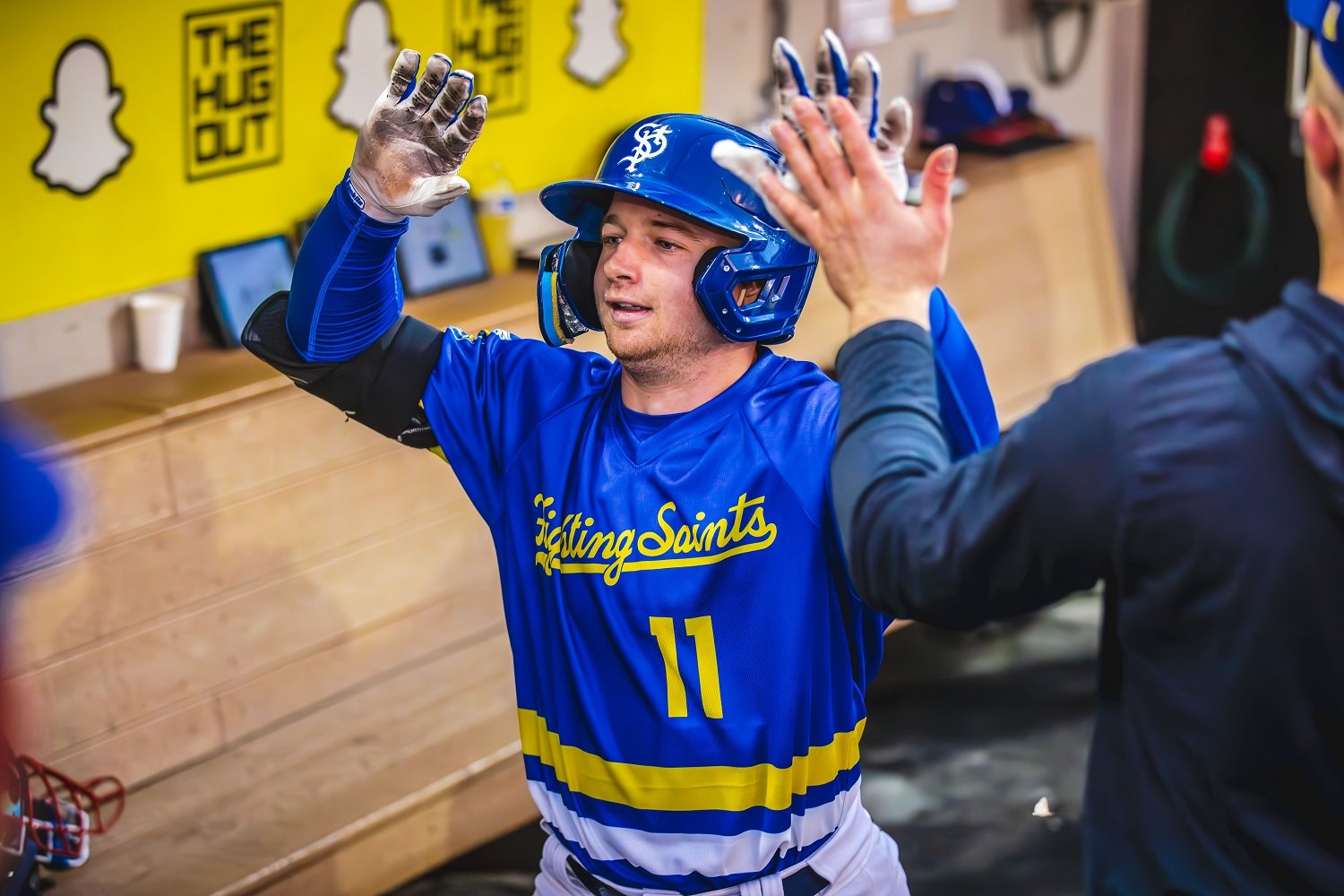 TRANSACTIONS No moves were made on Sunday. Saints Sentinel St. Paul 4, Indianapolis 9 Box Score Caleb Boushley: 4 2/3 IP, 9 H, 7 ER, 0 BB, 2 K HR: Rylan Bannon (18), Patrick Winkel (7), Jair Camargo (3) Multi-hit games: Payton Eeles (2-for-4, R, BB), Michael Helman (2-for-4, 2B, RBI) The Saints launched three homers, but came up short in their farewell to the 2024 season. It’s been a year to forget for St. Paul. Following an excellent 84-64 2023 season, the malevolent forces surrounding minor league roster fortune spat out mediocrity, leaving Toby Gardenhire and his players stuck in a mediocre quagmire. In other words: they were ok. Inoffensive as they were, the pantheon of professional baseball will likely not remember them. There are worse fates to have. Just ask Bill Buckner. Nonetheless, they ended their nondescript season with a stinker, falling 9-4 in a game in which their bats struck out 17 times. Starter Caleb Boushley appeared to be dealing. A run scored in the 1st off a pair of fielding errors—hardly his fault, despite what the “earned run” stat may say—but the veteran hunkered down and kept Indianapolis at bay, at least for a time. In the 5th, right before one could officially describe him as “in the zone,” Boushley opened the frame by allowing a pair of solo homers, portending a disastrous six-run nightmare he would not escape; Jaylen Nowlin had to relieve the righty. That put a great deal of stress on the Saints’ bats—stress they were not prepared to handle. Eeles may have jump-started a skirmish in the 1st, but his efforts only plated one run. Bannon may have netted the team’s third inside-the-park-homer of the year, but, yet again, St. Paul was only rewarded with one run. Pat Winkel then kicked off the bottom of the 5th with a homer, but any more scores would simply be vanity; following the middle-innings blowup, St. Paul never got closer than four runs away from tying their opponent. Rehabbing big-leaguer Justin Topa pitched a scoreless inning with a pair of strikeouts, both looking. He topped out at 92.5 MPH with his sinker. Eeles reached base thrice and stole a trio of bases to give him 41 on the year. I have no idea if the Twins hold a spot for Eeles on their major-league roster, but he has done just about everything possible to force the issue. At 5’5” and scrappier than all hell, he could be the kind of player the team hasn’t had in quite some time. Indianapolis is the Triple-A affiliate for the Pittsburgh Pirates, a talented farm system with a trio of hurlers—Bubba Chandler, Braxton Ashcraft, and Thomas Harrington—populating the Indianapolis starting rotation. Still, it was their 16th-ranked player, Mike Burrows, who best represented the franchise on Sunday: he struck out 10 over five innings, allowing three runs along the way. TWINS DAILY PLAYERS OF THE DAY Twins Daily Minor League Pitcher of the Day – Justin Topa/Jeff Brigham/Jorge Alcalá Twins Daily Minor League Hitter of the Day – Rylan Bannon PROSPECT SUMMARY Here’s a look at how the Twins Daily Top 20 Twins Prospects performed: #2 – Brooks Lee (Minnesota) - 0-for-1 #5 – Zebby Matthews (Minnesota) - 4 2/3 IP, 2 H, 3 R, 2 BB, 6 K, 87 pitches, 55 strikes (63.2%) MONDAY’S PROBABLE STARTERS There are no more Twins minor league games to be played this year. Thank you for an excellent 2024 season, and we’ll see you again in 2025!
- 19 comments
-
- 2
-

-

-
- caleb boushley
- justin topa
- (and 5 more)
-
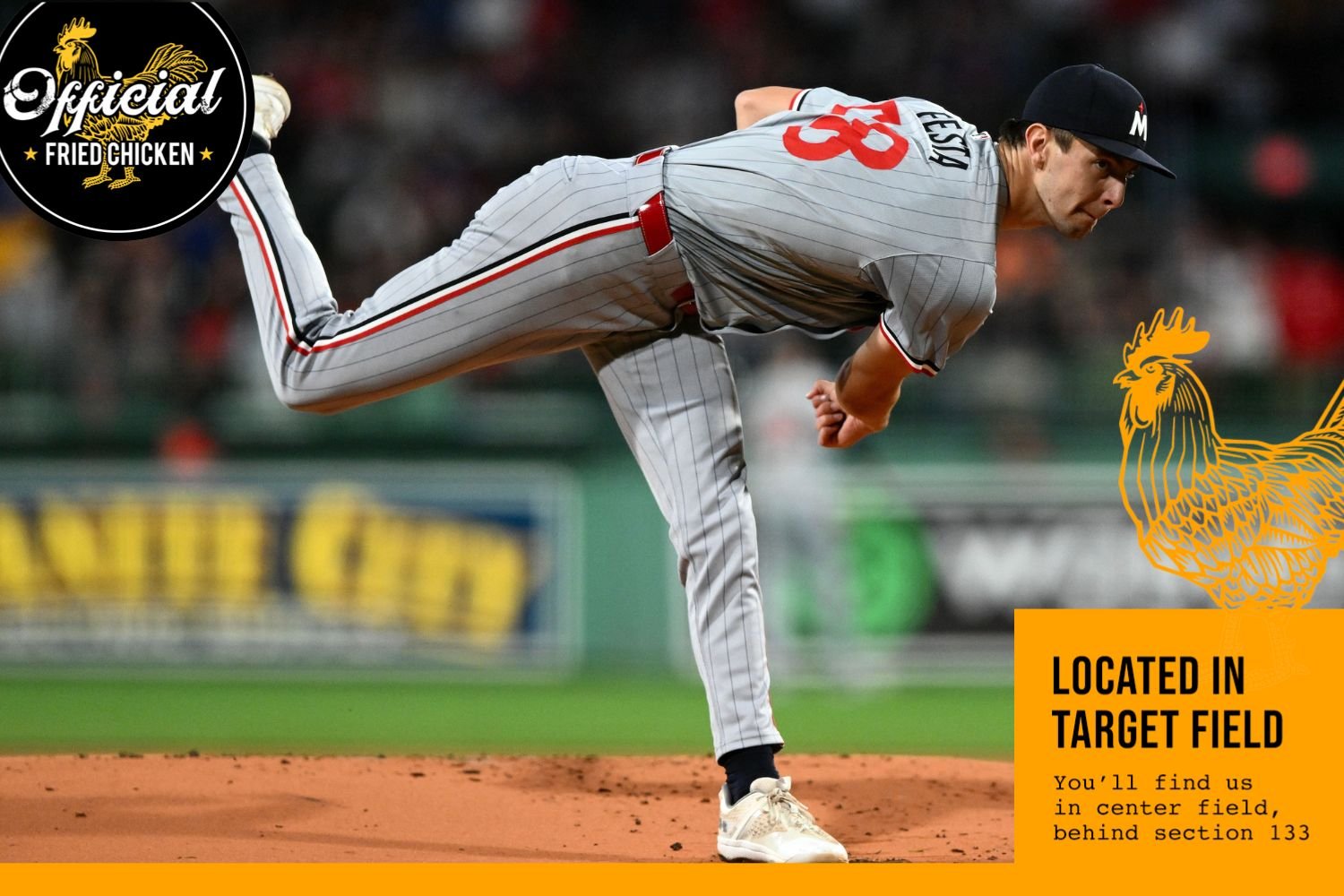 Box Score David Festa: 5 IP, 4 H, 1 ER, 3 BB, 6 K Home Runs: None Top 3 WPA: Louie Varland (.465), Scott Blewett (.320), David Festa (.147) Win Probability Chart (via FanGraphs) The Twins crawled out of Cleveland and into Boston with their dignity in the toilet; a demoralizing, inevitable lost series left them out of juice—any sort of good vibes—and freshly tied with the Detroit Tigers of all teams for the Wild Card. Spirits are low. Juju basically non-existent. The only solace they can find is in their opponent: an ordinary, tepid club mired in mediocrity and forgettable play—the perfect opponent for a team looking to gain some mojo. Would fortune turn out in their favor? We shall see. David Festa earned the nod for Minnesota. The “Slim Reaper”—all limbs, no meat—had been sporadically effective in his rookie campaign, flashing some promise before some ignorant writer declared him a quality hurler, ushering in two dreadful starts. Whoops. And on Friday, he was… acceptable. Perhaps a little inefficient, but otherwise effective over five frames as he allowed just one earned run and struck out six. Even the best at-bats tended to overstay their welcome; Festa needed 103 pitches to net his 15 outs, walking three while spreading five hits across his innings. The lone run came when Trevor Story struck a single into right-center in the 4th. Boston’s starter—Dick Fitts, which is what President Eisenhower probably told reporters who inquired into how Richard Nixon worked in the context of his cabinet—toed a different line. He gave up his fair share of hits, but the Twins fell flat on their face at every turn. Two on in the 4th? Nothing. Another pair on the bases in the 5th? Zip. Every time Minnesota needed a hit, they could only find a glove; even a Willi Castro single in the 6th with a runner on 2nd couldn’t result in a run. So it goes. But a score did break through eventually. With runners on the corners in the 7th, Carlos Correa shot a grounder to Rafael Devers, who couldn’t quite transfer quick enough to turn two, allowing Byron Buxton to score the game-tying run. Then, time stood still. Or, maybe it accelerated. All anyone knows is that outs came and went, batters took their turn and walked back to the dugout, and all either team had to show for it was a tired bullpen and an unflinching run total. The 7th became the 8th, which became the 9th, which became the 10th. Maybe runners reached base, but they sure as hell didn't score; the game was still 1-1 heading into extra-innings. It would take Manfred Man shenanigans to decide the winner in this match. At some point, the game morphed into high comedy. One may argue that it started that way. The ethos of chaos and nonsense became apparently clear to even the most ignorant fan when Manuel Margot, pinch-hitting for Christian Vázquez, struck out looking to push his pinch-hit 0-fer to 30. 30. That's 10 perfect innings. A pitcher throwing such a game would be revered for enjoying one of the finest games of all time. That's just how the 2024 Twins roll. The 12th proved to be the turning point. Trevor Larnach doinked a strange grounder beyond pitcher Cooper Criswell's grasp to plate the Manfred runner before Matt Wallner sharply singled into right to score an insurance run. Two runs! Who knew? Willi Castro added on with a sacrifice fly. All silliness, tomfoolery, high jinks, lunacy, and otherwise non-sensical acts, self-inflicted or forced upon, ended when Griffin Jax entered the game. With business-like intensity, he coaxed two grounders—scoring a run—before striking out Story to end the game. Finally. Notes: With their 81st win, the Twins secured their first back-to-back 162-game seasons with at least a .500 record since 2009-2010. Scott Blewett earned his first career major league win. Caleb Thielbar appeared in his 343rd career game, good for 15th place in Twins pitching history. He is five games away from tying Bert Blyleven for 14th place. Manuel Margot is now 0-30 (0-35 in plate appearances) as a pinch-hitter. Boston hitters struck out 20 times on Friday, a franchise record. Minnesota's bullpen pitched seven innings, allowing five hits, four walks (three intentional), and no earned runs while striking out 14. Post-Game Interview: What’s Next? The Twins and Red Sox play again on Saturday, with Pablo López facing off against Kutter Crawford. First pitch is at 3:10 PM. Bullpen Usage Spreadsheet
- 61 comments
-
- 2
-
-
-
- louis varland
- david festa
- (and 4 more)
-
Fortune is more favorable when the opponent isn't based in Ohio. Image courtesy of © Brian Fluharty-Imagn Images Box Score David Festa: 5 IP, 4 H, 1 ER, 3 BB, 6 K Home Runs: None Top 3 WPA: Louie Varland (.465), Scott Blewett (.320), David Festa (.147) Win Probability Chart (via FanGraphs) The Twins crawled out of Cleveland and into Boston with their dignity in the toilet; a demoralizing, inevitable lost series left them out of juice—any sort of good vibes—and freshly tied with the Detroit Tigers of all teams for the Wild Card. Spirits are low. Juju basically non-existent. The only solace they can find is in their opponent: an ordinary, tepid club mired in mediocrity and forgettable play—the perfect opponent for a team looking to gain some mojo. Would fortune turn out in their favor? We shall see. David Festa earned the nod for Minnesota. The “Slim Reaper”—all limbs, no meat—had been sporadically effective in his rookie campaign, flashing some promise before some ignorant writer declared him a quality hurler, ushering in two dreadful starts. Whoops. And on Friday, he was… acceptable. Perhaps a little inefficient, but otherwise effective over five frames as he allowed just one earned run and struck out six. Even the best at-bats tended to overstay their welcome; Festa needed 103 pitches to net his 15 outs, walking three while spreading five hits across his innings. The lone run came when Trevor Story struck a single into right-center in the 4th. Boston’s starter—Dick Fitts, which is what President Eisenhower probably told reporters who inquired into how Richard Nixon worked in the context of his cabinet—toed a different line. He gave up his fair share of hits, but the Twins fell flat on their face at every turn. Two on in the 4th? Nothing. Another pair on the bases in the 5th? Zip. Every time Minnesota needed a hit, they could only find a glove; even a Willi Castro single in the 6th with a runner on 2nd couldn’t result in a run. So it goes. But a score did break through eventually. With runners on the corners in the 7th, Carlos Correa shot a grounder to Rafael Devers, who couldn’t quite transfer quick enough to turn two, allowing Byron Buxton to score the game-tying run. Then, time stood still. Or, maybe it accelerated. All anyone knows is that outs came and went, batters took their turn and walked back to the dugout, and all either team had to show for it was a tired bullpen and an unflinching run total. The 7th became the 8th, which became the 9th, which became the 10th. Maybe runners reached base, but they sure as hell didn't score; the game was still 1-1 heading into extra-innings. It would take Manfred Man shenanigans to decide the winner in this match. At some point, the game morphed into high comedy. One may argue that it started that way. The ethos of chaos and nonsense became apparently clear to even the most ignorant fan when Manuel Margot, pinch-hitting for Christian Vázquez, struck out looking to push his pinch-hit 0-fer to 30. 30. That's 10 perfect innings. A pitcher throwing such a game would be revered for enjoying one of the finest games of all time. That's just how the 2024 Twins roll. The 12th proved to be the turning point. Trevor Larnach doinked a strange grounder beyond pitcher Cooper Criswell's grasp to plate the Manfred runner before Matt Wallner sharply singled into right to score an insurance run. Two runs! Who knew? Willi Castro added on with a sacrifice fly. All silliness, tomfoolery, high jinks, lunacy, and otherwise non-sensical acts, self-inflicted or forced upon, ended when Griffin Jax entered the game. With business-like intensity, he coaxed two grounders—scoring a run—before striking out Story to end the game. Finally. Notes: With their 81st win, the Twins secured their first back-to-back 162-game seasons with at least a .500 record since 2009-2010. Scott Blewett earned his first career major league win. Caleb Thielbar appeared in his 343rd career game, good for 15th place in Twins pitching history. He is five games away from tying Bert Blyleven for 14th place. Manuel Margot is now 0-30 (0-35 in plate appearances) as a pinch-hitter. Boston hitters struck out 20 times on Friday, a franchise record. Minnesota's bullpen pitched seven innings, allowing five hits, four walks (three intentional), and no earned runs while striking out 14. Post-Game Interview: What’s Next? The Twins and Red Sox play again on Saturday, with Pablo López facing off against Kutter Crawford. First pitch is at 3:10 PM. Bullpen Usage Spreadsheet View full article
- 61 replies
-
- 1
-
-
- louis varland
- david festa
- (and 4 more)
-
Give him another one-year deal, or forget about it? Image courtesy of © Jesse Johnson-Imagn Images Carlos Santana has had a very nice season. The 38-year-old has defied traditional aging curves, riding his extraordinary understanding of the strike zone and vicious pull power to his best wRC+ in five years. He’s one of two batters on the Twins with enough plate appearances to qualify for the batting title; he leads the team in homers; he leads the team in walks; he’s fourth among their hitters in fWAR. Hell, Santana has even stolen four bases without being caught. He's been a blessing for a squad decimated by injuries and stuck in a bog of mediocre hitters overwhelmed by extended roles. Plus—and this is the part none of us expected, to quite this extent—he’s provided tremendous defense at first base, probably good enough to nab the team’s first Gold Glove since Byron Buxton and Brian Dozier won in 2017. So, as the season winds down and the winter looms, let’s consider whether the team should bring Santana back for another go-around. Who are the other 1st base options in free agency? First base is set to be big on name-brand talent, and perhaps a bit light on actual production. A list can be found here, but I’ll dole out the skinny: the main attractions are Paul Goldschmidt, Pete Alonso, Josh Bell, and Christian Walker. (I’m betting on the Yankees picking up Anthony Rizzo’s $17 million option, but given his age and recent injury record, he wouldn't rank with the others listed here anyway.) You know Goldschmidt—he’s a possible Hall of Famer—but he’s also at the tail end of his worst year as a pro. His strikeouts are up, his walks are down, and his OPS is dangerously close to starting with a six. He may bounce back, but I would bet on his goose being thoroughly singed. Then we have Pete Alonso. The Twins are not ponying up for Pete Alonso. That leaves two Diamondbacks: Walker and Bell. Walker is a fascinating player who, with enough squinting, looks something like a younger Santana, with his power bat and excellent defense. He would be a truly interesting multi-year target, but again, the pessimist in me remains skeptical that the Twins would meet his asking price. So it goes. Finally, we have the man abandoned by both the 2023 Guardians and 2024 Marlins, Josh Bell. That both squads deemed him unable to aid them tells you everything you need to know. He's superb at having half a good season, but has never had a full year of consistent productivity, and the Twins are unlikely to profit from gambling on changing that. If you’re the Twins—unlikely to shell out much for a formidable thumper—Santana and the depressed salary he would command as an old player in a young man’s game seem like an attractive option. He probably wouldn’t sign for much more than his 2024 salary. The league just doesn't change its mind and double the demand for players as they approach age 40. Ok, but what about the internal options? José Miranda is the most likely heir to take over at the cold corner. His bat has returned to “oh yeah, this guy can hit” form, with a 120 wRC+ over 117 games, and he’s still in pre-arbitration. Given his putrid defensive metrics at third, it might make sense to go the Miguel Sanó route and bite the bullet, permanently moving him to the more lethargic position. The Twins love positional flexibility, though, and banishing Miranda to first would violate that principle. I think they’ll give him as much time as possible to prove himself incapable of handling the hot corner. (For the record, this is the path I see as most likely, in case the team doesn’t re-sign Santana.) Other than that, Minnesota only has Alex Kirilloff—who can’t be depended on for anything at this time—and Yunior Severino, whose placement on the 40-man roster and complete lack of any major-league playing time tells you everything you need to know about how the Twins value him. Anything on the trade block? This is always a murky topic to investigate; we simply don’t know which players are actually available. Nor do we hear the web of conversations executives engage in. We can only guess. Andrew Vaughn would be a fascinating buy-low candidate, if the White Sox were willing to deal within the division. Yandy Díaz could be another player in a long line of solid contributors deemed too expensive by Tampa Bay, which is a bit funny to say as a Twins fan, but Minnesota hasn’t become that poor yet. Vladimir Guerrero Jr. wouldn’t make much sense on this team and would never happen, but it sure would be fun! Huh, it sure seems like options are limited, then. I would agree! Keeping Miranda as the future first baseman appears to be a logical move, but given that we can only tepidly write Royce Lewis in as the everyday third baseman, it might be wise for the team to keep their depth built at the position. Brooks Lee’s cup of coffee certainly hasn’t pushed anyone to move heaven and earth to keep him in the majors, either. Given their alternatives, yeah, bringing back Santana for one more circuit of the sun seems like one of their only avenues. He’ll be 39 around the start of 2025—one of the only players left in MLB alive before the Twins won a World Series—which is probably the only concern surrounding Santana. Father Time is undefeated. But, his style of play has augured a beautiful aging curve so far—and he could very well become the team’s new Nelson Cruz. View full article
-
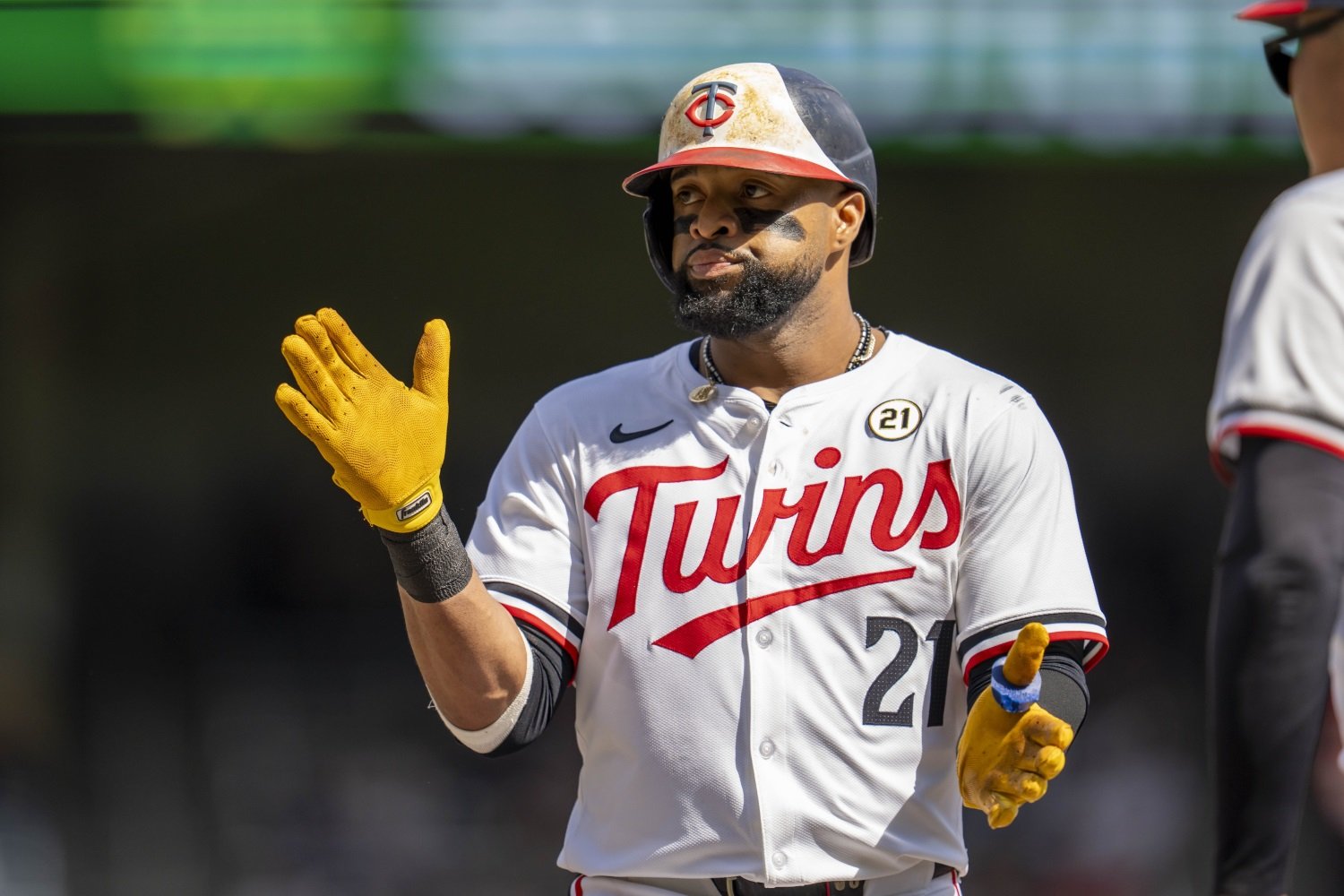 Carlos Santana has had a very nice season. The 38-year-old has defied traditional aging curves, riding his extraordinary understanding of the strike zone and vicious pull power to his best wRC+ in five years. He’s one of two batters on the Twins with enough plate appearances to qualify for the batting title; he leads the team in homers; he leads the team in walks; he’s fourth among their hitters in fWAR. Hell, Santana has even stolen four bases without being caught. He's been a blessing for a squad decimated by injuries and stuck in a bog of mediocre hitters overwhelmed by extended roles. Plus—and this is the part none of us expected, to quite this extent—he’s provided tremendous defense at first base, probably good enough to nab the team’s first Gold Glove since Byron Buxton and Brian Dozier won in 2017. So, as the season winds down and the winter looms, let’s consider whether the team should bring Santana back for another go-around. Who are the other 1st base options in free agency? First base is set to be big on name-brand talent, and perhaps a bit light on actual production. A list can be found here, but I’ll dole out the skinny: the main attractions are Paul Goldschmidt, Pete Alonso, Josh Bell, and Christian Walker. (I’m betting on the Yankees picking up Anthony Rizzo’s $17 million option, but given his age and recent injury record, he wouldn't rank with the others listed here anyway.) You know Goldschmidt—he’s a possible Hall of Famer—but he’s also at the tail end of his worst year as a pro. His strikeouts are up, his walks are down, and his OPS is dangerously close to starting with a six. He may bounce back, but I would bet on his goose being thoroughly singed. Then we have Pete Alonso. The Twins are not ponying up for Pete Alonso. That leaves two Diamondbacks: Walker and Bell. Walker is a fascinating player who, with enough squinting, looks something like a younger Santana, with his power bat and excellent defense. He would be a truly interesting multi-year target, but again, the pessimist in me remains skeptical that the Twins would meet his asking price. So it goes. Finally, we have the man abandoned by both the 2023 Guardians and 2024 Marlins, Josh Bell. That both squads deemed him unable to aid them tells you everything you need to know. He's superb at having half a good season, but has never had a full year of consistent productivity, and the Twins are unlikely to profit from gambling on changing that. If you’re the Twins—unlikely to shell out much for a formidable thumper—Santana and the depressed salary he would command as an old player in a young man’s game seem like an attractive option. He probably wouldn’t sign for much more than his 2024 salary. The league just doesn't change its mind and double the demand for players as they approach age 40. Ok, but what about the internal options? José Miranda is the most likely heir to take over at the cold corner. His bat has returned to “oh yeah, this guy can hit” form, with a 120 wRC+ over 117 games, and he’s still in pre-arbitration. Given his putrid defensive metrics at third, it might make sense to go the Miguel Sanó route and bite the bullet, permanently moving him to the more lethargic position. The Twins love positional flexibility, though, and banishing Miranda to first would violate that principle. I think they’ll give him as much time as possible to prove himself incapable of handling the hot corner. (For the record, this is the path I see as most likely, in case the team doesn’t re-sign Santana.) Other than that, Minnesota only has Alex Kirilloff—who can’t be depended on for anything at this time—and Yunior Severino, whose placement on the 40-man roster and complete lack of any major-league playing time tells you everything you need to know about how the Twins value him. Anything on the trade block? This is always a murky topic to investigate; we simply don’t know which players are actually available. Nor do we hear the web of conversations executives engage in. We can only guess. Andrew Vaughn would be a fascinating buy-low candidate, if the White Sox were willing to deal within the division. Yandy Díaz could be another player in a long line of solid contributors deemed too expensive by Tampa Bay, which is a bit funny to say as a Twins fan, but Minnesota hasn’t become that poor yet. Vladimir Guerrero Jr. wouldn’t make much sense on this team and would never happen, but it sure would be fun! Huh, it sure seems like options are limited, then. I would agree! Keeping Miranda as the future first baseman appears to be a logical move, but given that we can only tepidly write Royce Lewis in as the everyday third baseman, it might be wise for the team to keep their depth built at the position. Brooks Lee’s cup of coffee certainly hasn’t pushed anyone to move heaven and earth to keep him in the majors, either. Given their alternatives, yeah, bringing back Santana for one more circuit of the sun seems like one of their only avenues. He’ll be 39 around the start of 2025—one of the only players left in MLB alive before the Twins won a World Series—which is probably the only concern surrounding Santana. Father Time is undefeated. But, his style of play has augured a beautiful aging curve so far—and he could very well become the team’s new Nelson Cruz.
- 95 comments
-
- 7
-
-
- carlos santana
- jose miranda
- (and 2 more)
-
Now, only the Saints stand in the way of the off-season's unstoppable pull. Image courtesy of Ed Bailey, Wichita Wind Surge (photo of CJ Culpepper) TRANSACTIONS No moves were made on Sunday. Saints Sentinel St. Paul 2, Columbus 5 Box Score Randy Dobnak: 5 ⅔ IP, 2 H, 3 ER, 3 BB, 4 K HR: Payton Eeles (6) Multi-hit games: Jair Camargo (2-for-4, RBI) The Saints fell in their final road game of 2024. Fortune sure looked to favor St. Paul early. Payton Eeles surveyed the first pitch of the game, determined it to be ideal, and slashed the offering deep the other way, sending the ball clanking into the stands as the Columbus crowd sat stunned at what they saw. And they didn’t stop there. Attacking in the 2nd, Carson McCusker singled, Diego A. Castillo walked, and Jair Camargo fought one off the other way, plating the second run in the young game—with more seemingly on the horizon. Only, those runs never came; the St. Paul rally subsided, and a Saints runner would only reach 2nd base three more times, with one of those adventures ending in a dashing Austin Martin running into an out at home (neither team tweeted about the play, but I can only imagine it rivaled Lord of the Rings in its excitement, detail, and heroic development.) St. Paul never scored again. The Clippers did, though, as Johnathan Rodriguez shot a Randy Dobnak sinker just over the right field wall for a three-run homer, soiling what was otherwise a pretty solid start from the righty. Myles Straw tacked on two runs with a 7th inning single off Giovanny Gallegos. James Karinchak—the Ricky Vaughn of the minors—ended the game with a scoreless 9th, striking out two. Triston McKenzie fired 2 ⅔ empty frames against the Saints on Sunday. You may remember him as yet another hurler in the Great Cleveland Pitching Machine, but his dreadful play with the Guardians in 2024 earned him a bus ticket to Columbus, where he’s pitched since June. The Clippers’ 2nd baseman, Juan Brito, ranks as the 9th-best prospect in Cleveland’s system. He singled and walked in four plate appearances. WIND SURGE WISDOM Wichita 4, Tulsa 2 Box Score C.J. Culpepper: 5 IP, 3 H, 0 ER, 0 BB, 5 K HR: Alex Isola (2) Multi-hit games: Ben Ross (2-for-4, 2B, R, BB), Walker Jenkins (2-for-5, 2B, R, RBI), Alex Isola (3-for-4, HR, R, 2 RBI) The Wind Surge concluded their season with a win on Sunday. Sometimes, it may be a good idea to go gently into that good night: Wichita’s 2024 campaign has been dreadful, with their 80 losses only being bested by one team in the Texas League. They couldn’t hit and were only mediocre at pitching. Down years happen to every minor league squad—the oscillation of talent often leaves teams high and dry—so the offseason respite appeared especially tantalizing to Minnesota’s Kansas-based affiliate. But, before that could happen, C.J. Culpepper had one last gem in him. With hay-colored hair flowing in the wind, he took the mound and dominated, scattering a trio of hits across five frames of work while striking out five. He even helped his cause by knocking down a liner and finishing the play for an out. If Andrew Van Ginkel ever goes down, I think the Vikings could just send Culpepper out there; under a helmet, the two would probably look identical. Wichita’s bats had their hurler’s back, even if it did take them a few innings to wake up. Walker Jenkins blasted a double in the 5th to notch his first Double-A RBI before Alex Isola demolished a solo homer the next inning, giving the Wind Surge a 2-0 advantage. Aaron Sabato walked following the homer and later scored on a Dalton Shuffield single. Isola then iced the game with his second RBI of the game, scooting a single beyond Tulsa’s shortstop (#OldFriend Noah Miller) to plate a fourth Wind Surge run. Jarret Whorff placed the finishing touches on the season with a breezy 9th, striking out Bubba Alleyne on a dastardly changeup to end the year. The Drillers are an affiliate of the Dodgers—and while L.A. is known for their tremendous farm systems—not a single member of their top 30 prospects played in Sunday’s game. TWINS DAILY PLAYERS OF THE DAY Twins Daily Minor League Pitcher of the Day – C.J. Culpepper Twins Daily Minor League Hitter of the Day – Alex Isola PROSPECT SUMMARY Here’s a look at how the Twins Daily Top 20 Twins Prospects performed: #1– Walker Jenkins (Wichita) - 2-5, 2B, R, RBI #2 – Brooks Lee (Minnesota) - 2-4, 3B, 5 RBI, K #6 - David Festa (Minnesota) - 3 ⅔ IP, 3 H, 2 ER, 3 BB, 4 K #15 - Kala’i Rosario (Wichita) - 0-4, 2 K #17 – Tanner Schobel (Wichita) - 0-3, BB #19 - C.J. Culpepper (Wichita) - 5 IP, 3 H, 0 ER, 0 BB, 5 K TUESDAY’S PROBABLE STARTERS Indianapolis @ St. Paul (6:37 PM) - RHP Caleb Boushley View full article
-
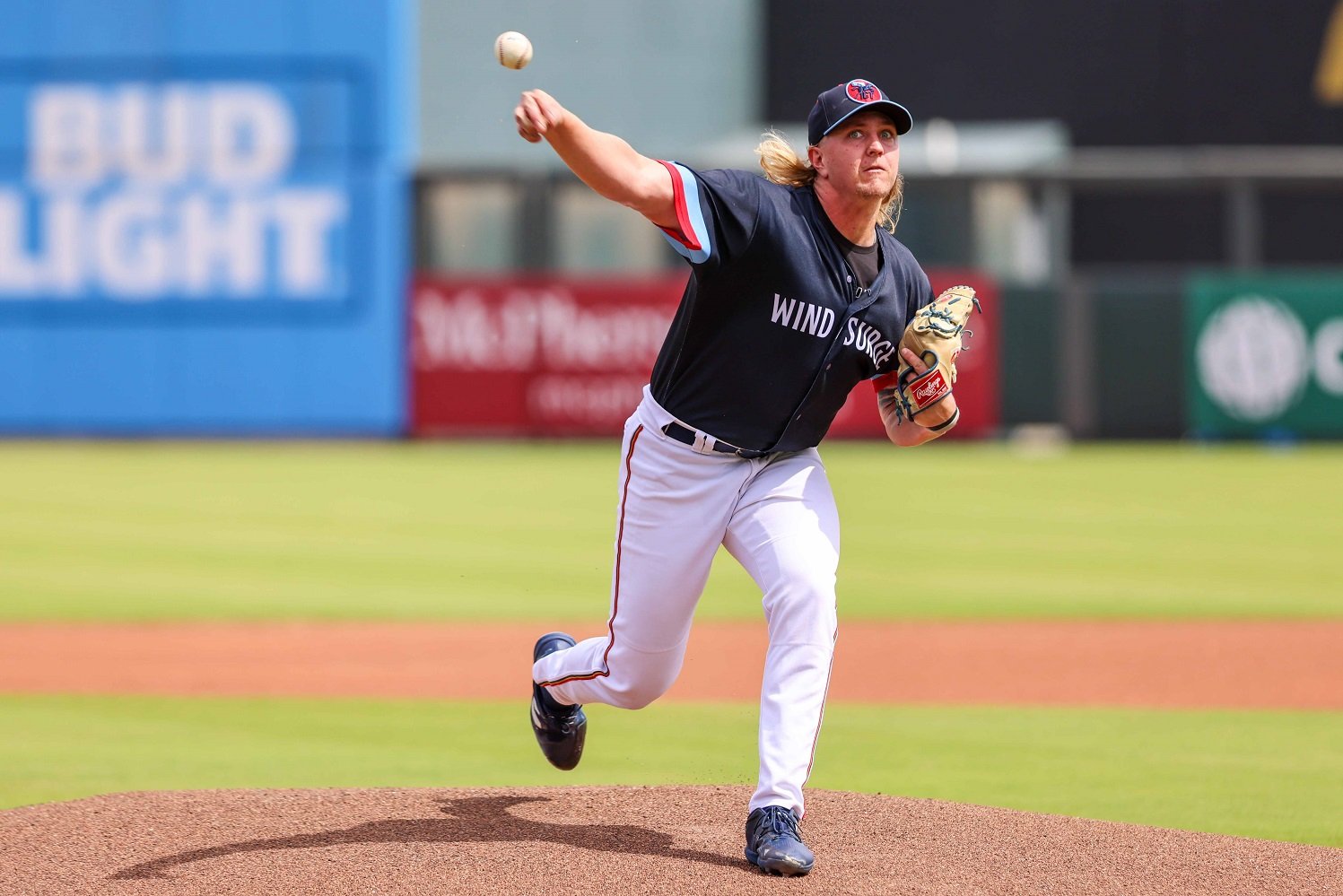 TRANSACTIONS No moves were made on Sunday. Saints Sentinel St. Paul 2, Columbus 5 Box Score Randy Dobnak: 5 ⅔ IP, 2 H, 3 ER, 3 BB, 4 K HR: Payton Eeles (6) Multi-hit games: Jair Camargo (2-for-4, RBI) The Saints fell in their final road game of 2024. Fortune sure looked to favor St. Paul early. Payton Eeles surveyed the first pitch of the game, determined it to be ideal, and slashed the offering deep the other way, sending the ball clanking into the stands as the Columbus crowd sat stunned at what they saw. And they didn’t stop there. Attacking in the 2nd, Carson McCusker singled, Diego A. Castillo walked, and Jair Camargo fought one off the other way, plating the second run in the young game—with more seemingly on the horizon. Only, those runs never came; the St. Paul rally subsided, and a Saints runner would only reach 2nd base three more times, with one of those adventures ending in a dashing Austin Martin running into an out at home (neither team tweeted about the play, but I can only imagine it rivaled Lord of the Rings in its excitement, detail, and heroic development.) St. Paul never scored again. The Clippers did, though, as Johnathan Rodriguez shot a Randy Dobnak sinker just over the right field wall for a three-run homer, soiling what was otherwise a pretty solid start from the righty. Myles Straw tacked on two runs with a 7th inning single off Giovanny Gallegos. James Karinchak—the Ricky Vaughn of the minors—ended the game with a scoreless 9th, striking out two. Triston McKenzie fired 2 ⅔ empty frames against the Saints on Sunday. You may remember him as yet another hurler in the Great Cleveland Pitching Machine, but his dreadful play with the Guardians in 2024 earned him a bus ticket to Columbus, where he’s pitched since June. The Clippers’ 2nd baseman, Juan Brito, ranks as the 9th-best prospect in Cleveland’s system. He singled and walked in four plate appearances. WIND SURGE WISDOM Wichita 4, Tulsa 2 Box Score C.J. Culpepper: 5 IP, 3 H, 0 ER, 0 BB, 5 K HR: Alex Isola (2) Multi-hit games: Ben Ross (2-for-4, 2B, R, BB), Walker Jenkins (2-for-5, 2B, R, RBI), Alex Isola (3-for-4, HR, R, 2 RBI) The Wind Surge concluded their season with a win on Sunday. Sometimes, it may be a good idea to go gently into that good night: Wichita’s 2024 campaign has been dreadful, with their 80 losses only being bested by one team in the Texas League. They couldn’t hit and were only mediocre at pitching. Down years happen to every minor league squad—the oscillation of talent often leaves teams high and dry—so the offseason respite appeared especially tantalizing to Minnesota’s Kansas-based affiliate. But, before that could happen, C.J. Culpepper had one last gem in him. With hay-colored hair flowing in the wind, he took the mound and dominated, scattering a trio of hits across five frames of work while striking out five. He even helped his cause by knocking down a liner and finishing the play for an out. If Andrew Van Ginkel ever goes down, I think the Vikings could just send Culpepper out there; under a helmet, the two would probably look identical. Wichita’s bats had their hurler’s back, even if it did take them a few innings to wake up. Walker Jenkins blasted a double in the 5th to notch his first Double-A RBI before Alex Isola demolished a solo homer the next inning, giving the Wind Surge a 2-0 advantage. Aaron Sabato walked following the homer and later scored on a Dalton Shuffield single. Isola then iced the game with his second RBI of the game, scooting a single beyond Tulsa’s shortstop (#OldFriend Noah Miller) to plate a fourth Wind Surge run. Jarret Whorff placed the finishing touches on the season with a breezy 9th, striking out Bubba Alleyne on a dastardly changeup to end the year. The Drillers are an affiliate of the Dodgers—and while L.A. is known for their tremendous farm systems—not a single member of their top 30 prospects played in Sunday’s game. TWINS DAILY PLAYERS OF THE DAY Twins Daily Minor League Pitcher of the Day – C.J. Culpepper Twins Daily Minor League Hitter of the Day – Alex Isola PROSPECT SUMMARY Here’s a look at how the Twins Daily Top 20 Twins Prospects performed: #1– Walker Jenkins (Wichita) - 2-5, 2B, R, RBI #2 – Brooks Lee (Minnesota) - 2-4, 3B, 5 RBI, K #6 - David Festa (Minnesota) - 3 ⅔ IP, 3 H, 2 ER, 3 BB, 4 K #15 - Kala’i Rosario (Wichita) - 0-4, 2 K #17 – Tanner Schobel (Wichita) - 0-3, BB #19 - C.J. Culpepper (Wichita) - 5 IP, 3 H, 0 ER, 0 BB, 5 K TUESDAY’S PROBABLE STARTERS Indianapolis @ St. Paul (6:37 PM) - RHP Caleb Boushley
- 9 comments
-
- 4
-
-
-
- c.j. culpepper
- alex isola
- (and 3 more)
-
Well, considering the guy who usually plays right field has done so in 927 games, I'd say Wallner is still a little green.
- 38 replies
-
- 2
-
-

-
- bailey ober
- byron buxton
- (and 4 more)
-
I've never cared much for baseball anyway. Image courtesy of © Jesse Johnson-Imagn Images Box Score Bailey Ober: 6 ⅔ IP, 6 H, 5 ER, 2 BB, 6 K Home Runs: Byron Buxton (17) Bottom 3 WPA: Jorge Alcalá (-.166), Ryan Jeffers (-.109), Edouard Julien (-.105) Win Probability Chart (via FanGraphs) Action was curt to start on Friday. If you helped with making dinner or otherwise moved your attention away from the game for just a second, eons passed; batters phased in and out of the box at a rapid pace. The beginning and middle phases of a normally turgid game blew away. No one knows where they disappeared to. It was apparent, though, that Bailey Ober was on his game once more. The elongated righty dominated in his usual fashion: with command and unpredictability. Cincinnati stood uncomfortable for the majority of the game. His mighty low 90s fastball and dastardly changeup—the great equalizer in his ordinary pitch mix—cut down Reds hitters where they stood, leaving little more than frustrated remarks and unbelieving reactions. His only early mistake was when TJ Friedl shot a decent cutter just over the right-field wall. Cincinnati’s starter was on his game, too. Julian Aguiar worked with similar vigor, never appearing to overwhelm Minnesota’s hitters but nonetheless finding ways to get them out; for four innings, the only Twins hit was an infield single that reasonably could have been ruled an error. Other than that? Nothing. Movement simply never materialized. Outs came and went. Innings melted away. By the time a normal game might enter its middle phase, this one transitioned to its crucial final act. Still, almost nothing happened. Well, outside of a Byron Buxton homer. In his first start off the IL, Buxton perfectly estimated the movement of an Aguiar sinker and deposited the pitch 393 feet away to mark Minnesota’s first score of the game. Not long after, sadly, is when the game’s ethos took a turn, and Ober’s assumed efficiency failed him. Kicking off the 7th, Spencer Steer cracked a hit off the right field facade, fooling an inexperienced Matt Wallner into overplaying his hand as the former Twins prospect rolled safely into 3rd. Then, Friedl bunted him home. God, it was a beauty; Ober attempted in vain to catch the runner at the plate, but even Jim Kaat couldn’t have made the play. Continuing the whole ugly frame, Ty France cracked a double into the left-center gap, scoring Friedl as the Reds' lead turned from 1 to 2. And then it got worse. Much worse. Jorge Alcalá entered the game as the “relief pitcher”—which is an oxymoron—and walked Jonathan India to load the bases for Elly De La Cruz. Friends: never load the bases for Elly De La Cruz. One lethargic slider morphed the match from a close affair to a laugher. De La Cruz blasted the pitch deep into the nether; it’s set to return to our three-dimensional plane sometime in 2028. A skirmish by the Twins in the bottom of the frame pushed them within striking distance, but the game continued to whittle down until it reached its assumed conclusion, finally mercifully ending when Willi Castro grounded out to second. Notes: Carlos Correa will be activated before tomorrow's game. Byron Buxton's 132nd home run ties him with Jacque Jones for 15th place in Twins history. He is nine away from away from the next batter, Michael Cuddyer. Bailey Ober struck out his 461st career batter on Friday, keeping him in 30th place in Twins history. He is five away from tying Tyler Duffey. Willi Castro added to his team-leading hit total with his 126th knock of the season. Jose Miranda is in 2nd place with 115. Post-Game Interview: What’s Next? The Twins and Reds match up again on Saturday, with Simeon Woods Richardson set to face off against Nick Martinez. First pitch is at 6:10 PM. Bullpen Usage Spreadsheet View full article
- 38 replies
-
- 1
-
-
- bailey ober
- byron buxton
- (and 4 more)
-
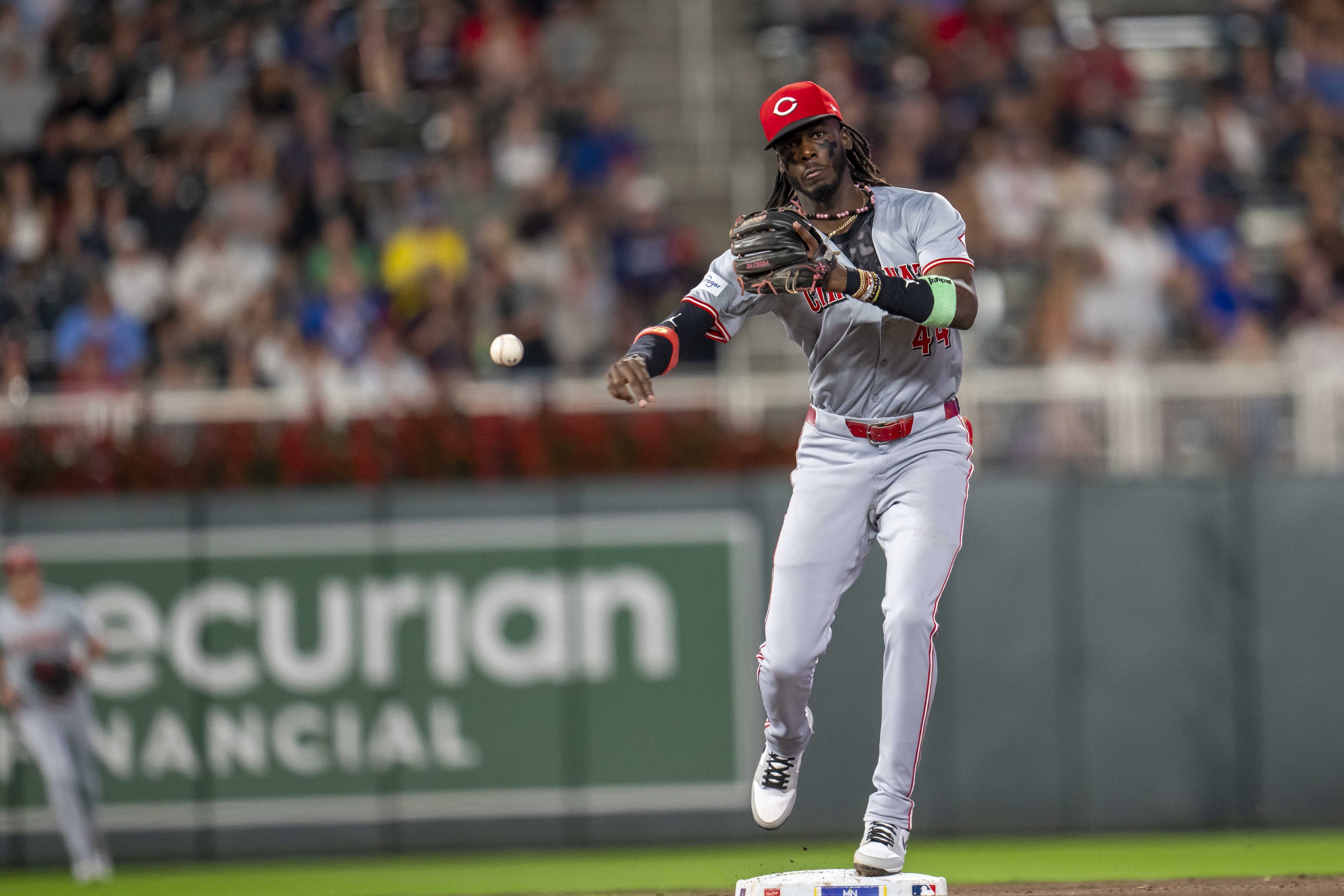 Box Score Bailey Ober: 6 ⅔ IP, 6 H, 5 ER, 2 BB, 6 K Home Runs: Byron Buxton (17) Bottom 3 WPA: Jorge Alcalá (-.166), Ryan Jeffers (-.109), Edouard Julien (-.105) Win Probability Chart (via FanGraphs) Action was curt to start on Friday. If you helped with making dinner or otherwise moved your attention away from the game for just a second, eons passed; batters phased in and out of the box at a rapid pace. The beginning and middle phases of a normally turgid game blew away. No one knows where they disappeared to. It was apparent, though, that Bailey Ober was on his game once more. The elongated righty dominated in his usual fashion: with command and unpredictability. Cincinnati stood uncomfortable for the majority of the game. His mighty low 90s fastball and dastardly changeup—the great equalizer in his ordinary pitch mix—cut down Reds hitters where they stood, leaving little more than frustrated remarks and unbelieving reactions. His only early mistake was when TJ Friedl shot a decent cutter just over the right-field wall. Cincinnati’s starter was on his game, too. Julian Aguiar worked with similar vigor, never appearing to overwhelm Minnesota’s hitters but nonetheless finding ways to get them out; for four innings, the only Twins hit was an infield single that reasonably could have been ruled an error. Other than that? Nothing. Movement simply never materialized. Outs came and went. Innings melted away. By the time a normal game might enter its middle phase, this one transitioned to its crucial final act. Still, almost nothing happened. Well, outside of a Byron Buxton homer. In his first start off the IL, Buxton perfectly estimated the movement of an Aguiar sinker and deposited the pitch 393 feet away to mark Minnesota’s first score of the game. Not long after, sadly, is when the game’s ethos took a turn, and Ober’s assumed efficiency failed him. Kicking off the 7th, Spencer Steer cracked a hit off the right field facade, fooling an inexperienced Matt Wallner into overplaying his hand as the former Twins prospect rolled safely into 3rd. Then, Friedl bunted him home. God, it was a beauty; Ober attempted in vain to catch the runner at the plate, but even Jim Kaat couldn’t have made the play. Continuing the whole ugly frame, Ty France cracked a double into the left-center gap, scoring Friedl as the Reds' lead turned from 1 to 2. And then it got worse. Much worse. Jorge Alcalá entered the game as the “relief pitcher”—which is an oxymoron—and walked Jonathan India to load the bases for Elly De La Cruz. Friends: never load the bases for Elly De La Cruz. One lethargic slider morphed the match from a close affair to a laugher. De La Cruz blasted the pitch deep into the nether; it’s set to return to our three-dimensional plane sometime in 2028. A skirmish by the Twins in the bottom of the frame pushed them within striking distance, but the game continued to whittle down until it reached its assumed conclusion, finally mercifully ending when Willi Castro grounded out to second. Notes: Carlos Correa will be activated before tomorrow's game. Byron Buxton's 132nd home run ties him with Jacque Jones for 15th place in Twins history. He is nine away from away from the next batter, Michael Cuddyer. Bailey Ober struck out his 461st career batter on Friday, keeping him in 30th place in Twins history. He is five away from tying Tyler Duffey. Willi Castro added to his team-leading hit total with his 126th knock of the season. Jose Miranda is in 2nd place with 115. Post-Game Interview: What’s Next? The Twins and Reds match up again on Saturday, with Simeon Woods Richardson set to face off against Nick Martinez. First pitch is at 6:10 PM. Bullpen Usage Spreadsheet
 -
Simeon Woods Richardson is on Fumes. Can He Refuel One More Time This Month?
Matt Braun posted an article in Twins
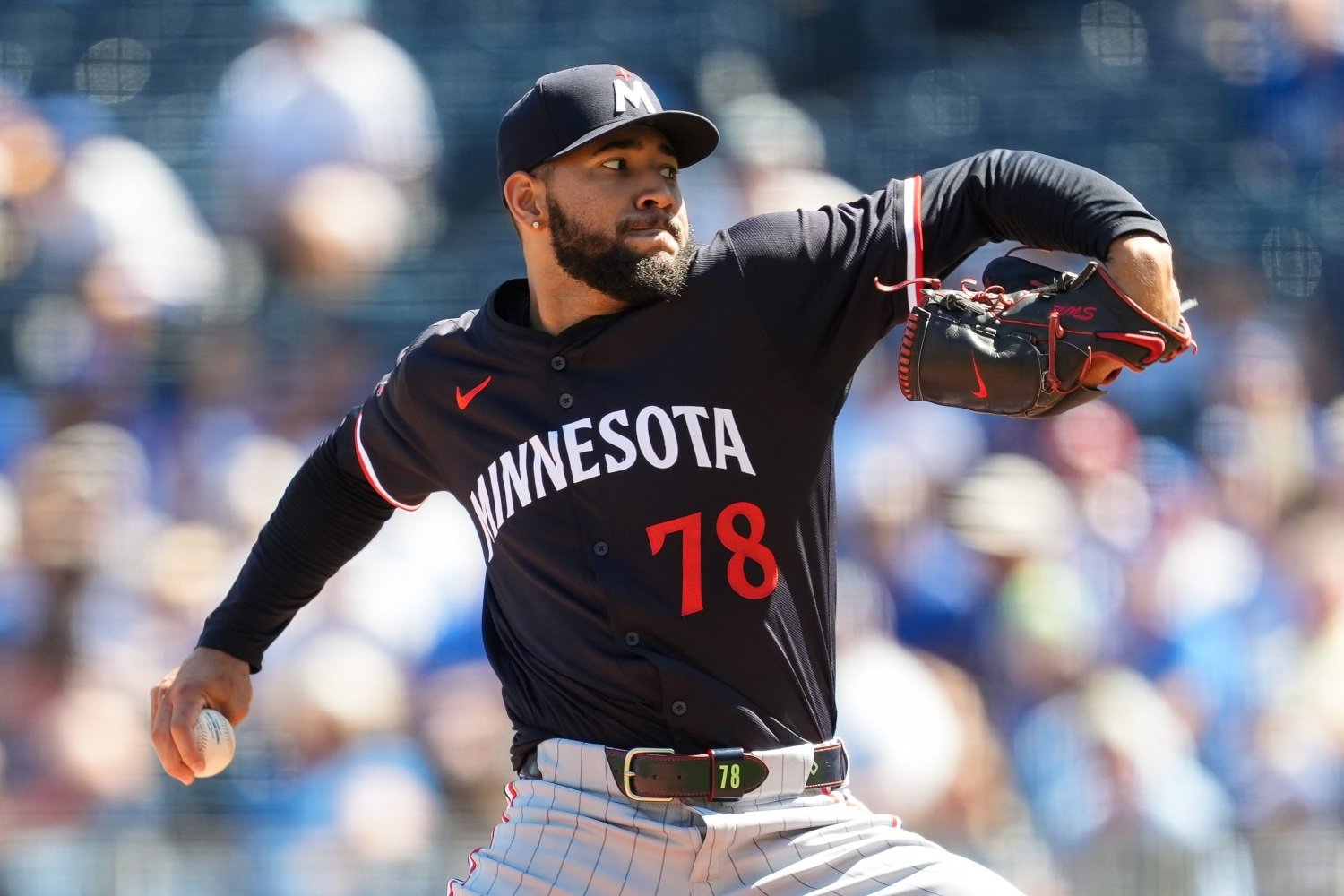 Simeon Woods Richardson’s last three starts have been dreadful. He’s walked more than he’s struck out; he hasn’t gone more than 4 ⅔ innings in any outing; and the velocity that occasionally shot up to the mid-90s is back in the gutters. Just one fastball over this recent stretch crossed the 95-MPH threshold. The Twins only won one of those games. To some degree, Woods Richardson walked a thin line even when the going was good; his xERA, FIP, and xFIP—which are real stats, not leftover bureaucracies from Roosevelt’s New Deal—all treated him as more of an ordinary hurler, not the mid-to-low 3s ERA stud as which he masqueraded. He wasn’t one for swings and misses, and walked batters at an average rate. The batted-ball data was fine. Maybe there was some nebulous force guiding his success, but all signs pointed toward a decent dose of good fortune driving his best months, always ready to rescind its blessings at the drop of a pop-up or the strike of a pebble. So it goes. But that downturn—be it regression or fatigue—puts the Twins in an awkward position. They’ve relied heavily on their youngster this year—likely far more than they wished—and this stumble mere steps before the end of the marathon stretches their already thin rotation to deli pastrami levels. They can’t do much more than hope he can crawl across the finish line, because the alternative is more of the 2024 Louie Varland experience. Hey, I guess Rich Hill is available again. Of course, that depth was only drained thanks to Joe Ryan’s injury, which in turn accentuated the foolishness of Minnesota’s financial overlords to restrict their front office at the trade deadline, but opening that can of worms only adds to the chorus of void-screaming that accomplishes nothing. Your time would be better spent recording an audiobook for your deaf neighbor. For the record, as far as Woods Richardson’s performance goes, I don’t see him falling off and succumbing to regression, as much as a young pitcher breaking down near the end of the heftiest workload he has had to face as a pro. His previous career high, set last year, was 118 ⅓ innings; he’s at 138 ⅓ so far in 2024. That’ll take a toll on any 23-year-old. The good news is that this is mainly a regular-season issue, which is becoming an ever-dwindling facet to strategize for. The postseason—which the Twins are still likely to make, despite their recent lethargic play—is for two starters and a cloud of dust, exactly the model Minnesota is perfectly built for. Pablo López and Bailey Ober are solid first options; who cares about the rest? The Rangers just won the World Series on the backs of Nathan Eovaldi, Jordan Montgomery, and a Voltron effort of whatever scraps and crumbs they could find sitting around. If you’re ever worried about Game 3, then you have other issues to solve. Woods Richardson isn’t the main reason for Minnesota’s stall in performance, but he is one of them. Injury woes and an unreasonable payroll burden thrust the righty into the spotlight, and those same forces will keep him there, despite his fall-off. It’s symbolic, really: the Twins' young starting rotation—once a force of good—is now molding from the inside, morphing into a dilapidated version of itself with no immediate remedy. All we can do is hope the damage isn’t too great.
 -
Close to concluding a tremendous rookie campaign, Simeon Woods Richardson has lost the magic that made him so effective—and it’s helping sink the Twins. Image courtesy of © Jay Biggerstaff-Imagn Images Simeon Woods Richardson’s last three starts have been dreadful. He’s walked more than he’s struck out; he hasn’t gone more than 4 ⅔ innings in any outing; and the velocity that occasionally shot up to the mid-90s is back in the gutters. Just one fastball over this recent stretch crossed the 95-MPH threshold. The Twins only won one of those games. To some degree, Woods Richardson walked a thin line even when the going was good; his xERA, FIP, and xFIP—which are real stats, not leftover bureaucracies from Roosevelt’s New Deal—all treated him as more of an ordinary hurler, not the mid-to-low 3s ERA stud as which he masqueraded. He wasn’t one for swings and misses, and walked batters at an average rate. The batted-ball data was fine. Maybe there was some nebulous force guiding his success, but all signs pointed toward a decent dose of good fortune driving his best months, always ready to rescind its blessings at the drop of a pop-up or the strike of a pebble. So it goes. But that downturn—be it regression or fatigue—puts the Twins in an awkward position. They’ve relied heavily on their youngster this year—likely far more than they wished—and this stumble mere steps before the end of the marathon stretches their already thin rotation to deli pastrami levels. They can’t do much more than hope he can crawl across the finish line, because the alternative is more of the 2024 Louie Varland experience. Hey, I guess Rich Hill is available again. Of course, that depth was only drained thanks to Joe Ryan’s injury, which in turn accentuated the foolishness of Minnesota’s financial overlords to restrict their front office at the trade deadline, but opening that can of worms only adds to the chorus of void-screaming that accomplishes nothing. Your time would be better spent recording an audiobook for your deaf neighbor. For the record, as far as Woods Richardson’s performance goes, I don’t see him falling off and succumbing to regression, as much as a young pitcher breaking down near the end of the heftiest workload he has had to face as a pro. His previous career high, set last year, was 118 ⅓ innings; he’s at 138 ⅓ so far in 2024. That’ll take a toll on any 23-year-old. The good news is that this is mainly a regular-season issue, which is becoming an ever-dwindling facet to strategize for. The postseason—which the Twins are still likely to make, despite their recent lethargic play—is for two starters and a cloud of dust, exactly the model Minnesota is perfectly built for. Pablo López and Bailey Ober are solid first options; who cares about the rest? The Rangers just won the World Series on the backs of Nathan Eovaldi, Jordan Montgomery, and a Voltron effort of whatever scraps and crumbs they could find sitting around. If you’re ever worried about Game 3, then you have other issues to solve. Woods Richardson isn’t the main reason for Minnesota’s stall in performance, but he is one of them. Injury woes and an unreasonable payroll burden thrust the righty into the spotlight, and those same forces will keep him there, despite his fall-off. It’s symbolic, really: the Twins' young starting rotation—once a force of good—is now molding from the inside, morphing into a dilapidated version of itself with no immediate remedy. All we can do is hope the damage isn’t too great. View full article
-
What do you mean the season is already over (for some teams)? Image courtesy of William Parmeter (photo of Kyle DeBarge) TRANSACTIONS LHP Steven Okert placed on temporarily inactive list (AAA St. Paul) Jeff Johnson is reporting that OF Walker Jenkins and RHP Jacob Wosinksi are joining Wichita for the final week of their regular season Saints Sentinel St. Paul 9, Iowa 3 Box Score Travis Adams: 6 IP, 3 H, 2 ER, 1 BB, 4 K HR: Carson McCusker (3) Multi-hit games: Diego A. Castillo (2-for-4, R, 3 RBI, BB), Carson McCusker (3-for-4, HR, 2B, 2 R, 3 RBI), Chris Williams (2-for-4, R, RBI) The Saints walloped their opponents on Sunday. Travis Adams settled in for a much tamer second go-around as St. Paul’s starter. Outside of a cheesy 351-foot homer, Adams was pretty much perfect; he tossed a clean frame three times and twice allowed a lone runner to reach 1st before handling business with efficiency and professionalism. An excellent bounceback for our August Starter of the Month. Unfortunately, he did not get the win for his work. The Saints offense was potent, but they were a bit tardy. No matter: runs are better late than never. St. Paul plated early runs with RBI knocks from Payton Eeles and Chris Williams before roaring into overdrive the second the game transitioned to its final stage. An RBI double from Jeferson Morales wet the palette and ushered Carson McCusker into his place as the main attraction (it’s hard not to be the centerpiece when you stand 6’8”). McCusker tattooed a three-run shot in the 7th to bust the game wide open. Then—in perfect opposition to McCusker’s power—Diego A. Castillo showcased the unique diversity of scoring opportunities in baseball with a bases-clearing single dropped directly between the communication of Iowa’s up-the-middle defense. Both hits plated three runs. What a sport. Caleb Baragar, Giovanny Gallegos, and Zack Weiss delivered the game to the finish line with relatively little drama; a homer off Baragar marked the lone run surrendered by the St. Paul bullpen on Sunday. McCusker is slashing .327/.389/.612 with the Saints. Does anyone else see a little Tyler Austin in his swing? The Iowa Cubs are led by infielder Matt Shaw, who clocks in as the 24th-best prospect in MLB. He was held hitless in four at-bats. WIND SURGE WISDOM Wichita 4, Frisco 2 Box Score C.J. Culpepper: 4 IP, 2 H, 0 ER, 1 BB, 6 K HR: Jorel Ortega (10) Multi-hit games: Jake Rucker (2-for-5, 2B, 2 RBI) The Wind Surge won in extras on Sunday. C.J. Culpepper made his finest start since coming off the IL. The flowing-blonde righty tossed four scoreless frames, whiffing six while allowing a pair of singles and a walk; just once did a runner reach beyond first base. That's more like the kind of pitching we've come to expect from Culpepper. Scoring was sparse, but Wichita made it count when it mattered most, falling flat for long stretches before knotting the game and pulling ahead with the aid of the gifted Manfred Man. Jorel Ortega kicked off the scoring with a solo shot, marking Wichita's lone run before the 8th inning. There—after it seemed like the Wind Surge would never score—a single and two walks loaded the bases for Aaron Sabato. Standing in the box with the intention to cause damage he... got smoked by a fastball. That'll work, anyhow. In extras, Kala'i Rosario walked to set up Jake Rucker with runners on the corners; he pushed a double into the right-field gap, sending the runners in a frenzy as both men came around to score. Jarret Whorff brought the game to an end with his second scoreless frame. He capped a streak of tremendous relief pitching started by Taylor Floyd; between Floyd and Whorff, four hurlers combined to toss five shutout innings with seven strikeouts and no baserunners, at least none allowed through their own volition. The RoughRiders are an affiliate of the Texas Rangers, and their best player is the franchise's 16th-ranked prospect, outfielder Alejandro Osuna. KERNELS NUGGETS Cedar Rapids 3, Wisconsin 10 Box Score Tanner Hall: 4 IP, 5 H, 6 ER, 2 BB, 2 K HR: Kevin Maitan (8) Multi-hit games: Misael Urbina (2-for-4, 3B, R), Poncho Ruiz (2-for-3, BB) The Kernels imploded in sour fashion to end their season. Tanner Hall simply didn’t have it. He allowed a homer three pitches into the start and only continued to tumble from there; three runs scored in total that frame—and despite two clean innings in response—the righty coughed up another trio of scores in the 4th to bring his day to a rough end. The start was a disappointment for the Southern Mississippi product who pitched solidly in August; hopefully a long offseason of rest provides the nourishment and reset he needs. Cedar Rapids’ lineup was in no mood to aid their flailing starter, as came up empty in 14 at-bats on Sunday, with five batters striking out at least twice. Rayne Doncon bore the brunt of the whiff-fest with his first (and only) golden sombrero of the season. It sure is a cruel sport. The little offense they mustered manifested in a 2nd-inning Kevin Maitan homer, a Misael Urbina triple that begat an RBI single from Tyler Dearden, and an at-the-buzzer run-scoring double by Rixon Wingrove. Walker Jenkins reached base twice with a single and a walk. He ends September with more walks (8) than strikeouts (6). With Junior Caminero and Dylan Crews in the majors, he may soon become MLB Pipeline’s number 1 overall prospect. The Timber Rattlers are a member of the typically talented Brewers farm system. They enjoy the services of shortstop Cooper Pratt, the 60th-ranked prospect in MLB. He homered and walked in five trips to the plate. The Kernels finished the season with a 67-63 record, a far fall from their dominant 82-50 heights from 2023, but good enough to secure their 11th straight winning season. The last time Cedar Rapids ended a year below .500 was as an Angels affiliate. Brian Dinkelman runs a tight ship—and despite the relative disappointment of 2024—the Kernels remain a shining beacon of consistency. MUSSEL MATTERS Fort Myers 9, Lakeland 4 Box Score Anthony Narvaez: 3 IP, 3 H, 1 ER, 0 BB, 4 K HR: Khadim Diaw (1), Maddux Houghton (4), Kyle DeBarge (1) Multi-hit games: Kyle DeBarge (4-for-5, HR, 2 R, 4 RBI), Khadim Diaw (2-for-3, HR, R, RBI) In their final game of the season, the Mighty Mussels blasted three homers to secure yet another winning year. It was the Kyle DeBarge show: the recent 1st round pick broke out for his best game as a professional, blasting his first career homer and singling thrice on his way to a hearty 4-for-5 day at the plate. He knocked in four and stole two bases. That’s a packed box score. Not to be overshadowed, Khadim Diaw also hit his inaugural pro ball home run (during a pinch-hit at-bat, nonetheless), and Maddux Houghton gave Fort Myers the lead with a two-run shot just moments after Diaw’s blast completed its return from tickling the stratosphere. The pitching effort was an ensemble cast; Anthony Narvaez kicked things off with three solid innings before turning the ball over to Paulshawn Pasqualotto, Juan Mercedes, and Tomas Cleto. Pasqualotto earned the win with his timing, but Mercedes shined with a pair of scoreless innings to lower his Mighty Mussels ERA to 2.89. Everyone in Fort Myers’ lineup reached base on Sunday, even the substitute players. The Lakeland Flying Tigers—as you could guess—are an affiliate of their grounded parent team based in Detroit. While they no longer employ the wonderful talents of Max Clark and Kevin McGonigle, their DH, Josue Briceño, ranks as the franchise's 10-best prospect. He went 0-4 on Sunday. Despite missing the playoffs, Fort Myers enjoyed yet another year above .500, their 11th in the past 12 years, and their fourth straight under manager Brian Meyer, who has yet to see a losing season. That’s quite the achievement. The minors are chaotic and volatile, with good players leaving quickly for greener pastures, making any sort of stability almost impossible. A ton of credit goes to Meyer, the Mussels coaching staff, the Twins organization, and—of course—the players for accomplishing this feat. TWINS DAILY PLAYERS OF THE DAY Twins Daily Minor League Pitcher of the Day – Travis Adams Twins Daily Minor League Hitter of the Day – Kyle DeBarge, Carson McCusker PROSPECT SUMMARY Here’s a look at how the Twins Daily Top 20 Twins Prospects performed: #1– Walker Jenkins (Cedar Rapids) - 1-4, BB, K #2 – Brooks Lee (Minnesota) - 0-3, K #3 - Emmanuel Rodriguez (St. Paul) - 1-5, R, 3 K #9 - Kaelen Culpepper (Cedar Rapids) - 1-5, R #15 - Kala'i Rosario (Wichita) - 1-4, 2 R, BB #16 - Kyle DeBarge (Fort Myers) - 4-5, HR, 2 R, 4 RBI #17 - Tanner Schobel (Wichita) - 0-4, BB, 2 K #19 - C.J. Culpepper (Wichita) - 4 IP, 2 H, 0 ER, 1 BB, 6 K TUESDAY’S PROBABLE STARTERS St. Paul @ Columbus (5:15 PM) - LHP Brent Headrick Tulsa @ Wichita (7:05 PM) - TBD View full article
-
Minor League Report (9/8): Kyle DeBarge Goes Out With a Bang
Matt Braun posted an article in Minor Leagues
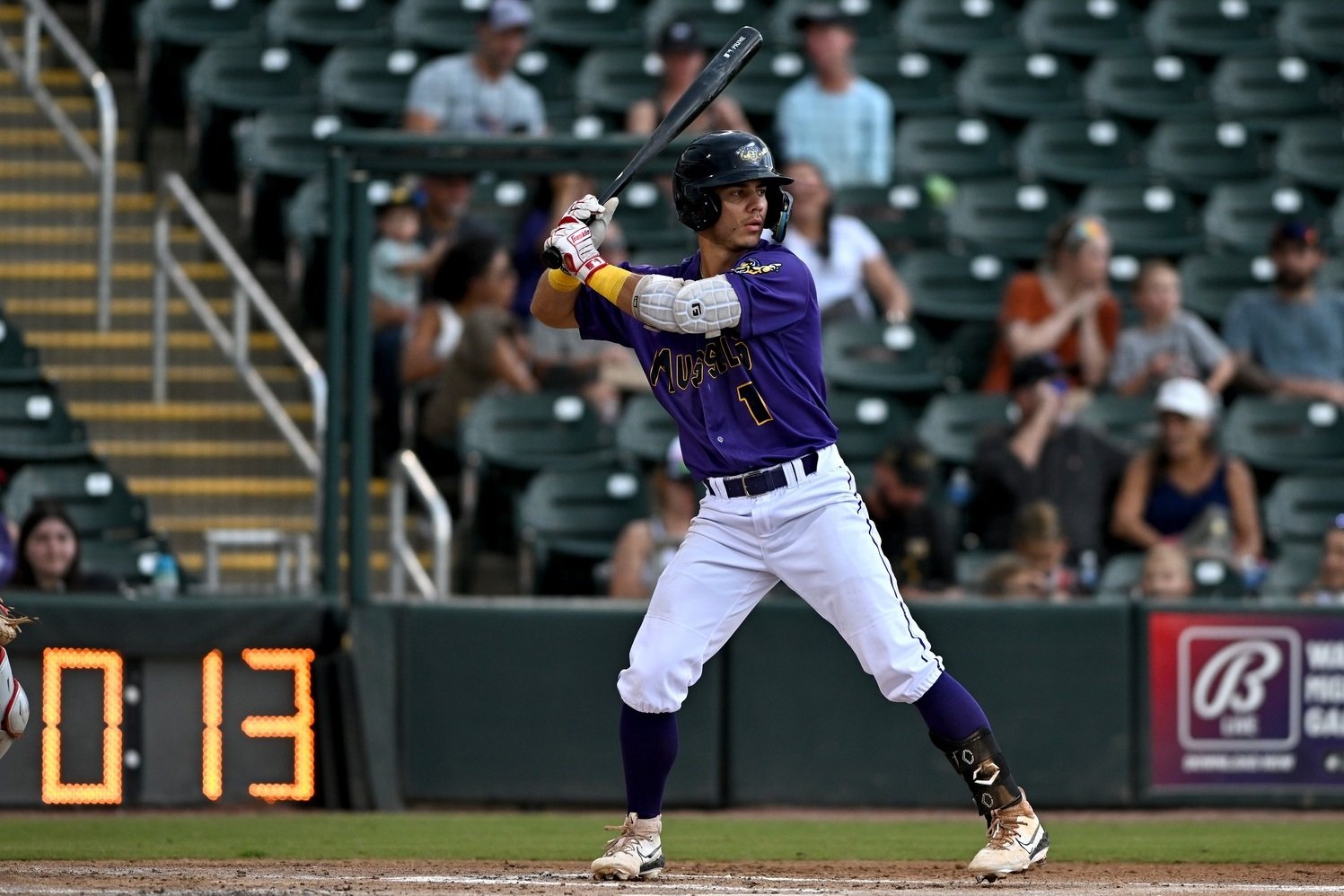 TRANSACTIONS LHP Steven Okert placed on temporarily inactive list (AAA St. Paul) Jeff Johnson is reporting that OF Walker Jenkins and RHP Jacob Wosinksi are joining Wichita for the final week of their regular season Saints Sentinel St. Paul 9, Iowa 3 Box Score Travis Adams: 6 IP, 3 H, 2 ER, 1 BB, 4 K HR: Carson McCusker (3) Multi-hit games: Diego A. Castillo (2-for-4, R, 3 RBI, BB), Carson McCusker (3-for-4, HR, 2B, 2 R, 3 RBI), Chris Williams (2-for-4, R, RBI) The Saints walloped their opponents on Sunday. Travis Adams settled in for a much tamer second go-around as St. Paul’s starter. Outside of a cheesy 351-foot homer, Adams was pretty much perfect; he tossed a clean frame three times and twice allowed a lone runner to reach 1st before handling business with efficiency and professionalism. An excellent bounceback for our August Starter of the Month. Unfortunately, he did not get the win for his work. The Saints offense was potent, but they were a bit tardy. No matter: runs are better late than never. St. Paul plated early runs with RBI knocks from Payton Eeles and Chris Williams before roaring into overdrive the second the game transitioned to its final stage. An RBI double from Jeferson Morales wet the palette and ushered Carson McCusker into his place as the main attraction (it’s hard not to be the centerpiece when you stand 6’8”). McCusker tattooed a three-run shot in the 7th to bust the game wide open. Then—in perfect opposition to McCusker’s power—Diego A. Castillo showcased the unique diversity of scoring opportunities in baseball with a bases-clearing single dropped directly between the communication of Iowa’s up-the-middle defense. Both hits plated three runs. What a sport. Caleb Baragar, Giovanny Gallegos, and Zack Weiss delivered the game to the finish line with relatively little drama; a homer off Baragar marked the lone run surrendered by the St. Paul bullpen on Sunday. McCusker is slashing .327/.389/.612 with the Saints. Does anyone else see a little Tyler Austin in his swing? The Iowa Cubs are led by infielder Matt Shaw, who clocks in as the 24th-best prospect in MLB. He was held hitless in four at-bats. WIND SURGE WISDOM Wichita 4, Frisco 2 Box Score C.J. Culpepper: 4 IP, 2 H, 0 ER, 1 BB, 6 K HR: Jorel Ortega (10) Multi-hit games: Jake Rucker (2-for-5, 2B, 2 RBI) The Wind Surge won in extras on Sunday. C.J. Culpepper made his finest start since coming off the IL. The flowing-blonde righty tossed four scoreless frames, whiffing six while allowing a pair of singles and a walk; just once did a runner reach beyond first base. That's more like the kind of pitching we've come to expect from Culpepper. Scoring was sparse, but Wichita made it count when it mattered most, falling flat for long stretches before knotting the game and pulling ahead with the aid of the gifted Manfred Man. Jorel Ortega kicked off the scoring with a solo shot, marking Wichita's lone run before the 8th inning. There—after it seemed like the Wind Surge would never score—a single and two walks loaded the bases for Aaron Sabato. Standing in the box with the intention to cause damage he... got smoked by a fastball. That'll work, anyhow. In extras, Kala'i Rosario walked to set up Jake Rucker with runners on the corners; he pushed a double into the right-field gap, sending the runners in a frenzy as both men came around to score. Jarret Whorff brought the game to an end with his second scoreless frame. He capped a streak of tremendous relief pitching started by Taylor Floyd; between Floyd and Whorff, four hurlers combined to toss five shutout innings with seven strikeouts and no baserunners, at least none allowed through their own volition. The RoughRiders are an affiliate of the Texas Rangers, and their best player is the franchise's 16th-ranked prospect, outfielder Alejandro Osuna. KERNELS NUGGETS Cedar Rapids 3, Wisconsin 10 Box Score Tanner Hall: 4 IP, 5 H, 6 ER, 2 BB, 2 K HR: Kevin Maitan (8) Multi-hit games: Misael Urbina (2-for-4, 3B, R), Poncho Ruiz (2-for-3, BB) The Kernels imploded in sour fashion to end their season. Tanner Hall simply didn’t have it. He allowed a homer three pitches into the start and only continued to tumble from there; three runs scored in total that frame—and despite two clean innings in response—the righty coughed up another trio of scores in the 4th to bring his day to a rough end. The start was a disappointment for the Southern Mississippi product who pitched solidly in August; hopefully a long offseason of rest provides the nourishment and reset he needs. Cedar Rapids’ lineup was in no mood to aid their flailing starter, as came up empty in 14 at-bats on Sunday, with five batters striking out at least twice. Rayne Doncon bore the brunt of the whiff-fest with his first (and only) golden sombrero of the season. It sure is a cruel sport. The little offense they mustered manifested in a 2nd-inning Kevin Maitan homer, a Misael Urbina triple that begat an RBI single from Tyler Dearden, and an at-the-buzzer run-scoring double by Rixon Wingrove. Walker Jenkins reached base twice with a single and a walk. He ends September with more walks (8) than strikeouts (6). With Junior Caminero and Dylan Crews in the majors, he may soon become MLB Pipeline’s number 1 overall prospect. The Timber Rattlers are a member of the typically talented Brewers farm system. They enjoy the services of shortstop Cooper Pratt, the 60th-ranked prospect in MLB. He homered and walked in five trips to the plate. The Kernels finished the season with a 67-63 record, a far fall from their dominant 82-50 heights from 2023, but good enough to secure their 11th straight winning season. The last time Cedar Rapids ended a year below .500 was as an Angels affiliate. Brian Dinkelman runs a tight ship—and despite the relative disappointment of 2024—the Kernels remain a shining beacon of consistency. MUSSEL MATTERS Fort Myers 9, Lakeland 4 Box Score Anthony Narvaez: 3 IP, 3 H, 1 ER, 0 BB, 4 K HR: Khadim Diaw (1), Maddux Houghton (4), Kyle DeBarge (1) Multi-hit games: Kyle DeBarge (4-for-5, HR, 2 R, 4 RBI), Khadim Diaw (2-for-3, HR, R, RBI) In their final game of the season, the Mighty Mussels blasted three homers to secure yet another winning year. It was the Kyle DeBarge show: the recent 1st round pick broke out for his best game as a professional, blasting his first career homer and singling thrice on his way to a hearty 4-for-5 day at the plate. He knocked in four and stole two bases. That’s a packed box score. Not to be overshadowed, Khadim Diaw also hit his inaugural pro ball home run (during a pinch-hit at-bat, nonetheless), and Maddux Houghton gave Fort Myers the lead with a two-run shot just moments after Diaw’s blast completed its return from tickling the stratosphere. The pitching effort was an ensemble cast; Anthony Narvaez kicked things off with three solid innings before turning the ball over to Paulshawn Pasqualotto, Juan Mercedes, and Tomas Cleto. Pasqualotto earned the win with his timing, but Mercedes shined with a pair of scoreless innings to lower his Mighty Mussels ERA to 2.89. Everyone in Fort Myers’ lineup reached base on Sunday, even the substitute players. The Lakeland Flying Tigers—as you could guess—are an affiliate of their grounded parent team based in Detroit. While they no longer employ the wonderful talents of Max Clark and Kevin McGonigle, their DH, Josue Briceño, ranks as the franchise's 10-best prospect. He went 0-4 on Sunday. Despite missing the playoffs, Fort Myers enjoyed yet another year above .500, their 11th in the past 12 years, and their fourth straight under manager Brian Meyer, who has yet to see a losing season. That’s quite the achievement. The minors are chaotic and volatile, with good players leaving quickly for greener pastures, making any sort of stability almost impossible. A ton of credit goes to Meyer, the Mussels coaching staff, the Twins organization, and—of course—the players for accomplishing this feat. TWINS DAILY PLAYERS OF THE DAY Twins Daily Minor League Pitcher of the Day – Travis Adams Twins Daily Minor League Hitter of the Day – Kyle DeBarge, Carson McCusker PROSPECT SUMMARY Here’s a look at how the Twins Daily Top 20 Twins Prospects performed: #1– Walker Jenkins (Cedar Rapids) - 1-4, BB, K #2 – Brooks Lee (Minnesota) - 0-3, K #3 - Emmanuel Rodriguez (St. Paul) - 1-5, R, 3 K #9 - Kaelen Culpepper (Cedar Rapids) - 1-5, R #15 - Kala'i Rosario (Wichita) - 1-4, 2 R, BB #16 - Kyle DeBarge (Fort Myers) - 4-5, HR, 2 R, 4 RBI #17 - Tanner Schobel (Wichita) - 0-4, BB, 2 K #19 - C.J. Culpepper (Wichita) - 4 IP, 2 H, 0 ER, 1 BB, 6 K TUESDAY’S PROBABLE STARTERS St. Paul @ Columbus (5:15 PM) - LHP Brent Headrick Tulsa @ Wichita (7:05 PM) - TBD
- 9 comments
-
- 5
-
-
-
- kyle debarge
- carson mccusker
- (and 4 more)
-
David Festa Sure Looks Like a Major-League Starter
Matt Braun replied to Matt Braun's topic in Twins Daily Front Page News
I'm about 90% sure the Twins not offering Gray a serious contract was the reason he left, but I could be wrong. -
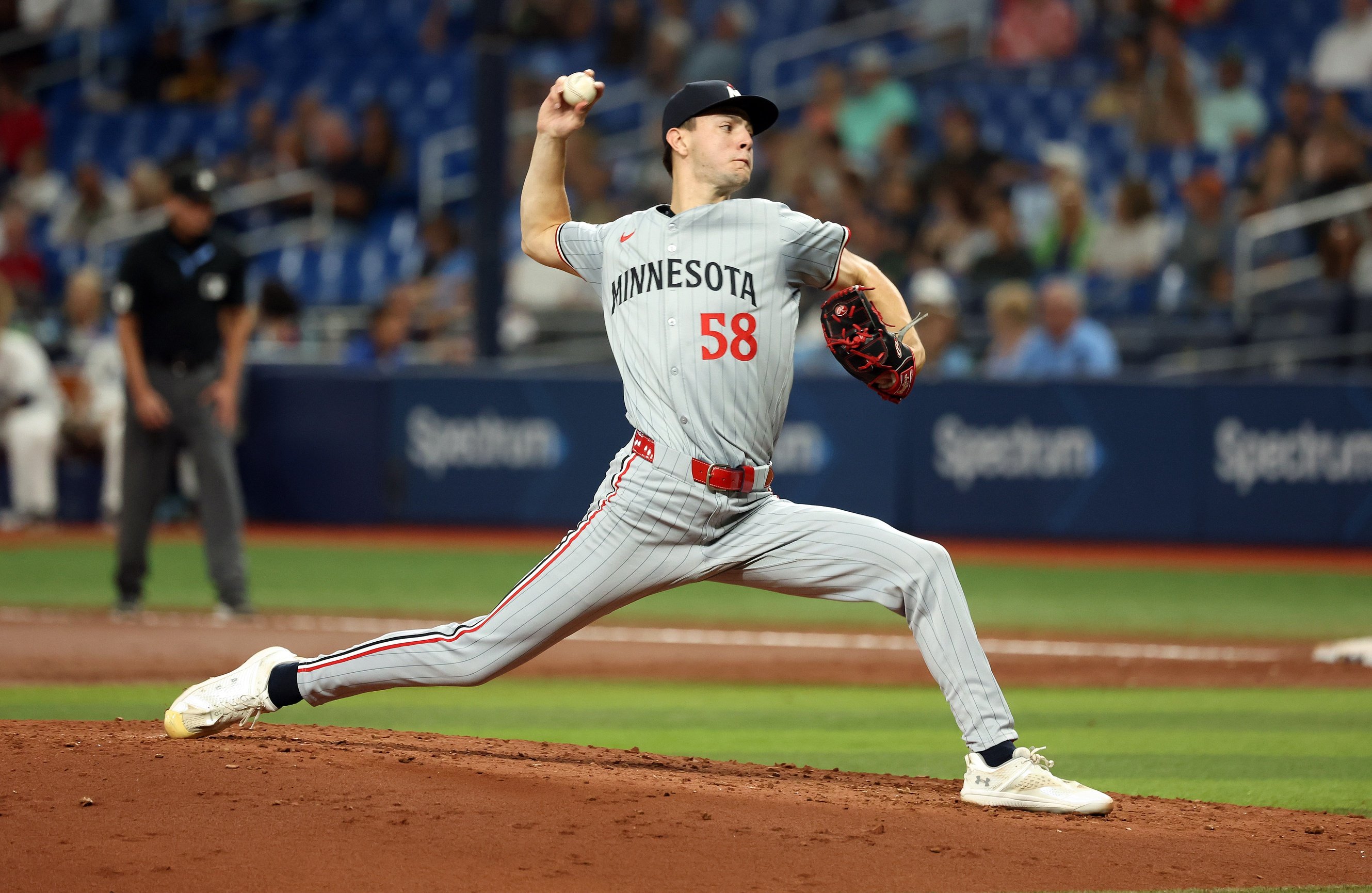 Normally, I fancy myself as someone who stays out of the predictive riff-raff of sports. I mean, what, does the world really need another dude who thinks their opinions are gold? It’s madness. But there’s something so immediately special about David Festa that I must dedicate 600 words to talking about him. One of the things that set Festa apart from your typical house-of-straw rookie pitcher is whiffs. It’s an instant divider for young hurlers; is he missing bats or over-relying on fortunate batted ball outcomes a la early-career Devin Smeltzer? Guys like that can maybe coast for an extended amount of frames—potentially tricking some into believing their schtick is effective—but they inevitably fall off into nothingness, becoming a random memory only activated after an extended Baseball-Reference adventure. Festa has the juice: his 29.1 K% is right up there with strikeout artists like Nick Pivetta (28.6%) and Cole Ragans (29.5%). Amongst starters with at least 40 innings, Festa ranks 11th in strikeout rate, above both Joe Ryan and Pablo López. How does he do it? Well, take a look at the heat maps for his pitches: It’s gorgeous. If you’re a modern pitcher, you can’t do much better. Fastball goes up, offspeed goes down, and the slider and changeup nail their appropriate locations—down and away to whatever handedness batter so happens to stand in the box. Despite the relatively limited selection—Festa has only thrown a four-seamer, slider, or changeup since being drafted—he effectively throws everything in whatever count he pleases. He starts batters with an off-speed pitch more often than not. The same is true in all even counts. Even when the hitter is ahead in the count—and a misstep could turn a situation deadly—Festa holds steady and is still likely to toss something soft. And he does so with the kind of precision only seen in the finest German engineers. One at-bat from his most recent start stuck out to me. Facing Josh Lowe in the first, Festa got ahead quickly, battled a bit, and erased Lowe with a ridiculous changeup. He never wavered from his game plan; he simply executed against a pretty good hitter with the gumption of a pitcher far wiser than his age would imply. Festa vs Lowe - Made with Clipchamp.mp4 I think what strikes me most about Festa is how dead simple his plan is: he rarely deviates from using fastballs and sliders to righties, and fastballs and changeups to lefties, but he’s just so damn good at commanding the offerings, it doesn’t really matter. He could probably tell the hitter what’s coming and still be successful. That makes him atypical in this age of young pitchers who decimate their opponents with pure, overwhelming stuff but don’t seem to “know how to pitch” to steal a perhaps overused but occasionally helpful idiom. The only main bugaboo afflicting Festa is a bizarre second-time-through-the-order penalty that doesn’t seem to understand it’s one time too early. It’s strange. 19 of his 25 career earned runs have come when facing hitters a second time, and the righty struggled in the 3rd and 4th innings at AAA this year as well, the frames that officially mark when a lineup has turned over. Is this real? Is it noise? I guess we’ll see. It feels a little lame to conclude with a truism, but what makes Festa so special is that he has three (maybe two and a half) legitimate offerings that he can command well and will throw in any count, in any situation, against batters both right and left. He’s not a specialist. His weapons aren’t plentiful, but they’re effective—and he knows how to use all of them. Festa’s young major league career appears to augur a future as a rotation staple, and there may still be more to come.
 -
He hasn't even reached the 50-inning threshold, but David Festa's performance so far should have fans jubilant. Image courtesy of Kim Klement Neitzel-Imagn Images Normally, I fancy myself as someone who stays out of the predictive riff-raff of sports. I mean, what, does the world really need another dude who thinks their opinions are gold? It’s madness. But there’s something so immediately special about David Festa that I must dedicate 600 words to talking about him. One of the things that set Festa apart from your typical house-of-straw rookie pitcher is whiffs. It’s an instant divider for young hurlers; is he missing bats or over-relying on fortunate batted ball outcomes a la early-career Devin Smeltzer? Guys like that can maybe coast for an extended amount of frames—potentially tricking some into believing their schtick is effective—but they inevitably fall off into nothingness, becoming a random memory only activated after an extended Baseball-Reference adventure. Festa has the juice: his 29.1 K% is right up there with strikeout artists like Nick Pivetta (28.6%) and Cole Ragans (29.5%). Amongst starters with at least 40 innings, Festa ranks 11th in strikeout rate, above both Joe Ryan and Pablo López. How does he do it? Well, take a look at the heat maps for his pitches: It’s gorgeous. If you’re a modern pitcher, you can’t do much better. Fastball goes up, offspeed goes down, and the slider and changeup nail their appropriate locations—down and away to whatever handedness batter so happens to stand in the box. Despite the relatively limited selection—Festa has only thrown a four-seamer, slider, or changeup since being drafted—he effectively throws everything in whatever count he pleases. He starts batters with an off-speed pitch more often than not. The same is true in all even counts. Even when the hitter is ahead in the count—and a misstep could turn a situation deadly—Festa holds steady and is still likely to toss something soft. And he does so with the kind of precision only seen in the finest German engineers. One at-bat from his most recent start stuck out to me. Facing Josh Lowe in the first, Festa got ahead quickly, battled a bit, and erased Lowe with a ridiculous changeup. He never wavered from his game plan; he simply executed against a pretty good hitter with the gumption of a pitcher far wiser than his age would imply. Festa vs Lowe - Made with Clipchamp.mp4 I think what strikes me most about Festa is how dead simple his plan is: he rarely deviates from using fastballs and sliders to righties, and fastballs and changeups to lefties, but he’s just so damn good at commanding the offerings, it doesn’t really matter. He could probably tell the hitter what’s coming and still be successful. That makes him atypical in this age of young pitchers who decimate their opponents with pure, overwhelming stuff but don’t seem to “know how to pitch” to steal a perhaps overused but occasionally helpful idiom. The only main bugaboo afflicting Festa is a bizarre second-time-through-the-order penalty that doesn’t seem to understand it’s one time too early. It’s strange. 19 of his 25 career earned runs have come when facing hitters a second time, and the righty struggled in the 3rd and 4th innings at AAA this year as well, the frames that officially mark when a lineup has turned over. Is this real? Is it noise? I guess we’ll see. It feels a little lame to conclude with a truism, but what makes Festa so special is that he has three (maybe two and a half) legitimate offerings that he can command well and will throw in any count, in any situation, against batters both right and left. He’s not a specialist. His weapons aren’t plentiful, but they’re effective—and he knows how to use all of them. Festa’s young major league career appears to augur a future as a rotation staple, and there may still be more to come. View full article
-
Probably would have been if not for his awful August 3rd start.
-
Read and rejoice in the minor-league hurlers who stood out in the month of August. Well, it’s a new month and a new time to honor and acknowledge the finest minor league performers. We at Twins Daily split pitchers into “starters” and “relievers,” a dichotomy that is often woefully unable to understand how hurlers are used on the ground level. In the minors, everyone is an “out-getter;” oftentimes, starters will enter in the middle innings to gobble up frames left over by the previous guy. It happens. And it makes attempting to categorize them a challenge. So, I subscribe to the Potter Stewart train of thinking, which is to say, “I know it when I see it.” Got it? Let’s go. Honorable Mentions: In no particular order, this is a list of players who were considered for the list but came up just short. Ty Langenberg, A+ Cedar Rapids - 3.70 ERA, 24 1/3 IP, 3.88 FIP The only Kernel to be mentioned in the list, Ty Langenberg—the Iowa City native—had one god-awful start on the 16th but was otherwise quite good for Cedar Rapids, going at least five innings in every other start with just four earned runs total. That stinker doesn’t wash out, though, so Langenberg has to settle for an honorable mention this time. Melvin Rodriguez, DSL Twins - 1.32 ERA, 13 2/3 IP, 3.32 FIP It’s exceedingly difficult for a DSL player to make the list because they often lack the frames to compete with their older peers. Melvin Rodriguez was simply that good, though; he allowed two runs, whiffed 15 batters, and even eschewed the command problems typical for a player his age; he walked just four. That’s basically Greg Maddux for a fresh 18-year-old. Keep an eye on Rodriguez for next year. Adrian Bohorquez, A Fort Myers - 2.70 ERA, 13 1/3 IP, 3.24 FIP Adrian Bohorquez loses points for his walk rate (15.8%!) but earns back almost everything for striking out everyone and their mother as a 19-year-old in A-ball (29.8%). The Venezuelan has already made a name for himself this season; he’s another big riser to pay attention to heading into 2025. Charlee Soto, A Fort Myers - 3.18 ERA, 17 IP, 3.95 FIP This write-up would be a lot rosier before Charlee Soto went out and walked six on the 28th. The perils of dealing with an 18-year-old (freshly 19! Happy belated birthday). Still, Soto’s much more mature 2nd half included a (mostly) good run in August that saw him almost lead his team in strikeouts for the month. The Main Attraction 5. Louie Varland, AAA St. Paul - 2.25 ERA, 16 IP, 1.98 FIP, 31.7 K% That Louie Varland made two major league starts in August and still made this last says a lot about the strength of the few starts he covered. He simply dominated: Varland bookended the month with six scoreless innings against the Cubs, and five empty frames against the Storm Chasers, made even more impressive when you consider the bananas run environment at AAA. (Yes, the outing against Omaha was technically out of the bullpen, but if you go five innings, you’re a starter in my book.) Much has been made about whether the Twins will bite the bullet and move Varland to the bullpen or keep him as a potential rotation arm. Given their lack of depth there—and considering that Zebby Matthews just threw a BP session the other day—keeping the much-improved righty as a starter seems the wisest option. The team appears to agree; Wednesday’s game appears earmarked for Varland. In any case, the St. Paul native had an awesome August, and he’ll rank as our 5th-place starter for the month. 4. Andrew Morris, AA Wichita/AAA St. Paul - 3.62 ERA, 32 1/3 IP, 3.99 FIP, 19.4 K% If you’re reading this, you know who Andrew Morris is. Perhaps Minnesota’s breakout pitcher of the year (hello, Zebby), Morris has buzz-sawed his way through the minors, starting the year at Cedar Rapids and—as of typing this—accruing 20 innings with the Saints. That isn’t normal. And, he’s deserved it: the Texas Tech product brutalized Midwest league hitters and barely broke a sweat at Wichita, putting up a 1.99 ERA between the two levels with more strikeouts (106) than innings pitched (99 1/3). The overwhelming dominance earned him yet another promotion, this time to the final stop before the big leagues. Morris's weird crossfire delivery sticks out; righties throwing like that usually sit in a lower slot, but Morris fires from the heavens, probably about as high as he can reach. That looks weird. Hitters must agree; his numbers speak for how unusual facing him must be. August was actually something of a step back for Morris, but the brutal AAA pitching environment can partially explain his relatively tepid numbers. Anyways, that enormous volume of innings with solid success—especially in his first taste of AAA pitching—earns him a 4th place finish on our list. 3. Christian MacLeod, AA Wichita/AAA St. Paul - 2.22 ERA, 24 1/3 IP, 2.41 FIP, 33.7 K% Christian MacLeod did that weird thing where he actually improved following a promotion, shaving over half a run of his Cedar Rapids ERA while pushing his peripherals to an even more elevated plateau. You don’t see that every day. MacLeod ate one blowup start in his AA debut, ended July with a gem, and roared into overdrive in August, punctuating the month with a pair of eight-K performances and a Goose Gossage-esque four-inning save on the 30th. His lone blemish was a poor spot-start with the Saints on the 11th. It’s easy to see why the Huntsville lefty can be an awkward at-bat, with his spiraling arm action and high slot eliciting awesome movement in his offerings. The curve is a signature, the kind of classic 12-6 (maybe 11-7) form that drops to impossible lows. Throw in enough control to keep betters honest, and, yeah, a plethora of whiffs never seems out of the question in any given game. 2024 has been the former 5th-rounder’s best year as a pro—and his work in August makes him our third-ranked hurler. 2. Cory Lewis, AA Wichita - 1.20 ERA, 30 IP, 2.79 FIP, 32.8 K% Maybe “post-hype” isn’t the right term for Cory Lewis in 2024, but—with the ascension of a few other arms—it sure feels like he’s been left in the dust a little. Part of that was the injury that delayed his first non-rehab start to the middle of June. He’s been basically the same hurler as last year, though, with a disastrous July 13th seven-run affair marking his only outing with more than two earned runs. For real. Lewis’ only issue in August was command; the righty had four starts with at least three walks and overall issued 15 free passes—on average, one every other inning. The walks didn’t end up too painful—just look at that ERA—but they held him back from being able to nab the top spot on our list. He’ll have to settle for a silver medal. 1. Travis Adams, AA Wichita - 0.70 ERA, 25 2/3 IP, 2.30 FIP, 30.1 K% A 0.70 ERA! Across five starts! Yeah, Travis Adams made this choice pretty easy. And he certainly wasn’t the immediate candidate on one’s mind when it comes to a list like this. Adams put up pedestrian numbers across his first two full seasons of pro ball before unlocking something special with Wichita in 2024. He shaved nearly two full runs off his ERA at the level from his prior year, struck out more batters, and walked them less often. That’s a winning combination. The evolution culminated in an August for the ages, one where Adams allowed two runs the entire month, mixing in three separate starts of 5+ shutout frames. He never gave up more than three hits in an outing. Only nine hits fell in total. His finest moment was a six-inning 10 K start on the 22nd when just four runners reached base against the former 6th-round pick. The tremendous month resulted in a recent promotion to AAA and—more importantly—a 1st place finish as Twins Daily’s minor league starting pitcher of the month. For more from Twins Daily on Travis Adams, click here. Here are a couple of examples: 3/26/24: Minnesota Twins Pitching Prospect Records Huge Save, Pulls Man from Fire in Fort Myers. 3/6/23: Twins Spotlight: RHP Travis Adams View full article
- 12 replies
-
- 1
-
-
- travis adams
- cory lewis
- (and 3 more)
-
Twins Minor League Starting Pitcher of the Month: August 2024
Matt Braun posted an article in Minor Leagues
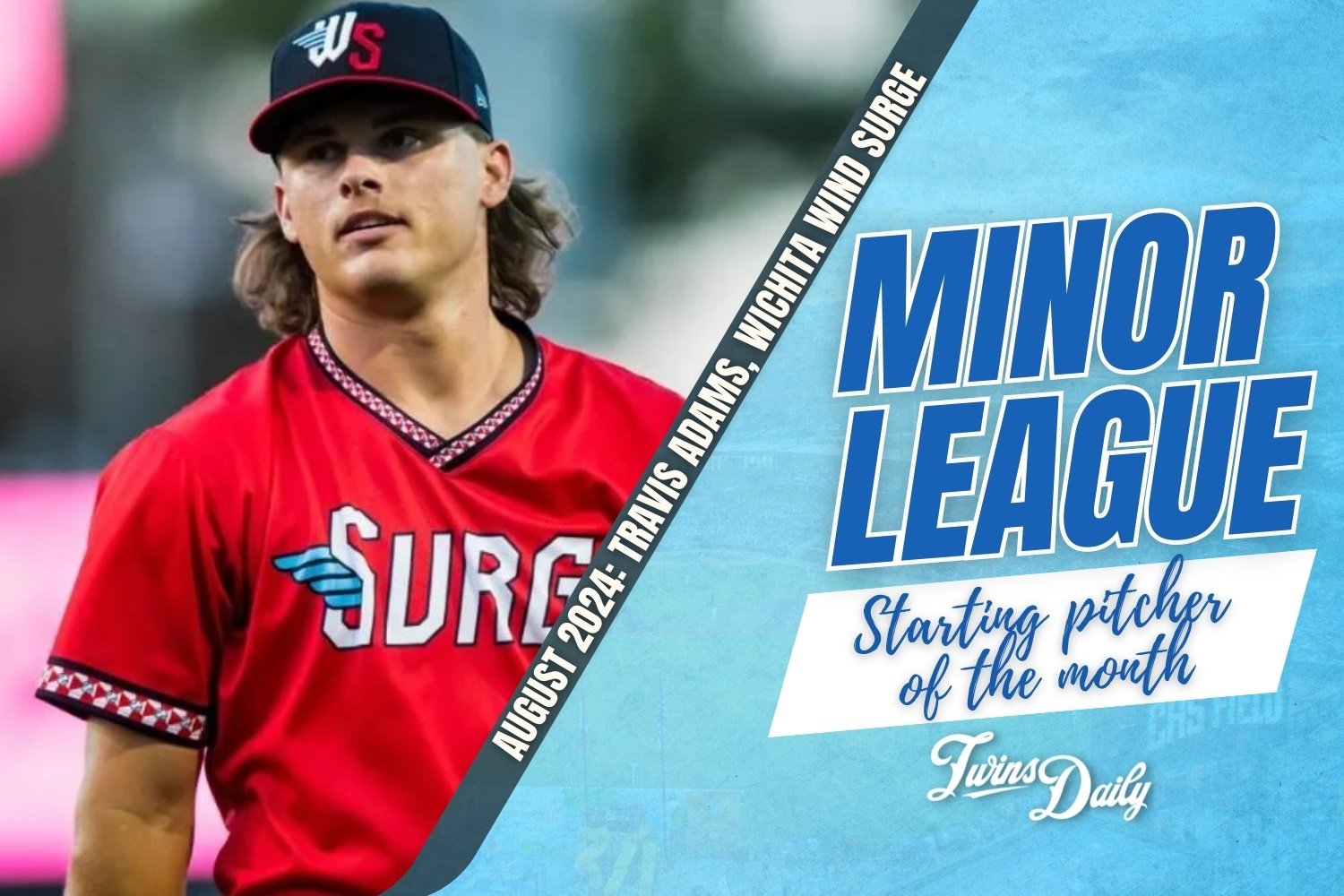 Well, it’s a new month and a new time to honor and acknowledge the finest minor league performers. We at Twins Daily split pitchers into “starters” and “relievers,” a dichotomy that is often woefully unable to understand how hurlers are used on the ground level. In the minors, everyone is an “out-getter;” oftentimes, starters will enter in the middle innings to gobble up frames left over by the previous guy. It happens. And it makes attempting to categorize them a challenge. So, I subscribe to the Potter Stewart train of thinking, which is to say, “I know it when I see it.” Got it? Let’s go. Honorable Mentions: In no particular order, this is a list of players who were considered for the list but came up just short. Ty Langenberg, A+ Cedar Rapids - 3.70 ERA, 24 1/3 IP, 3.88 FIP The only Kernel to be mentioned in the list, Ty Langenberg—the Iowa City native—had one god-awful start on the 16th but was otherwise quite good for Cedar Rapids, going at least five innings in every other start with just four earned runs total. That stinker doesn’t wash out, though, so Langenberg has to settle for an honorable mention this time. Melvin Rodriguez, DSL Twins - 1.32 ERA, 13 2/3 IP, 3.32 FIP It’s exceedingly difficult for a DSL player to make the list because they often lack the frames to compete with their older peers. Melvin Rodriguez was simply that good, though; he allowed two runs, whiffed 15 batters, and even eschewed the command problems typical for a player his age; he walked just four. That’s basically Greg Maddux for a fresh 18-year-old. Keep an eye on Rodriguez for next year. Adrian Bohorquez, A Fort Myers - 2.70 ERA, 13 1/3 IP, 3.24 FIP Adrian Bohorquez loses points for his walk rate (15.8%!) but earns back almost everything for striking out everyone and their mother as a 19-year-old in A-ball (29.8%). The Venezuelan has already made a name for himself this season; he’s another big riser to pay attention to heading into 2025. Charlee Soto, A Fort Myers - 3.18 ERA, 17 IP, 3.95 FIP This write-up would be a lot rosier before Charlee Soto went out and walked six on the 28th. The perils of dealing with an 18-year-old (freshly 19! Happy belated birthday). Still, Soto’s much more mature 2nd half included a (mostly) good run in August that saw him almost lead his team in strikeouts for the month. The Main Attraction 5. Louie Varland, AAA St. Paul - 2.25 ERA, 16 IP, 1.98 FIP, 31.7 K% That Louie Varland made two major league starts in August and still made this last says a lot about the strength of the few starts he covered. He simply dominated: Varland bookended the month with six scoreless innings against the Cubs, and five empty frames against the Storm Chasers, made even more impressive when you consider the bananas run environment at AAA. (Yes, the outing against Omaha was technically out of the bullpen, but if you go five innings, you’re a starter in my book.) Much has been made about whether the Twins will bite the bullet and move Varland to the bullpen or keep him as a potential rotation arm. Given their lack of depth there—and considering that Zebby Matthews just threw a BP session the other day—keeping the much-improved righty as a starter seems the wisest option. The team appears to agree; Wednesday’s game appears earmarked for Varland. In any case, the St. Paul native had an awesome August, and he’ll rank as our 5th-place starter for the month. 4. Andrew Morris, AA Wichita/AAA St. Paul - 3.62 ERA, 32 1/3 IP, 3.99 FIP, 19.4 K% If you’re reading this, you know who Andrew Morris is. Perhaps Minnesota’s breakout pitcher of the year (hello, Zebby), Morris has buzz-sawed his way through the minors, starting the year at Cedar Rapids and—as of typing this—accruing 20 innings with the Saints. That isn’t normal. And, he’s deserved it: the Texas Tech product brutalized Midwest league hitters and barely broke a sweat at Wichita, putting up a 1.99 ERA between the two levels with more strikeouts (106) than innings pitched (99 1/3). The overwhelming dominance earned him yet another promotion, this time to the final stop before the big leagues. Morris's weird crossfire delivery sticks out; righties throwing like that usually sit in a lower slot, but Morris fires from the heavens, probably about as high as he can reach. That looks weird. Hitters must agree; his numbers speak for how unusual facing him must be. August was actually something of a step back for Morris, but the brutal AAA pitching environment can partially explain his relatively tepid numbers. Anyways, that enormous volume of innings with solid success—especially in his first taste of AAA pitching—earns him a 4th place finish on our list. 3. Christian MacLeod, AA Wichita/AAA St. Paul - 2.22 ERA, 24 1/3 IP, 2.41 FIP, 33.7 K% Christian MacLeod did that weird thing where he actually improved following a promotion, shaving over half a run of his Cedar Rapids ERA while pushing his peripherals to an even more elevated plateau. You don’t see that every day. MacLeod ate one blowup start in his AA debut, ended July with a gem, and roared into overdrive in August, punctuating the month with a pair of eight-K performances and a Goose Gossage-esque four-inning save on the 30th. His lone blemish was a poor spot-start with the Saints on the 11th. It’s easy to see why the Huntsville lefty can be an awkward at-bat, with his spiraling arm action and high slot eliciting awesome movement in his offerings. The curve is a signature, the kind of classic 12-6 (maybe 11-7) form that drops to impossible lows. Throw in enough control to keep betters honest, and, yeah, a plethora of whiffs never seems out of the question in any given game. 2024 has been the former 5th-rounder’s best year as a pro—and his work in August makes him our third-ranked hurler. 2. Cory Lewis, AA Wichita - 1.20 ERA, 30 IP, 2.79 FIP, 32.8 K% Maybe “post-hype” isn’t the right term for Cory Lewis in 2024, but—with the ascension of a few other arms—it sure feels like he’s been left in the dust a little. Part of that was the injury that delayed his first non-rehab start to the middle of June. He’s been basically the same hurler as last year, though, with a disastrous July 13th seven-run affair marking his only outing with more than two earned runs. For real. Lewis’ only issue in August was command; the righty had four starts with at least three walks and overall issued 15 free passes—on average, one every other inning. The walks didn’t end up too painful—just look at that ERA—but they held him back from being able to nab the top spot on our list. He’ll have to settle for a silver medal. 1. Travis Adams, AA Wichita - 0.70 ERA, 25 2/3 IP, 2.30 FIP, 30.1 K% A 0.70 ERA! Across five starts! Yeah, Travis Adams made this choice pretty easy. And he certainly wasn’t the immediate candidate on one’s mind when it comes to a list like this. Adams put up pedestrian numbers across his first two full seasons of pro ball before unlocking something special with Wichita in 2024. He shaved nearly two full runs off his ERA at the level from his prior year, struck out more batters, and walked them less often. That’s a winning combination. The evolution culminated in an August for the ages, one where Adams allowed two runs the entire month, mixing in three separate starts of 5+ shutout frames. He never gave up more than three hits in an outing. Only nine hits fell in total. His finest moment was a six-inning 10 K start on the 22nd when just four runners reached base against the former 6th-round pick. The tremendous month resulted in a recent promotion to AAA and—more importantly—a 1st place finish as Twins Daily’s minor league starting pitcher of the month. For more from Twins Daily on Travis Adams, click here. Here are a couple of examples: 3/26/24: Minnesota Twins Pitching Prospect Records Huge Save, Pulls Man from Fire in Fort Myers. 3/6/23: Twins Spotlight: RHP Travis Adams
- 12 comments
-
- 6
-
-
-
- travis adams
- cory lewis
- (and 3 more)
-
Minor League Report (9/1): Plucky Saints Swipe a Win in Omaha
Matt Braun posted an article in Minor Leagues
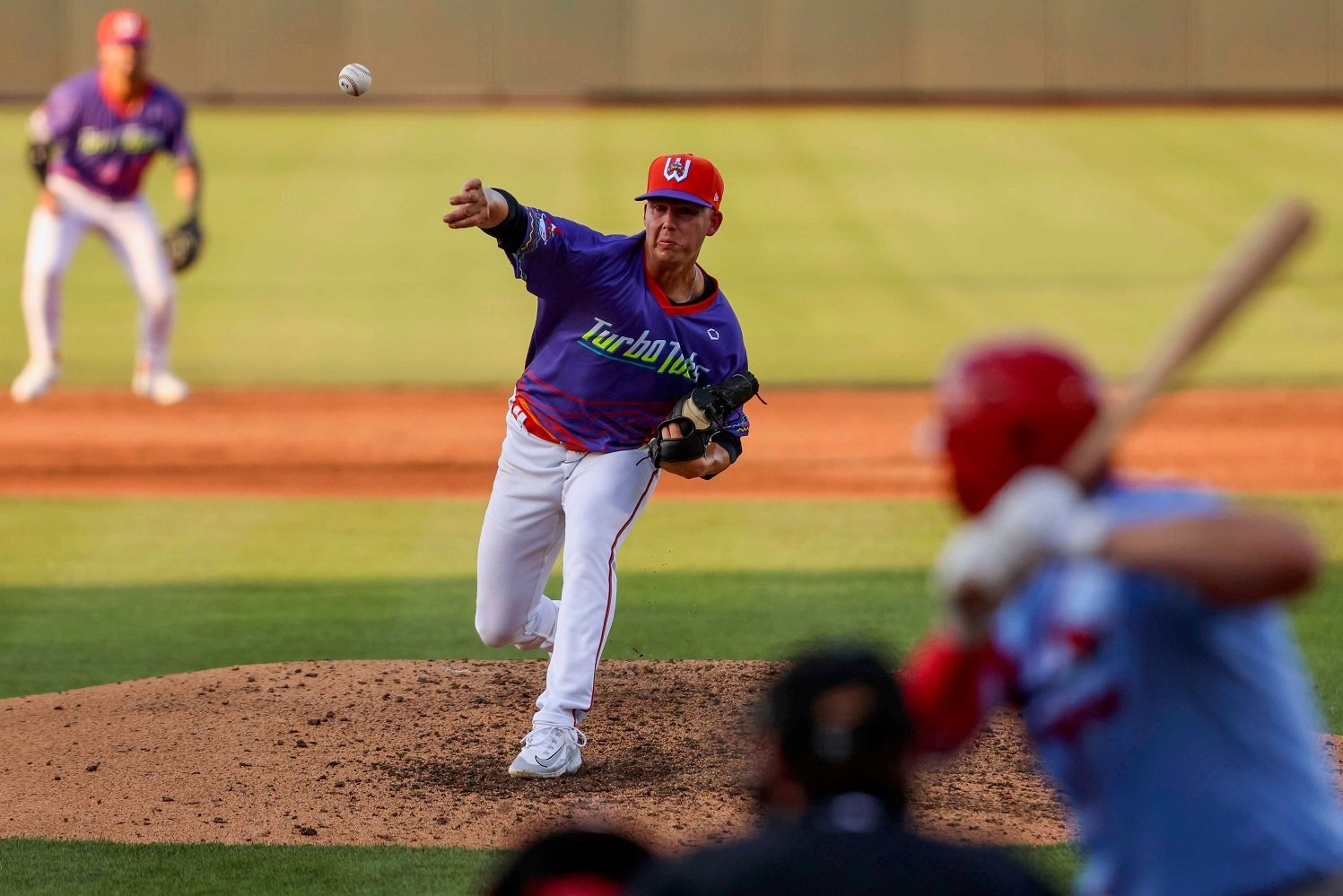 TRANSACTIONS Y’all ready? OF Nick Lucky activated (A Fort Myers) SS Kevin Maitan activated (A+ Cedar Rapids) 3B Billy Amick placed on 7-day IL with left rib strain (A Fort Myers); move is retroactive to August 31st INF Michael Helman selected by Twins RHP Diego Castillo selected by Twins INF Brooks Lee completed rehab assignment, returned to Twins RHP Caleb Boushley DFA’d Saints Sentinel St. Paul 4, Omaha 3 Box Score Travis Adams: 5 IP, 4 H, 3 ER, 3 BB, 3 K HR: None Multi-hit games: None The Saints came back late to best the mighty Storm Chasers on Sunday. St. Paul sent a special starter to the mound. After returning to Wichita for a second-straight season, Travis Adams shaved nearly two runs off his ERA and cut his WHIP to acceptable levels. August was an especially dominant month; the righty allowed two earned runs. The entire month. Two. The exceptional performance earned him a promotion to St. Paul—and today’s match marked his AAA debut. It went ok. Real life is often less fun than fiction. Omaha—heartless and evil as they are—ambushed him in the opening frame, dropping three runs on the Palm Springs native before he could even earn a second out. That was the worst of it, though, and Adams settled into a relative groove, holding the Storm Chaser offense at bay through the next four innings. In fact, the Saints never gave up another run; Jeff Brigham, Giovanny Gallegos, and Hobie Harris smothered their opponents with four combined frames, six strikeouts, and just one hit allowed. That bought plenty of time for the Saints offense to kick into action. They struck in the 5th with a droopy RBI knock from Diego A. Castillo and another well-placed single from DaShawn Keirsey Jr. Then—with two on in the 7th—Castillo knotted the game with a sacrifice fly, and Yunior Severino gave St. Paul their first lead with a double into the corner. The aforementioned reliever triumvirate took over, crushed any and all hope, and St. Paul walked away the victors of a thrilling, impressive win. The Storm Chasers are the AAA affiliate of the Royals, whose farm system leans young. Their best prospect on Sunday was the last one mentioned in MLB Pipeline’s top 30: RHP Eric Cerantola. He allowed two runs and took the loss. WIND SURGE WISDOM Wichita 2, Springfield 5 Box Score Pierson Ohl: 5 IP, 2 H, 0 ER, 0 BB, 1 K HR: None Multi-hit games: Kala’i Rosario (2-for-5), Tanner Schobel (2-for-4, 2B, R) Too little, too late: Wichita’s third-act comeback attempt came up short on Sunday. Starting for the first time since June 25th, Pierson Ohl looked like his old self. Always one for modesty, Ohl delivered a minimalist pitching line, allowing just two hits—a pair of singles—without a run or a walk. He struck out one. After a disastrous start to the season, you may have forgotten about the young righty, which portended a month-and-a-half absence, but he may be back on the horse now; we’ll see how he throws down the stretch. The Wind Surge bats, once again, were sparse. That’s been a common theme for them this year. Sunday looked to be the zenith of their un-offensive nature, with the Cardinals holding them hitless until the 6th, but a furious 8th snapped them into place. Kala’i Rosario singled, Tanner Schobel doubled, and Alex Isola drove both runners in with a single up the gut. Aaron Sabato cracked a double to right to put the tying run in scoring position, but Andrew Cossetti was caught window-shopping to kill the rally. Springfield responded with a fifth and final run to put the game solidly out of reach. Cardinals’ DH, Leonardo Bernal, is the 9th-best prospect in St. Louis’ usually excellent system. He collected an RBI and a single in four at-bats. KERNELS NUGGETS Cedar Rapids 3, Lake County 6 Box Score Ricky Castro: 4 1/3 IP, 6 H, 4 ER, 2 BB, 2 K HR: Jose Salas (4), Kyle Hess (2) Multi-hit games: Rixon Wingrove (2-for-4, 2B, RBI) A middle-inning melee did the Kernels in on Sunday. Starter Ricky Castro continued his A+ culture shock, allowing four earned runs across 4 ⅓ frames with as many walks as strikeouts. Command eluded him, and his inefficiency could only be rivaled by the country's muckiest bureaucracy; Castro needed 86 pitches to coax his 13 outs. His Kernels ERA is now 4.94. Cedar Rapids’ offense was… concentrated. Perhaps mild if you don’t care to be kind. Rixon Wingrove doubled home a run in the 4th to kick off the scoring, but the well ran dry after back-to-back blasts by Jose Salas and Kyle Hess the following frame. In fact, a Kernel runner only reached scoring position once more when a Gabriel Gonzalez single advanced Walker Jenkins to second in the 8th. It was a solid opportunity to make Lake County sweat a little. Kaelen Culpepper struck out, and Rubel Cespedes popped out to end the threat. The game ended Jenkins’ 10-game hitting streak Recent 1st overall pick and current 12th overall prospect, Travis Bazzana, homered and reached base three times in five plate appearances. MUSSEL MATTERS The Mighty Mussels were supposed to play a doubleheader on Sunday, but action never came to fruition; unplayable field conditions rendered both matches unplayable. The games are canceled and will not be made up later. TWINS DAILY PLAYERS OF THE DAY Twins Daily Minor League Pitcher of the Day – Pierson Ohl Twins Daily Minor League Hitter of the Day – Kyle Hess/Jose Salas PROSPECT SUMMARY Here’s a look at how the Twins Daily Top 20 Twins Prospects performed: #1– Walker Jenkins (Cedar Rapids) - 0-2, 2 BB, 2 K #2 – Brooks Lee (Minnesota) - 1-4 #7 – Gabriel Gonzalez (Cedar Rapids) - 1-4 #9 - Kaelen Culpepper (Cedar Rapids) - 1-4, R, K #15 - Kala’i Rosario (Wichita) - 2-5, R, K #17 – Tanner Schobel (Wichita) - 0-4, K MONDAY’S PROBABLE STARTERS Iowa @ St. Paul (4:07 PM) - TBD Wichita @ Frisco (6:05 PM) - RHP C.J. Culpepper (0-1, 10.13 ERA)
- 9 comments
-
- 4
-
-
-
- travis adams
- pierson ohl
- (and 4 more)
-
That's about where the good news ends, though. Image courtesy of Ed Bailey, Wichita Wind Surge (photo of Pierson Ohl) TRANSACTIONS Y’all ready? OF Nick Lucky activated (A Fort Myers) SS Kevin Maitan activated (A+ Cedar Rapids) 3B Billy Amick placed on 7-day IL with left rib strain (A Fort Myers); move is retroactive to August 31st INF Michael Helman selected by Twins RHP Diego Castillo selected by Twins INF Brooks Lee completed rehab assignment, returned to Twins RHP Caleb Boushley DFA’d Saints Sentinel St. Paul 4, Omaha 3 Box Score Travis Adams: 5 IP, 4 H, 3 ER, 3 BB, 3 K HR: None Multi-hit games: None The Saints came back late to best the mighty Storm Chasers on Sunday. St. Paul sent a special starter to the mound. After returning to Wichita for a second-straight season, Travis Adams shaved nearly two runs off his ERA and cut his WHIP to acceptable levels. August was an especially dominant month; the righty allowed two earned runs. The entire month. Two. The exceptional performance earned him a promotion to St. Paul—and today’s match marked his AAA debut. It went ok. Real life is often less fun than fiction. Omaha—heartless and evil as they are—ambushed him in the opening frame, dropping three runs on the Palm Springs native before he could even earn a second out. That was the worst of it, though, and Adams settled into a relative groove, holding the Storm Chaser offense at bay through the next four innings. In fact, the Saints never gave up another run; Jeff Brigham, Giovanny Gallegos, and Hobie Harris smothered their opponents with four combined frames, six strikeouts, and just one hit allowed. That bought plenty of time for the Saints offense to kick into action. They struck in the 5th with a droopy RBI knock from Diego A. Castillo and another well-placed single from DaShawn Keirsey Jr. Then—with two on in the 7th—Castillo knotted the game with a sacrifice fly, and Yunior Severino gave St. Paul their first lead with a double into the corner. The aforementioned reliever triumvirate took over, crushed any and all hope, and St. Paul walked away the victors of a thrilling, impressive win. The Storm Chasers are the AAA affiliate of the Royals, whose farm system leans young. Their best prospect on Sunday was the last one mentioned in MLB Pipeline’s top 30: RHP Eric Cerantola. He allowed two runs and took the loss. WIND SURGE WISDOM Wichita 2, Springfield 5 Box Score Pierson Ohl: 5 IP, 2 H, 0 ER, 0 BB, 1 K HR: None Multi-hit games: Kala’i Rosario (2-for-5), Tanner Schobel (2-for-4, 2B, R) Too little, too late: Wichita’s third-act comeback attempt came up short on Sunday. Starting for the first time since June 25th, Pierson Ohl looked like his old self. Always one for modesty, Ohl delivered a minimalist pitching line, allowing just two hits—a pair of singles—without a run or a walk. He struck out one. After a disastrous start to the season, you may have forgotten about the young righty, which portended a month-and-a-half absence, but he may be back on the horse now; we’ll see how he throws down the stretch. The Wind Surge bats, once again, were sparse. That’s been a common theme for them this year. Sunday looked to be the zenith of their un-offensive nature, with the Cardinals holding them hitless until the 6th, but a furious 8th snapped them into place. Kala’i Rosario singled, Tanner Schobel doubled, and Alex Isola drove both runners in with a single up the gut. Aaron Sabato cracked a double to right to put the tying run in scoring position, but Andrew Cossetti was caught window-shopping to kill the rally. Springfield responded with a fifth and final run to put the game solidly out of reach. Cardinals’ DH, Leonardo Bernal, is the 9th-best prospect in St. Louis’ usually excellent system. He collected an RBI and a single in four at-bats. KERNELS NUGGETS Cedar Rapids 3, Lake County 6 Box Score Ricky Castro: 4 1/3 IP, 6 H, 4 ER, 2 BB, 2 K HR: Jose Salas (4), Kyle Hess (2) Multi-hit games: Rixon Wingrove (2-for-4, 2B, RBI) A middle-inning melee did the Kernels in on Sunday. Starter Ricky Castro continued his A+ culture shock, allowing four earned runs across 4 ⅓ frames with as many walks as strikeouts. Command eluded him, and his inefficiency could only be rivaled by the country's muckiest bureaucracy; Castro needed 86 pitches to coax his 13 outs. His Kernels ERA is now 4.94. Cedar Rapids’ offense was… concentrated. Perhaps mild if you don’t care to be kind. Rixon Wingrove doubled home a run in the 4th to kick off the scoring, but the well ran dry after back-to-back blasts by Jose Salas and Kyle Hess the following frame. In fact, a Kernel runner only reached scoring position once more when a Gabriel Gonzalez single advanced Walker Jenkins to second in the 8th. It was a solid opportunity to make Lake County sweat a little. Kaelen Culpepper struck out, and Rubel Cespedes popped out to end the threat. The game ended Jenkins’ 10-game hitting streak Recent 1st overall pick and current 12th overall prospect, Travis Bazzana, homered and reached base three times in five plate appearances. MUSSEL MATTERS The Mighty Mussels were supposed to play a doubleheader on Sunday, but action never came to fruition; unplayable field conditions rendered both matches unplayable. The games are canceled and will not be made up later. TWINS DAILY PLAYERS OF THE DAY Twins Daily Minor League Pitcher of the Day – Pierson Ohl Twins Daily Minor League Hitter of the Day – Kyle Hess/Jose Salas PROSPECT SUMMARY Here’s a look at how the Twins Daily Top 20 Twins Prospects performed: #1– Walker Jenkins (Cedar Rapids) - 0-2, 2 BB, 2 K #2 – Brooks Lee (Minnesota) - 1-4 #7 – Gabriel Gonzalez (Cedar Rapids) - 1-4 #9 - Kaelen Culpepper (Cedar Rapids) - 1-4, R, K #15 - Kala’i Rosario (Wichita) - 2-5, R, K #17 – Tanner Schobel (Wichita) - 0-4, K MONDAY’S PROBABLE STARTERS Iowa @ St. Paul (4:07 PM) - TBD Wichita @ Frisco (6:05 PM) - RHP C.J. Culpepper (0-1, 10.13 ERA) View full article
-
Twins 2, Blue Jays 0: Pablo López Dominates in Postseason Rematch
Matt Braun posted an article in Twins
 Box Score Pablo López: 7 ⅔ IP, 6 H, 0 ER, 0 BB, 3 K Home Runs: None Top 3 WPA: Pablo López (.418), José Miranda (.075), Jhoan Durán (.073) Win Probability Chart (via FanGraphs) Ten months ago, these two teams faced off under far more special circumstances. Both franchises looked to break their glass ceiling, pushing beyond themselves to become respectable opponents capable of deep playoff runs. On this same mound—with the same hurlers from their opening match—the Twins and Blue Jays played baseball once again, albeit with a different hue coloring their battle. Kevin Gausman looked like the same Kevin Gausman we’ve come to expect, a compliment considering his injury woes at the start of the season. His fastball blazed and flashed 97 at times. The splitter? You already know about it. With Samson-like hair—maybe sweatier than usual—and a powerful mound presence, he looked nearly unhittable for the game’s first four frames, only occasionally walking a batter when his command faltered. “Thank God,” he probably thought. “Those bastard Twins won’t get me again.” Games aren’t four innings long, though, and Minnesota pounced in the fifth. José Miranda cracked a double off the right-center wall, and Carlos Santana ushered him home with a single. Some more action begat a second score when Willi Castro poked a sacrifice fly the other way. That’s all Pablo López needed. Someone replaced the effective but often inefficient strikeout machine with a modern Carlos Silva; 13 of López’s outs came via the ground ball, as he rode his defense to one of his finest starts of the season. Maybe he took Kevin Costner’s lesson on political systems to heart. Hitter after hitter could do little more than pound the ball directly into the dirt, committing murder on Target Field’s worm population. One of the few times a batter found the skies, he was immediately gunned down at second. So it goes. López didn't relinquish the mound until the 8th when his soft-contact ways proved too powerful; a dying dribbler put runners on 1st and 2nd, forcing Rocco Baldelli to call in Griffin Jax to squash the rebellion, which he did in three pitches. Still, Pablo's line was immaculate: 7 ⅔ innings, 0 earned runs, and 3 strikeouts. Just seven balls left the infield. Jhoan Durán entered in the 9th and worked a relatively boring frame to earn the save. A lead-off single was erased with—get this—a groundball double play. Like starter, like reliever. Notes: The Twins gained one game on the Royals, who lost to Houston. Minnesota remains 3.5 games behind the AL Central-leading Guardians, who beat Pittsburgh tonight. Minnesota remains in the last AL Wild Card spot, 3.5 games ahead of the Red Sox, who also won tonight in 10 innings over the Detroit Tigers. Post-Game Interview: What’s Next? The Twins and Blue Jays play the second game of their series on Saturday, with first pitch coming at 6:10. Former Twin José Berríos will face off against Zebby Matthews. Bullpen Usage Spreadsheet
- 39 comments
-
- 6
-
-
-
- pablo lopez
- jhoan duran
- (and 4 more)

