



Matt Braun
-
Posts
1,393 -
Joined
-
Last visited
-
Days Won
1
Content Type
Profiles
News
Minnesota Twins Videos
2026 Minnesota Twins Top Prospects Ranking
2022 Minnesota Twins Draft Picks
Minnesota Twins Free Agent & Trade Rumors, Notes, & Tidbits
Guides & Resources
2023 Minnesota Twins Draft Picks
The Minnesota Twins Players Project
2024 Minnesota Twins Draft Picks
2025 Minnesota Twins Draft Pick Tracker
2026 Minnesota Twins Draft Tracker: Picks & Bonuses
Forums
Blogs
Events
Store
Downloads
Gallery
Everything posted by Matt Braun
-
Just don't ask what happened to Luke Keaschall. Image courtesy of Matt Krohn-Imagn Images (photos of Griffin Jax, Jhoan Duran), Ken Blaze-Imagn Images (photos of Byron Buxton, Pablo Lopez) Box Score Starting Pitcher: Pablo López: 5 IP, 5 H, 2 ER, 2 BB, 6 K Home Runs: Byron Buxton (6), Trevor Larnach (4) Top 3 WPA: Trevor Larnach (.202), Pablo López (.099), Byron Buxton (.090) Win Probability Chart (via FanGraphs) Fresh off (mostly) beating up on the White Sox, Minnesota entered Friday with the opportunity to collect wins against another meager opponent: the Angels. Certainly, The Other LA Team presents as a more formidable foe than Chicago—the target to beat is the floor—but their habitual mediocrity in recent years makes for a far less intimidating opponent than most. Can the Twins make the most of their matchup? Healthy once again, Pablo López started for the Twins for the first time since April 8th. The timing couldn’t have been better: Minnesota had oscillated from sluggish to uninspiring in performance, often appearing content with their dull outcomes. López didn’t dominate with overpowering stuff like we’ve seen—he battled command, and his defense all game—but he did enough to keep his team competitive before walking off the mound. The Angels countered with Kyle Hendricks. The Cubs icon, once a youngster with veteran touch; now a veteran with youngster touch, still offers his usual selection of tricky sinkers, floating changeups, and impossibly tall curveballs. The team exchanged opening runs—the Twins off a Carlos Correa sacrifice fly; the Angels via a Jo Adell RBI single—before the game grew legs and took off. And with great haste. One of those skyscraping breakers found itself in the middle of the strike zone, perfectly placed for Byron Buxton to demolish the pitch for a solo homer. Two batters later, Trevor Larnach cracked a double into the right-center gap to plate a third run. Then the dam broke. The inning started walk, single, walk. Which brought Ron Washington to debate replacing his starter. No, he determined. Hendricks is fine. One final walk scored a run and ended the 35-year-old’s night, perhaps a batter later than it should have. Buxton tacked on a sacrifice fly. Mickey Gasper fought off a high-and-inside offering, slashing it beyond the shortstop’s reach for the team’s sixth run of the night. Then, with two men on, Larnach strolled up to the plate, observed a first-pitch curve fall in for a strike, and smoked the next delivery 110.6 MPH over the towering wall in right-center. Nine runs. In four innings. Can you believe it? Now pitching with a significant lead, López finished his night softly, but nonetheless successful. Mike Trout guided an RBI grounder into right field to stain the Venezuelan’s ledger with a second run before López whiffed Taylor Ward to conclude his fifth inning of work. The next few innings were a seesaw in baseball form. The Twins would score; then the Angels would answer back. Runs scored. ERAs ballooned. Great stress and annoyance struck various pitchers, but the ultimate reality never changed; Minnesota still commanded the lead—and by a significant margin. The game reached its inevitable conclusion when Justin Topa caught Trout staring at a sinker that split the heart of the plate. Notes Luke Keaschall exited the game following a hit by pitch in his first plate appearance. More information regarding his status will be provided when known. Byron Buxton hit his 139th career home run, good for 15th place in Twins history. He is two away from tying Michael Cuddyer. Mickey Gasper earned his first career MLB extra-base hit. Pablo López struck out his 452nd batter in a Twins uniform, the 31st-most in team history. He is 14 away from tying Tyler Duffey. Edouard Julien set an MLB career-high with four walks. Perhaps related, the Twins forced a career-high five walks from Kyle Hendricks. Post-Game Interview: What’s Next? The Twins and Angels will return Saturday for the second of their three-game series. Simeon Woods Richardson will start opposite Yusei Kikuchi. First pitch is at 1:10 PM. Bullpen Usage Spreadsheet View full article
-
Twins Minor League Report (4/23): Ricardo Olivar Can't be Contained
Matt Braun posted an article in Minor Leagues
 TRANSACTIONS There were no moves made on Wednesday. Saints Sentinel Game One: St. Paul 5, Indianapolis 1 (Seven Innings) Box Score Andrew Morris: 4 IP, 5 H, 0 ER, 3 BB, 2 K HR: Mickey Gasper (2), Mike Ford (3) Multi-hit games: None The Saints won a breezy opening game of their doubleheader. Andrew Morris remains peripheral agnostic. He does not care. Walks. Strikeouts. The man only cares about one thing: outs, and he’ll claim them regardless of what nerdy FIP or FIP-adjacent stat you throw at him. Wednesday was maybe his magnum opus: three walks, five hits, two strikeouts, and—critically—zero earned runs. Majestic. Mickey Gasper continued his AAA tear with a 1st-inning two-run blast, the first of three runs scored by the Saints to start the game. Carson McCusker drove in the concluding run with a double. (And it was ripped, because it was Carson McCusker and that’s the only way he lives life.) Brady Fiegl and Richard Lovelady combined to work the final three frames, holding Indianapolis scoreless with just two harmless baserunners. Mike Ford capped the scoring with an absolute skyscraper into right field, a 45-degree behemoth that may have spooked a bird, or a low-flying aircraft. MLB.com’s 76th overall prospect, Thomas Harrington, started for Indianapolis. He allowed five runs across four innings. Game Two: St. Paul 2, Indianapolis 4 Box Score Cory Lewis: 3 ⅔ IP, 5 H, 3 ER, 1 BB, 4 K HR: None Multi-hit games: None The knuckleball looked unfavorably upon Cory Lewis. Back to starting, if just for a short time, the righty ran into early trouble, allowing a pair of homers in the games' opening frames to fall into a 3-0 deficit. Unfortunately, the home run issue is a sticking point from his last appearance; Lewis has now allowed six long balls across his two most recent outings. St. Paul’s bats offered tepid support of their starter, with Anthony Prato singling home a run in the 2nd. Then, in the 3rd, Indianapolis pulled their starter in favor of reliever Drake Fellows—otherwise known as OVO—and Carson McCusker singled to call in a second run. That proved insufficient, as the Saints offense never woke up, and Indianapolis scored one more run before eventually claiming the win. Pittsburgh’s 5th-ranked prospect, Nick Yorke, went 0-for-4 with two strikeouts. Wind Surge Wisdom Wichita 7, Springfield 6 (10 Innings) Box Score Christian MacLeod: 3 IP, 2 H, 0 ER, 0 BB, 5 K HR: None Multi-hit games: Tanner Schobel (2-for-5, 2B, 2 R), Ricardo Olivar (4-for-5, 2 2B, 2 R, 3 RBI), Ben Ross (2-for-4, R, RBI, BB), Kala’i Rosario (2-for-5, 2B, R, 2 RBI) The Wind Surge won in an extra-inning walk-off on Wednesday. Lefty Christian MacLeod made a triumphant return to Wichita. The Hunstville native cruised in three frames, shutting out the Cardinals with five punchouts. He threw 44 pitches. He has not given up a run in seven innings to start the season. Evidently, Springfield experienced a renewed vigor the second they saw MacLeod exit the game, because Wichita’s next two pitchers had a far less fun afternoon. Angel Macuare was walloped for three runs in a single inning; John Klein suffered the same (two earned) across 3 ⅔ innings. The good news is that Wichita’s offense was primed and ready to score some runs. Kala’i Rosario summoned home a pair with a 4th inning double, marking the beginning of a three-inning drought. Then, staring at a 6-2 deficit, they erupted for two in the 8th, two more in the 9th to tie the game, and a final, Manfred-Man-scoring knock off Kyler Fedko’s bat to deliver the win. Ricardo Olivar stood at the heart of the offensive supernova, exploding for four hits—two doubles—and three RBIs. He even threw a guy out at home. Sometimes, everything just goes right. Wind Surge pitchers struck out 14 batters in the game. Springfield is an affiliate of St. Louis, typically a talented system. Their top prospect—2024 first rounder, J.J. Wetherholt—is on the team, but did not play on Wednesday. Instead, Chase Davis, ranked 9th, in the system, served as their finest youngster. He singled and struck out thrice in five trips to the plate. Kernels Nuggets Cedar Rapids 3, Wisconsin 2 Box Score Ty Langenberg: 4 IP, 1 H, 0 ER, 0 BB, 3 K HR: None Multi-hit games: Nate Baez (2-for-3) Ty Langenberg pitched a fine ball game. The righty out of Iowa was nearly flawless; a 2nd inning single immediately erased by a double play proved the only jab the Timber Rattlers were able to land on him. Every out except one came via a strikeout or groundout. With just 40 pitches, Langenberg put forth an early submission for most efficient start of the year amongst Twins minor leaguers. Kernels’ bats started dormant, but woke up in the 5th. Khadim Diaw plated the opening run of the game by stealing 2nd before dashing home on a wild pitch/catcher throwing error combo. Two more runs scampered home off a Danny De Andrade double the following frame. Steals helped fuel the scores, and they were a consistent theme all night for the Kernels: they ended up swiping four bases, including Kyle DeBarge’s ninth of the season. The Timber Rattlers scored a final 9th inning off a groundout. Strangely, both runs scored by Wisconsin were via a groundball, giving them the unique distinction of going 0-for with runners in scoring position despite scoring two runs. 2nd baseman Jadher Areinamo ranks as the Brewers’ 23rd-best prospect. He doubled in four at-bats. Mussel Matters Fort Myers 3, Clearwater 4 Box Score Eli Jones: 5 IP, 6 H, 4 ER, 2 BB, 4 K HR: None Multi-hit games: None The Mighty Mussels came up short on Wednesday. Hitting was at a premium for Fort Myers. Their starting nine could only muster three hits—none of which went for extra bases. Augured by five walks, though, and a pair of stolen bases Angel Del Rosario, they were able to plate a trio of runs, perhaps more than they “deserved” given the meager inputs. RBI credits go to Jose Rodriguez for walking with the bases loaded, and the aforementioned Del Rosario, who singled in two in the 7th. 2024 draftee, Eli Jones, did not have his best stuff. A pair of scoreless frames to begin the game portended an extended, laborious 3rd for the Birmingham-born Jones, in which he walked two, allowed a pair of singles, and ushered home a run with a wild pitch. A 5th inning solo shot capped his allowed damage. The University of South Carolina product topped out at 94.2. Fort Myers was able to put the tying run in scoring position in the 9th, but Byron Chourio did not play the hero; he grounded out to end the game. The Threshers are the A-ball affiliate of the Philadelphia Phillies. Their 4th-ranked prospect, Eduardo Tait, DH’d, singling once in four at-bats. TWINS DAILY PLAYERS OF THE DAY Twins Daily Minor League Pitcher of the Day – Ty Langenberg Twins Daily Minor League Hitter of the Day – Ricardo Olivar PROSPECT SUMMARY Here’s a look at how the Twins Daily Top 20 Twins Prospects performed: #2 – Emmanuel Rodriguez (St. Paul) - 0-2, R, BB, K #3 – Luke Keaschall (Twins) - 1-3, 2B, R, BB #5 – Andrew Morris (St. Paul) - 4 IP, 5 H, 0 ER, 3 BB, 2 K #8 – Brandon Winokur (Cedar Rapids) - 0-4, 2 K #9 – Cory Lewis (St. Paul) - 3 ⅔ IP, 5 H, 3 ER, 1 BB, 4 K #13 – Kyle DeBarge (Cedar Rapids) - 1-4, 2B, R #15 – Yasser Mercedes (Fort Myers) - 1-4, R, K #17 – Billy Amick (Cedar Rapids) - 1-4, R, 2 K #18 – Kala’i Rosario (Wichita) - 2-5, 2B, R, 2 RBI, K #19 – Gabriel Gonzalez (Cedar Rapids) - 0-3, BB #20 – Ricardo Olivar (Wichita) - 4-5, 2 2B, 2 R, 3 RBI THURSDAY’S PROBABLE STARTERS Indianapolis @ St. Paul (6:37 PM) - RHP Marco Raya Springfield @ Wichita (6:35 PM) - RHP Trent Baker Wisconsin @ Cedar Rapids (6:35 PM) - RHP Chase Chaney Fort Myers @ Clearwater (5:30 PM) - RHP Jason Doktorczyk
- 17 comments
-
- 5
-

-

-
- ricardo olivar
- ty langenberg
- (and 3 more)
-
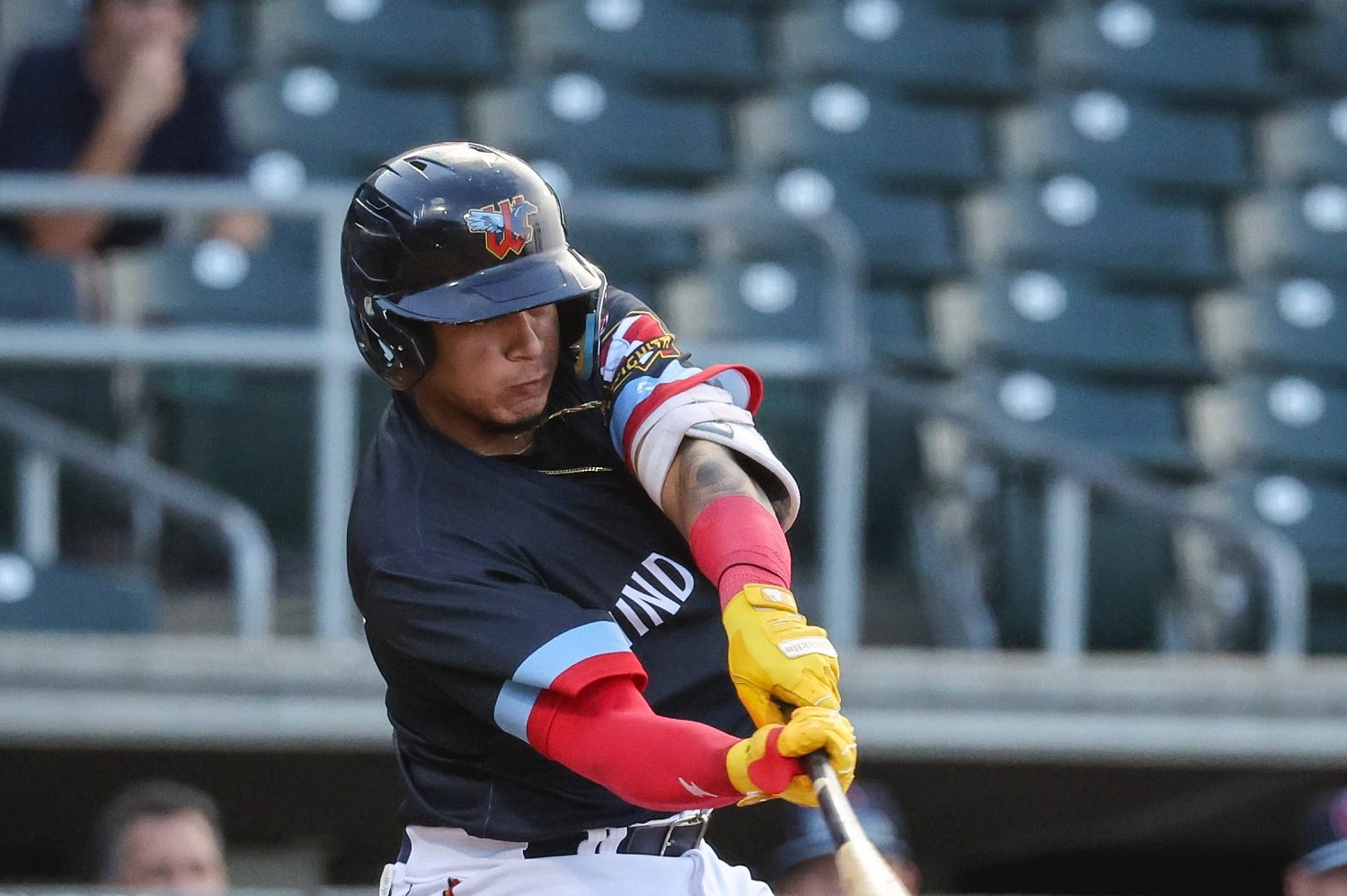
If I had a nickel for every Alabama native who made a start on Wednesday, I’d have two nickels, which isn’t a lot, but it’s weird that it happened twice. Image courtesy of Ed Bailey, Wichita Wind Surge (photo of Ricardo Olivar) TRANSACTIONS There were no moves made on Wednesday. Saints Sentinel Game One: St. Paul 5, Indianapolis 1 (Seven Innings) Box Score Andrew Morris: 4 IP, 5 H, 0 ER, 3 BB, 2 K HR: Mickey Gasper (2), Mike Ford (3) Multi-hit games: None The Saints won a breezy opening game of their doubleheader. Andrew Morris remains peripheral agnostic. He does not care. Walks. Strikeouts. The man only cares about one thing: outs, and he’ll claim them regardless of what nerdy FIP or FIP-adjacent stat you throw at him. Wednesday was maybe his magnum opus: three walks, five hits, two strikeouts, and—critically—zero earned runs. Majestic. Mickey Gasper continued his AAA tear with a 1st-inning two-run blast, the first of three runs scored by the Saints to start the game. Carson McCusker drove in the concluding run with a double. (And it was ripped, because it was Carson McCusker and that’s the only way he lives life.) Brady Fiegl and Richard Lovelady combined to work the final three frames, holding Indianapolis scoreless with just two harmless baserunners. Mike Ford capped the scoring with an absolute skyscraper into right field, a 45-degree behemoth that may have spooked a bird, or a low-flying aircraft. MLB.com’s 76th overall prospect, Thomas Harrington, started for Indianapolis. He allowed five runs across four innings. Game Two: St. Paul 2, Indianapolis 4 Box Score Cory Lewis: 3 ⅔ IP, 5 H, 3 ER, 1 BB, 4 K HR: None Multi-hit games: None The knuckleball looked unfavorably upon Cory Lewis. Back to starting, if just for a short time, the righty ran into early trouble, allowing a pair of homers in the games' opening frames to fall into a 3-0 deficit. Unfortunately, the home run issue is a sticking point from his last appearance; Lewis has now allowed six long balls across his two most recent outings. St. Paul’s bats offered tepid support of their starter, with Anthony Prato singling home a run in the 2nd. Then, in the 3rd, Indianapolis pulled their starter in favor of reliever Drake Fellows—otherwise known as OVO—and Carson McCusker singled to call in a second run. That proved insufficient, as the Saints offense never woke up, and Indianapolis scored one more run before eventually claiming the win. Pittsburgh’s 5th-ranked prospect, Nick Yorke, went 0-for-4 with two strikeouts. Wind Surge Wisdom Wichita 7, Springfield 6 (10 Innings) Box Score Christian MacLeod: 3 IP, 2 H, 0 ER, 0 BB, 5 K HR: None Multi-hit games: Tanner Schobel (2-for-5, 2B, 2 R), Ricardo Olivar (4-for-5, 2 2B, 2 R, 3 RBI), Ben Ross (2-for-4, R, RBI, BB), Kala’i Rosario (2-for-5, 2B, R, 2 RBI) The Wind Surge won in an extra-inning walk-off on Wednesday. Lefty Christian MacLeod made a triumphant return to Wichita. The Hunstville native cruised in three frames, shutting out the Cardinals with five punchouts. He threw 44 pitches. He has not given up a run in seven innings to start the season. Evidently, Springfield experienced a renewed vigor the second they saw MacLeod exit the game, because Wichita’s next two pitchers had a far less fun afternoon. Angel Macuare was walloped for three runs in a single inning; John Klein suffered the same (two earned) across 3 ⅔ innings. The good news is that Wichita’s offense was primed and ready to score some runs. Kala’i Rosario summoned home a pair with a 4th inning double, marking the beginning of a three-inning drought. Then, staring at a 6-2 deficit, they erupted for two in the 8th, two more in the 9th to tie the game, and a final, Manfred-Man-scoring knock off Kyler Fedko’s bat to deliver the win. Ricardo Olivar stood at the heart of the offensive supernova, exploding for four hits—two doubles—and three RBIs. He even threw a guy out at home. Sometimes, everything just goes right. Wind Surge pitchers struck out 14 batters in the game. Springfield is an affiliate of St. Louis, typically a talented system. Their top prospect—2024 first rounder, J.J. Wetherholt—is on the team, but did not play on Wednesday. Instead, Chase Davis, ranked 9th, in the system, served as their finest youngster. He singled and struck out thrice in five trips to the plate. Kernels Nuggets Cedar Rapids 3, Wisconsin 2 Box Score Ty Langenberg: 4 IP, 1 H, 0 ER, 0 BB, 3 K HR: None Multi-hit games: Nate Baez (2-for-3) Ty Langenberg pitched a fine ball game. The righty out of Iowa was nearly flawless; a 2nd inning single immediately erased by a double play proved the only jab the Timber Rattlers were able to land on him. Every out except one came via a strikeout or groundout. With just 40 pitches, Langenberg put forth an early submission for most efficient start of the year amongst Twins minor leaguers. Kernels’ bats started dormant, but woke up in the 5th. Khadim Diaw plated the opening run of the game by stealing 2nd before dashing home on a wild pitch/catcher throwing error combo. Two more runs scampered home off a Danny De Andrade double the following frame. Steals helped fuel the scores, and they were a consistent theme all night for the Kernels: they ended up swiping four bases, including Kyle DeBarge’s ninth of the season. The Timber Rattlers scored a final 9th inning off a groundout. Strangely, both runs scored by Wisconsin were via a groundball, giving them the unique distinction of going 0-for with runners in scoring position despite scoring two runs. 2nd baseman Jadher Areinamo ranks as the Brewers’ 23rd-best prospect. He doubled in four at-bats. Mussel Matters Fort Myers 3, Clearwater 4 Box Score Eli Jones: 5 IP, 6 H, 4 ER, 2 BB, 4 K HR: None Multi-hit games: None The Mighty Mussels came up short on Wednesday. Hitting was at a premium for Fort Myers. Their starting nine could only muster three hits—none of which went for extra bases. Augured by five walks, though, and a pair of stolen bases Angel Del Rosario, they were able to plate a trio of runs, perhaps more than they “deserved” given the meager inputs. RBI credits go to Jose Rodriguez for walking with the bases loaded, and the aforementioned Del Rosario, who singled in two in the 7th. 2024 draftee, Eli Jones, did not have his best stuff. A pair of scoreless frames to begin the game portended an extended, laborious 3rd for the Birmingham-born Jones, in which he walked two, allowed a pair of singles, and ushered home a run with a wild pitch. A 5th inning solo shot capped his allowed damage. The University of South Carolina product topped out at 94.2. Fort Myers was able to put the tying run in scoring position in the 9th, but Byron Chourio did not play the hero; he grounded out to end the game. The Threshers are the A-ball affiliate of the Philadelphia Phillies. Their 4th-ranked prospect, Eduardo Tait, DH’d, singling once in four at-bats. TWINS DAILY PLAYERS OF THE DAY Twins Daily Minor League Pitcher of the Day – Ty Langenberg Twins Daily Minor League Hitter of the Day – Ricardo Olivar PROSPECT SUMMARY Here’s a look at how the Twins Daily Top 20 Twins Prospects performed: #2 – Emmanuel Rodriguez (St. Paul) - 0-2, R, BB, K #3 – Luke Keaschall (Twins) - 1-3, 2B, R, BB #5 – Andrew Morris (St. Paul) - 4 IP, 5 H, 0 ER, 3 BB, 2 K #8 – Brandon Winokur (Cedar Rapids) - 0-4, 2 K #9 – Cory Lewis (St. Paul) - 3 ⅔ IP, 5 H, 3 ER, 1 BB, 4 K #13 – Kyle DeBarge (Cedar Rapids) - 1-4, 2B, R #15 – Yasser Mercedes (Fort Myers) - 1-4, R, K #17 – Billy Amick (Cedar Rapids) - 1-4, R, 2 K #18 – Kala’i Rosario (Wichita) - 2-5, 2B, R, 2 RBI, K #19 – Gabriel Gonzalez (Cedar Rapids) - 0-3, BB #20 – Ricardo Olivar (Wichita) - 4-5, 2 2B, 2 R, 3 RBI THURSDAY’S PROBABLE STARTERS Indianapolis @ St. Paul (6:37 PM) - RHP Marco Raya Springfield @ Wichita (6:35 PM) - RHP Trent Baker Wisconsin @ Cedar Rapids (6:35 PM) - RHP Chase Chaney Fort Myers @ Clearwater (5:30 PM) - RHP Jason Doktorczyk View full article
-
Surprisingly, David Festa's Fastball Stinks. Here's Why It's Not an Easy Fix.
Matt Braun posted an article in Twins
 Ten innings into 2025, a concerning trend with David Festa is continuing: his fastball isn’t cutting it. He’s allowing a .357 batting average against the heater, and the under-the-hood stats suggest it isn’t a fluke; that pitch is just far too hittable. If he wants to become a regular in the Twins rotation, something will need to change. One of the inherent challenges in altering a pitcher’s offerings rests in the bedrock of their mix, the fastball. A player’s four-seam fastball can be malleable, to an extent—we’ve seen cut/cut-ride hurlers (like Dylan Cease) tweak their heaters for the better, or simply add a sinker—but the way someone throws a fastball is almost written into their DNA, and this isn’t Gattaca (1997). Unlike the crazy alterations we see pitchers make with breaking balls and offspeed offerings, their fastballs remain mostly static. Even Twins pitching guru Josh Kalk said, at last year's SABR Annual Conference in Minneapolis, that the team thinks about fastball shape as an immutable characteristic, akin to a fingerprint. Festa’s main issue is that he’s an outlier in the modern pitching world, but maybe not in the best way. The Joe Ryans (Joes Ryan? people like Joe Ryan, is the point) of the world, with their low slots and high-rise heaters, are everywhere, and for good reason: carrying four-seamers at the top of the zone are difficult for hitters to identify and hit with consistency. Yet, while Ryan throws with a 23-degree arm angle, Festa is at 50 degrees, one of the highest in baseball. That makes one of his fastballs at the top of the zone much easier for batters to hit. Hitters are less fooled by high heat when it comes from a high slot. Four-seamers in the top third of the zone with a sub-25° arm angle have induced a .181 batting average, .359 slugging, and 30.2% whiff rate since the start of last year, league-wide. The same pitch type in the same location begets a .249 average, a .435 SLG, and just 21.4% whiffs per swing if it comes from an arm angle of at least 50°. That’s how Festa's 95-MPH fastball—with some of the best induced vertical break in MLB (19.2 inches)—gets hit at such a troubling clip. So, what can he do about it? Well, it’s clear the Twins are aware of his fastball woes. Festa introduced a sinker in 2025 to help augment his pitch mix, and introducing a sinker counts as a drastic step for the Twins. He’s only thrown the offering seven times in the majors, though, so it’s still unclear how effective it may be, and how it alters his profile. He also is already down 6° from his arm slot in 2024, so maybe they're trying to gradually get him working from a slightly more conventional three-quarters slot. Location is another factor. Festa has moved from a middle-high target to one on the glove-side third of the plate, belt-high. That’s an interesting change to make, given that the team is likely well aware of his on-plane issues. Here's where his fastballs landed in 2024, for reference. Obviously, too many of those balls crept down into the lower half of the zone and were still in the middle of the plate, but you can see what he's trying to do. They could be looking at altering how he tunnels, but haven’t yet seen results because his slider command from last year has yet to arrive at the party. In any case, I think the horizontal move is groovy, but he’s still just a little low; if he can consistently bang high-and-away to righties, and under the armpit to lefties, that should do the trick. But that’s a tough spot to live in if his command isn’t up to snuff. So far, he's not quite finding that spot. He's caught in between hitting that top rail and steering it to the glove side, a bit. There are successful tall, high-slot pitchers, but it’s a small group. Festa doesn’t have the velocity of Peak Justin Verlander or Tyler Glasnow, so he can’t just overpower hitters in the zone. He’s somewhat similar to his rotation mate, Chris Paddack, who has also had trouble getting the most out of his fastball. He may have to embrace the philosophy of Michael Wacha. Like Festa, Wacha is 6-foot-6 and throws from an almost identical slot (51°). His fastball isn’t good, in velocity or in shape characteristics, so he’s content to throw it in hittable locations to allow his tremendous changeup to succeed. The difference is in the depth of their arsenals: Wacha has six pitches, and while only one of them may be truly elite, the mere existence of the other five is enough to give him an edge that Festa lacks. It’s a lot easier for a hitter to only consider three (and a half? How generous are you feeling about that sinker?) pitches. At least throw an overhand curveball, dude! Festa is still a tremendously promising pitcher. Of the trio of young hurlers consisting of Simeon Woods Richardson, Zebby Matthews, and Festa, I think he possesses the best chance at becoming a stud major-league starter. His changeup feel at such a young age is difficult to teach; his slider command last year was remarkable. He’s in a weird spot, where his command and “stuff” are good but need tweaking for him to reach his full potential. Those tweaks may be difficult to make.
- 18 comments
-
- 5
-
-
- david festa
- chris paddack
- (and 3 more)
-
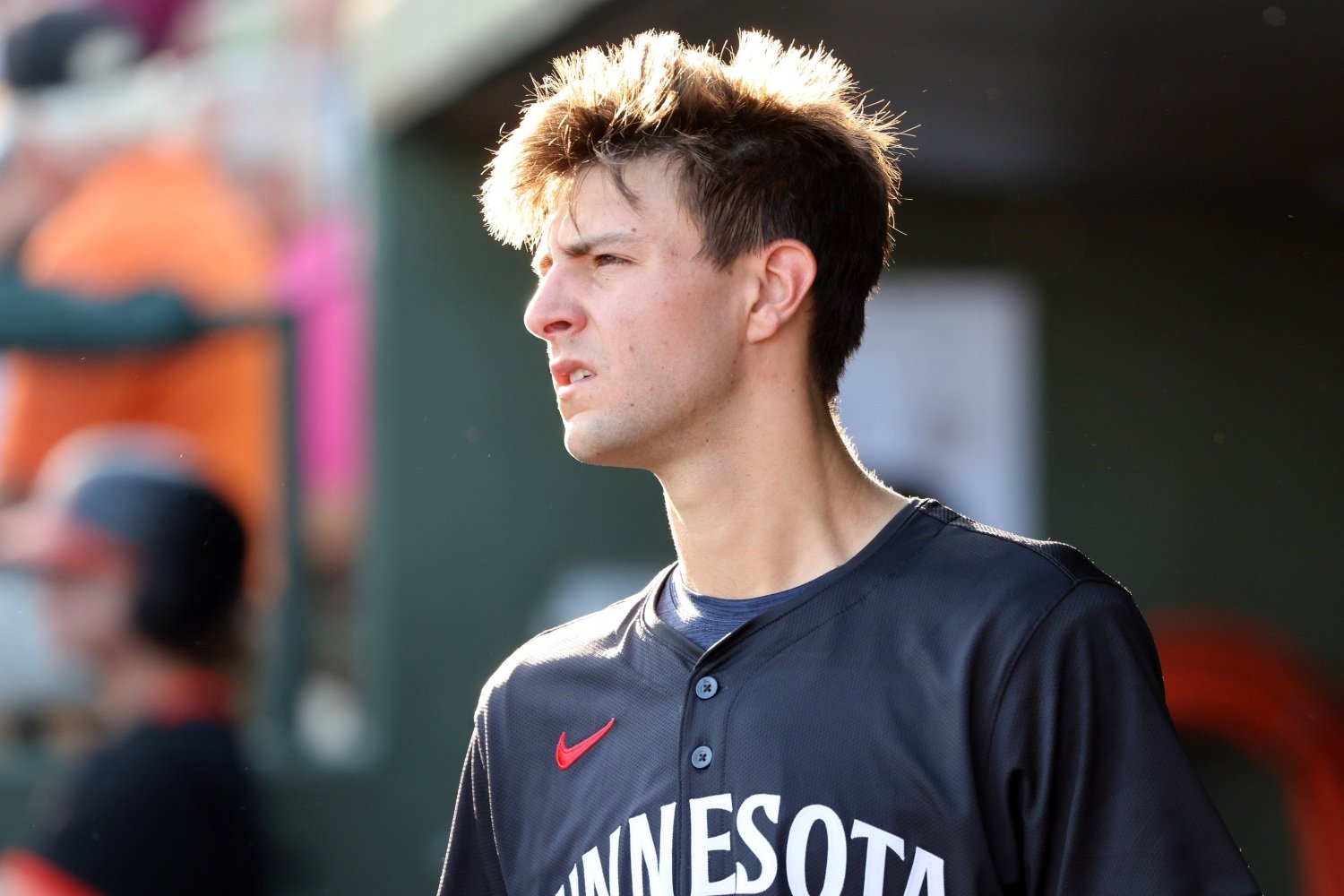
Finally, a disadvantage for tall people. Image courtesy of © Kim Klement Neitzel-Imagn Images Ten innings into 2025, a concerning trend with David Festa is continuing: his fastball isn’t cutting it. He’s allowing a .357 batting average against the heater, and the under-the-hood stats suggest it isn’t a fluke; that pitch is just far too hittable. If he wants to become a regular in the Twins rotation, something will need to change. One of the inherent challenges in altering a pitcher’s offerings rests in the bedrock of their mix, the fastball. A player’s four-seam fastball can be malleable, to an extent—we’ve seen cut/cut-ride hurlers (like Dylan Cease) tweak their heaters for the better, or simply add a sinker—but the way someone throws a fastball is almost written into their DNA, and this isn’t Gattaca (1997). Unlike the crazy alterations we see pitchers make with breaking balls and offspeed offerings, their fastballs remain mostly static. Even Twins pitching guru Josh Kalk said, at last year's SABR Annual Conference in Minneapolis, that the team thinks about fastball shape as an immutable characteristic, akin to a fingerprint. Festa’s main issue is that he’s an outlier in the modern pitching world, but maybe not in the best way. The Joe Ryans (Joes Ryan? people like Joe Ryan, is the point) of the world, with their low slots and high-rise heaters, are everywhere, and for good reason: carrying four-seamers at the top of the zone are difficult for hitters to identify and hit with consistency. Yet, while Ryan throws with a 23-degree arm angle, Festa is at 50 degrees, one of the highest in baseball. That makes one of his fastballs at the top of the zone much easier for batters to hit. Hitters are less fooled by high heat when it comes from a high slot. Four-seamers in the top third of the zone with a sub-25° arm angle have induced a .181 batting average, .359 slugging, and 30.2% whiff rate since the start of last year, league-wide. The same pitch type in the same location begets a .249 average, a .435 SLG, and just 21.4% whiffs per swing if it comes from an arm angle of at least 50°. That’s how Festa's 95-MPH fastball—with some of the best induced vertical break in MLB (19.2 inches)—gets hit at such a troubling clip. So, what can he do about it? Well, it’s clear the Twins are aware of his fastball woes. Festa introduced a sinker in 2025 to help augment his pitch mix, and introducing a sinker counts as a drastic step for the Twins. He’s only thrown the offering seven times in the majors, though, so it’s still unclear how effective it may be, and how it alters his profile. He also is already down 6° from his arm slot in 2024, so maybe they're trying to gradually get him working from a slightly more conventional three-quarters slot. Location is another factor. Festa has moved from a middle-high target to one on the glove-side third of the plate, belt-high. That’s an interesting change to make, given that the team is likely well aware of his on-plane issues. Here's where his fastballs landed in 2024, for reference. Obviously, too many of those balls crept down into the lower half of the zone and were still in the middle of the plate, but you can see what he's trying to do. They could be looking at altering how he tunnels, but haven’t yet seen results because his slider command from last year has yet to arrive at the party. In any case, I think the horizontal move is groovy, but he’s still just a little low; if he can consistently bang high-and-away to righties, and under the armpit to lefties, that should do the trick. But that’s a tough spot to live in if his command isn’t up to snuff. So far, he's not quite finding that spot. He's caught in between hitting that top rail and steering it to the glove side, a bit. There are successful tall, high-slot pitchers, but it’s a small group. Festa doesn’t have the velocity of Peak Justin Verlander or Tyler Glasnow, so he can’t just overpower hitters in the zone. He’s somewhat similar to his rotation mate, Chris Paddack, who has also had trouble getting the most out of his fastball. He may have to embrace the philosophy of Michael Wacha. Like Festa, Wacha is 6-foot-6 and throws from an almost identical slot (51°). His fastball isn’t good, in velocity or in shape characteristics, so he’s content to throw it in hittable locations to allow his tremendous changeup to succeed. The difference is in the depth of their arsenals: Wacha has six pitches, and while only one of them may be truly elite, the mere existence of the other five is enough to give him an edge that Festa lacks. It’s a lot easier for a hitter to only consider three (and a half? How generous are you feeling about that sinker?) pitches. At least throw an overhand curveball, dude! Festa is still a tremendously promising pitcher. Of the trio of young hurlers consisting of Simeon Woods Richardson, Zebby Matthews, and Festa, I think he possesses the best chance at becoming a stud major-league starter. His changeup feel at such a young age is difficult to teach; his slider command last year was remarkable. He’s in a weird spot, where his command and “stuff” are good but need tweaking for him to reach his full potential. Those tweaks may be difficult to make. View full article
-
 TRANSACTIONS INF Dameury Pena placed on 7-day IL (Fort Myers) Saints Sentinel St. Paul 6, Iowa 20 Box Score Andrew Morris: 3 2/3 IP, 9 H, 7 ER, 1 BB, 6 K HR: Jeferson Morales (1), Carson McCusker 2 (3, 4), Armando Alvarez (1) Multi-hit games: Carson McCusker (2-for-4, 2 HR, 2 R, 2 RBI) The Saints allowed a franchise record eight home runs in a thumping on Wednesday. Andrew Morris had been sharper. The Texas Tech product entered the game without an earned run on his ledger, and exited with an ERA that would make most pitchers blush. It started with a pair of runs in the 1st, before the Cubs pricked and prodded the righty with runs in each subsequent frame he pitched. The chaos—for him, at least—concluded with a Moisés Ballesteros two-run shot in the 4th. The good news? Morris hit 99.3 MPH on the gun. The bad news? Well, you can read, and somehow the game devolved from a seven-run punch to a 20-run laugher. Cory Lewis worked a pair of scoreless innings before running face-first into the pitching equivalent of the painted boulders that perpetually fools the Road Runner. A single begat a double, which begat an excruciating sequence in which—across six hitters—four Iowa Cubs took Lewis deep. Anthony Prato, not a pitcher, relieved him. They hit one more for good measure. There were some signs of life offensively: Jeferson Morales homered back when the game was still winnable, and Carson McCusker blasted a pair of shots late in the game, the second of which was part of a back-to-back effort with Armando Alvarez. Cubs starter Cade Horton served as the team’s impact prospect. Ranked 2nd in the system, and 48th overall, the former 1st-round pick tossed five innings allowing just one earned run. He struck out six. Wind Surge Wisdom Wichita 4, Tulsa 5 (14 Innings) Box Score Chase Chaney: 4 2/3 IP, 6 H, 0 ER, 0 BB, 1 K HR: Kyler Fedko (2) Multi-hit games: Kala’i Rosario (2-for-6), Jake Rucker (2-for-5, 2 R, RBI), Tyler Dearden (4-for-6) The Wind Surge fell in a 14-inning marathon on Wednesday. It took 12 total pitchers, 398 combined pitches, and nearly four hours to determine a winner. Fortune fell in favor of the Drillers. So it goes. Chase Chaney enjoyed his finest outing of the season, going 4 2/3 innings while allowing a lone unearned run. He gave way to Angel Macuare who continued to buzz through AA hitters with 2 1/3 perfect frames. He has now totaled 6 2/3 scoreless innings in 2025 with nine strikeouts. Wichita’s bats didn’t have much to offer in support of their pitching at this point; Macuare was able to leave the game tied only thanks to a 7th-inning scrap that concluded with a Jake Rucker sacrifice fly. Two frames later, Kyler Fedko smoked a hanging breaking ball to give the Wind Surge a 3-1 lead. Tulsa matched with two of their own in the bottom of the 9th to kick off the absurdity. Both teams opted for an empty 10th before scoring in the 11th. The Manfred Men of the 12th and 13th found home plate unattractive; Rubel Cespedes nearly scored once, but was thrown out at the plate. Finally, the Drillers found the end of the game with a leadoff single in the bottom of the 14th. The Drillers are a part of the Dodgers system. Typically overflowing with talent, the best LA has to offer has somehow missed Tulsa, Oklahoma; no one in the team’s top 30 appeared for the Drillers on Wednesday. Kernels Nuggets Cedar Rapids 8, Peoria 7 (11 Innings) Box Score Ty Langenberg: 3 2/3 IP, 4 H, 3 ER, 3 BB, 3 K HR: None Multi-hit games: Brandon Winokur (3-for-5, 2 2B, 4 RBI, BB), Nate Baez (4-for-5, 2 R), Caden Kendle (2-for-5, R, 2 RBI) The Kernels came back late to win in extras on Wednesday. Ty Langenberg was not his best self. In fact, it’s been a rough two games to start the season for the Urbandale native, as his ERA on the year sits at a ghastly 7.50. Fortunately, a two-start sample means almost nothing; he has quite some time to get back on track. Offensively, the Kernels universe revolved around two players: Brandon Winokur and Nate Baez. The former collected three hits—two of them doubles—and walked while driving in four. Baez kept things simple: if he went to the plate, he singled, which proved fully true when the author wrote that sentence, but was only altered with a fifth at-bat strikeout. A Khadim Diaw RBI single in the 9th pushed the game to extras, and Winokur’s final RBI of the night broke the tie in the 11th. Gabriel Yanez earned the save. Kyle DeBarge stole his eighth base of the season, the 3rd-most in the Midwest League. Catcher Ryan Campos—ranked as the 18th-best player in the Cardinals system—went 2-5 with a run and a walk. Mussel Matters Fort Myers 1, Bradenton 0 Box Score Christian MacLeod: 2 IP, 0 H, 0 ER, 0 BB, 4 K HR: Jay Thomason (1) Multi-hit games: None Mighty Mussels pitching threw a shutout on Wednesday. Ok, it’s a little less impressive considering they had a big leaguer and two minor league rehabbers pitch, but, still. Christian MacLeod was the first rehabber up. The 25-year-old out of Huntsville made quick work of his opponents, dicing up the six hitters he faced with just 26 pitches, He struck out four. Then Brock Stewart entered. Those poor kids. 13 pitches later, he walked off the mound with three more strikeouts under his belt. He topped out at 95 MPH. Pierson Ohl took the mound and proceeded to punch out eight of the ten batters he faced, with his only hit—and the only hit Bradenton earned the entire night—coming from a bunt single. Somewhere, Brian Dozier felt extra red-ass. Dylan Questad delivered the game to its finale with a trio of clean frames. Fort Myers’ offense came via a Jay Thomason solo homer. That was it. They took six walks and singled thrice, but Thomason’s blast represented their only run of the game. 2024 1st-rounder Konnor Griffin was the Marauders' most notable prospect. Ranked 40th in baseball by MLB.com, the DH struck out three times in four at-bats. TWINS DAILY PLAYERS OF THE DAY Twins Daily Minor League Pitcher of the Day – Pierson Ohl Twins Daily Minor League Hitter of the Day – Carson McCusker PROSPECT SUMMARY Here’s a look at how the Twins Daily Top 20 Twins Prospects performed: #2 – Emmanuel Rodriguez (St. Paul) - 0-2, R, 3 BB, K #3 – Luke Keaschall (St. Paul) - 0-4, K #5 – Andrew Morris (St. Paul) - 3 2/3 IP, 9 H, 7 ER, 1 BB, 6 K #9 – Cory Lewis (St. Paul) - 2 2/3 IP, 8 H, 6 ER, 0 BB, 4 K #13 – Kyle DeBarge (Cedar Rapids) - 1-5, 2B, 2 R, RBI, BB #15 – Yasser Mercedes (Fort Myers) - 0-4, 2 K #17 – Billy Amick (Cedar Rapids) - 1-4, 2 K #18 – Kala’i Rosario (Wichita) - 2-6, 2 K #19 – Gabriel Gonzalez (Cedar Rapids) - 1-4, BB THURSDAY’S PROBABLE STARTERS St. Paul @ Iowa (12:08 PM) - RHP Marco Raya Wichita @ Tulsa (7:00 PM) - RHP Trent Baker Cedar Rapids @ Peoria (6:35 PM) - RHP Charlee Soto Bradenton @ Fort Myers (6:05 PM) - RHP Eli Jones
- 18 comments
-
- 3
-
-
-
- pierson ohl
- brock stewart
- (and 5 more)
-
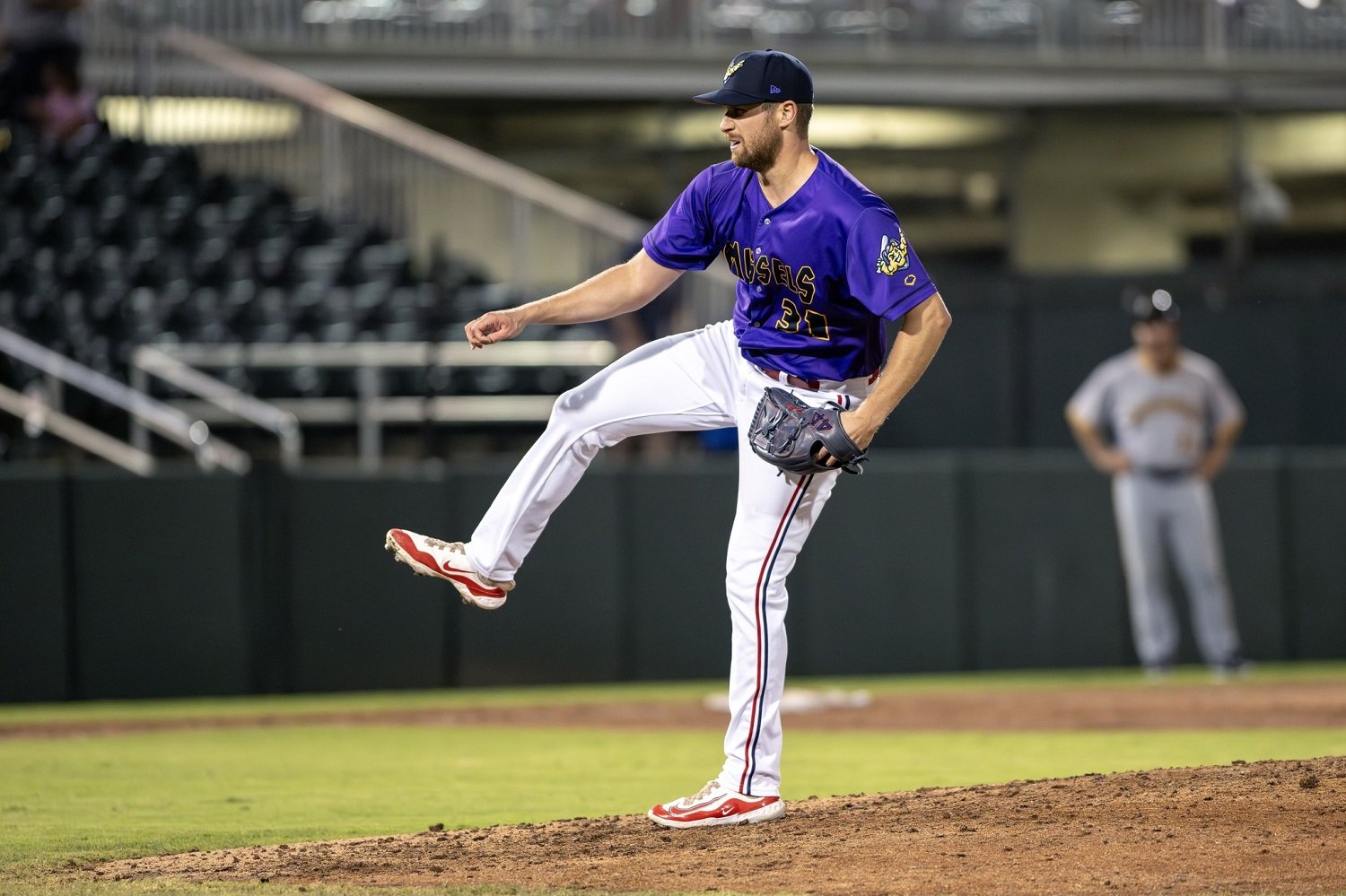
What evil to send such competency against teenagers. Image courtesy of William Parmeter (photo of Brock Stewart) TRANSACTIONS INF Dameury Pena placed on 7-day IL (Fort Myers) Saints Sentinel St. Paul 6, Iowa 20 Box Score Andrew Morris: 3 2/3 IP, 9 H, 7 ER, 1 BB, 6 K HR: Jeferson Morales (1), Carson McCusker 2 (3, 4), Armando Alvarez (1) Multi-hit games: Carson McCusker (2-for-4, 2 HR, 2 R, 2 RBI) The Saints allowed a franchise record eight home runs in a thumping on Wednesday. Andrew Morris had been sharper. The Texas Tech product entered the game without an earned run on his ledger, and exited with an ERA that would make most pitchers blush. It started with a pair of runs in the 1st, before the Cubs pricked and prodded the righty with runs in each subsequent frame he pitched. The chaos—for him, at least—concluded with a Moisés Ballesteros two-run shot in the 4th. The good news? Morris hit 99.3 MPH on the gun. The bad news? Well, you can read, and somehow the game devolved from a seven-run punch to a 20-run laugher. Cory Lewis worked a pair of scoreless innings before running face-first into the pitching equivalent of the painted boulders that perpetually fools the Road Runner. A single begat a double, which begat an excruciating sequence in which—across six hitters—four Iowa Cubs took Lewis deep. Anthony Prato, not a pitcher, relieved him. They hit one more for good measure. There were some signs of life offensively: Jeferson Morales homered back when the game was still winnable, and Carson McCusker blasted a pair of shots late in the game, the second of which was part of a back-to-back effort with Armando Alvarez. Cubs starter Cade Horton served as the team’s impact prospect. Ranked 2nd in the system, and 48th overall, the former 1st-round pick tossed five innings allowing just one earned run. He struck out six. Wind Surge Wisdom Wichita 4, Tulsa 5 (14 Innings) Box Score Chase Chaney: 4 2/3 IP, 6 H, 0 ER, 0 BB, 1 K HR: Kyler Fedko (2) Multi-hit games: Kala’i Rosario (2-for-6), Jake Rucker (2-for-5, 2 R, RBI), Tyler Dearden (4-for-6) The Wind Surge fell in a 14-inning marathon on Wednesday. It took 12 total pitchers, 398 combined pitches, and nearly four hours to determine a winner. Fortune fell in favor of the Drillers. So it goes. Chase Chaney enjoyed his finest outing of the season, going 4 2/3 innings while allowing a lone unearned run. He gave way to Angel Macuare who continued to buzz through AA hitters with 2 1/3 perfect frames. He has now totaled 6 2/3 scoreless innings in 2025 with nine strikeouts. Wichita’s bats didn’t have much to offer in support of their pitching at this point; Macuare was able to leave the game tied only thanks to a 7th-inning scrap that concluded with a Jake Rucker sacrifice fly. Two frames later, Kyler Fedko smoked a hanging breaking ball to give the Wind Surge a 3-1 lead. Tulsa matched with two of their own in the bottom of the 9th to kick off the absurdity. Both teams opted for an empty 10th before scoring in the 11th. The Manfred Men of the 12th and 13th found home plate unattractive; Rubel Cespedes nearly scored once, but was thrown out at the plate. Finally, the Drillers found the end of the game with a leadoff single in the bottom of the 14th. The Drillers are a part of the Dodgers system. Typically overflowing with talent, the best LA has to offer has somehow missed Tulsa, Oklahoma; no one in the team’s top 30 appeared for the Drillers on Wednesday. Kernels Nuggets Cedar Rapids 8, Peoria 7 (11 Innings) Box Score Ty Langenberg: 3 2/3 IP, 4 H, 3 ER, 3 BB, 3 K HR: None Multi-hit games: Brandon Winokur (3-for-5, 2 2B, 4 RBI, BB), Nate Baez (4-for-5, 2 R), Caden Kendle (2-for-5, R, 2 RBI) The Kernels came back late to win in extras on Wednesday. Ty Langenberg was not his best self. In fact, it’s been a rough two games to start the season for the Urbandale native, as his ERA on the year sits at a ghastly 7.50. Fortunately, a two-start sample means almost nothing; he has quite some time to get back on track. Offensively, the Kernels universe revolved around two players: Brandon Winokur and Nate Baez. The former collected three hits—two of them doubles—and walked while driving in four. Baez kept things simple: if he went to the plate, he singled, which proved fully true when the author wrote that sentence, but was only altered with a fifth at-bat strikeout. A Khadim Diaw RBI single in the 9th pushed the game to extras, and Winokur’s final RBI of the night broke the tie in the 11th. Gabriel Yanez earned the save. Kyle DeBarge stole his eighth base of the season, the 3rd-most in the Midwest League. Catcher Ryan Campos—ranked as the 18th-best player in the Cardinals system—went 2-5 with a run and a walk. Mussel Matters Fort Myers 1, Bradenton 0 Box Score Christian MacLeod: 2 IP, 0 H, 0 ER, 0 BB, 4 K HR: Jay Thomason (1) Multi-hit games: None Mighty Mussels pitching threw a shutout on Wednesday. Ok, it’s a little less impressive considering they had a big leaguer and two minor league rehabbers pitch, but, still. Christian MacLeod was the first rehabber up. The 25-year-old out of Huntsville made quick work of his opponents, dicing up the six hitters he faced with just 26 pitches, He struck out four. Then Brock Stewart entered. Those poor kids. 13 pitches later, he walked off the mound with three more strikeouts under his belt. He topped out at 95 MPH. Pierson Ohl took the mound and proceeded to punch out eight of the ten batters he faced, with his only hit—and the only hit Bradenton earned the entire night—coming from a bunt single. Somewhere, Brian Dozier felt extra red-ass. Dylan Questad delivered the game to its finale with a trio of clean frames. Fort Myers’ offense came via a Jay Thomason solo homer. That was it. They took six walks and singled thrice, but Thomason’s blast represented their only run of the game. 2024 1st-rounder Konnor Griffin was the Marauders' most notable prospect. Ranked 40th in baseball by MLB.com, the DH struck out three times in four at-bats. TWINS DAILY PLAYERS OF THE DAY Twins Daily Minor League Pitcher of the Day – Pierson Ohl Twins Daily Minor League Hitter of the Day – Carson McCusker PROSPECT SUMMARY Here’s a look at how the Twins Daily Top 20 Twins Prospects performed: #2 – Emmanuel Rodriguez (St. Paul) - 0-2, R, 3 BB, K #3 – Luke Keaschall (St. Paul) - 0-4, K #5 – Andrew Morris (St. Paul) - 3 2/3 IP, 9 H, 7 ER, 1 BB, 6 K #9 – Cory Lewis (St. Paul) - 2 2/3 IP, 8 H, 6 ER, 0 BB, 4 K #13 – Kyle DeBarge (Cedar Rapids) - 1-5, 2B, 2 R, RBI, BB #15 – Yasser Mercedes (Fort Myers) - 0-4, 2 K #17 – Billy Amick (Cedar Rapids) - 1-4, 2 K #18 – Kala’i Rosario (Wichita) - 2-6, 2 K #19 – Gabriel Gonzalez (Cedar Rapids) - 1-4, BB THURSDAY’S PROBABLE STARTERS St. Paul @ Iowa (12:08 PM) - RHP Marco Raya Wichita @ Tulsa (7:00 PM) - RHP Trent Baker Cedar Rapids @ Peoria (6:35 PM) - RHP Charlee Soto Bradenton @ Fort Myers (6:05 PM) - RHP Eli Jones View full article
-
Here Comes the Bride: Twins Acquire IF Jonah Bride from the Miami Marlins
Matt Braun posted an article in Twins
 Who Is John Galt Jonah Bride? A Milwaukee native, Bride was originally a 23rd-round Oakland draftee in 2018, back when one could still be such a thing. Once a catching prospect, the University of South Carolina product journeyed deeper into the infield when his catching acumen proved detrimental; he has only played 1st, 2nd, and 3rd in the majors. He debuted in 2022 before trekking to Miami before the 2024 season, in which he slashed .276/.357/.461 across 272 plate appearances. Eric Longenhagen of Fangraphs last wrote about Bride in 2022, in which he had this to say about him: “Bride, who recently made his big league debut and is currently on the IL, is a recent (part-time) catching convert who would be stuffed in the 45 FV tier if his ball-blocking and receiving had progressed more quickly and I felt more confident that he could catch often. It’s still possible that he could turn into a role player with this sort of special versatility if his defense behind the plate continues to improve, but because he can hit, Bride is at least going to be a solid part-time infielder, with third base his most natural position.” Why Jonah Bride? Twins players are dropping like flies. Edouard Julien probably pulled a groin while you read this article. It’s doubtful that Bride is any sort of long-term answer or pet project for the team; they need warm major-league bodies and they need them now. Matt Wallner will head to the IL, and the statuses of Willi Castro and Carlos Correa are currently unknown. St. Paul Saint Ryan Fitzgerald appears a prime candidate to replace one of them, but he is just one man. Bride seems likely to play 3rd, where he was once worth 3 Statcast Outs Above Average in a limited sample in 2023. 2nd base is also an option. This is also some Sicko Stuff, because who was watching a Twins-Marlins series late in 2024, when the team’s collapse was nearly complete, but you may remember Bride because, across three games in Target Field, he slashed .429/.400/.786 with a home run and two doubles. Maybe he’s secretly Edwin Encarnación 2.0. Bride was DFA'd on the 15th. Minnesota is sending cash to complete the deal. What happens going forward? Fortunately, Minnesota has an off-day on the 17th to figure out their moves before starting a series on the 18th with the Atlanta Braves. Bride is the first of what could be two more moves: Correa and Castro. Correa is suffering from wrist soreness, apparently a malady that affected him since Spring Training, and he didn't start in Wednesday's affair, although he did enter the game as a defensive replacement. He never took an at-bat. Castro exited early Wednesday with "mild right oblique tightness," a choice that Rocco Baldelli described as "precautionary." Currently, that wonderfully vague term is all we have to understand the nature of Castro's injury. Of course, the situation is augmented by the recent news that José Miranda landed on the minor league IL because of an incident at Target that involved a dropped case of water. Tremendous stuff. Assuming Castro and Correa are both incapacitated, Brooks Lee becomes the obvious starter at shortstop, with calling up a minor leaguer like the aforementioned Fitzgerald a logical move. That would create a Bride-Lee-Julien-France infield with Mickey Gasper filling in when needed. Not ideal, certainly, but hopefully it would only be for a short period of time. But, who knows? The esoteric nature of Castro and Correa's injuries leave room for pure speculation, yet nothing solid. If one or both players are closer to fine, then life for the Twins looks a lot easier. Hell, even just one of them being ready to go renders the previous paragraph something of a worst case scenario. As of now, we understand little, but, after acquiring Bride, their depth nonetheless appears better than it was before.
 -
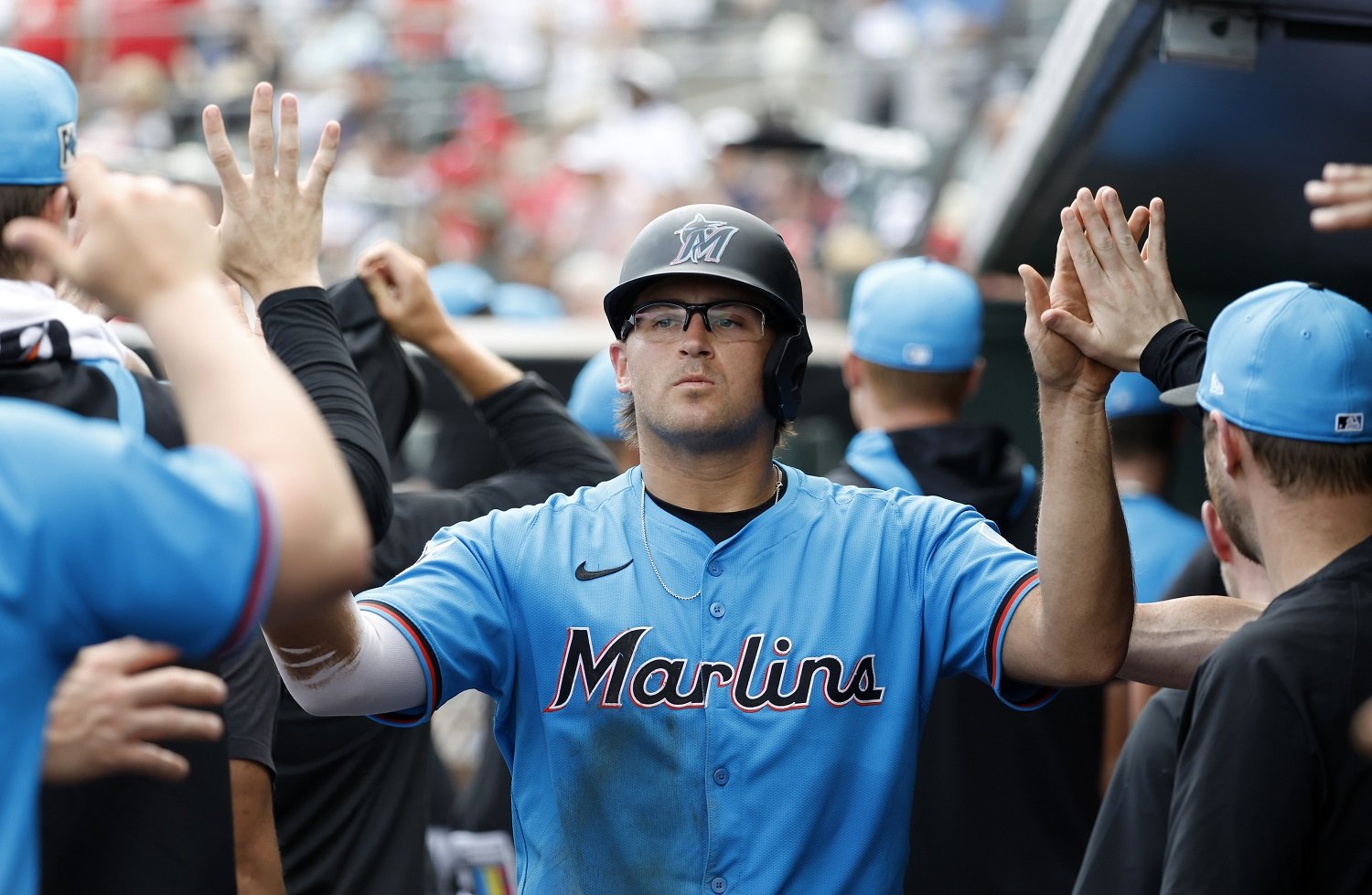
Not long after Ty France delivered the game-winning single in Wednesday’s contest, the Twins traded for 29-year-old corner infielder Jonah Bride. Image courtesy of © Rhona Wise-Imagn Images Who Is John Galt Jonah Bride? A Milwaukee native, Bride was originally a 23rd-round Oakland draftee in 2018, back when one could still be such a thing. Once a catching prospect, the University of South Carolina product journeyed deeper into the infield when his catching acumen proved detrimental; he has only played 1st, 2nd, and 3rd in the majors. He debuted in 2022 before trekking to Miami before the 2024 season, in which he slashed .276/.357/.461 across 272 plate appearances. Eric Longenhagen of Fangraphs last wrote about Bride in 2022, in which he had this to say about him: “Bride, who recently made his big league debut and is currently on the IL, is a recent (part-time) catching convert who would be stuffed in the 45 FV tier if his ball-blocking and receiving had progressed more quickly and I felt more confident that he could catch often. It’s still possible that he could turn into a role player with this sort of special versatility if his defense behind the plate continues to improve, but because he can hit, Bride is at least going to be a solid part-time infielder, with third base his most natural position.” Why Jonah Bride? Twins players are dropping like flies. Edouard Julien probably pulled a groin while you read this article. It’s doubtful that Bride is any sort of long-term answer or pet project for the team; they need warm major-league bodies and they need them now. Matt Wallner will head to the IL, and the statuses of Willi Castro and Carlos Correa are currently unknown. St. Paul Saint Ryan Fitzgerald appears a prime candidate to replace one of them, but he is just one man. Bride seems likely to play 3rd, where he was once worth 3 Statcast Outs Above Average in a limited sample in 2023. 2nd base is also an option. This is also some Sicko Stuff, because who was watching a Twins-Marlins series late in 2024, when the team’s collapse was nearly complete, but you may remember Bride because, across three games in Target Field, he slashed .429/.400/.786 with a home run and two doubles. Maybe he’s secretly Edwin Encarnación 2.0. Bride was DFA'd on the 15th. Minnesota is sending cash to complete the deal. What happens going forward? Fortunately, Minnesota has an off-day on the 17th to figure out their moves before starting a series on the 18th with the Atlanta Braves. Bride is the first of what could be two more moves: Correa and Castro. Correa is suffering from wrist soreness, apparently a malady that affected him since Spring Training, and he didn't start in Wednesday's affair, although he did enter the game as a defensive replacement. He never took an at-bat. Castro exited early Wednesday with "mild right oblique tightness," a choice that Rocco Baldelli described as "precautionary." Currently, that wonderfully vague term is all we have to understand the nature of Castro's injury. Of course, the situation is augmented by the recent news that José Miranda landed on the minor league IL because of an incident at Target that involved a dropped case of water. Tremendous stuff. Assuming Castro and Correa are both incapacitated, Brooks Lee becomes the obvious starter at shortstop, with calling up a minor leaguer like the aforementioned Fitzgerald a logical move. That would create a Bride-Lee-Julien-France infield with Mickey Gasper filling in when needed. Not ideal, certainly, but hopefully it would only be for a short period of time. But, who knows? The esoteric nature of Castro and Correa's injuries leave room for pure speculation, yet nothing solid. If one or both players are closer to fine, then life for the Twins looks a lot easier. Hell, even just one of them being ready to go renders the previous paragraph something of a worst case scenario. As of now, we understand little, but, after acquiring Bride, their depth nonetheless appears better than it was before. View full article
-
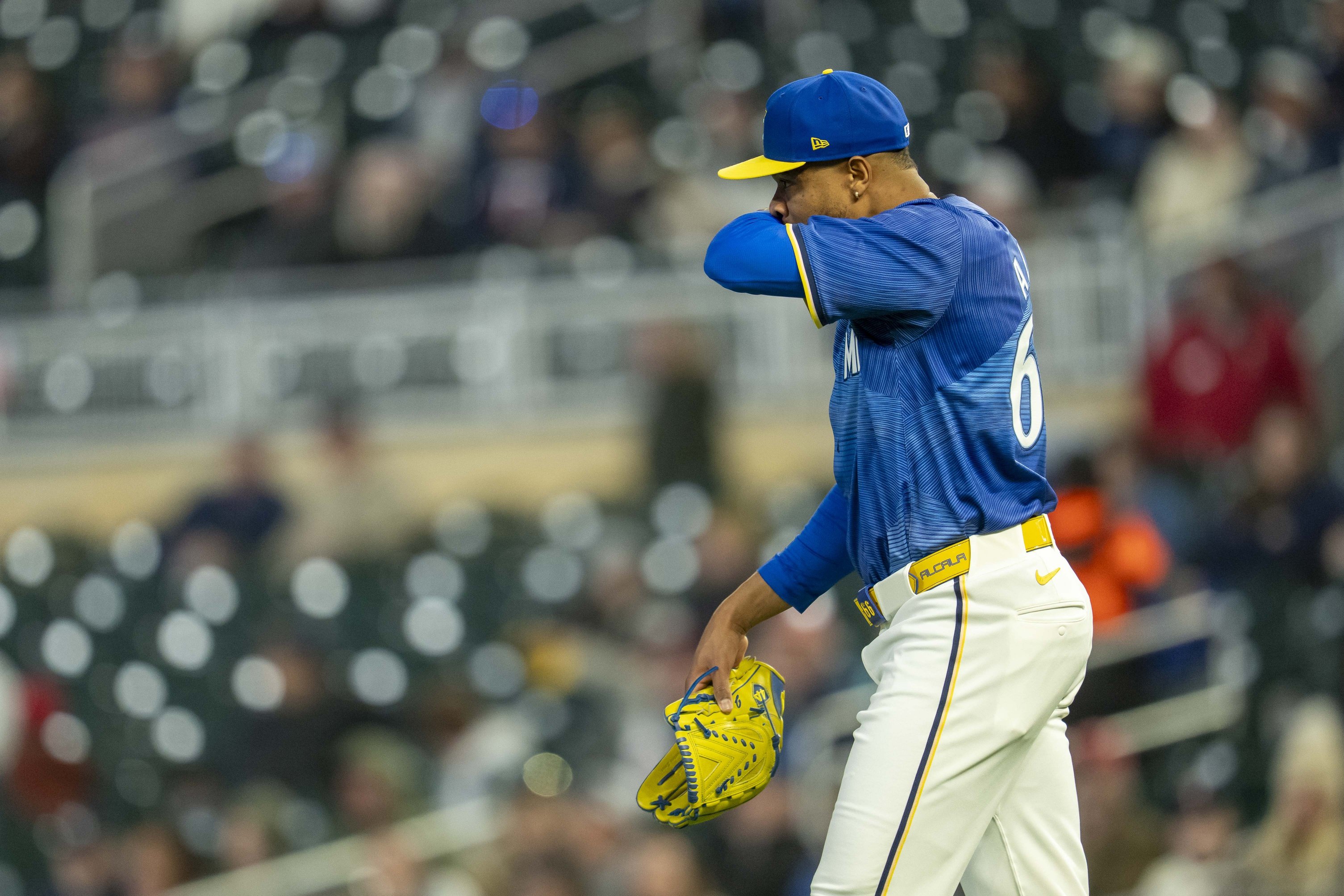 Box Score David Festa: 4 ⅔ IP, 3 H, 0 ER, 1 BB, 4 K Home Runs: Byron Buxton (2) Bottom 3 WPA: Jorge Alcalá (.-356), Mickey Gasper (-.257), Justin Topa (-.234), Win Probability Chart (via FanGraphs) If you successfully navigated the litany of streaming services—searched deep for a sign-in; contacted your youngest and hippest relative—your reward for accessing Apple TV+ was so: David Festa took the mound for the Twins. Down Pablo López, Minnesota looked to their plethora of young hurlers to carry the weight usually shouldered by their ace. Early on, their decision appeared wise: Festa navigated back-to-back 1-2-3 innings to start the game. The breakers stole strikes. The heater sizzled through the zone. Uncharacteristically, Minnesota’s offense looked frisky early. The 1st inning only saw a harmless Carlos Correa walk, but that was just a setup for a fruitful 2nd. Byron Buxton walked—a rare occurrence—and swiped second base—a more common one. Ty France then deemed an inside fastball an adequate vessel for action, punching the ball through the middle of the infield for a run-scoring single. That hit ushered in the beginning of a typical baseball pace; two innings started and concluded with no effect on the score. Men reached base. Sometimes. Maybe not. No adventure finished its cycle, and the game advanced towards a (potentially) more impactful future. Detroit’s first run eventually arrived, perhaps ironically, mostly unrelated to Festa’s efforts. With a runner on 1st, Gleyber Torres poked a Professional Single through the right side of the infield, and as the lead runner scampered to 3rd, Matt Wallner uncorked an unwieldy shot, evidently tricky enough to evade two defenders and eventually roll into the Tigers dugout. The runner scores. Unearned, of course. Yet, they count all the same. The Twins answered with a fervor. A Wallner HBP begat a pair of singles, the final an RBI knock by Correa to put the team back in the lead. A pitching change couldn’t even halt the momentum: a Buxton fielder’s choice coaxed a third run in before Edouard Julien ended the offensive outbreak with an RBI double into the right-field corner. Tragedy is the life of all who place themselves in the hands of fortune and fate. Cruelty knows no bounds, and prior suffering does nothing to halt an inevitable force returning to strike disaster back on those already under an affliction. The game doesn’t care. The game will never care. If each out isn’t earned legitimately, through besting the other team’s hitters at least 27 times, then nothing can be guaranteed. Two walks and a nubbed infield single welcomed Jorge Alcalá. Zach McKinstry dumped a single into center. Just as quick as the Twins found a lead, their placement on top appeared tenuous. And so it was. Justin Topa entered the game to elicit a signature ground ball; of course, the chopper off Dillon Dingler’s bat happened to find its way into right field. Tie game. Advantage Tigers when a groundout called home a fifth score. It soon became a sixth score when a second unearned run touched home plate. But Buxton homered to bring the game back to its previous state. Detroit scored once more. Perhaps unimportant. The game had indeed seen the importance of bonus runs, but the vigor that Minnesota had appeared to care about their deficits this year made predicting the future cloudy. It did matter. So it goes. One more 9th-inning rally plated a sixth run, but the unlikely comeback came to an impotent end when Mickey Gasper check-swung a grounder to 1st to end the game. Notes: Byron Buxton's homer was his 135th in team history, good for 15th all-time. He's six away from tying Michael Cuddyer. Buxton's steal was his 96th in team history, tying him with Matt Lawton for 9th all-time. He's two away from tying Brian Dozier. Ty France is slashing .300/.364/.480 on the season. Danny Coulombe appeared in his 295th career MLB game. What’s Next? The Twins and Tigers play the second of their three-game series on Saturday. Chris Paddack will start opposite Jackson Jobe. First pitch is at 1:10 PM. Bullpen Usage Spreadsheet
- 68 comments
-
- 2
-
-
- david festa
- byron buxton
- (and 5 more)
-
And to think we had to pay 9.99 to watch it. Image courtesy of © Jesse Johnson-Imagn Images Box Score David Festa: 4 ⅔ IP, 3 H, 0 ER, 1 BB, 4 K Home Runs: Byron Buxton (2) Bottom 3 WPA: Jorge Alcalá (.-356), Mickey Gasper (-.257), Justin Topa (-.234), Win Probability Chart (via FanGraphs) If you successfully navigated the litany of streaming services—searched deep for a sign-in; contacted your youngest and hippest relative—your reward for accessing Apple TV+ was so: David Festa took the mound for the Twins. Down Pablo López, Minnesota looked to their plethora of young hurlers to carry the weight usually shouldered by their ace. Early on, their decision appeared wise: Festa navigated back-to-back 1-2-3 innings to start the game. The breakers stole strikes. The heater sizzled through the zone. Uncharacteristically, Minnesota’s offense looked frisky early. The 1st inning only saw a harmless Carlos Correa walk, but that was just a setup for a fruitful 2nd. Byron Buxton walked—a rare occurrence—and swiped second base—a more common one. Ty France then deemed an inside fastball an adequate vessel for action, punching the ball through the middle of the infield for a run-scoring single. That hit ushered in the beginning of a typical baseball pace; two innings started and concluded with no effect on the score. Men reached base. Sometimes. Maybe not. No adventure finished its cycle, and the game advanced towards a (potentially) more impactful future. Detroit’s first run eventually arrived, perhaps ironically, mostly unrelated to Festa’s efforts. With a runner on 1st, Gleyber Torres poked a Professional Single through the right side of the infield, and as the lead runner scampered to 3rd, Matt Wallner uncorked an unwieldy shot, evidently tricky enough to evade two defenders and eventually roll into the Tigers dugout. The runner scores. Unearned, of course. Yet, they count all the same. The Twins answered with a fervor. A Wallner HBP begat a pair of singles, the final an RBI knock by Correa to put the team back in the lead. A pitching change couldn’t even halt the momentum: a Buxton fielder’s choice coaxed a third run in before Edouard Julien ended the offensive outbreak with an RBI double into the right-field corner. Tragedy is the life of all who place themselves in the hands of fortune and fate. Cruelty knows no bounds, and prior suffering does nothing to halt an inevitable force returning to strike disaster back on those already under an affliction. The game doesn’t care. The game will never care. If each out isn’t earned legitimately, through besting the other team’s hitters at least 27 times, then nothing can be guaranteed. Two walks and a nubbed infield single welcomed Jorge Alcalá. Zach McKinstry dumped a single into center. Just as quick as the Twins found a lead, their placement on top appeared tenuous. And so it was. Justin Topa entered the game to elicit a signature ground ball; of course, the chopper off Dillon Dingler’s bat happened to find its way into right field. Tie game. Advantage Tigers when a groundout called home a fifth score. It soon became a sixth score when a second unearned run touched home plate. But Buxton homered to bring the game back to its previous state. Detroit scored once more. Perhaps unimportant. The game had indeed seen the importance of bonus runs, but the vigor that Minnesota had appeared to care about their deficits this year made predicting the future cloudy. It did matter. So it goes. One more 9th-inning rally plated a sixth run, but the unlikely comeback came to an impotent end when Mickey Gasper check-swung a grounder to 1st to end the game. Notes: Byron Buxton's homer was his 135th in team history, good for 15th all-time. He's six away from tying Michael Cuddyer. Buxton's steal was his 96th in team history, tying him with Matt Lawton for 9th all-time. He's two away from tying Brian Dozier. Ty France is slashing .300/.364/.480 on the season. Danny Coulombe appeared in his 295th career MLB game. What’s Next? The Twins and Tigers play the second of their three-game series on Saturday. Chris Paddack will start opposite Jackson Jobe. First pitch is at 1:10 PM. Bullpen Usage Spreadsheet View full article
-
Minor League Report (4/9): Will Anyone Score on Andrew Morris?
Matt Braun posted an article in Minor Leagues
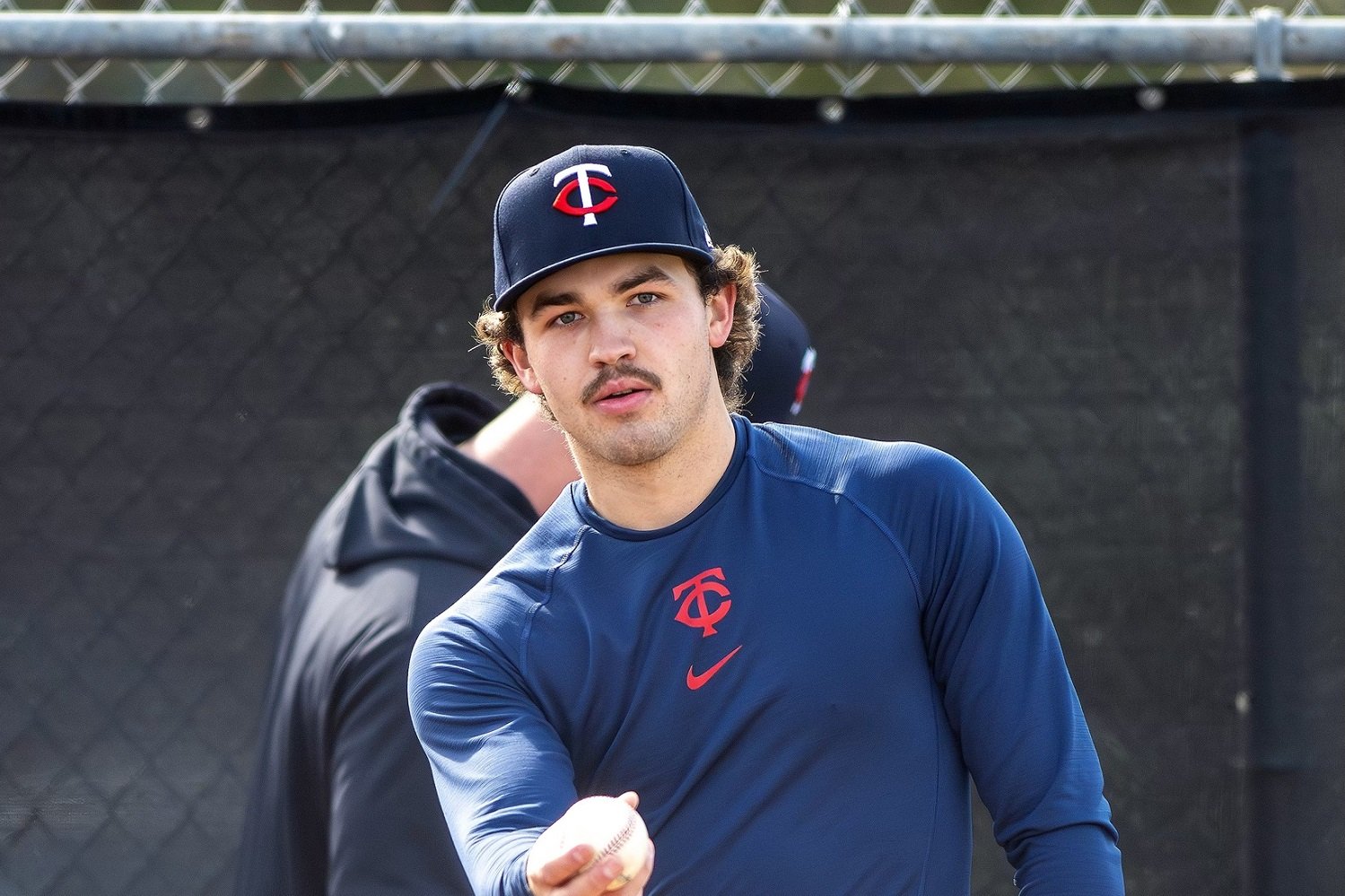 TRANSACTIONS OF Walker Jenkins placed on 7-day IL. Tyler Dearden activated by the Wind Surge from the Development List. Saints Sentinel St. Paul 3, Omaha 2 Box Score Andrew Morris: 5 IP, 4 H, 0 ER, 2 BB, 3 K HR: Jair Camargo (1), Carson McCusker (1) Multi-hit games: Emmanuel Rodriguez (2-for-4), Austin Martin (2-for-3, BB), Carson McCusker (2-for-4, HR, R, RBI) The Saints squeaked out a win on Wednesday. One of these days, Andrew Morris will allow a run. That day was not last Wednesday, nor was it this one: the righty breezed through five shutout innings, scattering four hits and two walks while striking out three. Thrice a runner made it as far as 2nd base—and one of them attempted to come all the way home, before being stopped by a beautiful one-hopper from Austin Martin—but Morris worked out of danger every time. Like he did last week, Cory Lewis entered in relief of Morris. Things did not go as well this time. Omaha jumped on Lewis for a pair of runs in the 6th, before the righty righted the ship and cleaned up his outing the best he could with two scoreless innings. Anthony Misiewicz pitched the 9th. While the Saints only mustered three runs, that total proved enough to do the job. Jair Camargo notched the first two scores with a two-run blast in the 4th, and Carson McCusker blasted a solo shot in the 6th. That’s all they did; that’s all they needed. Brooks Lee went 1-4 with a strikeout while playing seven innings at third base. Old friend Nick Gordon singled and walked in four trips to the plate for Omaha. The Storm Chasers are the AAA affiliate of the Kansas City Royals. No player on their MLB.com top 30 prospects list appeared in this game. Wind Surge Wisdom Wichita 4, Rockhounds 8 Box Score Ricky Castro: 2 ⅔ IP, 5 H, 6 ER, 3 BB, 2 K HR: Rubel Cespedes (1) Multi-hit games: Rubel Cespedes (2-for-4, HR, 2B, R, 4 RBI) The Wind Surge lost handily on Wednesday. Offensively, it was the Rubel Cespedes show. The 24-year-old knocked in all four of Wichita’s runs with a 1st-inning grand slam, perfectly stroked out deep into right field. He later tacked on a double. The early explosion only begat a tepid showing from the rest of Wichita’s lineup. That eventful 1st contained two of their five hits on the night; a handful of meager threats across the coming frames were always snuffed out, and by the time a runner finally saw 3rd base again, the deficit was too much to recover from. Mike Parades and Jaylen Nowlin made quality appearances out of the bullpen, combining for 5 ⅓ scoreless innings with five strikeouts. The Rockhounds are an affiliate for the Franchise Formerly Known as the Oakland Athletics. The tremendously named Henry Bolte is their 8th-best prospect, and he singled and walked in five plate appearances while playing center field. Kernels Nuggets Cedar Rapids 0, Beloit 10 Box Score Ross Dunn: 3 ⅓ IP, 3 H, 2 ER, 2 BB, 1 K HR: None Multi-hit games: None The Kernels were thumped on Wednesday. Sometimes you don’t have it, and sometimes you really don’t have it. Oddly enough, this wasn’t quite that black and white: the Kernels were reasonably competitive up until the 9th when a 3-0 game ballooned into a 10-0 laugher with some diabolical ERAs. Cedar Rapids’ bats didn’t help matters. Doubles by Billy Amick and Kaelen Culpepper marked the only significant shots taken off Sky Carp pitching. The box score is a graveyard: five starting hitters failed to reach base safely and of the four that did, only Khadim Diaw did so more than once. The Kernels allowed 10 stolen bases, with six alone coming from Emaarion Boyd. Beloit starter Noble Meyer, the 82nd best prospect in baseball, according to MLB.com, pitched 4 ⅔ scoreless innings in his outing. Mussels Matters Fort Myers 5, Tampa 1 Box Score Michael Carpenter: 1 IP, 1 H, 0 ER, 2 BB, 3 K HR: None Multi-hit games: Byron Chourio (2-for-3, 2B, 2 R, BB), Yasser Mercedes (2-for-3, 2B, R, BB) Fort Myers ran a smorgasbord of pitchers to win on Wednesday. Lefty starter Michael Carpenter made his Twins organization debut. The 20-year-old from Menomonee Falls—and selected in the 11th round of the 2024 draft out of Madison Area Technical College, the alma mater of just three other draftees—led all of JUCO DII with a 1.03 ERA in his draft year and tossed 45 consecutive shutout innings. Carpenter’s initial foray into pro ball was curt but successful. He struck out the first two batters he faced before beginning to labor, allowing a double and two walks to inflate his pitch count. He punched out Tampa’s Tyler Wilson with his 36th and final pitch of the night. With that out of the way, 2025 should hold big things for the fascinating small-school prospect. A slew of hurlers carried the pitching effort the rest of the way. Kade Bragg, Devin Kirby, Jacob Kisting, Ivran Romero, and Tyler Stasiowski combined for eight frames, five hits, one earned run, six walks—a little heavy on the free passes—and ten strikeouts. The 22-year-old Kisting was the star of the show; the Madison-born righty out-pitched his Wisconsinite brother by breezing through 2 ⅓ innings. Six of those seven outs came via the strikeout. Fort Myers’ bats were efficient. Although, really, it was their legs that delivered them to success: Byron Chourio sparked a 1st inning run with a walk and a steal, quickly advancing to 3rd off an errant throw by Tampa’s catcher. Dameury Pena brought him home with a sacrifice fly. Then, Yasser Mercedes scored in the 4th when a steal put him in position to score off a Jose Rodriguez single. Finally, a 7th-inning skirmish—fueled by a Pena two-run knock—concluded when Pena scampered home following a wild pitch. The Tarpons are an affiliate of the New York Yankees. Always a talented system, shortstop Roderick Arias—the franchise’s 7th-best prospect—went 0-for-5 with two strikeouts. TWINS DAILY PLAYERS OF THE DAY Twins Daily Minor League Pitcher of the Day – Andrew Morris Twins Daily Minor League Hitter of the Day – Rubel Cespedes PROSPECT SUMMARY Here’s a look at how the Twins Daily Top 20 Twins Prospects performed: #2 – Emmanuel Rodriguez (St. Paul) - 2-4, K #3 – Luke Keaschall (St. Paul) - 0-4, 3 K #5 – Andrew Morris (St. Paul) - 5 IP, 4 H, 0 ER, 2 BB, 3 K #7 – Kaelen Culpepper (Cedar Rapids) - 1-3, 2B #8 – Brandon Winokur (Cedar Rapids) - 0-4, K #9 – Cory Lewis (St. Paul) - 2 ⅓ IP, 2 H, 2 ER, 1 BB, 3 K #13 – Kyle DeBarge (Cedar Rapids) -0-3, BB, 2 K #15 – Yasser Mercedes (Fort Myers) - 2-3, 2B, R, BB #16 – Rayne Doncon (Cedar Rapids) - 0-4, 2 K #17 – Billy Amick (Cedar Rapids) - 1-3, 2B #18 – Kala’i Rosario (Wichita) - 1-4, R, 2 K #19 – Gabriel Gonzalez (Cedar Rapids) - 0-4 #20 – Ricardo Olivar (Wichita) - 0-3, R, BB THURSDAY’S PROBABLE STARTERS Omaha @ St. Paul (5:37 PM) - RHP Marco Raya Midland @ Wichita (5:35 PM) - RHP Chase Chaney Beloit @ Cedar Rapids (5:35 PM) - RHP Ty Langenberg Tampa @ Fort Myers (5:05 PM) - RHP Jakob Hall
- 31 comments
-
- 3
-
-
-
- rubel cespedes
- andrew morris
- (and 4 more)
-
If Betterridge's law of headlines is true, the International League is screwed. Image courtesy of William Parmeter TRANSACTIONS OF Walker Jenkins placed on 7-day IL. Tyler Dearden activated by the Wind Surge from the Development List. Saints Sentinel St. Paul 3, Omaha 2 Box Score Andrew Morris: 5 IP, 4 H, 0 ER, 2 BB, 3 K HR: Jair Camargo (1), Carson McCusker (1) Multi-hit games: Emmanuel Rodriguez (2-for-4), Austin Martin (2-for-3, BB), Carson McCusker (2-for-4, HR, R, RBI) The Saints squeaked out a win on Wednesday. One of these days, Andrew Morris will allow a run. That day was not last Wednesday, nor was it this one: the righty breezed through five shutout innings, scattering four hits and two walks while striking out three. Thrice a runner made it as far as 2nd base—and one of them attempted to come all the way home, before being stopped by a beautiful one-hopper from Austin Martin—but Morris worked out of danger every time. Like he did last week, Cory Lewis entered in relief of Morris. Things did not go as well this time. Omaha jumped on Lewis for a pair of runs in the 6th, before the righty righted the ship and cleaned up his outing the best he could with two scoreless innings. Anthony Misiewicz pitched the 9th. While the Saints only mustered three runs, that total proved enough to do the job. Jair Camargo notched the first two scores with a two-run blast in the 4th, and Carson McCusker blasted a solo shot in the 6th. That’s all they did; that’s all they needed. Brooks Lee went 1-4 with a strikeout while playing seven innings at third base. Old friend Nick Gordon singled and walked in four trips to the plate for Omaha. The Storm Chasers are the AAA affiliate of the Kansas City Royals. No player on their MLB.com top 30 prospects list appeared in this game. Wind Surge Wisdom Wichita 4, Rockhounds 8 Box Score Ricky Castro: 2 ⅔ IP, 5 H, 6 ER, 3 BB, 2 K HR: Rubel Cespedes (1) Multi-hit games: Rubel Cespedes (2-for-4, HR, 2B, R, 4 RBI) The Wind Surge lost handily on Wednesday. Offensively, it was the Rubel Cespedes show. The 24-year-old knocked in all four of Wichita’s runs with a 1st-inning grand slam, perfectly stroked out deep into right field. He later tacked on a double. The early explosion only begat a tepid showing from the rest of Wichita’s lineup. That eventful 1st contained two of their five hits on the night; a handful of meager threats across the coming frames were always snuffed out, and by the time a runner finally saw 3rd base again, the deficit was too much to recover from. Mike Parades and Jaylen Nowlin made quality appearances out of the bullpen, combining for 5 ⅓ scoreless innings with five strikeouts. The Rockhounds are an affiliate for the Franchise Formerly Known as the Oakland Athletics. The tremendously named Henry Bolte is their 8th-best prospect, and he singled and walked in five plate appearances while playing center field. Kernels Nuggets Cedar Rapids 0, Beloit 10 Box Score Ross Dunn: 3 ⅓ IP, 3 H, 2 ER, 2 BB, 1 K HR: None Multi-hit games: None The Kernels were thumped on Wednesday. Sometimes you don’t have it, and sometimes you really don’t have it. Oddly enough, this wasn’t quite that black and white: the Kernels were reasonably competitive up until the 9th when a 3-0 game ballooned into a 10-0 laugher with some diabolical ERAs. Cedar Rapids’ bats didn’t help matters. Doubles by Billy Amick and Kaelen Culpepper marked the only significant shots taken off Sky Carp pitching. The box score is a graveyard: five starting hitters failed to reach base safely and of the four that did, only Khadim Diaw did so more than once. The Kernels allowed 10 stolen bases, with six alone coming from Emaarion Boyd. Beloit starter Noble Meyer, the 82nd best prospect in baseball, according to MLB.com, pitched 4 ⅔ scoreless innings in his outing. Mussels Matters Fort Myers 5, Tampa 1 Box Score Michael Carpenter: 1 IP, 1 H, 0 ER, 2 BB, 3 K HR: None Multi-hit games: Byron Chourio (2-for-3, 2B, 2 R, BB), Yasser Mercedes (2-for-3, 2B, R, BB) Fort Myers ran a smorgasbord of pitchers to win on Wednesday. Lefty starter Michael Carpenter made his Twins organization debut. The 20-year-old from Menomonee Falls—and selected in the 11th round of the 2024 draft out of Madison Area Technical College, the alma mater of just three other draftees—led all of JUCO DII with a 1.03 ERA in his draft year and tossed 45 consecutive shutout innings. Carpenter’s initial foray into pro ball was curt but successful. He struck out the first two batters he faced before beginning to labor, allowing a double and two walks to inflate his pitch count. He punched out Tampa’s Tyler Wilson with his 36th and final pitch of the night. With that out of the way, 2025 should hold big things for the fascinating small-school prospect. A slew of hurlers carried the pitching effort the rest of the way. Kade Bragg, Devin Kirby, Jacob Kisting, Ivran Romero, and Tyler Stasiowski combined for eight frames, five hits, one earned run, six walks—a little heavy on the free passes—and ten strikeouts. The 22-year-old Kisting was the star of the show; the Madison-born righty out-pitched his Wisconsinite brother by breezing through 2 ⅓ innings. Six of those seven outs came via the strikeout. Fort Myers’ bats were efficient. Although, really, it was their legs that delivered them to success: Byron Chourio sparked a 1st inning run with a walk and a steal, quickly advancing to 3rd off an errant throw by Tampa’s catcher. Dameury Pena brought him home with a sacrifice fly. Then, Yasser Mercedes scored in the 4th when a steal put him in position to score off a Jose Rodriguez single. Finally, a 7th-inning skirmish—fueled by a Pena two-run knock—concluded when Pena scampered home following a wild pitch. The Tarpons are an affiliate of the New York Yankees. Always a talented system, shortstop Roderick Arias—the franchise’s 7th-best prospect—went 0-for-5 with two strikeouts. TWINS DAILY PLAYERS OF THE DAY Twins Daily Minor League Pitcher of the Day – Andrew Morris Twins Daily Minor League Hitter of the Day – Rubel Cespedes PROSPECT SUMMARY Here’s a look at how the Twins Daily Top 20 Twins Prospects performed: #2 – Emmanuel Rodriguez (St. Paul) - 2-4, K #3 – Luke Keaschall (St. Paul) - 0-4, 3 K #5 – Andrew Morris (St. Paul) - 5 IP, 4 H, 0 ER, 2 BB, 3 K #7 – Kaelen Culpepper (Cedar Rapids) - 1-3, 2B #8 – Brandon Winokur (Cedar Rapids) - 0-4, K #9 – Cory Lewis (St. Paul) - 2 ⅓ IP, 2 H, 2 ER, 1 BB, 3 K #13 – Kyle DeBarge (Cedar Rapids) -0-3, BB, 2 K #15 – Yasser Mercedes (Fort Myers) - 2-3, 2B, R, BB #16 – Rayne Doncon (Cedar Rapids) - 0-4, 2 K #17 – Billy Amick (Cedar Rapids) - 1-3, 2B #18 – Kala’i Rosario (Wichita) - 1-4, R, 2 K #19 – Gabriel Gonzalez (Cedar Rapids) - 0-4 #20 – Ricardo Olivar (Wichita) - 0-3, R, BB THURSDAY’S PROBABLE STARTERS Omaha @ St. Paul (5:37 PM) - RHP Marco Raya Midland @ Wichita (5:35 PM) - RHP Chase Chaney Beloit @ Cedar Rapids (5:35 PM) - RHP Ty Langenberg Tampa @ Fort Myers (5:05 PM) - RHP Jakob Hall View full article
-
I guess it's only fair they get one. Image courtesy of William Parmeter TRANSACTIONS RHP Darren Bowen assigned to Wichita RHP Joel Cesar assigned to Wichita LHP Jaylen Nowlin assigned to Wichita RHP Randy Dobnak outrighted to St. Paul Saints Sentinel St. Paul 0, Columbus 2 Box Score Andrew Morris: 5 IP, 5 H, 0 ER, 1 BB, 4 K HR: None Multi-hit games: Carson McCusker (2-for-4, 2B), Jeferson Morales (2-for-4, 2B) On the heels of a historic back-to-back shutout streak, Andrew Morris was set to carry a special torch. Could the top prospect add a third day to St. Paul’s cavalcade of “0’s?” Spoiler alert: he was great. The Clippers scattered five hits and a walk across his five frames—including loading the bases against the Texas Tech product in the 4th—but Morris’ gumption reigned supreme; he hunkered down and stifled Columbus’ bats at every turn. He walked off the mound with four strikeouts and 69 pitches thrown. Cory Lewis relieved Morris for just his third professional appearance out of the bullpen. Begin speculation now. Given the Saints’ stacked rotation, it seemed like someone was due to be the odd man out; Wednesday’s game may reveal Lewis to be that individual. But the inning he entered didn’t seem to impact his play: Lewis tossed 1 ⅔ shutout innings with four strikeouts and a pair of walks. And in case you were wondering, he threw eight knuckleballs, coaxing four swings, with two of them coming up empty. Unfortunately—as George Harrison told us in 1970—all things must pass, and the Saints’ scoreless streak finally came to an end on Wednesday. In the 8th, Jacob Bosiokovic allowed a pair of singles, a sacrifice fly, a stolen base, and a concluding single to mark St. Paul’s 1st and 2nd runs allowed on the season. So it goes. The Saints couldn’t muster any offense in support of the pitching effort. Eight walks and seven hits portended a deadly 1-for-11 performance with runners in scoring position. Just brutal stuff. The 9th was a good microcosm of the forces affecting St. Paul’s hitters. Jeferson Morales doubled and Ryan Fitzgerald walked. At this point, the Saints held a 1-in-4 chance of winning. Almost all of it was wiped out with a back-breaking Austin Martin double play; Emmanuel Rodriguez struck out two batters later to conclude the game. TWINS DAILY PLAYERS OF THE DAY Twins Daily Minor League Pitcher of the Day – Andrew Morris Twins Daily Minor League Hitter of the Day – Carson McCusker/Jeferson Morales PROSPECT SUMMARY Here’s a look at how the Twins Daily Top 20 Twins Prospects performed: #2 – Emmanuel Rodriguez (St. Paul) - 0-3, 2 BB, 3 K #3 – Luke Keaschall (St. Paul) - 1-3, 2BB #5 – Andrew Morris (S. Paul) - 5 IP, 5 H, 0 ER, 1 BB, 4 K #9 – Cory Lewis (St. Paul) - 1 ⅔ IP, 0 H, 0 ER, 2 BB, 4 K THURSDAY’S PROBABLE STARTERS St. Paul @ Columbus (5:15 PM) - RHP Marco Raya View full article
- 10 replies
-
- 1
-
-
- andrew morris
- cory lewis
- (and 3 more)
-
 TRANSACTIONS RHP Darren Bowen assigned to Wichita RHP Joel Cesar assigned to Wichita LHP Jaylen Nowlin assigned to Wichita RHP Randy Dobnak outrighted to St. Paul Saints Sentinel St. Paul 0, Columbus 2 Box Score Andrew Morris: 5 IP, 5 H, 0 ER, 1 BB, 4 K HR: None Multi-hit games: Carson McCusker (2-for-4, 2B), Jeferson Morales (2-for-4, 2B) On the heels of a historic back-to-back shutout streak, Andrew Morris was set to carry a special torch. Could the top prospect add a third day to St. Paul’s cavalcade of “0’s?” Spoiler alert: he was great. The Clippers scattered five hits and a walk across his five frames—including loading the bases against the Texas Tech product in the 4th—but Morris’ gumption reigned supreme; he hunkered down and stifled Columbus’ bats at every turn. He walked off the mound with four strikeouts and 69 pitches thrown. Cory Lewis relieved Morris for just his third professional appearance out of the bullpen. Begin speculation now. Given the Saints’ stacked rotation, it seemed like someone was due to be the odd man out; Wednesday’s game may reveal Lewis to be that individual. But the inning he entered didn’t seem to impact his play: Lewis tossed 1 ⅔ shutout innings with four strikeouts and a pair of walks. And in case you were wondering, he threw eight knuckleballs, coaxing four swings, with two of them coming up empty. Unfortunately—as George Harrison told us in 1970—all things must pass, and the Saints’ scoreless streak finally came to an end on Wednesday. In the 8th, Jacob Bosiokovic allowed a pair of singles, a sacrifice fly, a stolen base, and a concluding single to mark St. Paul’s 1st and 2nd runs allowed on the season. So it goes. The Saints couldn’t muster any offense in support of the pitching effort. Eight walks and seven hits portended a deadly 1-for-11 performance with runners in scoring position. Just brutal stuff. The 9th was a good microcosm of the forces affecting St. Paul’s hitters. Jeferson Morales doubled and Ryan Fitzgerald walked. At this point, the Saints held a 1-in-4 chance of winning. Almost all of it was wiped out with a back-breaking Austin Martin double play; Emmanuel Rodriguez struck out two batters later to conclude the game. TWINS DAILY PLAYERS OF THE DAY Twins Daily Minor League Pitcher of the Day – Andrew Morris Twins Daily Minor League Hitter of the Day – Carson McCusker/Jeferson Morales PROSPECT SUMMARY Here’s a look at how the Twins Daily Top 20 Twins Prospects performed: #2 – Emmanuel Rodriguez (St. Paul) - 0-3, 2 BB, 3 K #3 – Luke Keaschall (St. Paul) - 1-3, 2BB #5 – Andrew Morris (S. Paul) - 5 IP, 5 H, 0 ER, 1 BB, 4 K #9 – Cory Lewis (St. Paul) - 1 ⅔ IP, 0 H, 0 ER, 2 BB, 4 K THURSDAY’S PROBABLE STARTERS St. Paul @ Columbus (5:15 PM) - RHP Marco Raya
- 10 comments
-
- 3
-
-
- andrew morris
- cory lewis
- (and 3 more)
-
Facing prime Mariano Rivera would be preferable over Fedde, at this point. Image courtesy of © Jeff Curry-Imagn Images Box Score Joe Ryan: 5 IP, 5 H, 1 ER, 0 BB, 5 K Home Runs: None Bottom 3 WPA: Jorge Alcalá (-.250), Carlos Correa (-.093), Louis Varland (-.078) Win Probability Chart (via FanGraphs) Thursday’s dud of an Opening Day set the stage for a redemptive episode—this time featuring an old friend unseen on a big league mound since August 7th of last year. Would Joe Ryan prove to be the catalyst needed to spark Minnesota’s first win of the season? You’d be forgiven if you thought the start of Saturday’s match was a rerun; St. Louis scrapped their way to a 1st-inning run thanks to two well-placed singles sandwiched around a runner advanced on an out. That’s Cardinals baseball, alright. Whitey Herzog would have been proud. But that run proved to be the only score against Ryan, who—while uncharacteristically inefficient at times—worked around trouble to stymie St. Louis from advancing any further. He ended his day with five strikeouts and no walks. He did not earn a decision. Working opposite Ryan was one Erick Fedde, a recently developed personal nemesis of the Twins. He has their number. Entering the game, Fedde had allowed just two runs across 17 frames against Minnesota, whiffing 23 with a WHIP of .824. Something about his finessing ways short-circuits Twins hitters, no matter their style. And he continued to fool them. An early run knocked in by Willi Castro (aided by a Trevor Larnach steal!?!) served as the lone dent in his armor. The only runner to reach following Castro’s double was via a Fedde fielding error; that runner was then negated with a double play, anyways. Few were surprised. Minnesota’s defense proved adept at times. An early steal attempt was snuffed out thanks to some gold medal-level gymnastics from Carlos Correa, and Byron Buxton later made a deep flyout to center look simple with signature smoothness. The wind may need an assist on that Brendan Donovan flyout, as well. Unfortunately, the good news ended there. Ryan’s exit after the 5th inning portended a disastrous showing from Minnesota’s bullpen. Jorge Alcalá was greeted with a line shot off his person, resulting in a rare infield double and a greeting from the athletic trainer. He was deemed fine. Perhaps in health, but certainly not in performance: he allowed two more runners and broke the tie before being yanked in favor of Louis Varland, who nearly escaped the situation. He walked one to load the bases but struck out two to regain favor. One measly out stood between him and an impressive outing. But the man up was Lars Nootbaar, so far the main character of the 2025 MLB season, and he cracked a two-out single into center to plate a pair of back-breaking runs. A fifth and final run in the 8th charged to Jhoan Duran removed the necessity for St. Louis' stud closer, Ryan Helsley, to enter the game; instead, Phil Maton took the mound to quell Minnesota's bats from offering a last-minute comeback. Post-Game Interview: Notes: Mickey Gasper earned his first career MLB hit with an infield single in the 8th inning. Joe Ryan's five strikeouts give him 530 in his Twins career, good for 22nd place in team history. He's two Ks away from tying LaTroy Hawkins. Matt Wallner, Carlos Correa, and Byron Buxton are a combined 0-for-24 to start the season. Trevor Larnach stole his seventh career base on Saturday. He's 269 behind Chuck Knoblauch for 1st place in Twins history. What’s Next? The Twins and Cardinals finish their series with a Sunday excursion pitting Bailey Ober against Andre Pallante. First pitch is at 1:15 PM. Bullpen Usage Spreadsheet View full article
-
Twins 1, Cardinals 5: Erick Fedde and Lars Nootbaar's Terror Reigns Again
Matt Braun posted an article in Twins
 Box Score Joe Ryan: 5 IP, 5 H, 1 ER, 0 BB, 5 K Home Runs: None Bottom 3 WPA: Jorge Alcalá (-.250), Carlos Correa (-.093), Louis Varland (-.078) Win Probability Chart (via FanGraphs) Thursday’s dud of an Opening Day set the stage for a redemptive episode—this time featuring an old friend unseen on a big league mound since August 7th of last year. Would Joe Ryan prove to be the catalyst needed to spark Minnesota’s first win of the season? You’d be forgiven if you thought the start of Saturday’s match was a rerun; St. Louis scrapped their way to a 1st-inning run thanks to two well-placed singles sandwiched around a runner advanced on an out. That’s Cardinals baseball, alright. Whitey Herzog would have been proud. But that run proved to be the only score against Ryan, who—while uncharacteristically inefficient at times—worked around trouble to stymie St. Louis from advancing any further. He ended his day with five strikeouts and no walks. He did not earn a decision. Working opposite Ryan was one Erick Fedde, a recently developed personal nemesis of the Twins. He has their number. Entering the game, Fedde had allowed just two runs across 17 frames against Minnesota, whiffing 23 with a WHIP of .824. Something about his finessing ways short-circuits Twins hitters, no matter their style. And he continued to fool them. An early run knocked in by Willi Castro (aided by a Trevor Larnach steal!?!) served as the lone dent in his armor. The only runner to reach following Castro’s double was via a Fedde fielding error; that runner was then negated with a double play, anyways. Few were surprised. Minnesota’s defense proved adept at times. An early steal attempt was snuffed out thanks to some gold medal-level gymnastics from Carlos Correa, and Byron Buxton later made a deep flyout to center look simple with signature smoothness. The wind may need an assist on that Brendan Donovan flyout, as well. Unfortunately, the good news ended there. Ryan’s exit after the 5th inning portended a disastrous showing from Minnesota’s bullpen. Jorge Alcalá was greeted with a line shot off his person, resulting in a rare infield double and a greeting from the athletic trainer. He was deemed fine. Perhaps in health, but certainly not in performance: he allowed two more runners and broke the tie before being yanked in favor of Louis Varland, who nearly escaped the situation. He walked one to load the bases but struck out two to regain favor. One measly out stood between him and an impressive outing. But the man up was Lars Nootbaar, so far the main character of the 2025 MLB season, and he cracked a two-out single into center to plate a pair of back-breaking runs. A fifth and final run in the 8th charged to Jhoan Duran removed the necessity for St. Louis' stud closer, Ryan Helsley, to enter the game; instead, Phil Maton took the mound to quell Minnesota's bats from offering a last-minute comeback. Post-Game Interview: Notes: Mickey Gasper earned his first career MLB hit with an infield single in the 8th inning. Joe Ryan's five strikeouts give him 530 in his Twins career, good for 22nd place in team history. He's two Ks away from tying LaTroy Hawkins. Matt Wallner, Carlos Correa, and Byron Buxton are a combined 0-for-24 to start the season. Trevor Larnach stole his seventh career base on Saturday. He's 269 behind Chuck Knoblauch for 1st place in Twins history. What’s Next? The Twins and Cardinals finish their series with a Sunday excursion pitting Bailey Ober against Andre Pallante. First pitch is at 1:15 PM. Bullpen Usage Spreadsheet
- 71 comments
-
- 5
-
-

-
- joe ryan
- mickey gasper
- (and 3 more)
-
Twins 3, Cardinals 5: St. Louis Swamps Twins in Quiescent Opening Day Defeat
Matt Braun posted an article in Twins
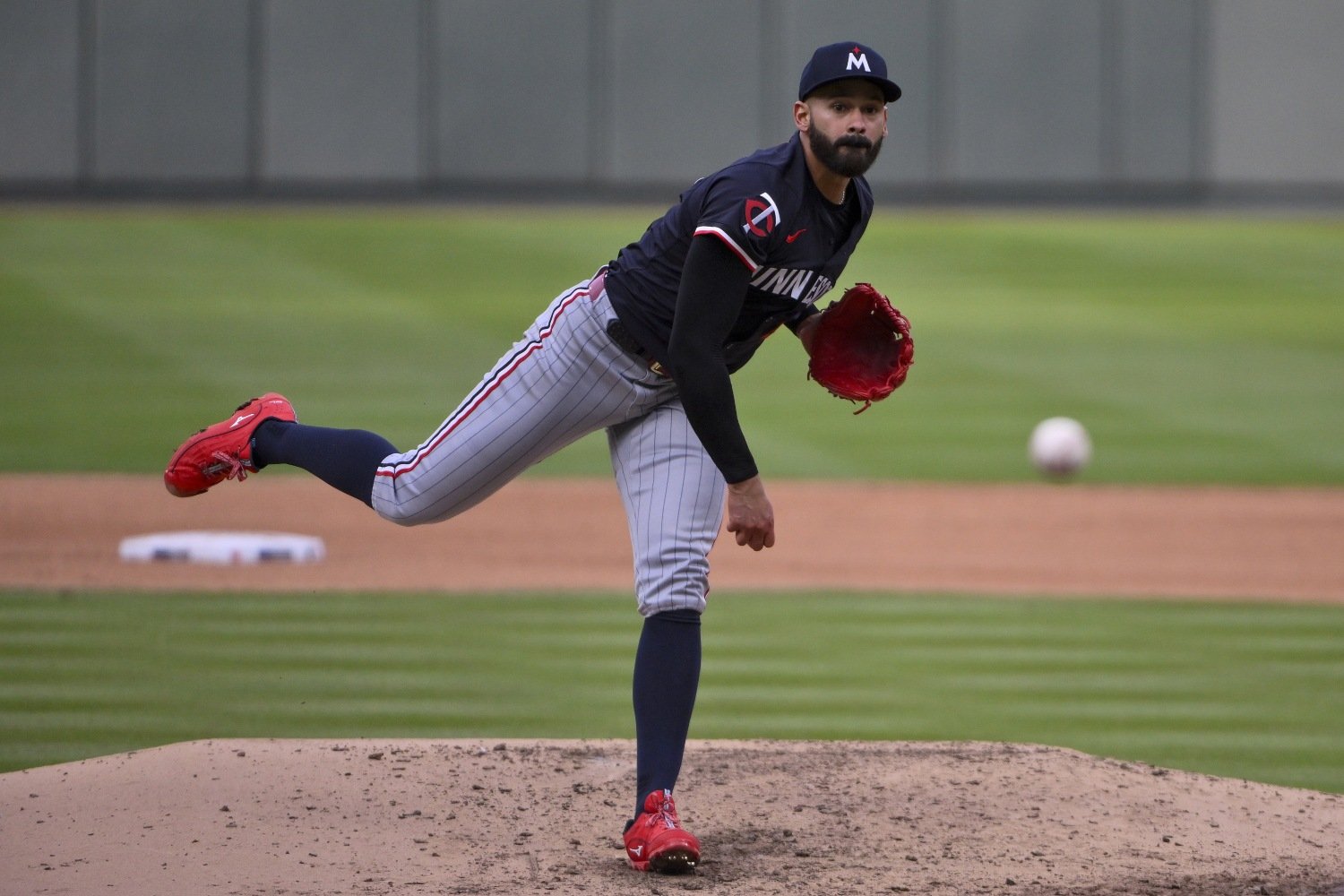 Box Score Pablo López: 5 IP, 8 H, 2 ER, 0 BB, 3 K Home Runs: Harrison Bader (1) Bottom 3 WPA: Pablo López (.199), José Miranda (-.185), Carlos Correa (-.112) Win Probability Chart (via FanGraphs) It’s here. It’s finally here, and only an hour and a half late. The long winter silence gave way to the greatest two words in the English lexicon: Play ball. A time for purple prose, nostalgia, and swearing at our favorite players, whom we haven’t seen in real action for months. Nothing else in life will ever beat it. Pablo López earned first-game honors for the third straight season. Somehow, all three starts have come in the state of Missouri. Fate is a funny thing. While those previous starts were successes, this one was laborious. He pitched… a lot. Too much, really. St. Louis’s hitters refused his attempts at subterfuge and, in fact, punked the one who usually tricks: twice, the Venezuelan was caught unable to handle a stealing runner at first base. The first set up the game's opening run; the second preceded a disastrous two-run homer off the bat of Lars Nootbaar. The Cardinals added a fourth and final run in the 3rd, after which López settled in marvelously. Getting through the first inning or two was his bugaboo throughout last season. Sadly, it doesn't look like he's found the remedy for that problem yet. Starting against López was Sonny Gray, his former partner in crime. In 2023, they worked as one of the best 1-2 punches in baseball. Now, Gray remains one of the trickiest pitchers in baseball. “Yeah, that’s what he does,” this author thought, following a number of his offerings on Thursday. Fastballs sliced the corners as breakers dipped and dotted just outside the zone—enticing all the same, they were, and Twins hitters often bit. He ended the game as the superior hurler. But, he wasn’t perfect. With a man on first, one of those classic Gray off-speed pitches found too much of the zone, and Harrison Bader—making a homecoming against the team that drafted and developed him—drove the pitch out to left field. So much for a glove-only signing. Following Gray's sixth-inning exit, Minnesota rallied for a third run, thanks to an RBI double from Willi Castro. That very rally was somewhat bittersweet, though, as St. Louis’ center fielder, Victor Scott II, robbed Ty France of a potentially game-tying knock smacked deep into the right-center gap. This one is not to be confused with France’s other potentially game-tying knock smacked deep into right-center caught by Scott just two innings later. So it goes. A Nolan Arenado homer in the bottom of the eighth capped the scoring, and the Twins, despite some minor drama created by Bader in the ninth, fell to the Cardinals in 2025's season opener. They'll have to be a bit more ready when the first pitch is thrown Saturday. Notes: Thursday saw Harrison Bader's first career homer against his old team, the Cardinals. DaShawn Keirsey Jr. stole his first career MLB base. Trevor Larnach reached base three times in a game for the first time since September 25th, 2024, which isn't as impressive a stat as this author expected it to be. Post-Game Interview: What’s Next? The Twins and Cardinals will enjoy a free Friday before returning to action on Saturday. Joe Ryan will start opposite Erick Fedde with first pitch coming at 1:15 PM. Bullpen Usage Spreadsheet
- 59 comments
-
- 3
-
-
-
- pablo lopez
- harrison bader
- (and 3 more)
-
I blame the rain. Image courtesy of © Jeff Curry-Imagn Images Box Score Pablo López: 5 IP, 8 H, 2 ER, 0 BB, 3 K Home Runs: Harrison Bader (1) Bottom 3 WPA: Pablo López (.199), José Miranda (-.185), Carlos Correa (-.112) Win Probability Chart (via FanGraphs) It’s here. It’s finally here, and only an hour and a half late. The long winter silence gave way to the greatest two words in the English lexicon: Play ball. A time for purple prose, nostalgia, and swearing at our favorite players, whom we haven’t seen in real action for months. Nothing else in life will ever beat it. Pablo López earned first-game honors for the third straight season. Somehow, all three starts have come in the state of Missouri. Fate is a funny thing. While those previous starts were successes, this one was laborious. He pitched… a lot. Too much, really. St. Louis’s hitters refused his attempts at subterfuge and, in fact, punked the one who usually tricks: twice, the Venezuelan was caught unable to handle a stealing runner at first base. The first set up the game's opening run; the second preceded a disastrous two-run homer off the bat of Lars Nootbaar. The Cardinals added a fourth and final run in the 3rd, after which López settled in marvelously. Getting through the first inning or two was his bugaboo throughout last season. Sadly, it doesn't look like he's found the remedy for that problem yet. Starting against López was Sonny Gray, his former partner in crime. In 2023, they worked as one of the best 1-2 punches in baseball. Now, Gray remains one of the trickiest pitchers in baseball. “Yeah, that’s what he does,” this author thought, following a number of his offerings on Thursday. Fastballs sliced the corners as breakers dipped and dotted just outside the zone—enticing all the same, they were, and Twins hitters often bit. He ended the game as the superior hurler. But, he wasn’t perfect. With a man on first, one of those classic Gray off-speed pitches found too much of the zone, and Harrison Bader—making a homecoming against the team that drafted and developed him—drove the pitch out to left field. So much for a glove-only signing. Following Gray's sixth-inning exit, Minnesota rallied for a third run, thanks to an RBI double from Willi Castro. That very rally was somewhat bittersweet, though, as St. Louis’ center fielder, Victor Scott II, robbed Ty France of a potentially game-tying knock smacked deep into the right-center gap. This one is not to be confused with France’s other potentially game-tying knock smacked deep into right-center caught by Scott just two innings later. So it goes. A Nolan Arenado homer in the bottom of the eighth capped the scoring, and the Twins, despite some minor drama created by Bader in the ninth, fell to the Cardinals in 2025's season opener. They'll have to be a bit more ready when the first pitch is thrown Saturday. Notes: Thursday saw Harrison Bader's first career homer against his old team, the Cardinals. DaShawn Keirsey Jr. stole his first career MLB base. Trevor Larnach reached base three times in a game for the first time since September 25th, 2024, which isn't as impressive a stat as this author expected it to be. Post-Game Interview: What’s Next? The Twins and Cardinals will enjoy a free Friday before returning to action on Saturday. Joe Ryan will start opposite Erick Fedde with first pitch coming at 1:15 PM. Bullpen Usage Spreadsheet View full article
- 59 replies
-
- 1
-
-
- pablo lopez
- harrison bader
- (and 3 more)
-
Emmanuel Rodriguez, Marco Raya, Cory Lewis Among the Twins First Spring Cuts
Matt Braun posted an article in Twins
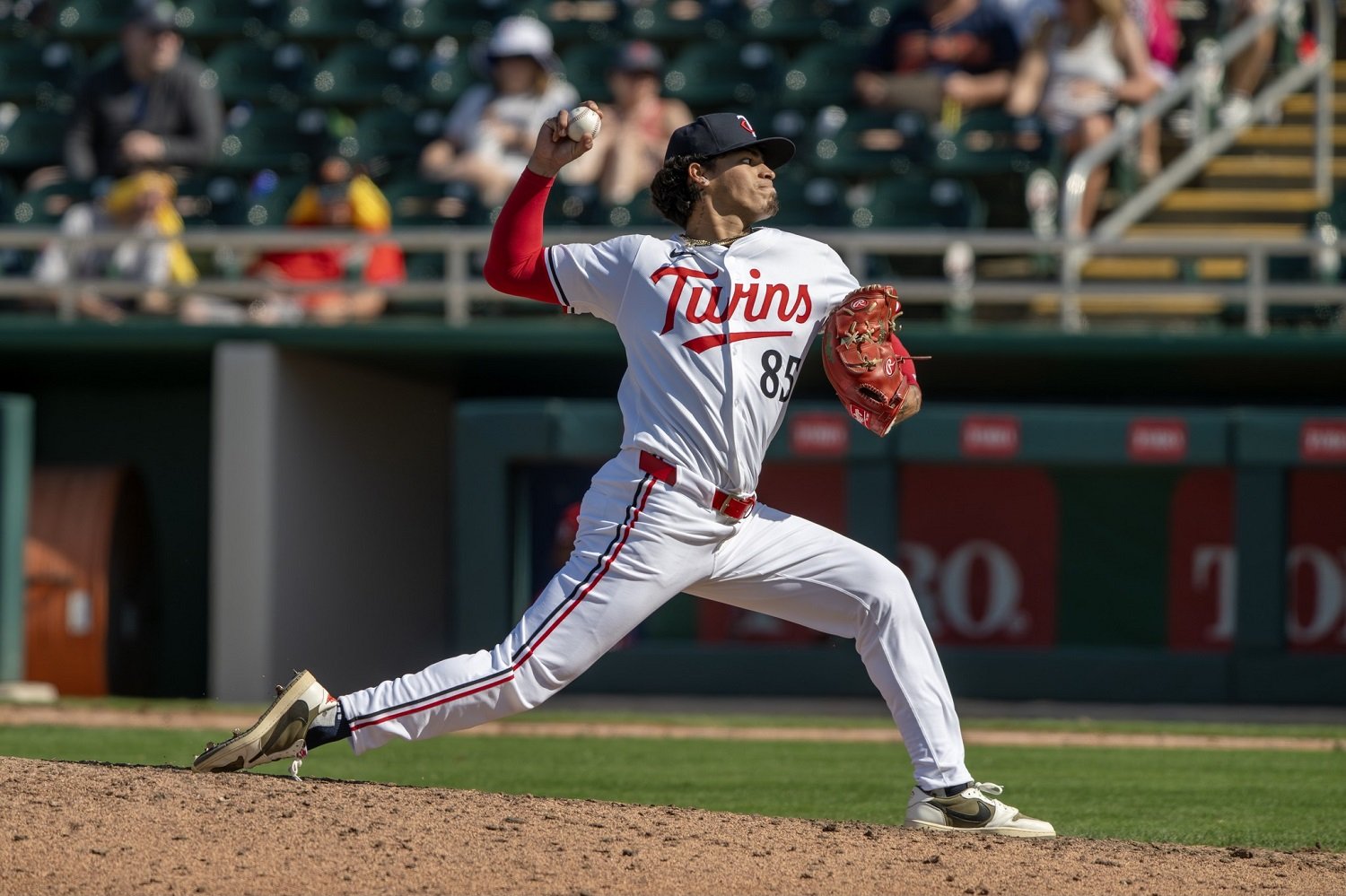 The following players were optioned to Triple-A. They cannot appear in a spring training game for the rest of 2025. RHP Travis Adams A surprise addition to the 40-man roster this offseason, Travis Adams appeared in two spring training games, allowing four runs across four frames. He was already a long (long, long, long) shot to make Minnesota’s opening day roster; the 25-year-old will start the year in St. Paul. RHP Matt Canterino Matt Canterino—seen about as often as Bigfoot, these days—made one spring training appearance in which he walked three batters and suffered a shoulder injury in the process. So it goes. He’s set to meet with Dr. Keith Meister soon to better understand the nature of his injury and his process going forward, but, unfortunately, this tune sounds familiar: he’s going to be on the shelf for a while. RHP Marco Raya Marco Raya suffered one of the most disastrous outings a pitcher could ever endure, hitting three, walking two, and failing to net a single out to give him a rarely seen infinity ERA. All five men eventually scored. The good news is that spring training is fake baseball; those runs only exist in an archaic hyperlink on Baseball-Reference. Freshly 22, Raya stands as one of the team’s best pitching prospects, and he’ll look to build on a 2024 season that delivered him to Triple-A. OF Emmanuel Rodriguez Even the most optimistic Twins fan, if such a thing exists, knew Emmanuel Rodriguez was unlikely to see game action this spring. He took live batting practice for the first time since undergoing thumb surgery and should begin running bases soon. The possibility of seeing one of the best prospects in baseball is by itself worth the price of a Saints ticket this spring and summer. The following Non-Roster players were reassigned to minor league camp. They can still appear in spring training games but will get their work in separately from the players in the big league camp. RHP Randy Dobnak The mustachioed legend himself is still the unwanted step-child in the Twins organization. 2025 marks the final guaranteed year of his extension, and he’ll likely once again star as the leading man in the Saints’ rotation, a team he’s thrown 343 2/3 innings for. C/1B/OF Alex Isola Alex Isola hadn’t yet played in a spring game, a strong forecast for this decision. He’ll head back to St. Paul and bide his time in the Michael Helman role; a “break in case of emergency” depth option who can moonlight at catcher if need be. RHP Cory Lewis After missing spring training last year, Cory Lewis triumphantly tossed a pair of shutout innings—with a handful of his signature knuckleballs, one of them strong enough to punch out Gleyber Torres—in a successful relief outing. Like the other hurlers mentioned, he was clearly on the outside of the major league rotation looking in, but he’ll serve as a critical depth piece should health fail a starter, or two, or three. RHP Erasmo Ramírez The 35-year-old Erasmo Ramírez lives in this perfect Baseball liminal space where, to me, he was last relevant some seven or eight years ago, but still inexplicably pops up on rosters because someone needs to pitch some innings and no one wants to burn an option year on a promising player. That’s how he’s pitched in each of the last 13 seasons. Unfortunately, that streak is in jeopardy: he suffered a significant tear in his right teres major and won’t be available to pitch for some time. INF Yunior Severino The Randy Dobnak of position players, Yunior Severino has flashed the talent of a big-leaguer, but the Twins have eschewed his power and swing-and-miss ways, limiting him to a cross-town side-show a notch below big-league material. Even an uninspiring battle for the first base job couldn’t provoke the team to see what they have in Severino; he has yet to even appear in a spring training game. Any surprises with the first batch of players sent back to minor-league camp?
- 75 comments
-
- 7
-
-
- emmanuel rodriguez
- cory lewis
- (and 5 more)
-
The Twins trimmed their spring training roster following a loss to the Baltimore Orioles. Image courtesy of William Parmeter The following players were optioned to Triple-A. They cannot appear in a spring training game for the rest of 2025. RHP Travis Adams A surprise addition to the 40-man roster this offseason, Travis Adams appeared in two spring training games, allowing four runs across four frames. He was already a long (long, long, long) shot to make Minnesota’s opening day roster; the 25-year-old will start the year in St. Paul. RHP Matt Canterino Matt Canterino—seen about as often as Bigfoot, these days—made one spring training appearance in which he walked three batters and suffered a shoulder injury in the process. So it goes. He’s set to meet with Dr. Keith Meister soon to better understand the nature of his injury and his process going forward, but, unfortunately, this tune sounds familiar: he’s going to be on the shelf for a while. RHP Marco Raya Marco Raya suffered one of the most disastrous outings a pitcher could ever endure, hitting three, walking two, and failing to net a single out to give him a rarely seen infinity ERA. All five men eventually scored. The good news is that spring training is fake baseball; those runs only exist in an archaic hyperlink on Baseball-Reference. Freshly 22, Raya stands as one of the team’s best pitching prospects, and he’ll look to build on a 2024 season that delivered him to Triple-A. OF Emmanuel Rodriguez Even the most optimistic Twins fan, if such a thing exists, knew Emmanuel Rodriguez was unlikely to see game action this spring. He took live batting practice for the first time since undergoing thumb surgery and should begin running bases soon. The possibility of seeing one of the best prospects in baseball is by itself worth the price of a Saints ticket this spring and summer. The following Non-Roster players were reassigned to minor league camp. They can still appear in spring training games but will get their work in separately from the players in the big league camp. RHP Randy Dobnak The mustachioed legend himself is still the unwanted step-child in the Twins organization. 2025 marks the final guaranteed year of his extension, and he’ll likely once again star as the leading man in the Saints’ rotation, a team he’s thrown 343 2/3 innings for. C/1B/OF Alex Isola Alex Isola hadn’t yet played in a spring game, a strong forecast for this decision. He’ll head back to St. Paul and bide his time in the Michael Helman role; a “break in case of emergency” depth option who can moonlight at catcher if need be. RHP Cory Lewis After missing spring training last year, Cory Lewis triumphantly tossed a pair of shutout innings—with a handful of his signature knuckleballs, one of them strong enough to punch out Gleyber Torres—in a successful relief outing. Like the other hurlers mentioned, he was clearly on the outside of the major league rotation looking in, but he’ll serve as a critical depth piece should health fail a starter, or two, or three. RHP Erasmo Ramírez The 35-year-old Erasmo Ramírez lives in this perfect Baseball liminal space where, to me, he was last relevant some seven or eight years ago, but still inexplicably pops up on rosters because someone needs to pitch some innings and no one wants to burn an option year on a promising player. That’s how he’s pitched in each of the last 13 seasons. Unfortunately, that streak is in jeopardy: he suffered a significant tear in his right teres major and won’t be available to pitch for some time. INF Yunior Severino The Randy Dobnak of position players, Yunior Severino has flashed the talent of a big-leaguer, but the Twins have eschewed his power and swing-and-miss ways, limiting him to a cross-town side-show a notch below big-league material. Even an uninspiring battle for the first base job couldn’t provoke the team to see what they have in Severino; he has yet to even appear in a spring training game. Any surprises with the first batch of players sent back to minor-league camp? View full article
-
Barring injuries, it sure looks like two of the three young hurlers who impressed (in various ways) in the Twins' rotation last summer will be left out when the team heads north this spring. That ain't justice, Sheriff. Image courtesy of © Kim Klement Neitzel-Imagn Images As spring training warms from a simmer to a boil, the Twins only have a few questions to answer over the coming weeks. We have an idea of what the lineup will look like—at least in terms of who will play where. The bullpen is its usual mix of established studs and collected misfits scraping for the final few relief spots. The rotation is all about that fifth starter role, and which one of Minnesota’s promising young hurlers will break camp claiming it. Lost in this talk, though, is a crucial question: why does Chris Paddack have a solidified spot? He’s a two-pitch 29-year-old with a career 4.38 ERA, whose only year close to a “full season” was one pandemic and a second torn UCL ago. He’s pitched 432 2/3 innings across six seasons. The Twins themselves know he can’t be trusted: they spent the entire offseason quietly attempting to deal him and his $7.5-million contract, only to find that they couldn't wrest much value out of any other team in exchange for him. In an era with a dearth of starting pitching, no one wanted to shell out Aaron Civale money for Paddack, unless they could do so without including a prospect. Now, the team has Paddack written into the fourth spot in their rotation, in heavy pencil—if not in ink. I know the members of the Twins front office are wise enough to understand and avoid the sunk-cost fallacy. Yet, they’ve acted oddly adamant and steadfast in supporting the Paddack experiment. “The slider,” which we’ve heard a lot about—far too much, considering he proved unable to master a true tertiary pitch years ago—is the amorphous sticking point. Maybe that’s the key to unlocking everything. And maybe Oswaldo Arcia will lighten up on the swing-and-miss, one of these years. At some point, a player can no longer live in Potential World; they have to prove development (beyond nebulous quotes) and actually bring something to the table. Knowing when to call it on someone isn’t always easy. We see the potential in bits and moments—starts and pitches—and dream of a future where that consistency is bottled, properly maintained, and self-evident. I’m calling it on Paddack. I think he made sense in 2022, when the smoking ruins of J.A. Happ and Matt Shoemaker begat the terror of Dylan Bundy and Chris Archer. But the Twins have options now. Great ones, too. Dan Szymborski’s ZiPS projections see David Festa and Zebby Matthews as better pitchers even right now, with Simeon Woods Richardson as essentially an equal. Shoot, even Andrew Morris is indistinguishable in terms of production. So here’s what the Twins should do: swallow their pride and move Paddack to the bullpen. Eat the money. Make him baseball’s most expensive middle reliever (or not, even; the idea of spending this much on a relief arm is only crazy to the Pohlads). They’re never seeing that $7.5 million again, so why scramble to maximize their ROI when they could avoid blocking a worthy youngster—and potentially gain a relief ace in the process? We saw a sneak peek of reliever Chris Paddack in 2023, and he looked excellent, striking out 14 in 8 2/3 innings combined between the regular season and playoffs. He was one of the few Twins hurlers to consistently get Houston batters out in the ALDS. Small samples, yes, but it shouldn’t be surprising that a guy who really only commands two pitches dominates with a simplified approach and elevated velocity over short bursts. ZW43WjNfV0ZRVkV3dEdEUT09X0RnZFZVZ0lFVkFzQUMxRldBQUFBQXdGUkFGa0dVbGdBVmdkVVZWRUVWRklIQXdwVA==.mp4 If (when) Paddack breaks camp with the Twins as a starter, I won’t get it. He’s a known commodity, not appreciably better than the three main guys nipping at his heels. Better suited in the bullpen, he could provide a boon to a relief group bursting with potential, but thin in upside in its second tier when factoring in Brock Stewart and Justin Topa’s injury issues. It won’t happen, though, and he’ll instead block a young pitcher likely to match (if not surpass, outright) his production. Injuries will probably open a path to the majors for those younger hurlers soon enough, anyway, but it's foolish of the Twins to think reactively. View full article
-
Is Chris Paddack Really Going to Breeze into the Starting Rotation?
Matt Braun posted an article in Twins
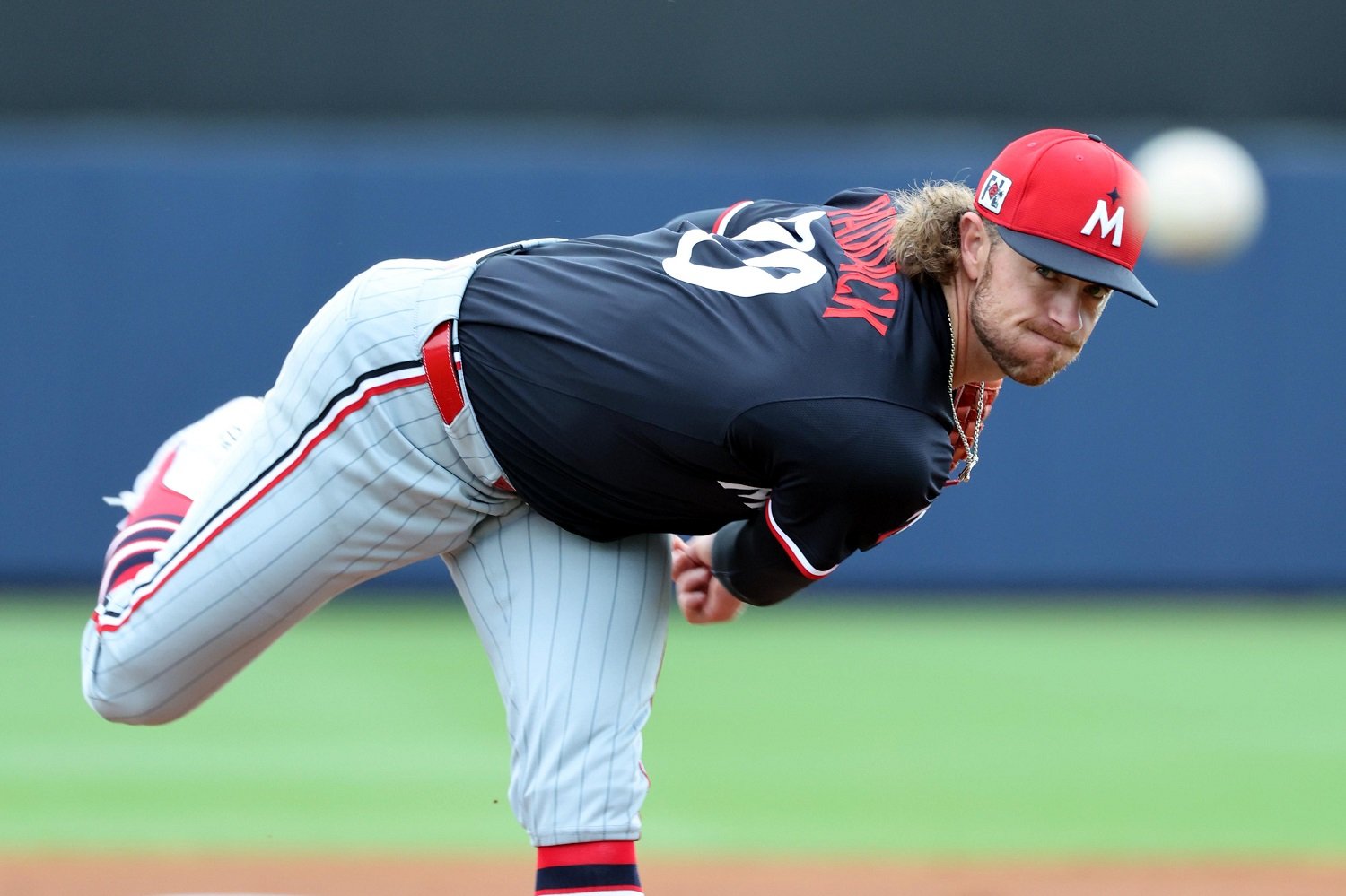 As spring training warms from a simmer to a boil, the Twins only have a few questions to answer over the coming weeks. We have an idea of what the lineup will look like—at least in terms of who will play where. The bullpen is its usual mix of established studs and collected misfits scraping for the final few relief spots. The rotation is all about that fifth starter role, and which one of Minnesota’s promising young hurlers will break camp claiming it. Lost in this talk, though, is a crucial question: why does Chris Paddack have a solidified spot? He’s a two-pitch 29-year-old with a career 4.38 ERA, whose only year close to a “full season” was one pandemic and a second torn UCL ago. He’s pitched 432 2/3 innings across six seasons. The Twins themselves know he can’t be trusted: they spent the entire offseason quietly attempting to deal him and his $7.5-million contract, only to find that they couldn't wrest much value out of any other team in exchange for him. In an era with a dearth of starting pitching, no one wanted to shell out Aaron Civale money for Paddack, unless they could do so without including a prospect. Now, the team has Paddack written into the fourth spot in their rotation, in heavy pencil—if not in ink. I know the members of the Twins front office are wise enough to understand and avoid the sunk-cost fallacy. Yet, they’ve acted oddly adamant and steadfast in supporting the Paddack experiment. “The slider,” which we’ve heard a lot about—far too much, considering he proved unable to master a true tertiary pitch years ago—is the amorphous sticking point. Maybe that’s the key to unlocking everything. And maybe Oswaldo Arcia will lighten up on the swing-and-miss, one of these years. At some point, a player can no longer live in Potential World; they have to prove development (beyond nebulous quotes) and actually bring something to the table. Knowing when to call it on someone isn’t always easy. We see the potential in bits and moments—starts and pitches—and dream of a future where that consistency is bottled, properly maintained, and self-evident. I’m calling it on Paddack. I think he made sense in 2022, when the smoking ruins of J.A. Happ and Matt Shoemaker begat the terror of Dylan Bundy and Chris Archer. But the Twins have options now. Great ones, too. Dan Szymborski’s ZiPS projections see David Festa and Zebby Matthews as better pitchers even right now, with Simeon Woods Richardson as essentially an equal. Shoot, even Andrew Morris is indistinguishable in terms of production. So here’s what the Twins should do: swallow their pride and move Paddack to the bullpen. Eat the money. Make him baseball’s most expensive middle reliever (or not, even; the idea of spending this much on a relief arm is only crazy to the Pohlads). They’re never seeing that $7.5 million again, so why scramble to maximize their ROI when they could avoid blocking a worthy youngster—and potentially gain a relief ace in the process? We saw a sneak peek of reliever Chris Paddack in 2023, and he looked excellent, striking out 14 in 8 2/3 innings combined between the regular season and playoffs. He was one of the few Twins hurlers to consistently get Houston batters out in the ALDS. Small samples, yes, but it shouldn’t be surprising that a guy who really only commands two pitches dominates with a simplified approach and elevated velocity over short bursts. ZW43WjNfV0ZRVkV3dEdEUT09X0RnZFZVZ0lFVkFzQUMxRldBQUFBQXdGUkFGa0dVbGdBVmdkVVZWRUVWRklIQXdwVA==.mp4 If (when) Paddack breaks camp with the Twins as a starter, I won’t get it. He’s a known commodity, not appreciably better than the three main guys nipping at his heels. Better suited in the bullpen, he could provide a boon to a relief group bursting with potential, but thin in upside in its second tier when factoring in Brock Stewart and Justin Topa’s injury issues. It won’t happen, though, and he’ll instead block a young pitcher likely to match (if not surpass, outright) his production. Injuries will probably open a path to the majors for those younger hurlers soon enough, anyway, but it's foolish of the Twins to think reactively.
- 63 comments
-
- 8
-
-
-

-
- chris paddack
- david festa
- (and 2 more)
-
 On Tuesday, Carlos Correa spoke to the media at Twins spring training on a variety of topics, ranging from injury questions (he’s fine), to Jose Altuve playing left field (“that little man can do anything. He’ll be fine.”). Nestled near the end of the scrum were comments regarding his desire to lead the Twins to a championship. “That’s my dream, ever since I got here,” Correa said. “If we can win the World Series, that will make me very happy and cement my legacy as a world champion in two different organizations.” It’s what drives him. It’s what gets him out of bed in the morning. That’s the kind of talk you’d expect from a cerebral but tenacious competitor like Correa, and it begs a question: how many players have led multiple teams to a World Series win? We’re not just talking about role players here: how many bona fide studs—All-Stars and MVP vote-getters—have changed franchises and brought both to the promised land? I looked through the rosters of the World Series winners since 2000 to find players who were both great and established leaders for the teams they won it with. Those parameters give us seven position players who accomplished Correa’s dream. They all put up at least 5 rWAR (what I broadly defined as “great”), although not necessarily in the seasons they won the World Series in. Here’s the list: Mike Lowell, Johnny Damon, Shane Victorino, Ben Zobrist, Mookie Betts, Corey Seager, and Freddie Freeman. Seven may seem low, but it’s like the “Peyton Manning and Tom Brady are the only two starting QBs to win a Super Bowl with multiple franchises” stat; if a team has a guy good enough to deliver them a championship, they tend to keep that player, perhaps forever, but at least untul they're no longer capable of carrying a team that far. With all due respect to Lowell, Damon, Victorino, and Zobrist—all tremendous and deeply memorable players—they aren’t quite what we’re looking for. They were ancillary players—necessary pieces to win the Whole Darn Thing—but to say they “led” their teams to championships is like saying George Harrison "led" The Beatles to 20 No. 1 hits. While "Something" and "Here Comes the Sun" are some of the band's finest work, Lennon and McCartney were the engines of the car. That leaves us three guys tied to the Dodgers: Betts, Seager, and Freeman. I don’t think Freeman works here. That Dodgers team was stacked. As critical as he was, especially in the Series itself, I can’t use him. Betts is a more compelling character because, in 2020, L.A. was simply a very good team, not the world-conquering leviathan of talent they are now. There’s something almost folksy to the fact that AJ Pollock was their starting left fielder. The next-best player on that team was Cody Bellinger, but Bellinger was in the beginning of his decline at that point, so Betts comes out on top. It’s a similar story for his 2018 win with Boston; J.D. Martinez was incredible that year, but Betts was basically prime Roberto Clemente (who kind of won with two different teams himself; the core of the 1960 Pirates had entirely turned over by 1971, except for him). That's not a bad example for Correa to follow. We can go even further. For the most accurate comparison, I think Seager takes the cake—ironic, given that the two are juxtaposed by the infamous 2017 World Series. Anyway, the youngest of the three Seagers (yes, there’s even another out there), reached the mountaintop in 2020 with Betts's Dodgers and jumped ship to the Rangers after the 2021 season, eventually leading them to their first World Series win in 2023. They both play shortstop. Like Correa, Seager signed with a team outside the Big 5 (Dodgers, Mets, Yankees, Phillies, Red Sox), and as Correa would, he holds a special place in a fan base's collective heart as a result. I think if there’s anything to take away from this, it’s that what Correa is attempting to do is rare, but not unheard of. A handful of very good players have won championships with multiple teams; a trio did so under the pressure of being more or less the main character; and one accomplished this while jumping down a tier in market size. As always, there’s plenty of great history in the process of being written. Correa absolutely could become the next in a short line of exceptional players claiming multiple rings with different logos on them. John Bonnes contributed reporting to this piece.
- 13 comments
-
- 6
-
-
-
- carlos correa
- corey seager
- (and 2 more)
-
More specifically, who has done it recently? Image courtesy of © Jonah Hinebaugh/Naples Daily News/USA Today Network-Florida / USA TODAY NETWORK via Imagn Images On Tuesday, Carlos Correa spoke to the media at Twins spring training on a variety of topics, ranging from injury questions (he’s fine), to Jose Altuve playing left field (“that little man can do anything. He’ll be fine.”). Nestled near the end of the scrum were comments regarding his desire to lead the Twins to a championship. “That’s my dream, ever since I got here,” Correa said. “If we can win the World Series, that will make me very happy and cement my legacy as a world champion in two different organizations.” It’s what drives him. It’s what gets him out of bed in the morning. That’s the kind of talk you’d expect from a cerebral but tenacious competitor like Correa, and it begs a question: how many players have led multiple teams to a World Series win? We’re not just talking about role players here: how many bona fide studs—All-Stars and MVP vote-getters—have changed franchises and brought both to the promised land? I looked through the rosters of the World Series winners since 2000 to find players who were both great and established leaders for the teams they won it with. Those parameters give us seven position players who accomplished Correa’s dream. They all put up at least 5 rWAR (what I broadly defined as “great”), although not necessarily in the seasons they won the World Series in. Here’s the list: Mike Lowell, Johnny Damon, Shane Victorino, Ben Zobrist, Mookie Betts, Corey Seager, and Freddie Freeman. Seven may seem low, but it’s like the “Peyton Manning and Tom Brady are the only two starting QBs to win a Super Bowl with multiple franchises” stat; if a team has a guy good enough to deliver them a championship, they tend to keep that player, perhaps forever, but at least untul they're no longer capable of carrying a team that far. With all due respect to Lowell, Damon, Victorino, and Zobrist—all tremendous and deeply memorable players—they aren’t quite what we’re looking for. They were ancillary players—necessary pieces to win the Whole Darn Thing—but to say they “led” their teams to championships is like saying George Harrison "led" The Beatles to 20 No. 1 hits. While "Something" and "Here Comes the Sun" are some of the band's finest work, Lennon and McCartney were the engines of the car. That leaves us three guys tied to the Dodgers: Betts, Seager, and Freeman. I don’t think Freeman works here. That Dodgers team was stacked. As critical as he was, especially in the Series itself, I can’t use him. Betts is a more compelling character because, in 2020, L.A. was simply a very good team, not the world-conquering leviathan of talent they are now. There’s something almost folksy to the fact that AJ Pollock was their starting left fielder. The next-best player on that team was Cody Bellinger, but Bellinger was in the beginning of his decline at that point, so Betts comes out on top. It’s a similar story for his 2018 win with Boston; J.D. Martinez was incredible that year, but Betts was basically prime Roberto Clemente (who kind of won with two different teams himself; the core of the 1960 Pirates had entirely turned over by 1971, except for him). That's not a bad example for Correa to follow. We can go even further. For the most accurate comparison, I think Seager takes the cake—ironic, given that the two are juxtaposed by the infamous 2017 World Series. Anyway, the youngest of the three Seagers (yes, there’s even another out there), reached the mountaintop in 2020 with Betts's Dodgers and jumped ship to the Rangers after the 2021 season, eventually leading them to their first World Series win in 2023. They both play shortstop. Like Correa, Seager signed with a team outside the Big 5 (Dodgers, Mets, Yankees, Phillies, Red Sox), and as Correa would, he holds a special place in a fan base's collective heart as a result. I think if there’s anything to take away from this, it’s that what Correa is attempting to do is rare, but not unheard of. A handful of very good players have won championships with multiple teams; a trio did so under the pressure of being more or less the main character; and one accomplished this while jumping down a tier in market size. As always, there’s plenty of great history in the process of being written. Correa absolutely could become the next in a short line of exceptional players claiming multiple rings with different logos on them. John Bonnes contributed reporting to this piece. View full article

