



Matt Braun
-
Posts
1,393 -
Joined
-
Last visited
-
Days Won
1
Content Type
Profiles
News
Minnesota Twins Videos
2026 Minnesota Twins Top Prospects Ranking
2022 Minnesota Twins Draft Picks
Minnesota Twins Free Agent & Trade Rumors, Notes, & Tidbits
Guides & Resources
2023 Minnesota Twins Draft Picks
The Minnesota Twins Players Project
2024 Minnesota Twins Draft Picks
2025 Minnesota Twins Draft Pick Tracker
2026 Minnesota Twins Draft Tracker: Picks & Bonuses
Forums
Blogs
Events
Store
Downloads
Gallery
Everything posted by Matt Braun
-
Baltimore’s endless glut of hitters has to give way somehow, right? Image courtesy of © Tommy Gilligan-Imagn Images With the Orioles signing Ramón Laureano on Tuesday, it seems that, once again, Baltimore has more hitters than they know what to do with. Their lineup was already crowded, with Heston Kjerstad on the bench in most formulations of the lineup and Coby Mayo stuck at Triple-A Norfolk, meaning a piece or two needs to wiggle free, lest a player needing time in the majors finds himself out in the rain. So, why a Ryan Mountcastle deal specifically? Perhaps no hitter on the team was more cursed by the Orioles’ horrid left-field wall botch job, often called a “modification.” A dead-pull hitter by nature, Mountcastle shifted his approach to favor democracy because, frankly, even Harmon Killebrew would find hitting into a wall as big and distant as the one deemed sufficient to separate Berlin a frustrating task. In response, his numbers have been merely fine, not overwhelming for a slugger; his career wRC+ is 112. Target Field suffers from no such malaise. It’s the eighth-friendliest stadium to righties since 2022, according to Statcast’s ballpark metrics. Homers occur at an above-average rate; doubles are accepted as fond company. Singles are tougher to come by, but Mountcastle has little use for those, anyway. As for fit, Minnesota is uniquely situated for Mountcastle. Their plans for 1st base and DH appear to be the shrug emoji and a rotating cast of Jose Miranda, Edouard Julien, and whoever wants to take it easy that day. The roster begs for a guy like Mountcastle, a bopping right-handed hitter who clarifies the lineup and wouldn’t steal at-bats from deserving players. You could have a perfectly regular rotation with Willi Castro, Julien, and Brooks Lee spelling whoever needs a day off (or gets injured). There are two issues facing the Twins here: the first is that Mountcastle must be compensated in the form of American dollars, also known as money. That’s a steep ask. His deal for 2025 will be for $6.787 million, and he’ll have one more year of arbitration before hitting free agency following the 2026 season. If you believe Dan Hayes’ recent reports that the Twins had around $5 million of wiggle room before the Danny Coulombe and Harrison Bader deals, then the team is about $2 million in the hole (unless they can dump Chris Paddack and/or Christian Vázquez money somewhere else.) The second is convincing Baltimore to actually trade someone. The Orioles appear satisfied in their gluttony. They’ve been oddly Brewers-y, for a young team with an apparent mandate to spend. As Gunner Henderson and Adley Rutschman continue their march to arbitration—and in the wake of Corbin Burnes exiting the picture—Baltimore has decided that Tyler O’Neill is the supplement that will rescue them from the Wild Card round. Their starting rotation is Zach Eflin, Grayson Rodriguez, and an Oops, All #4 Starters collection including 41-year-old Charlie Morton, Dean Kremer, and (ahem) very experienced Japanese hurler Tomoyuki Sugano. That's hardly the stable necessary to crush a perpetually dense AL East. That means that any Mountcastle deal would necessitate capitulation on their end. Rumors have swirled around the first baseman for years, but he still wears orange and black. Evidently, Baltimore believes in the virtue of extreme depth. It’s always strange attempting to piece together a fictional deal, but I think a move involving Bailey Ober (with Baltimore eating salary and/or sending a small extra piece) could make sense. Maybe a young hurler like Zebby Matthews or David Festa could sway them, too, depending on who Baltimore prefers. In the end, I think Minnesota would need to dip into their starting pitching reserves. Ultimately, I know this is a pipe dream. Baltimore is altering their wall—an explicit acknowledgment that they went too far in 2022—and Mountcastle should thrive once more. Throw in the cost of the player, the money Minnesota needs to shed, and the fact that the Orioles hug their youngsters with a vigor unseen in any other franchise, and the odds that this thing happens are exceedingly low. Still, a man can hope, and I remain steadfast in my belief that the Twins should attempt to acquire Ryan Mountcastle. View full article
-
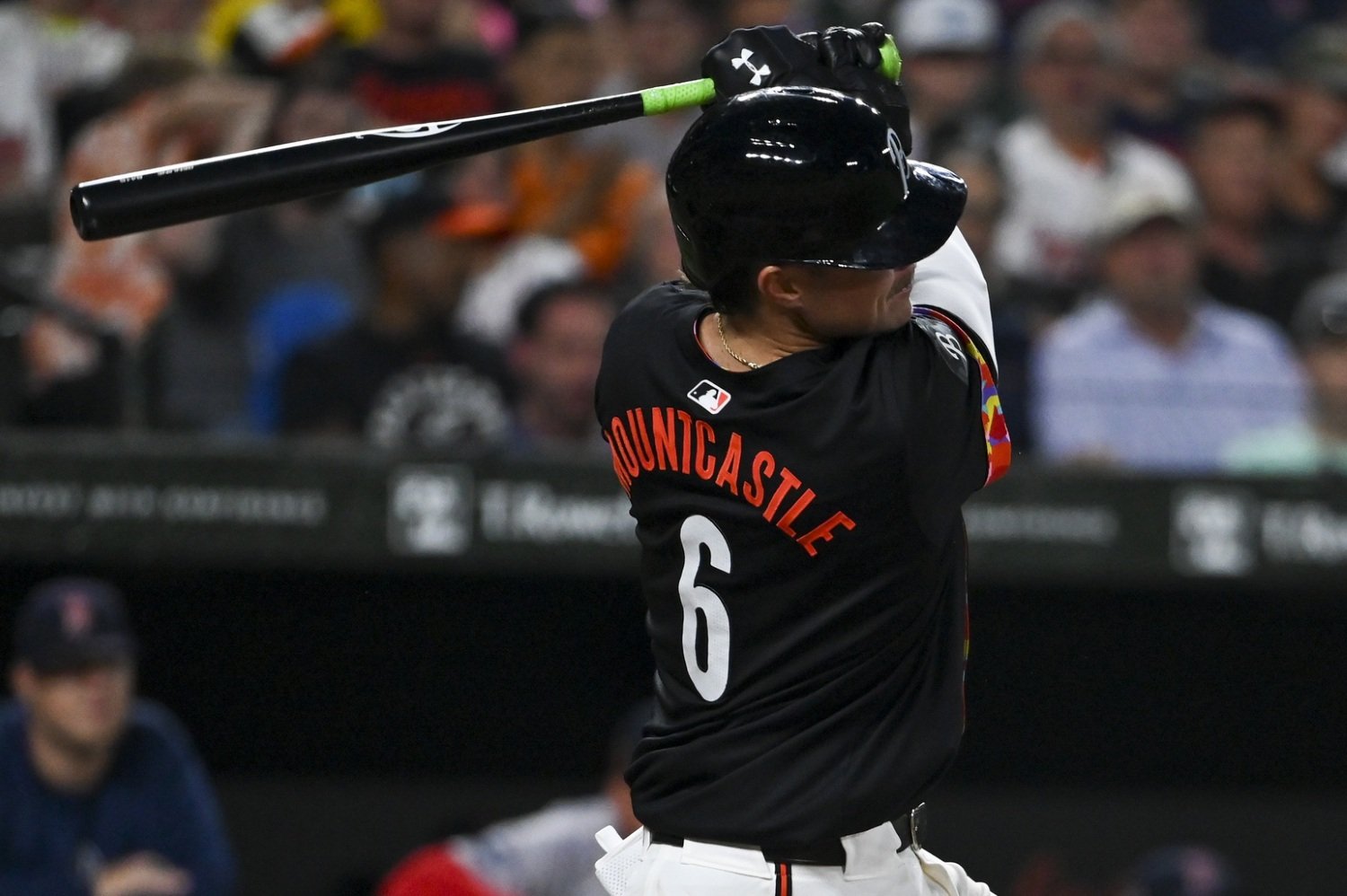 With the Orioles signing Ramón Laureano on Tuesday, it seems that, once again, Baltimore has more hitters than they know what to do with. Their lineup was already crowded, with Heston Kjerstad on the bench in most formulations of the lineup and Coby Mayo stuck at Triple-A Norfolk, meaning a piece or two needs to wiggle free, lest a player needing time in the majors finds himself out in the rain. So, why a Ryan Mountcastle deal specifically? Perhaps no hitter on the team was more cursed by the Orioles’ horrid left-field wall botch job, often called a “modification.” A dead-pull hitter by nature, Mountcastle shifted his approach to favor democracy because, frankly, even Harmon Killebrew would find hitting into a wall as big and distant as the one deemed sufficient to separate Berlin a frustrating task. In response, his numbers have been merely fine, not overwhelming for a slugger; his career wRC+ is 112. Target Field suffers from no such malaise. It’s the eighth-friendliest stadium to righties since 2022, according to Statcast’s ballpark metrics. Homers occur at an above-average rate; doubles are accepted as fond company. Singles are tougher to come by, but Mountcastle has little use for those, anyway. As for fit, Minnesota is uniquely situated for Mountcastle. Their plans for 1st base and DH appear to be the shrug emoji and a rotating cast of Jose Miranda, Edouard Julien, and whoever wants to take it easy that day. The roster begs for a guy like Mountcastle, a bopping right-handed hitter who clarifies the lineup and wouldn’t steal at-bats from deserving players. You could have a perfectly regular rotation with Willi Castro, Julien, and Brooks Lee spelling whoever needs a day off (or gets injured). There are two issues facing the Twins here: the first is that Mountcastle must be compensated in the form of American dollars, also known as money. That’s a steep ask. His deal for 2025 will be for $6.787 million, and he’ll have one more year of arbitration before hitting free agency following the 2026 season. If you believe Dan Hayes’ recent reports that the Twins had around $5 million of wiggle room before the Danny Coulombe and Harrison Bader deals, then the team is about $2 million in the hole (unless they can dump Chris Paddack and/or Christian Vázquez money somewhere else.) The second is convincing Baltimore to actually trade someone. The Orioles appear satisfied in their gluttony. They’ve been oddly Brewers-y, for a young team with an apparent mandate to spend. As Gunner Henderson and Adley Rutschman continue their march to arbitration—and in the wake of Corbin Burnes exiting the picture—Baltimore has decided that Tyler O’Neill is the supplement that will rescue them from the Wild Card round. Their starting rotation is Zach Eflin, Grayson Rodriguez, and an Oops, All #4 Starters collection including 41-year-old Charlie Morton, Dean Kremer, and (ahem) very experienced Japanese hurler Tomoyuki Sugano. That's hardly the stable necessary to crush a perpetually dense AL East. That means that any Mountcastle deal would necessitate capitulation on their end. Rumors have swirled around the first baseman for years, but he still wears orange and black. Evidently, Baltimore believes in the virtue of extreme depth. It’s always strange attempting to piece together a fictional deal, but I think a move involving Bailey Ober (with Baltimore eating salary and/or sending a small extra piece) could make sense. Maybe a young hurler like Zebby Matthews or David Festa could sway them, too, depending on who Baltimore prefers. In the end, I think Minnesota would need to dip into their starting pitching reserves. Ultimately, I know this is a pipe dream. Baltimore is altering their wall—an explicit acknowledgment that they went too far in 2022—and Mountcastle should thrive once more. Throw in the cost of the player, the money Minnesota needs to shed, and the fact that the Orioles hug their youngsters with a vigor unseen in any other franchise, and the odds that this thing happens are exceedingly low. Still, a man can hope, and I remain steadfast in my belief that the Twins should attempt to acquire Ryan Mountcastle.
 -
 Here’s a simple question I asked myself the other day: How could we analyze Simeon Woods Richardson’s season in the context of his age? His year was fine—133 ⅔ innings with a 4.17 ERA is non-descript, even in today’s age of suppressed starting pitcher usage—but how should we consider relative youth? Does it make his play more impressive, and if so, just how much? And, critically, to whom can we compare him historically? The first thing I did was tab a writer with a Stathead subscription for a simple query: give me a list of pitchers in their age-23 season. (Thanks, @Cody Christie.) He narrowed it down to the Wild Card era, which felt like a good call. It’s as arbitrary a cutoff as any, but we should probably observe a modern context; the days of a guy like Bert Blyleven entering 23 with over 1,000 MLB innings already under his belt are Roman Empire levels of ancient. I then ranked the list by innings that season, discovered that Mark Buerhle threw 239 frames as a 23-year-old—they really don’t build them like that anymore—and searched for similar hurlers. We’re again dealing with arbitrariness here. I outlined “similar” as seasons within 10 innings of Woods Richardson's total, in which a player pitched to an ERA+ five points north or south of our subject. That felt reasonable, but I could see an argument for different parameters. This way, though, we have seven comps: Jordan Lyles, David Price, Kerry Wood, Gerrit Cole, Kris Bubic, Marcus Stroman, and Taj Bradley. (There’s some Alanis Morisette irony at play here, considering Woods Richardson’s first franchise swap was part of the Mets acquiring Stroman. Time is a flat circle.) Ok! That’s a fun list of names. There are two Cy Young winners, 15 All-Star selections, and Kris Bubic. (My apologies to Mr. Bubic, who makes my father roar in laughter when he hears his name.) What’s striking to me is that there’s no real bust here. Lyles is probably the worst pitcher of the bunch, but even then, he’s gobbled over 1,500 frames in an MLB career that started during Obama’s first term. You could do far worse than that. For our purposes, I think Bubic and Stroman are the most useful of these players. Wood, Price, and Cole were outlier power pitchers, and as much as I would like to recklessly comp Woods Richardson to them, they aren’t particularly useful subjects. Lyles pitched his age-23 season in Coors, which (again) isn't useful, and Bradley just pitched his, so there’s no future data on him to analyze. Bubic’s relatively successful 2021 season portended a meager 2022, and he’s dealt with injury issues ever since. However, the Royals intend to stretch him out as a starter again in 2025, so his career is far from over. Stroman also ran into injury issues immediately following his breakout in 2014, tearing his ACL the next spring training, but he quickly morphed into one of the most reliable starters in the game. Both hurlers present a very real path for Woods Richardson. Player development isn’t linear; it’s jagged and seemingly illogical, often throwing its target way off the beaten path before eventually ushering them where they need to go. This is especially true for pitchers, who mature later than hitters. Long-term, Woods Richardson’s prospects look great, but there’s a lot of snarl and thistle that can muck up his evolution. It’s all part of a plan, hopefully. Now, are there any specific adjustments I can recommend? Well, I doubt that the team can squeeze any more velocity out of Woods Richardson. That he sustained a 93-MPH heater in 2024 already blew away all expectations. It's perfectly possible that he could hold onto his best stuff all the way through a season better than he did in 2024, though. He'll know what the feeling of managing effort and workload over a season is like, and he did impressively hold his velocity within games this year. His next step will likely be figuring out how to best maximize his pitch mix. Two things stand out to me: his changeup—once a plus pitch, maybe only average now—far underperformed his batted-ball data. Upping its usage could help make him more unpredictable. Then there’s the curveball. We know now that those big overhand breakers don’t earn whiffs as much as you might expect, but they can be powerful tools to steal a strike when behind in the count. Woods Richardson allowed an xwOBA of .460 in 1-0 counts when he threw his fastball, slider, or changeup, but that number dropped all the way to .278 when he flashed the curve—which he only did 16 times, sometimes going nearly a month between 1-0 curveball usages. That number needs to go way up if he wants to improve. Here’s the skinny: Simeon Woods Richardson’s 2024 season was ordinary in terms of pitching seasons, but given his age, even meager success is a building block. He has experience. He’s been there, perhaps even done that. Recent history suggests that good things are on the way for the youngster, but it might take some time to realize the potential. No worries, though. He’s still just 24, after all.
- 18 comments
-
- 5
-

-
- simeon woods richardson
- marcus stroman
- (and 5 more)
-
Or: come read about a very fun group of comparable players. Image courtesy of © Jay Biggerstaff-Imagn Images Here’s a simple question I asked myself the other day: How could we analyze Simeon Woods Richardson’s season in the context of his age? His year was fine—133 ⅔ innings with a 4.17 ERA is non-descript, even in today’s age of suppressed starting pitcher usage—but how should we consider relative youth? Does it make his play more impressive, and if so, just how much? And, critically, to whom can we compare him historically? The first thing I did was tab a writer with a Stathead subscription for a simple query: give me a list of pitchers in their age-23 season. (Thanks, @Cody Christie.) He narrowed it down to the Wild Card era, which felt like a good call. It’s as arbitrary a cutoff as any, but we should probably observe a modern context; the days of a guy like Bert Blyleven entering 23 with over 1,000 MLB innings already under his belt are Roman Empire levels of ancient. I then ranked the list by innings that season, discovered that Mark Buerhle threw 239 frames as a 23-year-old—they really don’t build them like that anymore—and searched for similar hurlers. We’re again dealing with arbitrariness here. I outlined “similar” as seasons within 10 innings of Woods Richardson's total, in which a player pitched to an ERA+ five points north or south of our subject. That felt reasonable, but I could see an argument for different parameters. This way, though, we have seven comps: Jordan Lyles, David Price, Kerry Wood, Gerrit Cole, Kris Bubic, Marcus Stroman, and Taj Bradley. (There’s some Alanis Morisette irony at play here, considering Woods Richardson’s first franchise swap was part of the Mets acquiring Stroman. Time is a flat circle.) Ok! That’s a fun list of names. There are two Cy Young winners, 15 All-Star selections, and Kris Bubic. (My apologies to Mr. Bubic, who makes my father roar in laughter when he hears his name.) What’s striking to me is that there’s no real bust here. Lyles is probably the worst pitcher of the bunch, but even then, he’s gobbled over 1,500 frames in an MLB career that started during Obama’s first term. You could do far worse than that. For our purposes, I think Bubic and Stroman are the most useful of these players. Wood, Price, and Cole were outlier power pitchers, and as much as I would like to recklessly comp Woods Richardson to them, they aren’t particularly useful subjects. Lyles pitched his age-23 season in Coors, which (again) isn't useful, and Bradley just pitched his, so there’s no future data on him to analyze. Bubic’s relatively successful 2021 season portended a meager 2022, and he’s dealt with injury issues ever since. However, the Royals intend to stretch him out as a starter again in 2025, so his career is far from over. Stroman also ran into injury issues immediately following his breakout in 2014, tearing his ACL the next spring training, but he quickly morphed into one of the most reliable starters in the game. Both hurlers present a very real path for Woods Richardson. Player development isn’t linear; it’s jagged and seemingly illogical, often throwing its target way off the beaten path before eventually ushering them where they need to go. This is especially true for pitchers, who mature later than hitters. Long-term, Woods Richardson’s prospects look great, but there’s a lot of snarl and thistle that can muck up his evolution. It’s all part of a plan, hopefully. Now, are there any specific adjustments I can recommend? Well, I doubt that the team can squeeze any more velocity out of Woods Richardson. That he sustained a 93-MPH heater in 2024 already blew away all expectations. It's perfectly possible that he could hold onto his best stuff all the way through a season better than he did in 2024, though. He'll know what the feeling of managing effort and workload over a season is like, and he did impressively hold his velocity within games this year. His next step will likely be figuring out how to best maximize his pitch mix. Two things stand out to me: his changeup—once a plus pitch, maybe only average now—far underperformed his batted-ball data. Upping its usage could help make him more unpredictable. Then there’s the curveball. We know now that those big overhand breakers don’t earn whiffs as much as you might expect, but they can be powerful tools to steal a strike when behind in the count. Woods Richardson allowed an xwOBA of .460 in 1-0 counts when he threw his fastball, slider, or changeup, but that number dropped all the way to .278 when he flashed the curve—which he only did 16 times, sometimes going nearly a month between 1-0 curveball usages. That number needs to go way up if he wants to improve. Here’s the skinny: Simeon Woods Richardson’s 2024 season was ordinary in terms of pitching seasons, but given his age, even meager success is a building block. He has experience. He’s been there, perhaps even done that. Recent history suggests that good things are on the way for the youngster, but it might take some time to realize the potential. No worries, though. He’s still just 24, after all. View full article
- 18 replies
-
- 1
-
-
- simeon woods richardson
- marcus stroman
- (and 5 more)
-
Matt Braun and Cody Schoenmann Revisit Their Pre-Season Awards Predictions
Matt Braun posted an article in Twins
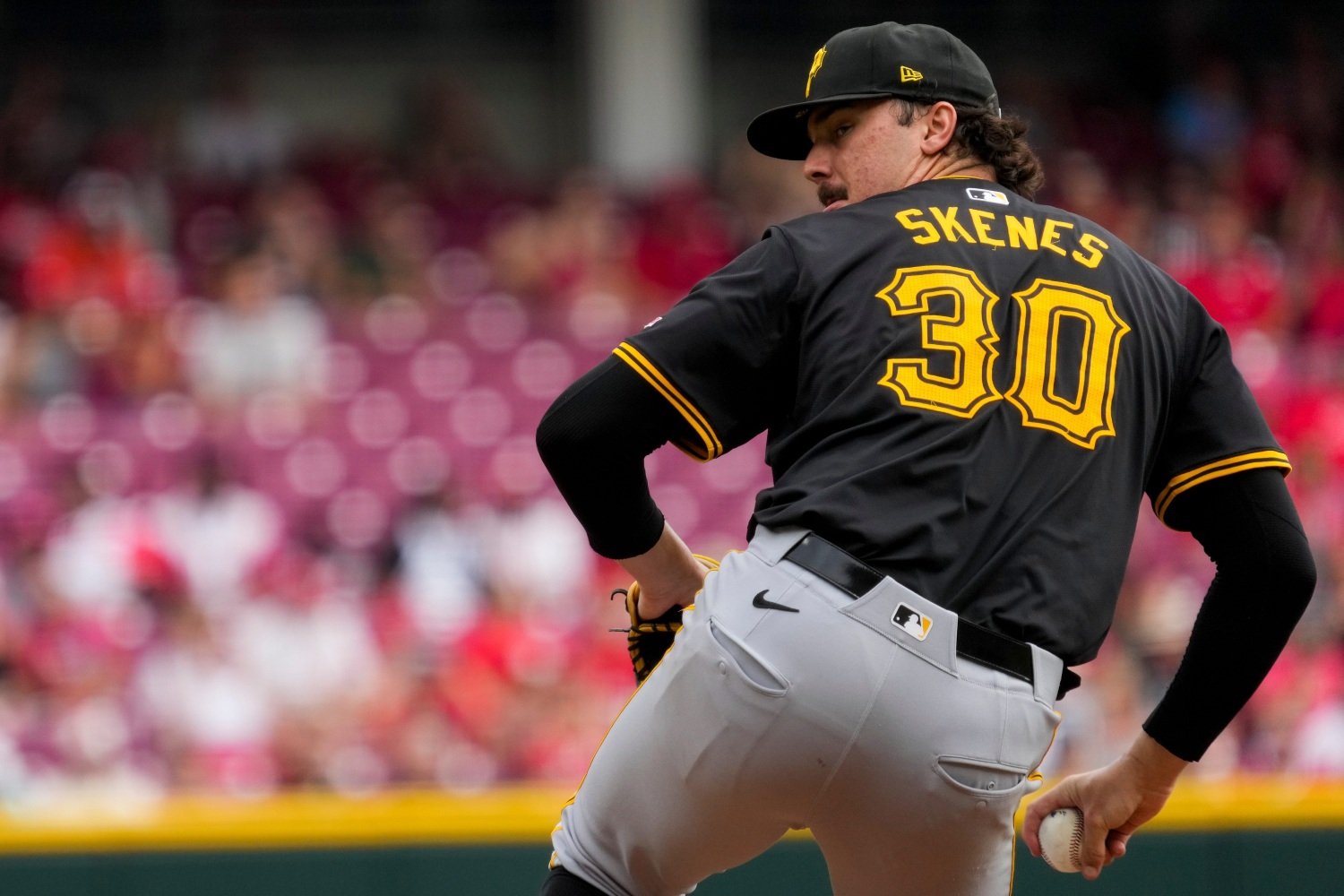 American League Awards Predictions: AL MVP (Winner - Aaron Judge) Matt’s Choice: Julio Rodríguez I tried to let my pattern-seeking brain work some magic with this pick. Rodríguez finished 7th in the MVP vote in his rookie year of 2022 and 4th in 2023. The evidence was overwhelming that 2024 was to be the Year of Julio. Praise be. Yeah, that didn’t happen. He ended up with his worst year as a pro—still a 3.8 fWAR season, mildly disappointing only given his immense talent—and failed to garner even a sympathetic down-ballot vote. Whoops. On the other hand, Aaron Judge enjoyed one of the finest right-handed hitting seasons in baseball history. Whoops. I’ll go to the grave saying that picking the overall favorite to win the MVP is fascist and bad content, though, so I won’t lose sleep over this pick. Cody’s Choice: Bobby Witt Jr. I went against my radical homer tendencies, and look, it served me well! Generating 9.4 rWAR over 161 games played, Witt put together one of the more impressive regular-season campaigns in modern baseball history, leading him to finish second in AL MVP voting. In my assessment, he would have won the award if Big Yankee wasn't paying MLB award voters hundreds of thousands of dollars to push their “Pro-Judge” agenda. In all seriousness, I have great disdain for both teams. That’s probably why I shortsightedly assumed the Royals wouldn’t seriously challenge the Twins in the AL Central standings this season. I was wrong there, too, and Witt was a significant reason why they overachieved. AL Cy Young (Winner - Tarik Skubal) Matt’s Choice: Pablo López Right division, wrong pitcher. Clearly, someone new was going to win this award in the AL, with the stalwarts in the league either incapacitated to start the season or moved elsewhere, but López was not the one to step up and fill the void. Instead, he underwhelmed and ran into home run problems in a fine but ultimately disappointing season. Tarik Skubal, on the other hand, was magic. His talent—apparent and tantalizing before 2024—exploded and led to an AL triple crown, as he won 18 games, struck out 228 batters, and pitched to a 2.39 ERA. I’m not upset about whiffing on him, but I think I should have considered him more when I made my prediction. Oh well. So it goes. Cody’s Choice: George Kirby I was actually really high on Skubal before the season, and even argued that he might be the best starting pitcher in the AL Central. Many at Twins Daily (including Matt Braun) called me various obscenities, but I stuck to my guns, and look where it got me: absolutely nowhere. I thought this was the season Kirby was going to pop and, well, he didn’t. The 26-year-old Mariners hurler generated just 1.9 rWAR over 191 innings pitched. He was a serviceable arm for the mostly competitive M’s. However, he didn’t even sniff an AL Cy Young Award vote. (Somehow Yusei Kikuchi and Cade Smith did?!) AL Rookie of the Year (Winner - Luis Gil) Matt’s Choice: Evan Carter I think this was my worst selection of the article, and the reasons are so self-evident that they barely deserve a paragraph. Evan Carter was dreadful. His bat grew limp, his defense melted, and he never played after May; a back injury ended his season. His MLB career should be bountiful and extended, but his full rookie season was a disaster. Now, Luis Gil as the winner? No shot that was ever on my radar. He entered 2024 with 33 ⅓ MLB innings and a penchant for such inefficiency that it seemed he may never start again. Then, just about the entire Yankee rotation hit the IL, and suddenly, Gil became a linchpin. Sometimes, it's almost impossible to predict this stuff. Cody’s Choice: Wyatt Langford I selected the other Rangers rookie outfielder, and despite Langford receiving only one second-place vote and four third-place votes, I am not ashamed of my selection. Like the Tyler Mahle trade, the process was sound, and I shouldn’t be ashamed of the results. Again, don’t look at the results, they are lying to you. Regardless, Langford didn’t get much love from voters despite posting 3.9 rWAR and a 111 OPS+ over 557 plate appearances. Like Matt, I didn’t even consider Gil for this award. I was under the assumption he wouldn’t get an extended look in the Yankees rotation this season, and if he did pitch, it would have been as a reliever. So, to copy Matt yet again, I will end my section with a Vonnegutism and say, “And so on.” National League Awards Predictions: NL MVP (Winner - Shohei Ohtani) Matt’s Choice: Corbin Carroll Before the season, it looked like the NL would be a little more open than the AL, just by virtue of the talent spread and because the big newcomer—Shohei Ohtani—would be a DH only, and no strict DH had ever won the award. So he simply had the greatest DH season ever. Sure. Corbin Carroll—whom I believed picking would make me look like a big smarty—had a relatively down year compared to his excellent rookie season. His hitting sagged as injuries messed with his swing. By June, his OPS still started with a “.5.” Then he just kind of got over it. He didn’t burn down the league or anything, but he finished with 4.0 fWAR, far from the ruinous season he appeared to be on track for. Cody’s Choice: Francisco Lindor Lindor posted 6.9 rWAR and a 138 OPS+ over 152 games for David Stearns’s new-look Mets. His impressive 2024 campaign placed him second in NL MVP Voting. Wait, I selected another second-place finisher?! I was so close, yet so far. You know, this reminds me, there’s an old saying in Tennessee–I know it’s in Texas, probably in Tennessee–that says, ‘If you ain’t first….you ain’t first. If you ain’t first… you can’t get first again. If you ain’t first… you ain’t last.” My apologies, I forgot the saying. Nevertheless, I am proud of my Lindor selection, and if it weren’t for Big Dodger…. NL Cy Young (Winner - Chris Sale) Matt’s Choice: Logan Webb That Chris Sale rebounded to win his first career Cy Young—for real, he somehow never won one with the White Sox—wasn’t altogether surprising; his issue was health, not performance. Like Skubal, he claimed his league's triple crown, earning him the vast majority of first-place votes in a decisive win. Logan Webb, my pick, finished 6th. His innings accumulation remained unrivaled—he topped 200 frames for the 2nd straight season—but his run prevention chops took a slide. His ERA crept up a few tenths, even as the scoring environment dipped. That’s not going to play. Cody’s Choice: Bobby Miller I, uh…. Okay, I fell victim to a quirked-up white boy with a 100-MPH fastball. It happens to the best of us. It really does. Miller ended the 2024 regular season with an 8.52 ERA, 6.97 FIP, and -1.9 rWAR over 56 innings pitched. Uhm, it should also be noted that he ended his 2024 campaign with the Oklahoma City Comets. As my father always told me, “You can’t win the NL Cy Young Award in Triple-A!” Either way, this was a horrible pick that has tarnished my reputation, but at least Bobby got a World Series ring! NL Rookie of the Year (Winner - Paul Skenes) Matt’s Choice: Paul Skenes A winner! I do know ball! Paul Skenes had a fabulous season, putting up ace reliever efficiency across 133 innings to best Jackson Merrill for the NL rookie crown. Ok, maybe it wasn’t the hottest take to believe that a former 1st overall pick (and perhaps the best pitching prospect since Stephen Strasburg) might be good at baseball. This was nothing like Gil; Skenes was the surest thing we’ve seen in quite some time. Still, his utter dominance went far beyond even the most optimistic prognosticator’s wildest dreams. This was a partial season for the ages. Cody’s Choice: DL Hall If MLB hadn’t gone Woke I could have made a tasteless joke about how DL’s nickname matched the name of the list he was always on during the 2024 season. But, again, MLB went Woke, and I am a better person than that! Still, Hall, like Miller, was a bad choice. The rookie southpaw posted a measly -0.2 rWAR over 43 innings pitched and never made much of an impact for the Brewers' depth-deficient 2024 rotation. Hall could still easily make an impact in the 414 long term, but 2024 wasn’t his year, and that’s okay. Congratulations to Matt for going out on a limb and voting for PAUL SKENES. He beat me by selecting one correct winner, meaning I will long be bitter and resentful toward him.
- 5 comments
-
- 2
-
-
- paul skenes
- francisco lindor
- (and 3 more)
-
Come see the good, the bad, the dreadful, and the one correct pick between the two. Image courtesy of © Sam Greene/The Enquirer / USA TODAY NETWORK via Imagn Images American League Awards Predictions: AL MVP (Winner - Aaron Judge) Matt’s Choice: Julio Rodríguez I tried to let my pattern-seeking brain work some magic with this pick. Rodríguez finished 7th in the MVP vote in his rookie year of 2022 and 4th in 2023. The evidence was overwhelming that 2024 was to be the Year of Julio. Praise be. Yeah, that didn’t happen. He ended up with his worst year as a pro—still a 3.8 fWAR season, mildly disappointing only given his immense talent—and failed to garner even a sympathetic down-ballot vote. Whoops. On the other hand, Aaron Judge enjoyed one of the finest right-handed hitting seasons in baseball history. Whoops. I’ll go to the grave saying that picking the overall favorite to win the MVP is fascist and bad content, though, so I won’t lose sleep over this pick. Cody’s Choice: Bobby Witt Jr. I went against my radical homer tendencies, and look, it served me well! Generating 9.4 rWAR over 161 games played, Witt put together one of the more impressive regular-season campaigns in modern baseball history, leading him to finish second in AL MVP voting. In my assessment, he would have won the award if Big Yankee wasn't paying MLB award voters hundreds of thousands of dollars to push their “Pro-Judge” agenda. In all seriousness, I have great disdain for both teams. That’s probably why I shortsightedly assumed the Royals wouldn’t seriously challenge the Twins in the AL Central standings this season. I was wrong there, too, and Witt was a significant reason why they overachieved. AL Cy Young (Winner - Tarik Skubal) Matt’s Choice: Pablo López Right division, wrong pitcher. Clearly, someone new was going to win this award in the AL, with the stalwarts in the league either incapacitated to start the season or moved elsewhere, but López was not the one to step up and fill the void. Instead, he underwhelmed and ran into home run problems in a fine but ultimately disappointing season. Tarik Skubal, on the other hand, was magic. His talent—apparent and tantalizing before 2024—exploded and led to an AL triple crown, as he won 18 games, struck out 228 batters, and pitched to a 2.39 ERA. I’m not upset about whiffing on him, but I think I should have considered him more when I made my prediction. Oh well. So it goes. Cody’s Choice: George Kirby I was actually really high on Skubal before the season, and even argued that he might be the best starting pitcher in the AL Central. Many at Twins Daily (including Matt Braun) called me various obscenities, but I stuck to my guns, and look where it got me: absolutely nowhere. I thought this was the season Kirby was going to pop and, well, he didn’t. The 26-year-old Mariners hurler generated just 1.9 rWAR over 191 innings pitched. He was a serviceable arm for the mostly competitive M’s. However, he didn’t even sniff an AL Cy Young Award vote. (Somehow Yusei Kikuchi and Cade Smith did?!) AL Rookie of the Year (Winner - Luis Gil) Matt’s Choice: Evan Carter I think this was my worst selection of the article, and the reasons are so self-evident that they barely deserve a paragraph. Evan Carter was dreadful. His bat grew limp, his defense melted, and he never played after May; a back injury ended his season. His MLB career should be bountiful and extended, but his full rookie season was a disaster. Now, Luis Gil as the winner? No shot that was ever on my radar. He entered 2024 with 33 ⅓ MLB innings and a penchant for such inefficiency that it seemed he may never start again. Then, just about the entire Yankee rotation hit the IL, and suddenly, Gil became a linchpin. Sometimes, it's almost impossible to predict this stuff. Cody’s Choice: Wyatt Langford I selected the other Rangers rookie outfielder, and despite Langford receiving only one second-place vote and four third-place votes, I am not ashamed of my selection. Like the Tyler Mahle trade, the process was sound, and I shouldn’t be ashamed of the results. Again, don’t look at the results, they are lying to you. Regardless, Langford didn’t get much love from voters despite posting 3.9 rWAR and a 111 OPS+ over 557 plate appearances. Like Matt, I didn’t even consider Gil for this award. I was under the assumption he wouldn’t get an extended look in the Yankees rotation this season, and if he did pitch, it would have been as a reliever. So, to copy Matt yet again, I will end my section with a Vonnegutism and say, “And so on.” National League Awards Predictions: NL MVP (Winner - Shohei Ohtani) Matt’s Choice: Corbin Carroll Before the season, it looked like the NL would be a little more open than the AL, just by virtue of the talent spread and because the big newcomer—Shohei Ohtani—would be a DH only, and no strict DH had ever won the award. So he simply had the greatest DH season ever. Sure. Corbin Carroll—whom I believed picking would make me look like a big smarty—had a relatively down year compared to his excellent rookie season. His hitting sagged as injuries messed with his swing. By June, his OPS still started with a “.5.” Then he just kind of got over it. He didn’t burn down the league or anything, but he finished with 4.0 fWAR, far from the ruinous season he appeared to be on track for. Cody’s Choice: Francisco Lindor Lindor posted 6.9 rWAR and a 138 OPS+ over 152 games for David Stearns’s new-look Mets. His impressive 2024 campaign placed him second in NL MVP Voting. Wait, I selected another second-place finisher?! I was so close, yet so far. You know, this reminds me, there’s an old saying in Tennessee–I know it’s in Texas, probably in Tennessee–that says, ‘If you ain’t first….you ain’t first. If you ain’t first… you can’t get first again. If you ain’t first… you ain’t last.” My apologies, I forgot the saying. Nevertheless, I am proud of my Lindor selection, and if it weren’t for Big Dodger…. NL Cy Young (Winner - Chris Sale) Matt’s Choice: Logan Webb That Chris Sale rebounded to win his first career Cy Young—for real, he somehow never won one with the White Sox—wasn’t altogether surprising; his issue was health, not performance. Like Skubal, he claimed his league's triple crown, earning him the vast majority of first-place votes in a decisive win. Logan Webb, my pick, finished 6th. His innings accumulation remained unrivaled—he topped 200 frames for the 2nd straight season—but his run prevention chops took a slide. His ERA crept up a few tenths, even as the scoring environment dipped. That’s not going to play. Cody’s Choice: Bobby Miller I, uh…. Okay, I fell victim to a quirked-up white boy with a 100-MPH fastball. It happens to the best of us. It really does. Miller ended the 2024 regular season with an 8.52 ERA, 6.97 FIP, and -1.9 rWAR over 56 innings pitched. Uhm, it should also be noted that he ended his 2024 campaign with the Oklahoma City Comets. As my father always told me, “You can’t win the NL Cy Young Award in Triple-A!” Either way, this was a horrible pick that has tarnished my reputation, but at least Bobby got a World Series ring! NL Rookie of the Year (Winner - Paul Skenes) Matt’s Choice: Paul Skenes A winner! I do know ball! Paul Skenes had a fabulous season, putting up ace reliever efficiency across 133 innings to best Jackson Merrill for the NL rookie crown. Ok, maybe it wasn’t the hottest take to believe that a former 1st overall pick (and perhaps the best pitching prospect since Stephen Strasburg) might be good at baseball. This was nothing like Gil; Skenes was the surest thing we’ve seen in quite some time. Still, his utter dominance went far beyond even the most optimistic prognosticator’s wildest dreams. This was a partial season for the ages. Cody’s Choice: DL Hall If MLB hadn’t gone Woke I could have made a tasteless joke about how DL’s nickname matched the name of the list he was always on during the 2024 season. But, again, MLB went Woke, and I am a better person than that! Still, Hall, like Miller, was a bad choice. The rookie southpaw posted a measly -0.2 rWAR over 43 innings pitched and never made much of an impact for the Brewers' depth-deficient 2024 rotation. Hall could still easily make an impact in the 414 long term, but 2024 wasn’t his year, and that’s okay. Congratulations to Matt for going out on a limb and voting for PAUL SKENES. He beat me by selecting one correct winner, meaning I will long be bitter and resentful toward him. View full article
-
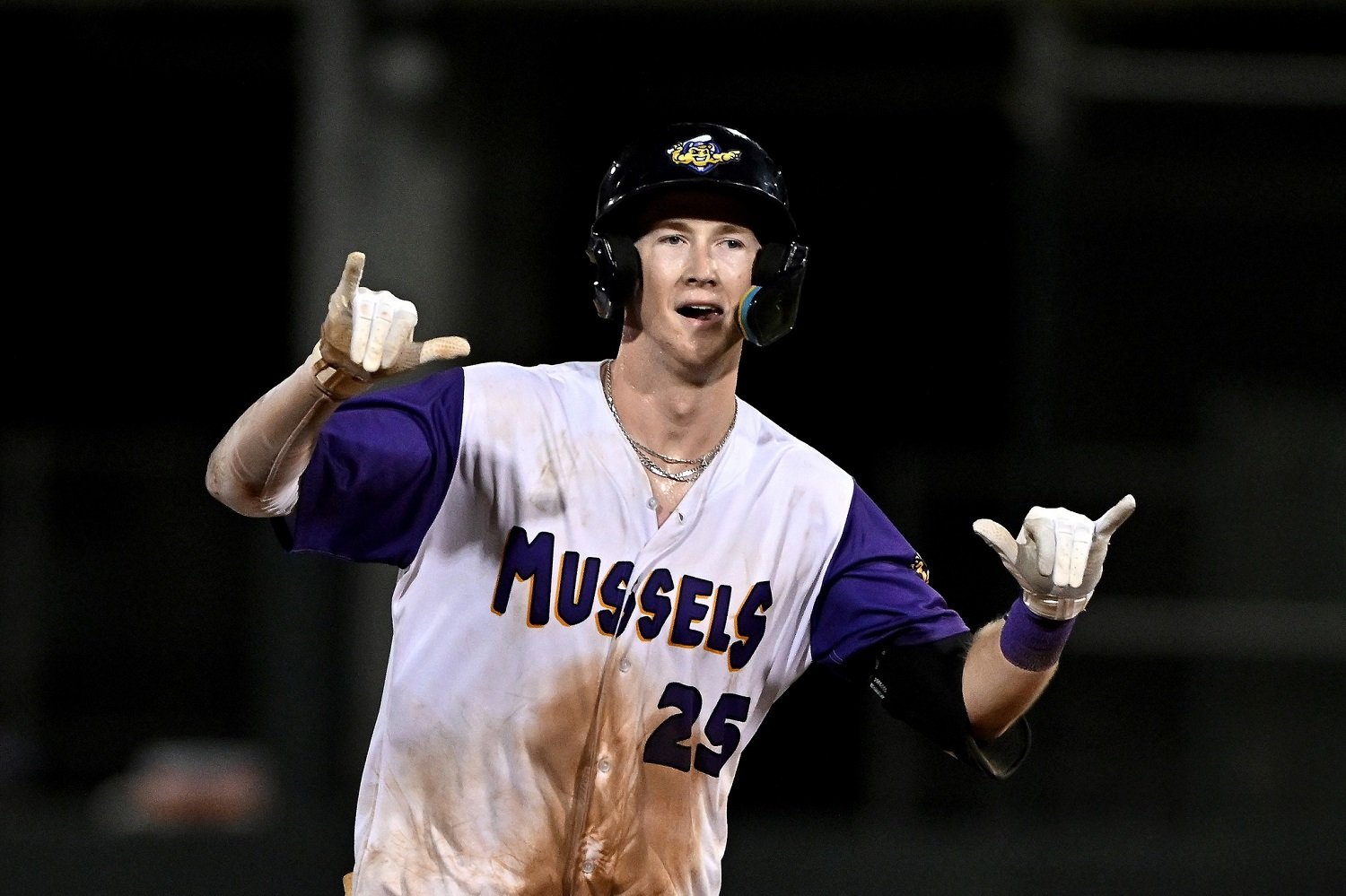 Handed an overslot $1.5 million in the third round of the 2023 draft, the 6-foot-6 Brandon Winokur allowed the Twins to lure him away from UCLA. He made his pro debut in the Florida Complex League. Built like a svelte Ben Roethlisberger, Winokur represents something of a departure from Minnesota’s typical modus operandi regarding drafted position players. The Brooks Lees of the world—those more nimble and agile—have little in common with Winokur, who often makes his professional teammates look like Little Leaguers and brings a Matt Wallner-like presence in the batter’s box. Don’t think his size slows him down; Winokur can haul ass with the best of them, running the bases with uncommon grace for a human tree. That’s perhaps unsurprising, given that he modeled his game after Mike Trout. As you may predict, his rawness and size have so far resulted in an elevated strikeout risk, which is always a concern for a player his size. “While he’s shown all-fields power in Fort Myers and has even flashed an ability to square up fastballs around his hands (a rarity for such a long-levered hitter),” writes Eric Longenhagen, “Winokur is struggling to recognize spin and has a 17% swinging strike rate as of list publication (Jun. 25, 2024).” Just three qualified hitters—Ezequiel Tovar, Ceddanne Rafaela, and Zack Gelof—topped that mark in MLB in 2024. That’s not a collection of certified killers, although, players like Teoscar Hernández, Brent Rooker, and Nick Castellanos have proven that a high whiff rate can play. That’s the calling card for Winokur: power. Show me another 19-year-old who can hit a ball 440+ feet. They’re a rare breed. He possesses the kind of tantalizing power potential that can turn games on their head—and turn people’s heads, as they watch a blast sail deep into the night. The Twins have taken an extremely open-minded approach to Winokur’s defensive development. He’s played the most at two of the most critical positions, shortstop and center field. We’re now solidly in the post-Ripken era of shortstop thinking, so having a big man manning that position is far from unusual, but even so, Winokur, at 19, has two inches and 10 pounds on the Hall of Famer. He’s built more like Elly De La Cruz, and he still has time to grow. “The Twins have been pleasantly surprised with how well he’s moved on the dirt, and they aren’t ruling out that he plays shortstop for longer than anyone anticipated,” says his writeup on MLB.com. Still, it seems inevitable that he’ll become a third baseman, corner outfielder, and occasional center fielder in the mold of Joey Gallo, where he should be perfectly adroit. It never hurts to let him cut his teeth at such a crucial position, though, and Minnesota has a few years before they need to decide his home, anyway. For all the hoopla surrounding Winokur’s talent and boom-or-bust profile, his numbers for the Mighty Mussels were simply pretty good—barely dramatic in shape. He slashed .249/.327/.434 across 411 plate appearances, good for a 116 wRC+ in the damp Florida State League. Perhaps most exciting is that he wasn’t your traditional stationary slugger: Winokur swiped 23 bases while only being caught six times (that’s a 79% success rate for those not blessed with Bert Blyleven’s California math). The strikeouts were a touch high—he struck out 28% of the time—but that isn’t an unthinkable rate; 12 qualified FSL hitters whiffed more often. Heck, the aforementioned Wallner almost struck out as often as a 21-year-old there just five years ago. To put it plainly, there aren’t many players in the Twins system with a higher ceiling than Winokur. If everything comes together—if he goes supernova and reaches that tantalizing potential—he could be a force Target Field simply has yet to see. Speed, power, and defense at a key position is a hell of a combination. There’s no guarantee we see that future, but it remains solidly in the cards, and that’s why Winokur comes in as our 7th-ranked prospect heading into 2025.
 -
One of the best pure athletes in the Minnesota Twins system comes in seventh in our offseason prospect ranking. Image courtesy of William Parmeter Handed an overslot $1.5 million in the third round of the 2023 draft, the 6-foot-6 Brandon Winokur allowed the Twins to lure him away from UCLA. He made his pro debut in the Florida Complex League. Built like a svelte Ben Roethlisberger, Winokur represents something of a departure from Minnesota’s typical modus operandi regarding drafted position players. The Brooks Lees of the world—those more nimble and agile—have little in common with Winokur, who often makes his professional teammates look like Little Leaguers and brings a Matt Wallner-like presence in the batter’s box. Don’t think his size slows him down; Winokur can haul ass with the best of them, running the bases with uncommon grace for a human tree. That’s perhaps unsurprising, given that he modeled his game after Mike Trout. As you may predict, his rawness and size have so far resulted in an elevated strikeout risk, which is always a concern for a player his size. “While he’s shown all-fields power in Fort Myers and has even flashed an ability to square up fastballs around his hands (a rarity for such a long-levered hitter),” writes Eric Longenhagen, “Winokur is struggling to recognize spin and has a 17% swinging strike rate as of list publication (Jun. 25, 2024).” Just three qualified hitters—Ezequiel Tovar, Ceddanne Rafaela, and Zack Gelof—topped that mark in MLB in 2024. That’s not a collection of certified killers, although, players like Teoscar Hernández, Brent Rooker, and Nick Castellanos have proven that a high whiff rate can play. That’s the calling card for Winokur: power. Show me another 19-year-old who can hit a ball 440+ feet. They’re a rare breed. He possesses the kind of tantalizing power potential that can turn games on their head—and turn people’s heads, as they watch a blast sail deep into the night. The Twins have taken an extremely open-minded approach to Winokur’s defensive development. He’s played the most at two of the most critical positions, shortstop and center field. We’re now solidly in the post-Ripken era of shortstop thinking, so having a big man manning that position is far from unusual, but even so, Winokur, at 19, has two inches and 10 pounds on the Hall of Famer. He’s built more like Elly De La Cruz, and he still has time to grow. “The Twins have been pleasantly surprised with how well he’s moved on the dirt, and they aren’t ruling out that he plays shortstop for longer than anyone anticipated,” says his writeup on MLB.com. Still, it seems inevitable that he’ll become a third baseman, corner outfielder, and occasional center fielder in the mold of Joey Gallo, where he should be perfectly adroit. It never hurts to let him cut his teeth at such a crucial position, though, and Minnesota has a few years before they need to decide his home, anyway. For all the hoopla surrounding Winokur’s talent and boom-or-bust profile, his numbers for the Mighty Mussels were simply pretty good—barely dramatic in shape. He slashed .249/.327/.434 across 411 plate appearances, good for a 116 wRC+ in the damp Florida State League. Perhaps most exciting is that he wasn’t your traditional stationary slugger: Winokur swiped 23 bases while only being caught six times (that’s a 79% success rate for those not blessed with Bert Blyleven’s California math). The strikeouts were a touch high—he struck out 28% of the time—but that isn’t an unthinkable rate; 12 qualified FSL hitters whiffed more often. Heck, the aforementioned Wallner almost struck out as often as a 21-year-old there just five years ago. To put it plainly, there aren’t many players in the Twins system with a higher ceiling than Winokur. If everything comes together—if he goes supernova and reaches that tantalizing potential—he could be a force Target Field simply has yet to see. Speed, power, and defense at a key position is a hell of a combination. There’s no guarantee we see that future, but it remains solidly in the cards, and that’s why Winokur comes in as our 7th-ranked prospect heading into 2025. View full article
-
The big man from North Carolina has developed into a reliable starting pitcher. Might that entice another club to come calling in the offseason? What’s up with Bailey Ober? More of the same. This season was the prototypical Bailey Ober campaign: 31 starts of roughly above-average competence, with almost yawn-inducing consistency. He set a career high in innings pitched, missing just one start on his way to a 3.91 ERA and 191 strikeouts. Being a starting pitcher who can reach the fifth inning without evaporating into a fine mist, just about every team in baseball could use a hurler like him. The case for trading Bailey Ober: Hey, man, it’s tough to find starters these days. Most rotations are shaky when the season starts and in complete disarray by August. Pitchers who can chalk up around 180 frames—close to the new gold standard for a starter—are mighty valuable commodities, even if that production is simply fine, not outstanding. The Astros just handed the Blue Jays a haul for half a season of Yusei Kikuchi, for goodness's sake. Minnesota would certainly get more for a younger, better hurler with more years of team control. This moment is when he’s most valuable; he’s in arbitration now. He’ll never be cheaper than today. Each year will creep the Twins’ payroll a few million bucks higher, a grave consideration for a team looking to trim fat for a potential sale. This move would be more akin to Tampa’s ethos regarding starters: next year’s model needs to be here sooner than you think. The Rays have made a habit of developing awesome starters—turning them into real fire-breathing aces—just to flip them for a package surrounding a highly-touted pitching prospect. Then that player becomes an All-Star... and gets traded. So it goes. Dealing away Ober could help solve Minnesota’s vague, esoteric problems. No area is a certain weakness, but there’s little they do exceptionally well. There’s a reason why they finished one game above .500. Their talent isn’t bad, per se, just unrealized: how much are you willing to trust guys like David Festa and Brooks Lee at the moment? They need to understand their young players better, and potentially adding to that pool would hedge their bets, shouldering the burden currently placed on their youngsters. Comparable trades of the past: Any of the Rays’ trades from the last few years—say Chris Archer, Blake Snell, or Tyler Glasnow—come to mind, although those three pitchers held more clout than Ober. An almost perfect comparison is the Dylan Cease trade that brought him to San Diego. Cease has a career ERA .01 lower than Ober's, but he was traded with just two remaining years of team control. He was also just one season removed from a 2nd place finish in the AL Cy Young race, and he seems like the kind of pitcher who should be better than he was for Chicago. Ober, the touch-and-feel soft-tosser, will always be met with more skepticism. Hey, blame modern baseball’s decision-makers. A better stylistic comp for Ober and a better encapsulation of the possible value proposition here might be Jameson Taillon, whom the Pirates traded to the Yankees with two years of team control remaining in Jan. 2021. Taillon had injury question marks attached to him at the time, and Ober has an extra year of team control left, so if the Twins do pull the trigger on any move, it should be at a slightly higher price tag than that one. Taillon fetched four prospects, though they were all fairly low-wattage guys. Potential trade partners: Realistically, every team in prospective playoff contention should be interested in Ober. We all saw how ugly it got for some teams in the postseason: Nearly every Game 3 or 4 was a nightmare barrage of relievers, as managers attempted to bandage a wound with an endless supply of guys who throw 96 with a slider. It can get bad, especially with just an injury or two. Expect some notable teams to be curious about Ober. Conclusion: The Twins have a valuable asset in Ober. The league-wide dearth of decent starting pitching elevates his place in the market. Minnesota has yet to truly dive into the waters of hyper-efficient baseball—the kinds of strategies employed by teams like the Brewers and Guardians, who keep their roster in a constant state of churn and flux, save one or two stars—but with a new GM and a new owner potentially on the horizon, that could change. It would be a risk to deal Ober, but maybe that’s what the team needs to get over the hump. View full article
-
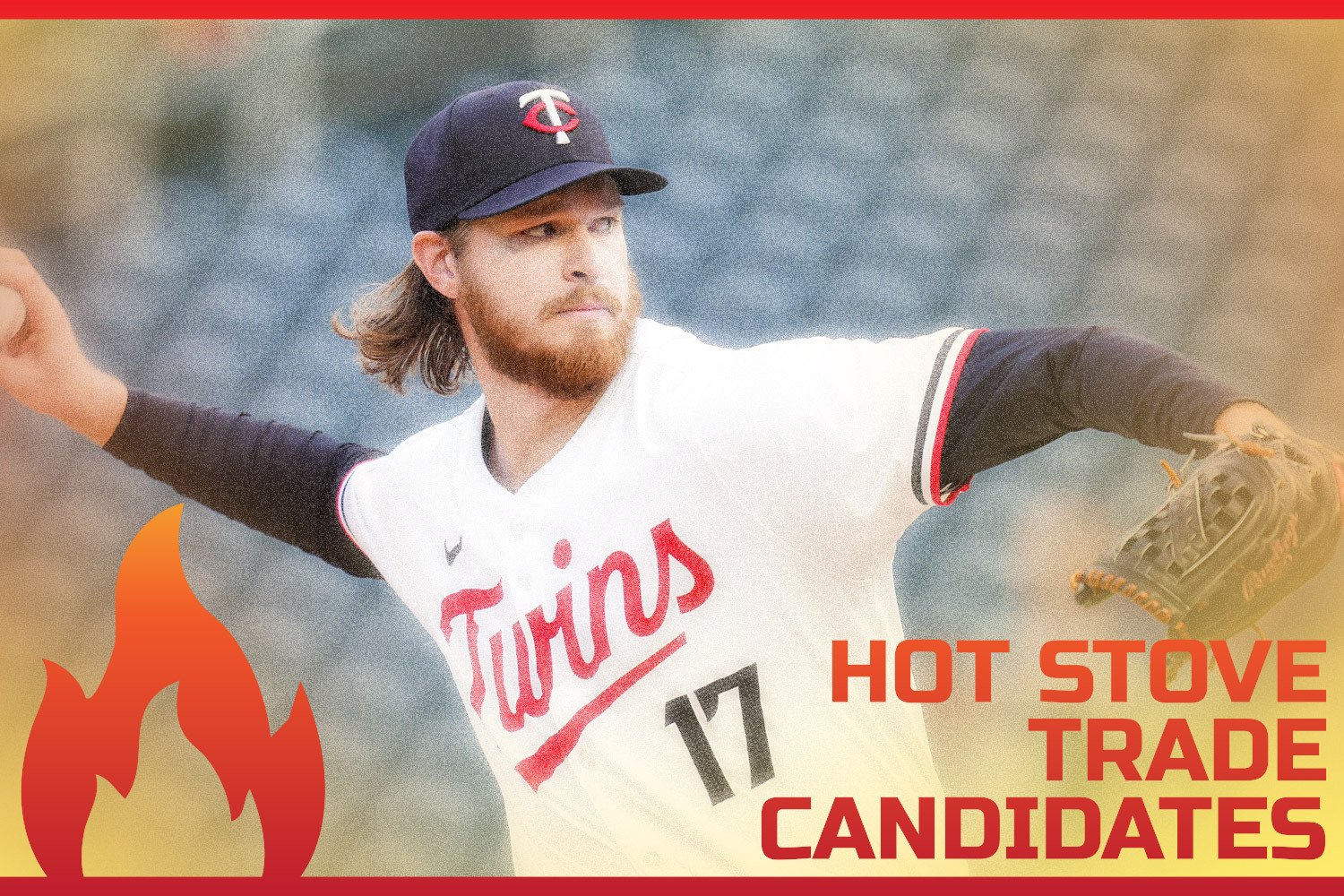 What’s up with Bailey Ober? More of the same. This season was the prototypical Bailey Ober campaign: 31 starts of roughly above-average competence, with almost yawn-inducing consistency. He set a career high in innings pitched, missing just one start on his way to a 3.91 ERA and 191 strikeouts. Being a starting pitcher who can reach the fifth inning without evaporating into a fine mist, just about every team in baseball could use a hurler like him. The case for trading Bailey Ober: Hey, man, it’s tough to find starters these days. Most rotations are shaky when the season starts and in complete disarray by August. Pitchers who can chalk up around 180 frames—close to the new gold standard for a starter—are mighty valuable commodities, even if that production is simply fine, not outstanding. The Astros just handed the Blue Jays a haul for half a season of Yusei Kikuchi, for goodness's sake. Minnesota would certainly get more for a younger, better hurler with more years of team control. This moment is when he’s most valuable; he’s in arbitration now. He’ll never be cheaper than today. Each year will creep the Twins’ payroll a few million bucks higher, a grave consideration for a team looking to trim fat for a potential sale. This move would be more akin to Tampa’s ethos regarding starters: next year’s model needs to be here sooner than you think. The Rays have made a habit of developing awesome starters—turning them into real fire-breathing aces—just to flip them for a package surrounding a highly-touted pitching prospect. Then that player becomes an All-Star... and gets traded. So it goes. Dealing away Ober could help solve Minnesota’s vague, esoteric problems. No area is a certain weakness, but there’s little they do exceptionally well. There’s a reason why they finished one game above .500. Their talent isn’t bad, per se, just unrealized: how much are you willing to trust guys like David Festa and Brooks Lee at the moment? They need to understand their young players better, and potentially adding to that pool would hedge their bets, shouldering the burden currently placed on their youngsters. Comparable trades of the past: Any of the Rays’ trades from the last few years—say Chris Archer, Blake Snell, or Tyler Glasnow—come to mind, although those three pitchers held more clout than Ober. An almost perfect comparison is the Dylan Cease trade that brought him to San Diego. Cease has a career ERA .01 lower than Ober's, but he was traded with just two remaining years of team control. He was also just one season removed from a 2nd place finish in the AL Cy Young race, and he seems like the kind of pitcher who should be better than he was for Chicago. Ober, the touch-and-feel soft-tosser, will always be met with more skepticism. Hey, blame modern baseball’s decision-makers. A better stylistic comp for Ober and a better encapsulation of the possible value proposition here might be Jameson Taillon, whom the Pirates traded to the Yankees with two years of team control remaining in Jan. 2021. Taillon had injury question marks attached to him at the time, and Ober has an extra year of team control left, so if the Twins do pull the trigger on any move, it should be at a slightly higher price tag than that one. Taillon fetched four prospects, though they were all fairly low-wattage guys. Potential trade partners: Realistically, every team in prospective playoff contention should be interested in Ober. We all saw how ugly it got for some teams in the postseason: Nearly every Game 3 or 4 was a nightmare barrage of relievers, as managers attempted to bandage a wound with an endless supply of guys who throw 96 with a slider. It can get bad, especially with just an injury or two. Expect some notable teams to be curious about Ober. Conclusion: The Twins have a valuable asset in Ober. The league-wide dearth of decent starting pitching elevates his place in the market. Minnesota has yet to truly dive into the waters of hyper-efficient baseball—the kinds of strategies employed by teams like the Brewers and Guardians, who keep their roster in a constant state of churn and flux, save one or two stars—but with a new GM and a new owner potentially on the horizon, that could change. It would be a risk to deal Ober, but maybe that’s what the team needs to get over the hump.
 -
Welcome to the Twins Daily Top 20 Prospects countdown for the 2024-25 offseason. Today, we'll highlight a quartet of international hitters and an infielder with potential 30-homer pop. Image courtesy of William Parmeter (photo of Yasser Mercedes) After looking at the 10 players who landed just outside our Top 20, we now turn to five who just made it. Here are our Twins prospects ranked 16-20. 20. Ricardo Olivar - C/OF For a 20th-ranked prospect, Olivar is an awfully fascinating player. Deemed “underrated” by Cody Christie, the 23-year-old Venezuelan mostly splits time between catcher and left field and has occasionally moonlighted as a center fielder and second baseman. Even by today’s super-utility “do-everything” standards, that’s a unique combination. Daulton Varsho couldn’t live that life for long. Dale Murphy quit catching after his age-23 season. Could Olivar be the rare exception? Eric Longenhagen is skeptical, but the potential is tantalizing. Regardless of where he claims a defensive home, Olivar’s offensive upside buoys his prospect profile. He flashed impressive plate discipline in two shortened seasons at the beginning of his pro career before hammering home a critical point the last two years: he doesn’t chase. Won’t do it. He’s walked over 100 times combined between 2023 and 2024, and maintained a modest strikeout rate to boot. Olivar slashed a blistering .287/.393/.473 with Cedar Rapids before earning a late-season promotion to Wichita. He struggled in a small sample but was two years younger than the average player at Double-A; he’ll likely be fine. And today, he clocks in as our 20th-ranked prospect heading into the offseason. 19. Eduardo Beltre - OF Ranked as the 39th overall international prospect available in 2024 by MLB Pipeline, Beltre broke through as a true 17-year-old in the DSL (he didn’t turn 18 until last month). He cracked 11 homers across 43 games in an outstanding introduction to pro ball. He slugged .618. As a 17-year-old. That kind of production brought back memories of Yasser Mercedes (more on him soon) and Jose Rodriguez in 2022; maybe 2024 will catapult Beltre onto a similar prospect path as Mercedes. DSL production is Mickey Mouse, though—you’d have better luck predicting a presidential race based on polls done exclusively on cracked-out squirrels—which is why Beltre remains in the back end of this prospect list. Still, you would be wise to remember his name heading into 2025. 18. Danny De Andrade - INF The prize of the 2021 international signing period—the Twins handed him a $2.2 million bonus—De Andrade has been solid so far. Not outstanding or bad; simply good enough to rise through the minors at a decent pace. He slashed .244/.354/.396 with the Mighty Mussels in 2023 before suffering an ankle injury early in 2024, limiting him to just 29 games with the Kernels. He hit more or less the same before being sent to the AFL, where he has yet to play any games. Being an infielder, De Andrade’s value rests on one question: can he play shortstop? He’s an instincts-over-athleticism defender who’s seen time at 2nd and 3rd but remains firmly entrenched at short. Perhaps (though only perhaps) that's a sign that Minnesota remains optimistic about his long-term future there. Or, maybe they figure there’s no harm in letting him play there until it’s abundantly clear he can’t pick it. At any rate, De Andrade has shown consistent production in the low minors, separating him early from your typical international burnout. 17. Tanner Schobel, IF Schobel’s prospect stock has seen better days. The Virginia Polytechnic Institute and State University (alma mater of Joe Saunders and Kerry Carpenter) product bopped 14 homers in 77 games with the Kernels in 2023 before earning a promotion to Wichita. He hit a wall there: he only swatted two homers across 49 games at Double-A, and his slugging dropped nearly 200 points. This season was a small rebound for the 23-year-old, but it still wasn’t pretty; Schobel managed a .211/.301/.338 slash line in 520 plate appearances with the Wind Surge. Any infielder who can average a near 30-homer pace for any stretch of play, though, will remain in prospect raters' minds. Schobel is mostly a third baseman these days, even as the team gave him some outfield playing time for the first time in his recorded life, but he can man second quite well and will cover shortstop at times. Whether his bat bounces back will determine just how bright of a future he has in the majors; we rank him as the team’s 17th-best prospect. 16. Yasser Mercedes - OF As mentioned earlier, Mercedes broke out in 2022 by slashing .355/.420/.555 while stealing 30 (!!!) bases in 41 games at the DSL. That’s Rickey Henderson stuff. He then struggled mightily Stateside in 2023 while nursing a shoulder issue. A $1.7-million man from the 2022 international class, Mercedes bounced back in 2024 to slash .331/.421/.568 with the FCL Twins while showcasing more tools than a Lowe’s. In a system with plenty of boom-or-bust athletes, Mercedes may be just behind Emmanuel Rodriguez in terms of pure athletic talents; he could very well settle in as a prototypical strong-armed right fielder capable of doing things on a baseball field only a select few individuals can accomplish. The soon-to-be 20-year-old is an ultra-exciting player, and we ranked him as the 16th-best prospect in the system. Final thoughts: I'm unsure of the last time the Twins had so many notable young international players in their farm system. Maybe it's serendipity, or perhaps the organization has recently improved in identifying Latin talent, but one thing is clear: this is a high-variance group. Just two players, Olivar and Schobel, have reached Double-A. Mercedes has played 10 games above Rookie ball, Beltre has yet to play Stateside, and De Andrade has made all of 117 plate appearances with the Kernels. There's a good chance all of these players will fall off in 2025, and there's a good chance they all improve; we're simply too early in their pro careers to understand them well. Of this group, Mercedes is easily my favorite. A less disciplined writer may be inclined to intoxicate themselves with hype and compare him to a young Julio Rodríguez. I won't go that far, but something about his madman baserunner ethos excites me; the team has yearned for players in that vein for years. Olivar is a close second, with his potential as a catcher/outfielder hybrid standing utterly unique in the baseball landscape. View full article
- 24 replies
-
- 1
-
-
- ricardo olivar
- eduardo beltre
- (and 3 more)
-
Twins Daily's Top 20 Minnesota Twins Prospects: #20-#16
Matt Braun posted an article in Minor Leagues
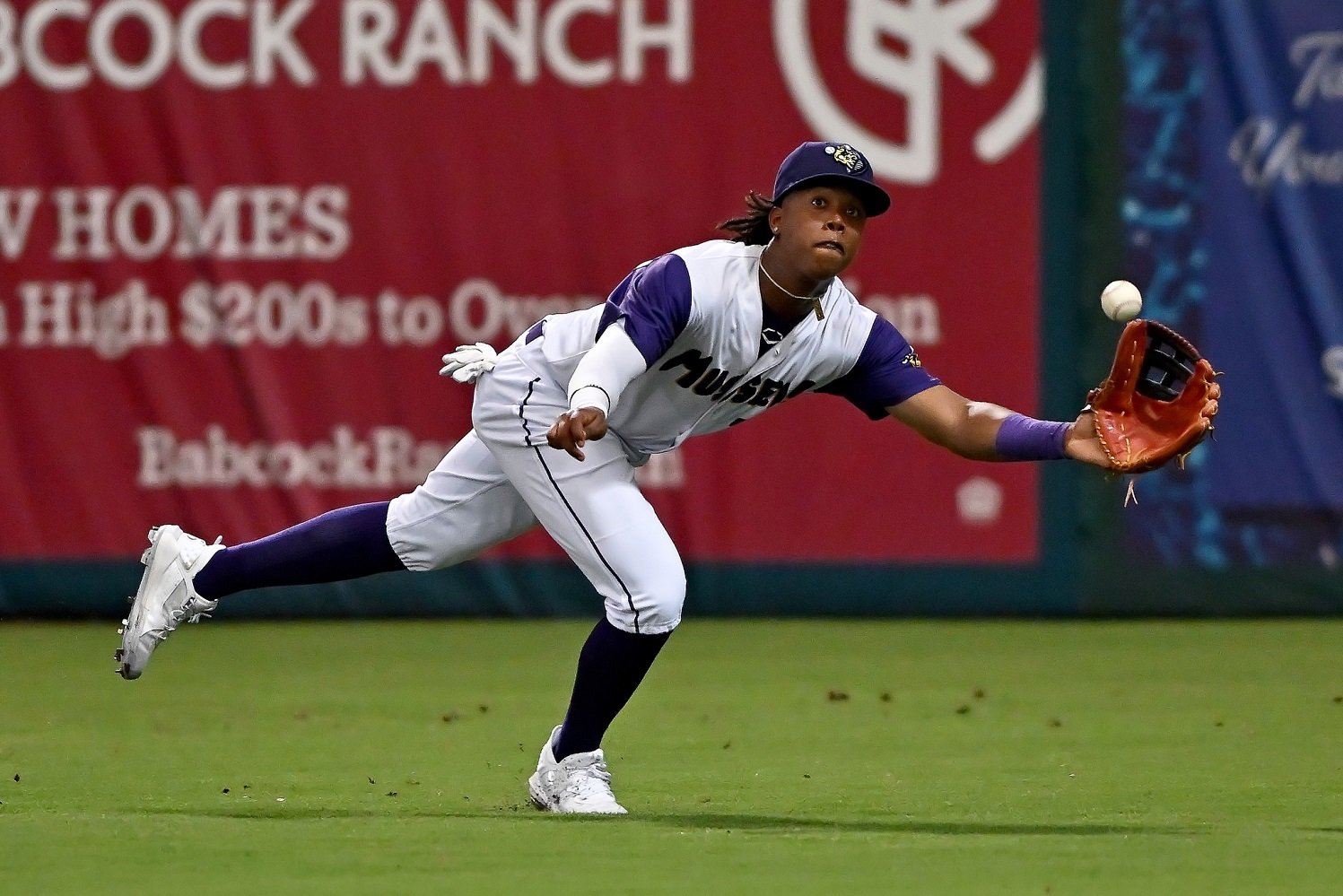 After looking at the 10 players who landed just outside our Top 20, we now turn to five who just made it. Here are our Twins prospects ranked 16-20. 20. Ricardo Olivar - C/OF For a 20th-ranked prospect, Olivar is an awfully fascinating player. Deemed “underrated” by Cody Christie, the 23-year-old Venezuelan mostly splits time between catcher and left field and has occasionally moonlighted as a center fielder and second baseman. Even by today’s super-utility “do-everything” standards, that’s a unique combination. Daulton Varsho couldn’t live that life for long. Dale Murphy quit catching after his age-23 season. Could Olivar be the rare exception? Eric Longenhagen is skeptical, but the potential is tantalizing. Regardless of where he claims a defensive home, Olivar’s offensive upside buoys his prospect profile. He flashed impressive plate discipline in two shortened seasons at the beginning of his pro career before hammering home a critical point the last two years: he doesn’t chase. Won’t do it. He’s walked over 100 times combined between 2023 and 2024, and maintained a modest strikeout rate to boot. Olivar slashed a blistering .287/.393/.473 with Cedar Rapids before earning a late-season promotion to Wichita. He struggled in a small sample but was two years younger than the average player at Double-A; he’ll likely be fine. And today, he clocks in as our 20th-ranked prospect heading into the offseason. 19. Eduardo Beltre - OF Ranked as the 39th overall international prospect available in 2024 by MLB Pipeline, Beltre broke through as a true 17-year-old in the DSL (he didn’t turn 18 until last month). He cracked 11 homers across 43 games in an outstanding introduction to pro ball. He slugged .618. As a 17-year-old. That kind of production brought back memories of Yasser Mercedes (more on him soon) and Jose Rodriguez in 2022; maybe 2024 will catapult Beltre onto a similar prospect path as Mercedes. DSL production is Mickey Mouse, though—you’d have better luck predicting a presidential race based on polls done exclusively on cracked-out squirrels—which is why Beltre remains in the back end of this prospect list. Still, you would be wise to remember his name heading into 2025. 18. Danny De Andrade - INF The prize of the 2021 international signing period—the Twins handed him a $2.2 million bonus—De Andrade has been solid so far. Not outstanding or bad; simply good enough to rise through the minors at a decent pace. He slashed .244/.354/.396 with the Mighty Mussels in 2023 before suffering an ankle injury early in 2024, limiting him to just 29 games with the Kernels. He hit more or less the same before being sent to the AFL, where he has yet to play any games. Being an infielder, De Andrade’s value rests on one question: can he play shortstop? He’s an instincts-over-athleticism defender who’s seen time at 2nd and 3rd but remains firmly entrenched at short. Perhaps (though only perhaps) that's a sign that Minnesota remains optimistic about his long-term future there. Or, maybe they figure there’s no harm in letting him play there until it’s abundantly clear he can’t pick it. At any rate, De Andrade has shown consistent production in the low minors, separating him early from your typical international burnout. 17. Tanner Schobel, IF Schobel’s prospect stock has seen better days. The Virginia Polytechnic Institute and State University (alma mater of Joe Saunders and Kerry Carpenter) product bopped 14 homers in 77 games with the Kernels in 2023 before earning a promotion to Wichita. He hit a wall there: he only swatted two homers across 49 games at Double-A, and his slugging dropped nearly 200 points. This season was a small rebound for the 23-year-old, but it still wasn’t pretty; Schobel managed a .211/.301/.338 slash line in 520 plate appearances with the Wind Surge. Any infielder who can average a near 30-homer pace for any stretch of play, though, will remain in prospect raters' minds. Schobel is mostly a third baseman these days, even as the team gave him some outfield playing time for the first time in his recorded life, but he can man second quite well and will cover shortstop at times. Whether his bat bounces back will determine just how bright of a future he has in the majors; we rank him as the team’s 17th-best prospect. 16. Yasser Mercedes - OF As mentioned earlier, Mercedes broke out in 2022 by slashing .355/.420/.555 while stealing 30 (!!!) bases in 41 games at the DSL. That’s Rickey Henderson stuff. He then struggled mightily Stateside in 2023 while nursing a shoulder issue. A $1.7-million man from the 2022 international class, Mercedes bounced back in 2024 to slash .331/.421/.568 with the FCL Twins while showcasing more tools than a Lowe’s. In a system with plenty of boom-or-bust athletes, Mercedes may be just behind Emmanuel Rodriguez in terms of pure athletic talents; he could very well settle in as a prototypical strong-armed right fielder capable of doing things on a baseball field only a select few individuals can accomplish. The soon-to-be 20-year-old is an ultra-exciting player, and we ranked him as the 16th-best prospect in the system. Final thoughts: I'm unsure of the last time the Twins had so many notable young international players in their farm system. Maybe it's serendipity, or perhaps the organization has recently improved in identifying Latin talent, but one thing is clear: this is a high-variance group. Just two players, Olivar and Schobel, have reached Double-A. Mercedes has played 10 games above Rookie ball, Beltre has yet to play Stateside, and De Andrade has made all of 117 plate appearances with the Kernels. There's a good chance all of these players will fall off in 2025, and there's a good chance they all improve; we're simply too early in their pro careers to understand them well. Of this group, Mercedes is easily my favorite. A less disciplined writer may be inclined to intoxicate themselves with hype and compare him to a young Julio Rodríguez. I won't go that far, but something about his madman baserunner ethos excites me; the team has yearned for players in that vein for years. Olivar is a close second, with his potential as a catcher/outfielder hybrid standing utterly unique in the baseball landscape.
- 24 comments
-
- 6
-
-
- ricardo olivar
- eduardo beltre
- (and 3 more)
-
Lessons from the Division Winners, Pt. 2: ABC, Always Be Churning (Relievers)
Matt Braun posted an article in Twins
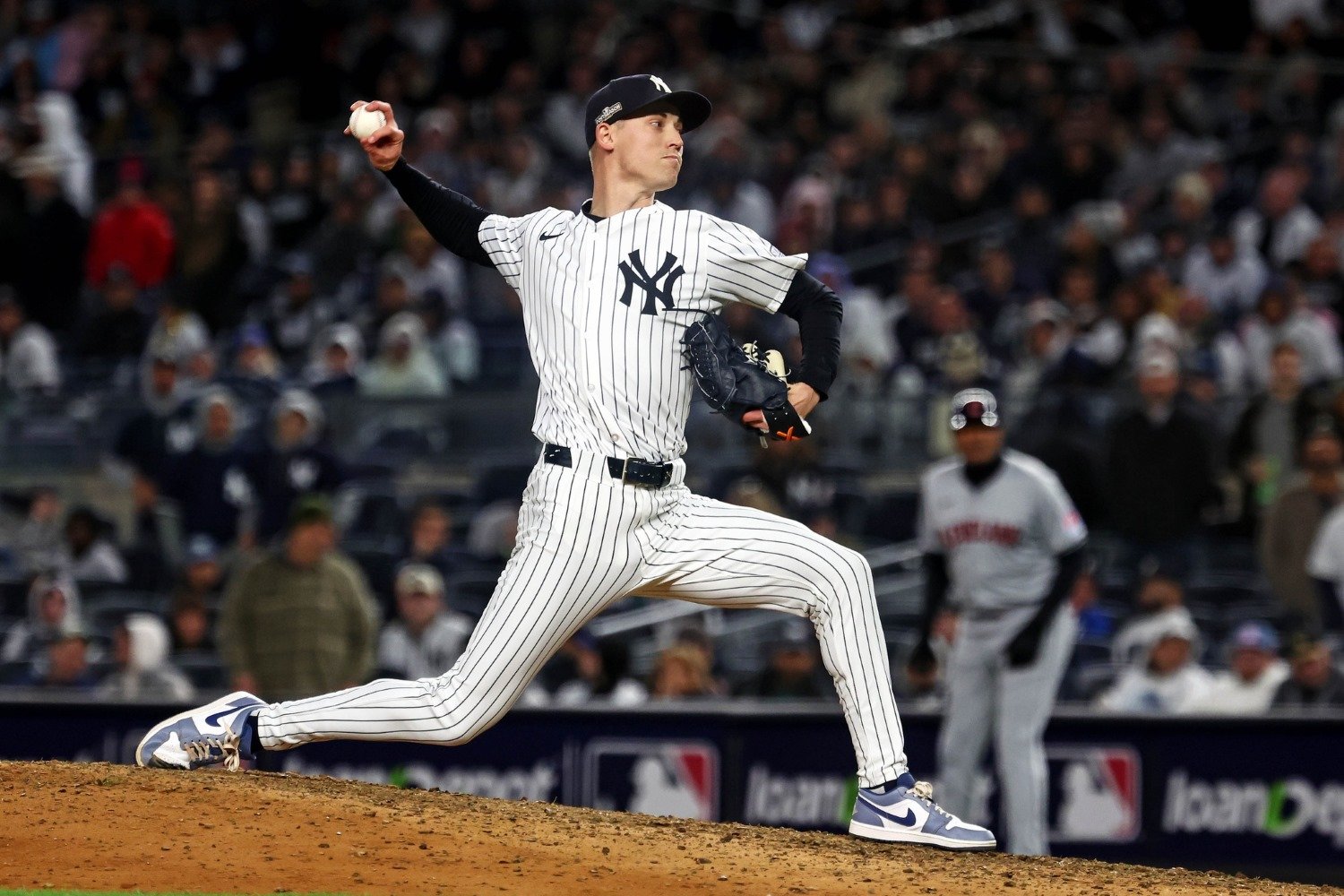 While watching Game 1 of the World Series, it struck me how many relievers on both teams were essentially robbed from other franchises. New York’s first choice out of the bullpen was Clay Holmes, acquired from the Pirates in 2021 (for Diego A. Castillo!) as a no-name 28-year-old with an ERA over 5; he became a multiple-time All-Star. The Dodgers countered with Anthony Banda, a man well-journeyed, finally breaking out in his eighth big-league season. Luke Weaver, Alex Vesia, Michael Kopech, all plucked from different teams, in trades that reflected either desperation or disinterest by the other side or on waivers. Nestor Cortes and Tommy Kahnle were the only relievers to pitch for the squad that initially drafted them, and even those guys trekked across the MLB landscape for years before returning home. It’s now apparent that the Twins have a weird problem with acquiring relievers. They can develop them—Taylor Rogers, Griffin Jax, and now Cole Sands have all flourished under the Falvey regime—but identifying capable major-league bullpen arms remains as foreign as the Mariana Trench, leaving the bullpen much too shallow. Since 2017, most of the best relief seasons have come from players who have only pitched for the Twins. The biggest exception was 2023 Emilio Pagán. That’s pretty much it. Brock Stewart would count, if he could ever stay healthy. They have shown a decent propensity for trading for non-big leaguers, like Jorge Alcalá and Jhoan Durán, turning both hurlers into quality bullpen arms. These moves exist in a strange nether where you could ostensibly argue the team did successfully pilfer another franchise, but dealing in minor leaguers is a slightly different game than handling those who have already pitched in the big leagues for a few years. They were trading once-valued members of a losing team when they got both Alcalá and Durán, meaning that the opportunity cost of getting those two was not acquiring some other prospects whose ceilings might have been higher. In the other realm, the one where the team looks over the major-league ranks for their next quality bullpen arm; the Twins have been dreadful. I’ve roughly counted 20 instances since 2017 in which the team—with the ethos of acquiring a buy-low reliever to potentially improve—dealt for, claimed off waivers, or selected such a player in the Rule 5 draft. These pitchers ranged from Justin Haley to Jhon Romero. Someone like Addison Reed—an established player—doesn't count. Out of all of them, the best result, yet again, was Pagán. The vast majority of cases flamed out terribly. I still have nightmares about Brandon Waddell. And maybe that’s just how the game works; you’ll never be perfect, after all. What makes it work for teams like the Yankees and Dodgers is that they’re constantly looking for the next breakout reliever. New York burned through seven or eight such players this year alone. If your pitching development is good enough, you will hit on at least a few pitchers each year. Ironically, two players excluded from my count—Jeff Hoffman and Dennis Santana—had great years in 2024: Hoffman as one of the many All-Stars in Philadelphia’s bullpen, and Santana as a middle-innings guy for the Pirates after they claimed him from the Yankees. Go figure. And two players who did count on my arbitrary list—Trevor Megill and Ian Hamilton—improved tremendously after the Twins jettisoned them from the roster. Megill served as the damn closer for the Brewers in Devin Williams's absence. Go figure. Look, dealing in relievers sucks. Consistency is an illusion in this realm. An adjustment or two—or just a few good or bad outings—can radically color perceptions of a player’s performance, turning them from a nobody into a star. I mean, the Yankees’ closer is Luke Weaver. Luke Weaver! On his 6th team! Entering the year with a career ERA over 5.00! How does anyone understand this sport? I hate concluding by saying the Twins simply need to be better in this aspect. Yet, it’s true; the franchises in the World Series owe no small part of their runs this month to their ability to find elite play from players otherwise thought to be incapable of such performance. Minnesota, however, has failed to find the same success, and they may want to follow the extreme quantity example set forth by the teams still playing competitive baseball.
- 9 comments
-
- 1
-
-
- emilio pagan
- clay holmes
- (and 3 more)
-
Coffee may be for closers, but how in the world do you find one? (Not coffee. The other thing.) Image courtesy of © Vincent Carchietta-Imagn Images While watching Game 1 of the World Series, it struck me how many relievers on both teams were essentially robbed from other franchises. New York’s first choice out of the bullpen was Clay Holmes, acquired from the Pirates in 2021 (for Diego A. Castillo!) as a no-name 28-year-old with an ERA over 5; he became a multiple-time All-Star. The Dodgers countered with Anthony Banda, a man well-journeyed, finally breaking out in his eighth big-league season. Luke Weaver, Alex Vesia, Michael Kopech, all plucked from different teams, in trades that reflected either desperation or disinterest by the other side or on waivers. Nestor Cortes and Tommy Kahnle were the only relievers to pitch for the squad that initially drafted them, and even those guys trekked across the MLB landscape for years before returning home. It’s now apparent that the Twins have a weird problem with acquiring relievers. They can develop them—Taylor Rogers, Griffin Jax, and now Cole Sands have all flourished under the Falvey regime—but identifying capable major-league bullpen arms remains as foreign as the Mariana Trench, leaving the bullpen much too shallow. Since 2017, most of the best relief seasons have come from players who have only pitched for the Twins. The biggest exception was 2023 Emilio Pagán. That’s pretty much it. Brock Stewart would count, if he could ever stay healthy. They have shown a decent propensity for trading for non-big leaguers, like Jorge Alcalá and Jhoan Durán, turning both hurlers into quality bullpen arms. These moves exist in a strange nether where you could ostensibly argue the team did successfully pilfer another franchise, but dealing in minor leaguers is a slightly different game than handling those who have already pitched in the big leagues for a few years. They were trading once-valued members of a losing team when they got both Alcalá and Durán, meaning that the opportunity cost of getting those two was not acquiring some other prospects whose ceilings might have been higher. In the other realm, the one where the team looks over the major-league ranks for their next quality bullpen arm; the Twins have been dreadful. I’ve roughly counted 20 instances since 2017 in which the team—with the ethos of acquiring a buy-low reliever to potentially improve—dealt for, claimed off waivers, or selected such a player in the Rule 5 draft. These pitchers ranged from Justin Haley to Jhon Romero. Someone like Addison Reed—an established player—doesn't count. Out of all of them, the best result, yet again, was Pagán. The vast majority of cases flamed out terribly. I still have nightmares about Brandon Waddell. And maybe that’s just how the game works; you’ll never be perfect, after all. What makes it work for teams like the Yankees and Dodgers is that they’re constantly looking for the next breakout reliever. New York burned through seven or eight such players this year alone. If your pitching development is good enough, you will hit on at least a few pitchers each year. Ironically, two players excluded from my count—Jeff Hoffman and Dennis Santana—had great years in 2024: Hoffman as one of the many All-Stars in Philadelphia’s bullpen, and Santana as a middle-innings guy for the Pirates after they claimed him from the Yankees. Go figure. And two players who did count on my arbitrary list—Trevor Megill and Ian Hamilton—improved tremendously after the Twins jettisoned them from the roster. Megill served as the damn closer for the Brewers in Devin Williams's absence. Go figure. Look, dealing in relievers sucks. Consistency is an illusion in this realm. An adjustment or two—or just a few good or bad outings—can radically color perceptions of a player’s performance, turning them from a nobody into a star. I mean, the Yankees’ closer is Luke Weaver. Luke Weaver! On his 6th team! Entering the year with a career ERA over 5.00! How does anyone understand this sport? I hate concluding by saying the Twins simply need to be better in this aspect. Yet, it’s true; the franchises in the World Series owe no small part of their runs this month to their ability to find elite play from players otherwise thought to be incapable of such performance. Minnesota, however, has failed to find the same success, and they may want to follow the extreme quantity example set forth by the teams still playing competitive baseball. View full article
-
Fernando Valenzuela Only Faced the Twins Twice—But He Made it Count
Matt Braun posted an article in History
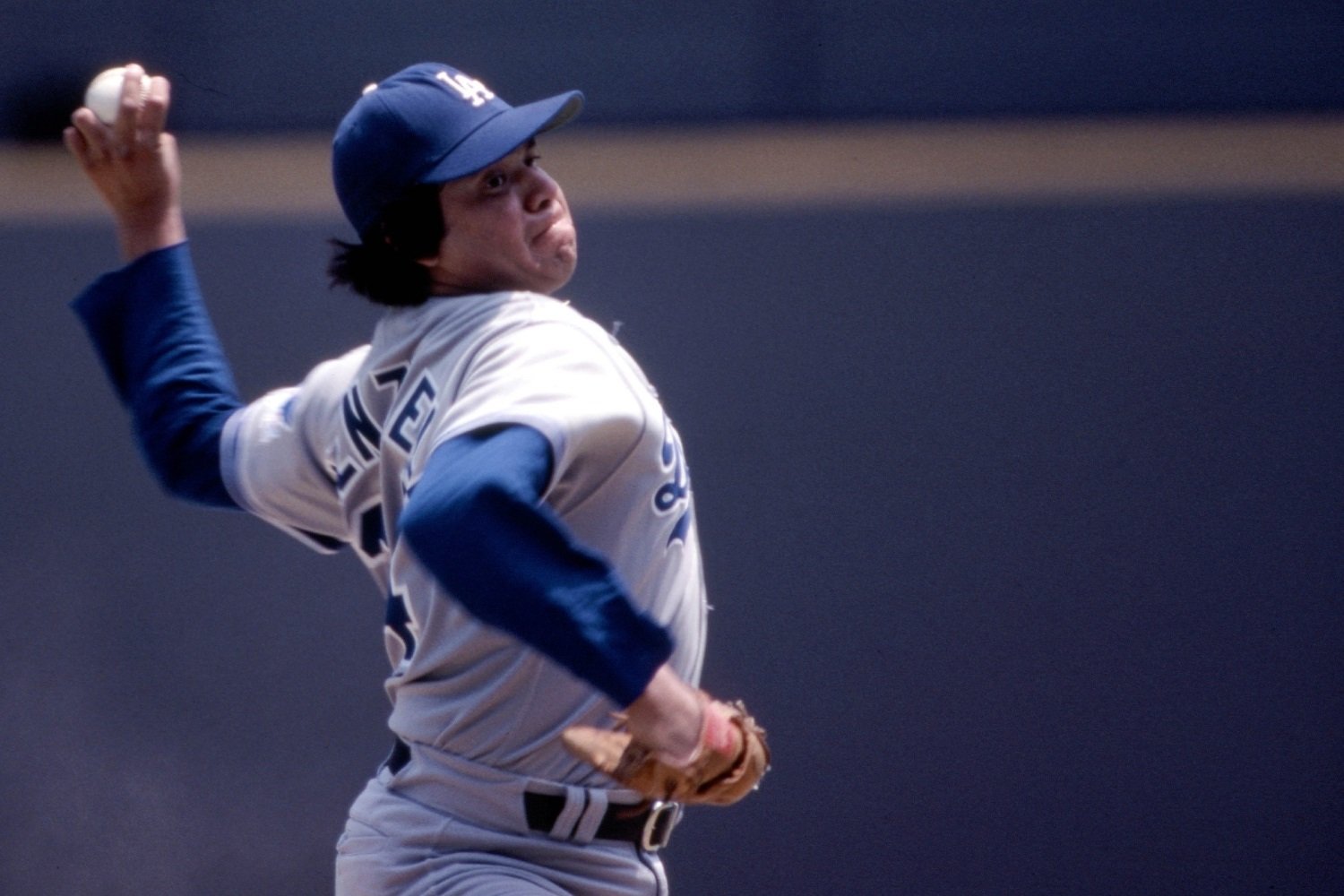 Twelve years after Fernando Valenzuela dazzled the NL as a 20-year-old, he found himself in a different league, donning a different uniform, giving off the aura of a different man. “Fernandomania” may as well have occurred a century before. Like many pitchers who come up young and rack up huge innings counts before their body fully matures, he had experienced a steep dropoff. The same characteristics that drove his stardom—the screwball and the immense workload—wore Valenzuela down, raising his walk rate and ERA as the years between his peak and his present piled up. The Dodgers no longer wanted him. The Angels didn’t care for him, either. Six years after finishing second in the NL Cy Young race, Valenzuela was pitching for Charros de Jalisco. For a pitcher as successful as he once was, it’s almost impossible to crash out of affiliated baseball, until it's certain there's nothing left in the tank. Valenzuela essentially did so in 1992. He signed with the Orioles before the 1993 season, with little guaranteed. He wasn’t even on the Spring Training roster. But Baltimore decided they could use one more starter, so Valenzuela, once lost in the spring shuffle, became a critical back-end piece for the competing club. The lefty's season started rough—his ERA was in double digits heading out of April—but he hung around and leveled off in May and June. He even shut out the Blue Jays on Jun. 30. On Jul. 18 in Baltimore, he faced a new opponent: the Twins. An extensive stay in the NL had shielded the then-32-year-old from the AL-based Minnesota club. They were as alien to him as pitching without spectacles. Just two years removed from a World Series title, the Twins were in a definite lull, a near-decade-long malaise that would keep the team a loser until 2001 and pose an existential threat to the franchise. Heroes like Kent Hrbek and Kirby Puckett remained, but the pitching staff—shaky even in good times—was a mess. Kevin Tapani and Scott Erickson regressed. Jack Morris was north of the border and on his last legs, anyway. Once the season concluded, only three teams claimed an ERA worse than the gang Minnesota assembled in 1993. All of that added up to a team that entered the match against Valenzuela and the Orioles at 37-52, stuck at the bottom of the AL West. Nonetheless, it was a gorgeous summer day, about 83 degrees at first pitch, and a Camden Yards bursting at the seams with fans watched Valenzuela turn back the clock in a complete-game effort against the Twins. Minnesota plated a pair of runs in the 2nd, snapping a 24 ⅔ scoreless inning streak for Valenzuela, but Eddie Guardado—a rookie hoping to help the team’s pitching woes—surrendered runs in the 1st, 5th, and 7th to give Baltimore plenty of breathing room. It would never be the Twins’ day: Orioles left fielder Brady Anderson robbed Shane Mack of a homer in the 4th, leaping high over the wall (since replaced by a much taller one, much farther from the plate) to snag an athletic out. "Fernando shut us down," said Twins manager Tom Kelly. "We just couldn't do anything with him." And just a few days later, Valenzuela would do it again. Facing off against Guardado again—this time on a Friday night in the Metrodome—the lefty one-upped himself, allowing a single run in yet another clobbering of the Twins. He “again mesmerized hitters with tantalizing screwballs and sawed off their bats with inside fastballs.” Minnesota clubbed a trio of doubles, two of which combined for their lone run, but were otherwise made toothless and impotent in the decisive win. The 2-3-4-5 run of Jeff Reboulet, Puckett, Dave Winfield, and Mack went 1-for-15. “He has this mystique of the screwball, but he doesn’t throw strikes with that pitch. He gets you out with the ‘cutter’ [a fastball that breaks in on right-handed hitters]. It’s a very effective pitch,” Kelly said following Valenzuela’s first complete game on the 18th. “He looks inviting to people and they get caught up in trying to hit home runs or drive the ball, when you should take it the other way.” It’s solid advice for a team that never saw Valenzuela again. The Twins were only a minor player in the lore of the late, great hurler, but they were a part of it, if only for a week in the summer of 1993. It's a testament to his legacy that, even in that late stage of his career, he could leave such an impression in such a brief exposure to a team.
 -
In 1993, the recently deceased legend hurled complete games against the Twins in back-to-back starts. Here's the story behind it. Image courtesy of © Malcolm Emmons-Imagn Images Twelve years after Fernando Valenzuela dazzled the NL as a 20-year-old, he found himself in a different league, donning a different uniform, giving off the aura of a different man. “Fernandomania” may as well have occurred a century before. Like many pitchers who come up young and rack up huge innings counts before their body fully matures, he had experienced a steep dropoff. The same characteristics that drove his stardom—the screwball and the immense workload—wore Valenzuela down, raising his walk rate and ERA as the years between his peak and his present piled up. The Dodgers no longer wanted him. The Angels didn’t care for him, either. Six years after finishing second in the NL Cy Young race, Valenzuela was pitching for Charros de Jalisco. For a pitcher as successful as he once was, it’s almost impossible to crash out of affiliated baseball, until it's certain there's nothing left in the tank. Valenzuela essentially did so in 1992. He signed with the Orioles before the 1993 season, with little guaranteed. He wasn’t even on the Spring Training roster. But Baltimore decided they could use one more starter, so Valenzuela, once lost in the spring shuffle, became a critical back-end piece for the competing club. The lefty's season started rough—his ERA was in double digits heading out of April—but he hung around and leveled off in May and June. He even shut out the Blue Jays on Jun. 30. On Jul. 18 in Baltimore, he faced a new opponent: the Twins. An extensive stay in the NL had shielded the then-32-year-old from the AL-based Minnesota club. They were as alien to him as pitching without spectacles. Just two years removed from a World Series title, the Twins were in a definite lull, a near-decade-long malaise that would keep the team a loser until 2001 and pose an existential threat to the franchise. Heroes like Kent Hrbek and Kirby Puckett remained, but the pitching staff—shaky even in good times—was a mess. Kevin Tapani and Scott Erickson regressed. Jack Morris was north of the border and on his last legs, anyway. Once the season concluded, only three teams claimed an ERA worse than the gang Minnesota assembled in 1993. All of that added up to a team that entered the match against Valenzuela and the Orioles at 37-52, stuck at the bottom of the AL West. Nonetheless, it was a gorgeous summer day, about 83 degrees at first pitch, and a Camden Yards bursting at the seams with fans watched Valenzuela turn back the clock in a complete-game effort against the Twins. Minnesota plated a pair of runs in the 2nd, snapping a 24 ⅔ scoreless inning streak for Valenzuela, but Eddie Guardado—a rookie hoping to help the team’s pitching woes—surrendered runs in the 1st, 5th, and 7th to give Baltimore plenty of breathing room. It would never be the Twins’ day: Orioles left fielder Brady Anderson robbed Shane Mack of a homer in the 4th, leaping high over the wall (since replaced by a much taller one, much farther from the plate) to snag an athletic out. "Fernando shut us down," said Twins manager Tom Kelly. "We just couldn't do anything with him." And just a few days later, Valenzuela would do it again. Facing off against Guardado again—this time on a Friday night in the Metrodome—the lefty one-upped himself, allowing a single run in yet another clobbering of the Twins. He “again mesmerized hitters with tantalizing screwballs and sawed off their bats with inside fastballs.” Minnesota clubbed a trio of doubles, two of which combined for their lone run, but were otherwise made toothless and impotent in the decisive win. The 2-3-4-5 run of Jeff Reboulet, Puckett, Dave Winfield, and Mack went 1-for-15. “He has this mystique of the screwball, but he doesn’t throw strikes with that pitch. He gets you out with the ‘cutter’ [a fastball that breaks in on right-handed hitters]. It’s a very effective pitch,” Kelly said following Valenzuela’s first complete game on the 18th. “He looks inviting to people and they get caught up in trying to hit home runs or drive the ball, when you should take it the other way.” It’s solid advice for a team that never saw Valenzuela again. The Twins were only a minor player in the lore of the late, great hurler, but they were a part of it, if only for a week in the summer of 1993. It's a testament to his legacy that, even in that late stage of his career, he could leave such an impression in such a brief exposure to a team. View full article
-
Read and rejoice in the best-performing rookies to grace the Twins in 2024. The end of the season ushers in many things—offseason predictions, complaining about how the year went, etc, etc, etc—and one of those great processions is our Awards voting. Yes, we, the writers at Twins Daily, gathered in a great session, only exiting when white smoke augured our shared agreement and correct opinions regarding the winners of our prestigious accolades. Or maybe we all sent an email to Seth. You’ll never know the truth. Today, we will tackle the Rookie of the Year honor. Somewhat distinguished in that a player only has one* chance to win it, the Rookie of the Year award acknowledges an individual who entered the season with fewer than 50 innings pitches, less than 130 at-bats, or fell short of a byzantine bylaw regarding time accrued on the Major-League roster. These players aren’t necessarily expected to make an impact, but sometimes they do—and this piece will spotlight and applaud the rookies who best influenced the 2024 Twins. *Ben Simmons stands as the exception. Honorable Mentions Brooks Lee You know who Brooks Lee is: since being taken 8th overall in the 2022 draft, Lee appeared earmarked for a future as a classic slick-fielding infielder, the kind of guy who accentuates the baseball-specific athletic prowess that intoxicates and hypnotizes fans. Plus, he could hit a little bit. And he was a switch-hitter. And his dad was a coach. What wasn’t to love? Lee arrived the day before the 4th of July and smacked the ball like Thomas Jefferson smacked King George III with the Declaration of Independence (I know it’s a stretch, but deal with it.) He had a hit in six straight games and was slashing .275/.329/.377 through his first 17 games. The prospect that was promised had arrived. That was the best of it, though, as Lee settled into a prolonged slump, got injured, and hit poorly in his September return. Still, that early July boost loomed large in our voter’s minds, and Lee earned an honorable mention on our list. Zebby Matthews Zebby! The man known as Daniel Zebulon Matthews was known far and wide amongst those select nerds who scoured minor league box scores and unearthed AA footage like a baseball Indiana Jones. An 8th-round pick in the same draft as Lee, Matthews blitzed through the minors. He rarely walked a batter, pounding the zone with surprisingly vibrant stuff for a strike-thrower. He was named the Twins minor league pitcher of the year for his incredible efforts. With a decimated starting rotation, the Twins gave Matthews the call on August 13th, and he answered with five quality frames against the playoff-bound Royals. Two more solid starts portended disaster: a two-inning, nine-run stinker against Toronto that could only be wiped away with a Hershiserian shutout streak. That did not come to pass, and—despite some seriously impressive starts—Matthews ended 2024 with a Major League ERA of 6.69. He’ll claim the final honorable mention of the list. #3. Austin Martin Expectations have been high for Austin Martin for nearly half a decade. A 5th overall pick out of Vanderbilt in 2020, Martin joined the Twins following the José Berríos trade in 2021, marking him as a potential star on a Minnesota squad sometime in the future. His path through the minors was tougher than expected—the power that was promised never came, and his contact-focused approach invited bountiful dry stretches—but Martin made the team out of spring training and stayed up for most of the season, accruing 257 plate appearances across 93 games. He slashed .253/.318/.352. Perhaps his strongest asset was something the team has dearly missed in recent years: baserunning. Martin is a madman on the diamond. He begets chaos and nonsense. His legs buoyed his ballpark-of-average bat and dreadful glove to become a passable ballplayer. We’ll see what’s next for the 25-year-old. #2. David Festa Much like Matthews, David Festa was a part of Minnesota’s “Oops, (almost) All Rookies!” starting rotation down the stretch. A 13th-round pick in 2021, Festa added muscle and velocity following his selection and made the jump from no-name later-round pick to legitimate prospect in 2022. The Twins promoted Festa in late June, and outside of a brief demotion in July, he stayed as a reliable contributor the rest of the way. Striking out 27.8% of batters, Festa worked to the tune of a 4.90 ERA spread across 64 1/3 innings. Brilliance struck at times—like when Festa worked six innings with just two earned runs against the Braves or when he held the Cubs scoreless over five frames—but the muck of inconsistency struck a little too often; his final four starts totaled 10 earned runs across 17 innings. Still, Festa flashed promise, and for his efforts, we voted to make him the 2nd place finisher in the Twins Rookie of the Year race. #1. Simeon Woods Richardson Yeah, you shouldn’t be shocked. Without a particularly strong competitor, Simeon Woods Richardson stood head and shoulders above everyone; without him, Minnesota probably loses hope in the playoff race far sooner. Woods Richardson made a spot start during a doubleheader on April 13th and essentially remained in the rotation until the very end. Across 133 2/3 innings, Woods Richardson struck out 20.6% of batters and held an ERA of 4.17, a number that was much lower until he—like the rest of the team—broke down in September. Not bad for a pitcher with less than 10 big-league innings entering the season. Given his breadth of play and the lack of a real challenger, Woods Richardson nabbed 12 of 14 first-place votes, making him the almost unanimous winner of the Twins Daily Rookie of the Year award. With such an excellent season under his belt, Woods Richardson looks well-set to be a cog in the Twins rotation for years to come. Previous Winners 2023 - Royce Lewis 2022 - Jhoan Duran 2021 - Bailey Ober 2020 - Ryan Jeffers 2019 - Luis Arraez 2018 - Mitch Garver 2017 - Trevor Hildenberger 2016 - Max Kepler 2015 - Miguel Sanó Final Vote Tallies Simeon Woods Richardson - 39 David Festa - 27 Austin Martin - 13 Zebby Matthews - 3 Brooks Lee - 2 View full article
-
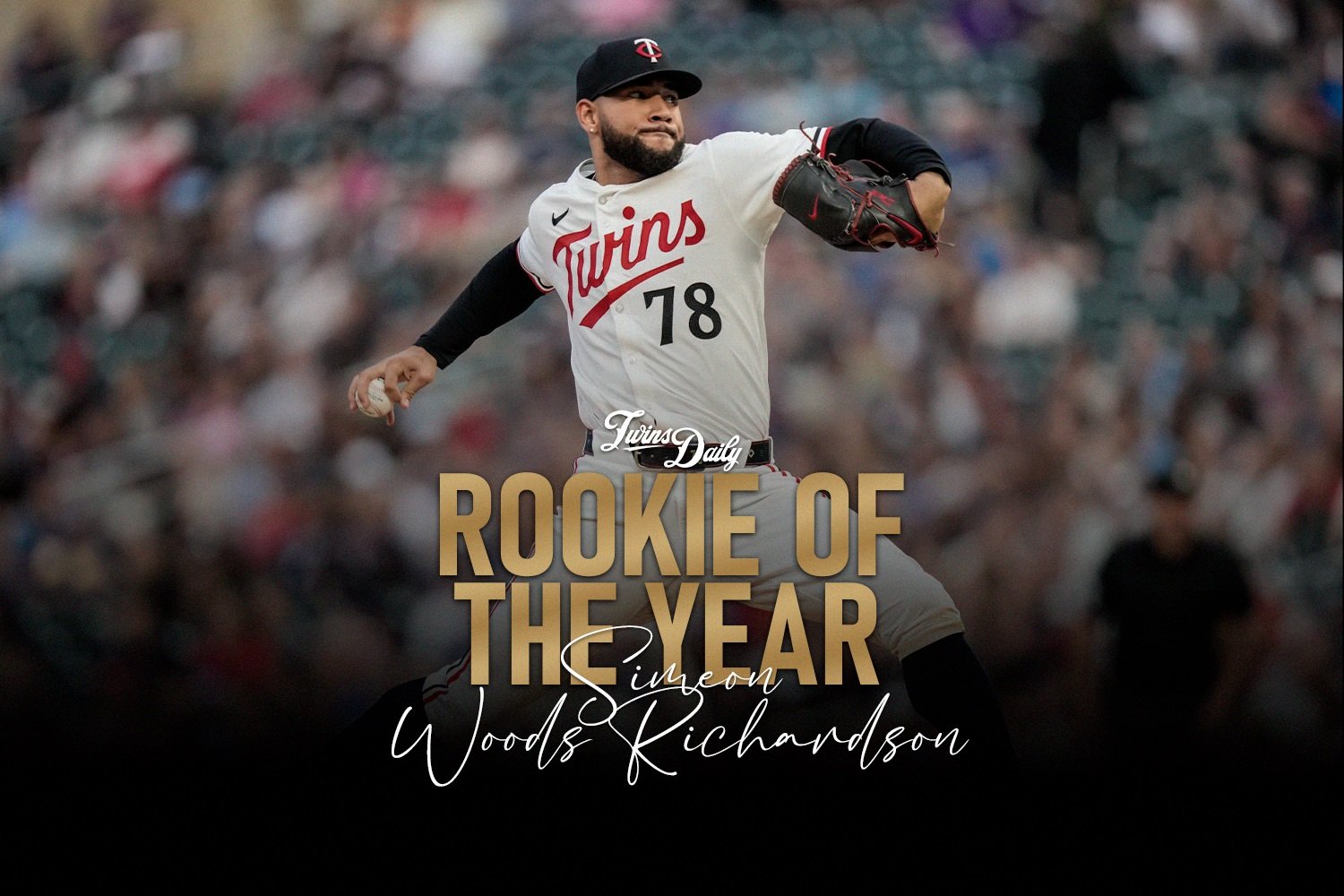 The end of the season ushers in many things—offseason predictions, complaining about how the year went, etc, etc, etc—and one of those great processions is our Awards voting. Yes, we, the writers at Twins Daily, gathered in a great session, only exiting when white smoke augured our shared agreement and correct opinions regarding the winners of our prestigious accolades. Or maybe we all sent an email to Seth. You’ll never know the truth. Today, we will tackle the Rookie of the Year honor. Somewhat distinguished in that a player only has one* chance to win it, the Rookie of the Year award acknowledges an individual who entered the season with fewer than 50 innings pitches, less than 130 at-bats, or fell short of a byzantine bylaw regarding time accrued on the Major-League roster. These players aren’t necessarily expected to make an impact, but sometimes they do—and this piece will spotlight and applaud the rookies who best influenced the 2024 Twins. *Ben Simmons stands as the exception. Honorable Mentions Brooks Lee You know who Brooks Lee is: since being taken 8th overall in the 2022 draft, Lee appeared earmarked for a future as a classic slick-fielding infielder, the kind of guy who accentuates the baseball-specific athletic prowess that intoxicates and hypnotizes fans. Plus, he could hit a little bit. And he was a switch-hitter. And his dad was a coach. What wasn’t to love? Lee arrived the day before the 4th of July and smacked the ball like Thomas Jefferson smacked King George III with the Declaration of Independence (I know it’s a stretch, but deal with it.) He had a hit in six straight games and was slashing .275/.329/.377 through his first 17 games. The prospect that was promised had arrived. That was the best of it, though, as Lee settled into a prolonged slump, got injured, and hit poorly in his September return. Still, that early July boost loomed large in our voter’s minds, and Lee earned an honorable mention on our list. Zebby Matthews Zebby! The man known as Daniel Zebulon Matthews was known far and wide amongst those select nerds who scoured minor league box scores and unearthed AA footage like a baseball Indiana Jones. An 8th-round pick in the same draft as Lee, Matthews blitzed through the minors. He rarely walked a batter, pounding the zone with surprisingly vibrant stuff for a strike-thrower. He was named the Twins minor league pitcher of the year for his incredible efforts. With a decimated starting rotation, the Twins gave Matthews the call on August 13th, and he answered with five quality frames against the playoff-bound Royals. Two more solid starts portended disaster: a two-inning, nine-run stinker against Toronto that could only be wiped away with a Hershiserian shutout streak. That did not come to pass, and—despite some seriously impressive starts—Matthews ended 2024 with a Major League ERA of 6.69. He’ll claim the final honorable mention of the list. #3. Austin Martin Expectations have been high for Austin Martin for nearly half a decade. A 5th overall pick out of Vanderbilt in 2020, Martin joined the Twins following the José Berríos trade in 2021, marking him as a potential star on a Minnesota squad sometime in the future. His path through the minors was tougher than expected—the power that was promised never came, and his contact-focused approach invited bountiful dry stretches—but Martin made the team out of spring training and stayed up for most of the season, accruing 257 plate appearances across 93 games. He slashed .253/.318/.352. Perhaps his strongest asset was something the team has dearly missed in recent years: baserunning. Martin is a madman on the diamond. He begets chaos and nonsense. His legs buoyed his ballpark-of-average bat and dreadful glove to become a passable ballplayer. We’ll see what’s next for the 25-year-old. #2. David Festa Much like Matthews, David Festa was a part of Minnesota’s “Oops, (almost) All Rookies!” starting rotation down the stretch. A 13th-round pick in 2021, Festa added muscle and velocity following his selection and made the jump from no-name later-round pick to legitimate prospect in 2022. The Twins promoted Festa in late June, and outside of a brief demotion in July, he stayed as a reliable contributor the rest of the way. Striking out 27.8% of batters, Festa worked to the tune of a 4.90 ERA spread across 64 1/3 innings. Brilliance struck at times—like when Festa worked six innings with just two earned runs against the Braves or when he held the Cubs scoreless over five frames—but the muck of inconsistency struck a little too often; his final four starts totaled 10 earned runs across 17 innings. Still, Festa flashed promise, and for his efforts, we voted to make him the 2nd place finisher in the Twins Rookie of the Year race. #1. Simeon Woods Richardson Yeah, you shouldn’t be shocked. Without a particularly strong competitor, Simeon Woods Richardson stood head and shoulders above everyone; without him, Minnesota probably loses hope in the playoff race far sooner. Woods Richardson made a spot start during a doubleheader on April 13th and essentially remained in the rotation until the very end. Across 133 2/3 innings, Woods Richardson struck out 20.6% of batters and held an ERA of 4.17, a number that was much lower until he—like the rest of the team—broke down in September. Not bad for a pitcher with less than 10 big-league innings entering the season. Given his breadth of play and the lack of a real challenger, Woods Richardson nabbed 12 of 14 first-place votes, making him the almost unanimous winner of the Twins Daily Rookie of the Year award. With such an excellent season under his belt, Woods Richardson looks well-set to be a cog in the Twins rotation for years to come. Previous Winners 2023 - Royce Lewis 2022 - Jhoan Duran 2021 - Bailey Ober 2020 - Ryan Jeffers 2019 - Luis Arraez 2018 - Mitch Garver 2017 - Trevor Hildenberger 2016 - Max Kepler 2015 - Miguel Sanó Final Vote Tallies Simeon Woods Richardson - 39 David Festa - 27 Austin Martin - 13 Zebby Matthews - 3 Brooks Lee - 2
- 4 comments
-
- 6
-
-
- brooks lee
- zebby matthews
- (and 3 more)
-
 Yes, making the case for any reliever as a team’s MVP is difficult. Even the great Mariano Rivera was overshadowed by players like Derek Jeter or Álex Rodríguez. And for good reason: a bullpen arm only affects a modest number of innings in any given year, typically maxing at around 70 or 75. It’s hard to be of equal value to a position player or a starter, who can affect anywhere from 700 to over 1,000 plays a year, when your job includes affecting only 350. But theirs are typically the most important innings in a season—the end-of-game situations that require near-perfection—and I believe that Griffin Jax performed well enough to stake a claim as the team’s most indispensable player. Let’s first talk about Jax’s season in the context of Twins relievers. He killed it. Since the Twins became a franchise, only four individual relief seasons accrued more than Jax’s 2.6 fWAR: 1970 Tom Hall (who started 11 games), 2004 and 2006 Joe Nathan (no shock there), and 2003 LaTroy Hawkins. That’s it. Ron Perranoski, Glen Perkins, Mike Marshall, Jeff Reardon, and Rick Aguilera were some of the finest bullpen arms ever to don a Twins uniform; none of them reached Jax’s level in 2024. “Not being the closer” be damned, Jax pitched at a level almost unmatched by non-Nathanian mortals. Alright, well, how about the context of the Twins as a whole? Four hitters bested that fWAR total, and three pitchers—Pablo López, Joe Ryan, and Bailey Ober—finished above 2.6 as well. You don’t need Bert Blyleven’s California math to tell you that that makes Jax the eighth-most valuable Twin in 2024, hardly a contender for the best player. True as that may be, I think fWAR undersells him, just as it undersells most of the best relievers in baseball. The calculation does include a leverage component, but—in my opinion—it’s just not enough; these innings matter, dammit! Allowing even one run during the frames Jax often pitched in could mean death. So, we could take a small stroll over to the Win Probability Added section, and wouldn’t you know it: there’s Jax leading the team with a mark of 2.20. Carlos Correa was the only other Twin above 2.0. No one else, in a real, tangible, measurable way, affected Minnesota's chances of winning the games in which they appeared in a more positive way than Jax did. That sure sounds like an MVP to me. Now, much of his case is built off the lack of an argument from the rest of the team. As in 2023, no one stood out. The Twins aren’t a “stars-and-scrubs” squad, in terms of production, though they are so in terms of payroll distribution. At their best, they enjoy the work of many above-average players, which (usually) works out well. That’s great for finishing above .500, but as it pertains to discerning which players stood out among the crowd? It’s tough sledding. You could argue for Correa or Byron Buxton—and I might buy those arguments—but both men missed significant time, leading to neither player reaching 400 at-bats. They say that the best ability is availability, and, I don’t know, not being able to play for such large portions of time doesn’t scream “valuable” to me. After all that, does a Griffin Jax Twins MVP case sound so crazy? No player was more valuable from a WPA standpoint. Jax never hit the IL, forcing the team to push an undercooked backup into a bigger role, and he dominated in a way the franchise hadn’t seen from a bullpen arm in almost 20 years. It may not be the traditional pick, but Jax absolutely deserves the nod. Throughout this week, Twins Daily writers will be making the cases for their favorite candidates for Twins MVP, ahead of our release of the Twins Daily end-of-season awards next week. Do you buy Jax's case for the honor? Who would be your choice, if not? Weigh in.
 -
The Case for Griffin Jax as Twins' 2024 MVP
Matt Braun posted a topic in Twins Daily Front Page News
“A reliever??” shrieked the public. Children cried. Adults took up arms and sharpened their blades. Items potentially useful as blunt objects were handed out to any and all who could hold them. Image courtesy of © Matt Blewett-Imagn Images Yes, making the case for any reliever as a team’s MVP is difficult. Even the great Mariano Rivera was overshadowed by players like Derek Jeter or Álex Rodríguez. And for good reason: a bullpen arm only affects a modest number of innings in any given year, typically maxing at around 70 or 75. It’s hard to be of equal value to a position player or a starter, who can affect anywhere from 700 to over 1,000 plays a year, when your job includes affecting only 350. But theirs are typically the most important innings in a season—the end-of-game situations that require near-perfection—and I believe that Griffin Jax performed well enough to stake a claim as the team’s most indispensable player. Let’s first talk about Jax’s season in the context of Twins relievers. He killed it. Since the Twins became a franchise, only four individual relief seasons accrued more than Jax’s 2.6 fWAR: 1970 Tom Hall (who started 11 games), 2004 and 2006 Joe Nathan (no shock there), and 2003 LaTroy Hawkins. That’s it. Ron Perranoski, Glen Perkins, Mike Marshall, Jeff Reardon, and Rick Aguilera were some of the finest bullpen arms ever to don a Twins uniform; none of them reached Jax’s level in 2024. “Not being the closer” be damned, Jax pitched at a level almost unmatched by non-Nathanian mortals. Alright, well, how about the context of the Twins as a whole? Four hitters bested that fWAR total, and three pitchers—Pablo López, Joe Ryan, and Bailey Ober—finished above 2.6 as well. You don’t need Bert Blyleven’s California math to tell you that that makes Jax the eighth-most valuable Twin in 2024, hardly a contender for the best player. True as that may be, I think fWAR undersells him, just as it undersells most of the best relievers in baseball. The calculation does include a leverage component, but—in my opinion—it’s just not enough; these innings matter, dammit! Allowing even one run during the frames Jax often pitched in could mean death. So, we could take a small stroll over to the Win Probability Added section, and wouldn’t you know it: there’s Jax leading the team with a mark of 2.20. Carlos Correa was the only other Twin above 2.0. No one else, in a real, tangible, measurable way, affected Minnesota's chances of winning the games in which they appeared in a more positive way than Jax did. That sure sounds like an MVP to me. Now, much of his case is built off the lack of an argument from the rest of the team. As in 2023, no one stood out. The Twins aren’t a “stars-and-scrubs” squad, in terms of production, though they are so in terms of payroll distribution. At their best, they enjoy the work of many above-average players, which (usually) works out well. That’s great for finishing above .500, but as it pertains to discerning which players stood out among the crowd? It’s tough sledding. You could argue for Correa or Byron Buxton—and I might buy those arguments—but both men missed significant time, leading to neither player reaching 400 at-bats. They say that the best ability is availability, and, I don’t know, not being able to play for such large portions of time doesn’t scream “valuable” to me. After all that, does a Griffin Jax Twins MVP case sound so crazy? No player was more valuable from a WPA standpoint. Jax never hit the IL, forcing the team to push an undercooked backup into a bigger role, and he dominated in a way the franchise hadn’t seen from a bullpen arm in almost 20 years. It may not be the traditional pick, but Jax absolutely deserves the nod. Throughout this week, Twins Daily writers will be making the cases for their favorite candidates for Twins MVP, ahead of our release of the Twins Daily end-of-season awards next week. Do you buy Jax's case for the honor? Who would be your choice, if not? Weigh in. View full article -
Join me for an examination and discussion of the most successful teams in baseball, and how the Twins can learn from them. Image courtesy of © John Hefti-Imagn Images Though much happens behind the scenes in the modern game, baseball is fundamentally transparent. We see every move, read about every trade, and dissect how each prosperous team accomplished its wins. Beyond the hidden nuances of coaching and each team's R&D department, everything is laid bare for the league to see. When the Dodgers and Yankees start throwing a specific type of slider, teams quickly copy them and usher in the “sweeper” into our shared baseball lexicon. So it goes. Minnesota, then, would be prudent to observe its peers and attempt to glean lessons from them. In this series, I’ll closely examine MLB’s division winners and attempt to reverse-engineer them, to find paths the Twins may take back to the top of the standings. Before we get into the meat of this piece, it’s important to note that none of these lessons are gospel, There’s more than one way to skin a cat (or build a successful baseball team), so my suggestions are just that. The Twins could follow the blueprint other teams created, but it’s not a necessity. That said, let’s look at how each division winner in the AL reached their success. Guardians and Yankees: This Catcher Defense Stuff Seems Important If you go to Baseball Prospectus and sort by catcher framing, you’ll see that four of the top seven framers in baseball belong to the ball clubs based in Cleveland and The Bronx. That’s no coincidence. Both franchises have been notorious for years for employing backstops like Roberto Pérez and José Trevino, who were tepid hitters even for a catcher but who could frame Mr. Rogers for murder. The logic for utilizing these players is simple: an excellent framer affects every pitch their pitching staff throws, while—as a hitter—they only account for one-ninth of their team’s hitting in any given game. That’s a worthy tradeoff, even if you have to suffer through some truly putrid Austin Hedges at-bats. The Twins do employ a worthy framer in Christian Vázquez. He currently sits as the 9th-best framer in MLB, saving nine runs this year with his receiving. Ryan Jeffers is a different story. He has cost the team 3.8 runs with his glovework, good for 86th place among all catchers. The tradeoff with him has always been that his bat buoys his profile, but is a 104 wRC+ enough to make up for poor defense? If the team is looking to scrape over every detail for every morsel of wins—which it seems they must do, with a dearth of financial support coming from ownership—doubling down on defense and moving Jeffers to replace him with a framer as good as Vázquez might be the play. Yasmani Grandal, whom the Twins were interested in a few years back, is set to be a free agent this offseason and shouldn’t cost more than a few million dollars. It would be an old and lethargic catching tandem, but they would also be one of the most stout defensive groups in the league. If not Grandal, Alejandro Kirk is also an above-average framer, and he could be had, given Toronto’s likely retreat into a rebuild. Reese McGuire and Elias Díaz are other cheap defense-first options, but they do not represent a meaningful upgrade over the shape of Jeffers’s production. Dodgers, Astros, and Phillies: Framing is for Suckers These are the three teams you could point to in an argument against catching defense. Will Smith grades out as the second-worst framer in the league, with J.T. Realmuto in sixth-worst and Yainer Diaz 14th from the bottom, in the spot next to Jeffers. They’ve received more production through the power of their bats. All three players claim a wRC+ above 100. Smith and Diaz are squarely into “good for any position” territory, with marks north of 110. They would be the case studies supporting the argument to keep Jeffers around. He flashed tremendous offensive prowess with a 137 wRC+ in 2023, which helped fuel Minnesota’s ninth-ranked catching fWAR that season. That year appears to be a fluke, though, as Jeffers fell back to an average realm in 2024, which—in combination with his below-average glove—makes him a perfectly cromulent backstop, rather than a genuinely helpful one. Maybe it’s fitting that the team is now 15th in catcher fWAR this year. Banking on his bat being as powerful as those of Smith or Diaz would be foolish. Minnesota’s mandate is clear: they need to lean into an extreme in order to find better play from those who don the tools of ignorance. Someone in the mold of Vázquez would be perfect, but those players don’t grow on trees—and given the dearth of catching talent in the farm system, they may have to dig into the bargain bin to find such a player. But they exist. And they can be acquired. The Twins front office just needs to be clever. View full article
- 13 replies
-
- 1
-

-
- christian vazquez
- ryan jeffers
- (and 2 more)
-
What Twins Can Learn From Each Division Winner, Pt. 1: Catcher Defense
Matt Braun posted an article in Twins
 Though much happens behind the scenes in the modern game, baseball is fundamentally transparent. We see every move, read about every trade, and dissect how each prosperous team accomplished its wins. Beyond the hidden nuances of coaching and each team's R&D department, everything is laid bare for the league to see. When the Dodgers and Yankees start throwing a specific type of slider, teams quickly copy them and usher in the “sweeper” into our shared baseball lexicon. So it goes. Minnesota, then, would be prudent to observe its peers and attempt to glean lessons from them. In this series, I’ll closely examine MLB’s division winners and attempt to reverse-engineer them, to find paths the Twins may take back to the top of the standings. Before we get into the meat of this piece, it’s important to note that none of these lessons are gospel, There’s more than one way to skin a cat (or build a successful baseball team), so my suggestions are just that. The Twins could follow the blueprint other teams created, but it’s not a necessity. That said, let’s look at how each division winner in the AL reached their success. Guardians and Yankees: This Catcher Defense Stuff Seems Important If you go to Baseball Prospectus and sort by catcher framing, you’ll see that four of the top seven framers in baseball belong to the ball clubs based in Cleveland and The Bronx. That’s no coincidence. Both franchises have been notorious for years for employing backstops like Roberto Pérez and José Trevino, who were tepid hitters even for a catcher but who could frame Mr. Rogers for murder. The logic for utilizing these players is simple: an excellent framer affects every pitch their pitching staff throws, while—as a hitter—they only account for one-ninth of their team’s hitting in any given game. That’s a worthy tradeoff, even if you have to suffer through some truly putrid Austin Hedges at-bats. The Twins do employ a worthy framer in Christian Vázquez. He currently sits as the 9th-best framer in MLB, saving nine runs this year with his receiving. Ryan Jeffers is a different story. He has cost the team 3.8 runs with his glovework, good for 86th place among all catchers. The tradeoff with him has always been that his bat buoys his profile, but is a 104 wRC+ enough to make up for poor defense? If the team is looking to scrape over every detail for every morsel of wins—which it seems they must do, with a dearth of financial support coming from ownership—doubling down on defense and moving Jeffers to replace him with a framer as good as Vázquez might be the play. Yasmani Grandal, whom the Twins were interested in a few years back, is set to be a free agent this offseason and shouldn’t cost more than a few million dollars. It would be an old and lethargic catching tandem, but they would also be one of the most stout defensive groups in the league. If not Grandal, Alejandro Kirk is also an above-average framer, and he could be had, given Toronto’s likely retreat into a rebuild. Reese McGuire and Elias Díaz are other cheap defense-first options, but they do not represent a meaningful upgrade over the shape of Jeffers’s production. Dodgers, Astros, and Phillies: Framing is for Suckers These are the three teams you could point to in an argument against catching defense. Will Smith grades out as the second-worst framer in the league, with J.T. Realmuto in sixth-worst and Yainer Diaz 14th from the bottom, in the spot next to Jeffers. They’ve received more production through the power of their bats. All three players claim a wRC+ above 100. Smith and Diaz are squarely into “good for any position” territory, with marks north of 110. They would be the case studies supporting the argument to keep Jeffers around. He flashed tremendous offensive prowess with a 137 wRC+ in 2023, which helped fuel Minnesota’s ninth-ranked catching fWAR that season. That year appears to be a fluke, though, as Jeffers fell back to an average realm in 2024, which—in combination with his below-average glove—makes him a perfectly cromulent backstop, rather than a genuinely helpful one. Maybe it’s fitting that the team is now 15th in catcher fWAR this year. Banking on his bat being as powerful as those of Smith or Diaz would be foolish. Minnesota’s mandate is clear: they need to lean into an extreme in order to find better play from those who don the tools of ignorance. Someone in the mold of Vázquez would be perfect, but those players don’t grow on trees—and given the dearth of catching talent in the farm system, they may have to dig into the bargain bin to find such a player. But they exist. And they can be acquired. The Twins front office just needs to be clever.
- 13 comments
-
- 5
-
-
-
- christian vazquez
- ryan jeffers
- (and 2 more)
-
The inevitable struck in predictable and lethal fashion. Image courtesy of Matt Blewett-USA TODAY Sports Box Score Pablo López: 5 ⅔ IP, 6 H, 2 ER, 3 BB, 8 K Home Runs: None Bottom 3 WPA: Carlos Correa (-0.96), Royce Lewis (-0.82), Christian Vázquez (-0.67) Win Probability Chart (via FanGraphs) Minnesota took the field on Friday with a clear mandate: win. Win like you’ve never won before. Their only shot at remaining in the postseason race required sweeping the Orioles—good luck—AND having one the Detroit and KC lose out. Well, the Tigers won (the Royals did not), so the Twins’ mission became just that much tougher. They controlled their own destiny much in the same way that a man in the electric chair could take matters into his own hands by violently coughing. Perhaps it was fitting, then, that their opponent was former Twins farmhand Cade Povich. The universe sure loves kicking you when you’re down. Naturally, he blanked them. For 5 ⅔ innings, the Twins could do little more than put the ball in play in vain, running directly into gloves and outs as the frames melted into each other. Some potential “bad luck” early quickly morphed into bland emptiness in the middle innings. Their best hopes at scoring were a two-out double by Byron Buxton in the 1st and back-to-back runners on second in the 5th and 6th. All rallies led to nothing. Good day. Pablo López wasn’t so fortunate. In his final start of the year, he dipped into “effectively wild” waters, seeming only to have a vague concept of what the strike zone is—a far cry from his typical, controlled game. Outside of one swing, it worked. Unfortunately, that one swing resulted in a two-run homer. So it goes. Typically, I would soliloquize about the game more, but the monotony of the last month has sapped almost everything from me; outs are simply just that, and runs are what the other team scores. Who cares. Some stuff happened; the Twins are now down. Rinse and repeat too often, and you’ll build a toxic calcium deposit of apathy—a vile curse that requires significant change to cleanse. López exited, and an assembly line of Minnesota’s 4th-option relievers revealed that maybe the starter was more brilliant than he received credit for. Caleb Thielbar allowed a homer to a lefty. Kody Funderburk invited four more runs to score. Quiet was the forest these trees fell in. The Twins did score when, in the 9th—with no stakes whatsoever—the Orioles took some pity on their opponents and allowed them to score. Twice. How kind. Maybe a Twitter account will post it. I doubt it. Whatever remained of Minnesota's fleeting hopes finally ungracefully ended when Ryan Jeffers grounded out to end the 9th. The long, slow goodbye had been in the works for some time now, but it was finally complete; the Twins, once solidly ahead in the Wild Card race, were eliminated from playoff contention. What makes a collapse so fascinating, I think, is the majestic totality of its grandeur: an entire collection of people failed at the same time—in differing magnitudes, certainly—but there’s no question that they faltered. The manager slips. The slugging DH misses a few hangers. Shoot, even the beer salesman dogs it. It’s a rare and unnatural phenomenon, but it’s one the 2024 Twins found themselves at the heart of, and there’s nothing more to be said than this: their season is over. Try again next year. Notes: Pablo López ends the season with 198 strikeouts, two away from the 200 milestone and 36 off his high-water mark set last year. Still, his 2024 will go down as the 23rd most strikeouts in a season by a Twins pitcher, nestled between 1987 Frank Viola and 2010 Francisco Liriano, respectively. With two RBIs on Friday, Carlos Santana pushed his career total to 1,081, good for 231st All-Time. Three more runs batted in will tie him with Lou Whitaker. Caleb Thielbar appeared in his 347th game as a Twin, the 8th-most by a Minnesota reliever. He is 18 appearances away from tying Glen Perkins. Post-Game Interview: What’s Next? The Twins and Orioles will play the penultimate game of the 2024 regular season on Saturday, with Zebby Matthews set to take the mound against the calm and turgid TBD. First pitch is at 6:15 PM. Bullpen Usage Spreadsheet View full article
-
 Box Score Pablo López: 5 ⅔ IP, 6 H, 2 ER, 3 BB, 8 K Home Runs: None Bottom 3 WPA: Carlos Correa (-0.96), Royce Lewis (-0.82), Christian Vázquez (-0.67) Win Probability Chart (via FanGraphs) Minnesota took the field on Friday with a clear mandate: win. Win like you’ve never won before. Their only shot at remaining in the postseason race required sweeping the Orioles—good luck—AND having one the Detroit and KC lose out. Well, the Tigers won (the Royals did not), so the Twins’ mission became just that much tougher. They controlled their own destiny much in the same way that a man in the electric chair could take matters into his own hands by violently coughing. Perhaps it was fitting, then, that their opponent was former Twins farmhand Cade Povich. The universe sure loves kicking you when you’re down. Naturally, he blanked them. For 5 ⅔ innings, the Twins could do little more than put the ball in play in vain, running directly into gloves and outs as the frames melted into each other. Some potential “bad luck” early quickly morphed into bland emptiness in the middle innings. Their best hopes at scoring were a two-out double by Byron Buxton in the 1st and back-to-back runners on second in the 5th and 6th. All rallies led to nothing. Good day. Pablo López wasn’t so fortunate. In his final start of the year, he dipped into “effectively wild” waters, seeming only to have a vague concept of what the strike zone is—a far cry from his typical, controlled game. Outside of one swing, it worked. Unfortunately, that one swing resulted in a two-run homer. So it goes. Typically, I would soliloquize about the game more, but the monotony of the last month has sapped almost everything from me; outs are simply just that, and runs are what the other team scores. Who cares. Some stuff happened; the Twins are now down. Rinse and repeat too often, and you’ll build a toxic calcium deposit of apathy—a vile curse that requires significant change to cleanse. López exited, and an assembly line of Minnesota’s 4th-option relievers revealed that maybe the starter was more brilliant than he received credit for. Caleb Thielbar allowed a homer to a lefty. Kody Funderburk invited four more runs to score. Quiet was the forest these trees fell in. The Twins did score when, in the 9th—with no stakes whatsoever—the Orioles took some pity on their opponents and allowed them to score. Twice. How kind. Maybe a Twitter account will post it. I doubt it. Whatever remained of Minnesota's fleeting hopes finally ungracefully ended when Ryan Jeffers grounded out to end the 9th. The long, slow goodbye had been in the works for some time now, but it was finally complete; the Twins, once solidly ahead in the Wild Card race, were eliminated from playoff contention. What makes a collapse so fascinating, I think, is the majestic totality of its grandeur: an entire collection of people failed at the same time—in differing magnitudes, certainly—but there’s no question that they faltered. The manager slips. The slugging DH misses a few hangers. Shoot, even the beer salesman dogs it. It’s a rare and unnatural phenomenon, but it’s one the 2024 Twins found themselves at the heart of, and there’s nothing more to be said than this: their season is over. Try again next year. Notes: Pablo López ends the season with 198 strikeouts, two away from the 200 milestone and 36 off his high-water mark set last year. Still, his 2024 will go down as the 23rd most strikeouts in a season by a Twins pitcher, nestled between 1987 Frank Viola and 2010 Francisco Liriano, respectively. With two RBIs on Friday, Carlos Santana pushed his career total to 1,081, good for 231st All-Time. Three more runs batted in will tie him with Lou Whitaker. Caleb Thielbar appeared in his 347th game as a Twin, the 8th-most by a Minnesota reliever. He is 18 appearances away from tying Glen Perkins. Post-Game Interview: What’s Next? The Twins and Orioles will play the penultimate game of the 2024 regular season on Saturday, with Zebby Matthews set to take the mound against the calm and turgid TBD. First pitch is at 6:15 PM. Bullpen Usage Spreadsheet
- 134 comments
-
- 10
-
-

-

-
- pablo lopez
- kody funderburk
- (and 4 more)
-
The Saints, perhaps fittingly, concluded the Twins minor league system with a loss. Image courtesy of Rob Thompson, St. Paul Saints TRANSACTIONS No moves were made on Sunday. Saints Sentinel St. Paul 4, Indianapolis 9 Box Score Caleb Boushley: 4 2/3 IP, 9 H, 7 ER, 0 BB, 2 K HR: Rylan Bannon (18), Patrick Winkel (7), Jair Camargo (3) Multi-hit games: Payton Eeles (2-for-4, R, BB), Michael Helman (2-for-4, 2B, RBI) The Saints launched three homers, but came up short in their farewell to the 2024 season. It’s been a year to forget for St. Paul. Following an excellent 84-64 2023 season, the malevolent forces surrounding minor league roster fortune spat out mediocrity, leaving Toby Gardenhire and his players stuck in a mediocre quagmire. In other words: they were ok. Inoffensive as they were, the pantheon of professional baseball will likely not remember them. There are worse fates to have. Just ask Bill Buckner. Nonetheless, they ended their nondescript season with a stinker, falling 9-4 in a game in which their bats struck out 17 times. Starter Caleb Boushley appeared to be dealing. A run scored in the 1st off a pair of fielding errors—hardly his fault, despite what the “earned run” stat may say—but the veteran hunkered down and kept Indianapolis at bay, at least for a time. In the 5th, right before one could officially describe him as “in the zone,” Boushley opened the frame by allowing a pair of solo homers, portending a disastrous six-run nightmare he would not escape; Jaylen Nowlin had to relieve the righty. That put a great deal of stress on the Saints’ bats—stress they were not prepared to handle. Eeles may have jump-started a skirmish in the 1st, but his efforts only plated one run. Bannon may have netted the team’s third inside-the-park-homer of the year, but, yet again, St. Paul was only rewarded with one run. Pat Winkel then kicked off the bottom of the 5th with a homer, but any more scores would simply be vanity; following the middle-innings blowup, St. Paul never got closer than four runs away from tying their opponent. Rehabbing big-leaguer Justin Topa pitched a scoreless inning with a pair of strikeouts, both looking. He topped out at 92.5 MPH with his sinker. Eeles reached base thrice and stole a trio of bases to give him 41 on the year. I have no idea if the Twins hold a spot for Eeles on their major-league roster, but he has done just about everything possible to force the issue. At 5’5” and scrappier than all hell, he could be the kind of player the team hasn’t had in quite some time. Indianapolis is the Triple-A affiliate for the Pittsburgh Pirates, a talented farm system with a trio of hurlers—Bubba Chandler, Braxton Ashcraft, and Thomas Harrington—populating the Indianapolis starting rotation. Still, it was their 16th-ranked player, Mike Burrows, who best represented the franchise on Sunday: he struck out 10 over five innings, allowing three runs along the way. TWINS DAILY PLAYERS OF THE DAY Twins Daily Minor League Pitcher of the Day – Justin Topa/Jeff Brigham/Jorge Alcalá Twins Daily Minor League Hitter of the Day – Rylan Bannon PROSPECT SUMMARY Here’s a look at how the Twins Daily Top 20 Twins Prospects performed: #2 – Brooks Lee (Minnesota) - 0-for-1 #5 – Zebby Matthews (Minnesota) - 4 2/3 IP, 2 H, 3 R, 2 BB, 6 K, 87 pitches, 55 strikes (63.2%) MONDAY’S PROBABLE STARTERS There are no more Twins minor league games to be played this year. Thank you for an excellent 2024 season, and we’ll see you again in 2025! View full article
- 19 replies
-
- 1
-
-
- caleb boushley
- justin topa
- (and 5 more)

