


Twins Video
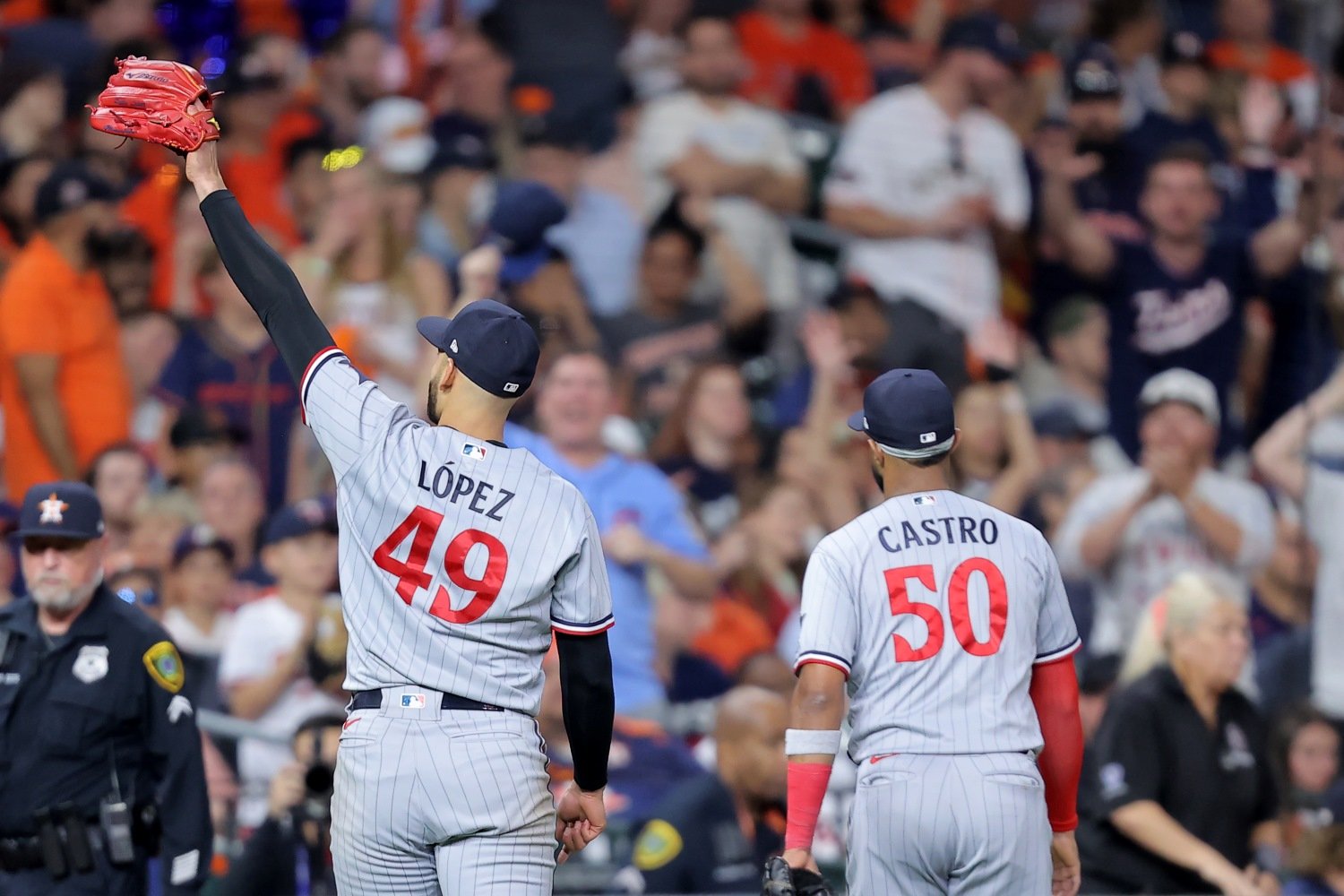
Pablo López’s 2023 was outstanding. This site has spent most of the offseason interrogating his numbers to tell you just that. Indeed, his 3.33 FIP and relatively impressive bulk of consumed innings netted him 4.5 fWAR—the 10th-best in MLB among starting pitchers. Zach Eflin, a former 1st-round pick from the Padres, was ahead of him, and George Kirby, Seattle’s 1st-round selection from 2019, slotted in right behind him. And—to finally clarify where any of this is going—the 12th-ranked starting pitcher was Framber Valdez, the only other starter in the top 15 to be an international free agent signing.
Quietly, international amateurs rarely become quality major-league starters. This isn’t a new phenomenon. Ten years ago, the great Félix Hernández dominated pitching leaderboards, with José Quintana not far behind him and Julio Teherán and Ervin Santana farther down.
Over the last 10 years—excluding 2020—49 individual seasons ending in a top-30 starting pitcher fWAR season were accomplished by a pitcher signed as an international amateur, meaning they made up about 16.3 percent of those leaderboards. In 2018, the share dipped as low as 10 percent (three of the top 30), with a handful of years clocking in at 20 percent, the highwater mark over this time.
Position players, though? International free agents have accounted for 67 individual leaderboard-worthy seasons, or 22.3 percent of the total. Last season crushed any year put forth by pitchers, with 10 different international players accruing enough fWAR to make the top 30. That’s ⅓ of the list!
So, what’s happening here? Why is it that every year, there seems to be a new Juan Soto or Fernando Tatis Jr. fighting for MVP votes (get ready for Jackson Chourio, very soon!), while Sandy Alcántara essentially serves as the lone international superstar in recent years to claim the rubber as the place to showcase his craft?
Part of it is the result of an axiom anyone who played Little League knows about: the best athletes play shortstop or center field. Hell, Minnesota’s top two international signings just a month ago—Daibel De Los Santos and Eduardo Beltre—call those positions home. Miguel Sanó was initially announced as a shortstop when he signed (although no one really believed that he would stay there). If you’re good enough to get major-league talent evaluators to care about you, you’re probably playing at either of those premium positions.
There’s more to it, though: the issue is one of resources and organizational decision-making influenced by the Rule 5 draft disproportionately affecting international players. This was something touched on in a previous piece about Johan Santana. Teams only have a few years (typically five, for young international players) before they can choose their role in a player’s future: do they place trust in them and use one of their few, precious 40-man spots on a potential that may never come; or do they cut their losses and move on? Minnesota—and Santana, for that matter—reaped the benefits of Houston doubting him, thanks to the Twins teams of that era not being particularly good, but a competing team can’t afford the same risk. They’re more likely to cut bait.
Or, instead, move them to the bullpen. Indeed, international pitchers aren’t disappearing; they just enter later in the game. Teams would rather see some return on their investment, after all, and relievers have a better chance of sticking around than starters. An astronomical 27 percent of top-30 relief seasons over the past 10 years are from international amateurs, with guys like Aroldis Chapman and Kenley Jansen showing up perennially. That number has shot up to 37 percent over the last two seasons (although the missed COVID year also probably feeds into that.)
It’s a tough life for an international pitcher. At around the same age when collegiate pitchers are a year or two into their careers, they enter a brutal fork in the road, where—if there’s any doubt in their ability to stay a starter—the overwhelming odds point towards a move to the bullpen. Eric Longenhagen broke this problem down to its most granular studs. López’s imminent need to be added to the 40-man likely pushed Seattle to deal him away at the trade deadline in 2017. Again, a not-good team (Miami) could afford the risk, and they saw him develop into a solid starter before shipping him off to Minnesota. That’s the good outcome; Pablo is probably a regular in the Mariners pen in most universes.
Perhaps a move back to the pre-2006 Rule 5 eligibility could cut down on the unnecessary shuffling, where teams move international pitchers with extreme recklessness. Their timelines don’t work. Outside of the freaks and phenoms like Félix (or even Pablo, to a degree), the current pipeline sends these arms straight to the bullpen without much of a chance to make it as a starter. MLB needs to extend them a lifeline—or give them more time to develop.
Do you approve of Twins ownership?

Follow Twins Daily For Minnesota Twins News & Analysis



- Cory Engelhardt, ToddlerHarmon, TL and 5 others
-
 7
7
-
 1
1


Recommended Comments
Create an account or sign in to comment
You need to be a member in order to leave a comment
Create an account
Sign up for a new account in our community. It's easy!
Register a new accountSign in
Already have an account? Sign in here.
Sign In Now