


Twins Video
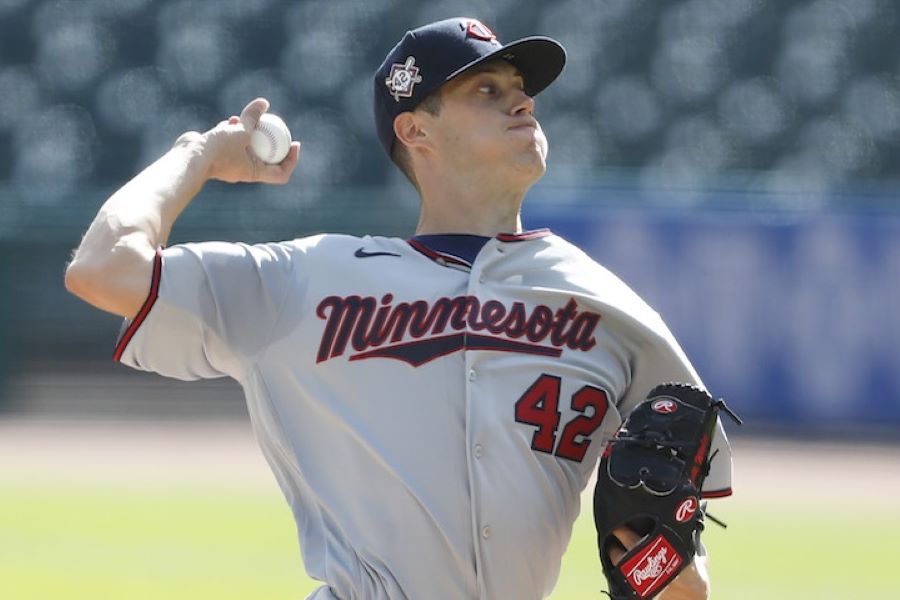
Wisler, 28, had a marvelous 2020 season in the Minnesota bullpen, thanks not only to his extreme slider usage, but to a change to his delivery that improved his command of the pitch. His 32.7-percent strikeout rate placed him in the 89th percentile among all pitchers with 20 or more innings pitched. He was in line to earn somewhere around $1.5 million, and the team retaining him at that price seemed like a foregone conclusion.
At a deeper level, though, it’s not hard to see what led the Twins to violate that expectation. There are, in fact, at least three contributing factors that probably led them to that choice.
Firstly, as welcome as Wisler’s whiffs were, a great strikeout rate does not make a great pitcher. By walking roughly one in every seven batters faced, Wisler put too many opponents on base. They didn’t often come around to score, as his minuscule ERA attests, but to strand runners that way is often impossible in the long run. Between that failing, the suspect offensive competition (especially for a righty reliever) the Twins faced throughout the season, and his extreme fly-ball tendencies, Baseball Prospectus’s advanced pitching metrics pegged Wisler as an essentially average pitcher in 2020. By both DRA- and cFIP, Wisler was actually worse in 2020 than in 2019. That sounds bonkers, when considering only his surface-level numbers, but when evaluating a relief pitcher, always resist the temptation to weigh those traditional numbers as heavily as more granular, advanced ones.
The second reason why letting Wisler become a free agent makes some sense is logistical, and reflective of both the team’s and the league’s prevailing preferences with regard to pitching usage. Wisler is out of minor-league options. That’s not a big deal if a pitcher is on the relief ace tier, like Tyler Duffey and Taylor Rogers, but for almost any lesser light, it becomes a real factor. Teams (and the Twins, especially) value the ability to shuttle fresh arms up from Triple-A and send tired or struggling ones down. That will be truer than ever in 2021, since the team’s highest affiliate is now just a Green Line ride away.
Wisler was good enough in a shortened season, with expanded rosters, but at this moment, we don’t know how many players teams will be allowed to carry in 2021, and the developing news about vaccine timelines suggests we’ll have a full, 162-game season. Both of those things make it harder to plan to carry a non-elite reliever who cannot be optioned. It’s not hard to imagine that the Twins believed there was about $1 million (the difference between Wisler’s likely arbitration earnings and the league minimum) of value to be gained by maintaining flexibility. It helps, in that regard, that the free-agent market is flush with quality right-handed relievers, including a bevy of new ones who flooded that space along with Wisler on Wednesday.
The final reason is conceptual, rather than concrete, but no less potent. To grasp it, imagine pitching acquisition, evaluation, and development as a frontier in a land being explored and occupied by a new people. On a frontier, it’s important to identify one’s strengths and weaknesses, because they determine what is both possible and prudent. Wisler’s path to success in 2020 was extreme. It was a push into a new, unexplored, unestablished space. Even as the season progressed, I found myself asking the question: how far can this whole thing be taken?
Wisler was used in multiple roles. A former starter, he opened multiple games, and often got more than three outs in an appearance. He threw sliders at historic frequency. I wondered, and I can only assume that even the Twins also wondered: how much further could this be taken? Could Wisler go three innings at a time without losing effectiveness? Could he pitch 100 innings over a full season, without fading? Could he keep throwing sliders 90 percent of the time, reshaping the pitch and mixing up his locations well enough that the league wouldn’t figure him out, adjust, and start scoring against him?
A less successful, confident pitching infrastructure would have led a team to continue that dangerous exploration. It’s a potentially lucrative endeavor, but there’s a lot of risk attached to it. The questions posed above are fascinating, from a sheer scientific perspective. The exploration would have some value for the league, as it continues in an era of rapid change and advancement. The Twins, though, have enough skills not to keep exploring until their luck runs out. They can, and already have, set up an outpost and start replicating the success Wisler represents. They can let others bear the risks of trying to get more out of Wisler. Plenty of hurlers can be gotten slightly cheaper, with as-good-or-better chances to thrive.
MORE FROM TWINS DAILY
— Latest Twins coverage from our writers
— Recent Twins discussion in our forums
— Follow Twins Daily via Twitter, Facebook or email





Recommended Comments
Create an account or sign in to comment
You need to be a member in order to leave a comment
Create an account
Sign up for a new account in our community. It's easy!
Register a new accountSign in
Already have an account? Sign in here.
Sign In Now