


Twins Video
For decades, major-league managers followed a relatively predictable script when crafting their batting orders. The leadoff hitter was almost always a speedy player who could hit singles and cause havoc on the base paths. The second hitter was a contact-focused player who could advance runners, while the team’s best overall hitter slotted into the third spot. The cleanup hitter? He was the power threat, expected to drive in runs and change the game with one swing.
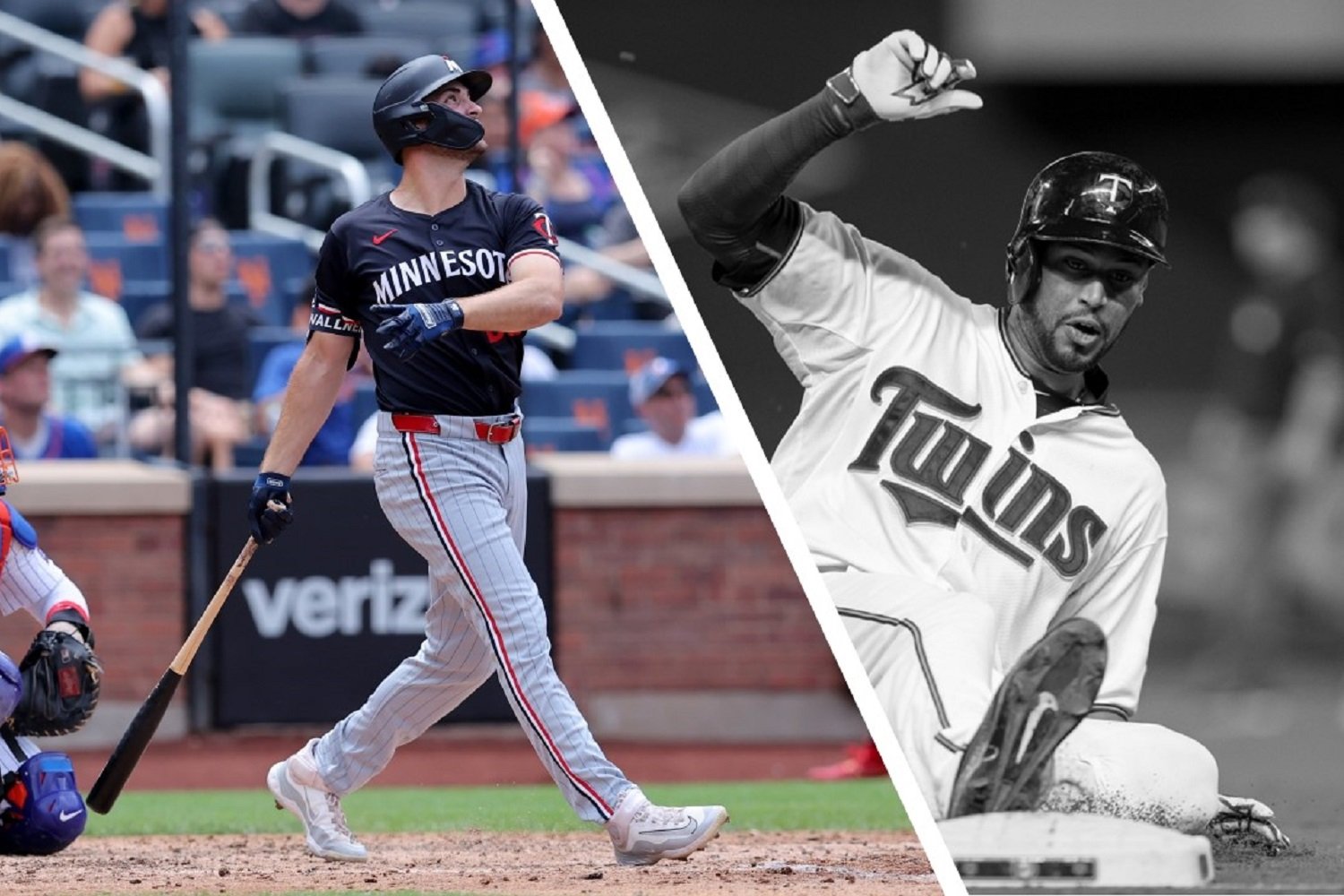
But in today’s game, the traditional lineup structure is evolving. Teams are now prioritizing getting their best hitters to the plate more often, even if it means breaking from long-held conventions. This shift has led to unconventional choices at the top of the order, such as the Minnesota Twins experimenting with Matt Wallner as a leadoff hitter.
On a recent Patreon-exclusive episode of Gleeman and the Geek, John Bonnes and Aaron Gleeman discussed the evolution of batting order construction. Plainly, the way teams build their lineup has differed significantly over the last two decades. Let’s dive into some of the changes and how teams are trying to maximize value from the entire lineup.
The New-Age Leadoff Hitter
In the past, players like Rickey Henderson or Lou Brock embodied the classic leadoff profile: speedsters who could steal bases and disrupt pitchers’ rhythms. Now, front offices and analytics-inclined managers have realized that on-base percentage (OBP) and overall productivity are far more critical than pure speed at the top of the order. The logic is simple: the more often your best hitters get to the plate, the better your chances of scoring runs.
That (perhaps oversimplified) epiphany has brought power hitters and high-OBP sluggers into the leadoff discussion. Wallner might not fit the mold of a prototypical leadoff hitter, but his ability to get on base and hit for power makes him an intriguing option. By placing a high-OBP hitter like Wallner first, the Twins ensure that their most productive bats get more opportunities to do damage throughout the season.
Maximizing Opportunities for Elite Hitters
One of the most significant shifts in lineup construction is how teams deploy their best hitter. Traditionally, the third spot in the order was reserved for this role. However, modern analytics suggest that the extra plate appearances a player gets when batting second (and the slightly better mix of opportunities they have to create runs based on the base-out states when they come to the plate) make that spot more important than the No. 3 hole, meaning that elite hitters like Juan Soto, Mookie Betts, and Carlos Correa have seen significant time there.
By moving the best hitter to the second position, teams guarantee they hit in the first inning, ensuring a higher number of at-bats across 162 games. This philosophy has led to teams placing their traditional power hitters earlier in the order, flipping the old-school approach on its head. (In fairness, we should note that in 2024, the league produced the best overall batting line from its No. 3 hitters, but that actually bucked the recent trend toward ever-better second hitters.)
Another key trend is that cleanup hitters are no longer viewed as the ultimate run producers. Instead, power is spread throughout the lineup, ensuring that teams don’t waste their best bats waiting for a rally to materialize. Meanwhile, traditional No. 2 hitters (who had been tasked with advancing runners) are being replaced by sluggers who can drive in runs themselves.
This change has also had a ripple effect on the bottom of the order. With the emphasis on high-OBP players at the top, the lower third of the lineup often consists of contact hitters and speed threats who can set the table for another trip through the top of the order. By pushing their very best hitters ever higher, though, teams are making the bottom thirds of their lineups weaker than ever. Not since 1950 have batters 7-9 in the order been as bad, relative to overall league production, as they were in 2024.

Twins Historical Batting Order Changes
Twenty years ago, the 2005 Twins had some clear options to fill the top of their batting order. Shannon Stewart was the team’s leadoff hitter in 122 games. Twins manager Ron Gardenhire took a more variable approach to the No. 2 spot, but he had a specific player type in mind. Nick Punto (63 games, Luis Rodríguez (22 games), and Jason Bartlett (20 games) were all middle infielders who fit the traditional role for that lineup spot: lots of contact, little real production. Like Stewart, Joe Mauer was the team’s typical choice for the No. 3 spot (108 games), with Lew Ford being the second-most frequent option (32 games). In the cleanup spot, Minnesota rotated through Justin Morneau (58 games), Matt LeCroy (42 games), and Torii Hunter (34 games).
In 2015, the Twins had a surprising second-place finish in the AL Central. Paul Molitor was in his first campaign as the manager, and he used Brian Dozier as his primary leadoff hitter (102 games), with Aaron Hicks also getting 31 starts. The second spot had three players make 21 or more starts, including Hunter (55 games), Dozier (46 games), and Mauer (21 games). Despite a handful of starts batting second, though, Mauer was clearly the team’s No. 3 hitter, with 133 starts. In the cleanup spot, the Twins split time between Trevor Plouffe (68 games) and Miguel Sanó (65 games).
The Twins have used a more modern approach in recent years, including platoons at the top of the lineup. Willi Castro (48 games), Edouard Julien (38 games), and Manuel Margot (33 games) were used regularly as leadoff hitters, with non-traditional options like Trevor Larnach and Ryan Jeffers getting more than 10 starts. Correa and Larnach split time in the lineup's second spot, with 45 or more starts each. Seven players made 10 or more starts in the third spot, with Royce Lewis (37 games) leading the way. Max Kepler (43 games) and Jose Miranda (33 games) were the most-used options for the No. 4 spot.
Whereas Gardenhire and Molitor each grew up in a version of the game that emphasized the sequential and team-oriented ways to score runs, Rocco Baldelli was raised watching—and later playing—a power-centric game. Naturally, and with plenty of reinforcement from the front office, he has learned to build lineups that put runs on the board immediately, including with just one swing. The philosophies at work are different, working both as effects and causes of big changes in the game itself—and thus, what makes sense when filling out a lineup card.
A Trend Here to Stay?
With a better understanding of run production and lineup optimization, teams are more willing than ever to break the mold. For the Twins and other teams looking to maximize offensive output, experimenting with non-traditional leadoff hitters (be it Wallner, Kyle Schwarber, or any other highly competent but anti-stereotypical slugger) could be the key to unlocking more runs. The days of rigid batting order rules are fading, replaced by a new age of lineup construction that values production over convention.
Are there other ways for teams to modernize their lineup construction, despite prevailing trends in the dynamic of pitchers and hitters and power creep throughout the game? Leave a comment and start the discussion.







Recommended Comments
Create an account or sign in to comment
You need to be a member in order to leave a comment
Create an account
Sign up for a new account in our community. It's easy!
Register a new accountSign in
Already have an account? Sign in here.
Sign In Now