


Jump to content
Twins Daily
  • Create Account
  • Twins News & Analysis

    Home-Plate Umpires Have Favored Twins Opponents in 2023 Playoffs


    Cody Christie

    Each playoff game can hinge on one pitch that is called a ball or a strike. During the 2023 postseason, umpires have tended to favor Twins opponents. Let's explore the numbers.

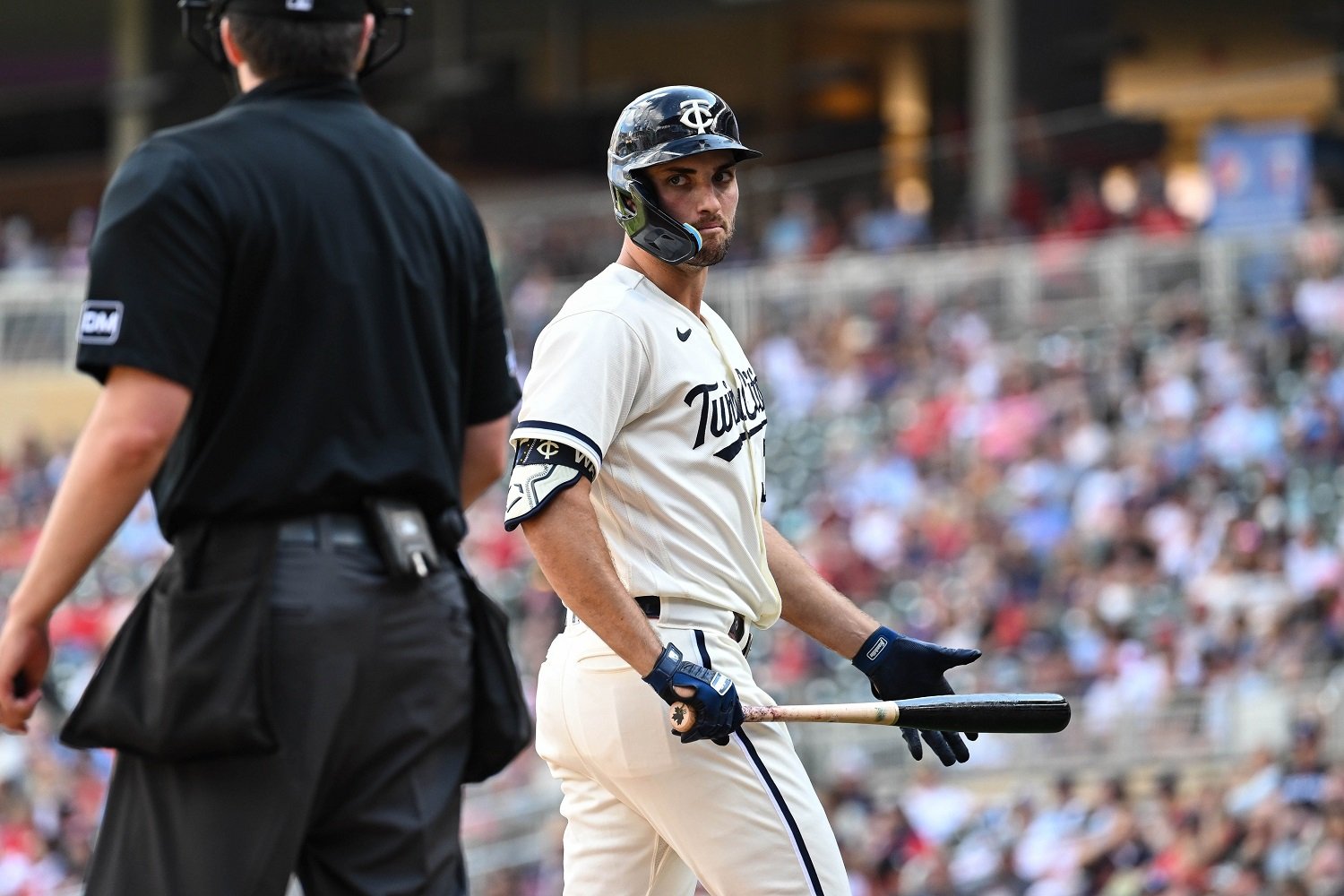
    Image courtesy of Jeffrey Becker-USA TODAY Sports

    Twins Video

    Being a major-league umpire is no easy task. It takes years of hard work and dedication to reach the big leagues, where pitchers throw triple-digit fastballs and breaking pitches with significant movement. There are also replays from multiple angles that show whether a pitch is a ball or a strike. Major League Baseball has experimented with automated strike zones and challenge systems in the minor leagues, but the human element is still part of America's Pastime.

    Umpires are evaluated throughout the regular season to earn spots on the field in the playoffs. These umps are supposed to be the best of the best, but teams and fans get even more upset with perceived bad calls in October. 

    Umpire Scorecard on X (formerly known as Twitter) tracks umpire performance throughout the season. According to their website, "The @UmpScorecards platform relies on three key metrics to analyze umpire performance: accuracy (and expected stats), consistency, and favor. These metrics are calculated in house using algorithms inspired by others in the baseball community and developed by the @UmpScorecards team."

    Here's how the home plate umpires have fared so far in Minnesota's 2023 playoff games. 

    Wild Card Series: Game 1
    Umpire: Andy Fletcher
    Overall Favor (Runs): +1.46 Toronto

    Umpire Scorecard's model said Fletcher favored the Blue Jays by nearly 1.5 runs, including two of the three most influential calls going against the Twins. Edouard Julien should have drawn a walk with two runners on in the bottom of the second inning. His overall accuracy was slightly below the expected accuracy, but there were rough called strikes on both sides of the zone.

    Wild Card Series: Game 2
    Umpire: Adam Hamari
    Overall Favor (Runs): +0.96 Toronto

    In Game 2, all three impactful missed calls went against the Twins, which made a tight game even closer. Sonny Gray was impacted the most by missed calls with two balls that should have been strikes, changing the trajectory of plate appearances. Hamari missed five calls on taken pitches during the game, which hurt the Twins more than the Blue Jays.

    ALDS: Game 1
    Umpire: Brian Knight
    Overall Favor (Runs): +0.43 Houston

    Minnesota attempted to mount a late-inning comeback when Justin Verlander was awarded the most prominent missed call in Game 1. Carlos Correa batted with two outs and a runner on first base in the sixth inning. He was rung up on a ball significantly out of the strike zone. Overall, Knight missed four pitches, and the two biggest went against the Twins.

    ALDS: Game 2
    Umpire: D.J. Reyburn
    Overall Favor (Runs): +0.77 Houston

    The top three missed calls all went against the Twins for the second time in the playoffs. Willi Castros' at-bat with the bases loaded in the seventh inning could have extended the lead and allowed the Twins to rest some of the club's high-leverage bullpen arms. The bottom of the strike zone was particularly bad for Reyburn, who incorrectly identified 13 pitches during th
    e game.

    ALDS: Game 3
    Umpire: Ben Miller
    Overall Favor (Runs): +0.31 Minnesota

    Tuesday's game at Target Field was the only time during the 2023 postseason where the home plate umpire favored the Twins. Even in this game, the most impactful missed call went against the Twins with Lewis' bases loaded at-bat in the fifth inning, starting with a called strike that was a ball. Miller missed most of his calls in the upper part of the zone, but his overall zone was relatively accurate, especially compared to some of the other umpires in the postseason.

    It will be interesting to see if this trend continues in however many playoff games remain for the Twins. Will umpires continue to make more calls against Minnesota? Will a bad call eventually cost the Twins a win? Could the Twins have won Game 1 in Houston with better umpiring? One can hope that umpiring will improve as teams move deeper into the playoffs, but the Twins have been on the wrong side of every playoff game so far. 

    What are your thoughts on the calls discussed above? Has umpiring impacted any of the Twins' results so far? Leave a COMMENT and start the discussion. 

    Follow Twins Daily For Minnesota Twins News & Analysis

    Recent Twins Articles

    Recent Twins Videos

    Twins Top Prospects

    Marek Houston

    Cedar Rapids Kernels - A+, SS
    The 22-year-old went 2-for-5 on Friday night, his fourth straight multi-hit game. Heading into the week, he was hitting .246/.328/.404 (.732). Four games later, he is hitting .303/.361/.447 (.808).

    User Feedback

    Recommended Comments


    Featured Comments

    I know the "eye test" in baseball is almost totally a thing of the past.  I do not want robo umpiring of balls and strikes.  Yes they miss a lot.  But I like the human element still in the game.  The big problem for me is the bad ball and strike calls in key at bats and situations.  Yes I'm frustrated with home plate umpiring the past few years.  But it isn't a Twins thing.  All teams and players have legit gripes.  It's unfortunate the perception here is the umpiring cost us playoff games.  A typical minnesota refrain for all of our teams.  If you can't win just blame it on the officiating.

    The umpiring was not good. However the Twins two strike approach makes the problem markedly worse. They appear to be looking for certain pitches even with two strikes and will not protect the plate. So yea Julien is right that the ball is inside two inches and yea I don’t care because way too often the ump is going to call it a strike. So yea you were right but you are also sitting in the dugout. This is especially a problem with runners on base. 

    10 hours ago, Aerodeliria said:

    Indeed, important calls in any game almost never even out; one team inevitably suffers more from bad calls than the other, so fairness should be sought as much as can possibly expected. 

    It evens out over the long run.  Umpire scorecards are by no means official and need to be taken with a grain of salt, but look up cumulative umpire scorecards per team per season if you don't believe me.


    10 hours ago, Aerodeliria said:

    Kepler got called out on a pitch that was outside for the final out of today's game.

    This is simply false, and proves what I've been saying:  fans don't want "fairness", and in fact they love bad calls if it helps their team.  If robo umps would have made the same call you'd be complaining about the terrible robo umps.  


    19 hours ago, chpettit19 said:

    That first sentence is nonsense. There's an imbalance of calls in every game that we all currently have to accept.

    We should take a poll.  Would fans prefer a) the Twins win a playoff game due to a bad call or b) the Twins lose that game but it is umpired perfectly and "fairly"?  

    My guess is 95% will vote for A and 5% will lie.  

    Fans don't tune in to watch a crisply officiated game.  They tune in to watch their team win.  

    18 hours ago, Mike Sixel said:

    Arguing we shouldn't make things better because we can't make them perfect is a terrible argument across all facets of life no one is arguing for perfection, we're arguing for better. 

    Agreed.  I'm arguing that robo umps won't make things better, and will lead to further implementation of technology/replay that will make the sport - which already has issues with pace and action and interest and overall entertainment value - an even less entertaining product, which has happened in every single sport that has gone down the replay rabbit hole.  I'll grant you the possible exception of tennis, but google "tennis bad umpiring" and you'll be bombarded with articles complaining about the umpires, so it would appear replay did not solve the problem of bad umps in tennis either.   

    19 minutes ago, Woof Bronzer said:

    We should take a poll.  Would fans prefer a) the Twins win a playoff game due to a bad call or b) the Twins lose that game but it is umpired perfectly and "fairly"?  

    My guess is 95% will vote for A and 5% will lie.  

    Fans don't tune in to watch a crisply officiated game.  They tune in to watch their team win.  

    That's a super unbiased poll there. Definitely not setup to get the exact answer you want while not actually getting to the point I made at all.

    Why don't we do a poll and ask fans if they'd prefer a) the Twins lose a playoff game due to a bad call or b) the Twins win a game that is umpired perfectly and "fairly?" 

    My guess is 95% would vote B and 5% will lie. Crazy how setting up a poll to always give you the answer you want is completely useless.

    17 minutes ago, Woof Bronzer said:

    Agreed.  I'm arguing that robo umps won't make things better, and will lead to further implementation of technology/replay that will make the sport - which already has issues with pace and action and interest and overall entertainment value - an even less entertaining product, which has happened in every single sport that has gone down the replay rabbit hole.  I'll grant you the possible exception of tennis, but google "tennis bad umpiring" and you'll be bombarded with articles complaining about the umpires, so it would appear replay did not solve the problem of bad umps in tennis either.   

    All this sentence tells me is that you aren't a tennis fan, and you didn't watch the French, US, or Australian Open this year, comparing it to Wimbledon where player complaints SLOWED DOWN THE ACTION and frankly made both players and umpires look bad.

    Nobody is talking about adding replay.  No game time will be added by robo umps.  You are setting up straw man arguments and knocking them down.

    Peace, out, done.

    10 minutes ago, Road trip said:

    All this sentence tells me is that you aren't a tennis fan, and you didn't watch the French, US, or Australian Open this year, comparing it to Wimbledon where player complaints SLOWED DOWN THE ACTION and frankly made both players and umpires look bad.

    Nobody is talking about adding replay.  No game time will be added by robo umps.  You are setting up straw man arguments and knocking them down.

    Peace, out, done.

    I'm not a tennis fan, you're correct.

    Every sport that has gone down the replay rabbit hole has said something like "nobody is talking about doing X".  They always end up doing X.  Every sport that has gone down the replay rabbit hole has said it won't add game time.  It always does.    


    22 hours ago, Woof Bronzer said:


    Fans don't want fair umpiring.  They want the bad calls that hurt them to go away, and they want the bad calls that help them to stay.  

    Show us these studies that show how umpiring in the long run has benefitted certain teams at the expense of others.  If you think 95-99% accuracy is "bad" please don't look into robo ump technology because it's NOT 100% accurate by any stretch of the imagination.  Maybe it'll get there in time, but it's not there yet.  

    The same pattern plays out in every sport:  implement replay "to get the calls right".  When it becomes obvious that replay doesn't actually do this, they open up replay to more and more things.  The problem is never solved, and the game becomes less human - and less interesting - as a result.  


    This sounds like the argument against driverless vehicles on the road.

    Humans experience about 366 collisions per 100 million miles driven.
    Robo drivers experience about 9 collisions per 100 million miles driven.

    I want robo-drivers. It makes for safer roads.

    Human umps call the zone correct at a 95% rate. That's really good.
    You know what's better? 98%.
    That's what the ASZ can achieve right about now.
    In a few years, it will likely be 99.9%.
    By 2030, it will literally be infallible. 

    I want that. It makes for a more entertaining competition.

    Yet the anti-progress crowd argues against a statistically more accurate outcome. 

    18 minutes ago, chpettit19 said:

    That's a super unbiased poll there. Definitely not setup to get the exact answer you want while not actually getting to the point I made at all.

    Why don't we do a poll and ask fans if they'd prefer a) the Twins lose a playoff game due to a bad call or b) the Twins win a game that is umpired perfectly and "fairly?" 

    My guess is 95% would vote B and 5% will lie. Crazy how setting up a poll to always give you the answer you want is completely useless.

    My point is that fans do not actually care about fairness, and that fans are totally ok with bad calls that help the team.  Look at the poster above who wants robo umps because he thinks they'll somehow turn the last pitch of the season into a ball.  As your poll helpfully confirms, fans care only about winning.  

    1 minute ago, Minny505 said:

    This sounds like the argument against driverless vehicles on the road.

    Humans experience about 366 collisions per 100 million miles driven.
    Robo drivers experience about 9 collisions per 100 million miles driven.

    I want robo-drivers. It makes for safer roads.

    Human umps call the zone correct at a 95% rate. That's really good.
    You know what's better? 98%.
    That's what the ASZ can achieve right about now.
    In a few years, it will likely be 99.9%.
    By 2030, it will literally be infallible. 

    I want that. It makes for a more entertaining competition.

    Yet the anti-progress crowd argues against a statistically more accurate outcome. 

    Life safety is different than sports/entertainment.

    10 minutes ago, Minny505 said:

    Human umps call the zone correct at a 95% rate. That's really good.
    You know what's better? 98%.
    That's what the ASZ can achieve right about now.
    In a few years, it will likely be 99.9%.
    By 2030, it will literally be infallible. 

    I want that. It makes for a more entertaining competition.

    Yet the anti-progress crowd argues against a statistically more accurate outcome. 

    Got a source for any of those strike zone claims?


    26 minutes ago, Woof Bronzer said:

    My point is that fans do not actually care about fairness, and that fans are totally ok with bad calls that help the team. 

    False. You can cherry pick one fan or one comment and try to make it seem like everyone is like that. I umpired previously and wanted to make the game fair for each team. I would rather have a robo ump making the right, fair call than me making a mistake.

    For the Twins, I want a fairly called game. 

    3 minutes ago, USAFChief said:

    Got a source for any of those strike zone claims?


    I can't find the specific article, but Close Call Sports published an analysis regarding the 2019 Atlantic League season where the ASZ was 99.3% accurate. 

    I'm willing to wear the egg on my face if that is not accurate and I used false statistics. Even current studies of human umps rate them between 93.5% and 95%. 

    Once the ASZ hits a 95% accuracy rate, I'd like to have it implemented immediately. If it is already there, it should be done for 2024. If it's not there, then wait until it is.

    I prefer the most fairly contested game possible. Leave the outcomes to the human players, not the human umps. 

    *I'm rather shocked at how hard this data is to find. You'd think someone could just go to a AAA stadium with barrels of balls, feed them into simulated pitching machines, and report the data. I have no doubt the data exists behind closed doors, similar to all the collected, but unpublished, Statcast data. If I were working at MLB, the only reason I wouldn't want ASZ data published would be because it is more accurate than human umps already and fans would cause an uproar at it not being implemented. If it was less accurate than human umps, then not implementing it is self-evident and publishing that data would quell the masses.

    2 minutes ago, Minny505 said:

    I can't find the specific article, but Close Call Sports published an analysis regarding the 2019 Atlantic League season where the ASZ was 99.3% accurate. 

    I'm willing to wear the egg on my face if that is not accurate and I used false statistics. Even current studies of human umps rate them between 93.5% and 95%. 

    Once the ASZ hits a 95% accuracy rate, I'd like to have it implemented immediately. If it is already there, it should be done for 2024. If it's not there, then wait until it is.

    I prefer the most fairly contested game possible. Leave the outcomes to the human players, not the human umps. 

    *I'm rather shocked at how hard this data is to find. You'd think someone could just go to a AAA stadium with barrels of balls, feed them into simulated pitching machines, and report the data. I have no doubt the data exists behind closed doors, similar to all the collected, but unpublished, Statcast data. If I were working at MLB, the only reason I wouldn't want ASZ data published would be because it is more accurate than human umps already and fans would cause an uproar at it not being implemented. If it was less accurate than human umps, then not implementing it is self-evident and publishing that data would quell the masses.

    As I see it, one of the problems of measuring this data is...measuring it.

    How do you go about doing that?

    You have robo umps measuring robo umps?


    My question is why the Twins are so often the victim of the bad calls.  The umpire scorecard has the Twins being negatively effected in 5 out of 6 games.  The only positive score was game 3, which was a blowout so the umpiring had no effect on the outcome.  .  

    The final pitch to Max was a strike on the outside edge, but the strike call in 6th wasn't close to the inside edge as shown by umpscoredcard, Gameday & Fox.  The inside pitch should be the easiest to call as that is where the umpire is setting up.   What happens if both of those called strikes were called balls?  We will never know.

    FYI the cumulative ump scorecard (which I know is unofficial) for all the teams are as follows:

    1. Twins -3.79 (6 games)
    2. Miami -.77 (2)
    3. Tampa Bay -.55 (2)
    4. Milwaukee -.41 (2)
    5. Baltimore -.14 (3)
    6. LA Dodgers .03 (3)
    7. Philly .34 (5)
    8. Arizona .38 (5)
    9. Atlanta .43 (3)
    10. Texas .69 (5)
    11. Houston 1.37 (4)
    12. Toronto 2.42 (2)

    Note that the only teams with a cumulative score greater than + or - 1 are the Twins and their 2 opponents.  So yes bring on the Robo umps.  I would like to know for the 2023 season how many of Julien's called strikes were actually balls and vice versa.  


    21 minutes ago, Minny505 said:

    I can't find the specific article, but Close Call Sports published an analysis regarding the 2019 Atlantic League season where the ASZ was 99.3% accurate. 

    I'm willing to wear the egg on my face if that is not accurate and I used false statistics. Even current studies of human umps rate them between 93.5% and 95%. 

    According to MLB the current system is accurate to 1/10th of an inch.  Relative to the diameter of a baseball this is 96.5% accuracy.  

    This doesn't take into account the tech issues that the system (like any software/tech system) encounters.  If a system is down for a couple seconds that's a 0% accuracy.  There was an Athletic article earlier in the year about some of these issues happening at AAA this year.  

    23 minutes ago, Minny505 said:

    *I'm rather shocked at how hard this data is to find. You'd think someone could just go to a AAA stadium with barrels of balls, feed them into simulated pitching machines, and report the data.

    This is part of what some of us have been saying. The rule book definition of the strike zone does not allow for a precise upper and lower boundary of the zone.  Here's what MLB says:  The official strike zone is the area over home plate from the midpoint between a batter's shoulders and the top of the uniform pants -- when the batter is in his stance and prepared to swing at a pitched ball -- and a point just below the kneecap.

    So the zone varies by player and even by pitch, if the player changes stances.  How thick is the line?  Shoulders aren't totally flat, which point of the shoulder do you use?  What does "just below the kneecap" mean to the 1/10th of an inch?  The reason it's hard to find the data is because it's hard to measure the data.  

    18 minutes ago, IaBeanCounter said:

    My question is why the Twins are so often the victim of the bad calls.  The umpire scorecard has the Twins being negatively effected in 5 out of 6 games.  The only positive score was game 3, which was a blowout so the umpiring had no effect on the outcome.


    Small sample size, no?  Over the course of the season the cumulative ump scorecard (not official) for the Twins was...drumroll...-0.03 runs. Within the margin of error, i.e. statistically insignificant. The Twins are not "so often the victim of bad calls"; you just remember them more than you remember the ones that help the Twins.  Which is normal!  It's called being a fan. 

    Umpiring all evens out in the long run.  

    46 minutes ago, Woof Bronzer said:

    Small sample size, no?  

    Umpiring all evens out in the long run.  

    The problem is that the playoffs are a small sample size:

    1. The Twins have a negative score in 5 of six games
    2. Of the 21 games they have the 3 largest negative scores -1.46, -.96, -.77.   Miami has the only other negative score greater that -.50 at -.63.
    3. All of the teams with a negative cumulative score have been eliminated.

    When will the umpiring even out?  Certainly not this year for the Twins.  When have the Twins benefited of umpiring to even out Cuzzi foul ball call?


    Edit: The Twins negative score represent 5 of the largest 7 games this postseason.  I agree with a commenter above that the Twins AB were poor.  Toronto and Houston are good teams, they don't need the umpires helping them out. 


    41 minutes ago, Woof Bronzer said:

    According to MLB the current system is accurate to 1/10th of an inch.  Relative to the diameter of a baseball this is 96.5% accuracy.  

    This doesn't take into account the tech issues that the system (like any software/tech system) encounters.  If a system is down for a couple seconds that's a 0% accuracy.  There was an Athletic article earlier in the year about some of these issues happening at AAA this year.  

    This is part of what some of us have been saying. The rule book definition of the strike zone does not allow for a precise upper and lower boundary of the zone.  Here's what MLB says:  The official strike zone is the area over home plate from the midpoint between a batter's shoulders and the top of the uniform pants -- when the batter is in his stance and prepared to swing at a pitched ball -- and a point just below the kneecap.

    So the zone varies by player and even by pitch, if the player changes stances.  How thick is the line?  Shoulders aren't totally flat, which point of the shoulder do you use?  What does "just below the kneecap" mean to the 1/10th of an inch?  The reason it's hard to find the data is because it's hard to measure the data.  

    I do love the description of the top of the strike zone. I always bring that up when a teammate comments about a high strike call in my men's baseball league games. It is quite vague.

    That said, a standard of measurement can be applied to make it consistent across all players.

    As for the bottom of the zone, I would disagree with your opinion and say it is rather precise. It's the bottom of the kneecap. 

    Regardless, here a standard of measurement can also be applied to make it consistent across all players.

    Just as the standard measurement for where the ball crosses the plate is at 8.5" from the front and back. 

    I do also think you are making some silly arguments. A batters stance in the loaded position has very little variation to it. It has to in order to have the repeatable and memorized muscle movements necessary to thrive at the game's highest level. MLB realizes this and is using a rolling average of the last 50 PAs for each player to set the top and bottom of the zone. At least for the AFL. 

    The only real concern is the objective accuracy of an agreed upon strike zone, comparing the results of a human ump vs a "robo" ump. 

    Let's just take it to the point that it will get to one day. When the ASZ is 100% accurate, would you still prefer human umps? 

    Because while the level of accuracy of an ASZ is in question today, one day it will not be. The tech is coming, if it is not here already. It's just a matter of what you prefer.

    4 hours ago, Woof Bronzer said:

    My point is that fans do not actually care about fairness, and that fans are totally ok with bad calls that help the team.  Look at the poster above who wants robo umps because he thinks they'll somehow turn the last pitch of the season into a ball.  As your poll helpfully confirms, fans care only about winning.  

    Fans are ok with bad calls that help their team because there is a 100% certainty that there will be bad calls. If you know there's going to be bad calls of course you want them to go your way. That's not an argument for not reducing the number of bad calls that take place. The poll you really want to do is asking fans if they'd prefer a) a system where there's going to be bad calls and you don't know if they'll help or hurt you, or b) a system where you know you won't have any calls help you, but also won't have any calls hurt you. 

    I'd be willing to bet quite a bit that most fans would take option b.

    3 hours ago, Woof Bronzer said:

    I'm not a tennis fan, you're correct.

    Every sport that has gone down the replay rabbit hole has said something like "nobody is talking about doing X".  They always end up doing X.  Every sport that has gone down the replay rabbit hole has said it won't add game time.  It always does.    


    We're not talking about replay, we're talking about automated calls. There is no time added for the computer to say "strike or ball" vs the human ump saying "strike or ball." There is a time savings in players, and/or coaches/managers, arguing about that strike or ball call when they can't hope to influence future calls by planting seeds of doubt in the human brain because the computer is the one making the calls and it doesn't care about your complaints. Your "replay rabbit hole" argument has literally nothing to do with an automated strike zone.

    1 hour ago, Woof Bronzer said:

    According to MLB the current system is accurate to 1/10th of an inch.  Relative to the diameter of a baseball this is 96.5% accuracy.  

    This doesn't take into account the tech issues that the system (like any software/tech system) encounters.  If a system is down for a couple seconds that's a 0% accuracy.  There was an Athletic article earlier in the year about some of these issues happening at AAA this year.  

    This is part of what some of us have been saying. The rule book definition of the strike zone does not allow for a precise upper and lower boundary of the zone.  Here's what MLB says:  The official strike zone is the area over home plate from the midpoint between a batter's shoulders and the top of the uniform pants -- when the batter is in his stance and prepared to swing at a pitched ball -- and a point just below the kneecap.

    So the zone varies by player and even by pitch, if the player changes stances.  How thick is the line?  Shoulders aren't totally flat, which point of the shoulder do you use?  What does "just below the kneecap" mean to the 1/10th of an inch?  The reason it's hard to find the data is because it's hard to measure the data.  

    There would still be umps behind the plate who can call the balls and strikes during any tech issues. Problem solved.

    I'm quite certain MLB has the ability to create a precise upper and lower boundary. I don't think they're stuck with that definition for all eternity. Problem solved.

    2 hours ago, USAFChief said:

    As I see it, one of the problems of measuring this data is...measuring it.

    How do you go about doing that?

    You have robo umps measuring robo umps?


    Robo umps have been measuring human umps for years. We don't have access to the data, but the league uses it to determine who gets postseason jobs and who doesn't. If they can be trusted to measure the humans why can't they be trusted to measure the robots?

    4 hours ago, IaBeanCounter said:

    My question is why the Twins are so often the victim of the bad calls.  The umpire scorecard has the Twins being negatively effected in 5 out of 6 games.  The only positive score was game 3, which was a blowout so the umpiring had no effect on the outcome.  .  

    The final pitch to Max was a strike on the outside edge, but the strike call in 6th wasn't close to the inside edge as shown by umpscoredcard, Gameday & Fox.  The inside pitch should be the easiest to call as that is where the umpire is setting up.   What happens if both of those called strikes were called balls?  We will never know.

    FYI the cumulative ump scorecard (which I know is unofficial) for all the teams are as follows:

    1. Twins -3.79 (6 games)
    2. Miami -.77 (2)
    3. Tampa Bay -.55 (2)
    4. Milwaukee -.41 (2)
    5. Baltimore -.14 (3)
    6. LA Dodgers .03 (3)
    7. Philly .34 (5)
    8. Arizona .38 (5)
    9. Atlanta .43 (3)
    10. Texas .69 (5)
    11. Houston 1.37 (4)
    12. Toronto 2.42 (2)

    Note that the only teams with a cumulative score greater than + or - 1 are the Twins and their 2 opponents.  So yes bring on the Robo umps.  I would like to know for the 2023 season how many of Julien's called strikes were actually balls and vice versa.  


    This... this.... aaaaaaand..... THIS.

    The ump scorecards just confirmed the obvious (and attached a 'runs lost' component)

    It was an unadulterated s-show of ball/strike calls on the close pitches for the Twins.

    A more accurate evaluation would be percent of close pitches call correctly. 

    As a known Rocco critic... I think he managed quite well in the playoffs,

    BUT he needed to pick a moment or moments during the Houston series to get after the Umps and even comment about it in the media if the Umps did not respond to 'constructive criticism' on the field.

    You have to stand up for your team in those situations and shine a light on things... even if it results in an ejection or a fine. 

    On 10/11/2023 at 2:35 PM, Woof Bronzer said:

    I took that walk :)  Looks like pitch 2 to Dozier in the 1st was a strike but called a ball, and he also went on to hit a HR.  But you don't remember that one of course....:) 

    We can do this all day, and I guarantee you we'll continue do this with robo umps.  "The strike zone the system gave Hitter X was a quarter inch too high" etc.  And then we'll hear calls for, I don't know, lasers to scan players before every single pitch to assign them a "fair" strike zone.  "We have the technology, why wouldn't we do it?"  And on and on.  It will never end, because arguing about officiating is part of sports and fans/teams will never stop looking for scapegoats.

    So I like live umps - aways pushed back against automation……..only used on balls & strikes, ……….then where does it stop?

    The foul tip that should have gone against us would have been corrected with replay - not reviewable thoughCalls at first base are able to be challenged to “get it right”. I’ve heard announcers promote a “couple” challenges of balls and strikes per game, as a solution.

    The TV strike zone box seems clear cut to me……am assuming ZONE can be determined with Technology for each at bat/batter.

    Automation/replay to determine football calls seems to be generally accepted by all - right.

    Line calls in tennis are challenged all the time & have been for years and settled with automation. Nobody ever complains about those results 

    Not sure what we are afraid of other than altering the look & feel of the game. That’s out of the barn with challenges & pitch clocks. Let’s try it for the month of April across baseball for the next two years and have all teams to just yield to the results and live with however it goes. That would be a pretty good data set at the highest level!

    9 hours ago, Woof Bronzer said:

    It evens out over the long run.  Umpire scorecards are by no means official and need to be taken with a grain of salt, but look up cumulative umpire scorecards per team per season if you don't believe me.


    This is simply false, and proves what I've been saying:  fans don't want "fairness", and in fact they love bad calls if it helps their team.  If robo umps would have made the same call you'd be complaining about the terrible robo umps.  


    I saw the pitch and checked with GameDay, which confirmed my belief. The pitch was framed beautifully by Maldonado, so if you want to claim the beauty of the game may be affected, that's fine.

    12 hours ago, Linus said:

    The umpiring was not good. However the Twins two strike approach makes the problem markedly worse. They appear to be looking for certain pitches even with two strikes and will not protect the plate. So yea Julien is right that the ball is inside two inches and yea I don’t care because way too often the ump is going to call it a strike. So yea you were right but you are also sitting in the dugout. This is especially a problem with runners on base. 

    There is a fair amount to unpack here. 

    The Twins do not seem to have much of a focus towards changing their swings on two strikes. Jeffers often looks like he is swinging from his heels with two strikes. I'm in agreement that the Twins need a different approach with two strikes.

    MLB pitchers are so good that batters need to think zones and hope to eliminate some of a pitcher's repertoire. If a pitcher has multiple pitches working it is a miserable day for the hitters. So the batters are attempting to have an idea, which is often incorrect. Batters can shorten up to an extent and we see many players do exactly that. Cutting down on strike outs needs to be a focus for the 2024 Twins. 

    Julien does not seem to possess much talent with making contact on pitches out of the strike zone. Now the sample size for Julien is small at this point but he has looked weak on swings at pitches out of the strike zone all season and furthermore he looked poor swinging at bad pitches while playing in the minor leagues. Julien has an incredible feel for the strike zone and I believe he is also aware that he sucks at making decent contact on balls. Thus he will not play very long if he expands his swing zone. I too would like Julien to be a little more aggressive with guys on base. However, he was a rookie and could improve. Julien also looks and sounds (interviews) like a player who adheres pretty closely to his plan in at bats, which often includes sitting on a specific pitch. A player needs to learn and know how they succeed and fail. Perhaps we will see Julien grow into a different sort of hitter as he gains experience but from watching him in prior years in the minor leagues and now this year it seems like he needs to keep his bat on his shoulder on pitches that are not strikes.

    That same argument does not apply ( in my opinion) to any other Twin player. A two strike approach needs refinement by the Twins in general.


    20 hours ago, IaBeanCounter said:

    When will the umpiring even out?  Certainly not this year for the Twins.  When have the Twins benefited of umpiring to even out Cuzzi foul ball call?


    The Cuzzi foul ball ended up costing the Twins 1 base.  The missed foul tip in this years Game 3 gave the Twins a free baserunner.  I'm sure plenty of other calls have gone the Twins way, but you like those, so it's not a problem.  

    If you think umpiring had the slightest thing to do with why Twins lost this series, man, I don't know what to tell you.  


    Create an account or sign in to comment

    You need to be a member in order to leave a comment

    Create an account

    Sign up for a new account in our community. It's easy!

    Register a new account

    Sign in

    Already have an account? Sign in here.

    Sign In Now

×
×
  • Create New...

