Jump to content
Twins Daily
  • Create Account

Recommended Posts

Posted

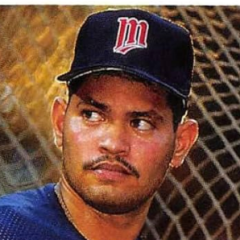
Jimmie Hall was a left-handed hitting outfielder who burst on the scene in 1963 and helped the Twins reach the World Series in 1965, but faded quickly and was traded for a future ace starting pitcher.

Image courtesy of Brock Beauchamp

Jimmie Hall was born March 7, 1938, in Mount Holly, NC, a small farm town northwest of Charlotte. 

In high school, Jimmie excelled on the baseball field but planned to work in a cotton mill or become a service station attendant. In what some would call an unusual twist, Jimmie’s father encouraged him to continue with baseball. I find it odd that a parent would do that in the 1950s when the average annual salary for all jobs in the US was in the $3,500 range. Major League Baseball players only averaged around $15,000 in 1956, the year he graduated from high school. So, baseball players earned more than the average American, but their careers were short, and I would expect a parent to push their child into a more long-term profession. But, hey, there’s always a chance his dad was just a big baseball fan and liked the possibility of his son being a big leaguer. 

Hall was signed by the Washington Senators in 1956 and played in the minor leagues until 1962. Overall, his statistics over those years look good, not great. But he methodically moved up the Senators’ and Twins’ minor league systems. His progress stalled a little in 1961 and 1962 when he served in the Army, which limited him to 54 games combined in those two seasons. He attended spring training in 1963, worked hard, had a great spring, and surprised everyone by making the opening day roster.

Hall’s 1963 season started as the backup to center fielder Lenny Green until Green was injured in mid-June, giving Hall a chance. Hall took the opportunity and did not look back. During limited action in 46 games leading up to Green’s injury, Hall batted .185 with two home runs. He went on a tear and finished with 33 home runs in 1963, breaking an American League rookie record set by Hall of Famer Ted Williams in 1939. Hall improved as the season progressed, hitting 13 homers in August alone. Hall slashed .260/.342/.521 for the season, enough for third in the Rookie of the Year voting. Hall was part of a powerful Twins outfield that year with Harmon Killebrew (45 HR) and Bob Allison (35 HR).

Hall’s promising career continued in 1964 and 1965, with him making the All-Star game each season. On May 2, 1964, the Twins became the third club in history to hit four consecutive home runs in the same inning. Tony Oliva, Bob Allison, Jimmie Hall, and Harmon Killebrew all went deep in the 11th inning, turning the tie into a 7-3 victory against the Kansas City A’s. In 1965, Hall was one of six Twins selected to the All-Star game played at home in Metropolitan Stadium. 

Jimmie’s first three years were great. His overall slash line for 1963-65 was .276/.342/.488. He had a decent batting average, drew several walks, and hit with power. His OPS+ in those three seasons was 136, 124, and 124, respectively. 

Despite Hall being an All-Star selection in 1965, his batting had slipped in the second half of the season. When the Twins won the AL pennant, manager Sam Mele decided to platoon the left-handed hitter in the World Series. Hall only played two of seven World Series games because of the Los Angeles Dodgers left-handed starters Sandy Koufax and Claude Osteen, who started five games in the series. In seven at-bats, Hall batted .143/.250/.143. His primary replacement, Joe Nossek, hit .200/.200/.200 in 20 at-bats – so not much better, but Koufax, in particular, was an absolute nightmare against anybody in the 1960s.

It appears that Manager Mele’s decision to sit Hall against left-handed pitchers had merit. Hall went .296/.361/.493 against right-handed pitchers in 1965 but only .240/.272/.333 against lefties. As far as whether Hall would have made a difference in the series, we’ll never know. 

Hall’s performance began to slide in 1966 and 1967. Many have speculated that the downturn in Jimmie’s play can be attributed to being hit in the face with a pitch in May 1964. Others point to statistics that said Hall struggled against left-handed pitchers (his career slash line against left-handed pitchers was .187/.234/.272). Maybe it was a combination of both? Regardless of the reason, the Twins traded Hall to the Angels before 1967, Pete Cimino and Don Mincher in exchange for Dean Chance and infielder Jackie Hernandez. Chance was a front-line starting pitcher for the Twins for three seasons as Hall bottomed out. The Angels traded Hall to Cleveland in 1968. He quickly bounced around to the Yankees, Cubs, and Braves, never finding another fit. From 1968-70, he had only 618 plate appearances total and slashed .208/.277/.297. It was vastly different from the first few years of his career. He last played Major League Baseball in 1970.

His final career numbers were rather good overall. He hit .254/.321/.434, hit 121 home runs and finished with an OPS+ of 112. The excellent early seasons certainly overshadowed the later not-so-great years.

Outside of baseball, Hall served as a radio play-by-play announcer for the Gaston College basketball team during the 1967-68 offseason in his home state of North Carolina. After retiring from the game, he made his living as a truck driver and a woodworker. Hall distanced himself from baseball to the extent that he did not accept an invitation in 2005 to return to Minnesota, where he would have been honored and celebrated with the 1965 team on the 40th anniversary of their World Series appearance. He appears to still live in North Carolina.

Jimmie came through the minor leagues slowly, debuted at 25, and came on with a flourish, but after a few great years, his star began to diminish, and he was out of baseball at 32. The way he came out swinging, I’m sure Hall and fans hoped for more over a longer period, but it was just not meant to be. Despite the overall good numbers, I still feel that his career left fans with a sense of what could have been. 


View full article

Posted

Long ago and far away, when I was just a lad. I remember he was a genuine threat. He was the first player I noticed fade into oblivion. 

It was OK though. I knew Camilo Pascual would pitch forever. 

Posted

" I was really bummed when they traded him, but Don Mincher soon became one of my faves."

The Twins traded Hall AND Mincher together to the Angels.

Posted
On 4/6/2024 at 8:28 AM, old nurse said:

The reminder that success in baseball can be fleeting 

This is the main reason I wrote this. Players come and go. But some are so great for such a short period of time. I find that interesting.

Posted
4 hours ago, Al from SoDak said:

This is the main reason I wrote this. Players come and go. But some are so great for such a short period of time. I find that interesting.

Pitcher Matt Cain, Tim Lincecum, Dontrelle Willis

hitters Josh Hamilton, Travis Hefner  BriaN Dozier. Generally it is a late bloomer for the hitters. Except for Sano 

Create an account or sign in to comment

You need to be a member in order to leave a comment

Create an account

Sign up for a new account in our community. It's easy!

Register a new account

Sign in

Already have an account? Sign in here.

Sign In Now
The Twins Daily Caretaker Fund

You all care about this site. The next step is caring for it. We’re asking you to caretake this site so it can remain the premier Twins community on the internet.

×
×
  • Create New...