



Nick Nelson
-
Posts
8,322 -
Joined
-
Last visited
-
Days Won
56
Content Type
Profiles
News
Minnesota Twins Videos
2026 Minnesota Twins Top Prospects Ranking
2022 Minnesota Twins Draft Picks
Minnesota Twins Free Agent & Trade Rumors, Notes, & Tidbits
Guides & Resources
2023 Minnesota Twins Draft Picks
The Minnesota Twins Players Project
2024 Minnesota Twins Draft Picks
2025 Minnesota Twins Draft Pick Tracker
2026 Minnesota Twins Draft Tracker: Picks & Bonuses
Forums
Blogs
Events
Store
Downloads
Gallery
Everything posted by Nick Nelson
-
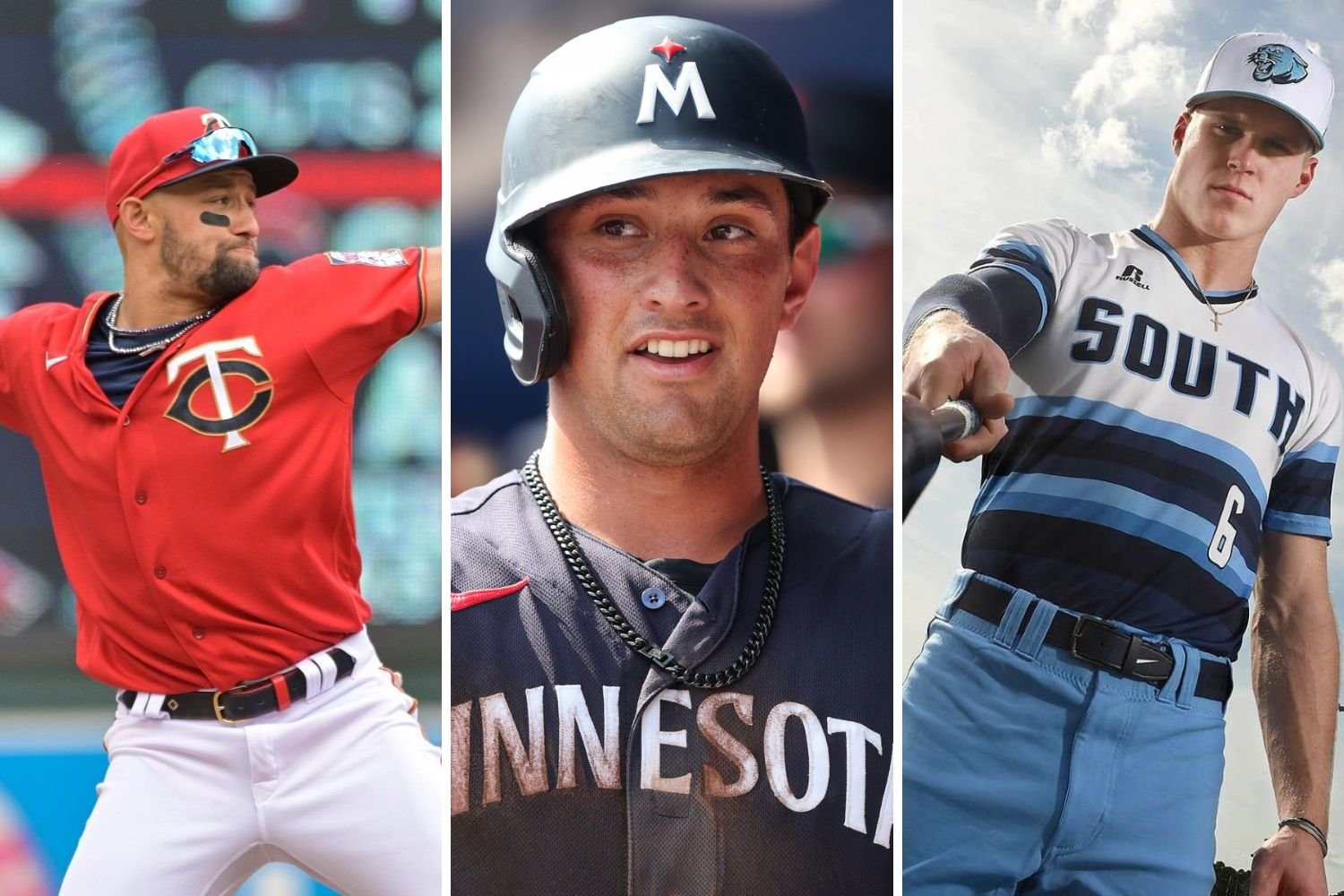 At a basic level, most people in MLB front offices would likely agree that "Best Player Available" is a proper guiding principle for the amateur draft. It's a smart approach to drafting in any sport, really, but especially one with such lengthy, circuitous, and unpredictable development timelines. With that said, determining the "Best Player Available" is not so straightforward in practice. After a certain early point in the first round, this assessment becomes very subjective, and even at the highest picks, opinions tend to vary wildly about who is better than who. Moreover, you have different organizational metrics and evaluation systems, different priorities, and different strategies in play. The bottom line: looking back at players chosen with the highest-stakes draft picks can tell you a lot about a front office's philosophies. Reviewing how those decisions have panned out can be telling in terms of how effective these philosophies have been, and what lessons might be carried forward. Is the Walker Jenkins selection reflective of an adaptive front office evolving its mentality? Or are they merely following their usual blueprint? Let's run it back to the start and see what patterns or takeaways we can find. Top Twins Draft Picks Under the Falvey/Levine Front Office 2017: Royce Lewis, SS (1st overall) By virtue of joining the reigning worst team in the major leagues, Derek Falvey inherited the No. 1 overall pick in the first draft he would oversee as Chief Baseball Officer. Quite a welcoming gift. The top of the that class was a fascinating one. Sometimes there is a clear-cut No. 1 pick, sometimes there are two or three guys who could reasonably be the choice. In 2017, there were a handful of plausible options. Lewis was among them, but generally considered lower in that mix. Two-way player hysteria was taking over in the face of Shohei Ohtani's looming stateside arrival. There was a pair of talents billed as such at the top of the 2017 draft class: Louisville's Brendan McKay and high school phenom Hunter Greene. To the extent there was a consensus choice for the top pick, it was probably Greene. He would've been an exciting addition as a teenager throwing in triple digits along with that trendy two-way potential. Alas, that also made for a highly experimental path, and a costly one to boot with Greene expected to command a big signing bonus. The Twins opted for Lewis in a move that preserved draft pool funds for a later splash. (They took prep pitcher and LSU commit Blayne Enlow in the third round, and signed him overslot with the leftover budget.) Interestingly, they used their second pick, which was essentially a late first-rounder at No. 35 overall, to select college slugger Brent Rooker – a much "safer" draft pick after dominating higher-level competition at Mississippi State. Takeaways: While the Twins would later develop a reputation for highly preferring college players in the draft under Falvey, the first and most significant draft selection under his regime was a high schooler. Take note of this. They did, however, aim to offset the volatility of a raw prep talent with their first pick by adding a more polished college slugger shortly after. Take note of that also. Six years after being drafted with the No. 1 and 2 overall picks, Greene and Lewis are still working to establish themselves as big-leaguers: Greene has thrown 199 MLB innings, Lewis has accrued a whole 140 plate appearances. This despite the fact that both have mostly delivered on their promise when healthy and on the field. A reminder that with high school prospects – even the small percentage who don't fizzle out – it can take a while. 2018: Trevor Larnach, OF (20th overall) In the second draft under the new regime, Minnesota went back to the Rooker profile with their first pick. Larnach was an established collegiate masher who featured on a star-studded, national champion Oregon State team. There were no illusions about Larnach being a defensive maven or future batting champ. He was drafted for his proven power at the highest amateur level, which theoretically made him a low-risk pick in the second half of the first round. Looking back, that assessment was ... pretty accurate? It's definitely fair to say the 26-year-old Larnach has fulfilled the "high floor" part of his scouting report. He can hit. He has a .292/.379/.463 career slash line in the minors and a respectable career OPS+ of 93 in the majors. Has he hit enough to justify regular MLB playing time at a bat-first position? Not really, as evidenced by his current presence in Triple-A. Then again, neither had Rooker at age 26. Now he's an All-Star at 28. Takeaways: College bats like Larnach might be appealing for their ostensible quicker path to the majors, but it doesn't always work out that way. Rooker took every bit as long as Lewis to find his footing in the majors. Larnach's breakout might still be ahead, five years in. We probably shouldn't be super hasty to give up on Trevor Larnach? 2019: Keoni Cavaco, SS (13th overall) This pick seemingly went against the organization's scruples. Not only was Cavaco an unrefined prep talent out of high school, he was also generally viewed as a reach this high in the first round. (Cavaco ranked 28th on MLB Pipeline's pre-draft board.) The Twins had scouted him heavily and bought into their favorable assessment of his tools and potential. “I think upside is the right word to use here.” scouting director Sean Johnson said at the time. “He’s got electric bat speed. We think he’s going to have home run power. He’s one of the best third basemen I’ve seen in the high school ranks in my time scouting, and most of the guys who saw him -- that’s including guys that’s done it 20-plus years -- so a great defender.” Most great infield defenders don't play third base in high school. Never mind. Like so many other promising high school players who enamor scouts with their conceptual ceiling, Cavaco didn't reach his. In fact, he has never come close. He's had no success in the pros and currently has a .544 OPS at Single-A as a 22-year-old, on the verge of fizzling out of the system. In this draft, as they did two years earlier when they took a high schooler with their top selection, the Twins aimed for some level of assurance in their next two picks, going with college slugger Matt Wallner (39th overall) and college fireballer Matt Canterino (54th overall). Takeaways: Toolsy teenaged high schoolers are risky, especially near the top of the draft – even when they amaze with their tantalizing potential against prep competition. Cavaco is shaping up as a banner example; he might not even make it Double-A. While the Twins were showing a willingness to gamble on prep picks in the draft, they also were noticeably balancing those gambles out with college standouts in the following selections. 2020: Aaron Sabato, 1B (27th overall) The Twins picked near the end of the first round in 2020 due to their 101-win season the prior year. This was a weird draft – because of COVID, it was cut down to five rounds, and teams had relatively little data to evaluate the class. Under the circumstances, Minnesota opted for what they viewed as the safe pick to pan out into something of substance. Like Larnach and Rooker, Sabato was a proven college slugger seemingly poised for a quick path to the majors on the strength of his bat alone. Unfortunately, we've witnessed the downside of a one-dimensional, strikeout-prone slugger who doesn't slug. (Sound familiar?) The Twins liked his offensive profile, in part, because of advanced metrics. (Sound familiar?) "If you look at him analytically, he lined up with some of the guys that went at the very top of the board," said Johnson at the time. While patience and power have kept his numbers afloat, Sabato has never dominated pro pitching as hoped. He owns a .785 OPS through two-and-a-half minor-league seasons, and is currently batting .226 with a 34% K-rate as a 24-year-old at Double-A. Takeaways: Again: there is no such thing as a safe bet in the MLB Draft. Even the apparent sure-thing bat – drafted solely for that purpose, already at the bottom of the defensive spectrum – can fail to figure it out against professional pitching. Probably not a good idea to use a first-rounder on a position player with zero likelihood of offering any defensive value at any point. 2021: Chase Petty, RHP (26th overall) Another division-winning season in 2020 left the Twins drafting late in the first round again. This time, they reversed course dramatically from the prior year's strategy – from collegiate slugger to prep pitcher. High school arms are notoriously the most high-risk proposition for a top draft pick, and it's a profile the Twins have resolutely avoided with their highest picks under Falvey. Petty was a big exception, due in large part to his big fastball. While reaching triple digits as a high schooler might not have been as novel as it was four years earlier when Hunter Greene was doing it, Petty had plenty of steam behind him and flashed impressive stuff during a brief pro debut. That was enough to sell the Cincinnati Reds on him. They flipped Sonny Gray to Minnesota for Petty in a one-for-one swap, securing the Twins a frontline starter who's made a huge impact over two seasons. In many ways, for a team that fancies itself in immediate contention mode, this is the most ideal use of a late-first-round pick you could ask for. Takeaways: Major-league teams like upside. Would the Twins have enticed Cincinnati if they'd instead selected and offered some 22-year-old college pitcher, or run-of-the-mill high school shortstop? Maybe. I kind of doubt it. The allure of age and projection adds a lot of shine to young pitching prospects. Sometimes it's good to sell high on these assets when the shine is still there. Sometimes that comes back to haunt you. While the Twins have certainly gotten back a lot of value on this pick already, it may ultimately be another we look back at with dread. 2022: Brooks Lee, SS (8th overall) I think most Twins officials would agree that, among all draft picks covered on this list, Lee was the least difficult choice. Possessing a top 10 pick for the first time since Falvey took over, the team had eyes on Lee but didn't figure he would fall to them at No. 8. When he did, the decision was a no-brainer. Lee is a pretty prototypical first-round draft pick: standout collegiate shortstop with a chance to stick at the position. This profile offers a nice mix of polish and floor with upside and ceiling. Surprisingly, he was the first (and only) player of this ilk that the Twins have drafted under this front office. In fact, it's the first such player they've drafted since 2011 when they took Levi Michael, who could aptly be described as Brooks Lee Lite. Outside of Lee and Michael, the Twins haven't taken a college infielder in the first round in almost 30 years ago, when they took Todd Walker out of LSU in 1994. Michael was emblematic of the downside in these types; he had already basically reached his ceiling when the Twins drafted him. Walker better represented the upside – a readymade impact player – and he's probably a better comp for Lee, given that he too was taken with the eighth overall pick. Takeaways: Due to preference or circumstance, the Twins have been really averse to drafting college infielders in the first round! In the MLB draft, things fall where they may and sometimes you have to take what you're given. That looks to have worked out well for the Twins last year. As for this year... 2023: Walker Jenkins, OF (5th overall) For months leading up to this year's draft, consensus solidified around five distinct standout talents atop the class. The three college stars were likely to be off the board by the time Minnesota's selection swung around at No. 5, leaving them with the proposition of taking whichever prep outfielder was left, or pivoting to a different strategy. The Twins chose not to get cute. And that shouldn't surprise anyone. As we've seen while going through this review, the idea that Minnesota's current front office heavily favors college players is pretty off-base. They have used all of their highest-stakes picks on high-school players. Jenkins is merely a continuation of that trend. This front office has amassed lefty-hitting outfielders, having added Larnach and Wallner with previous first-rounders. And it's an affinity that predates the current regime. In recent Twins draft history, Jenkins best approximates Alex Kirilloff, who was taken 15th overall in 2016, just before Falvey took over. A good reminder that while Falvey now ultimately calls the shots, scouting director Sean Johnson runs the draft, and he's a carryover from the previous regime. Some old habits die hard. The Twins love drafting high-school outfielders in the first round and frankly it ain't hard to see why. Of the six prep outfielders the Twins have drafted since the turn of the century – Denard Span (2002), Chris Parmelee (2006), Ben Revere (2007), Aaron Hicks (20008), Byron Buxton (2012), and Kirilloff (2016) – all six have reached the major leagues. A six-for-six hit rate. That just doesn't happen in the crapshoot known as the MLB Draft. Jenkins seems to blend the best of many worlds from the history of Twins drafts. He offers the exhilarating upside of an ascendant teenaged talent, in a historically safe profile. And the team didn't go out on a limb one bit to draft him.
- 19 comments
-
- 7
-

-

-
- walker jenkins
- royce lewis
- (and 1 more)
-
The Twins came out of the break with a remarkably unimpressive series sweep in Oakland, where they had to scratch and claw for everything against the worst team in baseball. The front office made no meaningful changes over the All-Star break as they continue to watch their team's quality of play on the field spiral with no intervention. Image courtesy of Darren Yamashita-USA TODAY Sports Weekly Snapshot: Mon, 7/10 through Sun, 7/16 *** Record Last Week: 3-0 (Overall: 48-46) Run Differential Last Week: +5 (Overall: +32) Standing: 1st Place in AL Central (2.5 GA) Last Week's Game Results: Game 92 | MIN 5, OAK 4: Ugly Win Salvaged on Late Gallo HR Game 93 | MIN 10, OAK 7: López Struggles But Bats Answer Call Game 94 | MIN 5, OAK 4: Bullpen, Kirilloff Come Up Big NEWS & NOTES Upon returning to the Twins in early July, when he took over for an injured Royce Lewis at third base, José Miranda looked much the same as he did before his demotion. His time in Triple-A, where he posted a .686 OPS, wasn't any different. Miranda had a monster spring offensively, but has never looked right since. Maybe now we have some explanation. On Saturday, Miranda was placed on the IL with an injury to the same right shoulder that bothered him throughout spring training. Evidently, the issue never quite went away. He insisted back then his shoulder wasn't affecting his swing – and his Grapefruit numbers backed that up – but that might have changed over time. Notably, Miranda has not been able to muster any power this year, after piling up 40 extra-base hits as a rookie. The lack of any impact from Miranda is among the biggest factors in Minnesota's offensive downfall this year. He's slated to receive a PRP injection and re-evaluate in a week, but it feels tough to expect much from the 25-year-old in what's looking like a lost year. The question now is whether a jolt from Matt Wallner, perhaps similar to the one Miranda provided last year, could help fill that void. Wallner joins the roster in Miranda's stead, and he'll try to find regular playing time amidst a left-handed corner glut on the roster. Meanwhile, the Twins will try to figure it out at third base with Kyle Farmer and Willi Castro. Help is on the way for the infield. Jorge Polanco embarked on a rehab assignment at Triple-A on Sunday. He played DH for the Saints and went 2-for-3 with a double. In the same game at CHS Field, Dallas Keuchel allowed one earned run over six innings, leaving his ERA at 0.90 through five starts. Don't be surprised to see Keuchel join the Twins rotation sometime this week, with seven games in seven days ahead. HIGHLIGHTS The aftermath of Minnesota's players-only meeting, which saw the offense quickly revert right back to its familiar level of lifelessness, was a ringing endorsement for the idea that talk is empty. However, it has been nice to see at least a couple of players put their money where their mouths are. Carlos Correa, most critically, is leading that pack. His move to the leadoff spot coincided with the meeting, and Correa's been filling the role brilliantly, with a .423 on-base percentage and noticeable improvement in at-bat quality since. The Oakland series saw him go 5-for-12 with a pair of doubles. Correa drove in two on Saturday night, delivering a trend-bucking clutch knock with the bases juiced. It's easy to forget now that, before the unlikely signing of Correa, Farmer was lined up to be the Twins' shortstop. He's played a large role here anyway, and while expectations are far smaller than Correa's, the former Red has been a disappointment by his own measure. Farmer described his first half to Dan Hayes of The Athletic as "horse manure." In Oakland, Farmer looked like a guy ready to flush that first half. (Careful about that though.) He tripled and walked as cleanup hitter on Friday, then delivered a signature performance on Saturday with three hits and three RBIs in a 10-7 win. He lifted his OPS by 55 points in a two-game span. Backing up a solid overall showing from the offense, the bullpen came up huge in Oakland. Embattled right-hander Emilio Pagán played a pivotal role by getting nine outs over two scoreless appearances. Jhoan Duran emphatically responded to his All-Star snub by picking up saves in three straight games – though that doesn't necessarily bode well for his availability in Seattle. LOWLIGHTS While Correa continues his turnaround and Polanco works his way back, Byron Buxton shows no signs of shaking off his immense struggles. He is lost at sea, timidly tip-toeing his way through every at-bat, hoping desperately to guess right on a mistake. Friday's game saw Buxton strike out looking at three straight fastballs with the bases loaded. It says a lot that Buxton managing to grind out a bases-loaded walk on Saturday night against a no-name reliever fresh out of Triple-A (where he averaged 4.0 BB/9) was treated as a chest-thumping moment of redemption. Buxton otherwise went 0-for-12 with seven strikeouts in the series, despite many of those ABs coming against very ordinary left-handed pitchers. Yeah, he's had some bad luck on hard-hit balls. But Buxton inspires no confidence, no hint of lurking greatness. That's been the case for weeks. He's now a one-dimensional player within a one-dimensional player – a bat-only option with middling discipline, who exclusively looks to turn on the ball and launch it. Pitchers are casually working around him and he's visibly helpless against it. To a point, the Twins' enduring faith in Buxton is a practical necessity. He just signed a $100 million contract and they can't just plop him on the bench. Also, their recognition of his innate talent is valid. We know what can happen when it clicks for Buck. We know how fast the switch can flip. Unfortunately, that fleeting hope needs to be balanced against the harshness of undeniable reality. Buxton hasn't been streaky, he's just been bad. His momentary outbursts of offense – a few mile-long home runs bunched together in a brief span – are surrounded by oceans of unproductive PAs at the heart of the lineup. It's not a tenable situation. Continuing to shrug their shoulders while Buxton tanks their lineup as everyday No. 3 hitter is a prime example of this team's frustrating "all talk, no action" routine. You can't continue to say something's got to change, change nothing, and then act flabbergasted when nothing changes. [Insert falsely attributed Albert Einstein quote about insanity.] I'm not claiming to know what the answer is but it needs to start with disrupting the status quo. Move Buxton down in the lineup. Sit him against righties a few times a week. Consider a long-term injured list stint, because it's impossible to believe Buxton is at a remotely adequate level physically with this downright abysmal play. The Twins can't continue to live with a dreadful offense for which Buxton is setting the tone. Polanco's impending return creates a pressure point of sorts, because as things stand, they're going to have to choose between losing Edouard Julien's essential bat ... or opening up the DH spot for him. The urgency for more offense was underscored by a very discouraging weekend from the rotation. Kenta Maeda and Joe Ryan were underwhelming against the worst lineup in the majors. Pablo López was flat-out terrible, following up the best start of his career with an absolute clunker in which he gave up seven earned runs against the freaking A's. No one on this team can seem to sustain and harness a good vibe – even the All-Stars. TRENDING STORYLINE Wallner is back on the roster, but now finds himself stuck in a bit of a playing-time crunch, with Max Kepler and Joey Gallo both still around. Wallner didn't start on Saturday or Sunday after being recalled, though the Twins faced left-handed starters in both games. He should be in line to start most days against righties, though he would need to do so at the expense of Kepler, because both only play right field. (To this point, anyway.) That shouldn't be a hard decision, but ... it would represent a change of tune for the Twins, who've been standing by Kepler through thick and thin. Their faith has paid off to an extent – he's been legitimately solid for a month or so. Are they now going to start sitting him three or four times a week in favor for Wallner? Seems kind of hard to imagine, based on all we know. But they didn't call up Wallner to sit on the bench,. It will to be extremely interesting to see how the starts are divvied with all right-handers on the slate next week. Worth noting: Kepler's best bet to keep himself in the lineup almost everyday would be to change his tune on playing center. But there are no indications that's in the cards. LOOKING AHEAD The Twins continue their West Coast road trip with more late-night games from Seattle. The Mariners aren't great, but if the Twins bring the same quality of play as they put forth in Oakland, they're gonna get clobbered. Pitching match-ups for next weekend are tentative. As mentioned earlier, it wouldn't be a shock to see Keuchel step in to make a start against the White Sox. MONDAY, 7/17: TWINS @ MARINERS – RHP Sonny Gray v. RHP Logan Gilbert TUESDAY, 7/18: TWINS @ MARINERS – RHP Bailey Ober v. RHP Bryan Woo WEDNESDAY, 7/19: TWINS @ MARINERS – RHP Kenta Maeda v. RHP Luis Castillo THURSDAY, 7/20: TWINS @ MARINERS – RHP Pablo Lopez v. RHP George Kirby FRIDAY, 7/21: WHITE SOX @ TWINS – RHP Lance Lynn v. RHP Joe Ryan SATURDAY, 7/22: WHITE SOX @ TWINS – RHP Dylan Cease v. RHP Sonny Gray SUNDAY, 7/23: WHITE SOX @ TWINS – RHP Lucas Giolito v. RHP Bailey Ober View full article
-
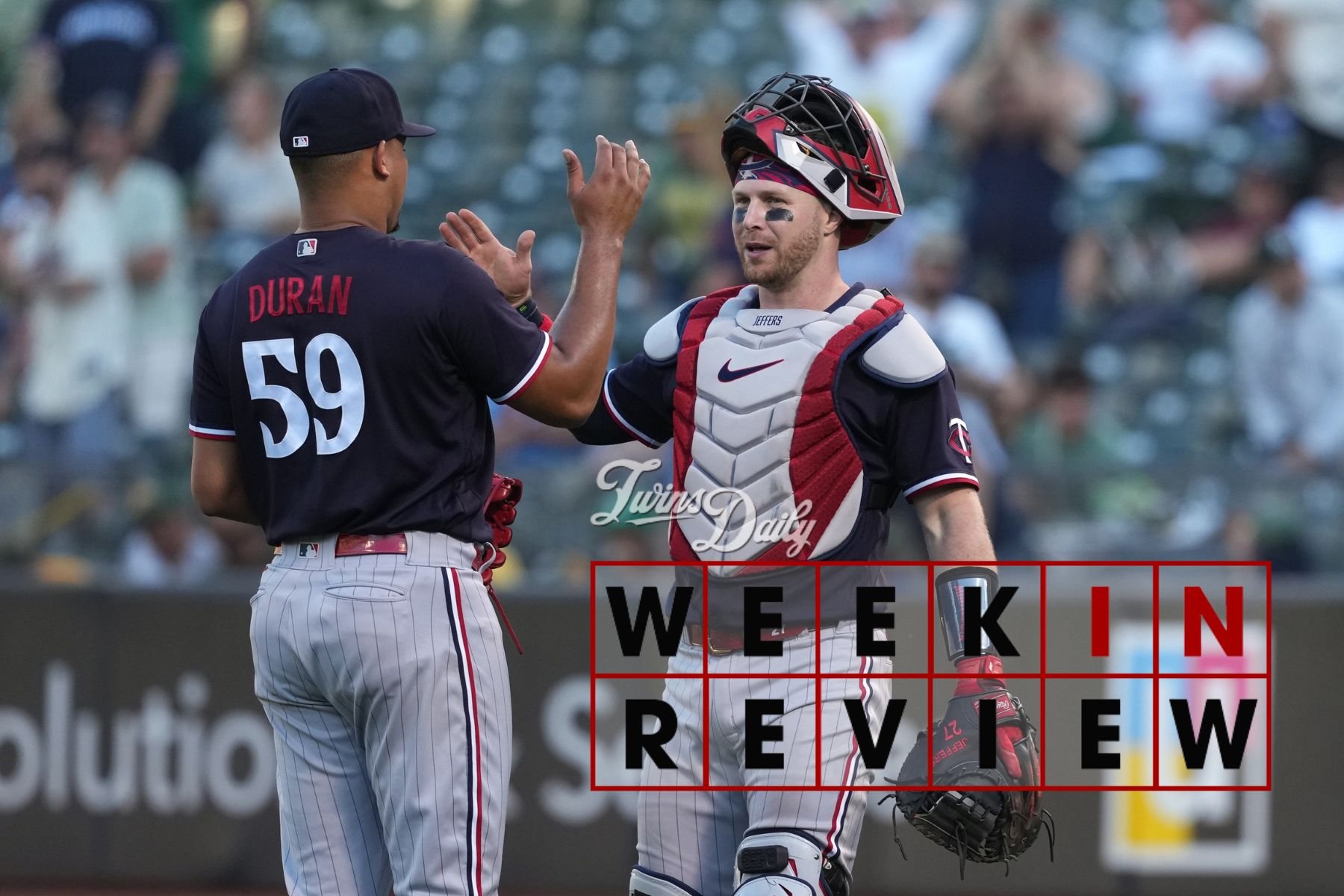 Weekly Snapshot: Mon, 7/10 through Sun, 7/16 *** Record Last Week: 3-0 (Overall: 48-46) Run Differential Last Week: +5 (Overall: +32) Standing: 1st Place in AL Central (2.5 GA) Last Week's Game Results: Game 92 | MIN 5, OAK 4: Ugly Win Salvaged on Late Gallo HR Game 93 | MIN 10, OAK 7: López Struggles But Bats Answer Call Game 94 | MIN 5, OAK 4: Bullpen, Kirilloff Come Up Big NEWS & NOTES Upon returning to the Twins in early July, when he took over for an injured Royce Lewis at third base, José Miranda looked much the same as he did before his demotion. His time in Triple-A, where he posted a .686 OPS, wasn't any different. Miranda had a monster spring offensively, but has never looked right since. Maybe now we have some explanation. On Saturday, Miranda was placed on the IL with an injury to the same right shoulder that bothered him throughout spring training. Evidently, the issue never quite went away. He insisted back then his shoulder wasn't affecting his swing – and his Grapefruit numbers backed that up – but that might have changed over time. Notably, Miranda has not been able to muster any power this year, after piling up 40 extra-base hits as a rookie. The lack of any impact from Miranda is among the biggest factors in Minnesota's offensive downfall this year. He's slated to receive a PRP injection and re-evaluate in a week, but it feels tough to expect much from the 25-year-old in what's looking like a lost year. The question now is whether a jolt from Matt Wallner, perhaps similar to the one Miranda provided last year, could help fill that void. Wallner joins the roster in Miranda's stead, and he'll try to find regular playing time amidst a left-handed corner glut on the roster. Meanwhile, the Twins will try to figure it out at third base with Kyle Farmer and Willi Castro. Help is on the way for the infield. Jorge Polanco embarked on a rehab assignment at Triple-A on Sunday. He played DH for the Saints and went 2-for-3 with a double. In the same game at CHS Field, Dallas Keuchel allowed one earned run over six innings, leaving his ERA at 0.90 through five starts. Don't be surprised to see Keuchel join the Twins rotation sometime this week, with seven games in seven days ahead. HIGHLIGHTS The aftermath of Minnesota's players-only meeting, which saw the offense quickly revert right back to its familiar level of lifelessness, was a ringing endorsement for the idea that talk is empty. However, it has been nice to see at least a couple of players put their money where their mouths are. Carlos Correa, most critically, is leading that pack. His move to the leadoff spot coincided with the meeting, and Correa's been filling the role brilliantly, with a .423 on-base percentage and noticeable improvement in at-bat quality since. The Oakland series saw him go 5-for-12 with a pair of doubles. Correa drove in two on Saturday night, delivering a trend-bucking clutch knock with the bases juiced. It's easy to forget now that, before the unlikely signing of Correa, Farmer was lined up to be the Twins' shortstop. He's played a large role here anyway, and while expectations are far smaller than Correa's, the former Red has been a disappointment by his own measure. Farmer described his first half to Dan Hayes of The Athletic as "horse manure." In Oakland, Farmer looked like a guy ready to flush that first half. (Careful about that though.) He tripled and walked as cleanup hitter on Friday, then delivered a signature performance on Saturday with three hits and three RBIs in a 10-7 win. He lifted his OPS by 55 points in a two-game span. Backing up a solid overall showing from the offense, the bullpen came up huge in Oakland. Embattled right-hander Emilio Pagán played a pivotal role by getting nine outs over two scoreless appearances. Jhoan Duran emphatically responded to his All-Star snub by picking up saves in three straight games – though that doesn't necessarily bode well for his availability in Seattle. LOWLIGHTS While Correa continues his turnaround and Polanco works his way back, Byron Buxton shows no signs of shaking off his immense struggles. He is lost at sea, timidly tip-toeing his way through every at-bat, hoping desperately to guess right on a mistake. Friday's game saw Buxton strike out looking at three straight fastballs with the bases loaded. It says a lot that Buxton managing to grind out a bases-loaded walk on Saturday night against a no-name reliever fresh out of Triple-A (where he averaged 4.0 BB/9) was treated as a chest-thumping moment of redemption. Buxton otherwise went 0-for-12 with seven strikeouts in the series, despite many of those ABs coming against very ordinary left-handed pitchers. Yeah, he's had some bad luck on hard-hit balls. But Buxton inspires no confidence, no hint of lurking greatness. That's been the case for weeks. He's now a one-dimensional player within a one-dimensional player – a bat-only option with middling discipline, who exclusively looks to turn on the ball and launch it. Pitchers are casually working around him and he's visibly helpless against it. To a point, the Twins' enduring faith in Buxton is a practical necessity. He just signed a $100 million contract and they can't just plop him on the bench. Also, their recognition of his innate talent is valid. We know what can happen when it clicks for Buck. We know how fast the switch can flip. Unfortunately, that fleeting hope needs to be balanced against the harshness of undeniable reality. Buxton hasn't been streaky, he's just been bad. His momentary outbursts of offense – a few mile-long home runs bunched together in a brief span – are surrounded by oceans of unproductive PAs at the heart of the lineup. It's not a tenable situation. Continuing to shrug their shoulders while Buxton tanks their lineup as everyday No. 3 hitter is a prime example of this team's frustrating "all talk, no action" routine. You can't continue to say something's got to change, change nothing, and then act flabbergasted when nothing changes. [Insert falsely attributed Albert Einstein quote about insanity.] I'm not claiming to know what the answer is but it needs to start with disrupting the status quo. Move Buxton down in the lineup. Sit him against righties a few times a week. Consider a long-term injured list stint, because it's impossible to believe Buxton is at a remotely adequate level physically with this downright abysmal play. The Twins can't continue to live with a dreadful offense for which Buxton is setting the tone. Polanco's impending return creates a pressure point of sorts, because as things stand, they're going to have to choose between losing Edouard Julien's essential bat ... or opening up the DH spot for him. The urgency for more offense was underscored by a very discouraging weekend from the rotation. Kenta Maeda and Joe Ryan were underwhelming against the worst lineup in the majors. Pablo López was flat-out terrible, following up the best start of his career with an absolute clunker in which he gave up seven earned runs against the freaking A's. No one on this team can seem to sustain and harness a good vibe – even the All-Stars. TRENDING STORYLINE Wallner is back on the roster, but now finds himself stuck in a bit of a playing-time crunch, with Max Kepler and Joey Gallo both still around. Wallner didn't start on Saturday or Sunday after being recalled, though the Twins faced left-handed starters in both games. He should be in line to start most days against righties, though he would need to do so at the expense of Kepler, because both only play right field. (To this point, anyway.) That shouldn't be a hard decision, but ... it would represent a change of tune for the Twins, who've been standing by Kepler through thick and thin. Their faith has paid off to an extent – he's been legitimately solid for a month or so. Are they now going to start sitting him three or four times a week in favor for Wallner? Seems kind of hard to imagine, based on all we know. But they didn't call up Wallner to sit on the bench,. It will to be extremely interesting to see how the starts are divvied with all right-handers on the slate next week. Worth noting: Kepler's best bet to keep himself in the lineup almost everyday would be to change his tune on playing center. But there are no indications that's in the cards. LOOKING AHEAD The Twins continue their West Coast road trip with more late-night games from Seattle. The Mariners aren't great, but if the Twins bring the same quality of play as they put forth in Oakland, they're gonna get clobbered. Pitching match-ups for next weekend are tentative. As mentioned earlier, it wouldn't be a shock to see Keuchel step in to make a start against the White Sox. MONDAY, 7/17: TWINS @ MARINERS – RHP Sonny Gray v. RHP Logan Gilbert TUESDAY, 7/18: TWINS @ MARINERS – RHP Bailey Ober v. RHP Bryan Woo WEDNESDAY, 7/19: TWINS @ MARINERS – RHP Kenta Maeda v. RHP Luis Castillo THURSDAY, 7/20: TWINS @ MARINERS – RHP Pablo Lopez v. RHP George Kirby FRIDAY, 7/21: WHITE SOX @ TWINS – RHP Lance Lynn v. RHP Joe Ryan SATURDAY, 7/22: WHITE SOX @ TWINS – RHP Dylan Cease v. RHP Sonny Gray SUNDAY, 7/23: WHITE SOX @ TWINS – RHP Lucas Giolito v. RHP Bailey Ober
- 37 comments
-
- 4
-

-
-
- carlos correa
- kyle farmer
- (and 2 more)
-
During the All-Star break, the New York Yankees parted ways with their analytically-renowned hitting coach in an effort to jolt their underperforming offense. Are the Minnesota Twins taking note? Image courtesy of Matt Blewett-USA TODAY Sports On Sunday, following their 7-4 loss against the Cubs to close out the break, the Yankees announced that they had dismissed hitting coach Dillon Lawson. It was described as a "rare midseason change by a franchise that has prized stability." "I've never not been willing to make a decision like this but with careful consideration, I decided as we move forward, we have a sprint here in the second half, I felt like this was necessary," said New York GM Brian Cashman. It's natural to draw parallels to the situation here in Minnesota, where continual teamwide failures in hitting approach have called into question the viability of top hitting coach David Popkins and his program. Those parallels are even more intriguing when you take a step back and look at the paths that brought us to this point. Lawson was originally hired by the Yankees in December of 2021, just weeks after the Twins hired Popkins. The two had a number of commonalities: both fairly young, considered up-and-comers after having success in reputed minor-league systems -- Lawson as minor-league hitting coordinator for the Yankees, Popkins as a Single-A hitting coach for the Dodgers. Alas, neither had ever coached or played in the majors before. From the outside at least, it appeared that the Twins and Yankees were of similar minds when they made these hires. In 2019, they had the two best offenses in baseball, ranking first and second in runs scored, on the strength of power-driven approaches that led to record-setting homer totals. Both clubs embraced a mentality of attacking and elevating the ball, with spectacular results. (Albeit against juiced balls.) And so, as these potent offenses saw their results dip in 2020 and further in 2021 -- when the Twins ranked 14th in runs scored, the Yankees 19th -- both organizations decided to make a change. Evidently, they wanted to recapture that magic of the 2019 season, because they each selected known students of analytics, at a time where modern hitting theory at large focused greatly on the idea of sacrificing contact for damage swings, and adopting a philosophy where barrels, exit velocity and launch angles became the gold standards. Again: both teams had seen this work brilliantly first-hand. In 2022, their first year under Lawson, the Yankees returned to the top of the American League in runs scored -- in no small part because of Aaron Judge's otherworldly individual season -- but this year they are back down to 19th at the break. The decision to move on from Lawson is interesting, but so is the choice for his replacement: Sean Casey, who is basically the polar opposite as a hire. Casey, who had been working as an MLB Network studio analyst, spent 12 years playing in the majors. He has no previous formal coaching experience, but a lot of big-league playing experience, which the Yankees are hoping will resonate with an underperforming lineup that was still outperforming the Twins (ranked 24th in runs), despite being without Judge. What can we take away from all of this as Twins fans? Well, the Yankees have now set a fresh precedent with their willingness to make a midseason change, even though it's not in their nature. And they decided to pivot completely away from what they viewed as a broken approach. Could the Twins do the same? Nelson Cruz is a popular name floating around right now, but there are probably several different candidates out there who would represent a Casey-like change of pace. It would be a very uncharacteristic shift for this front office. There's another implication here, though. Because the thing is, Casey-like guys are generally going to be the only options available right now. All of the desirable, established, experienced hitting coaches have jobs here in the middle of the season. Well, except maybe one. If the Twins remain committed to their modernized analytics-driven hitting approach, but feel that maybe Popkins isn't the right voice to effectively coach it, Lawson is now on the market. He was extremely highly regarded around the game when the Yankees hired him less than two years ago. You're almost never going to find a candidate like this available when you're trying to make a hitting coach change in the middle of July. But here we are. What would you do? View full article
-
The Yankees' Change at Hitting Coach Has Interesting Implications for Twins
Nick Nelson posted an article in Twins
 On Sunday, following their 7-4 loss against the Cubs to close out the break, the Yankees announced that they had dismissed hitting coach Dillon Lawson. It was described as a "rare midseason change by a franchise that has prized stability." "I've never not been willing to make a decision like this but with careful consideration, I decided as we move forward, we have a sprint here in the second half, I felt like this was necessary," said New York GM Brian Cashman. It's natural to draw parallels to the situation here in Minnesota, where continual teamwide failures in hitting approach have called into question the viability of top hitting coach David Popkins and his program. Those parallels are even more intriguing when you take a step back and look at the paths that brought us to this point. Lawson was originally hired by the Yankees in December of 2021, just weeks after the Twins hired Popkins. The two had a number of commonalities: both fairly young, considered up-and-comers after having success in reputed minor-league systems -- Lawson as minor-league hitting coordinator for the Yankees, Popkins as a Single-A hitting coach for the Dodgers. Alas, neither had ever coached or played in the majors before. From the outside at least, it appeared that the Twins and Yankees were of similar minds when they made these hires. In 2019, they had the two best offenses in baseball, ranking first and second in runs scored, on the strength of power-driven approaches that led to record-setting homer totals. Both clubs embraced a mentality of attacking and elevating the ball, with spectacular results. (Albeit against juiced balls.) And so, as these potent offenses saw their results dip in 2020 and further in 2021 -- when the Twins ranked 14th in runs scored, the Yankees 19th -- both organizations decided to make a change. Evidently, they wanted to recapture that magic of the 2019 season, because they each selected known students of analytics, at a time where modern hitting theory at large focused greatly on the idea of sacrificing contact for damage swings, and adopting a philosophy where barrels, exit velocity and launch angles became the gold standards. Again: both teams had seen this work brilliantly first-hand. In 2022, their first year under Lawson, the Yankees returned to the top of the American League in runs scored -- in no small part because of Aaron Judge's otherworldly individual season -- but this year they are back down to 19th at the break. The decision to move on from Lawson is interesting, but so is the choice for his replacement: Sean Casey, who is basically the polar opposite as a hire. Casey, who had been working as an MLB Network studio analyst, spent 12 years playing in the majors. He has no previous formal coaching experience, but a lot of big-league playing experience, which the Yankees are hoping will resonate with an underperforming lineup that was still outperforming the Twins (ranked 24th in runs), despite being without Judge. What can we take away from all of this as Twins fans? Well, the Yankees have now set a fresh precedent with their willingness to make a midseason change, even though it's not in their nature. And they decided to pivot completely away from what they viewed as a broken approach. Could the Twins do the same? Nelson Cruz is a popular name floating around right now, but there are probably several different candidates out there who would represent a Casey-like change of pace. It would be a very uncharacteristic shift for this front office. There's another implication here, though. Because the thing is, Casey-like guys are generally going to be the only options available right now. All of the desirable, established, experienced hitting coaches have jobs here in the middle of the season. Well, except maybe one. If the Twins remain committed to their modernized analytics-driven hitting approach, but feel that maybe Popkins isn't the right voice to effectively coach it, Lawson is now on the market. He was extremely highly regarded around the game when the Yankees hired him less than two years ago. You're almost never going to find a candidate like this available when you're trying to make a hitting coach change in the middle of July. But here we are. What would you do?
 -
What about the article indicates I have a "lotta faith" in Keuchel?
- 67 replies
-
- 4
-
-

-
- dallas keuchel
- tyler mahle
- (and 3 more)
-
Even in a diminished state, the former Cy Young winner could play a valuable role in preserving the Twins' elite rotation for the later stages of the season. (And beyond?) Image courtesy of Tim Heitman-USA TODAY Sports When the Twins signed Dallas Keuchel to a minor-league contract last month, it caught many of us off-guard. Once known as one of the best left-handed starters in the game, Keuchel had faded in recent years as his already modest velocity dropped to untenable levels. Last year, three different teams gave him chances. Keuchel pitched poorly for the White Sox, Diamondbacks and Rangers, finishing the season with a 9.20 ERA in 14 starts. In 2022, he posted a 5.28 ERA in 162 innings for Chicago. Turning 35 in January and unsigned during the offseason, it appeared as though the southpaw might hang 'em up. Instead, he committed himself to a comeback, working out at the esteemed Driveline facilities in hopes of regaining a few ticks on his fastball and attracting a curious team's attention. That it turned out to be the Twins he attracted – or, the team that most attracted him, if had multiple suitors – is interesting. They have an amazingly strong rotation featuring stable, rock-solid, healthy options from front to back. Even after losing Tyler Mahle. But within the scope of this high-quality quintet – now lacking contingencies, with Mahle down and Louie Varland struggling in Triple-A – we find the possible underlying driver of Keuchel's acquisition. Minnesota's rotation has been the class of the league in the first half, but there's an elephant in the room: these pitchers are at major risk for running out of gas down the stretch. Among all Twins starters, only Pablo López threw more than 150 innings last year, at 180. Joe Ryan set a new professional workload high last year with 147 innings – he'd never thrown even 125 in a season before. Sonny Gray was limited to 120 innings due to multiple injured list stints, and hasn't thrown 150 in a season since 2019. (For what it's worth, both have seen their results falter somewhat in recent weeks as they've approached the 100-IP mark.) Kenta Maeda missed all of last season while recovering from elbow surgery, after throwing 106 innings in 2021 and 67 in 2020. Bailey Ober threw only 77 innings for the Twins in a 2022 campaign tanked by injuries, and he's never surpassed 100 innings in a season as a pro. While we should all be enjoying the epic greatness of this Twins rotation, we should also recognize its precariousness heading into uncharted waters for the stretch run. Or, more pertinently: the front office needs to recognize it. And the Keuchel signing seems like a sign that they do. This front office, and Rocco Baldelli, are evidently keen to the idea of a six-man rotation. They opened the season with one in 2022, and assembled the personnel for one again this year by acquiring López. They instead opted to stick with five starters out of the gates, and have kept it that way mostly due to circumstance. But as workloads mount and depth options thin out, the Twins saw a need for another semi-reliable pitcher to potentially groom for that arm-preserving sixth starter role. Enter: Dallas Keuchel. The five current Twins starters have set an incredibly high bar with their performance that Keuchel, in his present form, has almost no hope of reaching. But the Twins aren't realistically asking for that – merely a capable arm that can give them some innings at a league average-ish level while giving the team's other starters (not to mention their beleaguered bullpen) a break. Minnesota is no lock to make the playoffs as is, but they have zero hope if their starters or top relievers start breaking down. Keuchel strikes me as a strategic reinforcement intended to increase the chances of key fixtures like Gray, Ober, and Jhoan Duran staying healthy and effective into September and (hopefully) October. The question becomes: is Keuchel up to the task? The Twins cannot afford to be throwing away games with replacement-level starters, and needless to say, their offense doesn't provide much margin for error. If you're getting the 2021-22 version of Keuchel, then you might as well just give the nod to Varland and let him take the lumps. The Twins are hoping Keuchel can prove to be a better option for this utility on multiple levels. First, performance – whereas Varland has an 8.28 ERA in three starts since returning to the Saints, Keuchel comparatively has a 0.64 ERA in three starts since coming aboard. There's also this, though: Varland himself is a young developing arm whose usage needs to be managed carefully. The same is even more true for Simeon Woods Richardson, another (underperforming) option in Triple-A, who might soon be in line for a move to the bullpen. Therein lies the hidden appeal of Keuchel: He is a historically durable and resilient veteran arm whose longevity the Twins need not worry about one iota. To the extent his on-field results make it feasible, Baldelli could ride Keuchel a little bit and squeeze some innings for the benefit of his other starters and relievers. Already Keuchel has pushed to almost 90 pitches in his minor-league build-up, which seems a promising sign. Again, this whole concept is contingent on Keuchel pitching to an acceptable level, which is perhaps a reach. That said, the Twins have reason to be heartened by some of the other success stories they've seen out of Driveline, and the southpaw's initial results for St. Paul – albeit against Triple-A hitters – are encouraging. The 11-to-8 K/BB ratio, maybe not so much, but Keuchel is keeping his pitches off the barrels of opposing hitters and that's something he made his name on. With an opt-out reportedly upcoming in his contract later this month, a decision point is not far off for the Twins. Surely Keuchel did not sign here with an intention of pitching at Triple-A for two months. If my (speculative!) suspicion is correct, and the rotation is able to keep avoiding injures, we will likely see Keuchel up in the majors as an additive piece to the rotation, ideally helping the Twins navigate the second half – including a stretch coming out of the break where they play 29 games in 31 days – without need to fret as much over the compounding workloads for the starting pitching corps that their fate depends on. View full article
- 67 replies
-
- 2
-
-
-
- dallas keuchel
- tyler mahle
- (and 3 more)
-
Folding Dallas Keuchel into 6-Man Rotation Would Be Wise Choice for Twins
Nick Nelson posted an article in Twins
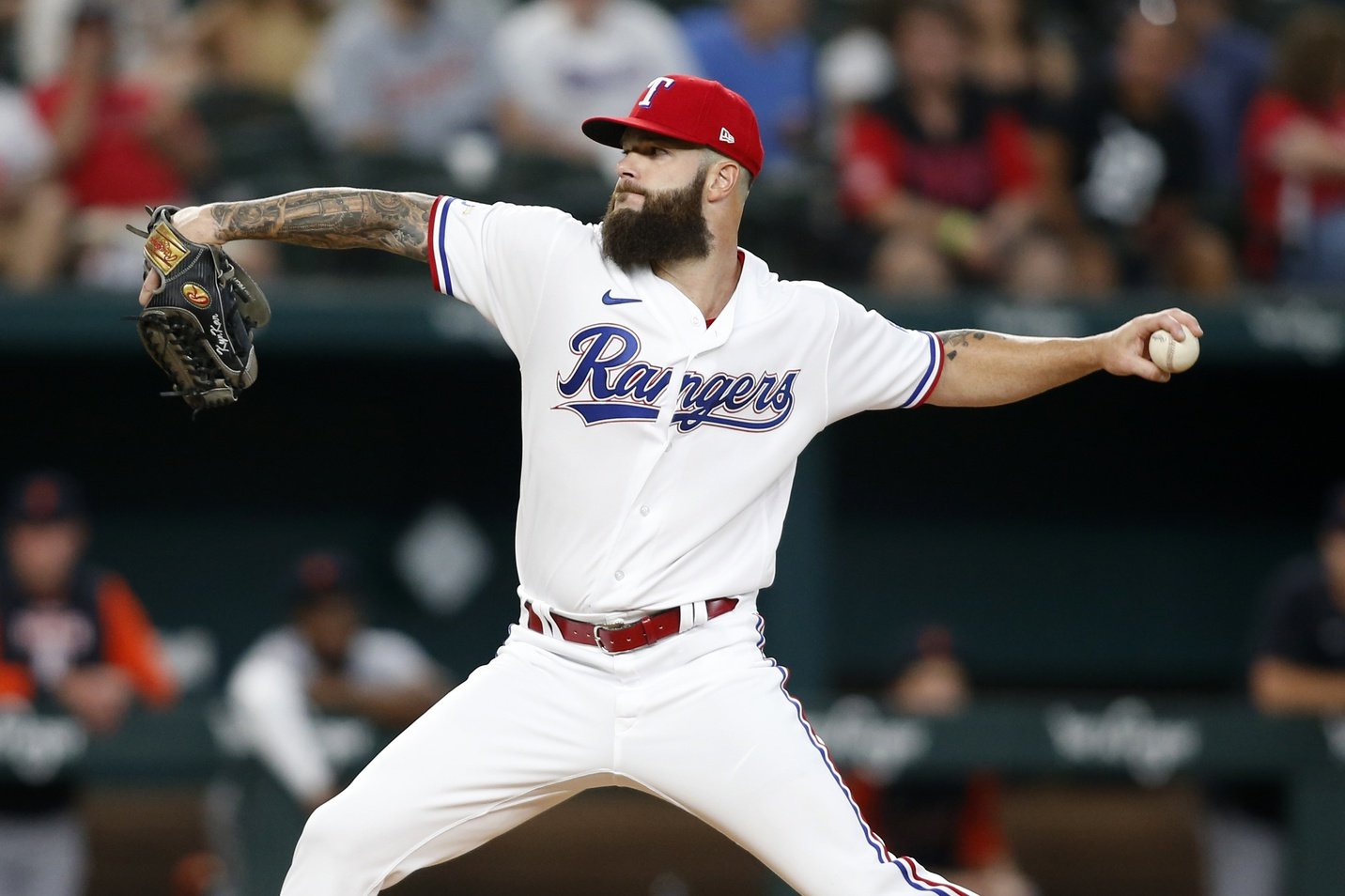 When the Twins signed Dallas Keuchel to a minor-league contract last month, it caught many of us off-guard. Once known as one of the best left-handed starters in the game, Keuchel had faded in recent years as his already modest velocity dropped to untenable levels. Last year, three different teams gave him chances. Keuchel pitched poorly for the White Sox, Diamondbacks and Rangers, finishing the season with a 9.20 ERA in 14 starts. In 2022, he posted a 5.28 ERA in 162 innings for Chicago. Turning 35 in January and unsigned during the offseason, it appeared as though the southpaw might hang 'em up. Instead, he committed himself to a comeback, working out at the esteemed Driveline facilities in hopes of regaining a few ticks on his fastball and attracting a curious team's attention. That it turned out to be the Twins he attracted – or, the team that most attracted him, if had multiple suitors – is interesting. They have an amazingly strong rotation featuring stable, rock-solid, healthy options from front to back. Even after losing Tyler Mahle. But within the scope of this high-quality quintet – now lacking contingencies, with Mahle down and Louie Varland struggling in Triple-A – we find the possible underlying driver of Keuchel's acquisition. Minnesota's rotation has been the class of the league in the first half, but there's an elephant in the room: these pitchers are at major risk for running out of gas down the stretch. Among all Twins starters, only Pablo López threw more than 150 innings last year, at 180. Joe Ryan set a new professional workload high last year with 147 innings – he'd never thrown even 125 in a season before. Sonny Gray was limited to 120 innings due to multiple injured list stints, and hasn't thrown 150 in a season since 2019. (For what it's worth, both have seen their results falter somewhat in recent weeks as they've approached the 100-IP mark.) Kenta Maeda missed all of last season while recovering from elbow surgery, after throwing 106 innings in 2021 and 67 in 2020. Bailey Ober threw only 77 innings for the Twins in a 2022 campaign tanked by injuries, and he's never surpassed 100 innings in a season as a pro. While we should all be enjoying the epic greatness of this Twins rotation, we should also recognize its precariousness heading into uncharted waters for the stretch run. Or, more pertinently: the front office needs to recognize it. And the Keuchel signing seems like a sign that they do. This front office, and Rocco Baldelli, are evidently keen to the idea of a six-man rotation. They opened the season with one in 2022, and assembled the personnel for one again this year by acquiring López. They instead opted to stick with five starters out of the gates, and have kept it that way mostly due to circumstance. But as workloads mount and depth options thin out, the Twins saw a need for another semi-reliable pitcher to potentially groom for that arm-preserving sixth starter role. Enter: Dallas Keuchel. The five current Twins starters have set an incredibly high bar with their performance that Keuchel, in his present form, has almost no hope of reaching. But the Twins aren't realistically asking for that – merely a capable arm that can give them some innings at a league average-ish level while giving the team's other starters (not to mention their beleaguered bullpen) a break. Minnesota is no lock to make the playoffs as is, but they have zero hope if their starters or top relievers start breaking down. Keuchel strikes me as a strategic reinforcement intended to increase the chances of key fixtures like Gray, Ober, and Jhoan Duran staying healthy and effective into September and (hopefully) October. The question becomes: is Keuchel up to the task? The Twins cannot afford to be throwing away games with replacement-level starters, and needless to say, their offense doesn't provide much margin for error. If you're getting the 2021-22 version of Keuchel, then you might as well just give the nod to Varland and let him take the lumps. The Twins are hoping Keuchel can prove to be a better option for this utility on multiple levels. First, performance – whereas Varland has an 8.28 ERA in three starts since returning to the Saints, Keuchel comparatively has a 0.64 ERA in three starts since coming aboard. There's also this, though: Varland himself is a young developing arm whose usage needs to be managed carefully. The same is even more true for Simeon Woods Richardson, another (underperforming) option in Triple-A, who might soon be in line for a move to the bullpen. Therein lies the hidden appeal of Keuchel: He is a historically durable and resilient veteran arm whose longevity the Twins need not worry about one iota. To the extent his on-field results make it feasible, Baldelli could ride Keuchel a little bit and squeeze some innings for the benefit of his other starters and relievers. Already Keuchel has pushed to almost 90 pitches in his minor-league build-up, which seems a promising sign. Again, this whole concept is contingent on Keuchel pitching to an acceptable level, which is perhaps a reach. That said, the Twins have reason to be heartened by some of the other success stories they've seen out of Driveline, and the southpaw's initial results for St. Paul – albeit against Triple-A hitters – are encouraging. The 11-to-8 K/BB ratio, maybe not so much, but Keuchel is keeping his pitches off the barrels of opposing hitters and that's something he made his name on. With an opt-out reportedly upcoming in his contract later this month, a decision point is not far off for the Twins. Surely Keuchel did not sign here with an intention of pitching at Triple-A for two months. If my (speculative!) suspicion is correct, and the rotation is able to keep avoiding injures, we will likely see Keuchel up in the majors as an additive piece to the rotation, ideally helping the Twins navigate the second half – including a stretch coming out of the break where they play 29 games in 31 days – without need to fret as much over the compounding workloads for the starting pitching corps that their fate depends on.
- 67 comments
-
- 7
-
-
- dallas keuchel
- tyler mahle
- (and 3 more)
-
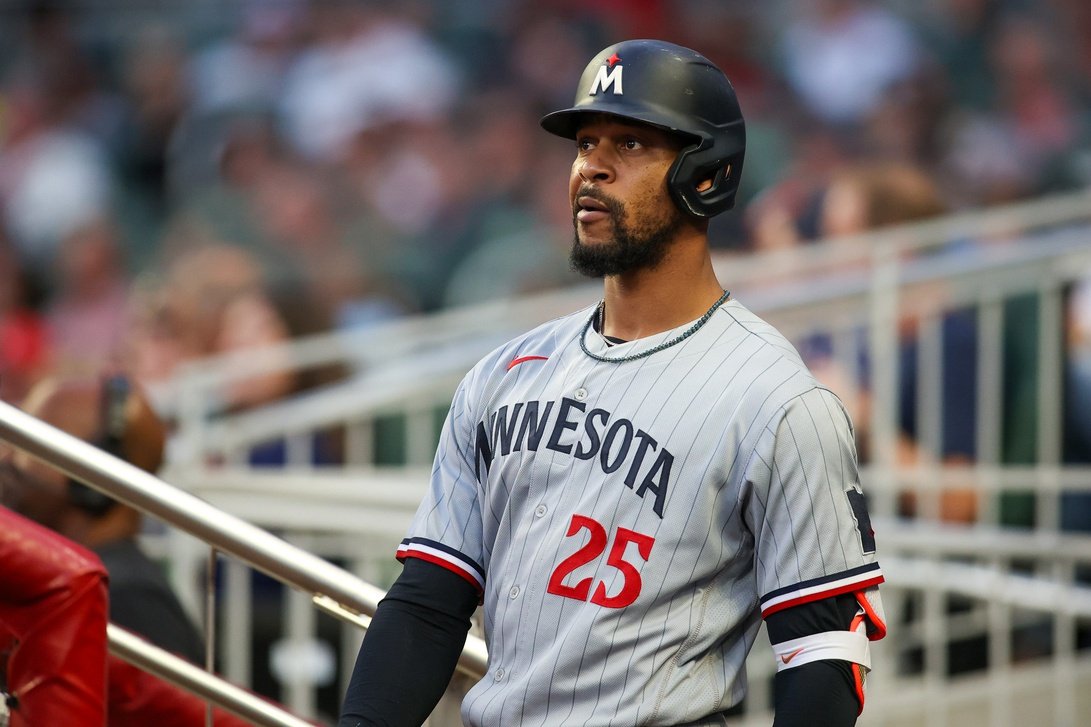 Derek Falvey and Thad Levine were hired by the Twins after the 2016 season, primarily, to turn around a woeful arms department. There are other components to winning games of course, but Minnesota's pitching operation was in such a dismal state that it was preventing any real chance of success. To its credit, the Falvine Machine has proven its mettle on this front. Through trades and a few late-round success stories, the Twins have risen to the pinnacle of Major League Baseball in pitching prowess. As Aaron Gleeman noted last week, the Twins' pitching staff checked in at the halfway point leading all of baseball in virtually every important metric, from ERA to strikeout rate to OPS against to quality starts. In the seventh year of their tenure, Falvey and Levine have fulfilled their vision of building a truly elite pitching corps – and it's beyond elite. Amid all the valid disgruntlement around the team's middling overall results in the first half, we really should take a moment to recognize this monumental accomplishment. Particularly when you consider where they came from. In the 2016 season, the last before the front office turned over, Minnesota ranked 29th in ERA, 27th in strikeout rate, and allowed the highest batting average of any team in baseball. Help was not on the way. These were the pitching prospects ranked among Twins Daily's top 10 in the system that year: José Berríos (#2), Tyler Jay (#5), Stephen Gonsalves (#6), Alex Meyer (#8), Kohl Stewart (#9) and Nick Burdi (#10). Aside from Berríos, it was in retrospect a brutal group – representative of the broken pitching approach that culminated in the dismissal of Terry Ryan's regime. Minnesota's front office had grown out of touch with the tenets of successful modern pitcher development, leading to continual breakdowns in talent evaluation, prospect handling, and on-field results. Their staffs were full of slow-tossing, strike-throwing, pitch-to-contact hurlers who got bashed around endlessly. By the time Ryan was relieved of duties, the franchise had become a punchline for its stubborn reliance on mediocre pitchers with no real upside. Falvey's involvement with the operation in Cleveland, as assistant general manager for arguably the most effective pitching powerhouse in the league – with self-limited resources, no less – was a chief selling point for a Twins team in desperate need of an overhaul. The results have been undeniable. In seven years before Falvey took over, the Twins ranked 29th among MLB teams in ERA, ahead of only Colorado. Compare the context of Coors Field and you can fairly state that Target Field housed the worst pitching staff in the league on balance in its first seven seasons of operation. Since Falvey's first season in 2017, the Twins rank 14th in ERA. To move from the absolute bottom of the league to the top half, particularly given the system he inherited, is a resounding delivery on the promise that sold the organization on this bright young executive: an opportunity to modernize their methods, and go from laggards to leaders in the arms race. The makeup of this premier Twins pitching staff epitomizes how the hire has worked out exactly as hoped on that front. Their two highest-stakes trades for pitching have yielded frontline starters who were both named to the All-Star Game last week: Sonny Gray and Pablo López. The front office turned trade deadline "sell" rentals into Joe Ryan and Jhoan Duran. They turned a 12th-round draft pick into Bailey Ober. You can quibble with the misses (Tyler Mahle, Jorge López, etc.), and you can quibble with the philosophies (too many same-sided changeups!), but you cannot argue with the final result. Falvey and his braintrust did it: they took the Twins from the bottom to the top from a pitching standpoint. Of course, that is only one side of the coin. And when we expand our view to that ever-so-important other half of winning baseball games – scoring runs – we find the Twins front office cast in a very different light. Even with this world-class pitching staff, the team finds itself below .500 here at the All-Star break, at risk of botching one of the biggest opportunities in franchise history thanks to an underperforming offense that can't get out of its own way. In a blowout loss to close out the first half on Sunday, the Twins were held to a two runs for a 17th time in 91 games. They've scored two or fewer in 37 of 91 games (41%), posting a 6-31 record in those contests. In short, the offensive shortcomings of this team have single-handedly sabotaged any chance at consistent winning, at a time where the bare minimum of run-scoring competency would result in a comfortable division lead and full-on vindication for the organization's leadership. How'd we get here? It's strange. You can't say the current front office didn't inherit a favorable situation on the position-player front. The state of pitching in the Twins system might have been dire circa 2016, but they were brimming at the time with promising young hitters: Byron Buxton, Miguel Sanó, Jorge Polanco, Max Kepler, and Eddie Rosario were all 24 or below. In the latest draft they had added a highly promising high school bat in Alex Kirilloff, and in the next they would add another in Royce Lewis with the No. 1 overall pick. You can't say this front office hasn't invested in hitters. They locked down Kepler and Polanco long-term just ahead of their breakout 2019 campaigns. They've pushed ownership to repeatedly rewrite the franchise record for free agent spending, with high-profile splurges on Josh Donaldson, Carlos Correa, and then Carlos Correa (again). They overlooked their risk-based reservations to keep Byron Buxton home for $100 million. Roughly $80 million of the team's record payroll this year is allocated to five position players: Correa, Buxton, Joey Gallo, Christian Vázquez, Kepler. Their entire Opening Day pitching staff accounted for a shade under $50 million. Finally, you can't say this front office hasn't shown in the past they can build a successful offense. In 2019 the Twins hit a major-league record 302 home runs on the way to scoring 939 times. Their overpowering offense led the way in a 101-win season full of thrilling highlights. Looking back, you might make a case that the Bomba Squad season was the starting point of this ill-fated path we've now traveled. That year, the Twins embraced a mentality of ambushing opposing pitchers, aiming to elevate and do damage – it paid off handsomely, to say the least. Albeit at a time where all their hitters were clicking, and cashing in their uppercut hacks against a juiced ball. The Twins have since tried to recapture that highly effective (highly marketable!) offensive dynamic in various ways, starting with the blockbuster signing of Donaldson to upgrade an already potent lineup. Despite their efforts, they have never come close. After finishing second among MLB teams in runs scored in 2019, Minnesota ranked 19th in 2020, 14th in 2021, and 17th in 2022. Now they find themselves all the way down to 24th at the All-Star break here in 2023. The fantastic quality of this pitching staff and total inadequacy of this offense make for a remarkable contrast. In evaluating the current Twins front office against the backdrop of its predecessor's pitching woes, you almost wonder if a parallel path is playing out with hitting now: a commitment to a way of doing things that once worked, but no longer does.
 -
As a perpetually lagging offense threatens to derail a historically great pitching staff, the front office faces a second half full of pressure with increasingly heightened stakes. Image courtesy of Brett Davis-USA TODAY Sports Derek Falvey and Thad Levine were hired by the Twins after the 2016 season, primarily, to turn around a woeful arms department. There are other components to winning games of course, but Minnesota's pitching operation was in such a dismal state that it was preventing any real chance of success. To its credit, the Falvine Machine has proven its mettle on this front. Through trades and a few late-round success stories, the Twins have risen to the pinnacle of Major League Baseball in pitching prowess. As Aaron Gleeman noted last week, the Twins' pitching staff checked in at the halfway point leading all of baseball in virtually every important metric, from ERA to strikeout rate to OPS against to quality starts. In the seventh year of their tenure, Falvey and Levine have fulfilled their vision of building a truly elite pitching corps – and it's beyond elite. Amid all the valid disgruntlement around the team's middling overall results in the first half, we really should take a moment to recognize this monumental accomplishment. Particularly when you consider where they came from. In the 2016 season, the last before the front office turned over, Minnesota ranked 29th in ERA, 27th in strikeout rate, and allowed the highest batting average of any team in baseball. Help was not on the way. These were the pitching prospects ranked among Twins Daily's top 10 in the system that year: José Berríos (#2), Tyler Jay (#5), Stephen Gonsalves (#6), Alex Meyer (#8), Kohl Stewart (#9) and Nick Burdi (#10). Aside from Berríos, it was in retrospect a brutal group – representative of the broken pitching approach that culminated in the dismissal of Terry Ryan's regime. Minnesota's front office had grown out of touch with the tenets of successful modern pitcher development, leading to continual breakdowns in talent evaluation, prospect handling, and on-field results. Their staffs were full of slow-tossing, strike-throwing, pitch-to-contact hurlers who got bashed around endlessly. By the time Ryan was relieved of duties, the franchise had become a punchline for its stubborn reliance on mediocre pitchers with no real upside. Falvey's involvement with the operation in Cleveland, as assistant general manager for arguably the most effective pitching powerhouse in the league – with self-limited resources, no less – was a chief selling point for a Twins team in desperate need of an overhaul. The results have been undeniable. In seven years before Falvey took over, the Twins ranked 29th among MLB teams in ERA, ahead of only Colorado. Compare the context of Coors Field and you can fairly state that Target Field housed the worst pitching staff in the league on balance in its first seven seasons of operation. Since Falvey's first season in 2017, the Twins rank 14th in ERA. To move from the absolute bottom of the league to the top half, particularly given the system he inherited, is a resounding delivery on the promise that sold the organization on this bright young executive: an opportunity to modernize their methods, and go from laggards to leaders in the arms race. The makeup of this premier Twins pitching staff epitomizes how the hire has worked out exactly as hoped on that front. Their two highest-stakes trades for pitching have yielded frontline starters who were both named to the All-Star Game last week: Sonny Gray and Pablo López. The front office turned trade deadline "sell" rentals into Joe Ryan and Jhoan Duran. They turned a 12th-round draft pick into Bailey Ober. You can quibble with the misses (Tyler Mahle, Jorge López, etc.), and you can quibble with the philosophies (too many same-sided changeups!), but you cannot argue with the final result. Falvey and his braintrust did it: they took the Twins from the bottom to the top from a pitching standpoint. Of course, that is only one side of the coin. And when we expand our view to that ever-so-important other half of winning baseball games – scoring runs – we find the Twins front office cast in a very different light. Even with this world-class pitching staff, the team finds itself below .500 here at the All-Star break, at risk of botching one of the biggest opportunities in franchise history thanks to an underperforming offense that can't get out of its own way. In a blowout loss to close out the first half on Sunday, the Twins were held to a two runs for a 17th time in 91 games. They've scored two or fewer in 37 of 91 games (41%), posting a 6-31 record in those contests. In short, the offensive shortcomings of this team have single-handedly sabotaged any chance at consistent winning, at a time where the bare minimum of run-scoring competency would result in a comfortable division lead and full-on vindication for the organization's leadership. How'd we get here? It's strange. You can't say the current front office didn't inherit a favorable situation on the position-player front. The state of pitching in the Twins system might have been dire circa 2016, but they were brimming at the time with promising young hitters: Byron Buxton, Miguel Sanó, Jorge Polanco, Max Kepler, and Eddie Rosario were all 24 or below. In the latest draft they had added a highly promising high school bat in Alex Kirilloff, and in the next they would add another in Royce Lewis with the No. 1 overall pick. You can't say this front office hasn't invested in hitters. They locked down Kepler and Polanco long-term just ahead of their breakout 2019 campaigns. They've pushed ownership to repeatedly rewrite the franchise record for free agent spending, with high-profile splurges on Josh Donaldson, Carlos Correa, and then Carlos Correa (again). They overlooked their risk-based reservations to keep Byron Buxton home for $100 million. Roughly $80 million of the team's record payroll this year is allocated to five position players: Correa, Buxton, Joey Gallo, Christian Vázquez, Kepler. Their entire Opening Day pitching staff accounted for a shade under $50 million. Finally, you can't say this front office hasn't shown in the past they can build a successful offense. In 2019 the Twins hit a major-league record 302 home runs on the way to scoring 939 times. Their overpowering offense led the way in a 101-win season full of thrilling highlights. Looking back, you might make a case that the Bomba Squad season was the starting point of this ill-fated path we've now traveled. That year, the Twins embraced a mentality of ambushing opposing pitchers, aiming to elevate and do damage – it paid off handsomely, to say the least. Albeit at a time where all their hitters were clicking, and cashing in their uppercut hacks against a juiced ball. The Twins have since tried to recapture that highly effective (highly marketable!) offensive dynamic in various ways, starting with the blockbuster signing of Donaldson to upgrade an already potent lineup. Despite their efforts, they have never come close. After finishing second among MLB teams in runs scored in 2019, Minnesota ranked 19th in 2020, 14th in 2021, and 17th in 2022. Now they find themselves all the way down to 24th at the All-Star break here in 2023. The fantastic quality of this pitching staff and total inadequacy of this offense make for a remarkable contrast. In evaluating the current Twins front office against the backdrop of its predecessor's pitching woes, you almost wonder if a parallel path is playing out with hitting now: a commitment to a way of doing things that once worked, but no longer does. View full article
-
The second-place Minnesota Twins head into the All-Star break with a broken offense that shows no signs of being repaired. The Twins remain magnetically attracted to the .500 mark, and with each passing week it gets harder to believe they're capable of creating any distance from it. Image courtesy of Matt Blewett-USA TODAY Sports Weekly Snapshot: Mon, 7/3 through Sun, 7/9 *** Record Last Week: 3-3 (Overall: 45-46) Run Differential Last Week: -4 (Overall: +27) Standing: 2nd Place in AL Central (0.5 GB) Last Week's Game Results: Game 86 | MIN 8, KC 4: Twins Explode for Five Runs in the Eighth Game 87 | MIN 9, KC 3: Maeda Masterful, Bats Continue to Click Game 88 | MIN 5, KC 0: Lopez Slices Up Royals in CG Shutout Game 89 | BAL 3, MIN 1: Bats Manage One Run in 10 Innings Game 90 | BAL 6, MIN 2: Orioles Strike for 5 on Sonny in Second Game 91 | BAL 15, MIN 2: First Half Ends with Emblematic Blowout NEWS & NOTES On Tuesday, the Twins activated Jorge López from his mental health-related injured list stint, optioning Brent Headrick to make room. López's first week back in action was fairly encouraging, with one run allowed on two hits over three innings of work. He's still not missing many bats, but on the bright side: no walks, no HBP. The right-hander has a long way to go before the Twins will be comfortable trusting him in high-leverage situations again, but it's really good to see him back on the mound. Later in the week, Josh Winder was swapped out of the bullpen for Cole Sands, who wrapped a rehab assignment that featured six strikeouts over three scoreless frames. Sands' modest intrigue quickly faded when he returned to the mound on Sunday and got blasted, allowing six earned runs while recording one out. HIGHLIGHTS On Wednesday night at Target Field, I had the pleasure of being in attendance to watch one of the most finely pitched games by a Twins starter in recent history. Not only did Pablo López hurl a complete-game shutout – the second in two weeks for the Twins, following a five-year drought – but he did so in remarkably dominant fashion. Needing only 100 pitches to get through all nine frames against Kansas City, Pablo struck out 12 while issuing zero walks, inducing 15 swinging strikes to draw his solid ERA (3.86) closer to his elite FIP (3.18). López's career-best start set the stage for another milestone moment, as the Twins announced during Saturday's game that he was named to the All-Star team as a replacement. It's been a reaffirming run for the righty, who became the biggest long-term fixture in the rotation when the front office extended him following the Luis Arraez trade. He has a 2.72 ERA in his past six starts. Exactly one week after Ted Wiedmann wrote here that Pablo López is better than his ERA, the assertion was backed up emphatically on the field, and now Pablo is a deserving first-time All-Star. His gem on Wednesday night served as the finishing touch in a methodical three-game sweep against the Royals. The Twins exerted their will against this lowly last-place team, outscoring them 22-7 and leading for essentially the whole series. Following a series victory the previous weekend in Baltimore, Minnesota was 5-1 since their much discussed closed-door meeting. It looked as though, at long last, the Twins were ready to get going on a long-awaited run and create some separation – from the Guardians, from the .500 mark, from the jaded doomsayers. Narrator's voice: They weren't. LOWLIGHTS It was a week like any other: The Twins showed a glimmer of promise, rattling off three convincing wins against the Royals, then promptly annihilated any and all good vibes with an absolutely dismal showing against the Orioles to close out the pre-ASG schedule. Minnesota's early-week success came to feel very hollow as the team reverted right back to the same bland, uninspiring, lifeless brand of baseball that pushed them into a player accountability session to begin with. Sunday's sweep-clinching finale against the Orioles was definitively the worst the Twins have gotten their asses kicked all year: a lopsided 15-2 laugher in front of dejected hometown fans attempting to muster some semblance of enthusiasm for this lackluster product. Look, sweeping the Royals is a meaningful accomplishment, no matter how much some people want to downplay it. They are a major-league team and while they are definitely among the worst, it's hard to win three straight against anyone, especially in such overwhelming fashion. The Royals had recently won series against the Rays and Dodgers. No one had thrown a CG SO against them all year before López did it. But beating up Kansas City is merely requisite at this point. It's not something anyone can get all that excited about. Especially when the various signs of positivity coming out of that series get evaporated to dust within days. The Twins pitching staff looked fantastic against a bottom-tier Royals offense. But when a quality Orioles club came to town, those flickering signs of regression danced right back to the surface. Jhoan Duran took the loss on Friday night, allowing two runs in the 10th. Sonny Gray, representing the Twins in the All-Star Game alongside Pablo, coughed up six runs in one inning on Saturday. Joe Ryan couldn't get through five frames on Sunday, giving way to a brutal game for the bullpen. Meanwhile, the offense went right back into the dumps. It's the same issue over and over with these guys: no staying power. Brief moments of energy from the lineup, hinting at what the front office envisioned from the start, are unfailingly halted by pervasive mega-slumps. Byron Buxton had three hits including a home run in the July 4th win over the Royals. That's cool. Aside from that he was 1-for-16, continuing to be an overall liability as a DH batting third. Carlos Correa notched four hits in Monday's series-opening victory. Great! He followed by going 3-for-17 the rest of the week, with zero extra-base hits and zero RBIs. These two continue to set the tone for a team that likewise can't sustain any momentum or shake off the growing weight of underperformance, with no attributable excuse or fixable factor to fall back on. Buxton and Correa surely are not at full health, but they are healthy enough to play. They're playing really badly. The Twins as a team are not at full health, but they've got a majority of their planned key pieces in place. For the play on the field to be this chronically poor – and getting worse, not better – is deeply unsettling because the truth is ... things are going mostly to plan. It's past time for making major changes to that plan in-flight. This week's All-Star break offers a glaring opportunity to take action and leave the lip service behind. TRENDING STORYLINE Any illusions that a closed-door meeting was going to magically cure what ailed the Twins offense were quickly shattered, as the next 10 days yielded a familiar pattern: occasional modest run-scoring outbursts, heavily outweighed by droughts of emptiness and overmatched at-bats resulting in frustrating losses, with pitchers like Duran hung out to dry. When the Twins were swept in Atlanta by the Braves, people throughout the organization (including Rocco Baldelli) were open and adamant: something has got to change. In practical terms nothing did, and here we are, not even two weeks later, coming off a much uglier sweep at home against a lesser team. The Twins continue to get worse not better, as the threat to derail an unprecedented moment of opportunity gains gravity. No more talk. At this point, something REALLY needs to change. The inconvenient truth of the matter is that in some ways, the Twins front office is handcuffed. They are shackled to their dual faces of the franchise. Correa and Buxton are at the core of the team's shortcomings, and neither is going anywhere. If Correa is healthy enough to play, he'll be at shortstop everyday. If Buxton is healthy enough to play (but not enough to play CF), he'll be the DH. You can talk about moving them down in the order but that's a negligible factor at this point. If Correa and Buxton don't play significantly better down the stretch, the Twins are pretty much hopeless. That part is what it is. Even in the face of that maddeningly uncontrollable reality, however, the front office can take steps to shake things up in other areas. A few moves that stand out to me as distinct possibilities: Moving on from David Popkins. His case for remaining in place has only grown more flimsy since I pondered the hitting coach's job security two months ago. Making him scapegoat for the lineup's struggles is a drastic oversimplification, and removing him won't be a miracle cure, but a new voice atop the hitting coach instruction group seems like a no-brainer. Replacing Joey Gallo on the roster with Matt Wallner or Trevor Larnach. In the first few weeks of the season, Gallo was pretty good. It looked like the one-year gamble signing might work out. I think by now we can fairly say it hasn't. Since the start of May, Gallo has the third-lowest fWAR on the team. His occasional solo home run really doesn't offer any compelling value at this point amid an endless sea of strikeouts, and as a 29-year-old on a one-year deal he offers no upside. Give his playing time to someone with a future here. Informing Max Kepler he'll be playing center field regularly against right-handed pitchers. One of the clearest offensive weaknesses in the Twins lineup is center field, where Michael A. Taylor and Willi Castro have been splitting time as Buxton mans DH. With Kepler's bat rounding into form a bit, he'd offer much more value in center, making room for someone like Wallner or Larnach to replace Taylor or Castro in the lineup against RHP. Based on reports, Kepler's lack of CF playing time in recent years owes mainly to his own preference. Too bad – he doesn't write the lineups, and it's time to start doing what is best for the team. The Twins need to get unstuck from their ways. That means making some tough decisions and making some people uncomfortable. These are just three examples of moves that would give fans some actual reason to believe something might change, as opposed to blind faith and adherence to the status quo. LOOKING AHEAD The Twins will lick their wounds over a four-day break for the Midsummer Classic before returning to action in Oakland against one of the few teams that can contend with Kansas City's level of ineptitude. Although the bad taste of this series against the Orioles will linger for much of the next week, the Twins will have a chance to rinse it quickly afterward. MONDAY, 7/10: Home Run Derby TUESDAY, 7/11: All-Star Game @ Seattle FRIDAY, 7/14: TWINS @ ATHLETICS SATURDAY, 7/15: TWINS @ ATHLETICS SUNDAY, 7/16: TWINS @ ATHLETICS View full article
- 59 replies
-
- 1
-
-
- carlos correa
- byron buxton
- (and 1 more)
-
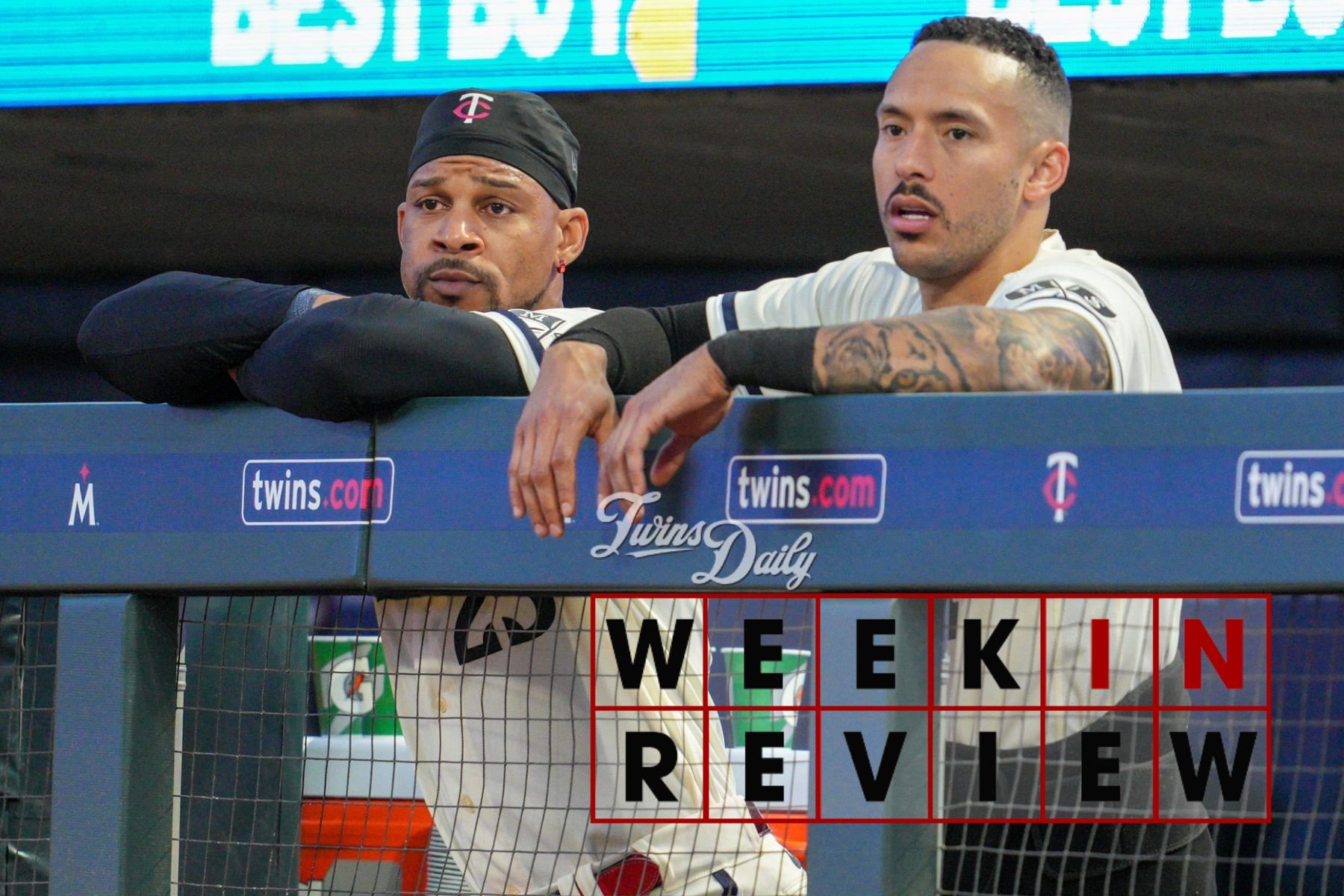 Weekly Snapshot: Mon, 7/3 through Sun, 7/9 *** Record Last Week: 3-3 (Overall: 45-46) Run Differential Last Week: -4 (Overall: +27) Standing: 2nd Place in AL Central (0.5 GB) Last Week's Game Results: Game 86 | MIN 8, KC 4: Twins Explode for Five Runs in the Eighth Game 87 | MIN 9, KC 3: Maeda Masterful, Bats Continue to Click Game 88 | MIN 5, KC 0: Lopez Slices Up Royals in CG Shutout Game 89 | BAL 3, MIN 1: Bats Manage One Run in 10 Innings Game 90 | BAL 6, MIN 2: Orioles Strike for 5 on Sonny in Second Game 91 | BAL 15, MIN 2: First Half Ends with Emblematic Blowout NEWS & NOTES On Tuesday, the Twins activated Jorge López from his mental health-related injured list stint, optioning Brent Headrick to make room. López's first week back in action was fairly encouraging, with one run allowed on two hits over three innings of work. He's still not missing many bats, but on the bright side: no walks, no HBP. The right-hander has a long way to go before the Twins will be comfortable trusting him in high-leverage situations again, but it's really good to see him back on the mound. Later in the week, Josh Winder was swapped out of the bullpen for Cole Sands, who wrapped a rehab assignment that featured six strikeouts over three scoreless frames. Sands' modest intrigue quickly faded when he returned to the mound on Sunday and got blasted, allowing six earned runs while recording one out. HIGHLIGHTS On Wednesday night at Target Field, I had the pleasure of being in attendance to watch one of the most finely pitched games by a Twins starter in recent history. Not only did Pablo López hurl a complete-game shutout – the second in two weeks for the Twins, following a five-year drought – but he did so in remarkably dominant fashion. Needing only 100 pitches to get through all nine frames against Kansas City, Pablo struck out 12 while issuing zero walks, inducing 15 swinging strikes to draw his solid ERA (3.86) closer to his elite FIP (3.18). López's career-best start set the stage for another milestone moment, as the Twins announced during Saturday's game that he was named to the All-Star team as a replacement. It's been a reaffirming run for the righty, who became the biggest long-term fixture in the rotation when the front office extended him following the Luis Arraez trade. He has a 2.72 ERA in his past six starts. Exactly one week after Ted Wiedmann wrote here that Pablo López is better than his ERA, the assertion was backed up emphatically on the field, and now Pablo is a deserving first-time All-Star. His gem on Wednesday night served as the finishing touch in a methodical three-game sweep against the Royals. The Twins exerted their will against this lowly last-place team, outscoring them 22-7 and leading for essentially the whole series. Following a series victory the previous weekend in Baltimore, Minnesota was 5-1 since their much discussed closed-door meeting. It looked as though, at long last, the Twins were ready to get going on a long-awaited run and create some separation – from the Guardians, from the .500 mark, from the jaded doomsayers. Narrator's voice: They weren't. LOWLIGHTS It was a week like any other: The Twins showed a glimmer of promise, rattling off three convincing wins against the Royals, then promptly annihilated any and all good vibes with an absolutely dismal showing against the Orioles to close out the pre-ASG schedule. Minnesota's early-week success came to feel very hollow as the team reverted right back to the same bland, uninspiring, lifeless brand of baseball that pushed them into a player accountability session to begin with. Sunday's sweep-clinching finale against the Orioles was definitively the worst the Twins have gotten their asses kicked all year: a lopsided 15-2 laugher in front of dejected hometown fans attempting to muster some semblance of enthusiasm for this lackluster product. Look, sweeping the Royals is a meaningful accomplishment, no matter how much some people want to downplay it. They are a major-league team and while they are definitely among the worst, it's hard to win three straight against anyone, especially in such overwhelming fashion. The Royals had recently won series against the Rays and Dodgers. No one had thrown a CG SO against them all year before López did it. But beating up Kansas City is merely requisite at this point. It's not something anyone can get all that excited about. Especially when the various signs of positivity coming out of that series get evaporated to dust within days. The Twins pitching staff looked fantastic against a bottom-tier Royals offense. But when a quality Orioles club came to town, those flickering signs of regression danced right back to the surface. Jhoan Duran took the loss on Friday night, allowing two runs in the 10th. Sonny Gray, representing the Twins in the All-Star Game alongside Pablo, coughed up six runs in one inning on Saturday. Joe Ryan couldn't get through five frames on Sunday, giving way to a brutal game for the bullpen. Meanwhile, the offense went right back into the dumps. It's the same issue over and over with these guys: no staying power. Brief moments of energy from the lineup, hinting at what the front office envisioned from the start, are unfailingly halted by pervasive mega-slumps. Byron Buxton had three hits including a home run in the July 4th win over the Royals. That's cool. Aside from that he was 1-for-16, continuing to be an overall liability as a DH batting third. Carlos Correa notched four hits in Monday's series-opening victory. Great! He followed by going 3-for-17 the rest of the week, with zero extra-base hits and zero RBIs. These two continue to set the tone for a team that likewise can't sustain any momentum or shake off the growing weight of underperformance, with no attributable excuse or fixable factor to fall back on. Buxton and Correa surely are not at full health, but they are healthy enough to play. They're playing really badly. The Twins as a team are not at full health, but they've got a majority of their planned key pieces in place. For the play on the field to be this chronically poor – and getting worse, not better – is deeply unsettling because the truth is ... things are going mostly to plan. It's past time for making major changes to that plan in-flight. This week's All-Star break offers a glaring opportunity to take action and leave the lip service behind. TRENDING STORYLINE Any illusions that a closed-door meeting was going to magically cure what ailed the Twins offense were quickly shattered, as the next 10 days yielded a familiar pattern: occasional modest run-scoring outbursts, heavily outweighed by droughts of emptiness and overmatched at-bats resulting in frustrating losses, with pitchers like Duran hung out to dry. When the Twins were swept in Atlanta by the Braves, people throughout the organization (including Rocco Baldelli) were open and adamant: something has got to change. In practical terms nothing did, and here we are, not even two weeks later, coming off a much uglier sweep at home against a lesser team. The Twins continue to get worse not better, as the threat to derail an unprecedented moment of opportunity gains gravity. No more talk. At this point, something REALLY needs to change. The inconvenient truth of the matter is that in some ways, the Twins front office is handcuffed. They are shackled to their dual faces of the franchise. Correa and Buxton are at the core of the team's shortcomings, and neither is going anywhere. If Correa is healthy enough to play, he'll be at shortstop everyday. If Buxton is healthy enough to play (but not enough to play CF), he'll be the DH. You can talk about moving them down in the order but that's a negligible factor at this point. If Correa and Buxton don't play significantly better down the stretch, the Twins are pretty much hopeless. That part is what it is. Even in the face of that maddeningly uncontrollable reality, however, the front office can take steps to shake things up in other areas. A few moves that stand out to me as distinct possibilities: Moving on from David Popkins. His case for remaining in place has only grown more flimsy since I pondered the hitting coach's job security two months ago. Making him scapegoat for the lineup's struggles is a drastic oversimplification, and removing him won't be a miracle cure, but a new voice atop the hitting coach instruction group seems like a no-brainer. Replacing Joey Gallo on the roster with Matt Wallner or Trevor Larnach. In the first few weeks of the season, Gallo was pretty good. It looked like the one-year gamble signing might work out. I think by now we can fairly say it hasn't. Since the start of May, Gallo has the third-lowest fWAR on the team. His occasional solo home run really doesn't offer any compelling value at this point amid an endless sea of strikeouts, and as a 29-year-old on a one-year deal he offers no upside. Give his playing time to someone with a future here. Informing Max Kepler he'll be playing center field regularly against right-handed pitchers. One of the clearest offensive weaknesses in the Twins lineup is center field, where Michael A. Taylor and Willi Castro have been splitting time as Buxton mans DH. With Kepler's bat rounding into form a bit, he'd offer much more value in center, making room for someone like Wallner or Larnach to replace Taylor or Castro in the lineup against RHP. Based on reports, Kepler's lack of CF playing time in recent years owes mainly to his own preference. Too bad – he doesn't write the lineups, and it's time to start doing what is best for the team. The Twins need to get unstuck from their ways. That means making some tough decisions and making some people uncomfortable. These are just three examples of moves that would give fans some actual reason to believe something might change, as opposed to blind faith and adherence to the status quo. LOOKING AHEAD The Twins will lick their wounds over a four-day break for the Midsummer Classic before returning to action in Oakland against one of the few teams that can contend with Kansas City's level of ineptitude. Although the bad taste of this series against the Orioles will linger for much of the next week, the Twins will have a chance to rinse it quickly afterward. MONDAY, 7/10: Home Run Derby TUESDAY, 7/11: All-Star Game @ Seattle FRIDAY, 7/14: TWINS @ ATHLETICS SATURDAY, 7/15: TWINS @ ATHLETICS SUNDAY, 7/16: TWINS @ ATHLETICS
- 59 comments
-
- 9
-
-
-
- carlos correa
- byron buxton
- (and 1 more)
-
Each week the Twins seemingly reach a new low point in their season. Most recently, they descended to uncharted depths with a lifeless sweep in Atlanta that led to a players-only meeting. The message: it's time to shake out of this sorry state and start anew. Their newfound offensive energy lasted all of three innings. Image courtesy of Brett Davis–USA TODAY Sports Weekly Snapshot: Mon, 6/26 through Sun, 7/2 *** Record Last Week: 2-4 (Overall: 42-43) Run Differential Last Week: -3 (Overall: +31) Standing: 1st Place in AL Central (0.5 GA) Last Week's Game Results: Game 80 | ATL 4, MIN 1: Gray Duels Strider But Twins Can't Keep Pace Game 81 | ATL 6, MIN 2: Braves Blast Off for Five Homers Against Ryan Game 82 | ATL 3, MIN 0: Offense No-Shows as Atlanta Wraps Easy Sweep Game 83 | MIN 8, BAL 1: Players-Only Meeting Followed by Empathic Win Game 84 | MIN 1, BAL 0: Narrow Victory Behind Gallo's Homer, Ober's Gem Game 85 | BAL 2, MIN 1: Offense Costs Gray, Twins Chance at a Sweep NEWS & NOTES The week started on a sour note both on the field and off it. Ahead of their second game in Atlanta, the Twins placed reliever Brock Stewart on the injured list due to forearm soreness. Stewart has been an absolute life-saver for the bullpen, thriving under big leverage in a role that's risen in magnitude with Jorge Alcala, Caleb Thielbar, and Jorgé López all sidelined. Obviously, losing Stewart is a major blow in the short-term, and if this proves to be a more serious problem it could have disastrous ramifications. For now, the Twins are hoping that a short break will remedy the right-hander, who in fairness is experiencing a new type of workload for the first time. It looks like the All-Star break is tentatively being targeted for a return. Fingers crossed. Oliver Ortega returned to fill Stewart's spot in the bullpen. He looked pretty good in a scoreless three-inning appearance against the Braves on Tuesday. On Saturday, Royce Lewis strained his oblique while running to first, and the Twins wasted little time placing him on the IL afterward. This is usually a four-to-six week injury, so unfortunately we can probably not expect to see the electric rookie for awhile. On the bright side, it does create room for last year's electric rookie sensation, José Miranda, to return to the roster in search of redemption. Few things could realistically rejuvenate this lineup to the same degree as Miranda recapturing his mid-season 2022 form and jolting the heart of the order here in July and August. However, he hasn't exactly been lighting the world on fire in Triple-A, slugging just .360 in 39 games for the Saints. In his first back on Sunday, Miranda went 0-for-2 with a GIDP before being removed for a pinch-hitter. Consider me highly skeptical. HIGHLIGHTS To their credit, the Twins collectively bounced off the ropes and answered the bell in Baltimore, at least for a brief moment. The team did appear to have a fresh energy and determination when they arrived in Baltimore, bursting out of the gates by scoring in each of the first three innings on Friday en route to an 8-1 victory. Carlos Correa took over the leadoff spot in a reconfigured Twins lineup on Friday, notching a pair of hits in the blowout win. Byron Buxton shook out of his latest slump with four hits in 11 at-bats games against the O's, including a three-run homer but excluding a few extra-base hits robbed by defensive gems. Joey Gallo and Max Kepler, who've been widely vilified as Matt Wallner wallops Triple-A pitching, both enjoyed good weeks with their roster spots under scrutiny. Gallo launched three solo home runs, including the decisive blow in a 1-0 win on Saturday, while Kepler went 4-for-10 with a homer and perhaps the biggest defensive play of the season for the Twins. While short-lived, it was nice to see any glimpse of liveliness from this lineup, which was supported as usual by mostly stellar work from the pitching staff. Sonny Gray walked a tightrope against both the Braves and Orioles, holding both strong offenses in check while receiving minimal run support. Kenta Maeda was effective once again, limiting Atlanta to two runs in five innings. Pablo López fired six innings of one-run ball on Friday, allowing only three hits. Bailey Ober had the best start of his young career on Friday, leading the Twins to a 1-0 victory with seven shutout frames. Since the start of last year, Ober has a 2.92 ERA in 133 major-league innings. LOWLIGHTS "The Twins reached a new low last week" has been a recurring theme in this column, and last week they once again managed to outdo themselves, pushing Rocco Baldelli to the point of outward exasperation while also compelling the players themselves to hold a closed-doors meeting. Granted, the Braves are an absolutely excellent baseball team, but that does not excuse the wretched level of performance we saw from the Twins throughout this three-game shellacking. Baldelli described his team as "flat," an accurate portrayal of the offense's empty showing across the board in a non-competitive sweep. The Twins scored three runs in three games and went 0-for-23 with runners in scoring position. It's almost not worth singling out anyone in particular because the production and quality of plate appearances were so uniformly poor across the entire lineup. From the start of the series to the end, Twins hitters appeared completely lost – overmatched and outplanned at every turn. The sleepy sweep-clinching shutout on Wednesday, where the Twins flailed away for eight strikeouts against Kolby Allard (he of the career 6.07 ERA) was particularly egregious, pushing Rocco over the edge. Correa and Buxton went a combined 2-for-17 in the series, stranding eight runners between them. Here at the halfway point of the season, it is clear these two centerpiece stars bear the greatest responsibility for the club's underwhelming results – something Correa doesn't back away from. Both players are on pace to finish with a lower fWAR than Gary Sánchez posted for the Twins last year. "Disappointing" doesn't even begin to describe what we've seen from this $50 million duo so far in Year 1 of a long-term blueprint built around them. In order for the Twins to take control of the division in the second half, they will absolutely need Buck and C4 both to come up huge down the stretch. Baltimore was a somewhat promising start, but neither player has proven able to sustain any flash of momentum all season long. In that way they've set the tone for an entire team that's done the same, perfectly epitomized by their breaking out at the start of the Orioles series and then scoring two runs in the next 24 innings. Holding this urgent crisis aversion meeting and following it with a big statement game really loses its impact when the offense then immediately shrinks back into its shell, as has been the case with every single explosive burst through the first 85 games of the schedule. We're all so very tired of it. TRENDING STORYLINE After having the start of his season delayed two months by an elbow injury, Austin Martin started a rehab stint in early June, then quickly got hurt again, costing him another three weeks. Finally he resumed his rehab on Tuesday, playing a couple of games at second base in rookie ball before moving up to Single-A where he made starts in center, left field, and DH. Expectations for Martin should definitely be kept in check, but he's an interesting piece returning to the fold, assuming his elbow can hold up. In many ways, the 24-year-old brings qualities that are glaringly amiss on the current Twins team: contact-hitting, OBP, speed ... essentially, the ability to make plays without hitting home runs. Martin is trying to bounce back from an ugly offensive season (ironically, one he partially attributes to coaches directing him away from his strengths and toward selling out for more power ... ahem). He's also got some work to do after missing the entire first half. But the former fifth overall draft pick is a big talent and a potential wild-card for the stretch run – especially if the Twins trust him enough to play center field. LOOKING AHEAD The Twins return home to face the lowly Royals for three games, followed by a Target Field rematch against the Orioles. These are soft pitching match-ups. If the offense can't muster some legit production in this homestand – which is followed immediately by the All-Star break – I'm gonna fully lose it. MONDAY, 7/3: ROYALS @ TWINS – LHP Austin Cox v. RHP Joe Ryan TUESDAY, 7/4: ROYALS @ TWINS – RHP Zack Greinke v. RHP Kenta Maeda WEDNESDAY, 7/5: ROYALS @ TWINS – RHP Jordan Lyles v. RHP Pablo Lopez FRIDAY, 7/7: ORIOLES @ TWINS – LHP Cole Irvin v. RHP Bailey Ober SATURDAY, 7/8: ORIOLES @ TWINS – RHP Tyler Wells v. RHP Sonny Gray SUNDAY, 7/9: ORIOLES @ TWINS – RHP Kyle Gibson v. RHP Joe Ryan View full article
-
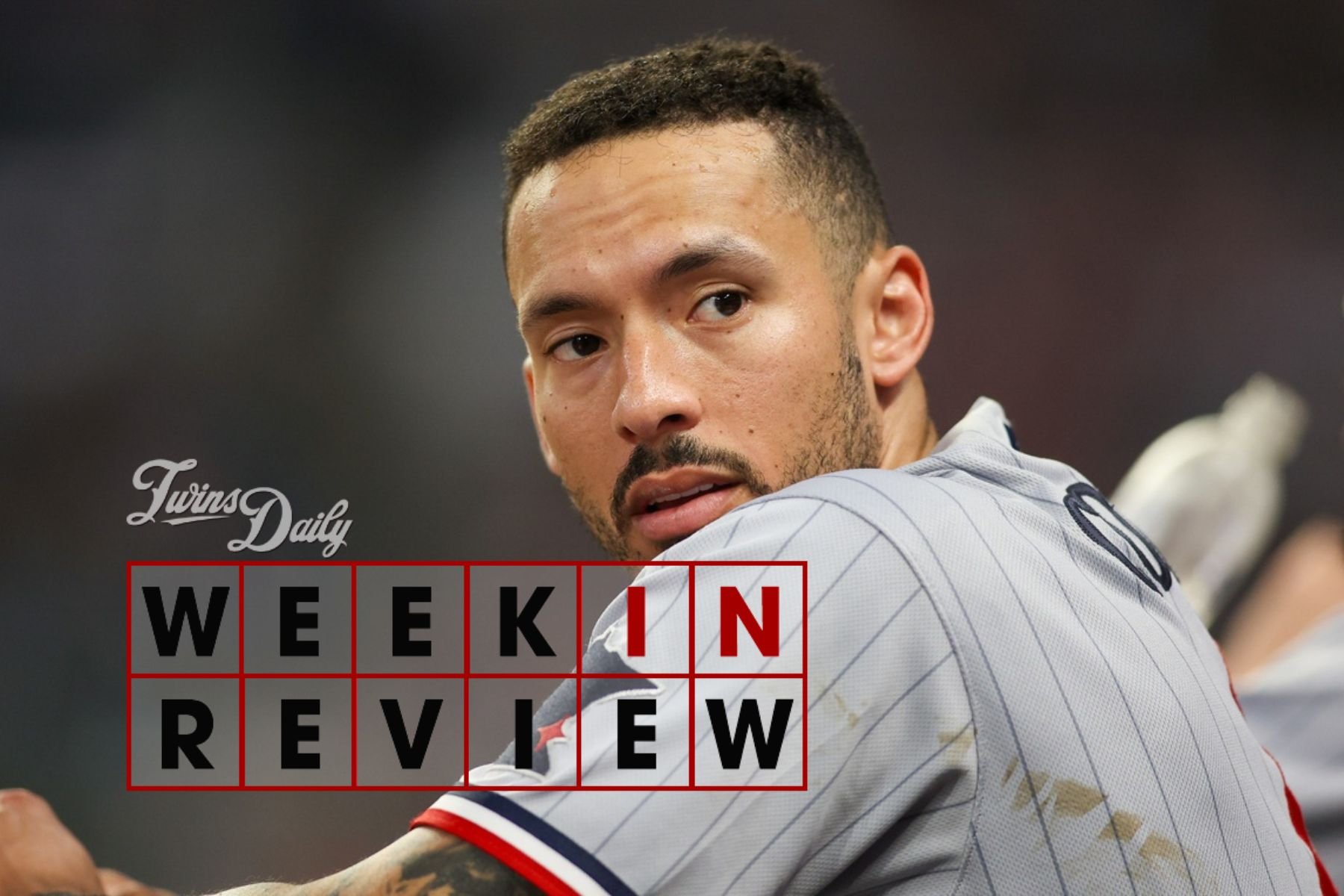 Weekly Snapshot: Mon, 6/26 through Sun, 7/2 *** Record Last Week: 2-4 (Overall: 42-43) Run Differential Last Week: -3 (Overall: +31) Standing: 1st Place in AL Central (0.5 GA) Last Week's Game Results: Game 80 | ATL 4, MIN 1: Gray Duels Strider But Twins Can't Keep Pace Game 81 | ATL 6, MIN 2: Braves Blast Off for Five Homers Against Ryan Game 82 | ATL 3, MIN 0: Offense No-Shows as Atlanta Wraps Easy Sweep Game 83 | MIN 8, BAL 1: Players-Only Meeting Followed by Empathic Win Game 84 | MIN 1, BAL 0: Narrow Victory Behind Gallo's Homer, Ober's Gem Game 85 | BAL 2, MIN 1: Offense Costs Gray, Twins Chance at a Sweep NEWS & NOTES The week started on a sour note both on the field and off it. Ahead of their second game in Atlanta, the Twins placed reliever Brock Stewart on the injured list due to forearm soreness. Stewart has been an absolute life-saver for the bullpen, thriving under big leverage in a role that's risen in magnitude with Jorge Alcala, Caleb Thielbar, and Jorgé López all sidelined. Obviously, losing Stewart is a major blow in the short-term, and if this proves to be a more serious problem it could have disastrous ramifications. For now, the Twins are hoping that a short break will remedy the right-hander, who in fairness is experiencing a new type of workload for the first time. It looks like the All-Star break is tentatively being targeted for a return. Fingers crossed. Oliver Ortega returned to fill Stewart's spot in the bullpen. He looked pretty good in a scoreless three-inning appearance against the Braves on Tuesday. On Saturday, Royce Lewis strained his oblique while running to first, and the Twins wasted little time placing him on the IL afterward. This is usually a four-to-six week injury, so unfortunately we can probably not expect to see the electric rookie for awhile. On the bright side, it does create room for last year's electric rookie sensation, José Miranda, to return to the roster in search of redemption. Few things could realistically rejuvenate this lineup to the same degree as Miranda recapturing his mid-season 2022 form and jolting the heart of the order here in July and August. However, he hasn't exactly been lighting the world on fire in Triple-A, slugging just .360 in 39 games for the Saints. In his first back on Sunday, Miranda went 0-for-2 with a GIDP before being removed for a pinch-hitter. Consider me highly skeptical. HIGHLIGHTS To their credit, the Twins collectively bounced off the ropes and answered the bell in Baltimore, at least for a brief moment. The team did appear to have a fresh energy and determination when they arrived in Baltimore, bursting out of the gates by scoring in each of the first three innings on Friday en route to an 8-1 victory. Carlos Correa took over the leadoff spot in a reconfigured Twins lineup on Friday, notching a pair of hits in the blowout win. Byron Buxton shook out of his latest slump with four hits in 11 at-bats games against the O's, including a three-run homer but excluding a few extra-base hits robbed by defensive gems. Joey Gallo and Max Kepler, who've been widely vilified as Matt Wallner wallops Triple-A pitching, both enjoyed good weeks with their roster spots under scrutiny. Gallo launched three solo home runs, including the decisive blow in a 1-0 win on Saturday, while Kepler went 4-for-10 with a homer and perhaps the biggest defensive play of the season for the Twins. While short-lived, it was nice to see any glimpse of liveliness from this lineup, which was supported as usual by mostly stellar work from the pitching staff. Sonny Gray walked a tightrope against both the Braves and Orioles, holding both strong offenses in check while receiving minimal run support. Kenta Maeda was effective once again, limiting Atlanta to two runs in five innings. Pablo López fired six innings of one-run ball on Friday, allowing only three hits. Bailey Ober had the best start of his young career on Friday, leading the Twins to a 1-0 victory with seven shutout frames. Since the start of last year, Ober has a 2.92 ERA in 133 major-league innings. LOWLIGHTS "The Twins reached a new low last week" has been a recurring theme in this column, and last week they once again managed to outdo themselves, pushing Rocco Baldelli to the point of outward exasperation while also compelling the players themselves to hold a closed-doors meeting. Granted, the Braves are an absolutely excellent baseball team, but that does not excuse the wretched level of performance we saw from the Twins throughout this three-game shellacking. Baldelli described his team as "flat," an accurate portrayal of the offense's empty showing across the board in a non-competitive sweep. The Twins scored three runs in three games and went 0-for-23 with runners in scoring position. It's almost not worth singling out anyone in particular because the production and quality of plate appearances were so uniformly poor across the entire lineup. From the start of the series to the end, Twins hitters appeared completely lost – overmatched and outplanned at every turn. The sleepy sweep-clinching shutout on Wednesday, where the Twins flailed away for eight strikeouts against Kolby Allard (he of the career 6.07 ERA) was particularly egregious, pushing Rocco over the edge. Correa and Buxton went a combined 2-for-17 in the series, stranding eight runners between them. Here at the halfway point of the season, it is clear these two centerpiece stars bear the greatest responsibility for the club's underwhelming results – something Correa doesn't back away from. Both players are on pace to finish with a lower fWAR than Gary Sánchez posted for the Twins last year. "Disappointing" doesn't even begin to describe what we've seen from this $50 million duo so far in Year 1 of a long-term blueprint built around them. In order for the Twins to take control of the division in the second half, they will absolutely need Buck and C4 both to come up huge down the stretch. Baltimore was a somewhat promising start, but neither player has proven able to sustain any flash of momentum all season long. In that way they've set the tone for an entire team that's done the same, perfectly epitomized by their breaking out at the start of the Orioles series and then scoring two runs in the next 24 innings. Holding this urgent crisis aversion meeting and following it with a big statement game really loses its impact when the offense then immediately shrinks back into its shell, as has been the case with every single explosive burst through the first 85 games of the schedule. We're all so very tired of it. TRENDING STORYLINE After having the start of his season delayed two months by an elbow injury, Austin Martin started a rehab stint in early June, then quickly got hurt again, costing him another three weeks. Finally he resumed his rehab on Tuesday, playing a couple of games at second base in rookie ball before moving up to Single-A where he made starts in center, left field, and DH. Expectations for Martin should definitely be kept in check, but he's an interesting piece returning to the fold, assuming his elbow can hold up. In many ways, the 24-year-old brings qualities that are glaringly amiss on the current Twins team: contact-hitting, OBP, speed ... essentially, the ability to make plays without hitting home runs. Martin is trying to bounce back from an ugly offensive season (ironically, one he partially attributes to coaches directing him away from his strengths and toward selling out for more power ... ahem). He's also got some work to do after missing the entire first half. But the former fifth overall draft pick is a big talent and a potential wild-card for the stretch run – especially if the Twins trust him enough to play center field. LOOKING AHEAD The Twins return home to face the lowly Royals for three games, followed by a Target Field rematch against the Orioles. These are soft pitching match-ups. If the offense can't muster some legit production in this homestand – which is followed immediately by the All-Star break – I'm gonna fully lose it. MONDAY, 7/3: ROYALS @ TWINS – LHP Austin Cox v. RHP Joe Ryan TUESDAY, 7/4: ROYALS @ TWINS – RHP Zack Greinke v. RHP Kenta Maeda WEDNESDAY, 7/5: ROYALS @ TWINS – RHP Jordan Lyles v. RHP Pablo Lopez FRIDAY, 7/7: ORIOLES @ TWINS – LHP Cole Irvin v. RHP Bailey Ober SATURDAY, 7/8: ORIOLES @ TWINS – RHP Tyler Wells v. RHP Sonny Gray SUNDAY, 7/9: ORIOLES @ TWINS – RHP Kyle Gibson v. RHP Joe Ryan
- 19 comments
-
- 10
-
-
- carlos correa
- byron buxton
- (and 2 more)
-
On Tuesday night, the Minnesota Twins played their 81st game of the season – a nice tidy dividing line in the 162-game schedule, making for simple on-pace projections. Here are five player stats that explain why the Twins have been such a disappointing sub-.500 team up to this point. Image courtesy of Matt Blewett-USA TODAY Sports 1. Byron Buxton and Carlos Correa are both on pace to finish with 1.2 fWAR. This is the banner headline of the Twins season so far, and one that oddly seems to get buried amid complaints about bullpen management, lineup construction, Emilio Pagán lapses, prospect timelines, and otherwise. I get it, because when things are going as poorly as they are, people want to project blame and assign villains. Unfortunately, to get to the bottom of what's fundamentally hindering this team, we need look no further than the promised heroes: two most talented, highly-paid, and (arguably) likable players on the roster. Correa and Buxton, earning a combined $50 million, have completely let this team down in the first half and there is no other way to put it. To provide some context around this pitiful pace for 1.2 fWAR, which would be lower than Gary Sanchez's final mark as a Twin last year: it would be easily the lowest of either players' career in a remotely full season. Here are Buxton's fWAR totals from the past four years: 2023, halfway: 0.6 (63 games) 2022: 4.0 (92 games) 2021: 4.1 (61 games) 2020: 1.2 (39 games) 2019: 3.0 (37 games) Here's a comparative look at Correa's track record in fWAR: 2023, halfway: 0.6 (71 games) 2022: 4.4 (136 games) 2021: 6.4 (148 games) 2020: 1.2 (58 games) 2019: 3.8 (75 games) Because they've historically offered outstanding defense at premium positions, Correa and Buxton have been consistent sources of value, even in injury-shortened seasons. That is not the case this year. Buxton's defensive impact has been eliminated by DH duty, while Correa's defense – still good, albeit not resembling its peak – doesn't do nearly to offset a .287 on-base percentage and abundance of GIDPs. Two proven star players, in their prime, contributing like random role players, even as they've been able to stay on the field. It is a stunning and devastating failure from the duo in which this team invested its present and future hopes. Twin tragedies. Can Correa and Buxton reverse this depressing storyline in the second half? If they don't, the Twins franchise will be in a dire state coming out of this season, regardless of what decisions are made in the fallout. 2. Willi Castro leads all Twins position players in fWAR (1.1) and is on pace for 382 plate appearances. The downside of this note is that Castro – a minor-league signing during the offseason after being discarded by the lowly Tigers – has produced nearly as much fWAR in the first half as Correa and Buxton combined. And the fact that he's on pace for nearly 400 PAs says a lot about the team around him. But it also speaks to how Castro has earned his way into a larger role than expected, providing reasonably decent offensive production, defensive versatility, and aggressive speed on the bases, where he is 15-for-15 on steal attempts. For all the negatives across the position-player corps this year, Castro has been a legitimate positive, and one whose impact could stretch beyond this season as a controllable 26-year-old asset. Theoretically, when the rest of the lineup gets going and Castro's role is reduced, he'll be a really nice bench piece to have around. 3. Joey Gallo is on pace to finish with 26 home runs ... and 52 RBIs. Gallo's all-or-nothing production profile epitomizes that of the team at large, which is why he's grown so unappealing to watch. The veteran slugger can still take one deep from time to time – a 26-HR season is nice, on its own – but has almost no ability to contribute outside of these occasional pop-offs. Twenty-three of Gallo's 26 RBIs this year have come on home runs. And 14 of them came in the first month. Since April 27th, Gallo – signed to be a run-producing power hitter – has produced 12 RBIs in 45 games. He opened up his second half by going 0-for-3 with three strikeouts in a shutout on Wednesday. (By the way, the same dynamic is in play for Buxton, who's on pace for 26 home runs and 56 RBIs. In the first half, 23 of Buck's 28 runs batted in were on homers. These veteran players are figureheads for an offense that can't seem to accomplish anything outside of occasionally hitting the ball over the fence.) 4. Christian Vázquez is on pace to finish with 2 home runs. The Twins didn't think they were getting any kind of offensive specialist when they signed Vázquez to a three-year contract during the offseason, but thought they were at least acquiring a competent hitter – part of the valuation that pushed them to $30 million in a competitive market. The free agent had slashed .271/.318/.416 over the past three seasons (94 OPS+), and even with a modest step back from that benchmark, he was still gonna be a quality two-way backstop. Instead, Vazquez's offensive game has cratered in Minnesota, where he finished the first half with an OPS+ of 68. He slugged .292 with just one single home run in 180 plate appearances. In the past four seasons Vázquez hit 9, 6, 7, and 23 home runs. His power has suddenly vanished at the age of 32, which doesn't bode terribly well for the rest of his deal here. To be fair, Vázquez's offensive numbers aren't that out of the ordinary for a catcher (the position as a whole is slashing .233/.300/.384 MLB-wide) and his good defense has prevented him from being a total negative. But so far, the Twins have gotten only half the player they hoped they were signing at a crucial spot. 5. Joe Ryan, Sonny Gray, and Pablo Lopez are all on pace for 4.4+ fWAR. Hey, it's not all bad news! The Twins rotation was phenomenal in the first half, led by a trio of frontline-caliber arms who will set the club up well for a playoff series, if some of the above trends are to turn around. Ryan, Gray and Lopez all finished the first half with an fWAR of 2.2 or better, placing each among the top eight in the American League. Here's a list of Twins pitchers who have finished seasons with an fWAR of 4.4 or higher in the past 25 years: Jose Berrios (2019) Phil Hughes (2014) Francisco Liriano (2010) Johan Santana (2004, '05, 06) Brad Radke (2001, '04) That is a "who's who" of the best pitchers and pitching seasons in the post-millennial era of Twins baseball. Only once, in 2004, have the modern Twins had two pitchers of this caliber in same rotation, and never three. If these three can continue to perform the way they have in the first half for the final three months, while Bailey Ober, Kenta Maeda, and others hold down the back end of the rotation, it's going be very hard to give up on this team. View full article
- 35 replies
-
- 1
-
-
- byron buxton
- carlos correa
- (and 2 more)
-
These 5 Stats at the Halfway Point Tell the Story of the 2023 Twins So Far
Nick Nelson posted an article in Twins
 1. Byron Buxton and Carlos Correa are both on pace to finish with 1.2 fWAR. This is the banner headline of the Twins season so far, and one that oddly seems to get buried amid complaints about bullpen management, lineup construction, Emilio Pagán lapses, prospect timelines, and otherwise. I get it, because when things are going as poorly as they are, people want to project blame and assign villains. Unfortunately, to get to the bottom of what's fundamentally hindering this team, we need look no further than the promised heroes: two most talented, highly-paid, and (arguably) likable players on the roster. Correa and Buxton, earning a combined $50 million, have completely let this team down in the first half and there is no other way to put it. To provide some context around this pitiful pace for 1.2 fWAR, which would be lower than Gary Sanchez's final mark as a Twin last year: it would be easily the lowest of either players' career in a remotely full season. Here are Buxton's fWAR totals from the past four years: 2023, halfway: 0.6 (63 games) 2022: 4.0 (92 games) 2021: 4.1 (61 games) 2020: 1.2 (39 games) 2019: 3.0 (37 games) Here's a comparative look at Correa's track record in fWAR: 2023, halfway: 0.6 (71 games) 2022: 4.4 (136 games) 2021: 6.4 (148 games) 2020: 1.2 (58 games) 2019: 3.8 (75 games) Because they've historically offered outstanding defense at premium positions, Correa and Buxton have been consistent sources of value, even in injury-shortened seasons. That is not the case this year. Buxton's defensive impact has been eliminated by DH duty, while Correa's defense – still good, albeit not resembling its peak – doesn't do nearly to offset a .287 on-base percentage and abundance of GIDPs. Two proven star players, in their prime, contributing like random role players, even as they've been able to stay on the field. It is a stunning and devastating failure from the duo in which this team invested its present and future hopes. Twin tragedies. Can Correa and Buxton reverse this depressing storyline in the second half? If they don't, the Twins franchise will be in a dire state coming out of this season, regardless of what decisions are made in the fallout. 2. Willi Castro leads all Twins position players in fWAR (1.1) and is on pace for 382 plate appearances. The downside of this note is that Castro – a minor-league signing during the offseason after being discarded by the lowly Tigers – has produced nearly as much fWAR in the first half as Correa and Buxton combined. And the fact that he's on pace for nearly 400 PAs says a lot about the team around him. But it also speaks to how Castro has earned his way into a larger role than expected, providing reasonably decent offensive production, defensive versatility, and aggressive speed on the bases, where he is 15-for-15 on steal attempts. For all the negatives across the position-player corps this year, Castro has been a legitimate positive, and one whose impact could stretch beyond this season as a controllable 26-year-old asset. Theoretically, when the rest of the lineup gets going and Castro's role is reduced, he'll be a really nice bench piece to have around. 3. Joey Gallo is on pace to finish with 26 home runs ... and 52 RBIs. Gallo's all-or-nothing production profile epitomizes that of the team at large, which is why he's grown so unappealing to watch. The veteran slugger can still take one deep from time to time – a 26-HR season is nice, on its own – but has almost no ability to contribute outside of these occasional pop-offs. Twenty-three of Gallo's 26 RBIs this year have come on home runs. And 14 of them came in the first month. Since April 27th, Gallo – signed to be a run-producing power hitter – has produced 12 RBIs in 45 games. He opened up his second half by going 0-for-3 with three strikeouts in a shutout on Wednesday. (By the way, the same dynamic is in play for Buxton, who's on pace for 26 home runs and 56 RBIs. In the first half, 23 of Buck's 28 runs batted in were on homers. These veteran players are figureheads for an offense that can't seem to accomplish anything outside of occasionally hitting the ball over the fence.) 4. Christian Vázquez is on pace to finish with 2 home runs. The Twins didn't think they were getting any kind of offensive specialist when they signed Vázquez to a three-year contract during the offseason, but thought they were at least acquiring a competent hitter – part of the valuation that pushed them to $30 million in a competitive market. The free agent had slashed .271/.318/.416 over the past three seasons (94 OPS+), and even with a modest step back from that benchmark, he was still gonna be a quality two-way backstop. Instead, Vazquez's offensive game has cratered in Minnesota, where he finished the first half with an OPS+ of 68. He slugged .292 with just one single home run in 180 plate appearances. In the past four seasons Vázquez hit 9, 6, 7, and 23 home runs. His power has suddenly vanished at the age of 32, which doesn't bode terribly well for the rest of his deal here. To be fair, Vázquez's offensive numbers aren't that out of the ordinary for a catcher (the position as a whole is slashing .233/.300/.384 MLB-wide) and his good defense has prevented him from being a total negative. But so far, the Twins have gotten only half the player they hoped they were signing at a crucial spot. 5. Joe Ryan, Sonny Gray, and Pablo Lopez are all on pace for 4.4+ fWAR. Hey, it's not all bad news! The Twins rotation was phenomenal in the first half, led by a trio of frontline-caliber arms who will set the club up well for a playoff series, if some of the above trends are to turn around. Ryan, Gray and Lopez all finished the first half with an fWAR of 2.2 or better, placing each among the top eight in the American League. Here's a list of Twins pitchers who have finished seasons with an fWAR of 4.4 or higher in the past 25 years: Jose Berrios (2019) Phil Hughes (2014) Francisco Liriano (2010) Johan Santana (2004, '05, 06) Brad Radke (2001, '04) That is a "who's who" of the best pitchers and pitching seasons in the post-millennial era of Twins baseball. Only once, in 2004, have the modern Twins had two pitchers of this caliber in same rotation, and never three. If these three can continue to perform the way they have in the first half for the final three months, while Bailey Ober, Kenta Maeda, and others hold down the back end of the rotation, it's going be very hard to give up on this team.
- 35 comments
-
- 8
-
-
- byron buxton
- carlos correa
- (and 2 more)
-
I took it as an amusing tongue-in-cheek remark based on the source. Seems like anyone getting riled up about it is taking it way too seriously.
-
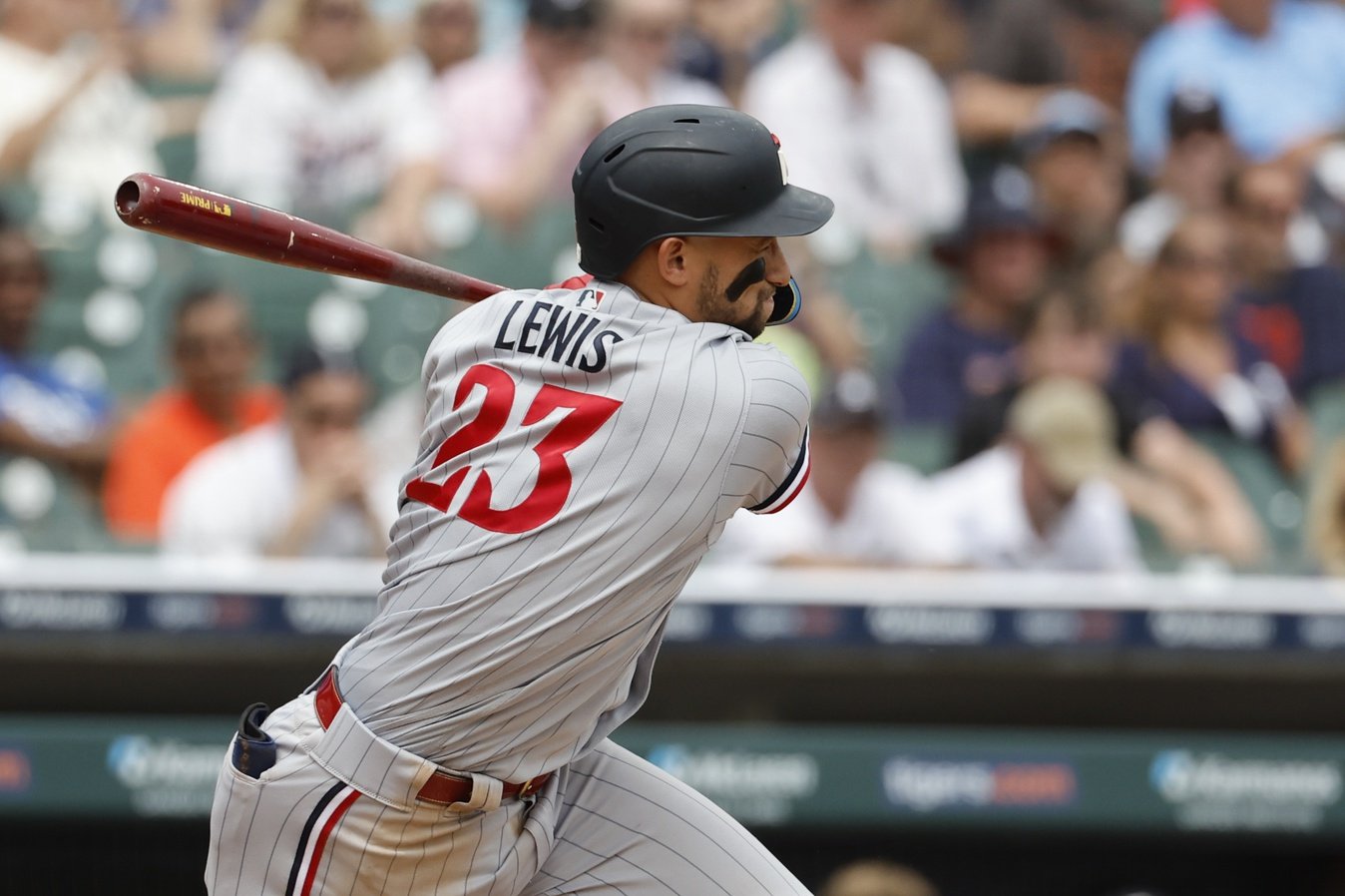 Baseball is a complex and deeply interwoven game, especially at its highest level. Nothing in major-league baseball is as straightforward as it seems. So when I say that Minnesota's offensive strategy under hitting coach David Popkins seems largely predicated on hunting for mistake pitches from opposing hurlers and crushing them, I recognize that it's a vast oversimplification. Still, for anyone who's watched the team much this year, it does feel like a very apt description of their approach. Right? The eye test matches the results: Twins hitters are generally swinging out of their shoes, racking up strikeouts at an historic rate while generating an outsized proportion of their scoring on home runs. Plate appearances tend to have a recurring pattern: combinations of passivity and guesswork leading to many short and fruitless at-bats. A noticeable urge to pull the ball with authority has hitters rolling over grounders and popping lazy flies with regularity between all the whiffs. A commenter here at TD put it astutely the other week: it's like the Twins are playing home run derby, while the other team is playing baseball, and winning. Again, these are only the musings of outsiders. I don't proclaim to be an expert on major-league hitting. But it was revealing the other day to hear the same "waiting for mistakes" verbiage come from a player on the team itself: Royce Lewis, who's been one of the few exceptions to the lineup's general all-or-nothing tendency. “It’s just me being able to put the bat on the ball and make contact and make people do things," Lewis said on Sunday after going 3-for-4 with a walk. "You’ve just got to play the game and when you strike out, no one is doing anything except for the pitcher. Honestly, I get frustrated after a while and I just go back to being like — what I said to (hitting coach David Popkins) is, ‘I’m going to turn into (Luis) Arraez today, just touch the ball. There’s a lot of grass out there.' " Lewis is batting .322 with an .865 OPS through 125 MLB plate appearances, despite a developmental path that was thrown completely askew by injuries and COVID. His spray chart in a limited big-league sample is reflective of the mentality he preaches, showing a willingness to take the ball the other way and swing for contact on his pull side. "I looked at where some of our plans were going and how the pitchers were pitching us," Lewis continued, "and they weren’t attacking us with our plan of getting a mistake. I was like, ‘Why don’t I just start being aggressive, putting the ball in play? I know I can at least touch it and go to right field.’ " Again: it's an oversimplification of how Twins hitters are being primed and prepared for games. We all know that. But the words "our plan of getting a mistake" will elicit an inevitable cringe from fans who feel the remark corroborates what they've been seeing, and what's been plaguing this remarkably frustrating offensive unit. If they don't get the pitch they're looking for, then the at-bat isn't going to yield anything. Lewis wasn't in the lineup on Monday night for a 4-1 loss against Atlanta in which Minnesota failed to produce any offense outside of a single solo home run. Par for the course. Granted, the Twins were facing a hell of a starter in Spencer Strider, but that sort of gets to the point: you're not going to succeed with any consistency against high-caliber arms – or pitchers buckling down, say, with the bases loaded – when you're counting on them making a mistake. This is the freaking big leagues. Let's not act like a nominal change in instruction is going to be some magical elixir. Every hitter has his own mechanics and mindset. It's not realistic to expect some sweeping profound transformation across the lineup as the result of a change in messaging, or even personnel on the coaching staff. Even Lewis walks a precarious tightrope. It's easy to advocate for a more contact-focused approach when the hits are falling as they have; Royce has enjoyed a .418 BABIP in his limited sample this year. We've seen how it can go when he slumps. We also saw how it went when the young hitter he replaced – Jose Miranda – suffered the downsides of such an approach. Miranda's eagerness to put bat on ball, and his resulting tendency to swing at unfavorable pitches, led to low-quality contact and an absence of power. That trend sadly continues in Triple-A, where he has a sub-100 ISO. Miranda has unarguably been the single biggest disappointment among a sea of disappointing Twins hitters this year, so admittedly, there is a "be careful what you wish for" caveat in play with the inclination to heed Lewis' advice and embrace an offensive philosophy less geared toward selling out for power. That said ... it really couldn't hurt at this point. We're halfway through the season, and the Twins continue to struggle with scoring runs in a way that threatens to sabotage their wide-open path to the postseason, with one of the best pitching staffs we've seen. The current method is not working. It would be nice to hear someone other than the 24-year-old rookie acknowledge it, and take action on it.
 -
The Twins are leaving their offensive fate in the hands of opponents, and it's not working. Maybe Royce Lewis has the right idea. Image courtesy of © Rick Osentoski-USA TODAY Sports Baseball is a complex and deeply interwoven game, especially at its highest level. Nothing in major-league baseball is as straightforward as it seems. So when I say that Minnesota's offensive strategy under hitting coach David Popkins seems largely predicated on hunting for mistake pitches from opposing hurlers and crushing them, I recognize that it's a vast oversimplification. Still, for anyone who's watched the team much this year, it does feel like a very apt description of their approach. Right? The eye test matches the results: Twins hitters are generally swinging out of their shoes, racking up strikeouts at an historic rate while generating an outsized proportion of their scoring on home runs. Plate appearances tend to have a recurring pattern: combinations of passivity and guesswork leading to many short and fruitless at-bats. A noticeable urge to pull the ball with authority has hitters rolling over grounders and popping lazy flies with regularity between all the whiffs. A commenter here at TD put it astutely the other week: it's like the Twins are playing home run derby, while the other team is playing baseball, and winning. Again, these are only the musings of outsiders. I don't proclaim to be an expert on major-league hitting. But it was revealing the other day to hear the same "waiting for mistakes" verbiage come from a player on the team itself: Royce Lewis, who's been one of the few exceptions to the lineup's general all-or-nothing tendency. “It’s just me being able to put the bat on the ball and make contact and make people do things," Lewis said on Sunday after going 3-for-4 with a walk. "You’ve just got to play the game and when you strike out, no one is doing anything except for the pitcher. Honestly, I get frustrated after a while and I just go back to being like — what I said to (hitting coach David Popkins) is, ‘I’m going to turn into (Luis) Arraez today, just touch the ball. There’s a lot of grass out there.' " Lewis is batting .322 with an .865 OPS through 125 MLB plate appearances, despite a developmental path that was thrown completely askew by injuries and COVID. His spray chart in a limited big-league sample is reflective of the mentality he preaches, showing a willingness to take the ball the other way and swing for contact on his pull side. "I looked at where some of our plans were going and how the pitchers were pitching us," Lewis continued, "and they weren’t attacking us with our plan of getting a mistake. I was like, ‘Why don’t I just start being aggressive, putting the ball in play? I know I can at least touch it and go to right field.’ " Again: it's an oversimplification of how Twins hitters are being primed and prepared for games. We all know that. But the words "our plan of getting a mistake" will elicit an inevitable cringe from fans who feel the remark corroborates what they've been seeing, and what's been plaguing this remarkably frustrating offensive unit. If they don't get the pitch they're looking for, then the at-bat isn't going to yield anything. Lewis wasn't in the lineup on Monday night for a 4-1 loss against Atlanta in which Minnesota failed to produce any offense outside of a single solo home run. Par for the course. Granted, the Twins were facing a hell of a starter in Spencer Strider, but that sort of gets to the point: you're not going to succeed with any consistency against high-caliber arms – or pitchers buckling down, say, with the bases loaded – when you're counting on them making a mistake. This is the freaking big leagues. Let's not act like a nominal change in instruction is going to be some magical elixir. Every hitter has his own mechanics and mindset. It's not realistic to expect some sweeping profound transformation across the lineup as the result of a change in messaging, or even personnel on the coaching staff. Even Lewis walks a precarious tightrope. It's easy to advocate for a more contact-focused approach when the hits are falling as they have; Royce has enjoyed a .418 BABIP in his limited sample this year. We've seen how it can go when he slumps. We also saw how it went when the young hitter he replaced – Jose Miranda – suffered the downsides of such an approach. Miranda's eagerness to put bat on ball, and his resulting tendency to swing at unfavorable pitches, led to low-quality contact and an absence of power. That trend sadly continues in Triple-A, where he has a sub-100 ISO. Miranda has unarguably been the single biggest disappointment among a sea of disappointing Twins hitters this year, so admittedly, there is a "be careful what you wish for" caveat in play with the inclination to heed Lewis' advice and embrace an offensive philosophy less geared toward selling out for power. That said ... it really couldn't hurt at this point. We're halfway through the season, and the Twins continue to struggle with scoring runs in a way that threatens to sabotage their wide-open path to the postseason, with one of the best pitching staffs we've seen. The current method is not working. It would be nice to hear someone other than the 24-year-old rookie acknowledge it, and take action on it. View full article
-
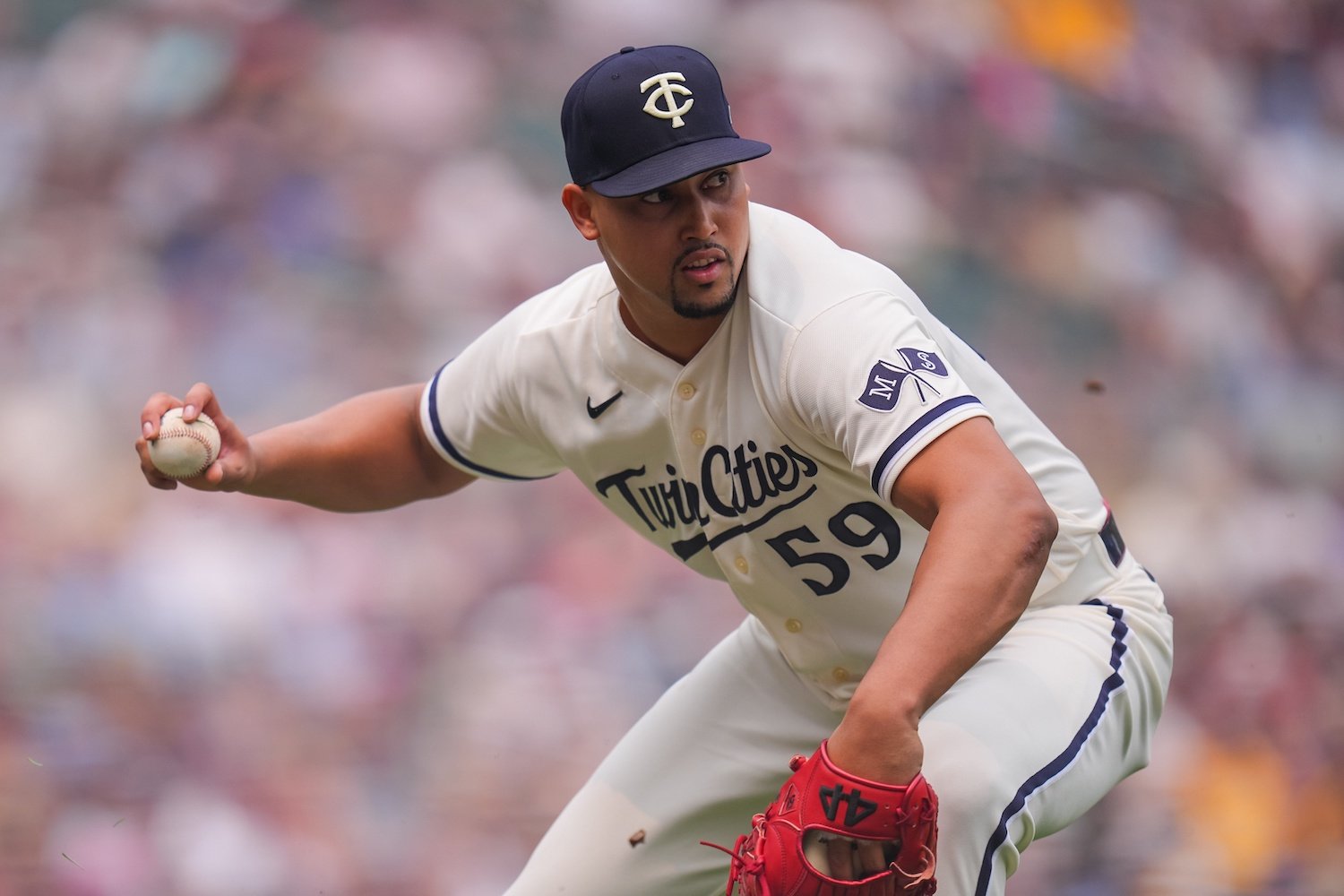 During the season, much of my writing here at Twins Daily is concentrated in the "Week in Review" columns, published each Sunday evening to provide a timely snapshot of the team's situation and outlook. (You can find the latest edition here!) Each week, I make a point of highlighting standout players, both good and bad, to track leaders and laggards over the course of the season. One thing I noticed recently is that I have rarely found myself mentioning Jhoan Duran in the "Highlights" section, despite the fact that he's undeniably been one of the team's best performers and biggest bright spots. I wondered, why is that? But the answer isn't too hard to figure out, in the context of the fan experience. First, Duran's greatness has become essentially routine. Not that throwing 104 MPH and blowing away the best hitters in the world should ever be viewed as such, but the big right-hander is so consistent, so reliable, and so casual in his otherworldly excellence that – as a fan – you almost have to will yourself not to take it for granted. Twins fans, in general, can't be blamed for their conditioning to greatness at closer. Between Eddie Guardado, Joe Nathan, Glen Perkins, and Taylor Rogers, Minnesota closers have combined for 10 All-Star appearances in the past 20 years, and I'd argue that Nathan specifically is one of the 10 greatest to ever specialize in the closer role. Yet, Duran is on a trajectory to surpass them all as a difference-maker. The other reason his greatness might get overlooked is because the team surrounding Duran has been so bland and mediocre in spite of him. When writing about the latest week's events, I'm usually too busy lamenting the offensive shortcomings that led to multiple frustrating losses as opposed to reflecting on Duran's role in salvaging the close wins. I know I'm not alone. But that's not right. If not for Duran, this team would be in markedly worse shape, and this bullpen would be a liability rather than a strength. While relief pitchers are less impactful than starters and hitters in a broad context, Duran's usage pushes his impact to the max. He's facing the opposing team's best hitters, in high leverage, with games on the line, almost without exception. And he just keeps on getting it done, in dazzling fashion. On Sunday, Duran cruised through one of his more comfortable appearances of the year, closing out a three-run win with a perfect 10th against Detroit to pick up his 11th save. Through 31 innings, he's posted a 1.45 ERA and 0.97 WHIP while averaging 12.2 strikeouts per nine. Since the start of last year he ranks second among all MLB relievers in Win Probability Added, trailing only Cincinnati's Alexis Diaz. The 25-year-old hasn't been perfect this year, with a pair of blown saves and two losses to his record, but they've always resulted from ultra-slim margins for error. (Thanks, offense!) Duran hasn't given up more than one run in an appearance all year. In fact, he's gone 55 consecutive appearances without being charged with multiple runs. Unreal. Meanwhile, he's been a workhorse, throwing multiple innings in five of his 28 appearances this season while regularly handling pitch counts in the 20s or even 30s without requiring much downtime. His velocity and stuff are on point in pretty much every outing. I can't remember a time where he complained of soreness or even fatigue during the past two years. It needs to be underscored how remarkable that is. Coming into last season, Duran was one of the most glaring injury risks in the organization. He'd missed nearly all of the 2021 season with an elbow strain, and was coming back as a max-effort reliever unleashing triple-digit heat. The upside was tantalizing but the risk level was substantial, and we all know how that tends to go in this organization. I've said it before and I'll say it again: he's a miracle. Closer is one of those positions that we don't talk about very much unless the current occupant is struggling and costing the team wins. Baseball fans have been urged via sabermetrics to devalue the save statistic (rightfully so!) but there is no denying that high-caliber, high-leverage relief pitching is vital to winning games – especially in October. That's why Twins fans should be talking more about Duran as we assess the team's viability as a contender. For all their flaws and weaknesses, having a relief weapon of this magnitude provides a massive single-game advantage. Being able to back him with a pair of supporting studs like Griffin Jax (who actually leads the bullpen in in fWAR) and Brock Stewart is a luxury few other teams can boast. One can reasonably argue that this relief corps will need help at the deadline, but the Twins are lucky to be set at the top with one of the best arms in baseball – not just that, but one of the most unique and awesome specimens to ever take the major-league mound. He deserves recognition as an All-Star. But more importantly, Duran deserves continual recognition in the eyes of fans like myself who might be inclined to take for granted the amazing things he's bringing to this team and to the game-viewing experience.
 -
In a first half that's been filled with frustrating lapses and unmet expectations, one man has risen above, cementing his place among the game's truly elite in one of baseball's most pivotal individual roles. Image courtesy of Brad Rempel-USA TODAY Sports During the season, much of my writing here at Twins Daily is concentrated in the "Week in Review" columns, published each Sunday evening to provide a timely snapshot of the team's situation and outlook. (You can find the latest edition here!) Each week, I make a point of highlighting standout players, both good and bad, to track leaders and laggards over the course of the season. One thing I noticed recently is that I have rarely found myself mentioning Jhoan Duran in the "Highlights" section, despite the fact that he's undeniably been one of the team's best performers and biggest bright spots. I wondered, why is that? But the answer isn't too hard to figure out, in the context of the fan experience. First, Duran's greatness has become essentially routine. Not that throwing 104 MPH and blowing away the best hitters in the world should ever be viewed as such, but the big right-hander is so consistent, so reliable, and so casual in his otherworldly excellence that – as a fan – you almost have to will yourself not to take it for granted. Twins fans, in general, can't be blamed for their conditioning to greatness at closer. Between Eddie Guardado, Joe Nathan, Glen Perkins, and Taylor Rogers, Minnesota closers have combined for 10 All-Star appearances in the past 20 years, and I'd argue that Nathan specifically is one of the 10 greatest to ever specialize in the closer role. Yet, Duran is on a trajectory to surpass them all as a difference-maker. The other reason his greatness might get overlooked is because the team surrounding Duran has been so bland and mediocre in spite of him. When writing about the latest week's events, I'm usually too busy lamenting the offensive shortcomings that led to multiple frustrating losses as opposed to reflecting on Duran's role in salvaging the close wins. I know I'm not alone. But that's not right. If not for Duran, this team would be in markedly worse shape, and this bullpen would be a liability rather than a strength. While relief pitchers are less impactful than starters and hitters in a broad context, Duran's usage pushes his impact to the max. He's facing the opposing team's best hitters, in high leverage, with games on the line, almost without exception. And he just keeps on getting it done, in dazzling fashion. On Sunday, Duran cruised through one of his more comfortable appearances of the year, closing out a three-run win with a perfect 10th against Detroit to pick up his 11th save. Through 31 innings, he's posted a 1.45 ERA and 0.97 WHIP while averaging 12.2 strikeouts per nine. Since the start of last year he ranks second among all MLB relievers in Win Probability Added, trailing only Cincinnati's Alexis Diaz. The 25-year-old hasn't been perfect this year, with a pair of blown saves and two losses to his record, but they've always resulted from ultra-slim margins for error. (Thanks, offense!) Duran hasn't given up more than one run in an appearance all year. In fact, he's gone 55 consecutive appearances without being charged with multiple runs. Unreal. Meanwhile, he's been a workhorse, throwing multiple innings in five of his 28 appearances this season while regularly handling pitch counts in the 20s or even 30s without requiring much downtime. His velocity and stuff are on point in pretty much every outing. I can't remember a time where he complained of soreness or even fatigue during the past two years. It needs to be underscored how remarkable that is. Coming into last season, Duran was one of the most glaring injury risks in the organization. He'd missed nearly all of the 2021 season with an elbow strain, and was coming back as a max-effort reliever unleashing triple-digit heat. The upside was tantalizing but the risk level was substantial, and we all know how that tends to go in this organization. I've said it before and I'll say it again: he's a miracle. Closer is one of those positions that we don't talk about very much unless the current occupant is struggling and costing the team wins. Baseball fans have been urged via sabermetrics to devalue the save statistic (rightfully so!) but there is no denying that high-caliber, high-leverage relief pitching is vital to winning games – especially in October. That's why Twins fans should be talking more about Duran as we assess the team's viability as a contender. For all their flaws and weaknesses, having a relief weapon of this magnitude provides a massive single-game advantage. Being able to back him with a pair of supporting studs like Griffin Jax (who actually leads the bullpen in in fWAR) and Brock Stewart is a luxury few other teams can boast. One can reasonably argue that this relief corps will need help at the deadline, but the Twins are lucky to be set at the top with one of the best arms in baseball – not just that, but one of the most unique and awesome specimens to ever take the major-league mound. He deserves recognition as an All-Star. But more importantly, Duran deserves continual recognition in the eyes of fans like myself who might be inclined to take for granted the amazing things he's bringing to this team and to the game-viewing experience. View full article
-
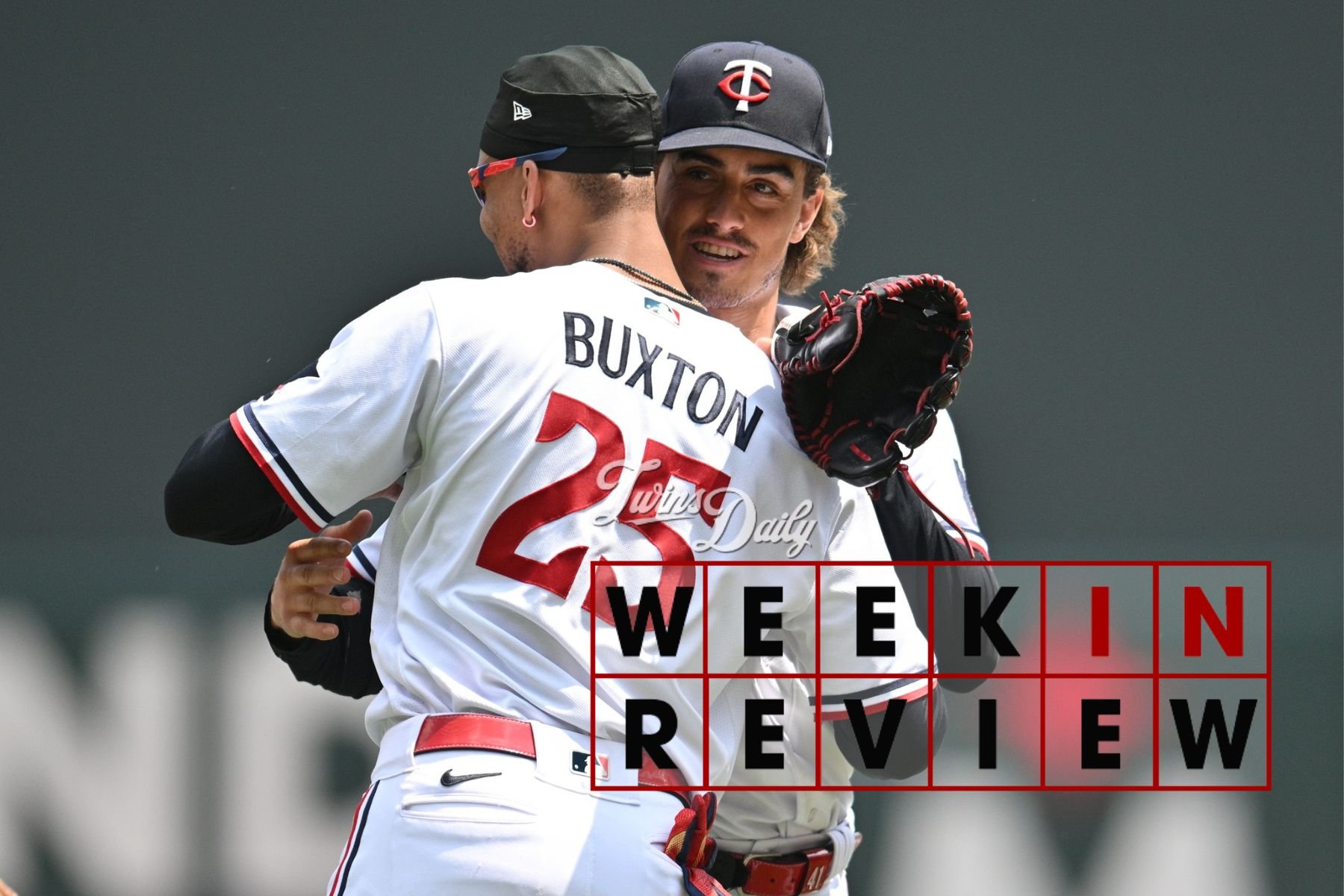 Weekly Snapshot: Mon, 6/19 through Sun, 6/25 *** Record Last Week: 4-3 (Overall: 40-39) Run Differential Last Week: +0 (Overall: +34) Standing: 1st Place in AL Central (2.0 GA) Last Week's Game Results: Game 73 | BOS 9, MIN 3: Staff's Struggles Continue, Lineup Sputters Game 74 | BOS 10, MIN 4: Season Reaches Low Point in Blowout Loss Game 75 | MIN 5, BOS 4: Farmer Finishes Tumultuous Game in 10th Game 76 | MIN 6, BOS 0: Series Split Salvaged Behind Ryan Shutout Game 77 | MIN 4, DET 1: Maeda Shines in Return from Injured List Game 78 | DET 3, MIN 2: Another Lifeless Offensive Performance Game 79 | MIN 6, DET 3: Twins Awaken in Extras to Take Series NEWS & NOTES For the first time since April, Kenta Maeda took the hill to make a major-league start on Friday night in Detroit. Nobody knew quite what to expect, but Maeda came through brilliantly, tossing five shutout innings to pick up his first win since August of 2021. To make room for Maeda in the rotation, Louie Varland was optioned to Triple-A following a rough string of outings. (Reliever Oliver Ortega was briefly promoted to occupy the open roster spot between their starts.) Kyle Garlick was designated for assignment, passed through waivers, and returned to St. Paul. In a sad moment on Saturday night, José De León apparently blew out his elbow (again) while warming up ahead of the eighth inning. He'd been a solid lower-leverage option for a bullpen that's stretched on depth, so it's a bummer from that standpoint, but even more so on a personal level. The 30-year-old had battled back from so much adversity. While MRI results weren't known as of Sunday afternoon, De León is very likely done for the year. Josh Winder was recalled to the bullpen in his stead. Finally, the Twins made a few minor-league signings last week, which isn't unusual – but one name from the latest wave stands out: former Cy Young winner Dallas Keuchel, who signed on Thursday and will report to the Saints. As his velocity declined beyond viability, Keuchel's career fizzled post-2020 (he posted a ghastly 9.20 ERA in 60 innings last year between three MLB stops). But the 35-year-old lefty has been working at Driveline to try and find his way back to the big-league mound. While he's a longshot to become a meaningful factor for Minnesota, Keuchel adds an intriguing organizational storyline to follow. He made his Saints debut on Sunday, starting and pitching four innings of four-run ball on 54 pitches. He struck out four, walked one, and induced a bunch of swings and misses despite a fastball that topped out at 87.1 MPH. HIGHLIGHTS Maeda's outstanding performance – punctuated with a burst of emotion after he ended the fifth on a strikeout – helped set the tone in a week full of redemptive performances from a Twins team that managed to raise itself from a bleak low point on Tuesday to win four of the next five. Skepticism surrounded Maeda as he returned from a vague elbow injury followed by a rehab stint where his results were mixed, with his fastball clocking in at around 89 MPH on average. Maeda's pitching ahead of the IL stint – especially the final start, where he gave up 10 earned runs – did not inspire confidence. But on Friday, the 35-year-old made a big statement, albeit against a weak Tigers lineup. He struck out eight and allowed only three hits over five scoreless frames, working efficiently outside of a few control hiccups. Afterward, he declared that he feels like his old self from a mental standpoint. It's worth remembering that Maeda was similarly effective in his first start of the season against Miami, before the wheels quickly fell off, so optimism should remain in check for the moment. But the Twins don't need Maeda to replicate his 2020 form. They simply need him to pitch to the level of a solid No. 5 starter who can eat some innings. On Friday, he looked more than capable. Joe Ryan hardly needs to prove himself as a quality rotation option at this point, but he too was looking for some redemption coming off an ugly start against Detroit. Last week in this column I noted, "It appears that regression is catching up a bit with Mr. Ryan, whose ERA has risen from 2.21 to 3.30 in his past four starts." And so Joe Cool went out for his next turn and threw a complete-game shutout, the first by a Twins pitcher in five years. From start to finish Ryan was flat-out masterful, striking out nine Red Sox with no walks and just three hits allowed. Following a brief lapse the prior week, he went right back to looking like an ace. Another player riding the redemption train: Byron Buxton. Last week, as his slump lingered and worsened, I lamented, "History tells us he'll snap out of and go on a tear at some point soon, but man, that seems like a massive stretch based on how lost he seems in every single at-bat right now." It's a good reminder to myself that I should trust history and evidence over my own reactive readings of the game. Lost as he may have looked, Buxton snapped out of it in a big way against Boston, launching three home runs – including two of the longest of his career, in consecutive at-bats. He swiftly reminded us what he can bring to the table when he escapes his perplexing ruts. I'm not going to say Buxton is out of the woods by any means, because he went right back to flailing in the Detroit series (0-for-9, 4 K) and now is dealing with back spasms, but we'll take any positive signs from him. Those absolute nukes at Target Field were some thunderingly loud positives, albeit contained within a brief and fleeting hot streak. A few other standout performances worthy of noting from the past week: Max Kepler is embarking on his own redemption tour. He went 6-for-16 with three homers, and suddenly his OPS is back in the 700 range after lagging in the low 600s for much of June. It's still annoying to see Kepler amassing major-league PAs while Matt Wallner and Trevor Larnach toil in the minors, but he's relieving a bit of the heat for now. (The same can't be said for Joey Gallo.) Ryan Jeffers has quietly been the team's biggest offensive success story this year, leading all position players in fWAR as a part-time catcher while putting up offensive production that doesn't slow down: he went 8-for-12 with three doubles last week to lift his OPS to .824 through 46 games. Oh, and Christian Vázquez is coming around too. Royce Lewis has brought a much-needed charge to this group, with electric athleticism and an aggressive style of hitting that actually seems aimed at more than launching bombs in every AB. He did homer a couple times last week, but also mixed in plenty of sprayed liners to all fields in an 11-for-24 stretch that ends with an active six-game hitting streak. LOWLIGHTS The Twins offense, even at its "best," is completely one-dimensional, Royce's contributions notwithstanding. They have almost no method of scoring outside of hoping for home runs (usually dictated by a mistake pitch from the opposition) because this lineup is largely lacking for any other strengths. It's fortunate the pitching was up to the task of salvaging a split against Boston and securing a series win in Detroit because the lineup was sticking to its usual antics persistently. Here's a quick breakdown of how all Minnesota's runs were scored in the past week, during which they averaged 4.3 runs per game against some very pedestrian pitching: Monday: 3 runs scored – All on one swing from Vázquez. Tuesday: 4 runs scored – All on late (meaningless) home runs from Buxton, Lewis and Kepler. Wednesday: 5 runs scored (in 10 innings) – One on Kepler homer, three on RBI singles, one RBI groundout from Carlos Correa. Thursday: 6 runs scored – Three on solo home runs from Buxton (2x) and Correa. The other three came on a two-run double from Michael A. Taylor and an RBI single from Lewis. Friday: 4 runs scored – Three on home runs from Kepler (2-R) and Lewis, one on bases-loaded WP to Vázquez. Saturday: 2 runs scored – Both on solo home runs from Correa and Gallo. Sunday: 6 runs scored – Two on Donovan Solano home run, three on RBI singles, one on bases-loaded error by Detroit. That's 30 runs total with 18 of them scoring on homers. In between those long balls the Twins are constantly hunting for, they are stringing together tons of fruitless at-bats and blank innings, continuing to supply the pitching staff with a razor-thin margin for error. Twins hitters pile up strikeouts on unproductive PAs, flop in key situations, and run themselves into unaffordable outs on the bases. Day after day. They haven't scored more than six runs in a contest in nearly two weeks. Naturally, it's all the more difficult to witness these repeated letdowns from the lineup while Luis Arraez makes headlines by chasing history in Miami (as I write this, he's batting .401 and leading the majors in batting average by 83 points). Especially with Pablo López delivering two more underwhelming outings last week, pushing his ERA to a mediocre 4.40 through 15 starts. I firmly believe López has outpitched that ERA – even in the past week, where his FIP was 1.30 – and will be an asset to this rotation now and going forward. Also, Arraez is clearly riding high now. And good for him! Still, the optics at the moment ... they're not great. Maybe the end of Sunday's game can be taken as a good omen. The Twins did what they've consistently been unable to do: string hits in scoring opportunities, run aggressively with success, win battles against the opposing pitcher and defense. Hopefully that's a sign of things to come for the offense. It'll be needed, because the Twins are now headed into the teeth of a very challenging road trip, and the general level of play from recent weeks will not suffice if they want to come out above .500 on the other end. TRENDING STORYLINE The unfortunate injury to De León leaves a void in the Twins' middle-relief tier. At the moment they are essentially carrying three long relievers – Winder, Jordan Balazovic, and Brent Headrick – and that's not tenable for the bullpen. Perhaps one of those guys moves into a shorter-burst role, but a swap in the near future seems more likely. Headrick, who coughed up five runs in one inning against Boston on Tuesday, is likely at greatest risk. Thing is, the 40-man roster is pretty light on healthy short relief options at the moment. Ortega would need to wait another week to return, barring injury. With De León likely to open a spot by landing on the 60-day IL, could the Twins give a chance to a non-rostered wild-card type in the minors? One thing is for sure: losing De León as an option in the mix greatly increases the stakes for Caleb Thielbar and/or Jorge Alcala to come back at some point with any level of health and effectiveness. Not to mention Jorge López, who will be sidelined indefinitely as he focuses on his mental well being. LOOKING AHEAD The going is about to get a lot tougher for the Twins, so we'll see if they can get going. Pitchers will face a brutal gauntlet in Atlanta against a high-powered Braves offense, which will present an especially telling test for Maeda on Wednesday. From there, it's off to Baltimore to take on a very strong Orioles team that's 15 games above .500 in the AL East. At this time next week, we should be satisfied with even a 2-4 outcome, because this is just a really difficult road stretch by any measure. That only makes it all the more frustrating that the Twins couldn't capitalize more on their latest favorable homestand, but alas. Onward and upward. MONDAY, 6/26: TWINS @ BRAVES – RHP Sonny Gray v. RHP Spencer Strider TUESDAY, 6/27: TWINS @ BRAVES – RHP Joe Ryan v. RHP Bryce Elder WEDNESDAY, 6/28: TWINS @ BRAVES – RHP Kenta Maeda v. RHP AJ Smith-Shawver FRIDAY, 6/30: TWINS @ ORIOLES – RHP Pablo Lopez v. RHP Dean Kremer SATURDAY, 7/1: TWINS @ ORIOLES – RHP Bailey Ober v. RHP Kyle Bradish SUNDAY, 7/2: TWINS @ ORIOLES – RHP Sonny Gray v. TBD
- 19 comments
-
- 3
-
-
- joe ryan
- byron buxton
- (and 2 more)
-
Week in Review: Road (Trip) to Redemption?
Nick Nelson posted a topic in Twins Daily Front Page News
Calling the course of this season a roller coaster doesn't really do it justice. I doubt any design with such extreme and repetitive descents would be approved, because it simply wouldn't make for a very enjoyable ride. Speaking of unenjoyable rides, the 2023 Twins sunk to their lowest point yet last week, before finally experiencing a long-awaited turnaround. Will this one stick? Image courtesy of Jeffrey Becker-USA TODAY Sports Weekly Snapshot: Mon, 6/19 through Sun, 6/25 *** Record Last Week: 4-3 (Overall: 40-39) Run Differential Last Week: +0 (Overall: +34) Standing: 1st Place in AL Central (2.0 GA) Last Week's Game Results: Game 73 | BOS 9, MIN 3: Staff's Struggles Continue, Lineup Sputters Game 74 | BOS 10, MIN 4: Season Reaches Low Point in Blowout Loss Game 75 | MIN 5, BOS 4: Farmer Finishes Tumultuous Game in 10th Game 76 | MIN 6, BOS 0: Series Split Salvaged Behind Ryan Shutout Game 77 | MIN 4, DET 1: Maeda Shines in Return from Injured List Game 78 | DET 3, MIN 2: Another Lifeless Offensive Performance Game 79 | MIN 6, DET 3: Twins Awaken in Extras to Take Series NEWS & NOTES For the first time since April, Kenta Maeda took the hill to make a major-league start on Friday night in Detroit. Nobody knew quite what to expect, but Maeda came through brilliantly, tossing five shutout innings to pick up his first win since August of 2021. To make room for Maeda in the rotation, Louie Varland was optioned to Triple-A following a rough string of outings. (Reliever Oliver Ortega was briefly promoted to occupy the open roster spot between their starts.) Kyle Garlick was designated for assignment, passed through waivers, and returned to St. Paul. In a sad moment on Saturday night, José De León apparently blew out his elbow (again) while warming up ahead of the eighth inning. He'd been a solid lower-leverage option for a bullpen that's stretched on depth, so it's a bummer from that standpoint, but even more so on a personal level. The 30-year-old had battled back from so much adversity. While MRI results weren't known as of Sunday afternoon, De León is very likely done for the year. Josh Winder was recalled to the bullpen in his stead. Finally, the Twins made a few minor-league signings last week, which isn't unusual – but one name from the latest wave stands out: former Cy Young winner Dallas Keuchel, who signed on Thursday and will report to the Saints. As his velocity declined beyond viability, Keuchel's career fizzled post-2020 (he posted a ghastly 9.20 ERA in 60 innings last year between three MLB stops). But the 35-year-old lefty has been working at Driveline to try and find his way back to the big-league mound. While he's a longshot to become a meaningful factor for Minnesota, Keuchel adds an intriguing organizational storyline to follow. He made his Saints debut on Sunday, starting and pitching four innings of four-run ball on 54 pitches. He struck out four, walked one, and induced a bunch of swings and misses despite a fastball that topped out at 87.1 MPH. HIGHLIGHTS Maeda's outstanding performance – punctuated with a burst of emotion after he ended the fifth on a strikeout – helped set the tone in a week full of redemptive performances from a Twins team that managed to raise itself from a bleak low point on Tuesday to win four of the next five. Skepticism surrounded Maeda as he returned from a vague elbow injury followed by a rehab stint where his results were mixed, with his fastball clocking in at around 89 MPH on average. Maeda's pitching ahead of the IL stint – especially the final start, where he gave up 10 earned runs – did not inspire confidence. But on Friday, the 35-year-old made a big statement, albeit against a weak Tigers lineup. He struck out eight and allowed only three hits over five scoreless frames, working efficiently outside of a few control hiccups. Afterward, he declared that he feels like his old self from a mental standpoint. It's worth remembering that Maeda was similarly effective in his first start of the season against Miami, before the wheels quickly fell off, so optimism should remain in check for the moment. But the Twins don't need Maeda to replicate his 2020 form. They simply need him to pitch to the level of a solid No. 5 starter who can eat some innings. On Friday, he looked more than capable. Joe Ryan hardly needs to prove himself as a quality rotation option at this point, but he too was looking for some redemption coming off an ugly start against Detroit. Last week in this column I noted, "It appears that regression is catching up a bit with Mr. Ryan, whose ERA has risen from 2.21 to 3.30 in his past four starts." And so Joe Cool went out for his next turn and threw a complete-game shutout, the first by a Twins pitcher in five years. From start to finish Ryan was flat-out masterful, striking out nine Red Sox with no walks and just three hits allowed. Following a brief lapse the prior week, he went right back to looking like an ace. Another player riding the redemption train: Byron Buxton. Last week, as his slump lingered and worsened, I lamented, "History tells us he'll snap out of and go on a tear at some point soon, but man, that seems like a massive stretch based on how lost he seems in every single at-bat right now." It's a good reminder to myself that I should trust history and evidence over my own reactive readings of the game. Lost as he may have looked, Buxton snapped out of it in a big way against Boston, launching three home runs – including two of the longest of his career, in consecutive at-bats. He swiftly reminded us what he can bring to the table when he escapes his perplexing ruts. I'm not going to say Buxton is out of the woods by any means, because he went right back to flailing in the Detroit series (0-for-9, 4 K) and now is dealing with back spasms, but we'll take any positive signs from him. Those absolute nukes at Target Field were some thunderingly loud positives, albeit contained within a brief and fleeting hot streak. A few other standout performances worthy of noting from the past week: Max Kepler is embarking on his own redemption tour. He went 6-for-16 with three homers, and suddenly his OPS is back in the 700 range after lagging in the low 600s for much of June. It's still annoying to see Kepler amassing major-league PAs while Matt Wallner and Trevor Larnach toil in the minors, but he's relieving a bit of the heat for now. (The same can't be said for Joey Gallo.) Ryan Jeffers has quietly been the team's biggest offensive success story this year, leading all position players in fWAR as a part-time catcher while putting up offensive production that doesn't slow down: he went 8-for-12 with three doubles last week to lift his OPS to .824 through 46 games. Oh, and Christian Vázquez is coming around too. Royce Lewis has brought a much-needed charge to this group, with electric athleticism and an aggressive style of hitting that actually seems aimed at more than launching bombs in every AB. He did homer a couple times last week, but also mixed in plenty of sprayed liners to all fields in an 11-for-24 stretch that ends with an active six-game hitting streak. LOWLIGHTS The Twins offense, even at its "best," is completely one-dimensional, Royce's contributions notwithstanding. They have almost no method of scoring outside of hoping for home runs (usually dictated by a mistake pitch from the opposition) because this lineup is largely lacking for any other strengths. It's fortunate the pitching was up to the task of salvaging a split against Boston and securing a series win in Detroit because the lineup was sticking to its usual antics persistently. Here's a quick breakdown of how all Minnesota's runs were scored in the past week, during which they averaged 4.3 runs per game against some very pedestrian pitching: Monday: 3 runs scored – All on one swing from Vázquez. Tuesday: 4 runs scored – All on late (meaningless) home runs from Buxton, Lewis and Kepler. Wednesday: 5 runs scored (in 10 innings) – One on Kepler homer, three on RBI singles, one RBI groundout from Carlos Correa. Thursday: 6 runs scored – Three on solo home runs from Buxton (2x) and Correa. The other three came on a two-run double from Michael A. Taylor and an RBI single from Lewis. Friday: 4 runs scored – Three on home runs from Kepler (2-R) and Lewis, one on bases-loaded WP to Vázquez. Saturday: 2 runs scored – Both on solo home runs from Correa and Gallo. Sunday: 6 runs scored – Two on Donovan Solano home run, three on RBI singles, one on bases-loaded error by Detroit. That's 30 runs total with 18 of them scoring on homers. In between those long balls the Twins are constantly hunting for, they are stringing together tons of fruitless at-bats and blank innings, continuing to supply the pitching staff with a razor-thin margin for error. Twins hitters pile up strikeouts on unproductive PAs, flop in key situations, and run themselves into unaffordable outs on the bases. Day after day. They haven't scored more than six runs in a contest in nearly two weeks. Naturally, it's all the more difficult to witness these repeated letdowns from the lineup while Luis Arraez makes headlines by chasing history in Miami (as I write this, he's batting .401 and leading the majors in batting average by 83 points). Especially with Pablo López delivering two more underwhelming outings last week, pushing his ERA to a mediocre 4.40 through 15 starts. I firmly believe López has outpitched that ERA – even in the past week, where his FIP was 1.30 – and will be an asset to this rotation now and going forward. Also, Arraez is clearly riding high now. And good for him! Still, the optics at the moment ... they're not great. Maybe the end of Sunday's game can be taken as a good omen. The Twins did what they've consistently been unable to do: string hits in scoring opportunities, run aggressively with success, win battles against the opposing pitcher and defense. Hopefully that's a sign of things to come for the offense. It'll be needed, because the Twins are now headed into the teeth of a very challenging road trip, and the general level of play from recent weeks will not suffice if they want to come out above .500 on the other end. TRENDING STORYLINE The unfortunate injury to De León leaves a void in the Twins' middle-relief tier. At the moment they are essentially carrying three long relievers – Winder, Jordan Balazovic, and Brent Headrick – and that's not tenable for the bullpen. Perhaps one of those guys moves into a shorter-burst role, but a swap in the near future seems more likely. Headrick, who coughed up five runs in one inning against Boston on Tuesday, is likely at greatest risk. Thing is, the 40-man roster is pretty light on healthy short relief options at the moment. Ortega would need to wait another week to return, barring injury. With De León likely to open a spot by landing on the 60-day IL, could the Twins give a chance to a non-rostered wild-card type in the minors? One thing is for sure: losing De León as an option in the mix greatly increases the stakes for Caleb Thielbar and/or Jorge Alcala to come back at some point with any level of health and effectiveness. Not to mention Jorge López, who will be sidelined indefinitely as he focuses on his mental well being. LOOKING AHEAD The going is about to get a lot tougher for the Twins, so we'll see if they can get going. Pitchers will face a brutal gauntlet in Atlanta against a high-powered Braves offense, which will present an especially telling test for Maeda on Wednesday. From there, it's off to Baltimore to take on a very strong Orioles team that's 15 games above .500 in the AL East. At this time next week, we should be satisfied with even a 2-4 outcome, because this is just a really difficult road stretch by any measure. That only makes it all the more frustrating that the Twins couldn't capitalize more on their latest favorable homestand, but alas. Onward and upward. MONDAY, 6/26: TWINS @ BRAVES – RHP Sonny Gray v. RHP Spencer Strider TUESDAY, 6/27: TWINS @ BRAVES – RHP Joe Ryan v. RHP Bryce Elder WEDNESDAY, 6/28: TWINS @ BRAVES – RHP Kenta Maeda v. RHP AJ Smith-Shawver FRIDAY, 6/30: TWINS @ ORIOLES – RHP Pablo Lopez v. RHP Dean Kremer SATURDAY, 7/1: TWINS @ ORIOLES – RHP Bailey Ober v. RHP Kyle Bradish SUNDAY, 7/2: TWINS @ ORIOLES – RHP Sonny Gray v. TBD View full article -
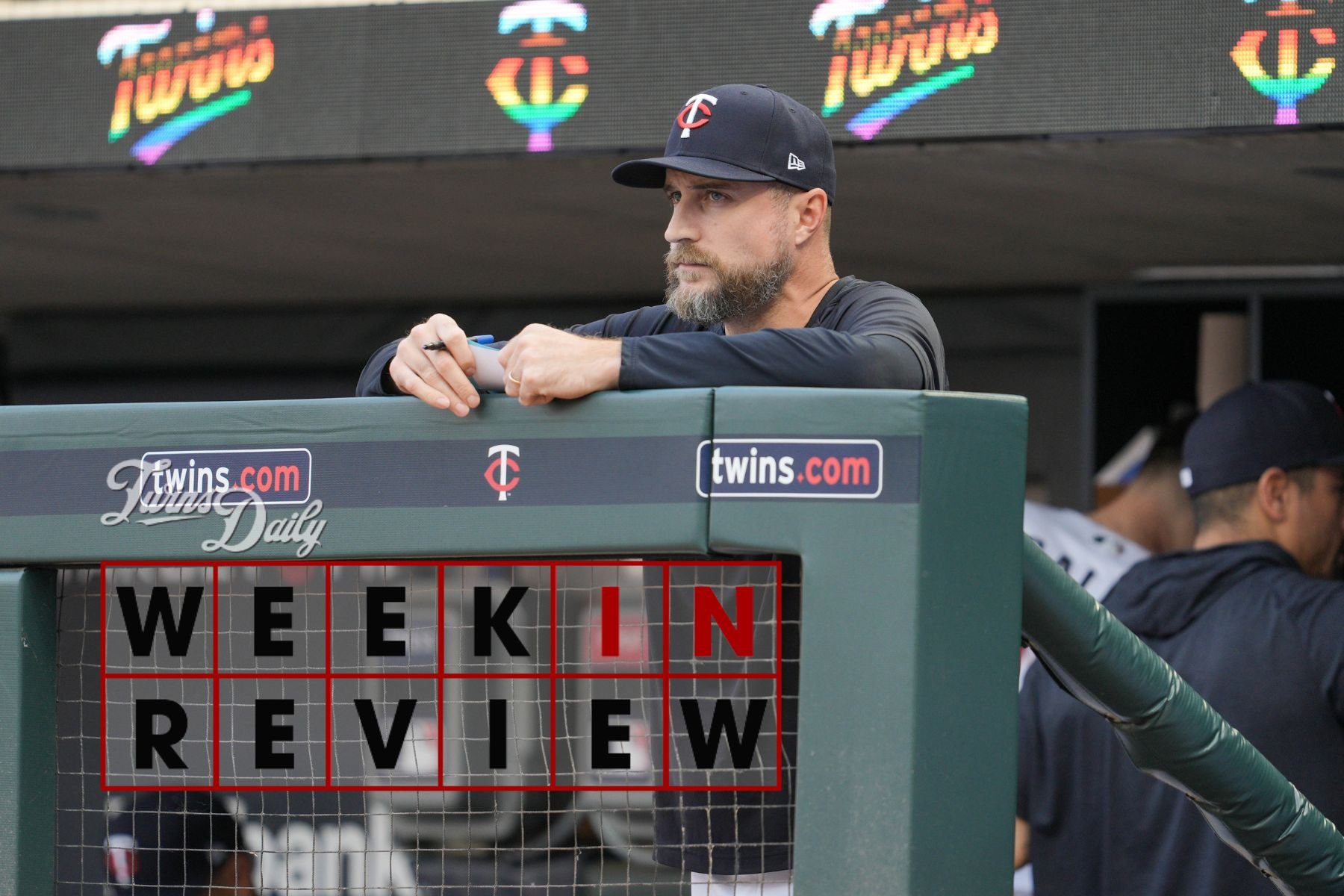 Weekly Snapshot: Mon, 6/12 through Sun, 6/18 *** Record Last Week: 3-3 (Overall: 36-36) Run Differential Last Week: -6 (Overall: +34) Standing: 1st Place in AL Central (3.0 GA) Last Week's Game Results: Game 67 | MIN 7, MIL 5: Twins Pull Off Thrilling Comeback in Ninth Game 68 | MIN 4, MIL 2: Correa Keys Victory Behind Ober's Strong Start Game 69 | DET 8, MIN 4: Gray, Bullpen Can't Hold Onto Early Lead Game 70 | DET 7, MIN 1: Outclassed by Tigers in Embarrassing Blowout Game 71 | MIN 2, DET 0: Bullpen Game Produces Shutout Game 72 | DET 6, MIN 4: Varland Serves Up Bombs, Rallies Stall NEWS & NOTES Much like Max Kepler, Byron Buxton had been struggling before his latest trip to injured list. Like Kepler, Buxton returned directly to the Twins lineup once he was deemed ready, bypassing the standard minor-league rehab assignment. And like Kepler, Buxton went right back to struggling, coming out of the gates 0-for-13 with eight strikeouts. As a result of Buxton's activation on Thursday, Trevor Larnach was once again optioned to Triple-A, which is unfortunate. In fairness, it's not like Larnach has been lighting the world on fire, but he's at a prove-it point in his career and can't seem to find a sustained run of MLB playing time. To be deprived of that opportunity at the expense of Kepler, or a plainly broken Buxton, is tough. Even Joey Gallo, also activated last week, is becoming an awkward fit as he slumps and clogs the depth chart on a one-year deal, though his positional flexibility is handy. Kyle Garlick returned to the minors to make room for Gallo, who went 3-for-14 and struck out four times on Sunday. In other Twins roster moves from the past week: Josh Winder, who made a strong impression by tossing four innings of one-run ball across two relief appearances, was optioned to Triple-A in exchange for Brent Headrick, who got the win as bulk guy in Saturday's bullpen game. Gilberto Celestino completed his rehab from a torn thumb ligament. He was activated from the 60-day IL and optioned to Triple-A; the Twins made room by moving Jorgé Alcala to the 60-day IL, ruling him out for another month. Finally, Jorge López was moved to the Restricted List for what's being termed mental health issues. He'll be away from the team indefinitely. Sadly this development doesn't come as any big surprise – López has imploded on the mound in the past month, frequently showing no semblance of command or poise even in the lowest-leverage of mop-up spots. Since blowing his first save on April 29th, following a great first month, López posted an 8.80 ERA, 9.53 FIP, 12 strikeouts, 10 walks, 4 HBP, and six homers allowed in 15 ⅓ innings. There was no trusting him in any situation, and moreover, putting López into games was starting to feel legitimately dangerous. Nobody wants a guy out there throwing 98 with no idea where it's going. Something needed to be done, and this seems like a relatively favorable course of action, all things considered. Hopefully a little time off and the right support can help López get himself right. There's no doubt he can help this team a lot in the future if he returns to the form we know he's capable of capturing. Meanwhile, the Twins have suffered a crushing blow to their late-inning depth – an issue they'll need to grapple with in the weeks ahead. For now, the López move made way for Jordan Balazovic to join the roster. He made his major-league debut on Sunday, tossing 3 ⅔ scoreless innings against Detroit. HIGHLIGHTS After teasing us a with a few fleeting glimpses in April and May, it appears that Carlos Correa has truly and fully awakened. He pronounced this with authority in the bottom of the ninth on Tuesday night, capping an epic comeback against Milwaukee closer Devin Williams by annihilating a two-run walk-off shot to left. As Correa turned to his dugout and pointed to an imaginary watch, he expressed a sentiment we can all share: About. Damn. Time. For the week, Correa was just 5-for-17 (.217), illustrating an ongoing need for more consistency and sustained production, but at least he's starting to deliver some big hits and signature moments. On Wednesday against Milwaukee he came through with a two-run triple in the third inning that more or less decided the game. Of course, Bailey Ober played a big role in deciding that game as well. He threw six innings of two-run ball with seven strikeouts and one walk to pick up his fourth win of the season. Since joining the rotation, Ober has been arguably the Twins' best and most consistent starter, completing at least five innings in all 10 turns while posting a 2.65 ERA and 3.53 FIP. LOWLIGHTS The vaunted Twins rotation laid a big fat egg in the Detroit series. There's really no other way to put it. This was the worst offensive team in baseball, entering the series ranked dead last in OPS, and yet the Tigers straight-up handled all three starters the Twins threw in this series. Sonny Gray, despite being handed a 4-1 lead early, could not throw strikes or escape trouble in the series opener, compelling Rocco Baldelli to (controversially) pull him after four innings at 72 pitches. The bullpen utterly bombed, including an ugly outing from Jorge López (2 IP, 5 H, 3 ER) that proved to be his last before going on the Restricted List. Joe Ryan coughed up six earned runs on Friday in his worst start of the season, surrendering a pair of home runs in betraying what has generally been a strength for him this year. (He'd allowed only two homers in his previous nine starts.) It appears that regression is catching up a bit with Mr. Ryan, whose ERA has risen from 2.21 to 3.30 in his past four starts. Louie Varland rounded out the series by getting knocked around on Sunday for six runs on nine hits in 4 ⅓ innings. Like Ryan, Varland was bitten by the long ball, but unlike Ryan, he wasn't bucking any kind of positive trend. Home runs have been a persistent problem for Varland, who's now allowed 18 in 82 major-league innings. Even with all of the other things he does well, it's simply going to be impossible for Varland to be successful MLB pitcher if he can't improve on this grave weakness. Having said all that, the rotation has generally been good all year, and was always bound to have some lapses here and there. It's very unfortunate to see one coming against the crummiest-hitting team in the league, but nonetheless, you'd sure like to see the lineup answer the call and pick these guys up a little bit – especially considering the Tigers don't pitch real well either. They just can't do it. After posting four runs during a dramatic ninth-inning comeback on Tuesday, the Twins offense didn't manage to score more than four runs in a game the rest of the week. Fans at Target Field witnessed the usual parade of piss-poor at-bats, with hitters constantly guessing, falling behind, and whiffing their way back to the bench while games slipped away. Buxton is sadly the biggest problem on the team right now, and it's hard to argue otherwise. Every time he's in the lineup, he's churning outs in the heart of the order, while also occupying the DH spot and forcing the Twins to use guys like Edouard Julien in the field. On Sunday, the Twins forfeit the designated hitter so they could pinch-hit Buxton in the eighth – he struck out looking at a pitch over the plate, of course. It's been a long time since we've seen even a glimpse of upside to counterbalance the tremendous negatives Buxton is bringing to the table. If he were merely stuck in a bad-luck spell or mini-slump it'd be easier to abide the club's inclination toward endless patience and faith. But unfortunately, it is clear to anyone watching that Buxton has no clue and no chance at the plate right now. He's gone 23 consecutive plate appearances without a hit and the quality of at-bats its direly low. It's actually kind of hard to comprehend this sudden drop-off, reverting to the form of a 21-year-old rookie in 2015 who was completely baffled and overwhelmed by major-league pitching. The guy who stood there and watched three hittable pitches float over the plate uncontested in the eighth inning on Saturday, with a runner on second and one out, doesn't resemble in any way the aggressive, confident, dominant Byron Buxton I know. History tells us he'll snap out of and go on a tear at some point soon, but man, that seems like a massive stretch based on how lost he seems in every single at-bat right now. I can't remember ever seeing Buxton look this blatantly bad aside from short stretches where he was dealing with injuries, or all the way back in those early days of learning the ropes in the big leagues. Buxton definitely looks like a guy who would have benefited from taking a few swings in the minors on a rehab stint. That ship has sailed. But at the very least, the Twins need to find some ways to take pressure off by moving him down in the order, or something. It doesn't help that almost none of Buxton's veteran counterparts on the team have shown any ability to lift up him or the rest of the offense. Kepler, Gallo, and Christian Vázquez have all been black holes at the plate for weeks, showing no real signs of turning it around. We're closing in on the halfway point of the season. The Twins are in first place by three games, by grace of this god-awful division, but they are not in good shape. At this point, the organization should be giving real thought to shaking things up in significant ways. Whether that means making a change at hitting coach (what more could you need to see?), moving on from underperforming vets like Kepler and Gallo, facing some hard decisions with Buxton, or otherwise, the front office has got to show some active intervention. This is a stale, lackluster product that's somehow getting worse. The time for shrugging shoulders and stubbornly staying the course is passed. TRENDING STORYLINE Decision time is looming for Kenta Maeda. The veteran right-hander made another rehab start for St. Paul on Friday night, pushing to 81 pitches while working into the fifth in Louisville. He reportedly averaged 89.5 MPH with the fastball and maxed at 91.5, which is about what you'd expect at this stage. Maeda cruised through the early innings before his control unraveled in the fourth and fifth, ultimately walking four and exiting with the bases loaded, which doesn't inspire a ton of confidence. At the same time, Maeda's rehab window is drawing to a close and Varland is not setting a terribly high bar in the fifth rotation spot with his 5.30 ERA. Notably, Baldelli hasn't ruled out the possibility of going to a six-man rotation, which would make some sense given the need to keep inning totals in check for guys like Gray (119.2 IP in 2022) and Ober (56). If that happens, it means we can probably expect true back-of-rotation caliber performance from starters in one-third of the Twins' games, upping the stakes for a sputtering offense to find some life. LOOKING AHEAD The current 10-game homestand – off to a 3-3 start – marches on as the Twins welcome a so-so Boston club to town for four games. From there, it's on to Detroit for a three-game rematch on the road. The stage is set, theoretically, for Minnesota to start clicking and get on a roll. But it feels like we've been saying that every week. MONDAY, 6/19: RED SOX @ TWINS – LHP James Paxton v. RHP Pablo Lopez TUESDAY, 6/20: RED SOX @ TWINS – RHP Kutter Crawford v. RHP Bailey Ober WEDNESDAY, 6/21: RED SOX @ TWINS – RHP Garrett Whitlock v. RHP Sonny Gray THURSDAY, 6/22: RED SOX @ TWINS – RHP Tanner Houck v. RHP Joe Ryan FRIDAY, 6/23: TWINS @ TIGERS – RHP Louie Varland v. LHP Joey Wentz SATURDAY, 6/17: TWINS @ TIGERS – RHP Pablo Lopez v. TBD SUNDAY, 6/18: TWINS @ TIGERS – RHP Bailey Ober v. RHP Reese Olson
- 54 comments
-
- 10
-
-
-
- carlos correa
- byron buxton
- (and 1 more)
-
The Twins experienced their high point of the season, an emphatic walkoff win in the ninth against Milwaukee, and then almost immediately spiraled into their worst stretch of baseball yet against the Tigers. The drumbeat of disappointment plays on in this incredibly frustrating season, even as the Twins remain perched atop a laughably bad division. Image courtesy of Matt Blewett-USA TODAY Sports Weekly Snapshot: Mon, 6/12 through Sun, 6/18 *** Record Last Week: 3-3 (Overall: 36-36) Run Differential Last Week: -6 (Overall: +34) Standing: 1st Place in AL Central (3.0 GA) Last Week's Game Results: Game 67 | MIN 7, MIL 5: Twins Pull Off Thrilling Comeback in Ninth Game 68 | MIN 4, MIL 2: Correa Keys Victory Behind Ober's Strong Start Game 69 | DET 8, MIN 4: Gray, Bullpen Can't Hold Onto Early Lead Game 70 | DET 7, MIN 1: Outclassed by Tigers in Embarrassing Blowout Game 71 | MIN 2, DET 0: Bullpen Game Produces Shutout Game 72 | DET 6, MIN 4: Varland Serves Up Bombs, Rallies Stall NEWS & NOTES Much like Max Kepler, Byron Buxton had been struggling before his latest trip to injured list. Like Kepler, Buxton returned directly to the Twins lineup once he was deemed ready, bypassing the standard minor-league rehab assignment. And like Kepler, Buxton went right back to struggling, coming out of the gates 0-for-13 with eight strikeouts. As a result of Buxton's activation on Thursday, Trevor Larnach was once again optioned to Triple-A, which is unfortunate. In fairness, it's not like Larnach has been lighting the world on fire, but he's at a prove-it point in his career and can't seem to find a sustained run of MLB playing time. To be deprived of that opportunity at the expense of Kepler, or a plainly broken Buxton, is tough. Even Joey Gallo, also activated last week, is becoming an awkward fit as he slumps and clogs the depth chart on a one-year deal, though his positional flexibility is handy. Kyle Garlick returned to the minors to make room for Gallo, who went 3-for-14 and struck out four times on Sunday. In other Twins roster moves from the past week: Josh Winder, who made a strong impression by tossing four innings of one-run ball across two relief appearances, was optioned to Triple-A in exchange for Brent Headrick, who got the win as bulk guy in Saturday's bullpen game. Gilberto Celestino completed his rehab from a torn thumb ligament. He was activated from the 60-day IL and optioned to Triple-A; the Twins made room by moving Jorgé Alcala to the 60-day IL, ruling him out for another month. Finally, Jorge López was moved to the Restricted List for what's being termed mental health issues. He'll be away from the team indefinitely. Sadly this development doesn't come as any big surprise – López has imploded on the mound in the past month, frequently showing no semblance of command or poise even in the lowest-leverage of mop-up spots. Since blowing his first save on April 29th, following a great first month, López posted an 8.80 ERA, 9.53 FIP, 12 strikeouts, 10 walks, 4 HBP, and six homers allowed in 15 ⅓ innings. There was no trusting him in any situation, and moreover, putting López into games was starting to feel legitimately dangerous. Nobody wants a guy out there throwing 98 with no idea where it's going. Something needed to be done, and this seems like a relatively favorable course of action, all things considered. Hopefully a little time off and the right support can help López get himself right. There's no doubt he can help this team a lot in the future if he returns to the form we know he's capable of capturing. Meanwhile, the Twins have suffered a crushing blow to their late-inning depth – an issue they'll need to grapple with in the weeks ahead. For now, the López move made way for Jordan Balazovic to join the roster. He made his major-league debut on Sunday, tossing 3 ⅔ scoreless innings against Detroit. HIGHLIGHTS After teasing us a with a few fleeting glimpses in April and May, it appears that Carlos Correa has truly and fully awakened. He pronounced this with authority in the bottom of the ninth on Tuesday night, capping an epic comeback against Milwaukee closer Devin Williams by annihilating a two-run walk-off shot to left. As Correa turned to his dugout and pointed to an imaginary watch, he expressed a sentiment we can all share: About. Damn. Time. For the week, Correa was just 5-for-17 (.217), illustrating an ongoing need for more consistency and sustained production, but at least he's starting to deliver some big hits and signature moments. On Wednesday against Milwaukee he came through with a two-run triple in the third inning that more or less decided the game. Of course, Bailey Ober played a big role in deciding that game as well. He threw six innings of two-run ball with seven strikeouts and one walk to pick up his fourth win of the season. Since joining the rotation, Ober has been arguably the Twins' best and most consistent starter, completing at least five innings in all 10 turns while posting a 2.65 ERA and 3.53 FIP. LOWLIGHTS The vaunted Twins rotation laid a big fat egg in the Detroit series. There's really no other way to put it. This was the worst offensive team in baseball, entering the series ranked dead last in OPS, and yet the Tigers straight-up handled all three starters the Twins threw in this series. Sonny Gray, despite being handed a 4-1 lead early, could not throw strikes or escape trouble in the series opener, compelling Rocco Baldelli to (controversially) pull him after four innings at 72 pitches. The bullpen utterly bombed, including an ugly outing from Jorge López (2 IP, 5 H, 3 ER) that proved to be his last before going on the Restricted List. Joe Ryan coughed up six earned runs on Friday in his worst start of the season, surrendering a pair of home runs in betraying what has generally been a strength for him this year. (He'd allowed only two homers in his previous nine starts.) It appears that regression is catching up a bit with Mr. Ryan, whose ERA has risen from 2.21 to 3.30 in his past four starts. Louie Varland rounded out the series by getting knocked around on Sunday for six runs on nine hits in 4 ⅓ innings. Like Ryan, Varland was bitten by the long ball, but unlike Ryan, he wasn't bucking any kind of positive trend. Home runs have been a persistent problem for Varland, who's now allowed 18 in 82 major-league innings. Even with all of the other things he does well, it's simply going to be impossible for Varland to be successful MLB pitcher if he can't improve on this grave weakness. Having said all that, the rotation has generally been good all year, and was always bound to have some lapses here and there. It's very unfortunate to see one coming against the crummiest-hitting team in the league, but nonetheless, you'd sure like to see the lineup answer the call and pick these guys up a little bit – especially considering the Tigers don't pitch real well either. They just can't do it. After posting four runs during a dramatic ninth-inning comeback on Tuesday, the Twins offense didn't manage to score more than four runs in a game the rest of the week. Fans at Target Field witnessed the usual parade of piss-poor at-bats, with hitters constantly guessing, falling behind, and whiffing their way back to the bench while games slipped away. Buxton is sadly the biggest problem on the team right now, and it's hard to argue otherwise. Every time he's in the lineup, he's churning outs in the heart of the order, while also occupying the DH spot and forcing the Twins to use guys like Edouard Julien in the field. On Sunday, the Twins forfeit the designated hitter so they could pinch-hit Buxton in the eighth – he struck out looking at a pitch over the plate, of course. It's been a long time since we've seen even a glimpse of upside to counterbalance the tremendous negatives Buxton is bringing to the table. If he were merely stuck in a bad-luck spell or mini-slump it'd be easier to abide the club's inclination toward endless patience and faith. But unfortunately, it is clear to anyone watching that Buxton has no clue and no chance at the plate right now. He's gone 23 consecutive plate appearances without a hit and the quality of at-bats its direly low. It's actually kind of hard to comprehend this sudden drop-off, reverting to the form of a 21-year-old rookie in 2015 who was completely baffled and overwhelmed by major-league pitching. The guy who stood there and watched three hittable pitches float over the plate uncontested in the eighth inning on Saturday, with a runner on second and one out, doesn't resemble in any way the aggressive, confident, dominant Byron Buxton I know. History tells us he'll snap out of and go on a tear at some point soon, but man, that seems like a massive stretch based on how lost he seems in every single at-bat right now. I can't remember ever seeing Buxton look this blatantly bad aside from short stretches where he was dealing with injuries, or all the way back in those early days of learning the ropes in the big leagues. Buxton definitely looks like a guy who would have benefited from taking a few swings in the minors on a rehab stint. That ship has sailed. But at the very least, the Twins need to find some ways to take pressure off by moving him down in the order, or something. It doesn't help that almost none of Buxton's veteran counterparts on the team have shown any ability to lift up him or the rest of the offense. Kepler, Gallo, and Christian Vázquez have all been black holes at the plate for weeks, showing no real signs of turning it around. We're closing in on the halfway point of the season. The Twins are in first place by three games, by grace of this god-awful division, but they are not in good shape. At this point, the organization should be giving real thought to shaking things up in significant ways. Whether that means making a change at hitting coach (what more could you need to see?), moving on from underperforming vets like Kepler and Gallo, facing some hard decisions with Buxton, or otherwise, the front office has got to show some active intervention. This is a stale, lackluster product that's somehow getting worse. The time for shrugging shoulders and stubbornly staying the course is passed. TRENDING STORYLINE Decision time is looming for Kenta Maeda. The veteran right-hander made another rehab start for St. Paul on Friday night, pushing to 81 pitches while working into the fifth in Louisville. He reportedly averaged 89.5 MPH with the fastball and maxed at 91.5, which is about what you'd expect at this stage. Maeda cruised through the early innings before his control unraveled in the fourth and fifth, ultimately walking four and exiting with the bases loaded, which doesn't inspire a ton of confidence. At the same time, Maeda's rehab window is drawing to a close and Varland is not setting a terribly high bar in the fifth rotation spot with his 5.30 ERA. Notably, Baldelli hasn't ruled out the possibility of going to a six-man rotation, which would make some sense given the need to keep inning totals in check for guys like Gray (119.2 IP in 2022) and Ober (56). If that happens, it means we can probably expect true back-of-rotation caliber performance from starters in one-third of the Twins' games, upping the stakes for a sputtering offense to find some life. LOOKING AHEAD The current 10-game homestand – off to a 3-3 start – marches on as the Twins welcome a so-so Boston club to town for four games. From there, it's on to Detroit for a three-game rematch on the road. The stage is set, theoretically, for Minnesota to start clicking and get on a roll. But it feels like we've been saying that every week. MONDAY, 6/19: RED SOX @ TWINS – LHP James Paxton v. RHP Pablo Lopez TUESDAY, 6/20: RED SOX @ TWINS – RHP Kutter Crawford v. RHP Bailey Ober WEDNESDAY, 6/21: RED SOX @ TWINS – RHP Garrett Whitlock v. RHP Sonny Gray THURSDAY, 6/22: RED SOX @ TWINS – RHP Tanner Houck v. RHP Joe Ryan FRIDAY, 6/23: TWINS @ TIGERS – RHP Louie Varland v. LHP Joey Wentz SATURDAY, 6/17: TWINS @ TIGERS – RHP Pablo Lopez v. TBD SUNDAY, 6/18: TWINS @ TIGERS – RHP Bailey Ober v. RHP Reese Olson View full article

