


Twins Video
After not appearing at any of the three outfield positions in a major-league game until June 20, Luke Keaschall took his place in right field against the Arizona Diamondbacks that day, signaling Minnesota Twins decision-makers were preparing to move the poor-fielding former infielder off second base. Keaschall then made his first start in right against the Colorado Rockies on June 26, and has almost exclusively been an outfielder since.
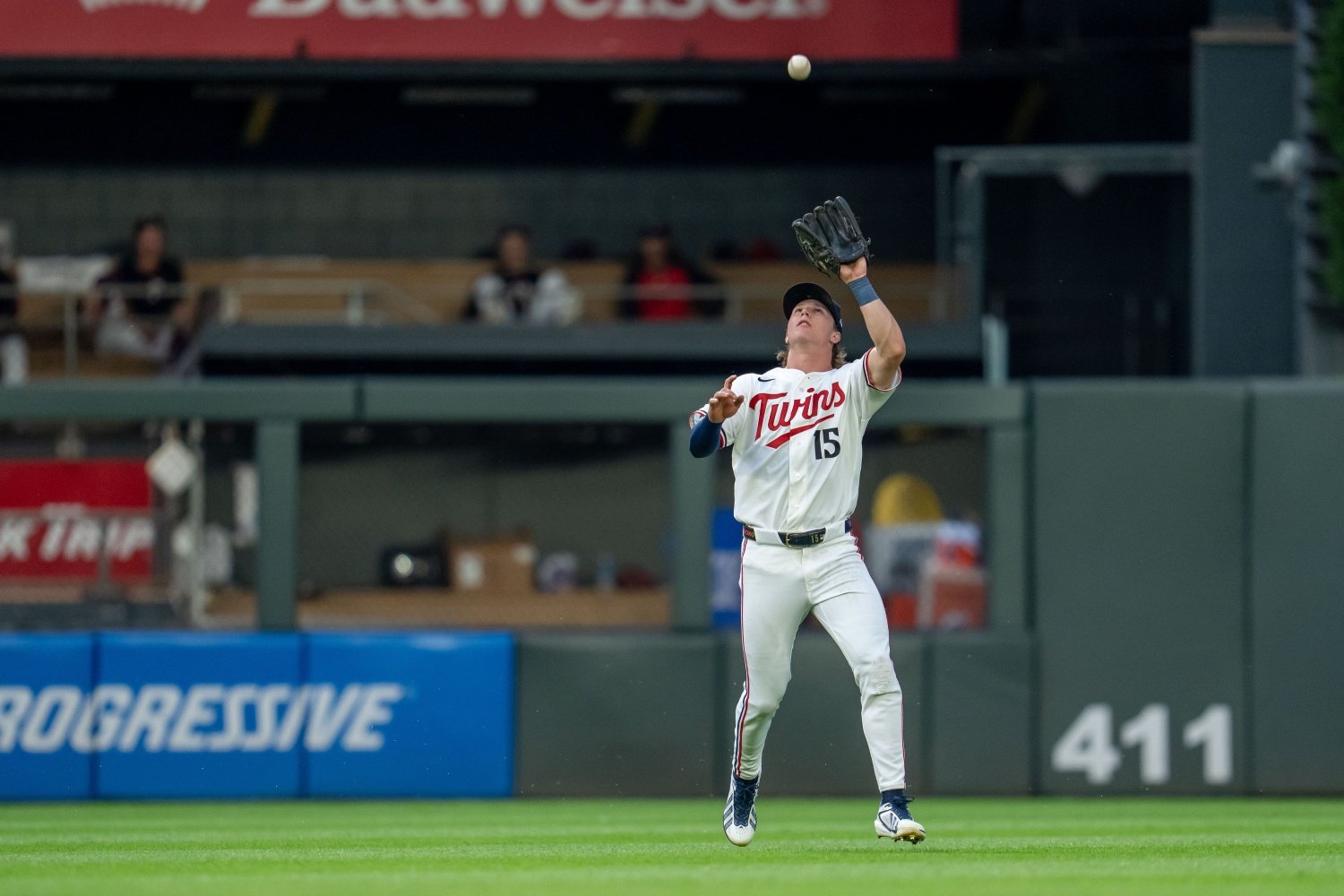
Admittedly, this ball did have a 65% catch probability. Any worthwhile center fielder would have caught it. Still, it was an exceptional catch for a player making their sixth start at one of the most demanding positions. He will then show how green a center fielder he is, missing balls that had a 99% catch probability, like the one below:
As he seeks a better balance between those extremes, one interesting thing to track (both in right field and in center) is how deep he's played since his move to the grass. He's tied with Matt McLain for the fifth-deepest starting position of all center fielders in baseball, typically positioned at 332 feet from home plate. For reference, Jose Caballero leads the league, positioning himself at 338 feet—and it's no coincidence that he, too, is a converted infielder.
To the extent that this is the team's plan, Minnesota is surely positioning Keaschall that deep because it is usually easier for center fielders to come in on balls than it is to run back. Due to him having so little playing time at the position, the Twins and Keaschall could be in agreement that giving him the opportunity to use his athleticism to run in on balls and avoid challenging angles is in the best interest of both club and player. Still, playing so deep is putting the club at a disadvantage, letting balls drop in front of him that result in bloop singles and/or hustle doubles—or something worse, like the catastrophic play that happened against Chicago this weekend:
Do you approve of Twins ownership?

Follow Twins Daily For Minnesota Twins News & Analysis



- nclahammer, Mia Bednar, glunn and 1 other
-
 4
4


Recommended Comments
Create an account or sign in to comment
You need to be a member in order to leave a comment
Create an account
Sign up for a new account in our community. It's easy!
Register a new accountSign in
Already have an account? Sign in here.
Sign In Now