


Twins Video
We’re a full year into bat speed metrics being publicly available via Baseball Savant. Prior to a second full year of data, now seems like a logical time to take stock of what to expect from Twins hitters in 2025.
Recently, MLB’s Tom Tango released a blog post describing the relationship between aging and bat speed. While this is grounded in only one full season of data, there are some cromulent TwinsCentric conclusions to draw that may be relevant in 2025.

Here’s the headline: between ages 22-31, bat the aging curve of bat speed is very flat (dropping ~0.02 mph per year). From age 31 onwards, it decreases sharply (0.31 mph per year). Which Twin just turned 31? Byron Buxton. How could his bat speed be impacted by his age? In turn, could his overall offensive production be hurt by an age-related decrease in bat speed? Let’s dig in.
Before getting player specific, let’s reground in some league-wide bat speed context. League average bat speed is 72 mph. ‘A fast swing’ is 75 mph. Why is the 75 mph threshold important? 75 mph of swing speed is where you see per-swing offensive production reach league average. The drop off in per-swing production below 75 mph is considerable. In other words, swing hard, ball go far.
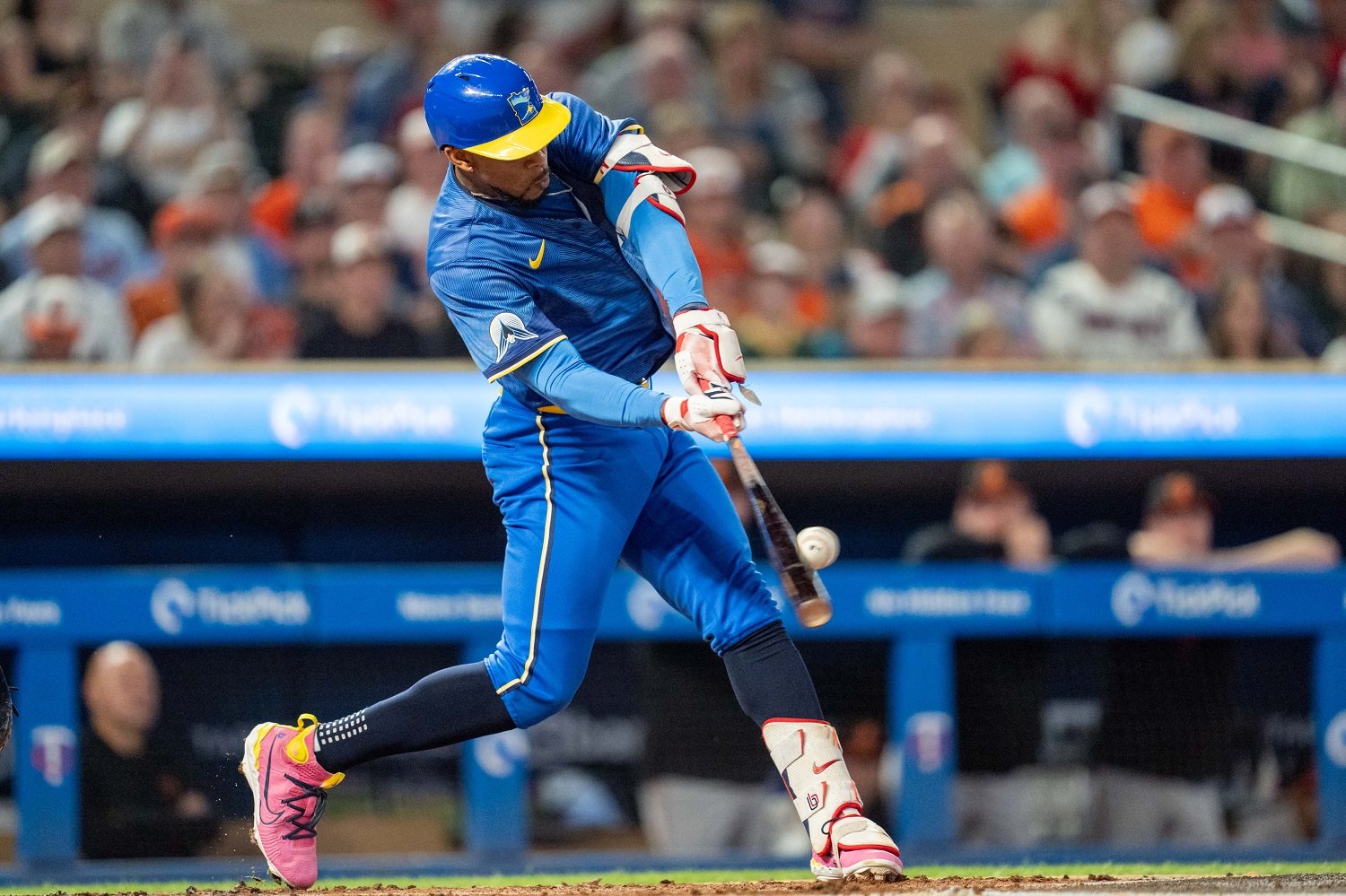
How does Byron Buxton fit into all these bat speed metrics? Pretty dang well, thank you very much. Buxton ranked third on the Twins in average swing speed (74.3 mph), coming in only behind Carlos Correa (74.5 mph) and Matt Wallner, who is in a league of his own (77.3 mph). How about fast swing rate? Same story. Buxton ranked third on the Twins, with 41.8% of his swings exceeding the 75 mph threshold (league average 22.6%). Place that in league wide context, and Buxton looks good, ranking 43rd out of 268 major league hitters in fast swing rate (minimum 500 swings in 2024).

If a typical player loses about 1 mph of bat speed every three years after age 31, we might look at Buxton’s average swing speed (2.3 mph above league average) and make the argument that this is an open and shut case of something we shouldn’t be too worried about. Buxton has some cushion with how fast his swing is, sure, but is there anything else to consider here?
As is the case with most baseball questions, the answer is, ‘maybe’? Let’s throw some other variables in the mix. Starting with a visual of where Buxton does the majority of his damage.

We can see that Buxton squares up the majority of his batted balls on pitches on the outer third of the plate. It’s also worth noting Buxton’s swing length, here. At 8.1 feet, it’s a long swing, significantly longer than league average (7.3 feet). It’s worth wondering what the impact of declining bat speed would be for Buxton, given the context of a long swing which thrives on the outer third of the plate? Buxton is also a hitter whose swing is rather stiff and whose output heavily relies on power, so is it possible the swing speed aging curve impacts a profile like his more acutely than a player with a more balanced offensive profile?
Given Buxton’s swing speed and fast swing percentage cushion (compared to league average), it seems unlikely his offensive production is in immediate danger. Still, Buxton will be an interesting profile to track as he ages given his combination of swing length, the part of the plate he does damage in, and the lack of malleability of his swing.
Which team do you dislike the most in the AL Central?

Follow Twins Daily For Minnesota Twins News & Analysis



- Karbo, Greggory Masterson, arby58 and 1 other
-
 4
4


Recommended Comments
Create an account or sign in to comment
You need to be a member in order to leave a comment
Create an account
Sign up for a new account in our community. It's easy!
Register a new accountSign in
Already have an account? Sign in here.
Sign In Now