



Jamie Cameron
-
Posts
1,349 -
Joined
-
Last visited
-
Days Won
4
4 Followers



Recent Profile Visitors
404,948 profile views





Jamie Cameron's Achievements






-
Twins 13th-round pick Isaiah Lane is off to a blistering start in professional baseball, putting up incredible numbers in a small sample at Single-A Fort Myers. What is the superpower that's helping him thrive in his first taste of professional baseball? View full video
-
Twins 13th-round pick Isaiah Lane is off to a blistering start in professional baseball, putting up incredible numbers in a small sample at Single-A Fort Myers. What is the superpower that's helping him thrive in his first taste of professional baseball?
-
Ben Ross has been called up to the Twins with September rosters expanding. He has transformed himself from organizational depth to a prospect with a shot as a major league utility infielder in just six months. How did he do it? How did he fare in St. Paul? What role might he play for the big league team? View full video
-
Ben Ross has been called up to the Twins with September rosters expanding. He has transformed himself from organizational depth to a prospect with a shot as a major league utility infielder in just six months. How did he do it? How did he fare in St. Paul? What role might he play for the big league team?
-
 DannySD reacted to an article:
BREAKING: Twins to Call Up Top Prospect Walker Jenkins
DannySD reacted to an article:
BREAKING: Twins to Call Up Top Prospect Walker Jenkins
-
 Mia Bednar reacted to an article:
BREAKING: Twins to Call Up Top Prospect Walker Jenkins
Mia Bednar reacted to an article:
BREAKING: Twins to Call Up Top Prospect Walker Jenkins
-
Strombomb reacted to an article:
BREAKING: Twins to Call Up Top Prospect Walker Jenkins
-
Peter Gravett reacted to an article:
BREAKING: Twins to Call Up Top Prospect Walker Jenkins
-
Hrbeks Divot reacted to an article:
BREAKING: Twins to Call Up Top Prospect Walker Jenkins
-
nclahammer reacted to an article:
BREAKING: Twins to Call Up Top Prospect Walker Jenkins
-
Richie the Rally Goat reacted to an article:
BREAKING: Twins to Call Up Top Prospect Walker Jenkins
-
ToddlerHarmon reacted to an article:
BREAKING: Twins to Call Up Top Prospect Walker Jenkins
-
TNtwins85 reacted to an article:
BREAKING: Twins to Call Up Top Prospect Walker Jenkins
-
IndyTwinsFan reacted to an article:
BREAKING: Twins to Call Up Top Prospect Walker Jenkins
-
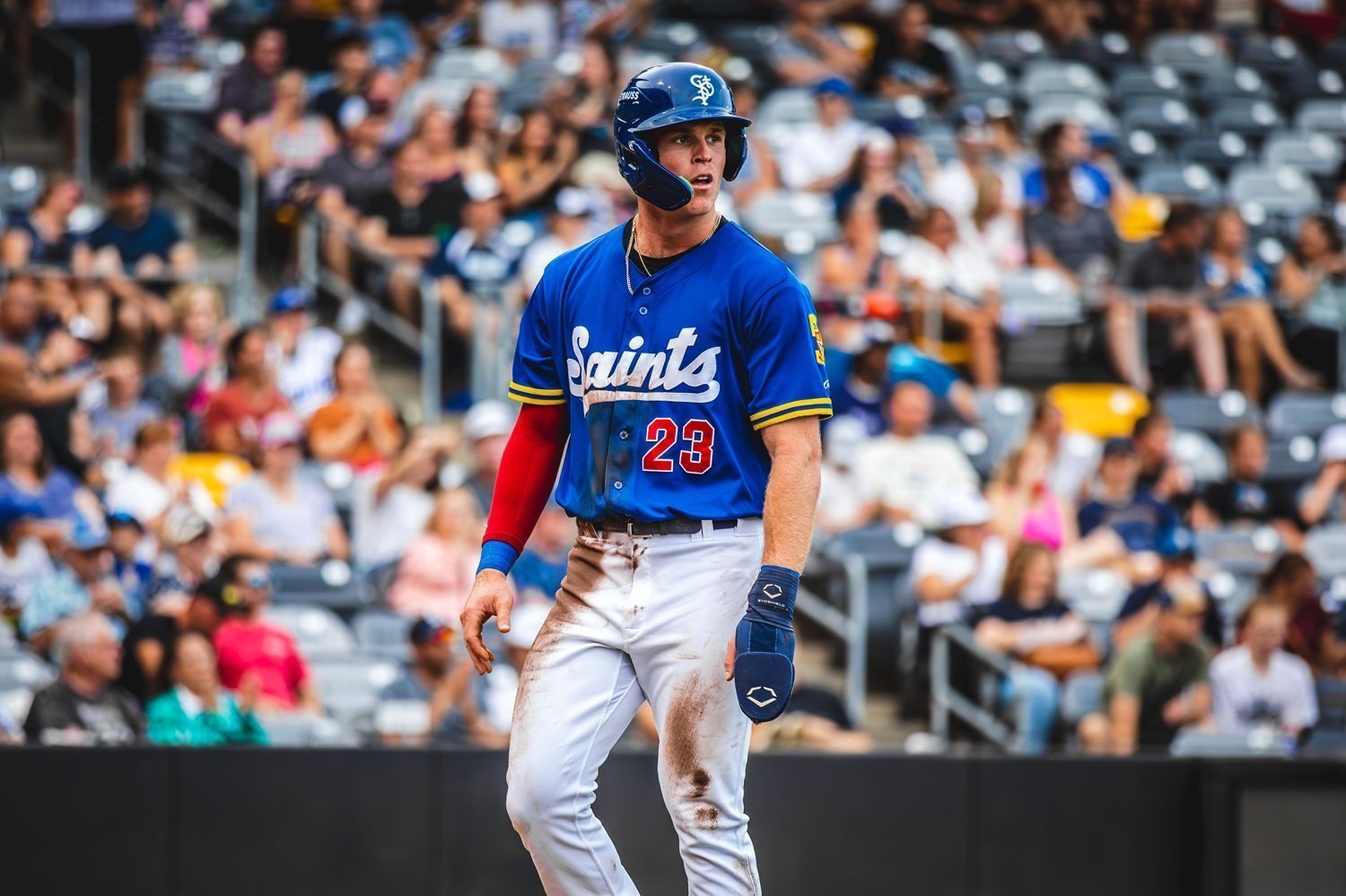 The Twins are calling up top prospect Walker Jenkins, sources have confirmed to Twins Daily. The No. 1 prospect in the organization and (arguably) one of the top 10 prospects in baseball will join the team at Target Field on Friday, with the Twins' postseason hopes on life support entering a crucial series against the division-leading Chicago White Sox. Jonathan Mayo of MLB.com broke the news first. Jenkins, 21, joins the team despite navigating recurring injuries in his minor-league career. In 69 games in 2026 for Triple-A St. Paul, Jenkins managed a .308/.407/.532 line, with 32 extra-base hits, a 13.3% walk rate, and a stellar 15.4% strikeout rate. The promotion is likely to come as a corresponding move to Byron Buxton hitting the IL, after Buxton left Tuesday’s game in West Sacramento with an as-yet-unspecified hip injury. After the Twins declined to add Jenkins amid a torrid offensive performance in August, injury has finally forced a debut for one of the game's top prospects. Jenkins was the fifth overall selection in a loaded 2023 draft class. The Twins were the biggest beneficiary of the inaugural MLB Draft Lottery the previous December, vaulting into the top five selections of what was considered a five-player draft. Jenkins was selected after Paul Skenes, Dylan Crews, Wyatt Langford, and recent MLB debutant Max Clark. Jenkins's promotion will spark particular excitement, as it comes on the heels of the recent promotion of fellow top-100 prospect Kaelen Culpepper, who was called up on August 7 and has settled in as the Twins’ regular shortstop. The timing of his promotion is significant, too. Jenkins can no longer amass 45 days of service time before the end of the season (that deadline passed more than a week ago), and thanks to waiting an extra handful of days, the team can also promote him now without worrying about whether he’ll reach 130 at-bats. Even if he plays every day, he won’t do so, so he’ll retain rookie eligibility heading into 2027 and could net Minnesota a Prospect Promotion Incentive (PPI) draft pick if he wins the Rookie of the Year Award or finishes in the top three in MVP voting before becoming arbitration-eligible. Jenkins has a well-rounded skill set highlighted by elite bat-to-ball skills and excellent swing decisions, giving him a strong on-base floor to accompany above-average speed and defense in center field. Despite some prospect fatigue setting in during his journey up the minor-league ladder, Jenkins has retained strong positioning on national lists, being featured as the No. 4 overall prospect on FanGraphs and No. 10 phenom at Baseball America after midseason updates. Jenkins joins a crowded outfield picture, with the Twins retaining several other left-handed options on the 40-man roster. In the immediate future, though, he’ll be the most anticipated Twins prospect to debut since Buxton. He also comes up to a team that desperately needs a spark. Whether he's able to deliver that or not, this marks the full arrival of a new era of Twins baseball.
 -
Image courtesy of Rob Thompson, St. Paul Saints The Twins are calling up top prospect Walker Jenkins, sources have confirmed to Twins Daily. The No. 1 prospect in the organization and (arguably) one of the top 10 prospects in baseball will join the team at Target Field on Friday, with the Twins' postseason hopes on life support entering a crucial series against the division-leading Chicago White Sox. Jonathan Mayo of MLB.com broke the news first. Jenkins, 21, joins the team despite navigating recurring injuries in his minor-league career. In 69 games in 2026 for Triple-A St. Paul, Jenkins managed a .308/.407/.532 line, with 32 extra-base hits, a 13.3% walk rate, and a stellar 15.4% strikeout rate. The promotion is likely to come as a corresponding move to Byron Buxton hitting the IL, after Buxton left Tuesday’s game in West Sacramento with an as-yet-unspecified hip injury. After the Twins declined to add Jenkins amid a torrid offensive performance in August, injury has finally forced a debut for one of the game's top prospects. Jenkins was the fifth overall selection in a loaded 2023 draft class. The Twins were the biggest beneficiary of the inaugural MLB Draft Lottery the previous December, vaulting into the top five selections of what was considered a five-player draft. Jenkins was selected after Paul Skenes, Dylan Crews, Wyatt Langford, and recent MLB debutant Max Clark. Jenkins's promotion will spark particular excitement, as it comes on the heels of the recent promotion of fellow top-100 prospect Kaelen Culpepper, who was called up on August 7 and has settled in as the Twins’ regular shortstop. The timing of his promotion is significant, too. Jenkins can no longer amass 45 days of service time before the end of the season (that deadline passed more than a week ago), and thanks to waiting an extra handful of days, the team can also promote him now without worrying about whether he’ll reach 130 at-bats. Even if he plays every day, he won’t do so, so he’ll retain rookie eligibility heading into 2027 and could net Minnesota a Prospect Promotion Incentive (PPI) draft pick if he wins the Rookie of the Year Award or finishes in the top three in MVP voting before becoming arbitration-eligible. Jenkins has a well-rounded skill set highlighted by elite bat-to-ball skills and excellent swing decisions, giving him a strong on-base floor to accompany above-average speed and defense in center field. Despite some prospect fatigue setting in during his journey up the minor-league ladder, Jenkins has retained strong positioning on national lists, being featured as the No. 4 overall prospect on FanGraphs and No. 10 phenom at Baseball America after midseason updates. Jenkins joins a crowded outfield picture, with the Twins retaining several other left-handed options on the 40-man roster. In the immediate future, though, he’ll be the most anticipated Twins prospect to debut since Buxton. He also comes up to a team that desperately needs a spark. Whether he's able to deliver that or not, this marks the full arrival of a new era of Twins baseball. View full article
-
Twins right-handed pitcher Adrian Bohorquez was just promoted from Cedar Rapids to Double-A Wichita. He's in the middle of a hot streak, striking out a ton of batters thanks to electric stuff and a decreased walk rate. What role might he occupy if he maintains his improved strike throwing? What does his pitch mix look like? Bohorquez is another sleeper arm for the Twins, who need starters to develop in the middle levels of the MiLB system. View full video
-
Twins right-handed pitcher Adrian Bohorquez was just promoted from Cedar Rapids to Double-A Wichita. He's in the middle of a hot streak, striking out a ton of batters thanks to electric stuff and a decreased walk rate. What role might he occupy if he maintains his improved strike throwing? What does his pitch mix look like? Bohorquez is another sleeper arm for the Twins, who need starters to develop in the middle levels of the MiLB system.
-
Caden Kendle has flown under the radar in 2026 on the way to a huge breakout, balancing strong bat-to-ball skills with burgeoning power for Double-A Wichita. Who is Kendle? What has changed in 2026, and where should he sit on Twins prospect lists? View full video
-
Caden Kendle has flown under the radar in 2026 on the way to a huge breakout, balancing strong bat-to-ball skills with burgeoning power for Double-A Wichita. Who is Kendle? What has changed in 2026, and where should he sit on Twins prospect lists?
-
Jamie Cameron reacted to a post in a topic:
2026 Minnesota Twins MLB Draft Recap: 21 Thoughts on 21 Draftees
-
Jamie Cameron reacted to a post in a topic:
2026 Minnesota Twins MLB Draft Recap: 21 Thoughts on 21 Draftees
-
Jamie Cameron reacted to a post in a topic:
2026 Minnesota Twins MLB Draft Recap: 21 Thoughts on 21 Draftees
-
Jamie Cameron reacted to a post in a topic:
2026 Minnesota Twins MLB Draft Recap: 21 Thoughts on 21 Draftees
-
Jamie Cameron reacted to a post in a topic:
2026 Minnesota Twins MLB Draft Recap: 21 Thoughts on 21 Draftees
-
KLAW and I don't align in our views on a lot of draft items, which is fine. Look, I'm a homer. I'm going to try and see the vision with these drafts because I want them to work out. What I appreciate is the Twins tweaking the approach with the pitching, given not enough viable arms came out of '23 and '24.
-
Jamie Cameron reacted to a post in a topic:
2026 Minnesota Twins MLB Draft Recap: 21 Thoughts on 21 Draftees
-
Thanks so much for the kind words. Really appreciate it. I love the draft content so plenty more next year.
-
Jamie Cameron reacted to a post in a topic:
2026 Minnesota Twins MLB Draft Recap: 21 Thoughts on 21 Draftees
-
Jamie Cameron reacted to a post in a topic:
2026 Minnesota Twins MLB Draft Recap: 21 Thoughts on 21 Draftees
-
Jamie Cameron reacted to a post in a topic:
2026 Minnesota Twins MLB Draft Recap: 21 Thoughts on 21 Draftees
-
Jamie Cameron reacted to a post in a topic:
2026 Minnesota Twins MLB Draft Recap: 21 Thoughts on 21 Draftees
-
Thanks so much for the kind words. UDFAs so far Tyler Bryan, RHP, Houston Ryne Palmer, RHP, Cal Baptist Jackson Sleeper, RHP, Jacksonville St
-
I don't think anyone in 11-20 will be more than 150K. The Twins tend to draft pretty straight up in that they (unlike the Brewers) don't sign HS players in the second half. I wouldn't expect any of those players to impact the bonus pool. Lay, Klecker, and Raab will constitute the savings needed for Wachsmann. For the arms, Burns should be a fast moving reliever. Of the later guys, I think Lay and Raab are interesting. Bouchard is a good candidate to be much more interesting if he ca. add a bit more velo. Thanks for reading!
-
2026 Minnesota Twins MLB Draft Recap: 21 Thoughts on 21 Draftees
Jamie Cameron posted an article in MLB Draft
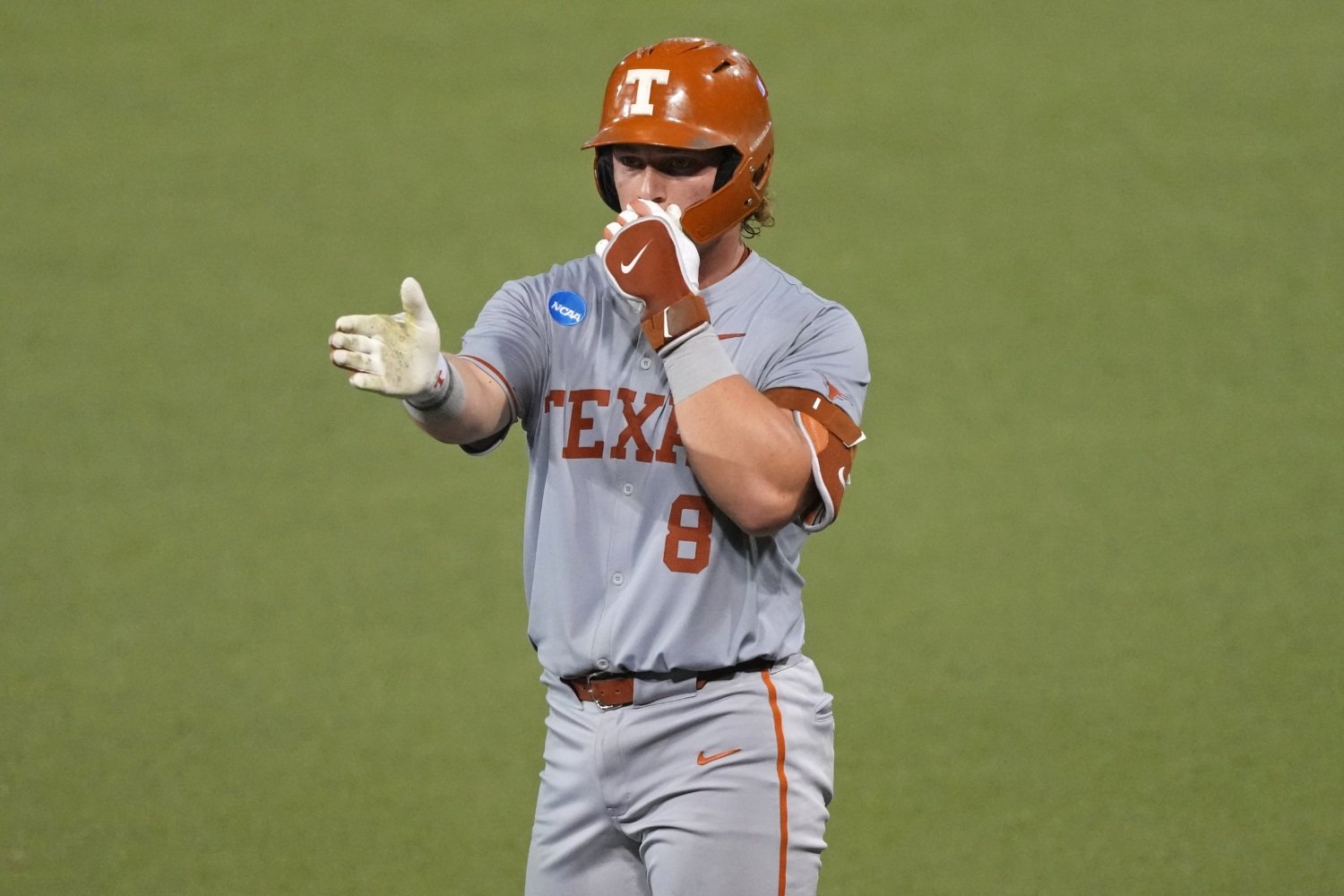 The Twins' 2026 draft is in the books. Let's recap it, with a thought for each of their 21 selections. Round 1: Pick 3, Vahn Lackey, C, Georgia Tech The Twins got their guy. Plus defensive catchers who put up a 170 wRC+ in the ACC are outlier prospects. In his draft recap, Eric Longenhagen said of Lackey’s strengths: "everything". He has a chance to solve a big problem for the Twins for at least five years. A special player. Round 2: Pick 43, Carson Tinney, C, Texas It seems like the Twins got scooped here, on Logan Reddemann and Chase Brunson. Tinney is an extremely fun prospect, though. He hit 22 bombs in the SEC while walking about 20% of the time and putting up a 154 wRC+. The catching improved, too. If he can be viable behind the plate, great, but he’s there to endanger the lives of fans in the second deck. Comp B: Pick 74, Brett Renfrow, RHP, Virginia Tech Labeling Renfrow as the ‘pitchability’ arm on day one doesn’t do justice to his stuff. It’s a ton of strikes (7.9 BB%), but the fastball sits 94-96 MPH, and the Twins will have a strong game plan for pitch design with his arsenal. He should profile as a very solid fourth or fifth starter. Round 3: Pick 79, Ethan Wachsmann, RHP, Grandview HS, CO This is elite arm talent. Wachsmann has been up to 101 MPH with a high-spin fastball. He spins his curve around 3,000 RPM and has a nascent changeup. Despite throwing a little erratically at the combine, there were plenty of strikes in high school. Said Sean Johnson of Wachsmann: "He’s the kind of pitcher you see going to Wake Forest and coming out on the other side as a first-round pick." The Twions will pay him an overslot bonus to prevent that from happening. Round 4: Pick 107, Tommy LaPour, RHP, TCU LaPour has a ton of arm talent, but he needs a little more touch and feel. The fastball is a solid shape and has been up to triple digits. He hasn’t struck out as many guys in college as his arm talent indicates he might, and he’ll need to up his strike rate (62% in 2026). LaPour dealt with a flexor strain; the Twins would not have been able to access him this late but for his injury. He has a chance to start. Round 5: Pick 139, Steele Murdock, RHP, UC San Diego Member of the 2026 MLB Draft All Names team, Murdock is one of four college arms the Twins took out of California. His fastball is up to 99 MPH with good shape. There are two distinct, quality breaking pitches, but there’s reliever risk due to erratic command. Round 6: Pick 168, Ethan Lay, RHP, Sacramento State How do you sign Ethan Wachsmann? Draft three seniors in the first 10 rounds. Lay is the first in that set, It’s a track record of performance (3.78 ERA in 88 innings) and strikes (4.3% walk rate in 2026). His curveball is his best pitch. It induced a 44% whiff rate in 2026. Round 7: Pick 197, Max Bayles, RHP, UC Santa Clara Bayles transitioned to a starting role after beginning his collegiate career as a reliever. He put up outrageously good strikeout numbers in 2026 (34.3%). It’s a good fastball shape that gets up to 95 MPH with two breaking pitches (that blur together, right now) and not enough strikes. Round 8: Pick 227, Thomas Burns, RHP, Texas The first pure reliever the Twins drafted, Burns has one of the best fastballs in the entire draft. It’s a triple-digit monster that averaged 21 inches of induced vertical break. He’s a prime candidate to reduce to 2-3 pitches and move on the fast track to the bullpen. Round 9: Pick 257, JT Raab, RHP, Georgetown Raab has an outlier fastball, too. It averaged almost 23 inches of IVB, and he throws it for strikes over 70% of the time (up to 95 MPH). The rest of his arsenal (change, slider, cutter) needs untangling, because it all looks the same on his plot. Raab will be a savings pick, as he’s a grad player. Round 10: Pick 287, Kole Klecker, RHP, Arizona State One final money-saving pick to pay for Wachsmann. Klecker pitched for ASU this year after three seasons at TCU. His fastball isn’t great, but he has two interesting, distinct breaking pitches in his slider and curveball. Both had whiff rates over 35% in 2026. Feel for spin is the carrying trait here. Round 11: Pick 317, Aidan Teel, OF, Mississippi St Teel is the younger brother of White Sox catcher Kyle Teel. He had a down 2026, but a .979 OPS as a sophomore gives you an idea of what he can do. At his best, it’s a contact-driven offensive profile with above-average supplementary tools. He profiles as a fourth outfielder. Round 12: Pick 347, Colby Turner, 2B, Michigan Colby Turner’s production at Michigan is hard to come by in this portion of the draft. He managed a 1.057 OPS with 14 home runs as a junior. There’s above-average bat-to-ball skills and above-average impact here. The bad news? An insane chase rate (roughly 37%) that will only be harder to correct against pro pitchers. Round 13: Pick 377, Isaiah Lane, SS, Hope International Is this an un-Twins-y pick? Lane played in the same high school infield as Marcelo Mayer before stints at Oklahoma and UC San Diego—then, he was kicked off the team for violating team rules. Lane managed a 154 wRC+ in 2025 with strong bat-to-ball skills and an excellent approach. He’ll be a wild card coming into the Twins system, after spending 2026 at New Hope. Round 14: Pick 407, Alec Bouchard, RHP, Wofford Bouchard is a slender college righty coming off an excellent 2026 season. He managed a 3.75 FIP, striking out 29% of hitters and walking 7.5% in 86 innings for Wofford. His fastball has been up to 94 MPH with a two-seamer, changeup and slurvy breaking ball in the mix. He’s a prime "might be good with a few more ticks on the stuff" candidate. Round 15: Pick 437, Charlie Schlovin, SS, Toledo Every player in the draft has a superpower. Schlovin’s is getting hit by pitches (65 in 112 games in his final two seasons at Toledo). He’s the grinder, org warrior-type player in this class (think Harry Genth). He managed a 152 wRC+ in a contact-driven offensive profile. Round 16: Pick 467, Connor Mattison, RHP, Kentucky A combo starter/reliever from Kentucky, Mattison throws from a much lower launch than most hurlers, generating good whiff rates from his changeup and two-seamer. An east-west movement profile with some interesting release traits. Round 17: Pick 497, Hideki Prather, C, Cal Some are saying that the Twins draft too many catchers. Prather is a barrel magnet. Like many Twins draftees, he has an excellent average exit velocity, without registering great top-end exit velocities. Prather slugged 14 home runs and managed a 123 wRC+ for Cal, despite chasing a ton. The defensive skill set is fringy, but he’s already an air-pull master. Round 18: Pick 527, Colter McAnelly, RHP, Utah McAnelly was poor in 2026, but he had a strong 2025 season as a starter at Utah (3.79 ERA, 14.5 K-BB%). He’s a bit light on velo, but it's an interesting fastball shape. McAnelly has an excellent curveball, a 3,000-RPM breaker that produced a 43% whiff rate in 2026. Round 19: Pick 557, PJ Moutzouridis, SS, Arizona State Moutzouridis is a well-rounded college player. A contact- and approach-driven D1 average bat, he’s a good defender at shortstop (and anywhere else on the infield you care to play him). Org guy. Round 20:, Pick 587, Michael Barnett, RHP, UCLA Barnett threw up to seven different pitches in college, but a lot of his shapes blend together. There’s not a ton of velocity, but he did get an outrageous amount of whiff and chase on his changeup, which is easily his best pitch. Likely lower-minors starter filler.
- 44 comments
-
- 15
-
-
-
- vahn lackey
- 2026 mlb draft
- (and 4 more)
