
Jump to content
Twins Daily
  • Create Account
  • Twins News & Analysis

    Royce Lewis, Trevor Larnach, and the Two-Step Arbitration Shuffle

    The Twins have a pair of arbitration decisions that could shape both their 2027 roster and their offseason strategy. However, Minnesota must learn from past mistakes.

    Cody Christie
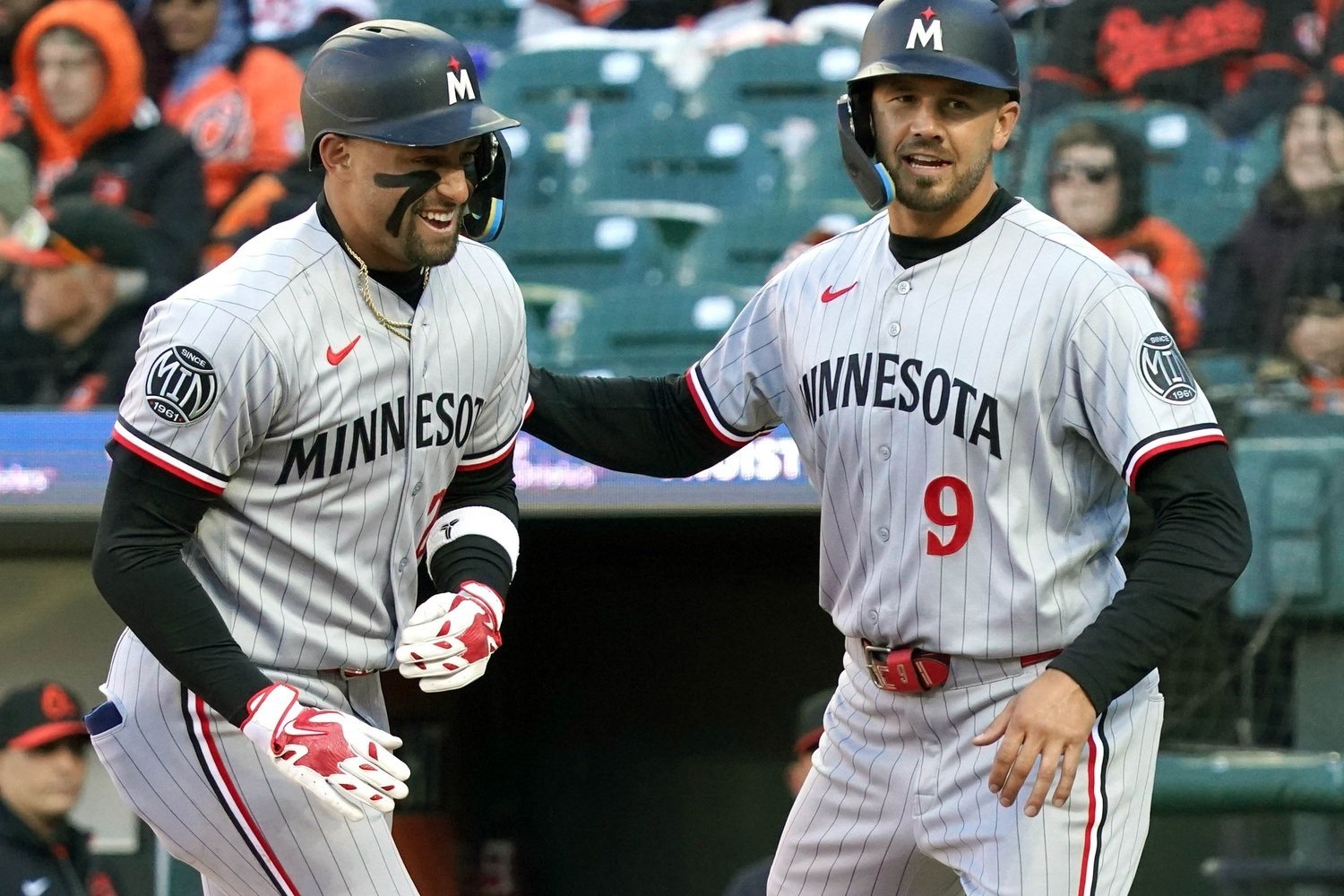
    Image courtesy of © Mitch Stringer-Imagn Images

    Twins Video

    The Minnesota Twins are entering another important offseason with plenty of questions surrounding the roster, but some of the first decisions will come down to simple arithmetic. MLB Trade Rumors recently released its annual arbitration projections, giving the public an early estimate of what arbitration-eligible players could earn for the upcoming season. Two names stand out for the Twins, not because of the projected salaries, but because of what those salaries could mean for the team's offseason plans.

    Trevor Larnach is projected to earn $6.3 million in 2027. Royce Lewis is projected at $5.1 million. Neither number is outrageous. In fact, both could be reasonable salaries if the players perform at or near their previous levels. That's exactly what makes these decisions interesting. The Twins have to determine whether those players (at the projected salaries) represent useful assets, roster complications, or both.

    Trevor Larnach

    Larnach's projected $6.3-million salary feels relatively modest when compared to his potential production. FanGraphs valued Larnach at $17.9 million during the 2026 season, making the projected arbitration salary roughly one-third of the value he provided. That doesn't mean the Twins should automatically keep him, but it certainly gives the organization a reason to avoid giving away the asset simply because it doesn't have a perfect spot for him.

    The bigger question is playing time. Larnach appeared in 122 games in 2026 and hit .269/.352/.436 with 13 home runs, 23 doubles and a 121 OPS+, while being shielded from facing left-handed pitchers. Those aren't numbers a team should casually remove from its lineup. But the Twins also have to figure out where Larnach fits. If the organization believes it can improve at first base, add another outfielder or give more opportunities to younger players, Larnach could become part of an increasingly crowded roster. His arbitration salary is affordable enough that Minnesota doesn't have to make a decision before the arbitration deadline.

    Last offseason, the Twins offered Larnach arbitration with the hope that a trade would eventually materialize. It didn't. Instead, the team went into spring training with a player it had seemingly hoped to move. They also tried to move him at the trade deadline before Houston’s owner nixed the deal. The Twins don't want to repeat that cycle. They do, however, have value on their hands, and they need to decide on a way to optimize it.

    Royce Lewis

    Lewis presents a similar question, but with significantly more upside and considerably more uncertainty. His projected $5.1-million salary is higher than the $4.3-million value FanGraphs assigned to his 2026 season. On the surface, that isn't a great return. But looking only at 2026 would be a mistake. Lewis provided substantially more value from 2023 through 2025, and he continues to have upside, if he can put it all together. The problem is that the Twins have spent enough time dealing with injuries and inconsistency. His future role is no longer obvious.

    That creates the potential for a very familiar offseason scenario. The Twins could offer him arbitration, because $5.1 million is a manageable number and because they believe there is a trade market for a talented player. However, if they try that, they might discover that moving him isn't as easy as anticipated.

    Suddenly, Lewis is occupying a roster spot—and not just any roster spot. He could affect how the Twins approach first base. He could affect how they distribute playing time around the infield. He could influence whether the club believes it has room for another veteran bat.

    This is where arbitration decisions become more complicated than simply asking whether a player is worth his projected salary. The question is whether the player is worth the opportunity cost attached to that salary and roster spot; Lewis probably isn't.

    Holding an Asset

    The Twins have used arbitration in this manner before. The basic strategy is understandable. Rather than non-tendering a player or allowing him to walk away for nothing, the team offers arbitration, retains the player's rights, and tries to find a trade that makes sense.

    In theory, it gives the front office leverage. The player has value. The contract is known. Other teams have an opportunity to acquire him. Minnesota doesn't have to sell low simply because it's decided the player isn't part of its long-term plans.

    The problem comes when the trade doesn't happen. One example is Kyle Farmer in 2024. The Twins had a veteran infielder under contract who could provide useful depth, but his presence also complicated the organization's efforts to create opportunities for younger players. Larnach became another example last offseason. Minnesota apparently saw enough value in retaining him to go through the arbitration process, but no trade that met the organization's expectations materialized. There's a roster inertia enforced by arbitration. The abstract fear of losing a player "for nothing" can lead a team to hold onto someone they should part with. Once a contract has been tendered, though, moving the player sometimes yields less value than expected—which can lead a club not to move said player at all, locking in a mediocre option.

    For a team with a deep roster and limited payroll flexibility, that can become especially problematic. A $5-million or $6-million player isn't expensive in a vacuum, by baseball standards. But if that player prevents the organization from adding someone it believes is a better fit, the real cost is much higher. That's why the Lewis and Larnach decision could be particularly important. 

    The Two-Step Shuffle

    There's nothing wrong with offering arbitration to a player the Twins would prefer to trade. In fact, it can be smart roster management. The mistake would be assuming that the trade will eventually happen. The Twins need to enter the offseason with clear priorities. If Lewis is part of those plans, keep him and build around him. If Larnach is part of those plans, give him a defined role. If either player is viewed primarily as a trade asset, though, the Twins need to understand what happens if the market doesn't cooperate.

    That final question is perhaps the most important. The Twins can't afford to make an arbitration decision in November and then make their roster decisions in February, as though the first decision never happened.

    Both Larnach and Lewis have enough talent to be useful pieces of a competitive team. Their projected salaries make them relatively affordable. But affordable players can still create expensive roster decisions. The two-step shuffle only works if the Twins know where they want to end up.


    Will both Lewis and Larnach be on the 2026 Twins? Does their relatively low arbitration estimate change the team’s view of the players? Leave a comment and start the discussion.

    Want more Twins in your Google results? Add us as a preferred source.

    Follow Twins Daily For Minnesota Twins News & Analysis

    Recent Twins Articles

    Recent Twins Videos

    Twins Top Prospects

    Yasser Mercedes

    Cedar Rapids Kernels - A+, OF
    On Thursday in the Fall League, Mercedes went 2-for-4 with his first double and his first homer run of the AFL season.

    User Feedback

    Recommended Comments


    Featured Comments

    5 hours ago, Linus said:

    To me, money is not the issue. Neither arbitration amount is that onerous. The question is - do you want the player?  I would probably bring Lewis back but only with the caveat that he earns playing time and might end up as a utility player. Larnach shouldn’t play in the field but I want to shoot higher if I’m going to have a full time DH. It’s complicated by the fact that EmRod has a substantial chance of being a bust and has no options. If he thrives we have no use for Larnach; if he busts Larnachs OPS+ of 121 looks pretty good as a safety net. 

    This, and it applies to both players. Larnach is a problem to have if EmRod and to a lesser extent Roden are healthy and showing promise. Lewis "clogs up" the infield if Houston is ready to take over SS or 2B, or we trade for a 2B, and need 1B for Clemens because we don't want him to be a super utility. On the other hand, if what we saw in the small 50 AB tryout we gave to EMRod is who he really is and Roden is the guy he was in 2025 and not the guy he showed in his 100 AB tryout in 2026, it sure would be nice to have Laranach around. 

    In other words, there are a lot of moving pieces here. Both Lewis and Larnach could have value on the roster or be completely redundant. That's true you before you consider who we might get in a trade or trade away, which adds even more uncertainty. That's why you don't make a decision now or at some arbitrary deadline like the tender deadline. You grow some cojones and wait on that decision until you have to make it because the circumstances are likely to change in a way that could impact that decision. Tender them both, come to terms with them both if you have to. Try to trade them from the day after the World Series ends until the last day of Spring Training if you have to wait that long. The only way you lose that bet is if you have players for their positions that you like better and you can't get anything in a trade for one or both, and I mean not even a decent AA player or high upside A ball lottery ticket. You go in with a competitive mindset and that you lose one or both guys if you have better players even if you have to eat their salary. It's a $5 million or $6 million bet per player. I think it's worth making that bet given the cost of player acquisition and development. The conservative cost certain approach would be to try to trade them before the tender deadline and then nontender them if you can't get a return. That's a lousy bet. Pay the money and take your chances. Go big or go home, don't hide your checkbook when it's time to take some risk to make some money. You can't reach your ceiling if you don't jump so grab your balls and jump for a change.

    34 minutes ago, LA Vikes Fan said:

    This, and it applies to both players. Larnach is a problem to have if EmRod and to a lesser extent Roden are healthy and showing promise. Lewis "clogs up" the infield if Houston is ready to take over SS or 2B, or we trade for a 2B, and need 1B for Clemens because we don't want him to be a super utility. On the other hand, if what we saw in the small 50 AB tryout we gave to EMRod is who he really is and Roden is the guy he was in 2025 and not the guy he showed in his 100 AB tryout in 2026, it sure would be nice to have Laranach around. 

    In other words, there are a lot of moving pieces here. Both Lewis and Larnach could have value on the roster or be completely redundant. That's true you before you consider who we might get in a trade or trade away, which adds even more uncertainty. That's why you don't make a decision now or at some arbitrary deadline like the tender deadline. You grow some cojones and wait on that decision until you have to make it because the circumstances are likely to change in a way that could impact that decision. Tender them both, come to terms with them both if you have to. Try to trade them from the day after the World Series ends until the last day of Spring Training if you have to wait that long. The only way you lose that bet is if you have players for their positions that you like better and you can't get anything in a trade for one or both, and I mean not even a decent AA player or high upside A ball lottery ticket. You go in with a competitive mindset and that you lose one or both guys if you have better players even if you have to eat their salary. It's a $5 million or $6 million bet per player. I think it's worth making that bet given the cost of player acquisition and development. The conservative cost certain approach would be to try to trade them before the tender deadline and then nontender them if you can't get a return. That's a lousy bet. Pay the money and take your chances. Go big or go home, don't hide your checkbook when it's time to take some risk to make some money. You can't reach your ceiling if you don't jump so grab your balls and jump for a change.

    I really agree with your “lots of moving pieces” description. It’s kind of been that way for the last several years which is why this concerns me some. 

    6 hours ago, chpettit19 said:

    If the player wins, they are obligated to sign him. They aren't obligated to keep him. But they still have to pay them. Losing arbitration and then just releasing the player is awful roster management. You're suggesting dropping 12+ million for absolutely nothing.

    It's my understanding that if the team loses arbitration they do not have to sign the player.

    23 minutes ago, ziggy said:

    It's my understanding that if the team loses arbitration they do not have to sign the player.

    When a team agrees to go to arbitration they have agreed to a contract. Clubs may sign the player before a hearing and a player may be traded but the contract is done, except for the amount, once the team makes the decision to go to arbitration.

    6 hours ago, Twins GFP said:

    Another article where the bulk of the comments suggest the Twins throw away viable big league assets for nothing.

     The Little Rascals Money GIF

    We have very different definitions of "viable" and "assets"

    40 minutes ago, ziggy said:

    It's my understanding that if the team loses arbitration they do not have to sign the player.

    They 100% do. The arbitration decision is a binding agreement. Once the arbitrators pick the number, (team or player) that is the contract that has to be signed by both parties and the player is guaranteed that salary. There's no backing out once you offer arbitration. Once it's offered, you either agree to a number before your hearing, or you're bound by the result of the hearing.

    3 hours ago, MeleMouth said:

    The Rays would trade Larnach for a 40 prospect pitcher who they thought they could tweak.

    Even the Rays couldn’t get a 40 prospect for Larnach. They would find a pitcher they could teak and then trade that player after a successful year

    5 minutes ago, old nurse said:

    Even the Rays couldn’t get a 40 prospect for Larnach. They would find a pitcher they could teak and then trade that player after a successful year

    The Rays got a 40 prospect pitcher for Orze. You'd think Larnach could fetch at least the same. Of course, the Rays got the 40 prospect from the Twins.

    38 minutes ago, TheLeviathan said:

    We have very different definitions of "viable" and "assets"

    If there was a team out there that had a need for a LF platoon and as a stopgap player and ignores the previous years of hitting he is viable.  There is also a needle in a haystack somewhere 

    1 minute ago, old nurse said:

    If there was a team out there that had a need for a LF platoon and as a stopgap player and ignores the previous years of hitting he is viable.  There is also a needle in a haystack somewhere 

    By all means we should ask around.  I'm willing to take on the castaway of another franchise too, but that's what we're talking about here:  castaway for castaway swaps where you believe you can squeeze more out of a player than the last team.

    Those aren't assets I'm sweating over losing, but I'll absolutely explore if I can squeeze one last drop of value out of them.

    1 hour ago, tony&rodney said:

    When a team agrees to go to arbitration they have agreed to a contract. Clubs may sign the player before a hearing and a player may be traded but the contract is done, except for the amount, once the team makes the decision to go to arbitration.

    It's worth noting that the Twins rarely go to arbitration with their players. They almost always split the difference on the submitted numbers to avoid nasty hearings and the players almost always sign for the same reason. Of course we haven't had a lot of Skubal-like arbitration cases so there's no saying what would happen if they did run into one where they had to dig their heels in a bit. 

    11 hours ago, mluebker said:

    Keaschall at first. If he’s going to have to learn a position to keep his bat in the lineup, it might as well be there. And I don’t buy the whole “a first baseman must be a power hitter” line of thinking. He’s a solid hitter who creates excitement on the basepaths, two things Lewis has demonstrated he isn’t.

    As for Lewis’s hypothetical upside, how many years are we going to talk about that before acknowledging that he’s showed us who he is already? If they can’t trade him, DFA him and let both him and the Twins move on.

    Keaschall hit 123 wRC+ in 2026. Were he a first baseman that would rank him in the 10-15 range of qualified 1b. He hits well enough to be a 1b. My question is if he can field the position adequately. I’m curious, and he’s too young to DH.

    this move would free up DH/corner OF for Larnach, and Buxton to rotate through.

    i can see a path to 2 step Larnach because he hits well enough in a platoon, and isn’t a terrible fielder, that he could be an asset for this team even with all the outfield depth. If the trade doesn’t workout, he’s still a good player.

    Lewis, gotta non-tender. No one will trade anything for a player with a $5m roster spot they can sign to a minor league deal after the lockout ends.

    6 hours ago, LA Vikes Fan said:

    This, and it applies to both players. Larnach is a problem to have if EmRod and to a lesser extent Roden are healthy and showing promise. Lewis "clogs up" the infield if Houston is ready to take over SS or 2B, or we trade for a 2B, and need 1B for Clemens because we don't want him to be a super utility. On the other hand, if what we saw in the small 50 AB tryout we gave to EMRod is who he really is and Roden is the guy he was in 2025 and not the guy he showed in his 100 AB tryout in 2026, it sure would be nice to have Laranach around. 

    In other words, there are a lot of moving pieces here. Both Lewis and Larnach could have value on the roster or be completely redundant. That's true you before you consider who we might get in a trade or trade away, which adds even more uncertainty. That's why you don't make a decision now or at some arbitrary deadline like the tender deadline. You grow some cojones and wait on that decision until you have to make it because the circumstances are likely to change in a way that could impact that decision. Tender them both, come to terms with them both if you have to. Try to trade them from the day after the World Series ends until the last day of Spring Training if you have to wait that long. The only way you lose that bet is if you have players for their positions that you like better and you can't get anything in a trade for one or both, and I mean not even a decent AA player or high upside A ball lottery ticket. You go in with a competitive mindset and that you lose one or both guys if you have better players even if you have to eat their salary. It's a $5 million or $6 million bet per player. I think it's worth making that bet given the cost of player acquisition and development. The conservative cost certain approach would be to try to trade them before the tender deadline and then nontender them if you can't get a return. That's a lousy bet. Pay the money and take your chances. Go big or go home, don't hide your checkbook when it's time to take some risk to make some money. You can't reach your ceiling if you don't jump so grab your balls and jump for a change.

    Royce had an 85 wRC+ for the season, at 60 plate appearances that ranked him 48th. 17 teams (over half) had two first baseman who hit better than he did. 

    Ryan Kreidler hit 85 wRC+ and he’s a backup SS who actually fields the position well and he’s a marginal major leaguer.

    its a bigger risk to include Royce in their plans at all.

    4 hours ago, chpettit19 said:

    They 100% do. The arbitration decision is a binding agreement. Once the arbitrators pick the number, (team or player) that is the contract that has to be signed by both parties and the player is guaranteed that salary. There's no backing out once you offer arbitration. Once it's offered, you either agree to a number before your hearing, or you're bound by the result of the hearing.

    From google search....

    >>>MLB teams are not required to sign players who win arbitration hearings; instead, the arbitration process determines the player's salary for that season. <<<<

    1 hour ago, ziggy said:

    From google search....

    >>>MLB teams are not required to sign players who win arbitration hearings; instead, the arbitration process determines the player's salary for that season. <<<<

    From tony&rodney....

    AI is correct about 80-90% of the time and Google is about the same.

    100% = When a MLB club agrees to go to arbitration with a player, they have signed a contract. The amount is either settled by each side in discussions or the arbiter assigns a value, choosing one of the figures from the numbers submitted by the player and the club. 

    1 hour ago, tony&amp;rodney said:

    From tony&rodney....

    AI is correct about 80-90% of the time and Google is about the same.

    100% = When a MLB club agrees to go to arbitration with a player, they have signed a contract. The amount is either settled by each side in discussions or the arbiter assigns a value, choosing one of the figures from the numbers submitted by the player and the club. 

    So while the contract is signed & valid at that point, it appears that there is still some wiggle room in that it is not guaranteed and a player may be cut with a smaller payout.  Does that sound correct?

    https://www.espn.com/mlb/story/_/id/39708783/jd-davis-released-giants-beating-team-arbitration

    10 hours ago, Richie the Rally Goat said:

    Royce had an 85 wRC+ for the season, at 60 plate appearances that ranked him 48th. 17 teams (over half) had two first baseman who hit better than he did. 

    Ryan Kreidler hit 85 wRC+ and he’s a backup SS who actually fields the position well and he’s a marginal major leaguer.

    its a bigger risk to include Royce in their plans at all.

    You always look at all 30 teams to compare and contrast and this makes you a strong poster whose opinions I always pay attention to. 

    Everyone should look around the league and see what is happening at the 1B position to realize just how bad the Twins have been at development for over a decade now. Other teams are cranking out young 1B with ease. We have Royce being force fed. 

    Certain players are given opportunity after opportunity. Thousands of them.

    Other players can scrape to get 79 AB's... produce a .768 OPS in a small sample and not be allowed to increase that sample. 

    It's a pretty unfair world at times and this unfair world is the result of front offices that get it wrong... frequently. 

    16 hours ago, TheLeviathan said:

    We have very different definitions of "viable" and "assets"

    You have players that other teams could use at the proposed salary. You trade them for something, even a flyer, rather than give them up for nothing. Pretty straight forward. They are assets.

    If the Twins did not have MiLB outfielders pushing, Larnach would be in the opening day starting lineup next year without question. Yet everybody just wants to throw him away for nothing.

    This is sounding familiar --  the Twins hoping to trade a player, then not finding team interested in that trade.

     It's interesting to see the teams which remain in playoff contention today. According to spotrac, three of the remaining teams are among lowest payrolls in baseball this year: Guardians (lowest payroll, #30), Rays (#28), White Sox (#24th).   Twins slot in there at #22.

    It does make you reflect on how Twins organization handles roster construction and other things in comparison to these playoff teams with lower payroll.

    21 hours ago, LA Vikes Fan said:

    This, and it applies to both players. Larnach is a problem to have if EmRod and to a lesser extent Roden are healthy and showing promise. Lewis "clogs up" the infield if Houston is ready to take over SS or 2B, or we trade for a 2B, and need 1B for Clemens because we don't want him to be a super utility. On the other hand, if what we saw in the small 50 AB tryout we gave to EMRod is who he really is and Roden is the guy he was in 2025 and not the guy he showed in his 100 AB tryout in 2026, it sure would be nice to have Laranach around. 


    I see Larnach the way you do. I just don't see how you get him regular playing time with all of the young guys who need roster spots and playing time. He had a perfectly fine 2025, but not good enough to push away playing time for the young guys. I think he's movable in a low wattage trade, but I really want that to be before we would have to offer arbitration. If we don't get an offer, by the arbitration deadline, then I'd just non-tender him and move on.

    The problem i have with them hanging onto Lewis is different. I do think, if used correctly, that he could be a valuable member of some team's 26 man roster (including the Twins). But, I just don't at all trust the Twins to use him correctly. There's too much history. I'd be shopping him in November and I DO think we'll get some offers, especially given his second additional year of team control. Different than Larnach though, if I get to the deadline and haven't gotten an offer appealing enough, I definitely offer him arbitration. 

    40 minutes ago, Whammy said:

    I see Larnach the way you do. I just don't see how you get him regular playing time with all of the young guys who need roster spots and playing time. He had a perfectly fine 2025, but not good enough to push away playing time for the young guys. I think he's movable in a low wattage trade, but I really want that to be before we would have to offer arbitration. If we don't get an offer, by the arbitration deadline, then I'd just non-tender him and move on.

    The problem i have with them hanging onto Lewis is different. I do think, if used correctly, that he could be a valuable member of some team's 26 man roster (including the Twins). But, I just don't at all trust the Twins to use him correctly. There's too much history. I'd be shopping him in November and I DO think we'll get some offers, especially given his second additional year of team control. Different than Larnach though, if I get to the deadline and haven't gotten an offer appealing enough, I definitely offer him arbitration. 

    Good post. I see that distinction and don't completely disagree with you. I still think Larnach has enough value to take the risk of a $6.3 million arbitration result because you never actually have to pay that money if you don't want to. It's my understanding that the team do not have to sign a player based on the arbitration amount. They can release that player and walk away but they have to pay the player termination pay the player is released during Spring Training. As long as the release comes before the start of the season, the player could be owed0, or at most 30 or 45 days prorated pay based upon the arbitration award. So let's say Larnach gets an arbitration award of $6.3 million. His contract technically runs for one full championship season which is 180 to 186 days depending on the schedule. So if Larnach got a $6.3 million arbitration award, that's a $35,000 a day contract based on a 180 day championship season. Talk about detail that only a lawyer could love.

    Here's what that really means. The Twins can take Larnach to arbitration and their risk is at most 45 days of pay if they release him prior to the start of the season, which is $1.575 million. If they release him in the first 16 days of Spring Training, they're obligated to pay him 30 days of pay or $1.05 million. If he is released prior to Spring Training starting, the obligation is zero. So the risk of tendering a guy like Larnach a contract, then going to arbitration if he won't sign for the amount on that contract, is that the Twins would be out (1) $0 if he is released before the start of Spring Training, (2) $1.05 million if he's released in the first 16 days of Spring Training, and (3) $1.575 million if you keep him throughout Spring Training, can't find a taker, and then just release him before the start of the season. There is no world in which you take the risk of having to pay a full guaranteed contract unless you actually sign the contract, which you have to do before season starts to keep the player.

    In other words, there's almost no financial risk to the team of going through the arbitration process unless you actually sign a contract. So to me, if my highest risk is something like $1.57 million and I think that there is any possible taker out there, I tender Larnach a very team friendly contract before the deadline, go all the way through arbitration if he does not sign it (I don't cut a later deal), and have him come to Spring Training, all the while trying to trade him for value. That way you cover yourself if you have a rash of injuries and need the player, although he is likely to be less than thrilled with the team at that point, and the total dollar risk is limited if you can't cut a deal and just release them at the end of ST. $1.575 million risk is negligible in the overall scheme of a $315-$350 revenue million operation, which is the Twins total revenue as publicly estimated.


    51 minutes ago, LA Vikes Fan said:

    In other words, there's almost no financial risk to the team of going through the arbitration process unless you actually sign a contract.

    But then don't bother signing it, because it'll be pretty apparent to other teams how much playing time he's getting, how his spot on the roster looks compared to the guys they are actually preparing for the season, if he's treated like a starter, etc and they'll just wait for the obvious March 30 cut and pick him up then.  It's not a very practical feint when you factor in how the rest of the roster has to be twisted to cover for it. 

    If you can't trade him then he goes free. We picked up some decent pitchers last year from that crowd, and someone could end up scoring a very usable LF if we can't place him. Same with Lewis, although there's more chance someone will take a flyer on his hot streaks and brooding genius potential. 

    Astro rade falling thru because the owner really didn't want to pay the arbitration salary of Larnach and felt the arm in the pen was more valuable at the moment.

    That is the rub amongst ALL the Twins pending arbitation guys. Are they worth the Twins tying up the money? Most teams will wait to see if they are released now or in the spring (and sadly they collect their full arbitrated salary if cut loose). You would be able to sign Wallner, Ober, Larnach, Lewis, Sands, etc. for much cheaper if you are any team not named Minnesota Twins. So, take the hit. Let them walk. And, if you must, sign corresponding players cut by other teams because they were too exensive in arbitration if they fit into any of your bench needs.

    Two reasons to keep. Can be packaged in a trade, or insurance against a major outfield injury.

    Lewis is falling into the Sano territory. The Twins had that problem in the past, too, with names like Plouffe and Cuddyer. Where best to play the guy. But at some point the production is not there. Would you give Lewis a 3-5 year contract at this point? Trusting he will get... better?

    Who's on first? WIlling to go with Sabato? Hope Keaschall or Roden can work-at-it in spring training, solving some other issues. Gonzalez and Mendez a possibility (two guys who are young, but also being surpassed by others for future roster spots).

    On 10/7/2026 at 8:52 AM, Twins GFP said:

    Another article where the bulk of the comments suggest the Twins throw away viable big league assets for nothing.

    I think it’s more like the comments are suggesting the Twins stop moving around the deck chairs on the Titanic and climb onto a different boat. They’ve tried Lewis everywhere but pitcher and catcher, and his biggest accomplishment in 2026 has been hitting almost as well as Kody Clemens. If he could field as well as Clemens, maybe they could get a prospect for him in a straight-up trade.

    8 minutes ago, mluebker said:

    I think it’s more like the comments are suggesting the Twins stop moving around the deck chairs on the Titanic and climb onto a different boat. They’ve tried Lewis everywhere but pitcher and catcher, and his biggest accomplishment in 2026 has been hitting almost as well as Kody Clemens. If he could field as well as Clemens, maybe they could get a prospect for him in a straight-up trade.

    No, the comments are saying DFA guys like Larnach and Ober. Dump them for nothing. They outplay their contract and people want to jettison them. I don't understand...

    Lewis is a different discussion. His draft pedigree and phenomenal career start is making it hard for the Twins to pull the trigger. They know what he is capable of, it just isn't translating. I do think they need to move him, but trade, not DFA.


    Create an account or sign in to comment

    You need to be a member in order to leave a comment

    Create an account

    Sign up for a new account in our community. It's easy!

    Register a new account

    Sign in

    Already have an account? Sign in here.

    Sign In Now

×
×
  • Create New...