


Twins Video
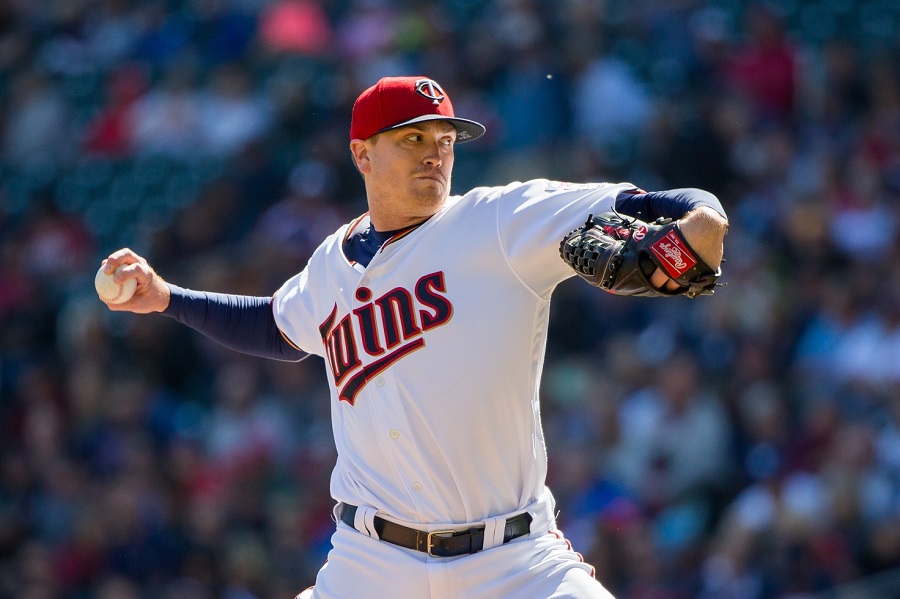
One could argue that if an organization was trying to stress test their arbitration process, Gibson’s case provided an ideal scenario. It wasn’t for much money and Gibson seems like a level-headed enough fellow that he wouldn’t take it personally. And he didn’t.
“I didn’t hear anything or go through anything that I didn’t expect,” replied Gibson when I asked him what it was like to be in the room. ”I knew coming off a below average year that I had half of a year that wasn’t as good, and a second half that I was probably as good as I’ve ever been. So I knew that the process was going to highlight the first half where I wasn’t very good, and we were going to try to highlight the second half.
Twins CBO Derek Falvey, GM Thad Levine or manager Paul Molitor were not the ones doing the highlighting. The Twins side included Rob Antony and legal counsel, including representatives from Major League Baseball, presumably to play The Heavy. According to Gibson, they’re the most frontal about his performance. “The Commissioner’s Office does most of the hard-hitting and makes most of the statements that the players aren’t too excited about,” says Gibson.
One concern that fans often express is that the arbitration process can dredge up a lot of negative feelings between the club and the player. In this instance, that doesn’t seem to be the case. “[The Twins] were respectful,” says Gibson. “They said things that I expected them to say. And I walked out of there and shook Rob Antony’s hand.”
In arbitration, the team and the player each submit an amount they think the player should be paid and the arbiter MUST pick one of the amounts; they cannot pick a midpoint or any other amount. The arbiter does this by comparing the player to other players with similar tenure and performance that play the same position. They then judge where the player is in relation to those other players and picks which number is the closest. In this case, this key player that both sides focused on was pitcher Wily Peralta.
In the previous offseason, Peralta has very similar service time as Gibson and was coming off a similar year. Peralta was 7-11 with a 4.86 ERA. Gibson’s record last year was 12-10 with a 5.07 ERA. Both struggled mightily in the first half of the year, spent some time in the minors, and had a great finishing kick to their year. Peralta agreed to a $4.275M contract that offseason with the Brewers.
With that many similarities, it’s no surprise that the Twins and Gibson’s numbers were close; they both picked numbers close to Peralta’s salary. The Twins filed at $4.2M, just $75,000 less than Peralta’s amount. Gibson’s ask was $4.55M, which is $280,000 more than Peralta made. That means it wasn’t enough for Gibson’s team to show that he was better than Peralta; he had to show he was about $100,000 better than Peralta for his number to be the closer of the two.
Gibson lost that case. He isn’t too broken up about it. “Yeah, I lost arbitration but you still go from this number to that number and you still have a job. And you play again this year,” he says. “I don’t view it as such a negative process as it can be.”





Recommended Comments
Create an account or sign in to comment
You need to be a member in order to leave a comment
Create an account
Sign up for a new account in our community. It's easy!
Register a new accountSign in
Already have an account? Sign in here.
Sign In Now