


Twins Video
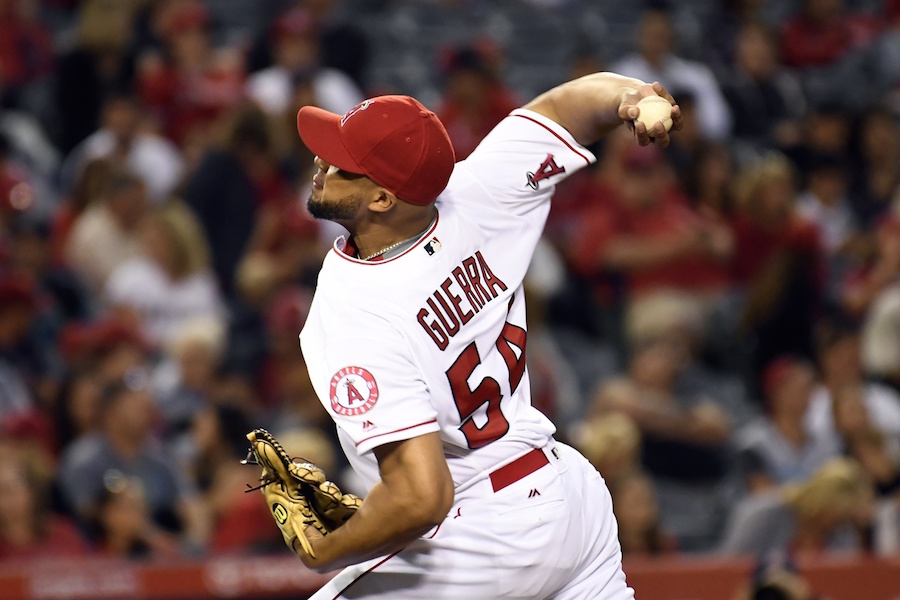
One week ago, Deolis Guerra tossed the seventh and eighth innings for the Angels in a blowout loss against the Twins at home. You may recall that Guerra was once a key piece in the package given up by the Mets to acquire Johan Santana, all the way back in 2007.
At the time, Guerra was only 18 years old. Coming off a solid season at Single-A, he was ranked by Baseball America as the 35th-best prospect in the game. With a big sturdy build, developing velocity and an already eye-catching changeup, Guerra oozed potential.
Having already reached High-A as a teenager, the young righty was on an accelerated path to the majors. The hope was that he would become an impact addition to Minnesota's rotation within a few years, helping justify the loss of an elite pitcher.
Of course, that's not how it played out. Guerra struggled, stalled, got hurt, switched roles, switched organizations multiple times. Nearly a decade after being sent to the Twins in the Santana blockbuster, Guerra is only now beginning to establish himself in the major leagues. He was knocked around last year during his first exposure to the big leagues as a member of Pittsburgh's bullpen, but is showing some very positive signs now as a reliever for the Angels, with a 3.00 ERA, 0.73 WHIP and 15-to-0 K/BB ratio in 15 innings.
If Guerra continues on this path, it obviously won't turn out as a best-case scenario for a hurler who was once considered to have top-of-the-rotation upside. But it won't be a worst-case scenario. At least he will end up being a useful major league player, which is more than many highly rated prospects can ever say.
Guerra is a case study in the volatility of prospects, and the length of time that it can sometimes take before they really figure it out at the highest level.
Carlos Gomez, who came over to Minnesota in the same package as Guerra, is another example worth looking at. He eventually did fulfill his promise, becoming a borderline MVP caliber player in 2013 and 2014 with the Brewers, but not until a few years after he left the Twins. By the time Gomez reached his peak, he had accumulated more than 1500 MLB plate appearances and was 27. That's the same age Guerra is now. It's the same age David Ortiz was when he transformed into a superstar with the Red Sox. It's the age Oswaldo Arcia will turn in May of 2018.
Plenty of top prospects catch on quickly and become instant big-league stars. Most do not. Development curves are varied and unpredictable. It really shouldn't be too surprising that Byron Buxton is overwhelmed by MLB pitching at age 22, nor that Jose Berrios got knocked around in his first taste at 21, nor that Eddie Rosario and Tyler Duffey have been stymied by the league's adjustments in their sophomore seasons.
But just because these outcomes aren't particularly surprising doesn't mean they aren't problematic. The Twins are fully dependent on this young core to turn around their fledgling franchise. The fact that so many of them look so far from even approaching their potential is indeed perturbing.






Recommended Comments
Create an account or sign in to comment
You need to be a member in order to leave a comment
Create an account
Sign up for a new account in our community. It's easy!
Register a new accountSign in
Already have an account? Sign in here.
Sign In Now