


Twins Video
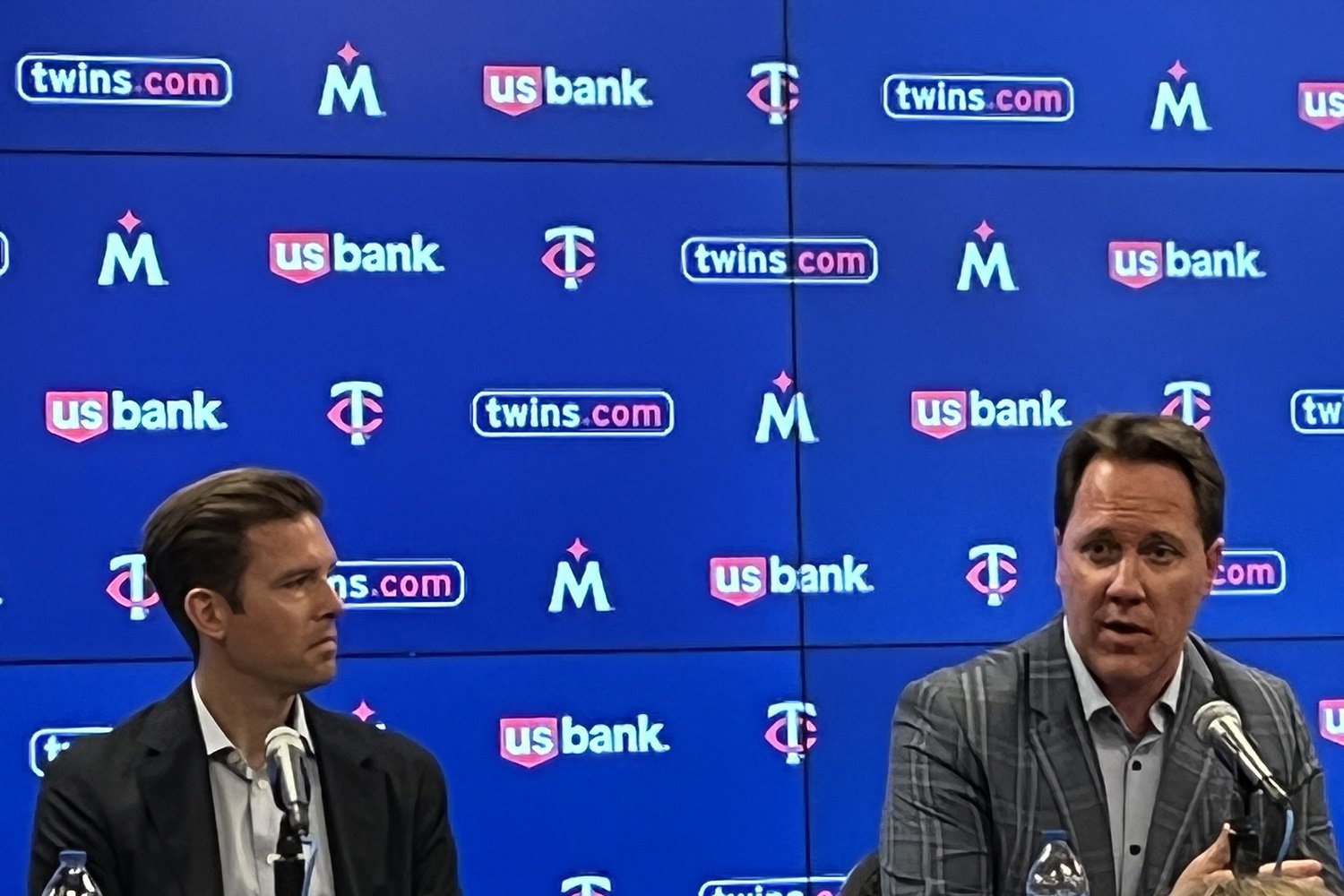
The Twins didn't exactly hold a press conference to announce it, but they might as well have. In early November, shortly after the conclusion of the World Series, team leadership left little ambiguity about the spending outlook for 2024.
“We’ve pushed our payroll to heights that we had never pushed it before with the support, certainly, of ownership,” Derek Falvey said. “We know there is some natural ebb and flow to that. Will it be where it was last year? I don’t expect that. I expect it [to be] less than that. Some of that may come more organically.”
Some follow-up reporting from Dan Hayes for The Athletic brought even more detail to light: the team foresees "significant payroll cuts" of up to $30 million. This journalistic revelation was less overt than Falvey's open on-the-record admission, but still, you don't get the sense it was some tightly-held secret. Clearly Twins leadership–or at least certain elements of it–didn't mind having this narrative out there in the public sphere.
WHY?
Coming off a division-winning campaign and a long-awaited postseason breakthrough, the Twins were riding high. They had a prime opportunity to parlay the excitement surrounding this team into a robust winter of season ticket sales and sponsorships. Even if reduced spending was an inevitable reality (and arguably a reasonable one), why come out and say it right away? What is to be gained?
Falvey and this front office are too strategic, too intentional to just let something like this slip accidentally. There was a rationale behind getting the word out there. Maybe that's what is most annoying about it for those of us trying to analyze from the outside; it's really hard to find an obvious answer. The effects of setting this vibe for the offseason have been fairly predictable. The widespread reaction to nearly every piece of Twins-related news is colored by resentment toward dropping payroll in a moment of great opportunity.
Parting with longtime scouts from the previous regime? Cheap. Failing to re-sign Sonny Gray and Kenta Maeda? Classic Pohlads. Never mind that these decisions adhere to the same general philosophies this front office has pretty much always followed. The Twins are willingly inviting this narrative.
So again, I ask: why? There's got to be some sort of motivation behind this course of action. In trying to land on an explanation that seems viable, a few potential objectives come to mind.
They're trying to create awareness of the TV situation and its implications.
This strikes me as most probable. While many Twins Daily regulars are likely aware of the team's collapsed broadcasting deal with Diamond Sports Group and what it means for the overall revenue picture, a majority of casual fans are not clued in.
Not everyone's going to be empathetic to a mega-rich operation making fractionally less profit, but at least it gets an associated (and arguably valid) causal factor out there. Hayes's article makes this framing clear: "Following the expiration of a Bally TV deal that netted them $54.8 million last season, Falvey acknowledged the team’s payroll wouldn’t be nearly as high," he wrote. If a public perception is formed that "better TV deal = higher payroll", it could help the team curry support in its quest to find a new solution.
They're trying to influence market expectations.
The Twins love to find a competitive advantage wherever they can get it. If players, agents, and other front offices believe the Twins are intent on reducing their payroll, it could influence perceptions in interesting ways. Perhaps another team discounts the stealthy Twins in negotiations for a key player.
A stretch? Perhaps. But it'll be a feel-good story for everyone if the Twins end up shooting higher than expected and can talk about how they went past their comfort zone to get the guy they wanted.
They're lowering expectations so they can exceed them.
Under-promise, over-deliver? The optics of even coming close to repeating their record-setting payroll of 2023 would now be pretty good, given that the team has proactively dampened expectations. I know most of us are zeroing in on the lower end of that $125-140 million range Hayes laid out, to the extent that going beyond that would now feel like a pleasant surprise.
It matters, because the difference between those two figures would have a sizable impact on what the front office is realistically able to do this offseason when it comes to upgrading the team, or even making up for the losses they've already experienced in free agency. Unfortunately, this is probably wishful thinking. What I keep coming back to is, why come out with it now? If the Twins ended up spending marginally less next year than they did this year, I don't think too many people would notice or care. The up-front framing of these cuts as significant is glaring to me, and makes me expect the worst.
They're trying to soften a big blow.
Maybe we are all right to be zeroing in on the low-end $125 million target. Maybe that's the whole point. I don't have any specific insight beyond what's out there, but it wouldn't shock me if the Twins feel overextended after going big last offseason and then losing the RSN honeypot.
If Falvey is merely leveling with us and being transparent about the steep drop-off to come, I find it hard to begrudge him. I still just don't get it from a business standpoint. Even if the front office leader's corresponding point about payroll–that the Twins can succeed with a lower one because they've built the infrastructure to do so–is accurate, he had to know how the comment and insinuation would be perceived.
The reignited payroll narrative is now casting an additional pall over a series of Twins-related headlines that have not been received well: Dick Bremer being ushered out of the broadcast booth, tenured scouts being dismissed, several key free agents signing elsewhere. Hopefully, somewhere on the other side of this, there is a vision to turn the tides and revitalize morale. Right now, all I'm seeing is an avalanche of bad press and buzz-killing vibes. It makes me wonder what exactly the Twins are trying to do from a business and brand standpoint, as much as a baseball one.








Recommended Comments
Create an account or sign in to comment
You need to be a member in order to leave a comment
Create an account
Sign up for a new account in our community. It's easy!
Register a new accountSign in
Already have an account? Sign in here.
Sign In Now